Want to walk straight into Osaka Castle Park, book a keep-view room or dodge the post-gig crowds? Compare the four surrounding districts by park gate, room layouts, wet-weather backups and 2027 Osaka-jo Hall closure dates.
- Region & Focus
- OsakaAccommodation
- Reading Scope
- 22 min read · 12 chapters · 5 Q&As
- Official Verification
- 32 official sources checkedUpdated 22 November 2026
- Key Topics
- Where to stayNeighbourhoodsBooking
Chapter Route Map (tap any stop)
- Pin Your Hotel, Park Gate and Destination First
- Tanimachi 4-chome: On the Otemon Side for Mornings and Rainy Days
- Morinomiya: Best for Morning Walks and Direct Chuo Line Trips to Osaka Port
- Kyobashi for Rail Transfers, Osaka Business Park for Post-Show Bridges
- Temmabashi: Putting the Okawa River, Keihan Line and Osaka Castle on One Base
- Comparing Castle-View Rooms Across Two Specific Hotels
- Booking a Hotel with a Large Bath? Check Last Entry Times
- Connecting from Kansai Airport, Umeda, Namba and Universal Studios Japan
- Which Calendar to Check for Cherry Blossoms, Concerts and New Year
- Strolling Through the Gates or Buying a Ticket for the Keep?
- Pushchairs, Wheelchairs and Triple Rooms: Factor In the Full Round Trip
- Compare Bills Per Person Per Night and Leave Buffer at Checkout
- Quick Q&A
Choosing where to stay near Osaka Castle comes down to two positions: which side of which station your hotel sits on, and which gate you want to enter the grounds through the next morning. Pick Morinomiya if morning park strolls and JR access both matter. Go for Tanimachi 4-chome for the gentler Otemon Gate approach or to keep the Osaka Museum of History handy as a wet-weather backup. Temmabashi suits travellers wanting a riverside base and a direct Keihan Railway hop to Kyoto the next day, while Kyobashi works best for dinner options and rail connections. If you are coming for a show at Osaka-jo Hall, JR Osakajokoen Station and Osaka Metro Osaka Business Park Station are far more practical than Morinomiya—despite looking similarly close on a map, both sit roughly a 5-minute walk from the arena. When booking an Osaka Castle view room, check the room's orientation alongside how many guests it actually sleeps.
Pin Your Hotel, Park Gate and Destination First
Osaka Castle Park sits right in central Osaka, yet two concentric moats mean points that look close together on a map often only connect via specific bridges or gates. The park's 2026 map lists the walk to the main keep from JR Osakajokoen, Morinomiya, and the Tanimachi 4-chome and Osaka Business Park underground stations at roughly 18 minutes each. From the two Temmabashi rail stations, it is around 19 minutes. Whenever a hotel advertises "5 minutes to the park", check which park entrance it means on a map—the keep's ticket office, the concert arena and Nishinomaru Garden each follow completely different routes.
If you only plan to spend half a day at the castle and intend to dine in Dotonbori on two evenings, staying in Namba is usually more convenient. Moving your base to the edge of the park pays off most when you value the option to cut a park visit short at any time—for a toddler's nap, older relatives tiring around Otemon Gate, or an easy walk straight back to bed after a concert. Booking a hotel one stop closer to the sights does little good if you end up waiting at wide road crossings every day or doubling back to find a station exit with a lift.
Before comparing room rates, trace one full return trip for your most important day. For a concert, map the walk from your hotel across the bridges and pavements to the ticketed entrance, bearing in mind the crowds heading out after the encore. If the keep and gardens are your priority, trace the path to Otemon Gate or Aoyamon Gate instead. When searching by station name, remember that Osakajokoen, Osaka Business Park and Osakajo-kitazume all sit on different lines; if a booking listing only claims "near Osaka Castle", drop its exact address onto the same map as the station you actually need for your main outing.
| Area | Key Lines or Park Gate | Best-Fit Scenarios |
|---|---|---|
| Morinomiya | JR Osaka Loop Line, Chuo Line, Nagahori Tsurumi-ryokuchi Line; south-east park edge | Early morning walks, daytime JR trips or direct runs to Osaka Port |
| Tanimachi 4-chome | Tanimachi Line, Chuo Line; Otemon Gate and Osaka Museum of History | Travellers needing a gentler park approach and an indoor backup |
| Temmabashi | Tanimachi Line, Keihan Railway; Okawa south bank and north-west park edge | Heading to Kyoto along the Keihan Line, or seeking river- or castle-view rooms |
| Kyobashi / Osaka Business Park | JR, Keihan or Nagahori Tsurumi-ryokuchi Line depending on hotel location | Concerts at Osaka-jo Hall, evening dining or onward rail transfers |
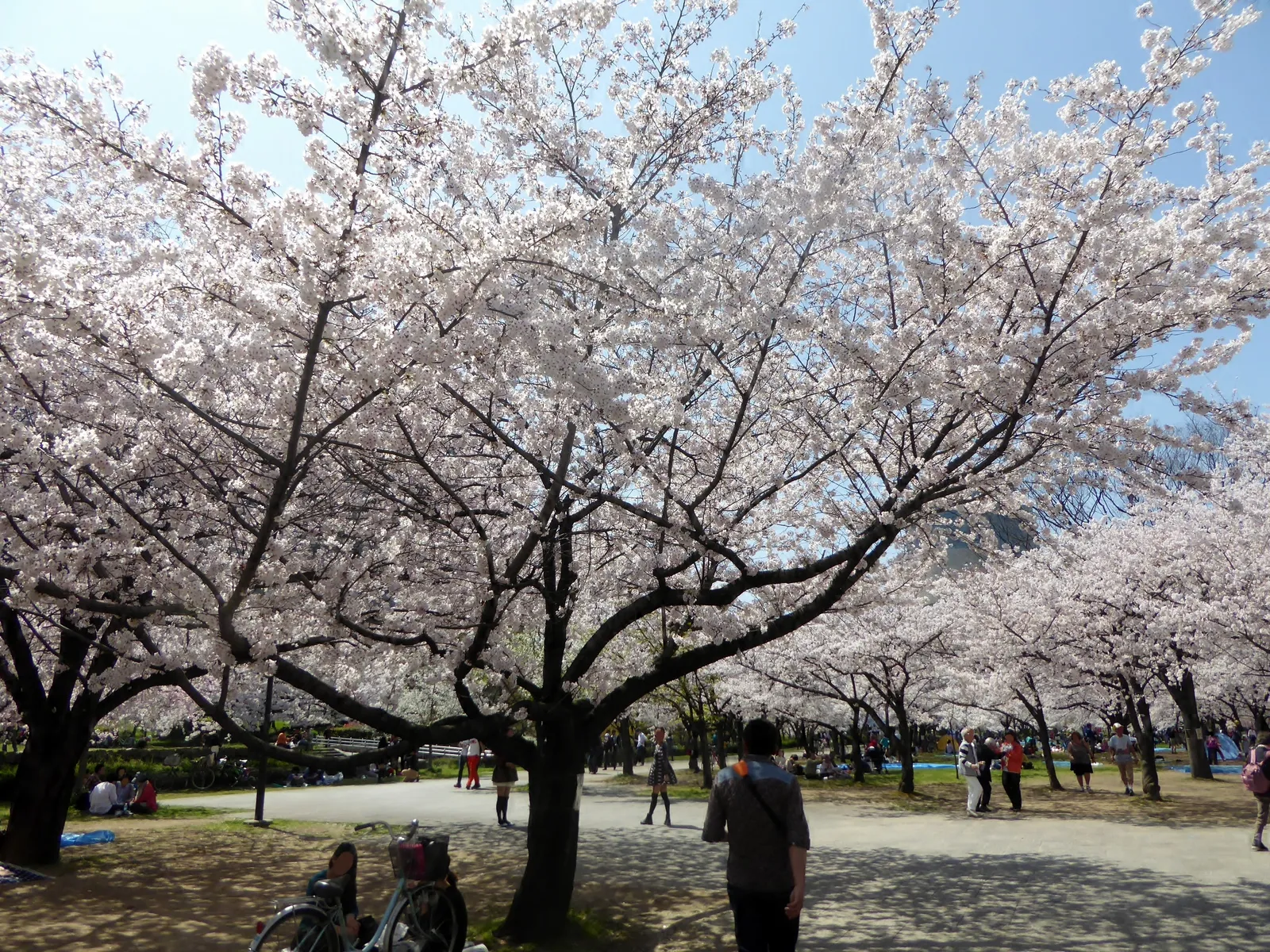
Want to walk straight into Osaka Castle Park, book a keep-view room or dodge the post-gig crowds? Compare the four surrounding districts by park gate, room layouts, wet-weather backups and 2027 Osaka-jo Hall closure dates.
Tanimachi 4-chome: On the Otemon Side for Mornings and Rainy Days
Tanimachi 4-chome is an interchange between the Tanimachi and Chuo underground lines. Official castle access notes list Exit 1-B on the Tanimachi Line and Exit 9 on the Chuo Line for the Otemon Gate area. If you are heading straight to the Osaka Museum of History first, the museum's guidance points to Tanimachi Line Exit 2 (roughly 300 metres east) or directly out of Chuo Line Exit 9. Properties here often market themselves as both "next to Tanimachi 4-chome Station" and "walking distance to Osaka Castle", so follow the hotel's own exit directions when hauling luggage on arrival, then switch to the park-facing approach the next morning.
Toyoko INN Osaka Taniyon Kosaten is a classic station-side base. The hotel lists a 1-minute walk from Exit 8, which has a lift straight to street level by the entrance. It makes sense when comparing fares and transit convenience while keeping a morning walk towards the south-west corner of the park; if you want moat views the moment you step outside, compare options shifted towards Otemae or Temmabashi instead. Toyoko INN also notes road sewer works opposite the hotel from 16 November to 20 December 2026, with some night-time construction noise. Light sleepers travelling during those dates may want to check another street near the station or book in Temmabashi.
Anyone relying on lifts all the way from the underground platforms also needs to factor in seasonal maintenance. Osaka Metro has announced that from the first train on 14 November 2026 until the last train on 23 December 2026, the lift at the north end of the Tanimachi Line platform bound for Dainichi (connecting to the north ticket-gate concourse) is out of service. To reach the north ticket-gate level, take the south-end lift up to the central concourse, cross to the lift down to the Yaominami-bound platform, and ride the lift at the north end of that platform back up. Large groups with suitcases should regroup inside the station and allow extra buffer time for this detour.
Otemon Gate is the park's recommended gentler route that avoids steep steps. In fair weather, admire the stone walls at Otemon before continuing towards Sakuramon Gate and the Honmaru inner bailey; if heavy rain hits, move the museum's permanent exhibition to the morning slot. The Osaka Museum of History opens from 09:30 to 17:00 (last entry 16:30); permanent exhibition admission is ¥600 for adults, ¥400 for high school and university students, and free for junior high school students and younger. After buying a permanent ticket, take the lift to the 10th floor for views over the Naniwa Palace site and Osaka Castle, then work your way down through the galleries. It closes on Tuesdays (or the following day if Tuesday is a public holiday) and over New Year from 28 December to 4 January, so check Tuesday and checkout-day schedules before locking in your nights.
Morinomiya: Best for Morning Walks and Direct Chuo Line Trips to Osaka Port
Morinomiya Station links JR and the underground, though the underground exits closest to the park and the exits used by nearby hotels sit on different sides. From the Chuo Line, official keep directions suggest Exits 1 or 3-B; from the Nagahori Tsurumi-ryokuchi Line, use Exit 3-B. For step-free access with a pushchair, station accessibility maps point to the 3-C lift at the east ticket gates. Staying south of Chuo-odori Avenue lets you cross straight into the park for a morning stroll. If you just want some fresh air before breakfast, walk into the open space at the south-east corner and loop back; save the bridges and Honmaru climb for when you have picked proper footwear and checked the rain forecast.
Hotel Oaks Early Bird Osaka Morinomiya sits south of the station. From the JR north ticket gates, the hotel's route heads east along Chuo-odori, turns into a side street by a convenience store, and follows a covered shopping arcade south. From the underground east ticket gates, take Exit 5; the hotel estimates roughly 5 minutes from either JR or the underground. It uses a completely different approach from the big hotels on the north-east side of the park: head in through the south-east entrance for morning walks, or follow the park's eastern edge north to the concert arena. If your room is mainly for sleeping before catching the Chuo Line the next day, that daily station walk matters far more than whether your window faces the keep.
Morinomiya makes it straightforward to split a day into two distinct halves. Take a short park walk in the morning, then board a Chuo Line train bound for Yumeshima and ride straight to Osakako Station—Exit 1 puts you roughly 5 minutes from the Osaka Aquarium Kaiyukan without changing at Awaza or Cosmosquare. If rain interrupts your morning in the park, you can head straight down into the Chuo Line at Morinomiya. On days with only the aquarium on the agenda, save the evening back at your hotel for unpacking, dinner or a short stroll rather than trudging across the castle grounds again.
If two consecutive days revolve around Shinsaibashi and Namba, Morinomiya's edge narrows to the final leg back to bed. The Nagahori Tsurumi-ryokuchi Line runs directly between Morinomiya and Shinsaibashi, making dinner there easy enough; if you are returning from Nippombashi or Namba every night, factor the line change and your hotel's exact exit into the late-evening trip. Conversely, when your itinerary pairs the aquarium at one end with Osaka Castle at the other, Morinomiya's Chuo Line access and park gate both pull their weight.
Kyobashi for Rail Transfers, Osaka Business Park for Post-Show Bridges
The Kyobashi hub brings together the JR Osaka Loop Line, the JR Tozai Line, the Keihan Main Line and the Nagahori Tsurumi-ryokuchi underground line. If you want easy station-side dinners and onward Loop Line or Keihan rides the next morning, staying right by Kyobashi Station does the job. For concerts at Osaka-jo Hall, however, JR Osakajokoen Station and Osaka Metro Osaka Business Park Station are the two official 5-minute access points listed by the venue. Walking from Osakajokoen via JO-TERRACE OSAKA is one distinct approach, while cutting through Osaka Business Park from the underground station is another—a straight line on a map hides the river crossing between them.
Hotel New Otani Osaka sits in the Shiromi quarter of Osaka Business Park. The hotel puts the walk at roughly 3 minutes from either JR Osakajokoen Station or Osaka Business Park Station, and around 8 minutes from Kyobashi Station. One official route from Shin-Osaka takes JR to Osaka Station, then transfers to the outer-loop Loop Line train towards Kyobashi to reach Osakajokoen. This works neatly if someone in your group stays out late shopping in Umeda and rides back from JR Osaka Station; on gig nights, friends staying at the same hotel can simply meet in the lobby afterwards rather than trying to find each other outside crowded station barriers.
Hotel Monterey La Soeur Osaka is also in Shiromi, estimating roughly a 5-minute walk along the Osaka Business Park skywalk from JR Kyobashi's West Exit or Keihan Kyobashi's Katamachi Exit. Arriving late and wanting dinner near the station—or catching an early Keihan train the next morning—feels effortless from the Kyobashi side. To walk into Osaka Castle Park instead, pick the southern bridge closest to your hotel rather than looping back through Kyobashi Station. Side by side, New Otani wins on keep views and arena proximity, whereas Monterey pairs the covered station walkway with an evening hot-spring soak.
For the post-show trip back, decide in advance whether you are leaving straight away or lingering. If you need one of the last trains of the night, map the specific venue gate printed on your ticket, your interchange station and the final leg together, leaving generous padding for the exit queues. If you hold timed-entry tickets and plan to spend the daytime around the western edge of the park or Osaka Port, it is smoother to check in on the arena side of the river and drop your bags before going out; staying on the west side of the park is still workable, though crossing the whole park on a wet night rarely beats ducking straight into an underground station.
Temmabashi: Putting the Okawa River, Keihan Line and Osaka Castle on One Base
Temmabashi connects the Tanimachi underground line with the Keihan Main Line. For Osaka Castle, the keep's website points underground riders to Exit 3; guests at DoubleTree by Hilton Osaka Castle are directed to Exit 1 from the underground's north ticket gates or Exit 14 from Keihan's east ticket gates, both roughly a 5-minute walk. Different exits under the same station name serve very different purposes. Drop your bags upon arrival, stroll light along the Okawa River, and come back up right beside the riverfront rather than dragging suitcases across a bridge just for a scenic route.
DoubleTree by Hilton Osaka Castle splits its views explicitly between castle and river, with standard Twin Castle View rooms listed at 26 sq m. Pick a Castle View room if waking up to the keep is the point of the splurge; choose a River View room if you will already tour the grounds by day and prefer looking over the Okawa at night. If you will only get back early enough to enjoy the night view on your first evening, weigh whether upgrading both nights makes sense. Booking one view night and one standard night means factoring in a room switch and luggage storage, which eats into a morning you could have spent walking to the next river bridge.
Heading to Kyoto the next day, Keihan trains bound for Sanjo and Demachiyanagi tie your hotel stay straight into the Kamogawa River corridor. Hop off at Gion-Shijo for Gion and Yasaka Shrine, or ride to Sanjo for central Kyoto and the Kyoto Metro Tozai Line. If your first Kyoto stop is Kyoto Station or a Shinkansen transfer, compare JR routes before committing: Temmabashi shines along the Keihan corridor, whereas travellers wheeling big cases onto the Shinkansen may prefer Umeda for one fewer transfer.
Spending two nights at Temmabashi lets you split your walks neatly across two mornings. On a clear day, enter the park from the west side, see the keep, head out via Otemon Gate and decide whether to add the museum. On your departure morning for Kyoto, take just a short stretch along the Okawa, pick up your bags back at Temmabashi and board your train. If you return from the park around dinnertime, eat near the station first before walking along the river to your hotel so you do not cross a bridge twice for a meal.
Comparing Castle-View Rooms Across Two Specific Hotels
Hotel New Otani Osaka and DoubleTree by Hilton Osaka Castle lend themselves to a direct comparison by room size, orientation and bed layout. New Otani's Castle-side Superior Twin runs 30 sq m on floors 5 to 14, with two 120 cm beds for up to two guests. If you are travelling as three adults, New Otani lists a separate 40 sq m Superior Triple; run your availability and view search with three guests selected from the start. DoubleTree's Twin Castle View room measures 26 sq m alongside its River View inventory. If you need space to open two large suitcases on a two-night stay, check the floor plans around the foot of the beds and the doorway. Only compare window seating and lounge angles if lingering in the room after dinner is genuinely part of your trip.
Searching for "Osaka Castle view room" brings up glossy promo shots, so lock in your comparison using the exact room category for your actual dates and headcount. Once booked, keep the confirmation showing "Castle View" or "Castle Side" along with the cancellation deadline. If camera framing matters, message the hotel with your room type and dates before paying to ask how the keep sits in the window view and whether a particular wing or floor can be requested within that category. For most travellers, having the orientation confirmed in the room name is plenty. On a short stay, check whether you will arrive before sunset and have time to sit in the room before checkout, then divide the price gap by the number of guests.
If your main goal is photographing the keep and stone walls, you can skip the view upgrade and shoot the western facade from Nishinomaru Garden by day, or scout angles along the outer moat paths. Guests with both a view room and concert tickets can take their room-window photos before heading to the arena, skipping a late-night detour back into the park afterwards. Winter dawn photographers should pick whichever side makes returning for breakfast effortless so they can enter the park empty-handed. If someone in your group prefers sleeping in, staying at the same hotel makes splitting up simple—take separate keycards and regroup in the lobby or at an agreed park gate.
Judge breakfast-inclusive rates against when you will actually wake up. After an evening gig, sitting down to a hotel breakfast before heading to the keep makes good use of the morning. If you aim to reach the keep ticket booth at 09:00 from a hotel on a farther edge of the park, remember to allow for leaving the station, crossing main roads and walking up to the Honmaru. When comparing room-only and breakfast-included rates for the same room, weigh your concert finish time and checkout luggage plans so you only pay extra for a meal you have time to eat.
Booking a Hotel with a Large Bath? Check Last Entry Times
Spa Trinite on the 16th floor of Hotel Monterey La Soeur Osaka is the hotel's natural hot-spring facility. Following a temporary equipment closure in October 2026, it reopened on the morning of 31 October. The hotel restricts access to staying guests from 07:00 to 09:00 (last entry 08:30) and 12:00 to 22:30 (last entry 22:00). It suits travellers who want to soak after a long park walk before heading into Kyobashi for dinner. If you plan to grab a late supper after a concert, you may miss the 22:00 cutoff—save the bath for the next morning or rely on your room's own tub. Day-visitor entry for non-guests has ended, so anyone staying elsewhere should cross it off their comparison list.
For couples, the real priority might simply be a longer soak in a private bathroom rather than a shared bathhouse. Travelling with toddlers or older relatives, inspecting room photos for step heights around the tub and shower area tells you far more than a hotel's spa branding. If family members have different appetites for communal bathing, put those who want the hot spring in the spa hotel and agree on a shared dinner or lobby meet-up time. Let your daily rhythm lead: when an early train follows a late evening, a convenient underground exit usually matters more than a large bath.
Connecting from Kansai Airport, Umeda, Namba and Universal Studios Japan
From Kansai International Airport to Kyobashi, look for a JR Kansai Airport Rapid Service train signed for Kyobashi to avoid an extra luggage transfer if you are staying within walking distance of the station. JR West schedules put the direct run at roughly 1 hour 15 minutes, plus baggage claim, ticket gates and platform waiting time. For hotels in Morinomiya, verify before boarding whether a Loop Line change is required and check whether your destination is JR Morinomiya or the underground station, as they lead to different exits. On the return to the airport, trains often run coupled as the Kansai Airport Rapid and Kishuji Rapid services: board the front four carriages marked for Kansai Airport, as the train splits at Hineno. Coming from Shin-Osaka, travellers bound for Kyobashi or Osakajokoen can change to JR at Osaka Station, while those heading to Tanimachi 4-chome can ride the Midosuji Line to Hommachi and switch east onto the Chuo Line.
Higashi-Umeda on the Tanimachi Line sits right inside the Umeda station complex, giving Tanimachi 4-chome and Temmabashi guests a direct ride north. To reach Dotonbori from Tanimachi 4-chome, take the Tanimachi Line to Tanimachi 9-chome and change to the Sennichimae Line for Nippombashi (handy for Kuromon Market) or one stop further to Namba. From Morinomiya, the Nagahori Tsurumi-ryokuchi Line runs straight to Shinsaibashi for an easy dinner and return. If a group is split between Osaka Castle and Namba, set dinner meeting points at the closest station exit to the restaurant and make sure everyone knows their own route home. Always check the final departure times for your origin, transfer and last stop, especially on nights involving an interchange.
For a day at Universal Studios Japan from JR Osakajokoen, Morinomiya or Kyobashi, the standard route rides the Osaka Loop Line via Osaka Station to Nishikujo, then transfers to the JR Yumesaki Line to Universal City Station. The park's access guide puts the Nishikujo-to-Universal City hop at about 5 minutes, on top of your walk to the first station, transfer wait and the stroll from Universal City Station to the gates. When timetables show a direct through-service to Universal City, check the destination display and stopping pattern before stepping on. After a full day from opening to closing, riding the same line back to Kyobashi leaves plenty of late dinner choices. If you are spending several consecutive days at the theme park, compare hotels near Universal Studios Japan—cutting out the daily commute outweighs waking up to a castle view.
If you arrive with big suitcases in the rain, pick your station around the hotel entrance itself. At Tanimachi 4-chome, staying near Exit 8 puts you straight onto the pavement by the door; in Osaka Business Park, choose between the JR Osakajokoen approach and the covered Kyobashi skywalk depending on your hotel. Groups arriving at different times should save the hotel's Japanese address beforehand. If taking a taxi to the western edge of the park, ask the driver to drop you outside Otemon Gate or at the Osaka Museum of History, leaving time for the walk across the outer moat to the Honmaru.
Which Calendar to Check for Cherry Blossoms, Concerts and New Year
Osaka-jo Hall's official monthly calendar lists both door-opening and curtain times, so check whether your show is a matinee or evening performance before deciding if you need to sleep next to the arena. Note that the hall will close for major renovation works from 12 January to 10 March 2027. Visitors coming during that window for the keep, museum or Okawa riverfront can plan purely around those opening hours; concertgoers with tickets should double-check the exact venue and date on their ticket before booking so they do not confuse similarly named halls nearby. Over New Year, check the three core attractions separately: the keep closes from 28 December to 1 January, while Nishinomaru Garden and the Osaka Museum of History remain closed until 4 January.
To visit Nishinomaru Garden in spring, note that Osaka Castle Park's website posts separate cherry-blossom season hours and admission rules. When booking spring rooms, pick a flexible rate covering two possible morning windows so you can adjust to local bloom updates closer to arrival. Nishinomaru's cherry trees, the north outer moat and the south outer moat all peak slightly differently; if blooms are patchy, start along the free park paths before deciding whether to pay for garden entry. For evening blossom illuminations, compare weekday and weekend crowds and keep your night base on the Tanimachi 4-chome or Temmabashi side for a straightforward walk back along the west wall.
In late autumn and winter, schedule ticketed entries for the early afternoon: from November to February, Nishinomaru Garden closes at 16:30 with last admission at 16:00. Save simple riverfront or outer-moat walks for after lunch so you can duck back indoors as soon as the wind picks up. With a pushchair on a half-day route, anchor your loop along the Otemon-to-Honmaru path—if weather turns rough, save the outer grounds for the next day and pivot to the museum or underground. If you have a dinner reservation, leave the keep well before the last half-hour so you are not rushing across the park to another station. Nishinomaru Garden also hosts a separate evening illumination event from 20 November 2026 to 14 February 2027, running 17:00 to 22:00 (last entry 21:00) on a separate ticket. Anyone planning an illumination visit around New Year or on a Monday night should confirm the event calendar, approach from the Otemon side, and treat evening entry separately from daytime garden hours.
If you want to lock in a specific room type for a key night, benchmark against official advance rates first. Hotel New Otani Osaka offers a "30days ADVANCE" rate for bookings made at least 30 days ahead, available with or without breakfast. Compare it side by side with a refundable rate for the exact same guest count and room category—if concert tickets are not yet secured, a flexible cancellation deadline can be worth more than an early-bird discount. When part of the family has concert tickets and others have different daytime plans, book the concertgoers near the arena, choose a station that suits the rest of the group's trains the next day, and pick one dinner spot everyone can reach easily.
Strolling Through the Gates or Buying a Ticket for the Keep?
The public grounds of Osaka Castle Park stay open 24 hours a day. For a half-day on the west side, walk from Tanimachi 4-chome through Otemon Gate to inspect the gates, moats and stone walls before heading up to the Honmaru; from the north-east side, enter near JR Osakajokoen Station via Aoyamon Gate and Gokurakubashi Bridge, leaving by another exit on the way back. If you only want a brisk pre-breakfast walk, stick to the outer moat and gatehouse paths and save the rest for your museum day. After rain, stone paving can be slick, so entering and exiting via the western Otemon route—or turning back at the bridge for a short pre-dinner loop—gives you better footing.
Osaka Castle Keep opens 09:00 to 18:00 (last entry 17:30), though staff may close the on-site ticket queue earlier when crowds build. Admission is ¥1,200 for adults, ¥600 for high school and university students (international students must show a valid International Student Identity Card), and free for junior high school students and younger with proof of age such as a passport. The ticket includes entry to the Osaka Castle Toyotomi Stone Wall Museum. To see both the Toyotomi-era stone foundations and the keep together, pair them in the same morning. If you only care about exterior photos of the roofs and moats, the free park grounds deliver plenty—and staying nearby lets you drop by in two short bursts rather than one long trudge.
Nishinomaru Garden charges a separate entrance fee: from April 2026, adult admission is ¥300, with junior high school students and younger free. Hours run 09:00 to 17:00 from March to October and 09:00 to 16:30 from November to February, with last entry 30 minutes before closing; the garden closes on Mondays (or the following day if Monday is a public holiday). Because its timing interacts with other ticketed sights, try touring the keep in the morning and heading to Nishinomaru around midday if you want both. In winter, if you only arrive in the afternoon, enter the early-closing garden first and save the outer Otemon area for whatever daylight remains. Staying in Tanimachi 4-chome puts both options within an easy walk home.
If a full circuit of the park would wear out young children or older relatives, combine just one paid attraction with a short stretch of free paths. From Morinomiya on the east side, walk as far as feels comfortable in the morning and turn back before heading to the aquarium in the afternoon; on the west side during the keep's year-end closure, stroll the outer grounds and walk up to Temmabashi for lunch, or save interior exhibitions for non-closure days around New Year. Both the inner and outer moats make pleasant short walks, and keeping your rainy-day backup on the same side as your hotel spares you herding the whole group from one edge of the park to the other.
Pushchairs, Wheelchairs and Triple Rooms: Factor In the Full Round Trip
Lifts inside the keep are staff-assisted. General visitors may take an interior lift up to the 5th floor, using stairs from there up to the 8th floor and back down; wheelchair users and visitors with mobility difficulties can ask staff to use the lifts between the accessible exhibition floors, and an exterior lift is also available for eligible visitors. Pushchairs must generally be left at the keep entrance with staff assistance before entering; if a child is asleep, one adult can stay with them on the Honmaru square while the other goes up, then swap. When older family members prefer to rest downstairs, pick an unmistakable meeting spot on the Honmaru square instead of assuming everyone wants to join the queue to the top floor.
The ground-level stretch from the underground exits to the keep matters just as much. To avoid steps, follow the park's official Tanimachi 4-chome and Otemon Gate route. Osaka City Bus Route 62 also runs from Osaka Station, Yodoyabashi and Temmabashi, stopping at Osakajo Otemae for Otemon Gate and Babacho for the Osaka Museum of History. Check where the stop sits relative to your hotel side—the underground may still be shorter on the way back. On a rainy day, start at the museum where pushchairs can ride the interior lifts throughout, then step out to the outer moat once the showers ease.
Always search hotels using your full guest headcount. Three guests need either a proper third bed or clearly stated child bed-sharing rules, along with three breakfasts, pillows and floor space for bags. When booking two twin rooms to split adults and children next door to each other, ask about connecting rooms before paying and have the arrangement noted on the reservation. Multigenerational families catching JR or Keihan trains can send one adult and the grandparents straight to the hotel with the bags while the other adult walks the children through the park, avoiding a bridge crossing weighed down by suitcases. Only switch hotels mid-stay if each base genuinely cuts out a major trek, once you account for bag-drop and check-in waiting gaps.
Compare Bills Per Person Per Night and Leave Buffer at Checkout
Osaka Prefecture's accommodation tax is charged per person, per night based on the room rate. Stays under ¥5,000 per person are exempt; ¥5,000 to under ¥15,000 incurs ¥200; ¥15,000 to under ¥20,000 incurs ¥400; and ¥20,000 or more incurs ¥500. For two guests sharing one room, calculate the per-person rate and check whether the booking engine includes the tax at checkout or collects it at reception. When comparing two twin rooms against one large family room, add breakfast, extra-bed fees, cancellation terms and any tax-bracket differences into one total family cost rather than trusting the lowest headline room rate.
If you want one night in a castle-view hotel while keeping the rest of the trip on budget, benchmark rates against station-side hotels in Tanimachi 4-chome or Morinomiya, then weigh what that price difference buys in saved transit and room time. An early morning flight and late dinners in Namba leave very little daylight to enjoy a view room; an unhurried afternoon bouncing between the park and your hotel makes the splurge worthwhile. For other neighbourhoods across the city, see our guide on where to stay in Osaka, or use our Osaka Castle keep and park guide to pick your entry gate for a half-day visit.
On your final morning, check out, leave your luggage at reception and take one last walk on your hotel's side of the park before picking up your bags. From Kyobashi you are straight onto JR, from Temmabashi straight onto Keihan, and from Tanimachi 4-chome right down into the underground. If your accommodation cannot hold bags after checkout, move that final walk to before dinner the previous evening so your departure day sticks to a clean hotel-to-station line. With an early train, visit the park on your arrival afternoon instead; save a pre-breakfast loop along the outer moat for days when your train leaves after midday.
A few useful answers
Which area near Osaka Castle avoids the most stairs?
Stay in Tanimachi 4-chome or Otemae and enter via Otemon Gate for the gentlest walk up to the keep. Check which lift serves your line and direction inside Tanimachi 4-chome Station, and allow for the north-side lift diversion running from 14 November to 23 December 2026.
Should I stay in Morinomiya or Kyobashi for an Osaka-jo Hall concert?
Prioritise Osaka Business Park, JR Osakajokoen Station or hotels on the south side of Kyobashi. The venue officially lists the first two as roughly a 5-minute walk. If you want dinner after the show, pick a hotel linked to Kyobashi by the covered skywalk.
Do Nishinomaru Garden, the keep and the Osaka Museum of History share one ticket?
No, standard admission is bought separately for each. The keep's standard ticket includes the Osaka Castle Toyotomi Stone Wall Museum, while Nishinomaru Garden and the Osaka Museum of History each keep their own tickets, opening hours and closure days.
Is staying near Osaka Castle Park good for taking the Keihan Railway to Kyoto?
Yes—Temmabashi and Kyobashi give you the most direct access. For Gion and Higashiyama, board a train towards Demachiyanagi and alight at Gion-Shijo; for central Kyoto or the Kyoto Metro Tozai Line, get off at Sanjo.
Which Osaka Castle venue is closed for renovation in early 2027?
Osaka-jo Hall has announced a renovation closure from 12 January to 10 March 2027. Osaka Castle Keep and the Osaka Museum of History continue to operate on their own schedules.
Official information and references
Sources used in this guide.
- Osaka Castle Park | 2026 Map and Station Walking Times
- Osaka Castle Keep | Step-Free Otemon Gate Route
- Osaka Castle Park | 2026 Guidebook and Nishinomaru Garden Hours and Fares
- Osaka Convention & Tourism Bureau | Osaka Castle Park Access and Hours
- Osaka Castle Park | Cherry Blossom Area Guide
- Osaka Castle Park | 2026–2027 Nishinomaru Garden Illumination Event
- Osaka Castle Keep | Admission, Opening Hours and On-Site Facilities
- Osaka Castle Keep | Access and Station Exits
- Osaka Museum of History | Permanent Exhibition Tickets, Closures and Access
- Osaka Museum of History | 10th-Floor Galleries and Observation Views
- Osaka Metro | Morinomiya Station Step-Free Access Route
- Osaka Metro | Tanimachi 4-chome Station Lift Replacement Notice
- Osaka Metro | Lines and Interchange Stations
- Osaka-jo Hall | Station-to-Venue Access Guide
- Osaka-jo Hall | Event Calendar
- Osaka-jo Hall | 2027 Renovation Closure Notice
- Hotel New Otani Osaka | Access Guide
- Hotel New Otani Osaka | Superior Twin Castle-Side Room
- Hotel New Otani Osaka | Superior Triple Room
- Hotel New Otani Osaka | 30days ADVANCE Stay Plan
- DoubleTree by Hilton Osaka Castle | Hotel Access
- DoubleTree by Hilton Osaka Castle | Room Specifications and Views
- Hotel Monterey La Soeur Osaka | Kyobashi Skywalk Access
- Hotel Monterey La Soeur Osaka | Natural Hot-Spring Hours and Reopening Notice
- Toyoko INN Osaka Taniyon Kosaten | Exits, Facilities and Construction Notice
- Hotel Oaks Early Bird Osaka Morinomiya | Hotel Access
- Keihan Electric Railway | Stations and Route Map
- JR West | Kansai Airport Rapid Service Timetable Example to Kyobashi
- JR West | Kansai Airport Rapid Car Boarding Guide
- Osaka Aquarium Kaiyukan | Osakako Station Access
- Universal Studios Japan | Rail Access Guide
- Osaka Prefectural Government | Accommodation Tax Brackets