Flying into Kansai Airport? Start near Nankai Namba. Compare Namba station exits, step-free routes, Dotonbori river-view rooms, and stays near Kuromon Market.
- Region & Focus
- OsakaAccommodation
- Reading Scope
- 20 min read · 9 chapters · 6 Q&As
- Official Verification
- 27 official sources checkedUpdated 22 November 2026
- Key Topics
- Where to stayNeighbourhoodsRail travel
Chapter Route Map (tap any stop)
- Nankai, Osaka Metro, JR Namba, plus Kintetsu and Hanshin's Osaka-Namba
- Both claim direct access: where Swissotel Nankai and Hotel Royal Classic actually connect
- Where to surface from Namba's underground malls with a pushchair or in the rain
- Booking a Dotonbori river-view room: check which stretch of canal you face
- Namba Parks to the south, Shinsaibashi to the north, Nipponbashi to the east
- Kansai Airport transfers: let your landing time pick the route
- Morning departures to Nara and Universal Studios Japan: which gate to use
- Group and family stays: pick rooms for sleeping comfort and suitcase space
- How to structure two-night, four-night, and late-arrival or early-departure stays
- Quick Q&A
If you are travelling to and from Kansai Airport on the Nankai Electric Railway with large luggage, start your hotel search around Nankai Namba Station or Namba Parks. If your daytime plans revolve around the underground, staying near the Midosuji Line's Namba Station saves considerable walking. For late-night meals along Dotonbori and a short stroll back by the canal, aim for the Ebisubashi walking radius. Before booking, map out your first transit leg all the way to the hotel entrance: tracing the platform, ticket barriers, exit, and final street block often settles the choice between two hotels that look equally close on paper.
Nankai, Osaka Metro, JR Namba, plus Kintetsu and Hanshin's Osaka-Namba
Start by locating three main corridors on your map. Midosuji runs roughly north to south and intersects Sennichimae-dori near Namba Station, with Ebisubashi spanning the Dotonbori Canal just north of that junction. Heading south down Midosuji brings you to Takashimaya, Nankai Namba Station, and then Namba Parks. Follow Sennichimae-dori west and you pass underground above Osaka-Namba (shared by Kintetsu and Hanshin) before reaching JR Namba and Minatomachi's OCAT further west. Head east along Sennichimae-dori instead and you arrive at Nipponbashi and Kuromon Market. Pinning all of these landmarks on a single map is far clearer than relying on a navigation screenshot that simply reads 'Namba Station'.
Nankai Namba (NK01) is the city terminus for Nankai Electric Railway services from Kansai Airport, and the station name to look for when boarding the Rapi:t limited express or Airport Express. The underground hub is simply signed Namba and connects three Osaka Metro lines: the Midosuji Line (M20), Yotsubashi Line (Y15), and Sennichimae Line (S16). Shinsaibashi, Umeda, Shin-Osaka, Dobutsuen-mae, and Tennoji all sit on the Midosuji Line. If your hotel is near the western end of underground Namba, factor in the long walk across the concourse every morning to reach those Midosuji platforms.
Tickets and departures marked 'Osaka-Namba' use the underground station shared by Kintetsu and Hanshin. Heading east towards Kintetsu-Nara, the very next stop is Kintetsu-Nippombashi; heading west takes you onto the Hanshin Namba Line, where trains bound for Kobe-Sannomiya depend on the service's final destination. If you plan day trips to Nara Park on one day and central Kobe on the next, booking a single hotel within walking distance of Osaka-Namba lets you walk out to the eastbound or westbound trains with ease.
JR Namba sits on the western side in Minatomachi on the Yamatoji Line, with platforms serving Tennoji and Nara. If you stay right outside a JR exit but need the Nankai line to the airport the next morning, save 'Nankai Namba Station' as your destination; for airport buses at OCAT, search for 'Namba (OCAT)' and head up to the 2nd floor. Because the JR station, bus terminal, and retail entrances cluster closely together in this pocket, searching with your hotel's official Japanese name and street address works much better than relying on generic area labels on booking sites.
When two hotels both advertise a five-minute walk, check which ticket barrier they measure from and which entrance they lead to. Hotels near the Yotsubashi Line suit travellers heading frequently to Nishi-Umeda, whereas anyone riding the Midosuji Line daily to Shinsaibashi, Umeda, or Shin-Osaka will appreciate exits closer to Midosuji. Platforms at Namba's underground complex are widely scattered, so the side you choose determines how many minutes of underground corridors you walk each day.
| Primary need | Map starting point | Where to look for hotels |
|---|---|---|
| Nankai trains to and from Kansai Airport | Nankai Namba Station (NK01) | Takashimaya, above Nankai Station, or the Namba Parks side |
| Frequent Midosuji Line trips | Osaka Metro Namba Station (M20) | Near the Midosuji and Sennichimae-dori junction |
| Kintetsu to Nara and Hanshin to Kobe | Osaka-Namba Station (Kintetsu and Hanshin) | Check routes from both the East and West ticket gates to your hotel |
| Kansai Airport bus or JR departures | OCAT 2nd floor / JR Namba Station | Minatomachi and the west side of the Yotsubashi Line Namba Station |
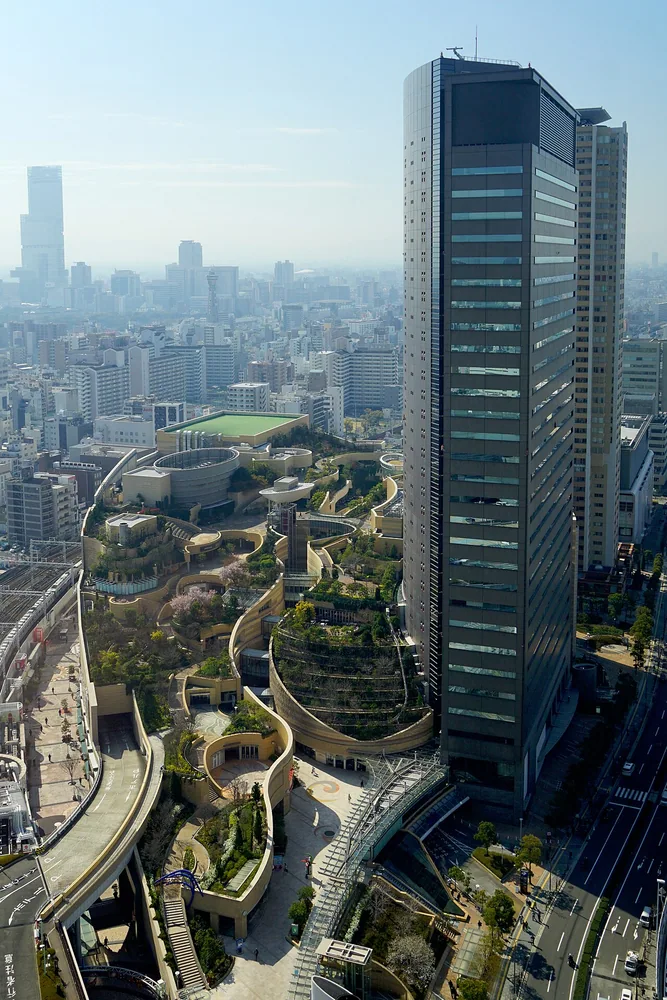
Flying into Kansai Airport? Start near Nankai Namba. Compare Namba station exits, step-free routes, Dotonbori river-view rooms, and stays near Kuromon Market.
Both claim direct access: where Swissotel Nankai and Hotel Royal Classic actually connect
Swissotel Nankai Osaka sits directly above Nankai Namba Station, making it ideal if you want to drop your bags the moment you step off the train. The hotel's own access guide puts Nankai Namba first, so even arriving late at night from the airport you can follow signs straight to the hotel rather than navigating underground shopping arcades first. Even so, you still need two mental maps here: head for the Nankai platforms for the airport, and walk across to the Midosuji Line when heading up to Umeda. Which railway sits at your doorstep decides which daily leg becomes effortless.
Hotel Royal Classic Osaka connects directly to Exit 12 of Osaka Metro Namba Station. Its access page also lists roughly a four-minute walk from Nankai Namba and about ten minutes from JR Namba via the underground mall. Families travelling with older relatives or pushchairs should pin each of these spots separately on a map. If you ride the Midosuji Line every morning and stroll back from Dotonbori at night, you get direct underground access on your daily trips while limiting the Nankai walk to your two airport luggage days.
Hotels on the southern side of Namba Parks offer covered links of their own. Centara Grand Hotel Osaka directs guests to walk roughly four minutes from the South Exit of Nankai Namba, crossing the 2nd-floor Namba Parks deck to reach the hotel's 2nd-floor entrance. For the underground, the hotel lists an eight-minute walk from Exit 4 of Midosuji Line Namba Station. Once you land, match your route to how you arrived: take the Namba Parks direction from Nankai trains, or use the Midosuji end if arriving from Shin-Osaka.
Whenever a hotel access map shows a walkway through a shopping centre, save the street-level entrance as well. You may return after shop shutters come down or leave for an early flight before the complex opens. For late arrivals, follow the night entrance instructions and latest check-in time confirmed by the hotel rather than daytime screenshots of routes cutting through shops. If you arrive by taxi, look up the street address or drop-off driveway; knowing both the vehicle entrance and the underground exit also helps family members arriving separately meet upstairs.
Kintetsu's station map for Osaka-Namba lists a standard walking time of about 11 minutes from the centre of its platforms via the East ticket gate to the nearest Nankai Namba barrier. For step-free transfers, Kintetsu directs passengers through the West ticket gate instead, listing about six minutes to the Osaka Metro Yotsubashi Line and roughly nine minutes to JR Namba. Treat these figures as a guide to relative distances and leave extra time for hotel lobbies, lifts, and ticket machines. Hauling two suitcases once is far easier to manage than wrestling a pushchair up and down underground stairs every day.
Where to surface from Namba's underground malls with a pushchair or in the rain
On rainy days between Namba and Nipponbashi, the Namba Walk underground shopping arcade follows Sennichimae-dori. Leaving the Midosuji Line at Namba's North-East or North-West ticket gates, signs point towards Exits 16, 17, 22, and 23 into the 1st and 2nd Avenues. At the eastern end, 3rd Avenue connects towards Exits 3 and 4 of Osaka Metro Nippombashi Station as well as Kintetsu-Nippombashi's West ticket gate. On your way back to your hotel, note which avenue number you are in so you know whether to head upstairs near Midosuji or keep walking to the eastern end.
Namba Walk itself has no lifts. To reach street level, the operator lists neighbouring buildings with lifts including the Kintetsu Namba Building, Midosuji Grand Building, Round1, and Osaka Metro Nippombashi Station. From the Midosuji Line Namba platforms, Osaka Metro's step-free route from both directions uses the Midosuji Grand Building lift at Exit 24: take the platform lift up to the North-West gate, then ride the Exit 24 lift to the street. You emerge on the north-west corner of the Namba intersection, where you can cross Midosuji if your hotel lies towards Sennichimae or Ebisubashi-suji.
For transfers between Kintetsu and the Sennichimae or Midosuji lines, Kintetsu's station map separates the East gate used by most passengers from the step-free West gate. If your group splits up underground, agree to meet outside the hotel's street entrance rather than waiting near the barriers while half the party is stuck in a different corridor. Before checking in, save both the Kintetsu and Osaka Metro station diagrams with gate names and lifts marked, keeping the Japanese-language version handy to show station staff. Searching by exit number alone can accidentally send you to an entrance on a completely different line.
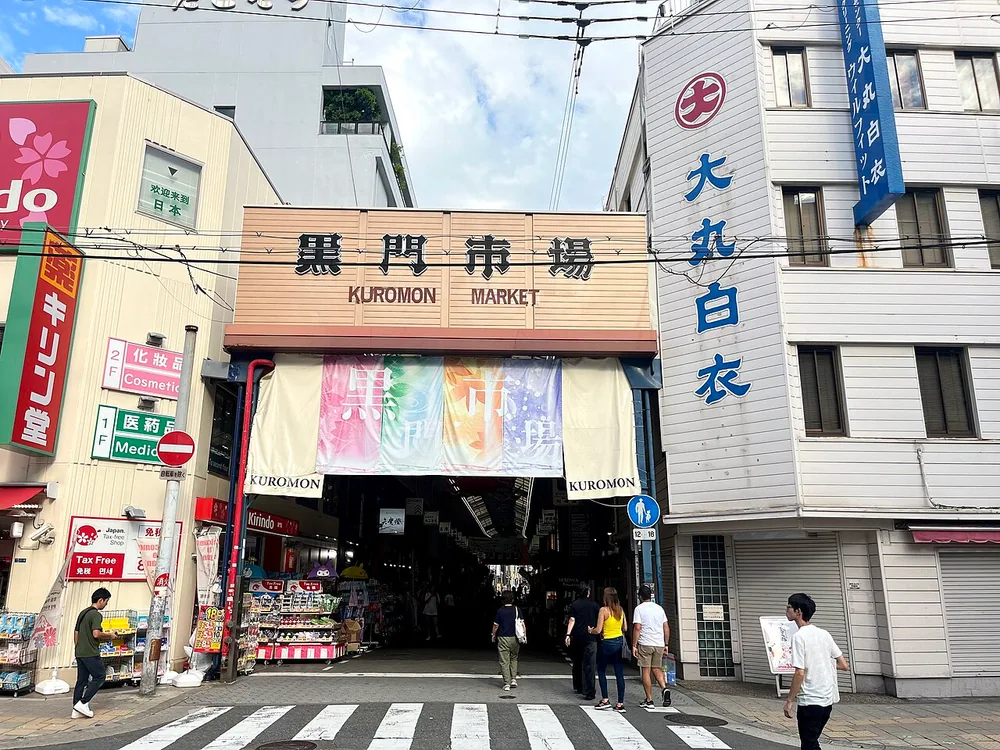
If you are staying by Kuromon Market, mark the lifts at Nippombashi Station too. From the Sennichimae Line platforms, station maps direct step-free travellers to lifts via either the East or Central-South ticket gates. Exit 10 sits on the south-east corner of the Nippombashi junction and serves as the clearest landmark for the market's northern entrance. If you come up elsewhere, get your bearings at the Sakaisuji and Sennichimae-dori crossroads before walking towards the stalls. Checking the station layout beforehand lets you pick the right side underground with your luggage rather than making detours at street level.
When heavy rain lingers for half a day, you can wait out a shower over lunch in the underground mall before heading to the market. Walking from 3rd Avenue near Nippombashi Station all the way through to 1st Avenue brings you back to the Yotsubashi Line's Namba Station, which works well if you are staying in Minatomachi and want to browse restaurants along the way. For families with young children, Namba Walk's maps also mark accessible toilets and baby-changing facilities so you can take care of everyone before setting off again.
Booking a Dotonbori river-view room: check which stretch of canal you face
Before choosing a room, pinpoint Ebisubashi, Aiaibashi, and the Dotonbori Bridge on Midosuji. The Glico Running Man sign stands on the south bank right beside Ebisubashi. Two hotels can both advertise canal-front rooms while one looks upstream along quieter water and the other faces the bridges and neon storefronts. If seeing a specific sign from your window matters to you, ask the hotel to confirm the view for the exact room category on your booking and keep that reply with your reservation. If you only want water and evening lights, picking any room type with an explicit river-view description opens up far more options.
Hiyori Hotel Flex Osaka Dotonbori offers a clear side-by-side comparison on its own website. Its Riverside Twin faces south over the Dotonbori Canal, while its River View Twin faces west towards Namba Hatch and the canal. Both rooms measure 13 square metres, sleep up to two guests, and have two 100 cm-wide beds. If you are travelling with two large suitcases, study the floor space at the foot of the beds, by the door, and outside the bathroom to see if both cases can open flat at once. For stays of two nights or more, when the room doubles as a packing and sorting base, room-layout photos tell you far more than glossy lobby shots.
If you plan to eat out most evenings, the river view can simply be part of your after-dinner stroll. Turn off beside Namba Marui into the Ebisubashi-suji shopping arcade and follow the covered walkway straight to Ebisubashi. Take in the signs and canal from the bridge deck, then use the ramp on the east side of Ebisubashi to drop down to the waterside promenade. When the bridge gets packed, walk one bridge over towards Aiaibashi for a clearer angle. Paying extra for a view room makes the most sense if you still have the energy after check-in to make a pot of tea and enjoy the window.
Light sleepers should push rooms facing main roads, restaurant entrances, or directly above bar doors down their shortlist. Canal-facing windows can pick up chatter from the promenade, while the opposite side of the building may overlook delivery lanes or late-night traffic; noise depends heavily on the specific street block and floor level. Rather than judging quietness solely by how many streets away a hotel sits from the canal, ask the property for a room facing away from main carriageways and dining alleys. If you have early trains each morning, walking to Ebisubashi for dinner and then retreating south of Nankai Namba often fits your schedule better than staying right on the water.
In cold or wet weather, the covered arcade lets you wander comfortably from Namba towards Ebisubashi, though the bridge itself and the riverside path are open to the sky. Book dinner on whichever bank you prefer so you can eat first and decide afterwards whether the rain has eased enough for a walk along the water. If your hotel sits on the opposite bank, note which bridge makes the easiest crossing on the way back. Turning a pushchair around on a crowded Ebisubashi takes far more effort than walking along the same bank to the next bridge.
Namba Parks to the south, Shinsaibashi to the north, Nipponbashi to the east
Namba Parks works well when you want your hotel, evening meals, and mid-afternoon breaks clustered together. While the complex connects smoothly from Nankai Namba, walks from other lines vary with platform locations: the centre's own access guide estimates seven minutes on foot from Midosuji Line Namba Station, ten minutes from the Sennichimae Line, and 15 minutes from the Yotsubashi Line. If you are staying several nights and plan to ride the Yotsubashi Line or use OCAT daily, that gap adds up twice a day. Consider shifting your hotel closer to your main transit line and saving Namba Parks for a dedicated shopping afternoon.
Parks Garden, the complex's rooftop park, is free to enter and lists regular opening hours from 10:00 to midnight, following the mall's closure days. Indoor lifts give step-free access to each terrace level so you can wheel a pushchair straight out into the greenery, though sections within the 5th-floor Seseragi-no-Mori and 9th-floor Step Garden can only be reached by stairs. On sunny days with a pushchair, stick to a short loop around the 8th-floor garden and take the lift back down to the restaurant floors when everyone gets tired. Keep in mind that garden and retail hours differ: most shops close at 21:00 and restaurants around 22:00, with individual variations. If you arrive in town late, look up an open late-night spot near your hotel before boarding your train.
In winter 2026, guests staying south of Nankai Namba can add the Namba Hikari Tabi illuminations to an evening walk. The Namba Parks display runs from 13 November 2026 to 14 February 2027, lit from 17:00 to midnight free of charge, except on 31 December 2026 and 1 January 2027 when the complex closes. On windy evenings, view the cascade of lights rising from the 2nd floor and save the upper rooftop terraces for daylight the next day. Over the New Year closures on 31 December and 1 January, arrange dinner around the Ebisubashi-suji shopping arcade instead, where festive lucky-charm illuminations stay lit through 11 January 2027.
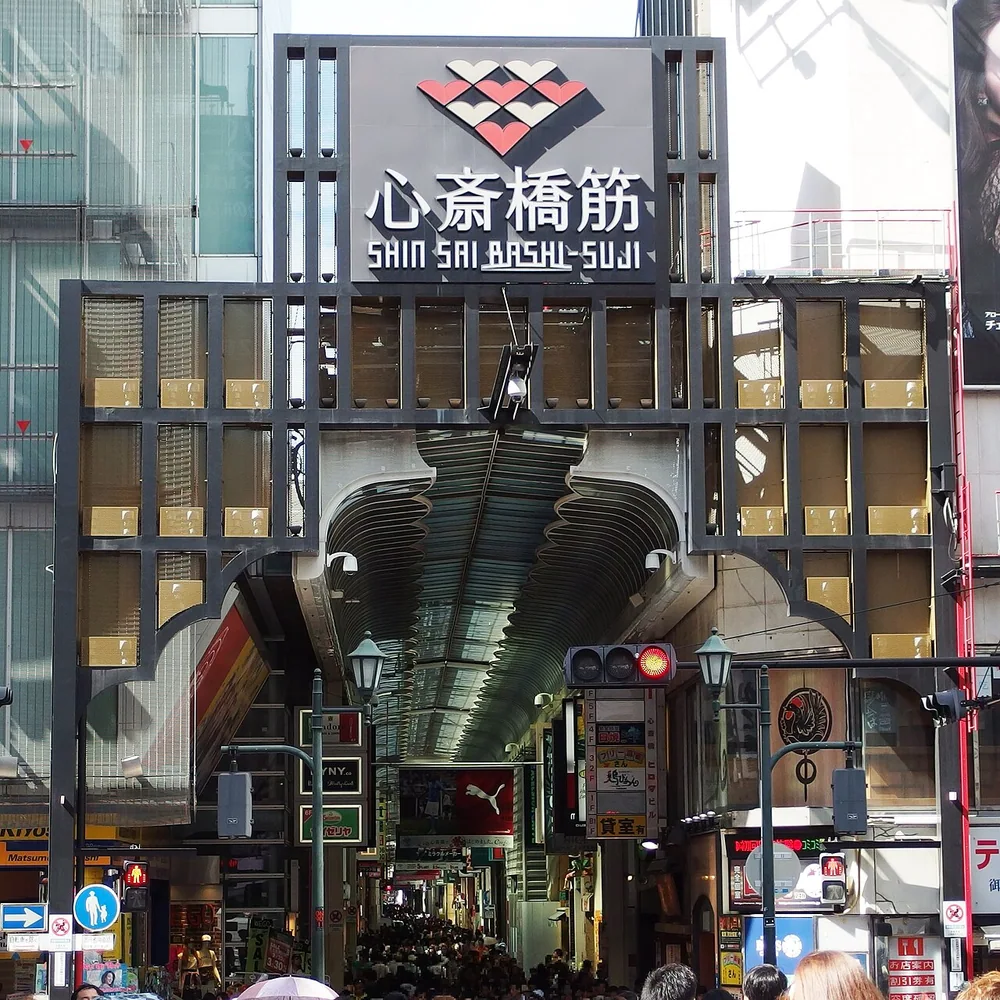
Shinsaibashi suits travellers who like dropping shopping bags back in their room between errands. Ask yourself whether your two days revolve around Shinsaibashi-suji and department stores or simply a loop around Dotonbori. Dedicated shoppers may prefer shifting north of the canal towards Nagahori, whereas anyone focused on Namba Station, Takashimaya, and Ebisubashi can stay just south of the river near Midosuji and cross the bridge into Shinsaibashi-suji after dinner. For trips up to Shin-Osaka, Shinsaibashi Station sits on the same Midosuji Line, so let your preferred exit decide which end you pick. Save the hotel's street address so you can walk straight back from the station once the arcades close for the night.
On the Nipponbashi side, pin both Osaka Metro Nippombashi and Kintetsu-Nippombashi on your map first. Kuromon Market sits right by Exit 10 of Osaka Metro Nippombashi Station, and the market association publishes a lane-by-lane map of member stalls. If you have specific sushi counters, seafood stalls, or hot food vendors in mind, check the opening hours for two or three targets in advance, and leave breakfast at the hotel or airport on your early-flight morning. Model-kit and retro-gaming shops along Nipponbashi Den Den Town lie just to the south and pair easily with a post-market wander; if you plan to bring market snacks back to eat with children, look for rooms with a dining table or a microwave.
For longer stays, properties south of Nipponbashi bring laundry and kitchen perks into play. Citadines Namba Osaka in Nippombashi 3-chome, for example, puts self-service coin laundry and a children's playroom on its 5th floor, with the playroom open from 06:00 to 22:00 for children accompanied by a parent. Its facilities page also notes a communal kitchen in the residents' lounge, while specific room layouts offer private kitchenettes. Having these lets you pack lighter or plate up market breakfasts back in your room; just remember that machines are shared among guests, so avoid leaving all your washing until departure morning.
The Sennichimae district separates Kuromon Market from Dotonbori. If you want theatres, dinner, and late-night snacks within an easy walk, keep your evening plans on the same side of Midosuji as your hotel so you aren't crossing the boulevard every night. When older relatives head back early, choose a junction you have already walked past in daylight to split up, and meet outside an underground ticket gate or in the hotel lobby the next morning. Rooms on the Nipponbashi side are great for market access, but check whether your onward morning departures need Nankai, Kintetsu, or the underground so daytime convenience doesn't cost you an awkward transfer to your next city.
Kansai Airport transfers: let your landing time pick the route
Nankai Electric Railway's airport access page lists journey times from Kansai Airport Station to Nankai Namba at roughly 38 minutes on the Rapi:t limited express and about 44 minutes on the Airport Express. That is the rail time between the two stations. The Rapi:t is all-reserved seating with dedicated luggage racks and requires a separate limited-express surcharge on top of the base fare, whereas the Airport Express requires only a standard ticket straight into Nankai Namba. If you want guaranteed seats for children or older relatives within budget, check whether a Rapi:t departure aligns with your arrival; if waiting for the next limited express takes longer than the six-minute difference in journey time, hopping straight onto an Airport Express gets you into town sooner.
From 1 April 2026, the adult regular-seat limited-express surcharge on the Rapi:t is ¥700, or ¥550 via Nankai's ticketless service, both in addition to the base fare. Buying the limited-express ticket on board adds an extra ¥300. When travelling as a family who want seats together, you can book reserved seats in advance for the return leg since your flight time is fixed. On arrival, wait until you clear immigration and collect your bags before locking in the next available departure.
For the flight home, your departure time lets you work backwards to pick a train and seats. On arrival, factor in immigration queues, baggage reclaim, and the walk to the station, especially if you land at Terminal 2 and must catch the free shuttle bus first. When returning to Terminal 2, the Nankai Bus shuttle from Aeroplaza next to Kansai Airport Station takes around seven minutes, plus waiting time and the walk to check-in. Write your terminal number into your return calendar invite so you know immediately whether to head into Terminal 1 or straight to the shuttle stop.
If you stay near JR Namba and Minatomachi, compare the OCAT airport limousine bus against Nankai. Kansai Airport Transportation's Namba line timetable lists separate columns for Terminal 1 and Terminal 2 once you select your travel date and direction. Boarding in Namba is at Stop 9 on the 2nd floor of OCAT on a first-come, first-served basis, even with a pre-purchased ticket. If you have heavy suitcases and are staying right beside OCAT, the bus saves the walk over to Nankai Namba for a comparable journey time, though during peak holidays you should build in extra margin for queues and road traffic.
Late-evening arrivals come down to which final service you can realistically catch. Add immigration, the walk to the platform or bus bay, and your hotel check-in window to your scheduled landing time, then note down the last Nankai train and the last OCAT bus. If you land at Terminal 2, compare the Terminal 2 bus departures directly against the shuttle-plus-train connection. If neither public transport option works, agree on a taxi or an airport-area overnight hotel before leaving home so everyone knows where to gather if your flight is delayed.
If you are taking the first morning Nankai train back to the airport, walk the street-level route from your hotel's main entrance to the station platforms once in daylight during your stay. Underground passages keep you dry, but early-morning shutters and mall doors may still be locked. Having a reliable surface-street route eliminates guesswork at dawn. If you arrive early on day one before check-in opens, arrange luggage drop-off with your hotel first, and use the same hotel storage on your final day if you are shopping before heading to the airport, avoiding the hassle of locking bags on the western side only to realise you are departing from Nankai. For other train types and connections, see our Kansai Airport transfers guide.
Morning departures to Nara and Universal Studios Japan: which gate to use
For Nara Park via Kintetsu, board a Kintetsu-Nara train from Osaka-Namba. If you are staying near Kuromon Market and your chosen train stops at Kintetsu-Nippombashi, you can board there instead and skip backtracking; save your chosen departure station in your calendar beforehand. If you take the JR Yamatoji Line from JR Namba, check each train's final destination and transfers, and on the return leg check whether the service terminates at JR Namba or turns onto the Osaka Loop Line. Do not treat the two Nara stations as interchangeable either: Kintetsu-Nara sits much closer to Nara Park, while JR Nara is further west and suits itineraries starting along Sanjo-dori or connecting onwards by JR.
For Kobe-Sannomiya, check Hanshin Namba Line destinations from Osaka-Namba to see whether your train runs through directly or requires a cross-platform change. For a single day trip to Kobe, Namba makes a straightforward base. Only if you plan multiple consecutive days riding JR services from Osaka Station to Kyoto, Kobe, or westwards towards Himeji, repeating the morning underground commute or long station transfers, does it make sense to compare hotel candidates up in Umeda. For a wider look at neighbourhoods across the city, read our where to stay in Osaka guide.
To reach Universal Studios Japan from Namba, take the Hanshin Namba Line from Osaka-Namba to Nishikujo and change onto the JR Yumesaki Line to Universal City. Because you have an early-morning interchange with children in tow, a hotel within an easy walk of Osaka-Namba beats staying out by JR Namba merely because the park station carries JR branding. There is no need to move hotels for a single park day. Only if you are visiting two days running and want midday breaks back in your room is it worth comparing prices near the park against family security queues and re-entry rules.
If your Osaka sightseeing focuses on Shinsekai, Abeno, or Tennoji, you can simply hop on the Midosuji Line south from Namba. Travellers who eat in Dotonbori most evenings are usually better off keeping one Namba base and riding back after sightseeing. Only shift your hotel to Tennoji if you are catching a JR airport train from there or spending almost every day south of Abeno. Neither district holds a fixed price advantage over the other, so compare identical dates and guest counts, and weigh any rate difference against the extra trains and walking.
Group and family stays: pick rooms for sleeping comfort and suitcase space
When friends share a room, decide straight away whether you need separate beds; when travelling with children, enter every guest's exact age so booking engines show only compliant room types. Once you find a twin room, check bed widths and inspect the floor plan to see whether an added sofa bed or rollaway steals the walking aisle. Swissotel Nankai Osaka's FAQ notes that extra beds can be arranged in twin rooms, instructing guests to search for three adults when booking, while connecting rooms are limited and must be requested directly with the hotel. If your family needs two adjoining rooms, put the request for an internal connecting door in writing when you book.
Even among rooms labelled 'family', check the actual bed setup. Centara Grand Hotel Osaka lists its Family - Yu Standard Floor room at roughly 40 square metres with one king bed plus children's bunk beds, sleeping up to two adults and two children. A parent and child who each need their own bed, or wake each other easily, don't always need a four-bed layout. Conversely, if two children sleep independently while one adult takes turns settling them, match the bed configuration and bathroom layout to your routine so all four of you can wash and get ready without a bottleneck.
When travelling with older relatives by underground, split 'near the lift' into two separate checks: the station and the hotel. On the Osaka Metro side, follow the station's designated step-free route from platform to pavement. On the hotel side, ask whether there are steps between the street and the lobby, whether the bathroom has a walk-in shower or requires stepping over a deep bath, and whether doorways allow a wheelchair to turn. In hotels where reception and breakfast sit on different floors, you will also take a lift each morning for breakfast. Rather than chasing high-floor views, travellers who want less walking should ask for rooms near the lifts with a short path to the street entrance.
Solo travellers with light bags can comfortably choose a compact room tucked near a Midosuji Line entrance or favourite dining street. If you have heavy suitcases, check whether luggage storage covers the hours after check-out, when reception is staffed for collection, and whether you can message the hotel your booking name before sending bags ahead via courier. If you overdo the shopping, memorise the nearest station gate with a lift and the pedestrian crossing opposite your hotel so your final morning departure follows a familiar path.
Group bookings also need to budget for Osaka Prefecture's accommodation tax, which often sits outside headline comparison tables. Under current Osaka Prefecture rules, the tax is calculated per person, per night on the taxable room charge: stays under ¥5,000 are exempt, ¥5,000 to under ¥15,000 incur ¥200, ¥15,000 to under ¥20,000 incur ¥400, and ¥20,000 or above incur ¥500. On a room for two with a taxable charge of ¥23,000, that works out to ¥11,500 per person, meaning ¥400 total tax for the room per night. Meals and consumption tax are excluded from the taxable base; check your checkout page to see whether your booking platform collects it upfront or leaves it to be paid at the hotel.
When comparing rates, narrow your shortlist to two or three properties using identical dates and occupancy, then compare breakfast, bed types, and cancellation cut-offs. Across a weekend, booking sites may display either a nightly average or only the cheapest night, so always pull up the total stay price. If you have an early Kintetsu train before breakfast service starts, skip the meal-inclusive rate across your whole stay. And if your arrival plans could still shift, note the exact free-cancellation date and cut-off hour in Japan Standard Time right beside your confirmation, which is far more useful than watching minor daily rate fluctuations.
How to structure two-night, four-night, and late-arrival or early-departure stays
For a two-night first trip to Osaka, arriving at Namba from Kansai Airport on day one afternoon, choose a hotel between Nankai Namba's North gate and Midosuji so you can drop your bags and stroll straight up to Ebisubashi. Spend your full middle day in Shinsaibashi, Kuromon Market, or Nara, then return to the same room for night two. Staying right by the station pays off most on short trips like this, where you haul bags on arrival and departure without repacking mid-stay. If you only have one night in Dotonbori ahead of an early morning flight, fit your sightseeing into the arrival afternoon and keep the morning solely for getting to the airport.
On a four-night stay, say one day in Nara, one at Universal Studios Japan, and the remaining time exploring Namba, base yourself near the junction of Osaka-Namba and the Midosuji Line. You can pull neighbourhood combinations straight from our three-day Osaka itinerary. If you plan to spend two of your nights in Kyoto before flying out of Kansai Airport, order your hotel changes to match the intercity route: either forward your main luggage or move once, comparing direct Kyoto-to-airport trains against returning via Nankai Namba. Switching hotels inside Osaka just to be closer to Shinsaibashi one day and Umeda the next forces an extra round of packing and luggage storage when staying put is almost always simpler.
If the earliest Nankai train or airport bus from Namba still cuts your check-in deadline too fine, move your final night out to an airport hotel. Check out of your Namba hotel in the morning, leave your bags at reception while you spend the day in Minami, then pick them up in the early evening before heading out to the airport. You can have dinner in Dotonbori or at your airport hotel, putting the inter-hotel transfer in the evening so only a short hop to your departure terminal remains the next morning.
A few useful answers
Which side of Namba is best for a first-time trip to Osaka?
If you are taking Nankai trains to and from Kansai Airport with large suitcases, look between Takashimaya, Nankai Namba Station, and Namba Parks. For daily trips on the Midosuji Line, stay near Osaka Metro Namba (M20); for evening walks along Dotonbori after dinner, pick the blocks between Midosuji and the canal.
How long does the Nankai train take from Kansai Airport to Namba?
Nankai Electric Railway lists around 38 minutes on the Rapi:t limited express and roughly 44 minutes on the Airport Express, both running straight to Nankai Namba. The Rapi:t requires a reserved seat and separate limited-express surcharge, and Terminal 2 arrivals must allow extra time for the free terminal shuttle and wait.
Do Kansai Airport buses from Namba depart from Nankai Station?
No: they depart from Stop 9 on the 2nd floor of OCAT right beside JR Namba Station. Airport-bound services board on a first-come, first-served basis; check the timetable using both your travel date and departure terminal.
Should I take Kintetsu from Osaka-Namba or JR Namba to reach Nara Park?
For Nara Park, Kintetsu services from Osaka-Namba to Kintetsu-Nara drop you noticeably closer. If you are staying around Nipponbashi and your chosen train stops at Kintetsu-Nippombashi, you can board straight from there. The JR Yamatoji Line from JR Namba terminates further west at JR Nara.
What should I check before booking a Dotonbori river-view room?
Check the full room-category name for an explicit view label, confirm which bridge the window faces, and verify the bed layout. If your main goal is seeing the Glico sign, Ebisubashi and the canal promenade make an easy after-dinner walk, and light sleepers should weigh room orientation and distance from main roads.
What time can I go to Kuromon Market for breakfast if I stay nearby?
Exit 10 of Osaka Metro Nippombashi Station puts you right by the market's northern side. Individual fishmongers, takeaway counters, and sit-down eateries keep different hours, so pick your specific spots from the market association map beforehand and time your morning walk to match.
Official information and references
Sources used in this guide.
- Nankai Electric Railway | Kansai Airport to Namba travel times and timetables
- Nankai Electric Railway | Nankai Namba Station map and ticket gates
- Nankai Electric Railway | Rapi:t limited express trains, seating, and tickets
- Nankai Electric Railway | Limited express surcharges and onboard fees from April 2026
- Nankai Bus | Kansai Airport Terminal 2 free shuttle bus
- Kansai Airport Transportation | Namba OCAT line timetables and terminal stops
- Kansai Airport Transportation | Namba OCAT bus stop and boarding rules
- Osaka Metro | Midosuji Line Namba Station map and accessible exits
- Osaka Metro | Nippombashi Station map and step-free exits
- Namba Walk | Underground mall entrances at the Namba and Nipponbashi ends
- Namba Walk | Lifts to street level and underground facilities
- Kintetsu Railway | Osaka-Namba Station map and transfer routes
- JR West | JR Namba Station map
- Osaka Convention and Tourism Bureau | Namba Ebisubashi, canal promenade, and Nipponbashi walking route
- Kuromon Market Association | 2026 member shops and market map
- Namba Parks | Rail access and shopping complex opening hours
- Parks Garden | Rooftop garden levels, opening hours, and admission
- Parks Garden | Pushchair and wheelchair access guide
- Nankai | Namba Hikari Tabi 2026-2027 winter illuminations announcement
- Osaka Chushin Tourism Info | Year-end closures and Ebisubashi-suji illuminations
- Swissotel Nankai Osaka | Direct Nankai Namba access, extra beds, and connecting rooms
- Hotel Royal Classic Osaka | Metro Exit 12, Nankai, and JR access routes
- Hiyori Hotel Flex Osaka Dotonbori | River-view room orientations, bed widths, and floor area
- Centara Grand Hotel Osaka | Nankai South Exit and Namba Parks deck access
- Centara Grand Hotel Osaka | Family room bed setup and occupancy
- Citadines Namba Osaka | Coin laundry, residents' lounge, and playroom
- Osaka Prefecture | Accommodation tax brackets and taxable room charge rules