Flying through Kansai Airport? Start near Nankai Namba. Compare station exits, step-free routes, Dotonbori riverfront views, Namba Parks, and Kuromon Market stays.
- Region & Focus
- OsakaHotels and stays
- Reading Scope
- 20 min read · 9 chapters · 6 Q&As
- Official Verification
- 27 official sources checkedUpdated November 22, 2026
- Key Topics
- Where to stayNeighborhoodsRail travel
Chapter Route Map (tap any stop)
- Nankai, Osaka Metro, JR Namba, and Kintetsu/Hanshin's Osaka-Namba
- Direct station access compared: Swissôtel Nankai vs. Hotel Royal Classic
- Where to surface from Namba's underground malls with strollers or in the rain
- Booking a Dotonbori river-view room: check which stretch of the canal you face
- South in Namba Parks, north toward Shinsaibashi, or east near Nippombashi
- Kansai Airport transfers: your landing time determines the best ride
- Early mornings for Nara and Universal Studios Japan: which gate to use
- Traveling in a group: prioritize sleep setups and luggage space first
- How to plan 2-night, 4-night, and late-arrival or early-departure stays
- Quick Q&A
If you are riding the Nankai Line to and from Kansai Airport with bulky luggage, start your hotel search above Nankai Namba Station or beside Namba Parks. If your itinerary leans heavily on the subway, staying near the Midosuji Line at Osaka Metro Namba saves steps every morning. Want to wander back along the canal after dinner in Dotonbori? Focus on the blocks around Ebisubashi. Before booking, trace your first airport transfer all the way to the hotel lobby—platform, ticket gate, street exit, and the final walk—and choosing between two equally close hotels becomes straightforward.
Nankai, Osaka Metro, JR Namba, and Kintetsu/Hanshin's Osaka-Namba
Start by locating three landmarks on the map. Midosuji runs roughly north to south, intersecting east-west Sennichimae-dori right at Namba, with Ebisubashi spanning the Dotonbori Canal just north of that junction. Heading south along Midosuji takes you past Takashimaya and Nankai Namba Station toward Namba Parks. Follow Sennichimae-dori west underground to find Osaka-Namba Station (shared by Kintetsu and Hanshin), and keep going west for JR Namba and the OCAT bus terminal in Minatomachi. Head east along Sennichimae-dori instead, and you reach Nippombashi and Kuromon Market. Pinning all of these on one map makes far more sense than relying on a single navigation pin labeled Namba Station.
Nankai Namba (NK01) is the city terminus for Nankai Electric Railway trains arriving from Kansai Airport—look for Nankai Namba signs when boarding the Rapi:t limited express or the Airport Express. Meanwhile, the subway station simply called Namba serves three Osaka Metro lines: the Midosuji Line (M20), Yotsubashi Line (Y15), and Sennichimae Line (S16). Shinsaibashi, Umeda, Shin-Osaka, Dobutsuen-mae, and Tennoji all sit directly on the Midosuji Line. If your hotel sits near the west end of the subway complex, factor in the long underground walk to reach the Midosuji platforms each morning.
When a ticket or timetable reads Osaka-Namba, head to the underground station shared by Kintetsu and Hanshin. Going east toward Kintetsu-Nara puts Kintetsu-Nippombashi as the very next stop. Heading the opposite direction enters the Hanshin Namba Line toward Kobe-Sannomiya—check the train's destination board before boarding. If you plan to visit Nara Park one day and central Kobe the next, a hotel within walking distance of Osaka-Namba lets you ride straight out in either direction.
JR Namba sits on the western edge in Minatomachi on the Yamatoji Line, with platforms heading toward Tennoji and Nara. If you stay near a JR exit but fly out via Nankai the next morning, save Nankai Namba Station as your navigation target; if you are catching an airport bus at OCAT, search for Namba (OCAT) and head up to the 2nd floor. Because the JR station, bus terminal, and retail entrances cluster together in the same complex, searching by your hotel's exact Japanese street address works better than relying on generic neighborhood tags on booking sites.
When two hotels both advertise a 5-minute walk, check which ticket gate they measure from and which hotel entrance they reach. Properties near the Yotsubashi Line work well for trips to Nishi-Umeda, while daily riders headed to Shinsaibashi, Umeda, or Shin-Osaka are better off near the Midosuji Line exits. Namba's subway platforms are spread wide underground, so picking the wrong end adds extra corridor walking to every single trip.
| Primary transit need | Map anchor point | Where to look for hotels |
|---|---|---|
| Nankai trains to/from Kansai Airport | Nankai Namba Station (NK01) | Takashimaya, above Nankai Namba, or Namba Parks side |
| Frequent rides on the Midosuji Line | Osaka Metro Namba Station (M20) | Near the Midosuji and Sennichimae-dori intersection |
| Kintetsu to Nara and Hanshin to Kobe | Osaka-Namba Station (Kintetsu / Hanshin) | Check routes from both East and West gates to the hotel |
| Kansai Airport bus or JR Yamatoji departures | OCAT 2F / JR Namba Station | Minatomachi and west side of Yotsubashi Line Namba Station |
Flying through Kansai Airport? Start near Nankai Namba. Compare station exits, step-free routes, Dotonbori riverfront views, Namba Parks, and Kuromon Market stays.
Direct station access compared: Swissôtel Nankai vs. Hotel Royal Classic
Swissôtel Nankai Osaka sits directly above Nankai Namba Station, ideal if you want to drop bags moments after stepping off the airport train. The hotel's access guide puts Nankai Namba front and center, so even on a late-night arrival you can follow signs straight to the hotel without navigating underground shopping malls first. You still need two mental maps here: head for the Nankai platforms when flying out, and shift over to the Midosuji Line when heading north to Umeda. Which rail line sits right beneath your lobby determines which trips feel effortless.
Hotel Royal Classic Osaka connects directly to Osaka Metro Namba Station Exit 12. Its access page lists a roughly 4-minute walk from Nankai Namba and about 10 minutes from JR Namba through the underground concourse. If you are traveling with older family members or a stroller, pin each of those routes separately on your map. Travelers riding the Midosuji Line every morning and strolling back from Dotonbori at night get direct subway access for daily sightseeing, while only tackling the Nankai walk twice with suitcases.
Hotels south of Namba Parks also offer sheltered walkway connections. Centara Grand Hotel Osaka directs guests on a roughly 4-minute walk from Nankai Namba's South Exit across the Namba Parks 2nd-floor deck straight to the hotel's 2nd-floor entrance. For the subway, the hotel lists an 8-minute walk from Midosuji Line Namba Exit 4. Match your choice to the route you will actually use: Nankai arrivals head straight toward Parks, while travelers arriving from Shin-Osaka approach from the Midosuji side.
Whenever a hotel map highlights a mall-connected walkway, save the street-level entrance as well. You may walk back late after retail shutters drop, or head to the airport before the shopping center opens. Ask the hotel about late-night entry doors and final check-in times in advance rather than relying on daytime screenshots of mall shortcuts. If you take a taxi, know the street address or vehicle drop-off lane—mapping both the driveway and subway exit also helps family members arriving separately find their way upstairs.
Kintetsu's station map for Osaka-Namba lists a standard transfer time of about 11 minutes from the center of the platform to the nearest Nankai Namba ticket gate via the East Gate. For a step-free transfer, Kintetsu routes passengers through the West Gate instead. From that same West Gate, Kintetsu estimates roughly 6 minutes to the Yotsubashi Line and about 9 minutes to JR Namba. Use those benchmarks to gauge relative distance, leaving extra margin for hotel hallways, elevator waits, and ticket machines. Moving two heavy suitcases once is far easier to plan around than hauling a stroller up and down subway stairs every day.
Where to surface from Namba's underground malls with strollers or in the rain
When walking between Namba and Nippombashi in the rain, the Namba Walk underground arcade runs right beneath Sennichimae-dori. Stepping out of the Midosuji Line's North-East or North-West ticket gates, signs point toward 1-bangai and 2-bangai near Exits 16, 17, 22, and 23. At the Nippombashi end, 3-bangai connects toward Osaka Metro Nippombashi Exits 3 and 4 as well as Kintetsu-Nippombashi's West Gate. On the walk back to your hotel, check which numbered zone you are in so you know whether to surface near Midosuji or stay underground to the east end.
Namba Walk itself has no elevators. To reach street level from the arcade, the operator directs visitors to elevators inside neighboring buildings: Kintetsu Namba Building, Midosuji Grand Building, Round1, and Osaka Metro Nippombashi Station. From the Midosuji Line Namba platforms, Osaka Metro marks the Exit 24 elevator at Midosuji Grand Building as the step-free route serving both track directions. Ride the platform elevator up to the North-West gate, then take the Exit 24 elevator to street level—you emerge at the northwest corner of Namba Intersection, where you can cross Midosuji toward Sennichimae or Ebisubashi-suji.
When transferring between Kintetsu and the Sennichimae or Midosuji lines, Kintetsu's station map separates the East Gate used by most riders from the step-free West Gate. If your group splits up underground, agree to meet outside the hotel's street-level entrance rather than trying to reunite between concourses. Before check-in, save station maps for both Kintetsu and Osaka Metro showing the gate names and elevator icons; showing the Japanese map to station staff gets quick help, whereas searching by exit number alone can accidentally send you to another line's entrance nearby.
If you stay beside Kuromon Market, mark the elevators at Nippombashi Station too. From the Sennichimae Line platforms, station signage routes step-free riders via the East Gate or Central-South Gate to street elevators. Exit 10 sits on the southeast corner of Nippombashi Intersection and is the clearest landmark for the market's north entrance. If you come up at another exit, orient yourself at the intersection of Sakaisuji and Sennichimae-dori before walking toward the market. Checking the station map beforehand lets you choose the right side underground while rolling luggage instead of detouring across busy streets outside.
If rain lingers for half the afternoon, delay market browsing until a dry spell and grab a meal underground first. Walking from 3-bangai near Nippombashi Station back to 1-bangai connects all the way to Yotsubashi Line Namba Station, handy if you are staying in Minatomachi and want to dine along the way. For families with young children, Namba Walk's directory also marks accessible multi-purpose restrooms and diaper-changing tables so you can take a break before heading to your next stop.
Booking a Dotonbori river-view room: check which stretch of the canal you face
Before booking, pin three bridges on the map: Ebisubashi, Aioibashi, and Dotonboribashi along Midosuji. The Glico Running Man sign stands on the south bank right beside Ebisubashi. Two hotels can both sit on the waterfront while one looks upriver along the quiet canal and the other faces a bridge and neon storefronts. If you want a specific landmark in view from your window, email the hotel using the exact room category name on your reservation and keep their reply in your booking notes. If you just want water and city lights, searching for any room explicitly labeled as river-view gives you far more choices.
Hiyori Hotel Flex Osaka Dotonbori offers a clear side-by-side example on its official room list. Its Riverside Twin faces south over the Dotonbori River, whereas its River View Twin faces west toward Namba Hatch and the canal. Both rooms measure 13 square meters, sleep up to two guests, and feature two 100 cm-wide beds. When bringing two large suitcases into a footprint that size, inspect the clearance at the foot of the bed, entryway, and bathroom door in room photos to see if both bags can open flat at once. For stays of two nights or more, room layout photos tell you far more than lobby shots.
If your evenings are spent eating out, you can build the canal view into your post-dinner walk instead. Turn off beside Namba Marui into the covered Ebisubashi-suji Shopping Street and follow the arcade straight to Ebisubashi. Take in the neon signs and canal from the bridge deck, then walk down the ramp on the east side of Ebisubashi to reach the waterside promenade. If the bridge gets packed, walk one bridge over to Aioibashi for a clearer angle. Paying extra for a river-view room makes the most sense if you still have the energy after check-in to brew tea and enjoy the window at night.
Light sleepers should avoid rooms directly facing vehicle lanes, restaurant entrances, or ground-floor bars. Canal-facing rooms can pick up chatter from pedestrians on the promenade, while the opposite side of a building may face traffic or delivery alleys—noise depends on the specific block and floor height. Rather than judging quietness solely by how many blocks away from the canal a hotel sits, ask the property for a room facing away from major roads and dining streets. If you have early morning trains, dining around Ebisubashi and walking back south of Nankai Namba often fits your sleep schedule better than staying right over the busiest stretch.
In cold or rainy weather, the covered arcades carry you comfortably from Namba toward Ebisubashi, though the bridge itself and the lower riverside walkway are open to the sky. Book dinner on whichever bank you prefer so you eat first and decide afterward whether the rain is light enough for a canal walk. If you are staying across the river, know your nearest bridge back—turning a stroller around in the crush on Ebisubashi takes far more effort than walking along the same bank to the next crossing.
South in Namba Parks, north toward Shinsaibashi, or east near Nippombashi
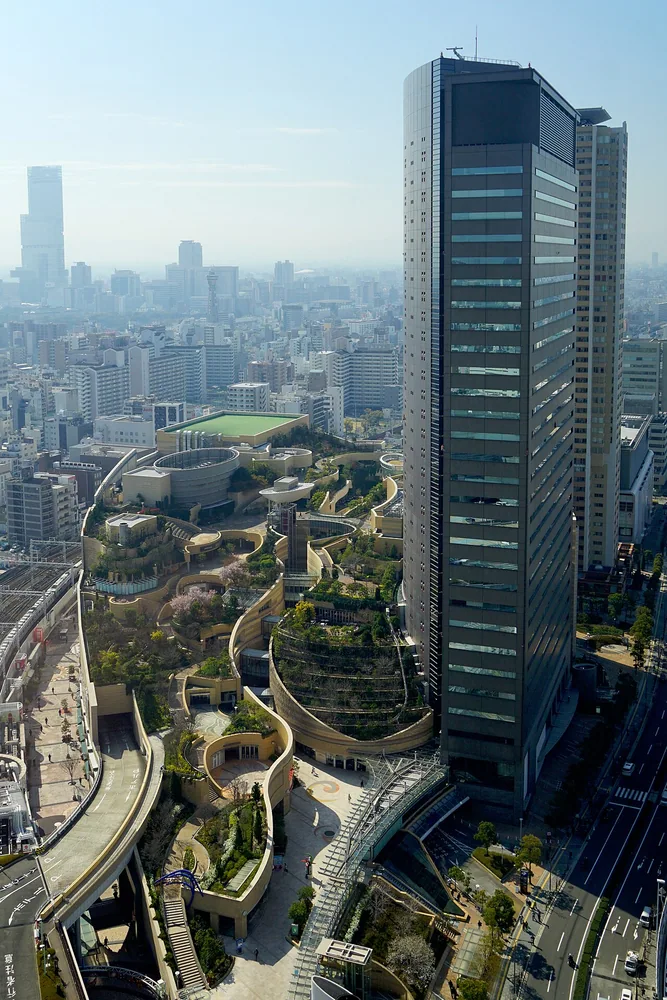
Namba Parks works well when you want your hotel, dining, and midday breaks clustered in one spot. Walking in from Nankai Namba through the mall is seamless, though transfers from other rail lines depend on platform distance. The mall's own access guide estimates a 7-minute walk from Midosuji Line Namba, 10 minutes from the Sennichimae Line, and 15 minutes from the Yotsubashi Line. If your plans rely on the Yotsubashi Line or OCAT departures every day, that extra walk adds up quickly—consider shifting your hotel closer to your primary station and making Namba Parks a dedicated stop instead.
Parks Garden, the mall's tiered rooftop park, is free to enter and lists standard hours from 10:00 AM to midnight, closing whenever the complex itself is shut. Indoor elevators reach each terrace level so you can wheel a stroller straight out into the greenery, though portions of the 5th-floor Seseragi no Mori and 9th-floor Step Garden are accessible only by stairs. On sunny days, families with strollers can stick to a short flat loop on the 8th floor and ride the elevator back down to the dining floors when kids get tired. Note that garden hours differ from retail hours: mall shops generally close at 9:00 PM and restaurants at 10:00 PM, with individual exceptions. On late arrivals, pick out an open dinner spot before boarding your train into town.
If you stay south of Nankai Namba during the 2026 winter season, save an evening stroll for the Namba Hikaritabi illumination. The Namba Parks display runs from November 13, 2026 through February 14, 2027, lit from 5:00 PM to midnight with free admission, except on December 31, 2026 and January 1, 2027 when the complex closes. On windy nights, you can admire the cascading light waterfall rising from the 2nd floor and return to the upper rooftop terraces during daylight the next morning. Over New Year's Eve and New Year's Day, shift dinner plans toward Ebisubashi-suji Shopping Street, where seasonal lucky-charm illuminations run through January 11, 2027.
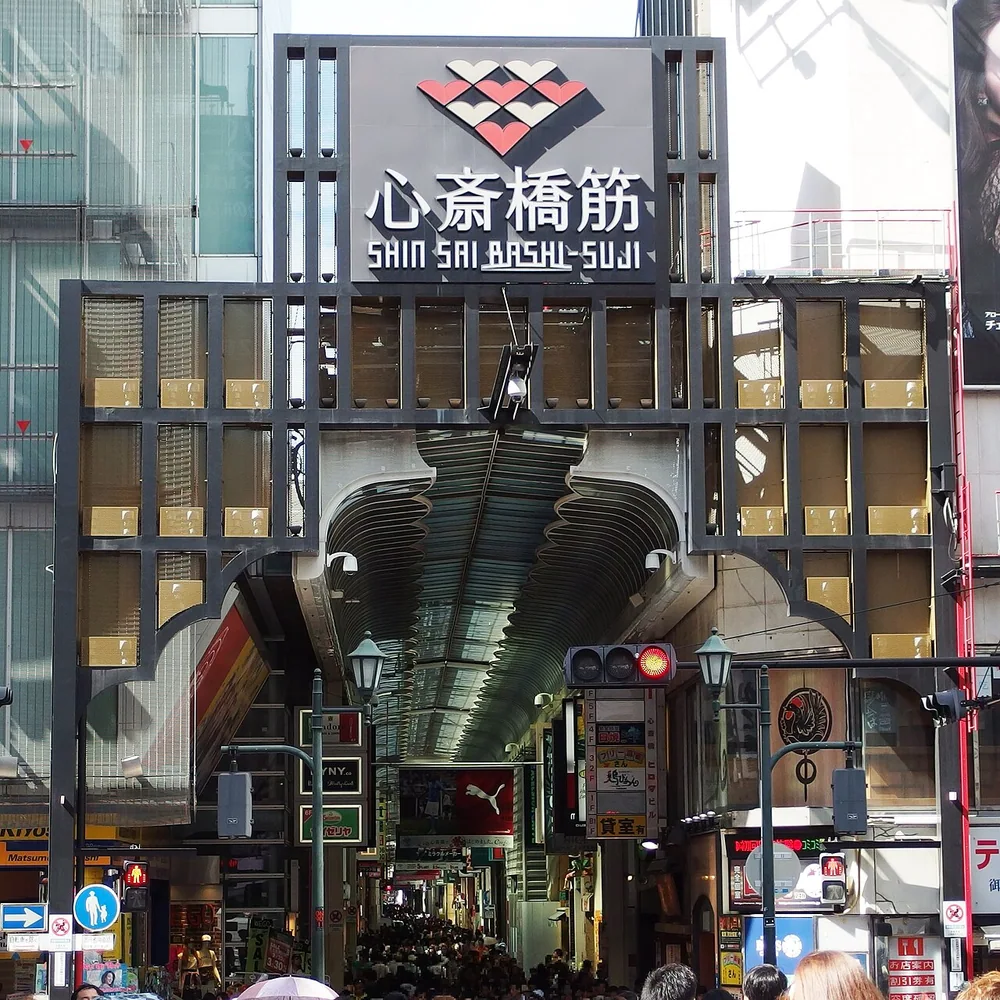
Shinsaibashi suits shoppers who like dropping bags off in their room between outings. Ask yourself whether your days revolve around Shinsaibashi-suji and department stores or just a quick pass through Dotonbori. Dedicated shoppers benefit from staying north of the canal toward Nagahori. If your anchor points are Namba Station, Takashimaya, and Ebisubashi, staying just south of the river near Midosuji still lets you cross the bridge into Shinsaibashi-suji after dinner. Since Shinsaibashi Station sits one stop north on the same Midosuji Line, pick your end based on the exits you will use most, and keep your hotel's street address handy for walking back after the covered arcade shops close.
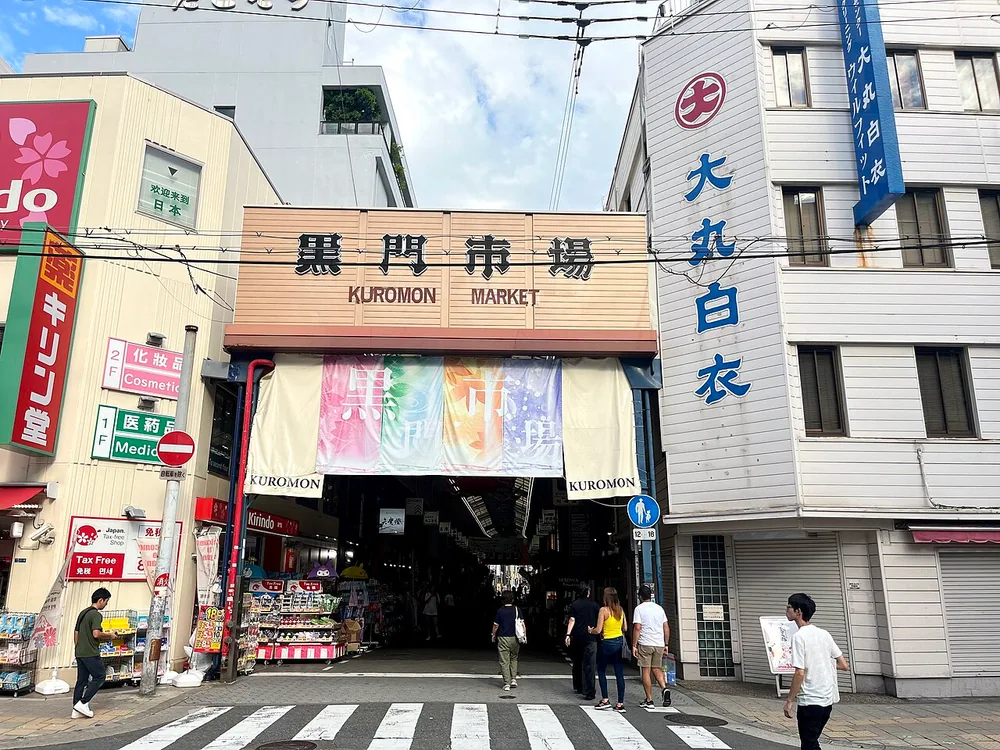
On the Nippombashi side, pin both Osaka Metro Nippombashi and Kintetsu-Nippombashi on your map. Kuromon Market sits right beside Metro Nippombashi Exit 10, and the Kuromon Market Association publishes a full map of stalls and alleys. If you have specific sushi counters, seafood stalls, or hot-food shops in mind, check the hours of two favorites ahead of time; on an early flight home, save breakfast for the hotel or airport instead. Den Den Town's hobby and retro-game shops stretch south from here and pair easily after a morning at the market, while families who want to bring market takeout back to the room should look for hotels with a dining table or microwave.
For longer stays on the south side of Nippombashi, compare laundry rooms and kitchenettes. Citadines Namba Osaka in Nippombashi 3-chome offers a 5th-floor coin laundry and a kids' playroom open 6:00 AM to 10:00 PM (parental supervision required), plus a shared kitchen in the residents' lounge, while select room layouts include in-room cooking space. Amenities like these let you pack lighter or plate market breakfasts right in the room. Remember that you still have to haul bags from the station on arrival day, and shared machines get busy—avoid leaving all your laundry for departure morning.
Between Kuromon Market and Dotonbori lies the Sennichimae district. If your evenings center on comedy theaters, dinner, and late-night bites on foot, staying on the same side of Midosuji spares you crossing the main boulevard every night. When older family members head back early, agree to split at an intersection you already walked together during the day, or meet outside a specific subway gate or hotel lobby the next morning. Because Nippombashi sits opposite Nankai and JR Namba across the neighborhood, weigh market proximity against whichever train line you will need for early morning departures to your next city.
Kansai Airport transfers: your landing time determines the best ride
Nankai Electric Railway lists airport-to-city travel times from Kansai-airport Station to Nankai Namba at roughly 38 minutes on the Rapi:t limited express and about 44 minutes on the Airport Express. The Rapi:t offers reserved seating with dedicated luggage racks for an extra limited express surcharge, while the Airport Express runs straight into Nankai Namba on a standard fare. If you are traveling with kids or older parents and want guaranteed seats within budget, check whether a Rapi:t departs soon after you clear customs—if the wait for the next Rapi:t exceeds the 6-minute difference in ride time, hopping on the next Airport Express often gets you to your hotel sooner.
Starting April 1, 2026, the regular adult limited express surcharge for the Rapi:t is ¥700, or ¥550 when purchased through Nankai's ticketless service, both in addition to the base fare; buying the limited express ticket onboard adds a ¥300 surcharge. If your family wants seats together on the return trip, you already know your flight date and time and can reserve in advance. On arrival, wait until you have cleared immigration and picked up checked bags before choosing your departure.
Fixed flight times make planning the return trip easy, whereas arrival planning needs buffer time for immigration, baggage claim, and the walk to the station—especially at Terminal 2, which requires a free shuttle bus to reach the rail terminal. Heading back to Terminal 2, the Nankai shuttle from Kansai-airport Station / Aeroplaza takes roughly 7 minutes on the road, plus waiting time and the walk to check-in. Put your exact terminal number in your departure-day calendar so there is no guesswork at the airport station.
If you stay around JR Namba and Minatomachi, compare the OCAT airport limousine bus against Nankai trains. Kansai Airport Transportation's Namba OCAT timetable lists separate arrival and departure columns for Terminal 1 and Terminal 2 once you select your date and direction. Buses depart from Bus Stop 9 on the 2nd floor of OCAT on a first-come, first-served basis, even if you hold a pre-purchased ticket. For guests staying beside OCAT with heavy bags, the bus eliminates the walk to Nankai Namba when travel times are similar—just build in extra buffer for queues and highway traffic during holidays.
Late-night arrivals need to know which final departures are still realistic. Add immigration, the walk to the platform, and your planned hotel check-in onto your scheduled landing time, then note the last trains for Nankai and last buses for OCAT. If you land at Terminal 2, compare the Terminal 2 bus timetable directly against the shuttle-plus-Nankai connection. If neither option leaves enough margin, pick a taxi plan or an airport hotel before you fly so everyone in your group knows where to regroup if a flight is delayed.
If you are catching the first morning Nankai train back to the airport, walk the exact street-level route from your hotel lobby to the station platform during daylight earlier in your stay. Underground arcades keep you dry, but shutters and connecting mall doors may still be locked at dawn, making a straight boulevard walk the safest backup. On an early arrival day before check-in opens, arrange luggage storage with your hotel before heading out to explore; if you plan to shop after checking out on your final day, store bags at the same hotel or near Nankai rather than locking them in a west-side station locker and having to backtrack before your airport train. For more train options and connections, see our Kansai Airport transfer guide.
Early mornings for Nara and Universal Studios Japan: which gate to use
To visit Nara Park via Kintetsu, board a train bound for Kintetsu-Nara from Osaka-Namba. If you are staying near Kuromon Market and your selected train stops at Kintetsu-Nippombashi, boarding there saves a backward walk—confirm the stop and save the boarding station in your calendar. If you prefer JR Namba, check the Yamatoji Line destinations and transfers, and on the return leg verify whether your train terminates at JR Namba or continues onto the Osaka Loop Line. Keep the arrival stations straight as well: Kintetsu-Nara sits closer to Nara Park, while JR Nara sits farther west, better suited if you want to stroll Sanjo-dori first or connect with other JR legs.
For Kobe-Sannomiya, check Hanshin Namba Line departures out of Osaka-Namba to see whether your train runs straight through or requires a change along the way. A single Kobe day trip works seamlessly from Namba. Only if you plan multiple consecutive mornings riding JR trains out of Osaka Station toward Kyoto, Kobe, or Himeji does it make sense to compare hotels in Umeda to avoid daily subway transfers. For a broader look at how districts compare across the city, read our Osaka neighborhood comparison.
To reach Universal Studios Japan from Namba, ride the Hanshin Namba Line from Osaka-Namba to Nishikujo and transfer to the JR Yumesaki Line for Universal City. When heading out early with kids, staying near an easy entrance to Osaka-Namba matters far more than booking next to JR Namba just because the park station is operated by JR. For a single park day, there is no need to switch hotels; only if you plan back-to-back park days with midday hotel naps is it worth comparing rates and security-line timing around Universal City itself.
If your Osaka itinerary focuses on Shinsekai, Abeno, or Tennoji, Namba gives you a straight shot south on the Midosuji Line. Travelers planning regular dinners in Dotonbori can keep one home base in Namba and ride back after sightseeing. Shifting your hotel to Tennoji makes sense mainly if you are taking the JR train to the airport from there or spending your days south of Abeno. Neither district holds a fixed price advantage—always compare total rates for your exact dates and guest count, weighing any savings against the extra transit time.
Traveling in a group: prioritize sleep setups and luggage space first
When sharing a room with friends, decide upfront whether everyone needs a separate bed; when traveling with children, enter every child's exact age in the booking search so platforms display eligible room plans. On twin rooms, check bed widths and inspect floor plans to see whether an added sofa bed or rollaway blocks the main walkway. Swissôtel Nankai Osaka's FAQ notes that extra beds can be requested on twin rooms by searching for three adults during booking, while connecting rooms are limited and must be requested directly with the hotel. Families booking two adjoining rooms should also confirm in writing that the connecting doors can be unlocked.
Even within the family room category, check the actual bed setup. Centara Grand Hotel Osaka's Family - Yu Standard Floor measures around 40 square meters with one king bed plus kids' bunk beds for two adults and two children. A family where one parent and child wake easily may not thrive in a standard four-bed layout, whereas two kids used to their own bunks with one parent alternating nearby may appreciate the separation. Always verify the floor plan and whether four people can split up bathroom routines smoothly at the end of the day.
When riding the subway with older relatives, break down any hotel claim of being near an elevator into two halves: station and property. At the station, you still need to follow official step-free routes all the way from the platform to street level. At the hotel, verify whether steps lead from the sidewalk into the lobby, whether the bathroom has a walk-in shower or requires stepping into a tub, and whether a wheelchair can turn inside the doorway. If breakfast is on a different floor from the lobby, check elevator convenience too—for anyone minimizing walking, a room close to the hotel elevators and a direct ground-floor exit matters more than a high-floor view.
Solo travelers packing light can trade down to a compact room right beside the Midosuji Line or a favorite dining street. Travelers with large bags should confirm whether the hotel holds luggage after check-out, whether the front desk is staffed at pickup time, and whether you can message your reservation name ahead of shipping bags to the property. If you expect heavy shopping, memorize the nearest elevator-equipped station gate and crosswalk on day one so departure morning follows a familiar path.
Group stays also need to factor in Osaka Prefecture's accommodation tax, which is often omitted from headline comparisons. Under current Osaka Prefecture rules, the tax is assessed per person, per night based on the taxable room charge (excluding meals and consumption tax): exempt under ¥5,000, ¥200 from ¥5,000 to under ¥15,000, ¥400 from ¥15,000 to under ¥20,000, and ¥500 for ¥20,000 and above. For example, a ¥23,000 taxable room rate split between two guests equals ¥11,500 per person, adding ¥200 each for a total of ¥400 in tax for that night. When pre-paying online, check whether the checkout screen includes the accommodation tax; if collected separately, keep cash or a card ready at check-in.
Narrow your shortlist to two or three properties using identical dates and guest counts, then compare breakfast, bed types, and cancellation deadlines side by side. Over weekends, booking platforms may display an average nightly rate or highlight the cheapest night—always pull up the final total. If you have an early Kintetsu train, skip breakfast-inclusive plans on days you leave before dining opens. For flexible travel plans, note the exact free-cancellation date and cutoff hour in Japan Standard Time right beside your confirmation number rather than tracking daily price swings.
How to plan 2-night, 4-night, and late-arrival or early-departure stays
On a two-night first visit arriving from Kansai Airport in the afternoon, pick a hotel between Nankai Namba's North Gate and Midosuji so you can drop bags and walk straight to Ebisubashi. Spend your full middle day in Shinsaibashi, Kuromon Market, or Nara, then return to the same room for night two. Staying right beside the station pays off clearly on short trips because you haul bags twice in three days without repacking mid-stay. If you only have one night near Dotonbori ahead of an early flight, pack your sightseeing into the arrival afternoon and save the next morning strictly for the airport transfer.
For a four-night stay mixing one day in Nara, one day at Universal Studios Japan, and shopping around Namba, base yourself near the intersection of Osaka-Namba and the Midosuji Line. You can pull city neighborhoods directly from our three-day Osaka itinerary. If you split two nights in Kyoto before flying home from Kansai Airport, time the hotel switch to match your city order—forward heavy suitcases or move once, and compare direct Kyoto-to-KIX trains against looping back through Nankai Namba. Switching hotels inside Osaka just to be closer to Shinsaibashi one day and Umeda the next only forces extra packing and bag storage.
If even the earliest Nankai train or airport bus out of Namba cannot make your flight check-in, move only your final night out to the airport. On check-out day, leave suitcases at your Namba hotel, spend the day in Minami as planned, pick up your bags in the early evening, and ride out to an airport hotel. You can still enjoy dinner in Dotonbori or dine near the airport, leaving just a short hop to your departure terminal the next morning.
A few useful answers
Which side of Namba is best for a first-time stay in Osaka?
If you are rolling large suitcases on the Nankai Line to and from Kansai Airport, look between Takashimaya, Nankai Namba Station, and Namba Parks. For daily Midosuji Line subway rides, stay near Osaka Metro Namba (M20). If you want late-night strolls along Dotonbori after dinner, pick a spot between Midosuji and the canal.
How long is the Nankai train from Kansai Airport to Namba?
Nankai Electric Railway lists about 38 minutes on the Rapi:t limited express and about 44 minutes on the Airport Express, both running directly to Nankai Namba. The Rapi:t requires reserved seats and a separate limited express ticket. If you fly into or out of Terminal 2, budget extra time for the free terminal shuttle and wait times.
Do I go to Nankai Namba Station to catch the Kansai Airport bus?
No, head to Bus Stop 9 on the 2nd floor of OCAT next to JR Namba Station. Airport buses operate on a first-come, first-served basis, so match your travel date and departure terminal against the official timetable.
Should I take a train from Osaka-Namba or JR Namba to reach Nara Park?
For Nara Park, take a Kintetsu train from Osaka-Namba to Kintetsu-Nara, which drops you closer to the park. If you are staying near Kuromon Market, you can board at Kintetsu-Nippombashi if your chosen train stops there. Taking the JR Yamatoji Line from JR Namba arrives at JR Nara instead.
What should I check before booking a Dotonbori river-view room?
Check the full room category name that explicitly promises a view, which bridge the window faces, and the bed layout. If your goal is simply seeing the Glico Running Man sign, you can easily save that for an after-dinner walk along Ebisubashi and the riverside promenade. Light sleepers should compare window orientation against nearby main roads and dining alleys.
If I stay near Kuromon Market, what time can I go for breakfast?
Take Osaka Metro Nippombashi Station Exit 10 for the north side of the market. Individual seafood stalls, cooked-food counters, and sit-down eateries keep different hours, so pick your target shops from the Kuromon Market Association map and check their opening times before heading out.
Official information and references
Sources used in this guide.
- Nankai Electric Railway | Kansai Airport to Namba travel times and timetables
- Nankai Electric Railway | Nankai Namba Station map and ticket gates
- Nankai Electric Railway | Limited Express Rapi:t train, seating, and tickets
- Nankai Electric Railway | Limited Express fare revision and onboard surcharge from April 2026
- Nankai Bus | Kansai Airport Terminal 2 free shuttle bus
- Kansai Airport Transportation | Namba (OCAT) route timetable and terminal stops
- Kansai Airport Transportation | Namba (OCAT) bus stop location and boarding rules
- Osaka Metro | Namba Station (Midosuji Line) layout and step-free exits
- Osaka Metro | Nippombashi Station layout and step-free exits
- Namba Walk | Underground mall entrances at Namba and Nippombashi
- Namba Walk | Surface elevators and underground mall facilities
- Kintetsu Railway | Osaka-Namba Station layout and transfer routes
- JR West | JR Namba Station layout map
- Osaka Convention & Tourism Bureau | Walking route from Ebisubashi and Tonbori River Walk to Nippombashi
- Kuromon Market Association | 2026 member shops and market map
- Namba Parks | Rail access and shopping center hours
- Parks Garden | Rooftop garden levels, hours, and admission
- Parks Garden | Stroller and wheelchair access guide
- NANKAI | 2026–2027 Namba Hikaritabi winter illumination announcement
- Osaka Chushin Tourism | Year-end closures and Ebisubashi-suji illumination schedule
- Swissôtel Nankai Osaka | Direct Nankai Namba access, extra beds, and connecting rooms
- Hotel Royal Classic Osaka | Metro Exit 12, Nankai, and JR access routes
- Hiyori Hotel Flex Osaka Dotonbori | River-view orientations, bed widths, and room sizes
- Centara Grand Hotel Osaka | Nankai South Exit and Namba Parks deck access
- Centara Grand Hotel Osaka | Family room bed configurations and occupancy
- Citadines Namba Osaka | Coin laundry, residents' lounge, and kids' playroom
- Osaka Prefecture | Accommodation tax brackets and taxable room rates