Three full days let Osaka become more than a neon stop between trains. Stay in one hotel, give each day a different part of the city, and treat dinner as part of the route. This Osaka itinerary of 3 days is an adaptable starting point for independent travelers, with room to shorten each walk.
Choose Namba or Umeda before comparing rooms
Choose Namba for evenings around Dotonbori and a convenient southern base; choose Osaka Station/Umeda if onward JR travel and the northern city matter more. Neither is automatically the best area for everyone. The official Osaka accommodation directory groups properties by district, making it easier to compare locations before looking at individual rooms. Check the actual station exit, elevator route and entrance rather than relying on a hotel’s station-name branding.
Keep all three nights in the same hotel if your wider route permits. Shin-Osaka is the Shinkansen station, distinct from Osaka Station; staying there can simplify a particular departure but adds journeys to the walks below. Match your arrival to the correct terminal and rail operator with our Kansai Airport transfer comparison. Ask about late check-in and luggage storage directly, and read cancellation terms in Japan time.
Day one: walk from Namba to the canal
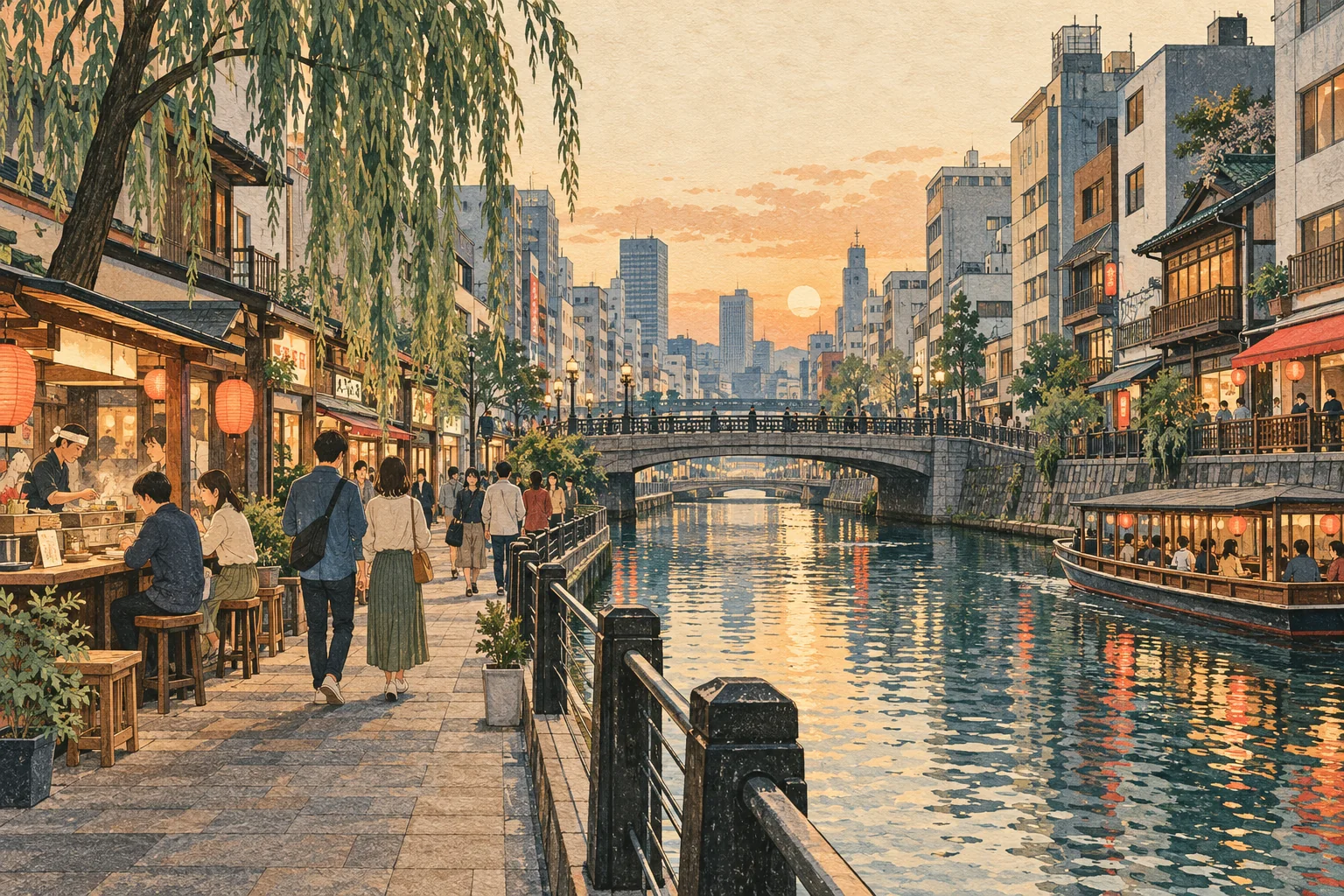
Start after breakfast around Namba, with a short visit to the Hozenji area before continuing to Dotonbori. Leave enough space for other people at temple approaches, bridges and restaurant entrances. Walk north toward Shinsaibashi if you want shops, or stay beside the canal for a slower afternoon. The useful decision is where to stop, rather than how many neighborhoods you can add before dinner.
Have one food priority and an alternative nearby. Takoyaki or okonomiyaki can fit the day, but a famous queue should not determine every meal. Eat in the space the shop provides and take litter with you when no bin is available. This is also the easiest day to shorten after a late arrival: remove the shopping extension, keep a nearby dinner, and save the longer walk for another morning.
Day two: give the castle its own morning
Begin at Osaka Castle Park, choosing your arrival station according to the gate you actually want. The grounds are large, so a station named after the castle does not mean the tower is just outside its exit. Decide beforehand whether you want an outdoor walk or the museum inside. The castle museum’s own website explains that today’s main tower was reconstructed in 1931 and has operated as a museum since its opening.
Check current admission, entry arrangements and exhibitions before committing to the interior. After lunch, move toward Nakanoshima for a riverside afternoon, with one indoor stop selected only after checking its opening day. Finish in Umeda if you want dinner and department stores. In rain or intense heat, reduce the park loop; do not try to recover the lost distance by rushing through another district.
Day three: pair Tennoji with Shinsekai
Start around Tennoji and the park, then make Shinsekai your second area rather than adding a distant day trip. Keep a sit-down lunch between the two. A tower viewpoint, a temple visit or extra shopping can be the optional addition; choose the one that suits your interests and check its own rules. Families can finish earlier without losing the structure of the day.
Use the Osaka Metro route and station guide to check the actual line, transfer and exit. Its Midosuji Line connects Umeda, Namba and Tennoji, which helps explain why one well-chosen base works for this plan. JR, private railways and the subway are separate operators: a ticket or pass for one does not automatically cover all the others, even when their stations share an area name.
Buy transport for the journeys you will take
For these neighborhood days, start by pricing individual local rides. An IC card can simplify eligible fares, while a day ticket needs enough covered journeys to make sense. Compare the route, operators and attraction inclusions before buying a sightseeing pass. Our rail-ticket decision guide helps separate a convenient payment method from an unlimited travel product; neither convenience nor a long inclusion list proves that a pass saves money.
The JNTO Osaka overview provides a wider picture of the city’s food districts, castle and surrounding region. Use it to choose a replacement day if your interests differ. Universal Studios Japan or an excursion to another city deserves its own time allocation; substitute it for one of these days instead of attaching it to an already full afternoon. Reserve anything with timed admission against the actual travel date.
Keep Kyoto and departure day separate decisions
If Kyoto comes next, choose whether you want a day trip or a change of base before booking more nights. Our quieter Kyoto walking plan is built around a different pace and should not be squeezed into an Osaka evening. Three Osaka days are three usable sightseeing days, not necessarily the same as a three-night stay with flights at either end.
On departure, work backward from your flight or reserved train, allowing for collecting bags and reaching the correct platform. Save the hotel address and station exit offline. If time becomes short, remove an optional stop rather than the transfer buffer. The value of a single Osaka base is the freedom to return for a rest, then head out again for a meal without repacking your trip.
A few useful answers
Is three days enough for Osaka?
Yes, for a focused introduction to several city districts. This plan assumes three full sightseeing days. A theme park, Kyoto excursion or arrival day uses time of its own, so replace a day or add another night.
Should I stay in Namba or Umeda?
Choose Namba for the southern walks and nearby evening meals; choose Osaka Station/Umeda for northern Osaka and useful onward rail connections. Compare the exact hotel entrance and station exit before deciding.
Do I need a rail pass for three Osaka days?
Not automatically. Add the covered rides and any admissions you genuinely want, then compare current prices. Local subway travel and airport journeys may require different coverage.
Check with the source
Schedules, availability and rules can change. These official sources are the place to confirm details before you book.