Plan Tsutenkaku observation tickets and entry reservations, Tower Slider and Dive&Walk eligibility, Janjan Yokocho, Kushikatsu Daruma, Sennariya Coffee and a family half-day around Tennoji.
- Region & Focus
- OsakaAttractions
- Reading Scope
- 28 min read · 16 chapters · 4 Q&As
- Official Verification
- 24 official sources checkedUpdated October 26, 2026
- Key Topics
- NeighborhoodsBookingFood
Chapter Route Map (tap any stop)
- Choose a tower visit, neighborhood walk or family half-day first
- Approach from Ebisucho in the north or Dobutsuen-mae and Shin-Imamiya in the south
- Observation tickets include the outdoor deck: ¥1,500 for adults on standard dates
- Reservations, check-in and cancellation depend on the product
- Inside the tower: Golden and Light decks, then stairs outdoors
- Tower Slider: check eligibility and equipment before buying
- Dive&Walk or Walk-only: accept the stairs before deciding on the jump
- Combined tickets: reserve three hours if you really want all three activities
- Janjan Yokocho links the station with a meal
- Sennariya Coffee: time your mixed-juice break around opening hours
- Two Kushikatsu Daruma branches: counter-only original or reservable tables
- Kushikatsu ingredients include the batter, oil and sauce
- Tennoji Park: a free break or a visit to Keitakuen Garden
- Visit Tennoji Zoo before Shinsekai and keep your discount ticket
- Three half-day routes: neighborhood, garden or zoo
- Rain and night views: leave room to adjust outdoor time and meals
- Quick Q&A
You can visit Shinsekai just to wander and eat kushikatsu, or build a half-day around Tsutenkaku, its slide or Tennoji Park. Decide whether you want city views, an activity at height or a walk with children before choosing tickets and an entrance. Since April 2026, Tsutenkaku observation tickets have combined indoor and outdoor decks. Tower Slider and Dive&Walk cost extra, and entry times require a reservation.
Choose a tower visit, neighborhood walk or family half-day first
Start in the streets around Tsutenkaku, go up the tower or try one activity, sit down for kushikatsu, then leave south through Janjan Yokocho toward Dobutsuen-mae Station. To include Tennoji Park, begin with the garden or zoo from Tennoji and enter Shinsekai in the afternoon. Allow about half a day for the neighborhood alone; choose either the garden or the zoo as an addition beforehand.
For a first visit focused on Osaka’s skyline, an observation ticket is enough. If you enjoy activities at height, compare Tower Slider and Dive&Walk. The latter requires climbing more than 200 steps, and both have child eligibility rules. If you only want street photographs and food, keep to the neighborhood.
Restaurants, shops and attractions in Shinsekai set their own hours; there is no single closing time for the whole area. Use the Tsutenkaku entrance or an exact restaurant branch as your meeting point so people arriving from different stations reach the same place.
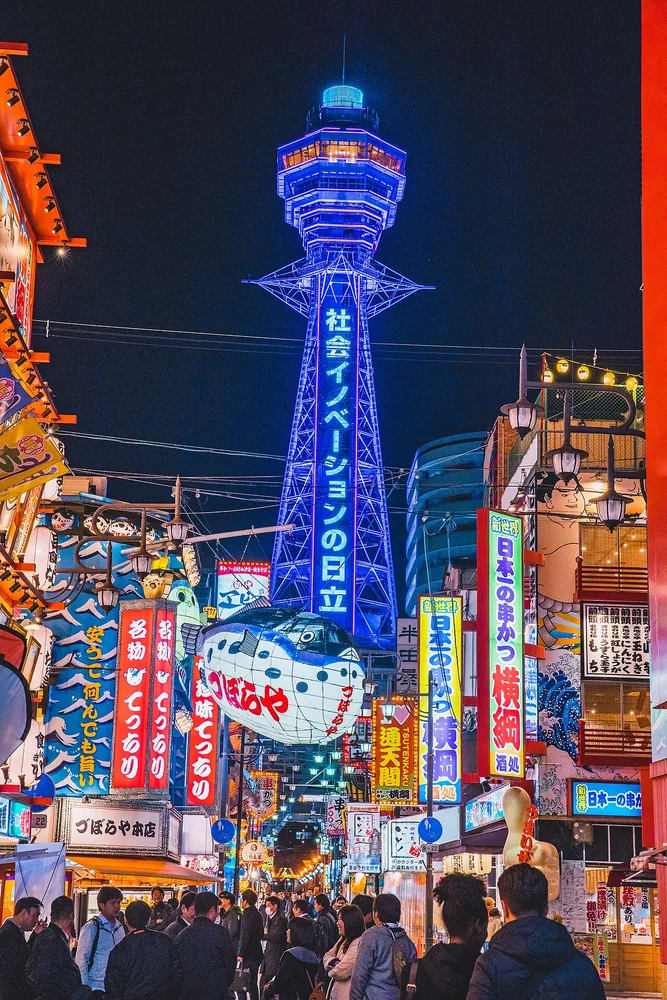
Plan Tsutenkaku observation tickets and entry reservations, Tower Slider and Dive&Walk eligibility, Janjan Yokocho, Kushikatsu Daruma, Sennariya Coffee and a family half-day around Tennoji.
Approach from Ebisucho in the north or Dobutsuen-mae and Shin-Imamiya in the south
For Tsutenkaku, the operator’s access page lists these walks at street level: about three minutes from Exit 3 at Osaka Metro Ebisucho Station on the Sakaisuji Line; three minutes from Hankai Ebisucho Station; six minutes from Exit 1 at Dobutsuen-mae on the Midosuji Line; six minutes from the Tsutenkaku Gate/East Exit at JR Shin-Imamiya; and ten minutes from the West Exit at Nankai Shin-Imamiya. These times start at the named exit. Add time to leave the platform, pass through ticket gates and wait at crossings.
From Namba or Umeda on the Midosuji Line, Dobutsuen-mae connects conveniently to Janjan Yokocho, from which you can walk north to the tower. If you are already on the Sakaisuji Line, Ebisucho brings you to Tsutenkaku first. JR passengers should use Shin-Imamiya’s Tsutenkaku Gate/East Exit, while Nankai passengers use the West Exit. The two railways have different exits and walking distances.
With a stroller or wheelchair, find elevators on the Osaka Metro station maps. If visiting Tennoji Zoo first, its accessible route on the Shinsekai side starts from Dobutsuen-mae’s East Ticket Gate, JR Shin-Imamiya’s Tsutenkaku Gate/East Exit or Nankai Shin-Imamiya’s North Exit. The South Ticket Gate side at Ebisucho, nearest the zoo, has no elevator. Distinguish Nankai’s West Exit for Tsutenkaku from its North Exit for the zoo. Tsutenkaku has no dedicated car or bus parking.
Observation tickets include the outdoor deck: ¥1,500 for adults on standard dates
As of October 26, 2026, the Tsutenkaku hours and prices page lists standard admission at ¥1,500 for ages 15 and older and ¥800 for ages five to 14. Children aged four and younger enter free. For the five days from December 30, 2026, to January 3, 2027, prices are ¥1,800 for adults and ¥900 for children. The online observation ticket linked from the official site states that, from April 1, 2026, admission combines the general observation deck at 87.5 meters with the special outdoor observation deck at 94.5 meters.
This ticket covers indoor views and Tenbo Paradise when the outdoor area is open. Tower Slider and Dive&Walk are separate products, and you may buy just one of them. Choose each person’s ticket for the activities they will actually do. You can also walk around Shinsekai and eat without going up the tower.
The general observation deck opens from 9:00 a.m. to 9:45 p.m., with last entry at 9:15 p.m. Last entry to the special outdoor deck is 9:35 p.m. The third-floor gift shop closes at 7:30 p.m., and the second-floor official shop at 9:30 p.m. Go up earlier if you want something from the third-floor shop. For views after dinner, secure an available entry slot first.
Reservations, check-in and cancellation depend on the product
Tsutenkaku currently requires a reserved entry time. Direct buyers can use the online ticket site linked from the official website to choose a date and available slot. Holders of the Osaka Amazing Pass, Osaka e-Pass, Have Fun in Kansai Pass, exchange vouchers and similar tickets must reserve a slot at the on-site counter on the day. If using a pass, make that reservation first, then use the gap for a nearby walk or meal. Popular evening slots may sell out.
For Triplabo online observation tickets, check in at the B1 admission gate with the electronic QR-code voucher. It is valid only on the selected date. Dates can be booked up to three months ahead; same-day online bookings close at 8:30 p.m. Allow about 60 to 90 minutes for the visit. Elevator numbers and capacity are limited, so waiting may continue after admission. Include both the visit and the walk away from the tower when planning a restaurant reservation.
Tsutenkaku’s general ticket rules state that purchased tickets are nonrefundable, are not reissued and do not permit re-entry after leaving. Select the date, age category and slot before buying. If you qualify for a reciprocal discount or another on-site offer, use the relevant counter procedure rather than paying full price and asking for an adjustment afterward.
Inside the tower: Golden and Light decks, then stairs outdoors
The floor guide places the fifth-floor Golden Observation Deck at 87.5 meters, with a Billiken statue. The fourth-floor Light Observation Deck is at 84 meters and becomes a viewing space with lighting and mirror balls at night. The second floor connects the circular elevator with the observation elevator and also has the official shop. For a seated drink beyond the viewing areas, Tsutenkaku Cafe on the third floor has counter and table seats.
Reach the outdoor deck by stairs from the fifth floor. Tenbo Paradise is an outdoor walkway at 94.5 meters with a diameter of 8.5 meters. TIP THE TSUTENKAKU is at 92.5 meters, extending 5.4 meters long and 1.5 meters wide, with a transparent floor at the end. This is covered by the observation ticket. Dive&Walk, which requires a safety harness, is a separate activity lower down outside the tower.
The outdoor route has stairs. For safety, the operator restricts access for people with mobility impairments and wheelchair users. Rain, strong winds or dense fog may cause temporary closure. Umbrellas, parasols, eating, drinking, smoking, tripods and monopods are prohibited outdoors. These access limits concern the outdoor section. Before buying, decide whether indoor views meet your group’s needs. On hot days, keep the outdoor visit short and return inside rather than trying to extend it with a parasol.
The third floor displays models, films and photographs of Shinsekai about a century ago, letting you compare today’s streets with the early amusement district. The recreated ceiling painting below the tower depicts peacocks and seasonal flowers and can be seen from the street. B1 Waku Waku Land brings together Morinaga, Ezaki Glico and Nissin Foods shops, with snacks, exclusive products and photo displays. This basement shopping area is free to enter from 9:00 a.m. to 9:30 p.m., with last admission at 9:15 p.m. If you only want snack souvenirs, plan it separately from the paid decks.
Tower Slider: check eligibility and equipment before buying
Tower Slider starts on the third floor, 22 meters above ground, circles the elevator tower one and a half times and ends on B1 after 60 meters. The slide itself takes about ten seconds. The August 2026 terms of use give a total time of 30 minutes for storage, equipment and moving between points, with longer waits when crowded. Use that full duration when arranging dinner or another activity.
A single ride currently costs ¥1,100 for ages 15 to 65 or ¥600 for ages seven to 14. Hours are 9:30 a.m. to 8:30 p.m., with last check-in at 8:00 p.m. Children aged seven to 12 must be accompanied by a guardian aged 18 or older. Basic eligibility is age seven to 65, height at least 120 cm and weight below 120 kg. A seven-year-old who is too short cannot ride. Check each child’s age and height before deciding how many tickets to buy.
Phones, bags, hats and accessories must go into the free dedicated slide lockers on B1. Riders wear a helmet and use a sliding bag. Clothing must cover skin exposed to friction, and phones cannot be carried on the slide. The official instruction video below shows equipment and posture in advance; follow staff instructions when getting ready on the day.
Tickets cannot be changed, canceled, refunded or reissued for personal reasons after purchase. Pregnant people, those who have consumed alcohol, those prone to motion sickness, and those with concerns involving bones, physical or mental condition, vision, limbs, flashing light, heights, enclosed spaces or darkness cannot use it. Anyone unable to wear the equipment safely, maintain the sliding position or understand and follow staff instructions is also ineligible. Operations may stop for strong winds, lightning, heavy rain, dense fog or safety issues caused by high or low temperatures, dryness, humidity or condensation.
Slide instructions from Tsutenkaku’s official channel. See the official page in this section for current eligibility rules.
Dive&Walk or Walk-only: accept the stairs before deciding on the jump
Dive&Walk combines a harnessed walk around the outside of the tower at 26 meters with a jump descending about 14 meters from a point around 40 meters high. The official page also lists a Walk-only option for those who want the outside walk without the jump. Both check in at Tsutenkaku SATELLITE, 1-6-3 Ebisuhigashi, separate from the basement observation gate. Save the SATELLITE map directly.
From September 1, 2026, operating hours are 10:10 a.m. to 8:00 p.m., with last check-in at 7:15 p.m. Dive&Walk costs ¥3,000 for ages 15 to 65 or ¥2,000 for ages nine to 14. Walk-only costs ¥1,500 for adults or ¥1,000 for ages nine to 14. Children cannot participate alone; the accompanying guardian also needs a ticket. Dive&Walk participants aged nine to 14 must take part with someone aged 18 or older. Minimum height is 130 cm and weight must be below 120 kg. Ages eight and younger and 66 and older cannot participate.
The September 2026 terms of use specify more than 200 steps from ground level. All ascent and descent is by stairs, with no elevator. Allow about 40 to 60 minutes in total. You cannot use a toilet once the harness is fitted. Choose the observation deck if you want views without those stairs. Participants should use the toilet before putting on the harness.
Wear secure shoes and clothing suitable for a harness. The official page lists clothing and shoe rental together at ¥500 per person for unsuitable outfits such as skirts, dresses, flip-flops, Crocs or high heels. Exposed skin may also need covering to prevent harness friction. Store belongings, including everything in your pockets, in lockers while getting equipped. Photographs and video from the venue’s camera system are included. Bringing your own phone costs another ¥500 per device and requires the designated case; livestreaming is prohibited.
People who have consumed alcohol, feel unwell, are pregnant, have chronic conditions such as heart disease or high blood pressure, or have concerns involving bones, physical or mental condition, vision, limbs, heights, enclosed spaces or darkness are listed as ineligible. Anyone who cannot safely wear the helmet or harness is also excluded. Strong winds, lightning and heavy rain may interrupt the activity. There is no refund if you withdraw after completing on-site check-in. If you are unsure about the height, discuss the activity and conditions with staff before checking in.
Combined tickets: reserve three hours if you really want all three activities
If everyone meets the rules and wants all three activities, compare the all-experiences package linked from the official site. On October 26, 2026, the page lists prices from ¥4,600, including one visit each to the observation decks, Tower Slider and Dive&Walk, and estimates about three hours for the full experience. There is no child ticket category. Standard-day adult purchases separately total ¥5,600: ¥1,500 + ¥1,100 + ¥3,000. The starting package price saves ¥1,000; check the actual total after selecting your date.
For the package, Dive&Walk checks in at SATELLITE, while Tower Slider and the observation decks check in at Tsutenkaku’s B1 gate. Same-day online booking closes at 5:30 p.m. Last check-in times are 7:15 p.m., 8:00 p.m. and 9:15 p.m. respectively. Put the roughly three-hour experience before dinner. With no child package price, arrange children’s tickets through individual activities or on-site sales.
Calculate family costs by each person’s products. On a standard day, two adults and a ten-year-old pay ¥3,800 for observation only. If all three qualify for the slide, one ride each adds ¥2,800, for ¥6,600 in admission and activity tickets. If the child only wants the tower and adults take turns on the slide, adjust ticket numbers accordingly. Budget separately for food, transport and other activities. Children need not do an activity they dislike just to secure an adult’s preferred discount.
Janjan Yokocho links the station with a meal
Janjan Yokocho, also called Nanyodori Shopping Street, is a covered arcade on Shinsekai’s south side, useful when arriving from or leaving toward Dobutsuen-mae. The Osaka tourism page describes it as about 180 meters long from north to south. Alongside kushikatsu, it has sushi, udon, casual diners and bars. You do not need to eat your way through every business. Choose a main meal first, then decide which other places deserve a pause.
From the south, walk through the arcade before heading to Tsutenkaku. If you have already eaten near the tower, reverse the route toward Dobutsuen-mae or Shin-Imamiya. Shops have different hours and closing days, so plan around a particular place’s opening time. A roof does not mean it is lively all day. Photographing empty streets in the morning and finding lunch at midday serve different purposes. Walk around lunchtime if you want to see shops open.
The passage is narrow. Stand to the shop side when reading menus, and follow individual rules for photography inside businesses and game clubs. With a stroller, choose a restaurant that can accommodate both your party and the stroller. If four people need one table, compare the table seating and reservations at Daruma’s Janjan branch below.
Sennariya Coffee: time your mixed-juice break around opening hours
For a seated break in the arcade, consider Sennariya Coffee at 3-4-15 Ebisuhigashi. The business traces its start to a fruit shop opened here in 1948 and describes a mixed juice made with ripe fruit. It later became a kissaten cafe, with mixed juice and iced coffee as signatures. On the menu, ミックスジュース means this fruit drink. Choose a coffee instead if you want caffeine or prefer to avoid a sweet drink.
Sennariya opens from 11:30 a.m. to 7:00 p.m. on weekdays and 9:00 a.m. to 7:00 p.m. on weekends and holidays, with 34 seats. The map for this Shinsekai branch uses 3-4-15 Ebisuhigashi. Save that branch to fit it into your arcade walk.
On a weekday, going up the tower at 10:00 a.m. and spending about 60 to 90 minutes there brings you close to the cafe’s 11:30 a.m. opening. On weekends and holidays, its 9:00 a.m. opening allows a drink before a morning walk. If you already have a kushikatsu meal planned for the afternoon, keep this stop to a drink and a rest. Tell staff which ingredients you need excluded if you have dairy or fruit restrictions.
Two Kushikatsu Daruma branches: counter-only original or reservable tables
If you want kushikatsu while exploring Shinsekai, start with the seating. Daruma’s Shinsekai Main Branch at 2-3-9 Ebisuhigashi has only 12 counter seats, takes no reservations and accepts cash only. It can suit two diners willing to queue. If you need a table for four, have young children or want a fixed mealtime, compare a branch with tables before arriving at the original and finding the layout unsuitable.
The Janjan branch at 3-4-4 Ebisuhigashi lists 49 seats: 36 at tables and 13 at the counter. Reservations start from two people. Each reserved guest must order a set menu, and the 90-minute dining limit starts at the reserved time. Reservations are unavailable during busy consecutive holidays such as New Year, Golden Week and Obon. If you only want a few skewers, check walk-in and à la carte arrangements instead of booking more food than you want just to secure a seat.
Both current branch pages list opening at 11:00 a.m. on weekdays and 10:30 a.m. on weekends and holidays, with closing at 10:30 p.m. and last orders 30 minutes earlier. Each diner must order at least one drink, except elementary school children and younger. Janjan also accepts credit cards, electronic payments and QR-code payments; the main branch is cash-only. Leave a reachable phone number when booking. Janjan lists circumstances that may incur cancellation charges equal to the full group’s set-menu total, including being unreachable the day before, failing to arrive as booked or not contacting the restaurant when it also cannot reach you.
Kushikatsu ingredients include the batter, oil and sauce
Daruma’s published allergen information lists wheat, yam and soy in the batter, and beef in the oil column. Doteyaki separately lists beef, chicken, milk and soy. Vegans, people avoiding beef and those with these allergies should ask about batter and oil first; choosing vegetable skewers alone does not address them. If shared frying oil or utensils are unsuitable, tell staff exactly which ingredients must not come into contact with your food before deciding to order.
Use sauce according to the containers and instructions in the restaurant. With a shared container, never dip a skewer again after biting it. Put skewers and empty plates in the designated places. Set hot kushikatsu on a plate before sharing, and have an adult help children handle it.
Tennoji Park: a free break or a visit to Keitakuen Garden
To extend the half-day, walk from Tennoji Station to Tenshiba first. This lawn, dining and activity area at the entrance to Tennoji Park is open from 7:00 a.m. to 10:00 p.m.; businesses set their own hours. The lawn plaza is free, while nearby children’s play areas and other activity facilities charge separately. When walking from Tennoji toward Shinsekai, rest and eat here before deciding on one paid attraction to keep the route manageable.
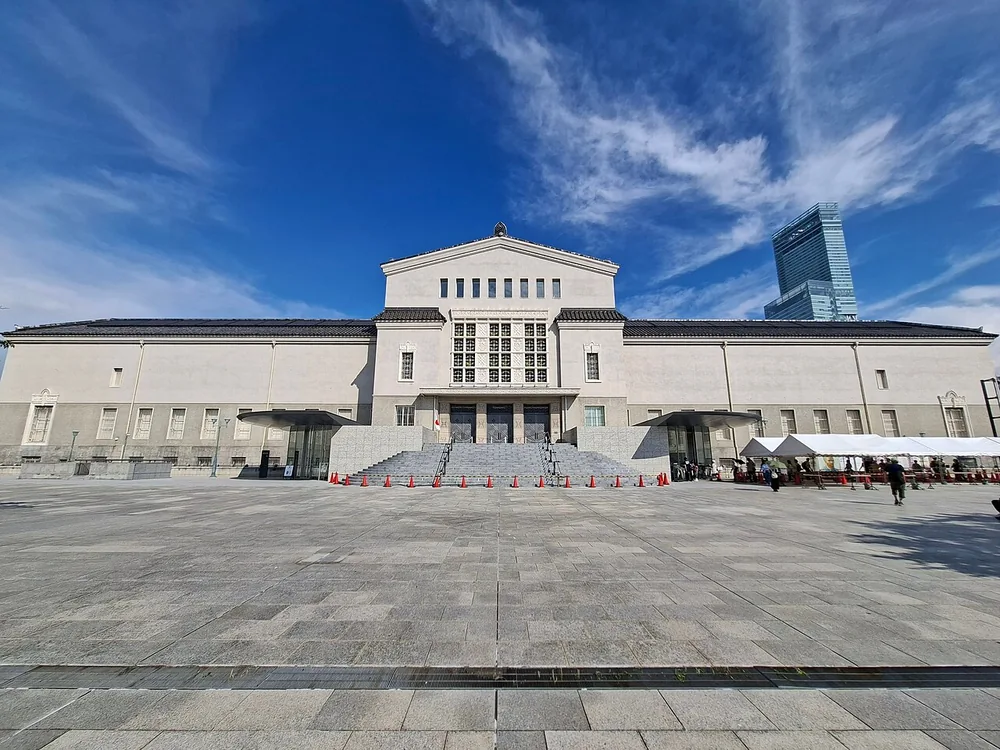
Garden lovers can choose Keitakuen Garden instead of the zoo. Current admission is ¥300 for adults, ¥200 for university and high school students, and free for junior high school students and younger. Hours are 9:30 a.m. to 5:00 p.m., with last entry at 4:30 p.m. On weekends and holidays in May and September, closing extends to 6:00 p.m., with last entry at 5:30 p.m. It closes Mondays, or the next weekday when Monday is a holiday, and December 29 to January 1. A same-day combined ticket for the garden and Osaka City Museum of Fine Arts costs ¥600 for adults or ¥300 for university and high school students. It covers the garden and the museum’s curated exhibitions; special exhibitions and special displays have separate prices.
Visitors in October 2026 have a specific change to consider. An October 1 garden notice announced pond leak inspections, suspending the water supply and waterfall until an expected date in late October. During this period, the pond level is lower and the waterfall is not running. Factor this into your choice if complete waterscapes are your main photographic goal. For trees, rocks and paths, a short walk can still fit actual opening arrangements before a meal in Shinsekai.
The garden, zoo and art museum have separate entrances; walking through the park is free. From Tenshiba toward Keitakuen Garden, a half-day can accommodate either the garden or the zoo. Keitakuen closes temporarily when Osaka City is under a storm warning. It does not reopen even if the warning is lifted that day; opening follows a safety inspection the next day and may be later than 9:30 a.m. For the garden plus the museum’s curated exhibitions, the ¥600 adult combined ticket saves ¥200 against separate ¥300 and ¥500 tickets. Both visits must be on the same day.
Visit Tennoji Zoo before Shinsekai and keep your discount ticket
If your family chooses Tennoji Zoo, put it before the tower. From July 1, 2026, general admission is ¥800 for adults, ¥200 for elementary and junior high school students from outside Osaka City, and free for preschool children. Normal hours are 9:30 a.m. to 5:00 p.m., with entry ending at 4:00 p.m. It closes Mondays, moving to the following day when Monday is a holiday, and December 29 to January 1. Some animals are no longer viewable after 3:00 p.m. A morning for animals and an evening for Tsutenkaku’s night views use the different hours well.
The zoo has the Tenshiba Gate on the Tennoji side and Shinsekai Gate on the Shinsekai side. You can enter from Tennoji and leave toward Shinsekai. Use the zoo map to choose priority animal areas, then work toward the exit along the internal paths. For same-day re-entry, apply at the gate counter before leaving.
The reciprocal discount announced by both attractions began in July 2026. Show a used zoo admission ticket at Tsutenkaku’s first-floor ticket center for ¥200 off adult observation admission or ¥100 off child admission. Show a Tsutenkaku same-day receipt or online ticket at a zoo entrance counter for 10% off adult or elementary/junior high school admission. The offer is for the ticket holder only and cannot be combined with other discounts. Tickets can be presented through the end of the month after use; if that falls on a closed day, the deadline moves to the preceding open day.
The zoo’s service information lists paid lockers near both gates and paid storage for large luggage at the stroller rental point on the Shinsekai side. Free wheelchairs are first come, first served. Rental strollers must be returned when you leave, even if you plan to re-enter that day. Both gate counters accept credit cards, transport IC cards and specified electronic payments. If an IC card has insufficient funds, you cannot pay just the balance in cash; the whole amount must be paid in cash instead. Transport IC cards cannot be topped up in the zoo.
Visitors admitted free who want the later Tsutenkaku discount can request a joint discount voucher at the zoo’s Shinsekai Gate, then buy at Tsutenkaku’s first-floor counter. The joint discount cannot be combined with a sightseeing pass or other discounted ticket. The zoo prohibits drinking alcohol, bringing alcohol and entry after drinking. Feeding animals and using camera flash, external flash units or reflectors toward them are also prohibited. A plan to eat kushikatsu, drink alcohol and then return to the zoo will not work.
Three half-day routes: neighborhood, garden or zoo
For Shinsekai alone, arrive at Ebisucho or Dobutsuen-mae around 1:00 p.m. Walk some streets around Tsutenkaku, then enter at your reserved time. Make the 60- to 90-minute observation visit the main afternoon stop, have an early dinner afterward, and leave south through Janjan Yokocho. Choose either a pre-meal break or an after-meal treat for Sennariya’s mixed juice. Allow about four hours overall. If queues grow, shorten the walking time first while protecting booked check-in and restaurant times.
For the garden route, start at Tennoji and reach Tenshiba around 10:00 a.m. Visit Keitakuen, have lunch, then walk outside the park toward Shinsekai. Put Tsutenkaku in the afternoon and finish with kushikatsu or a drink. On a garden closing day such as Monday, keep the park entrance break and Shinsekai, and leave later in the morning. If you want to see a full museum exhibition, replace either the garden or tower visit. Indoor attractions usually take longer than their map footprint suggests.
For the zoo route, enter after the 9:30 a.m. opening and spend the morning in your priority areas. Fit lunch and rests to your children’s needs, leave on the Shinsekai side in the afternoon and have kushikatsu. Put Tsutenkaku later, handling the reciprocal discount and entry reservation at the counter first. If children are tired, make the neighborhood walk the final stop. This puts the earlier-closing zoo first while preserving a choice of tower times. If a child really wants the slide, skip one zoo area instead of forcing the extra activity between dinner and returning to your room.
Rain and night views: leave room to adjust outdoor time and meals
In light rain, first check whether Tsutenkaku’s outdoor areas and activities are operating. Reduce the walk to the tower surroundings and arcade, then anchor the outing with a seated meal. Janjan Yokocho shelters part of the route, but exposed sections remain between stations, restaurants and the tower entrance. Deal with wet clothes promptly rather than leaving the street walk until you must rush to reach the final check-in. If strong winds, lightning or heavy rain stop activities, stay somewhere indoors that you can reach safely and follow the product terms and on-site notices.
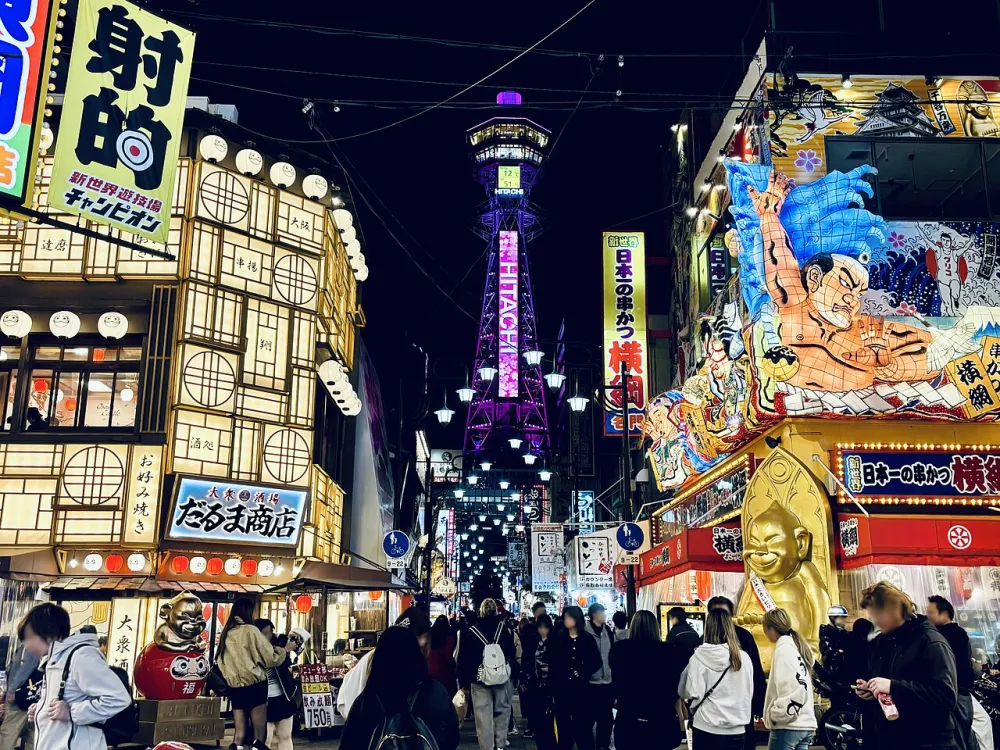
If you only want illuminated signs and the tower exterior, choose dinner first, then leave time for street photographs. To go up as well, reserve a clear slot before or after dinner. Put activities at height before a kushikatsu meal if you plan to drink alcohol. The third-floor shop closes at 7:30 p.m., so go up earlier for a specific purchase. For night photographs, do not step backward into the road for a wider view or block pedestrians with a tripod at a narrow junction.
A few useful answers
Does the ¥1,500 Tsutenkaku ticket include the outdoor deck?
Since April 1, 2026, the observation package linked from the official website has combined the 87.5-meter indoor general deck with the 94.5-meter special outdoor deck. Standard admission is ¥1,500 for ages 15 and older or ¥800 for ages five to 14, rising to ¥1,800/¥900 from December 30, 2026, to January 3, 2027. The outdoor route has stairs and weather restrictions.
Can I enter Tsutenkaku directly with the Osaka Amazing Pass?
You must reserve an entry time at the on-site counter on the day. Direct buyers can select a date and slot on the official online ticket site; pass holders follow the on-site reservation process.
Is there a ticket for walking at height without the jump?
Yes. Walk-only costs ¥1,500 for ages 15 to 65 or ¥1,000 for ages nine to 14. Check in at Tsutenkaku SATELLITE, 1-6-3 Ebisuhigashi. Children need an accompanying guardian who also buys a ticket. Current hours are 10:10 a.m. to 8:00 p.m., with last check-in at 7:15 p.m.
Is there a combined discount for Tennoji Zoo and Tsutenkaku?
Since July 2026, a used zoo ticket gives ¥200 off adult or ¥100 off child observation admission at Tsutenkaku’s first-floor ticket center. A Tsutenkaku receipt or online ticket gives 10% off zoo admission at its entrance counter. The discount is for the holder only, cannot be combined with others and can be claimed through the end of the month after use.
Official information and references
Sources used in this guide.
- Tsutenkaku: hours, prices and entry reservations
- Official Tsutenkaku link: Triplabo observation ticket
- Tsutenkaku: rail station exits and walking routes
- Osaka Metro: station information and maps
- Tsutenkaku: floor guide
- Tsutenkaku: special outdoor observation deck
- Tsutenkaku: Tower Slider conditions
- Tsutenkaku: Dive&Walk and Walk-only
- Tsutenkaku: September 2026 Dive&Walk terms of use
- Official Tsutenkaku link: all-experiences package
- Osaka tourism: Janjan Yokocho
- Sennariya Coffee: history, address and hours
- Kushikatsu Daruma: Shinsekai Main Branch
- Kushikatsu Daruma: Janjan branch
- Kushikatsu Daruma: allergen information
- Tenshiba: official facility information
- Keitakuen Garden: hours and admission
- Osaka City Museum of Fine Arts: combined ticket coverage and validity
- Keitakuen Garden: current official notices
- Tennoji Zoo: general admission information
- Tennoji Zoo: luggage, wheelchair and stroller services
- Tsutenkaku and Tennoji Zoo: reciprocal discount from July 2026
- Tsutenkaku: August 2026 Tower Slider terms of use
- Tenshiba: official park map and facility key