How to reach Kuromon Market from Nippombashi Station Exit 10, compare dining and shopping hours at Kuromon Sanpei, Kurogin, and Kuromon Nakagawa, plus seafood bowl prices, rainy-day routes, and a half-day Namba plan.
- Region & Focus
- Osaka
- Reading Scope
- 16 min read · 9 chapters · 5 Q&As
- Official Verification
- 32 official sources checkedUpdated 22 November 2026
- Key Topics
- FoodFirst tripNeighbourhoods
Chapter Route Map (tap any stop)
- Which Station to Use—Depending on Your Luggage
- Reading the Market Map: Pin Your Eateries and Rest Stops
- 08:00, 10:00, or 14:00: Each Hour Shows a Different Side of the Market
- Seafood Bowls, Fresh-Cut Tuna, or Fugu Hotpot: Where the Price Differences Lie
- If You Can Sit Down, Take Your Time at the Table
- Buying for Your Hotel vs. Packing to Take Home: Pick Different Stalls
- Year-End Crowds, Rainy Season, or Summer Heat: Use Next-Door Streets as Backup
- Where to Go Next: Doguyasuji, Den Den Town, or Dotonbori
- Beside Kuromon or Over Nankai Namba: Choose Your Base by How You Travel
- Quick Q&A
First-time visitors to Osaka's Kuromon Market can come up to street level via Nippombashi Station Exit 10, aim to arrive around 10:00 on a weekday, allow 60 to 90 minutes to browse the stalls and have a meal, and then walk on to Namba. If you want a sit-down breakfast, Kuromon Sanpei opens at 08:00. If you are coming specifically to pick out cuts of Pacific bluefin tuna, plan Kurogin during daytime hours. If you are shopping for ingredients to cook back at your apartment, make a note of the fish preparation counter hours at Kuromon Nakagawa first. Kuromon is a covered shopping street with several entrances where each shop sets its own hours, so there is still a sensible way to visit even if you arrive in the afternoon.
Which Station to Use—Depending on Your Luggage
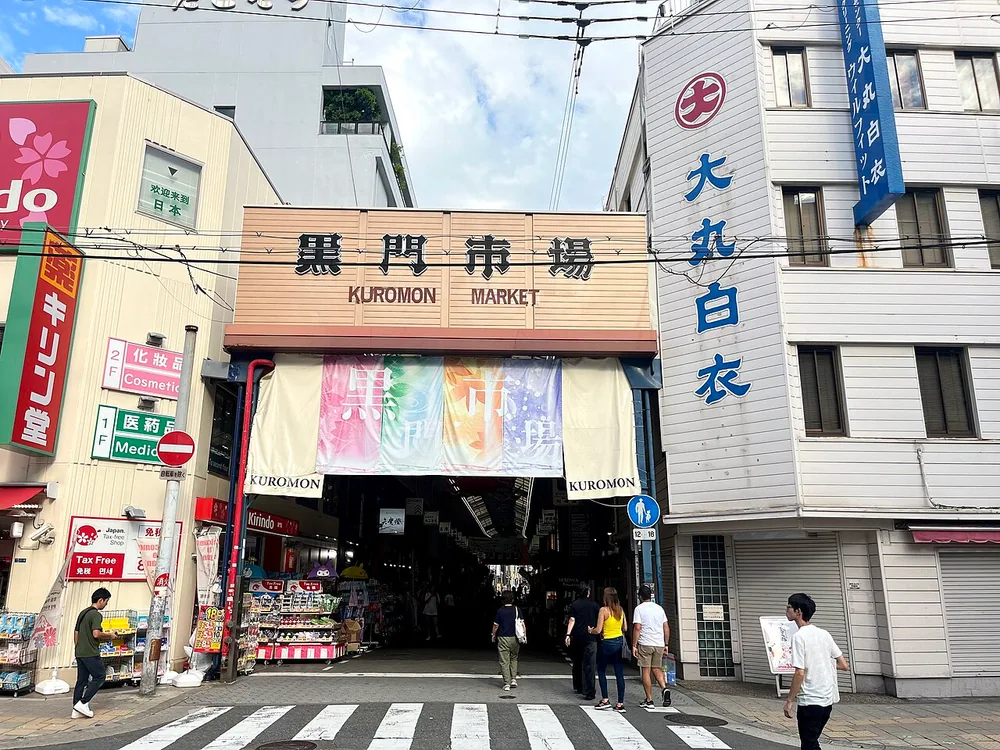
Kuromon Market spans Nipponbashi 1-chome and 2-chome in Chuo-ku, Osaka. Both the Osaka Metro Sakaisuji Line (K17) and Sennichimae Line (S17) serve Nippombashi Station, and Kintetsu trains stop at Kintetsu-Nippombashi Station. If you are walking light, take Exit 10 and head straight towards the Kuromon Market arcade. The Osaka Convention & Tourism Bureau estimates the walk at around five minutes, which gets you to the market edge; shops in the southern section require walking further inside. Enter the exact shop name plus "Kuromon Market" into your maps app so you are not directed to the market association office and forced to backtrack carrying bags to your restaurant.
For wheelchairs and pushchairs, use the lifts. From the Sennichimae Line platform, take the lift up to the East Ticket Gate or Central-South Ticket Gate, then take another lift to street level. On the Sakaisuji Line, routes split by platform: Platform 1 connects to the East Ticket Gate, and Platform 2 to the Central-South Ticket Gate. The East Ticket Gate links to street level and the Kintetsu concourse, while the Central-South Ticket Gate also has a street-level lift. Follow the underground station accessibility map to the surface first, then navigate at street level to your chosen shop—it is far more straightforward than hunting for lifts underground while following Exit 10 signs.
If you are staying in Namba without luggage, you can walk east along Sennichimae-dori to Nippombashi or take the underground Namba Walk. From the North-East or North-West Ticket Gates of Osaka Metro Namba Station, follow signs towards Exits 16, 17, 22, or 23 into Ichibangai and Nibangai of the underground arcade, then walk towards Nippombashi as far as Sanbangai. If you are already on the platform, it is just one stop on the Sennichimae Line from Namba towards Minami-Tatsumi to Nippombashi (adult single fare ¥190, child ¥100). Walking saves you going up and down platforms, while the underground is handy in heavy rain or when you want to save steps.
Arriving by Shinkansen at Shin-Osaka, take the Midosuji Line to Namba and transfer inside the station to the Sennichimae Line, then choose your exit at Nippombashi based on your bags. From Kansai Airport via Nankai Railway, there are two practical routes. If your hotel is on the north side of Kuromon and you want to minimise pulling suitcases at street level, change at Tengachaya onto the Sakaisuji Line. If you are dropping bags or checking in near Nankai Namba first, simply walk to the market from your hotel. Scheduling your first meal after dropping your bags leaves your hands free for street food or pushing a pushchair through narrow alleys.
When ordering a taxi or ride at the Kintetsu station, specify "Kintetsu-Nippombashi Station" alongside your hotel address as the meeting point. Osaka-Namba, Nankai Namba, and JR Namba are all separate stations. If your group splits up after getting off the train, agree to meet at a specific shop inside the market with a full name and street address; saying "the market entrance" often leaves people waiting at different arcade openings.
Returning to Osaka from Kintetsu-Nara, Rapid Express trains stop at Kintetsu-Nippombashi—one stop before Osaka-Namba—making it an easy lunch stop. If you hold a Kintetsu Limited Express ticket, alight at the stop printed on your ticket. Heading to Higashiyama in Kyoto afterwards, take the Sakaisuji Line from Nippombashi to Kitahama and transfer to the Keihan Line for Gion-Shijo. Travellers heading towards Kyoto Station are better off visiting Kuromon before returning to Shin-Osaka rather than transferring with luggage from Gion-Shijo.
How to reach Kuromon Market from Nippombashi Station Exit 10, compare dining and shopping hours at Kuromon Sanpei, Kurogin, and Kuromon Nakagawa, plus seafood bowl prices, rainy-day routes, and a half-day Namba plan.
Reading the Market Map: Pin Your Eateries and Rest Stops
Entering from the north off Sennichimae-dori, the main arcade stretches roughly 580 metres, with worthwhile shops tucked along both the main passage and side lanes. The February 2026 market association map labels sections as "Maguro no Dori" (Tuna Street), "Tai no Dori" (Sea Bream Street), and "Kani no Dori" (Crab Street)—look up at the hanging fish signs overhead to orient yourself. These act as handy wayfinding markers. For tuna, go straight to Kurogin or Maguro Takumi; both sit in the Nichinikai section on the association map, along the crab street stretch.
Kuromon Nakagawa is at Nipponbashi 1-chome 21-5. Entering the arcade from Exit 10, follow the shop's own map instructions: turn right at the crossroads hung with paper lanterns and look for the storefront on your right. Kuromon Sanpei is nearby at 1-chome 22-25. Both names begin with "Kuromon", yet the first is a full supermarket for ingredients while the second serves made-to-order seafood bowls. Save Kuromon Sanpei as your breakfast stop and Kuromon Nakagawa as your final shopping stop—that makes it clear which end of the market to exit towards your hotel.
If you are travelling with children, circle the two public toilets on your map before setting off. Kuromon Free Rest Area in the southern section offers both toilets and seating, and the market association office also marks a toilet on its ground floor. Those planning to eat before browsing fresh fish can have a sit-down meal in the northern section, then wander south towards the rest area. If your group walks in from the Nankai Namba side, reverse the order—sort out toilet breaks and regroup first so nobody gets restless in a queue.
Allowing over an hour on your first visit gives you room to pick and choose. If you want to browse prepared dishes, pickles, and dried goods, skip a second seafood sit-down and explore an extra side lane instead. If someone in your group wants to watch tuna being carved at the counter, save the coffee stop for Namba. If you are short on time before your next stop, pick one eatery by name and one exit junction—even 30 minutes is enough for a quick refuel.
The name "Kuromon" originally referred to the black main gate of Enmyoji Temple. According to the Osaka Convention & Tourism Bureau's market history, merchants once sold fish from Sakai and Kishu around the temple grounds, and the market rebuilt after fires and wartime air raids. Walking beneath the shop signs today, you can still see how stalls specialise in just a few items. To see where local chefs source their ingredients, look for signs mentioning "enkan" (salted and dried fish) or "kombu" (kelp): pick out what you want to eat at the fish counters, then ask the kombu merchant which variety suits dashi stock versus packed lunches.
08:00, 10:00, or 14:00: Each Hour Shows a Different Side of the Market
If you are purely after breakfast, you can start at Kuromon Sanpei at 08:00. It has an eat-in seating area where you can pick ready-made sushi, sashimi, or hot dishes from the counter, pay at the till, and sit down. Arriving right at opening works well if you want to reach Osaka Castle or Shinsekai before midday. If you want to browse fishmongers, greengrocers, and snack stalls properly, shift your arrival to around 10:00 and give yourself time to compare two places before deciding where to sit. That is a sensible pacing guideline, though individual stalls keep their own hours.
When tuna is the main draw, schedule Maguroya Kurogin's Kuromon main shop in the morning or early afternoon. According to Osaka Metro's August 2026 listing, its hours are 09:00 to 16:00. If you arrive close to closing time, check which cuts remain on display before joining the queue. If your companions split up to browse different stalls, set a meeting time back outside the shop so you are not waiting around before choosing your cuts and delaying the rest of your day.
There is a specific reason to visit Kuromon Nakagawa in the afternoon. Its fresh-fish schedule notes "hiruami" (daytime catch) deliveries from Akashiura Fishing Port around 14:00 on Thursdays and Saturdays, bringing fish auctioned at the port straight to the supermarket's fish counter the same day. Seeing everyday local shopping in the same market is far more interesting than simply having a late lunch. If you plan to cook fish that evening, ask the staff whether a cut suits pan-frying or simmering in soup, and get it cleaned and filleted at the counter before 17:00.
Evening visits require splitting your expectations. Kuromon Sanpei's Japanese store listing gives hours of 08:00 to 19:30 with last orders at 19:00. If you just need dinner or drinks to take back, Kuromon Nakagawa normally operates 24 hours a day for prepared foods and groceries, though its service counter closes at 18:00. Keep multi-shop browsing for the daytime; if you arrive past dinner last orders, head to Dotonbori or Namba Walk nearby, both within easy walking distance.
In late December, year-end New Year shopping brings long queues outside seafood stalls full of locals buying osechi ingredients. If you just want a quick lunch, book a seated restaurant in advance and gather your group outside the lane before heading in. Over the New Year holiday period, plan around individual shops' published calendars—Kuromon Nakagawa posts reduced hours and closures on its store calendar, so arrange confirmed dining options in Namba ahead of time for New Year's Eve.
For morning coffee, look for Ibuki Coffee at Nipponbashi 1-chome 22-31—in the same 1-chome 22 block as Kuromon Sanpei, making it easy to split up for breakfast and meet right outside. Its official site also lists an adjacent roastery and retail counter where you can pick up freshly roasted beans on the same stretch.
| Shop | Official Listed Hours | Best Use of Your Stop |
|---|---|---|
| Kuromon Sanpei (Kuromon Market Store) | 08:00–19:30 (last order 19:00) | Breakfast, booked eat-in seating, seafood bowls or hotpots |
| Maguroya Kurogin (Kuromon Main Shop) | 09:00–16:00 (Osaka Metro Aug 2026 listing) | Daytime tuna cut selection and tuna rice bowls |
| Seisenkan Kuromon Nakagawa | Normally 24 hours; fish prep counter 09:00–17:00 | Cooking ingredients and late-evening takeaway bentos |
Seafood Bowls, Fresh-Cut Tuna, or Fugu Hotpot: Where the Price Differences Lie
To estimate what a meal at Kuromon Market costs, start with a shop that displays fixed menu prices. On Kuromon Sanpei's eat-in menu, grilled eel (unagi kabayaki) bowl is ¥1,320, the daily assorted seafood bowl is ¥1,650, and sea urchin with salmon roe (uni and ikura) bowl is ¥3,850, all tax-included. Its Pacific bluefin tuna bowls are priced by cut: akami (lean) ¥1,650, chutoro (medium fatty) ¥2,200, and otoro (fatty belly) ¥3,300. If your main goal is filling up well, start with the assorted seafood bowl or a cooked rice bowl and save the rest of your budget for pickles and snacks further down the arcade.
At Kurogin's glass display, you can pick cuts of akami, chutoro, otoro, and rich collar-area cuts and have them prepared however you like on the spot. First-timers should order both akami and chutoro to compare: akami highlights the clean flavour of the fish itself, while chutoro brings tender richness, and sharing both makes the contrast obvious. If you prefer to keep a tight rein on your budget, stick to fixed-price rice bowls or sushi sets rather than pricing individual blocks by weight.
Whenever items are marked at market price, always ask for the final checkout total before ordering. Check whether a tag priced per 100g refers to the cut block's final price, note that "ikkan" means one piece of nigiri sushi and "ichininmae" means a single serving, and look for "zeikomi" (tax included) versus "zeibetsu" (plus tax). For whole shellfish, confirm whether you are paying per piece, by weight, or after preparation. When sharing across a table, find out the total for your centrepiece item first so you know whether to add two pieces of nigiri or order a full rice bowl.
Lunch deals also depend on timing and availability. Kuromon Sanpei's menu lists a ¥1,000 daily lunch special available on weekdays in limited quantities, rotating between seafood bowls and set meals. If anyone in your party only eats cooked food, check the day's specials at the counter first and compare them with permanent cooked options such as pork or eel bowls. Letting non-sashimi eaters order straight at the counter also saves everyone waiting at the table to decide on shared raw platters.
In winter, two diners can share a warm fugu (pufferfish) hotpot indoors. Kuromon Sanpei's menu features an ¥11,000 set designed for roughly two people, serving domestically farmed tiger pufferfish as both thinly sliced sashimi and hotpot. Split two ways, that comes to about ¥5,500 per person before drinks or extras. For an all-hot meal, check the shop's crab hotpot or Kurogin's reservation-only, dine-in tuna and leek hotpot (negima nabe). Kurogin's tuna rolls are sold in limited quantities on an irregular schedule, so if you are travelling across town specifically to visit, plan around its regular rice bowls and sushi.
King crab legs, sea urchin, and wagyu beef can quickly eat up a group's meal budget. If you are craving beef, look on the map for Seiniku Gyucho, Sugimoto Shoten, or wagyu stalls marked for dine-in ("inshoku"). Butcher counters and grilled-to-order stalls price differently—decide whether you are buying meat to cook back at your accommodation or paying for a freshly grilled portion, then compare cut, gram weight, and total price. If you only want a taste, split one portion between two.
To keep a meal for four under ¥7,000, use Kuromon Sanpei's menu as a benchmark: three assorted seafood bowls at ¥1,650 plus one eel bowl at ¥1,320 come to ¥6,270, leaving ¥730 to spare. Swap just one bowl for the uni and ikura bowl and the meal alone jumps to ¥8,470. Another option is to order four modestly priced bowls everyone likes, then split one splurge dish at the next stall. If you want shared plates on the same table, order everything at one shop rather than carrying food from next door into another restaurant's seating area.
If You Can Sit Down, Take Your Time at the Table
At Kuromon Sanpei, pick any packaged items from the storefront first, pay at the till, and take a seat. For seafood bowls and hotpots, order at the till to receive a meal ticket, and staff will bring your food to the table. You can book seats in advance via the table-reservation link on the shop's FAQ page—worth doing if you are travelling with elderly relatives, a pushchair, or a large group. Only five high chairs are available on a first-come, first-served basis. Ask for sharing plates when you are seated or when your food arrives.
If you buy freshly grilled shellfish from another stall, stand in the shop's designated eating area as directed, or carry it to a permitted seating spot. Walking while trying to find a seat risks dripping sauce and getting in the way of local shoppers and deliveries. If two parents are out with young children, have one person queue while the other waits with the pushchair clear of shopfronts. Places with counter stools or high tables work better for hot soup and anything requiring both hands to shell.
If anyone in your group has a crustacean allergy, show staff a written note saying "Ebi, kani no arerugi ga arimasu" (I have a prawn and crab allergy) and ask whether grills or fryers are shared. Vegetarian diners should likewise check whether broths contain bonito dashi. Handle seating and orders for anyone with dietary restrictions first, while the rest of the group picks up snacks along the way; anyone planning to eat later in Namba can spend more time browsing dried goods and produce stalls instead.
If you are unsure how a stall operates, ask "Tennai de taberaremasu ka?" (Can we eat inside?), say "Mochikaeri" for takeaway, or ask "Torizara o nimai onegai shimasu" for two sharing plates. Because the market mixes fishmongers selling raw ingredients with made-to-order eateries, check before pointing at a display whether a fish can be turned into a rice bowl or nigiri, or is sold strictly as a whole cut. If someone needs to leave early, let them order a quick cooked dish on their own and settle their bill separately.
Buying for Your Hotel vs. Packing to Take Home: Pick Different Stalls
When you spot hot snacks or boxed fruit in the market, think about where you are headed next. If you are returning to your hotel straight after lunch, pick them up on your way out. If you still have a half-day ahead at Osaka Aquarium Kaiyukan or Shinsaibashi, buy a single portion to eat right away in a permitted spot. Fresh fruit is prohibited in passenger hand luggage and checked baggage under strict agricultural biosecurity controls when flying internationally (such as regulations enforced by biosecurity agencies like APHIA), so enjoy fresh fruit in Japan and focus your gift shopping on clearly labelled, shelf-stable packaged foods.
If you are staying several nights in Osaka with a kitchen, Kuromon Nakagawa's fish preparation service is far more practical than queuing for another skewer. Between 09:00 and 17:00, the fish counter will scale, gill, and gut fish bought in-store, or fillet it into two or three pieces. The "kawahiki" service removes the skin, though the counter does not slice fish into sashimi. Check your accommodation's cookware before buying a whole pan-fry fish—if you only have a small saucepan, choose smaller portions for simmering rather than struggling with a whole fish back in the room.
Hotel guests wanting to ship items within Japan should give their next hotel's postcode at the counter before paying, and confirm whether chilled or frozen delivery is available and when it will arrive, matching your hotel's reception hours and check-in date. An insulated bag with ice packs helps keep chilled goods fresh on a short trip back to your room, though if your afternoon includes outdoor sightseeing or hours in station lockers, save perishable shopping for the very end of the day. Always keep the storage instructions and best-before date on the packaging.
To compare dried goods, start at Iseya Honten in the Nichinikai section for pickles and miso, then visit Kawakohonten Shobei for nori seaweed and dried staples. Pickles labelled "yo-reizo" (keep refrigerated) are best eaten with rice during your stay in Osaka. For nori, ask for "yakinori" (plain roasted) or "ajitsuke nori" (seasoned) and compare packs of the same sheet count and size before buying. Flat, thin pouches are easiest to pack upright inside a suitcase once you are back at your hotel.
For fruit, start at Matsumoto Shoten on the northern end of the market map or check Hamamoto Seika further south. If you spot strawberries in winter or spring and two of you want to finish them the same day, buy a small punnet and check piece count, grade, and growing region alongside the price. With a kitchen you can rinse and slice fruit back in the room; without a knife, ask the stall whether ready-to-eat small packs are available. If a fruit box is too bulky to carry on an onward train to Nara, leave fruit shopping until you pass back through Nippombashi.
Bring Japanese yen coins and ¥1,000 notes for small stall queues. If you are eyeing high-priced crab legs, confirm the total price and check whether your card is accepted before ordering, and keep a note of shared costs for your group. Ask the stall where you bought hot food how to dispose of trays, skewers, and napkins; if you continue on to Doguyasuji, carry your rubbish with you—the shopping street's official guidance notes that there are no public bins along the street.
Year-End Crowds, Rainy Season, or Summer Heat: Use Next-Door Streets as Backup
The arcade roof keeps the rain off—the only wet stretches are walking from the station to the entrance, crossing streets, and heading back underground. From Namba, take Namba Walk to its east end; the Nippombashi side connects towards Exits 3 and 4 as well as the West Ticket Gate of Kintetsu-Nippombashi Station, after which you can use Exit 10 or the street-level lifts. In heavy rain or if your group cannot walk far, limit Kuromon to one sit-down meal and head straight back into the underground mall, choosing a cafe or restaurant from Namba Walk's official dining guide.
If it is raining and you need to catch a Nankai train, finish the market and walk straight towards Nankai Namba, stopping around Namba Parks. Namba Parks' official facility guide lists retail shops from 11:00 to 21:00 and restaurants generally from 11:00 to 22:00, though individual outlets vary. With coin lockers and family facilities indoors, it makes an easy base on travel days when you have meals and left luggage on the same side of town. Skip the rooftop garden in persistent rain and stay indoors to eat.
You can still browse the fish counters on summer afternoons, just build cold drinks and rest breaks into your plan. This matters especially if you continue from Kuromon to Den Den Town, where leaving the covered arcade puts you outdoors along Sakaisuji—tiring for young children in pushchairs and anyone carrying groceries. If you have already bought sashimi, head straight back to your hotel rather than adding another loop. For grilled eel or cooked fish, check the stall's menu for freshly prepared sit-down dishes and read the counter labels for origin and arrival details.
In winter, focus your time on places with warm indoor seating. If you want to watch year-end New Year shopping, look around stalls selling fish roe, kelp, and pickles rather than stopping at every crab stand. At busy midday peaks, do not sacrifice an entire afternoon of booked plans to an unreserved queue—eat at a fixed-menu spot first, then stroll past the hot food stalls afterwards. In cold rain, cut back through the underground arcade towards Namba and save riverside photos along Dotonbori for clearer weather.
Where to Go Next: Doguyasuji, Den Den Town, or Dotonbori
To see where Osaka's restaurants buy their gear, cross Sakaisuji heading west from the market to Sennichimae Doguyasuji Shopping Street. While Kuromon is for ingredients, Doguyasuji lets you compare kitchen knives, pastry moulds, tableware, and commercial catering kit side by side. Before buying a knife, decide whether you mostly cut meat, fish, or vegetables and whether you use a wooden or plastic chopping board, so shopkeepers can match the steel and upkeep to your kitchen. Note that the shopping street asks visitors to ask permission before photographing inside shops. Leave heavy or long cookware until the end of your walk so you are not lugging it through Dotonbori.
For plastic models, retro games, or electronics parts, exit the southern end of Kuromon and walk into Nipponbashi Den Den Town. If you only have two or three shops in mind, keep heading south and finish at Ebisucho Station. Some hobby and electronics shops sit on side streets, so save exact street addresses and floor numbers ahead of time and pick a clear landmark to regroup if your party splits up. If you are pairing the afternoon with Shinsekai, keep your shop list tight and continue straight south in the same direction.
For classic neon signs, walk north from the market back to Sennichimae-dori and head into Dotonbori. Have a sit-down lunch in Kuromon during the day, reach Ebisubashi Bridge around dusk as the signs light up, and continue north along the covered arcade towards Shinsaibashi. If you are checking into a hotel mid-afternoon, drop your bags off first and return to the canal side on foot after dark. If children or older travellers have already walked enough in Kuromon, stop for dessert near the canal and skip the shopping stretch up to Shinsaibashi.
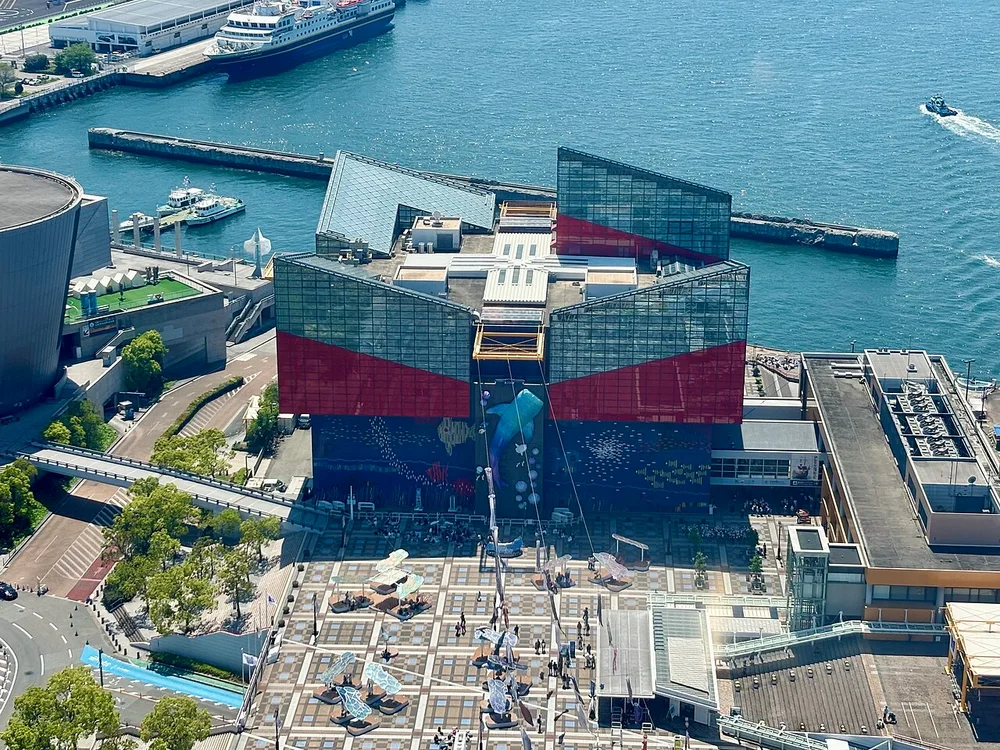
Pairing Kuromon with Osaka Aquarium Kaiyukan before or after lunch works smoothly. Take the Sakaisuji Line north from Nippombashi to Sakaisuji-Hommachi, change onto the Chuo Line towards Yumeshima, and walk about five minutes from Osakako Station Exit 1. To avoid transfers, you can catch Osaka City Bus No. 60 from Namba to Tempozan and alight at Tempozan Harbor Village. Because Kaiyukan tickets require timed entry, factor in the metro transfer and walk before timing an early lunch at the market; with afternoon aquarium tickets, you have time in the morning to browse Doguyasuji as well.
Osaka Kizu Wholesale Market is the better pick for early-morning market action. Its official guide notes that most stalls open around 06:00 and wind down by roughly 11:00, recommending 08:30 to 10:30 for shopping. It is around a three-minute walk from Daikokucho Station Exit 1 on the Midosuji and Yotsubashi Lines. Kizu's public morning market generally runs on the second and final Saturday of each month from 09:00 to 12:00, with closures and special opening dates listed on its official market calendar. If you only want one market—plus Namba shopping after lunch—stick to Kuromon; choose Kizu if you want an early wholesale start.
If you want to see both, start at Kizu early, ride the Midosuji Line one stop from Daikokucho to Namba, and walk across to Kuromon. You can also walk from Kizu towards Nankai Namba to drop fresh or chilled buys at your hotel before heading into Kuromon. Kizu Market normally closes on Sundays, Japanese public holidays, and selected Wednesdays, though its published 2026 annual calendar lists Sunday 27 December 2026 as a special opening day. To visit both that morning, get to Kizu before 11:00 and return to Kuromon for lunch; if you are only visiting Kuromon, check each market's year-end calendar separately.
Beside Kuromon or Over Nankai Namba: Choose Your Base by How You Travel
The best reason to stay right next to the market is buying small amounts each day to cook or eat in your room. Citadines Namba Osaka in Nipponbashi 3-chome, for instance, lists apartments with kitchen and dining spaces, and its two-bedroom apartments feature a washer-dryer and a dining table for four. For a group of four who will genuinely use the hob and dining table, compare the room rate against finding four-person restaurant tables for every meal. If you only plan a single lunch at Kuromon, base yourself near whichever train line you will use most over the rest of your trip.
If you have an early flight home and plenty of luggage, Swissôtel Nankai Osaka right above Nankai Namba Station is a strong alternative. Taking Nankai trains from Kansai Airport straight to Namba, the hotel's official guide outlines lift access directly from the station to reception, saving you from dragging suitcases through the market or across Sennichimae-dori. You can drop shopping off near the station after lunch at Kuromon and take the same line straight back to the airport on departure morning.
If you are landing late at night, map out the final leg to your hotel before flying. The Nankai Airport Express runs straight into Nankai Namba. For reserved seats, from April 2026 the Rapi:t regular reserved-seat limited express supplement for adults is ¥700—or ¥550 via Nankai's designated ticketless system—both in addition to the base fare, charged per passenger if a family wants seats together in the same carriage. When arriving late and only needing a quick bite before bed, eat around Nankai Namba and save Kuromon for the next morning without bags.
If your Osaka itinerary includes day trips to Nara or walks down towards Shinsekai, staying near Nippombashi Station puts both Kintetsu and the Sakaisuji Line at your doorstep. Shoppers focused on Shinsaibashi may prefer staying along the Midosuji Line and fitting Kuromon into a morning. To compare nearby street junctions, four-bed rooms, and luggage routes around the market, see our where to stay near Kuromon Market guide; if you are weighing up Umeda or Tennoji too, our Osaka neighbourhood guide narrows options down faster than filtering hotels by walking minutes.
Even if your hotel includes breakfast, Kuromon works well as a morning shopping trip. Eat at the hotel first, arrive around 10:00 to compare dried goods, and drop your bags back in the room before lunch. If your room has a kitchen, check the fridge size and how much you plan to cook before setting aside one evening to eat in. When every night is already booked for restaurants or evening plans, stick to items that keep until check-out—such as coffee beans or slim pouches of dried goods—and buy just a single portion of hot food to eat on the day, so you are not dealing with leftover boxes on departure morning.
A few useful answers
Which exit at Nippombashi Station should I take for Kuromon Market?
On foot, take Exit 10—it is roughly a five-minute walk to the market. With a pushchair or step-free access, follow the signs from the Sennichimae or Sakaisuji Line platforms to the street-level lifts at the East or Central-South Ticket Gates.
What is the best time to visit Kuromon Market for the first time?
For breakfast, start at Kuromon Sanpei when it opens at 08:00. To see most stalls open, arrive around 10:00 and allow 60 to 90 minutes to eat and browse; in the evening, aim for shops with later dining hours.
Do you need reservations for Kuromon Market?
You can walk straight into the market arcade without booking. Kuromon Sanpei takes advance table reservations for its eat-in area, and Kurogin's dine-in tuna and leek hotpot requires a reservation.
Can I bring fresh strawberries from Kuromon Market home on my flight?
No. Fresh strawberries count as fresh fruit, which is banned in both hand luggage and checked bags under strict international customs and plant biosecurity rules. Enjoy them while you are in Osaka, and choose clearly labelled, shelf-stable packaged foods for gifts.
Can I combine Kuromon Market and Doguyasuji in one trip?
Yes. Start with a meal in Kuromon Market, cross Sakaisuji heading west to Sennichimae Doguyasuji Shopping Street, and spend the afternoon continuing towards Namba Station or Dotonbori.
Official information and references
Sources used in this guide.
- Osaka Convention & Tourism Bureau (Discover Osaka) – Kuromon Market and Exit 10
- Osaka Convention & Tourism Bureau – History of Kuromon Market
- Kuromon Market Promotion Association – February 2026 Shop & Facility Map
- Osaka Prefecture Shopping Street Special Site – Kuromon Market & Year-End Shopping
- Osaka Metro – Nippombashi Station Sennichimae Line Exits & Lifts
- Osaka Metro – Nippombashi Station Sakaisuji Line Step-Free Routes
- Osaka Metro – Standard Fare Table
- Osaka Metro – Subway Lines & Transfers Guide
- Kintetsu Railway – Nara & Namba Line Train Stop Chart
- Keihan Electric Railway – Kitahama Station & Kyoto Direction Routes
- Kuromon Sanpei – Kuromon Market Store Business Information
- Kuromon Sanpei – Eat-In Menu & Prices
- Kuromon Sanpei – Table Reservations & Children's High Chairs FAQ
- Maguroya Kurogin – Kuromon Main Shop Menu & Reservation Hotpot
- Osaka Metro – August 2026 Maguroya Kurogin Kuromon Main Shop Listing
- Seisenkan Kuromon Nakagawa – Address, Opening Hours & Market Directions
- Seisenkan Kuromon Nakagawa – Akashiura Fishing Port Daytime Catch Schedule
- Seisenkan Kuromon Nakagawa – Fish Preparation Counter Service
- Seisenkan Kuromon Nakagawa – Store Opening Calendar
- Ibuki Coffee – Kuromon Market Main Shop & Roastery
- Namba Walk – Underground Mall Access & Opening Hours
- Namba Parks – Facility Opening Hours & Services
- Sennichimae Doguyasuji Shopping Street – Nearby Sights & Shopping Etiquette
- Osaka Convention & Tourism Bureau – Nipponbashi Den Den Town
- Osaka Kizu Wholesale Market – Opening & Closure Calendar
- Osaka Kizu Wholesale Market – 2026 Operating & Morning Market Guide
- Osaka Kizu Wholesale Market – 2026 Special Opening Dates
- Osaka Aquarium Kaiyukan – Osakako Station & Tempozan Bus Access
- Citadines Namba Osaka – Two-Bedroom Apartment Facilities
- Swissôtel Nankai Osaka – Direct Nankai Namba Station Access FAQ
- Nankai Electric Railway – Rapi:t 2026 Limited Express Fares
- Animal and Plant Health Inspection Agency (APHIA) – Passenger Regulations on Bringing Fresh Fruit