Choose between Osaka Castle Park’s free paths, the keep and Toyotomi Stone Wall Museum, Nishinomaru Garden and Osaka Museum of History. Plan entrances, tickets, child identification, online booking, accessible routes and meals.
- Region & Focus
- OsakaAttractions
- Reading Scope
- 32 min read · 17 chapters · 2 Q&As
- Official Verification
- 22 official sources checkedUpdated 26 October 2026
- Key Topics
- ItinerariesBookingSeasons
Chapter Route Map (tap any stop)
- Choose the focus: castle views, Sengoku history or Osaka’s urban history
- Match station to entrance: Otemon from Tanimachi 4-chome, eastern gates from Osakajokoen or Morinomiya
- Current keep prices and closing times: children entering free still need proof of age
- Online tickets skip the purchase queue: valid one month, no cancellation or re-entry
- Inside the keep: views and models above, original objects and castle comparisons below
- Stairs, wheelchairs and pushchairs: plan who carries children and where to collect equipment
- Toyotomi Stone Wall Museum: descend to the earlier castle buried beneath Tokugawa’s
- Otemon to Sakuramon: understand defensive turns on free park paths
- Nishinomaru Garden: ¥300 standard admission for lawns and a side view of the keep
- 2026 autumn turret opening: separate tickets, child rules and sales deadlines
- Osaka Museum of History: south-west outside the castle, ¥600 for the permanent exhibition; old combined ticket discontinued
- History museum from the tenth floor down: palace, castle town, archaeology and modern streets
- A first three- to four-hour visit: enter north-east, leave south-west
- Less walking or a rainy day: Tanimachi 4-chome both ways, one museum
- Road Train and Electric Car: save one walk, after checking the day’s service
- Where to eat: MIRAIZA in Honmaru, JO-TERRACE in the north-east
- Cherry blossom, plum, autumn colour or the night exterior: add one seasonal focus
- Quick Q&A
At Osaka Castle, first decide whether to admire the exterior, enter the keep for its history or add a nearby museum. The main park paths are free. Keep admission includes the Toyotomi Stone Wall Museum, while Nishinomaru Garden and Osaka Museum of History have separate tickets and hours. For a first visit with walking and a museum, allow three to four hours and enter on one side, leaving on another. With young children or older companions, make one museum and one park stretch the core of your half-day.
Choose the focus: castle views, Sengoku history or Osaka’s urban history
For castle views alone, walk the moats, gates and Honmaru Square without buying a keep ticket first. The Osaka Convention & Tourism Bureau’s park introduction gives an area of 105.6 hectares. Places that all appear as Osaka Castle on a map can involve crossing moats and entering different gates. Allow 90 minutes to two hours outdoors, choose a route across the grounds, then extend it according to energy.
For Toyotomi Hideyoshi, Sengoku-period objects, castle models and the sieges of Osaka, choose the Osaka Castle keep. It has been a museum since its reconstruction in 1931. The current building, above-ground stone walls and buried Toyotomi remains belong to different periods. Separating these three layers gives the visit more substance than simply climbing for photographs. One visit each to the keep and Toyotomi Stone Wall Museum on the same day makes a complete pair.
For how people lived in the city, Osaka Museum of History moves from ancient palaces to modern streets and markets, placing the castle within Osaka’s wider changes. With only half a day, explore either the keep or the history museum in depth. For both, plus garden and lunch, allow five to six hours instead.
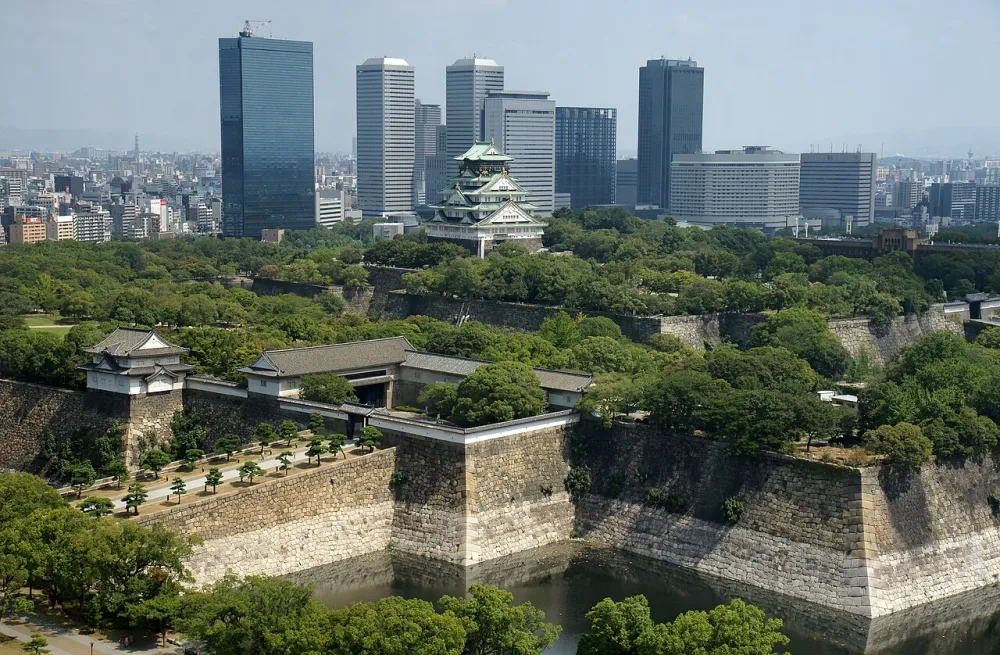
Choose between Osaka Castle Park’s free paths, the keep and Toyotomi Stone Wall Museum, Nishinomaru Garden and Osaka Museum of History. Plan entrances, tickets, child identification, online booking, accessible routes and meals.
Match station to entrance: Otemon from Tanimachi 4-chome, eastern gates from Osakajokoen or Morinomiya
For the south-western approach, use Osaka Metro Tanimachi 4-chome Station and walk towards Otemon Gate. This suits Nishinomaru Garden or the history museum. The keep’s official access page lists Tanimachi Line Exit 1-B and Chuo Line Exit 9; the history museum separately lists Exits 2 and 9. Choose the exit for your actual destination inside the station. For lifts, follow station accessibility signs, then connect with Otemon at street level.
On the north-eastern approach, JR Osakajokoen Station connects with the JO-TERRACE OSAKA dining area, a convenient place to eat before walking in. The 2026 official park map shows a route from this side via the Aoyamon area towards Gokurakubashi and into the Honmaru. There is still a park walk between station and keep entrance. Do not record train arrival as museum entry time.
Morinomiya Station is to the south-east, served by the JR Osaka Loop Line and Metro Chuo and Nagahori Tsurumi-ryokuchi lines. The keep’s official information lists Metro Exits 1 and 3-B. This approach first reaches rest and food outlets around the fountain square, then continues through the park. For park and plum-grove walks, returning through Morinomiya makes shortening the route easy. If crossing to the western museum, put lunch and the final walk on that side instead of returning specifically to the north-eastern dining area.
Temmabashi Station approaches from the north-west and suits visitors on the Keihan lines. Official information lists Metro Exit 3; Keihan has a station of the same name. The keep’s FAQ estimates 15–20 minutes from the main surrounding stations to the museum. Add time for photographs, navigation and companions’ pace. For a gentler approach, look first at Tanimachi 4-chome via Otemon.
Current keep prices and closing times: children entering free still need proof of age
Prices as at 26 October 2026: the keep’s visitor information lists standard adult admission at ¥1,200, high-school and university students at ¥600, and junior-high-school-age children and younger free. The ticket includes the Toyotomi Stone Wall Museum. Overseas high-school and university students need an ISIC International Student Identity Card for the student price; without the specified proof, adult admission applies. Overseas visitors aged 15 and under need a passport or other proof of age.
Normal hours are 09:00–18:00, with last admission at 17:30 and closure from 28 December to 1 January. Depending on queues, the museum may stop admitting people to the ticket queue before 17:30. A late arrival cannot be planned backwards solely from last entry. Reaching Osakajokoen Station after 16:00 is already tight for both the keep and stone-wall museum. Drop one museum or enjoy the exterior instead. Time both visits from their actual entrances.
Concessions have different eligibility rules. Osaka City residents aged 65 and over need proof of residence and age. Holders of specified disability certificates and one carer qualify for free admission. Overseas older visitors should normally budget for adult tickets. Calculate adults, students and children separately. Two standard adults and a child aged 15 or under who qualifies for free entry pay ¥2,400 for the keep and stone-wall museum; meals, transport and the garden are extra.
| Attraction | Adults | High-school / university students | Junior-high-school age and younger |
|---|---|---|---|
| Keep + Toyotomi Stone Wall Museum | 1,200 | 600; overseas students need ISIC | Free; proof of age required |
| Nishinomaru Garden, ordinary days | 300 | 300 | Free |
| Osaka Museum of History permanent exhibition | 600 | 400; student identification required | Free |
Online tickets skip the purchase queue: valid one month, no cancellation or re-entry
The Triplabo single-entry ticket linked from the official site is valid for one month from purchase, with no visit date required. On arrival, use the online-ticket lane and show the QR code at the gate. This removes the on-site purchase process, but admission may still be temporarily restricted when the museum is crowded.
This product cannot be cancelled, changed or refunded after purchase. It allows one keep visit and one Toyotomi Stone Wall Museum visit on the same day. Leaving for a restaurant and returning to finish the keep exhibitions conflicts with the no-re-entry rule. Eat before entering or after finishing the keep. Use the stone-wall museum on that same day; one-month validity does not let you save the second museum for another date.
One booking can cover up to ten people entering together. If someone drops out, the whole booked group is still marked used at the gate, with no refund for the absent person. Friends arriving separately should book by the groups actually travelling together so each can show their own confirmation. Families should check the number of paid visitors and bring proof of age for children entering free. Do not buy extra adult tickets simply because the booking page has no paid child option.
Inside the keep: views and models above, original objects and castle comparisons below
The official floor guide places the observation deck on the eighth floor, about 50 metres high. The seventh introduces Hideyoshi’s life, and the fifth uses models and video to explain the Summer Siege of Osaka. The sixth is a corridor closed to visitors. To understand the setting first, follow staff directions upstairs, view the moats and neighbourhoods from the eighth floor, then read exhibitions on the way down. Gates and water seen from above become easier to recognise back on the ground.
With primary-school children, focus on the fifth-floor battle model, seventh-floor miniature scenes and second-floor full-size replicas of shachi roof ornaments and crouching tigers. Start with forms they can understand, then choose a few names and places from the labels to investigate. For historical documents, spend longer on the third and fourth floors. These show material relating to the Sengoku period and Osaka Castle, with displays changed roughly every two months. Check the entrance notices for the current exhibition and objects.
The third-floor full-size Golden Tea Room model, Toyotomi-period Honmaru model and Tokugawa-period Osaka Castle model make a useful comparison of two versions of the castle. The keep exterior can suggest a single lord, but the models show differences in land, defences and building layout together. If you have visited other Japanese castles, focus on these comparisons and original objects. If your main aim is a city panorama, shorten the historical displays and save time for outdoors.
The keep’s FAQ gives a typical interior visit of 50–60 minutes, or about 90 minutes for a detailed look, excluding the approach and queues. Photography is prohibited on the third and fourth floors; follow signs elsewhere. The first-floor theatre has Japanese, English, Chinese and Korean subtitles. Free audio guides include Chinese. Borrow before 17:00 and return by 17:30 rather than leaving collection until the last-admission period.
Stairs, wheelchairs and pushchairs: plan who carries children and where to collect equipment
The standard visitor lift goes up directly to the fifth floor. From there to the eighth, and for the descent, most visitors use stairs. Staff can assist wheelchair users and visitors with walking difficulties with lifts up and down to each floor, including the highest. These are different arrangements. Explain your group’s needs at the entrance and follow instructions. If someone can walk briefly but cannot manage repeated flights downstairs, raise this before entering too.
Pushchairs are generally left outside the keep, with free storage at the ticket gate. Feed children and change nappies beforehand, and make sure an adult can carry them or help them on stairs. Transfer water, documents and essentials from the pushchair into a small bag. Return to storage afterwards before continuing. If one parent rests outside, agree a specific meeting point rather than simply ‘below the castle’.
Accessible toilets are on the keep’s second floor and in Honmaru Square. Park and museum wheelchair loans are first-come, first-served without reservations. Park chairs must return to their original location; keep chairs are for indoor use only. If you need a wheelchair throughout the grounds, plan around your own mobility equipment. A loan at an entrance covers one part, and an indoor chair cannot replace travel from station to keep.
The official gentler approach is Tanimachi 4-chome via Otemon. Taxis can pick up and drop off at Otemon, but ordinary vehicles cannot enter the park or stop directly at the keep ticket office. If station-to-castle walking already exceeds a companion’s capacity, make Otemon to Honmaru and back the full outdoor route. Leaving on another side may avoid retracing, but adds the task of finding return transport.
Toyotomi Stone Wall Museum: descend to the earlier castle buried beneath Tokugawa’s
The Osaka Castle Toyotomi Stone Wall Museum opened in 2025, centred on Toyotomi-period walls excavated in 1984. The museum’s explanation says the Tokugawa shogunate buried the Toyotomi castle when rebuilding. Today’s above-ground moats and walls mainly belong to the Tokugawa reconstruction. Here, you descend to earlier remains. Including it makes the different periods within ‘Osaka Castle’ directly understandable.
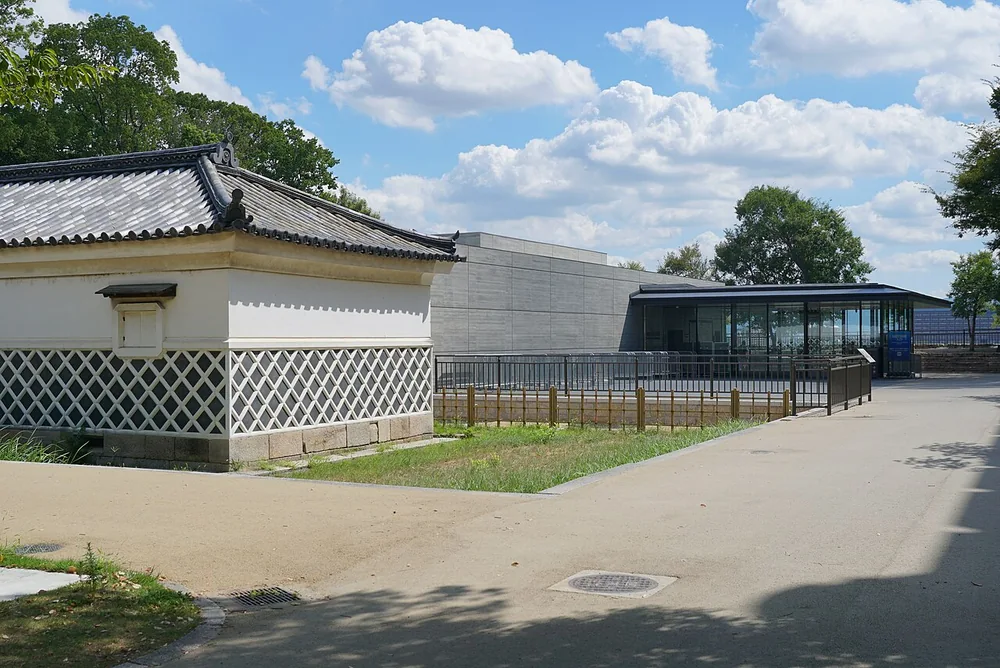
Allow another 30–45 minutes for entry, exit and the underground display. The exposed wall protected the residential space at the centre of the Honmaru. Much of it uses nozurazumi, stacking largely unworked stones. Look first for surface fire marks, then the early sangizumi corner arrangement of alternating rectangular stones and the small drainage stones behind the wall. One wall reveals fire, structure and drainage. The museum explains that Tokugawa rebuilding covered the middle Honmaru with about six metres of earth, giving a concrete scale to the difference between the remains and current ground level. There are no toilets inside; use Honmaru Square beforehand.
Normal hours are also 09:00–18:00, with last entry at 17:30 and the same year-end closure as the keep. The wall may be photographed, but video content may not. Wheelchair users and people with walking difficulties can use a lift, and pushchair parking is available. Public access may stop depending on the wall’s condition. If closed, drop this museum and look more closely at the keep models and above-ground walls. Do not cross barriers for a closer angle.
Otemon to Sakuramon: understand defensive turns on free park paths
Start a south-western route at Otemon, looking at the relationship between gate, stone walls and moat, then approach Honmaru through Sakuramon Gate. Entering the castle is more than following a straight broad path. Turns before and after gates, and walls of different heights, change your sightline.
The official designated cultural properties route links Otemon, Tamon Yagura, Sengan Yagura, Sakuramon and other structures for an architectural walk. For a first half-day, choose just one group near Otemon before Honmaru. The full route passes more buildings in the west and south, so allocate extra time from the keep, garden or lunch.
Besides the keep, Honmaru Square contains MIRAIZA OSAKA-JO. This former Fourth Division headquarters now holds restaurants, shops and other facilities. If architecture interests you, make a brief exterior stop. Dining choices follow later.
Nishinomaru Garden: ¥300 standard admission for lawns and a side view of the keep
Nishinomaru Garden lies west of the keep and covers about 6.4 hectares, with broad lawns framing the tower. If that landscape appeals more than climbing the keep for city views, make the garden your main paid visit. Keep and garden tickets are separate; walking the outer park paths does not automatically take you onto this lawn.
The official garden page currently lists adult admission at ¥300, with junior-high-school-age children and younger free. Normal hours are 09:00–17:00 from March to October and 09:00–16:30 from November to February, with last entry 30 minutes before closing. It closes Mondays, or the following day if Monday is a holiday, and from 28 December to 4 January. Cherry-blossom viewing has separate hours and charges; do not use ordinary-day prices for that period.
If the keep is your half-day priority, allow 30–45 minutes for the garden. Add time for sitting, flowers or photography and reduce another museum visit. From November, the garden closes before the keep. Afternoon visitors should check the garden’s last entry first, then arrange the keep. Coming from Tanimachi 4-chome in the morning, visit the garden first and continue to Honmaru to keep the route concentrated.
For an ordinary family day, two adults and a child of junior-high-school age or younger pay ¥600 for the garden. Adding the keep brings the two adults’ combined cost for both attractions to ¥3,000.
2026 autumn turret opening: separate tickets, child rules and sales deadlines
For historic interiors, check the 2026 special opening of Important Cultural Property turrets. Autumn 2026 opens Tamon Yagura and Sengan Yagura on Saturdays, Sundays and Japanese national holidays from 5 September to 29 November. They also opened daily from 19 to 27 September. Match your visit to the calendar; an ordinary October weekday does not follow the weekend plan.
Opening is 10:00–16:30, with ticket sales ending at 15:30 and last entry at 16:00. The combined turret ticket includes Nishinomaru Garden and costs ¥900 for high-school-age visitors and above, or ¥300 for junior-high-school-age children and younger. Preschool children and holders of specified disability certificates enter free. This differs from free junior-high-school admission at the ordinary garden and keep. A primary-school child enters the ordinary garden free but needs ¥300 for the seasonal turret opening. Split the family budget by the activity chosen.
A package including the keep costs ¥2,000 for adults or ¥1,400 for high-school and university students, with no child package. It is sold at Nishinomaru Garden reception and at the keep ticket gate, but keep-counter sales end at 14:30. Separate adult keep and turret tickets cost ¥1,200 plus ¥900, totalling ¥2,100, only ¥100 more. Decide first whether you have time to complete both.
The opening suits an interest in gate defences and timber interiors. Put it into a western route to avoid entering from the east and crossing the grounds twice.
Osaka Museum of History: south-west outside the castle, ¥600 for the permanent exhibition; old combined ticket discontinued
Osaka Museum of History is at 4-1-32 Otemae, beside NHK Osaka and south-west of the park. Approach from Tanimachi 4-chome Exits 2 or 9. The museum access page also lists the nearby Banbacho stop on Osaka City Bus. From the keep, you must leave Honmaru, cross park paths and reach the exterior. Treat this as a transfer between attractions, perhaps after lunch.
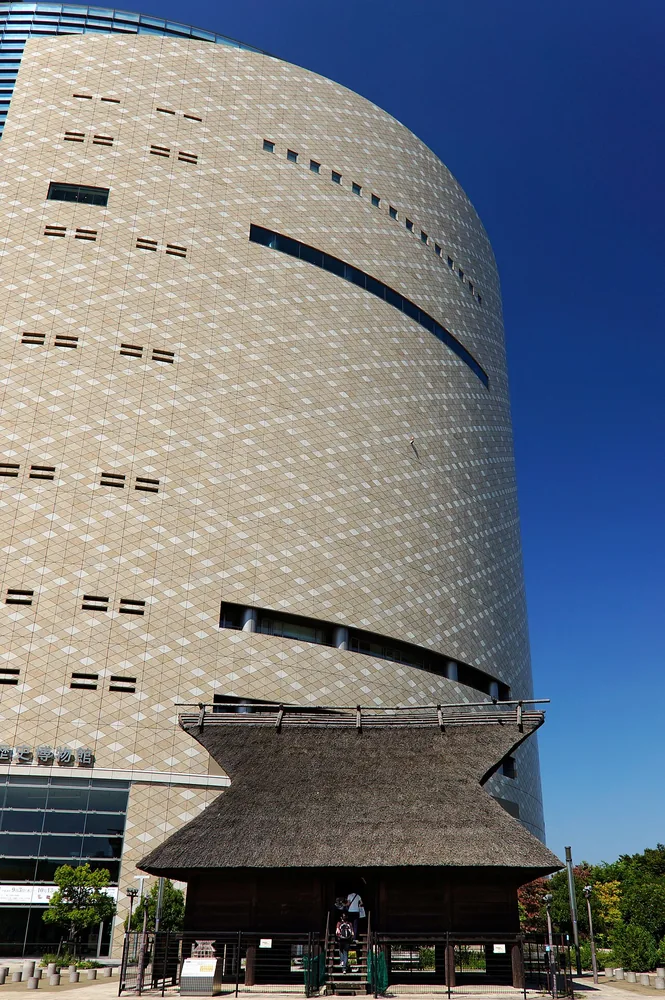
The current permanent-exhibition admission is ¥600 for adults, ¥400 for high-school and university students with student identification, and free for junior-high-school-age children and younger. Normal hours are 09:30–17:00, with last entry at 16:30. It closes Tuesdays, or the following day if Tuesday is a holiday, and from 28 December to 4 January. Special exhibitions cost extra. For Osaka’s urban history, begin with the permanent exhibition rather than treating a special exhibition as compulsory.
The old combined ticket for the keep and history museum’s permanent exhibition stopped selling on 27 December 2024. Separate adult tickets now total ¥1,800. The stone-wall museum included in keep admission can also be visited that day without another ticket. High-school and university students meeting both museums’ identification requirements pay ¥1,000 in total.
The keep normally opens Mondays, Nishinomaru closes Mondays, and the history museum closes Tuesdays. They cannot share one opening schedule. On Tuesday, focus on the keep, walls and outdoors. A Monday history-museum day still works without the garden. For closures shifted by Japanese holidays, use each operator’s monthly calendar.
History museum from the tenth floor down: palace, castle town, archaeology and modern streets
The permanent-exhibition route starts with a lift to the tenth-floor ancient section, where vermilion columns and palace spaces introduce Naniwa Palace. The ninth floor moves into medieval and early modern Osaka, the eighth focuses on excavation and archaeology, and the seventh recreates modern streets. Its timeline extends beyond the keep’s Sengoku displays and suits an interest in how a commercial city and daily life developed. The two museums complement each other in this way.
With children, use the ninth- and seventh-floor town and street scenes as observation tasks: how goods moved by water, what shops lined the streets, and how interiors differed from outside. Allow 90 minutes to two hours for the permanent exhibition. If archaeology particularly interests you, spend longer on the eighth floor instead of giving every floor equal minutes.
The visitor services page lists accessible toilets, baby seats and nappy-changing facilities on each floor, a first-floor nursing room and lockers requiring a refundable ¥100 coin, plus second-floor drink machines and a rest area. These facilities help break up hot days or two outdoor stretches. Ask at first-floor general information for the nursing room or a wheelchair loan. Ordinary visitors can re-enter the permanent exhibition on the same day, useful for returning after a meal; keep your day’s ticket when leaving. The museum FAQ says pushchairs are normally allowed in exhibition areas, with restrictions when crowded. Pushchairs can also be borrowed at first-floor general information. A free Chinese leaflet can be read together, or a Chinese audio guide hired for ¥400 per use. If a child needs to stay in a pushchair throughout, this museum suits that need better than leaving it at the keep entrance.
No food or drink is allowed in exhibition areas. Long umbrellas and parasols must stay outside them. Flash, tripods and selfie sticks are prohibited; follow display signs for other photography. In rain, organise wet-weather gear at the entrance before going upstairs. If you do not want to walk back to Honmaru afterwards, return directly to the city from Tanimachi 4-chome. Add only a short exterior walk if time remains, letting the indoor visit form a complete afternoon.
A first three- to four-hour visit: enter north-east, leave south-west
If you are happy to cross the park and the keep is your main aim, start at JR Osakajokoen Station. Walk through JO-TERRACE and the Aoyamon area to Gokurakubashi, see the moat and exterior, then enter Honmaru. A sample start is the station around 09:00 and Honmaru around 09:30, allowing for walking and navigation. Online-ticket holders follow signs to their lane; on-site buyers need extra purchase time.
Allow one to one and a half hours for the keep, then about 30–45 minutes for the Toyotomi Stone Wall Museum. Rest or eat around MIRAIZA afterwards. If you spend longer reading, delay lunch and drop the garden. If you finish early in pleasant weather, continue towards Sakuramon and Otemon. This puts the main exhibitions first and leaves outdoor additions easy to shorten.
Leave through Otemon around midday and return to the city from Tanimachi 4-chome. Three to four hours makes a complete castle-area visit. For Nishinomaru, allocate at least another 45 minutes from the main plan. For the history museum, add it as a second main museum for 90 minutes to two hours after lunch, extending the overall visit. If you want both additions and encounter a turret opening too, split them across two visits.
This crossing route does not suit a park wheelchair loan that must return to its original location, or large luggage left in the east while you leave west. If you need the same station, change to an out-and-back route before entering. Luggage storage at the keep ticket office costs ¥100 per item, accepts items 09:00–17:30 and requires collection before 18:00. Resolve these return requirements before walking confidently to another exit.
Less walking or a rainy day: Tanimachi 4-chome both ways, one museum
If older companions cannot walk for long, or children need to return to the room after lunch, enter from Tanimachi 4-chome via Otemon. Aim only for Honmaru and one museum, then retrace your route. There is still walking and some gradient, and the keep has several floors. Allow three hours initially and put lunch after the museum. If you already know the walk is too much, choose the history museum outside the castle and add a short Otemon walk if weather allows.
For a keep visit in ordinary rain, accept the outdoor approach from the station. Organise shoes, umbrellas and pushchair covers before entering. The park FAQ states there is no designated outdoor place for visitors to shelter from rain and eat packed lunches. Buying a takeaway meal and waiting until it rains can leave you without seating. Eat in an operating restaurant instead, or make the history museum’s permanent exhibition the main goal.
With young children who only want to see the castle, walk after entering to a viewpoint within your comfortable range, take photographs, rest and return to the same station. For children wanting to walk about, focus on paths on the Morinomiya side. If adults strongly want an exhibition, agree turns inside and separate meal arrangements. The adult caring for children outside also needs a usable rest stop.
Road Train and Electric Car: save one walk, after checking the day’s service
The park has Road Train and Electric Car services. The current park transport page lists normal hours of 09:30–17:30 and closure on the first Thursday each month, shifted to the following day if it is a holiday. Road Train single fares are ¥400 for junior-high-school-age visitors through age 64, or ¥200 for children aged four through primary school and those aged 65 and over. Electric Car fares for the same groups are ¥300 and ¥200. Weather, heat, crowds or events using paths can change or interrupt service.
The Road Train mainly links Morinomiya, JO-TERRACE and Gokurakubashi, with a Car Park stop for wheelchair users only. The Gokurakubashi to Hokoku Shrine segment is covered by a replacement electric vehicle restricted to designated users, including those with walking difficulties. Ordinary visitors cannot assume they can ride the entire route. A separate Electric Car service loops around the southern outer moat via Banbacho, Otemae, Sakuramon, Hokoku Shrine and Jonan Bus Car Park. Check stop signs and that day’s service before boarding.
Buy a single ticket for one ride; an Electric Car ride is limited to one circuit. A day pass for both services costs ¥1,000 for standard adults or ¥600 for children and those aged 65 and over. Compare it only if you will actually take several rides. Children must be accompanied on either service, and full vehicles mean waiting for the next. If transport is essential to completing your route, confirm it is operating before walking to the far end. Do not assume you can always flag down a return ride once tired.
Where to eat: MIRAIZA in Honmaru, JO-TERRACE in the north-east
If you need a rest after reaching Honmaru, check the official MIRAIZA floor and shop guide. The first floor has coffee, takeaway food and gifts; restaurants upstairs have individual hours and reservations. This works before or after the keep. Rooftop dining spaces are used under the restaurants’ offers, rather than as a free public viewpoint for castle photographs.
Beside JR Osakajokoen Station, JO-TERRACE suits a meal on a north-eastern route. The current shop page lists Sachifukuya set meals, Katsuman pork cutlets, Nadai Chibo okonomiyaki and Wanaka takoyaki. These meal types are more useful than the broad label ‘Osaka Castle food’. For a full meal, start with set meals or pork cutlets. Choose takoyaki or coffee for a small top-up, after deciding whether everyone needs to sit down.
Restaurant hours differ. Sachifukuya and Katsuman list 11:00–21:00, with last orders at 20:30. Nadai Chibo closes on Mondays, or the following day if Monday is a holiday, and finishes at 18:00 on weekdays. Wanaka normally opens 11:00–18:00, with last orders at 17:30, and closes Mondays except holidays. If leaving the castle after 16:00 for a particular outlet, head there directly before browsing every souvenir shop.
Coffee and bakery options also surround Morinomiya’s fountain square, useful for south-eastern entry or exit. The park FAQ lists nursing rooms at JO-TERRACE and MIRAIZA, with visitors bringing their own water for formula. Match rest stops to your entrance direction if you need these facilities. Once you have left through Otemon, arrange lunch along your western onward route rather than crossing the entire park for a listed snack.
Cherry blossom, plum, autumn colour or the night exterior: add one seasonal focus
In spring, focus on Nishinomaru’s lawn and castle views, or use the free paths for blossom. For plums from late winter into early spring, include a walk through the eastern Osaka Castle Plum Grove. Flower seasons add photography and waiting time to the same paths, so make room by shortening museum time or another area’s transfer.
For autumn ginkgo, follow the 2026 official autumn map along the outside of the eastern outer moat towards Morinomiya, adding leaves to an existing eastern route. For the western garden and maple colour, allow separate entry time. Park paths, garden and keep have different hours. On an autumn evening, first decide whether you still want to buy museum admission, then see the exterior after sunset. The garden closes earlier in winter. If only the free outdoor part remains for sunset, plan directly around that aim.
The keep FAQ says the lights gradually come on over roughly an hour after sunset, with lights off for annual maintenance. The video below, from the keep’s official channel, records the special lighting programme marking the lighting upgrade on 31 March 2023. Use it to see how the building appears at night, and check castle notices separately for any special programme on your visit date. Identify your station direction for the night journey. Do not depend on daytime restaurants and shops staying open for rests.
The keep’s official channel records the programme celebrating the lighting upgrade on 31 March 2023, accompanying this section on the night-time exterior.
A few useful answers
What does Osaka Castle keep admission include?
The current standard keep ticket includes the Toyotomi Stone Wall Museum, with one entry to each on the same day. Nishinomaru Garden, Osaka Museum of History and special turret openings are charged separately.
What identification do overseas students and children entering free need?
Overseas high-school and university students need an ISIC International Student Identity Card for the keep’s ¥600 student ticket. Overseas visitors aged 15 and under need a passport or other proof of age. Without the specified student identification, adult admission applies.
Official information and references
Sources used in this guide.
- Osaka Castle keep | Visitor information and current prices
- Osaka Castle keep | FAQs
- Osaka Castle keep | Access and accessible map
- Osaka Castle keep | Floor exhibitions
- Osaka Castle | Toyotomi Stone Wall Museum
- Official ticket sales | Single-entry keep ticket and cancellation rules
- Osaka Castle Park | 2026 guide and park map
- Osaka Castle Park | FAQs
- Osaka Castle Park | Nishinomaru Garden
- Osaka Castle Park | 2026 special turret opening
- Osaka Castle Park | Park transport
- Osaka Museum of History | Admission and opening days
- Osaka Museum of History | Permanent exhibition
- Osaka Museum of History | Visitor services
- MIRAIZA OSAKA-JO | Shops and facilities
- JO-TERRACE OSAKA | Current shops
- Osaka Castle Autumn Festival 2026 | Leaves and flowers map
- Osaka Convention & Tourism Bureau | Osaka Castle Park
- Osaka Museum of History | Access
- Osaka Castle Park | Designated cultural properties route
- Osaka Castle keep | Official social media accounts
- Osaka Museum of History | Visiting, re-entry and pushchair FAQs