Choose between Osaka Castle Park’s free areas, the keep and Toyotomi Stone Wall Museum, Nishinomaru Garden, and Osaka Museum of History. Plan a half-day walk by station and entrance, with current prices, child ID rules, online ticket conditions, accessible routes, and meals.
- Region & Focus
- OsakaAttractions
- Reading Scope
- 32 min read · 17 chapters · 2 Q&As
- Official Verification
- 22 official sources checkedUpdated October 26, 2026
- Key Topics
- ItinerariesBookingSeasons
Chapter Route Map (tap any stop)
- Choose your half-day focus: castle views, samurai history, or Osaka’s urban history
- Match the station to the entrance: Tanimachi 4-chome for Otemon, or enter from the east
- Keep admission and closing time: free-entry children still need proof of age
- Online tickets avoid the purchase line: valid one month, nonrefundable, single entry
- Inside the keep: upper-floor views and models, lower-floor artifacts and castle comparisons
- Stairs, wheelchairs, and strollers: plan carrying children and collecting your stroller
- Toyotomi Stone Wall Museum: descend to the castle buried beneath the Tokugawa rebuilding
- Otemon to Sakuramon: read the defenses from the free paths
- Nishinomaru Garden: ¥300 for adults on ordinary days, with lawns and side views of the keep
- Autumn 2026 turret openings: separate tickets, child rules, and final sales
- Osaka Museum of History: ¥600 for the permanent exhibition; the old combined ticket has ended
- The history museum from the tenth floor down: palaces, castle town, archaeology, and modern streets
- A first visit in three to four hours: enter northeast and leave southwest
- Less walking or rain: return through Tanimachi 4-chome and choose one museum
- Road Train and Electric Car: reduce one stretch of walking after checking the day’s service
- Where to eat: MIRAIZA at Honmaru or JO-TERRACE in the northeast
- Cherry blossoms, plums, autumn color, or the lit exterior: add one seasonal focus
- Quick Q&A
At Osaka Castle, decide whether to see the exterior, enter the keep for its history, or add the nearby museum. The main park paths are free. A keep ticket includes the Toyotomi Stone Wall Museum, while Nishinomaru Garden and Osaka Museum of History have separate tickets and hours. For a first visit with museum entry and a cross-park walk, allow three to four hours, entering on one side and leaving on the other. With young children or older companions, make one museum and one stretch of park your half-day focus.
Choose your half-day focus: castle views, samurai history, or Osaka’s urban history
For castle views alone, walk the moats, gates, and Honmaru Square without buying a keep ticket first. The park described by the Osaka Convention & Tourism Bureau covers 105.6 hectares. Places grouped under Osaka Castle on a map require crossing moats and entering different gates. Allow 90 minutes to two hours for an outdoor walk, choose a route through, then extend it according to your energy.
Choose the Osaka Castle keep for Toyotomi Hideyoshi, artifacts from the age of the warring states, castle models, and the sieges of Osaka. It has been a museum since its reconstruction in 1931. The present building, aboveground stone walls, and buried Toyotomi remains belong to different periods. Distinguishing those three layers gives the visit more substance than simply climbing for photographs. One visit each to the keep and Toyotomi Stone Wall Museum on the same day forms a complete pair.
If urban life interests you more, the Osaka Museum of History moves from ancient palaces to modern streets and markets, placing the castle within the changing city. With only half a day, explore either the keep or history museum in depth. For both museums plus the garden and lunch, allow five to six hours.
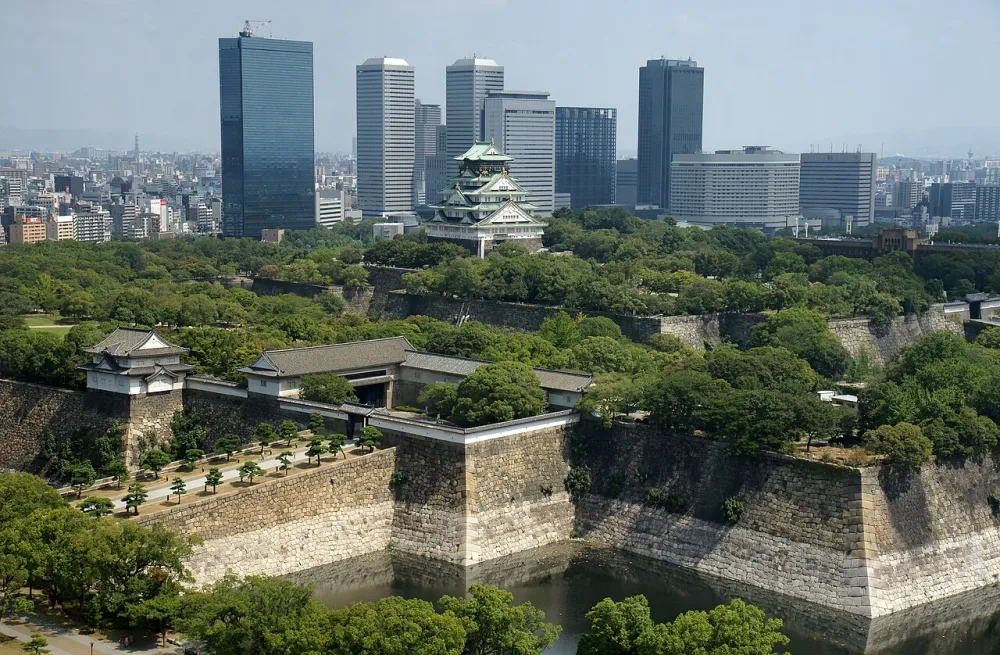
Choose between Osaka Castle Park’s free areas, the keep and Toyotomi Stone Wall Museum, Nishinomaru Garden, and Osaka Museum of History. Plan a half-day walk by station and entrance, with current prices, child ID rules, online ticket conditions, accessible routes, and meals.
Match the station to the entrance: Tanimachi 4-chome for Otemon, or enter from the east
For the southwest approach, use Osaka Metro Tanimachi 4-chome Station and walk toward Otemon Gate, useful for Nishinomaru Garden or the history museum. The keep’s official access page lists Exit 1-B for the Tanimachi Line and Exit 9 for the Chuo Line. The history museum lists Exits 2 and 9. Follow your actual destination in the station. For an elevator, follow station accessibility signs, then join the surface route to Otemon.
From the northeast, JR Osakajokoen Station connects with the JO-TERRACE OSAKA dining area, a convenient place to eat before entering. The 2026 official park map shows the approach through the Aoyamon area and toward Gokurakubashi Bridge into the inner bailey. There is still a park walk from the station to the keep entrance. Arrival at the station is not museum entry time.
Morinomiya Station is on the southeast side, served by the JR Osaka Loop Line and Metro Chuo and Nagahori Tsurumi-ryokuchi lines. The keep lists Metro Exits 1 and 3-B. This side first reaches rest and dining places around Fountain Square, then follows the park inward. For park and plum-grove walks, entering and leaving at Morinomiya makes shortening the route easy. If crossing to the western museum, place lunch and the final walk on the west rather than detouring back to the northeastern dining area.
Temmabashi Station approaches from the northwest and suits departures along the Keihan lines. The official list gives Metro Exit 3; Keihan also has a station of the same name. The keep FAQ estimates 15–20 minutes from the main nearby stations to the museum. Add photographs, navigation, and your group’s pace. For a gentler route, prioritize Tanimachi 4-chome via Otemon.
Keep admission and closing time: free-entry children still need proof of age
As of October 26, 2026, the keep’s visitor information lists general adult admission at ¥1,200, high-school and university students at ¥600, and junior-high students and younger free. Admission includes the Toyotomi Stone Wall Museum. Overseas high-school and university students need an ISIC international student card for the student rate. Without the specified proof, adult admission applies. Overseas visitors aged 15 and under should prove age with a passport or similar document.
Normal hours are 9:00 a.m.–6:00 p.m., with last admission at 5:30 p.m. The museum closes December 28–January 1. Depending on lines, staff may stop people joining the ticket queue before 5:30 p.m., so do not plan backward solely from last admission. Reaching Osakajokoen Station after 4:00 p.m. leaves little time for both the keep and stone wall museum. Drop one or switch to exterior views. Count each museum’s time from its actual entrance.
Discounts have specific eligibility. Osaka City residents aged 65 and over need proof of residence and age. Holders of designated disability certificates and one caregiver qualify for free admission. Other overseas older visitors should budget for adult tickets. Calculate adults, students, and children individually. For example, two general adults and one child aged 15 or under who qualifies for free entry pay ¥2,400 for the keep and stone wall museum together, with food, transport, and garden entry extra.
| Facility | Adults | High-school / university students | Junior-high students and younger |
|---|---|---|---|
| Keep + Toyotomi Stone Wall Museum | 1,200 | 600; overseas students need ISIC | Free; proof of age required |
| Nishinomaru Garden, ordinary days | 300 | 300 | Free |
| Osaka Museum of History, permanent exhibition | 600 | 400; proof of student status required | Free |
Online tickets avoid the purchase line: valid one month, nonrefundable, single entry
The official site links to a Triplabo single-entry ticket valid for one month from purchase, without a fixed visit date. Use the online-ticket lane and show the QR code at admission. This removes the on-site purchase step, though entry may still be temporarily restricted when the museum is crowded.
This product cannot be canceled, changed, or refunded after purchase. It allows one keep entry and one Toyotomi Stone Wall Museum entry on the same day. You cannot leave for a restaurant and return to finish the keep displays, so eat first or after completing the keep. Visit the stone wall museum that same day. One-month validity does not let you use the second museum on a different day.
One purchase can cover up to ten people entering together. If someone drops out, the full group quantity is still used at the gate and the missing people cannot be refunded. If friends may arrive separately, buy by actual arrival group so each has their own voucher. Families should check the number of paid visitors and prepare documents for free-entry children. Do not buy extra adult tickets just because the purchase page has no paid-child option.
Inside the keep: upper-floor views and models, lower-floor artifacts and castle comparisons
The official floor guide lists the eighth floor as an observation deck about 50 meters high, the seventh as Toyotomi Hideyoshi’s life, and the fifth as models and video about the Summer Siege of Osaka. The sixth-floor corridor is closed to visitors. To understand the terrain first, follow staff directions upstairs, view the moats and neighborhoods from the eighth floor, then read the exhibitions on the way down. Gates and water seen from above are easier to identify back on the ground.
With elementary-school children, focus on the fifth-floor battle model, seventh-floor miniature scenes, and second-floor full-size replicas of the shachi roof ornament and crouching tiger. Start with recognizable shapes, then select a few people and place names from the text. For historical documents, spend longer on the third and fourth floors. Their displays cover the warring-states period and Osaka Castle, with changes about every two months. Check the entrance notices for that day’s exhibition and objects.
The third-floor full-size Golden Tea Room model and models of the Toyotomi inner bailey and Tokugawa-era Osaka Castle are useful for comparing two versions of the castle. The keep exterior may bring one ruler to mind, while the models show differences in land use, defenses, and buildings. If you have seen other Japanese castles, focus on these comparisons and original artifacts. If you mainly want a city view, shorten the document displays and save time for outdoors.
The keep FAQ gives 50–60 minutes as a common indoor visit, or about an hour and a half for a closer look, excluding the approach and waiting. Photography is prohibited on the third and fourth floors; follow signs elsewhere. The first-floor theater has Japanese, English, Chinese, and Korean subtitles. Free audio guides include Chinese. Borrow before 5:00 p.m. and return by 5:30 p.m.; do not leave borrowing until the final admission period.
Stairs, wheelchairs, and strollers: plan carrying children and collecting your stroller
The regular elevator goes directly up to the fifth floor. Visitors mainly use stairs from there to the eighth floor and on the way down. Staff can assist wheelchair users and people with walking difficulties with elevators serving all floors in both directions, including the top. Explain your needs at entry and follow staff guidance. This also applies if you can walk short distances but cannot manage several floors of stairs.
Strollers normally stay outside the keep, with free storage at the admission entrance. Before entering, feed the child, change diapers, and confirm an adult can carry or guide them on stairs. Put water, documents, and essentials from the stroller in a bag you can carry. Return to collect it after the visit before continuing. If one parent rests outside, name an exact meeting place rather than saying “below the castle.”
The keep has a wheelchair-accessible restroom on the second floor, with accessible restrooms also in Honmaru Square. Park and museum wheelchair loans are first-come, with no reservations. Park chairs must return to the original location; keep chairs are for indoor use only. If you need a wheelchair throughout the park crossing, make your own mobility aid the main plan. An entrance loan covers only one section and cannot replace the station-to-keep journey.
The officially recommended gentler approach is from Tanimachi 4-chome through Otemon. Taxis can pick up and drop off at Otemon, but ordinary vehicles cannot enter the park or stop at the keep ticket counter. If the station-to-castle walk is too much, make Otemon to Honmaru and back the full outdoor route. Leaving on the opposite side avoids retracing but adds the work of finding return transport.
Toyotomi Stone Wall Museum: descend to the castle buried beneath the Tokugawa rebuilding
The Osaka Castle Toyotomi Stone Wall Museum opened in 2025 and focuses on Toyotomi-period walls excavated in 1984. The museum explanation says the Tokugawa shogunate buried the earlier castle during rebuilding. Today’s aboveground moats and walls mainly belong to that reconstruction; the museum takes you underground to the earlier remains. Adding it makes the different periods within “Osaka Castle” directly visible.
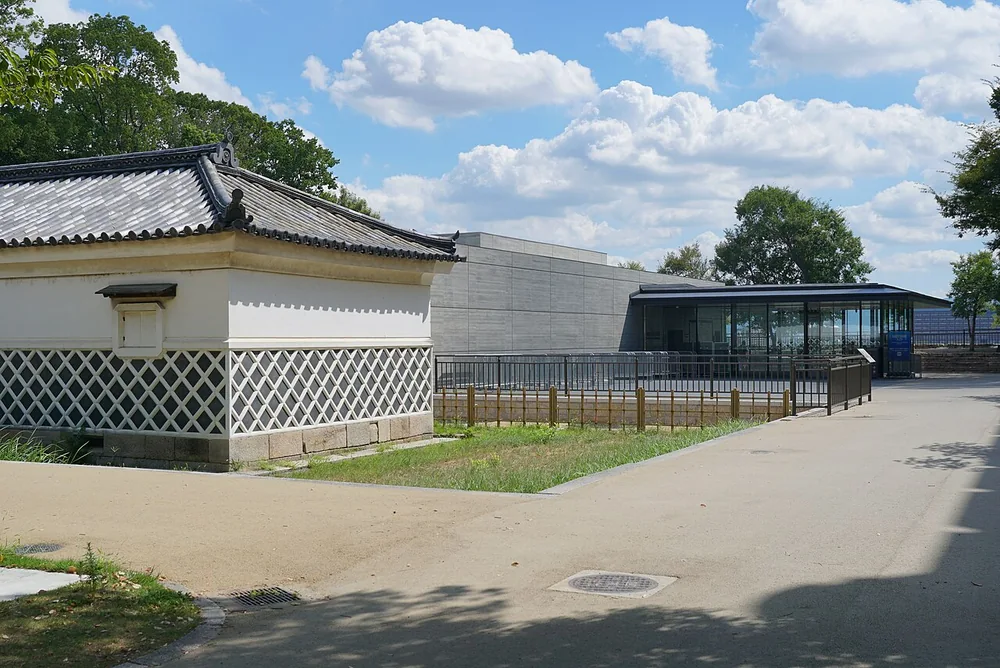
Allow another 30–45 minutes for the underground display and access. The exposed wall protected residential space in the inner bailey’s center. Most stones are stacked in nozura-zumi style using largely unworked stones. Look for fire marks, then early sangi-zumi corner construction with alternating rectangular stones, and the small drainage stones behind the wall. One wall reveals fire damage, structure, and drainage. The museum says the Tokugawa rebuilding covered the middle inner-bailey area with about six meters of earth, giving a concrete scale to the gap between the remains and today’s ground level. There is no restroom inside; use Honmaru Square before entering.
Normal hours are also 9:00 a.m.–6:00 p.m., with last admission at 5:30 p.m. and the same year-end closure as the keep. You may photograph the wall, but may not photograph or record the audiovisual displays. An elevator serves wheelchair users and people with walking difficulties, and a stroller area is provided. The museum may suspend access according to the wall’s condition. If closed, spend more time on the keep models and aboveground walls rather than crossing barriers for a closer angle.
Otemon to Sakuramon: read the defenses from the free paths
On the southwestern route, start at Otemon and look at the relationship between gate, stone walls, and moat, then approach the inner bailey through Sakuramon Gate. Entry is more than a straight walk along broad paths: turns around gates and walls of different heights change what you can see.
The official designated cultural properties route links Otemon, Tamon Yagura, Sengan Yagura, Sakuramon, and other structures for visitors interested in old architecture. On a first half day, choose one group near Otemon before Honmaru. Following the entire route adds several western and southern buildings, requiring time taken from the keep, garden, or lunch.
Alongside the keep, Honmaru Square contains MIRAIZA OSAKA-JO. The former Fourth Division headquarters now houses dining, shops, and other facilities. Architecture enthusiasts can make a short exterior stop. Dining options follow below.
Nishinomaru Garden: ¥300 for adults on ordinary days, with lawns and side views of the keep
Nishinomaru Garden lies west of the keep and covers about 6.4 hectares. Its broad lawn offers a more open castle view. If the lawn scene attracts you more than looking across the city from the keep, make the garden your paid focus. Keep and garden tickets are separate; passing on outer paths does not give entry to this lawn.
The official garden page currently lists adults at ¥300 and junior-high students and younger free. Normal hours are 9:00 a.m.–5:00 p.m. March–October and 9:00 a.m.–4:30 p.m. November–February, with admission ending 30 minutes before closing. It closes Mondays, or the following day after a holiday, and December 28–January 4. Cherry-blossom season has separate hours and prices; ordinary-day figures do not apply.
With the keep as your half-day focus, allow 30–45 minutes for the garden. Add time for sitting, flowers, or photography and remove another museum. From November, the garden closes earlier than the keep. Afternoon visitors should work around its last admission first, then visit the keep. In the morning from Tanimachi 4-chome, garden first and Honmaru afterward keeps the route concentrated.
On an ordinary day, two adults and one child in junior high or younger pay ¥600 for the garden. Adding the keep brings the adults’ combined total for the two attractions to ¥3,000.
Autumn 2026 turret openings: separate tickets, child rules, and final sales
For historic interiors, consider the 2026 special openings of Important Cultural Property turrets. In autumn 2026, visitors can enter Tamon Yagura and Sengan Yagura on Saturdays, Sundays, and Japanese national holidays from September 5 to November 29. There was also daily opening September 19–27. Check the calendar when choosing your date; this weekend plan does not apply to ordinary October weekdays.
Hours are 10:00 a.m.–4:30 p.m., with ticket sales ending at 3:30 p.m. and last entry at 4:00 p.m. The turret combination ticket includes Nishinomaru Garden and costs ¥900 for high-school students and older, or ¥300 for junior-high students and younger. Preschool children and holders of designated disability certificates enter free. The junior-high price differs from free general garden and keep entry. An elementary-school child enters the ordinary garden free but needs ¥300 for the seasonal turret opening. Calculate the family budget by the activity selected.
The package including the keep costs ¥2,000 for adults or ¥1,400 for high-school and university students. There is no child package. It is sold at Nishinomaru Garden reception and the keep admission counter, but keep-counter sales end at 2:30 p.m. Separate adult tickets at ¥1,200 for the keep plus ¥900 for the turrets total ¥2,100, only ¥100 more than the package. Check that you have time for everything before choosing it.
This opening suits an interest in gate defenses and timber interiors. Place it in a western route rather than entering from the east and crossing twice.
Osaka Museum of History: ¥600 for the permanent exhibition; the old combined ticket has ended
The Osaka Museum of History is at 4-1-32 Otemae, southwest of the park beside NHK Osaka, approached from Tanimachi 4-chome Exits 2 and 9. The museum access page also lists the nearby Bambacho Osaka City Bus stop. From the keep, leave Honmaru, cross park paths, and go outside the castle grounds. Treat it as a transfer between attractions; it can follow lunch.
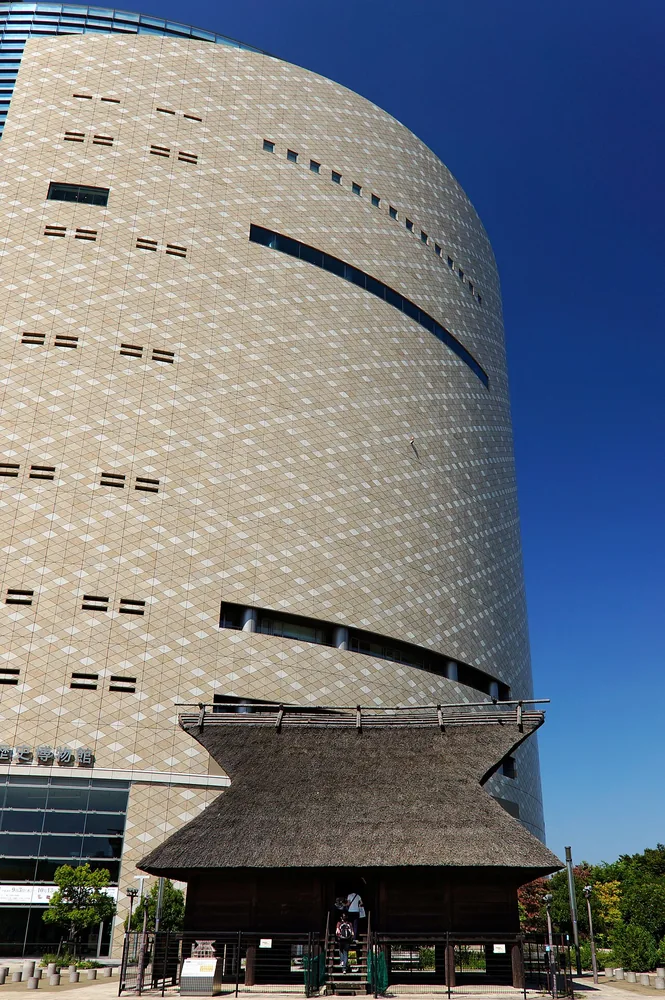
The current permanent exhibition fee is ¥600 for adults or ¥400 for high-school and university students with proof of student status at purchase. Junior-high students and younger enter free. Normal hours are 9:30 a.m.–5:00 p.m., with last admission at 4:30 p.m. It closes Tuesdays, or the following day when Tuesday is a holiday, and December 28–January 4. Special exhibitions cost extra. For Osaka’s urban history, start with the permanent exhibition rather than assuming a special exhibition is necessary.
The old combined ticket for the keep and the history museum’s permanent exhibition stopped selling on December 27, 2024. Separate adult admission to both now totals ¥1,800. The stone wall museum is included in the keep ticket for the same day, with no extra ticket needed. High-school and university students meeting both museums’ proof requirements pay ¥1,000 together.
The keep normally opens Mondays, Nishinomaru closes Mondays, and the history museum closes Tuesdays. They cannot share one operating calendar. On Tuesday, focus on the keep, stone walls, and outdoors. A Monday history-museum day still works without the garden. Use each museum’s monthly calendar when Japanese holidays shift closures.
The history museum from the tenth floor down: palaces, castle town, archaeology, and modern streets
The permanent exhibition route begins with an elevator to the tenth-floor ancient-history area, where vermilion columns and palace space introduce Naniwa Palace. The ninth floor moves into medieval and early-modern Osaka, the eighth into excavation and archaeology, and the seventh into modern and contemporary streets. Its timeline is longer than the keep’s warring-states focus. For understanding the growth of commerce and everyday life, the two museums have complementary content.
With children, use ninth- and seventh-floor castle and street scenes as observation tasks: how were goods moved by water, what shops lined the street, and how do interiors and exteriors differ? Allow 90 minutes to two hours for the permanent exhibition. Spend longer on the eighth floor if archaeology interests you; each floor need not receive the same number of minutes.
The museum services page lists accessible restrooms, infant seats, and diaper-changing facilities on each floor, a nursing room and refundable ¥100 lockers on the first floor, and drink vending machines and a rest area on the second. These help divide outdoor walking with a cool or seated break. Ask first-floor general information for the nursing room or a wheelchair loan. Ordinary visitors may reenter the permanent exhibition on the same day, useful for returning after a meal; retain your ticket before leaving. The museum FAQ says strollers are normally allowed in galleries, with restrictions when crowded. Loan strollers are available at first-floor general information. Free Chinese brochures can be shared by the family, or rent a Chinese audio guide for ¥400 per use. If a child needs to stay in a stroller, this museum is more suitable than storing it at the keep entrance.
Food and drink are prohibited in galleries, as are long umbrellas and parasols. Flash, tripods, and selfie sticks are prohibited; follow exhibition signs for photography permission. In rain, organize wet items at the entrance before going upstairs. Afterward, return directly to the city from Tanimachi 4-chome if you do not want to walk back to Honmaru. Add a short castle-exterior walk only if time remains, letting the indoor visit form a complete afternoon.
A first visit in three to four hours: enter northeast and leave southwest
If you can cross the park and the keep is your main purpose, start at JR Osakajokoen Station, pass JO-TERRACE and the Aoyamon area to Gokurakubashi, view the moat and castle exterior, then enter Honmaru. A sample start is arrival at the station around 9:00 a.m. and Honmaru around 9:30, allowing for walking and navigation. Online ticket holders follow signs to the online lane; on-site buyers add purchase time.
Give the keep one to one and a half hours, followed by about 30–45 minutes in the Toyotomi Stone Wall Museum. Rest or eat near MIRAIZA afterward. If you spend longer reading inside, delay lunch and drop the garden. If you finish early and the weather is pleasant, continue toward Sakuramon and Otemon. The main exhibitions come first, leaving outdoor additions easy to shorten.
Leave through Otemon around midday and return to the city via Tanimachi 4-chome. About three to four hours makes a complete castle-area visit. For Nishinomaru, set aside at least 45 minutes from the main route. For the history museum, make it a second main attraction after lunch, adding 90 minutes to two hours overall. If you want both additions and the turret opening too, split them into two visits.
This crossing route does not suit a park wheelchair that must return to its original location, or large luggage stored on the east when leaving west. If you must return to the same station, change to an out-and-back route before entry. Luggage storage at the keep ticket counter costs ¥100 per item, accepts items from 9:00 a.m. to 5:30 p.m., and requires collection by 6:00 p.m. Resolve these return requirements before walking to another exit.
Less walking or rain: return through Tanimachi 4-chome and choose one museum
If an older companion cannot walk far or children need to return to the room after lunch, enter from Tanimachi 4-chome through Otemon, see Honmaru and one museum, then return the same way. Park walking and slopes remain, and the keep has several floors. Allow three hours first, with lunch after the museum. If that is already too much walking, choose the history museum outside the castle and add a short Otemon walk if weather allows.
For the keep in ordinary rain, expect outdoor walking between station and museum. Organize shoes, umbrellas, and stroller rain covers before entry. The park FAQ says there is no outdoor shelter specifically for visitors to eat packed lunches. Buying takeaway food before rain can leave you without a seat. A meal in an operating restaurant or a day focused on the history museum’s permanent exhibition is easier to manage.
With young children who only want to see the castle, walk to a comfortable viewpoint, photograph it, rest, then return to the same station. For children’s walking, focus on the Morinomiya side. If adults want exhibitions, agree on turns entering and separate meals in advance. The caregiver staying outside also needs a usable rest spot.
Road Train and Electric Car: reduce one stretch of walking after checking the day’s service
The park has Road Train and Electric Car services. The current park transport page lists normal hours of 9:30 a.m.–5:30 p.m., closed the first Thursday of each month or the following day if it is a holiday. A one-way Road Train ride costs ¥400 from junior-high age to under 65, or ¥200 for children aged four through elementary school and visitors aged 65 and over. Electric Car fares for those same groups are ¥300 and ¥200. Weather, heat, crowds, or events using the paths may change or suspend service.
The Road Train mainly links Morinomiya, JO-TERRACE, and Gokurakubashi, plus a Parking Lot stop for wheelchair users only. The Gokurakubashi–Hokoku Shrine-front section uses an electric vehicle replacement for designated passengers such as people with walking difficulties; general visitors cannot assume they can ride the entire line. The separate Electric Car route circles the southern outer moat via Bambacho, Otemae, Sakuramon, Hokoku Shrine-front, and Jonan Bus Parking Lot-front. Check stop signs and that day’s service before boarding.
Buy a single ticket for one ride; an Electric Car ride covers at most one circuit. A day pass for both costs ¥1,000 for general adults or ¥600 for children and visitors aged 65 and over. It is useful to compare only if you will actually take several rides. Children cannot ride either service alone, and full vehicles require waiting for the next. If your route depends on this transport, confirm it operates that day before walking to the far end rather than treating it as a guaranteed ride whenever you tire.
Where to eat: MIRAIZA at Honmaru or JO-TERRACE in the northeast
For a break after reaching Honmaru, consult MIRAIZA’s official floors and shops. The first floor has coffee, takeaway food, and souvenirs. Upper-floor restaurants set their own hours and reservations. It suits meals before or after the keep. Rooftop dining areas require the venue’s plan or service; they are not free public observation decks for castle photographs.
JO-TERRACE beside JR Osakajokoen Station suits a northeastern arrival or departure meal. The current shop directory includes Sachifukuya set meals, Katsuman pork cutlets, Nadai Chibo okonomiyaki, and Wanaka takoyaki. Meal type is more useful than the broad label “Osaka Castle food.” For a full meal, start with set meals or cutlets. For a small top-up, choose takoyaki or coffee. Decide first whether everyone needs to sit.
Hours differ too. Sachifukuya and Katsuman list 11:00 a.m.–9:00 p.m., with last orders at 8:30 p.m. Nadai Chibo closes Mondays, shifting after holidays, and finishes at 6:00 p.m. on weekdays. Wanaka normally opens 11:00 a.m.–6:00 p.m., with last orders at 5:30 p.m., and closes Mondays unless a holiday. If you leave the castle after 4:00 p.m. for a specific shop, head there rather than browsing every souvenir store first.
There are also coffee and bakery options around Morinomiya Fountain Square for southeastern visitors. The park FAQ lists nursing rooms at JO-TERRACE and MIRAIZA; bring your own water for formula. Align breaks with your entrance direction if you need them. Once you have left through Otemon, eat along your western onward route rather than crossing the entire park again for one snack on a list.
Cherry blossoms, plums, autumn color, or the lit exterior: add one seasonal focus
In spring, focus on Nishinomaru’s lawn and castle views or free paths for blossoms. For plums in late winter and early spring, add a walk through Osaka Castle Plum Grove from the east. Flowering seasons often add photography and waiting to the same paths, so take that time from indoor visits or another area.
For autumn ginkgo, use the 2026 official autumn map to follow the outside of the eastern outer moat toward Morinomiya, adding leaves to an existing eastern route. For the western garden and maple colors, reserve separate entry time. Park paths, garden, and keep have different hours. Late-afternoon autumn visitors should decide whether museum admission is still worthwhile before viewing the exterior after sunset. The garden closes earlier in winter. If only free outdoor time remains for sunset, plan directly around that purpose.
The keep FAQ says the lights gradually come on over roughly an hour after sunset, with lights off for annual inspection days. The video below is the keep’s official record of a special illumination on March 31, 2023, marking a lighting upgrade. Use it to see the building at night, and consult castle announcements for special programs on your own date. Identify the station direction for the return rather than relying on daytime restaurants and shops to remain open for rest.
The keep’s official channel recorded the March 31, 2023 special program marking its lighting upgrade. View it alongside this section on the nighttime exterior.
A few useful answers
What does an Osaka Castle keep ticket include?
The current general keep ticket includes one visit each to the keep and Toyotomi Stone Wall Museum on the same day. Nishinomaru Garden, Osaka Museum of History, and special turret openings cost extra.
What proof do overseas students and free-entry children need?
Overseas high-school and university students need an ISIC international student card for the ¥600 keep student ticket. Overseas visitors aged 15 and under should show a passport or similar proof of age. Without the specified student proof, adult admission applies.
Official information and references
Sources used in this guide.
- Osaka Castle keep | Visitor information and current prices
- Osaka Castle keep | FAQ
- Osaka Castle keep | Access and accessibility map
- Osaka Castle keep | Exhibitions by floor
- Osaka Castle | Toyotomi Stone Wall Museum
- Official ticket sales | Keep single-entry ticket and cancellation rules
- Osaka Castle Park | 2026 guidebook and park map
- Osaka Castle Park | FAQ
- Osaka Castle Park | Nishinomaru Garden
- Osaka Castle Park | 2026 special turret openings
- Osaka Castle Park | Transport within the park
- Osaka Museum of History | Admission and opening days
- Osaka Museum of History | Permanent exhibition
- Osaka Museum of History | Visitor services
- MIRAIZA OSAKA-JO | Shops and facilities
- JO-TERRACE OSAKA | Current shop information
- Osaka Castle Autumn Festival 2026 | Foliage and flower map
- Osaka Convention & Tourism Bureau | Osaka Castle Park
- Osaka Museum of History | Access
- Osaka Castle Park | Designated cultural properties route
- Osaka Castle keep | Official social media accounts
- Osaka Museum of History | Visits, reentry, and stroller FAQ