Ride the Hankyu Railway from Osaka-Umeda via Ishibashi-handaimae to Minoo. Includes Minoo Falls walking times, stroller slopes, 2026 autumn foliage and light-up dates, plus Katsuoji Temple bus stops, fares, and payment rules.
- Region & Focus
- Osaka
- Reading Scope
- 23 min read · 8 chapters · 6 Q&As
- Official Verification
- 32 official sources checkedUpdated November 22, 2026 at 08:00 AM GMT+8
- Key Topics
- ItinerariesRail travelSeasons
Chapter Route Map (tap any stop)
- Getting There from Osaka: Pick the Right Minoo Station
- Walking the Takimichi Trail: Ichinohashi Bridge and Ryuanji Temple to Minoo Falls
- Visiting with Kids or Seniors: Make the Insectarium Your Turnaround Point
- 2026 Foliage Timing: Check the Park's Zone-by-Zone Photos First
- Waterfall Light-Up: Sunset to 21:30, With a Dark Walk Back Down
- Adding Katsuoji Temple: Plan Half a Day and Budget Bus and Entry Separately
- Momiji Tempura by the Station, Sit-Down Meals Back Downhill
- Pacing a Half-Day Trip and Rainy-Day Switch to Ikeda
- Quick Q&A
Follow the valley trail roughly 2.7 km uphill from Hankyu Minoo Station and you reach the 33-meter Minoo Falls. The walk takes 40 to 50 minutes each way, making it an easy half-day trip from central Osaka once you add photos and snack stops. If you are traveling with young kids or moving at a gentler pace, the Insectarium and Ryuanji Temple make natural turnaround points. To pair the walk with Daruma-filled Katsuoji Temple on the same day, hike the Takimichi trail in the morning, return to Hankyu Minoo Station, and transfer via Minoh-Kayano up into the hills.
Getting There from Osaka: Pick the Right Minoo Station
If your first stop is the waterfall, set your map destination to Hankyu Minoo Station (HK59). Ride the Hankyu Takarazuka Line from Osaka-Umeda and transfer to the Hankyu Minoo Line at Ishibashi-handaimae (HK48). Express trains that stop at Ishibashi-handaimae save time in the morning; if you board at a local-only station such as Shonai, stay on the local train straight to the transfer station. At Ishibashi-handaimae, head to Platform 5, marked for Minoo, without exiting the ticket gates. The branch line calls at Sakurai and Makiochi before terminating at Minoo.
The regular adult fare from Osaka-Umeda to Minoo is ¥280 one-way (¥560 round-trip). According to the Minoh City Tourist Association, the express leg takes about 16 minutes and the Minoo Line takes 6 minutes, plus transfer time - roughly 30 minutes total from your first boarding. Tap the same transit IC card in and out. Older guides sometimes mention direct trains from Osaka-Umeda, so plan on one transfer for daytime trips; on the return, ride back to Ishibashi-handaimae and switch to Platform 2 for Osaka-Umeda.
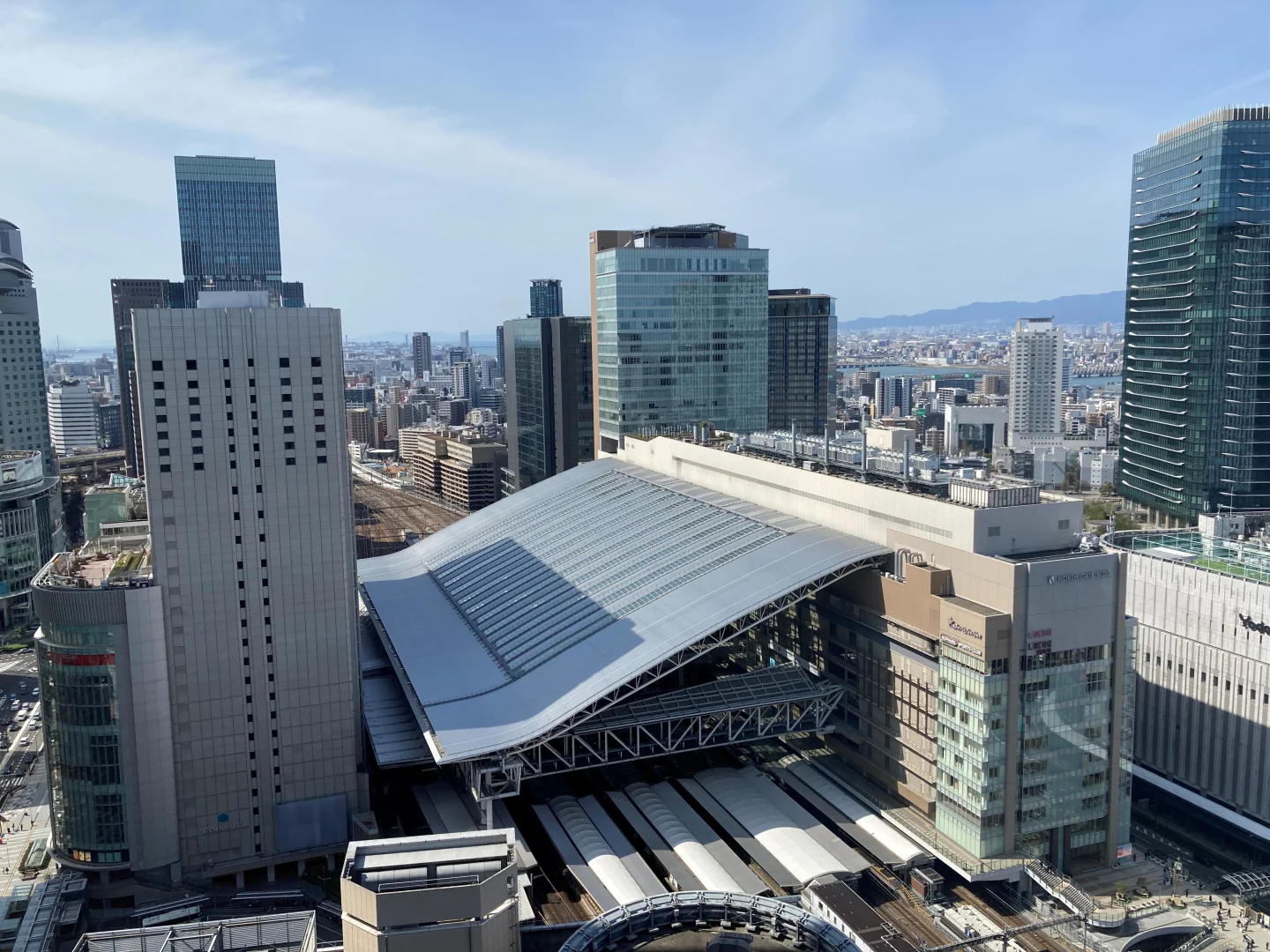
Several stations cluster around Umeda. Walking from JR Osaka Station, follow signs for Hankyu Railway or Hankyu Sanbangai to reach Hankyu Osaka-Umeda Station. If you instead enter the Osaka Metro Midosuji Line and see trains bound for Minoh-Kayano, that line continues onto the Kita-Osaka Kyuko Railway to a completely different terminal. Minoh-Kayano is the hub for Katsuoji Temple buses, whereas Hankyu Minoo Station is the trailhead for walking up to the waterfall.
If you are staying in Namba or Shin-Osaka and prioritizing Katsuoji Temple, take a Midosuji Line train running through to Minoh-Kayano straight to the bus terminal. Trains signed for Shin-Osaka, Esaka, or Senri-chuo terminate early, so check the destination display before boarding. If you want to visit the waterfall from Minoh-Kayano first, Hankyu Bus routes 21 and 36 connect to the stop listed by the park as Hankyu Minoo Station - verify the route direction on the bus display before boarding.
Hankyu Minoo Station has only one ticket gate. Exit toward Minoo Falls and follow the shopping street to Ichinohashi Bridge, reaching the prefectural park boundary in about 5 minutes. If you are returning to central Osaka afterward, leave large suitcases at your hotel and pack just a small daypack with water and an extra layer. Stroller users transferring at Ishibashi-handaimae can check the station map for elevator routes and allow a few extra minutes for the transfer.
For a printed map on arrival, stop by the Minoo Tourist and Transportation Information Center next to the station. It is open daily 9:00-17:00 in November, and normally 10:00-16:00 on weekdays and 9:00-17:00 on weekends and national holidays (closed Thursdays, or the following day if Thursday is a holiday). If you are only walking the waterfall trail, save the park walking map on your phone and head straight up. If you plan to hike all the way to Katsuoji Temple and do not know the mountain trails, pick up the wider-area hiking map at the information center, as the two maps cover different terrain.
Ride the Hankyu Railway from Osaka-Umeda via Ishibashi-handaimae to Minoo. Includes Minoo Falls walking times, stroller slopes, 2026 autumn foliage and light-up dates, plus Katsuoji Temple bus stops, fares, and payment rules.
Walking the Takimichi Trail: Ichinohashi Bridge and Ryuanji Temple to Minoo Falls
The official park site lists the Takimichi trail from Hankyu Minoo Station to the waterfall at roughly 2.7 km and 40 to 50 minutes; the park walking map marks the promenade at about 2.8 km. Both figures are one-way. Walking steadily without stopping takes 80 to 100 minutes round-trip. With family, photo stops along the stream, or bridge bottlenecks on busy days, budget 2.5 to 3 hours station-to-station, or a full morning once you factor in transit from Osaka.
Ichinohashi Bridge marks the clearest transition from town to gorge. After passing small shops and houses near the station, crossing the bridge brings the sound of the river closer, and signs for Minoo Falls guide you up the Takimichi trail. Take the first stretch easy and gauge whether everyone wants to go all the way to the falls. For a short walk, the 15-to-20-minute section to the Insectarium already delivers gorge views, bridges, and historic buildings with a predictable downhill return.
Along the stream you pass the Umeyashiki Rest Area before reaching the Insectarium and the park management office. This cluster is the best place to handle restrooms, strollers, or an indoor exhibit stop for kids. Just uphill sits Ryuanji Temple, hugging the trail closely. Pause in the open plaza in front of the temple so your group stays in sight before splitting up to look around, and finish or stow drinks and snacks before stepping inside the grounds.
Ryuanji Temple enshrines Benzaiten, and from in front of its gate you can look across the stream toward the Hououkaku hall and the red-railed Zuiun Bridge. The red railing stands out clearly through the trees, making it easy to frame the bridge and rocky riverbed from the public path. Worshipers can follow the open temple routes, while casual walkers can simply use the front plaza as a breather. If you are tight on time, push straight to the waterfall in the morning and save the Insectarium or temple for the walk down so you are not watching the clock at the top.
Before reaching Ryuanji Temple, you can also make a short detour to Shotengu Seikoji Temple on the town side of the entrance. Dedicated to Daisho Kangiten, Seikoji offers autumn maples and camellias blooming from roughly December through May. If you have an extra 30 minutes near the station and do not mind stone steps, save Seikoji for the return leg. If you prefer staying along the river the whole way, enter the park directly via Ichinohashi Bridge and stick to Ryuanji Temple on the main trail; both temples sit close together via separate approaches.
Higher up, the landmarks shift to Daimon Bridge, Tojinmodori Rock, and Shugyokoba. Tojinmodori Rock is a massive boulder beside the path, and Shugyokoba has a rest area ideal for drinking water, shedding or putting on a jacket, or waiting for stragglers. When people pause to photograph the boulder, wait for oncoming walkers to clear the pinch point before stepping through. If dusk is settling or energy drops here, turning back still gives you an easy downhill walk along the main paved trail back to town.
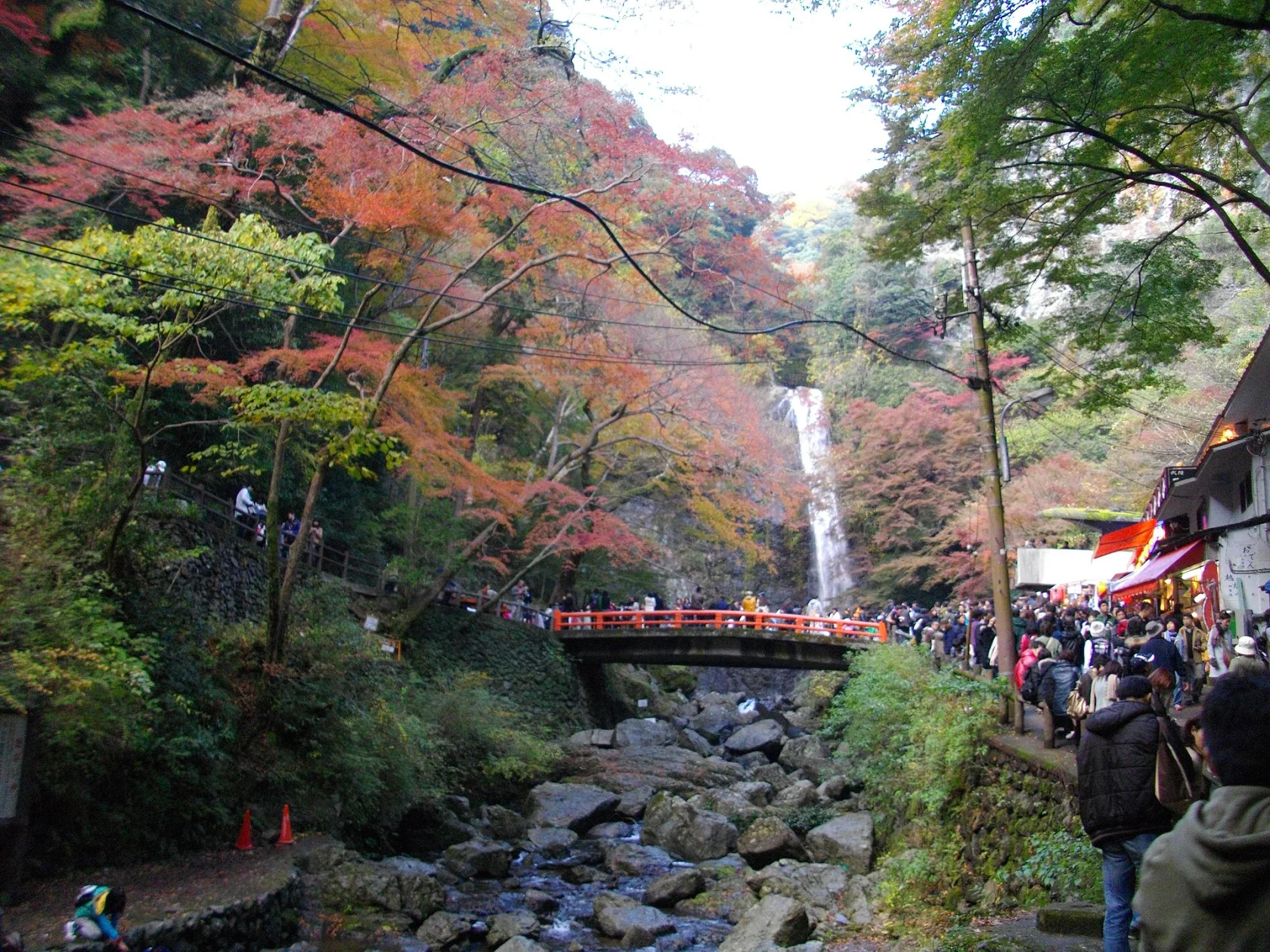
Near the top, Takimi Bridge comes into view first, and looking back gives you a clean composition of the boulders and gorge below. The waterfall itself plunges 33 meters down a sheer rock face into a basin. Standing close lets you look straight up the cascade, while stepping back gives you room to frame both the pool and the cliff top together. In August 2026, the park announced that the full Takimichi trail had reopened following the previous year's closure from a shop fire near the falls. Temporary barriers narrow the walkway past the former shop site, and the second floor of the Takimae Rest Area remains closed under the reopening notice.
The waterfall's name offers a quick piece of local lore. According to the Minoh City Tourist Association, the cascade over the rock face reminded people of a mi, a traditional winnowing basket used to sift grain and chaff. Down at Ryuanji Temple, another local story links the grounds to the birthplace of tomikuji, Japan's early lottery. Walking with kids, you can point out both spots on the station map, pause at the temple and the falls, and check off the bridges on the way back.
The full round-trip covers roughly 5.4 km. The outbound walk climbs steadily, and even though the return is downhill, wet pavement, fallen leaves, and uphill crowds still slow you down and tire out calves and toes. Save energy for unhurried stops at any plaza, snack shop, or bridge you skipped on the way up. Side hiking trails, observation decks, and streamside paths all involve steeper grades, so sticking to the main trail is plenty for a first half-day visit.
To cut down on walking by taking a taxi, use Otaki-ue Parking Lot along Prefectural Route 43 as the upper drop-off point, roughly a 15-minute walk down to the waterfall via the steep Senbon-enro Trail. That option suits steady walkers who want to focus their time around the cascade. Strollers and wheelchairs should always use the paved Takimichi approach from Hankyu Minoo Station. There is no parking inside the prefectural park, and cars, motorcycles, and bicycles are prohibited on the Takimichi trail.
Visiting with Kids or Seniors: Make the Insectarium Your Turnaround Point
The Takimichi trail from Hankyu Minoo Station is paved, and the park FAQ notes there are no stairs along the main route, though one steep incline appears mid-trail. If someone in your group can comfortably control a stroller and take the downhill slowly, you can continue all the way to the falls. With a compact small-wheel stroller, a toddler nearing naptime, or a caregiver who prefers not to strain on the climb, the plaza in front of Ryuanji Temple makes a practical turnaround line. Let kids walk a stretch on foot, then visit the Insectarium or head back toward the station for lunch.
The Minoo Park Insectarium is open 10:00-17:00 with last admission at 16:30. Admission is ¥280 for adults and free for junior high school students and younger; children in third grade and below must be accompanied by an adult. It is closed on Tuesdays (or the next weekday if Tuesday is a national holiday) and from December 29 to January 3. Budget about an hour for the exhibits and butterfly conservatory, then grab water and rest outside in the temple plaza if kids want a break.
Next to the Insectarium, the park management office lends out one free power-assisted wheelchair for use along the park trail, Ryuanji Temple plaza, and the area in front of the waterfall. A companion operates the controls. You can apply at the office starting at 9:00 with photo ID for use between 9:30 and 17:00, picking up and returning it at the same office. Keep in mind the office is about a 15-minute walk from the station, so anyone who cannot comfortably walk that opening stretch should bring mobility gear from home or their hotel.
The park also welcomes visitors who need nursing facilities to ask at the park management office. On peak autumn weekends, use the restrooms at the station or around the Insectarium so you are not forced into a long detour higher up the gorge. Families taking frequent breaks can aim from one bridge or rest area to the next; if someone wants to sit out the rest of the climb or head back early, agree on a clear landmark to regroup before deciding whether to push farther.
Keep lunches and snacks sealed inside zippered bags. Wild Japanese macaques live on Mount Minoo and occasionally wander into the park looking for food. If you encounter monkeys, stop and let them pass without staring closely, reaching out, or chasing them for photos. Minoh City prohibits feeding the monkeys, and anyone who ignores an order or warning to stop can face a fine of up to ¥10,000. Even rustling a plastic snack bag by the roadside draws their attention, so wait until no monkeys are in sight before eating.
Both the stream and steep rocky drop-offs run right beside the path, so keep children on the walkway when looking at the water and never sit on or climb past the railings. Picnic only in designated rest areas and carry all wrappers and trash back down with you. Open flames are prohibited throughout the park, pitching tents is generally barred, and dogs are welcome as long as they stay leashed and owners clean up after them.
2026 Foliage Timing: Check the Park's Zone-by-Zone Photos First
Minoo's autumn colors typically run from mid-November through early December, with the waterfall area turning later, often between late November and early December. Because the narrow gorge gets uneven sunlight and holds different tree species along its length, colors peak at different times. The park's foliage report updates separate sections for Senbon-enro Trail and Minoo Falls, Shugyokoba, the Insectarium to Ryuanji Temple, and the entrance bridges. For classic maple-and-waterfall shots, check the Senbon-enro and waterfall photo slot first, where yellow, crimson, and green leaves often appear together.
In the park's November 20, 2026 log, Senbon-enro Trail and the area around the waterfall were turning color with green still mixed in, while Shugyokoba, the Insectarium to Ryuanji Temple, and Ichinohashi Bridge to Meoto Bridge were nearing peak color, and Jigokudani lagged behind. On days with that split, an easy walk can focus on Ichinohashi Bridge to Ryuanji Temple; later in the season, check the waterfall status frame and hike higher once colors concentrate upstream.
On sunny days, watch which canyon wall catches the light, step into wider spots when crowds build, and shoot reflections on the stream or maple branches cutting across bridge railings. Overcast skies soften contrast and keep detail in wet rocks and foliage for close-up views along the path. After wind or rain, fallen leaves collect first along curbs and bends, giving you colorful ground carpets right from behind the guardrails.
The park specifically warns that on weekends and national holidays between November 14 and December 6, 2026, the Takimichi trail can back up right from Hankyu Minoo Station. Aim for a weekday morning, or arrive around 9:00 on weekends to walk your priority stretch before peak crowds hit. Keep space open for return foot traffic even on wider segments, shoot briefly at the waterfall, and fold tripods away on narrow paths and bridges—staff may ask visitors to stop using tripods during heavy congestion.
If you are walking in a group, pick two unmistakable meeting points ahead of time, such as the Insectarium entrance on the way up and Ichinohashi Bridge on the way down. Step to a wide shoulder once you finish taking photos, keep kids beside an adult, and secure loose items in a bag. If constant bottlenecks force repeated stops, turning around at Shugyokoba still gives you diverse foliage across multiple bridges and plazas without waiting in line for a single railing at the falls.
Drivers must also factor in seasonal mountain road restrictions. On Saturdays, Sundays, and national holidays from November 14 to December 6, 2026, Prefectural Route 43 between Sanso Kaze no Mori and the T-junction below the Minoo River Dam becomes one-way northbound only from 9:00 to 18:00, including for bicycles. Returning to town from above the waterfall requires following the posted detour, and traffic slows considerably. If you have a tight Shinkansen or flight connection afterward, take the Hankyu train and walk instead.
If you still choose to drive, the municipal Minoo Station Front Parking Lots 1 and 2 operate 24 hours at ¥200 per hour between 8:00 and 20:00. During the foliage festival, Lot 1 carries a ¥2,000 daytime cap, while Lot 2 lists a ¥1,000 daytime cap. Both sit about a 10-minute walk from Ichinohashi Bridge. If you are staying in Osaka and only walking the waterfall trail, taking the train skips the parking hunt and gets you by the river sooner.
Waterfall Light-Up: Sunset to 21:30, With a Dark Walk Back Down
The 2026 Meiji no Mori Minoo Quasi-National Park Autumn Foliage Festival runs through December 6. Evening illuminations at Minoo Falls, along the Takimichi trail, and at Ryuanji and Seikoji temples run nightly from November 14 to December 6, 2026, from sunset until 21:30. If you want a full daytime schedule in Osaka, arrive before dusk, walk up from the river mouth, and wait by the falls as the lights come on. Twilight into early darkness gives the best balance of illuminated cascade and visible leaf texture along both banks.
Floodlights make the waterfall and cliff face stand out sharply, though bends along the mountain trail still have dark stretches. Budget the same 40 to 50 minutes uphill and walk all the way back to Hankyu Minoo Station afterward to catch the train via Ishibashi-handaimae. Lights turn off at 21:30 sharp—leaving the basin right at shutoff means walking part of the descent in the dark. With small children or older travelers who dislike dark downhill paths, stick to the lit lower stretch between Ichinohashi Bridge and Ryuanji Temple.
Keep your phone charged for a flashlight along dark sections and stay within earshot of your group. Slow down on damp inclines, leaf-covered patches, and dimly lit bends, and turn back early if your shoes feel slick. Illuminations may be canceled during storm warnings, landslide alerts, or dangerously high river levels in the Minoo River; obey any posted trail closures along the main path. If your evening schedule is already tight, staying in Umeda makes dinner and getting back to your hotel far easier.
The Minoo Forest Sound and Light Night Walk also places interactive audio panels at Seikoji Temple, Ryuanji Temple, Shugyokoba, Daimon Bridge, and Minoo Falls that play soundscapes when tapped with a smartphone. Stamp rally checkpoints run alongside the festival at Ryuanji Temple's Kannon Hall, in front of Seikoji Temple's Daikoku Hall, and at the waterfall rest area—the waterfall stamp desk is roughly 10:30 to 16:00, so arrive in daylight if you want that stamp before staking out an open spot for the evening lights.
Nearby Katsuoji Temple holds its own separate Autumn Evening Illumination on weekends and national holidays from November 1 to 29, 2026, from sunset until 20:30 with last admission at 20:00. Pair the Minoo Falls light-up with dinner back in Umeda, and save Katsuoji's night viewing for an evening when you have secured dedicated return transport. Splitting the two night events lets you wait comfortably for twilight without scrambling for mountain connections in the dark.
Adding Katsuoji Temple: Plan Half a Day and Budget Bus and Entry Separately
Reach Katsuoji Temple on Hankyu Bus Route 30 from Platform 8 at Kita-Osaka Kyuko Minoh-Kayano Station. Daytime buses run directly to the temple gate in about 20 minutes. If you came from Osaka-Umeda via Hankyu to see the waterfall first, walk back to Hankyu Minoo Station, take a local bus to Minoh-Kayano (¥250 adult fare, paid separately from the Katsuoji bus), and transfer to Route 30. If you finish the waterfall close to dusk, move Katsuoji to the next morning rather than racing for the last daytime bus.
Route 30 costs ¥800 for adults and ¥400 for children one-way. Starting October 1, 2026, the Minoh-Kayano to Katsuoji line operates cashless onboard. Tap ICOCA, Suica, or another transit IC card (remember you cannot top up IC cards on the bus, so load at least ¥1,600 for an adult round-trip beforehand), boarding through the center door and tapping off at the front. Alternatively, buy a dedicated ticket by credit card from the attendant at Minoh-Kayano Platform 8; for the ride back, cash tickets can be purchased ahead of time inside the temple souvenir shop.
Katsuoji Temple is normally open 8:00-17:00 on weekdays, Sundays, and holidays (last entry 16:30), and until 18:00 on Saturdays (last entry 17:30). Admission is ¥500 for high school students and older, ¥400 for elementary and junior high students, ¥100 for preschoolers, and free for ages 2 and under. A round-trip bus from Minoh-Kayano plus adult temple entry totals ¥2,100, excluding rail and connecting fares from central Osaka.
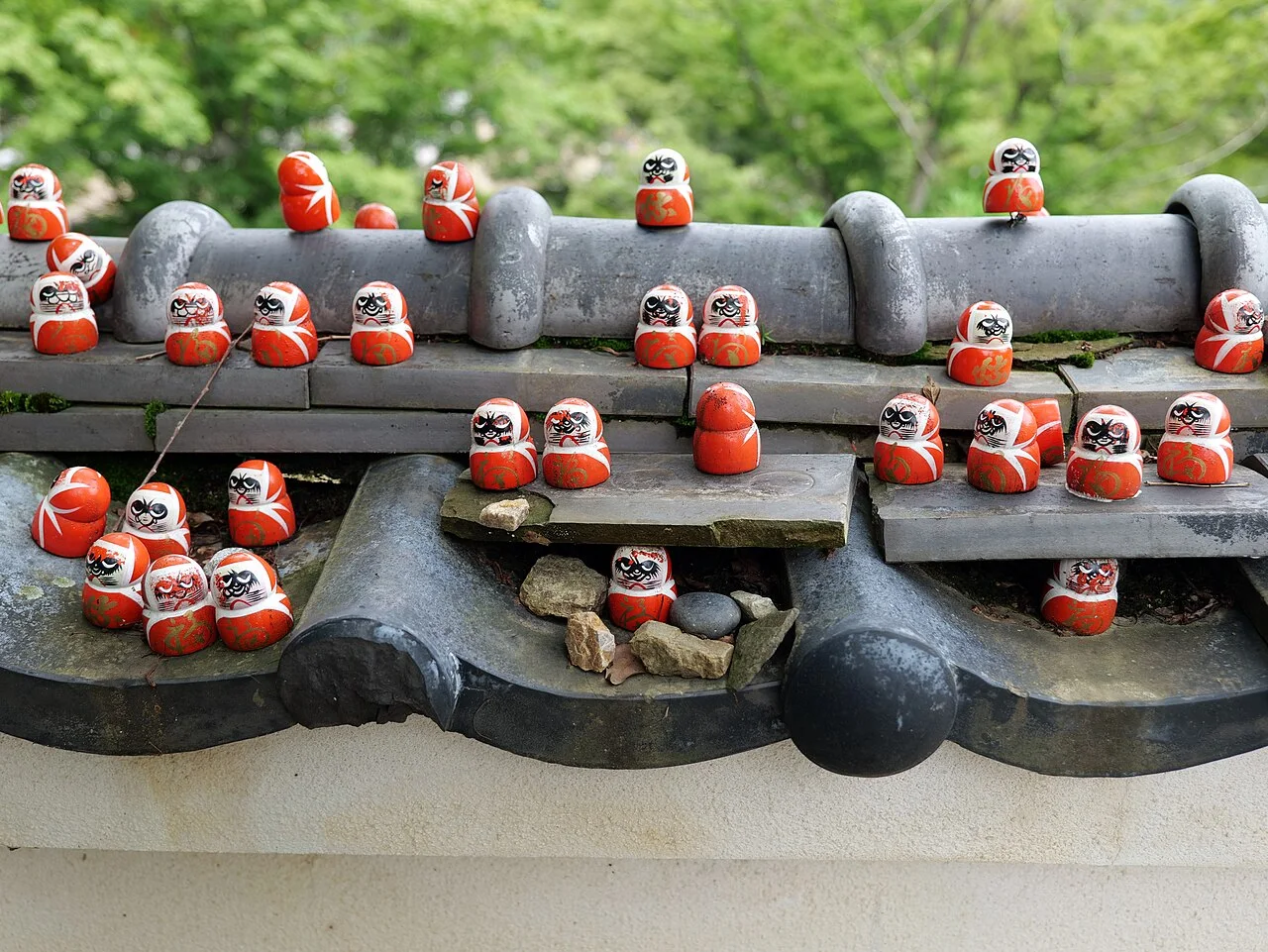
Right inside the gate, follow the pond path to see how the Daruma dolls fill the hillside. Rows of Winning Daruma line the offering shelves, and palm-sized red figurines sit tucked into stone ledges around every corner. Because the ponds and shelves span terraced levels, step to wider spots along the paths when taking photos so people climbing stairs or heading to pray can pass. Give yourself at least 90 minutes on the grounds, working backward from your target return bus departure.
Katsuoji's Daruma dolls serve distinct traditions. To pick up a take-home Kachidaruma (Winning Daruma), choose a size at the amulet counter, write your goal on it following temple instructions, and paint in the right eye—the one on your left as you face the doll. When your goal is achieved, return to paint the second eye, give thanks at the main hall, and leave the doll on the offering shelves. The tiny dolls perched along steps and crevices across the grounds are Daruma fortune slips; get close for photos, but leave them where they sit.
Experienced hikers can walk all the way from Minoo Station to Katsuoji Temple. The Minoh City Tourist Association's hiking map outlines an approximately 12 km, 4-hour-20-minute route finishing at the Gein or Shinke bus stops. Expect about 90 minutes from Minoo Station to the Minoo Visitor Center at Masanochaya Garden, then another 70 minutes via Nature Study Trail No. 4 and Prefectural Route 4—plus the old temple approach—to reach Katsuoji. The visitor center has restrooms and rest space. Save the hiking map offline beforehand to track forks, steep sections, and bus stops; if you want more time inside the temple, riding the bus after finishing the Takimichi trail is far easier.
Running the day in reverse—Katsuoji in the morning, waterfall in the afternoon—also works well. Ride the subway straight from central Osaka to Minoh-Kayano for a morning bus up to the temple, return to Minoh-Kayano to catch a bus to Hankyu Minoo Station, and walk up to Ryuanji Temple or the falls while daylight lasts. Even if the return bus line at the temple moves slowly, you can easily fit the lower valley walk before dark and avoid rushing back down from the cascade.
Drivers heading to Katsuoji must check temple parking rules and road direction controls first. Parking for the 2026 autumn evening illumination requires advance reservation, and weekend and holiday visitors must enter strictly within their booked time slot. If you go for the night illumination, confirm your return shuttle, special event bus, or private car plan before afternoon ends, since daytime bus schedules and night event transport operate separately.
Momiji Tempura by the Station, Sit-Down Meals Back Downhill
Along the stretch from the station to Ichinohashi Bridge, shops fry momiji tempura—maple leaf tempura. As the Minoh City Tourist Association describes the traditional recipe, fallen Ichigyoji maple leaves are washed, cured in salt for over a year, desalted, dipped in a batter of wheat flour, sugar, and sesame seeds, and deep-fried. The result is crisp and lightly sweet, with both stem and leaf encased in thin crunch. Watch the frying pans from the side of the storefront, buy a bag, and step clear of the line before snacking.
For a full sit-down meal after the hike, walk down Minoo Hondori Shopping Street on the south side of Hankyu Minoo Station—opposite the main trail shops. Stopping here for udon or a set meal before boarding the train is much more relaxed than squeezing into trailside stalls. For local souvenirs, look for products made with Minoo's seed-grown Misho yuzu. If kids only want to try a piece or two of maple tempura on the way up, start with a small bag and pick up bigger boxes on the way back.
When foliage queues grow long outside tempura stands, walk across the bridge to the waterfall first and buy bags on your return to eat later in Umeda or at your hotel. Eat breakfast near Hankyu Osaka-Umeda Station or your hotel before leaving, carrying just water and light snacks in your backpack. Trailside teahouses are pleasant when seats are free, but during rush hours rest at wider open spaces so your group does not block shopfronts and older companions can find benches easily.
Having lunch near the station makes afternoon connections predictable. If you are continuing to Katsuoji Temple, check the next bus departure to Minoh-Kayano before ordering so you have time to pay the check, use a restroom, and walk to the bus stop. With young kids, limit trail snacks to one stop on the climb and save a proper seated lunch for the station area. Note that momiji tempura batter typically contains wheat and sesame, so check package labels before gifting bags to anyone with food allergies.
Pacing a Half-Day Trip and Rainy-Day Switch to Ikeda
With only a morning to spare, budget roughly 4 hours round-trip from Umeda and back. Arrive at Hankyu Minoo Station around 9:00, walk the main trail to the waterfall first, then browse Ryuanji Temple and buy momiji tempura on the way down. If you plan to enter the Insectarium, work backward from any afternoon reservations—factoring in the walk back to the station and train transfer—to see how much time you actually have inside. Anyone catching an afternoon Kansai Airport train or Shinkansen from Shin-Osaka will find it much less stressful to turn around between the Insectarium and Ryuanji Temple.
If seeing the butterflies is the main goal for kids, time your arrival just before the Insectarium opens, stroll straight along the stream, and keep plenty of cushion for lunch and breaks. Anyone eager to finish the full trail can continue uphill from the temple plaza while the rest of the group heads back to the station to eat. Agree on a fixed landmark, return route, and cutoff time before splitting up, as a recognizable building beats trying to relocate each other by a random snack stall if phone batteries run low or reception drops.
In light rain, walk as far as the Insectarium, tour the indoor exhibits, and decide from there whether to push on. In heavy rain, rising stream levels, or partial trail closures, pivot indoors. If mountain weather looks poor as you leave Osaka, stay on the same Hankyu Takarazuka Line and head instead to the CupNoodles Museum Osaka Ikeda—about a 5-minute walk from Ikeda Station's Masumicho exit, with no need to detour onto the Minoo branch line.
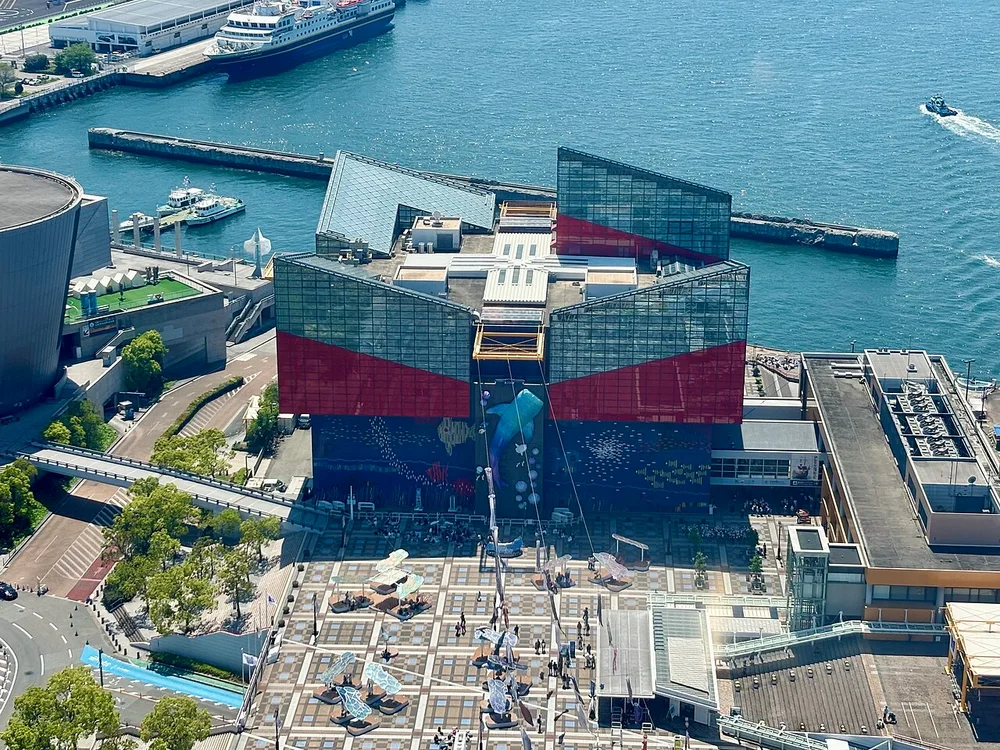
The Ikeda museum offers free admission and is open 9:30-16:30 (last entry 15:30). It closes Tuesdays (or the next day if Tuesday is a holiday), from December 28, 2026 to January 2, 2027 for year-end holidays, and January 12-15 for maintenance. Paid workshops such as Chicken Ramen Factory require reservations, so on a spontaneous rainy switch, focus on the permanent exhibits. On Tuesdays when both the Insectarium and the Ikeda museum are closed, stay in central Osaka for open indoor options such as the Osaka Aquarium Kaiyukan in Tempozan.
In summer, trees shade much of the Takimichi trail, though the uphill grade starts right from the station; go early to avoid midday heat and carry extra water for kids. In winter, dusk falls early and shaded, steep patches near the stream turn slick after rain or snow—if footing feels uncertain, turn back at Ichinohashi Bridge or the Insectarium. When your itinerary allows choosing which day to go, save Minoo for the drier forecast and move station-to-station indoor stops to rainy days.
Keep whatever Osaka base fits the rest of your trip. If you are moving around Kansai for three or four days, staying in Umeda puts you right at the Hankyu terminal for Minoo and makes afternoon connections back at Osaka Station effortless. Staying in Namba simply adds the morning subway leg before your transfer and leaves plenty of dining options when you return at night. If Minoo is just a half-day outing, treat Ichinohashi Bridge, Ryuanji Temple, or the waterfall as three flexible endpoints and choose your hotel neighborhood with our Osaka where to stay guide around the stations you will use most.
A few useful answers
Is there an admission fee for Minoo Park?
Minoo Park and the Takimichi trail to the waterfall are free to enter and walk. The Minoo Park Insectarium costs ¥280 for adults and is free for junior high school students and younger. If you continue to Katsuoji Temple, bus fares and temple admission are paid separately.
How long does it take to walk from Hankyu Minoo Station to Minoo Falls?
The paved trail is about 2.7 km each way and takes 40 to 50 minutes one-way. It takes roughly 5 minutes from the station to the park entrance and 15 to 20 minutes to the Insectarium. Allowing time for photos, rest stops, and the walk back, plan 2.5 to 3 hours in Minoo.
Do I need to transfer trains from Osaka-Umeda to Minoo?
Yes. Take the Hankyu Takarazuka Line from Osaka-Umeda to Ishibashi-handaimae, then transfer to the Hankyu Minoo Line to the terminal Minoo Station. The regular adult one-way fare from Osaka-Umeda to Minoo is ¥280.
Can I reach Minoo Falls with a baby stroller?
The Takimichi trail from Hankyu Minoo Station is paved and has no stairs, though it includes one steep slope. If your stroller is easy to control and you have the stamina for the incline, you can push it all the way to the waterfall. With a lightweight small-wheel stroller or older companions, stopping and turning back around the Insectarium or Ryuanji Temple works better. Note that the Senbon-enro Trail descending from the parking lot above the waterfall is very steep.
When does the 2026 Minoo Falls autumn light-up end?
The 2026 autumn foliage light-up runs daily from November 14 to December 6, from sunset until 21:30, illuminating the waterfall, the Takimichi trail, and nearby temples. Keep in mind that walking back from the waterfall to Hankyu Minoo Station takes another 40 to 50 minutes.
Can I pay cash on the bus to Katsuoji Temple?
Starting October 1, 2026, the Hokusetsu Reien Line bus between Minoh-Kayano Station and Katsuoji Temple no longer accepts cash onboard. Tap a transit IC card, or buy a dedicated ticket by credit card from the attendant at Minoh-Kayano Station Platform 8. For the return trip, you can buy a dedicated ticket with cash at the temple souvenir shop.
Official information and references
Sources used in this guide.
- Minoo Park | Trail Distance, Wheelchair Slope, and Park Rules
- Minoo Park | Walking Map
- Minoo Park | Access and Walking Times
- Minoo Park | Minoo Falls and Park Facilities
- Minoo Park | Full Reopening of the Takimichi Trail
- Minoo Park Insectarium | Hours and Admission Fees
- Minoo Park | Free Power-Assisted Wheelchair Rental
- Minoo Park | Autumn Foliage Status by Section
- Minoo Park | 2026 Autumn Illumination Notice
- Minoo Park | 2026 Autumn Holiday Crowds and Tripod Rules
- Minoh City | 2026 Mountain Road Traffic Restrictions
- Minoh City | Ordinance Prohibiting Feeding Wild Monkeys
- Hankyu Railway | Hankyu Minoo Station Map and Timetable
- Hankyu Railway | Ishibashi-handaimae Transfer Station Map
- Hankyu Railway | Regular Passenger Fare Table
- Hankyu Bus | Katsuoji Route Fares and Cashless Payment
- Minoh City Tourist Association | 2026 Katsuoji Temple Night Illumination
- Minoh City Tourist Association | Ryuanji Temple
- Minoh City Tourist Association | Mount Minoo Hiking Map
- Minoh City Tourist Association | Momiji Tempura and Local Specialties
- CupNoodles Museum Osaka Ikeda | Hours, Access, and Maintenance Closures
- Minoh City Tourist Association | Train Times and Station Parking Rates
- Minoh City Tourist Association | Tourist and Transportation Information Center
- Minoh City Tourist Association | Seikoji Temple
- Minoh City Tourist Association | Origins of the Name Minoo and the Waterfall
- Hankyu Bus | Fare Between Hankyu Minoo Station and Minoh-Kayano Station
- Osaka Convention & Tourism Bureau | Katsuoji Temple Hours and Admission Fees
- Minoh City | 2026 Autumn Foliage Festival Events
- Minoh City Tourist Association | Temple Worship and Daruma Customs
- Osaka Convention & Tourism Bureau | Free Entry to Minoo Park
- CupNoodles Museum Osaka Ikeda | Year-End and Maintenance Closures
- Minoh City Tourist Association | Shopping Streets Around Minoo Station