Take the Midosuji Line from Osaka to Minoh-kayano, then catch Hankyu Bus 30 straight to Katsuo-ji Temple. Covers cashless fares, entry tickets, Daruma rituals, 2026 fall night illuminations, and pairing with Minoh Falls.
- Region & Focus
- Osaka
- Reading Scope
- 23 min read · 9 chapters · 6 Q&As
- Official Verification
- 29 official sources checkedUpdated November 22, 2026
- Key Topics
- First tripItinerariesSeasons
Chapter Route Map (tap any stop)
- Getting to Katsuo-ji from Umeda, Namba, and Shin-Osaka
- Fares, Admission Tickets, and Late-Afternoon Cutoffs
- Walking the Grounds from the Main Gate to the Main Hall
- Winning Daruma vs. Daruma Fortunes: Choosing What to Take Home
- 2026 Fall Night Illuminations: Plan Your Descent First
- Driving, Taxis, and Autumn Traffic Controls
- Pairing Katsuo-ji and Minoh Falls as Two Separate Legs
- Spring Cherry Blossoms, Summer Hydrangeas, and Rainy-Day Pacing
- Choosing a Base in Osaka and Matching Half-Day Pacing
- Quick Q&A
For your first visit to Katsuo-ji Temple in Minoh, Osaka, ride a Midosuji Line through-train straight to Minoh-kayano Station and transfer to Hankyu Bus Route 30 at Stop 8. Plan on a half-day trip for daytime worship, leaving 90 minutes to 2 hours to walk the pond path, browse the Daruma offering shelves, and visit the Main Hall. If you are aiming for the 2026 fall night illuminations, lock in your ride down the mountain before heading up. Want to see Minoh Falls on the same day? Treat the Takimichi Trail as a separate leg starting from Hankyu Minoh Station.
Getting to Katsuo-ji from Umeda, Namba, and Shin-Osaka
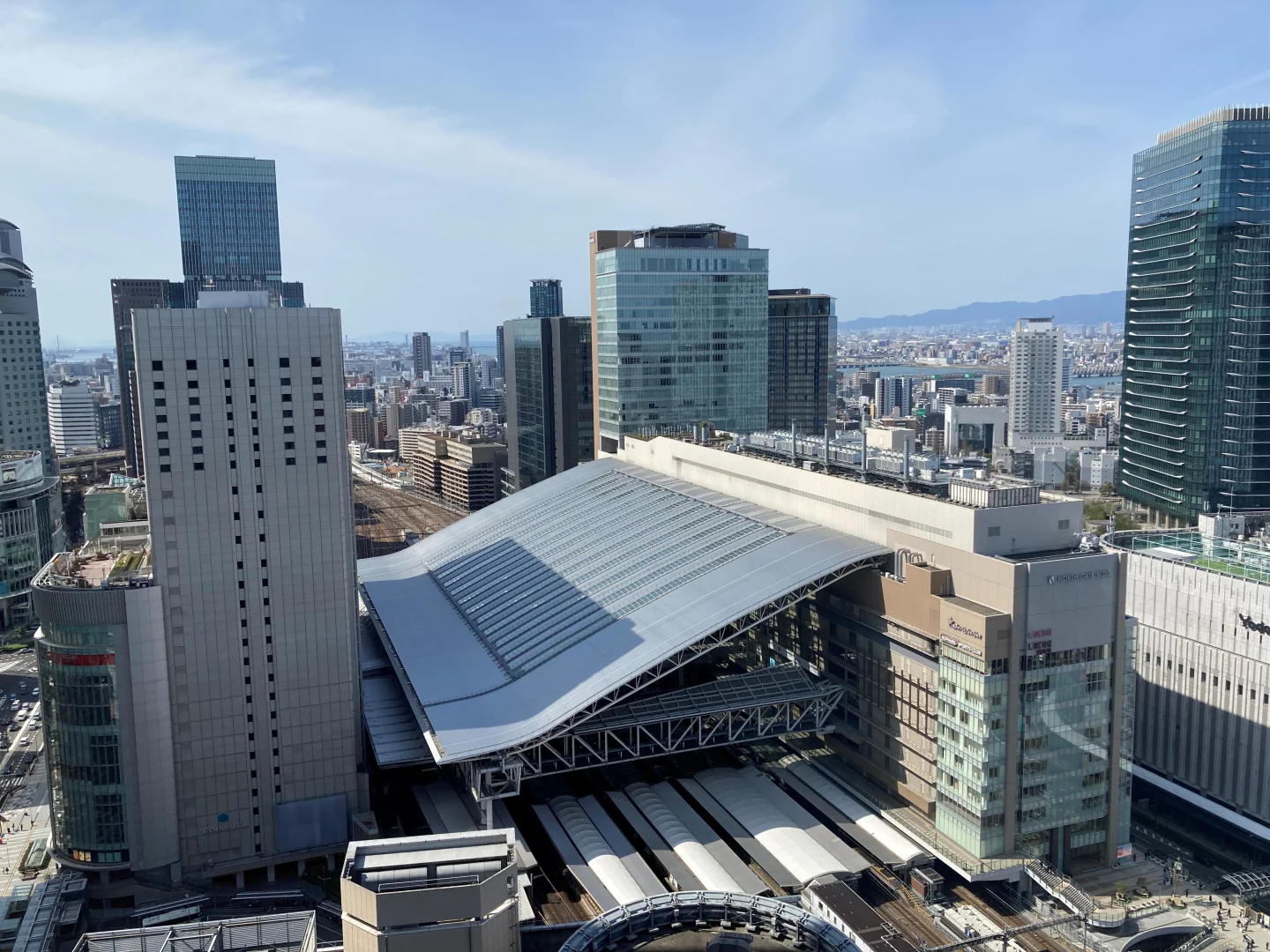
To reach Katsuo-ji from central Osaka, board an Osaka Metro Midosuji Line train marked for Minoh-kayano. Umeda, Namba, and Shin-Osaka all sit directly on this line; through-trains continue past Esaka onto the Kita-Osaka Kyuko Line, so you simply stay seated. Some platform departures terminate early at Shin-Osaka or Senri-chuo, so travelers with older companions may prefer waiting for a direct train to avoid hauling bags across a transfer. Coming from JR Osaka Station, look for the red M logo of Umeda Subway Station. From Namba's Nankai or Kintetsu complexes—or nearby hotels—head for the nearest Midosuji Line entrance first.
At the Minoh-kayano terminus, follow signs for the bus boarding area down to ground level at the North Traffic Plaza beside the station. Hankyu Bus Route 30 departs from Stop 8 under the destination sign "Direct Katsuo-ji." Because buses serving residential neighborhoods and other sights share this plaza, check the headsign on any arriving coach displaying only "Hankyu Bus" before boarding. The North Plaza handles bus transfers, while the South Plaza near the South Ticket Gate has the taxi stand; they appear close on station maps, so specify the exact pickup side when booking a cab to avoid missed connections.
Hankyu Minoh Station and Kita-Osaka Kyuko's Minoh-kayano Station are two distinct hubs. For a standard daytime trip to Katsuo-ji, set your GPS to the terminus with "Kayano" in the name. For the Takimichi Trail to Minoh Falls, take the Hankyu Minoh Line to Minoh Station instead—trains from Osaka-Umeda usually require changing at Ishibashi-handaimae. Staying near Umeda puts both lines within easy reach, though you still need to pick one route when setting out in the morning. Pin both stations and the temple separately in your map app so you can pull up the right return hub without confusion.
The Hankyu Minoh-kayano Station direct bus timetable lists the first departure at 9:00 AM and the last at 3:00 PM. Service runs roughly every 30 minutes on weekdays and every 20 minutes on weekend and holiday mornings, with extra shuttles added during heavy crowds per temple notices. The 20-minute ride time covers only wheel-to-wheel transit: on peak foliage weekends around noon, queuing, mountain traffic, and gate ticketing all add up. If anyone in your group needs to buy a dedicated bus ticket or top up an IC card, meet right by Stop 8 before joining the line together. Early birds will also find it easier to grab breakfast and water in Umeda rather than hunting for shops after reaching the transfer station.
For the return leg, look for the Hankyu Bus boarding sign outside the temple gate to ride back to Minoh-kayano. According to the Hankyu Katsuo-ji bus stop timetable, the last regular Route 30 departure is 5:05 PM daily, including weekends and holidays. Since the temple remains open until 6:00 PM on Saturdays, head to the stop early if you are relying on the standard bus down. Whenever you have an afternoon reservation back in Osaka, pull your wrap-up time forward by at least one bus cycle to cushion queues and mountain congestion. The shopping complex right outside Minoh-kayano Station makes a great flexible buffer, whereas prepaid dinners, shows, or Shinkansen departures should never be scheduled tight against your estimated descent.
Take the Midosuji Line from Osaka to Minoh-kayano, then catch Hankyu Bus 30 straight to Katsuo-ji Temple. Covers cashless fares, entry tickets, Daruma rituals, 2026 fall night illuminations, and pairing with Minoh Falls.
Fares, Admission Tickets, and Late-Afternoon Cutoffs
Route 30 costs ¥800 one way for adults and ¥400 for children, and buses go cashless starting October 1, 2026. With an ICOCA, Suica, or other transit IC card, tap on at the middle door and tap off at the front door. Because standard nationwide IC cards cannot be topped up on board this route, load the ¥1,600 round-trip adult fare before leaving the train station. Travelers without an IC card can buy a dedicated paper ticket by credit card from staff at Stop 8 in Minoh-kayano, or at the Katsuo-ji souvenir shop for the return ride; board directly with the ticket and drop it into the fare box when exiting.
Temple admission is separate: ¥500 for high school students and adults, ¥400 for junior high and elementary students, ¥100 for preschoolers, and free for ages 2 and under. Two adults with one elementary-school child spend ¥5,400 combined for round-trip Route 30 buses plus entry, excluding city trains, amulets, and meals. Note that junior high students pay the adult fare under Hankyu Bus rules while keeping the ¥400 temple rate. Families tapping individual transit cards should sort out child cards or tickets beforehand rather than fumbling at the front bus door.
On regular days, buy tickets at the gate or purchase a Web Admission Ticket through the temple's access and worship page to use the online-ticket lane and skip the counter queue. Assign each person's phone and ticket page before reaching the turnstile; if all digital tickets sit on one device, queue together at the entrance and split up at your own pace inside. Fall shuttle packages sold separately sometimes bundle admission—check what your voucher covers when buying, and walk straight to the gate if entry is already included.
Regular hours run 8:00 AM to 5:00 PM on weekdays, Sundays, and Japanese national holidays (last entry 4:30 PM), extending to 6:00 PM on Saturdays (last entry 5:30 PM). Leaving central Osaka in the afternoon means racing both the final uphill bus and the last-entry cutoff. Even if you squeeze through the ticket gate right before closing, walk straight to the Main Hall for worship and return for the downhill bus, saving the Tahoto Pagoda for another trip. Anyone already in northern Osaka can pivot to a daytime taxi, while everyone else will enjoy the grounds far more by shifting the visit to the next morning.
Because the temple gates open earlier than the first regular Route 30 bus, arriving right at opening requires a taxi or rental car. Standard bus schedules fit a morning half-day outing best: budget 90 minutes to 2 hours inside the grounds, separate from transit and waiting time. If you want to browse the amulet counter for a Daruma, write your goal, and perform the temple's incense ritual without rushing, two full hours feels much roomier than 90 minutes.
| Category | Hours or Fee |
|---|---|
| Weekdays, Sundays, and national holidays | 8:00 AM–5:00 PM (last entry 4:30 PM) |
| Saturdays | 8:00 AM–6:00 PM (last entry 5:30 PM) |
| High school students and adults | ¥500 |
| Junior high and elementary students | ¥400 |
| Preschool children | ¥100 (free for ages 2 and under) |
Walking the Grounds from the Main Gate to the Main Hall
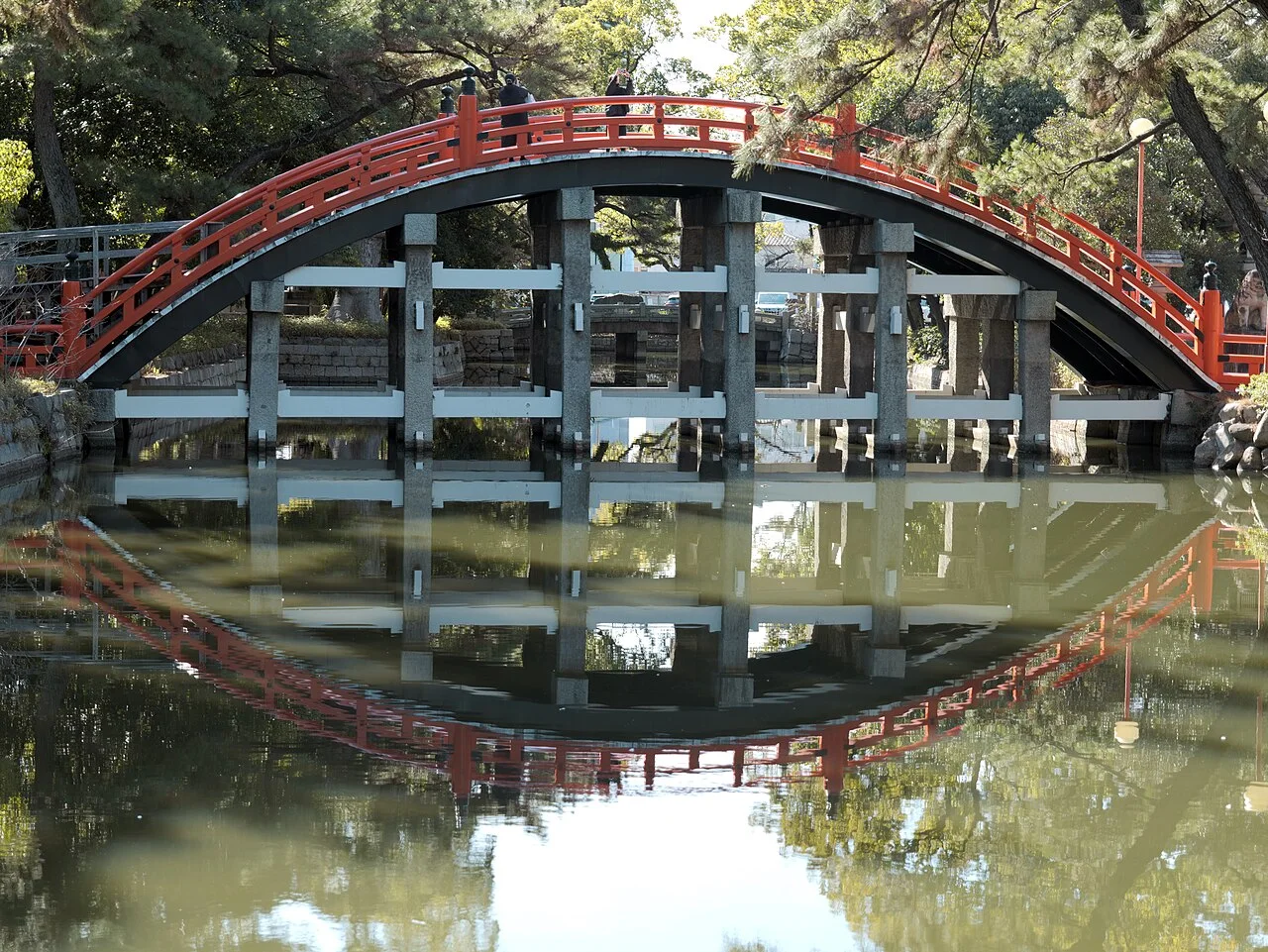
The official paper map near the entrance beats smartphone straight-line distance every time. Stepping in through the worship entrance brings you to the Sanmon Main Gate (Map #5), followed immediately by Okiyome-bashi, the Purification Bridge spanning the pond. First-timers should pause once at the gate and again on either end of the bridge before heading toward the Daruma offering shelves and the Main Hall. Stepping down near the water shows off the bridge framing best, and climbing further toward Ichigan Fudo-do opens a clear upward angle on the Tahoto Pagoda. For group photos at the gate, stand off to the side where passing visitors can flow past instead of blocking the middle of the bridge.
At the Winning Daruma offering shelves, dolls of every size sit stacked tier upon tier. Nearby stone water basins and smaller halls beneath the Main Hall each anchor their own nook; follow the directional signs section by section, and step aside from walkways whenever others pause for incense or prayer. The Main Hall sits at Map #18, right beside the Main Hall Amulet Counter (Map #19) stocking Winning Daruma, protective charms, prayer beads, and Daruma fortunes. The Nokyosho stamp office is marked at General Reception—treat it as its own dedicated stop for goshuin calligraphy, especially on event days when stamp hours end earlier than general closing.
Surrounding the Main Hall are the Kaisando Founder's Hall, Mizukake Kannon-do, and Daishido. On a tight 90-minute visit, cross the bridge, admire the pond and offering shelves, pay respects at the Main Hall, and keep your return walk budgeted at the end. With two full hours in hand, add Nikaido—the fifth sacred site linked to Saint Honen—and the Tahoto Pagoda at Map #24. An extra loop is easy to justify: seeing more of the temple's devotional traditions, or catching the pond bridge from the opposite bank. If a line spills out onto narrow stone steps, loop around another hall first rather than crowding everyone onto the staircase.
Anyone joining a formal prayer or memorial service needs a separate buffer for check-in. Regular sessions register at General Reception to the right of the Main Hall, closing 10 minutes before start time. Starting April 2026, the monthly Kannon Ennichi service on the 18th shifted to 11:00 AM–1:00 PM, with applications due at the same desk before 11:00 AM. Put that cutoff at the front of your route: head straight to the Main Hall upon arrival, then linger by the pond and Daruma shelves afterward. Companions who only want to stroll can set Map #19's amulet counter as a meetup point instead of hunting between adjacent windows.
The temple's name traces back to its early history. Originally founded as Miroku-ji, the site links its renaming to the Heian period, when sixth head priest Gyojun prayed for the recovery of an ailing Emperor Seiwa. Tradition holds that the emperor bestowed the name "Katsuo-ji" using the character for "king"—signifying spiritual power victorious even over royal authority—and the temple humbly swapped in the homophone character for "tail." Katsuo-ji also serves as Temple No. 23 on the Saigoku Thirty-Three Kannon Pilgrimage. Dedicated pilgrims often start at the Main Hall for stamps, while first-timers drawn by the Daruma shelves can see firsthand how centuries-old mountain devotion blends into everyday aspirations.
When traveling with older relatives, pick an easy-to-spot bench at a free rest area or by the pond as home base, then split into two groups: one climbing up to the Tahoto Pagoda, the other heading back early. Stop-and-go photo walks quickly tire out anyone stuck standing while shots are lined up. Planning by "how far to the next seat" works far better than counting photo stops. Carrying a telephoto lens also lets you isolate crisp Daruma details from the main paths without blocking traffic on the approach.
Winning Daruma vs. Daruma Fortunes: Choosing What to Take Home
The temple's signature vow-making doll is called a Kachi-Daruma, or Winning Daruma. Handed over with both eyes blank, it starts with reflection: following the temple's guide, write your underlying purpose on the base and your concrete 365-day goal across the back. Students might write a target exam milestone; athletes can name a training block or race. If you plan to bring one home, have everyone jot down a personal line in their own words before arriving so you can spend counter time choosing sizes and completing the ritual.
Before painting an eye, the temple prescribes passing the doll through incense smoke. Direct gratitude toward the people and circumstances supporting you into the stick of incense, then wave the fragrant smoke over the Daruma. Facing the doll directly, paint the eye on your left—the Daruma's own right eye—first. Temple instructions suggest signing your name inside that eye as a pledge to give your best effort before filling it completely black. Keep "your left" and "the Daruma's right eye" paired on one mental line so you do not mix them up mid-stroke. Kids eager to paint can handle the brush while an adult steadies the base, letting them choose their own goal to write.
At home, set the Daruma somewhere tidy, slightly above eye level, and stable. Flyers should size their doll to fit carry-on bags before leaving the counter, then wrap it securely with padding back at the hotel. Once your goal comes true, fill in the Daruma's left eye—the one on your right when facing it. On a return pilgrimage, report the outcome and give thanks at the Main Hall before placing the doll on the offering shelves. Planning another Kansai trip to fulfill that vow? Pencil the return visit in as an official stop alongside bus times and temple hours.
The miniature alternative is the Rokujushikke Daruma Mikuji, a 64-hexagram Daruma fortune inspired by the I Ching. Concentrate on a single question as you draw, and use the slip's guidance for reflection; you can tuck the paper away to reread later, and either keep the tiny Daruma as a souvenir or leave it on the grounds per temple signs. Look for that exact name if you simply want a fortune and a pocket-sized keepsake, or ask for a Kachi-Daruma if you want the full goal-writing and eye-painting ritual. Doing both? Visit the Main Hall first so you are not lugging a larger doll up every stone staircase.
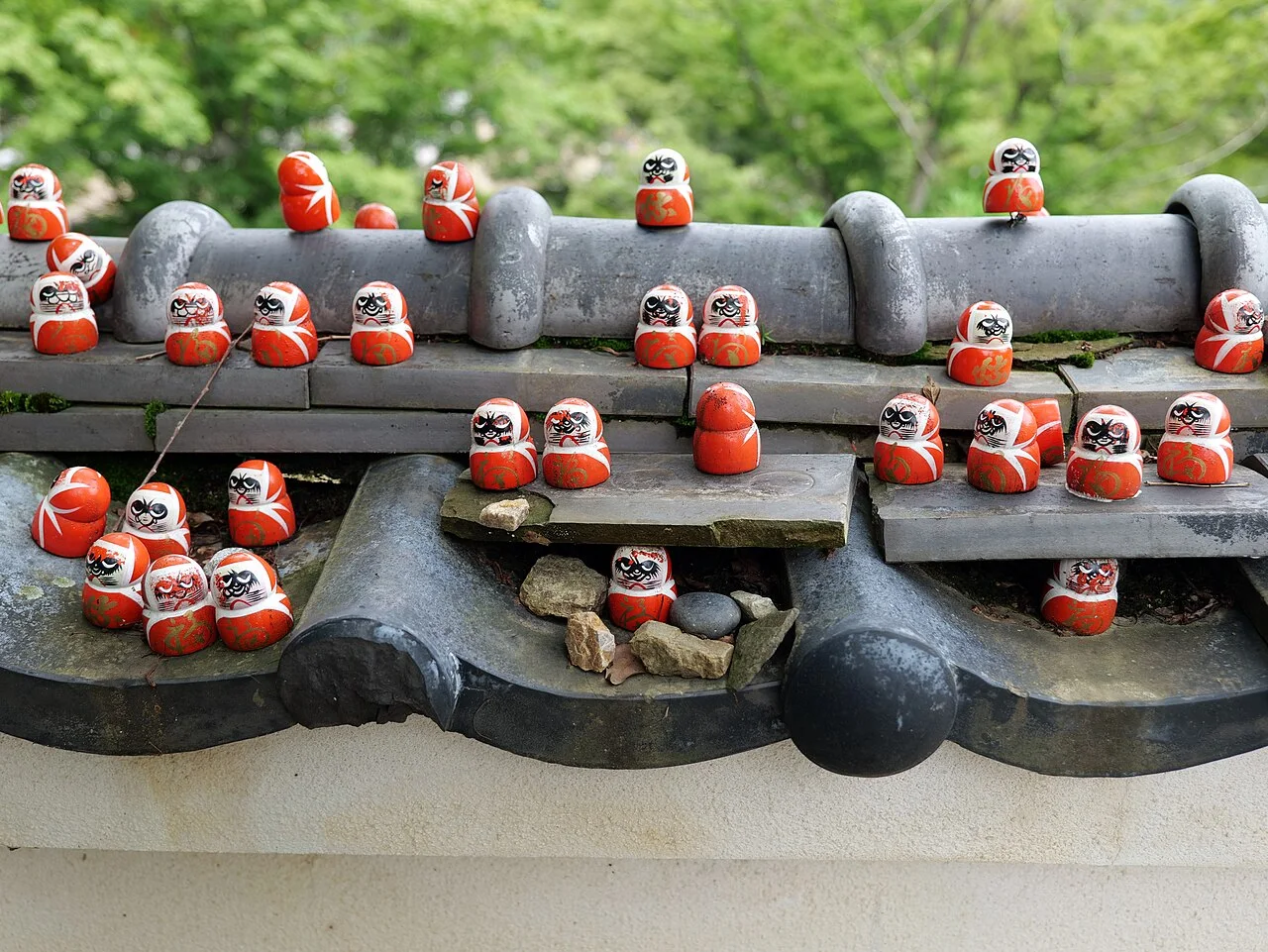
Those tiny Daruma dolls perched along roof tiles, mossy stones, and tree roots were left behind by past visitors. Let kids spot them along the way, snap a photo of a favorite where it sits, and save picking your own for the official counter. You can start hunting right near the Main Gate and pond without turning the grounds into a checklist. Pointing out a few hidden finds among yourselves keeps foot traffic moving around the incense burner instead of bottling up the path behind the Main Hall.
2026 Fall Night Illuminations: Plan Your Descent First
"Kinshu no Yoimairi 2026," Katsuo-ji's autumn foliage illumination, runs from sunset until 8:30 PM (last admission 8:00 PM) on Saturdays, Sundays, and Japanese national holidays between November 1 and November 29. The full calendar covers November 1, 3, 7, 8, 14, 15, 21, 22, 23, 28, and 29. Evening admission matches regular daytime pricing, while non-holiday Mondays through Fridays close at standard daytime hours. Because goshuin stamp reception on illumination dates closes at 5:30 PM, swing by the Nokyosho before dusk if you collect stamps.
Keep peak leaf color and lighting dates distinct when picking your day. Temple guides place typical peak foliage from mid-November into early December, whereas the 2026 illumination ends November 29—meaning early-December daytime visits still catch vibrant leaves. For daylight shots pairing red maples with Daruma dolls, walk past Ichigan Fudo-do for views toward the Tahoto Pagoda, then loop back to the offering shelves for close-ups. After dark, seek open space along the pond near Purification Bridge for water reflections, and yield your spot promptly once you get the shot.
The temple's seasonal page also lists the "Autumn Day & Night Bus," a reserved-seat round-trip option for fall evenings. Check both departure hubs and return windows before booking, and match the meetup pin directly to your ticket confirmation. Regular daytime Route 30 buses still leave from Minoh-kayano Stop 8, while special fall shuttles have separate boarding spots—if your pass names Hankyu Minoh Station, ride the Hankyu Minoh Line via Ishibashi-handaimae to meet it. Always verify Minoh-kayano event shuttles, regular Route 30 coaches, and Hankyu Minoh shuttles separately against the ticket in your hand.
Coming from the Expo '70 Commemorative Park area on November 2026 illumination weekends and holidays? Ride the Osaka Monorail to Saito-nishi Station and look behind Bus Terminal Stop 3 for a free shuttle. Per Osaka Monorail's November 5 notice, shuttles head uphill hourly from 10:00 AM to 7:00 PM on an approximately 12-minute run. Because 7:00 PM is the final uphill departure from Saito-nishi, confirm your downhill bus schedule on Katsuo-ji's event page before staying until lights-out. Morning visitors already near Umeda still face fewer transfers via Minoh-kayano, while anyone touring the Expo zone can link up smoothly on the Saito Line.
Evening sessions let you catch both golden-hour foliage and illuminated water in a single visit. Walk up to the Main Hall and offering shelves before dusk to admire leaf textures, buy charms, or draw a fortune, then return lakeside once darkness settles to watch the bridge, pagoda, and reflections light up. Arriving solely for night views lets you push your ascent later, though never count backward from last admission to pick a bus. Anyone holding a reserved return seat should work backward from departure time, building in exit queues, restroom stops, and the walk out to the bus bay.
Standing lakeside after dark feels noticeably chillier than the uphill walk, so pack a windproof layer you can wear comfortably while stationary. Take short steps on damp stone stairs and wet leaves after rain, and brace your phone against a well-lit railing for night photos. Groups with young kids sensitive to cold, older travelers, or anyone prone to motion sickness on mountain roads can see the roof-tile and shelf Daruma just as vividly in crisp daylight. For the smoothest day out, pair a weekday temple visit with lunch in town instead of cramming both the waterfall and a weekend night illumination into back-to-back mountain queues.
Driving, Taxis, and Autumn Traffic Controls
Standard car parking costs ¥1,000 per two hours. Reservations are strictly required on Saturdays, Sundays, national holidays, and temple-designated days—no unreserved cars are admitted, and drivers cannot idle in line outside waiting for spaces to open. On ordinary weekdays, you can drive straight in, though full lots still turn cars away without roadside queuing. Renting in northern Osaka with strollers, camera gear, or mobility needs makes driving convenient; just secure an evening parking slot before locking in your illumination plan. Remember that a Web Admission Ticket and a parking reservation are separate bookings—check that both appear in your confirmations.
From November 14 through December 6, 2026, Minoh City enforces a northbound one-way traffic restriction on Minoh Driveway (Prefectural Route 43) between Sanso Kaze no Mori and the dam-below T-junction from 9:00 AM to 6:00 PM on Saturdays, Sundays, and holidays, including bicycles. Southbound vehicles returning toward Minoh, Minoh-kayano, or central Osaka use the designated Saigahara Rindo Forest Road instead, and officials note a single-lane alternating section along Prefectural Route 4 south of Katsuo-ji Bridge. If visiting the falls first, cars cannot enter the Takimichi walking path, so park near town and walk in separately. When family members split up in town, set an exact pickup point reachable from one side of the one-way loop.
Taxis run from Hankyu Minoh Station to the temple in roughly 20 minutes under normal traffic, according to temple estimates. To visit Katsuo-ji first and then hike the falls, ask your driver to drop you at Hankyu Minoh Station on the way down, rest near the station, and start up the Takimichi Trail from there. Groups arriving piecemeal at Minoh-kayano can meet inside the station-front mall or gather at the South Plaza taxi stand to share a cab. Whenever you need direct point-to-point transport back down the mountain, plan the return pickup alongside your ride up—especially for families hoping to get sleeping kids straight back to the hotel after the lights.
The parking area includes priority accessible spaces; on reservation-only days, note the reason when booking and alert attendants upon arrival. That shortens the stretch between your car and the entrance gate, though stone staircases and elevation changes remain inside the temple. Visitors using wheelchairs or walkers should check accessible-route markers on the grounds map to gauge how far they want to go. Families with strollers whose kids can manage short walks will find the pond-side loop easiest to pace with rest breaks and early turnarounds—and on rainy nights, skip steep upper climbs in favor of a clear daytime return.
Pairing Katsuo-ji and Minoh Falls as Two Separate Legs
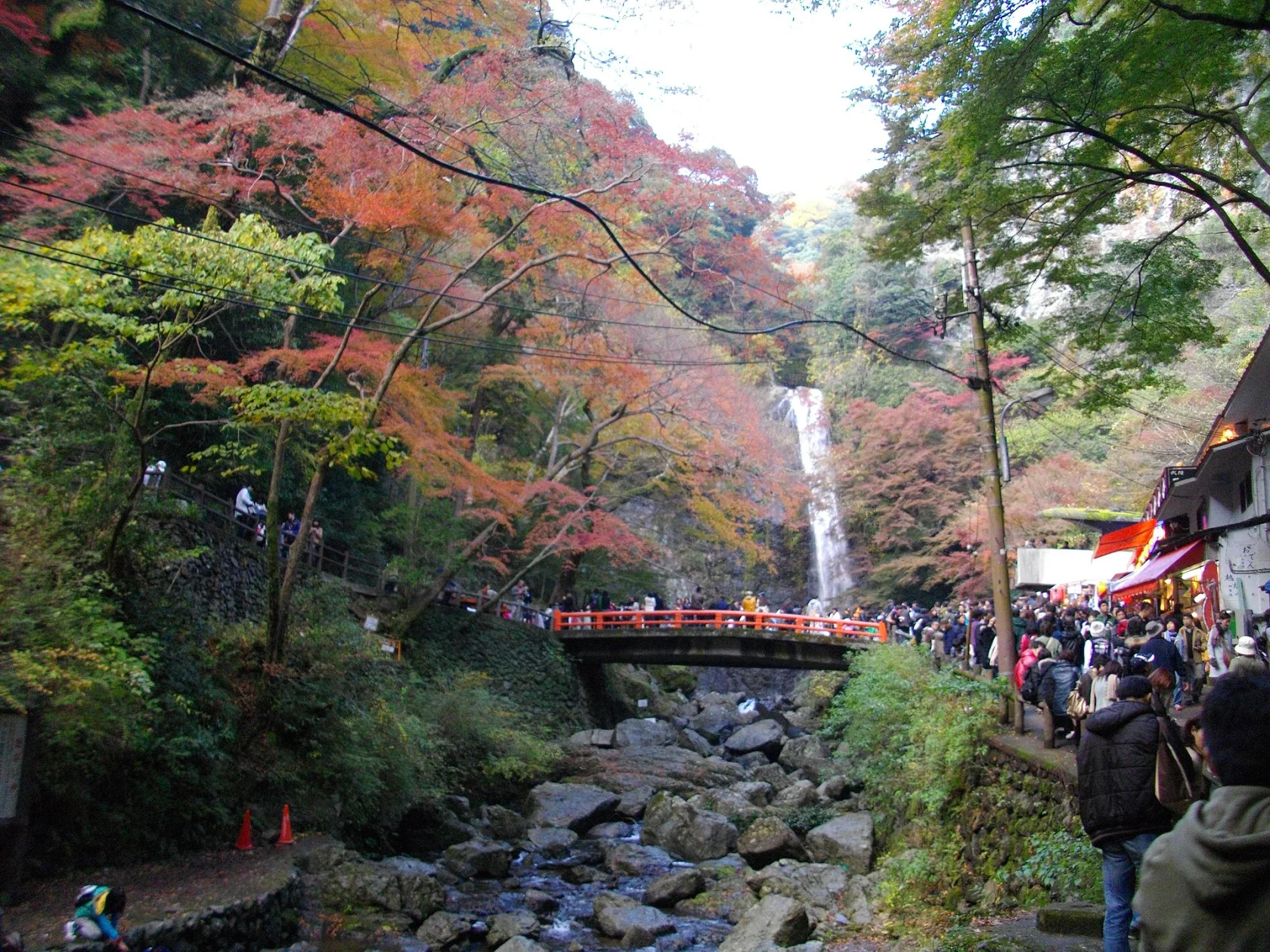
The paved Takimichi Trail from Hankyu Minoh Station to Minoh Falls stretches about 2.7 kilometers, or 40 minutes each way at a steady walk—before factoring in stops at Ryuan-ji Temple, the Minoh Park Insectarium, or fresh momiji-tenpura maple-leaf fritters. The cleanest daytime combo tackles Route 30 up to Katsuo-ji first, drops back to Minoh-kayano before noon for lunch, then shifts by local bus or taxi to Hankyu Minoh Station for an independent afternoon stroll to the falls. Local buses leave from Minoh-kayano Stop 7; check destination boards carefully for "Hankyu Minoh Station," since other routes share that bay.
From Minoh Station, Ryuan-ji Temple and the Insectarium sit about 15 minutes up the valley. Even if your morning descent runs behind schedule, that shorter stretch delivers scenic river views and a warm drink before heading back to the train. Walking all the way to the waterfall and back takes roughly 80 minutes on foot alone, so budget two hours for photos and breathers. In wet weather, turn the Insectarium's butterfly conservatory into your turnaround point: it opens 10:00 AM to 5:00 PM (last entry 4:30 PM) and closes Tuesdays, or the following day when a holiday falls on Tuesday. Giving yourself unhurried indoor time beats rushing toward the falls just to beat sunset.
Anyone hoping to hike forest trails directly between Katsuo-ji and Minoh Falls must check city closure maps first. From late August 2026 through February 26, 2027, national forest thinning closes Nature Study Trail No. 4 (F14–F7–F15), the Tokai Nature Trail connector from F7 to F13, and the F7 spur bordering Katsuo-ji. Because the main Takimichi walkway stays separate from those ridge trails, transferring back through the train stations remains the most reliable way to combine both sights during that window. If a map app tries routing you onto a closed spur, backtrack to numbered trailheads and stick strictly to open municipal paths rather than cutting along vehicle roads.
Flipping the order works well too. If the river gorge is your priority, hike out and back from Hankyu Minoh Station in the morning, then decide over lunch whether you still have energy for the temple. Lingering too long on the trail past the last afternoon Route 30 buses simply leaves you in town with an easy train back to Osaka. Travelers booked on a night illumination shuttle can enjoy a short afternoon walk along the lower Takimichi, return to their ticketed departure station on time, and save the waterfall itself for another day. During the Minoh Autumn Foliage Festival (November 14–December 6, 2026), parts of the falls and Takimichi host their own evening lights—ideal for staying right on the Hankyu Minoh side after dusk.
If mountain rain rolls in after lunch, swap Minoh Falls for the CupNoodles Museum Osaka Ikeda. Ride the Hankyu Minoh Line one stop to Ishibashi-handaimae, transfer to the Hankyu Takarazuka Line toward Ikeda, and walk roughly five minutes from the station. Open 9:30 AM to 4:30 PM (last entry 3:30 PM) and closed Tuesdays (or the next day after a holiday), the museum offers free general admission, while the My Cupnoodles Factory costs ¥500 per cup and requires a numbered ticket distributed on a first-come basis while slots last.
To guarantee a spot designing your own broth and toppings, check advance timed-ticket windows on the museum's site and time your descent from Katsuo-ji accordingly. Keep in mind that the Ikeda museum closes December 28, 2026–January 2, 2027 for the New Year break and January 12–15, 2027 for maintenance; on those dates, stay at Minoh-kayano for lunch or head straight back to central Osaka for indoor sights. Ikeda fits best when you are already riding the Hankyu side—if you only have an extra hour in the afternoon, transferring from Minoh-kayano eats up too much time on trains.
Spring Cherry Blossoms, Summer Hydrangeas, and Rainy-Day Pacing
Beyond autumn maples, the temple calendar tracks late-March Hikan-zakura blossoms, April weeping cherries, later double-layered yaezakura blooms, and early-summer hydrangeas from early June through mid-July. Catching spring bloom lets you see flowers framing the Sanmon Gate, pond banks, and hillside paths in a single loop. If your itinerary allows only one cherry-blossom day in Osaka, factor in the mountain transit time; travelers who have already done Osaka Castle Park often love spending a separate morning up here photographing blossoms alongside Daruma dolls.
Early-summer downpours often swing between heavy bursts and brief lulls, making pond-side loops easy to time between showers. In dim weather, watch your footing on wet bridge planks and stone steps right from the entrance, stick to a compact circuit around the pond and Main Hall, and skip lingering on steep hillside ledges. When rain eases, step up to the offering shelves for close-up Daruma photos, or wait inside the free rest area near the gate if you have time before the next bus. During severe thunderstorms or high winds, anyone still in town can stay in the Minoh-kayano station mall, while visitors already on the grounds should exit along the shortest marked path.
Winter visits split cleanly between ordinary weekends and the New Year rush. Standard weekends follow normal Route 30 schedules and regular hours for a relaxed half-day trip, whereas New Year falls under special event rules with different car-reservation policies plus combined queues for buses and tickets. If your trip spans January 1, decide early whether you want the lively hatsumode New Year crowd or prefer saving Katsuo-ji for a quieter weekday right before flying home—pairing peaceful daytime Daruma spotting with a warm dinner back in Osaka.
What you wear on your feet matters more than your outfit here. Pack water in midsummer, carry a lightweight poncho in rainy months so your hands stay free for railings, and add warm standing layers for winter or fall nights. Even in peak summer, treat the mountain temple and the waterfall walk as two separate outings with an indoor lunch break in between instead of marching straight across both. Want a faster return to the city? Eat near Minoh-kayano right after your descent and hop straight back on the Midosuji Line.
Choosing a Base in Osaka and Matching Half-Day Pacing
Most first-time visitors stay in central Osaka and visit Katsuo-ji as an easy day trip. If you also plan to hike Minoh Falls or visit Ikeda, Umeda gives you effortless access to both the Midosuji Line and Hankyu trains—so you can pick your route that morning based on the weather. Travelers staying in Namba also enjoy one-seat Midosuji through-trains to Minoh-kayano with zero hotel switches. Coming back late with kids or carrying Daruma souvenirs, picking a hotel close to a convenient Midosuji Line exit beats being marginally closer to Umeda on a map. Catching a Shinkansen from Shin-Osaka afterward? Ride the Midosuji Line straight there to collect stored luggage, leaving a solid buffer before booking your bullet train. See where to stay in Osaka to compare neighborhoods and transit links.
For a standalone Katsuo-ji visit, eat breakfast near your hotel, ride up to Minoh-kayano for a morning bus, trace the pond, offering shelves, and Main Hall in order, and return to the station for lunch or afternoon rest. That rhythm suits families needing nap breaks or travelers wearing everyday walking shoes. If dinner back in central Osaka is on the schedule before dark, pair the afternoon with stops directly on the Midosuji Line like Shinsaibashi; adding an extra rail transfer out of Minoh-kayano for one more sight often burns up every minute you saved on the morning schedule.
Groups with different priorities can easily split up and regroup near the Main Hall. One person can paint a Daruma and collect temple stamps while another hikes toward the Tahoto Pagoda for photos, meeting back by the gate before the target bus. For a slower pace, grab snacks and bottled water before boarding in the city so you spend temple time looking around instead of troubleshooting plans on your phone. Still craving gorge scenery alongside autumn leaves? Save the falls for a separate half-day using the Minoh Park guide to map out trail stops.
For families with young children, first-timers, or older companions, making Katsuo-ji your entire morning focus keeps the day effortless. Let kids pick a favorite roof-tile Daruma to spot, help older relatives claim a comfortable seat overlooking the pond, and take the bus straight down to Minoh-kayano for lunch once worship wraps up. If motion sickness hits easily on winding mountain roads, build in quiet downtime right after stepping off the bus rather than rushing onto another train. On night-illumination trips, anchor your plan around when you want to be back at your hotel—eat dinner either before heading up or after descending, then pick your final train stop from there.
A few useful answers
Which station do I transfer at to reach Katsuo-ji from Osaka?
Take a through-train on the Osaka Metro Midosuji Line bound for Minoh-kayano. Exit to the North Traffic Plaza outside Minoh-kayano Station and board Hankyu Bus Route 30 at Stop 8 for the 20-minute ride to Katsuo-ji.
Can I pay cash on the Katsuo-ji bus?
Starting October 1, 2026, cash is no longer accepted on Route 30 buses. One-way fares are ¥800 for adults and ¥400 for children; pay with a transit IC card like ICOCA or Suica, or buy a dedicated ticket beforehand.
Do I need an advance reservation for general entry?
For general daytime visits, you can buy admission tickets at the gate or get a Web Admission Ticket online. However, private cars require a separate advance parking reservation on weekends, national holidays, and temple-designated peak days.
How late are the 2026 Katsuo-ji fall night illuminations open?
On Saturdays, Sundays, and Japanese national holidays from November 1 to November 29, 2026, the grounds stay lit from sunset until 8:30 PM, with last entry at 8:00 PM. Goshuin temple stamps are issued until 5:30 PM on illumination days.
Which eye do you paint first on a Winning Daruma?
Paint the Daruma's own right eye first—that is the eye on your left as you face the doll. Once your goal is achieved, paint the second eye, report back at the Main Hall, and place the Daruma on the temple's offering shelves.
Can I visit Katsuo-ji and Minoh Falls on the same day?
Yes. Visit the temple in the morning, head back down the mountain, and transfer to Hankyu Minoh Station to hike the 2.7-kilometer Takimichi Trail to the falls. Note that Nature Study Trail No. 4 and connecting mountain paths near Katsuo-ji are closed through February 26, 2027.
Official information and references
Sources used in this guide.
- Katsuo-ji Official Access, Worship Hours, and Parking Guide
- Hankyu Bus Route 30 Cashless Payment, Fares, and Ticket Purchase Notice
- Hankyu Bus Minoh-kayano Station Stop 8 Boarding Map
- Hankyu Bus Route 30 Timetable from Minoh-kayano Station to Katsuo-ji
- Hankyu Bus Route 30 Return Timetable from Katsuo-ji
- Hankyu Bus Minoh-kayano Station Stops 7 and 8 Route Directory
- Hankyu Bus Adult and Child Fare Age Rules
- Kita-Osaka Kyuko Minoh-kayano Station Layout Map
- Minoh City Minoh-kayano Station Traffic Plaza Guide
- Katsuo-ji Official Temple Grounds Map
- Katsuo-ji Winning Daruma History, Eye-Painting, and Offering Guide
- Katsuo-ji 64-Hexagram Daruma Fortune Guide
- Katsuo-ji 2026 Autumn Night Illumination Dates and Goshuin Stamp Hours
- Minoh Tourist Association Kinshu no Yoimairi Event and Night Bus Details
- Minoh City Autumn Foliage One-Way Traffic Control and Takimichi Walking Info
- Minoh City Hiking Trail Closure Notices
- Minoh Tourist Association Minoh Park Insectarium Guide
- Minoh City 2026 Autumn Foliage Festival and Takimichi Illumination Notice
- Katsuo-ji 2026 Autumn Night Illumination and Day & Night Bus Page
- Katsuo-ji Monthly 18th Kannon Ennichi Service Schedule Update
- Katsuo-ji General Prayer and Memorial Service Reception Hours
- Katsuo-ji Autumn Foliage and Ichigan Fudo-do Viewing Guide
- Katsuo-ji Spring Cherry Blossoms and Rhododendrons Guide
- Katsuo-ji Early-Summer Hydrangeas Guide
- Katsuo-ji New Year Winning Daruma Offering Information
- CupNoodles Museum Osaka Ikeda Hours and Year-End/Maintenance Closures
- CupNoodles Museum Osaka Ikeda Access Guide
- CupNoodles Museum Osaka Ikeda My Cupnoodles Factory Fee and Numbered Tickets
- Osaka Monorail Notice on Free November 2026 Shuttle from Saito-nishi Station