Reach Shitenno-ji from Osaka Metro Exit 4, compare tickets and hours for the Central Precinct, garden and Treasure House, and plan for market days, the 2027 New Year exhibition and rainy-day Tennoji stops.
- Region & Focus
- OsakaAttractions
- Reading Scope
- 19 min read · 8 chapters · 5 Q&As
- Official Verification
- 28 official sources checkedUpdated 22 November 2026
- Key Topics
- First tripNeighbourhoodsSeasons
Chapter Route Map (tap any stop)
- Which Station to Use and Which Gate to Aim For
- Which Areas Require a Ticket
- Reading the Inner Gate, Five-Storey Pagoda and Golden Hall
- Stone Torii, Rokujido Hall and the Honbo Garden
- How to Plan a Morning on the 21st or 22nd Market Days
- Late 2026 and Early 2027 Exhibitions and Ceremonies
- Why 22 April's Shoryo-e Ceremony Deserves Extra Time
- Pairing a Half-Day Walk in Tennoji and Rainy-Day Alternatives
- Quick Q&A
Set aside a morning on your first visit to Shitenno-ji in Osaka to see how the Inner Gate, five-storey pagoda, Golden Hall and Lecture Hall line up from the South Great Gate. Admission to the Central Precinct is ¥500 for adults, while most of the outer grounds are free to wander. On the 21st of each month (Daishi-e for Kobo Daishi) and the 22nd (Taishi-e for Prince Shotoku), Central Precinct entry is free and market stalls line the approaches. For quieter architectural viewing, pick another weekday morning. Leave Exit 4 of Shitennoji-mae Yuhigaoka Station on the Tanimachi Line and walk south for about 5 minutes.
Which Station to Use and Which Gate to Aim For
Shitennoji-mae Yuhigaoka Station (station code T26) on the Osaka Metro Tanimachi Line is the closest stop listed by the temple. Follow the exit signs for Shitenno-ji towards Exit 4, then head south along Tanimachi-suji; the temple grounds lie on the east side of the road. From Umeda, walk to Higashi-Umeda Station on the Tanimachi Line and board a train bound for Yaominami. If you are leaving Osaka Castle from around Tanimachi 4-chome, you can also take the Tanimachi Line straight south. Staying in Namba and planning to visit Tennoji Park afterwards? The Midosuji Line runs directly to Tennoji, where you can walk north to the temple and return to the station area for lunch.
Exit 4 suits travellers able to use stairs. If you have a pushchair, large luggage or need a lift, check your platform first. Osaka Metro's step-free route uses the Northeast Ticket Gate from Platform 1 and the Southwest Ticket Gate from Platform 2, each with a lift to street level. Trains from Higashi-Umeda towards Tennoji arrive at Platform 1. Because the lift exits sit some distance from the Exit 4 staircase, check your north-south bearings once you reach Tanimachi-suji and allow a few extra minutes for the walk.
If you are already at Tennoji Station, save yourself an extra underground transfer. The temple lists a 12-minute walk north from Tennoji Station on the JR Osaka Loop, Midosuji and Tanimachi lines, or around 14 minutes from Osaka-Abenobashi Station on the Kintetsu Minami-Osaka Line. Approaching from the south lets you start at the South Great Gate (Nandaimon) and leaves department stores, rail hubs and the park waiting around the station on your return. If you begin near Tennoji Park, the walk to the South Great Gate passes ordinary city streets with traffic lights, making it easy to break a family walk into three stages: station front, park perimeter and temple gate.
When heading back from Osaka-Abenobashi Station to JR or Osaka Metro Tennoji Station, both sets of ticket gates share the Abenobashi/Tennoji hub, with each entrance clearly signposted by line. Kintetsu's station map separates the ground floor and concourse levels: follow 'JR Line' for JR connections, or 'Tanimachi Line' if heading one stop north to Yuhigaoka. Anyone already holding a JR ticket can simply walk north from Tennoji Station, as riding the Tanimachi Line for one stop requires a separate underground fare. Only bother with that single stop if you are pushing a buggy, caught in heavy rain or specifically want to enter from the north.
The temple has several entrances. To grasp the layout of the inner precinct clearly, make the South Great Gate your starting point. If you want to see the Stone Torii (Ishitorii), aim for the west side; walking east from there takes you through the Gokurakumon Gate before reaching the edge of the Central Precinct. Always specify the exact gate name when arranging to meet companions inside the temple. Especially on market days, when stalls and worshippers pack the western approach, one person waiting at the Stone Torii and another at the South Great Gate will be separated by a stretch of path with no line of sight.
Private vehicles are currently barred from entering the temple grounds, so drivers should arrange drop-offs and parking outside. A paid Times car park sits beside the South Great Gate, with a temple-listed capacity of 34 spaces. At weekends or on market days, if anyone in your group needs to minimise walking, choose an unmistakable drop-off spot and agree in advance which gate to meet outside after exploring. For solo travellers or pairs, arriving via the Tanimachi Line avoids the wait for a parking bay.
If you plan several underground journeys between Osaka Castle, Tennoji and Namba on the same day, add up the individual fares and compare them with Osaka Metro's Enjoy Eco Card: ¥820 for adults on weekdays, ¥620 on Saturdays, Sundays and public holidays, and ¥310 for children. If you are only making a return trip from one hotel and walking between sights, tapping a standard IC card is simpler. Remember to budget separately for Kintetsu trains to Osaka-Abenobashi or JR Kansai Airport Rapid services, as the one-day pass covers Osaka Metro (excluding Yumeshima Station) and eligible Osaka City Bus routes.
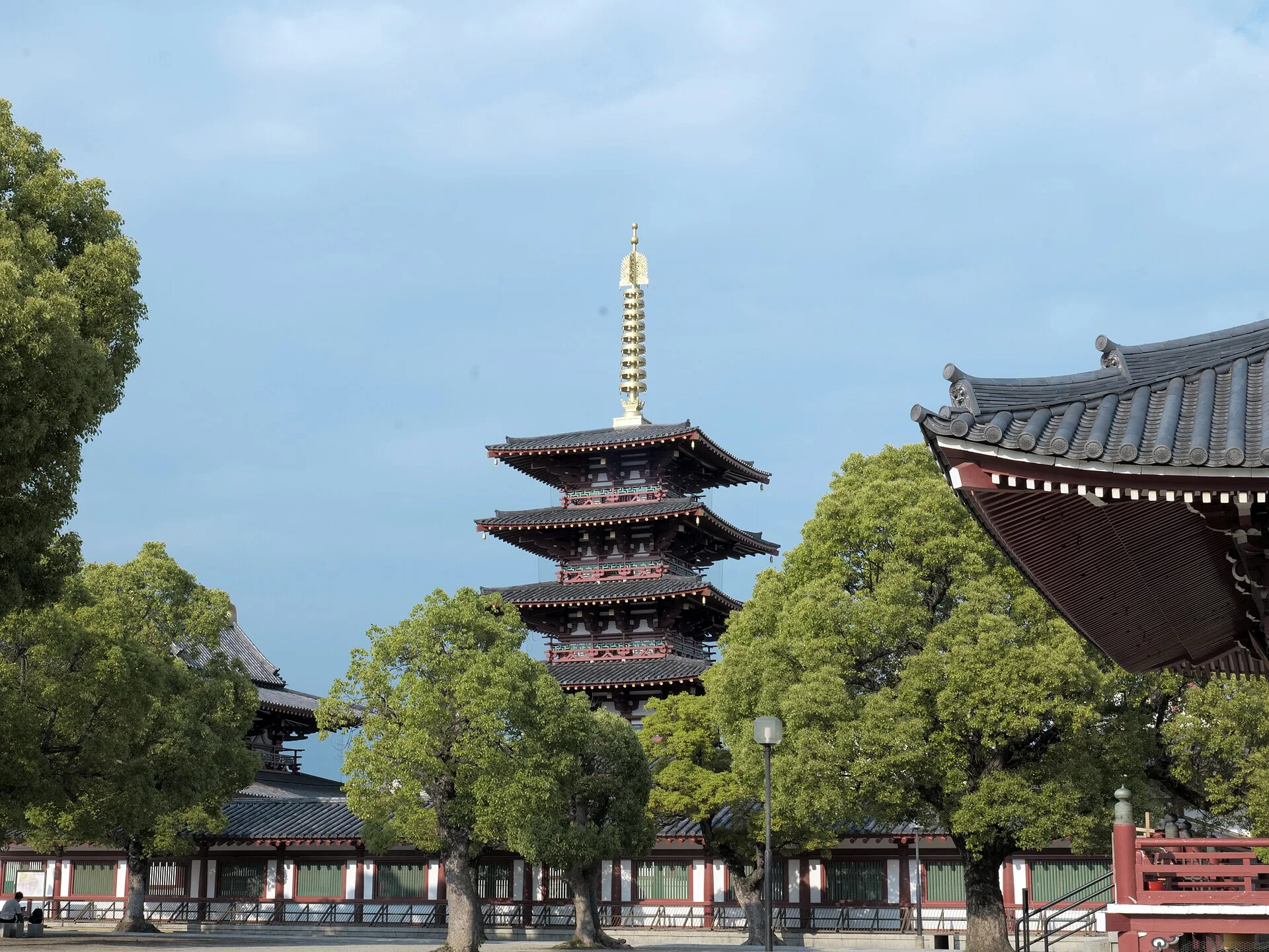
Reach Shitenno-ji from Osaka Metro Exit 4, compare tickets and hours for the Central Precinct, garden and Treasure House, and plan for market days, the 2027 New Year exhibition and rainy-day Tennoji stops.
Which Areas Require a Ticket
The Central Precinct, Gokuraku-jodo Garden and Treasure House each charge separate admission. First-time adult visitors buying only one ticket should choose the Central Precinct, as stepping inside the cloister makes the spacing between the pagoda and the two main halls much easier to read. The garden is worth an extra half-hour if you want to swap temple architecture for water views. The Treasure House adds historical context through rotating exhibitions, particularly when handscrolls or Buddhist paintings reward close inspection. Entry costs ¥800 for an adult visiting both the Central Precinct and the garden, or ¥1,300 to visit all three when open.
Calculating fares by age works out differently for families. University students pay the adult rate on the temple's price list, while high school students pay ¥300, ¥200 and ¥300 respectively across the three areas. Primary and junior high school pupils enter the Central Precinct and Treasure House free of charge, paying ¥200 for the garden. Preschool children are admitted free everywhere. Two adults with one primary-school child, for instance, pay ¥1,000 in total for the Central Precinct on a normal day, or ¥1,800 with the garden added. If younger children tire early, one adult can leave with them after the Central Precinct while the rest of the group buys garden tickets.
Free access covers the outer temple grounds and exterior worship at the halls. The temple gates stay open 24 hours a day, allowing early risers to see the pagoda silhouetted at dawn and evening visitors to pay respects outside the closed halls. If you arrive in Osaka late in the day, save the free outer circuit for that evening and return the next morning for ticketed areas. The vermilion-pillared cloister marked on the precinct map frames the Central Precinct, so you do not have to decide whether to pay until you reach the ticket counter. If you only want to see the Stone Torii, pause by Kame-no-Ike pond and head back towards Tennoji Station, you can stay outside the cloister altogether.
Standard opening hours vary by season. From April to September, the halls, Central Precinct and garden generally open from 08:30 to 16:30, shifting to 08:30 to 16:00 from October to March. The temple timetable lists extended hours on the 21st of each month and during major services: 08:00 to 17:00 on the 21st from April to October, and 08:00 to 16:30 from November to March. Central Precinct admission is also free on the 22nd, with individual ceremonies and special openings noted on the monthly events page. Losing half an hour in winter barely affects a morning visit, though arriving late in the afternoon from across town can cost you one of the ticketed stops.
Quiet-season trips often hit a snag when the temple gates are open but a specific hall is closed. The Honbo Garden follows a monthly closure schedule; for December 2026, the events calendar lists standard 08:30 to 16:00 hours with no scheduled closures that month. The Treasure House opens only during exhibition runs: the autumn 2026 Treasures Exhibition runs until 29 November, and the following New Year exhibition opens on 1 January 2027. If you visit in December, pair the Central Precinct with the garden, then head to the Osaka City Museum of Fine Arts inside Tennoji Park in the afternoon for art and artefacts—just search both museum names in full on map apps so you do not confuse them.
Group rates apply from 30 visitors upwards, lowering adult admission to ¥400 each for the Central Precinct and Treasure House and ¥200 for the garden. School trips or tour operators seeking group pricing must submit the temple's group application form by fax with their visit date, time and planned areas. Friends and families travelling together simply pay individual rates. When budgeting time, allow around 40 minutes each for the Central Precinct and Treasure House, plus extra walking and queue time if visiting all three ticketed zones.
| Area | Adults & University Students | High School Students | Primary & Junior High | Preschool Children |
|---|---|---|---|---|
| Central Precinct | 500 | 300 | Free | Free |
| Gokuraku-jodo Garden | 300 | 200 | 200 | Free |
| Treasure House | 500 | 300 | Free | Free |
Reading the Inner Gate, Five-Storey Pagoda and Golden Hall
Walking north from the South Great Gate brings you to the Inner Gate (Chumon), guarded by Nio statues. Beyond it stand the five-storey pagoda, the Golden Hall (Kondo) and the Lecture Hall (Kodo) in a straight line, enclosed on the east and west by cloisters. Pause outside the Inner Gate first to see how the central axis aligns with the pagoda, then step inside and walk along the side cloister to judge the spacing between the three main buildings. Viewed head-on, the pagoda obscures the Golden Hall behind it; shifting to an angle reveals how the precinct steps northward layer by layer. Even if you enter from the west side, it is worth looping round to the Inner Gate before starting your circuit.
Shitenno-ji traces its founding to 593, citing the Nihon Shoki account of Prince Shotoku vowing to build the temple during the conflict between the Soga and Mononobe clans. Knowing that origin story clarifies what is enshrined inside the Golden Hall. According to the temple, the Four Heavenly Kings (Shitenno) guard the four cardinal directions and were its original focus at foundation, while Guze Kannon Bodhisattva has served as the principal image since the Heian period. If visiting with children who only notice the pagoda and gates, start by spotting the Nio guardians flanking the Inner Gate, then introduce the deities inside the Golden Hall so each figure connects to its setting.
Today's Central Precinct is largely a post-war reconstruction. After the 1945 Osaka air raids destroyed much of the temple, Japan's Agency for Cultural Affairs records that the current five-storey pagoda was completed in 1959 at roughly 37 metres tall, built in steel-reinforced concrete in the Asuka style using excavation findings and Horyu-ji's pagoda as references. Its golden spire catches the eye from afar, while a side angle best shows how each tier of eaves tapers upward. Even in reconstruction, the core layout remains legible: the principal halls hold the north-south axis, and the cloister pillars give clear boundaries to the courtyard.
Regular visitor notices cover Central Precinct hours, while Agency for Cultural Affairs records note a spiral staircase inside the pagoda. Treat the exterior proportions and the alignment of the Golden Hall and Lecture Hall as the main focus. If travelling with older relatives who find stairs hard on the knees, walking the ground-level cloister gives plenty of viewpoints without climbing. For photographs of the pagoda, compare how the roofs frame against the trees from several spots along the path, waiting for a brief lull in foot traffic before stepping aside to shoot.
Continuing north into the Golden Hall, take time around the principal image and leave space for worshippers. Check the footwear and photography notices at the entrance, follow open walkways if a service is underway, and step to the side if someone in your group wants to hear a Japanese explanation so visitors moving along the cloister can pass. Directly behind stands the Lecture Hall; both buildings share deep projecting eaves, and glancing back towards the pagoda helps you keep your bearings. The temple also notes that the Rokujido Hall sits north of the Central Precinct as a separate worship area—head towards Kame-no-Ike pond once you exit the cloister.
After viewing the Golden Hall and Lecture Hall, orient yourself by finding Kame-no-Ike pond to the north of the precinct before deciding whether to continue to Rokujido Hall or loop west towards Gokurakumon Gate. Leave stops such as the Shotoku Taishi statue, the Honbo area or souvenir counters until after you have finished the core axis. If anyone in your group struggles with standing for long stretches, agree on a shady meeting spot just outside the cloister so they can rest rather than walking a second lap.
Stone Torii, Rokujido Hall and the Honbo Garden
Shitenno-ji's western Stone Torii dates from the late Kamakura period, with Cultural Affairs records dating it to 1294. Alongside the Asuka-style reconstructed pagoda, it anchors a different chapter of the temple's history. Walking east from the Stone Torii leads through Gokurakumon Gate towards the western flank of the Central Precinct. If smartphone maps place Nishishigemon Gate and Gokurakumon Gate close together, remember that Nishishigemon connects directly to the Central Precinct cloister while Gokurakumon stands further out. During the spring and autumn Higan equinox services, approaching from the west links Pure Land devotion at the West Gate with the pagoda-centred layout inside.
If sunset devotion at the West Gate interests you, aim for the vernal or autumnal equinox itself. The temple schedules both spring and autumn Higan over seven days, centred on the equinox day with three days before and after. On the equinox, the Nissokan sunset meditation takes place looking west through the Stone Torii towards the Pure Land. Morning visits to the West Gate let you examine the stone pillars and plaque clearly, while staying until dusk catches the evening service. Finish the Central Precinct and garden earlier if you plan to wait for the ceremony, then have dinner on the walk back to Tennoji.
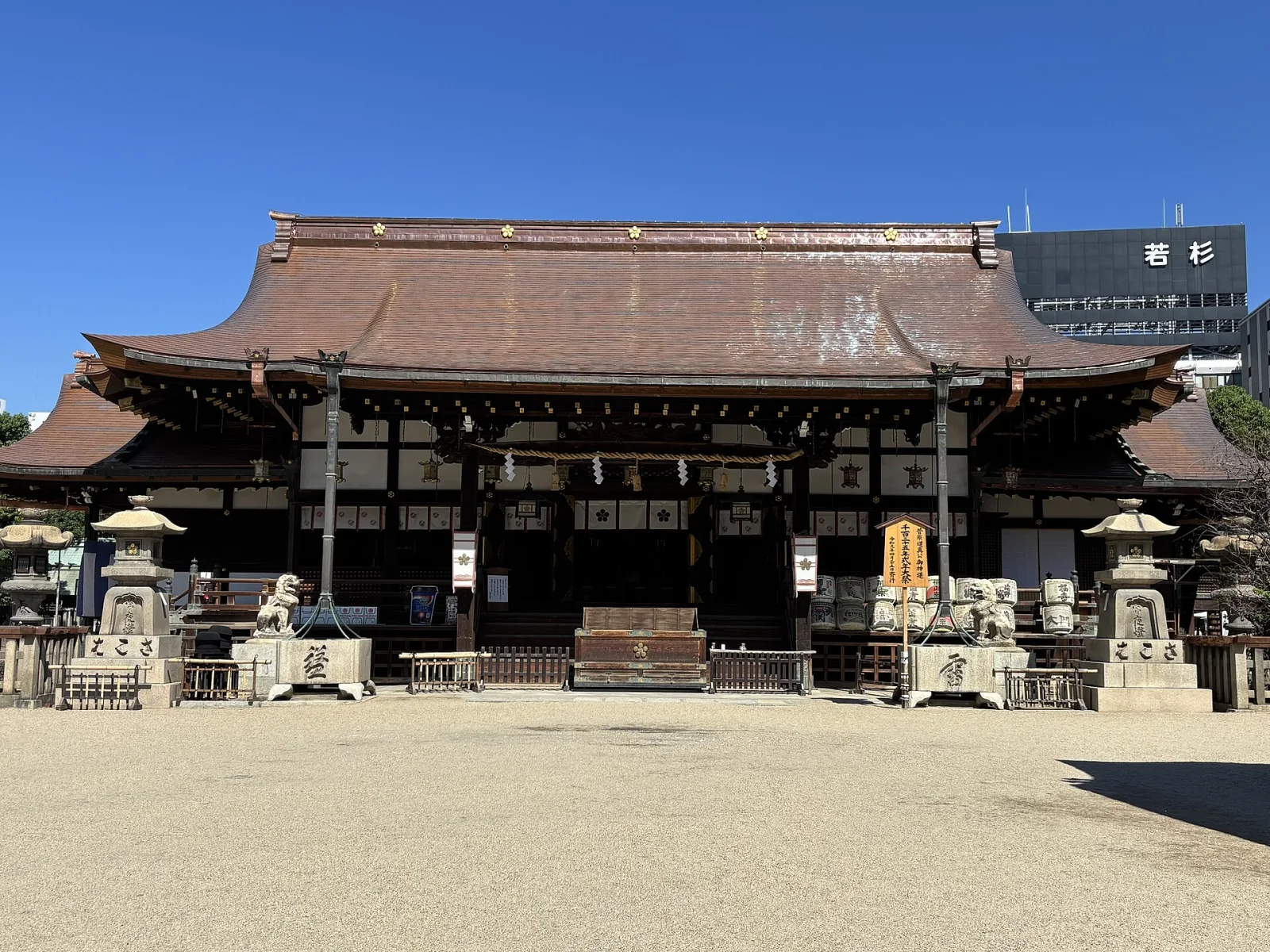
Kame-no-Ike pond and Rokujido Hall lie just north of the Lecture Hall. As the temple points out, buildings such as Rokujido Hall, Ganzan Daishido and Gochi-ko-in preserve early Edo-period reconstructions, giving them a markedly different character from the post-war Central Precinct to the south. Looking across the pond, pick out the Stone Stage (Ishi-butai), a square platform linked by stone bridges and edged with wooden railings that Cultural Affairs records trace to 1623. Major spring ceremonies unfold here. Even on a free outer-grounds walk from the West Gate, turning north to the pond after seeing the Stone Torii and cloister walls brings together buildings spanning several centuries.
Rokujido Hall hosts daily memorial services (eko) and other rituals. For visitors specifically arranging memorial prayers, the temple lists regular reception counters at Rokujido Hall, Kita-Shodo and the Golden Hall, opening additional counters on market days until 15 minutes before closing. If companions are only interested in the architecture, wait outside or take photographs around the pond. Before joining a queue at any hall entrance, check the signboard to see whether the line is for memorial applications, general worship or a special viewing.
Visitors interested in Prince Shotoku devotion should make the Shoryo-in (Taishi-den) their main stop outside the Central Precinct. The temple also maintains a seal office (Nokyosho); anyone collecting goshuin stamps should decide which pilgrimage circuit they are following and bring their goshuincho book. The temple's FAQ notes different halls for different circuits—for example, Guze Kannon on the Kawachi Asuka Ancient Temples route is enshrined in the Golden Hall. Save a screenshot of the precinct map with the seal office and target halls marked, and have companions wait by a nearby gate if queues form so nobody has to weave back through worshippers.
Tickets for the Honbo Garden read 'Gokuraku-jodo no Niwa'. Visiting it right after the pond and northern halls avoids backtracking. The temple FAQ suggests around 20 minutes for a standard circuit, though half an hour is more realistic with children or if you want to linger by the water. On short winter days with evening plans elsewhere, move the garden before lunch to keep afternoon worship flexible. In larger groups, some people will gladly add an exhibition while others prefer not to walk another garden loop; treat the Honbo Garden as an optional detour and regroup at either the West Gate or South Great Gate so everyone still shares the core morning walk.
Several similarly named ponds sit inside and outside the garden. Continuing from the north side requires watching specifically for the Honbo Garden entrance, as Kame-no-Ike pond and the Stone Stage lie on the public approach. Inside the garden, the map marks Gokuraku-no-Ike pond and Fudaraku-no-Niwa; follow the water around Gokuraku-no-Ike first before stepping into Fudaraku-no-Niwa. When daylight fades early in winter, tour the garden first in the afternoon, then return to the Stone Stage beside Rokujido Hall—both waterside settings offer distinct views.
How to Plan a Morning on the 21st or 22nd Market Days
The 21st of every month marks Daishi-e for Kobo Daishi (Kukai), and the 22nd marks Taishi-e for Prince Shotoku. Both the temple and Osaka Convention & Tourism Bureau list these as monthly market days (ennichi), when outdoor stalls sell antiques, bric-a-brac and street food across the grounds. Central Precinct admission is free on both days, as it is during the spring Higan in March and autumn Higan in September, while the garden and Treasure House keep their normal hours and fees. If your flight dates are flexible, check whether your stay overlaps the 21st or 22nd before deciding whether to devote a full morning to the temple or simply pass through the market on your way back.
To combine worship with browsing stalls, start early with the Central Precinct and then walk out along the western approach where stalls cluster. Serious browsers hunting vintage ceramics or second-hand curios can check the stalls first and ask stallholders before handling or photographing items. Bring small change and a foldable bag that stows in a rucksack, inspect porcelain and glassware carefully for chips or hairline cracks, and avoid carrying fragile purchases for too long. If companions want to enter the Golden Hall, fix a meeting point outside rather than trying to shepherd a group down narrow stall lanes; wait until you leave the temple gates to sit down for lunch so paths remain clear for worshippers.
A second reason to choose the 22nd is the E-do (Picture Hall) inside Shoryo-in. According to the temple's monthly calendar, it opens to the public on the 22nd of each month, displaying Kenkichi Sugimoto's murals depicting the life of Prince Shotoku. If you can only pick one market day and anyone in your party is interested in Shotoku history, prioritise the E-do before deciding how much time to spend at the stalls. Monthly listings—such as the December calendar—also note timed ceremonies like the Kobo Daishi Horaku, allowing anyone wanting to hear a service to head straight to the listed hall on arrival.
If your main goal is clean photographs of the pagoda and Inner Gate, avoid the 21st, 22nd and the spring and autumn Higan services. Stalls line both sides of the main approaches, and once crowds build, cameras, umbrellas and pedestrians quickly block every angle. Visitors with pushchairs should favour routes that are easy to backtrack: if the path from the west side towards Kame-no-Ike clogs up, swing round the southern outer lane instead. In wet weather, pick one priority hall or exhibition and treat the stalls as a passing bonus; early-morning visits work well for quiet prayer, while market shopping is strictly a daytime affair.
Late 2026 and Early 2027 Exhibitions and Ceremonies
From 1 January to 7 February 2027, the Treasure House holds its New Year Treasures Exhibition, Beauty of Prayer: Shitenno-ji and Women, open daily without closures from 08:30 to 16:00 (last entry 15:40). On 21 January, hours extend to 08:00 to 17:00 (last entry 16:40). To see Volume 6 of the Lotus Sutra from the National Treasure Fan-Shaped Lotus Sutra Albums, visit between 1 and 14 January, though the rest of the exhibition stays on display afterwards. First-time visitors buying just one ticket can plan their travel dates around that window and view the pagoda from the free outer grounds.
Focusing on works donated by or connected to women in Shitenno-ji's collection, the exhibition pairs naturally with the Pure Land traditions around the West Gate. Stepping out of the Treasure House towards the Stone Torii helps anchor the artworks back into the temple's layout. If fitting the exhibition, Central Precinct and garden into a winter afternoon, prioritise the Treasure House before last entry; on a morning visit, tour the outer precinct first and step indoors as temperatures drop. Even on a tight holiday schedule, missing the Treasure House cutoff still leaves the outer halls open for worship before dinner or shopping around Tennoji.
For New Year's Eve on 31 December 2026, the temple's Joya-no-Kane bell-ringing announcement covers the North Bell Hall, Drum Tower and South Bell Hall. Anyone hoping to ring the bell personally should note that numbered tickets are handed out from 23:00 on a first-come, first-served basis, with ringing starting at 23:30 until allocated slots run out. Subsequent Shofuku-no-Kane and Kaiun-no-Kane bell sessions at the Drum Tower and North Bell Hall run roughly from midnight until 03:00. Midnight arrivals can focus on nighttime hatsumode prayers or the later bells. If staying further across the city, plan your return journey before joining a queue, and do not assume daytime transfer times apply in the early hours.
For daytime New Year visits (hatsumode), arrive after the halls open at 08:30 on 1 January. The New Year academic-success prayer ceremony (Gokaku Kigan Hoyo) at Ganzan Daishido is scheduled for 3 January 2027 from 10:00 to 15:30, with reception opening at 08:30. Visitors focused on exam prayers should head directly to Ganzan Daishido and leave the five-storey pagoda and neighbouring streets for afterwards. Anyone mainly interested in hanging scrolls, historical documents or quiet garden walks will find weekdays after the New Year holiday far less rushed.
Why 22 April's Shoryo-e Ceremony Deserves Extra Time
Every year on 22 April, the Shoryo-e Bugaku Daihoyo ceremony takes place on the Stone Stage beside Rokujido Hall. Shitenno-ji monks chant shomyo Buddhist liturgy while the Tennoji Gakuso ensemble performs bugaku court dance and music, a tradition designated an Important Intangible Folk Cultural Property of Japan and free to watch. On a first visit, locate the stage and the musicians seated on either side, then watch how the masks, sweeping sleeves and deliberate movements align with the rhythm. As part of a longer religious service, how much you see depends on how long you stay, so make it the centrepiece of either your morning or afternoon.
To secure a closer view, claim a spot on the north side of the pond early while keeping walkways clear for monks and staff moving on and off the stage. If travelling with young children or older relatives reluctant to stand for long, agree on an outer path where part of the group can wait rather than trying to push through the crowd mid-performance. Because 22 April is also the monthly Taishi-e market day, stalls and E-do viewing both eat into your schedule—pick whichever matters most before or after the ceremony. Returning to Rokujido Hall on an ordinary weekday without performers makes it far easier to see how the stone bridge and stage sit isolated above the water.
Pairing a Half-Day Walk in Tennoji and Rainy-Day Alternatives
Entering from Shitennoji-mae Yuhigaoka Station and exiting towards Tennoji Station suits first-time visitors staying in southern Osaka who dislike backtracking. On a normal morning, link the Central Precinct, Stone Torii and Kame-no-Ike pond, adding the garden after the northern pond if time allows, then walk out through the South Great Gate for lunch near Tennoji. Late risers can trim the temple to the Central Precinct and Stone Torii and save city wandering for after lunch. If you are visiting Horyu-ji in Nara the following day, take a photo showing Shitenno-ji's Inner Gate and pagoda lined up together so you can compare the layouts in person—at Horyu-ji's Western Precinct, the pagoda and Golden Hall stand side by side rather than south to north.
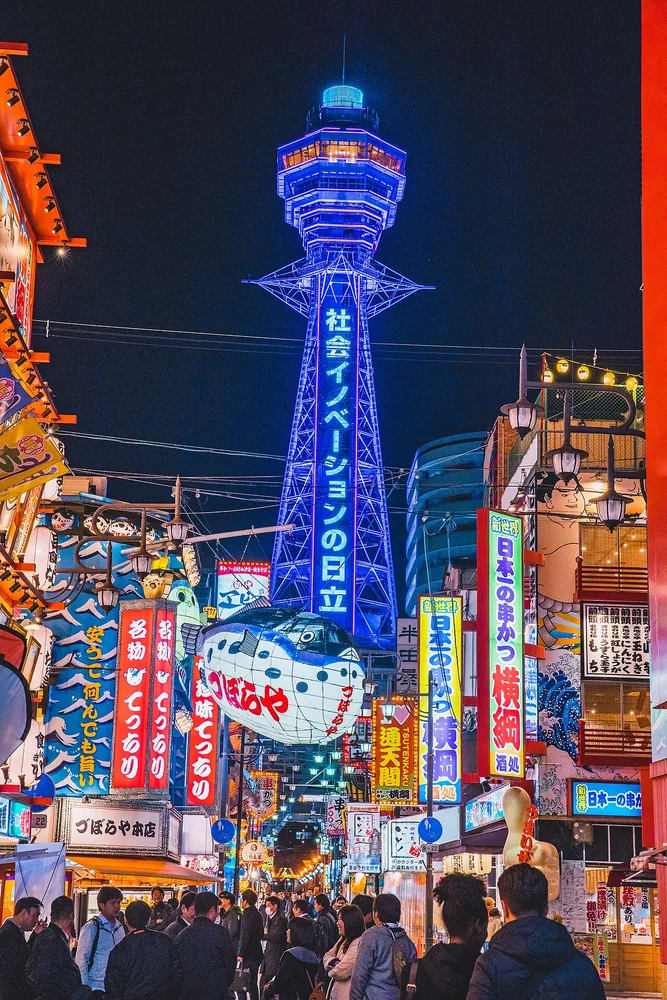
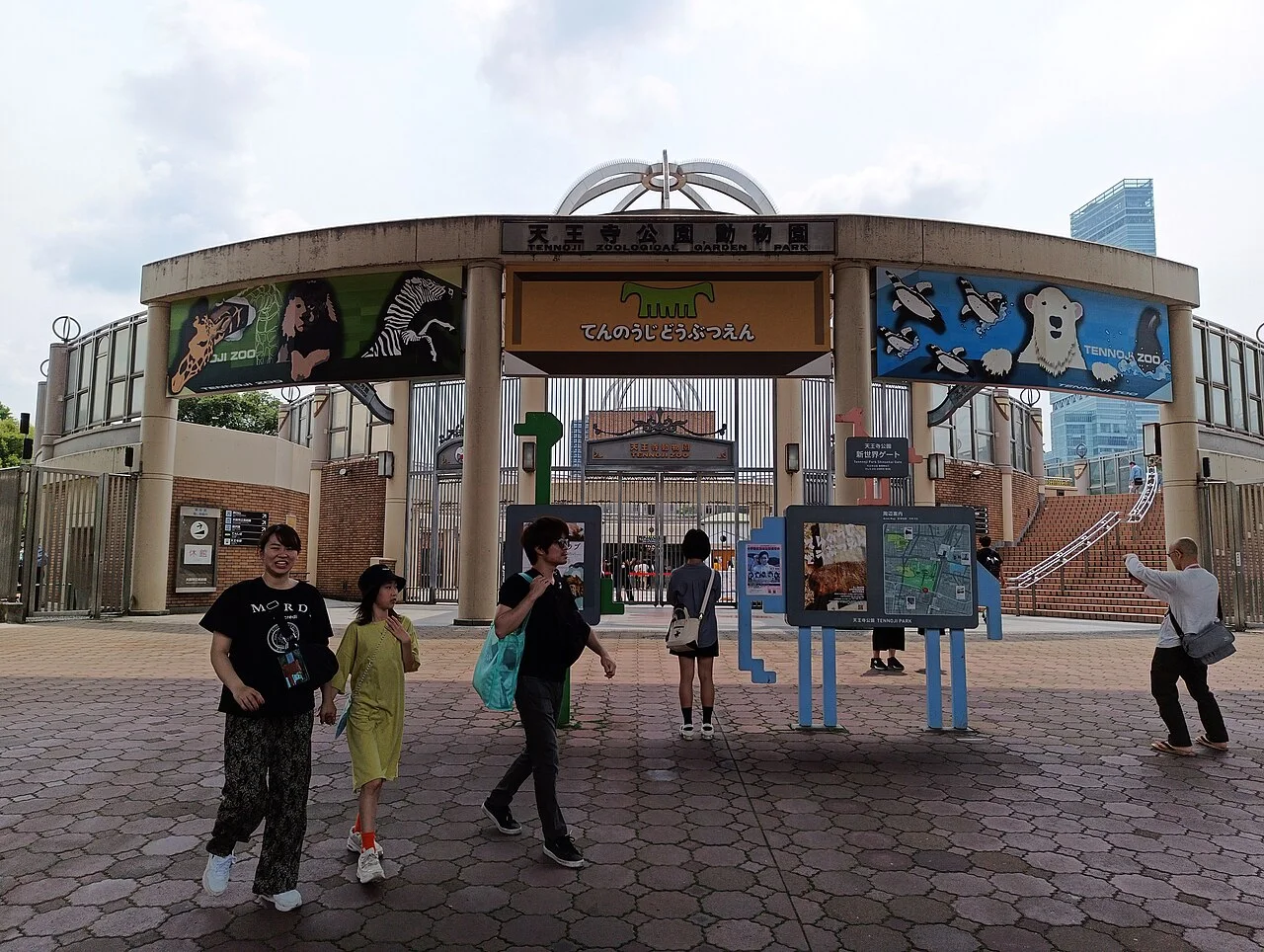
On a dry afternoon with children, follow the temple with Tennoji Zoo or a break on the lawns of Tennoji Park. If the zoo is the real anchor of your day, keep Shitenno-ji to the South Great Gate and Central Precinct so young legs still have energy left. Fragile antiques or ceramics picked up at the morning market are best dropped off at your hotel—or protected over a station lunch—before deciding whether to walk west into Shinsekai. If heading there for evening views or kushikatsu skewers, treat Tennoji Park as an unhurried halfway pause rather than rushing children through every corner of the temple.
When taking children to Tennoji Park, look for 'Tenshiba', the lawn and cafe plaza right in front of the station, generally open from 07:00 to 22:00. From the Central Gate of JR Tennoji Station, follow the Park Exit into the underground passage and come up via Exit 21. The zoo and Osaka City Museum of Fine Arts keep separate entrances and hours, whereas the station-front lawns stay open into the evening after the cultural venues close. If you plan to walk on from the grass towards the zoo and Shinsekai, note your return station before setting off so you do not have to double back to the same underground entrance.
In wet weather, remember that walkways between Shitenno-ji's gates and halls are open to the sky. In light rain, stick to the Central Precinct and one nearby outer hall, skipping the garden. For proper indoor shelter, make the Osaka City Museum of Fine Arts in Tennoji Park your afternoon plan: standard hours are 09:30 to 17:00 (last entry 16:30), closed Mondays or the following weekday when Monday is a public holiday. If heavy rain makes walking unpleasant, take the Tanimachi Line one stop south to Tennoji and eat inside the station-front shopping complexes. Moving between the eastern temple and western park still involves outdoor streets, so trimming exposed stretches keeps the pace manageable for older companions.
On clear evenings, walk from the South Great Gate to Abeno Harukas for sunset over Osaka. The Harukas 300 observatory normally opens from 09:00 to 22:00, with last entry 30 minutes before closing. To catch both daylight views and city lights, check sunset times for your travel date and leave buffer for buying tickets and riding the lifts. Low cloud on damp days often hides the horizon; if visibility is your main goal, eat downstairs first and decide whether to go up once the sky clears.
Meeting friends at Harukas 300 is easiest at the 16th-floor ticket lobby via the Harukas Shuttle lifts from basement level B1 or floor 2 of the tower. Kintetsu passengers approach from the West Gate of Osaka-Abenobashi Station, while Tanimachi Line riders walk from the South Gate of Tennoji Station. If part of your group is walking from Shitenno-ji while others arrive by train, meeting on the 16th floor beats trying to find each other across Tennoji Station. Standard same-day and advance tickets do not allow re-entry once you leave, so buy the operator's multiple-entry 1-Day Pass if you want daytime views, dinner downstairs and a return trip after dark.
Staying near Tennoji Station lets you walk to the South Great Gate in the morning and drop off bags or change layers easily at midday. Hotels facing Tennoji Park work especially well for families combining the temple, lawns and zoo, while properties beside Osaka-Abenobashi Station suit shoppers heading to Abeno's department stores or catching the Kintetsu Minami-Osaka Line the next morning. If you are already booked in Umeda, the direct Tanimachi Line from Higashi-Umeda is effortless. Likewise, if your evenings revolve around Namba dining and shopping with only half a day for Shitenno-ji, keeping your luggage in Namba makes more sense than moving hotels just to shave a few minutes off the walk.
Watch out for two similarly named hotels beside the station. Miyako City Osaka Tennoji stands in Matsuzaki-cho with direct station access, ideal if most of your rail routes pass through Tennoji. Osaka Marriott Miyako Hotel occupies the upper floors of the Abeno Harukas tower, with reception on the 19th floor requiring a lift transfer from Osaka-Abenobashi Station. Both put you within walking distance of the South Great Gate; the main difference is your route back in at the end of the day. If returning to the Marriott after New Year's Eve bells at the temple, note that the basement B1 entrance closes from 00:30 to 05:00, during which you must use the ground-floor hotel entrance.
A few useful answers
Do you have to buy a ticket to visit Shitenno-ji?
Most of the temple grounds and exterior worship at the halls are free. Inside, adult admission is ¥500 for the Central Precinct, ¥300 for Gokuraku-jodo Garden and ¥500 for the Treasure House. Central Precinct admission is free on the 21st and 22nd of each month, and during the spring and autumn Higan equinox periods.
Which station is closest to Shitenno-ji?
Shitennoji-mae Yuhigaoka Station (T26) on the Osaka Metro Tanimachi Line is closest, around 5 minutes south on foot from Exit 4. From Tennoji Station on JR lines or the Midosuji Line, it is roughly a 12-minute walk north.
Should I visit on the 21st or the 22nd?
Both are lively market days with outdoor stalls: the 21st honours Kobo Daishi (Daishi-e) and the 22nd honours Prince Shotoku (Taishi-e). Pick the 22nd if you want to see Prince Shotoku murals inside Shoryo-in's E-do, which opens to the public on that date.
What time does Shitenno-ji close in winter?
From October to March, the Central Precinct and halls generally open from 08:30 to 16:00. The outer gates stay open 24 hours a day for exterior prayers, while the Treasure House opens only during scheduled exhibitions.
When does the 2027 New Year Treasure House exhibition run?
The New Year Treasures Exhibition runs daily from 1 January to 7 February 2027 with no closed days. Volume 6 of the National Treasure Fan-Shaped Lotus Sutra Albums is on view only until 14 January. Last entry is 15:40 on regular days, extended to 16:40 on 21 January.
Official information and references
Sources used in this guide.
- Shitenno-ji | Visiting Hours, Admission Fees & 2027 New Year Treasures Exhibition
- Shitenno-ji | Access & Parking
- Osaka Metro | Shitennoji-mae Yuhigaoka Station Exit Guide
- Osaka Metro | Shitennoji-mae Yuhigaoka Station Lift Routes
- Shitenno-ji | Precinct Map
- Shitenno-ji | Worship, Goshuin & Facilities FAQ
- Shitenno-ji | History, Precinct Layout & Annual Ceremonies
- Agency for Cultural Affairs (Japan) | Shitenno-ji Five-Storey Pagoda
- Agency for Cultural Affairs (Japan) | Shitenno-ji Stone Torii
- Agency for Cultural Affairs (Japan) | Shitenno-ji Stone Stage
- Shitenno-ji | December Garden Schedule, Monthly Services & New Year's Eve Bell
- Shitenno-ji | Special Viewing of the E-do on the 22nd
- Shitenno-ji | Joya-no-Kane Numbered Tickets & Late-Night Worship
- Shitenno-ji | January Ceremonies & Academic Success Prayers
- Shitenno-ji | Shoryo-e Bugaku Daihoyo Ceremony
- Shitenno-ji | 2026 Opening Notices & Vehicle Restrictions
- Shitenno-ji | Autumn 2026 Treasures Exhibition & Group Visit Information
- Osaka Convention & Tourism Bureau | Shitenno-ji & Market Stalls
- Osaka City Museum of Fine Arts | Opening Hours & Closures
- Harukas 300 | Observatory Information
- Shitenno-ji | Spring & Autumn Higan Nissokan Sunset Meditation
- Kintetsu Railway | Osaka-Abenobashi Station Transfer Map
- Osaka Metro | Enjoy Eco Card One-Day Pass
- Tennoji Park | Tenshiba Entrances, Lifts & Opening Hours
- Harukas 300 | Entry Floor & Re-Entry Rules
- Abeno Harukas | Nearby Stations & Ticket Gates
- Miyako City Osaka Tennoji | Hotel Access
- Osaka Marriott Miyako Hotel | Rail Access