Walk from Osaka Metro Exit 4 to Shitennoji Temple with clear ticket prices and hours for the Central Precinct, Garden, and Treasure House, plus 21st/22nd market tips, 2027 New Year exhibitions, and a rainy-day Tennoji itinerary.
- Region & Focus
- OsakaAttractions
- Reading Scope
- 19 min read · 8 chapters · 5 Q&As
- Official Verification
- 28 official sources checkedUpdated November 22, 2026
- Key Topics
- First tripNeighborhoodsSeasons
Chapter Route Map (tap any stop)
- Which Station to Use and Which Gate to See First
- Decide Which Paid Areas to Visit Before Buying Tickets
- How to Read the Chumon, Five-Story Pagoda, and Kondo
- Stone Torii Gate, Rokuji-do, and Honbo Garden
- How to Plan a Morning Visit on the 21st or 22nd Ennichi Market
- Late 2026 and Early 2027 Exhibitions and Ceremonies
- Why April 22's Shoryo-e Ceremony Is Worth a Dedicated Stop
- Connecting a Half-Day in Tennoji and Rainy-Day Alternatives
- Quick Q&A
On your first trip to Shitennoji Temple in Osaka, set aside a morning and approach from the Nandaimon (South Great Gate) to see how the Chumon (Middle Gate), Five-Story Pagoda, Kondo (Main Hall), and Kodo (Lecture Hall) line up along a single axis. Adult admission to the Central Precinct is ¥500, while most of the outer grounds are free to stroll. On the 21st of every month for Kobo Daishi's Daishi-e and the 22nd for Prince Shotoku's Taishi-e, entry to the Central Precinct is free and street stalls line the approaches. If you prefer a quieter look at the architecture, go on a regular weekday morning instead. From Exit 4 of Shitennoji-mae Yuhigaoka Station on the Tanimachi Line, it is roughly a 5-minute walk south.
Which Station to Use and Which Gate to See First
Shitennoji-mae Yuhigaoka Station (T26) on the Osaka Metro Tanimachi Line is the nearest stop listed by the temple. Follow the exit signs pointing toward Shitennoji to Exit 4, then walk south along Tanimachi-suji Avenue with the temple grounds on the east side of the street. Coming from Umeda, head to Higashi-Umeda Station on the Tanimachi Line and board a train bound for Yaominami. If you are leaving Osaka Castle near Tanimachi 4-chome, ride the Tanimachi Line south as well. If you are staying in Namba and plan to visit Tennoji Park afterward, take the Midosuji Line straight to Tennoji, walk into the temple from there, and return to the Tennoji Station area for lunch.
Exit 4 has stairs only. If you have a stroller, large luggage, or need an elevator, check your platform first. Osaka Metro's step-free routes run through the Northeast Ticket Gate from Platform 1 and the Southwest Ticket Gate from Platform 2, each with an elevator to street level. Trains from Higashi-Umeda toward Tennoji arrive at Platform 1. Because the elevator exits sit some distance from the Exit 4 stairwell, pause at street level to reorient yourself north-south along Tanimachi-suji Avenue and budget a few extra minutes for the walk.
If you are already at Tennoji Station, save yourself an extra subway transfer. The temple lists a 12-minute walk north from Tennoji Station (JR Osaka Loop Line, Midosuji Line, and Tanimachi Line) and a 14-minute walk from Osaka-Abenobashi Station on the Kintetsu Minami-Osaka Line. Approaching from the south lets you start at the Nandaimon (South Great Gate), with department stores, stations, and park lawns spread around Tennoji Station for the walk back. If you set out from near the park, you will cross ordinary city blocks with traffic lights on the way to the south gate, which breaks the walk into three easy segments for kids: station plaza, park perimeter, and temple gate.
When transferring from Osaka-Abenobashi Station back to JR or Osaka Metro Tennoji Station, both fare gates share the Abenobashi/Tennoji station complex, with separate signage at each entrance. Kintetsu's station map splits the 1st floor and basement concourses: follow "JR Line" signs for JR trains, or follow "Tanimachi Line" signs to ride one stop to Yuhigaoka. Anyone already holding a JR ticket can simply walk north from Tennoji Station, since riding one stop on the Tanimachi Line requires a separate subway fare. Save that one-stop ride for heavy rain, strollers, or when you specifically want to enter from the north side.
The temple has several entrances. To understand the front-to-back layout of the inner precinct, start at the Nandaimon on the south side. To see the Stone Torii Gate (Ishi no Torii), head to the west side and walk inward through the Gokurakumon Gate toward the outer wall of the Central Precinct. When meeting companions inside the grounds, specify the exact gate name. On market days in particular, stalls and crowds pack the west approach, so one person waiting at the Stone Torii and another at the Nandaimon are separated by a long stretch of temple path with no line of sight.
General visitor cars are currently barred from driving onto the temple grounds, so plan drop-offs and parking outside. A paid Times parking lot sits right beside the Nandaimon, with capacity listed by the temple at up to 34 spaces. On weekends or market days, if someone in your group needs to minimize walking, pick an unmistakable drop-off point and agree on which gate to meet outside afterward. For solo visitors or pairs, taking the Tanimachi Line is far simpler than waiting for a parking space beside the gate.
If you plan to make multiple subway trips between Osaka Castle, Tennoji, and Namba on the same day, tally the single fares first and compare them against Osaka Metro's Enjoy Eco Card. The pass costs ¥820 for adults on weekdays, ¥620 on weekends and national holidays, and ¥310 for children. If you only ride out from one hotel and walk between stops, paying per ride with an IC transit card makes more sense. Factoring in Kintetsu to Osaka-Abenobashi or the JR Kansai Airport Rapid? Keep those fares separate, as the one-day pass covers Osaka Metro (excluding Yumeshima Station) and eligible Osaka City Buses.
Walk from Osaka Metro Exit 4 to Shitennoji Temple with clear ticket prices and hours for the Central Precinct, Garden, and Treasure House, plus 21st/22nd market tips, 2027 New Year exhibitions, and a rainy-day Tennoji itinerary.
Decide Which Paid Areas to Visit Before Buying Tickets
The Central Precinct (Chushin Garan), Gokuraku-jodo Garden, and Treasure House each sell separate admission. If a first-time adult visitor buys only one ticket, start with the Central Precinct; stepping inside the covered cloister makes the spacing between the pagoda and the two main halls immediately clear. Add the garden if you have an extra half hour and want to trade temple halls for water views. The Treasure House adds historical depth through rotating exhibitions, especially when handscrolls or Buddhist paintings invite close-up viewing. Combined adult admission comes to ¥800 for the Central Precinct plus the garden, or ¥1,300 if all three areas are open and you buy every ticket.
Age tiers change the math for families. University students pay the adult rate on the temple's fee schedule, while high school students pay ¥300, ¥200, and ¥300 across the three areas. Elementary and junior high students enter the Central Precinct and Treasure House free of charge and pay ¥200 for the garden. Preschoolers are free in all three. Two adults with one elementary schooler, for example, pay ¥1,000 total for the Central Precinct on a weekday, or ¥1,800 with the garden added. If kids get tired after the Central Precinct, one adult can head out with them while the rest of the group buys garden tickets separately.
Free worship follows the outer paths and hall exteriors. The temple gates stay open 24 hours, letting early risers see the pagoda silhouette at dawn and late arrivals pay respects outside the halls after closing. If you arrive in Osaka in the evening, save the free outer walk for that night and return the next morning for ticketed interiors. On the precinct map, the vermilion-pillared cloister marks the boundary of the Central Precinct, so you do not have to decide until you reach the ticket booth. If you just want a look at the Stone Torii and a pause around Kame no Ike (Turtle Pond) before heading back to Tennoji Station, stay outside the cloister walls.
General hours shift by season. From April through September, the halls, Central Precinct, and garden normally open from 8:30 AM to 4:30 PM; from October through March, hours run from 8:30 AM to 4:00 PM. The temple calendar lists separate hours for the 21st of each month and special ceremony periods: 8:00 AM to 5:00 PM on the 21st from April through October, and 8:00 AM to 4:30 PM on the 21st from November through March. The Central Precinct is also free on the 22nd, with individual rituals and special openings posted on the monthly calendar page. Losing 30 minutes at closing barely affects a morning visit, but arriving late on a winter afternoon can easily cost you one of the paid stops.
Off-season trips often hit a snag when the temple gates are open but a specific building is closed. Honbo Garden posts monthly closures: the December 2026 schedule lists regular hours of 8:30 AM to 4:00 PM with no scheduled regular closure days that month. The Treasure House opens only during exhibition runs; the 2026 Autumn Treasures Exhibition closes November 29, and the announced New Year Exhibition opens January 1, 2027. On a December visit, pair the Central Precinct with the garden, then spend the afternoon at the Osaka City Museum of Fine Arts inside Tennoji Park if you want gallery time. Both museum names can pop up in map searches, so type the full name when routing.
The temple sets its group-rate threshold at 30 visitors. For groups of 30 or more, adult tickets drop to ¥400 each for the Central Precinct and Treasure House, and ¥200 for the garden. School trips or tour operators using group rates must submit the temple's group visit application form by fax with the visit date, time, and areas planned. Casual groups of friends and family simply buy individual tickets. For pacing, budget about 40 minutes each for the Central Precinct and Treasure House, plus transition and walking time if you visit all three zones.
| Area | Adults & University Students | High School Students | Elementary & Junior High Students | Preschoolers |
|---|---|---|---|---|
| Central Precinct (Chushin Garan) | 500 | 300 | Free | Free |
| Gokuraku-jodo Garden | 300 | 200 | 200 | Free |
| Treasure House | 500 | 300 | Free | Free |
How to Read the Chumon, Five-Story Pagoda, and Kondo
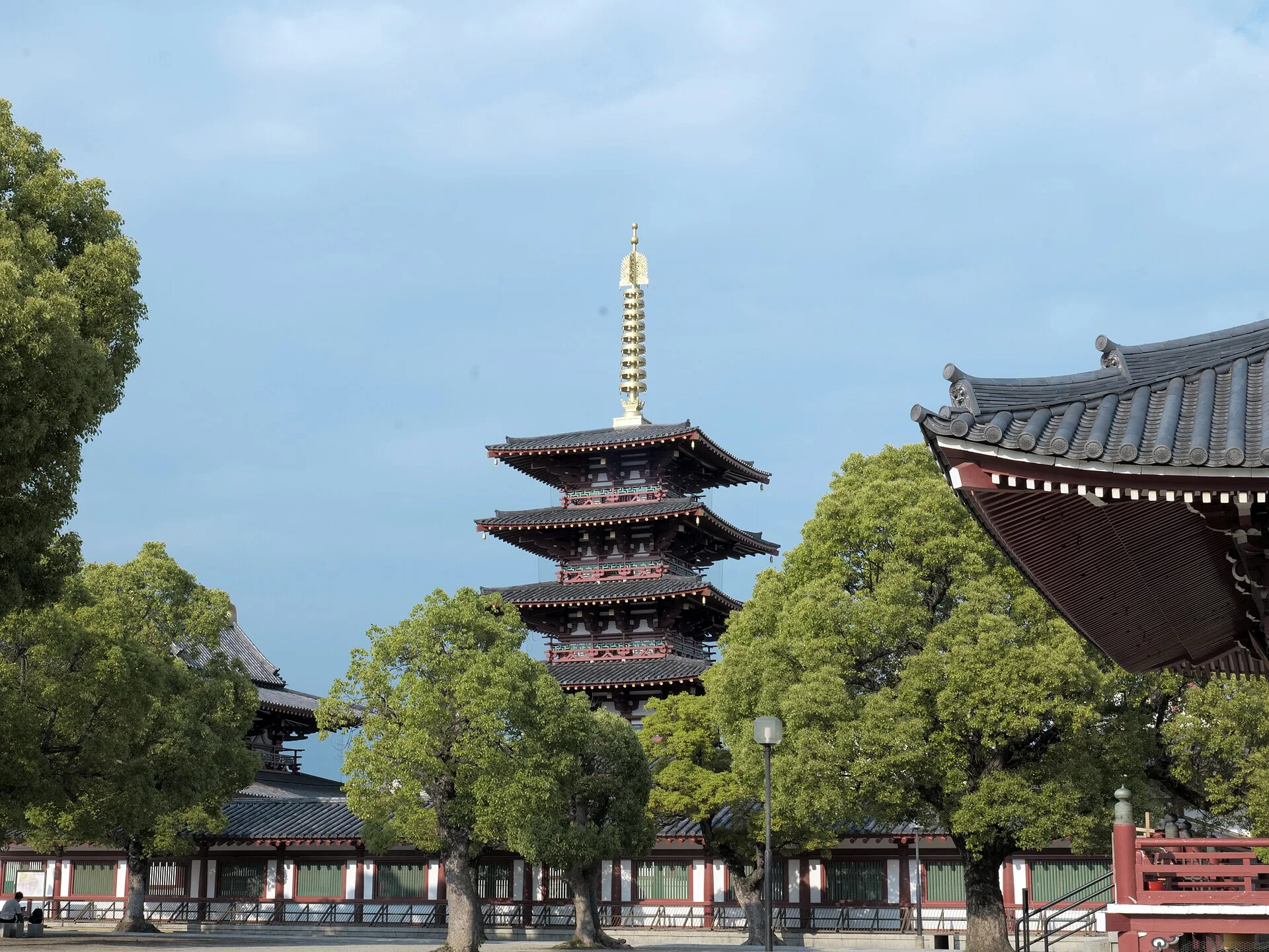
Walking north from the Nandaimon brings you to the Chumon (Middle Gate), flanked by Nio guardian statues. Behind it stand the Five-Story Pagoda, the Kondo (Main Hall), and the Kodo (Lecture Hall) in a straight line, framed on the east and west by covered cloisters. Pause outside the Chumon first to see how the central axis aligns with the pagoda, then step inside and walk along the side cloister to judge the spacing among the three main structures. From dead ahead, the pagoda hides much of the Kondo behind it; shifting to a diagonal angle reveals how the courtyard steps northward layer by layer. Even if you enter from the west gate, loop down to the Chumon before starting the circuit.
Shitennoji traces its founding to 593, citing the Nihon Shoki account of Prince Shotoku vowing to build a temple during the war between the Soga and Mononobe clans. Knowing that origin story clarifies what is enshrined inside the Kondo. According to the temple, the Four Heavenly Kings guard the four cardinal directions and were enshrined at the founding, while Guze Kannon Bosatsu has served as the principal image since the Heian period. With kids who mostly notice the pagoda and gates, start by spotting the two Nio figures flanking the Chumon, then introduce the principal deity when you enter the Kondo so each figure keeps its place.
Today's Central Precinct consists largely of postwar reconstructions. The 1945 Osaka air raids destroyed most of the temple buildings, and the Agency for Cultural Affairs records that the current Five-Story Pagoda was completed in 1959 at roughly 37 meters tall, built in steel-reinforced concrete in Asuka style using Horyuji's pagoda and excavation data as references. While the golden finial at the peak draws the eye, a side view highlights how each tier of eaves tapers upward. Even as a reconstruction, the layout preserves the original north-south axis, with the proportions of the cloister columns and courtyard giving that line clear edges.
The temple's daily visitor guide covers standard Central Precinct hours, while the Agency for Cultural Affairs notes a spiral staircase inside the pagoda. Plan your visit around the exterior architecture and the spatial relationship between the Kondo and Kodo. If you are traveling with older companions who have sore knees, walking the flat cloister gives you several clean angles on the same level without spending energy on stairs. For photos of the pagoda, compare how the roofs frame against the treetops from different corners, and wait for a brief gap in foot traffic along the main path before stepping aside for a shot.
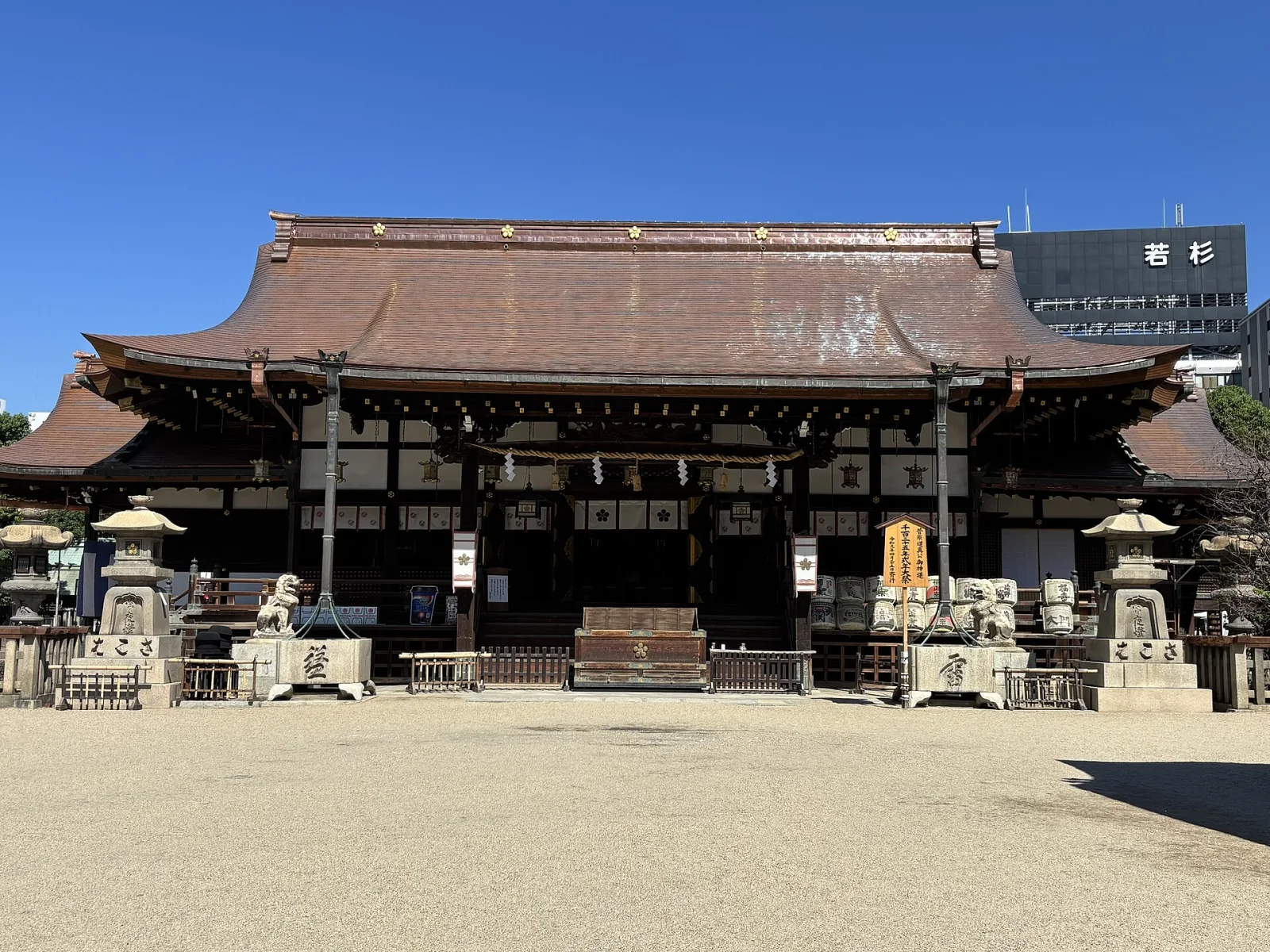
Continue north to the Kondo, leaving quiet time for the principal image and worshippers inside. Check the signs at the doorway for shoe and photography rules; if a service is underway, follow the open walkway around the perimeter, and have anyone listening to Japanese commentary step aside so people entering from the cloister can pass smoothly. Behind the Kondo stands the Kodo; both halls feature deep overhanging eaves, and glancing back toward the pagoda helps keep your bearings. The temple also notes that the Rokuji Raisando (Rokuji-do) sits north of the Central Precinct as a separate worship area. To find it, exit the Central Precinct and head toward Kame no Ike.
After viewing the Kondo and Kodo, orient yourself toward Kame no Ike on the north side of the precinct, then decide whether to visit Rokuji-do or swing back west toward Gokurakumon Gate. Leave Prince Shotoku's hall, Honbo Garden, or souvenir shopping until after you finish the central core. If anyone in your group cannot stand for long periods, pick a meeting spot on one side of the outer wall so those resting do not have to circle the courtyard a second time.
Stone Torii Gate, Rokuji-do, and Honbo Garden
On the west side of Shitennoji stands the Stone Torii Gate, a late Kamakura-period structure dated to 1294 by the Agency for Cultural Affairs. Alongside the Asuka-style reconstructed pagoda, it anchors a very different chapter of the temple's history. Walking east from the west entrance takes you past the Stone Torii, through the Gokurakumon Gate, and up to the western edge of the Central Precinct. Mobile maps sometimes show Nishishigemon Gate and Gokurakumon Gate right next to each other; remember that Nishishigemon connects directly to the Central Precinct cloister, while Gokurakumon sits farther out. During the spring and autumn Higan-e services, entering from the west links the Pure Land devotion around the West Gate with the pagoda-centered inner courtyard.
If the West Gate's sunset tradition appeals to you, time your visit for the Vernal or Autumnal Equinox. Shitennoji holds seven-day Higan-e observances centered on each equinox day, with three days before and three after. On the equinox itself, the temple holds Nissokan, a meditation watching the sun set through the Stone Torii toward the Western Pure Land. Visiting in the morning lets you inspect the stone pillars and plaque clearly, while staying until dusk brings you into the evening ceremony. If you plan to wait for the sunset service, tour the Central Precinct and garden earlier in the day and save dinner for the walk back to Tennoji afterward.
Kame no Ike and the Rokuji Raisando lie just north of the Kodo. As the temple points out, buildings such as Rokuji-do, Ganzan Daishido, and Gochikoin retain early Edo-period reconstructions, setting them apart in era from the postwar Central Precinct to the south. Standing by the pond, look for the Stone Stage (Ishibutai), a square platform linked by a stone bridge and edged with wooden railings that the Agency for Cultural Affairs dates to 1623. Major spring ceremonies take place right here. Even on a simple outer-grounds walk from the West Gate past the Stone Torii and cloister to the pond, you cover centuries of temple architecture in minutes.
Daily memorial services (eko) and other rituals take place at Rokuji-do. If a family member wants to arrange a memorial prayer, the temple lists weekday counters at Rokuji-do, the North Bell Tower, and the Kondo, plus additional counters on Ennichi market days, accepting requests up to 15 minutes before closing. Anyone along solely for the architecture can wait outside or move over to the pond for photos. If you spot a line at a doorway, read the standing sign first to see whether people are waiting for memorial registration, general worship, or a special viewing.
For Prince Shotoku devotion, make Shoryoin (Taishi-den) your main stop outside the Central Precinct. The temple also maintains a Nokyosho (stamp office); if you collect goshuin stamps, confirm which pilgrimage route you are following and bring your goshuincho stamp book. The temple's FAQ notes that pilgrimage icons sit in different halls—for example, Guze Kannon Bosatsu for the Kawachi Asuka Ancient Temples Pilgrimage is enshrined in the Kondo. Take a screenshot of the precinct map with both the Nokyosho and your target hall marked. In a larger group, wait outside a nearby gate if someone queues for stamps so you are not weaving repeatedly through lines of worshippers.
Honbo Garden's admission ticket reads "Gokuraku-jodo Garden," and pairing it right after the pond and northern halls cuts out backtracking. The temple FAQ estimates about 20 minutes for a basic walk through the garden; allow 30 minutes with kids or if you like lingering by the water. On short winter days with evening plans, tour the garden before lunch so your afternoon worship schedule stays flexible. In groups, some travelers will happily add an exhibition while others would rather skip another garden loop—treat Honbo as an optional branch and meet at the West Gate or Nandaimon after finishing the morning together.
Several nearby ponds share similar names. To continue north into the garden, look specifically for the "Honbo Garden" entrance; Kame no Ike and the Stone Stage sit along their own outer approach. Inside Honbo Garden, the precinct map marks Gokuraku no Ike Pond and Fudaraku no Niwa Garden—follow the shore of Gokuraku no Ike first before stepping into Fudaraku no Niwa. When daylight fades early in winter, tour the garden sections you want in the early afternoon, then head back out to the stage beside Rokuji-do, as both water settings reward an unhurried look.
How to Plan a Morning Visit on the 21st or 22nd Ennichi Market
The 21st of each month marks Daishi-e honoring Kobo Daishi (Kukai), and the 22nd marks Taishi-e honoring Prince Shotoku. Both the temple and the Osaka Convention & Tourism Bureau list these two dates as Ennichi market days, when open-air stalls selling antiques, household odds and ends, and street food fill the grounds. Admission to the Central Precinct is free on both days, just as it is during the March and September Higan-e periods, while the garden and Treasure House keep their normal hours and fees. If your flights are flexible, check whether your stay overlaps the 21st or 22nd, then decide whether to give the temple a full morning or swing through the market on your way to the station.
To combine worship with browsing, arrive in the morning, tour the Central Precinct first, and then work your way out to the stalls along the west approach. Serious vintage ceramic or flea-market hunters can reverse that order—browse the tables first, ask vendors before picking up or photographing items, and head into the halls afterward. Bring small coins and a foldable tote for your backpack, and check ceramics or glassware closely for chips and hairline cracks before carrying them around. If part of your group wants to enter the Kondo, set a clear meeting spot rather than trying to stay together through crowded market aisles. Eat lunch after stepping outside the temple gates so the inner walkways stay clear for worshippers.
There is another reason to pick the 22nd: the E-do (Picture Hall) inside Shoryoin. According to the temple's monthly calendar, it opens to the public on the 22nd of each month, displaying murals of Prince Shotoku's life painted by Kenkichi Sugimoto. If you can only catch one market day and someone in your group is drawn to Prince Shotoku's history, put the E-do first and decide afterward how many stalls to browse. The December schedule also lists timed services such as Kobo Daishi Horaku; if you enjoy listening to Buddhist services, pick a session from the timetable and walk straight to the listed hall upon arrival.
If your main goal is clean, unobstructed photos of the pagoda and Chumon, skip both market days and the equinox ceremonies. Stalls line both sides of the approaches, and once crowds build, umbrellas, cameras, and foot traffic block every angle. If you are pushing a stroller, pick routes with easy exits—if the path from the west side to Kame no Ike jams up, loop along the southern outer walkway instead. On rainy market days, anchor your visit around one specific hall or exhibition and treat the stalls as a bonus along the way. The grounds are open for pre-dawn prayers, though vendors only set up during daytime hours.
Late 2026 and Early 2027 Exhibitions and Ceremonies
From January 1 to February 7, 2027, the Treasure House presents its New Year Treasures Exhibition, "The Beauty of Prayer: Shitennoji and Women," open daily during the run from 8:30 AM to 4:00 PM (last entry 3:40 PM). On January 21, hours extend from 8:00 AM to 5:00 PM, with last entry at 4:40 PM. To see Chapter 6 of the Myoho Rengekyo from the National Treasure Fan-shaped Lotus Sutra (Senmen Hokekyo Sasshi), you must visit between January 1 and January 14; other works in the same exhibition remain on view afterward. If it is your first visit and you only want one paid ticket, work backward from those exhibition dates and admire the pagoda from the free outer walkways.
Drawing on Shitennoji's collection and donated offerings, the exhibition traces women's roles in Buddhist history—a theme tied closely to the Pure Land traditions around the West Gate. Stepping out of the Treasure House toward the Stone Torii puts the artworks you just saw right back into their physical setting. If you plan to visit the exhibition, Central Precinct, and garden on a winter afternoon, prioritize the Treasure House's entry cutoff first; morning arrivals can stroll the outer precinct first and step indoors once the chill sets in. If you arrive on a holiday trip just past the Treasure House cutoff, you can still pray outside the halls and move dining or shopping down to Tennoji Station.
For December 31, 2026, the temple's Joya no Kane (New Year's Eve bell-ringing) notice lists the North Bell Tower, Drum Tower (Koro), and South Bell Tower. Anyone hoping to strike the bell in person should note that numbered tickets are handed out at 11:00 PM for the 11:30 PM start, strictly first-come, first-served until tickets run out. Afterward, the Drum Tower and North Bell Tower host the Shofuku no Kane (Good Fortune Bell) and Kaiun no Kane (Good Luck Bell) from roughly midnight until 3:00 AM. Arriving around midnight works best for nighttime prayers or those later bell sessions. If you are staying across town, check your late-night return route before joining a queue, and do not assume daytime transfer connections will still be running after midnight.
For daytime hatsumode (New Year's worship), arrive on January 1 after the halls open at 8:30 AM. To attend the New Year exam-success prayer service at Ganzan Daishido, the temple schedules it for January 3, 2027, from 10:00 AM to 3:30 PM, with registration starting at 8:30 AM. If academic prayers are your priority, head straight to Ganzan Daishido and save the pagoda and neighborhood stroll for afterward. Visitors primarily interested in hanging scrolls, historic manuscripts, or the garden will enjoy a much quieter pace on weekdays after the New Year holiday rush.
Why April 22's Shoryo-e Ceremony Is Worth a Dedicated Stop
Every April 22, the Shoryo-e Bugaku Ceremony takes place on the Stone Stage near Rokuji-do. Shitennoji monks chant shomyo liturgy while musicians of the Tennoji Gakuso perform Bugaku court dance—a tradition designated an Important Intangible Folk Cultural Property of Japan—and the temple opens viewing free of charge. First-time spectators can start by spotting the stage and the musicians seated along both sides, then watch how the masks, sweeping sleeves, and gestures lock into the rhythm. Because it unfolds as part of a full Buddhist service, how much you take in depends on how long you stay, making it easy to anchor either a morning or afternoon visit.
For a closer view, stake out a spot along the north edge of the pond early while keeping clear of the walkways used by monks and staff. If children or older relatives cannot stand for long, agree on a nearby outer path to regroup after watching a portion rather than squeezing the whole party up front only to struggle back out. April 22 is also the monthly Taishi-e market day, and both the stalls and the E-do opening take time, so put whichever matters most to you right before or after the ceremony. Returning to Rokuji-do on a quiet weekday without a performance makes it easy to appreciate how the stone bridge and stage extend alone over the pond.
Connecting a Half-Day in Tennoji and Rainy-Day Alternatives
Entering from Shitennoji-mae Yuhigaoka Station and exiting toward Tennoji Station is the cleanest no-backtracking route for first-timers staying on the south side of Osaka. On a clear morning, link the Central Precinct, Stone Torii, and Kame no Ike, adding Honbo Garden right after the north-side pond. Exit through the Nandaimon for lunch around Tennoji Station. Late starters can limit the temple portion to the Central Precinct and Stone Torii, shifting the city stroll to after lunch. If you are heading to Nara the next day to see Horyuji Temple, frame both the Chumon and Five-Story Pagoda in a single shot here so you can compare them directly in Horyuji's Western Precinct: Horyuji sets its pagoda and Kondo side by side, whereas Shitennoji aligns them south to north.
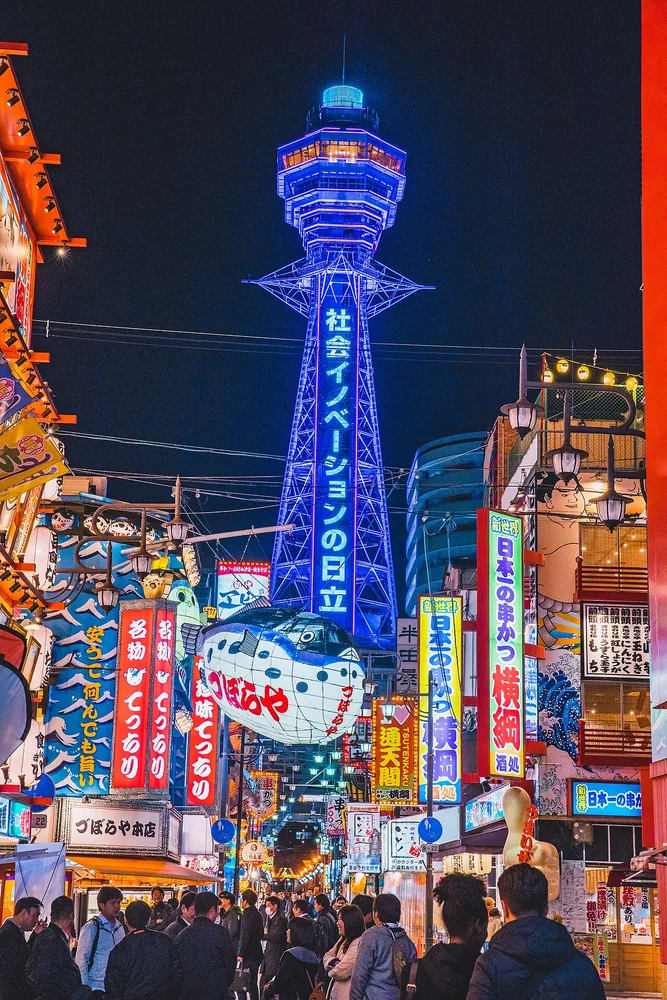
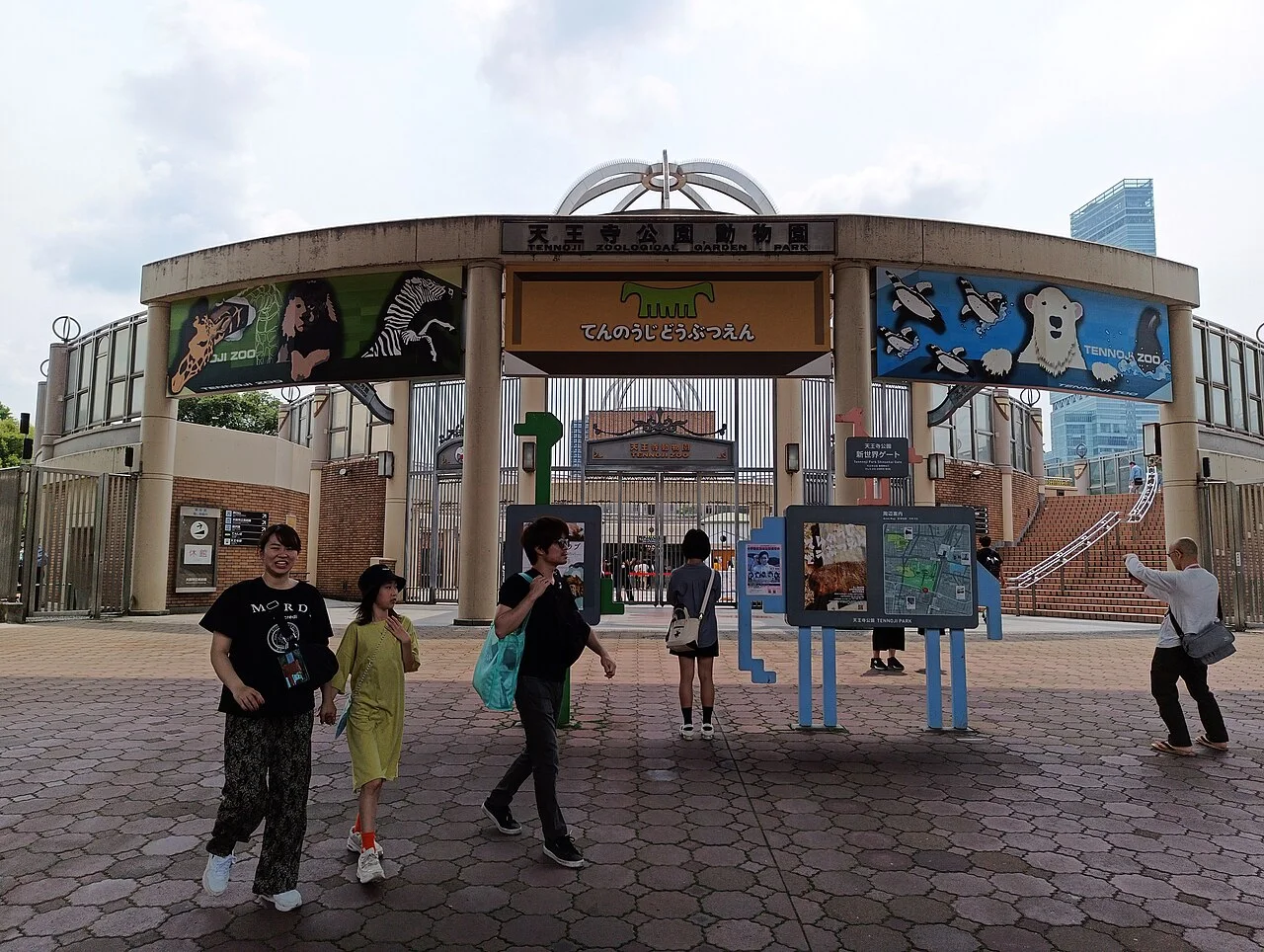
On a sunny afternoon with kids, pair the morning with Tennoji Zoo or downtime on the lawns of Tennoji Park. If the zoo is the real anchor of your day, keep the temple visit short—just the Nandaimon and Central Precinct—so kids save energy for walking the zoo grounds. If you bought fragile items at the market, stop for lunch near the station or drop purchases at your hotel before deciding whether to continue west to Shinsekai. Using the park as a breather makes it much easier to enjoy kushikatsu and neon views in Shinsekai without burning out younger travelers at the temple.
Heading into Tennoji Park with kids starts at "Tenshiba," the front lawn and cafe zone at the park entrance, generally open from 7:00 AM to 10:00 PM. From the JR Tennoji Station Central Gate, follow the Park Exit signs into the underground passage and take Exit 21 straight up to the grass. Both the zoo and the city museum keep separate entrances and hours, while the Tenshiba lawn stays open in the evening after those venues close. If you plan to walk on from the lawn past the zoo toward Shinsekai, check which station you will use at the end of the walk so you do not have to retrace steps to the same subway entrance.
Rain turns the walkways between temple gates and halls into open-air stretches. In light rain, stick to the Central Precinct and one nearby outer courtyard while skipping the garden. For extended indoor shelter, make the Osaka City Museum of Fine Arts in Tennoji Park your afternoon stop; it typically opens 9:30 AM to 5:00 PM (last entry 4:30 PM) and closes Mondays, or the next weekday if Monday is a national holiday. In a downpour, ride the Tanimachi Line one stop from Shitennoji-mae Yuhigaoka to Tennoji and eat inside the station-area malls. Because a walk still separates the west-side park from the east-side temple, trimming the outdoor segment helps keep everyone's pace steady, especially with older companions.
On clear evenings, walk from the Nandaimon over to Abeno Harukas for sunset over Osaka. The Harukas 300 observatory generally operates from 9:00 AM to 10:00 PM, with last admission 30 minutes before closing. To catch both daylight city views and the evening lights, time your ascent around that day's sunset and leave a buffer for buying tickets and riding the elevators. Low clouds on overcast or rainy days erase the horizon, so if long-distance views are the point, eat near the station first and check visibility before heading up.
To meet friends at Harukas 300, take the "Harukas Shuttle" elevator from the tower building's B1F or 2F up to the 16th-floor entrance, where same-day tickets are also sold. Kintetsu riders approach from Osaka-Abenobashi Station's West Gate, while Tanimachi Line riders come through Tennoji Station's South Gate. If your group splits up—some walking from the temple, others arriving by train—the 16th-floor lobby is much easier to find each other in than Tennoji Station itself. Note that standard same-day and advance tickets do not allow re-entry once you exit; if you want daytime views, dinner downstairs, and a return for night views, the operator sells a same-day multi-entry 1-Day Pass.
Booking a hotel near Tennoji Station lets you walk straight to the Nandaimon in the morning and pop back easily to drop bags or change clothes. Choosing a property facing Tennoji Park keeps the temple, lawns, and zoo tightly grouped for family trips. If your afternoons lean toward Abeno department stores or you are catching the Kintetsu Minami-Osaka Line the next morning, look toward the Osaka-Abenobashi Station side. Already staying in Umeda? A direct Tanimachi Line ride from Higashi-Umeda handles the trip cleanly. And if several evenings are devoted to dining and shopping in Namba with only half a day at the temple, keeping your base in Namba beats shifting hotels just to shave a few minutes off one morning walk.
Watch out for two similarly named hotels right by the station. Miyako City Osaka Tennoji sits in Matsuzakicho with direct walkway access to the station, making it handy if your transit centers on Tennoji Station. Osaka Marriott Miyako Hotel occupies the upper floors of the Abeno Harukas tower, with its front desk on the 19th floor—an extra elevator ride after crossing in from Osaka-Abenobashi Station. Both put the Nandaimon within easy walking distance; the main difference is which side of the complex you return to and whether you want a high-rise elevator transfer every time you head out. If you stay past midnight for New Year's Eve bell-ringing at Shitennoji before returning to the Marriott, note that its B1F entrance closes from 12:30 AM to 5:00 AM, so use the 1st-floor tower hotel entrance during those hours.
A few useful answers
Do I need a ticket to visit Shitennoji Temple?
Most of the temple grounds and exterior hall worship are free. Admission to the Central Precinct (Chushin Garan) is ¥500 for adults, Gokuraku-jodo Garden is ¥300, and the Treasure House is ¥500. The Central Precinct is free on the 21st and 22nd of each month and during the spring and autumn Higan-e equinox services.
What is the nearest train station to Shitennoji Temple?
The closest stop is Shitennoji-mae Yuhigaoka Station (T26) on the Osaka Metro Tanimachi Line, about a 5-minute walk south from Exit 4. From Tennoji Station on JR lines or the Midosuji Line, walk north for about 12 minutes.
Should I visit on the 21st or the 22nd?
The 21st is Daishi-e honoring Kobo Daishi, and the 22nd is Taishi-e honoring Prince Shotoku; both days feature open-air market stalls. Pick the 22nd if you want to see the Prince Shotoku murals inside Shoryoin's E-do (Picture Hall), which is normally open to the public on that date.
What time does Shitennoji close in winter?
From October through March, standard hours for the Central Precinct and temple halls are 8:30 AM to 4:00 PM. The outer temple gates stay open 24 hours for exterior worship, while the Treasure House opens according to its exhibition schedule.
How long does the 2027 New Year Treasure House exhibition run?
The New Year Treasures Exhibition runs daily from January 1 to February 7, 2027, with no scheduled closures. Chapter 6 of the Myoho Rengekyo from the National Treasure Fan-shaped Lotus Sutra (Senmen Hokekyo Sasshi) is displayed only through January 14. Last entry is 3:40 PM on regular days and 4:40 PM on January 21.
Official information and references
Sources used in this guide.
- Shitennoji Temple | Hours, Admission, and 2027 New Year Treasures Exhibition
- Shitennoji Temple | Access and Parking
- Osaka Metro | Shitennoji-mae Yuhigaoka Station Exits
- Osaka Metro | Shitennoji-mae Yuhigaoka Station Elevator Routes
- Shitennoji Temple | Precinct Map
- Shitennoji Temple | Worship, Goshuin, and Facilities FAQ
- Shitennoji Temple | History, Precinct Layout, and Annual Ceremonies
- Agency for Cultural Affairs | Shitennoji Five-Story Pagoda
- Agency for Cultural Affairs | Shitennoji Stone Torii Gate
- Agency for Cultural Affairs | Shitennoji Stone Stage
- Shitennoji Temple | December Garden Schedule, Monthly Services, and Joya no Kane
- Shitennoji Temple | Special Viewing of the E-do on the 22nd
- Shitennoji Temple | Joya no Kane Numbered Tickets and Late-Night Worship
- Shitennoji Temple | January Ceremonies and Exam-Success Prayers
- Shitennoji Temple | Shoryo-e Bugaku Ceremony
- Shitennoji Temple | 2026 Opening Notices and Vehicle Restrictions
- Shitennoji Temple | 2026 Autumn Treasures Exhibition and Group Visit Information
- Osaka Convention & Tourism Bureau | Shitennoji Temple and Ennichi Market Stalls
- Osaka City Museum of Fine Arts | Hours and Closed Days
- Harukas 300 | Observatory Operating Information
- Shitennoji Temple | Spring and Autumn Higan-e Nissokan
- Kintetsu Railway | Osaka-Abenobashi Station Transfer Map
- Osaka Metro | Enjoy Eco Card One-Day Pass
- Tennoji Park | Tenshiba Entrance, Elevators, and Opening Hours
- Harukas 300 | Entry Floor and Re-Entry Rules
- Abeno Harukas | Nearby Stations and Ticket Gates
- Miyako City Osaka Tennoji | Hotel Access
- Osaka Marriott Miyako Hotel | Hotel Access