Cherry blossom viewing in central Osaka centers on roughly 3,000 trees at Osaka Castle Park, 4,800 trees along the Okawa River at Kema Sakuranomiya Park, and the Japan Mint's Cherry Blossom Walk—which moves to free online reservations in 2026. Based on official Japan Meteorological Agency observations at Osaka's sample tree (first bloom March 26, full bloom April 3, 2026), this guide maps out costs, hours, and transit for a smooth one-day route.
- Region & Focus
- Osaka
- Reading Scope
- 13 min read · 9 chapters · 4 Q&As
- Official Verification
- 8 official sources checkedUpdated November 20, 2026
- Key Topics
- ItinerariesSeasonsKyoto, Osaka & Kansai
Chapter Route Map (tap any stop)
- Follow Official Observations: The Sample Tree Sits in Nishinomaru Garden
- Osaka Castle Park: The 3,000-Tree Free Main Stage
- Kema Sakuranomiya Park: 4,800 Trees Along the Okawa River
- Japan Mint Cherry Blossom Walk: Free Online Reservations From 2026
- Two Bonus Spots for Peak Season
- Getting Around & Passes: Linking All Three by Metro
- One-Day Itinerary & Rainy-Day Backup Plan
- After the Rain & Late-Season Options
- Fitting Cherry Blossom Season Into Your Osaka Trip
- Quick Q&A
The most reliable way to plan a cherry blossom day in central Osaka is to anchor it to official observation data. The Japan Meteorological Agency (JMA) tracks Osaka's official sample tree right inside Nishinomaru Garden at Osaka Castle Park; in 2026, it recorded first bloom on March 26 and full bloom on April 3 (compared with historical averages of March 27 and April 4). Since 2010, the JMA has stopped issuing bloom forecasts—leaving predictions to private weather companies while the agency handles real-time observations. Osaka Castle Park itself offers around 3,000 cherry trees for free strolling, while Nishinomaru Garden admission is ¥300 for adults starting April 1, 2026. Farther north along the Okawa River, Kema Sakuranomiya Park stretches across roughly 4,800 trees, and the Japan Mint's Cherry Blossom Walk opens from April 9 to 15, 2026 under a new free online reservation system. Because all three spots cluster along the same castle-and-river corridor between Osaka Castle and Temmabashi, you can easily link them from afternoon through dusk—and pivot indoors or reschedule if rain hits.
Follow Official Observations: The Sample Tree Sits in Nishinomaru Garden
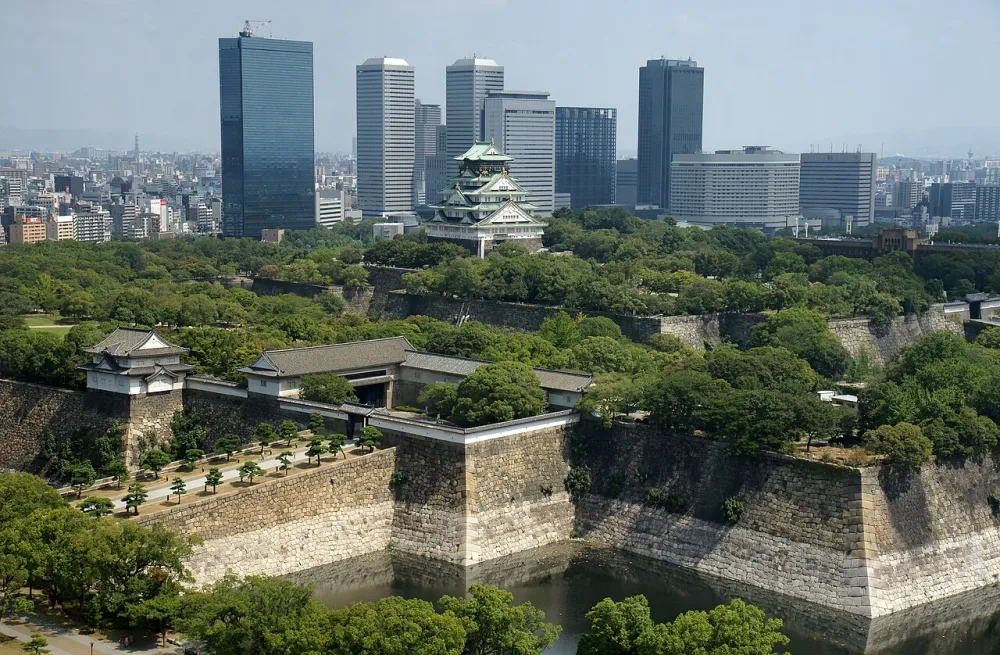
Osaka's official cherry blossom start and peak dates come from the JMA's phenological observations. Observers track a designated Somei-Yoshino tree, declaring first bloom (kaika) once five to six blossoms open and full bloom (mankai) when roughly 80 percent or more of the tree is in flower. Osaka's sample tree stands right inside Nishinomaru Garden in Osaka Castle Park—confirmed by both park authorities and the City of Osaka—meaning the city's prime viewing lawn and its official bloom gauge occupy the exact same hillside.
In 2026, official observations recorded first bloom on March 26 and full bloom on April 3, each one day ahead of the historical average (March 27 and April 4). Because the JMA ended bloom forecasting in 2010 to focus exclusively on verified observations, private weather services now handle projections. Put both to work: use private forecasts to pick your travel window in advance, then switch to JMA field updates once your dates are locked in. Weekends around full bloom draw the heaviest crowds, so shifting your visit by a day in either direction makes a noticeable difference. About a week typically separates first bloom from full bloom—that stretch is prime viewing season, and because the official peak threshold sits at 80 percent, tracking JMA data keeps your timing tightly aligned with conditions on the ground.
Admission to Nishinomaru Garden increased to ¥300 for adults on April 1, 2026 (up from ¥200). Daytime cherry blossom season hours run from 9:00 AM to 5:00 PM, with separate evening illumination sessions during the season. Outside the garden, the rest of Osaka Castle Park and the West Outer Moat remain free around the clock, while entry to the Main Keep (Castle Tower) costs ¥1,200 for adults. Budgeting is straightforward: stick to the free outer grounds to save, pay ¥300 to enter Nishinomaru for close-up views of the sample tree and night illuminations, and add ¥1,200 if you want panoramic views from the top of the keep.
Having the sample tree inside the main viewing area makes Osaka Castle's bloom dates uniquely practical. The moment the JMA declares Osaka's season open, walking into Nishinomaru Garden puts you in front of the exact tree they measured. From those first five or six blossoms, full bloom arrives roughly a week later, holds at peak for three to five days, and then transitions into petal fall. Keep that three-stage timeline—first bloom, peak, petal fall—in mind alongside daily JMA updates to predict exactly what you will see when you land.
Forecasts and real-time observations each have their own window of usefulness. Private weather companies release initial projections from January through March and refine them weekly; consult early editions when booking flights and hotels, then check updated runs two weeks before departure. Once you are in Osaka, base every daily decision on JMA observations and each park's daily notices. Because Osaka Castle Park is densely planted, visiting right on the cusp between first bloom and peak lets you see half-open buds and full canopies along the very same path—making it the most forgiving window in the schedule.
Pay close attention to the April 2026 fee changes. Nishinomaru Garden's ¥300 rate takes effect on April 1, 2026, making cherry blossom season the first peak period under the new pricing. On that exact same date, Expo '70 Commemorative Park's Natural and Cultural Gardens and Japanese Garden also rise from ¥260 to ¥450. Building those April 2026 prices into your budget keeps you ahead of outdated guidebooks, though it is always smart to double-check current rates on official pages before heading out.
Cherry blossom viewing in central Osaka centers on roughly 3,000 trees at Osaka Castle Park, 4,800 trees along the Okawa River at Kema Sakuranomiya Park, and the Japan Mint's Cherry Blossom Walk—which moves to free online reservations in 2026. Based on official Japan Meteorological Agency observations at Osaka's sample tree (first bloom March 26, full bloom April 3, 2026), this guide maps out costs, hours, and transit for a smooth one-day route.
Osaka Castle Park: The 3,000-Tree Free Main Stage
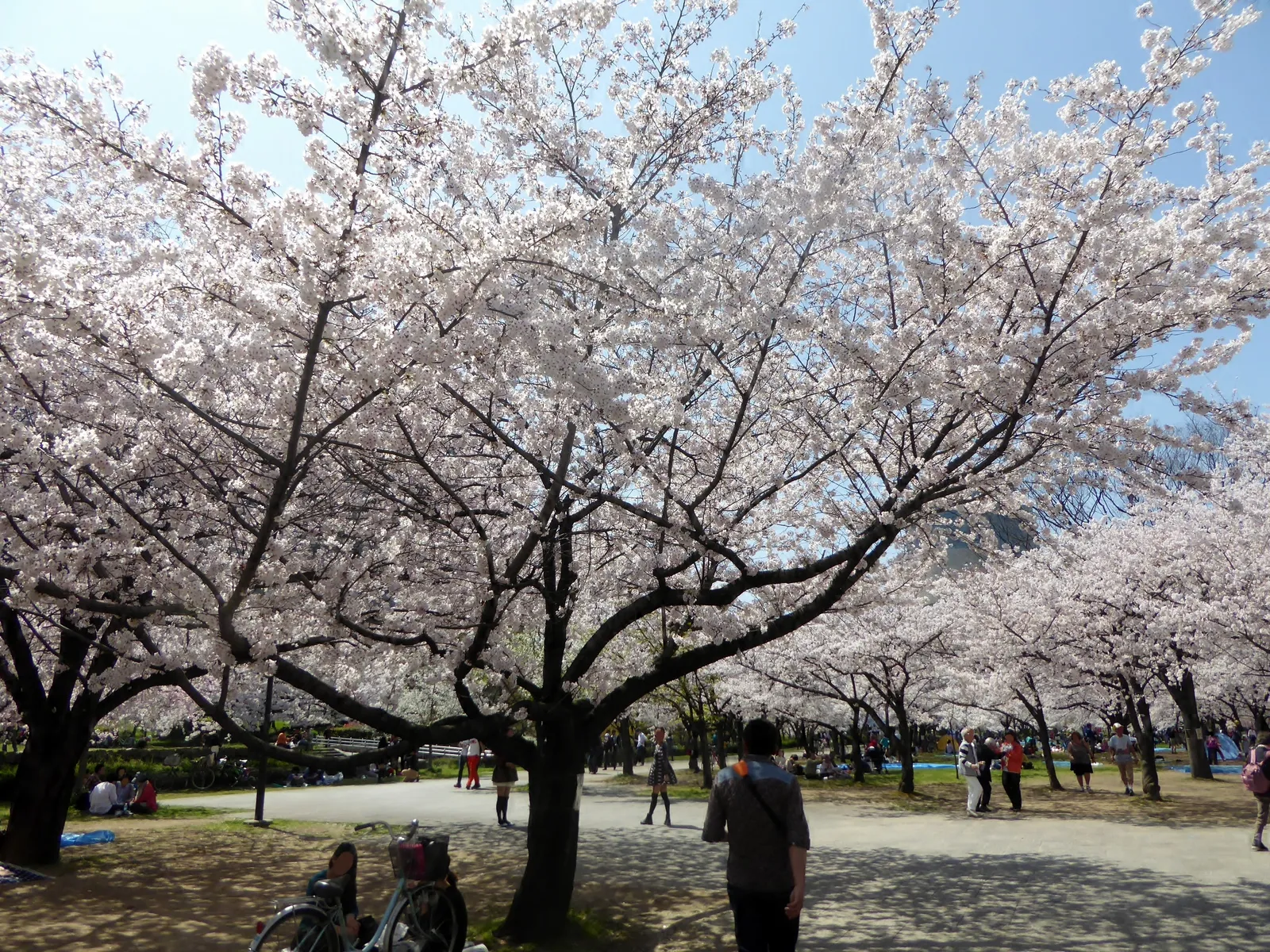
Roughly 3,000 cherry trees line the walkways and moats of Osaka Castle Park, starting right outside JR Osakajokoen Station and Morinomiya Station. The grounds stay open 24 hours a day—early mornings are quiet, while afternoons bring peak picnic crowds, especially on the lawns outside Nishinomaru Garden and along the park's south lawn. Foot traffic naturally breaks into three distinct zones: the inner moat framing the keep, the open south lawns, and the later-blooming Tamatsukuri-guchi area, forming a relaxed 90-minute loop along the perimeter path. Picnickers claim open grass early, while photographers trace the inner moat for classic castle-and-sakura compositions.
Double-flowered yaezakura trees around Tamatsukuri-guchi bloom later than Somei-Yoshino, making this corner a reliable backup once peak season passes. Inside Nishinomaru Garden, about 300 cherry trees frame Osaka's quintessential view of the Main Keep, with broader sightlines and a gentler slope than the free outer lawns. Evening light-ups in the garden run only on select sakura-season dates, with hours and sessions set by each year's official park schedule.
Walking is the easiest way to get around. The park covers expansive grounds—expect a 10- to 15-minute walk from the JR station entrance to Nishinomaru Garden, naturally looping past the keep along the way. Picnickers should follow posted zone rules and pack out all trash, and note that seasonal food stalls and pop-up vendors shift locations and counts slightly from year to year. If you are passing through with rolling luggage, store bags in station coin lockers or at your hotel first; there are no luggage facilities along the park paths, and dragging suitcases down crowded cherry-lined walkways is tiring and blocks foot traffic.
Choosing your entry station by direction saves unnecessary walking. JR Osakajokoen Station borders the east edge, Morinomiya Station connects directly to the south side near Tamatsukuri-guchi, and Tanimachi 4-chome Station sits on the west side. Late in the season, entering via Morinomiya toward Tamatsukuri-guchi puts you straight into the late-blooming yaezakura. Picnickers with tarps have the easiest access from the south lawns, while anyone heading straight for Nishinomaru Garden and the Main Keep will find the north or west entrances shortest.
Picnic etiquette follows standard Japanese park rules: tarps are welcome on designated lawns, resting under trees is fine, all trash goes home with you, and charcoal grills or generators are prohibited. On peak weekends, crowds arrive early—claim shade under a tree as early as possible, since open spots retreat to the outer avenues by midday. Families with kids can factor in seasonal carnival booths and target-shooting stalls (shateki), following on-site park signage since vendor zones move each year.
Night illuminations at Nishinomaru Garden are the highlight of Osaka Castle after dark. Roughly 300 illuminated cherry trees set against the floodlit castle keep create a dramatic evening scene, with exact hours and ticket rules governed by annual park announcements and slight variations between weekdays and weekends. Note that if you visit the garden during the day and return for the evening light-up, each entry requires a separate ticket—factor both admissions into your budget.
Nishinomaru Garden and the Main Keep sell separate tickets: ¥300 gets you broad lawns and low-angle blossom views, while ¥1,200 covers the castle museum exhibits and top-floor observation deck. If you plan to do both, visit the garden first to capture ground-level photos of the sakura framing the castle facade, then head up the keep afterward to take in the full sweep of the park and the Okawa River below.
Kema Sakuranomiya Park: 4,800 Trees Along the Okawa River
Stretching north along the Okawa River from Kema-araizeki (Kema Overflow Weir) down to Temmabashi, Kema Sakuranomiya Park packs around 4,800 cherry trees across 33.7 hectares of open, 24-hour riverside parkland. Sightseeing boats gliding past drooping riverside boughs define one of Osaka's signature spring scenes. Riverside promenades run along both banks, easiest to reach from JR Osakajo-kitazume Station, Sakuranomiya Station, or Temmabashi Station. Separated from Osaka Castle Park only by the North Outer Moat and the Ogimachi neighborhood blocks, the two parks fuse at peak bloom into one continuous castle-to-river sakura corridor—the densest stretch of blossoms in central Osaka, and the reason pairing both in one afternoon works so well.
Each riverbank offers a different pace. The right (south) bank near Osakajo-kitazume hugs the Japan Mint, making it effortless to combine with the Cherry Blossom Walk; the left bank runs longer and quieter, favored by local joggers and strollers. River sightseeing cruises require separate advance bookings during peak bloom, though walking the embankments for free is plenty rewarding on its own, with grassy stretches along the water ready for picnic mats. Walking both banks end to end takes well over an hour, so pace yourself by density: start along the thickest canopy opposite the Japan Mint, loop back, and extend along whichever stretch looks clearest.
Walking straight from Osaka Castle Park to the river is completely doable—crossing from the North Outer Moat to the southern tip of Kema Sakuranomiya takes roughly 40 to 60 minutes on foot. For a more relaxed pace, split the route between afternoon and dusk with a coffee break at a riverside cafe along the way, or start at Kema-araizeki in the north and walk south toward Temmabashi to wrap up right beside a subway station.
Let the Japan Mint guide which bank you choose first. Starting from Osakajo-kitazume Station puts you on the south bank leading straight toward the Mint's South Gate entrance, while the north bank gets you away from the heaviest crowds faster. Pedestrian bridges cross the Okawa at regular intervals, so if one side feels packed, you can simply cross over and switch banks. Most Okawa river cruises depart from piers on the Temmabashi side—check the operator's schedule and reservation rules ahead of time.
Cruises and riverside walks deliver completely different perspectives. From the water, you take in uninterrupted tunnels of blossoms framing both shores at once; on foot, you walk right beneath the branches and browse seasonal food stalls along the path. Because boat seats sell out quickly in peak week while walking the banks is free and unscheduled, pairing an afternoon stroll with a sunset cruise gives you the best of both.
Standard park etiquette applies along the river: spread picnic mats on open grass, keep walkways clear, and note that peak-weekend crowds build sharply from noon onward, leaving early mornings and dusk far calmer. If you are with small children or pushing a stroller, watch for dedicated riverside bike lanes—shared sections have painted lane markings, so keeping strollers to the outer edge makes walking more comfortable.
Japan Mint Cherry Blossom Walk: Free Online Reservations From 2026
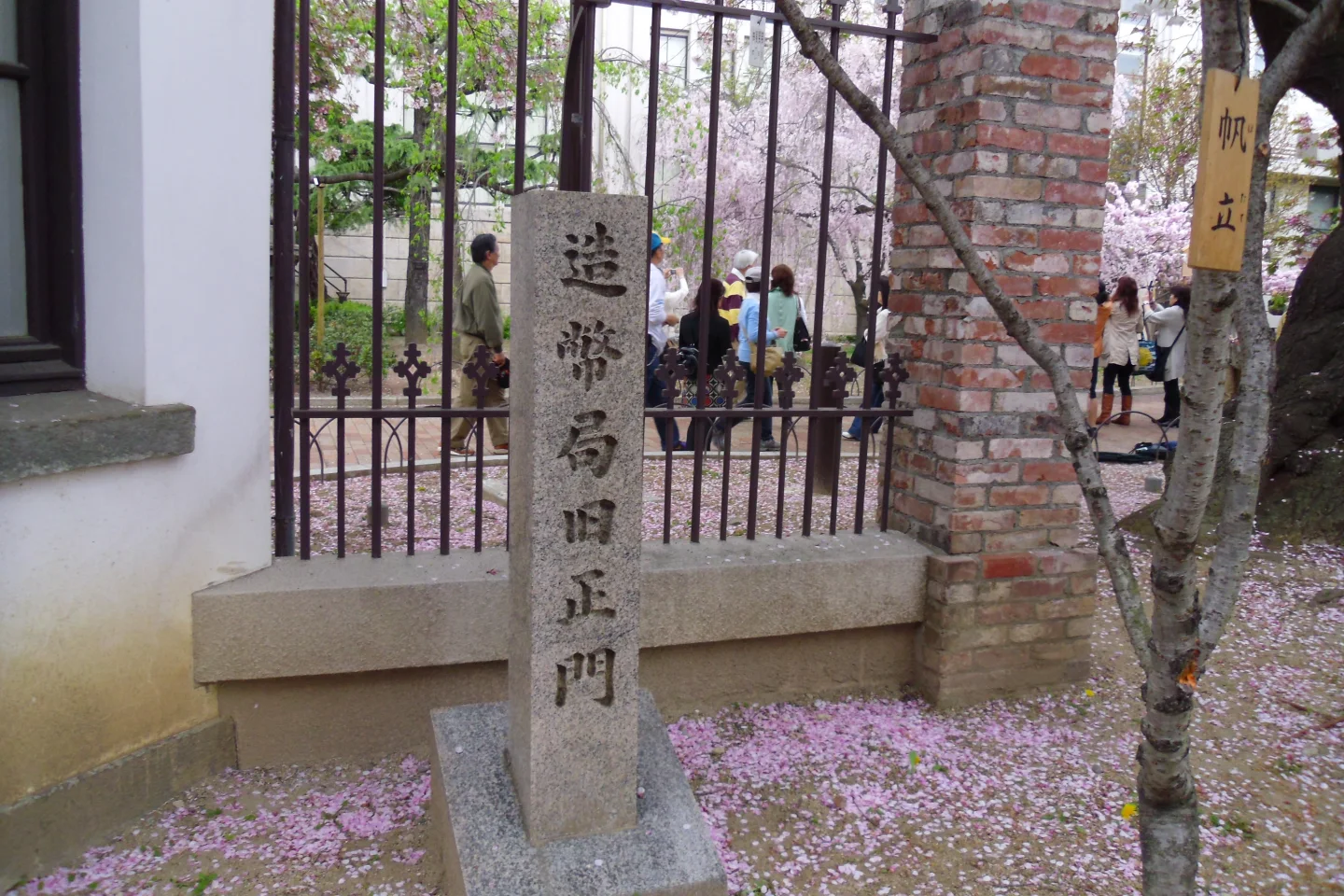
The Japan Mint's Sakura no Torinuke (Cherry Blossom Walk) is Osaka's quintessential spring-only event. This 560-meter one-way avenue inside the Mint grounds showcases 331 trees across 140 cherry varieties, including rare cultivars seldom seen in public parks. In 2026, it runs for seven days from April 9 to 15—10:00 AM to 7:15 PM on weekdays and 9:00 AM to 7:15 PM on weekends—strictly one-way from the South Gate entrance to the North Gate exit with no backtracking allowed. Admission remains free, but advance booking is now mandatory: starting in 2026, entry requires a timed online reservation, and prime weekend evening slots frequently book out within minutes. Save a screenshot of your confirmation screen to your phone for gate checks; if slots are gone, walk the adjacent Kema Sakuranomiya riverbanks instead for free with zero reservations required.
The 2026 system operates on simple rules: free online booking, first-come, first-served, 30-minute entry windows, and a strict cap of 2,350 visitors per slot. It permanently replaces the old walk-up queue system, so travelers need to watch the official Mint site closely. Historically, the Mint announces annual dates in January, opens reservations in mid-March, and hosts the seven-day event in early to mid-April—a reliable timeline to bookmark if you are planning for 2027.
The South-Gate-in, North-Gate-out layout locks naturally into the riverside route. Exiting the North Gate drops you straight beside Temmabashi and Kema Sakuranomiya Park, making an early-evening reservation followed by a riverside stroll back to Temmabashi Station one of the smoothest ways to end an Osaka sakura day. Evening illumination details and slot rules follow each year's official announcement. Because the 30-minute windows are designed to meter crowds, entry times are strictly enforced—check current late-arrival policies, do not book a morning slot and show up at noon, and plan to arrive 30 minutes before your slot on weekends, when queues start forming an hour before gates open.
Knowing a bit of context deepens the 560-meter walk. Since the Mint first opened its grounds to the public in spring, the avenue has stood apart from typical Somei-Yoshino parks by weaving roughly 140 distinctive and late-blooming varieties into 331 trees. Strolling the full one-way stretch at an unhurried pace and stepping out the North Gate back onto the Kema Sakuranomiya promenade ties the entire waterfront together seamlessly.
Keep a few practical booking tips in mind when reservations go live. Slots release in 30-minute increments on a first-come, first-served basis (2,350 people per slot), and you must arrive on time for verification at the gate. Weekend evening windows vanish first, so aiming for a weekday slot dramatically boosts your odds. Make sure your total party count is accurate before submitting, as extra guests cannot be added at the gate.
Double-checking the gate geography saves wasted steps. The South Gate entrance sits toward Temmabashi, while the North Gate exit opens onto Kema Sakuranomiya Park—remember, traffic flows strictly one way with no turning back. Arriving via the Tanimachi Subway Line at Tanimachi 4-chome Station or the Keihan Railway at Temmabashi Station aligns best with the South Gate; once you exit the North Gate, continue along the river toward JR Osakajo-kitazume Station or keep walking the promenade instead of looping back.
Two Bonus Spots for Peak Season
To venture beyond central Osaka—especially on a second day of peak bloom—head north to Expo '70 Commemorative Park in Suita. Starting April 1, 2026, combined admission to the Natural and Cultural Gardens and the Japanese Garden rises to ¥450 for adults; hours run 9:30 AM to 5:00 PM, normally closed Wednesdays but open daily throughout the cherry blossom window from April 1 to May 2. While the park does not publish an exact tree count, it trades city castle views for rolling hills and sweeping lawns of blossoms, pairing easily with an advance-booked tour inside the Tower of the Sun. Reach it in about an hour each way via Osaka Metro and the Osaka Monorail—treat it as a dedicated full-day trip rather than squeezing it alongside Osaka Castle Park. Because blooms here typically trail central Osaka by several days, it also works well if you arrive a week after downtown peak.
For an easy crowd-dodging alternative inside the city, take the subway straight to Tsurumi-ryokuchi Station for Tsurumi Ryokuchi Park. Spanning 122.6 hectares and open 24 hours, the park scatters cherry trees along wide walkways and expansive lawns with far lighter crowds than Osaka Castle Park—ideal for a low-key afternoon. Both bonus parks connect seamlessly via Osaka Metro transfers, making them key factors when deciding on a transit pass in the next section.
Expo '70 Commemorative Park shines when you combine sakura viewing with the Tower of the Sun. The ¥450 ticket effective April 2026 covers both the Natural and Cultural Gardens and the Japanese Garden, while entering the Tower of the Sun requires a separate advance reservation—giving you both iconic interior art installations and vast outdoor blossom fields in one day. Given the round-trip Metro and monorail ride, dedicating half a day to a full day here keeps the pace comfortable.
Tsurumi Ryokuchi Park's biggest draw is sheer breathing room. Stepping right out of Tsurumi-ryokuchi Station lands you in a sprawling garden park where cherry trees spread loosely across trails and open grass rather than crowding around a single landmark (no official tree count is listed). Families appreciate the space for picnics and flying kites, while photographers seeking clean, people-free frames during peak week get their best results here early in the morning.
Getting Around & Passes: Linking All Three by Metro
All three main cherry blossom spots sit inside a tight overlap of JR and Osaka Metro lines. For Osaka Castle Park and Nishinomaru Garden, use JR Osakajokoen Station or Osaka Metro's Morinomiya and Tamatsukuri stations. For Kema Sakuranomiya Park and the Japan Mint, use JR Osakajo-kitazume Station or Keihan Temmabashi Station—or take Osaka Metro to Tanimachi 4-chome Station and walk straight down to the Okawa riverfront paths. Walking paired with single-ride subway hops is the fastest way to cover this district. Pick JR or Metro based on where you start: JR Osakajokoen and Morinomiya (served by both JR and Metro) sit right on the park perimeter, making JR seamless if you are coming down from Kyoto, whereas travelers starting in Namba can take Osaka Metro's Tanimachi Line to Tanimachi 4-chome for a short walk to Nishinomaru Garden.
If you plan three or more subway rides in a day, the Enjoy Eco Card pays off fast: ¥820 for adults on weekdays, ¥620 on weekends and holidays, and ¥310 for children, granting unlimited rides across Osaka Metro (excluding Yumeshima Station) and Osaka City Buses plus attraction discounts. If you are only making one or two trips, stick to single tickets or tap an IC card. Peak-season platform congestion hits hardest at Morinomiya, Temmabashi, and Sakuranomiya—riding before 9:00 AM or after 8:00 PM keeps station transfers much smoother.
Arriving straight from Kansai International Airport or Kyoto? Check dedicated airport-to-city transit routes before finalizing your timing. Travelers landing on an early morning flight during peak week can drop bags at a locker or hotel, stroll straight into Osaka Castle Park, and finish with an evening slot at the Japan Mint—just leave generous buffer time between touchdown and your Mint reservation window.
Deciding on the Enjoy Eco Card comes down to simple ride math. Three or more Osaka Metro trips in one day—for instance, linking Morinomiya, Tanimachi 4-chome, and a round trip out to Tsurumi Ryokuchi—typically cost more than the ¥820 weekday or ¥620 weekend pass (¥310 for kids). The pass also includes discounts at Osaka Castle Keep and select attractions listed on the official Metro page. For just one or two rides, tapping a standard IC card is simpler and cheaper.
Smart station choice also helps you sidestep peak crowds. Weekend mornings see heavy bottlenecks at Morinomiya and JR Osakajokoen stations; travelers carrying daypacks or bags will find Tanimachi 4-chome far easier to navigate. Tsurumi-ryokuchi Station stays quiet too—you walk a bit farther into the park, but trains and platforms stay noticeably roomier. Always consult the latest official route map when riding, as Yumeshima Station extension coverage and pass rules follow current Osaka Metro guidelines.
During the Japan Mint Cherry Blossom Walk, road closures and traffic restrictions take effect around both the South and North gates, so private cars and taxis must follow on-site drop-off signage. Arriving by Keihan Railway to Temmabashi Station or JR to Osakajo-kitazume Station and walking in via posted signs is far more reliable, and nearby bus stops may also be temporarily rerouted—check local transit notices before you set out.
One-Day Itinerary & Rainy-Day Backup Plan
To cover all three flagship spots in a single peak-bloom day without backtracking, follow this sequence: enter Osaka Castle Park from Morinomiya Station before noon, walk the free outer blossom avenues, then buy a ticket for Nishinomaru Garden to see the official sample tree and classic keep framing. Around 3:00 PM, follow the North Outer Moat north to Kema Sakuranomiya Park and stroll along the Okawa River toward Temmabashi. Wrap up with an early-evening reservation slot at the Japan Mint Cherry Blossom Walk, then exit the North Gate and walk back along the river to Temmabashi Station. In one continuous loop, you experience a free urban park, a paid historic garden, and a timed-entry avenue.
If rain moves in, do not force an outdoor march. Heavy rain dulls blossom views quickly—pivot indoors to the Osaka Castle Main Keep museum exhibits, nearby city museums, and underground shopping arcades, saving outdoor viewing for a clear day. Nishinomaru Garden's evening illuminations are frequently canceled in rain, so check the park's same-day weather notice before heading out at night.
Families with older travelers or strollers do not need to worry about steep climbs. Osaka Castle Park avoids punishing flights of stone steps—paths are gentle and easy to shorten at any point. Kema Sakuranomiya Park's riverbanks are completely flat and stroller-friendly, and the Japan Mint's 560-meter one-way avenue is level ground with zero hills; just line up with your timed group and follow the posted flow.
For a kid-focused outing, dialing back the pace pays off. Young children usually hit their limit after a loop of Osaka Castle Park and Nishinomaru Garden. While the Japan Mint's 560-meter path is flat and manageable, picking a quieter morning slot helps, and Kema Sakuranomiya's broad riverside lawns give kids far more room to run, picnic, and fly kites than the castle grounds. Cutting three stops down to two trades checklist speed for an unhurried, happier day.
Photographers should chase early-morning light. Between 5:30 AM and 6:30 AM during peak bloom, the park is nearly empty, giving you clean sightlines from the south lawn and West Outer Moat toward the castle keep. Inside the Japan Mint and at Nishinomaru's night illuminations, follow annual official rules on tripods and camera gear, and keep popular viewpoints friendly by taking your shot and stepping aside for the next person in line.
Walking with older relatives works best when benches and exit points stay close. All three parks break easily into short segments: Osaka Castle Park has frequent restrooms and benches, Nishinomaru Garden sits on a gentle grade, and the Japan Mint runs flat in one straight line with no backtracking. At Kema Sakuranomiya, simply walk the dense blossom stretch from the southern end partway north and turn back whenever you are ready.
After the Rain & Late-Season Options
A spring shower during peak week does not ruin your trip. Rain knocks petals down quickly, turning the day it clears and the morning after into prime viewing for hanaikada—floating 'flower rafts' of pink-and-white petals carpeting the water along Osaka Castle's West Outer Moat and Kema Sakuranomiya's riverbanks. Carry an umbrella down the freshly washed paths and you will find half the crowds gone; swap your lawn picnic for a quiet riverside walk and a warm cafe stop to enjoy a completely different side of sakura season.
Once Yoshino petals fall in late April, yaezakura take center stage. Double-layered blossoms around Tamatsukuri-guchi open later with fuller, deeper-pink clusters, giving late arrivals a reliable second act. Many of the Japan Mint's 140 varieties are also late-blooming cultivars that hit their stride right up through the April 15 closing day—keep your target flexible and Osaka delivers cherry blossoms across the entire month of April.
When deciding how to split time between Osaka, Kyoto, and Kobe, avoid changing bases or cramming two cities into one day. Central Osaka's strength lies in spacious parks and wide riverfront walks, while Kyoto and Kobe feature distinct hillside gardens and historic lanes. Give Osaka its own dedicated day before shifting your focus to Kyoto the next morning—anchoring yourself in one hotel base and taking day trips keeps total transit time to a minimum.
Fitting Cherry Blossom Season Into Your Osaka Trip
If you have two days and one night over a peak-bloom weekend, this sequence avoids repeating scenery. Day one: arrive from Kansai Airport or Kyoto in the morning, drop bags at a hotel around Namba or Morinomiya, spend midday at Osaka Castle Park and Nishinomaru Garden, catch an evening slot at the Japan Mint Cherry Blossom Walk, and have dinner around Temmabashi. Day two: return early to Osaka Castle Park for quiet morning light, check out before noon, take a final riverside walk through Kema Sakuranomiya Park, and continue on to Kyoto or Kobe in the evening. You cover all three parks plus night illuminations with fresh scenery at every turn.
Day-tripping from outside Osaka by train works smoothly too. Staying in Kyoto? Ride the Keihan Railway or JR south in the morning—JR Osakajokoen, Keihan Temmabashi, and Osakajo-kitazume drop you right onto the same castle-to-river corridor. Travelers based in Kobe can connect straight in via the JR Osaka Loop Line. While staying in Osaka offers more flexibility, commuting from a neighboring city is a smart workaround when peak-weekend hotel rates spike or rooms sell out.
Even if your vacation misses peak week, April still rewards flexible travelers in Osaka. Early-blooming varieties kick off the month, Somei-Yoshino peaks around mid-month, and yaezakura plus fresh green leaves carry the season into late April. Rather than stressing over hitting exact peak day, follow JMA observations and weekly park updates so your itinerary moves naturally with the blossoms.
A few useful answers
When do cherry blossoms bloom in Osaka?
The JMA does not issue forecasts—it publishes verified observations only. At Osaka's official sample tree, 2026 first bloom fell on March 26 and full bloom on April 3 (versus historical averages of March 27 and April 4). Use private weather company forecasts before your trip, then verify conditions with JMA observations and individual park updates.
Does the Japan Mint Cherry Blossom Walk require a ticket?
Admission is free, but starting in 2026 you must reserve a timed slot online in advance—first-come, first-served, in 30-minute windows capped at 2,350 people each. In 2026, it runs April 9–15 (10:00 AM–7:15 PM weekdays; 9:00 AM–7:15 PM weekends) along a 560-meter one-way route. For 2027, expect dates in January and reservations in mid-March.
Is there an admission fee for Nishinomaru Garden?
Yes. Adult admission is ¥300 starting April 1, 2026 (previously ¥200). Daytime hours from March through October run 9:00 AM to 5:00 PM, with separate evening illumination hours during sakura season. Osaka Castle Park's outer grounds and West Outer Moat are free, while entry to the Main Keep costs ¥1,200 for adults.
Can you visit all three spots in one day?
Yes. Explore Osaka Castle Park and Nishinomaru Garden before noon, walk north along the Okawa River to Kema Sakuranomiya Park in the afternoon (or hop one subway stop to save energy), and finish with an evening reservation at the Japan Mint Cherry Blossom Walk. All three cluster along the castle-and-river corridor to Temmabashi, making an easy full-day walk-and-Metro loop.
Official information and references
Sources used in this guide.
- Japan Meteorological Agency | Cherry Blossom Information (2026 Osaka first bloom Mar 26, full bloom Apr 3)
- Japan Meteorological Agency | Cherry Blossom Observation Data (First Bloom & Full Bloom Definitions)
- Japan Meteorological Agency | 2009 Press Release (Discontinuation of Official Forecasts From 2010)
- Osaka Castle Park | Approx. 3,000 Sakura Trees & Nishinomaru Garden (Official Sample Tree Location)
- City of Osaka | Kema Sakuranomiya Park (Approx. 4,800 Trees, Kema-araizeki to Temmabashi)
- Japan Mint | Cherry Blossom Walk 2026 (Apr 9-15, Online Reservation System)
- Osaka Castle | Main Keep Admission Fees & Opening Hours
- Osaka Metro | Enjoy Eco Card (¥820 Weekdays / ¥620 Weekends)