Osaka's Yoshino cherry trees average first bloom on March 27 and full bloom on April 4. Plan a city half-day around Osaka Castle and the Okawa River, save a second day for Tsurumi Ryokuchi, Expo '70 Park, or the Mint Bureau, plus tips on route swaps, night illuminations, tickets, and rain backups.
- Region & Focus
- Osaka
- Reading Scope
- 21 min read · 10 chapters · 5 Q&As
- Official Verification
- 41 official sources checkedUpdated November 22, 2026 at 08:00 AM GMT+8
- Key Topics
- SeasonsItinerariesRail travel
Chapter Route Map (tap any stop)
- Book Around Average Dates, Choose Parks by Live Photos
- Two Ways Into Osaka Castle Park: Keep Nishinomaru and the Outer Moat Separate
- Walk the Okawa River at Kema Sakuranomiya Park South From JR Sakuranomiya
- Arriving Early in March: Ride the Nagahori Tsurumi-ryokuchi Line for Early Blooms
- Expo '70 Commemorative Park in Suita: Pick Higashi-Oji or the East Plaza
- The Osaka Mint Bureau Follows Its Own Calendar—Lock In Your Slot First
- How to Swap Two Days by Weather, Stations, and Group Pace
- Different Railways Serve the Castle, River, and Suburbs—Price Tickets by the Day
- Night Illuminations and Evening Walks Keep Different Hours
- Rainy-Day Backups, Fallen Petals, and Picnicking Under the Trees
- Quick Q&A
For a first cherry blossom trip to Osaka in 2027, base your stay between late March and early April and leave two interchangeable half-days open. In clear weather, start at Osaka Castle Park and continue along the Okawa River from Kema Sakuranomiya Park; save the other half-day for that week's bloom conditions—Tsurumi Ryokuchi Park for early varieties if you arrive ahead of peak, Expo '70 Commemorative Park in Suita for late double-blossoms if you arrive after, or a city route adjustment if you land a timed entry slot at the Osaka Mint Bureau. If you only have one night in town, pick either Osaka Castle or the riverfront and save the evening for dinner or a scheduled night illumination.
Book Around Average Dates, Choose Parks by Live Photos
The Japan Meteorological Agency's Osaka office puts the 1991–2020 average for Somei-Yoshino (Yoshino cherry) trees at March 27 for first bloom and April 4 for full bloom. In 2026, official observations recorded first bloom on March 26 and full bloom on April 3. Year-to-year swings can be sharper: full bloom hit as early as March 27 in 2023 and as late as April 6 in 2024. When booking hotels before seasonal forecasts come out, target late March through early April and keep two adjacent mornings or afternoons flexible so you can pick the best park once live reports roll in.
Osaka's official reference tree stands inside Osaka Castle's Nishinomaru Garden. 'First bloom' means five to six flowers have opened on that tree; 'full bloom' means roughly 80% of its buds are open. If news reports announce first bloom and you want full avenues of flowers that same week, check park photos posted within the last day or two—look for blossoms opening on outer branches and distant trees turning pale white. Close-ups of a single branch work for identifying varieties, while wide shots down a pathway tell you whether an entire promenade is ready.
Decide early where you want booking flexibility. If your flight dates are locked in, staying in one hotel for the whole trip lets your group hop by train between central Osaka, Suita, and Tsurumi without hauling bags, finding lockers, or checking in twice. If you can still adjust lodging, note each hotel's free-cancellation deadline and recheck once spring forecasts tighten. Keep Mint Bureau timed-entry releases and night-illumination schedules on separate calendar lines from the bloom forecast itself.
Before boarding your flight, save two sets of map pins on your phone: one central and one suburban. In the city, bookmark the Nishinomaru Garden entrance at Osaka Castle, JR Sakuranomiya Station, and Tenmabashi. Outside the center, pin Tsurumi Ryokuchi Park's Central Entrance plus both the Central Gate and East Gate of Expo '70 Commemorative Park's Natural and Cultural Gardens in Suita. When saving travelers' social posts, note the photo date and blossom variety—lush pink clusters in April are often late-blooming Yaezakura, which signal Mint Bureau timing rather than the Yoshino peak at Osaka Castle.
| Current Bloom Status | First Stop | Easy Add-On the Same Day |
|---|---|---|
| Central Yoshino trees mostly in bud | Tsurumi Ryokuchi Park (check park updates for Kawazu-zakura or Okame-zakura) | Greenhouse and Oike Pond near the Central Entrance |
| Central Yoshino trees nearing full bloom | Osaka Castle Nishinomaru Garden or the Okawa Riverfront | Split the castle and river across two blocks of time |
| Central Yoshino petals starting to fall | East Plaza at Expo '70 Commemorative Park (check updates for Satozakura) | Tower of the Sun exterior or the Japanese Garden |
| Confirmed Mint Bureau entry slot | Head from Tenmabashi to the Mint Bureau South Gate | Exit the North Gate straight onto the Okawa Riverfront |
Osaka's Yoshino cherry trees average first bloom on March 27 and full bloom on April 4. Plan a city half-day around Osaka Castle and the Okawa River, save a second day for Tsurumi Ryokuchi, Expo '70 Park, or the Mint Bureau, plus tips on route swaps, night illuminations, tickets, and rain backups.
Two Ways Into Osaka Castle Park: Keep Nishinomaru and the Outer Moat Separate
If you want the castle keep framed by cherry blossoms, make Nishinomaru Garden your first stop. Take Exit 9 from Tanimachi 4-chome Station on the Osaka Metro Chuo Line toward Otemon Gate, pass through the gate, and follow signs for Nishinomaru Garden. Pause by the moat before heading inside the ticketed garden. Osaka Castle Park is huge, and typing just 'Osaka Castle' into a map app often routes you straight to the keep's ticket line—only to realize Nishinomaru's entrance is elsewhere. Meeting companions outside the Nishinomaru ticket gate is much easier than trying to find each other inside the park.
Nishinomaru Garden sits west of the keep with around 300 cherry trees, mostly Somei-Yoshino. Regular hours from March through October are 9:00 AM–5:00 PM (last entry 4:30 PM), closed Mondays (or the following weekday if Monday is a holiday). Starting April 1, 2026, standard admission is ¥300 for adults and free for junior high students and younger, while spring festival events carry separate pricing and extended evening hours under the park's 'Haru Matsuri' notices. To cover both the garden and the keep at an easy pace, do the closing-time-sensitive garden first, then follow the pathways toward Sakuramon Gate and the Honmaru inner citadel.
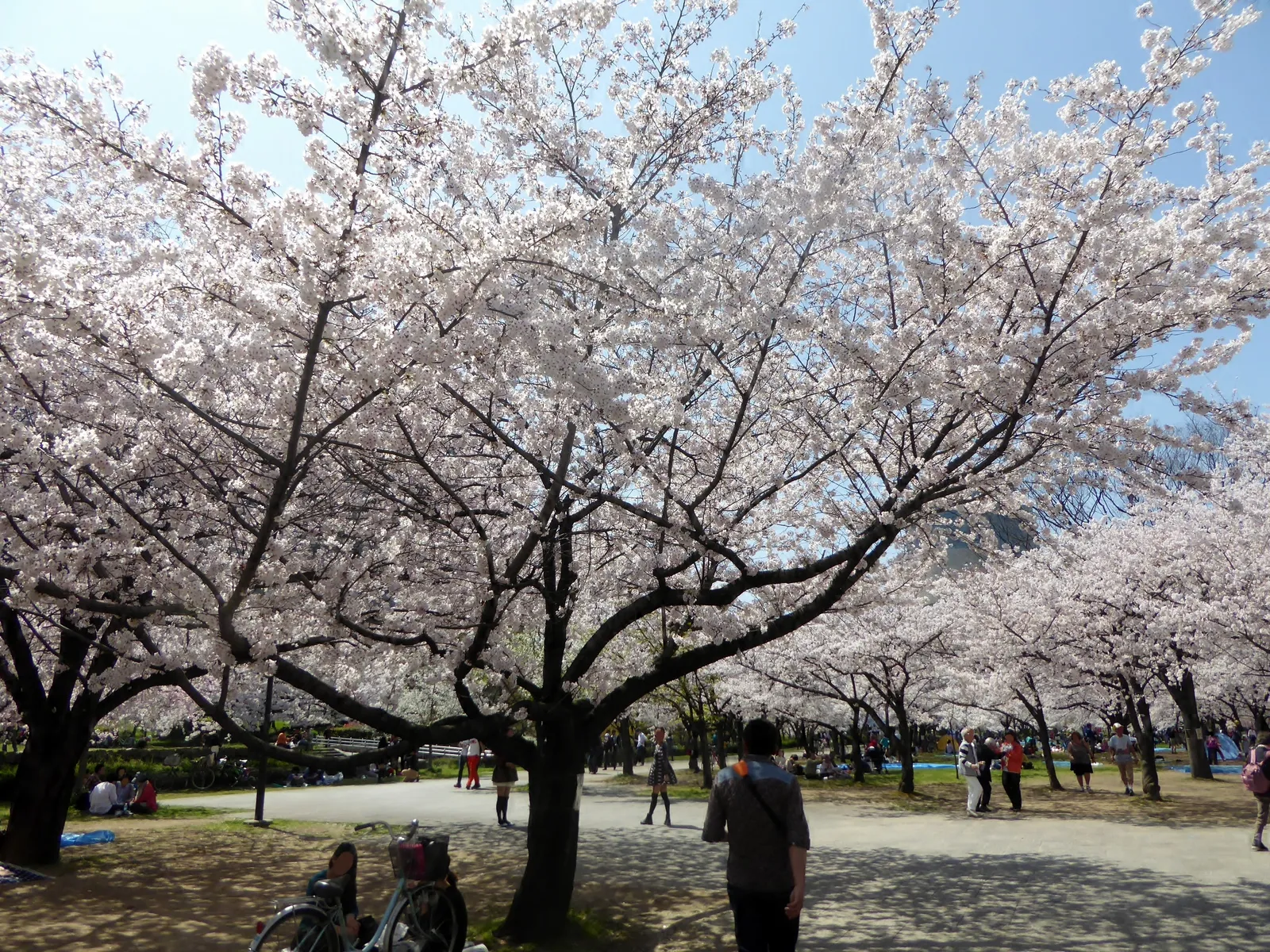
The park's outdoor grounds are open 24 hours and make an easy, free cherry blossom walk on the east side. Ride the JR Osaka Loop Line to Osakajokoen Station, walk past JO-TERRACE OSAKA toward the castle walls, take in the stone walls and water along the East Outer Moat, and continue to Aoyamon Gate if you have the energy. Entering via Exit 3-B of Osaka Metro Morinomiya Station brings you straight to the fountain area, putting the East Outer Moat on the second half of your walk. Both entrances sit on the park's east side; if you're heading to Shinsaibashi for dinner, returning to Morinomiya on the Nagahori Tsurumi-ryokuchi Line lets you enter by JR and exit by subway.
A combined ticket covers both the Osaka Castle keep museum and the Toyotomi Stone Wall Museum at ¥1,200 for adults, ¥600 for university and high school students with ID, and free for junior high students and younger with ID. If you see a queue outside the keep on a prime blossom day, treat the exterior walk and the indoor museum as separate decisions based on the crowd in front of you. Save the keep's interior floors for rain and prioritize the moats, stone walls, and blossoms under clear skies. For details on navigating the indoor levels, see our Osaka Castle Keep and Park route guide.
On weekends, if some people in your group want a shorter walk, pick either Otemon Gate or the Morinomiya fountain plaza as your meetup spot. Those entering from Otemon can cover Nishinomaru and the stone walls, while the Morinomiya group shoots blossoms along the outer moat. If anyone is pushing a stroller or using a wheelchair, check the official park map for main entrances with accessible restrooms and leave steep stair shortcuts to solo walkers. When crowds queue at bridge gates, stay in the marked lanes rather than waiting in the middle of the bridge.
Walk the Okawa River at Kema Sakuranomiya Park South From JR Sakuranomiya
Kema Sakuranomiya Park stretches along both banks of the Okawa River for roughly 4.2 kilometers from the Kema Floodgate to Tenmabashi, lined with about 4,800 cherry trees. Park entry is free and the outdoor grounds stay open around the clock, though riverside facilities keep their own hours. For a first visit, get off at JR Sakuranomiya Station on the Osaka Loop Line, about a 3-minute walk from the park according to Osaka City. Enter 'Sakuranomiya Station' in your map app so it doesn't confuse the station with Sakuramon Gate inside Osaka Castle. If you plan to exit at the southern end of the riverfront, save Osakajo-kitazume Station—it sits on a different JR line from Osakajokoen Station.
With only 30 minutes to spare, walk from the station toward Genpachi Bridge for a quick view up and down the river, stroll a short stretch of the bank, and double back. Keep to one side of the bridge sidewalk while checking the full sweep of trees in good light, then drop back down to the water for unhurried close-ups. For a one-way walk without backtracking, stay on the station side heading south past Sakuranomiya Beach, Sakuranomiya Bridge, and Former Fujita Residence Park, then depart from JR Osakajo-kitazume Station. To keep going toward Tenmabashi, switch to the Tanimachi subway line or Keihan Railway for your next stop.
Locals commute, cycle, and jog along the Okawa during the day. In heavy crowds, walk with the flow of foot traffic, step into an open pocket along the path before stopping for photos, and go single file through tight spots. The full park length is useful mainly for judging stamina if you want a long stroll. With toddlers or older travelers, pin the next exit station ahead of time and stop whenever you've had enough of a scenic stretch. There's no need to cross back and forth over bridges—step onto a single bridge with a sidewalk to take in the continuous ribbon of blossoms on both banks.
Walking north from Tenmabashi works just as well. Osaka Metro lists Exit 1 of the Tanimachi Line as the riverfront park exit, putting you right by Hachikenyahama Pier on the station side—a convenient spot to check the water and grab a bite before deciding whether to cross toward the Mint Bureau or head upriver. Anyone needing an elevator should check the Tenmabashi Station layout first; passing from the platforms through the North Ticket Gate connects to the Keihan-side elevator up to street level. During the Mint Bureau viewing week, follow that day's entry routing after crossing the bridge, and save the Okawa stroll for after you exit if entry queues are long.
When blossoms are only halfway open, walk along one bank until you find a sunlit pocket in bloom and frame it against a bridge and the river. Wait for full avenues to open before chasing overhead blossom tunnels. Because the Okawa offers so many easy 30-minute entry and exit points right in the city, it's far more relaxed to slot into a late arrival day or between timed tickets than racing to a gated garden before closing.
Arriving Early in March: Ride the Nagahori Tsurumi-ryokuchi Line for Early Blooms
If you arrive between early and mid-March, check Tsurumi Ryokuchi Park's bloom updates first. Park guides list Okame-zakura as typically peaking from early to mid-March, recognizable by its deep pink, downward-facing flowers. On March 4, 2026, park logs noted Okame-zakura already in peak view west of Park Golf Area C, alongside Kawazu-zakura at Yama-no-Hiroba and Area C's west side. Whenever seasonal updates flag Kawazu-zakura, head straight to the specific zone named in the post—early varieties tend to cluster in small pockets quite far from the Oike Pond loop where Yoshino trees bloom in April.
From Shinsaibashi or Morinomiya stations, the Nagahori Tsurumi-ryokuchi Line runs directly to Tsurumi-ryokuchi Station. The park's step-free route exits the ticket gate onto the left-hand ramp, connects to the ramp ahead on the right, and crosses the pedestrian crosswalk toward the Flower Expo grounds to reach the Central Entrance. Check the park map there before setting out. If March reports point to the Mountain Area (open 9:00 AM–4:30 PM, extending to 5:30 PM from April) and you're short on time, walk directly to the blooming pocket and loop back to the Central Entrance. General park grounds are free and open 24 hours; during Yoshino season, aim straight for the west or northeast shore of Oike Pond.
With older relatives in tow, use Oike Pond as a simple turnaround point while faster walkers push on to Yama-no-Hiroba for early varieties. If light rain sets in, stay near the Central Entrance and pair the walk with the Sakuya Konohana Kan conservatory, open 10:00 AM–5:00 PM (last entry 4:30 PM), closed Mondays (or the next weekday if Monday is a holiday). Visitors spending the morning at Osaka Castle can hop straight on the line at Morinomiya without a transfer, keeping a first visit simple without tracking companions across distant gates.
You can also hold off on early blooms until Expo '70 Commemorative Park in Suita posts photos of Kanhizakura, Higan-zakura, or Yoko-zakura. In late March 2026, the park's photo log spotted Kanhizakura near Haru-no-Izumi, Higan-zakura along Sakura-no-Nagare and Hana-no-Oka, and Yoko-zakura east of the pavilion grounds. Still, if your group mainly wants castle-and-sakura views, use Tsurumi Ryokuchi as your quick city backup and save Suita for a day when you also want to see the Tower of the Sun or the Japanese Garden, rather than trekking to the suburbs for a single unfamiliar tree.
Expo '70 Commemorative Park in Suita: Pick Higashi-Oji or the East Plaza
Expo '70 Commemorative Park sits in Suita, north of central Osaka. From Umeda or Namba, take the Midosuji Line on a train running through onto the Kita-Osaka Kyuko Line to Senri-Chuo, then transfer to the Osaka Monorail. For the Tower of the Sun, get off at Bampaku-kinen-koen Station and walk north about 5 minutes to the Natural and Cultural Gardens Central Gate. If you're heading straight for late-blooming Satozakura at the East Plaza, board a monorail train from Senri-Chuo bound for Saito-nishi—some run straight through to Koen-higashiguchi Station, while others require a quick change onto the Saito Line at Bampaku-kinen-koen. From Koen-higashiguchi, the East Gate is about a 5-minute walk west. Because each station serves a different gate, agree on your entrance before splitting up.
For Somei-Yoshino views, enter at the Central Gate, pass the Tower of the Sun, and follow Higashi-Oji eastward through the Natural and Cultural Gardens. Once you hit dense canopies in peak bloom, slow down—and detour to Sakura-no-Nagare or the Japanese Garden only if you have time left. Both zones cover generous ground; families with kids can build a full half-day out of the Tower of the Sun exterior, Higashi-Oji, and lawn breaks, then exit via the East Gate. Near the tail end of Yoshino season, check the park's Satozakura photo updates first: in 2026, fresh blooms were documented at the East Plaza on April 14 and 16, giving latecomers a clear reason to start at the East Gate.
One combined ticket covers both the Natural and Cultural Gardens and the Japanese Garden—¥450 for high school students and adults (from April 1, 2026) and free for elementary and junior high students. Standard hours are 9:30 AM–5:00 PM (last entry 4:30 PM), closed Wednesdays (or the next weekday if Wednesday is a public or substitute holiday), though the park stays open daily from April 1 through May 2. Assuming the same calendar rules hold in 2027, March 31 falls on a Wednesday (closed), while April 7 is also a Wednesday but falls inside the daily-open window. If you're visiting at the end of March, put Suita on an open day and save Wednesday for the city riverfront.
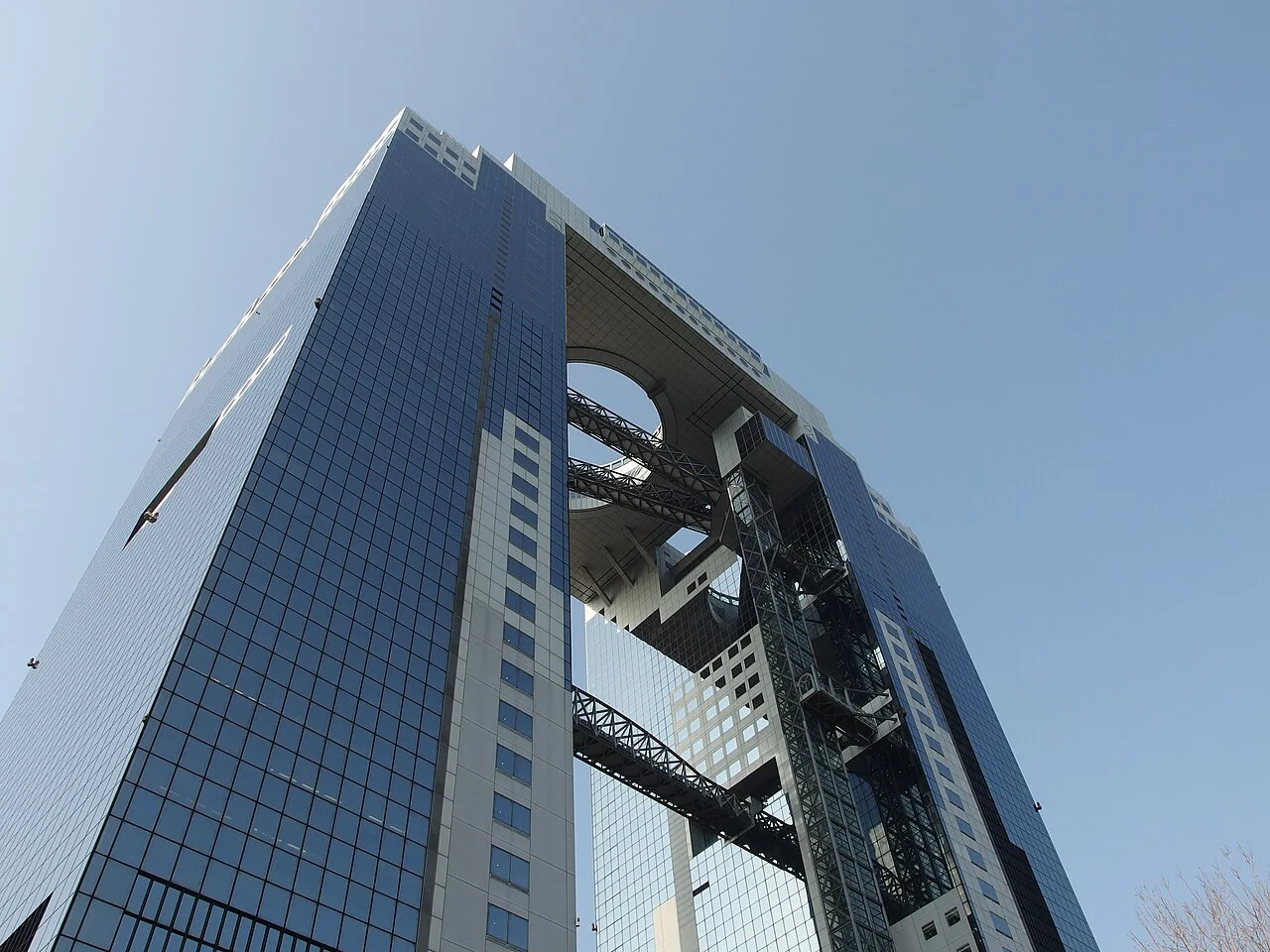
You can see the Tower of the Sun exterior with standard park admission, while stepping inside requires a separate timed-entry reservation. If only one or two people in your group want to tour the interior, book their slot and send everyone else to the Japanese Garden. Visitors with reservations must check in at the tower counter 20 minutes before their slot, so factor in both the park-gate ticket line and the walk across the grounds. Children under 4 require an elevator reservation and must be carried by an accompanying adult (one adult per child). Group members staying outside can walk Higashi-Oji first and reunite at a landmark near the Central Gate afterward.
If steady rain starts early in the morning, verify indoor museum hours before making the trip to Suita. Inside the park, the National Museum of Ethnology (Minpaku) runs 10:00 AM–5:00 PM (last entry 4:30 PM) and closes Wednesdays (shifting to the next day on holidays)—meaning it still follows its own Wednesday closure during the park's April daily-open stretch. Exterior facade renovations are also scheduled through the end of March 2027, keeping the central courtyard installation *Ruins of the Future* closed to viewing during the work. If you use the museum as a rain backup, ask staff at the park's manned gate about admission and museum-pass transit, noting the 15-minute walk from the Central Gate is still outdoors. In thunderstorms or heavy wind, stay in central Osaka for indoor museums and skip the extra rail transfer.
The Osaka Mint Bureau Follows Its Own Calendar—Lock In Your Slot First
The Osaka Mint Bureau's Sakura-no-Toorinuke centers on late-blooming double-flowered Yaezakura. Unlike the uniform Yoshino avenues around the castle and river, this path packs dozens of varieties with distinct petal layers, shades, and bloom schedules into one stretch. Osaka City's route runs one way for about 560 meters, entering through the South Gate on the Tenmabashi side and exiting via the North Gate toward Sakuranomiya Bridge. Set your map pin to the South Gate for arrival, decide which riverfront stretch to walk once you emerge at the North Gate, and book dinner along your exit route—or build in extra walking time if you're heading back to Tenmabashi to eat.
Using 2026 as a baseline, the corridor opened from April 9 to 15 via advance online registration on a first-come, first-served basis. Reservations opened March 18 at 9:00 AM JST in 30-minute entry windows, using a QR code from the confirmation email alongside a bag check at the gate. Watch the official Osaka Mint Bureau Cherry Blossom Viewing announcement for 2027 dates and registration links. Keep your preferred evening flexible with a daytime backup plan, and only lock in dinner reservations or onward trains once your slot is confirmed.
From Tenmabashi Station, both Exit 2 via the Osaka Metro Tanimachi Line North Ticket Gate and Exit 14 via the Keihan East Ticket Gate take roughly 15 minutes on foot to the South Gate, per Osaka City guidance. From JR Osakajo-kitazume Station, Exit 3 is also about a 15-minute walk. Your booked time is an entry window, so add buffer for crossing the bridge, queuing, and pulling up QR codes. Save the QR codes offline on your phone and have your group meet right outside the station exits before walking to the South Gate together.
In 2026, Mint Bureau rules prohibited eating inside the grounds, banned smoking, and barred tripods and selfie sticks. If you're carrying bento boxes, eat before queuing at the gate, and give young kids their afternoon snack ahead of entry. Once inside the one-way lane, plan your next stop on the north side if you want extra photo time near the end of the path. If slots sell out, JR Sakuranomiya Station still gives you easy access to the Okawa Riverbanks, while Expo '70 Commemorative Park's East Plaza is your best bet for late varieties—just confirm fresh bloom dates and flower colors in official updates before heading out.
How to Swap Two Days by Weather, Stations, and Group Pace
On Day 1, enter Osaka Castle from Tanimachi 4-chome and cover either Nishinomaru Garden or the East Outer Moat in the morning. For water views in the afternoon, head to Hachikenyahama Pier at Tenmabashi for lunch and a break, then gauge everyone's energy. Anyone ready to call it a day can wrap up at Tenmabashi, while stronger walkers continue up the Okawa River. Treat Day 2 as your wildcard: finish any missed river segments if city blooms are peaking, shift out to Tsurumi Ryokuchi or Suita if blooms are running early or late, or build your north-side schedule around a Mint Bureau slot if you got one.
If you only have one night and want evening cherry blossoms, run the day in reverse. With a Mint Bureau booking, spend early afternoon around Tenmabashi, walk to the South Gate for your time slot, and catch a train from a nearby station after exiting the North Gate. For Nishinomaru's night illumination, have an early dinner near Tanimachi 4-chome or Tenmabashi before walking in through Otemon Gate. With free daytime hours to spare, stroll part of Kema Sakuranomiya Park first, return to your hotel to rest and layer up, and head back to Osaka Castle after dark. Avoid stacking two timed-entry evening events on the same night—one slow line will cut into the other, so pick the night scene you care about most.
When traveling with strollers or older family members, build bailout points into the route. Schedule lunch right outside a rail exit—outside Tenmabashi or Osakajokoen Station—rather than trying to regroup by a specific tree along a busy riverbank. Early risers can catch trains from a nearby station for dawn photos while the rest of the group meets up later, skipping unnecessary waits at every ticket gate. If a large midday group struggles to stay together, trade outdoor picnics for a seated restaurant near a station and keep the park walk short.
Staying near Umeda gives you direct daytime access via the JR Osaka Loop Line to Sakuranomiya and the Midosuji subway to Senri-Chuo for the monorail. If early-morning castle shots are your priority, narrow hotel searches to Tanimachi 4-chome or Morinomiya depending on whether Nishinomaru or the East Outer Moat comes first. For riding Keihan back after night views, Tenmabashi minimizes the walk from the castle. If you want night blossoms and city dining on one line, check room layouts and exit proximity around Shinsaibashi or Namba—Morinomiya connects straight to Shinsaibashi by subway, while Namba requires one extra stop or a short walk. For airport links and neighborhood trade-offs, see our Osaka neighborhood hotel comparison.
Compare hotel totals strictly on matching room types, guest counts, and cancellation terms—a double room rate won't estimate a three-person stay, and stroller users should check doorway and elevator layouts too. If adding an extra night just to hedge bloom timing only gives you an evening arrival and an early morning departure, you're paying for a room and only getting a night stroll. On checkout day, lock down luggage storage and pickup times first, then pick a single park nearby.
Different Railways Serve the Castle, River, and Suburbs—Price Tickets by the Day
From JR Osaka Station to Sakuranomiya, ride the Osaka Loop Line outer loop toward Kyobashi; for the return to Umeda, take the inner loop toward Osaka. If you ride the subway to the castle's west side in the morning and return from the Okawa on JR, you'll pay separate fares for each operator. Travelers staying in Umeda should save JR Osaka Station, Midosuji Line Umeda Station, and Tanimachi Line Higashi-Umeda Station as separate pins—knowing the line name is far more useful than searching 'Umeda' when hunting for the right entrance. Higashi-Umeda puts you on the Tanimachi Line straight to Tenmabashi, while JR Osaka connects cleanly to Sakuranomiya.
Osaka Metro's Enjoy Eco Card costs ¥820 for adults on weekdays, ¥620 on weekends and national holidays, and ¥310 for children. Three single ¥240 adult subway rides total ¥720, meaning the day pass saves ¥100 on weekends while individual tickets save ¥100 on weekdays. If you're walking between Osaka Castle and Tenmabashi, count how many times you'll actually pass through subway gates. Also note that riding to Senri-Chuo adds the Kita-Osaka Kyuko fare past Esaka, and the Osaka Monorail bills separately—so leave JR, Keihan, and suburban legs out of your subway pass math.
When transferring north from the Tanimachi Line at Tenmabashi to the Midosuji Line for Shin-Osaka or Senri-Chuo, you'll exit the ticket gates between Higashi-Umeda and Umeda stations. With single paper tickets or an IC card (tap the same card at both gates), out-of-station subway transfers give you 30 minutes to re-enter. If you stop in Umeda to eat or wait for friends past 30 minutes, the next tap starts a fresh fare. Walking from Higashi-Umeda to JR Osaka Station stays underground too, but since you're switching rail companies, fares calculate separately.
Night Illuminations and Evening Walks Keep Different Hours
Nishinomaru Garden hosts a dedicated evening viewing event. In 2026, the 'Kan'o Nighter' illumination ran from March 20 to April 12, keeping the garden open until 9:00 PM (last entry 8:30 PM) with event tickets at ¥350 for high school students and older. For 2027, check the park's 'Haru Matsuri' page for exact dates, light-up times, last entry, and your planned station back. To catch twilight over the moat before the tree lights pop, arrive outside Otemon Gate shortly before sunset to photograph the outer moat before stepping inside.
Expo '70 Commemorative Park also lit up Higashi-Oji in 2026, setting final dates according to actual bloom progress. Before making an evening trip to Suita, verify both the park's illumination notice and your return monorail transfers. Plan your park exit around the station you want afterward: leaving via the East Gate connects to Bampaku-kinen-koen toward Senri-Chuo, though only select trains run straight through from Koen-higashiguchi; if you'd rather skip a transfer, walk back along Higashi-Oji to the Central Gate and ride straight from Bampaku-kinen-koen to Senri-Chuo. When carrying camera bags, pushing a stroller, or hauling snacks, fewer transfers beat squeezing in two extra rows of trees.
Kema Sakuranomiya Park stays open all night with bridge lights and city reflections along the water; stick to well-lit stretches close to train stations for evening strolls. Arrive before dusk if you want clear tree silhouettes and blossom color, and to spot riverside stairways in daylight. With older travelers or kids, stay near bridgeheads and stations so street-level exits are always close. If weekend evening rain catches you out, duck straight back into Tenmabashi Station for dinner rather than walking dark paths toward the next bridge.
If getting back to your hotel from a night illumination takes two or more transfers, check your departure station and last connecting trains before heading in, along with which exit sits closest to your hotel. Crowds rush the stations together when illuminations close, so pick an obvious landmark along the exit path as a regroup spot—if anyone misses a train, everyone still knows the way back. Build in margin for walking and queues instead of aiming for the final train.
Rainy-Day Backups, Fallen Petals, and Picnicking Under the Trees
In light drizzle, shorten your Osaka Castle loop to Otemon Gate and the South Outer Moat. In steady rain, duck into the Osaka Museum of History right next to Exit 9 of Tanimachi 4-chome Station. Standard hours are 9:30 AM–5:00 PM (last entry 4:30 PM), closed Tuesdays (shifting to the next day on holidays); permanent exhibition tickets are ¥600 for adults, ¥400 for high school and university students, and free for junior high students and younger. Sitting at the castle's southwest corner, it lets you step straight back out to Otemon and the moat if the skies clear. If your shoes and clothes are already soaked, eat near the station and save the park for your next open half-day.
If rain hits while you're along the Okawa River, head for the Fujita Museum beside Exit 3 of Osakajo-kitazume Station. It opens 10:00 AM–6:00 PM with no advance reservation required; admission is ¥1,000, and visitors aged 19 and under enter free with proof of age. Ducking inside keeps you right by the river exits, so you can still step out to Sakuranomiya Bridge or nearby paths once things dry up. If heavy wind and rain force you to angle your umbrella while walking from Tenmabashi, skip the exposed riverbank walk and ride the JR Tozai Line straight across.
After a spring shower, check riverside paths and castle moats near stations for fallen petals pooling along the water and pavement. Multi-day rain leaves puddles, mud, and slick stone paths—especially on embankment slopes and castle flagstone walkways. Families with young kids should stay on upper paved paths and pause before taking photos. Pack a compact, wipe-clean ground sheet that fits back in a bag, and only spread it out on dry ground where sitting is permitted. If the whole group planned on sitting down for a meal, grab tables near the station first and keep the park walk short afterward.
When eating a bento under the blossoms, keep bags, food, and picnic sheets within your sitting footprint and leave gates, bridge approaches, walkways, and roped-off planting beds clear. Osaka City's park rules restrict barbecuing to designated zones—Tsurumi Ryokuchi and Osaka Castle Park are listed, typically requiring managed paid facilities, and Osaka Castle Park has no free BBQ area. Bringing a pre-made bento is completely different from cooking on-site: if you haven't reserved a BBQ slot, pick up prepared food near the station, wait until you settle on a spot to unwrap it, and pack every container and piece of trash out with you.
On weekends with a stroller, buy compact, easy-to-hold food before entering the park, then check the park map for restrooms and exit routes. Along the Okawa, save bento breaks for wider stretches of the bank and stow food away before climbing onto bridges for panoramic shots. At Expo '70 Commemorative Park, agree upfront whether your group is eating and exiting near the East Gate or Central Gate so anyone heading back early leaves from the right side.
A few useful answers
When should I book my 2027 Osaka cherry blossom trip?
If seasonal forecasts aren't out yet, book between late March and early April. Osaka's Yoshino cherry trees average first bloom on March 27 and full bloom on April 4. Staying at least two nights gives you two interchangeable half-days to adjust based on that week's park photos.
Do I need to buy tickets to see cherry blossoms at Osaka Castle Park?
Osaka Castle Park's outdoor grounds are free. Nishinomaru Garden normally charges ¥300 for adults (free for junior high students and younger), with separate hours and pricing for night illuminations. Entering the castle keep and the Toyotomi Stone Wall Museum requires their shared admission ticket.
What is open if my Osaka cherry blossom day falls on a Wednesday?
Kema Sakuranomiya Park's outdoor riverfront is open 24 hours, and Nishinomaru Garden closes Mondays rather than Wednesdays. Expo '70 Commemorative Park normally closes Wednesdays, but runs daily without closures from April 1 through May 2—though the National Museum of Ethnology inside still follows its own Wednesday holiday calendar.
Are there late-blooming cherry blossoms if I miss full bloom at Osaka Castle?
Use the Satozakura trees at Expo '70 Commemorative Park's East Plaza in Suita as your backup—check official park photo updates for dates and varieties first. For the Osaka Mint Bureau, wait for the annual Cherry Blossom Viewing announcement to book a date and entry window along its one-way South-to-North Gate route.
Where is the easiest place for a short walk with a stroller?
For riverfront paths, take JR to Sakuranomiya Station and do a short out-and-back stretch near Genpachi Bridge. At Tsurumi Ryokuchi Park, follow the station ramps straight to the Central Entrance and stick to paths around Oike Pond. At Osaka Castle, pick either the Otemon Gate side or the Morinomiya fountain area.
Official information and references
Sources used in this guide.
- Osaka Meteorological Observatory | Biophenological Observations and Climate Normals for Osaka Prefecture
- Japan Meteorological Agency | Kinki Region Climate and Somei-Yoshino Observation Standards
- Osaka Meteorological Observatory | 2026 Osaka Full Bloom and the Nishinomaru Reference Tree
- Osaka Castle Park | 2026 Official Guidebook and Park Routes
- Osaka Castle Park | Park Hours, Gardens, and Castle Keep Tickets
- Osaka Castle Spring Events | 2026 Nishinomaru Night Cherry Blossom Viewing
- City of Osaka | Nishinomaru Garden Station Exits
- City of Osaka | Kema Sakuranomiya Park Facilities and Access
- Osaka Convention & Tourism Bureau | Okawa Riverfront Length and Kema Sakuranomiya Park
- Osaka Prefecture | Hachikenyahama Pier and Station Connections
- Osaka Metro | Tenmabashi Station Map
- Tsurumi Ryokuchi Park | Official Bloom Updates and Photos
- Tsurumi Ryokuchi Park | March 4, 2026 Observation Log
- Tsurumi Ryokuchi Park | Somei-Yoshino Distribution
- Tsurumi Ryokuchi Park | Okame-zakura Bloom Window and Identification
- Tsurumi Ryokuchi Park | Central Entrance Accessible Route
- Tsurumi Ryokuchi Park | Opening Hours and Park Rules
- Sakuya Konohana Kan | Conservatory Opening Information
- Expo '70 Commemorative Park | Cherry Blossom Varieties, Locations, and 2026 Photos
- Expo '70 Commemorative Park | Monorail Access and Park Gates
- Osaka Monorail | Main Line and Saito Line Transfers and Through-Trains
- Expo '70 Commemorative Park | Opening Hours and Closed Days
- Expo '70 Commemorative Park | Admission Fees Effective April 2026
- Osaka Prefecture | 2026 SAKURA EXPO and Higashi-Oji Night Illumination
- Tower of the Sun | Interior Reservations and Check-In
- Tower of the Sun | Young Children and Elevator Rules
- National Museum of Ethnology | Hours, Closures, and Park Transit
- National Museum of Ethnology | Exterior Renovation Through Late March 2027
- Japan Mint | Osaka Cherry Blossom Viewing (Sakura-no-Toorinuke) Portal
- Japan Mint | 2026 Cherry Blossom Viewing Details and Entry Rules
- Osaka Chuo Ward | 2026 Mint Bureau Application Period and Entry Slots
- City of Osaka | Mint Bureau South Gate Entrance and Station Exits
- Osaka Museum of History | Permanent Exhibition Fees and Hours
- Osaka Museum of History | Tanimachi 4-chome Station Exits
- Fujita Museum | Opening Hours, Admission, and Station Exits
- City of Osaka | Designated Park Barbecue Areas
- JR West | Sakuranomiya Station Platforms and Directions
- Osaka Metro | Enjoy Eco Card Fares and Valid Zones
- Osaka Metro | Standard Subway Fares
- Osaka Metro | Out-of-Station Transfers Among the Three Umeda Stations
- Osaka Metro | IC Card Transfer Fare Rules