Osaka's Midosuji ginkgo trees usually turn golden from late November to early December. Exit at Yodoyabashi, Honmachi, or Shinsaibashi for an easy one-stop stroll, with 2026 illumination dates, subway fares, and rainy-day routes.
- Region & Focus
- Osaka
- Reading Scope
- 23 min read · 11 chapters · 6 Q&As
- Official Verification
- 24 official sources checkedUpdated November 22, 2026
- Key Topics
- SeasonsNeighborhoodsRail travel
Chapter Route Map (tap any stop)
- Visiting in Late November: Check How Many Leaves Remain
- Yodoyabashi to Honmachi: One Station Is Enough
- Shinsaibashi to Namba: Put Dinner at the South End
- Starting from Umeda: The Northern End of the Lights Is at Hanshin-mae
- 2026 Illuminations Run Through December 31 Until 1:00 AM
- Save Sunlit Blocks for Daytime Photos
- Connecting Nakanoshima Projection Mapping with Midosuji
- Which Osaka Castle Entrance You Use Shapes the Whole Day
- Subway Day Passes vs. Single Fares, Plus Stroller Exits
- When Wind and Rain Pick Up, Drop Back Underground
- Pick Hotels by Return Train and Exit Access
- Quick Q&A
If you only have one window in Osaka to see the Midosuji ginkgos, walk from Yodoyabashi to Honmachi. Late November through early December is the prime season for yellow foliage; midday brings pockets of sunlight between office towers, and you can hop back on the subway at the next station whenever your legs tire. To combine shopping, dinner, and light displays, walk from Shinsaibashi to Namba instead. The 2026 Midosuji Illumination runs nightly through December 31, lighting up around 5:00 PM. Staying in one neighborhood until dusk beats rushing the full four kilometers just before dinner.
Visiting in Late November: Check How Many Leaves Remain
Osaka Metro's travel guide places Midosuji's ginkgo season from late November to early December. If you are booking flights for yellow foliage, anchor your itinerary around late November and pick dates with a few flexible afternoons you can swap around. If the weather clears on your Osaka Castle morning, move Midosuji to that same afternoon. Splitting Kyoto or Nara onto separate days gives you wiggle room when forecasts shift. When you only have a single weekend, prioritize outdoor walks around lunchtime and save shopping arcades for the evening.
On-the-ground photos are far more useful for picking a block than citywide foliage forecasts. When searching Japanese social feeds or maps for Midosuji ginkgo photos (using terms like Midosuji icho alongside Yodoyabashi or Honmachi), look for recent timestamps and visible street signs or intersections. A close-up only shows one branch; scroll for full-tree shots and check whether the canopies still look dense. Side lighting can make sparse leaves glow bright yellow, and night illuminations tint the foliage, so check daytime wide shots before committing to an afternoon stretch. If you cannot find fresh photos of one corner, pick two adjacent stations as backups so you can quickly move to the second spot.
Exit to street level at Yodoyabashi; if the canopies still show a mix of green and yellow, linger on whichever side gets direct sun instead of riding to another station hunting for peak color. If the pavement is carpeted in leaves and only bare twigs remain overhead, shoot the fallen foliage against stone office facades by day, then return at night for the string lights stretching down the boulevard. Rain or strong winds often leave trees looking like this—treat remaining leaves as foreground texture and decide within one block whether to keep walking. Even if you arrive a few days late, a quick look still fits easily before heading to Nakanoshima or nearby malls.
From afar the ginkgos look like an unbroken avenue, yet side streets, building driveways, and varying canopy heights break up the line. Osaka City tracks each street tree individually, replacing specimens when needed and planting male ginkgos for new stock. When photographing the boulevard, line up a few trees of similar canopy height ahead of you and stick to one sidewalk while waiting for shadows on the left or right side of the street to clear, or shift angles to frame trees of different sizes. Walking the ginkgo sidewalks is free with no admission ticket required.
Osaka's Midosuji ginkgo trees usually turn golden from late November to early December. Exit at Yodoyabashi, Honmachi, or Shinsaibashi for an easy one-stop stroll, with 2026 illumination dates, subway fares, and rainy-day routes.
Yodoyabashi to Honmachi: One Station Is Enough
Ride the Midosuji Line to Yodoyabashi Station (M17) and follow signs for Exit 1 toward Yodoyabashi Bridge and Nakanoshima. Once above ground, cross north over the bridge to City Hall if you want riverside views. To focus on the ginkgos, start at the intersection just south of the bridge and head south along Midosuji. Walk several blocks on the same side before crossing at a traffic light when a dense cluster of canopies catches your eye—it saves waiting through multiple red lights on a wide avenue. Starting from the first train on December 15, 2026, Exit 9 connecting to the adjacent building closes for renovation, so pick another exit as your winter meetup point.
Walking south from Tosabori-dori toward Honmachi, the avenue mixes office towers, cafes, and older stone facades. Near Honmachi, the entrance steps of Kita-Mido mark one of the landmarks behind Midosuji's name. According to the Osaka Convention & Tourism Bureau, the boulevard originally linked Kita-Mido and Namba Betsuin (Minami-Mido). Both temples and the street's public sculptures make easy landmarks, allowing companions arriving from different stations to meet on the exact same block. The Midosuji Sculpture Street spans all the way from Yodoyabashi to Shinsaibashi—just enjoy the pieces along your path rather than hunting down every single one before the midday light fades.
When heading back underground, Honmachi Station (M18) Exit 7 puts you along Honmachi-dori right by The St. Regis Osaka. If you start at Honmachi instead, walking north leads to Yodoyabashi and Nakanoshima, while heading south passes near Minami-Mido toward Nagahori-dori and Shinsaibashi. Because the Chuo, Yotsubashi, and Midosuji lines all share the massive Honmachi Station complex, save both "Midosuji Line side" and your exit number when transferring from another line—otherwise the nearest staircase may surface blocks away from where you expect.
Budget 40 to 60 minutes for this one-station walk, leaving time to admire the trees and wait at crosswalks. When angled sunlight illuminates a row of trunks on one side, pause there for photos and grab coffee right on the avenue instead of detouring down side streets. Weekday lunches pack this office district, so stagger your meal times if you have a large group wanting to sit together. Factor in elevator waits, ticket gates, and street crossings from the moment your train arrives; anyone meeting friends to shoot right out of the gate should gather outside the station. If someone in your group walks slowly or does not know the station layout, set a restaurant near Honmachi as the finish line so everyone can stroll at their own pace.
Shinsaibashi to Namba: Put Dinner at the South End
On the Midosuji Line at Shinsaibashi Station (M19), the South Ticket Gate connects directly to Daimaru Shinsaibashi, while Exit 8 links to Hotel Nikko Osaka. Duck into Daimaru if rain picks up; in clear weather, come up near Nagahori-dori and walk south toward Dotonbori Bridge. Side alleys branch directly into the Shinsaibashi-suji Shopping Arcade and Amerikamura. If you plan to return to the trees after browsing shops, pin Midosuji as your next waypoint—once you step under a covered arcade roof, you have already turned onto an indoor shopping street. Travelers with just one afternoon left can shop around Nagahori-dori first, then walk south while daylight still holds.
From Nagahori-dori through the Suo-machi area down to Dotonbori Bridge, frequent side streets let you duck into shopping arcades whenever your feet need a break. Osaka City has finished widening pedestrian side lanes south of the Shinbashi intersection, and bicycles share certain stretches of the Midosuji walkway. When stopping with a stroller to snap fallen leaves, pull over beside a planter wide enough for two people so bike lanes, department store entrances, and foot traffic stay clear. Crowds thicken as you approach the river; for meetups, choose a recognizable storefront entrance and step back out of the main flow to wait.
Midosuji crosses the canal at Dotonbori Bridge. To see the Glico sign, turn east along the riverbank toward Ebisubashi Bridge. To stay with the ginkgos, keep walking south along Midosuji past Sennichimae-dori into Namba. Osaka Metro Namba Station (M20) Exit 14 opens right next to Dotonbori amidst dense neon signs and traffic—it also works well as a starting point if you prefer walking north toward Shinsaibashi. Walk south-to-north if dinner is on the north side of Dotonbori, or north-to-south if you are eating near Nankai Namba Station to avoid crossing the bridge twice. You can slip into the arcade for takoyaki snacks and pop back out, or pin a sit-down restaurant on your map and wrap up your stroll at the nearest intersection.
Nankai Namba Station, Kintetsu and Hanshin's Osaka-Namba Station, JR Namba Station, and the subway's Namba Station each have separate entrances. When texting friends to meet at Namba, specify both the railway operator and the exact exit. The Namba Nishiguchi intersection marks the southern end of the illumination zone. If you are staying near Nankai Namba or heading to Takashimaya or the airport line, follow Nankai signs and decide based on dinner plans whether to continue to the station plaza. Family members arriving from the north who just want lights and a quick bowl of ramen can come up at Exit 14 and start their evening right there.
Starting from Umeda: The Northern End of the Lights Is at Hanshin-mae
The official northern starting point of the illumination is the Hanshin-mae intersection. Coming from JR Osaka Station or Hankyu Osaka-Umeda Station, follow signs toward Hanshin Umeda Main Store. Hankyu's platforms sit on the opposite side of the sprawling terminal complex, and blindly following "Osaka-Umeda" signs often sends you on a long underground detour. Arriving from Shin-Osaka on the Midosuji Line, ride straight to Yodoyabashi if you want afternoon ginkgos; only get off at Umeda Station (M16) if you plan to browse Umeda department stores first or walk the light display from its northern tip.
Bridges mark the northern stretch cleanly. Heading south from Hanshin-mae along Midosuji, you first cross the Oebashi Bridge over the Dojima River, pass Nakanoshima where Osaka City Hall stands, and then cross the Yodoyabashi Bridge over the Tosabori River before reaching the Yodoyabashi-to-Honmachi ginkgo avenue. For a short northern walk, hop back on the subway at Yodoyabashi, or turn east after the first bridge if you are heading along the river to Osaka City Central Public Hall. Winter wind sweeps across these bridges—keep gloves in your coat pockets and wait for friends or sip hot drinks in sheltered spots before or after crossing. If you only want river sunset shots, the view from the first bridge tells you whether to linger by the water or head straight for the trees.
If you drop luggage at your hotel after arriving at Shin-Osaka close to dusk, starting from Umeda lets you pair department stores with the northern light section. If you arrive in the morning under clear skies, see the leaves from Yodoyabashi to Honmachi first and save malls and dinner for after dark. Opened in 1937, Midosuji stacks a broad surface boulevard directly atop the subway line along one north-south axis, which is why you can end your walk at any station along the way. Covering the full stretch involves dozens of wide crossings, so allow half a day if you like stopping for photos and shops; walk leisurely to Yodoyabashi and extend south if you still have energy, or hop on a train to your dinner reservation.
| What You Want Most | Start and Finish | Easy Detours Along the Way |
|---|---|---|
| Dense ginkgo canopies and office architecture | Yodoyabashi (M17) to Honmachi (M18) | Cross north from Yodoyabashi to Nakanoshima, or ride the Chuo Line from Honmachi toward Osaka Castle |
| Department stores, street lights, and dinner | Shinsaibashi (M19) to Namba (M20) | Connect straight into Daimaru from Shinsaibashi South Gate, shortening outdoor walking if it rains |
| Starting from the official northern tip of the lights | Hanshin-mae Intersection to Yodoyabashi (M17) | Duck into Yodoyabashi Station if bridge winds pick up and ride south on the Midosuji Line |
2026 Illuminations Run Through December 31 Until 1:00 AM
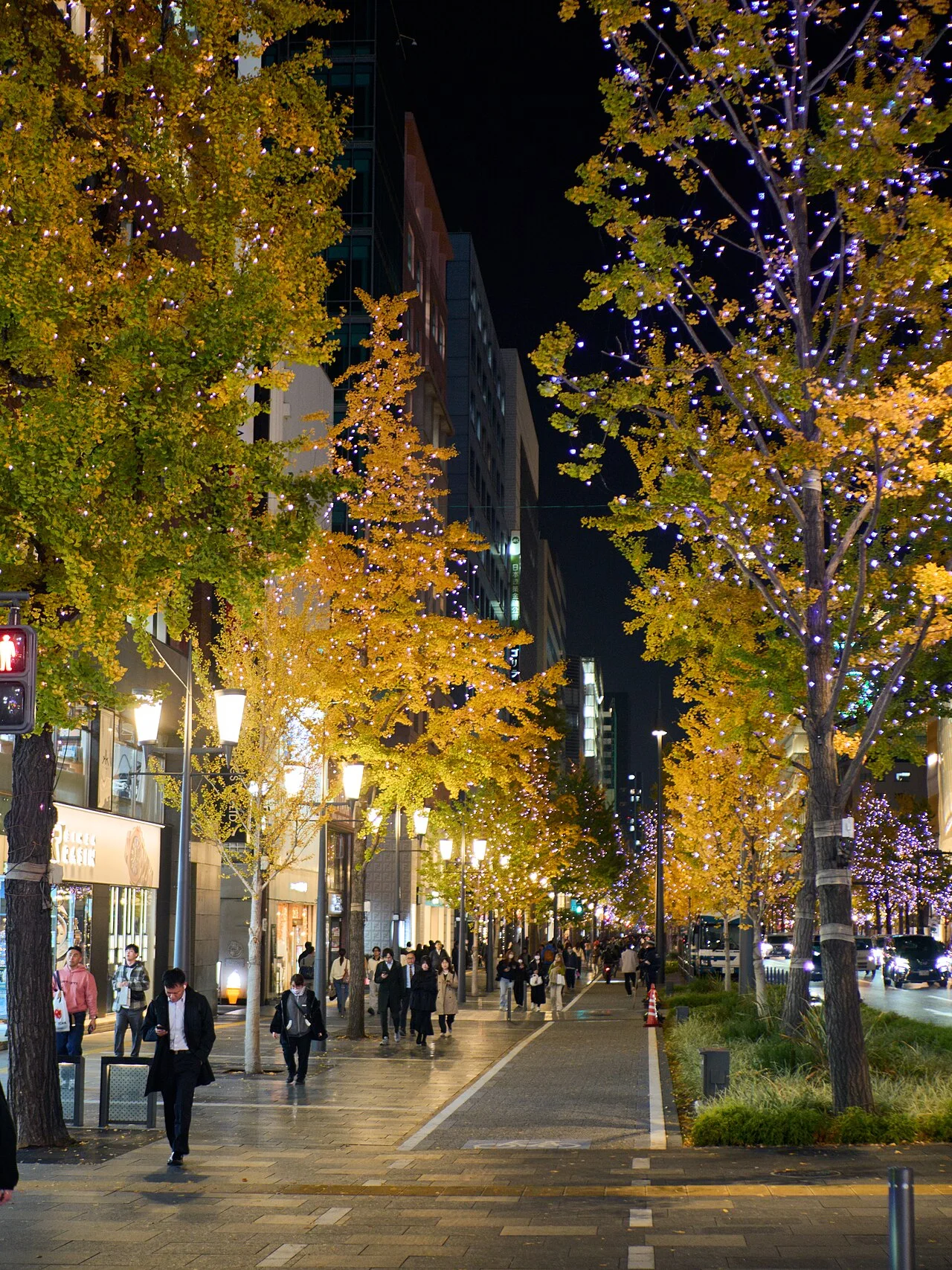
Midosuji Illumination 2026 runs from November 3 through December 31, covering roughly four kilometers from the Hanshin-mae intersection to the Namba Nishiguchi intersection, lit nightly from around 5:00 PM to 1:00 AM. Walking the sidewalks is free—just step up to street level from any adjacent station. If you have dinner reservations, pick a nearby corner to view the lights beforehand and walk to the station after eating. Even if someone in your group only wants a 20-minute evening stroll, stepping outside near their hotel station after 5:00 PM delivers a full stretch of illuminated trees.
You can time one stretch to transition from daylight to dusk on the same block. Start walking north from Honmachi shortly after 3:00 PM to capture clear leaf color against office facades, grab a seat for a break, and return to the Yodoyabashi-to-Honmachi section just before 5:00 PM. Switch to Shinsaibashi if it rains, waiting indoors at a department store until the sky darkens. Cloud cover, ambient street glare, and exact switch-on timing shift how the avenue looks each evening, so giving yourself ten extra minutes to watch the transition works better than chasing one fixed magic-hour minute.
Because the lights stay on past midnight, plan your ride home around the specific station, direction, and day's train schedule. On New Year's Eve in particular, do not mistake the 1:00 AM lights-out time for last-train service; check and save Osaka Metro's station-specific timetable ahead of time if you need transfers, and build in walk time back to the ticket gates. Traveling with kids or older relatives, take a short walk before dinner so everyone can head straight back to the hotel if the night turns cold. Organizers do not install temporary event restrooms along the avenue—use restaurant or department store restrooms before stepping back outside to see the lights.
Over the New Year holiday, double-check which event name matches which dates. The umbrella "Festival of the Lights in Osaka 2026" runs through January 31, 2027, with select neighborhood programs continuing from January 1, whereas the Midosuji street illumination itself ends on December 31. If the boulevard lights are a priority, schedule them for an evening on or before December 31. Visitors flying in during January can still ride the Midosuji Line to shop, then check the official "Area Program" listings for other illuminated venues still active. Groups heading to separate New Year's countdown events can meet briefly for one illuminated block along Midosuji before splitting up, avoiding messy meetups in packed countdown crowds.
Save Sunlit Blocks for Daytime Photos
Midosuji runs roughly north-south. When the sun sits in the south, facing north helps avoid harsh lens flare; step back behind an intersection to judge the whole row of yellow leaves ahead. When backlighting catches the edges of high canopies, frame them against glass towers, stone walls, or open sky while keeping asphalt traffic minimal in the shot. Skyscrapers slice midday sun into shifting pockets, so shoot sunlit trees as soon as you spot them instead of waiting for an entire block to light up at once.
Where canopies tower too high for a phone lens, include street-level windows, avenue signs, or sidewalk pavers to anchor the urban setting. For close-up foliage shots, choose lower branches near eye level with pedestrians and cars visible down the block. To capture the exact same angle by day and night, note a building corner and sidewalk edge in the afternoon so you can line up the identical spot after dark and compare how foliage and string lights share the frame.
Phone cameras easily blow out streetlights and neon signs into white blobs. At night, stand just inside the shaded edge of storefront lighting so both yellow leaves and a ribbon of string lights stay exposed. Organizers ask visitors to skip tripods, bulky rigs, and drones; use handheld night mode with elbows tucked to your ribs, leaving room on narrow curbs for passersby. When shooting oncoming streams of light down the sidewalk, stay on your own side and wait for crosswalk waves to pass before raising your camera. Shoppers cluster around station exits, so walk a little farther down the block for cleaner frames instead of waiting in the busiest bottlenecks.
Connecting Nakanoshima Projection Mapping with Midosuji
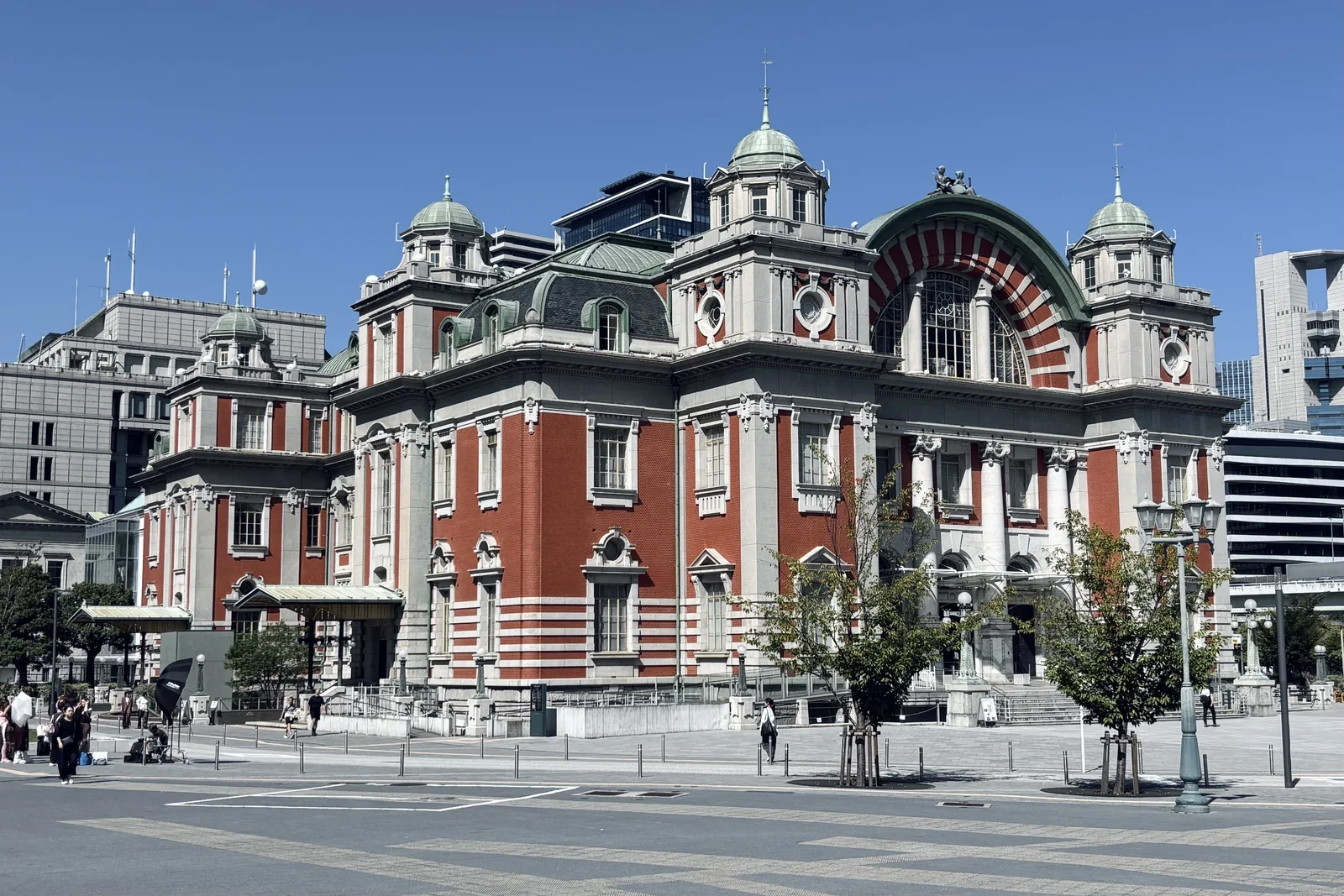
To see both the Osaka City Central Public Hall projection mapping and the Midosuji lights in one evening, visit between December 11 and December 25, 2026. The Osaka Hikari-Renaissance venue stretches from around Osaka City Hall into Nakanoshima Park. Projection mapping on the east facade of the Central Public Hall runs from 5:30 PM to 9:30 PM, with the final show starting at 9:20 PM; meanwhile, the facade lights at Osaka City Hall and the Nakanoshima Illumination Street begin on November 3 and run through December 31. Visitors arriving in late November for ginkgo foliage can end a daytime river walk at the Public Hall, then see the City Hall lights once dusk falls.
Come up near Yodoyabashi Exit 1, cross the bridge past City Hall toward the park, visit the Public Hall first, and decide based on wind and rain whether to stroll farther east along the river. Crowds gather along the east plaza waiting for each projection show—if you have young kids, stand along the outer edge and follow signs back toward Yodoyabashi or Kitahama afterward. Rather than losing a full show cycle hunting for latecomers, agree on which side of the bridge to meet before entering the plaza; anyone planning to leave via Kitahama should pin the Keihan Main Line and Sakaisuji Subway Line entrances in advance.
Coming from Osaka Castle or Tenmabashi during the day, ride the Keihan Main Line to Kitahama or Yodoyabashi and approach Midosuji from the east side of the park. Guests staying in Umeda can walk back to Hanshin-mae or ride one subway stop from Yodoyabashi. For wheelchair access, use the elevator inside Yodoyabashi Station to the Central-South Gate; organizers designate street-level elevator routes via the Keihan Midosuji Building and Yodoyabashi Mitsui Building. Expect localized detours inside the event zone; Osaka City Hall opens restrooms from 6:00 PM to 10:00 PM on weekdays and 4:00 PM to 10:00 PM on weekends and holidays, and organizers also list the multi-purpose restroom in the Rose Garden east of Naniwabashi Bridge for families needing diaper-changing tables.
If you wanted an indoor museum near the Public Hall, note that the Museum of Oriental Ceramics, Osaka closed for renovations on August 3, 2026, with reopening scheduled around April 2027. Travelers hoping to wait out bad weather there until evening can pivot directly to Shinsaibashi department stores instead. To keep your afternoon near Osaka Castle, visit the permanent exhibition at the Osaka Museum of History by Tanimachi 4-chome Station before heading back downtown at dusk. If you plan to stay overnight on the island, keep the riverfront for a short daytime stroll and walk over to the lights after dinner; see our Osaka Nakanoshima hotel guide for areas with easy late-night returns.
Which Osaka Castle Entrance You Use Shapes the Whole Day
To combine Osaka Castle Park and Midosuji in one day, spend the morning at the park and save Yodoyabashi or Honmachi for the afternoon. Park management's autumn map highlights ginkgo stretches near the outer jogging loop, so entering from Morinomiya Station puts trees within easy reach right away. If you also plan to climb the castle keep, budget extra time for ticket lines, uphill paths, and park walking, leaving Shinsaibashi strictly for dinner and evening lights. If yellow leaves are your sole focus, take Morinomiya Exit 3-B toward the Ongakudo amphitheater, enjoy a stretch of golden trees, and catch the subway back from Morinomiya.
To return to Midosuji from Osaka Castle, ride the Chuo Line from Morinomiya to Honmachi and walk north. Heading straight to Shinsaibashi for dinner instead, take the Nagahori Tsurumi-ryokuchi Line directly from Morinomiya to Shinsaibashi to skip transferring at Honmachi. Anyone exiting on the west side by Otemon Gate or the Osaka Museum of History can board the Chuo Line at Tanimachi 4-chome back to Honmachi. When you enter on the east and wander west across the grounds, depart from whichever station sits nearest your exit instead of trekking back across the park. Pair park gates and ginkgo paths using our Osaka Castle Park autumn guide.
If afternoon rain hits first, Tanimachi 4-chome offers the shortest walk to the Osaka Museum of History. Chuo Line Exit 9 surfaces right at the museum, while Tanimachi Line Exit 2 is about a 300-meter walk east. Permanent exhibition admission is ¥600 for adults, ¥400 for high school and university students, and free for junior high students and younger; regular hours run 9:30 AM to 5:00 PM (last entry 4:30 PM), closed Tuesdays (or the following day if Tuesday is a national holiday) and December 28 through January 4. Leaving before closing puts you back on the Chuo Line to Honmachi just as Midosuji lights switch on.
With only a brief sunny window, flip the order. If you are already downtown hoping for daytime ginkgo shots, walk two or three blocks along Midosuji first and head to the park only if skies stay clear. If the castle and park foliage are your group's top priority, spend that dry window at Osaka Castle; leaf-lovers can rendezvous at the park while anyone wanting downtime meets at a single station near the hotel at dusk. When the castle keep already eats up half the afternoon, limit your daytime Midosuji look to one block around Honmachi, have dinner nearby, and enjoy the lights without dragging out your step count into the night.
Subway Day Passes vs. Single Fares, Plus Stroller Exits
Standard Osaka Metro Zone 1 fares (up to 3 km) cost ¥190 for adults and ¥100 for children; Zone 2 (over 3 km up to 7 km) costs ¥240 for adults and ¥120 for children. Adjacent Midosuji stations easily fall within short-hop pricing. The simplest ginkgo outing is tapping an IC card once to ride in, walking one stop along the avenue, and riding once back to your hotel—two Zone 1 rides total ¥380 for an adult. Exiting to street level and re-entering later counts as a separate fare, unlike transferring inside the paid area to the Chuo Line.
Osaka Metro's Enjoy Eco Card costs ¥820 for adults on weekdays, ¥620 on weekends and national holidays, and ¥310 for children, covering Osaka Metro lines and Osaka City Buses. At the ¥190 adult Zone 1 fare, three rides cost ¥570 and four cost ¥760—meaning a weekend pass already pays off on your fourth ride, while on weekdays you need five short rides before the pass beats single tickets. If you are staying in Namba and walking one stop to Shinsaibashi and back, you might spend nothing on transit all evening. Note that JR, Keihan, and Nankai lines cost extra, including Nankai fares between Kansai Airport and Namba.
With a stroller or wheelchair on a short hop, favor Yodoyabashi's street-level elevator routes and stay on the same sidewalk until you reach a wide crosswalk. Station elevators inside the concourse and up to street level often sit at different exits, so walkers can take the nearest stairs while elevator riders follow the designated accessible exit and meet outside. At multi-line hubs like Honmachi and Namba, check the station map first for platform-to-gate elevators on the Midosuji Line, then trace the gate-to-street elevator separately. While riding the train, Osaka Metro's boarding position diagrams show which car doors align closest to each station's elevators by travel direction.
Once shopping bags pile up or older relatives need a break, keeping the route to one or two blocks out and back from the same station works wonders. If seniors in your group cannot handle long walks, choose Shinsaibashi with its clear indoor meeting points near the South Ticket Gate: photographers can loop a short outdoor block while others browse Daimaru, then reunite on an agreed store floor before dinner. Subway fare zones determine ticket prices, yet whether you walk an extra stop should come down to available seating and easy crossings.
When Wind and Rain Pick Up, Drop Back Underground
In light rain, one station is still doable if you stick near exits with indoor refuge. An underground passage links Shinsaibashi Station's South Ticket Gate directly into Daimaru, giving you instant shelter when a shower hits. Starting from Dotonbori, drop back underground at Namba Station Exit 14 and eat in the subterranean mall arcades. Walking far in wet weather still means standing at wide traffic signals in rain gear; crossing streets with kids under umbrellas stalls fastest when weaving through crowds to switch sides. Stick to one sidewalk toward the next subway entrance so coats and shoes stay drier.
Organizers generally keep the illuminations running in rain, though select performances may be canceled. During a passing drizzle, find a steady, out-of-the-way spot along the curb to shoot wet pavement reflections, then slip into a department store. If strong gusts blow in, move away from river bridges and exposed intersections and wait for the next clear break to view the trees. Packable thin thermal layers work best because hopping repeatedly between chilly sidewalks, warm trains, and heated stores makes heavy coats uncomfortable. Store shoppers carrying bags should stow wet umbrellas right inside the entrance and agree on a floor to regroup so nobody wastes time reassembling after every shower.
Wet fallen leaves, ginkgo nuts, and metal utility covers turn slick after rain. Plant your feet firmly before crouching for low-angle photos and step clear of leaf piles along the curb. Kids can examine the fan-shaped veins on a single fallen leaf along the walkway, then step away from dripping branches for photos. Tuck cameras back into bags near intersections, keep children on the building side of the sidewalk, and use curb ramps for strollers. If blocks are partially barricaded, follow marked pedestrian detours. Once weather turns sour, delete the extra walking blocks from your map and link malls, dinner, and your ride home for an easy evening.
Pick Hotels by Return Train and Exit Access
If you are only visiting Osaka for autumn foliage on Midosuji, riding the Midosuji Line from whatever hotel you already booked is plenty. If you are still choosing where to stay, check which day you will haul heavy luggage. For an early flight out of Kansai International Airport, stay on the Nankai Namba side to cut out an extra transfer before boarding; Swissotel Nankai Osaka sits directly above Nankai Namba Station, whereas hotels labeled "JR Namba" require an extra walk to reach the Nankai Airport Line. Travelers catching the Shinkansen from Shin-Osaka can base in Umeda or Shin-Osaka and view the lights before dinner, while a hotel in Umeda also saves a subway hop if you leave by JR from Osaka Station the next morning.
If you want a mid-day rest between afternoon foliage and evening lights, book near whichever stretch suits your slowest walker. In Shinsaibashi, Hotel Nikko Osaka connects directly from the Midosuji Line South Ticket Gate via Exit 8, putting Daimaru and arcade restaurants steps away so shoppers can drop bags in their room anytime. If anyone needs an elevator, check the hotel's official access page for both segments—platform to exit, and exit to lobby—before booking. Even if you are not shopping daily, checking the exact same exit details for Honmachi hotels quickly shows how many steps you save morning and night.
For quieter evenings and easy Chuo Line rides to Osaka Castle or Osaka Bay the next day, stay in Honmachi or Yodoyabashi. Use Honmachi-dori around The St. Regis Osaka to orient yourself in Honmachi, or pick Yodoyabashi for quick walks to Nakanoshima and Kitahama, riding the Midosuji Line straight back after dinner in Namba. When checking maps, set the hotel's street-level entrance as your destination and toggle to your actual rail line—listing "minutes from Honmachi Station" means very different walks depending on which exit they measured from, especially with suitcases transferring from the Chuo or Yotsubashi lines.
For a one-night stay, let your arrival and departure station dictate the hotel choice. On a two- or three-night trip with daytime excursions to Kyoto and evening light walks back in Osaka, minimize line transfers and place your illuminated stroll along the route back to your hotel. If you want a room overlooking the lights, ask specifically for a Midosuji-facing room on your preferred stretch. When illumination-view packages carry a steep surcharge for a single night, it often makes more sense to save that budget on a standard room right by a direct exit—put on a coat to see the trees outside, head upstairs as soon as you tire, and let shoppers wander back effortlessly.
A few useful answers
When is the best time to see the Midosuji ginkgo trees?
Osaka Metro's travel guide puts the season from late November through early December. Schedule Osaka for late November and use a sunny day to walk from Yodoyabashi to Honmachi while yellow leaves remain thick on the canopies.
Which station should I get off at for a first visit?
For daytime ginkgos, exit at Yodoyabashi (M17) on the Midosuji Line and walk toward Honmachi (M18). To combine shopping and evening illuminations, come up near the South Ticket Gate at Shinsaibashi (M19) and walk south to Namba (M20).
Does the 2026 Midosuji Illumination require a ticket, and when do the lights turn on?
Viewing from the sidewalks is free. From November 3 through December 31, 2026, the lights run nightly from roughly 5:00 PM until 1:00 AM between the Hanshin-mae intersection and the Namba Nishiguchi intersection.
Can I see the Nakanoshima Central Public Hall projection mapping in late November too?
The projection mapping on the east facade of the Central Public Hall runs from December 11 to December 25. In late November, you can still see the City Hall facade lights and Nakanoshima Illumination Street, which switch on starting November 3.
Can I still enjoy Midosuji on a rainy afternoon with limited time?
Yes. Walk directly from Shinsaibashi Station's South Ticket Gate into Daimaru, then step up onto Midosuji for a few blocks if rain eases or stops. When outdoor weather turns rough, drop back underground at Namba Station for dinner and stick to one stop near your hotel.
Is a subway day pass worth it for seeing the ginkgos?
If you are only taking two or three short rides, paying per trip is cheaper. The Enjoy Eco Card costs ¥820 for adults on weekdays, ¥620 on weekends and national holidays, and ¥310 for children; compare that against your full day's total including Osaka Castle, shopping, and your ride back.
Official information and references
Sources used in this guide.
- Osaka Metro NiNE | Midosuji Autumn Foliage Season and Streetscapes
- City of Osaka | Midosuji Ginkgos and Street Tree Management
- City of Osaka | History of Midosuji Boulevard
- Osaka Convention & Tourism Bureau | Midosuji Sculpture Street and History
- City of Osaka | Shinbashi South Side Pedestrian Space and Bicycle Access
- Festival of the Lights in Osaka | 2026 Midosuji Illumination Dates and Route
- Festival of the Lights in Osaka | 2026 Nakanoshima Programs and Projection Mapping
- Osaka Prefecture | 2026 Festival of the Lights in Osaka Overview
- Chuo Ward, City of Osaka | Festival of the Lights Schedule and New Year Programs
- Festival of the Lights in Osaka | Photography, Rain Policy, and Accessible Routes
- Osaka Metro | Midosuji Line Station List and Boarding Positions
- Osaka Metro | Yodoyabashi Station Exit 9 Closure Notice
- Osaka Metro | Standard Subway Fares
- Osaka Metro | Enjoy Eco Card One-Day Pass
- Hanshin Umeda Main Store | Umeda Access Guide
- Daimaru Shinsaibashi | Shinsaibashi South Ticket Gate Access
- Dotonbori Shopping Street Association | Namba Exit 14 and Station Access
- Osaka Castle Park | 2026 Autumn Ginkgo Map
- Osaka Castle Park | Morinomiya Exit 3-B to Ongakudo
- Museum of Oriental Ceramics, Osaka | 2026-2027 Renovation Closure Notice
- Osaka Museum of History | Permanent Exhibition Admission, Closed Days, and Subway Exits
- Hotel Nikko Osaka | Shinsaibashi Exit 8 and Hotel Access
- The St. Regis Osaka | Honmachi Exit 7 Location
- Swissotel Nankai Osaka | Nankai Namba Station and Kansai Airport Access