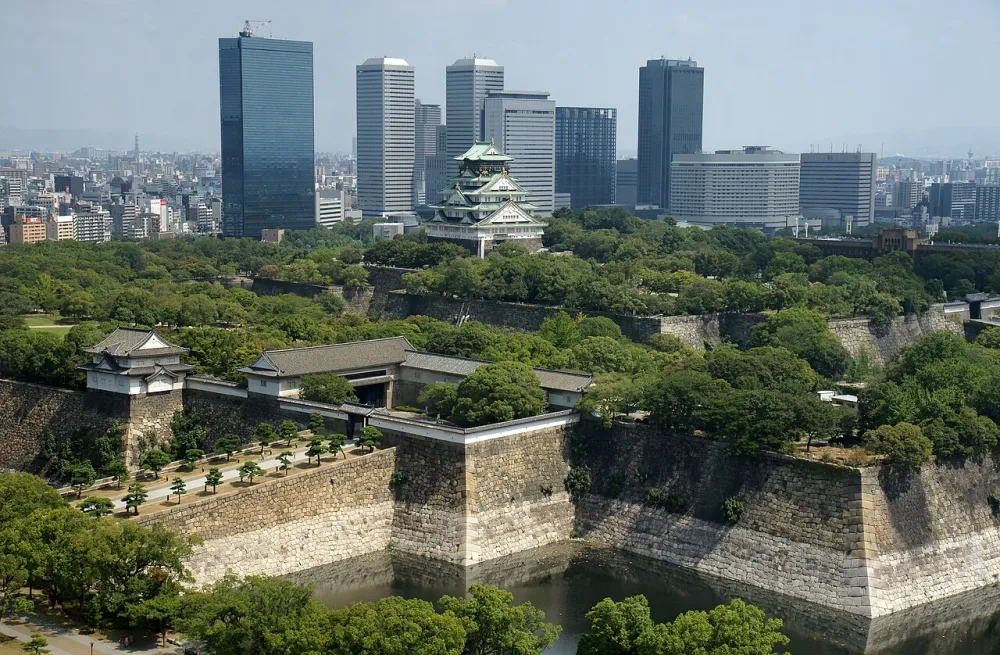
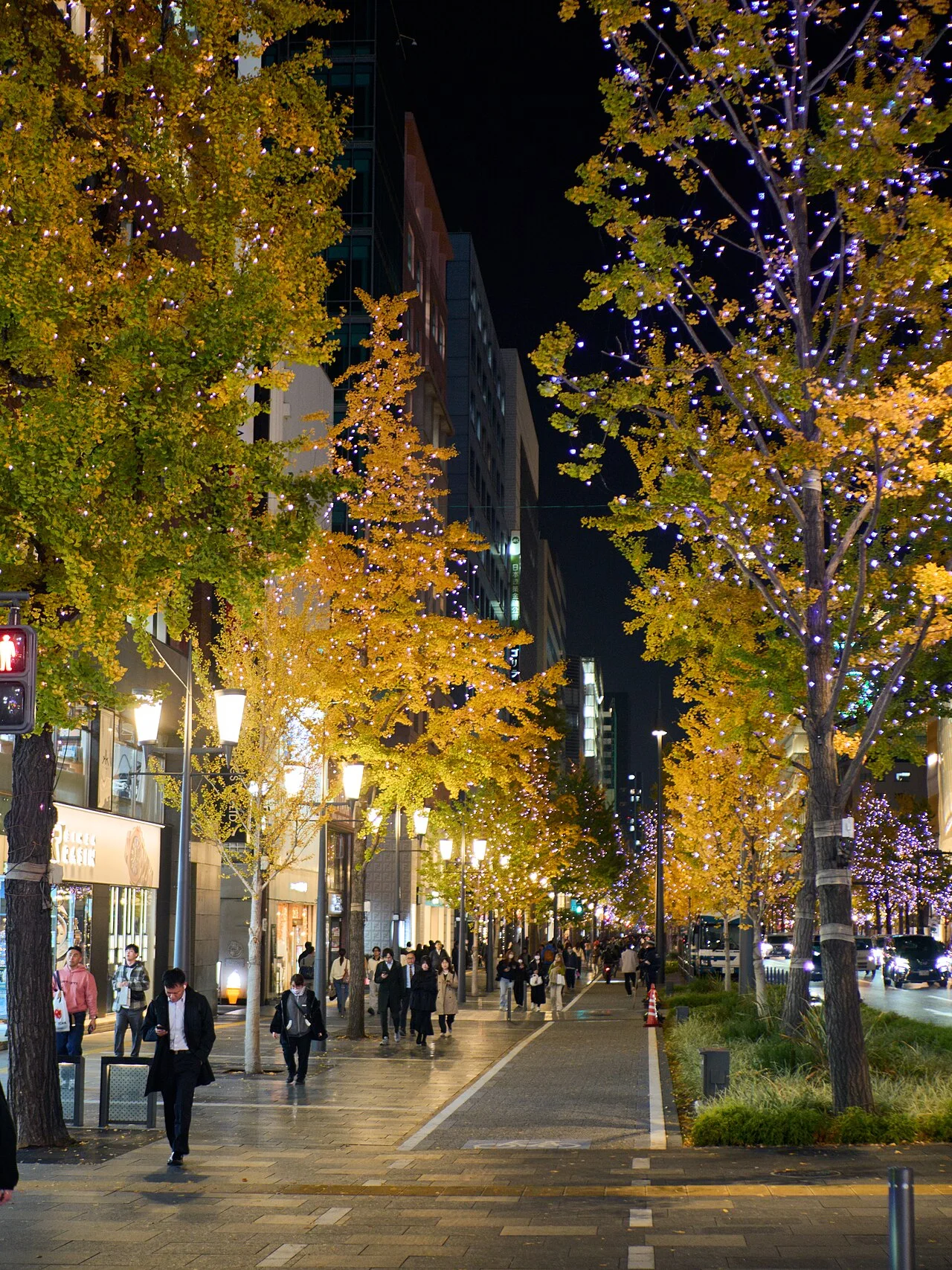
Plan your autumn visit to Osaka Castle Park, from maples in Momijidani to ginkgo trees along the East Outer Moat. Choose the right station entrance based on foliage reports and check admission, hours, and illumination details for the main keep and Nishinomaru Garden.
- Region & Focus
- Osaka
- Reading Scope
- 19 min read · 10 chapters · 6 Q&As
- Official Verification
- 27 official sources checkedUpdated November 22, 2026
- Key Topics
- SeasonsItinerariesRail travel
Chapter Route Map (tap any stop)
- Timing the Maples in Momijidani vs. the East Moat Ginkgos
- Walking the East Moat Ginkgos to Momijidani
- Making the Most of the ¥300 Nishinomaru Garden Ticket
- Combining Osaka Castle Keep with the Toyotomi Stone Wall Museum
- Seeing Tamon and Sengan Turrets in Late November 2026
- Planning a Half-Day Route and Monday/Tuesday Closures
- Rainy-Day Backup on the Tanimachi Side
- Stroller and Wheelchair Routes: Picking Elevator Exits First
- Daytime Sightseeing and Evening Illuminations: Timing Two Tickets
- Choosing Between Umeda, Namba, and Temmabashi for Your Stay
- Quick Q&A
Japanese maples in Osaka Castle Park typically peak in mid- to late November, while the ginkgo trees turn slightly later. To walk under rows of golden ginkgo canopies, start from JR Osakajokoen Station along the East Outer Moat. For maple leaves, head from Morinomiya toward Momijidani (Maple Valley). If you want wide views of the castle keep and stone walls across the inner moat, walk through Otemon Gate from Tanimachi 4-chome Station and pay ¥300 to enter Nishinomaru Garden. All three entrances still require a walk to reach the keep, so picking the gate closest to your priority leaves far more time for viewing and photos than looping the whole park.
Timing the Maples in Momijidani vs. the East Moat Ginkgos
Osaka Castle's autumn festival foliage map lists peak viewing for Japanese maples from mid- to late November, highlighting Momijidani and the area around Hoshoan teahouse inside Nishinomaru Garden. Ginkgo trees typically peak from late November to early December, with full rows concentrated along the outer perimeter paths. If you want to see both in one day, late November offers the most overlap. For mid-November visits, prioritize Momijidani first and treat the eastern ginkgos as an extra walk. If you arrive in early December, enter from the east side first to see how much gold remains on the branches.
Early visitors can still catch autumn color. The park lists cherry tree autumn foliage from late October to mid-November, tracking color changes on the cherry trees in Nishinomaru Garden, along the East Outer Moat, and on the south side of the castle. Their canopies often mix burnt orange with brown, showing more layered detail up close. For red leaves closer to the main keep, follow the path from Tamatsukuri-guchi toward the Honmaru and look for the wax trees (haze) marked on the park map. Their sap can irritate skin on contact, so remind children to look without touching.
When checking the park's live foliage reports, jump straight to the row for your target area. Reports mark leaves as "irozukihajime" (starting to turn), "migoro" (peak viewing), and "rakuyo" (falling leaves). If the outer ginkgo row is at peak while Momijidani is still turning, starting along the East Outer Moat guarantees a full stretch of color. Relying on the "zen'en" (whole park) summary row blends different tree species together and makes it easy to mistime your target. The day after heavy winds, yellow leaves often carpet the paths, while travelers hoping for full canopies should check the park's latest photos for sections where branches remain covered.
Check the wind as you reach the moats. When the water is calm, step to the side of the bridges and leave room in the lower frame to catch clear reflections. If ripples break the surface, shift your focus to the stone walls and foliage and move out of the main pedestrian flow in the middle of the bridge. Arriving early in the morning lets you walk the scenic paths while it is easy to pause, saving the keep—where lines build up—for pre-booked tickets or a quieter window. Deciding which kind of shot you want matters more than chasing a single peak hour from online guides.
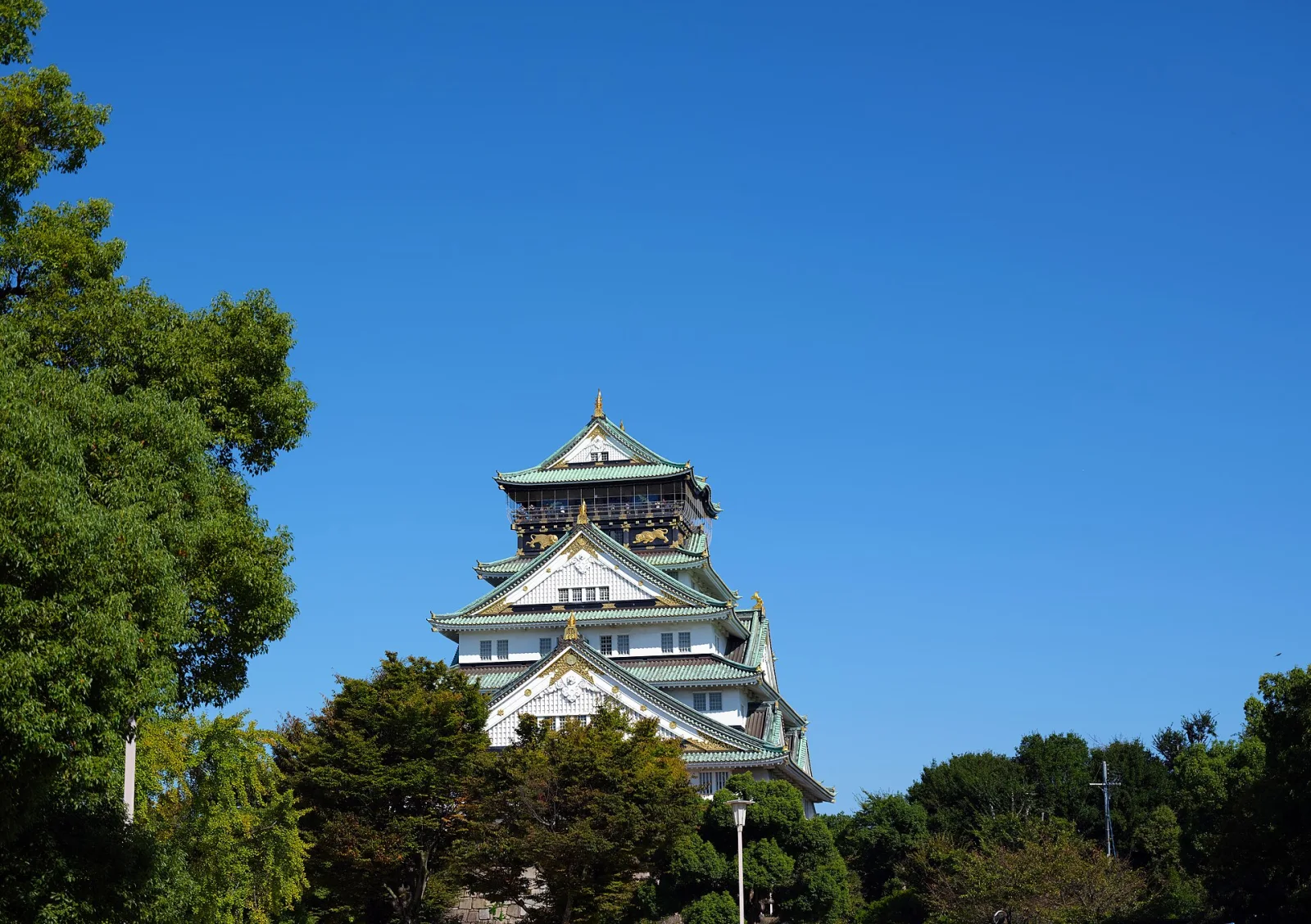
Plan your autumn visit to Osaka Castle Park, from maples in Momijidani to ginkgo trees along the East Outer Moat. Choose the right station entrance based on foliage reports and check admission, hours, and illumination details for the main keep and Nishinomaru Garden.
Walking the East Moat Ginkgos to Momijidani
From Umeda, board the JR Osaka Loop Line at JR Osaka Station on the platform toward Temma and Kyobashi, and get off at Osakajokoen Station. The exit leads past JO-TERRACE OSAKA, which works well as a meeting point or snack stop before heading south along the East Outer Moat. Stay on the outer-moat side if you want to walk the entire ginkgo avenue—the tree-lined path continues south past Aoyamon Gate.
Heading toward Osaka-jo Hall brings you near Aoyamon Gate. Frame your shots of the castle, moat, and trees from the outer path before choosing your next turn: cross Aoyamon Gate toward the Plum Grove and Gokurakubashi Bridge if you plan to revisit the keep, or stay on the outer loop and continue south to the Morinomiya Fountain Plaza. Skipping the inner loop saves extra detours and leaves you right next to Morinomiya Station when it is time for lunch. You can also walk the eastern outer path first and cut back toward the Honmaru afterward to see the inner moat and keep from near the Plum Grove.
Toward the southern end of the East Outer Moat, look toward Shimin no Mori (Citizens' Forest) for dawn redwoods. Their feathery needles turn a coppery bronze that contrasts clearly with bright yellow ginkgos. The park's walking map groups this stretch with Shimin no Mori, letting you view both the dawn redwoods and the moat from the same path. Families walking at a slower pace can have kids look for fan-shaped ginkgo leaves and dawn redwood cones, keeping this waterside stretch engaging in late afternoon even after many ginkgos have shed.
Entering from Morinomiya flips the route. The Osaka Metro Chuo and Nagahori Tsurumi-ryokuchi lines meet here; follow station signs for Exit 3-A or 3-B to reach the park near the Fountain Plaza. If Momijidani is your main target, head inside toward Tamatsukuri-guchi and follow the autumn map signs for Momijidani. Doing this section first takes advantage of stronger afternoon light instead of backtracking from Nishinomaru Garden or the keep at the end of the day. Families with young children can use the Fountain Plaza before the uphill stretch for restrooms and a break, keeping an easy exit back to Morinomiya when daylight fades.
Momijidani's foliage sits close to the sloped path, making it ideal for examining leaf shapes and canopies shifting from green to red. At Tamatsukuri-guchi, follow the path toward Sakuramon Gate if you just want to pair maple leaves with views of the keep. To add more ginkgo scenery, turn back toward the East Outer Moat and leave via JR Osakajokoen Station. When foliage is your sole focus, you can spot the keep from open clearings along the way. Because daylight fades early in autumn, saving enough light for the walk back to the station beats circling half the park for one backlit shot.
At JR Osakajokoen Station, Platform 1 serves trains to Kyobashi and Osaka, while Platform 2 serves Tsuruhashi and Tennoji. You can start and end at different stations—Morinomiya also connects to the JR Osaka Loop Line. According to the park map, the walk to the keep takes about 18 minutes from Tanimachi 4-chome, Morinomiya, or JR Osakajokoen stations. That baseline assumes a steady pace, so add an extra 30 minutes to a half-day plan if you are stopping along the ginkgo avenue, pushing a stroller, or taking the slopes slowly.
Making the Most of the ¥300 Nishinomaru Garden Ticket
For wide panoramic views of the keep, take Exit 1-B from Osaka Metro Tanimachi 4-chome Station toward Otemon Gate, then follow signs to Nishinomaru Garden inside. Take a moment to inspect the massive walls and outer moat around Otemon Gate first. Once inside the gate, a squared enclosure of inner gates and stone walls immediately blocks any straight-line approach to the castle. Because the entrances to the keep and the garden lie in different directions, buy your garden ticket first before heading to the keep if you want to secure afternoon light on the lawn.
Nishinomaru's broad lawn gives you room to step back for a full view. Looking across the inner moat, layered stone walls fill the foreground while the keep's white upper stories rise behind them. To include autumn foliage in your shot, walk along the paths until tree canopies or branches frame the tower. Even if only the maples in Momijidani remain bright red, Nishinomaru still serves as a prime viewpoint—take a wide horizontal photo capturing the lawn, stone walls, and keep together before heading to Momijidani for close-up leaves.
Daytime general admission is ¥300 for adults, following the rate adjustment effective April 1, 2026. Junior high school students and younger enter free, as do Osaka City residents aged 65 and older with valid ID and eligible disability certificate holders. Visitors aged 65 and older who do not reside in Osaka City pay the regular adult fare. From November through February, the garden opens from 9:00 AM to 4:30 PM with last entry at 4:00 PM; from March through October, it stays open until 5:00 PM with last entry at 4:30 PM. It closes on Mondays (or the following day when Monday is a Japanese national holiday) and for the year-end break from December 28 to January 4.
Hoshoan is the teahouse inside the garden, surrounded by maples highlighted on the autumn foliage map. Regular admission covers walking the garden grounds, while teahouse activities should be planned separately. If your primary goal is maple foliage and the garden happens to be closed, redirect your time to Momijidani. With only 30 minutes left after passing Otemon Gate, pick either Nishinomaru or Sakuramon Gate rather than rushing both. If someone in your group walks slower, set a meeting spot outside the garden ticket booth or Otemon Gate instead of the crowded Sakuramon entrance.
You can divide your visit around different angles of the keep. Nishinomaru's lawn shows how the castle sits in relation to its moat, while entering through Sakuramon Gate brings you much closer to admire the roof details. Passing Sakuramon Gate into the Honmaru takes you right past Takoishi (the Octopus Stone), marked near the gate's masugata courtyard on the official map. On the southwest side of the Honmaru before the keep, you will also find the park's Japanese Garden, offering free public views of the water and tower. Paying for Nishinomaru buys you across-the-moat panoramas and open lawn paths, while the Honmaru covers close-up architecture for free.
Combining Osaka Castle Keep with the Toyotomi Stone Wall Museum
Admission to Osaka Castle Keep and the Toyotomi Stone Wall Museum is sold as a single combined ticket. General admission is ¥1,200 for adults and ¥600 for high school and university students—international students must present a valid ISIC card. Junior high school students and younger enter free, and international visitors aged 15 and under can show a passport or similar ID to verify age. Have student IDs ready if eligible; companions who only want to explore the park grounds can wait in the Honmaru Plaza and meet up afterward. Adding a same-day daytime visit to Nishinomaru Garden brings the combined adult ticket cost to ¥1,500, plus extra walking time between venues.
Both facilities open from 9:00 AM to 6:00 PM, with last entry at 5:30 PM. On busy days, ticket queues may close early. Advance tickets are sold through the keep's official website, which helps you bypass the ticket line on holidays and follow on-site entry signs directly. If you plan to visit both in the afternoon, aim to reach the Honmaru before 4:00 PM. With just over an hour left, taking your time through the keep's exhibits often leaves only a hurried walk through the stone wall museum. History fans focused on Sengoku-era fortifications can tour the Toyotomi museum first while others head straight up to the keep's observation deck.
Reconstructed in 1931 through citizen donations, today's keep functions as a history museum. Its 8th-floor observation deck looks out over the moats encircling the grounds and shows where autumn trees cluster across the city skyline. The moats and stone walls visible at ground level largely date back to the Tokugawa shogunate's rebuilding of the castle. Descending underground inside the Toyotomi Stone Wall Museum reveals original Toyotomi-era stonework uncovered during 1984 excavations. Seeing Otemon Gate at ground level before going underground makes the contrast between the two historical eras much clearer than reading dates on plaques alone.
Elevator access inside the keep shapes how long you spend inside. General visitors take an elevator straight to the 5th floor, walk the stairs up to the 8th-floor deck, and take the stairs back down. The 6th floor has no exhibits and is closed to the public. Wheelchair users and visitors with mobility needs can request staff assistance to use the exterior elevator and interior lifts between floors. Strollers must generally be left at the entrance, where staff store them free of charge. If a child falls asleep in a stroller, part of the group can tour the keep while another adult waits in the plaza or rests at MIRAIZA Osaka-jo.
Keep food packed away inside your bag when entering with a camera or umbrella, as eating and drinking are prohibited inside the keep and no-photography floors are clearly posted. If you plan to stay for evening illuminations or exit from the opposite side of the park, leave large luggage at your hotel or origin station rather than hiking back uphill at night to retrieve it. For floor-by-floor exhibit details, photo rules, and lockers, check the Osaka Castle Keep and Museum Guide.
Seeing Tamon and Sengan Turrets in Late November 2026
In autumn 2026, the interiors of Tamon Turret and Sengan Turret hold special openings through November 29 on Saturdays, Sundays, and Japanese national holidays. Both turrets and the massive stonework near Otemon Gate can be viewed from the outside for free, while interior tickets are sold at the Nishinomaru Garden reception counter. Turret hours run from 10:00 AM to 4:30 PM, with last entry at 4:00 PM and ticket sales closing early at 3:30 PM. Because regular Nishinomaru Garden entry closes at 4:00 PM—half an hour after turret ticket sales stop—check your timing before buying tickets on an afternoon arrival.
The joint turret ticket includes daytime admission to Nishinomaru Garden at ¥900 for high school students and older, ¥300 for junior high school students and younger, and free for preschoolers. A broader bundle adding Osaka Castle Keep and the Toyotomi Stone Wall Museum costs ¥2,000 for adults and ¥1,400 for high school and university students. Junior high school students and younger only need the ¥300 joint turret ticket and can show proof of age at the keep. The bundle is also sold at the keep's ticket gate until 2:30 PM. Adults focused mainly on foliage who skip the turrets pay ¥1,500 total for standard garden and keep tickets, so decide on the turrets before purchasing.
If the wind picks up after you enter the gate, tour the indoor turrets first. Looking back toward Otemon Gate from Tamon Turret shows clearly how the angled gateway hides the approach path. Step out onto the lawn afterward to open up the wide view of the keep and inner moat. On an autumn weekend combining Nishinomaru, the keep, and the eastern ginkgos, visit Tamon and Sengan turrets in the morning so you are not rushing back from the east side before ticket windows close.
Planning a Half-Day Route and Monday/Tuesday Closures
With only two or three hours focused on autumn leaves, start at JR Osakajokoen Station, walk south along the East Outer Moat, and continue through Morinomiya to Momijidani. Finish around midday and take the Nagahori Tsurumi-ryokuchi Line from Morinomiya to Shinsaibashi for lunch, with an easy walk down to Namba afterward. If you also want to visit the keep, head straight to the Honmaru from either entrance and skip part of the outer loop—you will see fewer roadside trees, but gain an hour for the observation deck and exhibits. Even if foliage reports say the maples have dropped, strolling from Osakajokoen Station through Aoyamon Gate into the inner park still delivers both autumn trees and castle scenery in half a day.
For a west-to-east route spanning four hours or more, exit Tanimachi 4-chome Station in the morning, explore Nishinomaru Garden via Otemon Gate, and reach the Honmaru around midday. Plan lunch near Tanimachi before entering or after leaving the park. For a sit-down break between sightseeing and foliage walks, walk over to MIRAIZA beside the Honmaru or head to JO-TERRACE near JR Osakajokoen Station. If your plan ends near the garden, return through Otemon Gate to the station rather than crossing the entire park just for a restaurant.
When Nishinomaru Garden is closed on Mondays, the park's public paths remain open and the keep operates as usual, so swap the garden for Sakuramon Gate and the free Japanese Garden. In 2026, November 23 is a Japanese national holiday, shifting the garden's weekly closure to Tuesday, November 24. If you are in Osaka across both days, visit Nishinomaru on the 23rd and save the outer ginkgos or the keep's interior for the 24th. Because the Osaka Museum of History is normally closed on Tuesdays, heading to the keep and the Toyotomi Stone Wall Museum on a rainy November 24 avoids a wasted trip west. Note that the keep's autumn special exhibition ends November 23; the 3rd-floor gallery closes on November 24 for de-installation, and the 4th-floor gallery closes on November 25, though open floors and the underground stone wall remain accessible both days.
With a full day available, walk a continuous west-to-east daytime loop through the Honmaru. Spend the morning around Otemon Gate and Nishinomaru Garden, visit the stone wall museum and keep before or around noon, and exit through Aoyamon Gate in the afternoon while daylight still illuminates the East Outer Moat. If you plan to visit Shinsaibashi or Tennoji the same day, wrap up Osaka Castle around noon and choose just one afternoon district. Travelers catching a Shinkansen from Shin-Osaka should store luggage and plan transfers near their hotel station rather than saving the climb up to the keep for right before departure.
Split priorities easily if your group has different interests. Photo enthusiasts can spend 30 minutes or more in Nishinomaru Garden while history buffs enter the Honmaru and the underground stone wall museum, then meet up before heading east. Choose clear landmarks like the MIRAIZA Honmaru entrance or Morinomiya Fountain Plaza rather than a vague "in front of the keep." With older travelers, exit from the same side together for meals, leaving energetic walkers free to add an extra stretch afterward without keeping anyone waiting along a windy moat.
Rainy-Day Backup on the Tanimachi Side
On a rainy morning, ride the Osaka Metro to Tanimachi 4-chome Station and use Tanimachi Line Exit 2 or Chuo Line Exit 9 for direct access to the Osaka Museum of History, or take an Osaka City Bus to Babacho right near the entrance. The permanent exhibition opens 9:30 AM–5:00 PM with last entry at 4:30 PM; admission is ¥600 for adults, ¥400 for high school and university students with ID, and free for junior high school students and younger. Displays start on the 10th floor with ancient Osaka and descend floor by floor into the modern era, offering a strong indoor substitute if weather rules out walking the whole park. Note that the old combined ticket with Osaka Castle Keep is discontinued, so buy separate tickets if visiting both.
The museum closes on Tuesdays (or the following day when Tuesday is a national holiday) and begins its year-end closure on December 28. For the 2026–2027 special exhibition on Sennichimae showman Benjiro Okuda, the museum lists its year-end closure extending through Tuesday, January 5. If you visit on January 5, check Nishinomaru Garden's regular daytime schedule for an outdoor walk and save the museum for the next day. During peak maple season, tour outdoor trees in the morning and move indoors if rain picks up—the museum sits right on the park's southwest corner across the street from Otemon Gate, saving you a wet trek across to the east side.
Light drizzle still works well for a short moat walk, as wet maple leaves take on deeper, richer colors. Narrow stone steps and leaf-covered patches get slick, so stick to wide paved paths and pull aside where others can pass before stopping for photos. If puddles form, return from the Honmaru via Sakuramon and Otemon gates to Tanimachi 4-chome rather than looping into Momijidani. Although the keep itself is indoors, the walk from the station to the ticket booth is exposed and waiting in line with an umbrella takes longer than ducking into the museum. With a stroller, a brief loop past the moat outside Otemon Gate during a break in the rain makes an easy compromise.
Both Osaka Castle Keep and the Toyotomi Stone Wall Museum close for the year-end break from December 28 through January 1. Nishinomaru Garden remains closed through January 4, so travelers arriving on January 2 who want castle history can tour the keep and stone wall museum before walking the outer park paths in the afternoon. In late December, you can still view the exterior from outside Otemon Gate, the public park paths, and the Honmaru. Even after ginkgo leaves fall, bare branches open up long sightlines to the stone walls, moats, and dusk illuminations.
Stroller and Wheelchair Routes: Picking Elevator Exits First
At Tanimachi 4-chome Station on the Tanimachi Line, Exits 1-A and 8 have elevators to street level; use Exit 1-A on the north side for Otemon Gate, then cross at street level into the park. On the Chuo Line, Exit 11 offers direct elevator access to the surface. At Morinomiya Station, elevator routing depends on your arrival platform: Chuo Line Platforms 1 and 2 connect via the East Ticket Gate to the Exit 3-C elevator, while Chuo Line Platform 3 and the Nagahori Tsurumi-ryokuchi Line connect via the East Ticket Gate to the Exit 7-A elevator. Exit 7-A opens on the south side of the station, requiring a crosswalk across to the park. Checking station elevator maps beforehand saves backtracking from Exit 3-A.
To spare older travelers steep climbs, check the park's barrier-free map for triangle markers indicating slopes and stairs. The accessible path near the keep's exterior elevator still includes a short, roughly 7-degree ramp between the elevator and the building entrance—ask staff at the exterior elevator whenever assistance is needed. Loaner wheelchairs are available inside the keep on a first-come, first-served basis, though indoor assistance does not cover transit across the wider park. If your goal is simply strolling under autumn trees, start at Morinomiya Fountain Plaza, walk a flat stretch along the outer loop, and return from the same station, saving the Honmaru climb and garden paths for a higher-energy day.
From the east side toward the Honmaru, the park's barrier-free map recommends taking Gangizaka Slope from Aoyamon Gate toward Sakuramon Gate, as the northern route from Gokurakubashi Bridge to the keep is steep and lacks handrails in sections. Approaching from Morinomiya, follow Chuo-odori past the front of Peace Osaka and enter via the posted accessible route to bypass stairs on the southeastern park paths. From Tanimachi 4-chome, entering through Otemon and Sakuramon gates provides another step-free route to the Honmaru. Since these entrances sit on opposite sides of the castle, exit directly from the train line you arrived on rather than detouring across the park for the road train.
The park's road train helps cut down on walking distances. When boarding near JO-TERRACE, check the posted timetable and destination stop for the day. Standard one-way fares are ¥400 for adults (junior high school through age 64) and ¥200 for children aged 4 through elementary school as well as seniors 65 and older. The park also runs electric shuttle carts on separate routes and stops; when alternative transport operates around Gokurakubashi Bridge, it is designated for visitors with mobility needs. Services may pause during major events or heavy crowds, so keep your route on the flatter eastern paths if you need an easy out-and-back walk.
When visiting with multiple families, pick an easy plaza meeting point before splitting off toward nearby trees if anyone needs a restroom or nursing room. Because the park is vast, spots that appear directly across the inner or outer moat often require a long walk back to a gate or bridge to reach. Keep kids engaged on a short walk by hunting for fan-shaped ginkgo leaves along the east moat or spotting the massive Takoishi boulder at Sakuramon Gate. Pause along the wide main avenues rather than narrow paths, where runners and strollers share space.
Daytime Sightseeing and Evening Illuminations: Timing Two Tickets
From November 20, 2026, to February 14, 2027, Osaka Castle Illuminage takes place inside Nishinomaru Garden as a separate ticketed event. Light displays depict themes from Osaka's castle history with the illuminated keep rising in the background. Gates open at 5:00 PM, lights run until 9:30 PM, and the venue closes at 10:00 PM; the Chuo Ward event page lists 9:00 PM as the cutoff for ticket sales and entry, so plan to arrive before then. Entry is beside Otemon Gate, roughly a 10-minute walk from Tanimachi 4-chome Station Exit 1-B. If eating dinner nearby beforehand, factor that extra dark walk back into your schedule.
Regular evening admission is ¥2,000 for junior high school students and older, ¥1,000 for children aged 1 through elementary school, and free for infants under 1. Priority tickets cost an extra ¥500 and are listed for advance online purchase through tourism channels, while standard tickets can be bought in cash at the gate. Daytime garden admission and evening illumination tickets are completely separate. Daytime hours end at 4:30 PM, giving all-day visitors time to stroll outside Otemon Gate or grab a bite before re-entering for the night show. Illuminations run nightly throughout the season, including Monday evenings even when the garden is closed during the day.
Anyone satisfied with viewing the lit-up castle from a bridge or the outer grounds can find open viewpoints along the free public paths, leaving the paid exhibition to companions who want to walk through the light installations. On windy evenings, skip waiting outside and head back to the station after taking in the keep from afar. Organizers state the event runs in light rain, with weather-related changes posted during severe storms. Stay warm indoors or near station shops before walking over, and keep your evening loop short if returning early with kids.
If a weekend concert is scheduled at Osaka-jo Hall, expect heavy crowds around JO-TERRACE, station exits, and eastern dining spots. Visitors heading to Otemon Gate in the evening can avoid that crush completely by arriving through Tanimachi 4-chome Station on the opposite side. Guests staying near Temmabashi or traveling to and from Kyoto on the Keihan Line can also walk in from the northwest: tourism guides list about 15 minutes from Keihan Temmabashi Station or 11 minutes from Subway Temmabashi Station Exit 3, saving a long walk back to the east side afterward.
Choosing Between Umeda, Namba, and Temmabashi for Your Stay
If you are spending several autumn nights in Osaka, match your hotel area to your arrival and departure transfers. Staying near Umeda and JR Osaka Station simplifies day trips to Kyoto, Kobe, or catching the Shinkansen at Shin-Osaka. In the morning, ride the JR loop toward Kyobashi to reach Osakajokoen Station and make the eastern ginkgo avenue your first stop. In the evening, hop on the Tanimachi Line from Tanimachi 4-chome back to Higashi-Umeda, letting you cross the park from east to west and return quickly. With luggage in tow, check whether your hotel sits closer to a specific JR Osaka exit or Higashi-Umeda Subway Station, as underground passages make a noticeable difference on rainy days.
Staying in Namba or Shinsaibashi pairs daytime park visits cleanly with dinner along Dotonbori. Ride the Nagahori Tsurumi-ryokuchi Line directly from Shinsaibashi to Morinomiya to start at the Fountain Plaza and Momijidani. If you prefer entering Nishinomaru Garden first from Namba, take the Midosuji Line to Hommachi and transfer to the Chuo Line to Tanimachi 4-chome for Otemon Gate. Walk out via Morinomiya in the afternoon to return straight to Shinsaibashi, connecting both ends of the park to your downtown plans. Using Nankai Electric Railway to and from Kansai International Airport also makes Namba convenient with luggage, leaving only a simple subway ride for your castle day.
Staying near Temmabashi or Tanimachi 4-chome cuts out a transit leg if you plan to visit Nishinomaru Garden in the morning and return for evening illuminations. Temmabashi links both the Keihan Line and the Tanimachi Line, letting you carry luggage straight to the station if heading to Kyoto the next day. For travelers spending multiple evenings dining and shopping downtown, Umeda or Namba remains easier overall; Temmabashi shines mostly for one-night stays leading into a northeast Keihan trip to Kyoto. Staying right by the garden entrance also lets you drop camera gear or grab an extra layer during the gap between daytime closing and evening entry.
Your hotel choice doesn't need to dictate every detail of your castle visit. Staying near Osakajokoen Station suits travelers who want early-morning ginkgo light along the East Outer Moat, while an afternoon walk ending at Otemon Gate and Tanimachi 4-chome sets up an easy return before dinner. If your room is already booked, adjusting which station you enter and exit handles most of the logistics without switching hotels. When Osaka Castle Park anchors a half-day plan, pair the other half with Nakanoshima or Tennoji by comparing transfer options in our 3-Day Osaka Itinerary and Where to Stay in Osaka guides.
A few useful answers
When is the best time to see autumn foliage at Osaka Castle Park?
The park's official foliage map lists Japanese maples as peaking from mid- to late November and ginkgo trees from late November to early December. Plan for late November if you want to see both red and gold foliage at the same time.
Which station should I use for ginkgo and maple trees?
For ginkgo trees along the East Outer Moat, get off at JR Osakajokoen Station. For maple leaves, take the Osaka Metro to Morinomiya Station and walk toward Tamatsukuri-guchi and Momijidani. To enter Nishinomaru Garden via Otemon Gate, use Exit 1-B at Tanimachi 4-chome Station.
Do I need a ticket to enter Osaka Castle Park?
The park's public grounds are free and open 24 hours a day. Daytime admission to Nishinomaru Garden is ¥300 for adults, and the combined ticket for Osaka Castle Keep and the Toyotomi Stone Wall Museum is ¥1,200 for adults. Evening illuminations require a separate ticket.
What are the winter closing hours for Nishinomaru Garden?
From November through February, daytime hours are 9:00 AM–4:30 PM, with last entry at 4:00 PM. It is closed on Mondays (or the following Tuesday if Monday is a Japanese national holiday) and during the year-end holiday closure from December 28 to January 4.
Do children need tickets for Osaka Castle Keep?
Junior high school students and younger enter free with proof of age—international visitors aged 15 and under can show a passport. Strollers can be stored free of charge at the keep's entrance.
How long does the autumn night illumination run?
Osaka Castle Illuminage runs in Nishinomaru Garden from November 20, 2026, through February 14, 2027. Gates open at 5:00 PM and lights stay on until 9:30 PM, with last ticket sales and entry listed at 9:00 PM on the Chuo Ward event page.
Official information and references
Sources used in this guide.
- Osaka Castle Park 2026 Autumn Foliage Map & Peak Viewing Periods
- Osaka Castle Park Official Japanese Notice (Nishinomaru Garden 2026 Daytime Fees, Hours & Closures)
- Osaka Castle Park Official Map (October 2026 Edition)
- Osaka Castle Park FAQ (Public Grounds, Dining & Ticket Prices)
- Osaka Castle Park Internal Transport & Road Train Fares
- Osaka Castle Keep Visitor & Ticket Information
- Osaka Castle Keep & Toyotomi Stone Wall Museum History and Hours
- Osaka Castle Keep Barrier-Free Access Map
- Osaka Metro Morinomiya Station Exits Map
- Osaka Metro Morinomiya Station Interior Elevator Map
- Osaka Metro Tanimachi 4-chome Station Exits Map
- Osaka Metro Tanimachi 4-chome Station Interior Elevator Map
- JR West Osakajokoen Station Premises Map & Platforms
- Osaka Museum of History Hours & Admission Fees
- Osaka Museum of History Access, Exits & Floor FAQ
- Osaka Museum of History 2026–2027 Year-End Special Exhibition Schedule
- Osaka Chuo Ward 2026–2027 Nishinomaru Illumination Notice
- Osaka Convention & Tourism Bureau Nishinomaru Illumination Tickets & Access
- Osaka Castle Illuminage Official Organizer Page
- Osaka Castle Autumn Festival 2026 Tamon & Sengan Turrets Special Opening
- Osaka Castle Park 2026 Joint Turret Ticket & Keep Bundle Details
- Cabinet Office of Japan 2026 & 2027 National Holidays
- Osaka Museum of History Permanent Exhibition Floors & Galleries
- Osaka Castle Park Barrier-Free Routes & Slope Map
- Osaka Castle Park 2026 Guidebook (Internal Transport)
- Osaka Castle Park Walking Map (East Outer Moat & Shimin no Mori Dawn Redwoods)
- Osaka Castle Keep 2026 Autumn Exhibition & Gallery Closure Notice