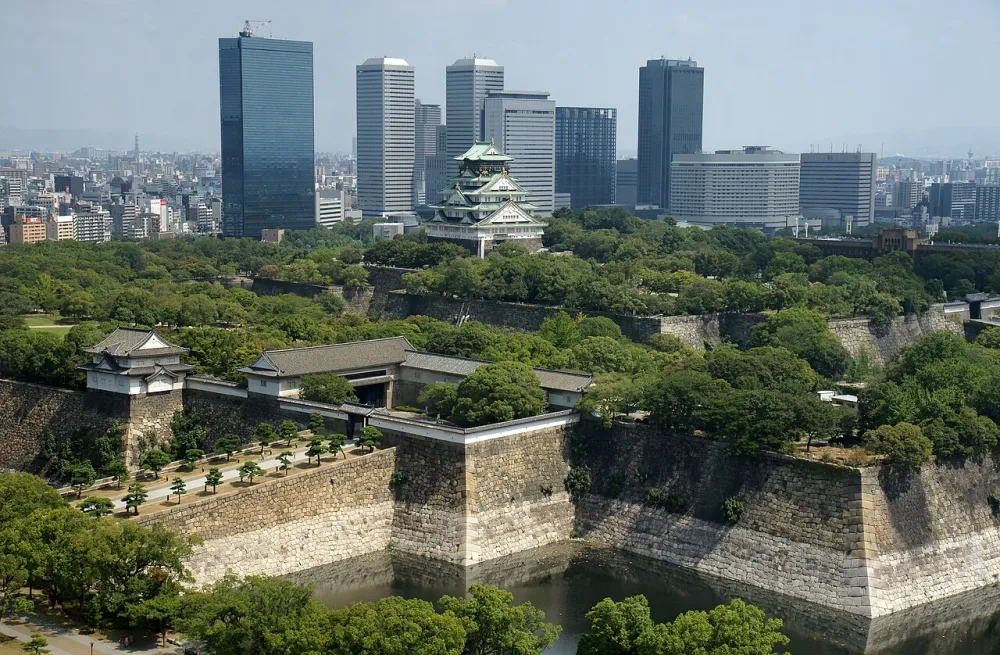
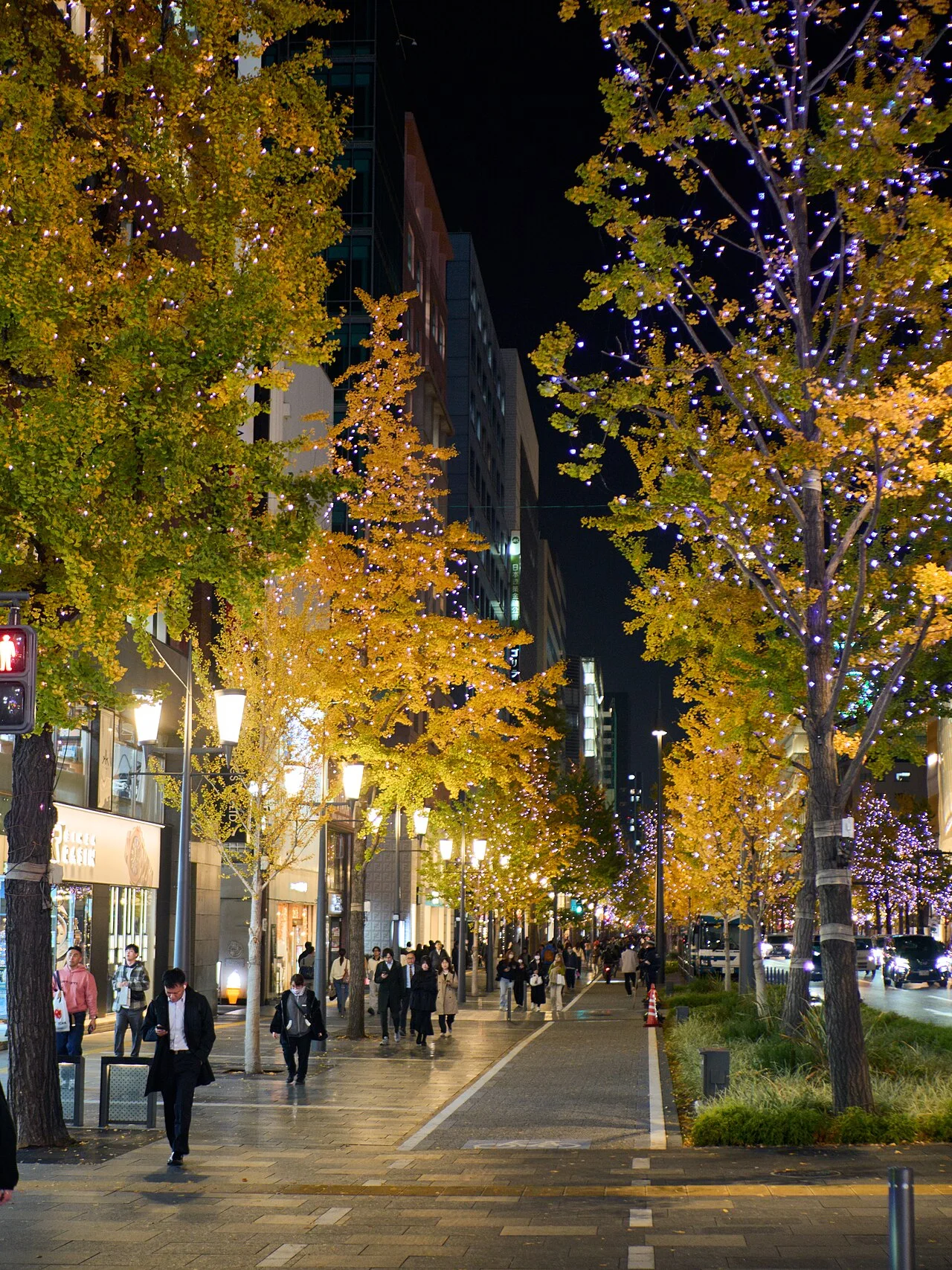
Plan an autumn foliage walk in Osaka Castle Park, from the maples of Momijidani to the ginkgo trees along the East Outer Moat. Pick Morinomiya or Tanimachi 4-chome for your entry, and check fares and hours for the Main Keep, Nishinomaru Garden, and evening illuminations.
- Region & Focus
- Osaka
- Reading Scope
- 19 min read · 10 chapters · 6 Q&As
- Official Verification
- 27 official sources checkedUpdated 22 November 2026
- Key Topics
- SeasonsItinerariesRail travel
Chapter Route Map (tap any stop)
- Timing the Maples in Momijidani and Ginkgo Along the East Outer Moat
- Following the Ginkgo Trees from the East Side to Momijidani
- Where to Spend the ¥300 Entry for Nishinomaru Garden
- Visiting the Main Keep and the Toyotomi Stone Wall Museum
- Late November 2026 Bonus: Tamon-yagura and Sengan-yagura Turrets
- Structuring a Half-Day Route and Working Around Monday and Tuesday Closures
- Rainy-Day Plan: Start on the Tanimachi Side and Wait Out Showers Indoors
- Buggies and Wheelchairs: Choosing Lift Exits and Step-Free Paths
- Splitting Your Tickets for Afternoon Sightseeing and Evening Illuminations
- Staying in Umeda, Namba, or Temmabashi: Matching Your Base to Next-Day Plans
- Quick Q&A
Japanese maples in Osaka Castle Park are usually at their best from mid- to late November, while the ginkgo trees tend to peak slightly later. For long rows of golden foliage, arrive at JR Osakajokoen Station and follow the East Outer Moat. For maples, enter via Morinomiya Station for a shorter walk to Momijidani. If you are after sweeping views of the Main Keep and stone walls across the inner moat, take Tanimachi 4-chome Station through Otemon Gate and pay ¥300 to enter Nishinomaru Garden. All three approaches still leave a fair walk to the keep itself, so picking the gate closest to your target saves far more time for viewing and photography than circling the entire grounds.
Timing the Maples in Momijidani and Ginkgo Along the East Outer Moat
The Osaka Castle Autumn Festival foliage map places peak viewing for Japanese maples from mid- to late November, highlighting Momijidani (Maple Valley) and the area around Hoshoan tea house inside Nishinomaru Garden. Ginkgo trees typically peak from late November to early December, with full avenues easiest to find along the outer perimeter paths. If you want to see both in a single day, late November offers the greatest overlap. Travellers arriving in mid-November should put Momijidani first and treat the eastern ginkgo avenue as a leisurely add-on. Those reaching Osaka in early December should reverse the order, entering from the east to see how much gold remains on the branches.
Autumn colour starts even earlier if you arrive ahead of peak maple season. The park lists cherry-tree autumn foliage from late October to mid-November, tracking trees in Nishinomaru Garden, along the East Outer Moat, and across the southern grounds. These canopies tend towards burnt orange mixed with russet brown, so the layering shows best up close. If you want vibrant reds closer to the Main Keep, walk from Tamatsukuri Gate towards the Honmaru and look for the wax trees (haze) marked on the park map. Their sap can irritate the skin, so children should admire them from a distance rather than touching the leaves.
When checking the park's live foliage updates, go straight to the row for your exact destination. 'Irozukihajime' means just starting to turn, 'migoro' indicates peak viewing, and 'rakuyo' means leaves are already falling. If the outer ginkgo trees show peak viewing while Momijidani is still turning, start along the East Outer Moat for a reliable stretch of colour. The 'Whole Park' (zen'en) summary mixes different species together and can easily mislead you on timing. The day after high winds, paths may still be carpeted in yellow leaves, though photographers wanting full overhead canopies should check the park's latest photos for sections where the crowns remain intact.
Before framing shots beside the moat, check the breeze. When the water is calm, step slightly off the bridge approach to leave open water in the foreground for reflections. If wind ripples the surface, shift your focus to the stone walls and foliage tones and step clear of the busy centre of the bridge. Arriving early in the morning lets you stroll the quieter outer paths before moving on to the Main Keep, where queues build—especially if you hold a pre-booked ticket or a relaxed mid-morning window. Deciding which view you want to capture matters far more than chasing a single recommended hour online.
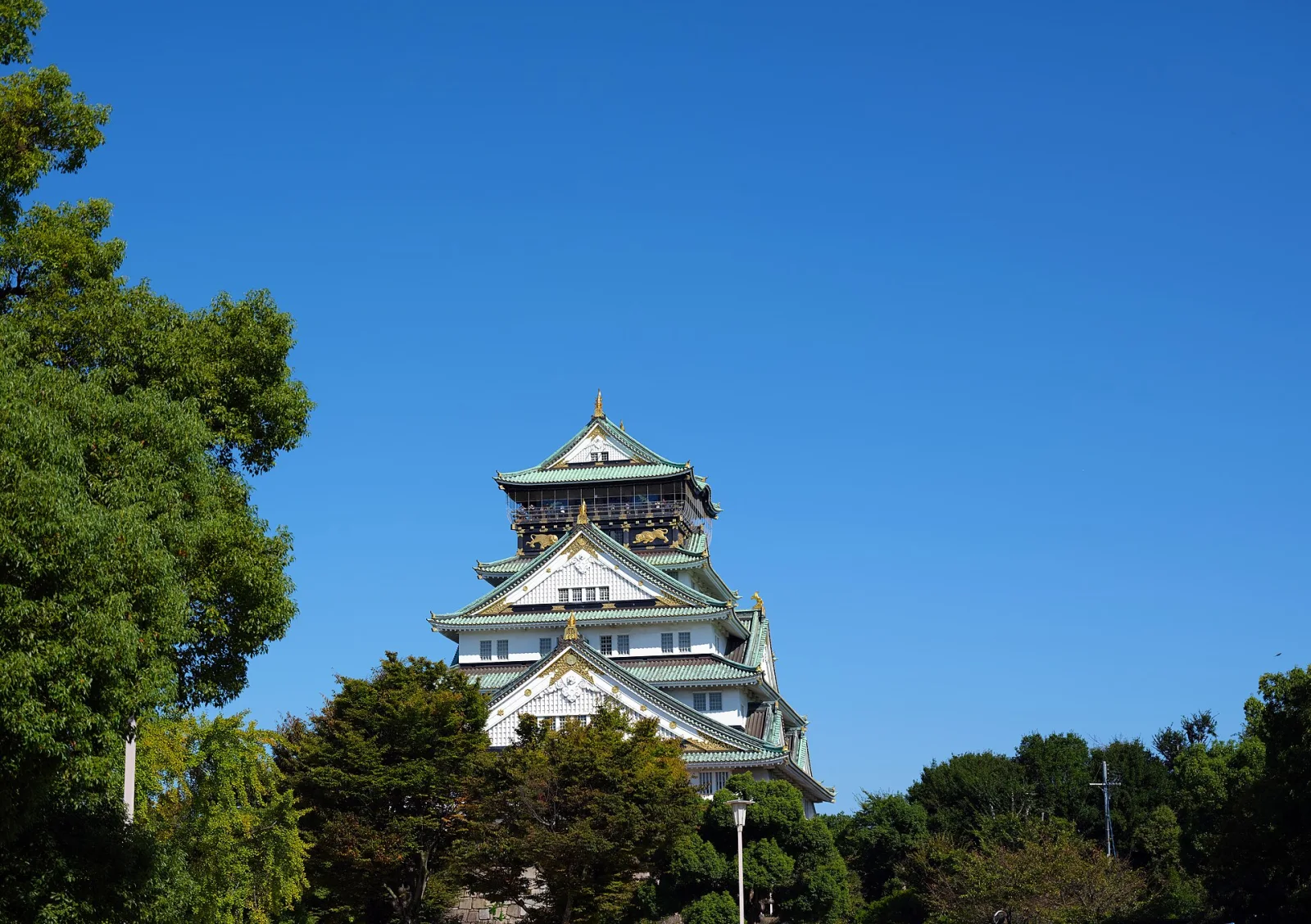
Plan an autumn foliage walk in Osaka Castle Park, from the maples of Momijidani to the ginkgo trees along the East Outer Moat. Pick Morinomiya or Tanimachi 4-chome for your entry, and check fares and hours for the Main Keep, Nishinomaru Garden, and evening illuminations.
Following the Ginkgo Trees from the East Side to Momijidani
From Umeda, board the JR Osaka Loop Line at JR Osaka Station from the platform bound for Temma and Kyobashi, and alight at Osakajokoen Station. Just outside the exit lies JO-TERRACE OSAKA, which works well as a meeting point or coffee stop before walking south along the East Outer Moat. To cover the full run of ginkgo trees, stay on the outer-moat side of the path, as the tree-lined promenade continues south past Aoyamon Gate.
Walking from the station towards Osaka-jo Hall brings you near Aoyamon Gate. To frame the keep, moat, and foliage in a single shot, take your photographs from the outer-moat bank first, then decide whether to pass through Aoyamon Gate towards the Plum Grove and Gokurakubashi Bridge or remain on the outer loop down to Morinomiya Fountain Square. Turning inward suits visitors heading up to the Main Keep, while staying on the outer path avoids crossing in and out of the inner grounds and lets you finish cleanly at Morinomiya for lunch. You can also cover the eastern outer avenue first and then look for an access path into the Honmaru near the Plum Grove.
Along the southern stretch of the East Outer Moat, look towards Shimin-no-Mori (Citizens' Forest) for dawn redwoods. Their feathery foliage turns a warm copper-brown, creating a clear contrast beside the bright yellow ginkgo leaves. The park's walking map groups this section with Shimin-no-Mori, allowing you to take in both the redwoods and the moat from the waterside path. Families with young children can slow the pace by spotting fan-shaped ginkgo leaves and redwood cones; even late in the season when many ginkgo trees have shed, this waterside stretch still holds plenty of autumn texture.
Entering from Morinomiya flips that route around. Both the Osaka Metro Chuo Line and Nagahori Tsurumi-ryokuchi Line serve Morinomiya Station; follow signs for Exits 3-A or 3-B to step straight out towards Fountain Square. If Momijidani is your priority, head inland towards Tamatsukuri Gate and follow the Autumn Festival map to Momijidani while daylight is still strong, rather than looping back to the southeast corner after Nishinomaru Garden or the Main Keep. With children in tow, use Fountain Square for toilets and a snack break before tackling the uphill climb, knowing you can leave easily via Morinomiya if dusk settles early.
The slopes of Momijidani bring the foliage close to the path, rewarding an unhurried walk if you want to admire individual leaf shapes and canopies shifting from green to crimson. Once you reach Tamatsukuri Gate, follow the park road towards Sakuramon Gate if you want to pair maples with views of the keep, or cut across to the East Outer Moat to pick up the ginkgo promenade back to JR Osakajokoen Station. When foliage is your main goal, wide viewpoints along the way give clear glimpses of the keep without entering the inner citadel. With shorter autumn days, leaving enough daylight for the walk back to the station beats circling half the park for one backlit shot.
At JR Osakajokoen Station, Platform 1 serves trains for Kyobashi and Osaka, while Platform 2 runs towards Tsuruhashi and Tennoji; Morinomiya also connects to the JR Loop Line if your walk finishes at the southern end. Official park maps estimate about 18 minutes on foot from Osaka Metro Tanimachi 4-chome, Morinomiya, or JR Osakajokoen Station to the Main Keep. That figure assumes steady walking, so add an extra half-hour to a half-day plan if you plan to pause for photos along the ginkgo avenue, climb slopes, or push a buggy.
Where to Spend the ¥300 Entry for Nishinomaru Garden
For classic wide-angle views of the Main Keep, take Exit 1-B from Osaka Metro Tanimachi 4-chome Station towards Otemon Gate, pass inside, and follow signs for Nishinomaru Garden. Take a moment around Otemon Gate to look at the outer moat and massive stonework. Stepping through the gate leads into a walled square courtyard with a second inner gate, quickly showing how the angled layout blocked any direct line of sight for attackers. Because the entrances to the Main Keep and the garden lie in different directions, buy your garden ticket first if you want to protect your afternoon light inside Nishinomaru.
Nishinomaru Garden's broad lawns give you room to step back and compose the full citadel. Looking east across the inner moat, layered stone walls rise in the foreground with the white upper storeys of the Main Keep framed behind. Walk along the perimeter paths to find overhanging branches that naturally border the tower. Even if only Momijidani still holds strong red leaves, Nishinomaru remains worth visiting for horizontal wide shots capturing the lawn, stone ramparts, and keep in one frame before you head over for close-up maple foliage.
Daytime adult admission is ¥300 following the fare revision effective 1 April 2026. Junior high school students and younger enter free, as do Osaka City residents aged 65 or over with valid proof of residency and holders of eligible disability certificates. Visitors aged 65 or over who live outside Osaka City pay the ¥300 adult rate. From November to February, daytime hours run 09:00–16:30 JST with last entry at 16:00 JST (March to October runs until 17:00 JST, last entry 16:30 JST). The garden closes on Mondays—or the following day when Monday falls on a Japanese national holiday—and observes its year-end closure from 28 December to 4 January.
Hoshoan, the tea house inside the garden, anchors the cluster of maples marked on the official autumn foliage map. Regular admission covers strolling the garden grounds, while tea-house sessions should be treated as a separate arrangement. If maples are your sole focus and Nishinomaru happens to be closed, redirect that time straight to Momijidani. With only 30 minutes to spare after coming through Otemon Gate, pick either Nishinomaru Garden or Sakuramon Gate rather than rushing both. Slower walkers in a group should wait by the garden ticket booth or outside Otemon Gate rather than at crowded Sakuramon.
It helps to split your viewpoints around the castle by side. Nishinomaru's lawns show how the keep sits above the moat and defensive walls, whereas entering through Sakuramon Gate brings you close enough to study the tower's architectural details. Passing Sakuramon into the Honmaru takes you straight past Tako-ishi (Octopus Stone), the colossal megalith marked near the gate's masugata courtyard. Beyond that, towards the southwest corner of the Honmaru, lies a public Japanese Garden marked on the park map where you can see water and the keep without paying. Your ¥300 ticket pays specifically for the across-the-moat panorama and lawn paths.
Visiting the Main Keep and the Toyotomi Stone Wall Museum
Admission to the Osaka Castle Main Keep and the Toyotomi Stone Wall Museum is sold as a combined ticket: ¥1,200 for adults and ¥600 for senior high school and university students (overseas students must present an ISIC card). Junior high school students and younger enter free, and overseas visitors aged 15 and under can show a passport or similar proof of age. Keep student or age ID handy if eligible; companions who prefer to skip the interiors can wait in the Honmaru plaza and meet up afterwards. Adding Nishinomaru Garden on the same day brings adult admission to ¥1,500 combined, plus extra walking time between gates.
Both museums open 09:00–18:00 JST, with last admission at 17:30 JST, though ticket queues may close earlier on busy days. Online tickets are available via the official Main Keep website; buying ahead for weekends or holidays lets you follow the on-site signage straight to entry. If you plan to visit both buildings in the afternoon, aim to reach the Honmaru before 16:00 JST. Arriving with just over an hour left leaves little margin for the Stone Wall Museum if you linger in the keep's exhibition floors. History enthusiasts keen on the Sengoku-era foundations can tour the Stone Wall Museum first while others head straight up to the observation deck.
Rebuilt in 1931 through public donations, the modern Main Keep houses a history museum, culminating in the eighth-floor observation deck where you can trace the moats circling the citadel and spot pockets of autumn colour across Osaka's skyline. Most of the visible moats and stone walls at ground level belong to the Tokugawa-era reconstruction. Descending into the Toyotomi Stone Wall Museum reveals underground stone walls from the Toyotomi period, uncovered during excavations in 1984. Seeing Otemon Gate above ground and then going underground highlights the contrast between the two eras far more vividly than reading dates on a plaque.
Upper-floor routing shapes how long your visit takes. General visitors ride an interior lift directly to the fifth floor and climb stairs to the eighth floor, returning down the stairs; the sixth floor has no exhibition space and is closed to visitors. Wheelchair users and visitors with reduced mobility can request staff assistance to use the exterior lift and inter-floor lifts. Pushchairs are normally left at the free ground-floor cloakroom. If a child falls asleep in a buggy, one adult can tour the keep while another rests in the plaza or inside MIRAIZA Osaka-jo.
Store any snacks safely inside your bag before entering, as eating and drinking are prohibited inside, and watch for signs in galleries where photography is restricted. If you are staying for evening illuminations or leaving via another side of the park, leave large luggage at your hotel or origin station rather than climbing back up to retrieve bags at night. For full floor-by-floor exhibits, photography rules, and locker details, see our Osaka Castle Main Keep and Museum Guide.
Late November 2026 Bonus: Tamon-yagura and Sengan-yagura Turrets
In autumn 2026, the interiors of the Tamon-yagura and Sengan-yagura turrets are open for special weekend and national-holiday viewing through 29 November 2026. You can admire both turrets and the stonework around Otemon Gate from outside at any time, but interior access requires buying a ticket at the Nishinomaru Garden reception. Turret hours run 10:00–16:30 JST, with last turret entry at 16:00 JST and ticket sales closing early at 15:30 JST. Because general Nishinomaru admission allows entry until 16:00 JST, afternoon arrivals should check the 15:30 JST turret cut-off before purchasing.
The joint turret pass includes daytime entry to Nishinomaru Garden at ¥900 for high school students and adults, ¥300 for junior high and primary school pupils, and free for pre-school children. A combined pass adding the Main Keep and Stone Wall Museum costs ¥2,000 for adults and ¥1,400 for high school and university students. Junior high school students and younger only need the ¥300 turret pass and can show proof of age for free entry at the keep. Combined passes are also sold at the Main Keep ticket gate until 14:30 JST. Adults focused mainly on autumn foliage who only want the standard garden and keep pay ¥1,500 total across two separate tickets, so decide on the turrets before buying.
If winds pick up once you enter Otemon Gate, explore the sheltered turret interiors first. Looking back towards Otemon from Tamon-yagura clearly reveals how the angled gateway concealed the approach path from outside. Step back onto the lawn afterwards for wide views across the inner moat towards the Main Keep. On a busy autumn weekend when you want Nishinomaru, the Main Keep, and the eastern ginkgo avenue, schedule the turrets for the morning so you do not have to rush back across the park before ticket sales close.
Structuring a Half-Day Route and Working Around Monday and Tuesday Closures
With only two or three hours, a foliage-first route starts at JR Osakajokoen Station, follows the East Outer Moat, and finishes via Morinomiya and Momijidani. Exiting around midday lets you hop on the Nagahori Tsurumi-ryokuchi Line at Morinomiya for lunch in Shinsaibashi and an easy stroll to Namba. To include the Main Keep, head straight up to the Honmaru from either side and trim part of the outer loop—you will see fewer roadside trees, but gain an hour for the museum and observation deck. If leaf reports show the maples have already dropped, walk from JR Osakajokoen Station to Aoyamon Gate and cut into the inner grounds for a compact mix of greenery and castle architecture.
With four or more hours to cross from west to east, start at Tanimachi 4-chome in the morning, explore Nishinomaru Garden via Otemon Gate, and reach the Honmaru around midday. Plan lunch near Tanimachi before entering or after exiting, or take a seated break at MIRAIZA next to the keep, or finish at JO-TERRACE beside JR Osakajokoen Station. If you end your visit at the garden, return straight to Tanimachi 4-chome rather than walking all the way across the park solely for a restaurant.
When Monday brings Nishinomaru Garden's regular closure, public park paths and the Main Keep remain open as usual, so swap the garden for Sakuramon Gate and the free Japanese Garden. In 2026, Monday 23 November is a Japanese national holiday, pushing Nishinomaru's closure to Tuesday 24 November. If you are in Osaka on both days, schedule Nishinomaru for the 23rd and save the outer ginkgo avenue or the Main Keep interiors for the 24th. The Osaka Museum of History is also closed on Tuesdays, so if rain hits on 24 November, heading straight up to the Main Keep and Toyotomi Stone Wall Museum avoids a wasted trip west. Note too that the autumn special exhibition ends on 23 November; the keep's third-floor gallery closes on 24 November for deinstallation, followed by the fourth-floor gallery on 25 November, though other floors and the underground stone wall remain open.
With a full day available, walk west to east through the Honmaru: cover Otemon Gate and Nishinomaru in the morning, enter the Stone Wall Museum and Main Keep around midday, and exit through Aoyamon Gate in the afternoon with enough daylight left for the East Outer Moat. If you also plan to visit Shinsaibashi or Tennoji the same day, wrap up Osaka Castle around noon and leave just one afternoon district. Travellers catching a Shinkansen from Shin-Osaka should pick up bags and make rail transfers from their hotel's nearest station rather than leaving the Main Keep climb until just before departure.
You can also divide the itinerary among companions with different interests. Those wanting exterior shots of the keep can spend half an hour in Nishinomaru while history fans head into the Honmaru for the underground stone walls, meeting up afterwards to walk east together. Choose clear meeting spots such as the MIRAIZA entrance in the Honmaru or Morinomiya Fountain Square rather than vague landmarks like 'in front of the keep'. With older relatives, finish together on the same side for lunch so energetic walkers can add another loop afterwards without leaving anyone standing in a cold breeze by the moat.
Rainy-Day Plan: Start on the Tanimachi Side and Wait Out Showers Indoors
On a wet morning, take the Osaka Metro to Tanimachi 4-chome and follow Tanimachi Line Exit 2 or Chuo Line Exit 9 straight to the Osaka Museum of History (Osaka City Bus services stopping at Babacho also drop you close by). Permanent galleries open 09:30–17:00 JST, with last entry at 16:30 JST; tickets cost ¥600 for adults, ¥400 for high school and university students with ID, and free for junior high school students and younger. Displays work downward from ancient Osaka on the tenth floor to the modern city, offering an easy indoor alternative if rain rules out the full park loop. The old combined ticket with Osaka Castle Main Keep is no longer sold, so buy tickets separately at each venue.
The museum closes on Tuesdays—moving to the next day if Tuesday is a national holiday—and takes its standard year-end break from 28 December. For its 2026–2027 special exhibition, 'Benjiro Okuda: The Showman of Sennichimae', the museum lists its year-end closure extending through Tuesday 5 January. Anyone visiting on 5 January can tour Nishinomaru Garden under regular daytime hours and save the museum for the following day. In peak maple season, keep the museum as a dry afternoon option after morning tree viewing, or duck out via Otemon Gate if skies darken—the museum sits just across the road from the southwest corner of the park, sparing you a long wet trek east.
In light drizzle, a short walk along the moat still pays off, as wet maple leaves take on deeper colour. Narrow stone steps and thick piles of fallen leaves turn slick, so stick to wider paved paths and step aside before pausing for photos. If puddles form underfoot, loop from the Honmaru back through Sakuramon and Otemon gates to Tanimachi 4-chome instead of backtracking through Momijidani. Remember that while the Main Keep is indoors, the walk from any station and the ticket queue are largely exposed, so waiting with an umbrella takes longer than ducking between exits near the museum. Families with pushchairs can still fit in a brief stroll along the moat outside Otemon Gate once a shower eases.
Both the Main Keep and the Toyotomi Stone Wall Museum close for year-end holidays from 28 December to 1 January, while Nishinomaru Garden remains closed through 4 January. If you arrive in Osaka on 2 January keen on castle history, tour the keep and stone wall museum in the morning and stroll the public outer paths in the afternoon. Visitors in late December can still walk outside Otemon Gate, along public park paths, and into the Honmaru by day; even after yellow leaves have fallen, bare branches reveal clean views of the stone walls, water reflections, and evening floodlighting.
Buggies and Wheelchairs: Choosing Lift Exits and Step-Free Paths
At Tanimachi 4-chome Station on the Tanimachi Line, street-level lifts serve Exit 1-A and Exit 8; Exit 1-A sits on the northern side for a straightforward surface walk towards Otemon Gate. On the Chuo Line, Exit 11 provides direct lift access to street level. At Morinomiya Station, lift routing depends on your arrival platform: Chuo Line Platforms 1 and 2 connect via the East Ticket Gate to the Exit 3-C street lift, while Chuo Line Platform 3 and the Nagahori Tsurumi-ryokuchi Line connect via the East Ticket Gate to Exit 7-A on the south side of the station, requiring a surface road crossing towards the park. Checking the lift layout first avoids arriving at Exit 3-A only to turn back underground.
To spare older travellers steep climbs, check the triangle markers for slopes and stairs on the official park map. The barrier-free map highlights an approach near the Main Keep's exterior lift, though a short roughly 7-degree ramp still leads from the lift landing to the entrance; ask staff by the exterior lift if you need assistance. Free wheelchairs are lent inside the keep on a first-come, first-served basis, though this is an indoor service rather than park-wide transport. If your goal is simply strolling beneath autumn trees, start at Morinomiya Fountain Square, follow a flat stretch of the outer loop, and return to the same station, saving the climb into the Honmaru or across Nishinomaru for another day.
Coming from the east towards the Honmaru, the official barrier-free route recommends walking from Aoyamon Gate up Gangizaka slope towards Sakuramon Gate, as the northern path between Gokurakubashi Bridge and the keep is steep and lacks handrails in places. From Morinomiya, walk along Chuo-odori Avenue past Peace Osaka and follow the barrier-free signs into the park to bypass steps in the southeast grounds. From Tanimachi 4-chome, the route through Otemon and Sakuramon gates into the Honmaru offers another step-free approach. Because these entrances lie on opposite sides of the citadel, use the gate matching your rail line rather than detouring across the park for the road train.
The park's Road Train can cut out a long walk, though you should check daily departure times and destinations at the stop near JO-TERRACE OSAKA before boarding. Standard one-way fares are ¥400 for adults (junior high school students up to age 64) and ¥200 for children aged 4 through primary school as well as seniors aged 65 and over. Separate electric-cart shuttles run on different stops and routes, and when replacement transport operates across Gokurakubashi Bridge, the park designates that transfer for visitors with reduced mobility. Services may pause during busy events or heavy path crowding, in which case keeping your walk on the flat eastern perimeter is the easiest backup.
When several families visit together and someone needs toilets or nursing facilities, agree on an easy-to-find plaza before splitting up towards nearby trees. The park is vast: spots facing each other across the inner or outer moats look close on foot, yet require walking all the way round to a gate or bridge to cross. Keep younger children engaged on a short walk by hunting for fan-shaped ginkgo leaves before spotting the giant Tako-ishi boulder at Sakuramon Gate, pausing on wide paths where joggers and buggies have plenty of room to pass.
Splitting Your Tickets for Afternoon Sightseeing and Evening Illuminations
From 20 November 2026 to 14 February 2027, 'Osaka Castle Illuminage' takes place as a separately ticketed evening event inside Nishinomaru Garden. Illuminated displays themed around Osaka's castle history sit directly in front of the floodlit Main Keep. Gates open at 17:00 JST, lights stay on until 21:30 JST, and the venue closes at 22:00 JST; Osaka City's Chuo Ward event listing notes last ticket sales and entry at 21:00 JST, so plan to arrive before then. Entry is next to Otemon Gate, roughly a 10-minute walk from Tanimachi 4-chome Exit 1-B—factor in that dark walk if you are dining nearby before arriving.
Standard evening admission is ¥2,000 for junior high school students and adults, ¥1,000 for children aged 1 through primary school, and free for infants under 1. Priority-entry tickets add ¥500 per tier and are listed as online purchases by Osaka Convention & Tourism Bureau, while standard tickets can be bought in cash at the gate. Daytime garden admission and evening illumination tickets are strictly separate: daytime visitors leave at 16:30 JST, giving you time for a short stroll or snack outside Otemon Gate before re-entering at 17:00 JST. The illumination runs nightly throughout its season, meaning even on Mondays when the daytime garden is closed, the evening event opens as scheduled.
Anyone content with viewing the floodlit Main Keep from bridges or public park roads can stay outside for free while companions walk the paid light displays. On chilly, windy evenings, admiring the illuminated tower from a distance before heading back to the station beats standing around outdoors. According to the organiser, the event goes ahead in rain and only changes schedule in severe weather; staying indoors at a museum or near the station until entry time helps limit time in the wind, and a short route makes getting children back to the hotel straightforward.
If a concert or event falls on the same weekend at Osaka-jo Hall, expect queues for trains, restaurants, and paths around JO-TERRACE OSAKA on the east side. Visitors heading to Otemon Gate at night can bypass those crowds by arriving directly from Tanimachi 4-chome. Guests staying in Temmabashi or travelling along the Keihan Line to and from Kyoto can also approach from the northwest: Osaka Convention & Tourism Bureau estimates roughly 15 minutes on foot from Keihan Temmabashi Station, or about 11 minutes from Osaka Metro Temmabashi Exit 3, letting you dine or catch a train back there without crossing to the eastern side.
Staying in Umeda, Namba, or Temmabashi: Matching Your Base to Next-Day Plans
If you are spending several nights in Osaka for autumn foliage, let your arrival and departure rail lines decide your hotel base. Staying near Umeda or JR Osaka Station makes next-day trips to Kyoto, Kobe, or Shin-Osaka effortless. Catch the JR Loop Line towards Kyobashi in the morning for eastern ginkgo views at Osakajokoen, then walk west through the park and return via the Tanimachi Line from Tanimachi 4-chome to Higashi-Umeda at dusk. If you have luggage, check whether your hotel sits closer to a specific JR Osaka exit or Higashi-Umeda underground station, as long subterranean passages add walking time in wet weather.
Basing yourself in Namba or Shinsaibashi pairs daytime park visits cleanly with evening dining in Dotonbori. From Shinsaibashi, the Nagahori Tsurumi-ryokuchi Line runs directly to Morinomiya for Fountain Square and Momijidani. From Namba, if you prefer starting at Nishinomaru Garden, take the Midosuji Line to Hommachi and transfer to the Chuo Line for Tanimachi 4-chome and Otemon Gate, then finish at Morinomiya on your way back—using two different stations to match the rest of your city itinerary. Travellers using Nankai trains to and from Kansai International Airport save a luggage transfer in Namba and only need to plan one underground ride to the park.
If you want to visit Nishinomaru Garden in the morning and return for evening illuminations, staying around Temmabashi or Tanimachi 4-chome cuts out extra train journeys. Temmabashi links both the Keihan Line and Tanimachi Line, letting you carry luggage straight to the station if you are heading to Kyoto the next morning. Travellers spending several evenings shopping and eating in central Osaka will generally find Umeda or Namba more convenient, whereas Temmabashi shines on a single-night stopover before a morning Keihan departure—or if you want a nearby room to drop camera gear and grab an extra coat between daytime and evening garden entries.
Choosing an autumn base does not have to lock in a single castle route. Staying near Osakajokoen Station suits early risers who want morning light along the East Outer Moat; if you already have a hotel booked elsewhere, simply picking the right entry and exit stations handles most logistics without changing hotels. When Osaka Castle Park anchors a half-day plan, pairing the other half with Nakanoshima or Tennoji works smoothly—compare transfer options in our Three Days in Osaka Itinerary and Where to Stay in Osaka Guide.
A few useful answers
When is the best time for autumn foliage in Osaka Castle Park?
The park's official foliage map lists mid- to late November for Japanese maples and late November to early December for ginkgo trees. Late November gives the best chance of seeing red maples and golden ginkgos together.
Which station should I use for ginkgo trees versus Japanese maples?
For ginkgo trees along the East Outer Moat, arrive at JR Osakajokoen Station. For maples, take Osaka Metro to Morinomiya Station and walk towards Tamatsukuri Gate and Momijidani. For Nishinomaru Garden via Otemon Gate, use Exit 1-B at Tanimachi 4-chome Station.
Do I need a ticket to enter Osaka Castle Park?
The public park grounds are free and open 24 hours a day. Daytime admission to Nishinomaru Garden is ¥300 for adults, and the combined ticket for the Main Keep and Toyotomi Stone Wall Museum is ¥1,200 for adults. Evening illuminations require a separate ticket.
What time does Nishinomaru Garden close in winter?
From November to February, daytime hours are 09:00–16:30 JST with last entry at 16:00 JST. The garden closes on Mondays (or the following day if Monday is a Japanese national holiday) and from 28 December to 4 January.
Do children need tickets for the Osaka Castle Main Keep?
Junior high school students and younger enter free with proof of age; overseas visitors aged 15 and under can show a passport. Pushchairs can be left at the Main Keep entrance.
How long does the Osaka Castle autumn illumination run?
Osaka Castle Illuminage runs from 20 November 2026 to 14 February 2027 inside Nishinomaru Garden. Doors open at 17:00 JST and lights stay on until 21:30 JST, with the Chuo Ward event page listing 21:00 JST as last entry and ticket sales.
Official information and references
Sources used in this guide.
- Osaka Castle Park 2026 Autumn Foliage Map and Peak Viewing Seasons
- Osaka Castle Park Japanese Notice (Nishinomaru Garden 2026 Daytime Fares, Hours, and Closures)
- Osaka Castle Park Official Map (October 2026 Edition)
- Osaka Castle Park FAQ (Public Grounds, Dining, and Fares)
- Osaka Castle Park Internal Transport and Road Train Fares
- Osaka Castle Main Keep Visitor and Ticketing Information
- Osaka Castle Main Keep and Toyotomi Stone Wall Museum History and Opening Hours
- Osaka Castle Main Keep Barrier-Free Access Map
- Osaka Metro Morinomiya Station Exits Map
- Osaka Metro Morinomiya Station In-Station Lift Guide
- Osaka Metro Tanimachi 4-chome Station Exits Map
- Osaka Metro Tanimachi 4-chome Station In-Station Lift Guide
- JR West Osakajokoen Station Layout and Platforms
- Osaka Museum of History Hours and Admission Fees
- Osaka Museum of History Access, Exits, and Floor FAQ
- Osaka Museum of History 2026–2027 Year-End Special Exhibition Opening Dates
- Osaka City Chuo Ward 2026–2027 Nishinomaru Illumination Notice
- Osaka Convention & Tourism Bureau: Osaka Castle Illuminage Tickets and Access
- Osaka Castle Illuminage Official Organiser Page
- Osaka Castle Autumn Festival 2026: Tamon-yagura and Sengan-yagura Special Opening
- Osaka Castle Park 2026 Joint Turret Pass and Main Keep Combo Ticket Details
- Cabinet Office of Japan: 2026 and 2027 National Holidays
- Osaka Museum of History Permanent Exhibition Floors and Gallery Guide
- Osaka Castle Park Barrier-Free Route and Gradient Map
- Osaka Castle Park 2026 Guidebook (Internal Transport)
- Osaka Castle Park Walking Map (East Outer Moat and Shimin-no-Mori Dawn Redwoods)
- Osaka Castle Main Keep 2026 Autumn Exhibition and Gallery Closure Notice