From mid-November maple valleys in Minoh to early-December ginkgo avenues at Osaka Castle. Compare transport, walking distances, entry fees and 2026 illuminations across central Osaka and Hokusetsu, with half-day routes for Osaka Castle, Tennoji, Expo '70 Park and Kyuan-ji.
- Region & Focus
- Osaka
- Reading Scope
- 17 min read · 9 chapters · 6 Q&As
- Official Verification
- 35 official sources checkedUpdated 22 November 2026
- Key Topics
- SeasonsItinerariesRail travel
Chapter Route Map (tap any stop)
- When to See Osaka's Autumn Leaves: Maples vs Ginkgo
- Osaka Castle Park: Ginkgo Along the East Outer Moat, Garden on the West
- Minoh Park: Walking the 2.7 km Trail and Where to Turn Back
- Katsuo-ji Temple: Sort Out Your Return Bus Before Picking Day or Night
- Expo '70 Commemorative Park: Momiji Valley and the Japanese Garden on One Ticket
- Tennoji: Garden, Art Museum and Dining at One Station
- Kyuan-ji Temple in Ikeda: A Mountain Temple Detour from Ikeda Station
- How to Pivot: Two Hours in Town, Half a Day in the Mountains and Wet-Weather Plans
- Where to Stay for Easy Morning Foliage Trips
- Quick Q&A
For a first autumn foliage trip to Osaka, spend half a day at Osaka Castle Park, and pair it with Tennoji if you are travelling with older relatives or hit a passing shower. For a valley walk to a waterfall, set aside another morning for Minoh, roughly 2.7 km each way on foot from Hankyu Minoh Station. Katsuo-ji centres on its mountain temple grounds, daruma dolls and evening illuminations, and requires taking a different route via Minoh-Kayano Station. Expo '70 Commemorative Park suits travellers who want woodland walks, a Japanese garden and unhurried rest stops in one place. Check maple reports from mid-November, and keep Osaka Castle's ginkgo avenues on your radar for late November to early December.
When to See Osaka's Autumn Leaves: Maples vs Ginkgo
If you only have one weekend and want both mountain maples and city ginkgo trees, late November offers the best overlap. Minoh Park typically peaks from mid-November to early December. Osaka Castle Park's autumn foliage map lists Japanese red maples for mid-to-late November and ginkgo trees for late November to early December. To see avenues of bright yellow trees on your first day, look for recent ginkgo updates first. If you want maples framed by water, prioritise whichever section of the valley is turning colour over general event dates. At Osaka Castle, cherry trees also turn early—the official map places them from late October to mid-November—making them a good fit for an early-autumn stroll around the castle grounds.
Conditions can vary sharply even within the same park. Take Minoh Park's 20 November 2026 foliage report: the stretch from the Insectarium to Ryuan-ji Temple and between Ichinohashi and Meotobashi bridges was already near peak, while the area around the waterfall was still turning and Jigokudani still held plenty of green leaves. On a day like that, if you simply want autumn photos without a demanding hike, an out-and-back stroll along the lower valley gives you a clear target, while those set on the waterfall can continue upstream. Expo '70 Commemorative Park announced on 17 November that the London plane trees on Nishioji Avenue, sweetgums in Momiji Valley and maples around Elm Pond had entered peak viewing. On a sunny day then, pick Expo '70 Park for golden tree-lined avenues and varied foliage colours, or head to lower Minoh for stream views and close-up maples.
Leave one flexible half-day when planning your itinerary. If you are staying three nights in Osaka, save the mountain spots for a calm morning when you can finish before dark, and slot Osaka Castle's outer grounds or Midosuji into your late-arrival day. Japan's Labour Thanksgiving Day falls on Monday 23 November in 2026. If your visit overlaps that long weekend, expect both daytime visitors along the waterfall trail and crowds at evening temple illuminations. Visit city parks for foliage on Sunday and keep routes with fewer trains or buses for weekdays, or book reserved seats for evening illuminations—either way cuts down on waiting. Always check illumination dates, last admission and last train times for the exact same date, especially if you are staying in central Osaka and need to change trains afterwards.
The suggested durations below are practical planning estimates covering walking and short breaks inside each spot, excluding travel to and from your hotel. Once you have picked your main destination, look for a secondary stop along the same railway line. If your first Osaka trip already includes full-day outings to Universal Studios Japan, Kyoto or Nara, spend two hours on city foliage and reserve a full morning for the single mountain trail you most want to walk.
| Spot | Best For | Suggested Time | Access and Entry Notes |
|---|---|---|---|
| Osaka Castle Park | Ginkgo avenues, moats and castle views | 1.5–3 hours | Enter east side from Morinomiya; Tanimachi 4-chome leads to Otemon Gate |
| Minoh Park | Valley walk following the stream to the waterfall | 2.5–3.5 hours | Walk from Hankyu Minoh Station and return the same way |
| Katsuo-ji Temple | Daruma dolls, mountain temple grounds and seasonal night illuminations | 1.5–2 hours at the temple | Take Bus 30 from Minoh-Kayano Station; plan your return bus before dark |
| Expo '70 Commemorative Park | Combining Momiji Valley and the Japanese Garden in one day | 3–5 hours | Osaka Monorail; combined ticket covers both parks |
| Tennoji Park | Garden and art museum on a compact, adaptable route | 1.5–3 hours | Start from Tennoji Station; check garden closure days |
| Kyuan-ji Temple | Quiet mountain temple approach towards Ikeda | 1–1.5 hours at the temple | Hankyu Bus from Ikeda Station; check return timetable on arrival |
From mid-November maple valleys in Minoh to early-December ginkgo avenues at Osaka Castle. Compare transport, walking distances, entry fees and 2026 illuminations across central Osaka and Hokusetsu, with half-day routes for Osaka Castle, Tennoji, Expo '70 Park and Kyuan-ji.
Osaka Castle Park: Ginkgo Along the East Outer Moat, Garden on the West
For a straightforward tree-lined walk, enter the park from Exit 3-B of Morinomiya Station on the Osaka Metro Chuo or Nagahori Tsurumi-ryokuchi lines and follow the East Outer Moat towards Osakajokoen Station. Osaka Castle Park's ginkgo trees line the outer paths, so start on this side for uninterrupted rows of yellow foliage. Osakajokoen Station on the JR Osaka Loop Line is also on the east side; if you are staying near Osaka Station and prefer JR, enter past JO-TERRACE OSAKA beside the station plaza and walk towards Morinomiya instead. Either station works as your exit if anyone in your group tires early. Once you spot the main keep in the distance, budget extra time if you want to climb up through the gates to Honmaru Plaza and walk back to the underground.
If Otemon Gate or Nishinomaru Garden is your first stop, take the Tanimachi Line to Tanimachi 4-chome Station and use Exit 1-B, or Exit 9 from the Chuo Line. Visitors using wheelchairs or needing lifts can follow the park's step-free map via the street-level lifts at Tanimachi Line Exit 1-A or Chuo Line Exit 11, then pass through Otemon and Sakuramon gates towards Honmaru. Several eastern entrances look close to the keep on a map but involve steps or a detour to another bridge. For photos pairing the moat with the stone walls, step outside Otemon Gate for a short stretch along the outer wall before continuing; this west-side approach also pairs easily with the Osaka Museum of History in the same half-day.
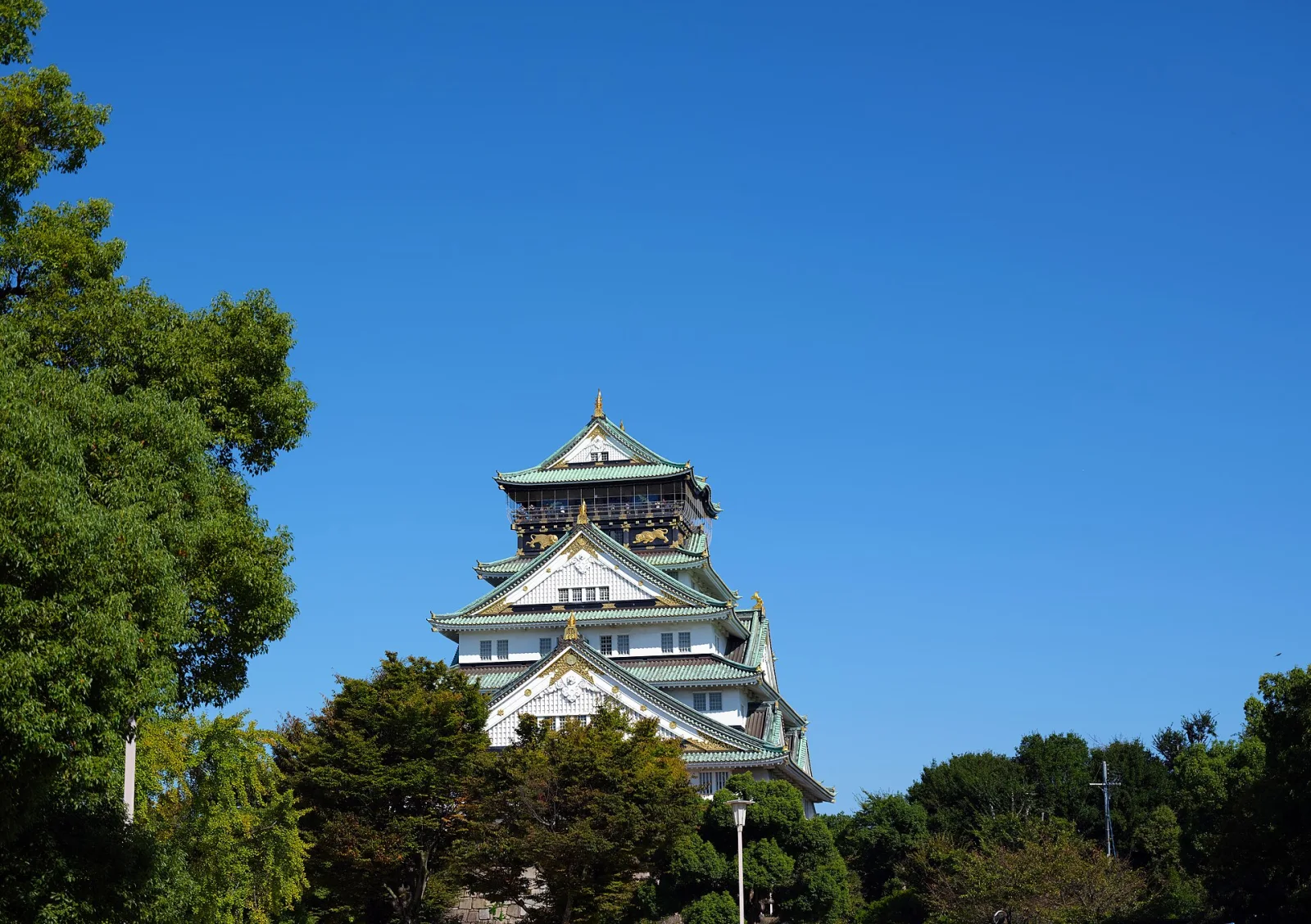
Osaka Castle Park's public grounds are open 24 hours a day, so you can see the outer autumn foliage free of charge. On the west side, admission to Nishinomaru Garden was revised in April 2026 to ¥300 for adults, with free entry for junior high school students and younger. From November to February it opens 9:00–16:30 (last entry 16:00) and closes on Mondays, or the following day if Monday is a public holiday. Schedule the garden before sunset for wide lawns, castle walls and views of the keep. If half your group wants foliage photos and half wants to tour the keep exhibitions, walk through Otemon Gate together first and split up afterwards. The main keep currently opens 9:00–18:00 (last admission 17:30); combined admission to the main keep and Toyotomi Stone Wall Museum is ¥1,200 for adults, ¥600 for university and high school students with valid ID, and free for junior high school students and younger with proof of age (international high school and university students require an ISIC card).
In mid-November, mark Momijidani (Maple Valley) and the Japanese garden inside Honmaru on the official autumn foliage map. During peak ginkgo season, follow the outer perimeter—if one stretch already has thick carpets of fallen leaves and thinning branches, keep walking along the moat to find sections still holding their colour. Allow separate time for leaf-viewing and queuing for the keep. Because the lawns, gate stonework and outer moat reflections are all at ground level, visitors with only an hour can finish one side and hop straight back on the train. For a closer look at each gate approach and photo spot, see our Osaka Castle Park autumn foliage guide.
Minoh Park: Walking the 2.7 km Trail and Where to Turn Back
From Hankyu Osaka-umeda Station, take the Takarazuka Line to Ishibashi handai-mae and change to the Hankyu Minoh Line for the terminus at Minoh Station. Minoh City Tourism Association lists the express train times at around 16 minutes and 6 minutes respectively, excluding platform transfers and waiting time. From Minoh Station, walk past the shops to Ichinohashi Bridge and follow the Minoh River upstream along the signposted Takimichi trail. The park FAQ puts the distance from the station to Minoh Great Falls at around 2.7 km, taking 40–50 minutes one way on foot. Allow nearly two hours just for walking there and back, plus extra margin for photos, toilet breaks and slower stretches in crowds so you can catch your return train without rushing.
Park estimates put the walk from Minoh Station at about 5 minutes to Ichinohashi Bridge and 15–20 minutes to the Minoh Park Insectarium. For a gentle stroll or a trip with young children, focus on the stretch around Ichinohashi Bridge, Meotobashi Bridge and Ryuan-ji Temple, adding the Insectarium when it is open. At turnaround points between the station and the falls, judge whether to push on to the waterfall or turn back while everyone still has energy based on your group's pace, how long the lower stretch took and any later plans back in town. If your group is going all the way to the falls, take in the valley colours from the bridges along the way rather than stopping in narrow bottlenecks. Viewing space right in front of the waterfall is tight, so step back towards wider ground after a few shots to make room for others resting or taking wide-angle photos.
A shop fire near the waterfall at the end of 2025 temporarily affected the path, but the prefectural park announced in August 2026 that the full route to the falls has reopened. Temporary protective fencing remains beside the former fire site near the falls, narrowing the passage slightly. For weekends and public holidays during the 2026 Autumn Leaves Festival, park notices also ask visitors to avoid setting up tripods because of heavy foot traffic along Takimichi. If family members walk at different speeds, pick fixed meeting points such as the plaza in front of Ryuan-ji Temple or the exit of Minoh Station. Wet fallen leaves gather along the kerb and make the riverside edge slippery, so pack away two-handed camera gear once dusk falls. Cars and bicycles are prohibited in the park, and anyone bringing young children up to the falls should also factor in the downhill return and toilet queues.
If you are driving, decide in advance whether to park near Minoh Station or drive up above the waterfall. The walk down from the Ohtaki-ue (Upper Waterfall) car park takes about 15 minutes via a steep slope, which means an uphill climb on the way back. With a pushchair or older relatives who prefer less walking, starting from Ichinohashi Bridge on the station side and turning back once you have seen good colour is often easier. On weekends and public holidays from 14 November to 6 December 2026 (9:00–18:00), Minoh City converts Prefectural Route 43 between Kaze-no-Mori and the T-junction below the dam to northbound-only one-way traffic, a restriction that also applies to bicycles. If you are driving on to Katsuo-ji in the afternoon, follow the regulated exit route down the mountain and do not assume your return drive will take the same time as the morning approach.
In 2026, the Minoh Autumn Leaves Festival runs from 14 November to 6 December, with the 'Minoh Forest: Night Walk of Sound and Light' held from sunset until 21:30. Illuminations are spaced along Takimichi, including Ryuan-ji Temple, Shugyokojo, near Daimon Bridge and at Minoh Great Falls. If you only leave Umeda after dark, walking as far as Ryuan-ji still lets you see the lights. If you go all the way upstream and walk back, remember the 40–50 minute walk from the falls to the station and work backwards from your Minoh Line to Takarazuka Line connection. For clear photos of the stream and leaves, do the upper section in daylight and save the lower stretch for the evening lights.
Katsuo-ji Temple: Sort Out Your Return Bus Before Picking Day or Night
Katsuo-ji is also in Minoh City. From central Osaka, board a Midosuji Line through-train onto the Kita-Osaka Kyuko Line bound for Minoh-Kayano, head to Bus Platform 8 at the terminus and take Hankyu Bus 30 straight to the temple. The daytime bus ride takes around 20 minutes, though you should allow extra time for queues and mountain traffic on autumn weekends. From 1 October 2026, single fares on this route are ¥800 for adults and ¥400 for children, with cashless payment only on board. You can tap ICOCA, Suica or other transport IC cards, but buses cannot top up cards, so load enough credit for both ways at the underground station first. Alternatively, buy a dedicated bus ticket by credit card from staff at Platform 8 in Minoh-Kayano.
A daytime visit lets you combine the daruma dolls, mountain gate and hillside maples in one unhurried circuit. If you walk slowly or want to inspect the daruma displays one by one, daylight also makes the stone steps far easier to navigate. For an adult paying standard round-trip bus fare plus temple entry, two bus rides cost ¥1,600 and temple admission is ¥500, making ¥2,100 in total before counting your train fare to and from Minoh-Kayano. Children's temple entry is tiered separately: ¥400 for primary and junior high school pupils, ¥100 for pre-school children and free for ages two and under. Families budgeting the outing should calculate bus fares and temple admission separately.
In 2026, Katsuo-ji's evening illuminations ('Kinshu no Yoimairi') run on Saturdays, Sundays and public holidays from 1 to 29 November, lighting up from sunset with last admission at 20:00 and closing at 20:30. If you plan to stay until evening, follow the link from the Minoh City Tourism Association event page to the temple's 'Autumn Day & Night Bus' details and check return services for your exact date first. Plan your route around the grounds and your photo stops around the return bus you can actually catch, checking regular bus and event shuttle timetables separately. Drivers visiting for the illuminations must book a parking slot in advance, as parking is reservation-only. Because the temple sits on mountain roads, visiting in the daytime is far simpler if you have not locked in a return ride.
If you want to visit both Minoh Falls and Katsuo-ji on the same day, keep the two stations clear: Hankyu Minoh Station is the start of the Takimichi waterfall walk, whereas Kita-Osaka Kyuko's Minoh-Kayano Station is the regular hub for direct buses to Katsuo-ji. Walk to the falls and back from Hankyu Minoh in the morning, then return to the station after midday to switch routes. If you plan to use an event shuttle from Hankyu Minoh, secure both outbound and return timings for that station first. Using regular service Bus 30 instead means coming down from the falls, catching Hankyu Bus 36 from Hankyu Minoh Station to Minoh-Kayano and transferring to Bus 30. Minoh City has announced that parts of Nature Study Trail No. 4 and the spur path alongside Katsuo-ji's grounds are closed for forestry thinning until 26 February 2027 (scheduled), so walk Takimichi to the falls and return to the station to transfer rather than attempting to hike between the two. Groups wanting just a taste of both landscapes can turn back on lower Takimichi to leave time for lunch and bus transfers, while anyone wanting unhurried photos at both the full waterfall trail and Katsuo-ji's night illuminations will do far better splitting them across two days.
Expo '70 Commemorative Park: Momiji Valley and the Japanese Garden on One Ticket
If you are staying in Umeda, Shin-Osaka or Namba, take a Midosuji Line train running through onto the Kita-Osaka Kyuko Line to Senri-Chuo, follow signs for the Osaka Monorail and get off at Bampaku-kinen-koen Station. Enter via the Central Gate with the Tower of the Sun ahead of you; Momiji Valley lies to the west and the Japanese Garden to the north. Park guidance puts the walk from the monorail station through the Central Gate to the Japanese Garden main gate at about 15 minutes. Alternatively, from Koen-higashiguchi Station, walk west via the Japanese Garden Front Gate to reach the main gate in about 15 minutes as well. To visit the Japanese Garden before the Natural and Cultural Gardens, enter through the Japanese Garden Front Gate and leave via the Central Gate, saving photos of the Tower of the Sun for last. If you plan to cover both halves of the park, pick your starting gate from the map at the outset to avoid backtracking to the Central Gate.
Starting from the Central Gate, Nishioji Avenue in the Natural and Cultural Gardens is ideal for its rows of London plane trees before you continue towards Momiji Valley for sweetgums and Elm Pond for maples. Families with children can stay between the woodland paths and rest areas so everyone has energy left for the walk back to the exit. The Japanese Garden alone deserves half a day: start around Shinji-ike Pond, then follow the paths towards Miyama-no-Izumi Spring or Komorebi Falls. Viewpoints beside the pond frame the autumn colours on the opposite bank and give slower walkers natural places to pause. Entry inside the Tower of the Sun requires advance reservation; if you have booked a slot, time it to coincide with passing through the Central Gate and Festival Plaza—head west to Momiji Valley afterwards for a morning slot, or finish the Japanese Garden first and walk down for an afternoon slot to avoid doubling back.
From April 2026, the combined ticket for both the Natural and Cultural Gardens and the Japanese Garden is ¥450 for high school students and adults, and free for junior high school students and younger. The 2026 Autumn Leaves Festival runs from 7 to 29 November, with the park open daily 9:30–17:00 (last entry 16:30). The Han-an and Banri-an teahouses hold special openings from 10:00–16:00 during the festival with no extra admission fee; if you want wagashi sweets and matcha, the park lists a set at ¥900 with last orders at 15:30. Slot the teahouse into the early afternoon so you still have daylight for walking past the Tower of the Sun on the way out, or skip it for another trip if you just want a woodland walk.
For evening illuminations and staying through dinner, aim for the dates when the 2026 Autumn Leaves Festival overlaps 'Illumi-Night Banpaku': 22–23 and 27–29 November. Projection mapping on the Tower of the Sun runs 17:00–21:00 roughly every 15 minutes and requires park admission. After 16:30, only the Central Gate and Japanese Garden Front Gate admit visitors, and after 17:00 access is restricted to the event zone and designated walkways—finish Momiji Valley and the Japanese Garden during regular hours before moving towards Sun Plaza. Additional December projection dates are also scheduled, though daytime walking remains essential if autumn foliage is your priority.
If heavy rain sets in, duck into the National Museum of Ethnology (Minpaku) inside the park. It opens 10:00–17:00 (last entry 16:30) and closes on Wednesdays, or the following weekday when Wednesday falls on a public holiday. If the museum is your main goal, buy a Minpaku admission ticket at the park gate to pass through the paid park grounds straight to the museum; if you also want time in the Japanese Garden, buy the relevant park admission as well. Note that while the park opens daily during the Autumn Leaves Festival, Minpaku still observes its Wednesday closure, so plan a backup on Wednesdays. Because reaching the museum from the foliage zones still involves an outdoor walk across the park, heading straight to the Osaka Museum of History or Tennoji from the city centre saves a transfer if storms are forecast before you set off.
Tennoji: Garden, Art Museum and Dining at One Station
From JR Tennoji Station's Central Ticket Gate, follow the Park Exit down into the underpass and take Exit 21 up to the Tenshiba lawn. Exit 21 is also reachable from the Tanimachi Line's South Ticket Gate, while on the Midosuji Line you can take Exit 5 from the West Ticket Gate and cross the JR footbridge. Lifts are available across all three station lines for pushchairs; once out on the lawn, follow the main path straight towards Keitakuen Garden. If your companions have just landed from a long flight or you are heading back to Namba for dinner, this route avoids awkward transfers, and it also makes an easy, low-effort recovery day if you already have a longer Meiji-no-Mori hike on your schedule.
Keitakuen is a traditional pond-stroll garden linking a central pond with small bridges, stepping stones and landscaped mounds. Pause along the wider banks to frame foliage over the water and follow the open paths around the grounds. The garden announced in October 2026 that water top-ups and the waterfall have been temporarily suspended while investigating a pond leak, lowering the water level. This season, focus your shots on maple branches, bridge edges and stone arrangements, and head to Osaka Castle's moats if you want broad water reflections. In November, Keitakuen opens 9:30–17:00 (last entry 16:30) and closes on Mondays, or the next weekday if Monday is a public holiday. Admission is ¥300 for adults, ¥200 for university and high school students, and free for junior high school students and younger (bring proof of age for school-age children).
To add an indoor exhibition, check what is on at the Osaka City Museum of Fine Arts inside the same park. A same-day combined ticket for the museum's special/planned exhibition and Keitakuen Garden is ¥600 for adults and ¥300 for high school and university students; exhibition-only adult admission is ¥500, while major touring exhibitions carry separate pricing. If it rains in the morning, start inside the museum and step into Keitakuen once the sky clears. Arriving towards evening? Head first to nearby Chausuyama and Kawazoko Pond, which is free and open 7:00–22:00. If children in your group want to run around on the Tenshiba lawn while others prefer a quiet garden stroll, agree to meet back at the Tenshiba entrance rather than waiting around inside the garden.
Nearby, you can pair Tennoji Park with either Shitenno-ji Temple or Shinsekai depending on your afternoon plans. For temple grounds, continue to Shitenno-ji after finishing the lakeside loop in Keitakuen. For an early dinner, walk straight from the park towards Shinsekai and check before leaving whether you will board the Midosuji Line or JR from Tennoji or Dobutsuen-mae for the trip back. If you are carrying shopping bags, pushing a buggy or travelling with slower walkers, dining right around Tennoji Station saves another station entrance search and transfer.
Kyuan-ji Temple in Ikeda: A Mountain Temple Detour from Ikeda Station
Take the Hankyu Takarazuka Line to Ikeda Station and transfer to a Hankyu Bus stopping at 'Kyuanji', about a 15-minute ride according to the temple, with the bus stop right by the gate. Kyuan-ji opens year-round from 9:00–16:00 with ¥300 admission. It suits travellers specifically looking for mountain temple architecture and a quiet approach: enter through the main gate and follow the wider central path past maples, temple halls and gardens. The outdoor path to the Bussharito (Stupa) is wheelchair-accessible, though interior spaces such as the main hall and Mieido Hall are not. If your group wants a full valley hike, save your walking time for Minoh's Takimichi trail instead.
Kyuan-ji posted its 20 November 2026 foliage update alongside its Autumn Leaves Festival on 23 November. From 17 to 30 November, a special viewing of the principal Thousand-Armed Kannon statue and cultural treasures runs daily from 10:00–14:00, so time your visit within that window if you want to see inside the hall. If you prefer a quieter walk along the maple approach, note that ceremonies take place around midday on festival day, and check the temple schedule alongside your return bus timetable. Your minimum stay is effectively set by the bus intervals, so build in one extra bus cycle if you want to linger.
From Umeda, both Ikeda and Minoh sit along the Hankyu Takarazuka Line, yet their onward transport feels completely different. Minoh requires a quick branch-line change at Ishibashi handai-mae and lets you walk straight back to the railway station. Kyuan-ji relies on a scheduled bus from Ikeda Station, so it works best when you anchor a half-day around the bus times. When travelling with older relatives and the bus times line up, Kyuan-ji cuts out the long uphill walk; if your group moves briskly and wants two full hours on a mountain path, pick Minoh. Because mountain roads separate Kyuan-ji and Katsuo-ji across Hokusetsu, stick to one temple when travelling by public transport and save the rest of the half-day for lunch around Ikeda Station or heading back to Umeda.
How to Pivot: Two Hours in Town, Half a Day in the Mountains and Wet-Weather Plans
With only two hours in the afternoon, skip anywhere that requires queuing for timed entry. Take JR to Osakajokoen Station and walk south along the East Outer Moat to Morinomiya, deciding along the way whether to detour up towards Honmaru depending on foliage and energy. With a full morning free, start from Tanimachi 4-chome and finish down in Tennoji: beat the midday castle crowds for photos of the moat and western walls, then ride the Tanimachi Line to Tennoji for lunch followed by Keitakuen Garden and the art museum. If you want to connect spots purely by JR, take the Osaka Loop Line straight from Morinomiya to Tennoji and skip changing railway companies. On Mondays or the day after a public holiday, anchor your morning on free park paths and double-check museum and garden opening notices.
On days mixing multiple operators, paying per ride with a transport IC card is simplest. If you are sticking strictly to central Osaka Metro lines for Osaka Castle, Tennoji and Midosuji, tally your single fares first. Osaka Metro's Enjoy Eco Card costs ¥820 for adults on weekdays, ¥620 on Saturdays, Sundays and Japanese public holidays, and ¥310 for children, covering designated underground lines and most Osaka City buses. Note that while Midosuji Line trains run straight onto the Kita-Osaka Kyuko Line, travelling north of Esaka adds Kita-Osaka Kyuko fares; Expo '70 Park also adds the Osaka Monorail, and Katsuo-ji adds Hankyu Bus fares. For suburban-heavy days, calculate those outer segments separately before deciding whether a city day pass pays off.
If the forecast promises a bright morning followed by steady afternoon rain, head straight to Hankyu Minoh Station after breakfast so you cover the valley and waterfall first, then turn back early around Ryuan-ji if drizzle starts. If rain is set in all day from dawn, switch to the Osaka Museum of History right beside Tanimachi 4-chome Station (Exit 9 on the Chuo Line, Exit 2 on the Tanimachi Line). Permanent exhibitions open 9:30–17:00 (last entry 16:30), costing ¥600 for adults and ¥400 for high school and university students, and closing on Tuesdays (or the next day if Tuesday is a public holiday). Because the permanent route starts on the upper floors and works downwards, you can pace it to suit your time; if the rain eases, cross the road to Otemon Gate at Osaka Castle Park while keeping your original train and lunch plans intact.
Expo '70 Commemorative Park works best split across morning and afternoon. Pair the Tower of the Sun exterior with Momiji Valley first, break for lunch and tackle the Japanese Garden afterwards. If anyone wants night views, ride back to Senri-Chuo and take the Midosuji Line down to Yodoyabashi or Hommachi for dinner and an evening stroll, keeping daytime park closing hours and street lights cleanly separated. Whenever legs give out in the park, exit towards whichever monorail side is closest and choose between Umeda, Shinsaibashi or Namba for supper on the way back. Take all foliage close-ups in daylight while you are still in the park, as street lighting shifts leaf colours and pulls focus towards buildings and passers-by.
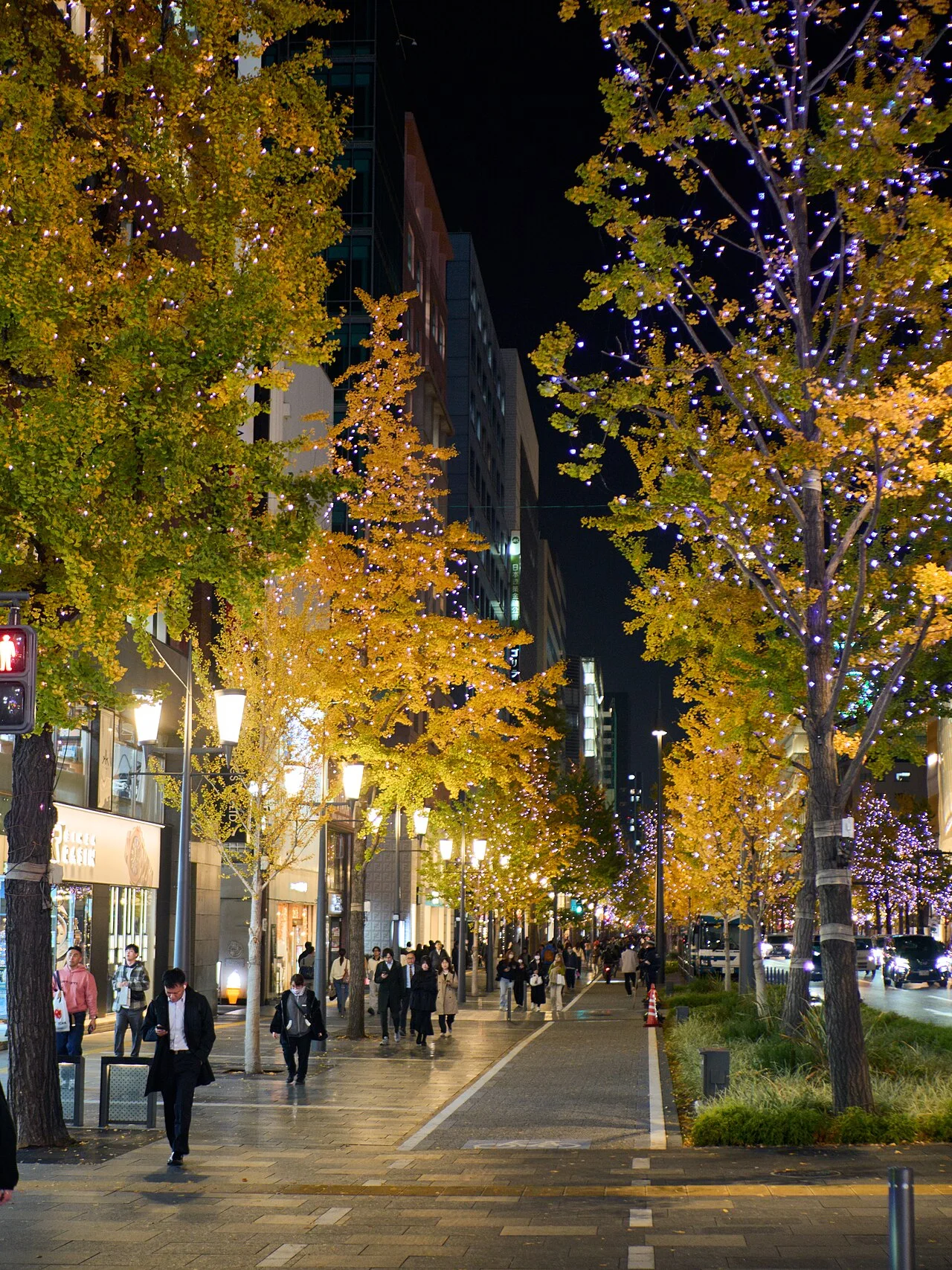
In 2026, the Midosuji Illumination runs from 3 November to 31 December, roughly from 17:00 to 1:00 the next morning, stretching from the Hanshin-mae intersection to Namba Nishiguchi. To admire the shape of the ginkgo trees in daylight, walk along Midosuji from Yodoyabashi to Hommachi before hopping one stop on the underground for dinner in Shinsaibashi. If you only care about the lights, a short walk south from Hommachi after dark is plenty, with underground entrances every couple of blocks. For a quieter riverside detour, walk east from Yodoyabashi past Nakanoshima Public Hall, cutting the riverside stretch short if the wind picks up and rejoining the Midosuji Line. To pick stations by which stretch is peaking, read our Midosuji ginkgo and illumination route.
Where to Stay for Easy Morning Foliage Trips
If Minoh's Takimichi trail and Kyuan-ji are your priorities, check the actual walking route from your hotel to Hankyu Osaka-umeda Station—properties marketed as 'Umeda' may sit closer to Nishi-Umeda or the far side of JR Osaka Station. Navigating from JR to Hankyu with luggage involves several directional signs on a first visit, so if you have an early train the next morning, do a quick dry run from your hotel lobby to the Hankyu concourse after checking in. Travellers heading to Expo '70 Park or Katsuo-ji by day should measure distance to the Midosuji Line's Umeda Station instead; checking the walking route from the front door makes the difference clear. Use our Umeda accommodation guide to match station zones, and leave extra margin from lobby to platform on busy holidays.
Staying beside Osaka Castle works well if you want early-morning moat photos and plan to pick up bags before midday. The Otemae side connects neatly with Otemon Gate, the Osaka Museum of History and Tanimachi 4-chome Station, while the Morinomiya side puts you steps from the East Outer Moat ginkgos and the JR Osaka Loop Line to Tennoji. If you have just one night in Osaka before catching the Shinkansen the next day, pick a hotel connected to or right by Shin-Osaka Station's exits, ride the Midosuji Line or JR to your foliage spot and swing back for your luggage before boarding. Arriving early before afternoon check-in? Leave large suitcases in lockers at your departure station and head straight to the park with just a camera and an extra layer.
For evenings out in Shinsekai or Namba, base yourself in Tennoji or Namba on city days. Tennoji puts Keitakuen Garden within walking distance and gives you direct Tanimachi Line access to Tanimachi 4-chome, while staying in Namba makes walking back after dinner effortless and puts you on the Midosuji Line straight to Minoh-Kayano for Katsuo-ji. When comparing hotels, write down two lines—your final station after evening illuminations and your departure platform the next morning—and measure both from the hotel entrance. If some of your group want an early night while others stay for mountain illuminations, choosing a hotel near the Midosuji Line makes heading back separately far simpler than meeting at an unfamiliar interchange.
A few useful answers
When is the best time to see autumn leaves in Osaka in 2026?
Minoh valley typically peaks from mid-November to early December. At Osaka Castle, Japanese red maples usually peak in mid-to-late November, followed by ginkgo trees from late November to early December. Pick dates from late November onwards if you want to catch both.
Can I visit Minoh, Katsuo-ji and Expo '70 Commemorative Park in a single day?
By public transport, pick one main suburban destination first. To combine Minoh's Takimichi trail and Katsuo-ji, walk to the waterfall early in the morning, allow time to come back down and transfer to Minoh-Kayano, and check Katsuo-ji's bus times before setting off. Expo '70 Commemorative Park is better saved for a separate half-day.
Do I need a ticket to see autumn leaves at Osaka Castle Park?
The public park paths and East Outer Moat are free. Nishinomaru Garden costs ¥300 for adults. Entering the main keep and Toyotomi Stone Wall Museum requires a separate combined ticket at ¥1,200 for adults.
Do Minoh Falls and Katsuo-ji use the same train from Umeda?
No. For Minoh Falls, take the Hankyu Takarazuka Line to Ishibashi handai-mae, change to the Minoh Line and walk from Hankyu Minoh Station. For Katsuo-ji, ride a through-train onto the Kita-Osaka Kyuko Line to Minoh-Kayano and transfer to a Hankyu Bus at Platform 8.
Which Osaka autumn spots work best for families wanting less walking?
Start with the East Outer Moat side of Osaka Castle Park or Tennoji Park. Osaka Castle is easy to enter and leave from either Morinomiya or Osakajokoen Station, while at Tennoji you can pick one short stop—Keitakuen Garden, Chausuyama or the art museum—and walk straight back to the station for a meal.
Can I still see autumn leaves in Osaka if it rains?
In light, brief rain, stick to city park paths near stations and pair them with a neighbouring indoor venue. In heavier rain, switch to the Osaka Museum of History or Osaka City Museum of Fine Arts—bearing in mind the Osaka Museum of History usually closes on Tuesdays and Keitakuen Garden on Mondays.
Official information and references
Sources used in this guide.
- Osaka Castle Park 2026 Autumn Foliage Map
- Osaka Castle Park Nishinomaru Garden
- Osaka Castle Park Frequently Asked Questions
- Osaka Castle Main Keep Opening Hours, Tickets and Student ID
- Osaka Castle Main Keep Access and Step-Free Map
- Minoh Park Autumn Foliage Updates by Section
- Minoh Park Walking Distances and FAQ
- Minoh Park Takimichi Trail Full Reopening Notice
- Minoh Park 2026 Autumn Foliage Crowd Advisory
- Minoh City 2026 Autumn Leaves Festival
- Minoh City Tourism Association Autumn Festival Illumination Information
- Minoh City Tourism Association Railway Transfers
- Minoh City Tourism Association Katsuo-ji 2026 Night Foliage
- Hankyu Bus Minoh-Kayano to Katsuo-ji Cashless Fare Notice
- City of Osaka Keitakuen Garden and Chausuyama
- Keitakuen Garden 2026 Park Conditions Notice
- Tennoji Park Tenshiba Access Routes by Station
- Osaka City Museum of Fine Arts and Keitakuen Combined Ticket
- Kyuan-ji Temple 2026 Autumn Foliage Update and Special Viewing
- Kyuan-ji Temple Visiting Hours and Admission
- Kyuan-ji Temple Bus Access and Step-Free Routes
- Expo '70 Commemorative Park 2026 Autumn Leaves Festival
- Expo '70 Commemorative Park Foliage Updates by Area
- Expo '70 Commemorative Park Combined Ticket Fares from April 2026
- Expo '70 Commemorative Park Rail Access and Gates
- National Museum of Ethnology Visitor Information
- Osaka Museum of History Access, Hours and Admission
- City of Osaka 2026 Midosuji Illumination Announcement
- Minoh Park Entrance Walking Times and Station Buses
- Minoh City 2026 Autumn Foliage Season One-Way Prefectural Road Traffic Control
- Minoh City Trail Construction and 2027 Schedule
- Expo '70 Commemorative Park Tower of the Sun Entry Reservations
- Expo '70 Commemorative Park 2026 Night Opening and Projection Mapping
- Osaka Metro Enjoy Eco Card Coverage and Fares
- Hankyu Bus Central Minoh City Route Map