Osaka's Somei-Yoshino cherry blossoms typically open on 27 March and reach full bloom on 4 April. Pair a half-day around Osaka Castle and the Okawa River with Tsurumi Ryokuchi, Expo '70 Commemorative Park in Suita, or the Osaka Mint, with bloom-based route swaps, evening illuminations, tickets and wet-weather plans.
- Region & Focus
- Osaka
- Reading Scope
- 21 min read · 10 chapters · 5 Q&As
- Official Verification
- 41 official sources checkedUpdated 22 November 2026 at 08:00 GMT+8
- Key Topics
- SeasonsItinerariesRail travel
Chapter Route Map (tap any stop)
- Book Around Average Dates, Then Pick Your Parks From Official Photos
- Osaka Castle Park's Two Sides: Keep Nishinomaru Separate From the Outer Moat
- Walking the Okawa at Kema Sakuranomiya South From JR Sakuranomiya
- Arriving Early in March: Take the Nagahori Tsurumi-ryokuchi Line for Early Blooms
- Expo '70 Commemorative Park in Suita: Pick Higashi-oji Avenue or East Plaza
- The Osaka Mint Bureau Has Its Own Season: Secure a Slot Before Planning the Route
- Swapping the Two Half-Days Around Weather, Stations and Travel Companions
- Different Railways Serve the Castle, River and Suburbs: Calculate Passes Day by Day
- Night Illuminations and Evening Strolls Run on Separate Clocks
- Rain, Fallen Petals and Eating a Bento Beneath the Trees
- Quick Q&A
For a first cherry blossom trip to Osaka in 2027, aim to stay between late March and early April and leave two interchangeable half-days in your itinerary. On a clear morning, start at Osaka Castle Park and continue along the Okawa River from Kema Sakuranomiya. Keep the other half-day flexible according to that week's bloom reports: if you arrive early in the season, head to Tsurumi Ryokuchi for early-flowering varieties; if you arrive late, visit Expo '70 Commemorative Park in Suita for Sato-zakura; and if you secure an entry slot for the Osaka Mint Bureau, adjust your city route around it. Those staying just one night need only pick either Osaka Castle or the riverfront, saving the evening for dinner or a scheduled illumination.
Book Around Average Dates, Then Pick Your Parks From Official Photos
According to the Osaka Regional Meteorological Observatory's 1991–2020 baseline, Osaka's Somei-Yoshino cherry trees open on 27 March and reach full bloom on 4 April on average. In 2026, first bloom was recorded on 26 March and full bloom on 3 April. Year-to-year swings can be sharp: full bloom arrived as early as 27 March in 2023, yet waited until 6 April in 2024. If you are booking hotels before seasonal forecasts come out, anchor your Osaka stay in late March to early April and leave two adjacent mornings or afternoons open so you can decide which park to visit first once conditions become clear.
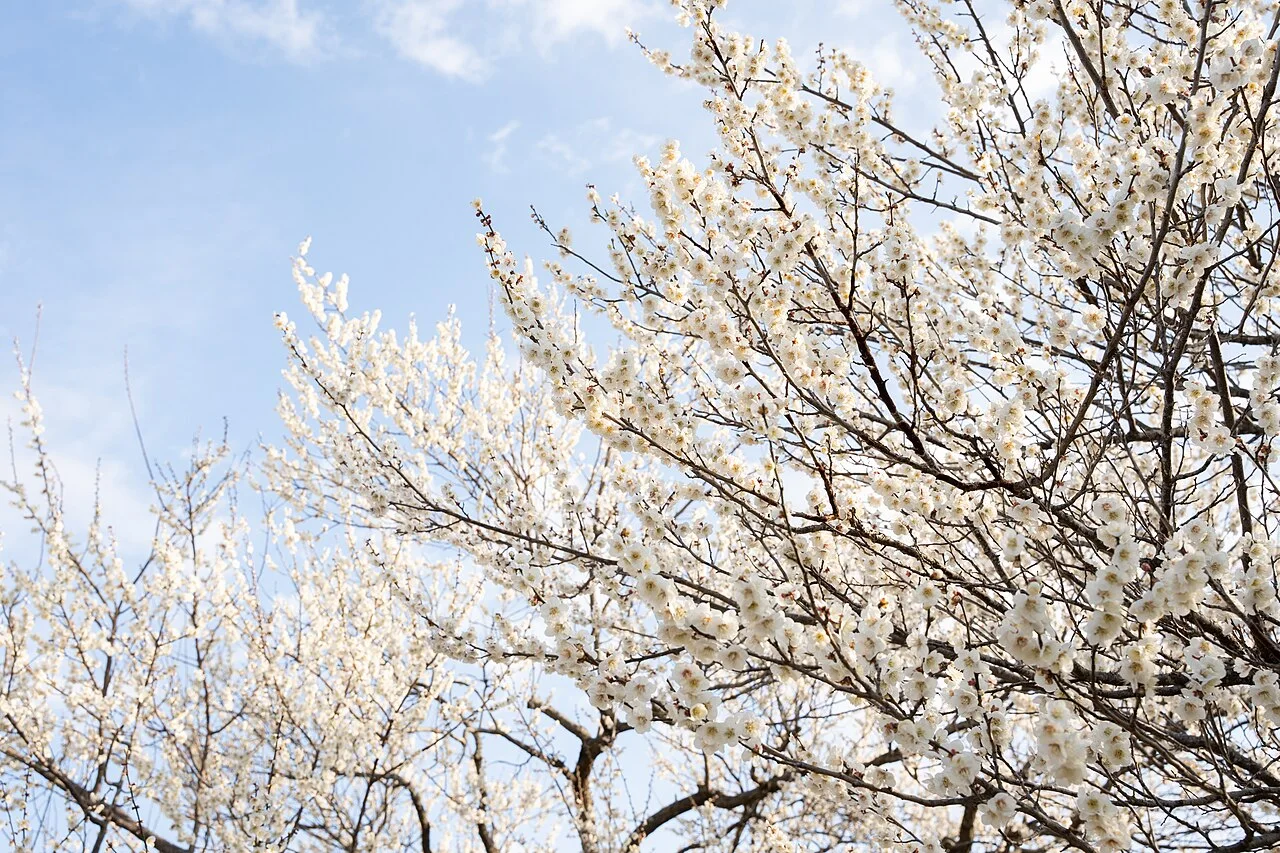
The observatory's official sample tree stands in Osaka Castle's Nishinomaru Garden. 'First bloom' is declared when that tree opens five to six blossoms, while 'full bloom' means roughly 80 per cent of its buds are out. If the news announces first bloom in Osaka and you want to see a full avenue of flowers that same week, check park photos taken in the past day or two to see whether outer branches and trees in the background are turning white. Close-ups of a single twig help identify cultivars, whereas wide shots along park paths show whether a full walk is ready.
When booking accommodation, decide upfront where flexibility is worth paying for. If your flight dates are fixed, staying at one hotel for the entire trip lets you pivot easily between central Osaka, Suita and Tsurumi by train if blossoms run early or late, sparing you luggage transfers, locker hunts and second check-ins. If your hotel dates are still flexible, note the free cancellation deadline and use the seasonal forecast to decide whether to shift them. Keep Osaka Mint Bureau booking dates and night-illumination schedules separate on your calendar from peak bloom estimates.
Before boarding your flight, save one group of city pins and one group of outer-park pins on your phone map. For the city, mark the Osaka Castle Nishinomaru entrance, JR Sakuranomiya Station and Tenmabashi. For the outer parks, mark Tsurumi Ryokuchi's Central Gate plus Expo '70 Commemorative Park's Natural and Cultural Gardens Central Gate and East Gate in Suita. When saving posts from other travellers, jot down the date the photo or video was shot and which cultivar it shows: lush pink clusters spotted in April are often late-blooming Yae-zakura, which tell you more about timing for the Osaka Mint than for the Somei-Yoshino at Osaka Castle.
| Observed Bloom Status | First Stop | Easy Add-On for the Same Day |
|---|---|---|
| City Somei-Yoshino mostly in tight bud | Tsurumi Ryokuchi for Kawazu-zakura or Okame-zakura (check park bloom notes) | Sakuya Konohana Kan conservatory and the Great Pond near Central Gate |
| City Somei-Yoshino nearing full bloom | Osaka Castle Nishinomaru Garden or the Okawa Riverbank | Split the castle and riverfront across two half-days |
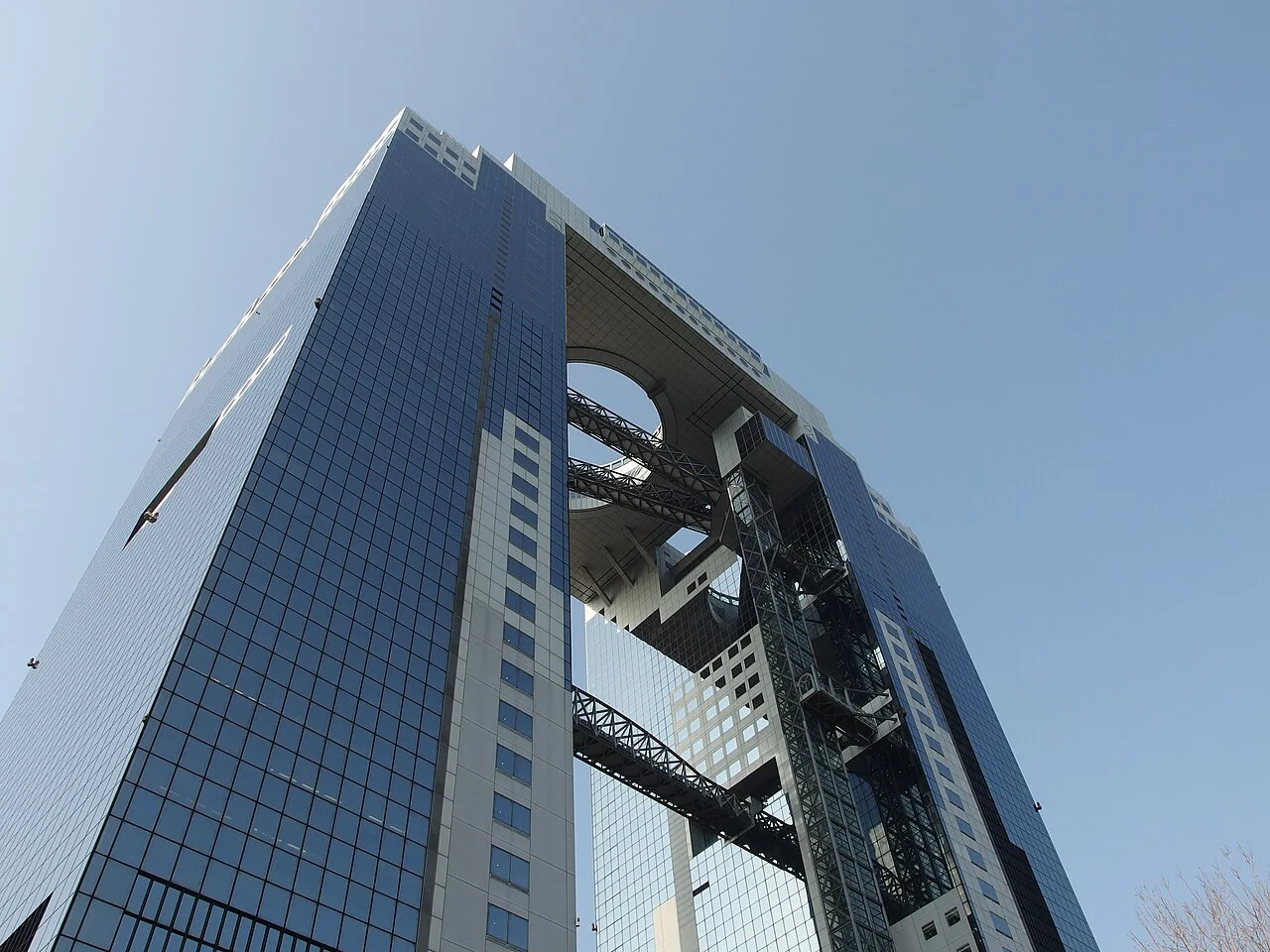
| City Somei-Yoshino starting to shed petals | Expo '70 Commemorative Park East Plaza for Sato-zakura (check park bloom notes) | Tower of the Sun exterior or the Japanese Garden |
| Confirmed Osaka Mint Bureau entry slot | Walk from Tenmabashi to the Mint's South Gate | Continue along the Okawa River after exiting the North Gate |
Osaka's Somei-Yoshino cherry blossoms typically open on 27 March and reach full bloom on 4 April. Pair a half-day around Osaka Castle and the Okawa River with Tsurumi Ryokuchi, Expo '70 Commemorative Park in Suita, or the Osaka Mint, with bloom-based route swaps, evening illuminations, tickets and wet-weather plans.
Osaka Castle Park's Two Sides: Keep Nishinomaru Separate From the Outer Moat
To frame the castle keep with cherry blossoms, make Nishinomaru Garden your first stop. Take Exit 9 from Tanimachi Yonchome Station on the Osaka Metro Chuo Line towards Otemon Gate, pass through the gate and follow signs for Nishinomaru Garden. You can pause by the moat before entering the garden proper. Because Osaka Castle Park is vast, entering only 'Osaka Castle' into your navigation often sends you straight to the keep entrance—leaving visitors who queue for the tower to discover that Nishinomaru lies on a separate path. Meeting companions outside the Nishinomaru ticket gate is also far simpler than trying to find one another inside the wider grounds.
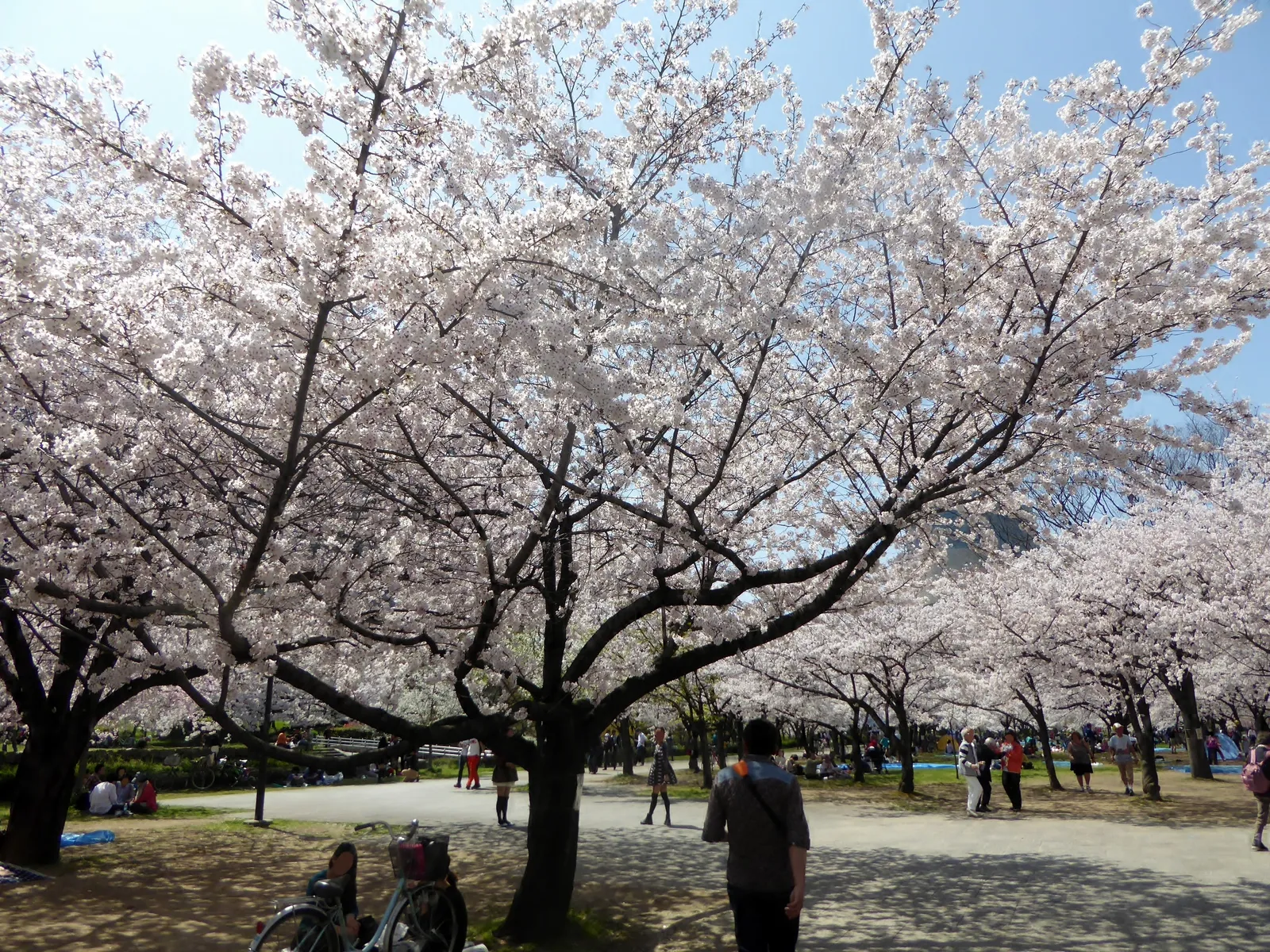
Sitting just west of the keep, Nishinomaru Garden holds around 300 cherry trees, mostly Somei-Yoshino. Standard hours from March to October are 09:00–17:00 (last entry 16:30), closed Mondays or the following weekday if Monday is a public holiday. From 1 April 2026, standard admission is ¥300 for adults and free for junior high school students and younger. Spring festival pricing and extended evening hours follow the park's current Haru Matsuri (Spring Festival) announcements. If you want to tour both the garden and the keep at an unhurried pace, start with the timed garden first, then follow the paths out towards Sakura-mon Gate and the Honmaru inner bailey.
The park's open-air grounds are accessible 24 hours a day at no charge, making a free eastern-side stroll easy to carve out. From JR Osakajokoen Station on the Osaka Loop Line, walk towards the castle past JO-TERRACE OSAKA to view the stone walls and water along the East Outer Moat, then continue towards Aoya-mon Gate if energy allows. Arriving via Exit 3-B of Osaka Metro Morinomiya Station brings you past the fountain plaza first, placing the East Outer Moat in the second half of your walk. Both entrances sit on the park's eastern edge: if dinner is in Shinsaibashi, walking back to Morinomiya for the Nagahori Tsurumi-ryokuchi Line lets you arrive by JR and leave by underground smoothly.
A combined ticket covers both the Osaka Castle Keep interior and the Toyotomi Stone Wall Museum: ¥1,200 for adults, ¥600 for university and high school students with valid ID, and free for junior high school students and younger with ID. If you spot a long queue at the keep on a busy blossom day, treat taking photos from the plaza below and buying a ticket to go inside as separate decisions based on the crowd in front of you. You can also save the indoor castle exhibits for a rainy slot and focus on the moats, stonework and blossoms while the sun is out. For step-by-step interior routing, see the Osaka Castle keep and park route guide.
If part of your group only wants a short weekend stroll, arrange to meet at Otemon Gate or the Morinomiya fountain area. Those entering from Otemon can see Nishinomaru and the inner ramparts, while those starting from Morinomiya can photograph blossoms along the outer moat. Groups travelling with pushchairs or wheelchairs should check the park map beforehand to pick main gates with step-free toilets, leaving shortcuts with stairs or steep slopes to solo walkers. Where queues form ahead of narrow bridge gates, stick to the marked lane and avoid waiting in the middle of the bridge.
Walking the Okawa at Kema Sakuranomiya South From JR Sakuranomiya
Kema Sakuranomiya Park stretches for roughly 4.2 kilometres along both banks of the Okawa River from the Kema Weir to Tenmabashi, lined with around 4,800 cherry trees. Entry is free and the outdoor riverside paths remain open at all hours, though individual riverside facilities keep their own hours. For a first visit, take the JR Osaka Loop Line to Sakuranomiya Station—City of Osaka guidance puts the walk to the park at about three minutes. Set 'Sakuranomiya Station' rather than 'Sakura-mon' in your map app so you are not routed to the castle gate instead. If you plan to finish further south along the river, save JR Osakajokitazume Station, which sits on a different line from Osakajokoen Station.
With only half an hour to spare, walk from the station towards Genpachi Bridge to take in the river, stroll a short stretch of the bank and return to the same station. Keep to one side of the bridge pavement so passers-by can get through; in good light you can appreciate the full sweep of blossoms lining both banks before dropping back down to path level for unhurried close-ups. For a one-way walk without backtracking, stay on the station side of the river heading south—using Sakuranomiya Beach, Sakuranomiya Bridge and Fujita Residence Ruin Park as landmarks—and exit at JR Osakajokitazume Station. To extend further towards Tenmabashi, pick up the Tanimachi underground line or Keihan Railway for your next stop.
Commuters, cyclists and runners share the Okawa paths throughout the day. At peak times, walk with the flow of foot traffic, step into a wider clearing before stopping at a favourite tree, and file through narrow sections in single line. Walking the entire length of the park is best left to those keen on a full-distance stroll. When visiting with young children or older relatives, mark the next exit station ahead of time so you can finish as soon as you have seen a satisfying stretch. There is no need to criss-cross every bridge: simply step onto one with a wide pavement to take in the continuous ribbon of blossoms on the opposite bank.
Walking upstream from Tenmabashi works just as well in reverse. Exit 1 of Tenmabashi Station on the Osaka Metro Tanimachi Line is the City's designated exit for the riverside park, while Hachikenyahama sits right by the station—handy for enjoying the waterfront and a bite to eat before deciding whether to cross the bridge towards the Mint or head upriver. Anyone needing a lift should check the Tenmabashi Station layout map in advance: from the platform, head through the North Ticket Gate to reach the Keihan-side lift up to street level. While the Osaka Mint is open to the public, follow the day's entry routing once over the bridge, or save the riverside walk until after you exit if queues are heavy.
When blossoms are only half out, walk along one bank to find a cluster already in bloom and frame it with a bridge and the water behind; full floral canopies are worth waiting for until the whole avenue catches up. Because the Okawa threads right through the city, it easily absorbs a spare 30-minute window—making it far calmer for late hotel arrivals or days with other timed tickets than dashing from an underground exit to beat a closing gate.
Arriving Early in March: Take the Nagahori Tsurumi-ryokuchi Line for Early Blooms
If you arrive in early to mid-March, check Tsurumi Ryokuchi's bloom updates first. The park lists Okame-zakura as typically peaking from early to mid-March, bearing deep-pink, downward-facing flowers. On 4 March 2026, park records noted Okame-zakura already in prime condition west of Park Golf Course C, alongside Kawazu-zakura in the Mountain Plaza and west of Course C. When seasonal bulletins report Kawazu-zakura, go straight to the zone named in the update: early-flowering trees tend to cluster in small pockets rather than around the Great Pond, where Somei-Yoshino take over in April.
The Nagahori Tsurumi-ryokuchi Line runs directly from Shinsaibashi or Morinomiya to Tsurumi-ryokuchi Station. For step-free access, the park recommends taking the ramp to the left after the ticket gates, connecting to the ramp ahead on the right, and crossing the zebra crossing towards the Central Gate. Check the park map on arrival. When March bulletins point to the Mountain Area, note that this section opens 09:00–16:30 (extended to 17:30 from April); if time is tight, walk straight to the flowering trees and loop back to the Central Gate. General park grounds are free and open 24 hours, and in April you can head straight for the western or north-eastern shores of the Great Pond for Somei-Yoshino.
Families with older relatives can treat the Great Pond as a gentle turnaround point while keen photographers push on to the Mountain Plaza for early blooms. In light rain, stay near the Central Gate and pair the stroll with the Sakuya Konohana Kan conservatory, which normally opens 10:00–17:00 (last entry 16:30) and closes Mondays or the following weekday on public holidays. If you spent the morning at Osaka Castle, changing at Morinomiya keeps your entire journey on a single line and spares first-timers from hunting for companions across distant park entrances.
You can also wait for Expo '70 Commemorative Park in Suita to post sightings of Kanhi-zakura, Higan-zakura or Yoko-zakura before heading out of town. In late March 2026, the park's photo log recorded Kanhi-zakura at the Spring of Haru, Higan-zakura along Sakura no Nagare and Flower Hill, and Yoko-zakura east of the pavilion grounds. If your group mainly wants castle views and cherry blossoms, use Tsurumi Ryokuchi as your quick early-bloom detour and save Suita for a day when you also want to see the Tower of the Sun or the Japanese Garden, rather than trekking out to the suburbs for a single unfamiliar tree.
Expo '70 Commemorative Park in Suita: Pick Higashi-oji Avenue or East Plaza
Located in Suita in northern Osaka Prefecture, Expo '70 Commemorative Park makes an easy half-day trip from Umeda or Namba: ride the Midosuji Line onto through-trains of the Kita-Osaka Kyuko Railway to Senri-Chuo, then transfer to the Osaka Monorail. If you are heading for the Tower of the Sun, alight at Bampaku-kinen-koen Station and walk north for about five minutes to the Natural and Cultural Gardens Central Gate. To go straight to East Plaza for Sato-zakura, board a Saito-nishi-bound monorail from Senri-Chuo: select services run directly to Koen-higashiguchi Station, while others require changing onto the Saito Line at Bampaku-kinen-koen Station. From Koen-higashiguchi, it is roughly a five-minute walk west to the East Gate. Because each station serves a different entrance, agree on your gate before anyone sets off separately.
For Somei-Yoshino, enter via the Central Gate, pass the Tower of the Sun and continue east along Higashi-oji Avenue in the Natural and Cultural Gardens. Once the canopy thickens into peak bloom, stroll at your own pace and add Sakura no Nagare or the Japanese Garden if time permits. Both areas are spacious; with children in tow, you can easily combine the Tower of the Sun exterior, Higashi-oji Avenue and a break on the lawns before leaving through the East Gate. As Somei-Yoshino begins to fade, check the park's Sato-zakura photo updates—in 2026, Sato-zakura were photographed in East Plaza on 14 and 16 April, giving late-season visitors a clear cue to start at the East Gate.
A single admission ticket covers both the Natural and Cultural Gardens and the Japanese Garden: from 1 April 2026, ¥450 for high school students and adults, and free for elementary and junior high school students. Standard hours are 09:30–17:00 (last entry 16:30), closed Wednesdays or the next weekday after a national or substitute holiday. The park opens daily without a Wednesday closure from 1 April to 2 May. Applying that calendar to 2027, 31 March falls on a Wednesday and would be closed, whereas Wednesday 7 April falls inside the daily-opening window. Keep late-March Wednesdays for the city riverfront and schedule Suita on an open day.
The Tower of the Sun is visible from inside the paid park grounds, while entering the tower itself requires a separate timed reservation. If only one or two people in your group wish to go inside, let them book a slot while the rest explore the Japanese Garden. Visitors with reservations must check in at the tower's reception desk 20 minutes before their slot, so factor in both ticket-gate queues and the walk from the park entrance. Pushchair and lift rules require booking the lift for children under four, each of whom must be accompanied and held by an adult inside. Those staying outdoors can walk Higashi-oji Avenue first and regroup at a clear landmark near the Central Gate afterwards.
If steady rain greets you in the morning, check indoor opening hours before setting out for Suita. The National Museum of Ethnology inside the park normally opens 10:00–17:00 (last entry 16:30) and closes Wednesdays (or the next weekday on holidays)—and keeps its own Wednesday closure calendar even during the park's continuous April opening. Exterior wall renovations are scheduled through the end of March 2027, during which the courtyard installation Ruins of the Future cannot be viewed. If you plan to use the museum as a short wet-weather stop, ask at the manned park entrance counter how combined museum admission and park transit work on the day, noting that the 15-minute walk from Central Gate to the museum is still outdoors. In heavy storms or high winds, staying in central Osaka for museums saves an extra train journey.
The Osaka Mint Bureau Has Its Own Season: Secure a Slot Before Planning the Route
The Osaka Mint Bureau's Sakura no Torinuke (Cherry Blossom Passage) spotlights late-blooming double-petalled Yae-zakura. Compared with the Somei-Yoshino lining castles and rivers, this walk showcases a striking variety of petal counts, colours and staggered bloom stages along one path. City guidance routes visitors one way for roughly 560 metres, entering through the South Gate on the Tenmabashi side and exiting via the North Gate near Sakuranomiya Bridge. Pin the South Gate on your map for arrival; only after leaving through the North Gate should you decide which stretch of the Okawa to follow, or head to a nearby restaurant along the way. If you plan to dine back around Tenmabashi, leave enough time for the walk back to the station.
Using 2026 as a guide, the passage opened from 9 to 15 April by advance online registration only, allocated first come, first served. Bookings opened at 09:00 JST on 18 March in 30-minute entry slots, with QR-code scanning and bag checks at the gate. Watch the Osaka Mint Bureau Sakura no Torinuke page for confirmed 2027 dates and registration links. When drafting your itinerary, keep your preferred evening open alongside a daytime alternative, then confirm dinner or onward trains only once your slot is locked in.
According to the City of Osaka, it takes roughly 15 minutes on foot to reach the South Gate from either Exit 2 (North Ticket Gate) of Tenmabashi Station on the Osaka Metro Tanimachi Line or Exit 14 (East Ticket Gate) of Keihan Tenmabashi Station. From JR Osakajokitazume Station, Exit 3 is also around a 15-minute walk. Because your booked time governs gate entry, allow extra minutes to cross the river, join the queue and present your QR code. Save the QR code offline on your phone beforehand, meet outside the station exit and walk to the South Gate together.
In 2026, the Mint prohibited eating inside the grounds, banned smoking throughout and asked visitors to pack away tripods and selfie sticks. Anyone carrying a picnic bento should treat lunch and the Mint visit as separate stops, eating outside before joining the entry line. Families with young children may want a snack before entering, and anyone wishing to linger near the final trees at the northern end should pick their next stop on the same side of the river. If slots sell out, you can still take the JR to Sakuranomiya for a stroll along both banks of the Okawa, or check Expo '70 Commemorative Park's East Plaza for late blossoms—just verify the cultivar and photo date before setting off.
Swapping the Two Half-Days Around Weather, Stations and Travel Companions
On Day 1, enter Osaka Castle from Tanimachi Yonchome and cover either Nishinomaru Garden or the East Outer Moat in the morning. For an afternoon by the water, head to Hachikenyahama at Tenmabashi for lunch and a breather, then gauge your group's energy: those ready for a sit-down meal can finish at Tenmabashi, while walkers carry on along the Okawa. Keep Day 2 as your wildcard—if city trees are at their peak, finish the river sections you skipped the day before; if blooms are running early or late, switch to Tsurumi Ryokuchi or Expo '70 Commemorative Park in Suita; or if you hold a Mint Bureau ticket, anchor your northern-district schedule around your entry slot.
Travellers staying just one night with evening plans can run the sequence in reverse. With a Mint Bureau booking, spend the early afternoon around Tenmabashi, walk to the South Gate for your time slot and head to a nearby station after leaving the North Gate. For Nishinomaru's night viewing, eat an early dinner near Tanimachi Yonchome or Tenmabashi before walking in through Otemon Gate. If you have a generous daytime gap, walk a stretch of Kema Sakuranomiya first, return to your hotel to rest and add layers, then come back out to Osaka Castle after dark. Avoid cramming two timed-entry attractions into the same evening, as a queue at one easily jeopardises the other; pick the single night scene you care about most.
When travelling with pushchairs or older relatives, design routes that let half the group peel off early. Arrange lunch near an underground or JR exit—outside Tenmabashi Station or in front of Osakajokoen Station—rather than beside a specific tree along a four-kilometre riverbank. Early risers can slip out from a nearby station for morning photos while everyone else catches up later, avoiding bottlenecks at every ticket barrier. If a large midday group struggles to move together, swap outdoor picnics for a proper sit-down restaurant near the station before tackling a short afternoon loop.
If you base yourself in Umeda, you have direct JR Osaka Loop Line trains from Osaka Station to Sakuranomiya and straightforward underground connections from Umeda to Senri-Chuo for the monorail. Dedicated dawn photographers looking for castle views may prefer staying near Tanimachi Yonchome or Morinomiya, picking whichever sits closer to Nishinomaru or the East Outer Moat. After evening illuminations, Tenmabashi makes the shortest walk back if you are returning on the Keihan line. To combine night views with a lively city dinner, check room layouts and late-night station exits around Shinsaibashi or Namba—you can ride the underground straight back from Morinomiya to Shinsaibashi, or calculate the final stop and walk on to Namba. For airport access and neighbourhood trade-offs, see the where to stay in Osaka comparison.
When comparing hotels, always check total prices using identical room types, guest counts and cancellation terms—a double-room rate cannot be extrapolated for three guests, and anyone bringing a pushchair should verify doorway widths and lift routes too. Think twice before adding an extra hotel night purely to chase peak bloom unless it actually buys you another daytime half-day; arriving late at night and checking out first thing only pays for an extra evening walk. If you still want to see blossoms on checkout day, arrange luggage storage first and pick one nearby park.
Different Railways Serve the Castle, River and Suburbs: Calculate Passes Day by Day
From JR Osaka Station to Sakuranomiya, take the outer-loop (clockwise) Osaka Loop Line train bound for Kyobashi; coming back to Umeda, board the inner-loop train bound for Osaka. If you ride the underground to the west side of the castle and return from the river by JR on the same day, each operator charges separately. Guests staying in Umeda should save JR Osaka Station, Midosuji Line Umeda Station and Tanimachi Line Higashi-Umeda Station as distinct pins—having the exact line name on your phone matters far more than searching for 'Umeda' alone once you reach street level. Higashi-Umeda gives direct Tanimachi Line access to Tenmabashi, while JR Osaka is ideal for starting at Sakuranomiya.
Osaka Metro's Enjoy Eco Card costs ¥820 for adults on weekdays, ¥620 on weekends and public holidays, and ¥310 for children. As a quick benchmark, three standard adult underground rides at ¥240 each total ¥720—so the day pass saves ¥100 at weekends, whereas buying single tickets saves ¥100 on weekdays. If you walk between Osaka Castle and Tenmabashi, count how many times you will actually pass through underground ticket gates. Travelling north to Senri-Chuo also incurs a Kita-Osaka Kyuko fare from Esaka onwards, and the Osaka Monorail charges separately; exclude any JR or Keihan trips when testing whether an underground pass pays off.
To ride the Tanimachi Line north from Tenmabashi and change to the Midosuji Line for Shin-Osaka or Senri-Chuo, you must exit the ticket gates at Higashi-Umeda and re-enter at Umeda. When using a single ticket or an IC travel card for this out-of-station underground transfer, you must tap into the second station within 30 minutes—simply use the same IC card. If you pause in Umeda for a meal or to meet friends and exceed half an hour, the next leg is billed as a fresh journey. Walking from Higashi-Umeda to JR Osaka Station is an inter-company transfer via underground walkways, with separate fares on each railway.
Night Illuminations and Evening Strolls Run on Separate Clocks
Nishinomaru Garden runs a dedicated evening cherry blossom event. In 2026, the Kano Nighter illumination ran from 20 March to 12 April with hours extended until 21:00 (last entry 20:30) and event admission of ¥350 for high school students and adults. For 2027, check the park's Haru Matsuri listings for confirmed dates, switch-on times, last-entry cut-offs and your planned return station. To capture dusk light over the moat alongside lit-up trees, arrive outside Otemon Gate shortly before sunset to photograph the outer moat first before heading inside.
Expo '70 Commemorative Park in Suita also staged evening illuminations along Higashi-oji Avenue in 2026, setting exact dates according to bloom progress. Before making an evening trip out to Suita, verify both the park's illumination notice and your monorail connections back. Pair your exit gate with your return station when leaving Higashi-oji Avenue after dark: from the East Gate, the monorail back to Senri-Chuo goes via Bampaku-kinen-koen Station, with only select direct trains; to avoid a change, walk back along Higashi-oji Avenue to the Central Gate and board directly from Bampaku-kinen-koen Station. When carrying camera bags, pushchairs or shopping, saving a transfer matters more than squeezing in two extra rows of trees.
Kema Sakuranomiya Park stays open around the clock, offering bridge lights and city reflections after dark; stick to well-lit paths close to stations for an easy evening stroll. If you want to photograph canopy colour as well as reflections, arrive just before dusk while the riverside steps remain clearly visible. Visitors with older relatives or children should stay near a bridgehead and station exit so returning to street level is effortless. Should weekend rain set in at dusk, cut back into Tenmabashi Station for dinner rather than picking your way in the dark with an umbrella towards the next bridge.
If your return from an illumination involves two or more train changes, pinpoint your departure station in advance, check the last train that still connects onto your second line, and note which exit sits closest to your hotel. Because crowds surge towards the station together at closing time, pick an unmistakable landmark just outside the gate so anyone who misses a train can still make their own way back. Build in extra buffer for walking and queues rather than aiming for the last departure.
Rain, Fallen Petals and Eating a Bento Beneath the Trees
In light drizzle, shorten your Osaka Castle loop to Otemon Gate and the South Outer Moat; in heavy downpours, duck into the Osaka Museum of History right beside Exit 9 of Tanimachi Yonchome Station. Standard hours are 09:30–17:00 (last entry 16:30), closed Tuesdays or the next weekday after a public holiday; permanent-exhibition admission is ¥600 for adults, ¥400 for high school and university students, and free for junior high school students and younger. Sitting on the south-western corner of the park, the museum lets you step back out towards Otemon and the moat the moment skies clear. If your shoes and clothes are already soaked, eat near the station and save the park for your spare half-day.
When rain catches you along the Okawa, head to the Fujita Museum just outside Exit 3 of JR Osakajokitazume Station. Open 10:00–18:00 with no booking required, admission is ¥1,000 and free for visitors aged 19 and under with proof of age. Choosing this museum keeps you right beside a riverside exit, so once things brighten you can step straight out to Sakuranomiya Bridge and the surrounding paths. If you had planned to walk from Tenmabashi, check the river wind first—when gusts force umbrellas sideways, take the JR Tozai Line directly from the city instead of slogging along an exposed embankment.
Right after a spring shower, pick a riverside stretch or outer moat close to a station to see fallen petals gathering along the water's edge. Sustained rain leaves puddles, mud and slick flagstones, especially along sloping embankments and stone paths by the moats. Families with young children are better off staying on the upper paved walkways, pausing to take photos before moving on. Bring a compact groundsheet that folds neatly back into a bag and spread it only on dry, permitted patches—or, if your group already wanted a seated meal, eat at a restaurant table near the station and save the park purely for walking.
When eating a bento under the blossoms, keep bags, food and picnic sheets within your own sitting space, and keep park entrances, bridgeheads, paths and roped-off planting beds clear. City of Osaka barbecue rules list Tsurumi Ryokuchi and Osaka Castle Park as designated areas that generally require booking managed park facilities—there is no free open-flame barbecue zone in Osaka Castle Park. Bringing a pre-made bento is completely different from lighting a grill: if you have not reserved a barbecue pitch, pick up ready-to-eat food near the station, wait until you are settled in the park before unwrapping it, and take all containers and rubbish away with you.
On weekends with a pushchair, buy compact, easy-to-eat food before entering the park and check the grounds map early for toilets and your exit gate. Along the Okawa, save bento breaks for wider stretches of the embankment and pack everything away before crossing bridges for panoramic shots. Because Expo '70 Commemorative Park covers a much larger footprint, agree before setting out whether you are eating and departing via the East Gate or Central Gate so anyone heading back early knows which exit to take.
A few useful answers
When should I book my 2027 Osaka cherry blossom trip?
If seasonal forecasts are not yet out, aim for late March to early April. Osaka's Somei-Yoshino trees bloom on 27 March and reach full bloom on 4 April on average. Staying at least two nights lets you keep two interchangeable half-days to adjust around that week's official park photos.
Do you need to buy a ticket to see cherry blossoms in Osaka Castle Park?
The park's outdoor grounds are free to enter. Nishinomaru Garden charges ¥300 for adults during regular hours and is free for junior high school students and younger, while evening illumination events use separate times and pricing. Entering the castle keep and the Toyotomi Stone Wall Museum requires a combined indoor admission ticket.
How should I plan around Wednesday closures during cherry blossom season?
Kema Sakuranomiya Park's outdoor grounds are open 24 hours daily, and Nishinomaru Garden normally closes on Mondays rather than Wednesdays. Expo '70 Commemorative Park generally closes on Wednesdays, but opens continuously without Wednesday closures from 1 April to 2 May; the National Museum of Ethnology inside the park still follows its own closure calendar.
Are there late-blooming cherry blossoms if I miss peak Somei-Yoshino at Osaka Castle?
Use East Plaza in Suita's Expo '70 Commemorative Park as your Sato-zakura backup, checking official bloom logs for photo dates and cultivars before setting out. For the Osaka Mint Bureau, wait for the annual Sakura no Torinuke announcement to book a date and time slot for its one-way route from the South Gate to the North Gate.
Where is the easiest entry point for a short walk with a pushchair?
For a riverside stroll, take the JR to Sakuranomiya Station and walk an easy out-and-back stretch near Genpachi Bridge. At Tsurumi Ryokuchi, follow the step-free ramps from the ticket gates to the Central Gate and choose either the Great Pond or nearby paths based on bloom updates. At Osaka Castle, pick one side upfront—either Otemon Gate or the Morinomiya fountain area.
Official information and references
Sources used in this guide.
- Osaka Regional Meteorological Observatory — Osaka Prefecture Phenological Observations and Normals
- Japan Meteorological Agency — Kinki Region Climate and Somei-Yoshino Observation Standards
- Osaka Regional Meteorological Observatory — 2026 Osaka Full Bloom and Nishinomaru Sample Tree
- Osaka Castle Park — 2026 Official Guidebook and Park Routes
- Osaka Castle Park — Park Hours, Garden and Castle Keep Tickets
- Osaka Castle Spring Festival — 2026 Nishinomaru Evening Blossom Viewing
- City of Osaka — Station Exits for Nishinomaru Garden
- City of Osaka — Kema Sakuranomiya Park Facilities and Access
- Osaka Convention & Tourism Bureau — Okawa Riverbank Length and Kema Sakuranomiya Park
- Osaka Prefecture — Hachikenyahama Riverfront and Station Connections
- Osaka Metro — Tenmabashi Station Layout Map
- Tsurumi Ryokuchi Park — Official Bloom Updates and Photos
- Tsurumi Ryokuchi Park — 4 March 2026 Observation Log
- Tsurumi Ryokuchi Park — Somei-Yoshino Distribution
- Tsurumi Ryokuchi Park — Okame-zakura Bloom Period and Identification
- Tsurumi Ryokuchi Park — Step-Free Route to Central Gate
- Tsurumi Ryokuchi Park — Opening Hours and Entry Rules
- Sakuya Konohana Kan — Conservatory Opening Information
- Expo '70 Commemorative Park — Cherry Blossom Cultivars, Locations and 2026 Photos
- Expo '70 Commemorative Park — Monorail and Park Entrances
- Osaka Monorail — Main Line and Saito Line Transfers and Direct Services
- Expo '70 Commemorative Park — Opening and Closure Calendar
- Expo '70 Commemorative Park — Admission Fees From April 2026
- Osaka Prefecture — 2026 SAKURA EXPO and Higashi-oji Avenue Illumination
- Tower of the Sun — Admission Reservations and Check-In
- Tower of the Sun — Rules for Young Children and Lift Access
- National Museum of Ethnology — Opening Hours, Closures and Park Transit
- National Museum of Ethnology — Exterior Wall Renovations Until Late March 2027
- Japan Mint — Osaka Sakura no Torinuke Event Portal
- Japan Mint — 2026 Sakura Viewing Details and Entry Rules
- Chuo Ward, City of Osaka — 2026 Mint Bureau Application Period and Entry Slots
- City of Osaka — Mint Bureau South Gate Access and Station Exits
- Osaka Museum of History — Permanent Exhibition Fees and Opening Hours
- Osaka Museum of History — Tanimachi Yonchome Station Exit
- Fujita Museum — Opening Hours, Admission and Station Exit
- City of Osaka — Designated Barbecue Areas in Municipal Parks
- JR West — Sakuranomiya Station Platforms and Directions
- Osaka Metro — Enjoy Eco Card Fares and Coverage
- Osaka Metro — Standard Passenger Fares
- Osaka Metro — Out-of-Station Transfers Across the Three Umeda Stations
- Osaka Metro — IC Travel Cards and Transfer Fare Rules