Plan a 2026–27 winter trip to Osaka with Midosuji, Nakanoshima, and Namba Hikaritabi light dates, New Year shrine visits, holiday closures, underground walkways, and rainy-day backups.
- Region & Focus
- OsakaWhen to visit
- Reading Scope
- 20 min read · 10 chapters · 6 Q&As
- Official Verification
- 29 official sources checkedUpdated November 22, 2026 at 08:00 AM GMT+8
- Key Topics
- SeasonsWinterItineraries
Chapter Route Map (tap any stop)
- Which Month to Pick for Winter Lights
- How to Tackle Midosuji's Four Kilometers
- Nakanoshima's Projection Show: Start on the Public Hall's East Side
- January and February Nights: Namba or Tempozan
- Hatsumode, New Year's Eve, and Holiday Closures
- Two Rainproof Underground Routes: Umeda and Namba
- Cold Snaps and Rainy Days: Give Half a Day to One Indoor Venue
- What to Wear and How to Shift Plans If It Snows
- Dinner Strategy: Book Pufferfish Hot Pot or Eat Early
- Stretching the Trip with Kansai Day Trips
- Quick Q&A
If Nakanoshima's projection mapping is on your winter list for Osaka, lock in an evening for Osaka City Central Public Hall first. In 2026, the building's projections run only from December 11 to 25, while the tree lights along Midosuji stay lit through December 31. Arriving on or after January 1, 2027? Head to Namba Hikaritabi instead, which continues through February 14. Start Midosuji from the north if you are staying in Umeda, or pick a southern stretch from Namba. Over the New Year holidays, book your priority museums and dinners early, then fill the rest of your days with underground shopping corridors and hatsumode shrine visits.
Which Month to Pick for Winter Lights
To catch both the Central Public Hall projections and the Midosuji lights on the same trip, aim for December 11 to 25 and give yourself at least two evenings—one for the show in Nakanoshima and another for walking Midosuji. If you land on an evening flight, save the Public Hall for your first full day. The main projection show wraps up fairly early at night, and once you factor in landing, immigration, train transfers, and dropping bags at your hotel, you will get out the door much later than your flight arrival time suggests. Midosuji stays lit until 1:00 a.m., so even a late check-in leaves time for a short stroll near your hotel.
From late November through early December, focus on Midosuji, and pair it with the displays in front of Osaka City Hall and along the adjacent Nakanoshima promenade; the projections on the Public Hall's east facade and the surrounding light market start a bit later. From December 26 to 31, the City Hall facade, Nakanoshima illumination promenade, and Midosuji stay lit for easy post-dinner walks. If you want holiday stalls, pick your dates around the event schedule and choose a venue on the same side of town as your hotel from our Osaka Christmas markets guide.
The broader Festival of the Lights in Osaka 2026 runs from November 3, 2026, through January 31, 2027, with selected area programs continuing past New Year's. Namba Hikaritabi follows its own calendar: admission is free from November 13, 2026, through February 14, 2027, with most zones lit from 5:00 p.m. to midnight. On a mid-to-late January or early February trip, staying in Namba gives you a ready-made evening walk while leaving daytime flexible for weather-friendly museums or neighborhoods. After February 14, you can still build evenings around Dotonbori's year-round canal bridges and plan dinner at whatever pace suits your group.
Plan a 2026–27 winter trip to Osaka with Midosuji, Nakanoshima, and Namba Hikaritabi light dates, New Year shrine visits, holiday closures, underground walkways, and rainy-day backups.
How to Tackle Midosuji's Four Kilometers
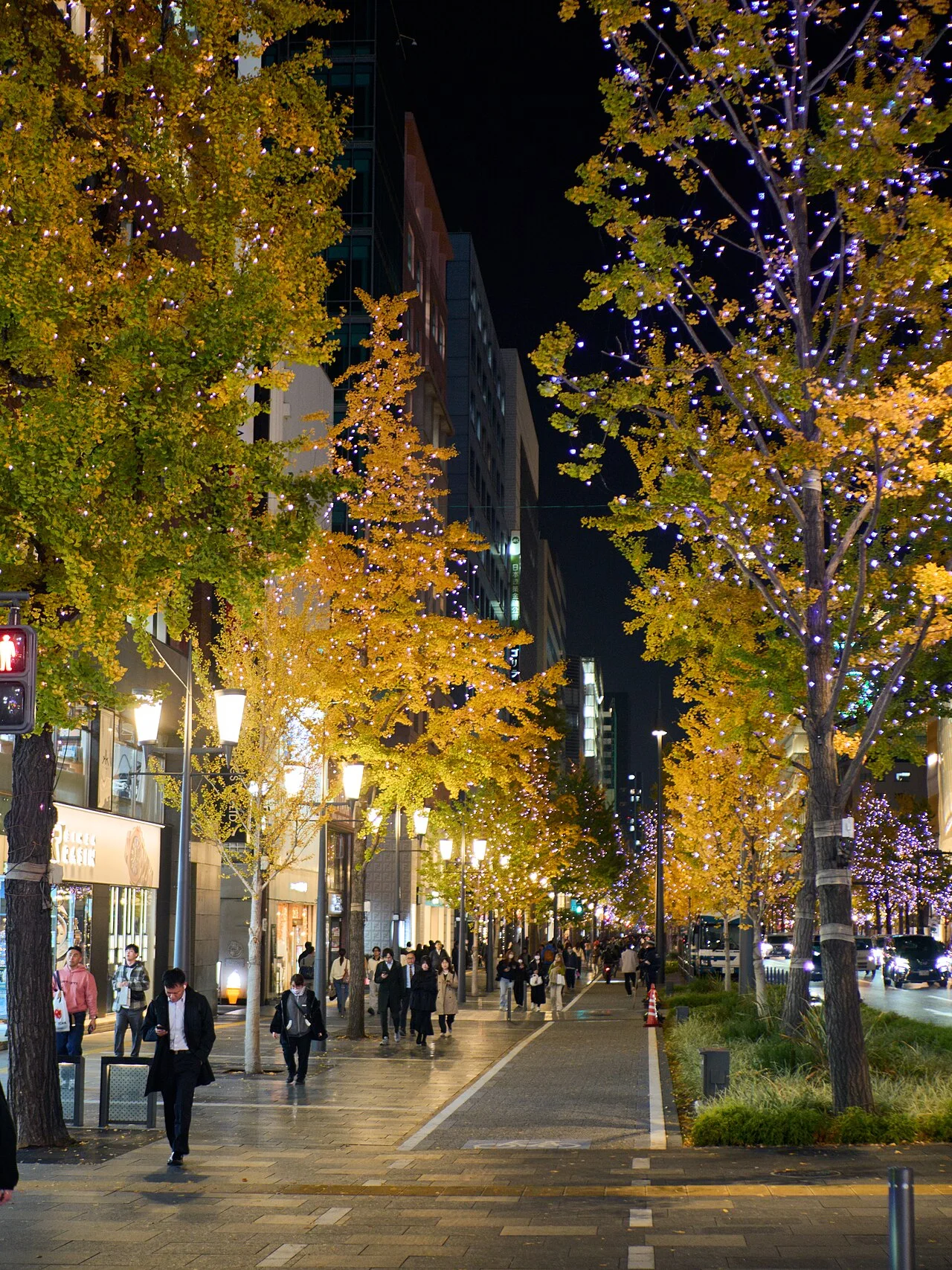
The 2026 Midosuji Illumination runs from November 3 to December 31, lighting up around 5:00 p.m. until 1:00 a.m. Stretching roughly four kilometers from Hanshin-mae Intersection in Umeda down to Namba-Nishiguchi Intersection, the boulevard is divided into five color-coded zones tracing Midosuji's changing eras: warm candlelight shades at the north end, champagne gold and mixed hues around Semba, and blue-white and multicolor displays toward the south. The Midosuji Subway Line runs directly underneath through Umeda, Yodoyabashi, Honmachi, Shinsaibashi, and Namba, making it easy to hop underground whenever your feet give out or rain starts.
If you are based in Umeda, grab a quick bite before 5:00 p.m. and walk south from Hanshin-mae Intersection toward Yodoyabashi. That keeps your light-viewing walk separate from the next day's shopping and leaves dinner options open around Osaka Station. To combine it with Nakanoshima, use Yodoyabashi as your pivot and cross the bridge north to City Hall instead of walking down to Honmachi and doubling back. Staying in Shinsaibashi or Namba? Start at Honmachi and walk south to duck into Shinsaibashi's malls or continue to Namba; if you have a dinner reservation in Namba, turn off near Dotonbori for your meal and finish the southern stretch afterward.
Walking the entire four kilometers end-to-end only makes sense if Midosuji is your sole plan for the evening. Between stopping at intersections, waiting for traffic lights, and ducking into storefronts, the walk takes noticeably longer than the straight-line distance suggests. If anyone in your group wants photos, sticking to one sidewalk across a few consecutive blocks still gives you the full color transitions with far fewer wide street crossings. Late at night, the lights stay on past the last trains—once subway service ends, you are left with taxis or walking. Before booking a hotel, check the exact route back to your front door rather than just measuring Hanshin-mae to Namba-Nishiguchi.
To photograph yellow leaves and lights together, time your shots around dusk while there is still enough daylight to see the canopy. Ginkgo foliage turns based on autumn temperatures, so past illumination photos offer only a rough seasonal cue. Scout the Midosuji ginkgo corridor during the day, then use what you see on the trees to pick which subway station to start from that night.
Nakanoshima's Projection Show: Start on the Public Hall's East Side
Projection mapping on Osaka City Central Public Hall runs from December 11 to 25, from 5:30 p.m. to 9:30 p.m., with the final screening starting at 9:20 p.m. The display is projected onto the east facade. From Midosuji Line Yodoyabashi Station, take Exit 1 toward Osaka City Hall, cross the bridge, and follow the illuminated promenade east alongside the building until you reach the red-brick Public Hall and its east viewing area; visitors with strollers or wheelchairs can check the station map to use the elevator at Exit 3 up to street level. If you are already riding the Keihan Nakanoshima Line, get off at Naniwabashi Station near the east end and walk back toward City Hall instead. The surrounding light market around Naniwabashi Station operates over the same dates from 4:00 p.m. to 10:00 p.m.
Pairing an afternoon at the Nakanoshima Museum of Art with the evening show at the Public Hall involves a riverfront walk. The museum is about five minutes on foot from Watanabebashi Station Exit 2, while the Public Hall sits over toward City Hall. On a clear, calm evening, the stroll between them is straightforward; in heavy rain, ride the Keihan Nakanoshima Line from Watanabebashi to Oebashi or Naniwabashi and walk to whichever section you want. Aim to enter the museum around 3:00 p.m. so you have time to rest and warm up before heading out, or skip straight to Naniwabashi if the exhibition runs long.
If the projection show is your main goal, head straight to the east side first and save the tree lights outside City Hall for afterward so you are not scrambling for a spot right before showtime. With a toddler asleep in a stroller, stay along the looser outer edge where you still get a clear view of the facade. Evening wind off the river bites hard: if anyone in your group chills easily, plan dinner right after the show and only circle back to City Hall if you still have energy. Raincoats beat umbrellas in tight crowds, and if you are meeting someone afterward, pick a landmark outside the exit flow rather than right in front of Naniwabashi Station's entrance.
After December 25, the Central Public Hall projections end, though the City Hall facade and adjacent Nakanoshima illumination promenade remain lit nightly from 5:00 p.m. to 1:00 a.m. through December 31. On those evenings, walking from Yodoyabashi past the exterior of the Public Hall is all about the river reflections, bridges, and historic architecture—stroll down one side and return to Yodoyabashi to catch the train. For a longer evening walk, cross back from City Hall to Yodoyabashi and continue south down Midosuji.
January and February Nights: Namba or Tempozan
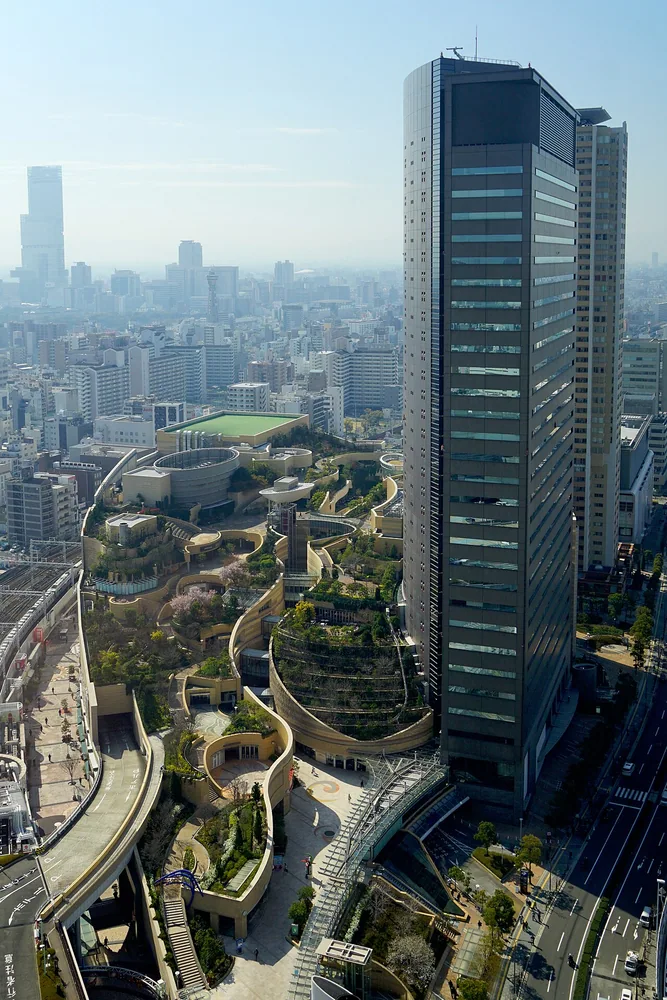
One of the anchor venues for Namba Hikaritabi is Namba Parks, right beside Nankai Namba Station—start here if you are traveling with young kids or anyone sensitive to the cold. The outdoor Waterfall of Light cascades from the 9th floor down to the 2nd; shoot from the lower levels looking up for the full vertical frame. To explore the upper terraces, stop by the 8th-floor Green Stage for wall projections, then continue up to the 9th-floor lawn plaza. Elevators make the route stroller-friendly, and you can browse whichever floors catch your eye on the way back down. It is roughly a seven-minute walk from Osaka Metro Namba Station Exit 4, or a direct indoor connection if you arrive at Nankai Namba Station. Have dinner in adjacent Namba CITY to keep food and lights within one compact block.
Tsutenkaku joins Namba Hikaritabi for 2026, featuring special Christmas-themed lighting from November 13 to December 25—pair a trip there with dinner in Shinsekai on the same night. Since Namba Parks Garden, Tsutenkaku, and Dotonbori's Glico Sign sit in separate pockets of town, stick to Namba Parks and a nearby meal if you want an early night back at a Namba hotel. While the overall festival spans New Year's, individual buildings keep different lighting hours and year-end closing days, so check Nankai's venue schedule if you have your eye on a specific terrace or projection.
Families wanting an indoor attraction and outdoor lights in one trip can spend the late afternoon at Tempozan. For 2026–27, Osaka Aquarium Kaiyukan announced its plaza illuminations from November 20, 2026, through January 12, 2027, running 5:00 p.m. to 9:00 p.m.; the outdoor lights are free, while aquarium entry requires a separate ticket. A glowing whale shark hangs across the main building's exterior—finish the aquarium exhibits, take a break next door at Tempozan Market Place, and step back onto the plaza around 5:00 p.m. If the weather turns nasty and you leave early, you have already covered the aquarium and can easily head back to Namba for dinner.
For sunny daytime hours in February, save the Osaka Castle Park plum grove on the east side of the inner moat. Park updates track bloom progress by variety, moving from early bloomers like Kanko and Toji into mid-season varieties such as Shirakaga and Nanko from late January, followed by late bloomers like Bungo and Musashino around late February. If you are visiting at the end of February, check the park's bloom chart beforehand to target the paths with trees still in color. For a simple photo walk, enter from the Morinomiya side, wander the plum grove first, and climb toward the Main Keep afterward—saving the interior museum exhibits for when clouds roll in or the afternoon wind picks up.
Hatsumode, New Year's Eve, and Holiday Closures
For a classic Osaka shrine visit, Sumiyoshi Taisha sits roughly a three-minute walk from Sumiyoshi-taisha Station on the Nankai Main Line. From Nankai Namba Station, board a Local train (bound for Wakayamashi or Kansai Airport) and double-check that it is marked Local and stops there—faster trains skip the station. You can also take the Hankai Tramway from Tennoji-ekimae and get off right in front of the shrine at Sumiyoshi-toriimae. Traveling with older relatives for the first time? Using the same rail line both ways makes station navigation easiest, while returning by streetcar is a pleasant detour if you have time to see the Sumiyoshi neighborhood.
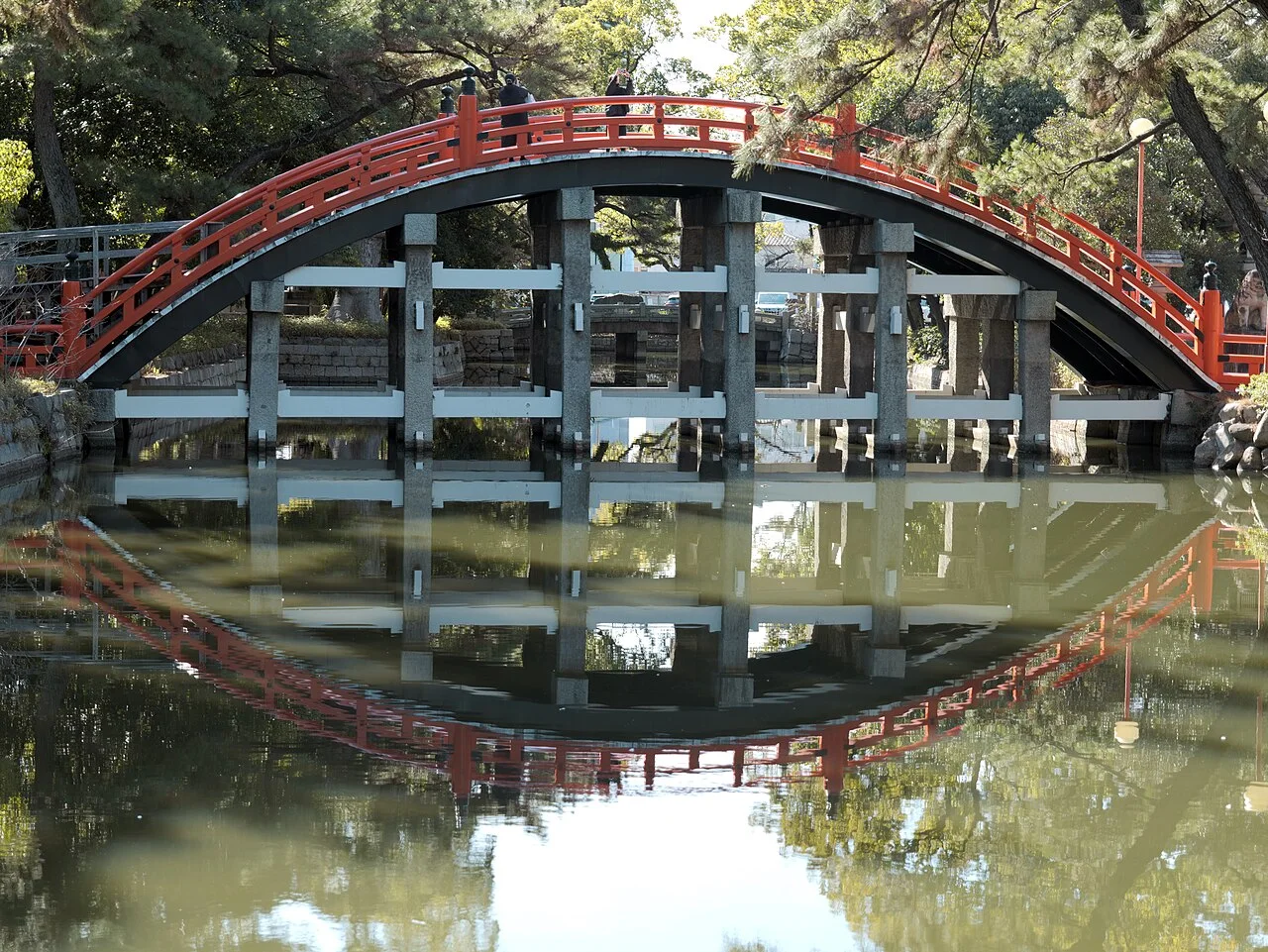
In winter, Sumiyoshi Taisha's gates normally open at 6:30 a.m. (6:00 a.m. on the 1st of each month and Hattatsu-bi), with the outer perimeter gates closing at 4:00 p.m. and the inner sanctuary at 5:00 p.m.; special gate and amulet-counter hours apply over the first days of the New Year, and the shrine's parking lot closes from December 31 to January 3. If you just want to pray and see the arched Sorihashi Bridge and National Treasure main halls without massive crowds, skip January 1–3 and visit on a morning right after the New Year rush—aiming for 9:00 a.m. or later if you want amulets from the shrine office. With a stroller, follow on-site routing around the Sorihashi Bridge, whose stone steps are steep and narrow, and take the side path straight to the main halls.
To start a day around Tennoji, visit Shitennoji Temple, about a five-minute walk from Shitennoji-mae Yuhigaoka Station on the Osaka Metro Tanimachi Line. While you can pay respects from outside the halls all day, paid entry to the Central Temple Precinct, hall interiors, and garden generally runs 8:30 a.m. to 4:00 p.m. from October through March. Put architecture sightseeing in the daytime and head toward Tennoji Station afterward for lunch. If you plan to hear the New Year's Eve bell, check the temple's year-end schedule and verify date-specific holiday train timetables before heading out—especially if you need a transfer, since the final departure from your first station may terminate before your connecting train. Better yet, stay within walking distance if you expect to be out past midnight.
Check museum calendars carefully at year-end. Osaka Castle's Main Keep normally closes from December 28 through January 1. On open days, hours run until 6:00 p.m. (last entry 5:30 p.m.), with admission at ¥1,200 for adults, ¥600 for high school and university students with valid ID (international students can present an ISIC card), and free for junior high school age and younger with proof of age (a passport works for visitors 15 and under). Plan your interior visit for a morning on or before December 27, or from January 2 onward. Even while the keep is shut, Osaka Castle Park stays open to admire the exterior. The walk up from Morinomiya includes a climb, so families with strollers can enjoy views from the moat first before deciding whether to push uphill.
If you are eyeing department store New Year sales, look up that exact branch's year-end hours, hatsu-uri (first-sale) schedule, and fukubukuro (lucky bag) rules—confirming door-opening times, pickup windows by brand or floor, and whether sales require numbered tickets or advance lotteries. On January 1 morning, pick either a shrine visit or a limited lucky-bag line rather than trying to cram in both, and save regular retail floors for later. Check restaurant operating hours date by date too: book a seated dinner in advance for December 31 or January 1, remember that underground mall eateries often stop taking orders before closing even when lights are still on, and prioritize a proper lunch if you have kids.
Visiting between January 9 and 11 lets you extend your New Year shrine plans to Toka Ebisu at Imamiya Ebisu Shrine, a lively festival praying for business prosperity where visitors pick up lucky bamboo branches (fukuzasa) and add decorative charms. In 2027, the Hoekago procession takes place on January 9—check the shrine's route details for that day if you want to catch the parade, or drop by for an evening visit on its own. Ride a Nankai Koya Line Local train to Imamiya-ebisu Station and walk east right outside the exit, or walk about eight minutes from Daikokucho Station Exit 3 on the Midosuji Line. Staying on the south side of Namba with dinner plans in Shinsekai? Combine the shrine visit and dinner on the same evening, following on-site one-way pedestrian controls and road closures.
Two Rainproof Underground Routes: Umeda and Namba
When cold rain hits Umeda, exit the Midosuji Line at Umeda Station's South Gate and follow signs for Exit 13 into the Whity Umeda underground mall. Coming from Higashi-Umeda Station on the Tanimachi Line, head out the Northeast or Northwest Gate toward Exit 1 to join the same corridor, or use the East Gate from Hanshin Osaka-Umeda Station. You can string together lunch, drugstore runs, and department-store basement food halls on this side before stepping back onto the subway later. If you are meeting friends underground for lunch, send the exact floor and shop name—never just "Umeda Station"—since JR Osaka, Hankyu, and Hanshin platforms sit blocks apart.
In Namba, walk underground from the west side via Yotsubashi Line Namba Station's North Gate toward Exit 27 into Namba Walk's 1st Avenue (Ichibangai), then continue east all the way to 3rd Avenue (Sanbangai) at Nippombashi Station. From the Midosuji or Sennichimae line at Namba, exits 16, 17, 22, and 23 via the Northeast or Northwest gates drop you directly into 1st or 2nd Avenue; at the Nippombashi end, exits 3 and 4 connect cleanly to the Sakaisuji and Sennichimae subway lines. Use this spine as a dry shortcut between Namba and Nippombashi before popping upstairs for the short street walk to Kuromon Market. To reach Shinsaibashi-suji Shopping Street without getting soaked, ride the Midosuji Line one stop rather than walking up at Namba, where street crossings remain exposed even between covered arcades.
Treating every "Namba" station as the same entrance is the fastest way to haul luggage down the wrong block. Nankai Namba Station sits beside Namba CITY and Takashimaya, the Kansai Airport limousine bus stops at Namba OCAT next to JR Namba, and Hanshin and Kintetsu trains serve Osaka-Namba Station. When researching where to stay in Namba, map the walk from your actual train platform or bus drop-off and note where elevators connect the basement concourse to street level. If dinners, Kuromon Market, and Namba Hikaritabi anchor your itinerary, staying within a short walk of Nankai Namba lets you drop off bags before heading back out.
Base yourself in Umeda if Kyoto and Kobe day trips are high on your list; around JR Osaka or Hankyu Osaka-Umeda, your door-to-platform walk matters much more than the neighborhood label. Nakanoshima suits travelers committed to art exhibitions and quiet riverside walks—when comparing places to stay in Nakanoshima, distinguish the Watanabebashi west end (near the art museum) from the Yodoyabashi east end (closer to City Hall and the Public Hall). If you plan to stay out late on New Year's Eve, scope out your street-level route during the day so closed mall entrances won't trap you at night.
Cold Snaps and Rainy Days: Give Half a Day to One Indoor Venue
Osaka Aquarium Kaiyukan works well for an indoor winter half-day. Ride the Osaka Metro Chuo Line to Osakako Station and walk roughly five minutes from Exit 1—note that this stretch is outdoors, so wind and rain hit hard. From Osaka Station you can also take Osaka City Bus Route 88, or Route 60 from Namba, getting off at Tempozan Harbor Village to cut down your exposed walk. Still, if traffic is heavy and you have a timed entry slot, the subway keeps schedules more predictable: from Namba, take the Midosuji Line to Honmachi and transfer to the Chuo Line, saving the bus for the ride back if you are tired.
Kaiyukan sells timed tickets by date and entry window, including e-tickets booked in advance. Re-entry ended on June 15, 2026, so schedule lunch at Tempozan Market Place either completely before or completely after your aquarium visit. If you pivot here last-minute because of rain, check remaining entry slots online before traveling; if convenient times are sold out, stay in the Namba or Umeda underground malls instead of dragging everyone out to the harbor to wait. Once you have a fixed-time ticket, keep the rest of the afternoon loose—eat at the Market Place, catch the plaza lights, and avoid stacking another timed reservation right after.
For an art afternoon, the 4th floor of the Nakanoshima Museum of Art hosts an exhibition of Japanese art from the British Museum collection from October 31, 2026, through January 31, 2027. Admission is ¥2,300 for adults, ¥1,400 for high school and university students, and ¥500 for elementary and junior high students. Standard hours are 10:00 a.m. to 5:00 p.m. (extended to 8:00 p.m. on Fridays), with last admission 30 minutes before closing. The museum closes on Mondays (except the January 11 national holiday) as well as December 31, January 1, and January 12. Going on a Friday leaves time to catch Midosuji lights afterward; if you are aiming for the last Central Public Hall projection, decide your walking or transit route before stepping inside the galleries.
If your stops cluster along the subway, Osaka Metro's Enjoy Eco Card one-day pass costs ¥820 for adults on weekdays, ¥620 on weekends and national holidays, and ¥310 for children, covering Osaka Metro (excluding Yumeshima Station) and eligible Osaka City Bus routes. For a simple evening light walk and return trip, tapping an IC card is enough; add up single fares first before buying a pass for days that pack in Osaka Castle, Tempozan, and another evening district. Note that even when trains run on a holiday timetable over year-end, check Osaka Metro's notice for which pass rate applies on each date, and remember that private lines like Nankai to Sumiyoshi Taisha or Keihan from the museum to the Public Hall require separate fares.
What to Wear and How to Shift Plans If It Snows
According to Japan Meteorological Agency 1991–2020 climate normals for Osaka, average daily highs and lows sit at 12.3°C and 5.3°C in December, 9.7°C and 3.0°C in January, and 10.5°C and 3.2°C in February. Since stations and department stores stay warmly heated during the day, wear an outer coat you can easily leave unbuttoned indoors, then zip up and add a scarf for windy riverfronts or outdoor queues at night. Touchscreen or convertible gloves beat constantly pulling mittens off for photos. If you are staying near easy shopping, skip packing a bulky spare coat and save suitcase room for adjustable mid-layers and extra socks.
For kids or anyone needing steady footing, grippy outsoles matter more than an extra inch of coat padding. On mornings after rain or sleet, slow down over stone paving outside stations, bridge decks, and shaded corners. If someone in your group hates the cold, keep a flexible weekday where you can flip outdoor walks and indoor museum visits on the spot when wind picks up. Tuck your IC card and tickets into an outer pocket so you can breeze through station gates without taking off your gloves.
Central Osaka only sees occasional flurries—the JMA's 1991–2020 normals list average maximum snow depth at 0 cm in January and 1 cm in February—so water-resistant shoes with good traction and spare dry socks are usually plenty for city sightseeing. If you wake up to a dusting on rooftops, check JMA snow or cold advisories and live rail updates before keeping suburban day trips. Inside the city, swap long open-air markets or riverbanks for indoor malls in Tennoji or Namba or an open museum, and pick destinations on the same train line as your hotel so you have a short walk back if sleet or rain starts.
On departure days, cut your final sightseeing stop first and check your airline alongside Nankai and JR-West service alerts. From Umeda, check the Osaka-Ekimae airport limousine bus; from Namba, check the OCAT airport bus route—confirming highway and bridge closures before switching from rail to road. If you have strollers and heavy bags, avoid scrambling across town to a different terminal: keep the two Namba transport hubs straight and budget extra walking time from your hotel. Taking the Shinkansen? Always check departures and transfers at Shin-Osaka Station rather than confusing its timetable with JR Osaka Station.
Dinner Strategy: Book Pufferfish Hot Pot or Eat Early
On Osaka winter menus, tecchiri is pufferfish hot pot and tessa is paper-thin pufferfish sashimi; toward the end of the meal, staff turn the remaining broth into zosui, a savory rice porridge included in many sets. When reserving, compare course menus against a la carte (tanpin) options to see whether your group wants both sashimi and hot pot, and clarify minimum orders, kids' meals, or pot-sharing rules upfront. If you are trying to make a light show afterward, ask the restaurant at booking time when you need to wrap up.
Over the holidays, lock in dinner reservations first and swap daytime shops around the weather. Book hot pot near your final stop of the evening so you can walk or take a short hop back to your hotel—crossing town for one famous spot leaves little buffer if a flight runs late or holiday train schedules shift. Light eaters can pick smaller individual portions around Umeda's underground dining halls or Namba's market alleys. Beyond pufferfish, warming staples like oden, udon, and beef sukiyaki fit different budgets, table sizes, and pacing—and with kids, sitting down early beats standing in a cold line outside a headline restaurant.
For a midday run to Kuromon Market, enter from the Nippombashi Station side and walk back through Namba Walk whenever you are ready to hop onto the subway. Individual stalls, specialty grocers, and underground shops keep different holiday hours, so handle dry souvenirs, Japanese sweets, and hot-pot bases during the day—and check whether your hotel room has fridge space before buying perishables. Since grazing adds up quickly here, visit before noon and share small bites across stalls if you already have a full dinner course booked.
Stretching the Trip with Kansai Day Trips
With only two nights, see the lights closest to your hotel on night one, save night two for the Public Hall or Namba Parks, and pick Osaka Castle Park or Kaiyukan for daytime. If rain sticks around, pair Umeda's underground malls with the Nakanoshima Museum of Art on one day and keep the other focused on Namba and Nippombashi. Three or four nights opens up a clear day for Kyoto or Kobe without changing hotels—staying anchored in Osaka spares you morning checkouts, locker hunts, and second check-ins. Want to soak in Arima Onsen? Carve out a dedicated ryokan night and work backward from your check-in and dinner cutoff times to pick your departure from Sannomiya.
Which train you take to Kyoto depends on your first stop. Take the JR Kyoto Line from JR Osaka Station if you are starting near Kyoto Station or transferring there; ride Hankyu from Osaka-Umeda straight to Kyoto-Kawaramachi to step right into Nishiki Market, Kawaramachi, and Gion; or use the Keihan Line from Yodoyabashi if Fushimi Inari is first on your route. If snow hits northern Kyoto, skip chaining multiple transfers just to chase photos and stick to sights right off a single rail line—especially if you need to be back in Osaka that evening for Public Hall projections or a booked pufferfish dinner. Pick one Kyoto district and explore it properly.
For Kobe from Umeda, take JR to Sannomiya or Hankyu to Kobe-Sannomiya; from Osaka-Namba Station, catch the Hanshin through Rapid Express straight to Kobe-Sannomiya without transferring in Umeda. Spend the afternoon around Motomachi and the waterfront, using the covered Motomachi Shopping Street to dodge harbor gusts, then dine back in Sannomiya and confirm your late train before lingering for harbor night views. Splitting Kobe's port and Arima Onsen works best: direct buses run from Sannomiya and Shin-Kobe up to Arima, though heading up the mountain after an afternoon at the port means watching your ryokan's dinner deadline. Day-trippers visiting public bathhouses should pick their return bus or train first before squeezing in meals and souvenirs—by rail back to Sannomiya, ride the Kobe Electric Railway from Arima Onsen Station, transfer at Arimaguchi toward Tanigami, and switch to the Kobe Municipal Subway. If you are rolling luggage to a ryokan, check shuttle pickup spots when booking, as hill grades differ sharply between the bus terminal and train station.
A few useful answers
When in 2026 can I see both the Midosuji lights and Nakanoshima projections?
Plan for December 11 to 25. Midosuji illuminates around 5:00 p.m., while Osaka City Central Public Hall runs projections from 5:30 p.m. with the final show starting at 9:20 p.m. Staying in central Osaka makes it easy to split them across two evenings.
Are any Osaka winter lights still on after New Year's?
Yes. Namba Hikaritabi runs through February 14, 2027, with most zones lit from 5:00 p.m. to midnight. Osaka Aquarium Kaiyukan also schedules free outdoor plaza lights through January 12, 2027.
Do I need snow boots for Osaka in winter?
For city sightseeing, grippy waterproof shoes, extra dry socks, and a windproof coat are usually enough—the Japan Meteorological Agency's Osaka weather station records average maximum snow depth at 0 cm in January and 1 cm in February. If you are heading into mountain areas, check local weather and road conditions beforehand and pack footwear to match.
Is Osaka Castle open on New Year's Day?
Osaka Castle Park remains open for walking and exterior views, but the Main Keep normally closes for the year-end holidays from December 28 through January 1. Schedule an interior visit before December 28 or from January 2 onward.
How do I get to Sumiyoshi Taisha for a first hatsumode visit?
Take a Nankai Main Line Local train from Nankai Namba Station to Sumiyoshi-taisha Station and walk east for about three minutes. Coming from Tennoji-ekimae, you can also take the Hankai Tramway directly to Sumiyoshi-toriimae Station.
What can I do on a rainy winter day if I'm staying in Namba?
Walk underground through Namba Walk from Namba to Nippombashi, where most dining and shopping stays out of the rain. For a half-day attraction, take the subway to Osakako Station for Kaiyukan—just note there is still a roughly five-minute outdoor walk from Exit 1, or take City Bus Route 60 from Namba toward Tempozan to reduce the walk outside.
Official information and references
Sources used in this guide.
- City of Osaka: 2026 Festival of the Lights Core Program Announcement
- Festival of the Lights Executive Committee: Midosuji Illumination Route
- Festival of the Lights Executive Committee: Nakanoshima Shows and Venues
- Nankai Electric Railway: 2026–27 Namba Hikaritabi Announcement
- Osaka Metro: Namba Hikaritabi Access Guide
- Osaka Aquarium Kaiyukan: 2026–27 Plaza Illumination Announcement
- Japan Meteorological Agency: Osaka 1991–2020 Climate Normals
- Sumiyoshi Taisha: Gate Hours and Access
- Nankai Main Line: Sumiyoshi-taisha Station Train Stops
- Shitennoji Temple: Visiting Hours and Access
- Imamiya Ebisu Shrine: 2027 Toka Ebisu Announcement
- Imamiya Ebisu Shrine: Transit Access
- Osaka Castle Main Keep: Hours, Closures, and Admission
- Osaka Castle Park: Plum Grove and Bloom Updates
- Nakanoshima Museum of Art, Osaka: British Museum Japanese Art Collection Exhibition
- Nakanoshima Museum of Art, Osaka: Access
- Osaka Metro: Yodoyabashi Station Map and Exits
- Whity Umeda Underground Mall: Access
- Namba Walk Underground Mall: Access
- Osaka Aquarium Kaiyukan: Train and Bus Access
- Osaka Aquarium Kaiyukan: Date and Timed-Entry Tickets
- Osaka Aquarium Kaiyukan: End of Re-entry Notice
- Osaka Metro Enjoy Eco Card: Coverage, Fares, and Year-End Rules
- Kansai Airport Transportation: Namba OCAT Limousine Bus Route
- JR-West: Kinki Area Train Service Information
- Osaka Convention & Tourism Bureau: Tecchiri and Ponzu Culture
- Hankyu Railway: Kyoto and Kobe Line Route Maps
- Kintetsu and Hanshin: Osaka-Namba to Kobe-Sannomiya Stop Map
- Arima Onsen Tourism Association: Access from Kobe