Plan a 2026–27 winter trip to Osaka. Compare Midosuji, Nakanoshima and Namba Hikaritabi illumination dates, New Year shrine visits, festive closures, underground shopping arcades in Umeda and Namba, and wet-weather backups.
- Region & Focus
- OsakaWhen to visit
- Reading Scope
- 20 min read · 10 chapters · 6 Q&As
- Official Verification
- 29 official sources checkedUpdated 22 November 2026 at 08:00 GMT+8
- Key Topics
- SeasonsWinterItineraries
Chapter Route Map (tap any stop)
- Which month to pick for Osaka's illuminations
- How to pick a section along Midosuji's four kilometres
- Nakanoshima is where the show happens: start on the east side of Central Public Hall
- Evenings in January and February: Namba or Tempozan
- Hatsumode, New Year's Eve and early-January closures
- Two underground routes: one in Umeda, one in Namba
- Cold snaps and rainy days: give half a day to one indoor attraction
- What to wear in Osaka in winter and how to adjust for snow
- Book blowfish hotpot for dinner, or pick somewhere for an early meal
- Broaden your trip with easy Kansai day trips
- Quick Q&A
If Nakanoshima's projection mapping is on your winter Osaka wish list, set aside one evening specifically for Osaka City Central Public Hall. In 2026, the hall's projections run only from 11 to 25 December, whereas the tree lights along Midosuji stay lit until New Year's Eve. Arriving on or after New Year's Day 2027? Switch to Namba Hikaritabi, which continues until 14 February. Base yourself in Umeda to walk Midosuji from the north, or in Namba to pick off a southern stretch. Around New Year, lock in your indoor museums and dinner bookings first, then fill the gaps with underground shopping arcades and hatsumode shrine visits.
Which month to pick for Osaka's illuminations
To catch both the Central Public Hall projections and the Midosuji illuminations on the same trip, visit between 11 and 25 December and ideally allow two evenings: one for the hall's show and another for a stroll along Midosuji. If you land on an evening flight, save the Central Public Hall for your first full day. The main night-time projection programme wraps up relatively early, and once you factor in landing, immigration, reaching the city centre and dropping bags at your hotel, the gap between your scheduled arrival and actually stepping back out is longer than it looks on paper. Because Midosuji stays illuminated until 01:00, a late arrival still leaves time for a short walk near your hotel.
Between late November and early December, start with Midosuji. You can also head to the front of Osaka City Hall and wander along the adjacent Nakanoshima Illumination Street, even though the east-facade projections at the Central Public Hall and the surrounding illuminated market stalls begin a few days later. From 26 to 31 December, the City Hall facade, Nakanoshima Illumination Street and Midosuji stay lit, making them an easy post-dinner walk. If festive stalls are a priority, pick your dates by venue schedule and consult our Osaka Christmas markets guide to choose one on the same side of town as your hotel.
The overall Festival of the Lights in Osaka 2026 runs from 3 November 2026 to 31 January 2027, with selected area programmes continuing after New Year. Namba Hikaritabi keeps its own calendar, running free of charge from 13 November 2026 to 14 February 2027, with most sites lit from 17:00 until midnight. For trips in mid-to-late January or early February, staying in Namba gives you a ready-made evening walk while leaving daytime hours free to match museums or neighbourhoods to the weather. Even after 14 February, Dotonbori's year-round bridge neon offers plenty to see at night, letting you schedule dinner around your group's own pace.
Plan a 2026–27 winter trip to Osaka. Compare Midosuji, Nakanoshima and Namba Hikaritabi illumination dates, New Year shrine visits, festive closures, underground shopping arcades in Umeda and Namba, and wet-weather backups.
How to pick a section along Midosuji's four kilometres
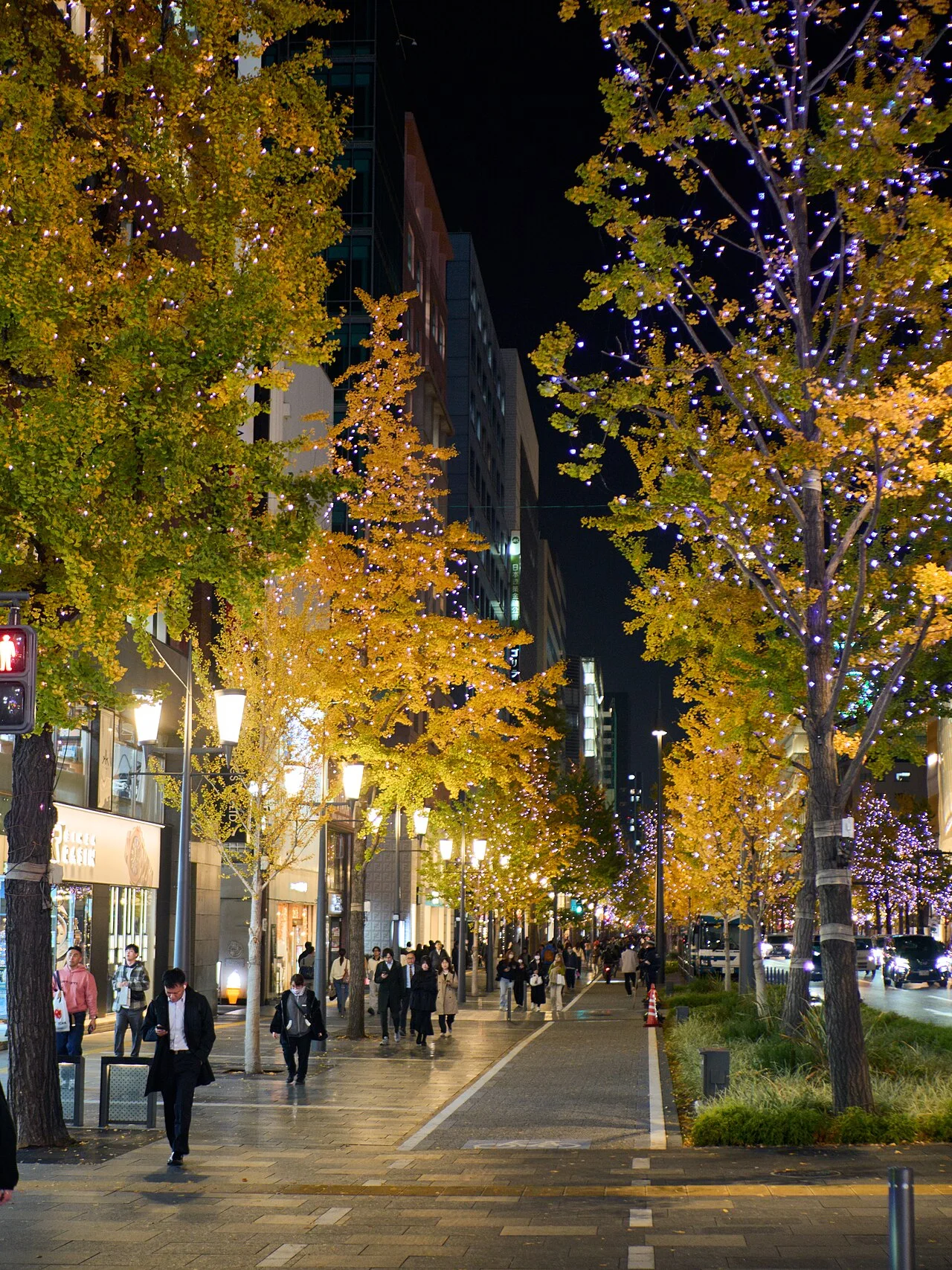
In 2026, the Midosuji Illumination runs from 3 November to 31 December, switching on at around 17:00 and staying lit until 01:00 the next morning. Stretching roughly four kilometres from the Hanshin-mae intersection in Umeda down to the Namba-Nishiguchi intersection in the south, the boulevard is divided into five official zones whose shifting colour palettes trace Midosuji's history. Candlelight tones open the northern stretch, champagne gold and blended hues appear around Semba, and blue-white and multicolour lights take over towards the south. Below ground, the Osaka Metro Midosuji Line calls sequentially at Umeda, Yodoyabashi, Hommachi, Shinsaibashi and Namba, so you can duck back onto the underground whenever feet tire or rain sets in.
If you are staying in Umeda, grab a bite before 17:00 and walk south from the Hanshin-mae intersection towards Yodoyabashi. That keeps your evening light walk separate from the next day's shopping around Osaka Station, where you can easily return for dinner. To pair it with Nakanoshima, treat Yodoyabashi as the hinge point and cross the bridge north to City Hall instead of walking down to Hommachi and doubling back. Guests staying in Shinsaibashi or Namba can work in reverse: start at Hommachi and head south, ducking into department stores once you reach Shinsaibashi or continuing to Namba. If your dinner booking is in Namba, peel off into the side streets around Dotonbori and pick up the southernmost stretch afterwards.
Walking the entire four-kilometre boulevard end to end is only worthwhile if you treat it as your main event for the evening. Between stopping at junctions for photos, waiting at pedestrian crossings and browsing shops along the way, the straight-line distance takes longer than expected. If someone in your group wants photographs, walking continuously down one pavement across several blocks captures the changing colour zones without repeatedly crossing the main road. Remember too that the lights remain on past the last trains: once services stop, your only ways back are other transport or walking. Before booking a hotel, check the late-night route right to its front door rather than judging solely by the Hanshin-mae to Namba-Nishiguchi span.
To photograph golden leaves and fairy lights together, aim for dusk so you can see the tree canopies while daylight lingers. Ginkgo colour shifts with autumn temperatures, so archive photos from past illumination nights serve only as a seasonal guide. Walk the Midosuji ginkgo stretch during the day first, and let the foliage you actually see dictate which station you start from that evening.
Nakanoshima is where the show happens: start on the east side of Central Public Hall
The projection mapping at Osaka City Central Public Hall runs from 11 to 25 December between 17:30 and 21:30, with the final screening starting at 21:20. The show is projected onto the east facade. Leave Midosuji Line Yodoyabashi Station via Exit 1 towards Osaka City Hall, cross the bridge to City Hall, and follow the illuminated promenade beside the building eastwards. Once you spot the red-brick public hall, circle round to the east viewing area; visitors with pushchairs or wheelchairs should check the station map and take the lift at Exit 3 to street level. If you are already travelling on the Keihan Nakanoshima Line, Naniwabashi Station sits right by the eastern end of the grounds, letting you walk in reverse from the hall back towards City Hall. Illuminated market stalls around Naniwabashi Station open over the same dates from 16:00 to 22:00.
Combining an afternoon exhibition at Nakanoshima Museum of Art, Osaka with an evening at the Central Public Hall involves a riverside walk. The museum is about five minutes on foot from Watanabebashi Station Exit 2, whereas the Central Public Hall sits closer to the City Hall side. In crisp, calm weather it is a pleasant walk; in heavy rain, ride the Keihan Nakanoshima Line from Watanabebashi to Oebashi or Naniwabashi and walk from whichever end suits your plan. Entering the museum around 15:00 leaves a buffer to rest and warm up before crossing the river, or, if the exhibition takes longer than expected, head straight out via Naniwabashi near the hall.
If you are only here for the projections, start on the east side and save the tree lights towards City Hall for afterwards so you are not jostling for a viewing spot just as a screening starts. With a toddler asleep in a pushchair, stick to the quieter outer edges where the crowd thins out and you still have an unobstructed view of the facade. Evening wind off the river can bite, so if anyone in your party feels the cold, book dinner for after the show and wander the City Hall stretch once everyone has eaten and warmed up. Waterproofs are far easier to manage in tight crowds than umbrellas, and if you are travelling in a pair, agree on a meeting point just outside the dispersal zone rather than directly in front of the Naniwabashi Station entrance.
After 25 December, the Central Public Hall projections finish, though the City Hall facade and the adjacent Nakanoshima Illumination Street stay lit nightly from 17:00 to 01:00 through 31 December. Walking between Yodoyabashi and the outside of the hall during that final week focuses on the river reflections, illuminated bridges and historic stonework; walk one bank to the end and return to Yodoyabashi for the train. If you want a longer light walk, double back from City Hall to Yodoyabashi and continue south down Midosuji.
Evenings in January and February: Namba or Tempozan
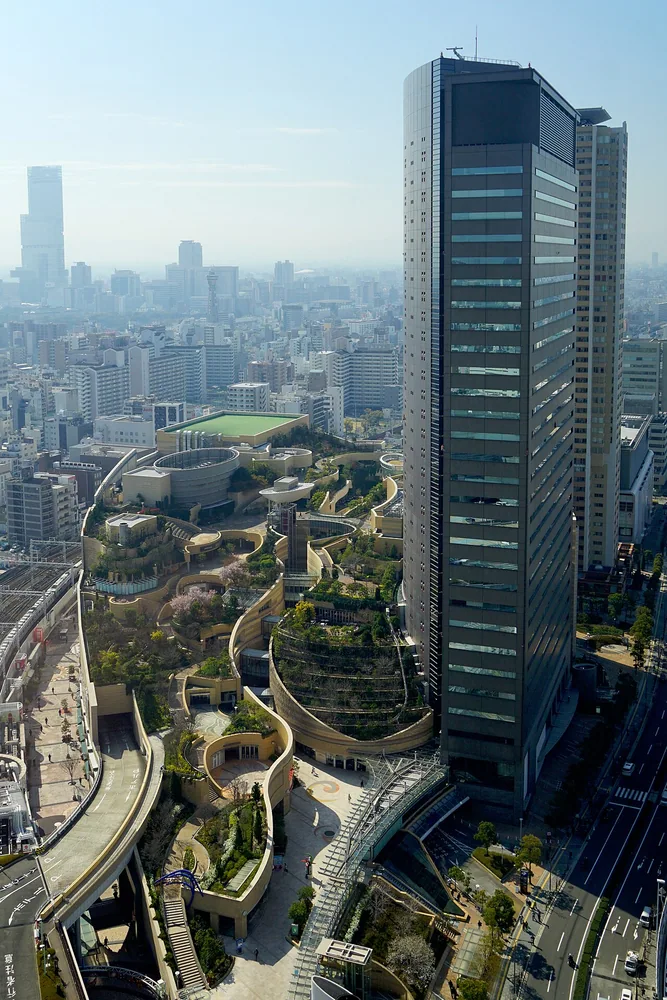
One of Namba Hikaritabi's centrepieces is Namba Parks, right beside Nankai Namba Station—an easy first stop if anyone in your group dislikes the cold or you have young children in tow. In the stepped outdoor gardens, the Waterfall of Light cascades down the architecture from the 9th floor to the 2nd; look up from the lower terraces for a full-height shot. To explore higher up, stop at the 8th-floor Green Stage for wall projections before heading to the 9th-floor lawn plaza for starlight displays. Lifts make pushchair access straightforward, and you can pause on whichever terraces appeal on the way back down. It is around seven minutes on foot from Osaka Metro Namba Station Exit 4, or follow the direct concourse links straight out of Nankai Namba Station. Having dinner in Namba CITY keeps both eating and illuminations within a compact footprint.
Tsutenkaku Tower joins Namba Hikaritabi for 2026, with special Christmas-toned lighting running from 13 November to 25 December. If you make a special trip for the tower, pair it with dinner in surrounding Shinsekai on the same night. Because Namba Parks' rooftop gardens, Tsutenkaku and Dotonbori's Glico sign sit in separate corners of southern Osaka, an early-evening plan near your hotel works best by keeping to Namba Parks and a nearby meal. Although the overall Namba Hikaritabi festival spans New Year, individual venues keep different lighting hours and year-end closing dates, so check Nankai's venue schedule if you have a specific terrace or projection in mind.
Families looking to combine an indoor attraction with evening lights on one outing can spend late afternoon at Tempozan. Osaka Aquarium Kaiyukan plans to illuminate its front plaza free of charge from 20 November 2026 to 12 January 2027 between 17:00 and 21:00, separate from paid aquarium admission. With a glowing whale shark displayed on the main building's exterior wall, families can finish touring the tanks inside, take a break in neighbouring Tempozan Marketplace and head back out to the plaza close to 17:00. If the weather turns nasty and you want to head back early, you have already ticked off the aquarium and can easily ride back to Namba for dinner.
For daytime sightseeing in February, save the Osaka Castle Park Plum Grove for a sunny spell. Set on the eastern side of the inner moat, the grove's blossom reports track early-blooming cultivars such as Kanko and Toji alongside mid-season varieties including Shirokaga and Nanko. Mid-season trees typically overlap from late January, followed by late bloomers such as Bungo and Musashino around late February. If you arrive towards the end of February, check the park's cultivar and colour table before setting off to pick the best paths. For a simple walk and castle photos, enter from the Morinomiya side towards the eastern inner moat, browse the blossoms first, then head up towards the main keep; if you plan to go inside the museum, save the galleries for when afternoon cloud or wind rolls in.
Hatsumode, New Year's Eve and early-January closures
For Osaka's quintessential New Year shrine visit, Sumiyoshi Taisha sits roughly three minutes on foot from Sumiyoshitaisha Station on the Nankai Main Line. From Nankai Namba Station, board a Local train—services may be signed for Wakayamashi or Kansai Airport, so check both the 'Local' designation and stopping pattern. Alternatively, take the Hankai Tramway from Tennoji-ekimae on a service stopping at Sumiyoshi-toriimae, which drops you right outside. If you are travelling with older relatives for the first time, sticking to the same line both ways keeps navigation simple at the exits, whereas switching to the tram for the return leg suits unhurried days when you want a glimpse of Sumiyoshi's streets.
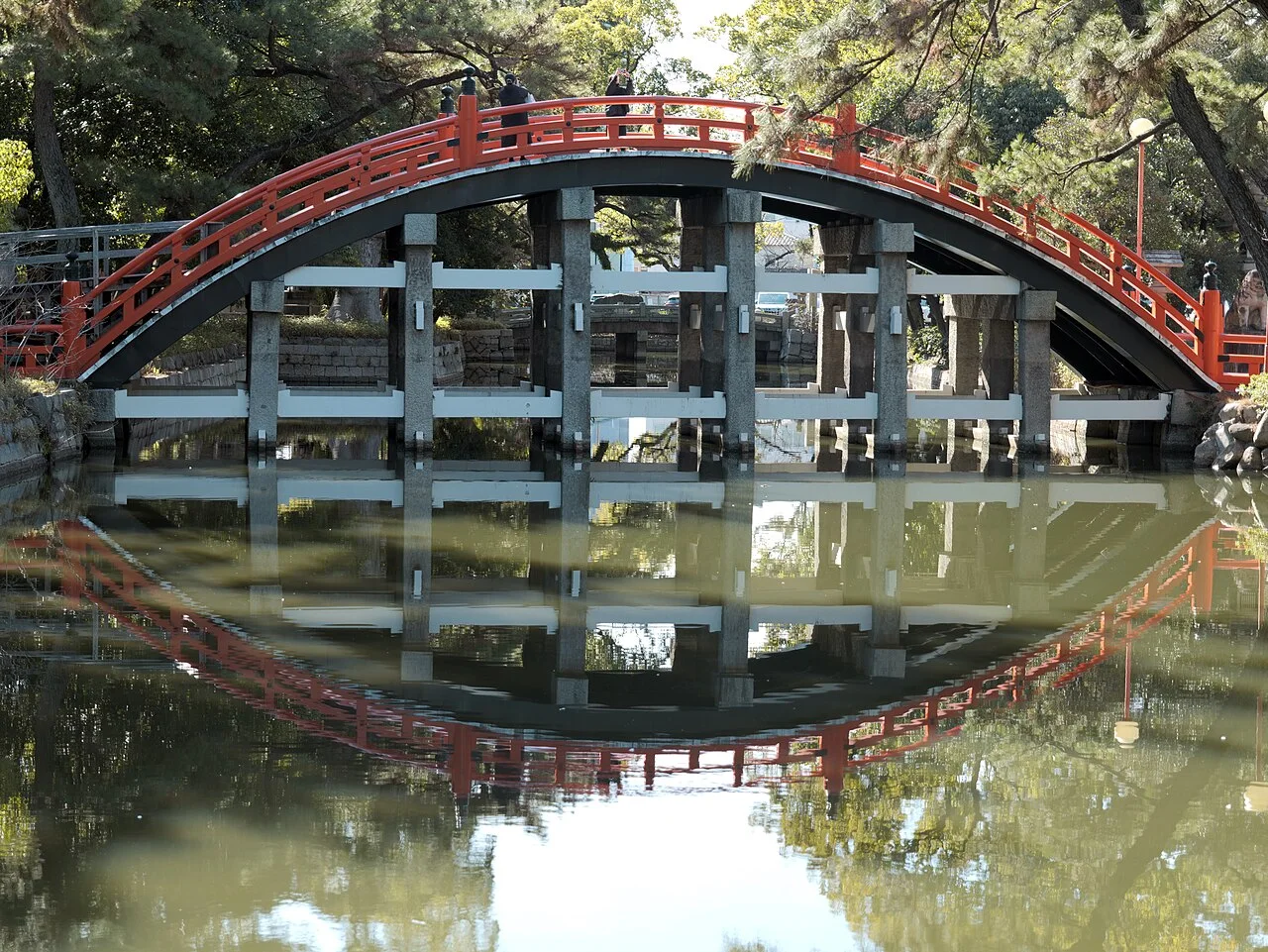
In winter, Sumiyoshi Taisha normally opens its gates at 06:30—or 06:00 on the first day of each month and on Hatsutatsu days—with the outer perimeter gates closing at 16:00 and the inner sanctuary at 17:00, though New Year brings special gate and charm-counter hours. The shrine's access page also notes that its car park is closed from 31 December to 3 January. If your goal is simply to pay respects and see the National Treasure main halls and the arched Sorihashi Bridge, skip the first three days of January and come on a quieter morning afterwards, timing your visit with the charm counter's standard 09:00 opening if you want an omamori amulet. Visitors with pushchairs should follow on-site routing signs on arrival: Sorihashi's stone steps are steep and narrow, so take any marked level bypass straight to the main shrine buildings.
To start the day near Tennoji, head to Shitennoji Temple, roughly five minutes on foot from Shitennoji-mae Yuhigaoka Station on the Osaka Metro Tanimachi Line. While you can normally pay respects from outside the halls all day, paid admission to the Central Precinct, inner halls and garden runs from 08:30 to 16:00 between October and March. Treat the temple as a daytime architectural stop and follow it with a meal around Tennoji Station. If you want to hear the New Year's Eve bell-ringing, check the temple's year-end notice on the day and use date-specific railway timetables to plan your return. When your journey involves a change of trains, check the last viable connection rather than the very last departure from your first station, which sometimes terminates at an interchange. Better still, stay within walking distance if you plan to be out past midnight so late-night transit isn't a worry.
Keep an eye on museum holiday calendars at the end of December too. Osaka Castle's main keep normally closes from 28 December to 1 January. Standard hours run until 18:00 (last entry 17:30), with admission at ¥1,200 for adults, ¥600 for high-school and university students with valid ID, and free for junior-high-school age and under with ID; overseas students should carry an ISIC card, while under-15s can show a passport to verify age. Schedule a morning inside on or before 27 December or from 2 January onwards; if you only want a stroll, Osaka Castle Park remains open for exterior views during the holiday closure. Approaching from Morinomiya involves a steady uphill climb, so visitors with pushchairs can admire the keep from the moat first before deciding whether to push on up.
For department-store New Year sales, look up each specific branch's year-end and New Year opening hours, first-sale dates and lucky-bag (fukubukuro) releases. Pay close attention to door-opening times, floor or brand collection windows and purchase rules. On the morning of 1 January, choose either a shrine visit or queuing for limited lucky bags and leave general browsing for later rather than rushing between both. Check actual holiday dining hours when booking meals, and reserve a sit-down dinner ahead of time for 31 December or 1 January. Heading into an underground arcade just before closing time often means kitchens have already called last orders even if lights are still on—if travelling with children, aim for a proper sit-down meal around midday.
Visiting between 9 and 11 January lets you extend your New Year shrine stops to Toka Ebisu at Imamiya Ebisu Shrine. Held to pray for business prosperity, the festival draws crowds picking up lucky bamboo branches (fukuzasa) and adding decorative charms. In 2027, the Hoeka palanquin procession is scheduled for 9 January—check the shrine's annual parade details if you want to catch the march, or drop in during the evening for a separate visit. Ride a Nankai Koya Line Local train to Imamiyaebisu Station and head east right outside the exit, or walk roughly eight minutes from Daikokucho Station Exit 3 on the Midosuji Line. If you are staying south of Namba and heading to Shinsekai for dinner, combine the shrine visit and meal on the same evening, following on-site one-way crowd routes and road closures.
Two underground routes: one in Umeda, one in Namba
When cold rain hits Umeda, head through the South Gate of Midosuji Line Umeda Station and follow signs towards Exit 13 into the Whity Umeda underground mall. Coming from Higashi-Umeda Station on the Tanimachi Line, take the North-East or North-West Gate towards Exit 1 to join the same concourse; from Hanshin Osaka-Umeda Station, use the East Gate. You can string together lunch, chemist runs and department-store food halls on this side before returning to the underground for afternoon stops elsewhere. If meeting friends for lunch underground, message the exact floor and shop name rather than writing 'Umeda Station': JR Osaka, Hankyu and Hanshin platforms are spread far enough apart that people stepping off different trains can end up streets apart.
In Namba, a sheltered underground spine runs from the North Gate of Yotsubashi Line Namba Station towards Exit 27 into Namba Walk's 1st Avenue, continuing east to 3rd Avenue at the Nippombashi end. From the Midosuji or Sennichimae line platforms at Namba, use the North-East or North-West Gates towards Exits 16, 17, 22 or 23 to drop straight into 1st or 2nd Avenue; at Nippombashi, Exits 3 and 4 connect back to the Sakaisuji and Sennichimae lines. Treat this passage as a dry corridor between Namba and Nippombashi, leaving only a short street-level hop to Kuromon Market. To reach the covered Shinsaibashi-suji Shopping Arcade without getting wet, take the Midosuji Line one stop north rather than walking above ground from Namba, where road crossings still leave you exposed to rain.
When staying in Namba, assuming every 'Namba' station shares one entrance is the fastest way to haul luggage down the wrong corridor. Nankai Namba sits right beside Namba CITY and Takashimaya, the Kansai Airport limousine bus terminal at OCAT connects to JR Namba, and Hanshin and Kintetsu trains serve Osaka-Namba Station. Before booking Namba accommodation, measure the walk from the exact station or bus drop-off you will use and note where lifts link the basement concourse to street level. If dinners, Kuromon Market and Namba Hikaritabi anchor your evenings, staying within a short walk of Nankai Namba lets you drop off shopping bags before heading back out.
Basing yourself in Umeda suits itineraries with day trips to Kyoto or Kobe; around JR Osaka or Hankyu Osaka-Umeda, walking time from hotel lobby to platform matters far more than the neighbourhood label on the listing. Nakanoshima works well if exhibitions and riverside evening strolls are your focus—when picking Nakanoshima accommodation, separate Watanabebashi in the west (handy for the museum) from Yodoyabashi in the east (closer to City Hall and the Central Public Hall). If you expect a late return on New Year's Eve, walk your route's junctions and entrances in daylight first so you know which street-level path to take once shopping-centre doors lock for the night.
Cold snaps and rainy days: give half a day to one indoor attraction
Osaka Aquarium Kaiyukan makes an easy winter half-day indoors. Take the Osaka Metro Chuo Line to Osakako Station and walk about five minutes from Exit 1, keeping in mind that the approach is uncovered in wind or rain. From Osaka Station you can also catch Osaka City Bus 88—or Route 60 from Namba—both bound for Tempozan Harbor Village, which cuts down the outdoor walk. When traffic is heavy and you have a timed entry slot, the underground is much more predictable: from Namba, ride the Midosuji Line to Hommachi and change onto the Chuo Line, saving the bus for the trip back if everyone is tired.
Kaiyukan sells timed e-tickets by date and entry slot, and re-entry was discontinued from 15 June 2026—so if you plan to eat lunch in Tempozan Marketplace, schedule the entire aquarium visit either before or after your meal. If you are making a last-minute wet-weather pivot, check remaining slots on the aquarium's booking page before setting out; if nothing suitable is left, stick to the underground malls in Namba or Umeda rather than bringing the whole family out to the bay just to queue. When you do hold a fixed ticket, keep the rest of the evening loose with dinner at Tempozan Marketplace and the plaza illuminations rather than booking another timed attraction back in town.
For an art fix, Nakanoshima Museum of Art, Osaka hosts an exhibition of Japanese art from the British Museum on its 4th floor from 31 October 2026 to 31 January 2027. Tickets are ¥2,300 for adults, ¥1,400 for high-school and university students, and ¥500 for primary and junior-high students. Opening hours are normally 10:00 to 17:00 (until 20:00 on Fridays, with last entry 30 minutes before closing); the museum is shut on Mondays (except the 11 January public holiday) as well as 31 December, 1 January and 12 January. Choosing a Friday visit lets you step out later straight onto illuminated Midosuji, though if you are aiming for the final Central Public Hall projection, decide your walking or train route before entering the galleries so you leave enough buffer.
If your movements stay mostly on the underground, Osaka Metro's one-day Enjoy Eco Card costs ¥820 for adults on weekdays, ¥620 at weekends and on public holidays, and ¥310 for children, covering Osaka Metro lines (excluding Yumeshima Station) and eligible Osaka City Bus routes. For a simple evening stroll to the lights and back, tapping a standard IC card is plenty; add up single fares first before buying a day pass for multi-stop days taking in Osaka Castle, Tempozan and another district at night. Over the year-end and New Year period, check Osaka Metro's pass-validity calendar even when trains run on a holiday timetable, and remember that private railways—such as Nankai to Sumiyoshi Taisha or Keihan between the museum and the Central Public Hall—require separate fares.
What to wear in Osaka in winter and how to adjust for snow
According to Japan Meteorological Agency 1991–2020 climate normals for Osaka, average daily highs and lows sit at 12.3°C and 5.3°C in December, 9.7°C and 3.0°C in January, and 10.5°C and 3.2°C in February. Because heated stations and department stores quickly feel warm during the day, wear a coat you can easily unzip indoors, then fasten the collar and add a scarf for breezy riverbanks or outdoor queues at night. Gloves that let you operate a camera or phone save you pulling them on and off constantly. If your hotel is close to shops, skip packing a bulky spare coat and use the luggage space for adaptable mid-layers and extra socks instead.
If you are travelling with children or anyone who relies on handrails, grippy soles matter more than an extra-thick coat. Slow down on wet stone paving outside stations, bridge decks and shaded corners after rain or overnight flurries. Anyone who feels the cold can pencil in an outdoor-then-indoor weekday plan and flip the order if the wind picks up as you step outside. Keep your IC card and tickets in an easy-access coat pocket so you can pass through ticket barriers without taking off your gloves when juggling a camera.
Central Osaka sees occasional flurries, with 1991–2020 JMA average maximum snow depths of 0 cm in January and 1 cm in February; shoes that handle slick pavements and spare dry socks are usually all you need in town. If you wake up to a dusting on rooftops, check JMA heavy-snow or cold-weather advisories alongside live rail status before committing to a suburban day trip. Within Osaka itself, swap long outdoor markets or riverbanks for indoor shopping centres in Tennoji or Namba, or an open museum. Keeping your start and end stops on the same rail line ensures a short walk back to your hotel if rain sets in for the return journey.
On flight days, cut your final city sightseeing stop first if weather threatens, then check your airline along with Nankai and JR West running updates. From Umeda, airport limousine buses from the Osaka-ekimae stops offer an alternative; from Namba, check the OCAT service—and verify bridge and expressway status before switching to road travel. Families with young children and large suitcases should avoid scrambling across town for a different departure terminal: clarify Namba's separate bus and rail hubs beforehand and allow plenty of walking time to the stop. If catching the Shinkansen, look up departures and connections from Shin-Osaka rather than confusing it with JR Osaka Station.
Book blowfish hotpot for dinner, or pick somewhere for an early meal
On Osaka's winter menus, tecchiri means blowfish hotpot and tessa is paper-thin blowfish sashimi; towards the end of the meal, staff often simmer rice in the leftover broth to make a savoury porridge called zosui, which some set menus include. When reserving, compare set courses with a la carte dishes to see whether hotpot and sashimi come together, and confirm portion sizes, minimum spends, children's meals or pot-sharing rules up front. If you are aiming to catch an illumination show afterwards, ask the restaurant at booking how late you need to vacate the table.
To keep festive-season days flexible, lock in dinner bookings in advance and adjust daytime shops to fit the weather. Choose a hotpot spot near your final evening stop so you can stroll back to your hotel or take a quick train afterwards—crossing town for one specific restaurant leaves you vulnerable to missed slots if flights are delayed or New Year timetables shift. Lighter eaters can browse smaller portions in Umeda's underground arcades or around Namba's markets. For warming Osaka comfort food, oden, udon and beef sukiyaki each suit different group sizes, budgets and pacing; with children in tow, snagging an early-evening table beats queuing outside a famous name.
For a midday visit to Kuromon Market, approach from the Nippombashi Station side and return via Namba Walk to hop back onto the underground wherever you like. Market stalls, specialist grocers and arcade shops each keep their own closing days. Pick up hotpot broths, wagashi sweets and gifts during the afternoon—buying chilled goods only if your hotel room has fridge space—and if you already have a set-menu dinner booked, visit before noon and share a few small bites between stalls.
Broaden your trip with easy Kansai day trips
With only two nights, see whichever lights are closest to your hotel on night one, reserve the second evening for the Central Public Hall or Namba Parks, and split your days between Osaka Castle Park and Kaiyukan. If rain sets in for two days straight, pair Umeda's underground malls with Nakanoshima Museum of Art on one day, and keep the next to Namba and Nippombashi. Three or four nights gives you room to save one clear day for Kyoto or Kobe without checking out, hunting for station lockers and checking in somewhere new. If Arima Onsen is on your list, give a ryokan its own overnight stay and work backwards from check-in and dinner times to pick your departure from Sannomiya.
Which train you take to Kyoto depends on your first stop there. Use the JR Kyoto Line from JR Osaka Station if you are heading around Kyoto Station or changing trains there; take the Hankyu line from Osaka-Umeda straight to Kyoto-Kawaramachi to step directly into Nishiki Market, Kawaramachi and Gion; or ride the Keihan Line from near Yodoyabashi if Fushimi Inari is on your route. If snow falls in Kyoto's northern hills, resist chaining two or three extra transfers just to chase photos and instead start your morning close to the underground. When you need to be back in Osaka that evening for the Central Public Hall projections or a booked blowfish dinner, stick to one Kyoto neighbourhood and explore it properly.
For Kobe, take JR from Umeda to Sannomiya or Hankyu to Kobe-Sannomiya; from Namba, catch a direct Hanshin Rapid Express from Osaka-Namba straight to Kobe-Sannomiya without changing in Umeda. Spend the afternoon around Motomachi or the harbourfront and stay in Sannomiya for dinner. If wind off the water gets brisk, duck through the covered Motomachi Shopping Arcade to trim outdoor walking, and check your return trains to Sannomiya or Namba before staying out for harbour views at dusk. For Arima Onsen, keep the baths separate from the port: direct buses run up the mountain from Sannomiya and Shin-Kobe, so check you won't miss ryokan dinner service if heading up after an afternoon on the waterfront. For a day-bath visit only, pick your return coach first and plan meals and souvenir shopping around it—or return by rail from Kobe Electric Railway's Arima Onsen Station, changing at Arimaguchi for Tanigami and onto the Kobe Municipal Subway. If arriving at a ryokan with luggage, check shuttle pick-up points when booking, as hill gradients differ noticeably between the bus stop and train station.
A few useful answers
Which dates in 2026 let me see both the Midosuji Illumination and Nakanoshima projections?
Aim for 11 to 25 December. Midosuji lights up at around 17:00, while Osaka City Central Public Hall runs its projection mapping from 17:30 with the final screening at 21:20. Staying in central Osaka makes it easy to split the two across separate evenings.
Are there still illuminations in Osaka after New Year?
Yes. Namba Hikaritabi runs through 14 February 2027, with most zones lit from 17:00 until midnight. Osaka Aquarium Kaiyukan also plans a free plaza illumination through 12 January.
Do I need snow boots for Osaka in winter?
For central Osaka, grippy everyday shoes, spare dry socks and a windproof coat are usually enough—the Japan Meteorological Agency reports average maximum snow depths of 0 cm in January and 1 cm in February. If you are heading into the mountains, pack footwear to match conditions at your destination.
Is Osaka Castle open on New Year's Day?
You can stroll through Osaka Castle Park and view the exterior, as the grounds stay open, but the main keep itself normally closes from 28 December to 1 January. Plan to enter the keep and its exhibitions before the closure or from 2 January onwards.
How do I get to Sumiyoshi Taisha for my first Osaka hatsumode visit?
Take a Local train on the Nankai Main Line from Nankai Namba Station to Sumiyoshitaisha Station and walk east for about three minutes. From Tennoji-ekimae, you can also ride the Hankai Tramway directly to Sumiyoshi-toriimae Station.
What is the best rainy-day route from Namba in winter?
Use the underground Namba Walk mall to travel between Namba and Nippombashi, keeping most dining and shopping indoors. For a major attraction, take the underground to Osakako Station for Kaiyukan Aquarium; Exit 1 still leaves about a five-minute uncovered walk, or catch Osaka City Bus 60 from Namba straight to Tempozan.
Official information and references
Sources used in this guide.
- City of Osaka: Festival of the Lights in Osaka 2026 Core Programme Announcement
- Festival of the Lights in Osaka Executive Committee: Midosuji Illumination Route
- Festival of the Lights in Osaka Executive Committee: Nakanoshima Shows and Venues
- Nankai Electric Railway: 2026–27 Namba Hikaritabi Announcement
- Osaka Metro: Namba Hikaritabi Access Guide
- Osaka Aquarium Kaiyukan: 2026–27 Plaza Illumination Announcement
- Japan Meteorological Agency: Osaka 1991–2020 Climate Normals
- Sumiyoshi Taisha: Gate Hours and Access
- Nankai Main Line: Sumiyoshitaisha Station Stopping Services
- Shitennoji Temple: Visiting Hours and Access
- Imamiya Ebisu Shrine: 2027 Toka Ebisu Announcement
- Imamiya Ebisu Shrine: Rail Access
- Osaka Castle Main Keep: Opening Hours, Closures and Admission
- Osaka Castle Park: Plum Grove and Blossom Status
- Nakanoshima Museum of Art, Osaka: Japanese Art from the British Museum
- Nakanoshima Museum of Art, Osaka: Access
- Osaka Metro: Yodoyabashi Station Exit Map
- Whity Umeda Underground Mall: Access
- Namba Walk Underground Mall: Access
- Osaka Aquarium Kaiyukan: Train and Bus Access
- Osaka Aquarium Kaiyukan: Dated and Timed Tickets
- Osaka Aquarium Kaiyukan: Discontinuation of Re-Entry
- Osaka Metro: Enjoy Eco Card Coverage, Fares and Year-End Rules
- Kansai Airport Transportation: Namba OCAT Limousine Bus Route
- JR West: Kinki Area Train Running Information
- Osaka Convention & Tourism Bureau: Tecchiri Hotpot and Ponzu Culture
- Hankyu Railway: Kyoto and Kobe Line Route Map
- Kintetsu and Hanshin: Osaka-Namba to Kobe-Sannomiya Stopping Map
- Arima Onsen Tourism Association: Access from Kobe