Choose cherry blossom routes in Hirosaki, Kakunodate and Kitakami Tenshochi by rail connections and walking distance. Plan two destinations in five days or three in six, with bases, the JR EAST PASS and changes to suit the blooms.
- Region & Focus
- Hirosaki
- Reading Scope
- 34 min read · 16 chapters · 3 Q&As
- Official Verification
- 14 official sources checkedUpdated 26 October 2026
- Key Topics
- SeasonsRail travelItineraries
Chapter Route Map (tap any stop)
- Choose the scenes you want before committing to all three destinations
- Read blossom reports by date, location and variety
- Think of the railway as a north–south line with a branch to the west
- Separate nights in a transport base from nights beside the blossoms
- An overnight stay in Hirosaki: Shin-Aomori, park walks and the return after dark
- For a Kakunodate day trip, book the return train before planning the walks
- Stay overnight in Kakunodate for morning walks and two blossom areas
- Kitakami Tenshochi: allow energy for the return after the river crossing and two-kilometre avenue
- Calculate the JR EAST PASS against journeys you will actually make
- Booking order: secure the two hardest train journeys to replace
- Five days and four nights: protect two full blossom days
- Six days and five nights: keep a day for travel when visiting all three
- Keep luggage off the riverbank walk
- With children or older travellers, set the turning point before leaving
- Reserve budget for choices that can improve the day
- Make the final adjustment around the nights already booked
- Quick Q&A
For a car-free cherry blossom trip in Tohoku, set aside the days and evenings you want for blossom viewing before linking Hirosaki, Kakunodate and Kitakami Tenshochi. Choose two destinations for five days, and consider all three with six days or more. This leaves time for proper walks, meals and changes in the weather. Stay in Hirosaki for early and late visits to the park. In Kakunodate, allow separate time for the samurai district and riverbank. At Tenshochi, include the river crossing and the return walk from the long avenue of cherry trees.
Choose the scenes you want before committing to all three destinations
If you have only four or five days, including travel from Tokyo or the airport, start with Hirosaki and Kakunodate, or Kakunodate and Kitakami. The first pairing suits visitors who want a castle park by day and night followed by historic streets. The second keeps the two main blossom days in Iwate and Akita, without travelling on to Aomori. To visit all three, add at least one day for travel and adjustments so that rain or changing blooms do not consume your sightseeing time.
Hirosaki offers different areas of the park at different times of day. Kakunodate has two distinct walks: the samurai district and the riverbank. Kitakami Tenshochi has a long riverside avenue of cherry trees. Give Kakunodate more time if you like buildings and weeping cherries. Allow half a day to a full day in Kitakami for a sustained walk beneath the trees. Keep an overnight stay in Hirosaki for moats, floating petals and evening illuminations. These differences will shape your enjoyment more than the order of three names on a map.
Agree which destination matters most to your group before arranging the other two. If the remaining trains run at awkward times, accommodation is well over budget, or the flowers in the second city are past their best, keep a full visit to your first choice. This is usually more rewarding than shortening every stop to retain the whole list. A blossom trip can have just two main destinations, with meals and rest easier to fit around them.
The Hirosaki Tourism and Convention Bureau introduces cherry blossoms at Hirosaki Park, Kakunodate and Kitakami Tenshochi in footage from 2018.
Choose cherry blossom routes in Hirosaki, Kakunodate and Kitakami Tenshochi by rail connections and walking distance. Plan two destinations in five days or three in six, with bases, the JR EAST PASS and changes to suit the blooms.
Read blossom reports by date, location and variety
Hirosaki City’s records for its Somei-yoshino reference tree show full bloom on 13 April in 2023 and 23 April in 2025: a ten-day difference at the same location. Read the publication date alongside the date a photograph was taken to establish which spring it shows. Search results describing late April as the best time help explain the season, but choosing your only blossom day calls for more precise information.
Break down reports within each city too. Hirosaki Park has its outer moat, inner grounds and late-flowering varieties. In Kakunodate, distinguish the weeping cherries on Bukeyashiki-dori from the Somei-yoshino along the Hinokinai River embankment. At Kitakami, separate the long avenue from other parts of the park. If a report says petals are starting to fall, find out which area it covers before changing cities. Cancelling accommodation on the strength of one city-wide label can mean missing an area still worth visiting.
Keep a simple record of the city, area, variety, latest report date, bloom status and the change or cancellation deadlines for booked transport and rooms. Compare all three before departure, then update the record once each evening during the trip. Spending the whole next morning checking your phone reduces time at the flowers. Use festival dates to plan stalls, illuminations and transport; let current bloom conditions determine the order of visits.
Think of the railway as a north–south line with a branch to the west
Kitakami lies on the north–south Tohoku Shinkansen corridor, which continues north through Morioka to Shin-Aomori. Kakunodate is on the Akita Shinkansen route, branching west from Morioka towards Akita. Hirosaki requires a further connection to the Ou Main Line at Shin-Aomori. Keep this layout in mind when searching for tickets so that you can distinguish arrival in a regional city from arrival at the blossom site.
Enter Hirosaki, Kakunodate and Kitakami stations as your destinations. Treating Shin-Aomori as the end of a journey to Hirosaki omits a connection; treating Morioka as arrival in Kakunodate omits the westbound leg. If a booking search substitutes another station for the city name, correct the destination before comparing fares and departures. Keep the date attached to each search, and distinguish weekdays, weekends and seasonal extra services.
For journeys between the three, compare routes via Morioka with those via Akita, including changes, waiting time and available seats. The shortest combination on a map may not offer the connections you need. If you want an afternoon walk, find a train that actually reaches your accommodation city around midday. If only a late arrival is available, treat it as a travel day and eat near the destination station.
Separate nights in a transport base from nights beside the blossoms
If you have plenty of luggage or are new to rail travel in Tohoku, use Morioka as a central base, followed by one or two nights in Hirosaki. Give Kakunodate and Kitakami a day each, returning to the same room to sort your belongings. Morioka can also make travel between Kitakami and Kakunodate easier to understand. You move your luggage less, but each day trip adds a return train journey.
For early street photographs or evening blossoms, adjust the overnight stops. Spend your Hirosaki evening in Hirosaki and your Kakunodate morning in Kakunodate. If both early and late visits matter, reduce the number of cities. Changing accommodation every night fragments the time before breakfast and after dinner. Check-in, finding a washing machine and repacking all take time that train searches do not show.
Compare total room prices for the same number of guests, beds and cancellation terms. Add return transport for rooms farther from the station. A cheaper single room that means booking two rooms also changes a family’s total cost. Flexible bookings during peak blossom season help you respond within clear change and cancellation deadlines. Book only the nights you intend to use, so your choices remain manageable.
An overnight stay in Hirosaki: Shin-Aomori, park walks and the return after dark
JR East’s Shin-Aomori Station route page lists Ou Main Line services towards Aomori separately from those towards Hirosaki and Higashi-Noshiro. After leaving the Shinkansen, follow the transfer signs towards Hirosaki and check the destination again on the platform. If you bought the whole journey to Hirosaki together, keep all tickets and collection details. Give each traveller their own tickets so that separate ticket gates or a brief separation are easier to manage.
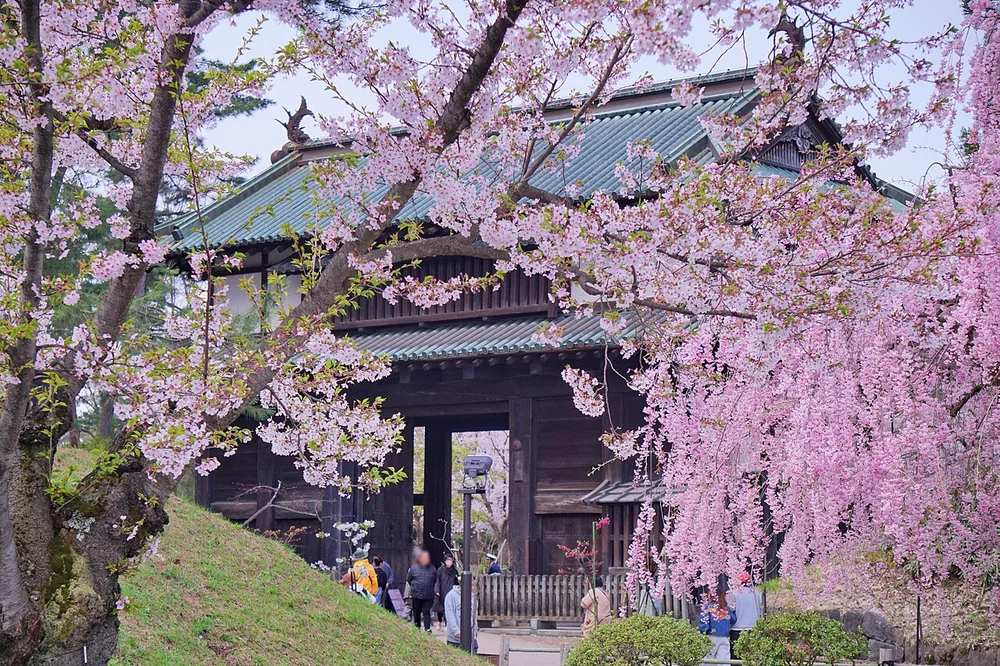
From the Central Exit of JR Hirosaki Station, take the Dotemachi Loop Bus to Shiyakusho-mae for Hirosaki Park. Store large bags first: take them to a station-area hotel, or save both the hotel and bus stop on your map if staying near the park. Regular services run roughly every 10 minutes from 10:00 to 17:00. From April to November, additional services run roughly every 20 minutes from 17:00 to 18:00.
From 1 October 2026, the adult Dotemachi Loop Bus fare is ¥200 in cash or ¥180 by IC card. An adult city loop one-day pass costs ¥600.
For one outward and one return ride, the total is ¥400 in cash or ¥360 by IC card, so these two journeys alone do not justify the day pass. Other regular bus routes have their own fares; check the route name and your stop before boarding. The day pass is issued only on MegoICa, Suica or PASMO. Buy it on the bus before tapping your card to get off.
From the park entrance, choose the moat and one path through the grounds as your main walk, then add the West Moat or another area. The distance within the park is separate from the station-to-park journey. If you start searching for every famous viewpoint only after entering, you can keep walking deeper into the grounds and discover at departure time that you still have the whole park to cross.
Prioritise the West Moat and Shunyo Bridge if you like reflections. For hanaikada, the rafts of fallen petals on the water, focus on the outer moat and that day’s petal fall. Late-flowering double cherries introduced by the Hirosaki Tourism and Convention Bureau offer other options. Choose one or two photographic subjects in advance so that you can wait for light and quieter moments where you most want to be.
Follow the signs and walking routes in place on the day. If works restrict access to a building, bridge or path, use the open paths rather than circling towards a closure to recreate an old photograph. With older travellers, agree the furthest point and exit before entering. If someone wants a rest halfway through, others can walk nearby. Use an entrance or named facility as the meeting point, rather than “the biggest cherry tree”.
Staying near the station suits an early train the next morning, especially with another connection ahead. Accommodation near the park or in the city centre makes it easier to divide blossom viewing into afternoon and evening visits, with time back in the room for warmer clothes or a child’s nap. Open the route from the hotel door to the park entrance you will use before looking through hotel photographs. An address in Hirosaki covers a much larger area than a comfortable walk back to your room.
A daytime return trip from Aomori to Hirosaki can work, provided you allow for the journey between station and park in both directions. If you want to linger under the evening blossoms before returning to another city, dinner, the bus, the walk to the station and the train all depend on one another. Staying in Hirosaki often gives you a fuller evening, with the saved travel time available for a slower walk in the park.
Keep the daytime schedule light on an evening blossom day. See the flowers in the afternoon, eat something and add a jacket before dusk, then return to the area you want to see. You can decide when to leave according to everyone’s energy. Regular loop buses and extended festival services are separate arrangements, so choose your return stop from the current season’s notice. If walking back, save the route and your hotel’s Japanese name before leaving the crowds.
For a Kakunodate day trip, book the return train before planning the walks
Kakunodate has Akita Shinkansen services, making it easy to connect with the north–south Tohoku route from Morioka. If stopping on the way elsewhere, first find arrival and departure trains with seats, then choose lunch and the extent of your walk. If staying in Morioka both before and after, leave luggage at the same accommodation. If continuing towards Akita, choose storage that fits your route back to the train.
All seats on Komachi trains are reserved. Arrange the outward and return journeys separately, and decide how late to stay in town once you have a return seat. Include seating needs in your booking if your group wants to sit together or a child needs a fixed seat. If only scattered seats remain, agree whether that is acceptable. The train takes you to Kakunodate Station; you still need to allow time for walking and eating afterwards.
A full day in Kakunodate allows a leisurely visit to Bukeyashiki-dori followed by the Hinokinai River embankment. If travelling a long way and arriving in the afternoon, choose one area first. Squeezing museum visits, a long riverside walk and a distant café into a short stop usually cuts into the blossom viewing itself. After a meal queue, you may find yourself watching the time for your train.
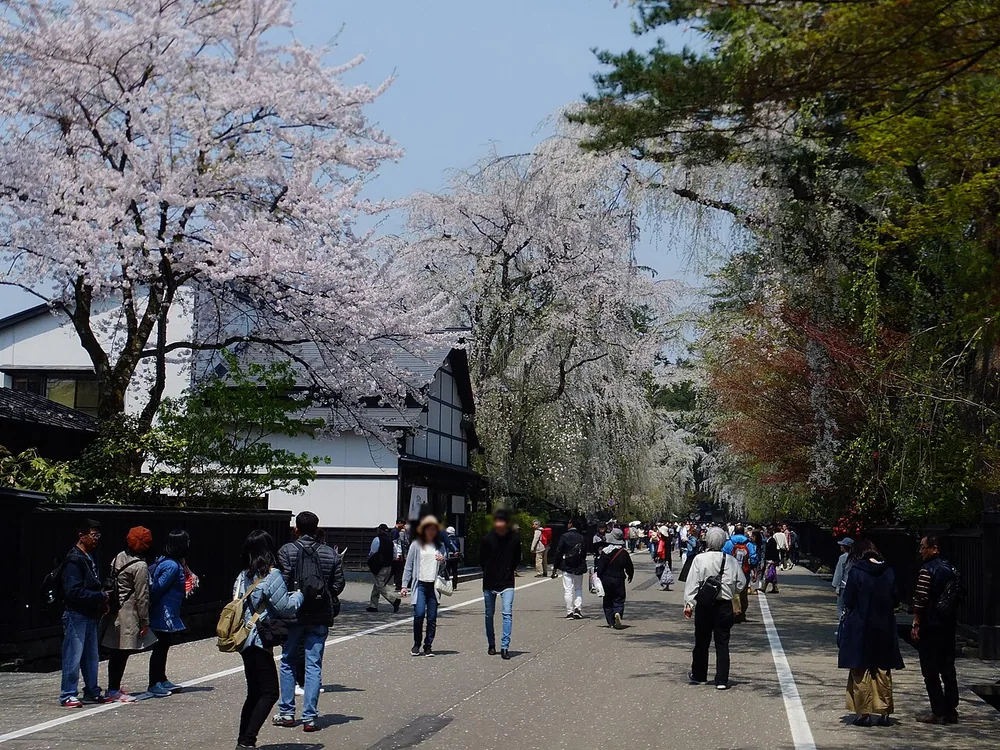
Semboku City gives the Somei-yoshino avenue on the Hinokinai River embankment as approximately 1,950 metres long, with access about 15 minutes on foot from Kakunodate Station. That is the walk to the area, before walking along the embankment and returning to the station. Bukeyashiki-dori offers weeping cherries against black timber fences. The two areas are neighbours, but each calls for its own time.
On a first visit, start along Bukeyashiki-dori to see the flowers and crowds, then head to the riverbank. An overnight stay gives you more control over timing for quiet street photographs the following morning. On a day trip, alternate walking and photographs; move on when a viewpoint is crowded rather than waiting there indefinitely. If some people want to enter a residence and others prefer the flowers, meet at a clear landmark on the same street.
For the embankment, an out-and-back walk along one stretch is enough. Agree the start and turning point before setting off. To walk the whole length, include the distance back to the station. With a pushchair or older travellers, keep a shorter route with room to sit and turn back. The open riverside can feel much windier than the samurai streets, so keep a jacket within reach rather than having to unpack your bag beside the path.
Stay overnight in Kakunodate for morning walks and two blossom areas
The Tazawako–Kakunodate Tourism Association covers the weeping cherries on Bukeyashiki-dori and the Somei-yoshino along the Hinokinai River separately. Look for photographs of both areas in blossom reports to choose where to go first. If the samurai streets are already close to the scene you want, give them the good-weather period. If the riverbank remains your main aim, lunch can sit between the two walks.
Changing blooms need not make Kakunodate a single yes-or-no decision. Weeping cherries against black fences, long riverbank views, and the buildings and displays inside the residences offer different reasons to stay. If you like historic streets, you may keep Kakunodate even without an expanse of full bloom. If riverside blossom photographs are your purpose, leave scope to move to another city still at the right stage.
In rain, divide the outdoor walks into shorter sections and wait in an open visitor attraction or over a meal. This is more comfortable than walking both areas in wet clothes. Check that day’s opening information before choosing a residence to enter, then return to your route when the rain stops. For a brief light shower, walk the short section that matters most first. If shoes and socks are soaked, bring forward a rest and the return to your accommodation; there is more walking tomorrow.
Station-side accommodation suits late arrivals, early departures and large suitcases. You can avoid taking your main bags into the blossom crowds before or after check-in, and connect easily with the railway after check-out. Staying beside the historic district gives quicker access to Bukeyashiki-dori or the riverbank early and late in the day. If you want a morning walk before returning for breakfast, location may be more useful than another hotel facility.
Use the property’s address to measure three routes: to Kakunodate Station, Bukeyashiki-dori and the riverbank entrance. “Around Kakunodate” on an accommodation page can cover a wide area. If you need a transfer, compare its departure point and operating times with your train. For two nights, use one day for your main blossom views and the other for streets and shorter walks. This is steadier than checking out every day.
If suitable rooms in Kakunodate are full, consider Morioka or Akita and compare the actual return trains. Finding a room is only the first step: the connections must also fit when you want to leave Kakunodate. Check the return first if an evening walk matters. If a daytime visit is enough, accommodation near a station in another city can simplify transport and costs.
Kitakami Tenshochi: allow energy for the return after the river crossing and two-kilometre avenue
Kitakami Tenshochi is across the Kitakami River. The official festival walking map marks JR Kitakami Station, Sango Bridge, the riverside cherry avenue and Tenshochi Rest House. From the station, first find the East Exit, then follow that season’s open route towards the bridge and park. If your hotel is by the West Exit, include the crossing between the two sides of the station; straight-line distances on a map can hide it.
On a first visit, save Kitakami Station’s East Exit and Sango Bridge as separate map points, then the park entrance. The roads and avenue become easier to understand once you reach the river. Seasonal shuttles or a taxi can save walking, but blossom-season congestion affects journey times. If walking, decide your acceptable total distance before leaving so that you still have energy at the park.
Kitakami works well as a separate blossom day on a rail trip: arrive, store luggage, cross the river, walk, eat and return to the station. Even if continuing to another city, you must first cover the distance from the station to the trees. If the morning includes an intercity journey, concentrate the afternoon on Tenshochi instead of adding a distant attraction with another transfer. A relaxed train connection gives you time to stop beside the river.
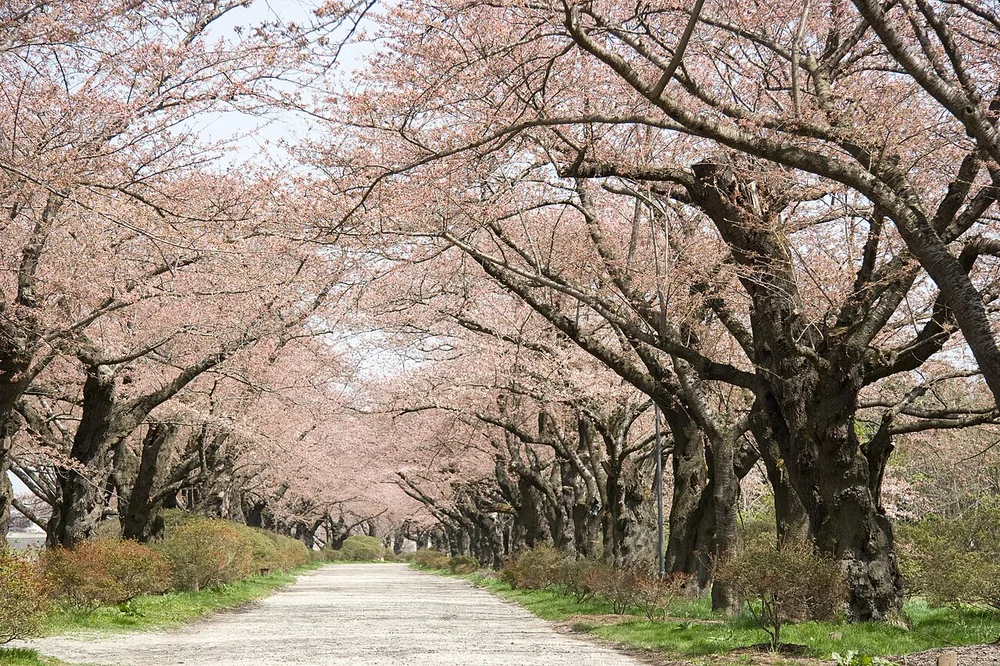
Tenshochi’s riverside cherry avenue is about two kilometres long, with facilities marked along it on the official walking map. Walking from the entrance near Sango Bridge to the Rest House and back covers about four kilometres, plus the distance between the station and avenue entrance. With children or older travellers, walk part of it and turn back while everyone still has energy.
To walk the full avenue, put lunch, water and seated rests in the middle of the visit. You need not repeat every photographic stop on the return. At the rest facilities, assess the group before deciding whether to walk back or use transport available that season. Reach the furthest point while energy is still reasonably good. Waiting until your feet hurt before finding a way back to the station tends to leave fewer options.
Photographers can also narrow the plan: one view beneath the trees, one long riverside scene, then time to wait for the light. Waiting for a completely empty view can consume much of the visit; other people use the riverside too. When crowds gather, pack away equipment that blocks the path and move along. Keeping the path clear also helps your companions stay with you instead of spending the walk looking for each other.
The Kitakami Tourism Association’s 2026 page states that the ferry linking the west bank near the station with Tenshochi was suspended that year for safety measures. Base your route on the land access you have established. If a later annual notice provides boats or shuttles, add them as ways to reduce walking, with a clear idea of which section each replaces.
For a shuttle, check operating dates, boarding point, final departure and direction when leaving the park. Some measures apply only on particular weekends; weekdays can have a different route. Save that year’s map rather than simply remembering that the festival has a shuttle. For an evening visit, compare the end of illuminations, the final shuttle and your train to the accommodation city separately. The earliest of these determines when to leave.
Staying near Kitakami Station lets you return to change shoes and eat after the blossoms. Staying in Morioka means keeping enough energy to reach the station for a train. If continuing to Hirosaki or Kakunodate, finish Tenshochi in daylight for an easier journey. To keep sunset and evening illuminations, spend a night in Kitakami and make the next move after breakfast.
Calculate the JR EAST PASS against journeys you will actually make
As of October 2026, the current JR EAST PASS costs ¥35,000 for adults for five consecutive days, or ¥50,000 for ten consecutive days. Children aged six to 11 pay ¥17,500 or ¥25,000 respectively. Sales of the former Tohoku Area version ended on 13 March 2026. Eligibility requires a passport issued by a country other than Japan. The pass covers ordinary-class reserved seats within its area; Green Car and GranClass require extra payment.
List the journeys you will actually make between Tokyo, Morioka, Shin-Aomori, Hirosaki, Kakunodate and Kitakami. Compare the total of single tickets for the same dates with the pass price.
The five-day pass runs on consecutive days. If spending two days in Tokyo after arriving in Japan, start it when you head to Tohoku, provided the expensive intercity journeys also fall within its validity. For a slower stay in Hirosaki or Kakunodate, compare the ten-day pass with individual tickets. The fare difference for an extra day is part of choosing how long to stay; you need not add an unwanted return trip to fill every day of the pass.
Budget separately for long-distance JR travel, local buses and accommodation. Hirosaki’s loop bus is local transport; do not remove it from the budget as though JR unlimited travel covers it. A walking day with almost no transport cost may be the most important day of the trip. Calculate passes from confirmed routes and add distant excursions only if you want to make them.
Booking order: secure the two hardest train journeys to replace
For the JR-EAST Train Reservation service used by overseas visitors, the official FAQ gives the usual start of ticket sales as 10:00 Japan time one month before travel. Prepare your departure station, destination, date and acceptable time range so that you can search when sales open. Other websites or specific products follow their displayed procedures. Keep the booking confirmation and collection information.
Bring the pass user’s original passport to collect a pass in Japan. If using a reserved-seat ticket machine with a passport reader, find a station with that equipment before departure. If the counter will be closed on arrival, adjust the collection location. Collecting the physical pass and understanding your seat reservations before the first long journey is easier than looking for collection instructions just before boarding.
For intercity travel, first arrange the longest leg and the key return from blossom viewing to your accommodation. Examples include the northbound train from Tokyo, the return from a Kakunodate day trip, or the train from Hirosaki to your next base. Once these seats are secured, adjust lunch, luggage storage and walks. If your group must sit together, set the correct number of passengers in the search; do not book one person first and expect neighbouring seats to remain free.
You still need to arrange the reserved seats you want when using a pass. If your chosen train is full, check earlier and later departures, then consider changing that day’s order before changing cities. When altering a train, update the hotel arrival time, dinner and luggage collection too. Make changes while seated for a rest, rather than rushing to book on a riverbank and forgetting another seat you will no longer use.
Five days and four nights: protect two full blossom days
For five days and four nights from Tokyo, a starting structure is two nights in Morioka and two in Hirosaki. Travel to Morioka and settle your luggage on day one. Choose Kakunodate or Kitakami for a full blossom day on day two. Head north to Hirosaki on day three for a shorter afternoon visit, give day four to Hirosaki Park, and leave on day five. This illustrates what fits; train times and bloom conditions determine the actual order.
If Kitakami’s flowers appeal most, visit on day two. If Bukeyashiki-dori is your main aim, choose Kakunodate. Do not squeeze the omitted city into day three: reaching Hirosaki already requires connections and settling into accommodation. To include both, add a day, or remove a Hirosaki night and accept a shorter visit there.
The reverse also works: two nights in Hirosaki, then two in Morioka before leaving southwards from Iwate. Fix the boundaries with trains on arrival and departure days, then compare blooms in all three places. If flowering is earlier than expected, bring your priority forward. If your main destination is still waiting to bloom, put a walk in another city first, making accommodation changes within the booking deadlines.
Six days and five nights: keep a day for travel when visiting all three
For six days and five nights, start with three nights in Morioka and two in Hirosaki. Mark three full blossom-viewing periods on paper, then put changes of accommodation and intercity journeys in the gaps. Visiting both Kitakami and Kakunodate from Morioka reduces luggage handling. To stay until evening at either, move one Morioka night there and avoid a night-time return.
One straightforward version is arrival in Morioka on day one, Kakunodate on day two, Kitakami and back to Morioka on day three, travel to Hirosaki on day four, Hirosaki on day five, and departure on day six. With just one change of base, it suits those who value simple transport. For Kakunodate’s morning streets, spend the second night there and head back towards Morioka on day three. Make the extra luggage move only if the morning is worth it to you.
Even with all three scheduled, agree the order in which to drop stops. Decide before departure which you would least mind losing. If prolonged rain, tiredness or full trains intervene, reduce the plan in that order. Keeping the spare day at the existing base gives another chance of sunshine and more sleep. Space in the schedule lets you respond when local blossom reports are good.
Keep luggage off the riverbank walk
When staying in the same base, take only a daypack for blossom viewing and leave main luggage at your accommodation. On a change-of-city day, decide where you must finally collect your bags before choosing storage. Leaving them at the original station creates a detour if your walk ends elsewhere. Arrange hotel storage according to reception arrangements, and give your arrival time in advance.
In spring, carry one layer for walking and another for sitting or after dark, with rainwear and dry socks easy to reach. Long avenues and moat-side views mean time outdoors; standing still for photographs feels different from brisk walking. Leave space in the bag for a jacket so that your hands remain available for a child, water or a walking stick.
Families with more luggage can reduce hotel changes and accept longer day-trip journeys in exchange for easier packing. Two people travelling light who want early and late photographs may prefer more nights in the main blossom city. Luggage, sleep and flower-viewing time affect one another. Write down your own limits, then choose the option that asks less of you.
With children or older travellers, set the turning point before leaving
Hirosaki Park, Kakunodate’s riverbank and Tenshochi all allow you to adjust the walking distance, but companions may have different ideas of “a little further”. Agree the first entrance, rest point and latest return to the station, and mark a turning point on the map. Extending the walk if everyone feels well is easier than committing to the full route in advance.
Treat lunch as one break for sitting, toilets and extra clothing. With children, start looking for somewhere to eat before they are hungry. For older travellers who struggle to stand, include waits at popular photographic spots in the effort involved. Split street visits and long riverside walks between morning and afternoon, with a proper rest between. If you have no restaurant chosen, pick an area with easy access back to your route; avoiding detours helps.
Plan pushchair or wheelchair routes from current-season entrances, access notices and facility information, especially around bridges, slopes and crowded junctions. If someone needs a complete step-free route, tell the local tourist information office your start, destination and equipment. This is more likely to produce useful directions than asking only whether the area is wheelchair-friendly. Once you have a usable route, choose photographic stops along it so that the group can stay together.
Reserve budget for choices that can improve the day
Budget for transport and room nights first, then meals, short transfers and a small allowance for unexpected travel. If accommodation is more expensive than expected, compare moving one night back to a transport base, including the added return fares and travel time. A cheap room that requires two more changes of train can cost you an entire evening.
Two travellers can share a budget sheet, marking each item as paid, payable locally or changeable/refundable. Keep unused car hire, taxis and local buses in an optional column until you decide to use them. If a distant hotel offers a transfer, record the booking requirement and operating times beside the cost so the budget matches the route.
Leave some money available for specific problems on the day: returning early with wet shoes and socks, taking a short ride when a child is tired, or staying an extra night for worthwhile evening blossoms. Agreeing this allowance at the start avoids wearing everyone out for the next two days just to preserve the original total.
Make the final adjustment around the nights already booked
After the latest blossom report, first see where you are already staying and which outings work from that base. If Hirosaki’s Somei-yoshino are nearing the end, check late-flowering varieties in the park and conditions at the outer moat. For Kakunodate, read the samurai street and riverbank reports separately. If your existing rooms still support the views you want, keep the accommodation and transport and adjust the order of daily walks.
If one of the three destinations clearly best matches your hopes and your booking terms allow a move, arrange new accommodation, trains and the old bookings in that order. Secure the new connections before cancelling room nights you would otherwise use. Save the change confirmations and give everyone the same itinerary. Check the next day’s ticket, destination and return time the evening before, so you can leave directly in the morning.
A few useful answers
Can I visit Hirosaki, Kakunodate and Kitakami in five days on a first Tohoku blossom trip?
If those five days include travel into and out of the region, choose two destinations and keep two full days for blossoms. For all three, allow six days and five nights with a separate day for intercity travel.
Do I need a hire car for Hirosaki, Kakunodate and Tenshochi?
All three can be planned using trains and local walks. Hirosaki also has a local loop bus. Seasonal notices give Tenshochi’s annual shuttle and traffic arrangements.
Can I still buy the Tohoku Area JR EAST PASS?
Sales of the old Tohoku Area version ended on 13 March 2026. As of October 2026, the current JR EAST PASS covers five or ten consecutive days, costing ¥35,000 or ¥50,000 for adults respectively.
Official information and references
Sources used in this guide.
- Hirosaki City | Hirosaki Park blossom reports and historical flowering dates
- Hirosaki Tourism and Convention Bureau | Hirosaki cherry blossom stories and park views
- Hirosaki Tourism and Convention Bureau | City loop bus and October 2026 fare change
- JR East | Routes from Shin-Aomori Station
- Tazawako–Kakunodate Tourism Association | Kakunodate access and walking area
- Semboku City | Somei-yoshino on the Hinokinai River embankment
- Tazawako–Kakunodate Tourism Association | Kakunodate Cherry Blossom Festival and viewing areas
- Kitakami Tourism Association | Official 2026 Tenshochi walking and transport brochure
- Kitakami Tourism Association | 2026 site information and ferry suspension
- JR East | Current JR EAST PASS prices, coverage and consecutive validity
- JR East | Official March 2026 pass update announcement
- JR East | Ticket and reserved-seat FAQs for overseas visitors
- JR East JRE Media | Trains with all seats reserved and booking
- JR East | Buying and using rail passes