Compare the six Resort Shirakami services, A-side sea-view seats and BOX seating. Understand the ¥840 reserved-seat charge, stopovers and meals, with November 2026 examples for a through journey, a Fukaura return and an overnight stay.
- Region & Focus
- Akita and Nyuto Onsen
- Reading Scope
- 30 min read · 19 chapters · 7 Q&As
- Official Verification
- 15 official sources checkedUpdated 7 November 2026
- Key Topics
- Rail travelBookingItineraries
Chapter Route Map (tap any stop)
- Choose where to sleep tonight before choosing a train
- The six services have different endpoints: No. 3 ends at Hirosaki
- Check operating dates, then the train-set notes
- Choose standard A-side seats for the sea rather than guessing left or right
- BOX seats keep a group together; one booking does not buy four seats
- The ¥840 charge is separate from the fare for your route
- Sales open one month ahead; an advance request is not a confirmed seat
- Choose a sales channel with payment and collection in mind
- Noshiro basketball depends on the service; allow time back from Senjojiki
- For a real stopover, reserve the next train first
- Juniko Station is only the gateway; book proper winter snow activities
- Bring food for the five-hour ride rather than rely on station shopping
- Take turns in viewing spaces and rest in your own seat
- Arrange boarding first for large bags, young children and assistance needs
- Through-journey example: Akita to Aomori on 7 November
- Same-hotel example: Hirosaki to Fukaura and back on 7 November
- Overnight example: Furofushi Onsen on 7–8 November
- When strong wind or blizzards disrupt travel, locate people and bags first
- Before payment, separate seat charges from other costs and timetable from buffer
- Quick Q&A
Resort Shirakami suits a full day on the Gono Line between Akita and Aomori. Choose a through journey, a return along part of the line or a night at an onsen, then reserve each train segment. Standard A-side seats face the sea; BOX seats in car 2 are booked by the number of seats needed. The adult reserved-seat charge is ¥840, with the fare for your journey paid separately. On 7 November 2026, all Resort Shirakami trains were suspended on all sections due to forecast strong winds; on 8 November, trains 1, 2, 3 and 6 were suspended as well. If you planned to travel on those two days, contact your original purchase channel and that night’s accommodation first to rearrange or cancel. The JR East running-information page for the Gono Line lists these suspensions.
Choose where to sleep tonight before choosing a train
If you have accommodation in Akita and Aomori and want a coastal train between them, a one-way transfer is simplest. Check out, board with your bags, follow the Gono Line around the Sea of Japan coast and check into the next city that afternoon or evening. The train is the day’s main activity. No. 1 from Akita at 08:19 to Aomori at 13:34 already takes five hours fifteen minutes. Leave arrival time for food, luggage and a short city walk rather than more transport to distant sights.
To keep the same hotel and avoid moving large bags, travel from Hirosaki towards Akita, get off at Fukaura and return. This omits the Akita–Higashi-Noshiro stretch but still needs a full day and separate reserved seats each way. For a night along the line, include WeSPa-Tsubakiyama and the inn’s transfer in your booking sequence. These three options differ in luggage and overnight location. You need not change hotels daily just to cover the whole line.
Before an early flight or long-distance train the next day, work backwards from its departure city. Coastal wind and snow can affect Shirakami services. Spending the previous night in a city with convenient airport access is more suitable than relying on a same-day inter-prefectural coastal sightseeing journey. With only half a day, shorten the train segment rather than try to fit a full return into an afternoon.
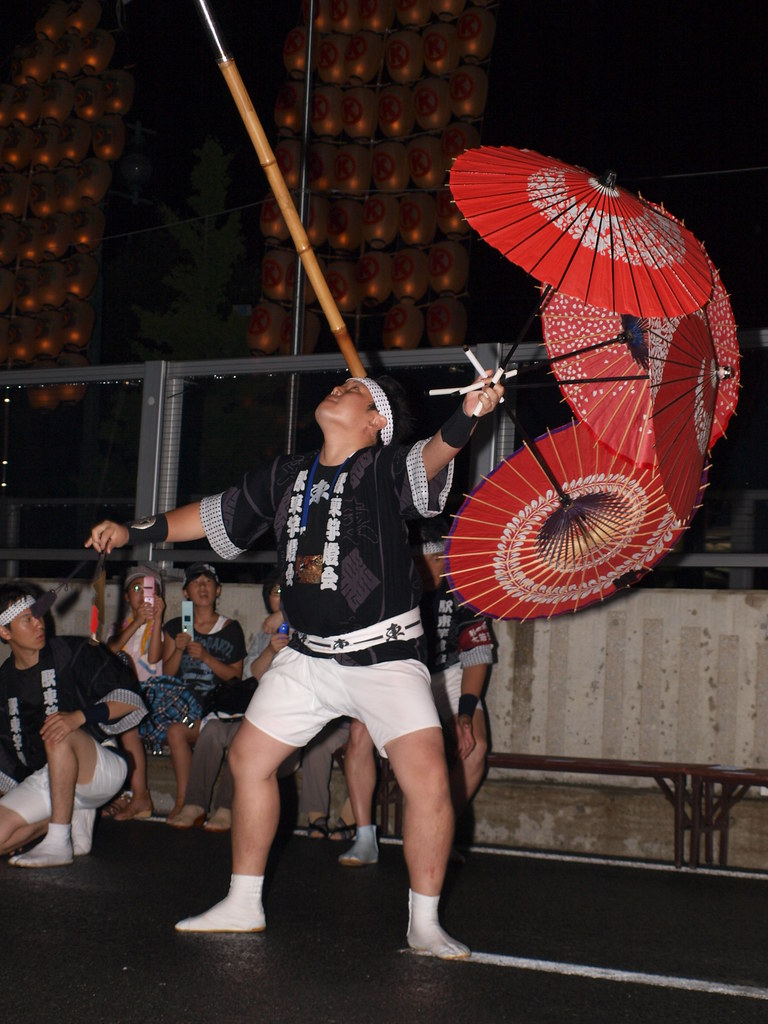
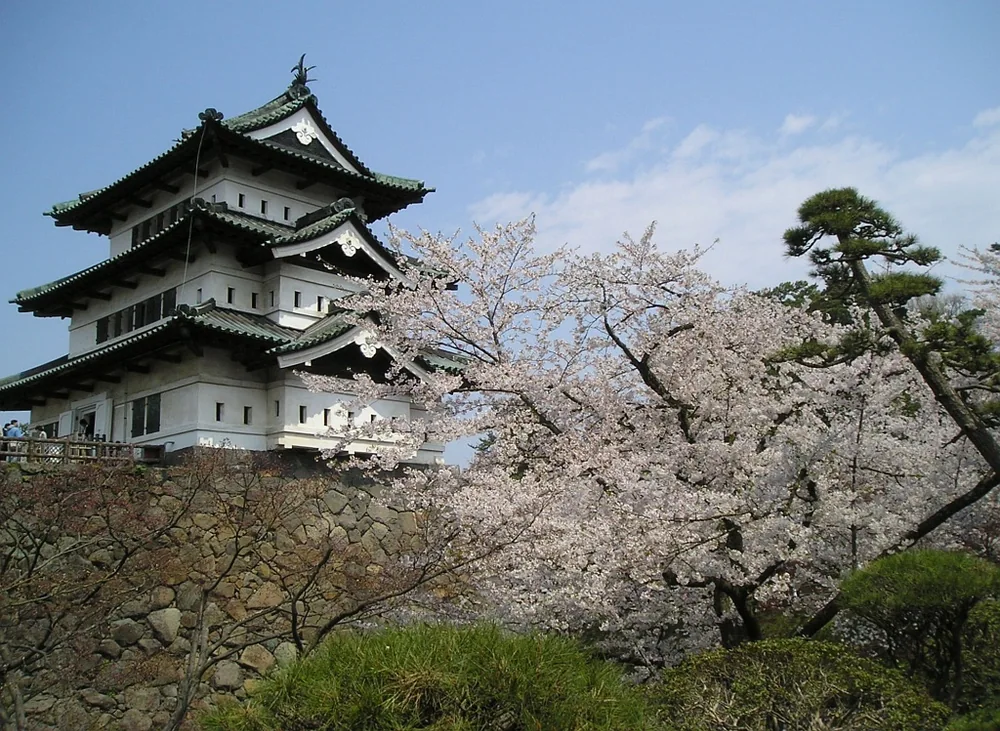
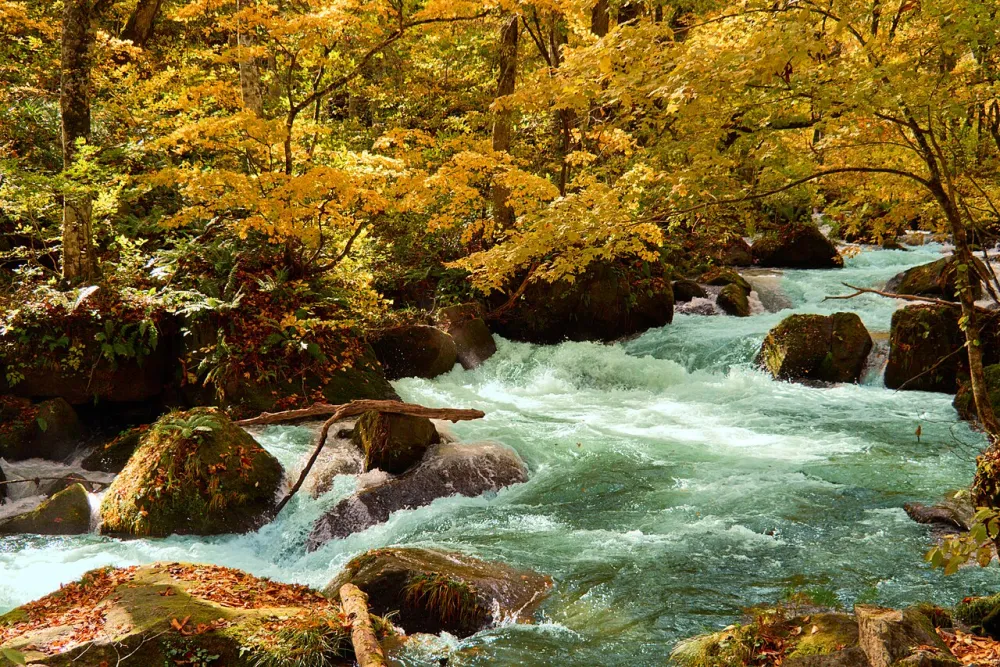
Sea of Japan window views and on-board dining scenes introduce the pace of a Gono Line sightseeing-train journey.
Compare the six Resort Shirakami services, A-side sea-view seats and BOX seating. Understand the ¥840 reserved-seat charge, stopovers and meals, with November 2026 examples for a through journey, a Fukaura return and an overnight stay.
The six services have different endpoints: No. 3 ends at Hirosaki
Nos. 1, 3 and 5 leave Akita; Nos. 2, 4 and 6 run towards Akita. The November 2026 timetable lists No. 1 at 08:19–13:34 to Aomori, No. 3 at 10:50–15:50 to Hirosaki and No. 5 at 14:00–19:37 to Aomori. For an Aomori stay, No. 1 leaves more afternoon time. No. 5 allows lunch in Akita but arrives in the evening. For Hirosaki, get off there rather than continue to Aomori and return.
In reverse, No. 2 leaves Aomori at 08:09 and reaches Akita at 13:29; No. 4 runs 13:52–19:01. No. 6 starts at Hirosaki at 16:06 and reaches Akita at 20:42. Aomori guests must travel separately to Hirosaki for No. 6 and allow for the connection. No. 2 fits morning sea views and afternoon check-in at Akita. For No. 6, settle dinner and late hotel arrival first.
Keep Shin-Aomori and Aomori separate. No. 1 lists arrival at Shin-Aomori at 13:27 and Aomori at 13:34. They serve different accommodation locations and long-distance connections. Enter your actual destination when reserving. A Shinkansen stop at Shin-Aomori does not make it the right arrival point for a central Aomori hotel. Align the ticket segment, train number and hotel address before boarding.
Check operating dates, then the train-set notes
A service shown in a timetable does not necessarily run on your date. In the 2026 operating notice, Nos. 1, 2, 4 and 5 have more frequent November dates. Nos. 3 and 6 run on 1–9 and 14–30 November, so a six-service plan does not apply on 10–13 November. Read dates individually from December onwards. The currently announced period for Nos. 3 and 6 runs to 5 December; do not carry November’s midday options into New Year.
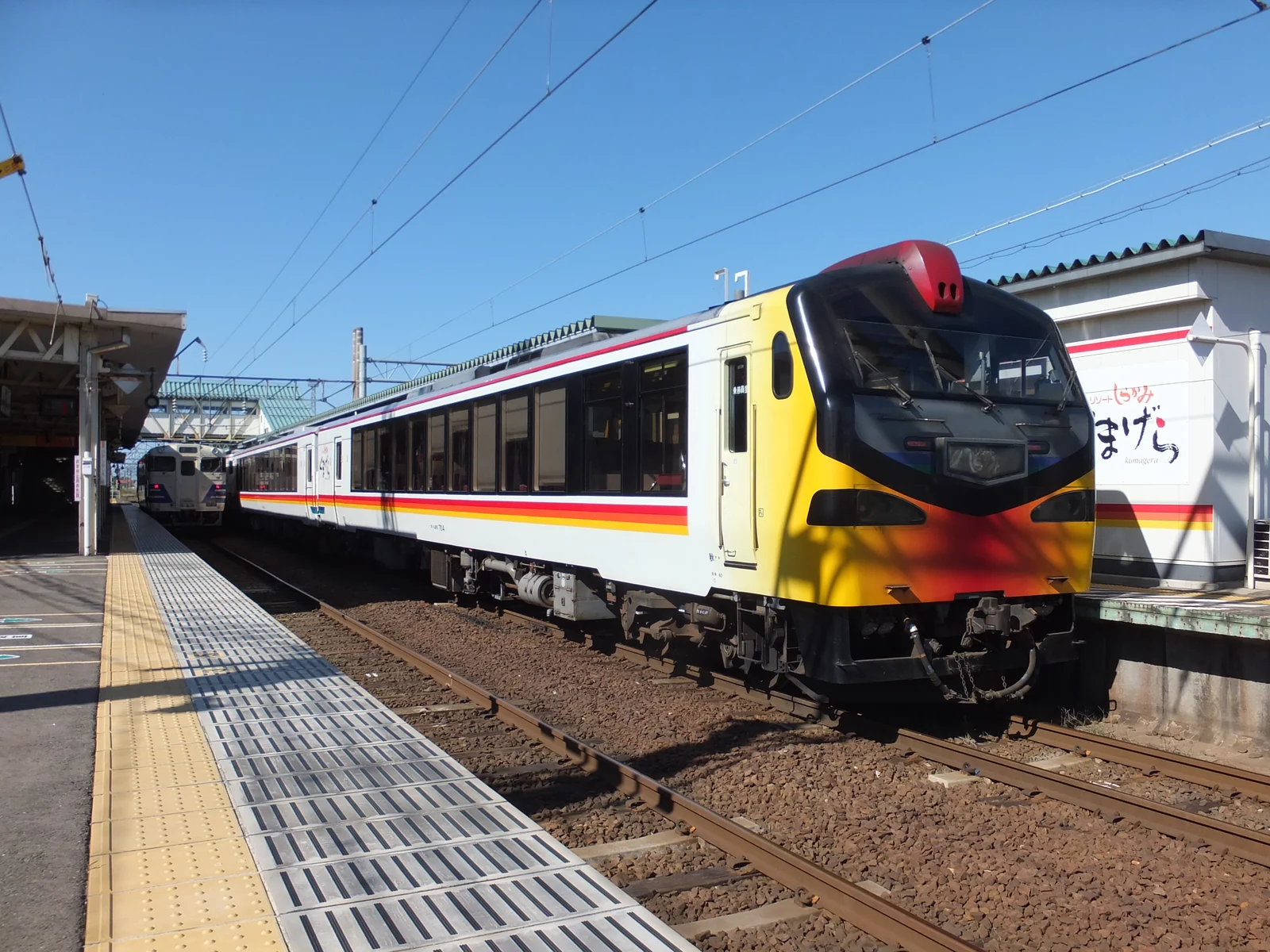
Read the equipment and notes columns together in JR’s stopping timetable. No. 1’s heading names Aoike, but the notes substitute Kumagera on 10–13 November and Buna on 14 November–6 December. Reading only the heading gives the wrong train set. No. 5’s heading names Buna, but lists Aoike on 13 November–5 December. Establish operation on your date, then check the notes for that date before comparing interiors and services.
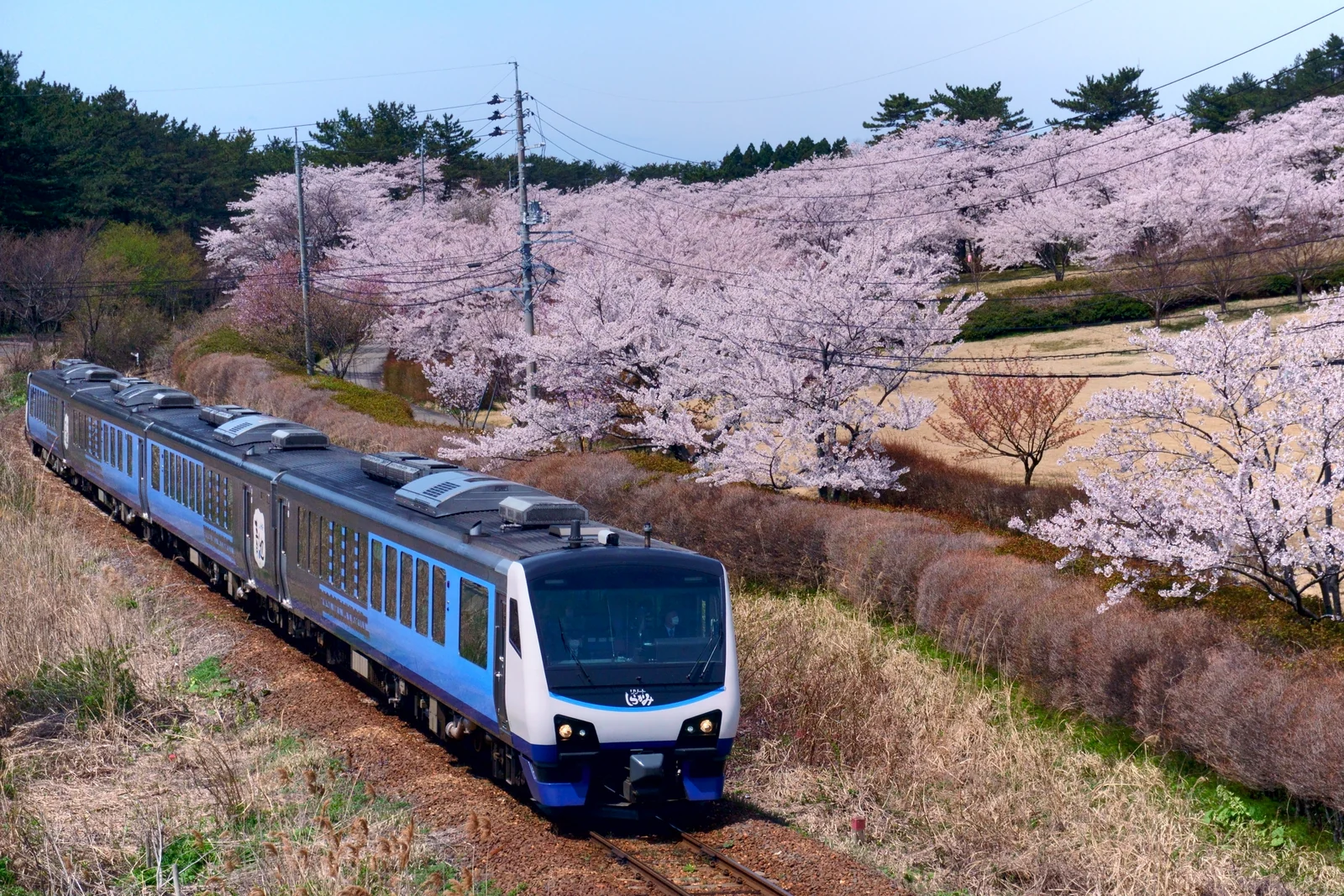
Photographs help identify the sets: Aoike is blue, Buna uses green imagery inspired by sunlight through trees, and Kumagera has red and orange colours. For Sea of Japan views, direction, daylight and available seats usually matter more than exterior design. If a particular set is the aim, keep dates flexible and reread the current timetable before departure. Accommodation plans built around a set also need adjustment if train arrangements change.
Choose standard A-side seats for the sea rather than guessing left or right
Standard reserved seats in cars 1, 3 and 4 have two seats on each side of the aisle. JR’s official seating guide states that A is the sea side in both directions on the coastal Higashi-Hachimori–Ajigasawa stretch. The train changes direction during the journey, so seat letters are clearer than guessing “left towards Aomori”. For two adjacent standard sea-side seats, look first for A and B in the same row.
Solo travellers who want quiet window time should prioritise A. For two people eating and talking together, compare adjacent A/B seats with separate A seats. Window seats in different rows mean sitting apart even if both face the sea. If someone gets up often, include an aisle seat in the choice. Without A seats, decide whether changing date or service is worthwhile. A later train can delay arrival by hours and reduce daylight in autumn or winter. Losing a whole daylight stretch for one window seat may be poor value. Another option is to retain the suitable service, reserve other seats and briefly use the shared viewing space. Other passengers use it too; your reserved seat remains the main place to rest and keep hand luggage.
BOX seats keep a group together; one booking does not buy four seats
Car 2’s BOX seating has four facing seats, a table and partitions. JR’s seat guide says all BOX groups are on the sea side, with A and D at the windows. The standard-seat A-side rule does not mean only A has a view in a BOX. Parties of three or fewer may share with others. Two people who prefer not to face strangers may find standard reserved seats more suitable. Four can first look for one BOX group to keep meals and childcare together.
Within a BOX, some seats face forwards and others backwards. If backwards travel is a problem, check service number, set and seating plan together and tell the ticket counter. Knowing A and D are windows does not establish direction. For photographs, consider the table, companions and window frames. Agree to take turns rather than crowd four people around one piece of glass.
JR describes Kumagera BOX seats that can be adjusted into a flat arrangement, but seats remain the unit of purchase. Reserve the number needed for a family rather than treat an adjustable interior as a free child bed. If the flat arrangement is essential, ask the counter to confirm the actual set and seat numbers for your date. Plan seated rest in standard seats. A small cushion or splitting the ride over two days is more useful than judging suitability from one interior photograph.
The ¥840 charge is separate from the fare for your route
Shirakami is a rapid service with all-reserved seating on its main sightseeing section. You need a basic-fare ticket and a reserved-seat ticket. The current stopping timetable lists ¥840 for an adult reserved seat and half that, ¥420, for a child. ¥840 is not the whole Akita–Aomori fare. If the booking screen sells only a reserved seat, arrange a valid fare ticket or pass covering the segment too. Match date, endpoints and routing when comparing totals.
For a through journey without leaving the train, first price the complete segment. To leave Fukaura Station for lunch and board another service, give the counter both segments and seating needs so tickets match the actual route. Reserved seats specify date, train and segment, so arrange the later train separately. Do not book only the first segment and accommodation, then search for a city-bound seat after reaching a small coastal station. Two adults taking one train each pay ¥840 × 2 = ¥1,680 in seat charges. Two trains each cost ¥840 × 2 trains × 2 people = ¥3,360, plus applicable fares. These sums compare seat charges only. Pass holders should bring the exact pass name, validity dates and both segments for checking to avoid buying fares twice. Any separate seat charge follows that pass’s conditions.
Sales open one month ahead; an advance request is not a confirmed seat
JR’s guide says standard reserved seats go on sale at 10:00 Japan Standard Time (JST) one month before travel; convert JST to your local time zone. For travel on 28 November, that means 28 October at 10:00 in Japan. Prepare your account, service number and boarding and alighting stations first, then use the seat map after sales open if you need specific seats. If the previous month has no matching date, follow the official release-date rule rather than subtract thirty days.
An advance request submits preferences before sales open; allocation follows afterwards. The official explanation says you cannot select individual seats on a map or specify a car at that stage. For sea-side seats, a shared row or one BOX group, compare the normal selection process after release. If you have made an advance request, check its history or result email before buying again. Cancelling duplicate confirmed seats incurs applicable fees. Waiting for an email is not a reason to buy the same service twice.
JR’s Japanese Shirakami workflow starts in Eki-net with the fun-to-ride trains category, Shirakami and a service number, then date, segment and party size. After finding availability, choose the ticket type, log in, select seats on the map, check and pay. The same order makes a useful counter request: date, service number, boarding and alighting stations, adults and children, seat type and preferred letters. Without a service number, “I want the sea side” still requires the agent to establish your itinerary first.
Choose a sales channel with payment and collection in mind
JR lists Eki-net, staffed ticket offices and reserved-seat ticket machines as purchase options. Its Japanese Eki-net article illustrates credit card, convenience-store or financial-institution payment and station payment for that service. Follow the account, payment and collection instructions for the booking service you actually use. In particular, keep the Japanese service’s ticketless option separate from another website’s paper-ticket collection process.
For paper tickets, collect before departure day or arrive with ample time, keeping the collection details required by the order. No. 1 leaves Akita at 08:19; handling accounts, payment or finding machines that morning squeezes breakfast and boarding. After collecting the night before, check every date, train number and segment. For a stopover, check the second segment too, so disconnected origins are found before boarding. Use confirmation emails, electronic displays and paper tickets according to the product bought. Keep the required ticket accessible, with phone power and offline order details. If the display differs from expectations at the station, ask staff before entering the platform. One person can hold the group itinerary, but everyone should know where to leave the train and where bags go afterwards.
Noshiro basketball depends on the service; allow time back from Senjojiki
Do not add Noshiro’s basketball activity merely because a train stops there. The November timetable gives No. 1 at 09:23–09:33 and No. 3 at 11:59–12:14, but No. 5 only 15:04–15:05. On No. 5, follow normal boarding and alighting rather than import an activity from a general guide. Follow train and platform instructions on whether the activity runs that day and where passengers may go. Scheduled stops also cover boarding and alighting.
Senjojiki stops are listed for Nos. 2, 3, 4 and 5. No. 3 stops 13:59–14:14, No. 2 10:15–10:30, No. 4 15:59–16:14 and No. 5 17:08–17:23. For daylight coastal views, compare season and time as well as the shared fifteen-minute duration. November evening services do not suit extended outdoor photography. Light, wind, waves and the permitted area also affect leaving the train.
This short stop means returning to the same train, not freely switching to the next service. Remember your car position and departure time and stay within easy return distance. With young children, slow walkers or sensitivity to wind and cold, stay near the platform or inside. Agree on a return meeting point rather than split between photographs and shops and search for each other before departure.
For a real stopover, reserve the next train first
Treat several hours at a station as two journeys. Arrival, activities outside, return to the station and later boarding each need time. Secure the later reserved seat before fixing the stopover. Shirakami services are sparse; a full or cancelled train cannot be handled like an urban railway where another arrives immediately. Avoid extending a stop to another city only after getting off.
At Fukaura, No. 2 arrives at 10:55 and No. 3 departs towards Hirosaki at 13:34, leaving two hours 39 minutes between trains. Subtract platform exit, directions, eating, returning and waiting. It is not all available for a distant attraction. Start with rest and food near the station and add a walk if time remains. A sight requiring a transfer needs a complete separate plan including that transport.
Luggage changes the value of a stop. On a hotel-transfer day, every bag leaves the train with you, so easy movement matters more than adding a station name. Return-trip travellers can leave large cases at their continuing hotel and take a day bag. If changing hotels and stopping over, establish actual storage first or keep the walk short. Your former reserved seat does not store bags while you leave the station.
Juniko Station is only the gateway; book proper winter snow activities
Plan Juniko Station separately from the forest lakes. JR’s snow-free example transfers from the station to a scheduled bus and gives April–November as the forest-walking season. A 10:24 train arrival at Juniko does not establish when you can start walking at Aoike. Include bus waits, the ride, walking after alighting and return departures in one schedule. With only a train reservation, keep the window-view journey and leave an unconnected forest section out of the fixed plan.
For December–March, JR describes guided snow trekking. This needs different preparation from an independent walk on snow-free paths. Establish the activity’s meeting point, transfer and equipment requirements before matching trains. Without a suitable booking, save the forest for another season and enjoy the coast from the train. An overnight stay can focus on the inn; sleeping in Fukaura need not become a winter Aoike hike.
For a first Shirakami ride with forest time, add a night and give Juniko and the full coastal ride separate days. If the Aoike path is the priority, complete the forest transfer and return plan first, then select a connecting train segment. These trips have different main aims. Dropping one section is usually easier than squeezing both buses and walking, especially when companions differ in tolerance for long rides and outdoor walking.
Bring food for the five-hour ride rather than rely on station shopping
Shirakami has no on-board restaurant. For lunch, bring a meal, water and a manageable rubbish bag before boarding. No. 1 leaves Akita early, so prepare breakfast and lunch separately rather than assume every stop allows shopping. On No. 5, eat lunch in Akita and bring an early-evening snack, then decide on dinner in Aomori. This is more comfortable than waiting until after 19:37 for the first full meal.
JR’s 2026 page lists self-checkout sales on Buna and Aoike; do not assume the same on Kumagera. Even with sales, bring main meals for fixed eating times, dietary needs or children. Tables and seat types matter: choose an easily packed meal for standard seats and share BOX table space with the group rather than claim the whole table through one seat reservation.
Uketorippu (Gonotabi) lets you choose a train and product online, pay and collect local food at a specified station or other location on travel day. Book the train first, then choose products for its number and the segment you will still be aboard. If leaving at Fukaura, do not order a later collection merely for an attractive photograph. Handle food orders when changing trains too. Read the selected product page for deadlines, collection and cancellation. If nothing fits, bring food rather than change the entire train journey for collection.
Take turns in viewing spaces and rest in your own seat
Shared viewing areas at the ends of cars 1 and 4 are available to Shirakami reserved-seat passengers without a separate viewing-space reservation. JR’s seating guide says they also host activities, possibly including Tsugaru shamisen depending on date and segment. Take your camera and essentials, secure bags and take turns if others wait. Keep long rests to your reserved seat so others can reach the large windows.
Without an A-side seat, use the viewing area briefly as a supplement. Avoid standing in aisles or putting a lens in front of someone else’s seat. On a long shared ride, returning after photographing one stretch is often more comfortable than chasing every coastal angle. Companions can visit separately rather than occupy the front as a group of four. Listen for announcements about any programme’s place and time. For quiet, request distance from activity areas when choosing seats. For a performance, check the formal schedule rather than assume possible shamisen means every service. Check your car number on return. When companions split up, meet at your original seats rather than the changing crowd of the viewing area.
Arrange boarding first for large bags, young children and assistance needs
On hotel-transfer days, carry luggage you can manage yourself. Put water, food, medicine and warm layers in a small bag before boarding so the large case can stay closed. Keep aisles, doors and other seats clear. During a short stop, leave large bags in a place you can manage, carry valuables and essentials and return to the original car before departure. Packing every useful item at the bottom of a case turns each movement into unpacking.
With young children, decide whether separate seats are needed and give the counter actual ages and requirements for fare calculation. Do not expect a child to watch the window for five hours; alternate meals, brief activity and rest. With two adults, choose nearby seats for sharing care and passing items. BOX seats suit eating together, but compare standard adjacent seats if sharing with strangers or backwards travel is a concern.
Before selecting seats, tell JR your date, boarding and alighting stations, mobility-aid dimensions and transfer-assistance needs. Train set, stations and ticketed seat are linked parts of one journey. Establish workable boarding first, then food collection and short stops. Allow more time for connections and waiting. You need not join others on the shore; remaining aboard preserves the main window-view experience.
Through-journey example: Akita to Aomori on 7 November
Using No. 1 on 7 November 2026 as a timetable example, stay in Akita the night before and arrange breakfast and ticket collection in advance. Board at 08:19, leave at Aomori at 13:34 and take bags to that night’s accommodation. Look first for adjacent A/B standard seats and bring lunch. Follow instructions during the Noshiro stop, but stay aboard at Juniko rather than add a forest bus. Managing just one Shirakami service suits a first coastal transfer.
For a Hirosaki stay, leave the same train at 12:48, go to the hotel and eat or walk afterwards. No. 3 instead arrives at 15:50, giving more daytime in Akita and a scheduled Senjojiki stop. Choose around the morning at your origin: for a later start, take No. 3 and shorten Hirosaki’s afternoon. If already staying near Akita Station and wanting an earlier arrival, choose No. 1.
No. 5’s 14:00 departure keeps the morning in Akita, at the cost of reaching Aomori at 19:37. Tell the hotel your expected arrival, split food between before boarding and after arrival and begin city activities the next morning. Compare departure, arrival and usable daylight across all three rather than only remaining sea-view seats.
Same-hotel example: Hirosaki to Fukaura and back on 7 November
On 7 November 2026, take No. 2 from Hirosaki at 08:48, via Ajigasawa and Senjojiki, to Fukaura at 10:55. Return on No. 3 at 13:34 and reach Hirosaki at 15:50. The outward ride is two hours seven minutes and return two hours sixteen minutes: four hours 23 minutes aboard, with two hours 39 minutes between. This is a coastal-train day, still more than seven hours from departure to return, so leave a full Hirosaki sightseeing day elsewhere.
Leave large bags at your continuing Hirosaki hotel and carry lunch or snacks, water and a warm coat. Use Fukaura’s gap first for rest and food, setting walking range backwards from station-return time. Reserve both journeys and fix the plan only after establishing that No. 3 runs that day. If it does not run or lacks suitable seats, change dates or use another fully connected plan rather than travel out hoping to find a return later.
This involves much less riding than a full Akita–Aomori return but repeats some coast. It suits people who enjoy train views and prefer fewer hotel moves. For just a short taste of the train, Hirosaki–Ajigasawa is shorter but misses much of the coast towards Fukaura. Shorten expectations with the ride and choose an endpoint matching how long you want to sit.
Overnight example: Furofushi Onsen on 7–8 November
For two days and one night, shorten day one to Akita–WeSPa-Tsubakiyama. On 7 November 2026, No. 3 leaves Akita at 10:50 and arrives at 13:16, followed by a transfer to Furofushi Onsen. On 8 November, No. 1 leaves WeSPa-Tsubakiyama at 10:38 and reaches Hirosaki at 12:48 or Aomori at 13:34. This reaches the coast on the first afternoon without adding a Juniko hike and separates arrival from next-day departure.
The inn’s official access page lists transfers at WeSPa-Tsubakiyama. Shirakami passengers need no transfer reservation; local-train passengers do. The contact number is 0173-74-3500. Still enter expected train numbers and arrival and departure dates when booking, especially the return service and city. Read the inn’s meeting instructions before departure. Its winter Shin-Aomori transfer has limited operating dates, is for staying guests and requires advance application. It is separate transport, not a direct substitute for these two Shirakami segments.
Price the actual date, party, room and meal package, and read latest arrival, meal and cancellation conditions before paying. After transferring from the train, follow the inn’s arrangements for the afternoon. The main benefit is one less rushed train leg and a coastal night. Adding forest, baths and the entire coast to one night fills the rest time again.
When strong wind or blizzards disrupt travel, locate people and bags first
Hirosaki’s official tourism guide specifically notes strong-wind and blizzard effects on the Gono Line. Check JR’s live operating information before leaving for the station. Along the line, ask station or train staff about feasible travel and contact that night’s accommodation. For cancellations, give date, service number, current station and destination rather than only asking how to reach Aomori.
Train tickets, accommodation and food are separate bookings. Save service notices and orders, then change or cancel through the original channels. Do not change only the train and leave the inn unaware at dinner time. If already staying on the coast, establish a workable departure before checking out. Waiting where assistance is available makes communication easier than hauling bags to another small station before seeking information.
Before a flight or essential long-distance service, return to its departure city the night before. In poor weather, remove stopovers, use feasible transport with fewer changes or move Shirakami to another day. Handle seats, late hotel arrival and food collection together. Once the retained route is chosen, stop adding activities and keep time for moving people and bags.
Before payment, separate seat charges from other costs and timetable from buffer
List confirmed seat charges first, then actual fares, accommodation and food. For two people, one train each costs ¥1,680 in seat charges; two segments for a Fukaura return or overnight cost ¥3,360, an extra ¥1,680. A coastal night also changes the number of city-hotel nights. Compare replacement accommodation totals rather than treat the new inn as a small unrelated addition.
Separate scheduled times from your own buffer. Akita 08:19–Aomori 13:34 excludes hotel-to-platform and arrival-station-to-hotel travel. For a first ride, allow at least thirty minutes before departure for finding the platform and getting ready, with collection and breakfast already completed. That is a planning allowance; increase it for young children or boarding assistance.
A few useful answers
Which Aomori-bound Shirakami ends at Hirosaki?
No. 3 leaves Akita at 10:50 and terminates at Hirosaki at 15:50. Nos. 1 and 5 continue to Aomori. In reverse, No. 6 starts at Hirosaki. Check operating dates before reserving the actual segment needed.
Which seat should a solo traveller choose for the sea?
Prioritise standard seat A. On Higashi-Hachimori–Ajigasawa, A is sea-side in both directions. Two people can look for A/B in one row. Without A, compare other seats and shared viewing space against the itinerary.
Do two BOX bookings give us the whole four-seat space?
Book the seats actually needed; parties of three or fewer may share. For two adjacent seats with less interaction, consider standard seating. Four travellers can prioritise one BOX group.
Is ¥840 the full Akita–Aomori fare?
¥840 is the adult seat charge, or ¥420 for a child. The fare for the route is separate. Pass holders should follow their pass’s dates, coverage and seat conditions to avoid duplicate purchases.
Can I leave at Juniko and use the same seat ticket on the next train?
A real stop outside the station needs a separate reserved seat on the later service and fare tickets matching the route. Senjojiki’s short stop means returning to the same train as instructed. The Juniko forest also needs a bus or booked activity transfer.
Can I use November’s No. 3 outward and No. 6 return plan in winter?
The announced 2026 period for Nos. 3 and 6 runs to 5 December, so do not extend November’s plan into New Year. Other services have their own dates. Establish trains for your date before stops and accommodation.
Does a meal order change automatically when I change trains?
Manage train and Uketorippu food separately. Update the product’s service number, collection station and cancellation conditions when changing trains. If no meal fits the new route, bring food before boarding.
Official information and references
Sources used in this guide.
- Resort Shirakami 2026 operating dates, timetable and reservations
- How to ride and reserve Resort Shirakami
- Resort Shirakami reservations, ticket purchase and Eki-net workflow
- Resort Shirakami seats: sea views and BOX seating
- Resort Shirakami No. 1 timetable: Akita–Higashi-Noshiro–Hirosaki–Aomori
- Resort Shirakami No. 2 timetable: Aomori–Hirosaki–Higashi-Noshiro–Akita
- Resort Shirakami No. 3 timetable: Akita–Higashi-Noshiro–Hirosaki
- Resort Shirakami No. 4 timetable: Aomori–Hirosaki–Higashi-Noshiro–Akita
- Resort Shirakami No. 5 timetable: Akita–Higashi-Noshiro–Hirosaki–Aomori
- Resort Shirakami No. 6 timetable: Hirosaki–Higashi-Noshiro–Akita
- Eki-net advance requests: differences from reservations and points to note
- Furofushi Onsen access
- Hirosaki Navi: Gono Line and wind and snow
- JR East: Resort Shirakami and Gono Line scenery
- JR East: Gono Line running information and the 7-8 November 2026 Resort Shirakami suspension notice