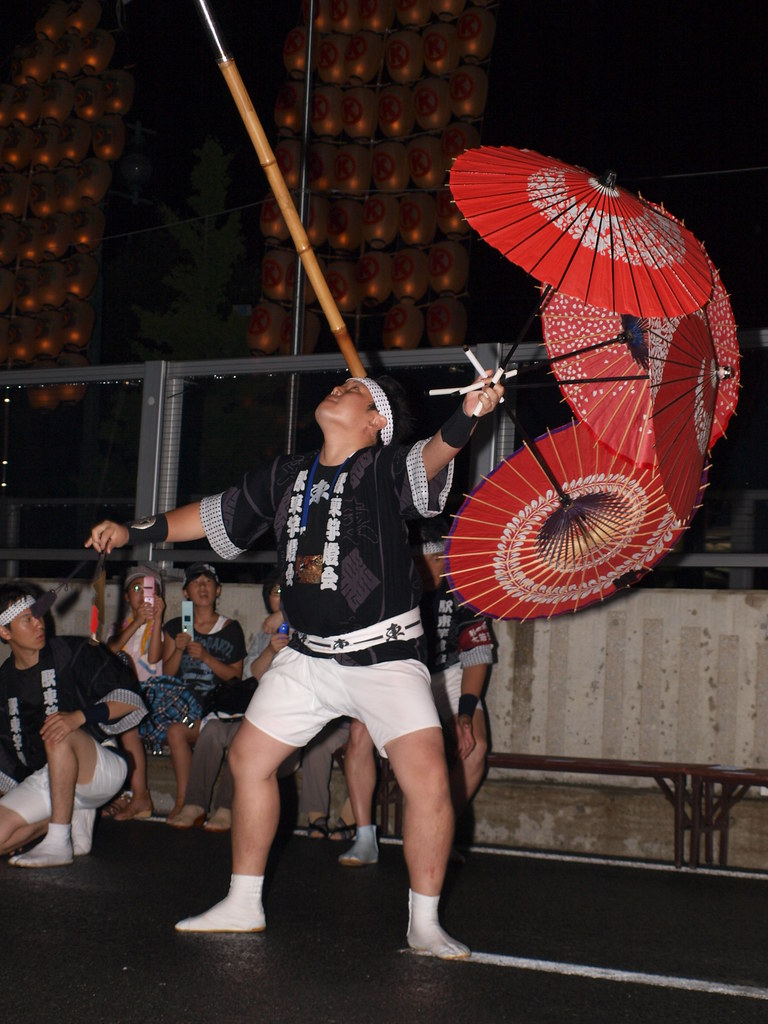
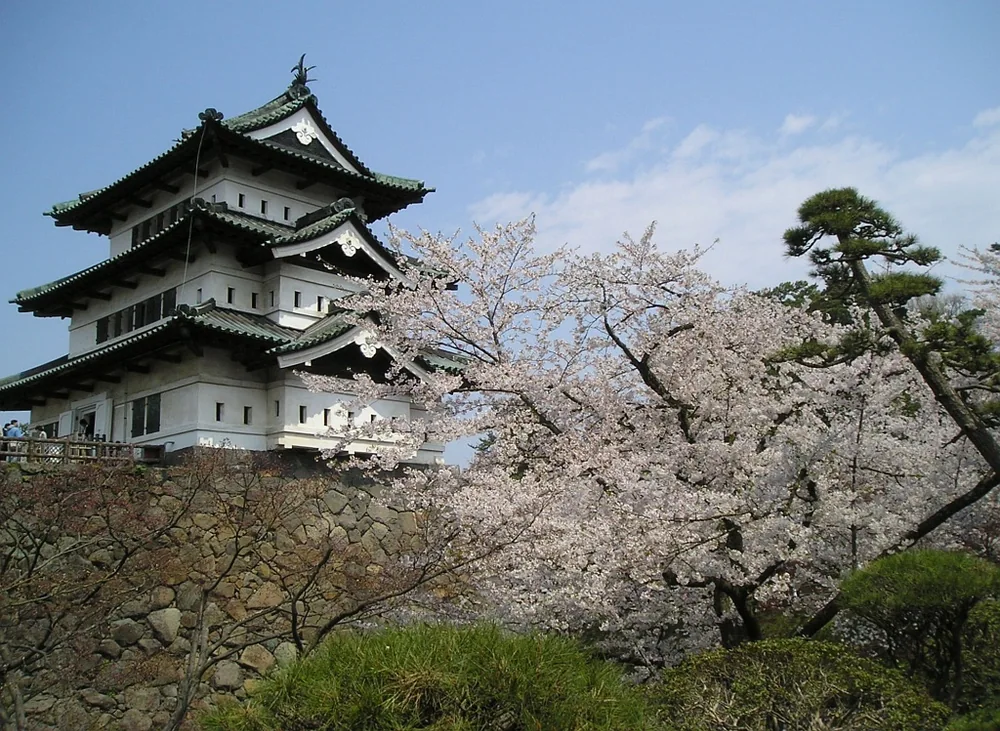
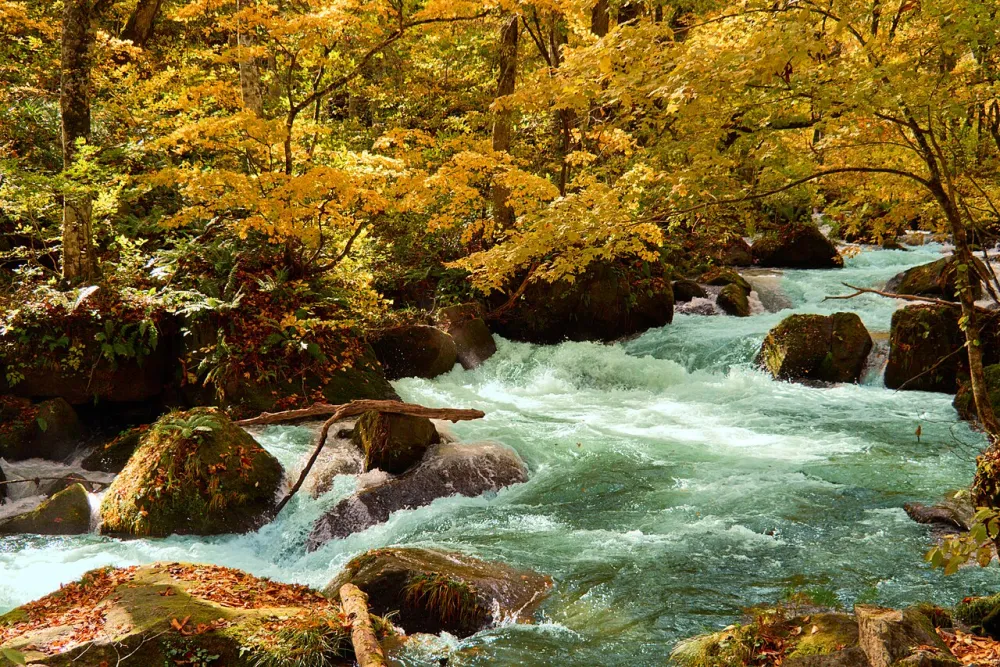
Compare six Resort Shirakami services, A-side reserved seats and BOX seating, the ¥840 reservation charge, stopovers and meals, with November 2026 examples for a through journey, Fukaura return and coastal overnight stay.
- Region & Focus
- Akita and Nyuto Onsen
- Reading Scope
- 30 min read · 19 chapters · 7 Q&As
- Official Verification
- 15 official sources checkedUpdated November 7, 2026
- Key Topics
- Rail travelBookingItineraries
Chapter Route Map (tap any stop)
- Decide where you will sleep before choosing the train
- The six services have different endpoints: train 3 ends at Hirosaki
- Check operating dates, then the train-set notes
- Choose the A side for ordinary sea-view seats, rather than guessing left or right
- BOX seats suit a group; one reservation does not buy four places
- The ¥840 charge is separate from the fare for your route
- Sales open one month ahead; an advance request is not a confirmed seat
- Choose a sales channel together with payment and collection
- Check the service for Noshiro basketball; leave return time within Senjojiki’s fifteen minutes
- For a real stopover, reserve the next train first
- Juniko Station is only the entrance; book a proper winter snow activity
- Bring food for the five-hour ride rather than relying on station stops
- Take turns in the observation area; rest at your own seat
- Arrange boarding first for large bags, young children and assistance needs
- Through-trip example: Akita to Aomori on November 7
- Same-hotel example: Hirosaki to Fukaura and back on November 7
- Coastal overnight example: Furofushi Onsen, November 7–8
- When wind or blizzards change the trip, locate people and bags first
- Before paying, separate two costs and two kinds of time
- Quick Q&A
Give the Gono Line a full daylight journey between Akita and Aomori on Resort Shirakami. Decide between a through trip, a coastal return or an onsen night, then reserve each train segment. Ordinary A-side seats face the sea; reserve BOX seats in car 2 for the number traveling. The ¥840 adult reservation charge is additional to the fare for your route. On November 7, 2026, all Resort Shirakami trains were suspended on all sections due to forecast strong winds; on November 8, trains 1, 2, 3 and 6 were suspended as well. If you planned to ride on those two days, contact your original purchase channel and that night’s lodging first to reschedule or cancel. The JR East running-information page for the Gono Line lists these suspensions.
Decide where you will sleep before choosing the train
If you have accommodation in Akita and Aomori and want a sea-view train between them, a one-way transfer is simplest. Check out, board with luggage, follow the Sea of Japan coast on the Gono Line and check into the next city in the afternoon or evening. The train is the main activity. Train 1, from Akita at 8:19 to Aomori at 13:34, already takes five hours fifteen minutes. Keep arrival plans to food, luggage and a short city walk rather than more outlying transport.
To stay at the same hotel without moving large bags, take an Akita-bound service from Hirosaki to Fukaura and return. You omit Akita–Higashi-Noshiro but still need a full day and separate reservations in each direction. For a coastal overnight stay, include Wespa Tsubakiyama and the hotel transfer in your booking sequence. The difference is luggage and where the night ends; completing the whole line does not require a different hotel every day.
If you have an early flight or long-distance train the next day, work backward from its departure city. Wind and snow can affect this coastal route. Spend the previous night in a city with convenient airport access rather than rely on a same-day cross-prefecture sightseeing train. With only half a day, shorten the rail segment instead of trying to fit a full return into the afternoon.
Sea of Japan views through the windows and onboard dining scenes introduce the pace of travel on the Gono Line sightseeing train.
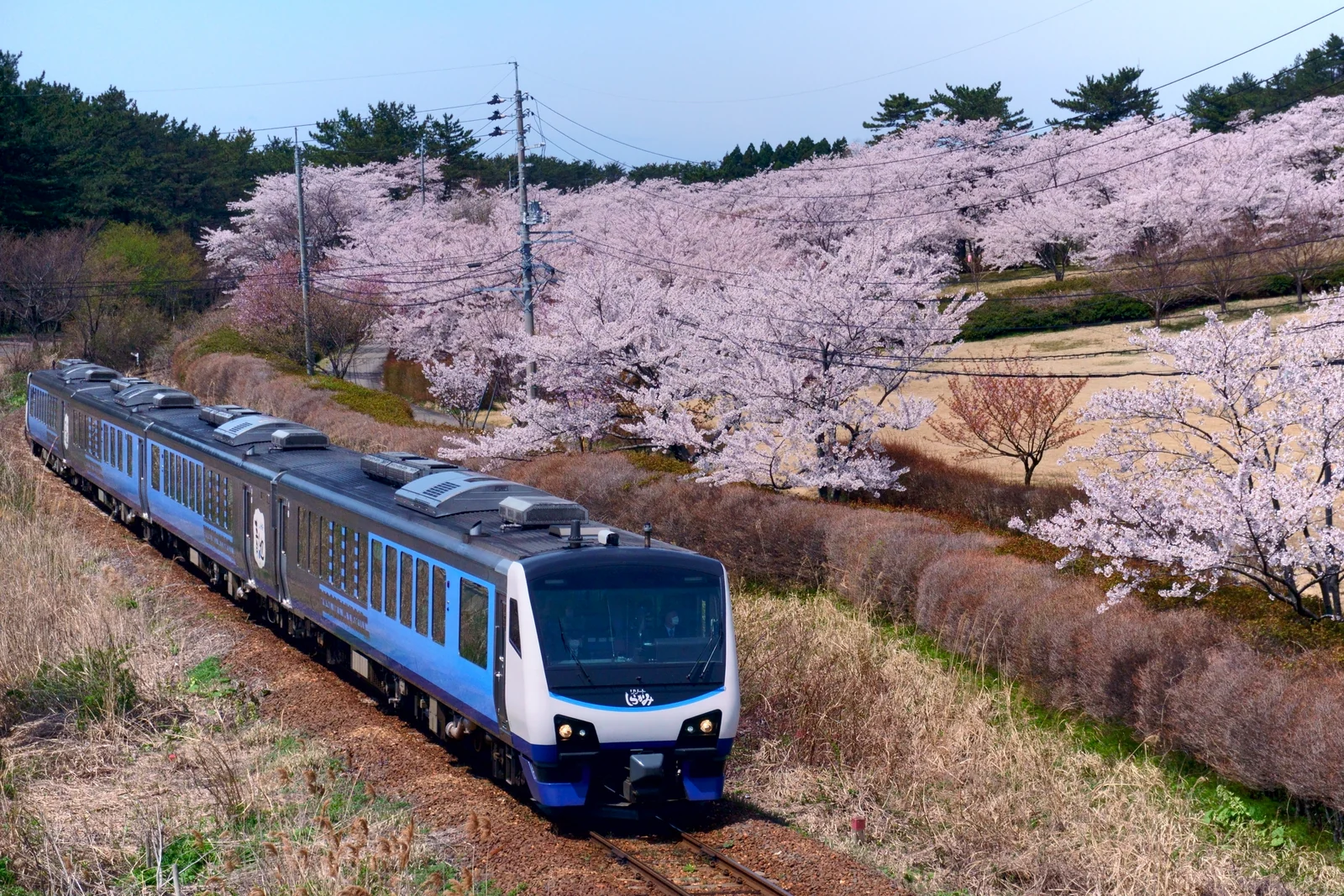
Compare six Resort Shirakami services, A-side reserved seats and BOX seating, the ¥840 reservation charge, stopovers and meals, with November 2026 examples for a through journey, Fukaura return and coastal overnight stay.
The six services have different endpoints: train 3 ends at Hirosaki
Trains 1, 3 and 5 leave Akita; trains 2, 4 and 6 head toward Akita. The November 2026 timetable lists train 1 at 8:19–13:34 to Aomori, train 3 at 10:50–15:50 to Hirosaki, and train 5 at 14:00–19:37 to Aomori. Train 1 leaves more afternoon time in Aomori. Train 5 allows lunch in Akita but arrives at night. For Hirosaki, alight there rather than continue to Aomori and backtrack.
In reverse, train 2 leaves Aomori at 8:09 and reaches Akita at 13:29; train 4 runs 13:52–19:01. Train 6 starts at Hirosaki at 16:06 and reaches Akita at 20:42. Aomori guests must reach Hirosaki separately for train 6 and count the connection. Train 2 suits morning coastal views and afternoon check-in in Akita. For train 6, arrange dinner and late hotel arrival first.
Distinguish Shin-Aomori from Aomori too. Train 1 lists Shin-Aomori at 13:27 and Aomori at 13:34. Their accommodation areas and long-distance connections differ. Reserve to your actual destination; the Shinkansen stopping at Shin-Aomori does not make it the right endpoint for a central Aomori hotel. Match the ticket segment, train number and hotel address before boarding.
Check operating dates, then the train-set notes
A service appearing in a timetable does not mean it runs on your date. The 2026 operating announcement lists trains 1, 2, 4 and 5 more frequently in November. Trains 3 and 6 run November 1–9 and 14–30; do not use an all-six-services plan for November 10–13. Read December and later dates individually. This published period lists trains 3 and 6 only through December 5; November’s midday options cannot simply be carried into New Year.
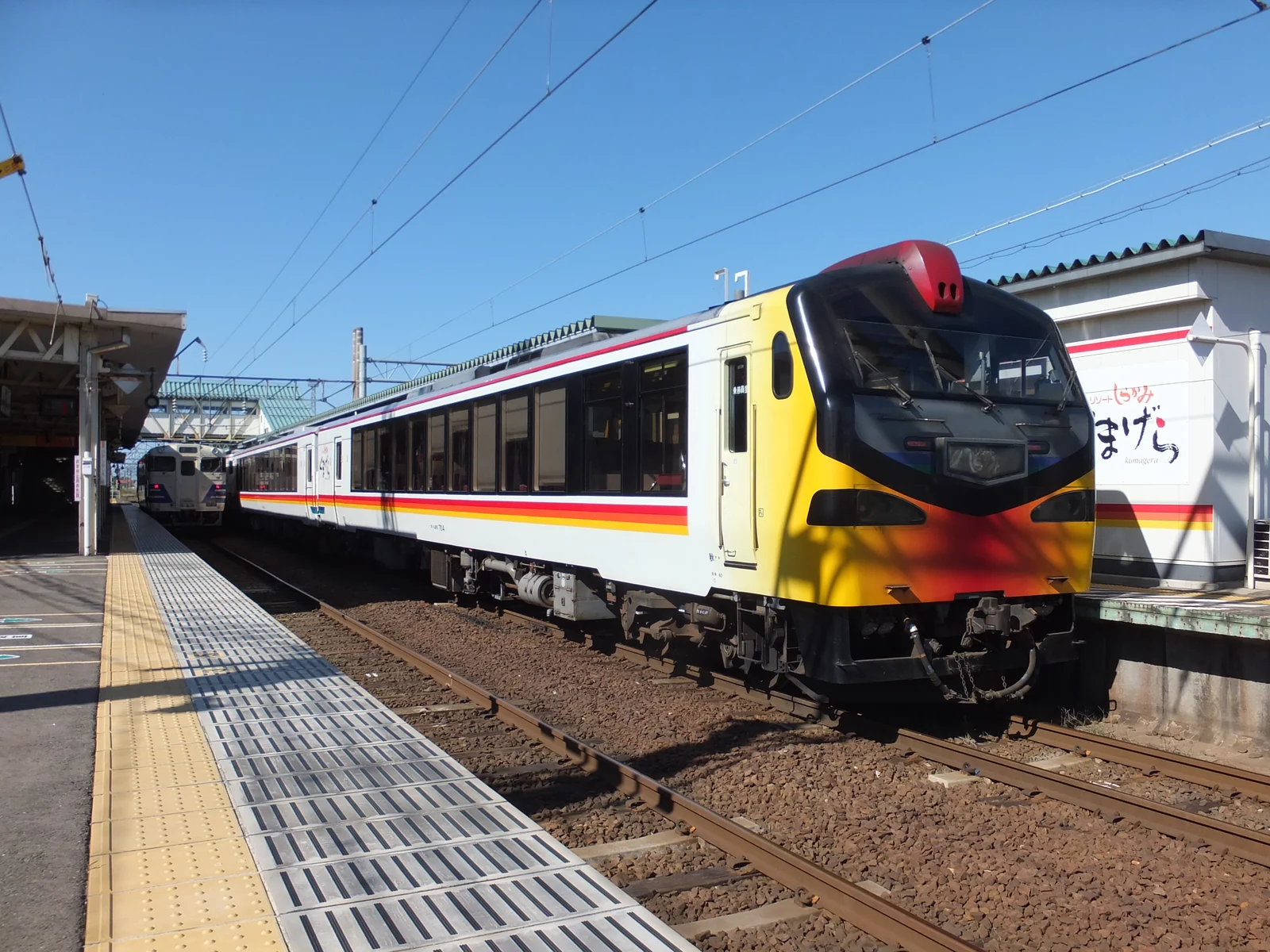
Read both “equipment” and “remarks” in JR’s stopping table. Train 1’s heading says Aoike, but remarks substitute Kumagera on November 10–13 and Buna on November 14–December 6. Taking only the heading would select the wrong set. Train 5’s heading says Buna, with Aoike listed for November 13–December 5. Establish that the train runs, then check the notes for that same date before comparing interiors and services.
Photos help identify the sets: Aoike is blue, Buna uses a green sunlight-through-trees design, and Kumagera includes red and orange. For Sea of Japan views, direction, daylight and availability usually matter more than exterior color. If one set is a priority, keep dates flexible and read the current table again before departure. If you book accommodation around a set, be prepared to reconsider if train assignments change.
Choose the A side for ordinary sea-view seats, rather than guessing left or right
Ordinary reserved seats in cars 1, 3 and 4 have two seats on either side of an aisle. The official JR seat guide states that the A side faces the sea between Higashi-Hachimori and Ajigasawa in both directions. The train changes direction en route. Use seat letters rather than guessing “left toward Aomori.” For two together on the ordinary sea side, look for A and B in the same row.
For a solo traveler wanting quiet window time, prioritize A. Two people wanting to eat and talk together should compare an A–B pair with separate A seats. Windows in different rows mean sitting apart. If someone needs to get up frequently, an aisle seat may suit them better. If A is unavailable, decide whether changing date or service is worthwhile. A later train can delay arrival by hours and reduce autumn or winter daylight. Losing daylight for one window seat may not be worth it. Keeping a suitable train, taking other seats and briefly using the public observation area is another option. Others use that space too; your reserved seat remains your main place to rest and keep personal items.
BOX seats suit a group; one reservation does not buy four places
Car 2 has four-person facing BOX seats with a table and partitions. The JR seat article says all BOX groups are on the sea side, with A and D by the window. The ordinary-seat A-side rule does not mean only A has a view in a BOX. Groups of three or fewer may share with other passengers. If two people strongly prefer not to face strangers, ordinary reserved seats often fit better. Four travelers can first look for one BOX group to keep meals and childcare together.
Within a BOX, some seats face forward and others backward. If backward travel is uncomfortable, compare the service, train set and seat plan and explain the need at the counter. Knowing that A and D are windows does not establish direction. For photography, consider the table, companions and window frames, and agree on turns rather than crowding four people against one pane.
JR describes Kumagera BOX seats that can be adjusted into a flat configuration, but tickets are still sold by seat. Reserve the number needed for a family; the convertible cabin is not a child’s sleeping place without a seat purchase. If the flat feature is essential, ask the counter to check the day’s set and actual seat numbers. Plan seated rest in ordinary seats. A small cushion or splitting the long journey across two days is more useful than deciding suitability from one interior photo.
The ¥840 charge is separate from the fare for your route
Resort Shirakami is a rapid train with all-reserved seating on its main sightseeing section. You need a basic-fare ticket and a reserved-seat ticket. The current stopping table lists an adult reservation charge of ¥840, with children half price at ¥420. ¥840 is not the full Akita–Aomori transport cost. If the booking screen sells only the reservation, arrange a valid basic-fare ticket or a pass covering the route too. Compare totals for the same date, endpoints and routing.
For a through journey without alighting, price the complete segment first. To leave Fukaura for food and take another train, give both segments and seat needs to the counter so tickets match the actual route. Reservations specify date, train and segment; arrange the later train separately. Do not reach a small coastal station with only the first segment and a hotel booking, then start looking for seats back to a city. Two adults each taking one train pay 840 × 2 = ¥1,680 in reservation charges. Two trains each cost 840 × 2 trains × 2 people = ¥3,360, plus applicable basic fares. These formulas compare reservations only. Pass holders should present the exact pass name, dates and both segments to avoid buying basic fares twice. Any additional reservation charge follows that pass’s conditions.
Sales open one month ahead; an advance request is not a confirmed seat
The official JR introduction gives ordinary reserved-seat sales from 10:00 Japan Standard Time (JST) one month before travel; convert JST to your local time zone. For November 28 travel, the example opens October 28 at 10:00 Japan time. Prepare the account, service and stations before opening, then use the seat map if you need a specific seat. For months without the corresponding date, check the official release rule rather than subtracting thirty days.
An advance request submits preferences before sales; allocation occurs after opening. The official explanation says you cannot finely select seat numbers on a map or specify a car at this stage. For sea-side, same-row or same-BOX requirements, compare normal seat selection after opening. If you have submitted a request, check its history or result email before buying again. Canceling duplicate confirmed seats brings applicable fees; waiting for an email is not a reason to buy the same service twice.
JR’s Japanese Eki-net process selects “Joyful Trains,” Resort Shirakami and the service, then date, segment and party size. After checking availability, choose the ticket type, log in, use the seat map, review and pay. This also makes a useful counter request sheet: date, service number, boarding and alighting stations, adults and children, seat type and preferred letters. Without a service choice, “I want the sea side” still requires rebuilding the trip from the start.
Choose a sales channel together with payment and collection
The official JR purchase guide lists Eki-net, staffed ticket offices and reserved-seat machines. Its Japanese Eki-net example includes card, convenience-store or financial-institution payment, and station payment. Those are instructions for that service. Follow the account, payment and collection directions of the service you actually use. Do not combine a ticketless option from the Japanese service with paper-ticket collection instructions from another booking website.
For paper tickets, collect before departure day or allow ample station time. Save the collection information required by your order. Train 1 leaves Akita at 8:19; handling accounts, payment or finding machines that morning squeezes breakfast and boarding. After collecting the previous evening, check every date, service and segment, including the second leg of a stopover. Do not discover at boarding that the two tickets do not connect. Use confirmation emails, electronic screens and paper tickets according to the product purchased. Keep the actual boarding ticket accessible, with phone power and offline order details. If the displayed details differ from expectations, ask station staff before entering the platform. One person can keep the group itinerary, but everyone should know their alighting station and where luggage goes next.
Check the service for Noshiro basketball; leave return time within Senjojiki’s fifteen minutes
Do not add Noshiro’s basketball experience merely because the train stops there. The November stopping table gives train 1 at 9:23–9:33 and train 3 at 11:59–12:14, but train 5 at 15:04–15:05, just one minute. On train 5, follow normal boarding and alighting rather than importing the activity from an introduction. Follow train and platform directions on whether an activity runs and where passengers may go. Scheduled dwell time also includes boarding.
Senjojiki stops are listed for trains 2, 3, 4 and 5. Train 3 stops 13:59–14:14; train 2 10:15–10:30; train 4 15:59–16:14; train 5 17:08–17:23. For daylight coast views, compare time and season, not just fifteen-minute durations. A November evening service is unsuitable for planning extended outdoor photography. Light, waves, wind and the permitted area affect alighting too.
This short stop means returning to the same train, not freely staying for the next one. Remember your car and departure time and remain within easy return distance. With a young child, slow walking or concern about cold wind, stay near the platform or aboard. Agree on a return meeting point if leaving together rather than splitting between photos and shops and searching for each other before departure.
For a real stopover, reserve the next train first
Treat a stay of several hours as two journeys. Arrival, time outside the station, return and boarding each need time. Secure the later reservation before treating the stopover as fixed. Resort Shirakami services are infrequent. A full or canceled train cannot be handled like an urban railway with another arriving immediately, and extending a stop toward another city after alighting is unsuitable.
At Fukaura, train 2 arrives at 10:55 and train 3 leaves toward Hirosaki at 13:34, giving a scheduled gap of two hours 39 minutes. Subtract leaving the platform, finding your way, eating, returning and waiting. It is not all available for a distant attraction. Start with rest and food within easy reach of the station, adding a walk if time allows. Attractions needing a transfer require a complete additional transport plan.
Luggage changes the value of a stopover. On a hotel-transfer day, all bags must leave the train with you; easy movement matters more than another station name. For a short return, leave large cases at your continuing hotel and take a day bag. If changing accommodation and stopping, establish actual storage first and reduce walking if none is arranged. Your former reserved seat is not luggage storage while you leave the station.
Juniko Station is only the entrance; book a proper winter snow activity
Plan Juniko Station separately from the forest lakes. The snow-free example in the official JR introduction changes to a route bus after alighting and lists April–November as the forest walking season. A 10:24 train arrival alone does not give the start time at Aoike. Include bus waiting, riding, walking after alighting and the return departure together. With only train seats reserved, keep the window-view journey rather than treating an unconnected forest segment as certain.
For December–March, JR introduces guided snow trekking. Preparation differs from an independent snow-free path walk: obtain the activity’s meeting point, transport and equipment requirements before fitting trains around it. Without a suitable booking, move the forest to another season and watch the coast aboard that day. A coastal overnight can focus on the inn; staying at Fukaura does not automatically add a winter Aoike walk.
For a first Shirakami ride with a forest visit, add a night and split Juniko and the complete coastal ride across two days. If the Aoike path is the priority, arrange forest access and return first, then choose a connecting rail segment. The trips have different main attractions. Removing one is usually easier than squeezing both bus and walking, especially when companions differ in tolerance for long rides and outdoor walking.
Bring food for the five-hour ride rather than relying on station stops
There is no restaurant aboard Resort Shirakami. For lunch on board, prepare a meal box, water and a compact rubbish bag before boarding. Train 1 leaves Akita early; prepare breakfast and lunch separately rather than assuming intermediate stops allow shopping. For train 5, eat lunch in Akita, bring an evening snack and decide dinner after Aomori arrival, rather than wait until after 19:37 for the first substantial meal.
The 2026 JR page lists self-checkout sales aboard Buna and Aoike. Do not apply the same shopping plan to Kumagera. Even with onboard sales, bring the main meal if fixed eating times, food restrictions or children matter. Tables and seat type affect eating too: choose a compact meal for ordinary seats, and share the table with others in a BOX rather than treating it as exclusive to your reservation.
Uketorippu (Gonotabi) lets you choose a train and product online, pay and collect local food at a designated station or location on the travel day. Book the train first, then select products for its number and the segment where you remain aboard. If alighting at Fukaura, do not choose a later pickup merely for an appealing photo. Handle the food order when changing trains too. Read the selected product’s deadline, collection point and cancellation conditions. If none fits, bring food rather than change the whole train journey to collect a meal.
Take turns in the observation area; rest at your own seat
Public observation areas at the outer ends of cars 1 and 4 are available to passengers with Shirakami reservations, without a separate observation-seat booking. The JR seat guide says they also serve as event spaces, with possible Tsugaru shamisen programs depending on date and segment. Take a camera and essentials, leave luggage tidy and take turns if others wait. Keep long rests at your reserved seat so others can approach the large windows.
Without an A-side seat, use the observation area as a brief supplement. Do not stand in the aisle or extend a camera in front of someone’s seat. On a long shared journey, returning after a stretch of views is often more comfortable than following every coastal angle. Companions can visit separately rather than four people occupying the front together. Listen to announcements about any program’s time and space. For quiet rest, request distance from the activity area when choosing seats. For a performance, check the formal schedule rather than treating a possible shamisen program as guaranteed on every train. Check the car number on returning; meeting at your original seats is clearer than in a changing public area.
Arrange boarding first for large bags, young children and assistance needs
On a hotel-moving day, bring luggage you can manage. Put water, food, medicine and warm clothes in a small bag before boarding so you need not reopen a large case at every station. Keep aisles, doors and space before others’ seats clear. For a short-stop outing, leave large bags where you can manage them, take valuables and essentials and return to your original car before departure. Packing everything at the bottom turns every movement into another unpacking.
With a young child, decide whether a separate seat is needed, then give the counter the actual age and requirements for pricing. A long sea-view ride need not mean five hours of a child sitting at a window. Alternate food, brief movement and rest. Two adults should aim for nearby seats to share care and fetching items. BOX seating suits meals together, but ordinary adjacent seats also deserve comparison if sharing or backward travel is a concern.
Before seat selection, tell JR the date, boarding and alighting stations, mobility-aid dimensions and any boarding or transfer assistance needed. The set, stations and reserved seat are parts of one trip. Establish feasible boarding before planning food collection and short stops. Leave generous connections and waits. You need not join others on the shore: staying aboard retains the main window-view experience.
Through-trip example: Akita to Aomori on November 7
Using train 1 on November 7, 2026 as a timetable example, stay in Akita the night before and arrange breakfast and ticket collection first. Board at 8:19, alight at Aomori at 13:34 and take luggage to that night’s hotel. Look first for ordinary A–B seats and bring lunch. Follow the day’s instructions at Noshiro; remain aboard at Juniko rather than add a forest bus. Managing just one Shirakami service suits first-time riders wanting the full coastal transfer.
For a Hirosaki night, alight from the same train at 12:48, go to the hotel and eat or walk afterward. Train 3 instead reaches Hirosaki at 15:50 and leaves more daylight in Akita; it also includes the scheduled Senjojiki stop. Choose from your starting morning: train 3 avoids an early start but shortens Hirosaki’s afternoon. Train 1 suits a previous night near Akita Station and an earlier arrival.
Train 5’s 14:00 departure keeps the morning in Akita but reaches Aomori only at 19:37. Tell the hotel your expected arrival and split eating between before boarding and after arrival, starting city activities next morning. Compare departure, arrival and usable daylight across the three services, rather than only remaining sea-side windows.
Same-hotel example: Hirosaki to Fukaura and back on November 7
On November 7, 2026, take train 2 from Hirosaki at 8:48 via Ajigasawa and Senjojiki to Fukaura at 10:55. Return on train 3 at 13:34, reaching Hirosaki at 15:50. Outward travel takes two hours seven minutes and return two hours sixteen, totaling four hours 23 minutes, with a two-hour 39-minute gap. This is a coastal rail day exceeding seven hours from departure to return, not a day to add a full Hirosaki itinerary.
Leave large cases at the continuing Hirosaki hotel and bring lunch or snacks, water and a warm jacket. Use the Fukaura gap first for rest and food, setting walking distance from the return deadline. Obtain both reservations and establish that train 3 runs that day before fixing the plan. If it does not run or suitable seats are unavailable, change date or choose another connected plan, rather than travel out hoping to find a return locally.
This requires much less riding than an Akita–Aomori full return but repeats some coast. It suits people who like train-window views and fewer hotel moves. A shorter Hirosaki–Ajigasawa ride gives a taste of the train but misses much of the coast toward Fukaura. Shorten expectations with the ride and choose an endpoint matching how long you want to sit.
Coastal overnight example: Furofushi Onsen, November 7–8
For two days and one night, shorten day one to Akita–Wespa Tsubakiyama. Train 3 on November 7, 2026 leaves Akita at 10:50 and arrives at 13:16, then transfer to Furofushi Onsen. On November 8, train 1 leaves Wespa Tsubakiyama at 10:38, reaches Hirosaki at 12:48 or Aomori at 13:34. This arrives on the coast the first afternoon without adding a Juniko walk and separates check-in from next-day departure.
The hotel’s official access page lists transfers from Wespa Tsubakiyama. Shirakami passengers need no transfer reservation; local-train passengers do. The phone number is 0173-74-3500. Still give the expected services and arrival and departure dates when booking, especially the return train and city, and read the hotel’s meeting instructions before leaving. Its winter Shin-Aomori shuttle is a separate service with specified dates, staying-guest eligibility and advance application. It does not directly replace this two-train plan.
Price the actual dates, party, room and meal package, and read latest arrival, meals and cancellation conditions before paying. After transferring to the guest shuttle, follow the hotel’s arrangements for that afternoon. The main gain is less rushing and a coastal night. Trying to add forest, bathing and the whole coast into one night fills the rest time again.
When wind or blizzards change the trip, locate people and bags first
The official Hirosaki tourism introduction specifically notes strong-wind and blizzard effects on the Gono Line. Check JR’s same-day operating information before heading to the station. If already along the route, ask station or train staff about feasible movement and contact that night’s accommodation. Give the date, service, current station and destination when a train is canceled, rather than simply asking how to reach Aomori.
Rail tickets, hotel and food are separate bookings. Save operating notices and orders, then change or cancel through the original channels. Do not change only the train and leave the hotel unaware at dinner time. If already staying on the coast, establish a feasible departure before checking out. Waiting where assistance is available makes contact easier than dragging bags to another small station before dealing with it.
For a later flight or essential long-distance train, return to its departure city the previous night. In poor weather, remove a stopover, choose feasible transport with fewer connections or move Shirakami to another day. Handle reservations, late hotel arrival and food pickup together. Once you choose what to retain, stop adding activities and leave time for the people and luggage that must move.
Before paying, separate two costs and two kinds of time
List confirmed reservation charges first, then actual basic fares, hotels and food. Two people traveling one way pay ¥1,680 in reservations; a Fukaura return or two-segment coastal overnight costs ¥3,360, an extra ¥1,680. A coastal night also replaces nights in the original cities. Compare the revised accommodation total rather than treat the new inn as an unrelated small expense.
Separate timetable time from your own allowance too. Akita 8:19–Aomori 13:34 excludes hotel-to-platform travel and reaching the next hotel. For a first ride, this guide suggests at least thirty minutes before departure to find the platform and get ready, with ticket collection and breakfast done separately. This is a planning allowance; increase it for young children or boarding assistance.
A few useful answers
Which Aomori-bound service ends at Hirosaki?
Train 3 leaves Akita at 10:50 and terminates at Hirosaki at 15:50. Trains 1 and 5 reach Aomori. In reverse, train 6 starts at Hirosaki. Check operating dates before reserving the actual segment.
Which seat should a solo traveler choose for sea views?
Prioritize an ordinary A seat. The A side faces the sea between Higashi-Hachimori and Ajigasawa in both directions. Two together can look for A–B in one row. Without A, compare other seats and public observation space against your itinerary.
Do two BOX reservations give us all four places?
Reserve BOX seats by the actual number needed. Three or fewer may share with others. For two adjacent seats with less interaction, consider ordinary reserved seats; prioritize a whole BOX for four travelers.
Is ¥840 the full Akita–Aomori fare?
¥840 is the adult reservation charge; children pay ¥420. Basic fares are additional. Pass holders should follow their pass dates, route and reservation conditions and avoid duplicate purchases.
Can I alight at Juniko and use the same reservation on the next train?
A real stopover needs a separate later-train reservation and basic-fare handling for the actual route. A short Senjojiki stop means returning to the same train as instructed. Juniko forest access also needs a bus or booked activity transfer.
Can I use November’s train 3 out and train 6 back in winter?
This published 2026 period lists trains 3 and 6 through December 5; do not carry November’s plan into New Year. Other services also have individual operating dates. Find services on your date before arranging stops and hotels.
Does a meal reservation change automatically when I change trains?
Manage the train and Uketorippu meal separately. Handle service number, pickup station and product cancellation conditions when changing trains. If no meal suits the new plan, bring food before boarding.
Official information and references
Sources used in this guide.
- Resort Shirakami 2026 operating dates, times and reservations
- How to ride and reserve Resort Shirakami
- Resort Shirakami booking and ticket purchase through Eki-net
- Resort Shirakami sea-view and BOX seat guide
- Resort Shirakami 1: stopping timetable
- Resort Shirakami 2: stopping timetable
- Resort Shirakami 3: stopping timetable
- Resort Shirakami 4: stopping timetable
- Resort Shirakami 5: stopping timetable
- Resort Shirakami 6: stopping timetable
- Eki-net advance requests and reservations explained
- Access | Furofushi Onsen
- Hirosaki Navi: Gono Line wind and snow background
- JR East: Resort Shirakami and Gono Line scenery
- JR East: Gono Line running information and the Nov 7-8, 2026 Resort Shirakami suspension notice