Choose cherry blossom routes in Hirosaki, Kakunodate, and Kitakami Tenshochi by train connections and actual walking distances. Plan two destinations in five days or three in six, choose a base, compare the JR EAST PASS, and adjust to bloom conditions.
- Region & Focus
- Hirosaki
- Reading Scope
- 34 min read · 16 chapters · 3 Q&As
- Official Verification
- 14 official sources checkedUpdated October 26, 2026
- Key Topics
- SeasonsRail travelItineraries
Chapter Route Map (tap any stop)
- Choose the scenes you want to linger over before committing to all three places
- Read bloom reports by date, location, and variety
- Picture one north–south railway corridor with a branch to the west
- Separate nights for changing cities from nights beside the blossoms
- A night in Hirosaki: the Shin-Aomori transfer, park walks, and the return after dark
- For a Kakunodate day trip, book the return before planning your walks
- Why stay in Kakunodate: early walks and a choice of two bloom areas
- Kitakami Tenshochi: save energy for the return after crossing the river
- Compare the JR EAST PASS using the journeys you will actually take
- Book the two hardest-to-replace train journeys first
- Five days and four nights: protect two full blossom days
- Six days and five nights: give travel its own day when visiting all three
- Keep luggage off the riverbank
- With children or older travelers, agree on the turnaround point before leaving
- Budget for choices that can change the day
- Make the final adjustment around the nights you have booked
- Quick Q&A
For a Tohoku cherry blossom trip without a car, set aside the days and evenings you want for blossom viewing before connecting Hirosaki, Kakunodate, and Kitakami Tenshochi. Choose two destinations for five days; consider all three with six days or more. That leaves more time to walk, eat, and wait out the weather. Stay overnight in Hirosaki for the park in the morning and evening. In Kakunodate, allow separate time for the samurai district and riverbank. At Tenshochi, count the river crossing and the return along the long avenue of cherry trees.
Choose the scenes you want to linger over before committing to all three places
If you have only four or five days, including travel from Tokyo or the airport, start with Hirosaki and Kakunodate, or Kakunodate and Kitakami. The first pair suits travelers who want a castle park by day and after dark, followed by historic streets. The second keeps your two main blossom days in Iwate and Akita, without continuing into Aomori. To visit all three, add at least one day for travel and adjustments so that rain or changing blooms do not derail the plan.
Hirosaki rewards visits to different parts of the park at different times. Kakunodate offers two distinct walks: the samurai district and the riverbank. Kitakami Tenshochi has a long riverside avenue of cherry trees. Give Kakunodate more time if you like buildings and weeping cherries. Allow half a day to a full day in Kitakami for a long walk under the trees. Save a night for Hirosaki if you want moats, floating petals, and evening lights. These differences matter more than the order of the three names on a map.
Agree on your group’s first choice before arranging the other two. If the remaining trains run at awkward times, rooms cost well beyond your budget, or the second city is past its best bloom, a full visit to your first choice is usually worth more than cutting every stop short to keep all three. A blossom trip can have just two main destinations. Meals and rest become easier to arrange, too.
The Hirosaki Tourism and Convention Bureau introduces the cherry blossoms of Hirosaki Park, Kakunodate, and Kitakami Tenshochi in footage from 2018.
Choose cherry blossom routes in Hirosaki, Kakunodate, and Kitakami Tenshochi by train connections and actual walking distances. Plan two destinations in five days or three in six, choose a base, compare the JR EAST PASS, and adjust to bloom conditions.
Read bloom reports by date, location, and variety
Hirosaki City’s records for its Somei Yoshino reference tree show full bloom on April 13 in 2023 and April 23 in 2025: a ten-day difference at the same spot. Read the page’s publication date alongside the date each photo was taken so that you know which spring it shows. A search result saying “best in late April” gives a seasonal outline. Choosing your only blossom day requires more detail.
Break down reports within each city as well. Hirosaki Park has the outer moat, the park interior, and late-flowering varieties. Kakunodate has weeping cherries along the samurai street and Somei Yoshino cherries on the Hinokinai River embankment. In Kitakami, distinguish the long avenue from other park areas. When you see 散り始め, meaning petals are starting to fall, find the area the report refers to before deciding to change cities. Canceling a room on the strength of one citywide label can mean missing an area still worth seeing.
Keep a simple record of the city, area, variety, latest report date, bloom condition, and change or cancellation deadlines for your transport and rooms. Compare all three before departure, then update once each evening during the trip. Spending the next morning on your phone leaves less time outdoors. Use festival dates to find stalls, lighting, and transport arrangements; use current bloom conditions to decide your viewing order.
Picture one north–south railway corridor with a branch to the west
Kitakami lies on the Tohoku Shinkansen corridor, which continues north through Morioka to Shin-Aomori. Kakunodate is on the Akita Shinkansen route, which branches from Morioka toward Akita. For Hirosaki, change at Shin-Aomori to the Ou Main Line. Keep that layout in mind when searching: an intercity arrival is not the same as reaching the flowers.
Enter Hirosaki Station, Kakunodate Station, or Kitakami Station as your destination. Stopping a Hirosaki search at Shin-Aomori omits a transfer; treating Morioka as arrival in Kakunodate omits the westbound leg. If a booking site substitutes another station for the city name, correct the endpoint before comparing fares and trains. Keep a date attached to every search, and distinguish weekdays, weekends, and seasonal extra trains.
For travel between the three, compare routes via Morioka with options toward Akita, including transfers, waiting time, and available seats. The shortest line on the map may not offer the best connection. To keep an afternoon for walking, find a train that actually reaches the city where you are staying around midday. If only late arrivals remain, make it a travel day and eat near the destination station.
Separate nights for changing cities from nights beside the blossoms
If you have substantial luggage or are new to Tohoku’s railways, use Morioka as a central base, then spend one or two nights in Hirosaki. Give Kakunodate and Kitakami a day each and return to the same room to sort out your clothes. Routing travel between Kitakami and Kakunodate through Morioka also makes the plan easier to follow. You move your bags less often, but each day trip requires a round trip.
If you want early street photos or illuminated blossoms, adjust your overnight stops accordingly. Spend the Hirosaki evening in Hirosaki and the Kakunodate morning in Kakunodate. Reduce the number of cities if both ends of the day matter. Changing cities every night breaks up the hours before breakfast and after dinner. Hotel check-in, finding a washing machine, and packing take time that a train search will not show.
Compare total room prices for the same number of guests, beds, and cancellation terms. Add round-trip transport for a room farther from the station. Two cheaper single rooms can also change a family’s total. During blossom season, flexible bookings let you respond to bloom changes within the stated deadlines. Book only the nights you intend to use so that your options remain clear.
A night in Hirosaki: the Shin-Aomori transfer, park walks, and the return after dark
JR East’s Shin-Aomori route page lists the Ou Main Line toward Aomori separately from services toward Hirosaki and Higashi-Noshiro. After leaving the Shinkansen, follow transfer signs for Hirosaki and check the destination again on the platform. If you bought through to Hirosaki, keep the full set of tickets and collection details. Each traveler should carry their own ticket in case you pass through gates separately or become briefly separated.
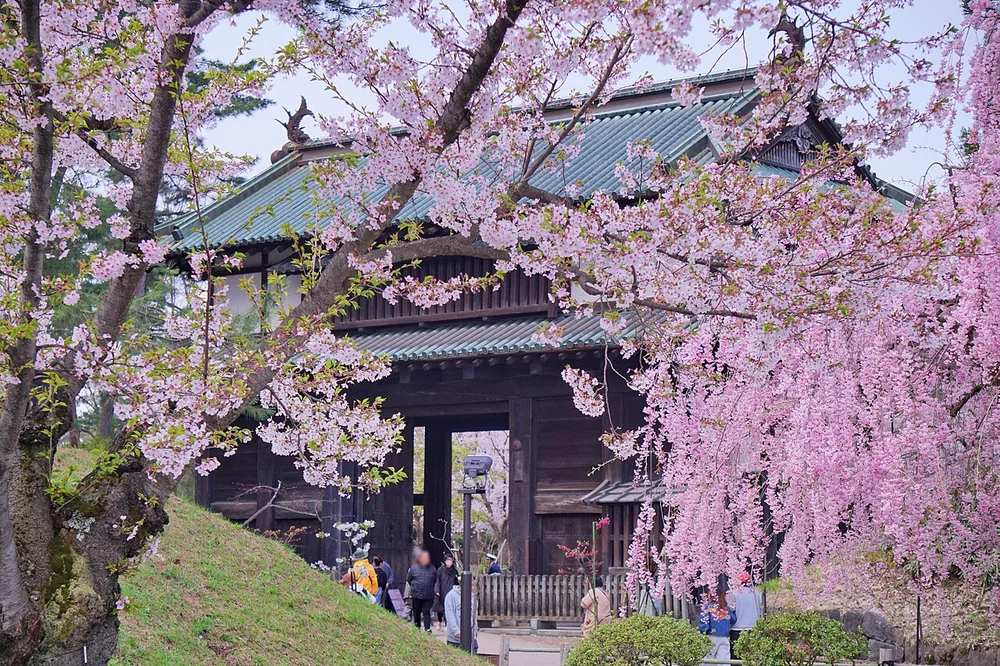
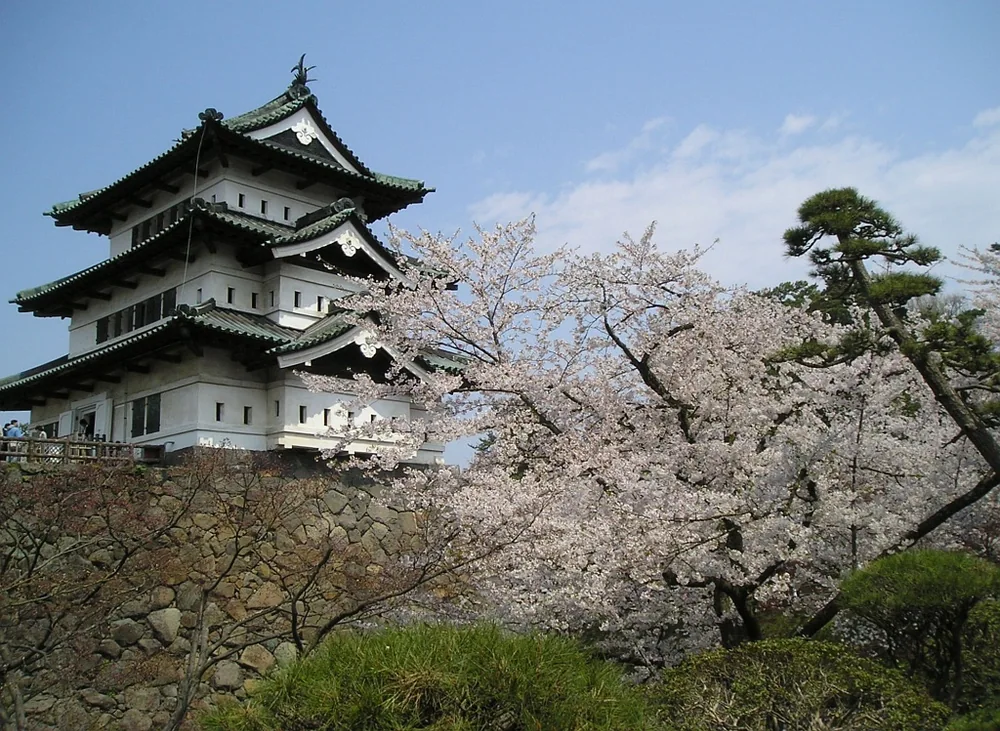
From JR Hirosaki Station’s Central Exit, take the Dotemachi Loop Bus to Shiyakusho-mae for Hirosaki Park. Store large bags first. If you are staying near the station, leave them at the hotel; for a hotel near the park, save both the hotel and your bus stop on the map. Regular services run about every ten minutes from 10:00 to 17:00. From April through November, additional services run about every 20 minutes from 17:00 to 18:00.
From October 1, 2026, the adult Dotemachi Loop Bus fare is ¥200 in cash or ¥180 by IC card. The adult city loop one-day pass costs ¥600.
For one outward and one return ride, cash fares total ¥400, or ¥360 with an IC card. Those two rides alone do not justify a day pass. Other regular routes have their own fares, so check the route name and stop before boarding. The one-day pass is issued only on MegoICa, Suica, or PASMO. Buy it on the bus before tapping your card when you get off.
From the park entrance, make the moat and one park path your main walk, then add the west moat or another area. Distance inside the park is separate from the station-to-park journey. If you start looking for every famous angle only after entering, you can keep moving deeper into the park and discover at departure time that you still have to cross it all again.
For reflections, prioritize the west moat and Shunyo Bridge. For hanaikada, the rafts of fallen petals on the water, focus on the outer moat and that day’s falling petals. Late-flowering double cherries featured by the Hirosaki Tourism and Convention Bureau offer another option. Choose one or two subjects first so that you can wait for light and gaps in the crowds where you most want to be.
Follow current park signs and walking routes. If construction closes a building, bridge, or path, use the open paths instead of circling toward a closure to recreate an old photo. With older travelers, agree before entering how far to go and which gate to use on departure. If someone needs a break, others can walk nearby. Choose an entrance or named facility as the meeting point rather than “the biggest cherry tree.”
A hotel by the station suits an early departure, especially if the next journey involves transfers. Staying near the park or downtown makes it easier to split viewing into afternoon and evening visits, with a return to the room for warmer clothes or a child’s nap. Open the route from the hotel door to the actual park entrance before browsing photos. A Hirosaki address does not by itself mean an easy walk back to your room.
A day trip from Aomori works if you want daylight viewing only, provided you allow time for both trips between the station and park. Lingering under the evening blossoms before returning to another city links dinner, the bus, the walk to the station, and the train into one sequence. Staying in Hirosaki often gives you a fuller evening. The travel time saved becomes time for a slower park walk.
Do not fill the daytime schedule on an evening blossom day. See the flowers in the afternoon, eat something and add a jacket before dusk, then return to your chosen area. You can decide when to leave according to your energy. Regular loop buses and festival extensions operate under separate arrangements. Choose your return stop from that season’s notice. If walking back, save the route and the hotel’s Japanese name so that you can head straight there after leaving the crowds.
For a Kakunodate day trip, book the return before planning your walks
Kakunodate Station is served by the Akita Shinkansen, with straightforward connections from Morioka to the main north–south Tohoku corridor. If Kakunodate is an intermediate stop, find arrivals and departures with seats before choosing lunch and walking distances. If you stay in Morioka both nights, leave your bags at the same hotel. If continuing to Akita, choose storage that fits your route out of town.
All seats on Komachi trains are reserved. Arrange outward and return bookings separately, then decide how late to stay once you have a return seat. Include adjacent seats or a child’s own seat in your booking plan. If only scattered seats remain, agree whether that works for your group. The train gets you to Kakunodate Station; you still need time for walking and meals afterward.
A full day in Kakunodate allows an unhurried visit to the samurai street followed by the Hinokinai River embankment. If a long journey brings you in during the afternoon, choose just one area. Fitting house interiors, a long river walk, and a distant cafe into a short visit usually cuts into the blossom viewing first. After a meal queue, you may spend the rest of the visit watching the return time.
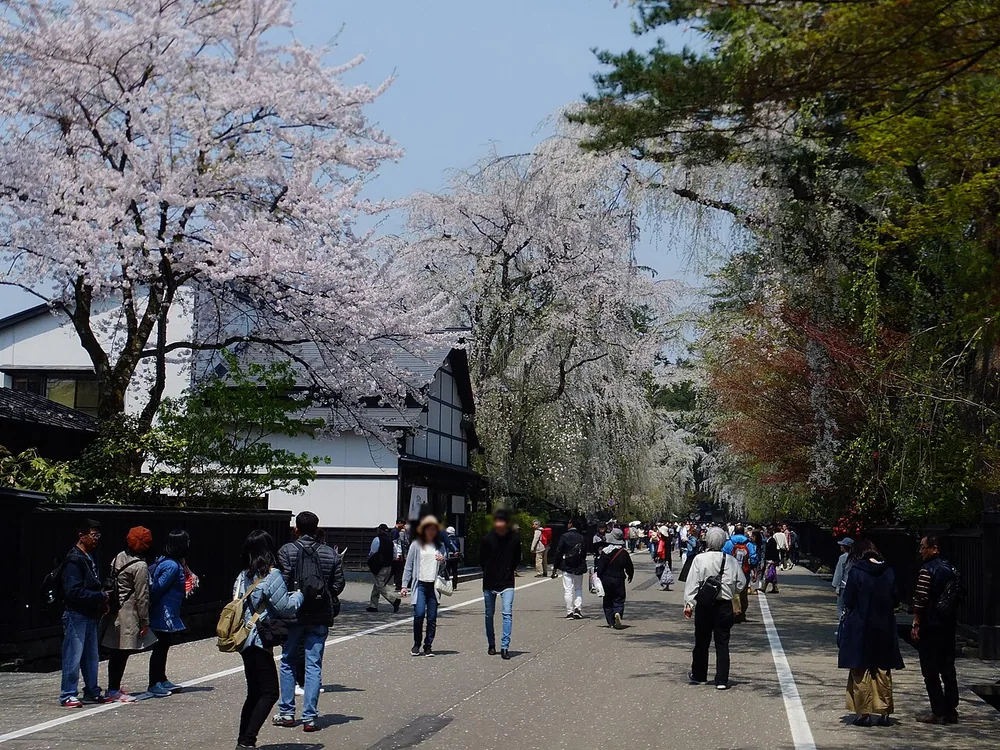
Semboku City lists the Somei Yoshino avenue on the Hinokinai River embankment as about 1,950 meters long, with the area about a 15-minute walk from Kakunodate Station. That time gets you to the area; walking the full embankment and returning to the station adds distance. The samurai street has weeping cherries and black wooden fences. The two areas are adjacent, but each needs its own time because the walks are quite different.
On a first visit, start with the samurai street to see the blooms and crowds, then continue toward the river. An overnight stay gives you more control over timing for quieter morning street photos. On a day trip, alternate photography with walking and move on when a spot is busy instead of waiting at the same angle indefinitely. If some people want to enter a house while others prefer the flowers, meet at a clear landmark on the same street.
Choose a section of the riverbank for an out-and-back walk, and agree on the start and turnaround points before setting off. To walk the entire length, include the distance back to the station. With a stroller or older companions, keep room for sitting down and turning back on the shorter route. The open riverbank can feel much windier and colder than the samurai streets. Keep a jacket within reach instead of unpacking the whole bag at the roadside.
Why stay in Kakunodate: early walks and a choice of two bloom areas
The Tazawako–Kakunodate Tourism Association covers weeping cherries on the samurai street separately from Somei Yoshino cherries on the Hinokinai River embankment. Look for recent photos of both areas to decide which to visit first. If the samurai street already looks close to the scene you want, give it the good-weather hours. If the riverbank remains your priority, place lunch between the two walks.
A change in bloom conditions need not turn all of Kakunodate into a yes-or-no decision. Weeping cherries against black fences, long riverbank views, and the buildings and exhibits inside the samurai houses each offer a reason to stay. Historic-street enthusiasts may keep Kakunodate even without full bloom everywhere. If your main aim is a riverbank covered in flowers, leave flexibility for another city at a better stage.
In rain, shorten outdoor sections and wait in an open visitor attraction or over a meal instead of walking both areas in soaked clothes. Check that day’s opening information for indoor visits, then rejoin your route when the rain stops. For brief light rain, walk a short section of your favorite area first. If your shoes and socks are soaked, take a break and return to your room earlier. There is more walking tomorrow.
A hotel near the station suits late arrivals, early departures, and large bags. You can keep your main luggage out of blossom crowds before and after check-in and reach the railway easily after checkout. A room near the historic streets puts the samurai district or riverbank closer in the morning and evening. For a dawn walk before returning for breakfast, location may matter more than another hotel facility.
Use the hotel address to measure three routes: to Kakunodate Station, the samurai street, and the riverbank entrance. “Around Kakunodate” on a booking page can cover a wide area. If you need a pickup, connect its departure point and operating times to your train. With two nights, devote one day to your main blossom scenes and another to the neighborhood and shorter walks. That is steadier than checking out every morning.
If suitable Kakunodate rooms are sold out, consider Morioka or Akita and compare actual round-trip trains. An available room is only the first step: your intended departure from Kakunodate must connect. Check the return especially carefully if you want an evening walk. If daylight is enough, a city hotel near a station may make transport and costs easier to manage.
Kitakami Tenshochi: save energy for the return after crossing the river
Kitakami Tenshochi is across the Kitakami River. The official festival walking map marks JR Kitakami Station, Sango Bridge, the riverside cherry avenue, and the Tenshochi Rest House. From the station, find the East Exit, then follow that season’s open route toward the bridge and park. If your hotel is at the West Exit, include the crossing between the station’s two sides. A straight-line map distance can conceal that part.
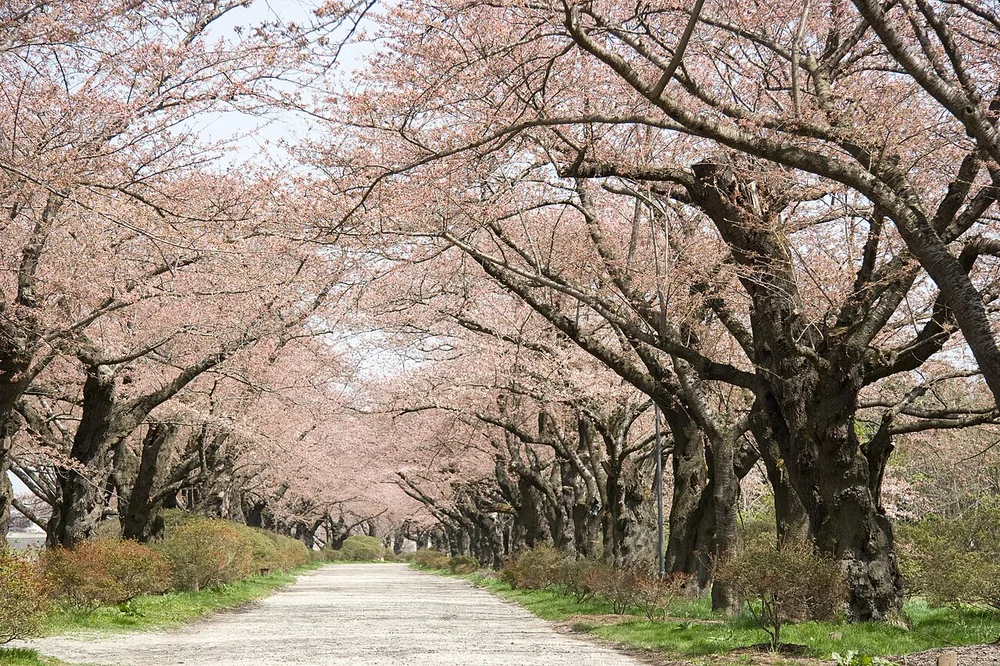
For your first walk, save Kitakami Station East Exit and Sango Bridge as separate pins, followed by the park entrance. The roads and tree avenue become easier to understand once you reach the river. A seasonal shuttle or taxi may save walking, but blossom-season congestion affects travel time. If walking, decide your acceptable total distance before setting out so that reaching the park does not use up the energy you need to return.
Kitakami works as a dedicated blossom day on a rail trip: arrive, store luggage, cross the river, walk, eat, and return to the station. Even if you are continuing to another city, you still need to cover the station-to-blossoms distance first. After an intercity journey in the morning, concentrate the afternoon on Tenshochi rather than adding a distant attraction that needs another transfer. Leave enough time before your train to pause beside the river.
Tenshochi’s riverside cherry avenue runs for about two kilometers, with facilities marked along it on the official walking map. Walking from the avenue entrance near Sango Bridge to the Rest House and back is about four kilometers, plus the distance between the station and avenue. With children or older travelers, walk just part of it and turn back while everyone still has energy.
To complete the avenue, plan lunch, water, and a seated break near the middle. You need not photograph every spot again on the return. At the rest facilities, assess how everyone feels before deciding whether to walk back or use transport operating that season. Reach your farthest point while you still have energy. Waiting until your feet hurt to seek a way back to the station usually leaves fewer options.
Photographers can narrow the plan to a view beneath the trees and a long riverbank view, then leave time to wait for the light. Waiting for a scene with no people can take a long time; others are using the riverside walk too. Where crowds gather, pack away equipment that blocks the path and move to the next section. Clear passage also helps your companions keep up without spending the whole walk looking for one another.
The Kitakami Tourism Association’s 2026 page states that the ferry linking the west bank near the station with Tenshochi did not operate that year because of safety measures. Base your plan on an established land route. If a later annual notice provides a ferry or shuttle, add it as a way to save walking. You can then see exactly which section it replaces.
For shuttles, check operating dates, boarding points, the last service, and the direction for leaving the site. Some arrangements apply only on certain weekends, with different weekday routes. Save the current year’s map rather than relying on “there is a blossom shuttle.” For evening viewing, list the end of illumination, the last shuttle, and the train back to your city separately. The earliest cutoff determines when you must leave.
Staying near Kitakami Station lets you return to your room, change shoes, and eat after viewing. Staying in Morioka requires enough energy to reach the station and take the train. If continuing to Hirosaki or Kakunodate that day, finish Tenshochi in daylight for simpler connections. For both sunset and evening lighting, give Kitakami a night and make the next journey after breakfast.
Compare the JR EAST PASS using the journeys you will actually take
As of October 2026, the current JR EAST PASS costs ¥35,000 for adults for five consecutive days or ¥50,000 for ten consecutive days. Children ages 6–11 pay ¥17,500 or ¥25,000 respectively. Sales of the old Tohoku Area version ended on March 13, 2026. Eligibility requires a passport issued by a country other than Japan. The pass covers reserved seats in ordinary cars within its area; Green Car and GranClass require additional payment.
List the journeys you will actually make between Tokyo, Morioka, Shin-Aomori, Hirosaki, Kakunodate, and Kitakami. Compare their combined one-way fares for the same dates with the pass price to see whether it suits your trip.
The five-day pass runs on consecutive days. If you spend your first two days in Tokyo, start it on the day you head to Tohoku, provided the expensive intercity legs also fall within its validity. For a slower stay in Hirosaki or Kakunodate, compare the ten-day pass with individual tickets. The ticket-price difference caused by an extra night is part of your travel pace. You need not add a round trip simply to use the pass heavily every day.
Budget separately for long-distance JR travel, local buses, and lodging. Hirosaki’s loop bus is local transport; do not remove it from your budget as though unlimited JR travel covered it. A walking day with almost no transport cost may be the trip’s most important day. Calculate passes using confirmed routes, adding an extra excursion only if you actually want it.
Book the two hardest-to-replace train journeys first
For overseas visitors using JR-EAST Train Reservation, the official FAQ gives the usual sales opening as 10:00 Japan time one month before travel. Prepare your departure and arrival stations, date, and acceptable time range so that you can search when sales open. For another website or a particular product, follow that product’s stated process and keep the confirmation and collection details.
Bring the pass holder’s original passport when collecting a pass in Japan. To use a reserved-seat ticket machine with a passport reader, find a station equipped with one before departure. If the counter is closed when you arrive, change the collection location accordingly. Collect the physical pass and understand the seat reservation details before the first long journey instead of looking for a collection method just before boarding.
Handle the longest intercity journey and the crucial return to your hotel first. These might be the northbound train from Tokyo, the return from a Kakunodate day trip, or the onward service from Hirosaki. Once seats are arranged, adjust lunch, luggage storage, and walking order. Set the correct group size if you need seats together. Booking for one person first does not keep the adjacent seat free.
Pass holders still need reservations for the reserved seats they intend to use. If your planned train is full, check earlier and later departures, then consider changing the day’s order before changing cities. When changing a train, also change hotel arrival, dinner, and luggage collection plans. Make changes while seated for a break rather than rushing to book on a riverbank and forgetting a reservation you no longer need.
Five days and four nights: protect two full blossom days
For five days and four nights starting and ending in Tokyo, use two nights in Morioka and two in Hirosaki. Travel to Morioka and store your bags on day one. Choose either Kakunodate or Kitakami for a full blossom day on day two. Head north to Hirosaki on day three and keep the afternoon short after arrival. Give day four to Hirosaki Park and leave on day five. This illustrates what fits; actual trains and bloom conditions determine the order.
Choose Kitakami on day two if its flowers appeal most. Choose Kakunodate if the samurai street is your priority. Do not squeeze the omitted city into day three: getting to Hirosaki already involves transfers and settling into a hotel. To visit both, add a day or remove one Hirosaki night and accept a shorter visit there.
The reverse works too: two nights in Hirosaki, then two in Morioka, followed by a southbound departure from Iwate. Fix the arrival-day and departure-day trains first, then compare blooms in the three cities. If flowers open faster than expected, bring your priority scene forward. If the main destination is still waiting to bloom, use another city’s walking day earlier and change rooms within the booking deadlines.
Six days and five nights: give travel its own day when visiting all three
For six days and five nights, start with three nights in Morioka and two in Hirosaki. Mark three full blossom-viewing periods on paper, then fit hotel changes and intercity travel into the gaps. Day trips from Morioka to both Kitakami and Kakunodate reduce luggage moves. To stay until evening in one of them, shift a Morioka night there and remove a late return.
A straightforward version is arrival in Morioka on day one, Kakunodate on day two, Kitakami and back to Morioka on day three, travel to Hirosaki on day four, Hirosaki on day five, and departure on day six. It changes bases only once and suits travelers who value a clear transport plan. For Kakunodate’s early scenery, spend the second night there, then head back toward Morioka on day three. Move your luggage again only if the early visit is worth it to you.
Even with all three scheduled, decide what to cut first. Before departure, agree on the stop you would least mind losing. Follow that order if rain persists, someone is tired, or suitable trains have no seats. Spending the released day at your existing base gives you another chance of sunshine and more sleep. Leaving space in the schedule lets you spend time outdoors when good bloom conditions appear.
Keep luggage off the riverbank
For day trips from one base, take a daypack and leave main bags at your hotel. On a day when you change cities, decide where you will collect your bags before choosing storage. If the walk ends away from the original station, storing bags there creates a return trip. Follow your hotel’s luggage arrangements and tell staff your timing before arrival so that they can plan.
For spring walks, pack a layer for walking and another for sitting still or after dark. Keep rain gear and dry socks within reach. Long cherry avenues and moats mean time outdoors. Standing still for photos feels different from walking briskly. Leave space in the backpack for a jacket so that your hands are free for a child, water, or a walking stick.
Families with more luggage can change hotels less often and accept slightly longer day trips for easier packing. Two travelers with little luggage who want morning and evening photos may prefer more nights in the main blossom city. Luggage, sleep, and viewing time affect one another. Write down your limits, then choose the option that asks less of you.
With children or older travelers, agree on the turnaround point before leaving
Hirosaki Park, Kakunodate’s riverbank, and Tenshochi all allow adjustable walking distances, but companions may understand “a little farther” differently. Agree on the first entrance, rest stop, and latest return to the station, and mark a turnaround point. Extending the walk when everyone feels better than expected is easier than promising the whole route first.
Treat sitting down, using the restroom, and adding clothes as one lunch break. With children, start finding food before they are hungry. For older travelers who find standing difficult, include waits at popular photo spots in the physical effort. Split neighborhood visits and long riverside walks between morning and afternoon, with a proper break. If lunch is undecided, choose an area with an easy route back to your planned walk. Fewer detours help.
Plan stroller or wheelchair routes using current-season entrances, passage notices, and facility information, especially around bridges, slopes, and busy intersections. For a fully step-free route, give the local tourist office your start, destination, and equipment rather than asking only whether the area is wheelchair-friendly. Establish the usable route first and choose photo stops along it so that the group can stay together.
Budget for choices that can change the day
Settle transport and room nights first, then add meals, short transfers, and a small allowance for unplanned travel. If rooms cost more than expected, compare moving a night back to a transport base and calculate the extra return fare and travel time. Two additional transfers for a cheaper room can cost you an entire evening.
Two travelers can share a budget sheet marking each item as paid, payable locally, or changeable/refundable. Keep a rental car, taxi, or local bus in an optional column until you choose to use it. For a distant hotel with a shuttle, record reservation requirements and shuttle times on the same line so that the budget matches the actual itinerary.
Leave some money available for specific problems that arise: returning early when shoes and socks get wet, taking a short ride when a child is tired, or adding a night for evening blossoms worth staying for. Accepting those possible expenses from the start avoids exhausting the next two days’ energy simply to hold the original total.
Make the final adjustment around the nights you have booked
After reading the latest bloom reports, first look at where you are already staying, then find options that work from that base. If Hirosaki’s Somei Yoshino season is ending, check late-flowering varieties inside the park and the outer moat. In Kakunodate, read the samurai street and riverbank reports separately. If your current accommodation still gives you access to the blossoms you want to see, keep the room and transport and adjust the daily walking order.
If one of the three places clearly best matches your hopes and booking terms allow a move, arrange the new hotel and trains before handling old reservations. Secure the new connections before canceling nights you would otherwise use. Save change notices and give everyone the same itinerary. Confirm tomorrow’s tickets, destination, and return time the evening before so that you can leave directly in the morning.
A few useful answers
Can I visit Hirosaki, Kakunodate, and Kitakami in five days on a first Tohoku blossom trip?
If five days includes arrival and departure travel, choose two destinations and keep two full blossom days. Allow six days and five nights for all three, with a separate intercity travel day.
Do I need a rental car for Hirosaki, Kakunodate, and Tenshochi?
All three work by rail and local walking. Hirosaki also has a local loop bus. Plan around Tenshochi’s seasonal shuttles and traffic restrictions using that season’s notices.
Can I still buy the Tohoku Area JR EAST PASS?
Sales of the old Tohoku Area version ended on March 13, 2026. As of October 2026, the current JR EAST PASS is valid for five or ten consecutive days, at adult prices of ¥35,000 and ¥50,000 respectively.
Official information and references
Sources used in this guide.
- Hirosaki City | Hirosaki Park bloom reports and historical flowering records
- Hirosaki Tourism and Convention Bureau | Hirosaki Sakura Monogatari and park blossom scenes
- Hirosaki Tourism and Convention Bureau | City loop buses and October 2026 fare changes
- JR East | Routes from Shin-Aomori Station
- Tazawako–Kakunodate Tourism Association | Kakunodate access and walking area
- Semboku City | Somei Yoshino cherries on the Hinokinai River embankment
- Tazawako–Kakunodate Tourism Association | Kakunodate Cherry Blossom Festival and viewing areas
- Kitakami Tourism Association | Official 2026 Tenshochi walking and transport brochure
- Kitakami Tourism Association | 2026 site information and ferry suspension
- JR East | Current JR EAST PASS prices, coverage, and consecutive validity
- JR East | Official March 2026 pass update announcement
- JR East | Ticket and reserved-seat FAQs for overseas visitors
- JR East JRE Media | Trains with all seats reserved and booking guidance
- JR East | Buying and using rail passes