The 2027 Hirosaki Cherry Blossom Festival is scheduled for 16 April to 5 May. Plan for Outer Moat flower rafts, the West Moat tunnel and Hirosaki Castle with Honmaru tickets, night boats and Hirosaki Station buses.
- Region & Focus
- Hirosaki
- Reading Scope
- 24 min read · 11 chapters · 6 Q&As
- Official Verification
- 23 official sources checkedUpdated 22 November 2026
- Key Topics
- SeasonsItinerariesRail travel
Chapter Route Map (tap any stop)
- 2027 Hirosaki Cherry Blossom Festival Dates & Timing Your Visit
- Where to Start Along the Outer Moat for Flower Rafts
- Walking from Otemon Gate to the Honmaru
- Honmaru & Kita no Kuruwa Tickets: Do You Need Them by the Water?
- How to Walk the West Moat Sakura Tunnel & Shunyo Bridge
- Rowing Yourself on the West Moat vs Guided Boats on the Middle Moat
- How Long to Stay for Night Illuminations & Where to Exit
- Buses from Hirosaki Station Central Exit & Connections to Aomori or Shin-Aomori
- Half-Day, Full-Day & Overnight Itineraries
- Arriving by Hire Car: Where to Park & Access the Park
- Wet-Weather Stops & Late-Season Cherry Varieties
- Quick Q&A
For a first cherry-blossom trip to Hirosaki, set aside a full day for Hirosaki Park. The Outer Moat forms its iconic petal-filled flower rafts (hanaikada) only once blossoms begin to fall, whereas the West Moat's sakura tunnel is best walked at peak bloom. The 2027 Hirosaki Cherry Blossom Festival is scheduled for 16 April to 5 May. Hirosaki City plans to move the castle keep back to its original stone foundation in March of the same year, meaning spring visitors can view the exterior while the interior remains closed. If you plan to stay past dusk for reflections on the water, sort out your return transport to Hirosaki Station, Aomori or Shin-Aomori beforehand.
2027 Hirosaki Cherry Blossom Festival Dates & Timing Your Visit
According to the 2027 festival dates announced by the Hirosaki Convention and Visitors Bureau, the event runs from Friday 16 April to Wednesday 5 May, though organisers adjust the schedule depending on when the trees flower. The annual notice at the top of the event page lists the upcoming dates first, while the lower sections still carry details from 2026. When checking illuminations, food stalls or temporary shuttle buses, make sure to verify the year label on each listing. If your trip overlaps Japan's Golden Week holidays around 29 April and early May, check room availability for the night before and after so you can choose the best day for Hirosaki.
Blossom progress can vary by a full day from one moat to the next. The Hirosaki Park cherry blossom report page compiles official city updates, separating the park interior, Outer Moat, West Moat west bank and Sakura Tunnel, with dedicated entries for falling petals (hanafubuki) and flower rafts (hanaikada). Scroll down to the Somei-Yoshino row and check the specific column for the area you want to visit. Looking only at a general "full bloom" headline for Aomori Prefecture or Hirosaki City makes it easy to assume the Outer Moat and the tunnel peak on the same day. The park holds roughly 2,600 cherry trees across 52 varieties, including about 1,700 Somei-Yoshino. The Honmaru's double-flowered red weeping cherries (Yaebenishidare) have their own row, so read that line if weeping branches against the keep are your priority.
Spring 2026 gives a clear example of how the sequence unfolds. The city's 16 April report recorded full bloom along the Outer Moat and the West Moat's west bank, while the Sakura Tunnel stood at roughly 50 per cent open. That year, Somei-Yoshino inside the park peaked from 17 to 20 April, followed by peak flower rafts from 20 to 23 April. Meanwhile, the Honmaru's Yaebenishidare reached full bloom from 21 April onwards. Use those dates as a guide to the typical order of events, then plug in the 2027 zone-by-zone updates once the season begins.
If you need to book intercity trains or hotels in early spring, decide which scene matters most to you first. For dense overhead canopies framing the paths, target the main Somei-Yoshino peak. For pink, petal-carpeted moats, aim for the days right after peak bloom and keep your Hirosaki and Aomori City days interchangeable. Trips falling in early May call for checking the late-blooming double-cherry (yaezakura) charts and locations, dedicating an afternoon to the Honmaru, Ninomaru or Botanical Garden. Even if friends were posting photos from the West Moat the week before, you will know exactly where to head on the day.
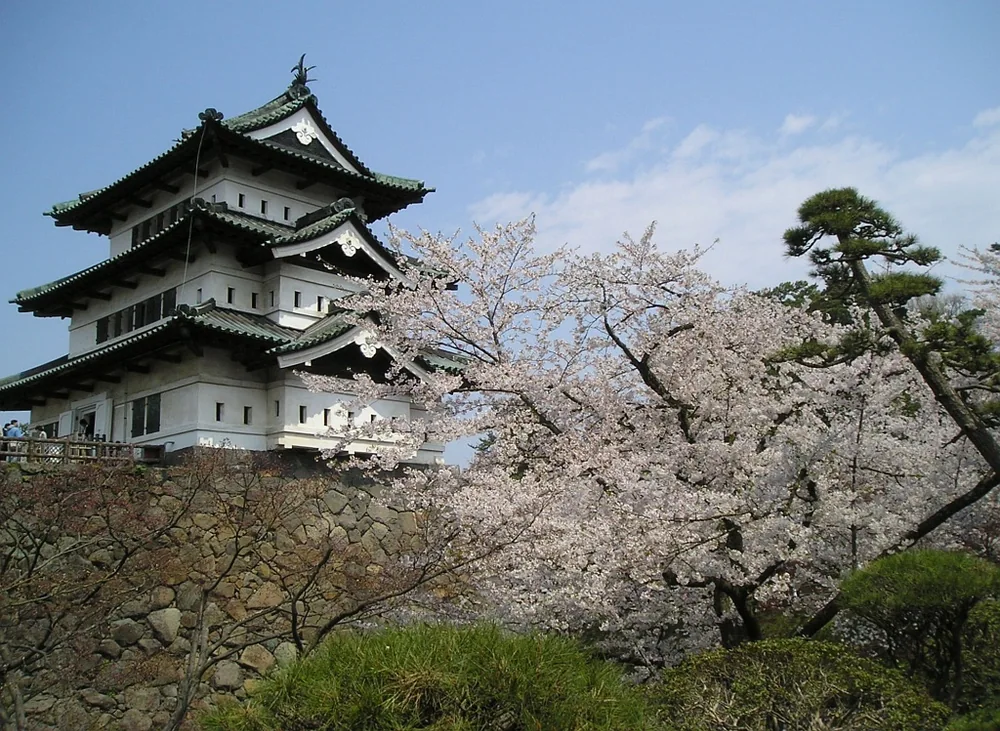
The 2027 Hirosaki Cherry Blossom Festival is scheduled for 16 April to 5 May. Plan for Outer Moat flower rafts, the West Moat tunnel and Hirosaki Castle with Honmaru tickets, night boats and Hirosaki Station buses.
Where to Start Along the Outer Moat for Flower Rafts
Step off the bus at Shiyakusho-mae (City Hall) and stay outside Otemon Gate at first. Walk north along the park's eastern Outer Moat towards Higashimon Gate, checking the water from the bridges before choosing which gate to enter through. Heading towards the castle takes you past the Middle Moat and Inner Moat. For Outer Moat flower rafts, the outermost roadside pavement gives you all the vantage points you need. Otemon and Higashimon make two unmistakable landmarks along this stretch, allowing you to view part of the moat and then slip into the park paths.
Petals fall first and are then herded towards one bank by the wind. Once you spot long pink ribbons forming on the water, walk a stretch of the pavement and inspect the view from both sides of each bridge. Sometimes a bridge shows off the length of the waterway best, whereas stepping close to the bank reveals how densely the petals are packed. The visitors bureau includes the Outer Moat among the "Seven Cherry Views of Hirosaki", with flower rafts usually peaking around three days after full bloom. Even early scattered petals are worth pausing for, letting you capture both flowering branches overhead and pink swirls on the water in a single frame.
If you arrive early in full bloom, you can still watch cherry boughs arching over the Outer Moat and gauge the span between the two banks from the bridges. Once the flower-raft window passes, both water and branches look bare, so shift your walking time to later-blooming varieties elsewhere in the park. During the 2026 festival, three sloped bank sections between Higashimon Gate and the courthouse were opened so visitors could get closer to the water for photos. Normally, the public pavements and bridges give clear views from above; if you want lower access, look for the current festival's flower-raft photo spot signs (hanaikada satsuei spot) and official openings, and stay on the footpath wherever railings or ropes are up.
When time is short before your train, follow the Outer Moat as far as Higashimon Gate and cut back via Dotemachi—a much simpler exit than walking out from the far side of the West Moat. If you plan to ride the Middle Moat sightseeing boat, enter via Higashimon Gate and continue to the next gate marked Higashi-Uchimon. The two gate names differ by only one word and sit a short park walk apart, so send the full gate name to anyone meeting you inside.
Walking from Otemon Gate to the Honmaru
Otemon Gate stands directly across from Hirosaki City Hall and the Hirosaki City Tourist Information Centre. Pass through the gate and walk past the Hirosaki Castle Botanical Garden area, keeping an eye out for the Tatsumi Yagura turret beside the Middle Moat, then cross the red Sugi no Ohashi Bridge and enter the Ninomaru through Minami-Uchimon Gate. To see the castle keep's exterior, follow signs for Gejobashi Bridge. The Ninomaru just before Gejobashi also offers good spots to pause. Two red bridges cross different moats inside the grounds, so check the bridge name on the signpost before messaging companions where to wait.
The stretch from Minami-Uchimon Gate to Gejobashi Bridge is one of the few routes where the castle's defensive layout is easy to read. Sugi no Ohashi spans the Middle Moat, with the Tatsumi Yagura serving as a corner watchtower guarding the ramparts. Continue inwards to Gejobashi Bridge and you reach the Inner Moat beside the Honmaru, whose south-eastern corner holds the keep's original stone base. If you take the Middle Moat boat earlier in the day, disembark at Higashi-Uchimon Gate and walk straight across the Ninomaru to Gejobashi, saving yourself the detour back to Otemon Gate.
According to Hirosaki City's keep-relocation engineering schedule updated in October 2026, the move takes place in two stages. The city plans to slide the keep back onto its original stone foundation in March 2027, followed by under-structure inspections and anchoring work running into autumn. Follow updated on-site route signs when locating the keep during cherry blossom season. City construction notices state that parts of the ground floor will be obscured by work platforms in fiscal 2027, though the second and third storeys remain visible from outside. If you spot hoarding or scaffolding near Gejobashi Bridge, frame the intact stone wall and upper eaves first, then explore other angles inside the Honmaru.
The interior of the castle keep remains closed during preservation, repair and seismic retrofitting work. For historical exhibits on the castle, visit the Hirosaki Castle Information Hall directly opposite Gejobashi Bridge, which displays the history of the Tsugaru clan's stronghold and typically opens from 09:00 to 17:00. Once you buy a Honmaru ticket, spend your time on the views atop the stone ramparts and the weeping cherry trees inside the enclosure. Look towards Mount Iwaki from open clearings on the Honmaru for views of the ridge on clear days. When clouds hide the peak, walk along the original keep site before continuing into the Kita no Kuruwa.
Construction notices issued in 2026 list parts of the Honmaru's south side as closed until roughly 31 March 2027, with temporary stepped walkways in place during works. If you are pushing a pushchair, using a walking stick or travelling with older relatives, check the day's signage at the bridge before deciding whether to use the south approach, walk around to the Kita no Kuruwa ticket booth or skip the Honmaru for the Ninomaru and Outer Moat. If children are getting tired, you can exit towards town around Higashimon Gate and save the western side of the park for another visit.
Honmaru & Kita no Kuruwa Tickets: Do You Need Them by the Water?
The roadside pavements along the Outer Moat, the Otemon Gate area, the West Moat Sakura Tunnel and Shunyo Bridge are all free to walk. Paid areas cover the Honmaru, Kita no Kuruwa and the separately ticketed Hirosaki Castle Botanical Garden. Just outside the park, Fujita Memorial Garden also operates its own ticket booth. Visitors happy with waterside walks, two historic gates and views of the red bridges can put their budget towards a boat ride or dinner instead. If you want to climb onto the ramparts and see the Honmaru's weeping cherries up close, simply buy a single-zone ticket at the Honmaru entrance. Sightseeing boats require separate tickets.
Official Hirosaki City admission for the Honmaru and Kita no Kuruwa is ¥320 for high school students and adults, and ¥100 for primary and junior high school pupils. Standard paid hours run from 1 April to 23 November, 09:00 to 17:00. Special hours apply during the festival, when paid-entry times and illumination switch-off times are published separately. If you want to enter the Honmaru near dusk, look for the paid-entry hours (yuryo jikan) in the festival notice and time your dinner around the end of ticketing. If you only want illuminated views along the Outer and West Moats after dark, visit the Honmaru earlier in daylight.
A three-site one-day pass covering the Honmaru and Kita no Kuruwa, Hirosaki Castle Botanical Garden and Fujita Memorial Garden costs ¥520 for high school students and adults, and ¥160 for primary and junior high pupils. Visiting even two of the sites saves ¥120 or ¥40 per person compared with buying separate tickets. To fit in all three comfortably, start in the morning. Fujita Memorial Garden sits just south of the park in Kamishirogane-cho, while the Botanical Garden lies inside the Sannomaru enclosure. If you only plan to stop at the free-entry Western-style villa at Fujita Memorial Garden and visit the Honmaru, a single-zone ticket is plenty.
If some people in your group just want a gentle stroll, agree to split up near the Hirosaki Castle Information Hall: one group can enter the Honmaru for the weeping cherries while the other looks for veteran Somei-Yoshino in the Ninomaru or walks down to Sugi no Ohashi Bridge over the Middle Moat. Choosing a meeting point outside the paid gates keeps access simple for everyone. When using the three-site pass, visit the gardens that stop selling tickets earlier in the day first, leaving the unticketed moats for later. The Botanical Garden usually stops ticket sales at 16:30; if you reach the gate with only half an hour left, pick one area and focus on what is blooming best that day.
| Option | High School & Adults | Primary & Junior High | Where It Covers |
|---|---|---|---|
| Free walking route | Free | Free | Outer Moat, Otemon Gate area, West Moat tunnel and Shunyo Bridge |
| Hirosaki Castle single-zone ticket | ¥320 | ¥100 | Honmaru and Kita no Kuruwa |
| Three-site one-day pass | ¥520 | ¥160 | Honmaru & Kita no Kuruwa, Hirosaki Castle Botanical Garden, Fujita Memorial Garden |
How to Walk the West Moat Sakura Tunnel & Shunyo Bridge
The Sakura Tunnel (Sakura no Tunnel) runs along the park side of the West Moat, where branches arch overhead from both sides of the path. Coming from the Honmaru or Kita no Kuruwa, head towards the West Gate and Nishi no Kuruwa, turn towards Shunyo Bridge when you reach the water, and follow the blooming bank into the tunnel. If you entered via Otemon Gate earlier in the day, simply work your way west in the afternoon. Once you finish taking photos, you can exit near Shunyo Bridge or follow the tunnel south past the Municipal Gymnasium and Technical High School Gate to look for dinner on the south side.
From Shunyo Bridge, the cherry trees lining both banks are mirrored in the moat below. For a sweeping view of the full canal, claim a spot on the bridge facing down the waterway, take your shot and step back to the bridgehead if crowds build up. To get closer to the blossom canopies, head back along the tunnel bank and frame both sides of the path overhead. Note that the West Moat's west bank and the Sakura Tunnel are tracked separately in blossom reports. If the west bank is listed at full bloom while the tunnel is still opening, cross Shunyo Bridge to the other bank or photograph the fuller west side from the bridge.
Once rowing boats head out onto the West Moat, oars break up the reflections. For crisp mirror shots on the water, time Shunyo Bridge before boat rentals begin or after they wrap up, or wait along the bank for ripples to settle. Overcast skies bring out the pale pink of Somei-Yoshino beneath the branches, while clear light gives long, bright views linking bridge, water and canopy. Keep narrow stretches of the tunnel clear for walkers, and step aside to wider bays when posing for family group photos.
The tunnel forms such a dense ceiling not just because of the tree variety, but also because of how the park prunes them. Hirosaki applies local apple-orchard pruning techniques to its cherry trees, removing dead or ageing wood to let air and sunlight into the crown and fertilising according to each tree's vigour. Look closely at the old tree near Higashi-Uchimon Gate from its tips back to the trunk to see thick limbs splitting into wide lateral branches. Once you notice that silhouette on one tree, you will spot it all along the row. From the opposite side of the Outer Moat, you can see how the canopies reach out towards the water so the branches nearly touch their own reflections.
Late in the season, you can still find tunnel-like blossom walks in the Sannomaru, Shinomaru or Picnic Square among the double-flowered yaezakura. Kanzan trees carry thicker, deeper-pink blooms, and city reports list plantings across the Ninomaru, Shinomaru, Picnic Square and Botanical Garden. If you want to see one of the park's oldest surviving Somei-Yoshino, look in the Ninomaru for the tree planted in 1882. Even after its petals have dropped, its gnarled trunk and sprawling branches are well worth inspecting before checking the daily report for neighbouring trees still in flower.
Rowing Yourself on the West Moat vs Guided Boats on the Middle Moat
On the West Moat, you hire self-rowed boats from the landing stage near Nishi no Kuruwa, gliding between cherry-lined banks on both sides. In 2026, boats carried up to three people each, with children counted towards the limit. When planning for 2027, check the West Moat boat (Nishibori Boat) section on the visitors bureau's festival page for current hours and hire rates. Groups of four wanting to stay in one boat should choose the punted sightseeing boats on the Middle Moat instead. Life jackets are mandatory for West Moat boat hire, and rentals close in strong winds or bad weather.
For 2027, daytime Middle Moat sightseeing boats are scheduled to operate from mid-April, with published hours of 09:00 to 17:00, last registration at 16:30 and rides lasting about 20 minutes. Tickets are sold on site at ¥1,500 for adults, ¥1,000 for junior and senior high school students, and ¥500 for primary school pupils. One pre-school child rides free per paying adult. Boarding is beside the stone bridge in front of Higashi-Uchimon Gate, taking passengers past Tatsumi Yagura towards Sugi no Ohashi Bridge before returning to the same landing. If you are moving from east to west across the park, factor in walking time after disembarking.
For the 2027 Middle Moat night cherry blossom cruises, the bureau plans to open advance bookings in early March for a limited mid-April run, with reservation required. Fares are ¥2,000 per person, with one pre-school child free per adult, for a crossing of about 25 minutes. Published sailings run between 18:15 and 19:30, with the 18:15 departure billed as a twilight cruise. Pick that earliest sailing if you want a hint of daylight on the stone walls and branches, or book a later slot when illuminated reflections dominate the water—just match it to your train back.
Travelling with children, you can head to Higashi-Uchimon Gate before midday, check queue and operating conditions on the spot, and decide whether to board straight away or visit the Honmaru first. Both daytime boat services depend on wind conditions, though park paths offer an easy backup. If sailings are suspended, view Higashi-Uchimon Gate and Tatsumi Yagura from the stone bridge and loop through the Ninomaru to Sugi no Ohashi Bridge to trace the exact same stretch of the Middle Moat from shore. If the weather clears later, ask again at the pier after finishing the eastern grounds rather than trekking back and forth between the Honmaru and West Moat.
| Boat Type | How to Board | Fares & Schedule |
|---|---|---|
| West Moat rowing boat | West Moat pier, self-rowed | 2026 standard hire ¥1,500 per boat / 60 mins; check 2027 announcement |
| Middle Moat daytime sightseeing boat | On-site tickets in front of Higashi-Uchimon Gate, approx. 20 mins | 2027 adult fare ¥1,500; last registration 16:30 |
| Middle Moat night sakura boat | Advance booking required, approx. 25 mins | 2027 fare ¥2,000 per person; sales expected early March |
How Long to Stay for Night Illuminations & Where to Exit
To experience both daylight blossoms and evening illuminations without burning out, finish the Honmaru in the afternoon, step out via Otemon Gate or towards Dotemachi for a bite to eat, and pick one side of the park to re-enter at dusk. If you are staying in central Hirosaki, walk back to Shunyo Bridge for the West Moat and follow the lit water at your own pace. If you are staying in Aomori City, cover the Honmaru and West Moat during the day and stay near Otemon and Higashimon Gates along the Outer Moat after dark to keep the walk back to the station straightforward. Crossing back and forth between east and west at night quickly eats into photography and train-buffer time.
In 2026, special festival illuminations ran from sunset until 22:00. The 2027 lit areas and hours will be listed under the festival's special illumination notice (tokubetsu light-up). Pick a single bridge or stretch of bank first, then decide once the lights come on whether to linger. Outside Otemon Gate you have the castle gate, the Outer Moat and the main exit towards town. Shunyo Bridge captures both the water and the tunnel canopy in one frame, making it the strongest single evening stop on the west side. Always pick a named gate, bridge or hall as your regrouping spot—leaving from Shinomaru in the dark makes it especially easy to walk out through different gates.
If you have booked a night sakura boat, keep dinner and your meeting point close to Higashi-Uchimon Gate. Anyone entering through Higashimon Gate still needs time to walk to the landing stage outside Higashi-Uchimon. If you are already on the west side when your slot approaches, cut straight across the Ninomaru to Higashi-Uchimon Gate and save the eastern Outer Moat's night views for after you step ashore. Boats return to the boarding pier, so build in the walk from the pier back to the park perimeter when setting meet-up times at an outer gate. Visitors commuting back to Aomori the same evening should verify train departures before booking a night cruise so the full sailing and walk back fit comfortably.
Pack a windproof jacket for evening blossoms—a few minutes along the open West Moat banks will show why. If there was a dusk shower, stone steps and wooden bridges stay slick, so leave extra walking time both ways. Eating at an indoor restaurant or near your hotel before heading back suits anyone who dislikes standing in the evening chill by the water. If older relatives or children want to turn in early, meet at Otemon Square to split up and rendezvous back near your hotel.
By the time night illuminations wind down, regular Dotemachi Loop Bus services have finished for the day. Any festival evening extensions operate on their own dates and stops. Check the 2027 festival transport column before relying on late buses, and keep walking or a taxi in mind as your main return options. If you are heading back to Aomori or catching a Shinkansen connection, anchor your departure from the park to the last realistic train, leaving margin to buy a bento or collect luggage from station lockers.
Buses from Hirosaki Station Central Exit & Connections to Aomori or Shin-Aomori
Leave JR Hirosaki Station via the Central Exit. The walk from the station forecourt to Otemon Gate is roughly 2 km and takes about half an hour. To ride instead, look for the dedicated Dotemachi Loop Bus stop in the Central Exit plaza and alight at Shiyakusho-mae. Some standard local buses stop at Shiyakusho-mae Park Entrance instead—both sit right by the southern entrance to the park. With luggage or a pushchair, check the destination board at the stop before choosing between the loop bus and regular routes. If you exit on the east side at Joto Exit, head back inside the station concourse to cross to the Central Exit.
From October 2026, adult fares on the loop bus are ¥200 in cash or ¥180 with a transit IC card, and child fares are ¥100 in cash or ¥90 by IC card. Standard April-to-November timetables run roughly every 10 minutes from 10:00 to 17:00, dropping to about every 20 minutes between 17:00 and 18:00. To catch low-angled early morning light, either walk from the station or check earlier local bus departures. Confirm fares and schedules on the Hirosaki Convention and Visitors Bureau's loop bus page, and check festival notices separately for temporary extra services.
A simple return trip to the park costs ¥360 for an adult tapping an IC card twice, or ¥400 in cash. Stick to pay-as-you-go if you only need those two rides. The loop bus one-day pass costs ¥600 for adults and ¥300 for children, is valid only via MegoICa, Suica or PASMO, and is bought directly from the driver before tapping off. Using an IC card all day, you only break ahead from your fourth ride onwards. Anyone staying near the station and spending the day inside Hirosaki Park rarely needs the day pass.
Arriving on the Tohoku Shinkansen from Tokyo or Morioka, transfer at Shin-Aomori Station onto the JR Ou Main Line towards Hirosaki. Visitors based in central Aomori can board trains directly from Aomori Station. On the return leg, check for Aomori-bound departures on the Ou Main Line at Hirosaki Station and confirm your train stops at the right station for your accommodation—Aomori Station serves the city centre, while Shin-Aomori is the Shinkansen hub. If you are staying two nights in Aomori and dedicating one evening to Hirosaki's night blossoms, lock in your return train from JR East timetables ahead of time while keeping daytime arrival flexible for blossom updates. When connecting onwards to Morioka-bound Shinkansen trains, budget time both for the walk back to Hirosaki Station and the transfer at Shin-Aomori.
Flying into Aomori Airport, board Konan Bus's airport shuttle to Hirosaki from Bus Stop 1 outside the terminal. The ride to Hirosaki Bus Terminal takes about 55 minutes, with published airport fares of ¥1,600 for adults and ¥800 for primary school pupils. If switching to local buses near the park, note whether your itinerary lists Hirosaki Bus Terminal or Hirosaki-ekimae (in front of Hirosaki Station). The two stops sit a short walk apart in the town centre; if your hotel is near the station, drop your bags first and take the loop bus to the park. Fitting in a final visit on departure day works best by keeping your walk to the Outer Moat near Otemon or Higashimon Gate before returning to the terminal for the airport coach.
Half-Day, Full-Day & Overnight Itineraries
With only half a day, let blossom conditions outside Otemon Gate dictate your route. If flower rafts are forming along the Outer Moat, walk the eastern bank, enter through Higashimon Gate, cross the Ninomaru to see Gejobashi Bridge and the keep exterior, and exit back towards town on the same side. If trees are at peak bloom and petals are only just starting to fall, start at the West Moat to walk the Sakura Tunnel first, cross Shunyo Bridge and Nishi no Kuruwa towards the Honmaru, and exit on the south side. Both options pair one waterside stretch with castle architecture—put your priority shots at the start of the half-day and continue to the next gate only if time allows.
With a full day in Hirosaki, begin along the Outer Moat in the morning and enter from the south or east. Before lunch, take a daytime Middle Moat boat if you fancy it, then walk ashore to Gejobashi Bridge and the Honmaru. Stepping outside Otemon Gate for lunch gives you an easy mid-day break before heading west in the afternoon for Shunyo Bridge and the Sakura Tunnel. During late-blooming varieties, slot the Botanical Garden in before lunch and finish in the Shinomaru or Honmaru depending on where trees look best. If staying on for night illuminations, agree on an evening meeting point before dinner so nobody has to trek back to the gate they started at.
Spending one night in Hirosaki lets you catch two contrasting light windows cleanly. Arrive in the afternoon, drop your bags and make your first circuit of the park to see the Outer Moat or Shunyo Bridge lit up after dusk. Next morning, enter from a different gate to see the castle gates in crisp daylight and photograph undisturbed reflections before boat rentals start, then head to the station. On rainy days, save the Honmaru and boating for whichever half-day looks drier and shift the other half indoors. Staying near Hirosaki Station's Central Exit makes early trains effortless, while bases in Dotemachi or south of the park cut down morning and evening walking.
A day trip from Aomori works well too, especially if the next morning brings the Aomori Station markets and local food walk or onward rail travel. Finishing at the West Moat and heading back to Aomori for dinner keeps a Hirosaki day relaxed. Conversely, staying a night in Hirosaki buys unhurried time for both illuminations and dawn reflections. If Hirosaki is one stop on a wider Tohoku cherry-blossom trip, pairing it with Tohoku sakura rail bases lets you cluster long-distance transfers around adjacent days and swap order if bloom dates diverge between towns.
Arriving by Hire Car: Where to Park & Access the Park
Match your car park to the side of the park you want to see first. For the Honmaru or Outer Moat, look at the underground car park at the Hirosaki City Tourist Information Centre and bays near City Hall. To start at Higashimon Gate, check the Hirosaki Cultural Centre car park. Official festival traffic maps mark designated entrances and exits—organisers have previously required left-turn-only entry and exit, and City Hall spaces prioritise official visitors on weekdays. If queues are already building at your first choice, move straight to your second option and walk a few minutes further. If driving onwards towards Mount Iwaki later in the day, do not leave exiting the park area until the very last minute.
Temporary free car parks have previously opened along the Iwaki River banks at Fujimibashi and Iwakibashi bridges during the festival. In 2026, both lay a 15-to-20-minute walk from the park, closed at 18:00 and were subject to closure if river levels rose. Before relying on riverbank parking, check the current year's festival traffic page to confirm which side is open and when gates lock. Drivers staying for night illuminations should choose a car park that remains accessible at their planned exit time and pin the walking route back to their car on their phone. If part of a group wants to leave early, arrange to meet them outside the park perimeter so everyone else does not have to cut their visit short.
Approaching from Owani or southern Tsugaru and preferring to leave the car outside central Hirosaki, check spring park-and-ride rail options. The Konan Railway Owani Line terminates at Chuo-Hirosaki Station, an easy walk from Dotemachi and Otemon Gate. Note that this station is separate from JR Hirosaki Station, so search between Chuo-Hirosaki and Owani when checking return timetables. The Owani Line does not accept transit IC cards, meaning you must buy a paper ticket at Chuo-Hirosaki Station for the trip back. If friends are arriving by JR train from Aomori, meet directly at a park gate rather than detouring across town to each other's stations.
Wet-Weather Stops & Late-Season Cherry Varieties
If rain greets you in the morning, start just outside Otemon Gate at the Former Hirosaki City Library. This twin-towered Western-style building sits right on Otemon Square and normally opens free of charge from 09:00 to 17:00 according to city listings. Once the rain eases, cross the road into the park and walk to the Hirosaki Castle Information Hall beside Gejobashi Bridge before deciding whether to buy a Honmaru ticket. In blustery rain, visit one indoor stop first and wait for a dry spell to walk the moats. Anyone planning a boat ride can continue from the south side to Higashi-Uchimon Gate to check whether boats are running.
For older companions seeking only a short stroll, the stretch from Otemon Square to the Outer Moat allows an easy turn-back at any point. If the group wants to continue, follow the outer pavement to Higashimon Gate before deciding whether to enter the Ninomaru or head back into town. Park maps mark rest areas and toilets, making it easy to pick a stopover before setting off. During the 2026 festival, free wheelchair hire (kurumaisu) was offered near Otemon and Higashimon gates; check the 2027 event page for current loan desks and hours. Wheelchair users heading into the Honmaru should inspect the south side for any temporary steps on the day and use the park's step-free marked routes.
If heavy rain catches you on the western side of the park, cut across the southern edge to the Western-style villa at Fujita Memorial Garden. Weather permitting, the full garden splits between an upper terrace looking out towards Mount Iwaki and a lower garden with a pond and teahouse. Because the grounds have steep slopes between levels, stick to the villa's accessible indoor areas if paths are slick or companions prefer to avoid inclines. Staying north of the park or exiting via Kikkomon Gate brings you close to Tsugaru-han Neputa Village, home to life-sized Hirosaki Neputa floats and live Tsugaru shamisen performances. The surrounding streets preserve former castle-town merchant and samurai quarters for a short wander once the showers clear.
If your trip falls around early May, scan the blossom report for the "Seven Cherry Varieties of Hirosaki" (Hirosaki Nana-zakura). Look for greenish-yellow Ukon blossoms in the Honmaru, Picnic Square and Botanical Garden, or deeper-pink Kanzan in the Ninomaru, Shinomaru and Botanical Garden. Late-blooming Shogetsu trees also grow around the Kita no Kuruwa, Botanical Garden and Otemon Gate. In the city's final 2026 update on 5 May, Ukon, Kanzan and Fugenzo were still recorded at full bloom. If fresh green leaves have already appeared along the Outer Moat, enter via Otemon Gate, pick one late-blooming double-cherry variety still at its peak, and let that guide whether you stroll towards the Shinomaru, head towards the Sannomaru near Higashimon Gate or buy a combo ticket for the Honmaru and Botanical Garden.
A few useful answers
When is the 2027 Hirosaki Cherry Blossom Festival?
Organisers have scheduled the 2027 festival for 16 April to 5 May at Hirosaki Park, subject to adjustment depending on blossom progress. Zone-by-zone updates are posted on the official Hirosaki Park cherry blossom report page.
When do the Outer Moat flower rafts usually appear in Hirosaki?
Flower rafts typically form a few days after the Somei-Yoshino peak bloom, and Hirosaki City's reports list falling petals and flower-raft peaks separately. Walk outside Otemon Gate eastwards towards Higashimon Gate and check from the bridges which bank the petals are gathering against.
Do you need a ticket to see the cherry blossoms at Hirosaki Park?
The Outer Moat, Otemon Gate area, West Moat Sakura Tunnel and Shunyo Bridge are free to walk. A one-day ticket for the Honmaru and Kita no Kuruwa costs ¥320 for high school students and adults, and ¥100 for primary and junior high pupils. You can also buy a same-day combo pass including the Botanical Garden and Fujita Memorial Garden.
Can you go inside Hirosaki Castle keep in spring 2027?
No, the keep interior remains closed. Hirosaki City plans to move the keep back onto its original stone foundation in March 2027, with anchoring work continuing into autumn. You can still view the exterior from the park or visit the Hirosaki Castle Information Hall opposite Gejobashi Bridge.
Do you need to book the Hirosaki Middle Moat night sakura boat in advance?
Yes, night cherry blossom cruises require advance booking, with sales expected to open in early March 2027 at ¥2,000 per person (one pre-school child rides free per paying adult). Daytime Middle Moat sightseeing boat tickets are bought on site in front of Higashi-Uchimon Gate.
Which bus goes from Hirosaki Station to Hirosaki Park?
Take the Dotemachi Loop Bus from the Central Exit plaza at Hirosaki Station and get off at Shiyakusho-mae. A single adult fare is ¥200 in cash or ¥180 with a transit IC card. Walking from the station forecourt to Otemon Gate takes roughly 30 minutes.
Official information and references
Sources used in this guide.
- Hirosaki Convention and Visitors Bureau — 2027 Hirosaki Cherry Blossom Festival Dates & 2026 Event Information
- Hirosaki Convention and Visitors Bureau — Hirosaki Park Blossom Report & 2026 Flowering Records
- Hirosaki City — Hirosaki Park Cherry Blossom Status & Late-Blooming Tree Locations
- Hirosaki City Parks & Greenery Division — Hirosaki Park Blossom Report (16 April 2026)
- Hirosaki Convention and Visitors Bureau — Outer Moat Flower Raft Locations & Peak Timing
- Hirosaki City Greenery Association — Hirosaki Park Map
- Hirosaki City — Latest Schedule for Moving the Castle Keep Back to Its Original Site
- Hirosaki City — Castle Keep Interior Closure & Preservation Repairs
- Hirosaki City — Exterior Views & Work Platforms During Relocation Works
- Hirosaki City — Temporary Walkway on the South Side of the Honmaru
- Hirosaki City — Admission Fees for Honmaru, Kita no Kuruwa & Three-Site Pass
- Hirosaki Convention and Visitors Bureau — 2027 Middle Moat Sightseeing Boats & Bookings
- Hirosaki Convention and Visitors Bureau — Dotemachi Loop Bus Fares & Timetable
- Hirosaki City — 2026 City Public Transport Map
- JR East — Hirosaki Station Ou Main Line Timetable
- Hirosaki City — Hirosaki Castle Information Hall
- Hirosaki City — Former Hirosaki City Library
- Hirosaki City — Fujita Memorial Garden
- Hirosaki Convention and Visitors Bureau — Kikkomon Gate & Tsugaru-han Neputa Village
- Hirosaki City — Maintaining Hirosaki Park Cherry Trees with Apple Cultivation Techniques
- Aomori Airport — Hirosaki Airport Bus Stop & Fares
- Hirosaki Convention and Visitors Bureau — Festival Traffic Notice & Car Parks
- Konan Railway — Owani Line Chuo-Hirosaki Station