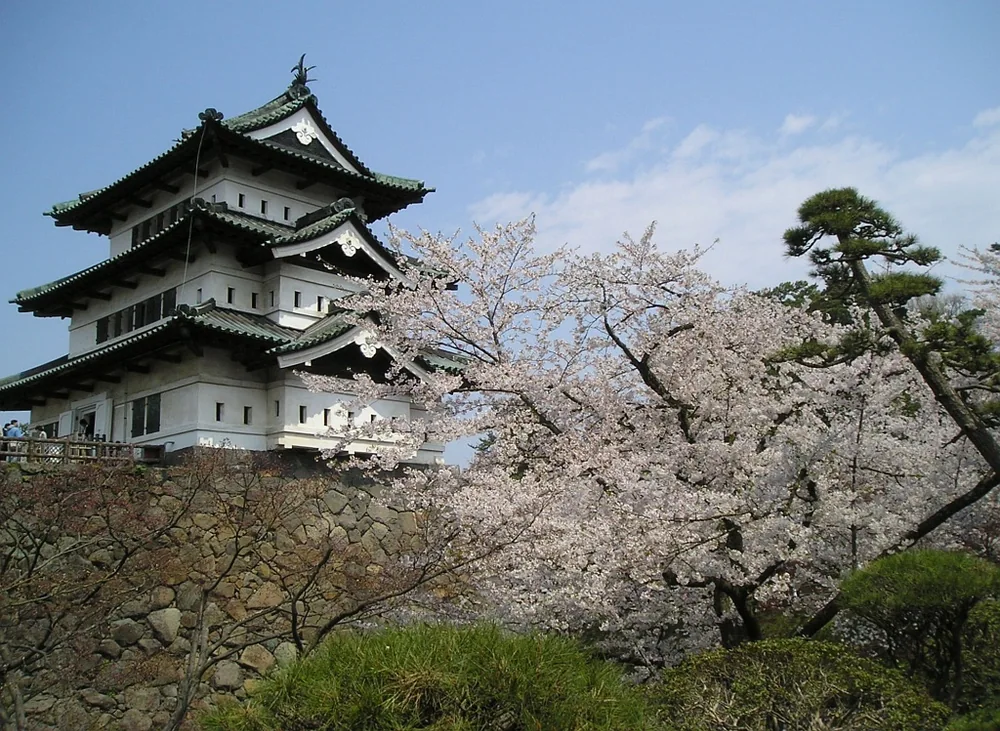
Separate the paid chrysanthemum festival, free park illuminations and four evening openings at Fujita Memorial Garden. Choose tickets and routes from Otemon or Higashimon for a half-day or overnight visit.
- Region & Focus
- Hirosaki
- Reading Scope
- 34 min read · 14 chapters · 5 Q&As
- Official Verification
- 12 official sources checkedUpdated 7 November 2026
- Key Topics
- SeasonsWhere to stayRail travel
Chapter Route Map (tap any stop)
- Choose flowers, evening leaves or an overnight visit for both
- Three schedules for 2026: festival, garden and special illuminations
- Buy a garden ticket, or a combined ticket for visits on the same day
- Enter through Otemon or Higashimon, with the main venue early in the route
- Visit by day for cultivated chrysanthemums and this year’s floral work
- With children, do activities with early finishing times first
- Link Minamiuchimon, Ishibashi and bamboo lights after dark
- Fujita Memorial Garden has four specified autumn evening openings
- With the keep interior closed, visit Honmaru for the castle grounds and trees
- Station-to-park buses have new fares and finish before the lights
- Art Hotel by the station or Hirosaki Park Hotel in town: choose by the evening return
- For half a day, choose one short route led by flowers or free autumn views
- Stay overnight for afternoon flowers, a short evening walk and gardens in daylight
- Read photograph dates and consider tree species and moat locations
- Quick Q&A
The 2026 Hirosaki Castle Chrysanthemum and Autumn Foliage Festival runs from 30 October to 8 November. The main daytime flower displays are inside the paid Hirosaki Castle Botanical Garden, while the park’s autumn illuminations run from 16:00 to 21:00. Visit the botanical garden first for chrysanthemums, then choose Otemon Gate, Ishibashi Bridge and Minamiuchimon Gate for free evening views. Link them in one day, and choose station-side or central accommodation by your return bus and dinner plans.
Choose flowers, evening leaves or an overnight visit for both
For autumn leaves and gates beside the water, start in Hirosaki Park’s free areas. Buy a botanical garden ticket if you want the concentrated chrysanthemum displays and this year’s floral work. Arrive in the afternoon for the garden, or wait around Otemon for dusk if free illuminations are the priority. Examine the flowers in daylight, then continue to Ishibashi and Minamiuchimon after dark. Walking the southern route first makes the exit familiar at night.
Accommodation near Hirosaki Station reduces luggage handling if you leave early next morning. Central hotels or those south of the park suit dinner after the illuminations or an afternoon return to add warm clothes. With only half a day to visit in daylight, Otemon, the botanical garden and a nearby moat stretch make a complete visit. Staying overnight gives time to enjoy the evening without rushing for an intercity train. If you do not want night views, there is no need to change hotels just for the festival.
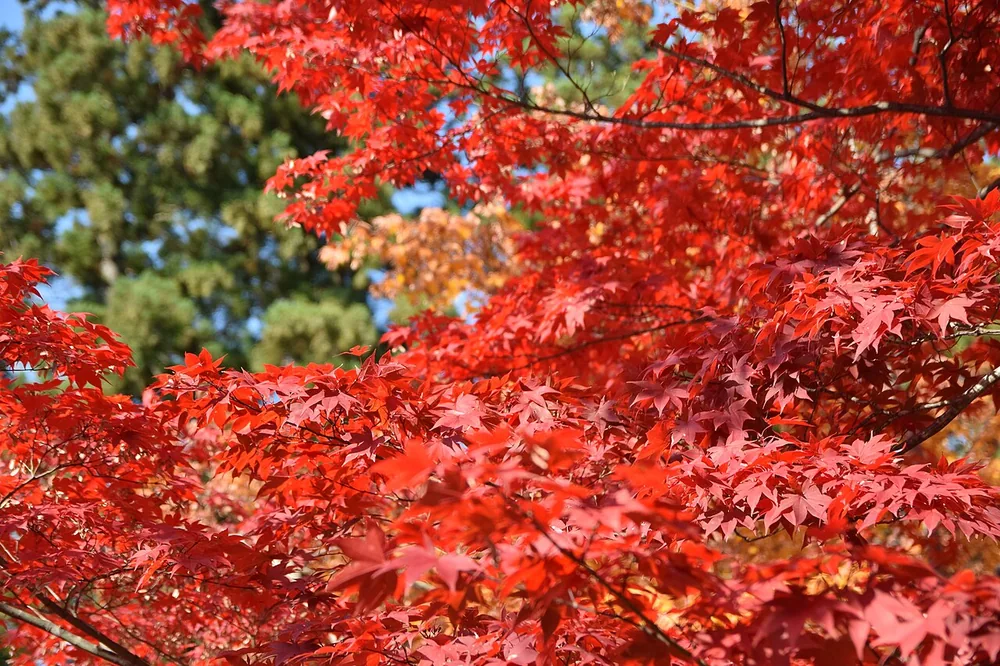
Separate the paid chrysanthemum festival, free park illuminations and four evening openings at Fujita Memorial Garden. Choose tickets and routes from Otemon or Higashimon for a half-day or overnight visit.
Three schedules for 2026: festival, garden and special illuminations
The official 2026 festival announcement sets a ten-day run from 30 October to 8 November, centred on Hirosaki Castle Botanical Garden. During the festival, the garden opens 09:00–20:00, with last entry at 19:30. Entry closes at 19:30 and the visit ends at 20:00. If floral art is the priority, enter before dusk to see it in natural light too.
The special autumn illuminations start on 30 October and are announced until mid-November, daily from 16:00 to 21:00. They include cherry-tree leaves outside Otemon, maples within the park and bamboo light installations. Illuminations continue beyond the festival’s 8 November finish, but extended evening buses operate only during the ten festival days. For mid-November visits, plan to walk or take a taxi back to your room.
The sky continues darkening after the lights come on at 16:00. Walk familiar paths and gates first, then return to a favourite place when the light suits you, rather than waiting in one spot for complete darkness. With children, keep darker paths brief and leave dinner and the return flexible. For fuller night photography, bring warm layers and a definite evening return plan.
The garden’s ordinary opening is 09:00–17:00, with ticket sales ending at 16:30, and its 2026 season runs until 23 November. The ten-day festival extension does not apply throughout autumn. Outside those dates, use the garden’s annual opening information for daytime visits and the park’s announced illumination areas at night.
Buy a garden ticket, or a combined ticket for visits on the same day
Individual botanical garden admission costs ¥320 for senior high school pupils and older, ¥100 for primary and junior high school pupils, and is free for kindergarten-age children and younger. The combined ticket covers the botanical garden, Honmaru and Kita no Kuruwa, and Fujita Memorial Garden: ¥520 for adults and ¥160 for children. It is for visits on the same day and suits anyone already planning at least two paid areas. Free moat walks and gates need no ticket.
For an adult visiting the botanical garden and Fujita Memorial Garden on one day, separate ¥320 tickets total ¥640, so the ¥520 combined ticket saves ¥120. For primary or junior high school pupils, separate tickets total ¥200 and the combined ticket saves ¥40. If the second garden is planned for tomorrow, buy tickets for each day instead. Rushing both into one afternoon to use a combined ticket takes time away from the flowers and leaves. Two adults and one primary school child pay ¥740 for the botanical garden alone or ¥1,200 for three combined tickets. The ¥460 difference adds admission to two further areas, but time and walking stamina matter more to the choice. The combined ticket is better value for a family already visiting both gardens; a single ticket suits an hour at the flower displays followed by a rest.
From 19 October to 23 November 2026, the botanical garden ticket office accepts credit cards and QR code payments. The operator’s notice limits this service to that garden; tickets at Hirosaki Castle and Fujita Memorial Garden remain cash-only. Carry cash for those offices rather than expecting a transport IC card to cover every admission. Group fares apply from ten people; individual rates suit ordinary family visits.
| Ticket | Senior high school pupils and older | Primary and junior high school pupils | Suitable visit |
|---|---|---|---|
| Hirosaki Castle Botanical Garden only | 320 | 100 | Chrysanthemums and floral art |
| Three-area combined day ticket | 520 | 160 | Botanical garden and another paid area on the same day |
| Fujita Memorial Garden only | 320 | 100 | Fujita alone, without the botanical garden |
Enter through Otemon or Higashimon, with the main venue early in the route
The botanical garden lies in Sannomaru, and the operator lists Higashimon and Otemon as nearby entrances. From the city hall area, approach through Otemon; from the cultural centre side, Higashimon leads towards the garden. Put your preferred paid area first, then spread out onto the free paths afterwards. This avoids a long detour followed by a rush to reach the flowers before dark.
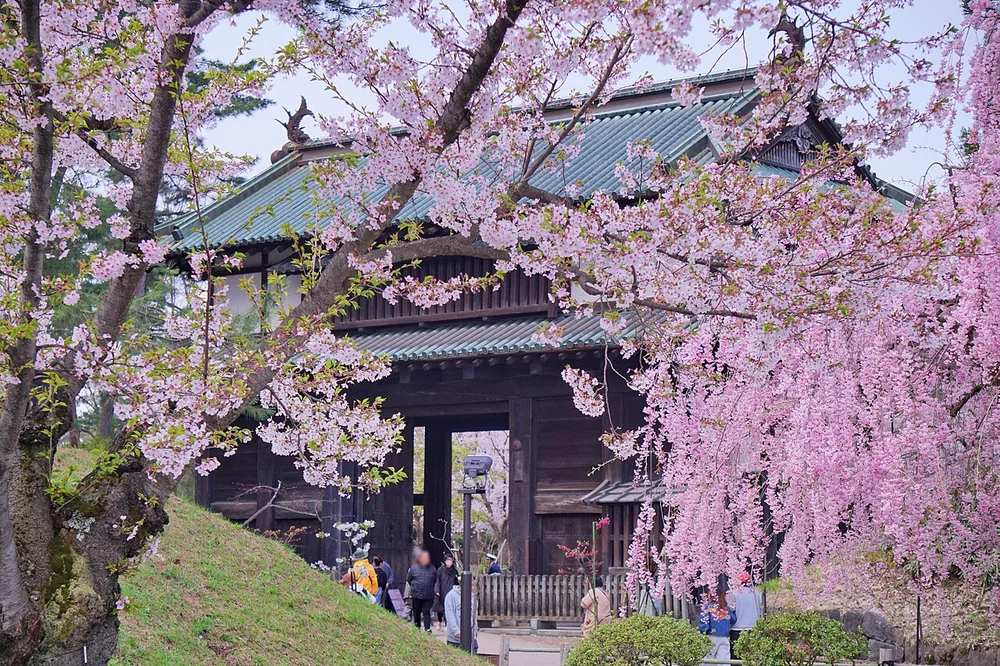
Otemon links the southern moat, botanical garden and Fujita Memorial Garden. For a first afternoon-to-evening visit on this side, use the gate as a meeting reference and identify the exit in daylight. Higashimon gives a focused approach from the east for a garden-only visit without extending west. Both gates have this year’s bamboo lights and flower-shaped animal sculptures, so displays begin before you enter the garden.
The park operator describes the castle site as about 600 metres east–west and 1,000 metres north–south, with bridges and entrances between its triple moats and different areas. Nearby map points can involve indirect walks. With only an hour or two, choose the botanical garden and one gate rather than another crossing of the park. With a full day in Hirosaki, leave Honmaru or the opposite moat for later.
Save separate map searches for Hirosaki Park Otemon Gate, Hirosaki, Aomori, and Hirosaki Castle Botanical Garden, Hirosaki, Aomori. This keeps the meeting point distinct from the ticketed destination. A pin in the middle of the park is a poor first destination after leaving the bus. If the group splits to look at flowers, meet again at a named gate rather than an indistinct patch of autumn leaves.
Visit by day for cultivated chrysanthemums and this year’s floral work
The festival grew from autumn-viewing gatherings where people brought chrysanthemums they had grown for appraisal. It began under its festival name in 1962. This gives a daytime visit two scales: examine the flowers and the results of careful cultivation at the citizens’ chrysanthemum exhibition, then step back for the overall form of works in the open square. Moving between the two reveals more of the exhibition than simply seeking photo-op signs.
The main work for 2026 is Golden Autumn White Tiger, a White Tiger subject in the Four Symbols series. Floral landscape artist Kie Abe, Hirosaki Neputa makers and local residents collaborated on it, incorporating Tsugaru bamboo-basket techniques. White, gold and yellow dominate, with green foliage and red accents. Look closely at the bamboo structure and flowers, then step back for the tiger’s outline. The same work rewards different viewing distances, so allow time beyond an entrance photograph.
The Pompon Mum Garden in Sannomaru includes spherical chrysanthemums made from yarn, artwork adapted from local yukitsuri snow-support techniques and a place to tie written wishes. Children can connect their curiosity about real and artificial flowers to the materials: yarn, bamboo, branches and living plants. Flower-water displays with chrysanthemums and thinned apples bring Hirosaki’s autumn harvest into the exhibition and offer a different angle from potted flowers on the ground.
The garden also has its permanent planting. Its October 2026 calendar lists tea plants, autumn-flowering cherries, wild chrysanthemums, Japanese cornel and Chinese quince among the flowers and fruit. Look at tree labels and branches rather than treating every area as maple woodland. Autumn-flowering cherries bloom in Hirosaki in spring and autumn; small autumn blossoms beside changing leaves give a seasonal detail to look for.
The association’s official 2022 floral-art video shows the exhibition’s scale and display methods. The 2026 main work is Golden Autumn White Tiger.
With children, do activities with early finishing times first
The 2026 festival announcement lists a free miniature shinkansen every day from 09:00 to 16:00. Winning photographs and sketches are displayed at the botanical garden’s central rest area from 09:00 to 17:00. Put the train early in the afternoon, before taking time over chrysanthemums. An evening entry still offers floral art and lights, but misses this daytime activity.
Garden stalls are announced until 20:00, while the Sannomaru local-products hall closes at 17:00. Treat souvenir shopping and dinner separately: browse local products in daylight, then choose an actual meal venue. Evening festival opening does not mean every shop stays open to the end. A definite dinner stop also gives the family somewhere to sit before dark.
A short family route can include the animal sculptures by the gates, miniature shinkansen and two flower-display areas, returning to the same entrance. The 2026 animals at Otemon and Higashimon were made by pupils at Hirosaki Municipal Tsugaru Junior High School and paired with Ota City bamboo lights. Choose a favourite animal by day and see it lit on the way back. The garden’s Gentle Campfire and Outdoor Play Garden has fires from 16:30 to 19:30 on weekdays and 10:00 to 19:30 on weekends and Japanese public holidays, bridging daytime displays and evening lights. There are ordinary and wheelchair-accessible toilets, benches, shelters and rest spaces. With a pushchair, keep the garden as the main stop. Near water or changes of level after dark, put the camera away and keep both hands free to look after children.
Link Minamiuchimon, Ishibashi and bamboo lights after dark
The official illumination map includes Minamiuchimon, Ishibashi, Tsuchibashi and the Sannomaru local-products hall, with lit cherry-tree leaves outside Otemon. After a daytime botanical garden visit, start near Ishibashi and Minamiuchimon, then return towards Otemon. A familiar stretch of darkening foliage, gates and water is easier than seeking every park angle at night. CHIKAKEN bamboo lights stand near the garden’s north ticket office and Ishibashi. Their announced 2026 hours are also 16:00–21:00 until mid-November. Look closely at the holes in the bamboo and the internal light, then step back to see their arrangement with the trees. Leave enough path width for others while taking photographs so that a viewing stop does not block a bridge entrance.
The garden’s open square has a separate projection period of 17:30–19:30 inside the paid area. If you want to see it, allow enough time there before leaving for the park illuminations. Going far away for night photographs and returning to the ticket office at 19:30 leaves very little exhibition time. For a free evening walk, choose gates, leaves and installations outside the paid garden without forcing the ticketed show into the route.
For phone photographs, stand securely on a level path, then put the phone away to look. Tripods, long compositions and reflections need space; passage takes priority on narrow bridges. In strong wind or rain, keep to leaves and bamboo lights near the entrance. Rippling water still offers colours and gates, without a long wait in cold wind for a perfectly flat reflection.
Fujita Memorial Garden has four specified autumn evening openings
Fujita Memorial Garden sits beside the park and fits an Otemon-side route. Its normal autumn 2026 hours are 09:00–17:00, with last entry at 16:30. The operator’s festival notice lists evening opening only on 30 and 31 October and 6 and 7 November, from 17:00 to 20:00, with last entry at 19:30. If dates are flexible and you want both gardens at night, compare stays on these four evenings first.
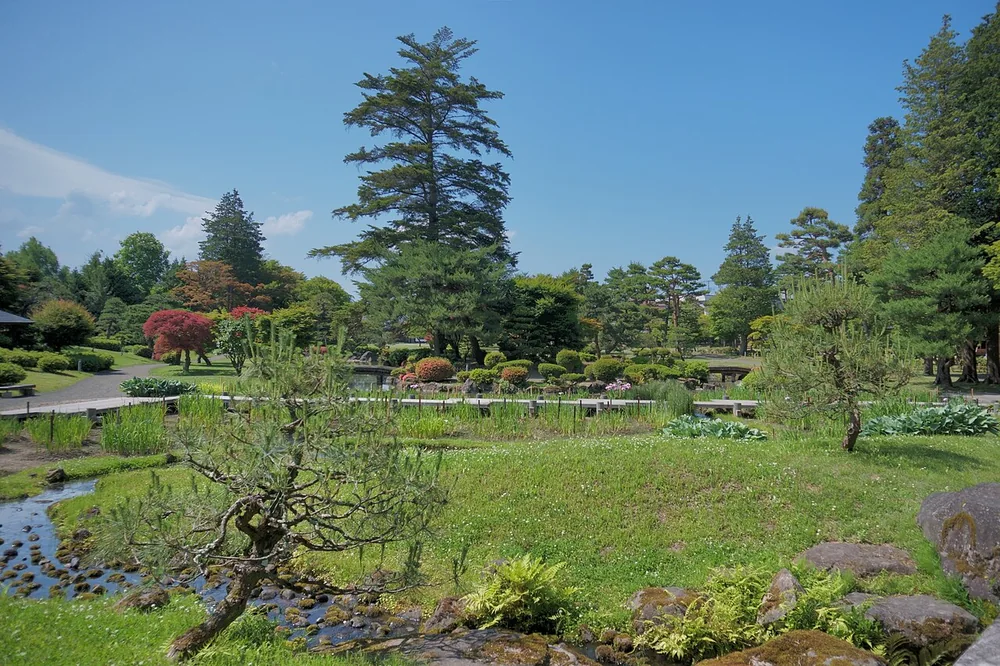
The garden has upper and lower sections with about 13 metres of height difference. The upper section offers borrowed scenery and Western- and Japanese-style buildings; the lower section has a pond circuit. The operator lists about 700 metres of paths and about 40 minutes including buildings. For sensitive knees or a pushchair, concentrating on the upper area is easier to manage. To see both levels, include the climb back towards the exit in your energy budget.
You can visit Fujita by day and continue to the botanical garden towards evening. This puts both paid areas within one day for the combined ticket and gives both natural light. On an evening-opening date, make one garden the main night visit and see the other by day. Lingering after dark at both gardens and the free illuminations compresses two 20:00 closing deadlines and turns the evening into a rush.
The Taisho Roman Tea Room in the Western-style house and the Takumikan café space are announced for 2026 as open 09:30–16:30, with last orders at 16:00. Use them for an afternoon break. The garden’s evening extension does not extend café service to 20:00. For gardens and dessert, rest first and see the flowers afterwards, rather than seeking a tea room that has already closed after the lights.
With the keep interior closed, visit Honmaru for the castle grounds and trees
The keep interior is closed in 2026. The city announced closure from 24 November 2025 for relocation back to its position, conservation repairs and earthquake strengthening, originally planned until 31 March 2033. Honmaru and Kita no Kuruwa charge admission from 09:00 to 17:00 on 1 April–23 November 2026, with no charge outside those hours. This differs from the botanical garden’s festival opening until 20:00. Visit Honmaru in the afternoon, then the flower displays. If you only visit Honmaru’s open evening areas, you do not need to add a combined ticket for that area. The keep interior remains closed.
The castle consists of moats, earthworks and separate enclosures. Surviving turrets and gates give autumn walkers clear subjects to examine. Autumn leaves on lower branches, gate doors and building outlines can share a photograph, while the arrangement of the castle grounds remains readable without entering the keep. For a strong interest in historic buildings, give Honmaru and Kita no Kuruwa daylight time before moving to the botanical garden in the afternoon, rather than crossing much of the park at night.
Work related to moving the keep also changes sightlines and access shown in older photographs. Follow construction barriers and open paths on the day. An old cherry-blossom or snow photograph need not set a fixed destination for autumn navigation. If flowers and leaves are the sole purpose, skip paid daytime Honmaru admission and give the time to the main venue. This preserves more afternoon and evening time than trying to cover every area.
Station-to-park buses have new fares and finish before the lights
From JR Hirosaki Station’s Central Exit, take the Dotemachi Loop Bus to Shiyakusho-mae for Otemon and the southern park. The loop bus information updated on 15 October 2026 lists adult fares of ¥200 cash or ¥180 by IC card, with child fares of ¥100 or ¥90 respectively. The old name “¥100 bus” may remain in hotel information or photographs; pay the current fare.
From April to November, ordinary services run every ten minutes from 10:00 to 17:00 and every twenty minutes from 17:00 to 18:00. During the ten festival days in 2026, additional services run every thirty minutes from 18:30 to 20:00. These are whole-route operating periods, not a promise that every park stop has a departure at exactly 20:00. Photograph or save the return stop’s timetable on arrival so that you can leave the exhibition towards the correct side.
The extended bus service ends at 20:00, while the lights continue until 21:00. To enjoy that final hour, stay within walking distance or plan a taxi. To use an extended bus back to the station, leave before the departure shown at your park stop. Choose the return before viewing the lights; a plan simply to catch a bus afterwards joins two incompatible finishing times.
The city loop day pass costs ¥600 for adults or ¥300 for children and is available only with MegoICa, Suica or PASMO. Buy it on the bus before touching your card when getting off. A simple adult station–park return costs ¥400 cash or ¥360 by IC, so individual fares are cheaper. Calculate the pass only if taking more journeys on covered loop routes. Ordinary route buses have separate fares and routes; passing Shiyakusho-mae does not make the loop fare apply.
Art Hotel by the station or Hirosaki Park Hotel in town: choose by the evening return
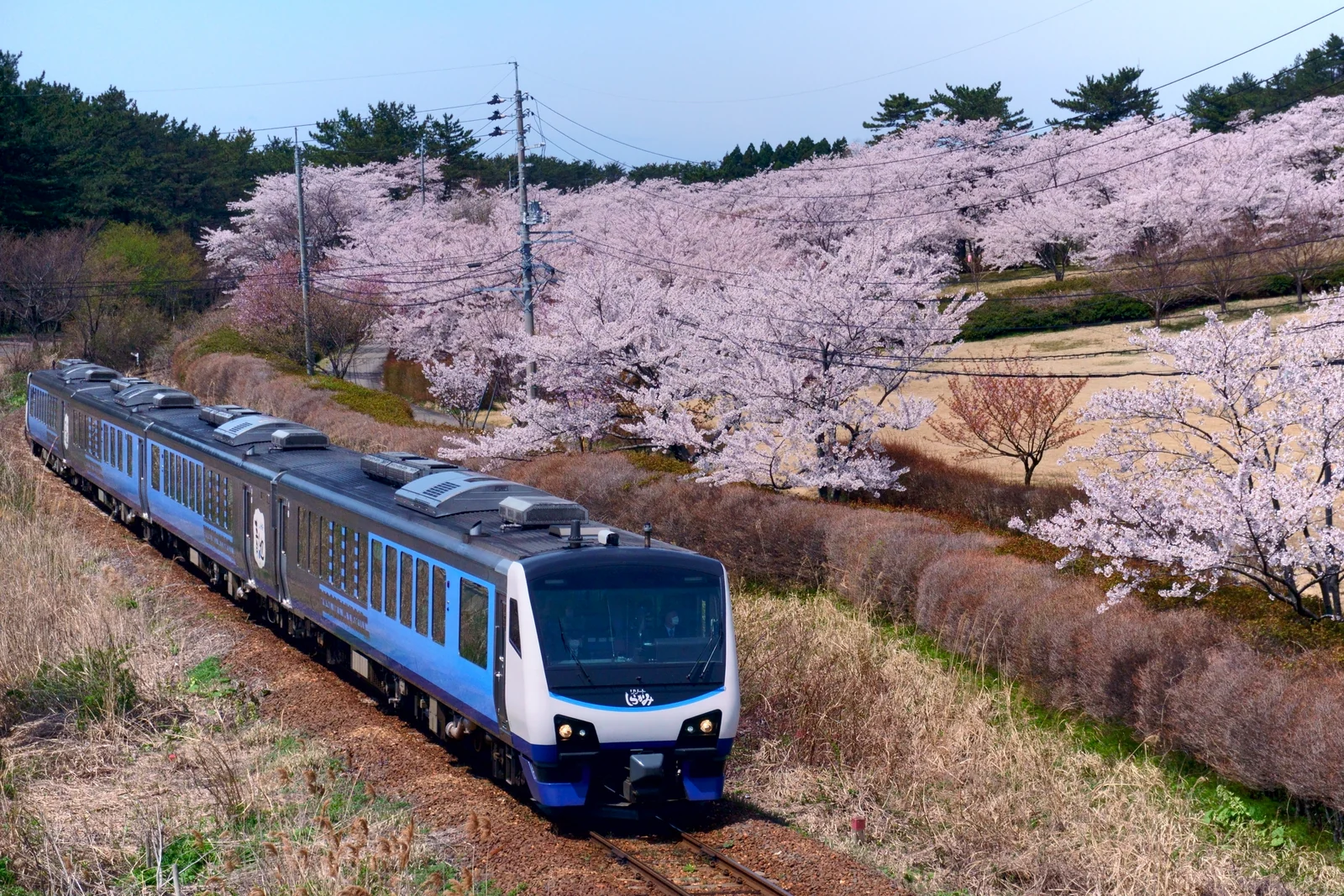
For departure from Hirosaki Station next day or arrival with large bags, consider Art Hotel Hirosaki City. Its official access page gives about one minute on foot from JR Hirosaki Station’s Central Exit, at 1-1-2 Omachi, Hirosaki. You can put bags down first, then take a bus to the park. After late illuminations, you still need to return from the park to the station. With a station base, complete the daytime route, eat centrally in the early evening and decide whether to return for a short illuminated walk. Before an early long-distance train, there is no need to stay until 21:00: finish sooner and pack in your room. After transferring at Shin-Aomori, use Hirosaki’s Central Exit for the hotel before the park, and return to the same side for bags, convenient for onward rail travel.

For central dining between the park and station, compare Hirosaki Park Hotel at 126 Dotemachi. The hotel lists about twelve minutes on foot from JR Hirosaki Station and Park Hotel-mae as its nearest loop bus stop. Despite its name, it is on Dotemachi, outside the park. Treat it as a town-centre base rather than expecting the flower displays at its door. Its official access page has step-by-step photographs of the station walk. After dark, choose a walk or bus from the park according to energy. If returning to add clothes in the afternoon, compare the room-to-Otemon route on a map. Assess room-price differences together with evening transport. Without night-view plans, the station advantage is often more direct; for repeated visits between town and park, include Dotemachi in the comparison.
For half a day, choose one short route led by flowers or free autumn views
If arriving in the morning and moving on that afternoon, leave bags near Hirosaki Station, go to Otemon, enter the botanical garden for chrysanthemums and the main work, then return to the southern moat. The operator gives an ordinary garden walking time of about forty minutes to an hour; festival displays and stops justify allowing a broader half-day. Putting the main venue first secures your priority even if later time shrinks.
If arriving in the afternoon solely for leaves, walk slowly outside Otemon and along one moat stretch, watch the lights appear after 16:00 and return to town for dinner after dark. This version avoids two paid gardens and waiting for the 17:30 projection. It suits an intercity day trip, companions with little interest in flower shows or a budget focused on food. Free gates and trees preserve the main autumn experience on a shorter route.
Rain does not require moving the entire visit indoors. Wait in the botanical garden’s rest space for lighter rain and see nearby displays, or shorten the walk to Otemon and return to town early. Grippy soles, a rainproof coat and a small folding umbrella are easier than carrying a large umbrella through crowds while seeking angles. On paths or stone edges covered in wet leaves, stop to look and photograph rather than watching a screen as you walk.
Finish a half-day near your return exit. Ending at a distant gate only to walk back to the original bus stop wastes time. Entering at Higashimon and leaving through Otemon connects with the city hall area. If your hotel or station connection needs the other side, use the same entrance both ways. The least-backtracking route depends on your entrance and accommodation.
For a water-level alternative to the moat walk, choose the Nakabori autumn sightseeing boat on 30 October–8 November 2026. Boarding is near Ishibashi Bridge outside Higashiuchimon Gate. The boat passes Tatsumi Yagura, turns near Sugi no Ohashi and returns to the same landing in about twenty minutes, with no intermediate disembarkation. For a leaves-only half-day, remove a more distant moat walk to allow for reaching the landing, waiting and riding. If flowers come first, retain the garden and replace the long moat walk afterwards with the boat.
Daytime autumn 2026 boats operate 09:00–16:00, with reception ending at 15:30. Fares are ¥1,000 for junior high school pupils and older and ¥500 for primary school children. One preschool child per adult travels free. Boats run as required during opening hours, with arrangements affected by weather and passenger numbers. Reach the landing before 15:30 to leave waiting time. Everyone must wear a life jacket. People drinking or under the influence cannot board; put a drink in town after the boat ride.
Stay overnight for afternoon flowers, a short evening walk and gardens in daylight
One night is ideal for separating evening views and daytime gardens. Arrive, store bags and visit the chrysanthemum displays on the first afternoon. Rest and eat something towards dusk, then see the lights near Ishibashi and Minamiuchimon. Keep one or two places for a longer look rather than covering the whole park just because you are staying overnight. Allow dinner and packing time before bed so that you have energy next morning. Make Fujita Memorial Garden the second morning’s main stop, then collect bags according to your departure time. Separate-day garden tickets cost more than a same-day combined ticket but buy a less hurried visit, a worthwhile exchange for garden enthusiasts. Only move Fujita to the first morning if arriving early enough and spending a single day in Hirosaki, so that the combined ticket fits the actual route.
For two nights, choose a daytime visit using the 2026 stage programme: Takasugi Nursery School taiko at 11:00 on 31 October; “夢弦会” (Atsushi Tada) Tsugaru shamisen at 11:00 and YOSAKOI at 13:00 on 1 November; and Wasangenkai Tsugaru shamisen at 11:00 and 13:30 daily on 2 and 4–6 November. All take place on the botanical garden’s special stage. Enter first, then fit flowers and rests between performances. Bad weather may cancel outdoor programmes. If performances lead the day, leave Fujita for another daytime visit. On one of its four evening-opening dates, an earlier performance can lead into the garden visit without rushing between two 20:00 closures.
At Shin-Aomori, look for the JR Ou Main Line towards Hirosaki. For a shinkansen connection on return, choose a comfortable transfer first, then work backwards through leaving the park, bus or walking time and collecting bags. If staying in Hirosaki, leave that calculation until tomorrow and focus only on reaching the hotel tonight.
To replace a long evening walk beside the moat with a boat, night sailings on 30 October–8 November 2026 run 16:30–19:30, with reception ending at 19:00. The 17:00, 18:00 and 19:00 sessions can be reserved. Ordinary autumn night-boat tickets cost ¥1,500 per person aged six and over; one child aged 0–5 per adult travels free. The booking product lists a thirty-minute duration. A 17:00 session works after afternoon chrysanthemums, followed by a short walk near Ishibashi or Minamiuchimon and dinner in town. Leave Fujita until tomorrow and omit the botanical garden projection that evening.
The autumn night-boat booking page states that confirmed bookings are non-refundable. Severe weather can stop sailings, and same-day cancellation notices are sent to the mobile number supplied at booking. Settle party size and dinner arrangements before reserving a session. For a loop bus back to the station afterwards, leave according to the return stop times above. To keep viewing lights until 21:00, plan a walk or taxi back.
Read photograph dates and consider tree species and moat locations
Hirosaki Park has maples and many cherry trees that also change colour. Orange, yellow, red and still-green canopies in autumn photographs may belong to different species and locations. Identify the photographed area before choosing your route rather than expecting uniform colour from a general peak-season label. Both Otemon’s cherries and the park’s maples are illuminated; seeing leaf shapes by day helps identify them at night.
For the week of travel, read the park operator’s local updates. Note both photograph date and location. A recent close-up helps select one stopping place; a broad park view better informs whether to attempt a long walk.
Festival dates are fixed, while colours develop through the event. If your holiday dates require an early visit, make daytime chrysanthemums and evening installations the main plan, with the best leaves that day as an additional stop. Falling leaves later create different scenes beside the water and on the ground.
Stay on open paths for photographs and view flower beds, bamboo lights and chrysanthemum works without disturbing them. The operator prohibits unauthorised drone flights. Pets must enter in a carrier, pushchair or in someone’s arms; assistance dogs follow separate rules. Pets cannot enter buildings.
A few useful answers
Do I need a ticket to see autumn leaves in Hirosaki Park?
Otemon, castle gates and most moat walks are in free areas. The festival’s main venue, Hirosaki Castle Botanical Garden, charges ¥320 for senior high school pupils and older or ¥100 for primary and junior high school pupils. Honmaru and Kita no Kuruwa, and Fujita Memorial Garden, have separate tickets.
Do the 2026 festival and illuminations end on the same date?
The festival runs 30 October–8 November, with the botanical garden open 09:00–20:00 and last entry at 19:30. Special autumn illuminations are announced for 30 October to mid-November, from 16:00 to 21:00.
Is there a loop bus after the lights finish at 21:00?
During the ten festival days, extended Dotemachi Loop Bus services run every thirty minutes from 18:30 to 20:00. To stay until 21:00, plan a walk or taxi back. Bus users should leave early according to the return stop timetable.
Does Fujita Memorial Garden open every autumn evening?
In 2026 it opens at night only on 30 and 31 October and 6 and 7 November, from 17:00 to 20:00, with last entry at 19:30. Normal autumn hours are 09:00–17:00, with last entry at 16:30.
Can I enter Hirosaki Castle’s keep in 2026?
The keep interior has been closed since 24 November 2025, with the city’s original plan running until 31 March 2033. The park and open Honmaru and Kita no Kuruwa areas remain open to visitors. The combined ticket covers area admission, without entry to the keep interior.
Official information and references
Sources used in this guide.
- Hirosaki Tourism Association | 2026 festival, illuminations and extended buses
- Hirosaki Parks and Greenery Association | 2026 botanical garden opening, payments, facilities and access
- Hirosaki Parks and Greenery Association | Castle grounds, charging hours and keep works
- Hirosaki Parks and Greenery Association | Four Fujita evening openings and café hours in 2026
- Hirosaki City | Fujita tickets and three-area combined day ticket
- Hirosaki City | Closure of the castle keep interior
- Hirosaki Tourism Association | October 2026 loop bus fares and evening extension
- Art Hotel Hirosaki City | Central Exit access and address
- Hirosaki Park Hotel | Dotemachi address, station walk and nearest stop
- JR East | Ou Main Line towards Hirosaki from Shin-Aomori
- Hirosaki Tourism Association | Autumn 2026 Nakabori day and night boats, landing and boarding rules
- Hirosaki Tourism Association official booking | Autumn 2026 night-boat ages, refund terms and cancellation notices