The 2027 Nagasaki Lantern Festival runs from 5 to 21 February. Here is your guide to lighting hours, Emperor's Parade and Mazu Procession schedules, Minato Park's ¥300 special zone, and an evening tram-and-walking route from Shinchi Chinatown to Meganebashi Bridge.
- Region & Focus
- Nagasaki
- Reading Scope
- 18 min read · 13 chapters · 6 Q&As
- Official Verification
- 18 official sources checkedUpdated 22 November 2026 at 08:00 GMT+8
- Key Topics
- SeasonsWinterItineraries
Chapter Route Map (tap any stop)
- Which day to go: parades split across Saturdays and Sundays
- First-timer route: Shinchi Chinatown, Hamanmachi and the Nakashima River
- Fitting a weekday evening walk and dinner together
- Minato Park's ¥300 special zone and the two main stages
- Choosing Chuo Park, Hamanmachi or Minato Park for the Emperor's Parade
- Mazu Procession: two Sundays in opposite directions
- Tojin Yashiki by day, Fukien Kaikan by night
- Confucius Shrine face-changing vs street stage shows
- Eating along the way: sit-down noodles vs street snacks
- Single tram fares vs day passes depend on your daytime plans
- Where to stay in Nagasaki for easy walks back after lights-out
- Two days and one night: save daylight sights for before switch-on
- Rainy evenings, pushchairs and bridge photography tips
- Quick Q&A
The 2027 Nagasaki Lantern Festival runs from Friday 5 February to Sunday 21 February, with most zones illuminated from 17:00 to 22:00. With just one evening, start in Shinchi Chinatown for the pink lanterns over the Doza River, step into Minato Park for a dragon dance, and stroll through Hamanmachi to Meganebashi Bridge. Keep a Saturday afternoon free for the Emperor's Parade, or a scheduled Sunday for the Mazu Procession. Once you have picked your dates, circle one performance or stop on the programme first, then fit dinner and your return train or tram around it.
Which day to go: parades split across Saturdays and Sundays
Opening night falls on 5 February, the day before Lunar New Year's Day, with the Lantern Festival (Yuanxiao) on 20 February and displays continuing into the evening of 21 February. Across the 17-day run, decide early in your Kyushu itinerary whether you are coming for the evening illuminations, stage shows or afternoon parades. Dragon dances are staged daily, so any weekday evening works well. Both the Emperor's Parade and the Mazu Procession happen on only two days each; if you are making a special trip for either, match your hotel dates to an afternoon arrival in the city.
On opening day, 5 February, Chuo Park's lighting ceremony runs from 17:30 to 18:00, and Minato Park's from 17:45 to 18:00. Because the two overlap, pick one venue for the switch-on. Those who arrive early at Minato Park can stay on for the 18:20 dragon dance. At Chuo Park, you can listen to erhu music at 18:00 and either wait there for the 19:20 dragon dance or walk over to Meganebashi Bridge in between. The city's 17:00 to 22:00 window covers general decorative lighting across most zones; opening ceremonies, daytime performances and ticketed areas each keep their own schedules, so read them separately when planning.
What began as Chinatown's Spring Festival expanded into the Nagasaki Lantern Festival in 1994. Today roughly 15,000 lanterns are hung across the city, lining shopping arcades, riverbanks and side streets far beyond Minato Park. Whatever day you arrive, it is easy to fold a lantern walk into the hours before or after dinner. Travellers coming across from Fukuoka for the evening only will find weekday dragon-dance slots the simplest to slot in. If you want both major parades in a single trip, 13 and 14 February fall back-to-back over one weekend, letting you stay from Saturday midday through Sunday evening.
A different figure leads each Emperor's Parade: the city has announced Nagasaki Prefectural Governor Ken Hirata for 13 February, and Sasebo-born singer Kiyoshi Maekawa for 20 February. Although 11 February is a Thursday, it is a Japanese national holiday; Sichuan face-changing shows are scheduled at 11:45 in Minato Park and 12:00 in Chuo Park. Dash between the two and you will miss the start, so pick one and pair the afternoon with Dejima.
| Date | Event | Scheduled hours |
|---|---|---|
| Fri 5 Feb | Opening lighting ceremonies | Chuo Park 17:30; Minato Park 17:45 |
| Sun 7 & Sun 14 Feb | Mazu Procession | Afternoon; starting points and directions differ on each day |
| Sat 13 & Sat 20 Feb | Emperor's Parade | Departs Chuo Park 14:00; arrives Minato Park around 16:00 |
| Fri 5 – Sun 21 Feb | Illuminations and dragon dances | Most zones lit 17:00–22:00; dragon dances vary by day |
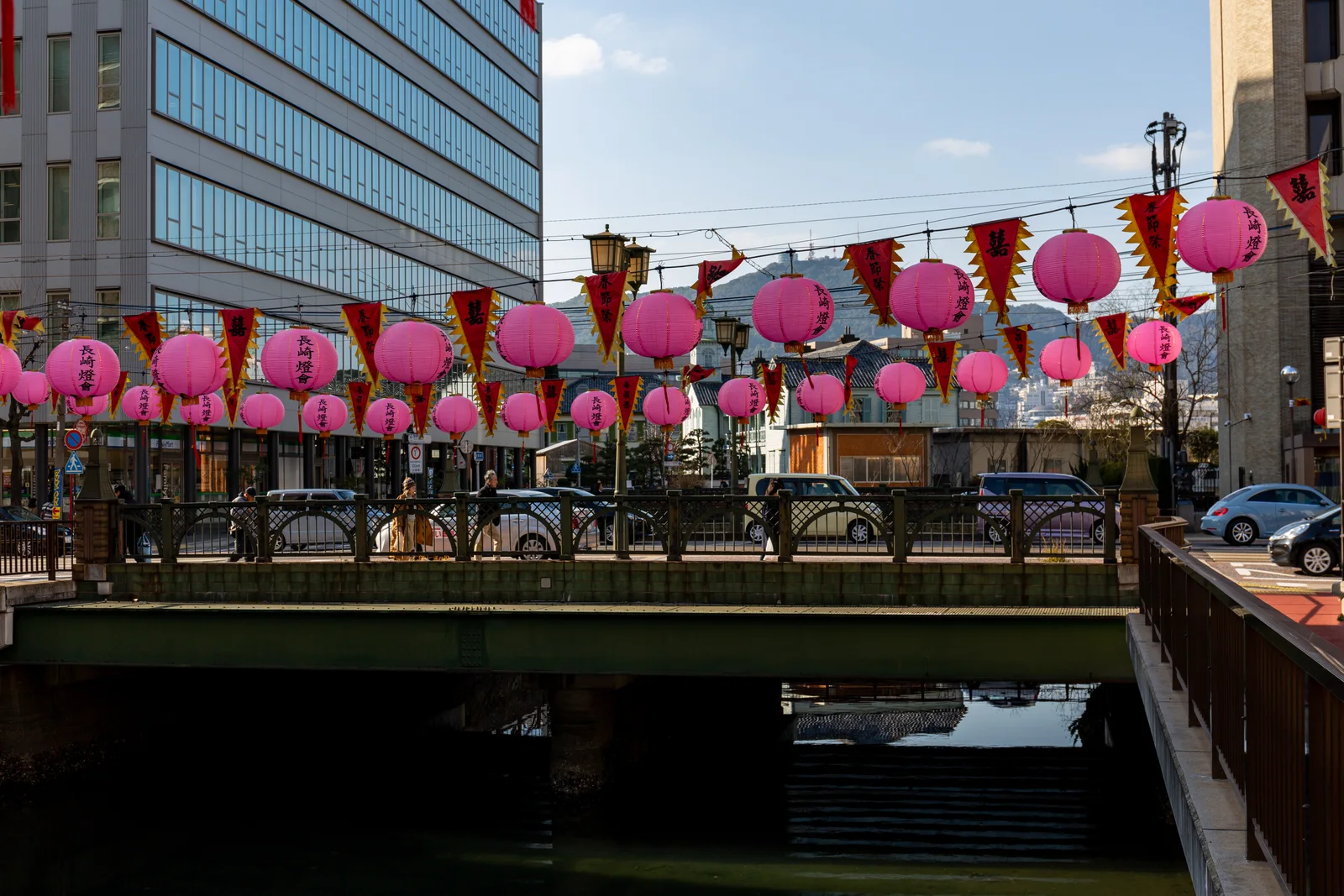
The 2027 Nagasaki Lantern Festival runs from 5 to 21 February. Here is your guide to lighting hours, Emperor's Parade and Mazu Procession schedules, Minato Park's ¥300 special zone, and an evening tram-and-walking route from Shinchi Chinatown to Meganebashi Bridge.
First-timer route: Shinchi Chinatown, Hamanmachi and the Nakashima River
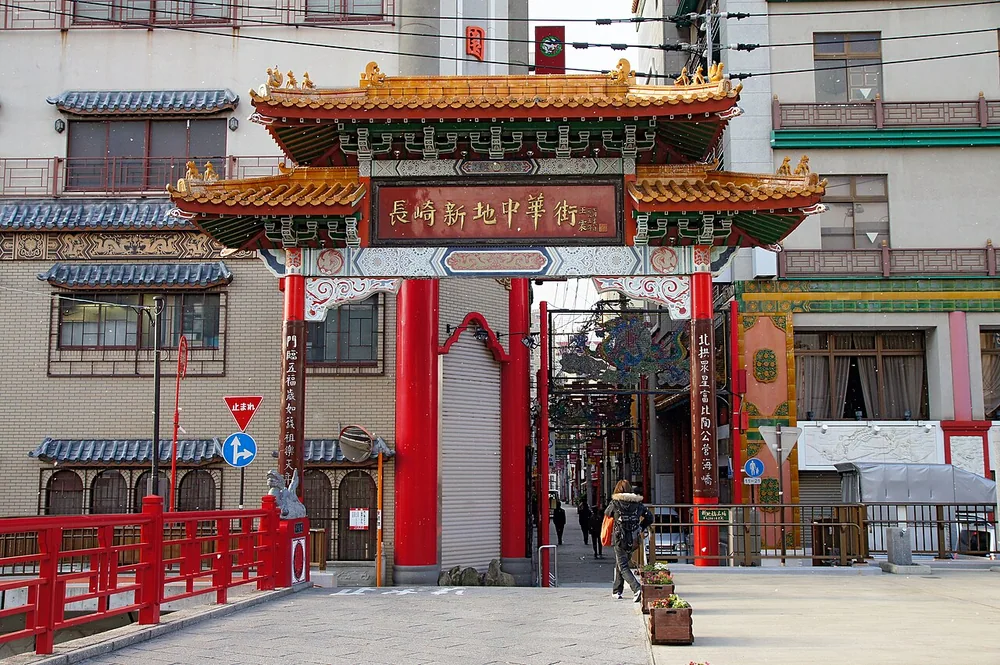
Leaving Nagasaki Station, head to the Nagasaki-ekimae tram stop and board Tram Line 1 bound for Sofukuji, getting off at Shinchi Chinatown. Walk towards Chinatown's North Gate and Shinchi Bridge to reach the Doza River first. In daylight you can read the calligraphy on the pink lanterns and banners clearly; at dusk, wait for rows of lights to reflect across the water. From the riverbank, pass straight through the Chinatown gates towards Minato Park—searching maps specifically for "Minato Koen" makes it easier to pinpoint the stage than typing in the full festival name.
Four Chinese gates frame Shinchi Chinatown's cross-shaped shopping streets, with the south end opening onto Minato Park and the north end facing the Doza River. If a restaurant has a queue at the door, you can check neighbouring storefronts from the junction before deciding which way to turn, though allow time to double back if you have already booked inside the quarter. Should companions split up for photos, agree to meet outside a specific gate—North or South—rather than saying "the Chinatown entrance", which easily leaves people waiting at opposite ends.
Leaving Minato Park, retrace your steps through Chinatown to the Doza River, cross over and enter Hamanmachi Shopping Arcade (signed as Hamanmachi, Hamamachi or Kanko-dori). Its covered walkway offers shelter from rain and an easy pause for dinner or coffee between outdoor stretches. Continue from the arcade towards Chuo Park and the Nakashima River. If you are timing your walk for a dragon dance, check the programme first to decide whether to head straight to Chuo Park or linger at Meganebashi Bridge, rather than cutting your bridge photos short in a rush.
The Nakashima River's yellow lanterns and the Doza River's pink ones form two distinct display zones. Along the Nakashima River, stay on the upper pavement first to find an angle showing Meganebashi's double arches; when the bridge deck gets crowded, walk a short way to a neighbouring bridge for a cleaner view of the whole stone span. The nearby tram stop is Meganebashi, with Hamanomachi Arcade one stop south. When heading back to Nagasaki Station, walk to Kanko-dori for Tram Line 1 bound for Akasako—even if you save the Nakashima River for last, it is a straightforward walk back along the arcade.
Fitting a weekday evening walk and dinner together
Take Tuesday 9 February as a template evening. Alight at Shinchi Chinatown around 17:30, take photos along the Doza River and wander under the Chinatown lanterns. If tables are free, eat an early dinner before catching the 19:00 dragon dance at Minato Park, then walk through Hamanmachi to Meganebashi Bridge afterwards with enough time left for bridge shots and the walk to a tram stop. On the same evening, Chuo Park holds a later dragon dance from 20:10 to 20:40, which suits anyone who prefers a leisurely meal before heading to the Nakashima River. Choosing one of the two shows leaves far more breathing room along the rivers.
If you only arrive in the city centre from JR Nagasaki Station around dusk, put dinner in Hamanmachi first. You can save the walk from Chinatown to Minato Park until after Chuo Park's performance, visiting the Nakashima River as the crowd clears and strolling back via Hamanmachi to the Doza River. With only an hour to spare, get off at Shinchi Chinatown and make a simple one-way route covering the Doza River, Chinatown's South Gate and Minato Park, pausing at just one or two lantern displays. When a show is running in Minato Park, stick to the side walkways around the stage and spot your exit before stopping.
Crowds tend to funnel towards Minato Park just before 19:00. Groups of four or more wanting a single table should eat before the lanterns switch on, or gather in Hamanmachi first until everyone arrives. Performances at Minato Park run intermittently from around 17:00, so picking a restaurant close to a park entrance keeps your options open if plans change. Solo travellers or pairs can simply eat wherever noodle seats open up and shift to Chuo Park's dragon dance if needed. Agreeing on your final stop before you sit down saves the whole group from debating the route over dinner.
Minato Park's ¥300 special zone and the two main stages
For 2027, organisers have added a paid special exhibition inside part of Minato Park, listed as the Ishibutai Zone (Stone Stage Zone). It brings together large established lantern installations alongside new displays and photo spots. Entry is ¥300 per person, and free for pre-school children. Charges apply from 17:00 to 22:00 on weekdays (entry before 17:00 is free on weekdays), and throughout opening hours from 10:00 to 22:00 on Saturdays, Sundays and Japanese national holidays. Remember that Thursday 11 February counts as a holiday on the festival calendar, so daytime entry follows holiday hours.
The fee applies solely to this fenced zone inside Minato Park; you can still enjoy the lanterns along the Doza River, Hamanmachi, the Nakashima River and Meganebashi Bridge free from public streets. If your group wants to see the big lantern figures and does not mind queuing, visit the Ishibutai Zone before dinner and wander towards the stage afterwards. If you are only heading to Minato Park for a dragon dance or an afternoon parade, check the "Shinchi Chinatown venue" row on the programme—the stage stands inside the park. At weekends, people queuing for the paid zone mingle with stage audiences, so check the entrance signs on arrival rather than blindly joining the nearest queue.
Listed on the timetable as Jaodori, the dragon dance sees a team lift and weave a 20-metre dragon through tight turns, which you appreciate far better by standing a few paces back. Both Minato Park and Chuo Park host performances, with opening-day times differing from regular weekdays. If you want to follow an erhu set with a dragon dance at the same venue, read down the next slot in the same table row; anyone holding reserved seats for a face-changing show should likewise double-check the venue printed on the ticket. Erhu, dragon dance and face-changing sets often run at both parks on the same day, so jotting down only a start time risks ending up at the wrong stage.
Choosing Chuo Park, Hamanmachi or Minato Park for the Emperor's Parade
In 2027 the Emperor's Parade takes place on 13 and 20 February. Around 150 participants—including banner bearers and imperial palanquins—recreate a Qing-dynasty imperial procession celebrating the New Year. Both days follow the same route and official stage times: Chuo Park 14:00 to 14:20, Hamanmachi Shopping Arcade 14:30 to 14:50, Kajichi 14:50 to 15:10, returning through Hamanmachi Shopping Arcade from 15:30 to 15:50, and finishing at Minato Park from 16:00 to 16:30. Because Hamanmachi appears twice, check the sequence on the timetable before staking out a spot.
For the start of the parade, have an early lunch near Chuo Park and locate toilets and a meeting point ahead of time. Families with children who want somewhere to sit and eat straight after the procession pass by should pick a spot beside one of Hamanmachi's side exits so they can slip out of the crowd easily. Local shops stay open during the festival, so leave doorways and walkways clear before the parade arrives. If you prefer the 16:00 finale at Minato Park, spend the daytime at Dejima or browsing Chinatown, wait in Shinchi for the procession, and roll straight into the evening illuminations.
On both 13 and 20 February, Minato Park also schedules a dragon dance from 19:00 to 19:20. To pair the afternoon parade with the evening show, welcome the procession into Minato Park at 16:00, break for dinner as the crowd disperses, and return to the park for 19:00. Once the parade passes through the arcade, stewards clear spectators steadily; when heading back to a stage, the special zone or a meeting point, avoid relying on shortcuts that cut directly across the procession route.
Day-trippers returning to Hakata can watch the start at Chuo Park and keep their evening lantern loop compact. Guests staying beside Chinatown can wait for the finale at Minato Park, drop bags back at the hotel, and head out again once the lanterns are lit. Both Saturdays work smoothly this way; if you want to join on Yuanxiao itself, choose 20 February and book dinner and return train tickets around that date.
Mazu Procession: two Sundays in opposite directions
During the Edo period, Chinese merchant ships trading at Nagasaki carried statues of Mazu, goddess of seafarers, ashore to Chinese temples on arrival and returned them aboard before sailing. The festival's Mazu Procession re-enacts that ritual, reversing direction between the two Sundays. Sunday 7 February is Bosatsu-age (landing the deity), running from Tojin Yashiki (13:50–14:10) to Minato Park (14:20–14:45), Meganebashi Bridge (15:25–15:40) and Chuo Park (15:55–16:15). If you want one stop that combines old streetscapes with the ceremony, locate the gates in Kannaicho first and walk up towards Tojin Yashiki.
Sunday 14 February is Bosatsu-nose (returning the deity aboard): Chuo Park (13:15–13:40), Meganebashi Bridge (14:00–14:15), Minato Park (14:55–15:20) and Tojin Yashiki (15:30–15:50). Visitors staying near the station who want to see Meganebashi can enter from the north side of town, linger along the Nakashima River and stop for tea afterwards. If you are already sightseeing in Minami-Yamate, catching the later Minato Park leg is easiest—board Tram Line 5 near Oura Church back to Shinchi Chinatown and walk into the park.
For a first look at the Mazu Procession, pick a single vantage point to watch the palanquin bearers and retinue pass. Keep bridge approaches clear for residents and passing pedestrians by standing along wider sections of pavement. Because Meganebashi's timings differ between the two Sundays, write the exact date and time alongside any pinned map location. With tired toddlers or older relatives who dislike standing on hills, choose Minato Park or Chuo Park for easy access to food and trams afterwards. If you plan to explore Tojin Yashiki's four halls as well, wait until the procession has cleared the narrow lanes before wandering through.
Tojin Yashiki by day, Fukien Kaikan by night
From Minato Park, streets climb gently towards Kannaicho and the Tojin Yashiki (Former Chinese Quarter) site, home to Doshin-do Hall, Kannon-do Hall, Tenko-do Hall and Fukien Kaikan. Established by the Tokugawa shogunate in 1689 to house Chinese merchants and sailors separately from the Dutch trading post at Dejima, the quarter today lets you trace old stone lanes past distinct rooflines and gated courtyards every few corners. The statue of Mazu enshrined inside Tenko-do Hall ties this daytime history directly to the weekend processions.
Heading uphill after lunch in Chinatown makes reading street signs and admiring the architecture far easier than navigating the lanes after dark. If you also plan to catch a face-changing show at the Nagasaki Confucius Shrine, save Tojin Yashiki for another morning so you are not rushing between hills. On weekday evenings, check the Tojin Yashiki row on the 2027 official programme, where venues are marked for Fukien Kaikan and Doshin-do Square—for example, an erhu performance at Fukien Kaikan on 9 February from 19:00 to 19:30. If you want to sit down for live music, eat before walking up from the riverbank.
For travellers sensitive to loud stage drums, the quiet lanes around the four halls and Fukien Kaikan are easy to schedule cleanly in advance. On Mazu Procession days, let the parade pass through the alleys before ducking into the halls. Leaving Tojin Yashiki, head back down to Minato Park or Shinchi Chinatown tram stop to regroup on level ground, where picking a junction for your next stop is much simpler.
Confucius Shrine face-changing vs street stage shows
Built in 1893 in Oura-machi by the Qing government and Nagasaki's Chinese community, the Nagasaki Confucius Shrine welcomes New Year visits to the Dacheng Hall during the festival and houses the Museum of Chinese History inside. Open 09:30 to 18:00 (last entry 17:30), admission includes the museum and costs ¥880 for adults, ¥550 for high-school students, and ¥440 for primary and junior-high students. Take Tram Line 5 bound for Ishibashi from Shinchi Chinatown, get off at Oura Tenshudo, and walk three minutes. If you visit Glover Garden in the morning, simply walk downhill to the shrine before catching a tram back to the lantern zones.
Check where each Sichuan face-changing (Bian Lian) show is held before setting off. On the festival timetable, street-stage sets appear as the Chinese Bian Lian Show—for instance, on 13 February at 11:45 in Minato Park and 12:00 in Chuo Park. Minato Park offers paid seating, and if you plan to watch several sets at that stage on one day, look up its front-row SS one-day pass sold through STLOCAL (allocated in order of purchase until sold out). The Confucius Shrine publishes its own face-changing calendar: entry is included with same-day shrine admission, no booking is required, and re-entry on the same ticket is not allowed. Pick a showtime from the shrine calendar first, then arrive early enough to look round the hall and museum.
During the festival, the Confucius Shrine sets out ground-level seating, a pushchair parking area and standing sections; wheelchair users can ask staff on arrival for the designated viewing area before the show starts. Umbrellas are prohibited throughout the performance space, and in wet weather shows move under the covered cloister unless severe weather such as a typhoon prevents it. Stand in the rear standing zone if you plan to take photos, keeping clear of seated guests. If you are catching the Shinkansen the next morning, schedule the shrine for an earlier daytime slot, keeping daytime temples and evening street lanterns neatly separated.
Eating along the way: sit-down noodles vs street snacks
Chinatown's signature Nagasaki champon loads noodles with vegetables, pork, seafood and fishcake in a rich broth—ideal for sitting down after an afternoon parade. Sara udon swaps soup for thickened toppings over noodles in two styles: hosomen (thin, deep-fried and crisp) or futomen (thick noodles akin to champon). Check the menu for those two terms; pairs can order one of each to share. Whenever an evening still includes a long river walk, lock in your performance times first and fit a sit-down noodle shop into the gap.
If hunger hits before the afternoon events wrap up, look in Chinatown for kakuni manju (fluffy steamed buns stuffed with braised pork belly) or hatoshi (crisp deep-fried shrimp-paste toast). Step clear into an open corner to eat hot snacks rather than blocking bridges, tram stops or entry queues. If anyone in your party has a shellfish allergy, tell staff before ordering champon, sara udon or hatoshi so the kitchen can verify ingredients and cooking oil.
Leave buying castella sponge cake until late afternoon or just before returning to the station so you are not carrying gift boxes all evening. If Chinatown's main noodle shops have long queues, head into Hamanmachi instead, or stop for Nagasaki Chinese cuisine while sightseeing in Minami-Yamate during the day. For specific dining stops by neighbourhood, see our Nagasaki tram and food route and eat near your hotel to save more evening hours for the illuminated rivers.
Single tram fares vs day passes depend on your daytime plans
From JR Nagasaki Station to Shinchi Chinatown, take Tram Line 1 bound for Sofukuji; from Shinchi you can walk through Minato Park and Hamanmachi all the way to the Nakashima River. For the evening return to Nagasaki Station from Kanko-dori or Shinchi Chinatown, take Line 1 bound for Akasako. To continue from Meganebashi Bridge to Minami-Yamate, board Line 5 bound for Ishibashi at Meganebashi stop and get off at Oura Tenshudo for Glover Garden and the Confucius Shrine. Travelling straight from JR Nagasaki Station to Minami-Yamate with luggage, you can either take Line 1 to Shinchi Chinatown and change to Line 5, or take Line 3 bound for Hotarujaya and transfer at Shiyakusho onto Line 5 for Ishibashi.
Check the route number and destination board on the front of the tram before stepping onto the platform; passengers generally board through the middle or rear doors and alight at the front. With an IC card or accepted contactless bank card, tap both on boarding and alighting. Cash passengers step straight aboard and pay at the front fare box when getting off. If travelling as a family, hand out everyone's cards on the platform beforehand; when transferring at Shinchi Chinatown on the way back from Minami-Yamate, use the same card on both trams.
A single tram ride costs ¥150 for adults and ¥80 for children, so a straightforward return trip between Nagasaki Station and the festival venues comes to ¥300 per adult. A one-day pass costs ¥600 for adults and ¥300 for children (paper or mobile ticket, valid for the calendar day), while a mobile-only 24-hour pass costs ¥700 for adults and ¥350 for children from activation—activating it on your first afternoon ride covers the next morning as well. At full single fares, four rides break even on a one-day pass, though factor in transfer and short-hop discounts: paying via accepted cashless methods reduces rides of two stops or fewer to ¥110 for adults and ¥60 for children.
Nagasaki Electric Tramway offers designated transfers at Shinchi Chinatown, Shiyakusho, Nagasaki-ekimae and Nishi-Hamanomachi. For example, riding Line 1 (Sofukuji-bound) from Nagasaki Station and transferring at Shinchi Chinatown onto Line 5 (Ishibashi-bound) qualifies for the transfer discount provided you tap the same IC or accepted contactless card on both legs within 30 minutes of alighting. Multi-passenger taps on a single card do not qualify, so everyone needs their own card—or calculate exact single fares for children separately. Check the operator's valid transfer table before doubling back or reversing direction at the same stop.
Tram passes and mobile tickets cover streetcars only; airport buses and JR trains are paid separately. If you want less walking at dusk, take the tram straight to your chosen starting venue and stroll back along the rivers. After a parade ends, walk clear of the stage exits before heading to a tram stop. For late returns, check last-tram times for that specific stop and destination, and allow extra walking time between the Nagasaki-ekimae tram stop and the JR concourse if you are catching a train back to Hakata.
Where to stay in Nagasaki for easy walks back after lights-out
Basing yourself around Shinchi Chinatown, Hamanmachi or Dejima lets you stroll back to your hotel past illuminated streets. Chinatown puts your room within easy reach if you need an extra layer after dinner; Hamanmachi sits close to covered arcades and Chuo Park; Dejima spreads out neatly towards the harbour and tram lines. Because several hotels share "Nagasaki" in their names, check the nearest tram stop and street on a map before booking. When walking back with older companions, the number of main road crossings and hills matters more than straight-line distance—or pick Hamanmachi or the Nakashima River area if you plan to shoot Meganebashi late at night.
If you have an early train from Nagasaki Station or are arriving with heavy suitcases, staying right beside JR Nagasaki Station is simplest: at night you just ride Line 1 back to Nagasaki-ekimae. Visitors with pushchairs or older relatives can keep their first evening flat by touring Chinatown and Minato Park and returning via level streets to the tram. Minami-Yamate suits travellers visiting Glover Garden and the Confucius Shrine the next morning—take Line 5 towards Ishibashi from Meganebashi, though check whether your hotel sits uphill from the tram stop.
For a day trip from Hakata, take the Relay Kamome limited express to Takeo-Onsen and cross the platform for the Nishi-Kyushu Shinkansen Kamome to Nagasaki, reversing the connection at night. Pick your return Hakata train on the JR Kyushu timetable first, then count backwards to allow time for the tram from the festival and walking into the JR station. Seeing an afternoon parade and the opening hour of illuminations easily fits a day trip, whereas staying overnight gives you unhurried time for Chuo Park's 20:10 weekday dragon dance and a late walk past Meganebashi along the Nakashima River.
Two days and one night: save daylight sights for before switch-on
Arriving in the afternoon on day one, drop your bags and start at Dejima at 13:00 or 14:00 to explore the reconstructed Dutch trading post buildings and archaeological displays, then walk over to Chinatown's North Gate just as dusk settles and the Doza River lanterns light up. Both Dejima and Tojin Yashiki reflect Nagasaki's Edo-period foreign trade; to combine them in one day, continue from Dejima through Shinchi into Kannaicho and drop back down to Minato Park for an evening stage show. That route does involve hills and extended walking, so save Tojin Yashiki for the following morning if anyone in your party tires easily.
Dedicate day two to either Minami-Yamate or Urakami. In Minami-Yamate, start in the morning at Glover Garden and Oura Church, walk downhill to the Confucius Shrine, have lunch nearby, and meet an afternoon parade at Shinchi Chinatown or Meganebashi Bridge. Choosing Urakami means spending the morning at Peace Park and the Nagasaki Atomic Bomb Museum (reachable on Tram Line 1 or 3 bound for Akasako from Nagasaki Station) before riding back into town for lunch. If you aim to catch the 14:00 Emperor's Parade at Chuo Park, eat in Hamanmachi or right beside the park. Adding another night? Follow our four-day Nagasaki itinerary to fold in the harbour, Urakami and outer sights.
Over the back-to-back parade weekend of 13 and 14 February, vary your vantage points. Watch the Emperor's Parade set off from Chuo Park on Saturday and head to the riverbanks after dinner; on Sunday afternoon, catch the Mazu Procession passing Minato Park before collecting your luggage from the hotel. If you also want to squeeze in a Gunkanjima (Hashima Island) boat tour, anchor that half-day around your boarding time and leave the parade for the other day—or aim only for a late-afternoon leg—since returning from the pier, eating and collecting bags leaves little margin to make a parade's start.
Rainy evenings, pushchairs and bridge photography tips
In light rain, Hamanmachi Shopping Arcade gives you a ready-made covered walkway. Enter from the Kanko-dori side, eat under the arcade roof, and step out towards Chuo Park and the Nakashima River once showers ease. Along the Nakashima River, stay on the upper pavement rather than descending wet stone steps or river stepping stones. For reflections of lanterns on the water, frame your shots from a wider junction or a neighbouring bridge, and step aside once you have your photo. Blue hour just after sunset works brilliantly too, picking out tiled eaves, glowing lanterns and riverbanks to contrast with daytime views along the Doza River.
If heavy rain persists, head indoors to the Nagasaki Prefectural Art Museum before catching a tram from Dejima or Medical Center back to Chinatown. On parade days, check official day-of updates before picking a viewing spot. Should high winds or poor weather disrupt outdoor stage schedules, having a city-centre hotel gives you a second evening to step out whenever skies clear. With only one rainy night, the Confucius Shrine museum remains open until 17:30 last entry; later on, dine inside Hamanmachi Arcade and make a brief dash out to the Doza River before returning to the main road for a tram.
With a pushchair, stick to wider streets after lights-on and focus on one stretch of riverbank plus one performance. If narrow bridges and crossings jam up, continue along the same bank to the next wide junction instead of lifting the pushchair through crowds. For dragon dances, stand towards the back edge of the audience area so you can see both the weaving dragon and the drummers ahead—and slip away cleanly if children get restless. When walking with older relatives who prefer shorter distances, eat early, arrive in Chinatown around 17:30, see the Doza River first, and decide afterwards whether to enter Minato Park.
If you want to buy a handheld lantern for children, official sales points include the counter beside Minato Park's information booth and the STLOCAL stall at Chuo Park, with designs and prices varying by stall. Pre-orders through the STLOCAL app can be collected at Chuo Park, the STLOCAL stall in Shinchi Bridge Square, or Map Design GALLERY at Nagasaki Stadium City—pick a collection point on the same side as your evening route to avoid backtracking. Before heading into departing crowds, pack the lantern away so you keep one hand free for children, and retrace your steps to a familiar tram stop.
A few useful answers
When is the 2027 Nagasaki Lantern Festival and what time are the lanterns lit?
It runs for 17 days, from Friday 5 February to Sunday 21 February 2027. Most venues are illuminated from 17:00 to 22:00. On opening night, the lighting ceremony starts at 17:30 in Chuo Park and 17:45 at the Minato Park stage in Shinchi Chinatown.
Can you see the Emperor's Parade and the Mazu Procession on the same day?
The 2027 Emperor's Parade takes place on 13 and 20 February, while the Mazu Procession is held on 7 and 14 February. To see both, plan to stay in Nagasaki over 13 and 14 February.
Do you need tickets for the Nagasaki Lantern Festival?
Public streets along Shinchi Chinatown, the Doza River, Hamanmachi and Meganebashi Bridge are free to walk and admire. Minato Park's Ishibutai (Stone Stage) special zone charges ¥300 per person during paid hours (free for pre-schoolers). Entry to the Confucius Shrine and reserved seats for specific performances are charged separately.
Which tram should I take from JR Nagasaki Station to the festival?
From Nagasaki-ekimae tram stop, take Tram Line 1 bound for Sofukuji and alight at Shinchi Chinatown. View the Doza River first, then walk through Shinchi Chinatown to Minato Park. For the return journey to Nagasaki Station, catch Line 1 bound for Akasako from Shinchi Chinatown or Kanko-dori.
If I only have one evening, which two spots should I prioritise?
Head to Shinchi Chinatown and the Doza River first, then make Meganebashi Bridge your second stop. If you prefer a live performance, swap Meganebashi for Minato Park and check the day's programme to catch a dragon dance.
Do I need to book separately for the face-changing show at the Nagasaki Confucius Shrine?
Choose a performance slot from the Confucius Shrine's official face-changing calendar; admission is covered by standard entry on the day with no separate booking required, though re-entry on the same ticket is not permitted. For face-changing shows on street stages, follow the official festival programme; paid seating is sold separately by the organisers.
Official information and references
Sources used in this guide.
- Nagasaki City Official Tourism | 2027 Nagasaki Lantern Festival special page, origins and venues
- Nagasaki City Official Tourism | 2027 Nagasaki Lantern Festival programme, opening ceremony and parade stops
- City of Nagasaki | 2027 Nagasaki Lantern Festival implementation plan and lighting schedule
- Nagasaki City Official Tourism | 2027 Emperor's Parade cast announcement for both days
- Nagasaki City Official Tourism | Minato Park Ishibutai (Stone Stage) special zone notice
- Nagasaki City Official Tourism | 2027 handheld lantern sales points and collection guide
- Nagasaki Prefecture Official Tourism | Minato Park Bian Lian seating and stage SS one-day pass
- Nagasaki City Official Tourism | Shinchi Chinatown, Doza River and Meganebashi illuminations
- Nagasaki City Official Tourism | Tojin Yashiki history and the four halls
- Nagasaki City Official Tourism | Shinchi Chinatown and dining
- Nagasaki City Official Tourism | Nagasaki Chinese cuisine and thin vs thick sara udon
- Nagasaki City Official Tourism | Dejima buildings, exhibitions and access
- Nagasaki City Official Tourism | Nagasaki Prefectural Art Museum access and galleries
- Nagasaki Confucius Shrine & Museum of Chinese History | Visitor information and Bian Lian calendar
- Nagasaki Confucius Shrine & Museum of Chinese History | Festival Bian Lian seating, rain policy and wheelchair area
- Nagasaki Electric Tramway | Route map, fares, transfers and passes (2026 edition)
- JR Kyushu | Nishi-Kyushu Shinkansen from Hakata to Nagasaki and Takeo-Onsen transfers
- Nagasaki City Official Tourism | Nagasaki champon and hatoshi shrimp toast