The 2027 Nagasaki Lantern Festival runs February 5–21. Get exact lighting hours, Emperor's Parade and Mazu Procession stop times, Minato Park's ¥300 paid zone details, and a one-night tram route from Shinchi Chinatown to Megane Bridge.
- Region & Focus
- Nagasaki
- Reading Scope
- 18 min read · 13 chapters · 6 Q&As
- Official Verification
- 18 official sources checkedUpdated November 22, 2026 at 08:00 AM GMT+8
- Key Topics
- SeasonsWinterItineraries
Chapter Route Map (tap any stop)
- Picking Your Dates: Two Weekend Parades and Nightly Shows
- First-Timer Route: Shinchi Chinatown, Hamanmachi, and Nakashima River
- Structuring a Weeknight Visit Around Dinner
- Minato Park's ¥300 Paid Zone and Two Main Stages
- Where to Watch the Emperor's Parade: Chuo Park, Hamanmachi, or Minato Park
- Mazu Procession: Choosing Your Spot Based on Sunday's Reverse Route
- Tojin Yashiki: Historic Halls by Day, Fujian Kaikan by Night
- Confucius Shrine Face-Changing vs. Neighborhood Stage Shows
- Eating on the Move vs. Sitting Down for Noodles
- Single Tickets vs. Streetcar Passes Depending on Your Daytime Stops
- Where to Stay in Nagasaki and Get Back After the Lights
- A Two-Day Itinerary: Daytime Sights Before the Lanterns Switch On
- Rainy Nights, Strollers, and Bridge Photography Tips
- Quick Q&A
The 2027 Nagasaki Lantern Festival runs from Friday, February 5 to Sunday, February 21, with most venues illuminated from 17:00 to 22:00. With just one evening, walk from Shinchi Chinatown to see the pink lanterns over the Doza River, catch a dragon dance in Minato Park, and continue through Hamanmachi to Megane Bridge. Plan around Saturday afternoon for the Emperor's Parade or select Sundays for the Mazu Procession. Once you lock in your dates, pick one must-see event on the schedule and build your dinner and return transit around it.
Picking Your Dates: Two Weekend Parades and Nightly Shows
The festival opens on February 5—the day before Lunar New Year's Day—and runs 17 days through February 21, covering the Lantern Festival finale on February 20. When mapping out a Kyushu trip, decide whether your priority is evening illuminations, stage shows, or an afternoon parade. Dragon dances happen daily, making weeknights ideal if you just want a lively evening show. Both the Emperor's Parade and the Mazu Procession run on only two days each, so plan your overnight stay to arrive in town by early afternoon if a parade is on your list.
On opening night (February 5), the lighting ceremony at Chuo Park runs from 17:30 to 18:00, overlapping with Minato Park's ceremony from 17:45 to 18:00. Pick one venue to watch the lights switch on. Arrive early at Minato Park and you can stay for the 18:20 dragon dance; start at Chuo Park and you can listen to an erhu performance at 18:00 before either catching the 19:20 dragon dance there or walking over to Megane Bridge in between. The city's standard 17:00–22:00 lighting window applies to decorative street displays—opening ceremonies, daytime performances, and paid zones keep separate hours, so check them individually.
Expanded from Chinatown's Lunar New Year celebration in 1994, the festival now strings roughly 15,000 lanterns across downtown Nagasaki—not just in Minato Park, but along shopping arcades, canals, and side streets. Any evening works for a pre- or post-dinner lantern walk. If you are only coming over from Fukuoka for the night, weeknight dragon dances are the easiest shows to catch. To see both major parades in one trip, aim for the adjacent weekend of Saturday, February 13 and Sunday, February 14, staying from Saturday midday through Sunday evening.
Each Emperor's Parade features a different celebrity or official in the title role: Nagasaki Prefecture Governor Ken Hirata on February 13, and Sasebo-born singer Kiyoshi Maekawa on February 20. Thursday, February 11 is a Japanese national holiday, and both Minato Park (11:45) and Chuo Park (12:00) schedule Chinese Face-Changing shows almost back-to-back. Trying to dash between the two means missing the start, so pick one stage and pair the afternoon with a visit to Dejima.
| Date | Event | Schedule Details |
|---|---|---|
| Fri, Feb 5 | Opening Lighting Ceremonies | Chuo Park at 17:30; Minato Park at 17:45 |
| Sun, Feb 7 & Sun, Feb 14 | Mazu Procession | Afternoon; starting point and route reverse between the two dates |
| Sat, Feb 13 & Sat, Feb 20 | Emperor's Parade | Starts at Chuo Park at 14:00; reaches Minato Park around 16:00 |
| Fri, Feb 5 – Sun, Feb 21 | Lantern Illuminations & Dragon Dances | Most venues lit 17:00–22:00; daily dragon dance times vary by venue |
The 2027 Nagasaki Lantern Festival runs February 5–21. Get exact lighting hours, Emperor's Parade and Mazu Procession stop times, Minato Park's ¥300 paid zone details, and a one-night tram route from Shinchi Chinatown to Megane Bridge.
First-Timer Route: Shinchi Chinatown, Hamanmachi, and Nakashima River
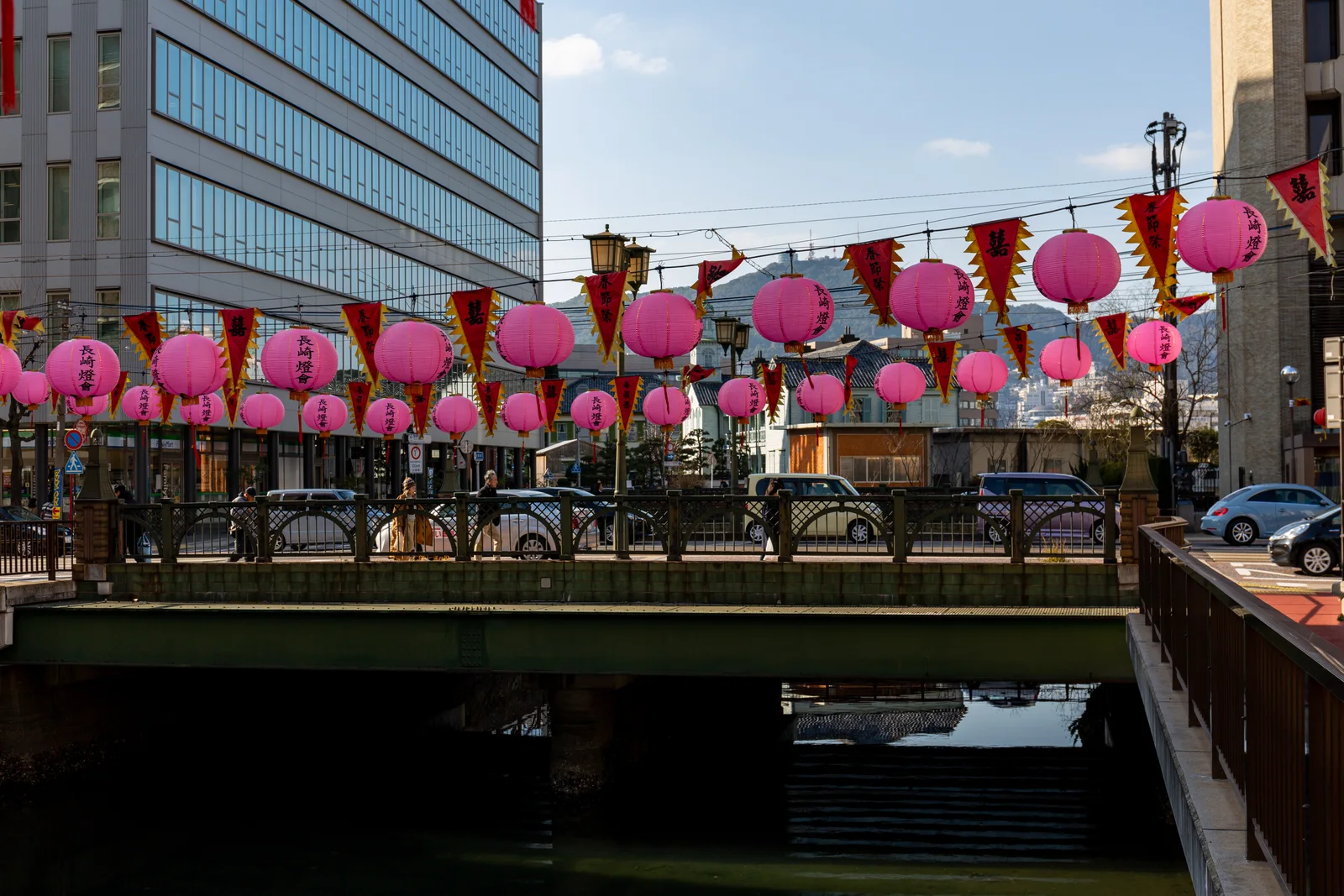
From JR Nagasaki Station, head to the Nagasaki-ekimae streetcar stop and take Line 1 bound for Sofukuji, getting off at Shinchi Chinatown. Walk toward the Chinatown North Gate and Shinchi Bridge first, where the Doza River flows alongside the district. Daylight lets you read the lettering on the pink lanterns and crimson banners, while dusk turns the water into a glowing reflection. From the canal, walk straight through Chinatown's main avenue toward Minato Park—searching for Minato Koen on maps will pinpoint the stage far more reliably than searching for the festival as a whole.
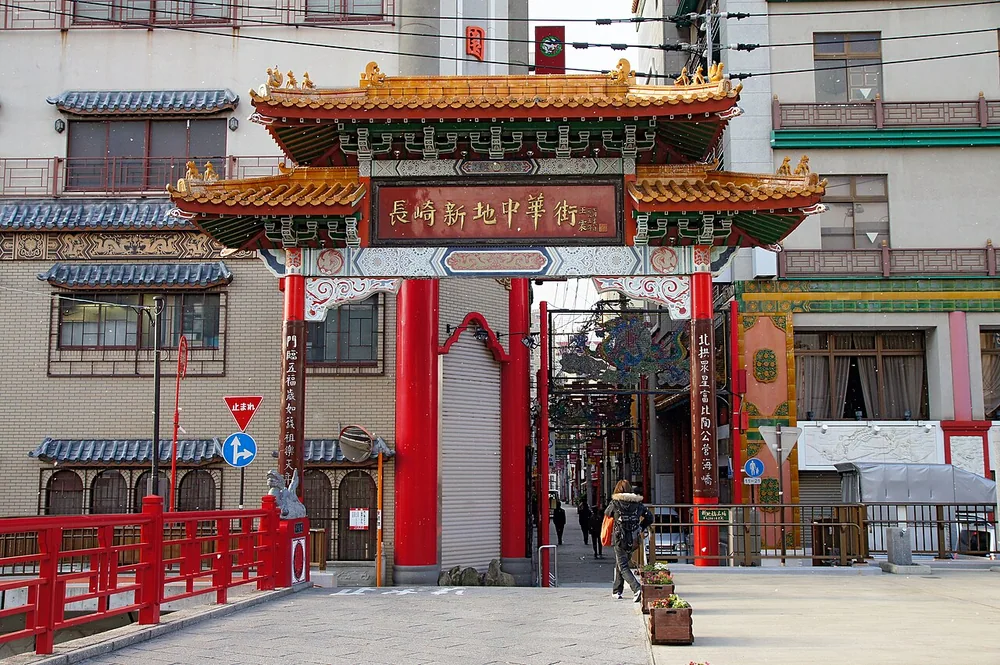
Four ornate Chinese gates frame Shinchi Chinatown's cross-shaped streets, linking Minato Park at the south end to the Doza River at the north end. If restaurants near one gate have long lines, glance down the cross street to choose which direction to explore first, and leave enough walking buffer if you have a dinner reservation inside the district. If your group splits up for photos, agree on meeting outside either the North Gate or South Gate specifically—saying "meet at the Chinatown entrance" easily leaves people waiting at opposite ends.
After Minato Park, retrace your steps through Chinatown, cross the Doza River, and continue into the Hamanmachi Shopping Arcade (signed locally as Hamanmachi, Hamamachi, or Kanko-dori). Its covered walkways give you a sheltered place to eat or rest between outdoor stretches. From the arcade, head toward Chuo Park and the Nakashima River. If you are timing your walk around a dragon dance, check the schedule first to decide whether to wait at Chuo Park or walk over to Megane Bridge right away so you are not rushing off mid-photo.
The yellow lanterns along the Nakashima River belong to a separate festival zone from the pink lanterns over the Doza River. To frame Megane Bridge's famous twin arches—which form the "spectacles" reflection in the water—walk along the street-level sidewalk or step onto an adjacent bridge when the main span gets crowded. The closest streetcar stop to the bridge is Meganebashi, with Hamamachi Arcade one stop south. If you plan to ride back to Nagasaki Station from the end of your route, walk back to Kanko-dori for Line 1 bound for Akasako.
Structuring a Weeknight Visit Around Dinner
Take Tuesday, February 9 as a sample evening. Arrive at Shinchi Chinatown around 17:30, take photos along the Doza River, and walk under the lanterns into Chinatown. Grab an early dinner if you find an open table, then head into Minato Park for the 19:00 dragon dance before strolling through Hamanmachi to Megane Bridge. Alternatively, Chuo Park hosts a dragon dance from 20:10 to 20:40, giving you time for a relaxed dinner first before walking over to the Nakashima River. Picking just one performance leaves plenty of breathing room along the canals.
If you do not reach downtown from JR Nagasaki Station until early evening, have dinner in Hamanmachi first. You can loop back through Chinatown to Minato Park after watching a show at Chuo Park, or view the Nakashima River first and walk down through Hamanmachi to the Doza River. With only an hour to spare, stay on a one-way line from Shinchi Chinatown stop along the Doza River, through the South Gate, and into Minato Park. When Minato Park has a show underway, stick to the side walkways beside the stage and spot your exit before settling in.
Crowds surge toward Minato Park just before 19:00. Groups of four or more looking to sit together should eat before dusk or meet up in Hamanmachi first. Because Minato Park stages begin performances around 17:00, picking a restaurant near an arcade entrance keeps your options open if plans shift. Solo travelers or pairs can simply slot into a noodle shop whenever seats open and catch the later Chuo Park dragon dance if needed. Agreeing on your final stop before sitting down saves everyone from debating the route over dinner.
Minato Park's ¥300 Paid Zone and Two Main Stages
For 2027, organizers have introduced a paid exhibition area inside part of Minato Park called the Stone Stage Zone (Ishibutai Zone), grouping large lantern sculptures alongside new light installations and photo spots. Admission is ¥300 per person and free for preschoolers. Paid hours run 17:00–22:00 on weekdays (entry is free earlier in the day) and 10:00–22:00 on Saturdays, Sundays, and Japanese national holidays, including Thursday, February 11.
The ¥300 ticket applies strictly to this fenced zone inside Minato Park—street displays along the Doza River, Hamanmachi, Nakashima River, and Megane Bridge remain open and free. If your group wants to see the oversized lantern tableaux, tour the Stone Stage Zone before dinner and head to the main stage area afterward. If you only want the dragon dance or an afternoon parade arrival, follow the "Shinchi Chinatown Venue" (Minato Park) column on the festival timetable. On busy weekends, look for on-site entrance signs rather than blindly joining the nearest line, as show-goers and exhibition visitors queue separately.
Listed as Jaodori on Japanese schedules, the dragon dance features a roughly 20-meter dragon carried aloft by a team—step back slightly from the front edge so you can see the whole body coil and turn. Both Minato Park and Chuo Park host performances, with opening-day times differing from regular days. If you want to stay at the same park after an erhu set, verify the next slot under that exact venue column. Similarly, paid Face-Changing seats are strictly tied to the venue printed on your ticket. Because erhu, dragon dance, and Face-Changing shows run at both parks on the same days, jotting down a time without the park name is an easy way to end up at the wrong stage.
Where to Watch the Emperor's Parade: Chuo Park, Hamanmachi, or Minato Park
The 2027 Emperor's Parade takes place on Saturdays, February 13 and February 20. Roughly 150 costumed participants—flag bearers, attendants, and palanquins carrying the Qing-style Emperor and Empress—process through downtown. Both Saturdays follow the same timetable: Chuo Park (14:00–14:20), Hamanmachi Shopping Arcade (14:30–14:50), Kajimachi (14:50–15:10), back through Hamanmachi Shopping Arcade (15:30–15:50), and Minato Park (16:00–16:30). Because the procession passes through Hamanmachi twice, check the timetable order carefully when staking out a spot.
To catch the start, have an early lunch near Chuo Park and locate restrooms and a regrouping spot ahead of time. Families with children who want an easy place to sit down afterward can watch near one of the Hamanmachi arcade side entrances, keeping storefronts and walkways clear for normal foot traffic before the parade arrives. If you prefer the 16:00 arrival at Minato Park, spend the afternoon visiting Dejima or browsing Chinatown, watch the finale in Shinchi, and stay on for the evening lights.
On both February 13 and February 20, Minato Park schedules a dragon dance from 19:00 to 19:20. That makes an easy double feature: watch the parade arrive at Minato Park at 16:00, grab dinner nearby, and return for the 19:00 show. Just avoid planning shortcuts directly across the parade route right after it passes, as crowd dispersal slows down the arcade.
Day-trippers heading back to Hakata that night can watch the Chuo Park start and stick to a compact evening loop afterward. Travelers staying near Chinatown can watch the Minato Park finale, drop bags at their hotel, and head back out once the lanterns glow. Both Saturdays follow this exact pattern; choose February 20 if you want to pair the parade with the final-weekend Lantern Festival atmosphere, and lock in dinner and return train tickets early.
Mazu Procession: Choosing Your Spot Based on Sunday's Reverse Route
During the Edo period, Chinese merchant ships calling at Nagasaki Port carried statues of Mazu, goddess of the sea, ashore to the Chinese temples and returned them to the ships before sailing. The festival's Mazu Procession reenacts that tradition in opposite directions on two Sundays. On Sunday, February 7 ("Bosatsu-age," welcoming the goddess ashore), the route runs Tojin Yashiki (13:50–14:10), Minato Park (14:20–14:45), Megane Bridge (15:25–15:40), and Chuo Park (15:55–16:15). To see historic lanes and the opening ceremony together, spot the Kannai-machi gate and walk up into Tojin Yashiki.
On Sunday, February 14 ("Bosatsu-nose," returning the goddess to port), the route reverses: Chuo Park (13:15–13:40), Megane Bridge (14:00–14:15), Minato Park (14:55–15:20), and Tojin Yashiki (15:30–15:50). Visitors staying near Nagasaki Station can watch at Megane Bridge from the north side and stay along the Nakashima River for afternoon tea. If you are already sightseeing in Minami-Yamate, hop on Line 5 from Oura Cathedral back to Shinchi Chinatown and walk into Minato Park for the afternoon stretch.
For a first visit, picking a single station to watch the palanquin bearers and attendants is plenty. Leave room at bridge approaches for pedestrians passing through, and pick a wider stretch of sidewalk. Since Megane Bridge sees the procession at different hours on the two Sundays, write both the date and exact time in your itinerary note. If you are traveling with young kids needing naps or older relatives who should avoid steep slopes, stick to Minato Park or Chuo Park, where food and streetcars are close by—and save exploring the narrow Tojin Yashiki alleys until after the procession clears out.
Tojin Yashiki: Historic Halls by Day, Fujian Kaikan by Night
Walking uphill from Minato Park into Kannai-machi brings you into Tojin Yashiki, the former Chinese Quarter established by the Tokugawa shogunate in 1689 to house Chinese traders and sailors separately from the Dutch at Dejima. Its lanes still preserve four historic halls—Dojin-do, Kannon-do, Tenko-do (Mazu Hall), and Fujian Kaikan—each tucked around another corner with distinct roofs and gateways. Seeing Mazu enshrined at Tenko-do ties the daytime walk directly into Sunday's procession.
Head uphill after lunch in Chinatown, when signs and architectural details are far easier to read than after dark. If you plan to catch a Face-Changing show at the Confucius Shrine the same day, shift Tojin Yashiki to the next morning so you are not tackling both hills back-to-back. Weeknight visitors can check the Tojin Yashiki column on the 2027 schedule, where venue codes distinguish Fujian Kaikan from the plaza outside Dojin-do—for example, an erhu concert runs at Fujian Kaikan on February 9 from 19:00 to 19:30. Eat before climbing the hill if you want to sit and listen.
If anyone in your group prefers quieter corners away from main-stage drums, scheduling a fixed window in Tojin Yashiki works well. On Mazu Procession Sundays, let the parade clear the narrow lanes before touring the four halls. Afterward, walk back down to flat ground at Minato Park or the Shinchi Chinatown streetcar stop before regrouping with anyone waiting below.
Confucius Shrine Face-Changing vs. Neighborhood Stage Shows
Built in 1893 in Oura-machi through cooperation between the Qing government and Nagasaki's Chinese community, the Confucius Shrine (Koshibyo) welcomes Lunar New Year visitors to its Daiseiden Hall alongside the Historical Museum of China. Hours are 9:30 to 18:00 (last entry 17:30). Combined admission is ¥880 for adults, ¥550 for high school students, and ¥440 for elementary and junior high students. Take Streetcar Line 5 bound for Ishibashi from Shinchi Chinatown to Oura Cathedral (3 minutes on foot), or walk downhill from Glover Garden in the morning before riding back to the lantern zones.
Check where you want to watch Sichuan Face-Changing (Bian Lian). On neighborhood schedules, it appears as the Chinese Face-Changing Show—for instance, at 11:45 in Minato Park and 12:00 in Chuo Park on February 13. Minato Park sells reserved seats and an SS front-row one-day pass through STLOCAL on a first-come, first-served basis. By contrast, the Confucius Shrine publishes its own Face-Changing calendar; shows are included with same-day admission with no advance booking needed, though re-entry is not permitted once you leave. Pick a shrine showtime first, then arrive early enough to tour the hall and museum.
During the festival, the Confucius Shrine sets up ground seating, stroller parking, and standing zones, and wheelchair users can ask staff for designated seating before the show starts. Umbrellas are prohibited throughout the viewing area; in light rain, performances move under the covered cloister, barring severe weather such as typhoons. Photographers do best in the standing zone, which leaves sightlines open for seated guests. If you are catching a morning Shinkansen the next day, pair a daytime shrine visit with street lanterns that evening.
Eating on the Move vs. Sitting Down for Noodles
Chinatown's signature Nagasaki Champon—noodles simmered in broth with pork, seafood, vegetables, and fish cake—is best saved for a sit-down meal after a parade. Sara Udon shifts the focus to thickened savory toppings over noodles: order hosomen for crisp thin fried noodles or futomen for thick noodles similar to Champon. Two diners can order one of each to share. If you still have an evening walk ahead, lock in your showtimes first and look for a noodle shop with open tables around them.
For something hot between afternoon events, pick up kakuni manju (steamed buns stuffed with braised pork belly) or hatoshi (deep-fried shrimp-paste toast) in Chinatown. Step clear of narrow bridges, streetcar platforms, and entry queues before eating. Anyone in your party with a shrimp or shellfish allergy should tell staff directly before ordering Champon, Sara Udon, or hatoshi so the kitchen can verify ingredients and shared fryers.
Wait until late afternoon or right before heading back to the station to buy Castella sponge cake souvenirs so you are not hauling boxes all night. If Chinatown lines stretch down the block, walk over to Hamanmachi or eat in Minami-Yamate during daytime sightseeing. For dedicated restaurant picks grouped by tram stop, see our Nagasaki streetcar and dining route guide to choose an area near your hotel and save more time for the canals after dark.
Single Tickets vs. Streetcar Passes Depending on Your Daytime Stops
From JR Nagasaki Station to Shinchi Chinatown, ride Line 1 bound for Sofukuji; from there you can walk through Minato Park, Hamanmachi, and up to the Nakashima River. At night, catch Line 1 bound for Akasako from Kanko-dori or Shinchi Chinatown back to Nagasaki-ekimae. To visit Minami-Yamate (Glover Garden and the Confucius Shrine) after Megane Bridge, board Line 5 bound for Ishibashi at Meganebashi and alight at Oura Cathedral. Traveling directly from JR Nagasaki Station with luggage, either take Line 1 to Shinchi Chinatown and transfer to Line 5, or take Line 3 bound for Hotarujaya and transfer to Line 5 at Shiyakusho.
Always check the route number and destination displayed on the front of the tram before boarding. Generally, board through the middle or rear door and exit at the front. With an IC card or eligible contactless credit card, tap both when boarding and when exiting. Cash riders board directly and pay at the fare box up front when getting off. Hand out cards on the platform when traveling with family, and use the same card across both legs if you plan to transfer at Shinchi Chinatown on the way back from Minami-Yamate.
Single rides cost ¥150 for adults and ¥80 for children—so a simple round trip between Nagasaki Station and the lantern district is ¥300 per adult. A one-day pass (valid on the calendar day, paper or mobile) costs ¥600 for adults and ¥300 for children, while a mobile-only 24-hour pass costs ¥700 for adults and ¥350 for children from activation—handy if you start riding in the afternoon and want to cover the next morning. Paying full single fares, four adult rides break even on a one-day pass, though eligible cashless payments also receive a short-ride discount of ¥110 (adults) or ¥60 (children) within two fare zones.
Nagasaki Electric Tramway designates Shinchi Chinatown, Shiyakusho, Nagasaki-ekimae, and Nishihamanomachi as transfer stops. For example, transferring from Line 1 (Sofukuji-bound) to Line 5 (Ishibashi-bound) at Shinchi Chinatown within 30 minutes of exiting qualifies for the transfer fare discount when using the same eligible IC card or contactless payment method for a single rider. Paying for multiple people on one card voids the transfer discount, so give each rider their own card or calculate children's fares separately. Check the operator's transfer rules before riding back to the same stop or reversing direction.
Streetcar passes do not cover airport buses or JR trains. To save your legs in the evening, ride the streetcar straight to your starting venue and walk along the canals from there. After a parade ends, walk a block away from the stage exits before boarding. Always verify late-evening departure times for your specific stop and direction, and allow extra walking time between the Nagasaki-ekimae tram stop and the JR Nagasaki Station concourse if you are catching a train back to Hakata.
Where to Stay in Nagasaki and Get Back After the Lights
Hotels around Shinchi Chinatown, Hamanmachi, and Dejima let you walk home past illuminated streets. Staying near Chinatown makes it easy to drop by your room for a warmer coat after dinner; Hamanmachi puts you right beside the covered arcade and Chuo Park; Dejima spreads you closer to the waterfront and multiple tram stops. Because many properties include "Nagasaki" in their name, check the closest streetcar stop and street layout on a map—and when walking with older relatives, count major intersections and slopes rather than relying on straight-line distance. Hamanmachi and the Nakashima River area also work well if you want late-night photos at Megane Bridge.
If you have an early train out of JR Nagasaki Station or arrive with heavy bags, staying beside the station is simplest: just ride Line 1 back to Nagasaki-ekimae at night. Families with strollers or older travelers can keep their first evening flat around Chinatown and Minato Park. Staying in Minami-Yamate suits travelers hitting Glover Garden and the Confucius Shrine the next morning—ride Line 5 bound for Ishibashi from Meganebashi back toward your hotel, checking whether the final stretch from the tram stop climbs a hill.
For a day trip from Hakata, take the JR Limited Express Relay Kamome to Takeo-Onsen and make an across-the-platform transfer to the Nishi-Kyushu Shinkansen Kamome into Nagasaki (and the reverse coming back). Pick your evening return train on the JR Kyushu timetable first, then work backward to leave time for the streetcar ride and station walk. You can comfortably fit an afternoon parade and early evening illuminations into a day trip; if you want to stay for a 20:10 weeknight dragon dance at Chuo Park and still stroll to Megane Bridge, spending one night in Nagasaki makes a huge difference.
A Two-Day Itinerary: Daytime Sights Before the Lanterns Switch On
Arriving on Day 1 afternoon, drop your bags and start at Dejima around 13:00 or 14:00 to tour the restored Dutch trading post buildings and excavation exhibits. Walk straight to the north end of Chinatown just as dusk falls to catch the Doza River lights turning on. Since both Dejima and Tojin Yashiki reflect Edo-period foreign trade, energetic walkers can continue from Shinchi uphill into Kannai-machi and loop back to Minato Park's evening stage—though if anyone in your group tires easily on hills and stairs, save Tojin Yashiki for the next morning.
On Day 2, focus on either Minami-Yamate or Urakami. For Minami-Yamate, tour Glover Garden and Oura Cathedral in the morning, walk downhill to the Confucius Shrine, eat nearby, and meet an afternoon parade at Shinchi Chinatown or Megane Bridge. For Urakami, spend the morning at Peace Park and the Atomic Bomb Museum (Line 1 or Line 3 toward Akasako from Nagasaki Station) before riding back downtown for lunch and Chuo Park's 14:00 Emperor's Parade. Extending your stay? Use our four-day Nagasaki itinerary to fold in the harbor, Urakami, or side trips.
Over the February 13–14 double-parade weekend, split your vantage points by neighborhood: watch the Emperor's Parade set off from Chuo Park on Saturday before heading to the canals after dinner, then catch the Mazu Procession at Minato Park on Sunday afternoon before collecting your luggage. If you also want to squeeze in a Gunkanjima (Hashima Island) boat tour, anchor that half-day around boarding check-in times and choose either a different day or a later stop for the parade—getting back from the pier, eating, and handling bags leaves too little margin to make a parade start.
Rainy Nights, Strollers, and Bridge Photography Tips
In light rain, the covered shopping arcades act as a built-in umbrella. Enter Hamanmachi from Kanko-dori for dinner, then head to Chuo Park and the Nakashima River once the drizzle eases. Stick to the upper street-level sidewalks around Megane Bridge, as wet stone steps and river stepping-stones get slick. For river reflection shots, frame from a wider street corner or an adjacent bridge, shoot handheld, and step aside for foot traffic. Blue hour right at dusk captures rooflines, lanterns, and canal water together, offering a sharp contrast if you already saw the Doza River by daylight.
If steady rain sets in, pivot to the Nagasaki Prefectural Art Museum and ride back to Chinatown from Dejima or Medical Center stops. On parade days, always check official morning updates before picking a viewing stop—if high winds or storms force schedule changes to outdoor shows, staying two nights in town gives you a second evening window for the lights. Stuck with one rainy night? Visit the Confucius Shrine Museum before 17:30 last entry, eat inside the covered Hamanmachi arcade, take a quick walk to see the Doza River, and hop back on the tram from the main avenue.
With a stroller, stick to street-level viewing after dark and prioritize one canal stretch plus one stage show. If a narrow bridge or crosswalk bottlenecks, keep rolling along the same bank to the next wide intersection instead of lifting the stroller through crowds. For dragon dances, stand near the back edge to one side of the viewing area—you get a clear angle on both the dragon and the drummers up front, plus an easy exit if kids get tired. When accompanying older relatives with limited walking range, eat an early dinner, reach Chinatown around 17:30, and decide after seeing the Doza River whether to head into Minato Park.
To buy handheld lanterns for kids, official pickup and sales desks include the counter beside Minato Park's information booth and the STLOCAL booth at Chuo Park (styles and prices vary by stand). Preorders through the STLOCAL App can be collected at Chuo Park, the STLOCAL booth at Shinchi Bridge Plaza, or Map Design GALLERY inside Nagasaki Stadium City. Choose a pickup spot along your evening route so you do not have to backtrack, and pack the lanterns away before heading home so you have a free hand to hold your child's on the walk back to the tram stop.
A few useful answers
What are the dates and lighting hours for the 2027 Nagasaki Lantern Festival?
The festival runs for 17 days, from Friday, February 5 to Sunday, February 21, 2027. Most venues are lit from 17:00 to 22:00. On opening night, the Chuo Park lighting ceremony starts at 17:30 and the Minato Park stage ceremony starts at 17:45.
Can you see both the Emperor's Parade and the Mazu Procession on the same day?
No. In 2027, the Emperor's Parade takes place on Saturdays (February 13 and 20), while the Mazu Procession takes place on Sundays (February 7 and 14). To see both on one trip, plan to stay in Nagasaki over the weekend of February 13–14.
Do you need to buy tickets for the Nagasaki Lantern Festival?
Public streets and riverbanks—including Shinchi Chinatown, Doza River, Hamanmachi, and Megane Bridge—are free to walk through. Inside Minato Park, the Stone Stage Zone charges ¥300 per person during paid hours (free for preschoolers). Admission to the Confucius Shrine and reserved seats for select performances cost extra.
Which streetcar should you take from JR Nagasaki Station to the festival?
Board Streetcar Line 1 bound for Sofukuji at Nagasaki-ekimae and get off at Shinchi Chinatown to visit Doza River and walk through Chinatown to Minato Park. To return, board Line 1 bound for Akasako from either Shinchi Chinatown or Kanko-dori.
If you only have one evening, which two areas should you prioritize?
Start at Shinchi Chinatown and Doza River, then end at Megane Bridge. If you prefer catching a live performance, swap Megane Bridge for Minato Park and check the daily schedule for a dragon dance.
Do you need a separate reservation for the Face-Changing show at the Nagasaki Confucius Shrine?
Check the shrine's official Face-Changing calendar to pick a showtime—no separate reservation is required, and performances are included with same-day shrine admission (no re-entry once you exit). Face-Changing shows at neighborhood festival stages follow the official festival schedule and offer separately sold paid seating.
Official information and references
Sources used in this guide.
- Nagasaki City Official Tourism | 2027 Nagasaki Lantern Festival Overview, History, and Venues
- Nagasaki City Official Tourism | 2027 Nagasaki Lantern Festival Schedule, Opening Ceremony, and Parade Routes
- City of Nagasaki | 2027 Nagasaki Lantern Festival Program Implementation and Lighting Plan
- Nagasaki City Official Tourism | 2027 Emperor's Parade Cast Announcement
- Nagasaki City Official Tourism | Minato Park Stone Stage Special Exhibition Zone Notice
- Nagasaki City Official Tourism | 2027 Handheld Lantern Sales and Pickup Locations
- Nagasaki Prefecture Official Tourism | Minato Park Face-Changing Reserved Seats and SS 1-Day Pass
- Nagasaki City Official Tourism | Shinchi Chinatown, Doza River, and Megane Bridge Illuminations
- Nagasaki City Official Tourism | Tojin Yashiki Former Chinese Quarter History and Four Halls
- Nagasaki City Official Tourism | Shinchi Chinatown Dining and Sightseeing
- Nagasaki City Official Tourism | Nagasaki Chinese Cuisine and Thin vs. Thick Sara Udon
- Nagasaki City Official Tourism | Dejima Restored Buildings, Exhibits, and Access
- Nagasaki City Official Tourism | Nagasaki Prefectural Art Museum Access and Facilities
- Nagasaki Confucius Shrine & Historical Museum of China | Visitor Info and Face-Changing Calendar
- Nagasaki Confucius Shrine & Historical Museum of China | Festival Seating, Rain Policy, and Wheelchair Access
- Nagasaki Electric Tramway | Route Map, Fares, Transfers, and Passes (2026 Edition)
- JR Kyushu | Hakata–Nagasaki Nishi-Kyushu Shinkansen and Takeo-Onsen Transfer Guide
- Nagasaki City Official Tourism | Nagasaki Champon and Hatoshi Shrimp Toast Guide