Matsumae Park has around 250 cherry varieties that flower in succession. Take the bus from Kikonai to Matsushiro, then visit Matsumae Castle Museum, Kozenji, Ryuunin and Matsumae Hanyashiki, with fares, steps, walking routes and location photographs.
- Region & Focus
- Matsumae
- Reading Scope
- 28 min read · 14 chapters · 7 Q&As
- Official Verification
- 18 official sources checkedUpdated 31 October 2026
- Key Topics
- ItinerariesSeasonsHokkaido
Chapter Route Map (tap any stop)
- Find flowering varieties from mid-April to late May
- Take route 521 from Kikonai to Matsushiro, or drive along the coast from Hakodate
- Walk from Matsushiro to the castle, then the temple district
- See the keep and the surviving Honmaru Gate
- Connect castle and port through Matsumae's Kitamaebune history
- Visit the notable trees at Kozenji and Ryuunin
- From the Meoto cherry to the New Cherry Collection Garden
- The Second Park has steep slopes; keep shorter walks around castle and temples
- Visit Matsumae Hanyashiki in the afternoon and consider the combined ticket
- Choose seafood or rock nori for lunch, and Matsumae-zuke to take home
- Calculate transport and admission before setting your budget
- A bus-day sequence with time in town before your return
- Drive on to the coast after a continuous castle-area walk
- Photograph castle, moat and blossom, and bring a windproof layer
- Quick Q&A
Set aside a day for Matsumae's cherry blossom and castle town. The park has around 10,000 cherry trees of 250 varieties, with early, mid-season and late flowers appearing in succession. After the castle grounds, visit old trees in the temple district, then Matsumae Hanyashiki or a restaurant in town. Without a car, take a Hakodate Bus service from Kikonai to Matsushiro. Choose a usable return service before deciding how long to spend in the park. If driving, walk around the castle and temples in one stretch, then continue along the coast.
Find flowering varieties from mid-April to late May
Matsumae Park is one of Japan's 100 selected cherry blossom sites. The town tourism association lists around 10,000 trees of 250 varieties, flowering in stages from mid-April to late May. Choose whether you want broad blossom views, flowers beside the white keep, or a closer look at individual varieties. For wide views, combine the castle grounds with the park paths. For flower shapes, add the cherry collection garden and old trees in the temple district. On the same walk, trees with new leaves, open flowers and unopened buds each offer something to see.
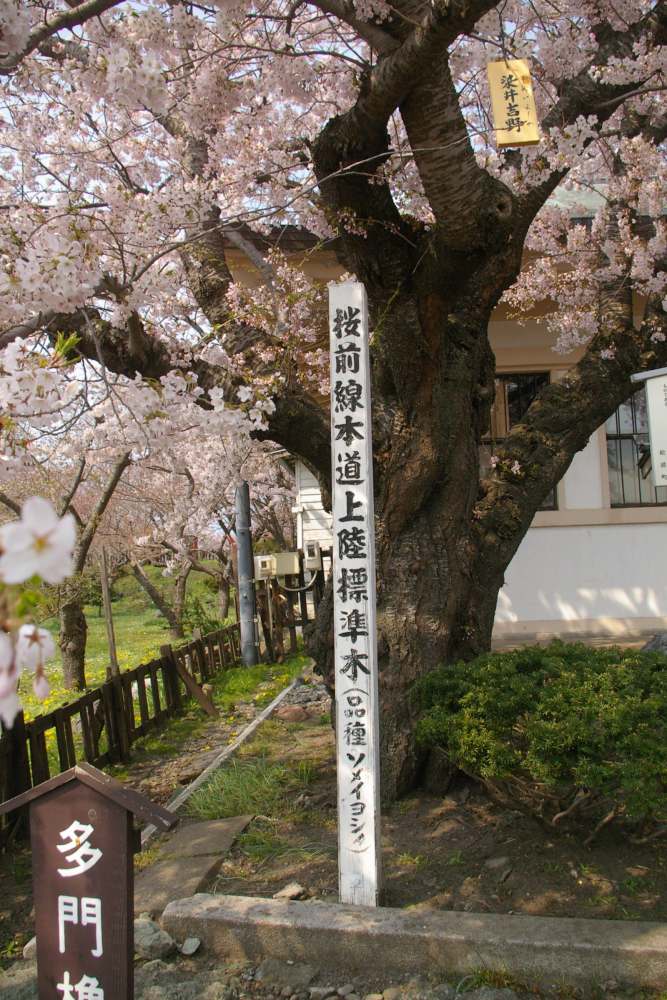
Naden, written 南殿 and pronounced naden, is the most widely planted variety in the park. Read a tree's variety label before comparing its petal layers, colour and the order in which flowers and leaves appear. Take one photograph of the label and another of the branch so you can identify the variety later. A single photograph of pink blossom makes it easy to forget where you stopped. If others have less interest in identification, arrange to meet near the castle and let those who want to study the trees walk more slowly.
The reference tree in blossom reports provides a basis for observing a particular cherry's flowering. Other varieties in the park develop at their own pace. Start your morning in areas flowering in the official photographs, then use the remaining time for the castle grounds or museum. Later visitors can focus on late-flowering varieties and the collection garden, comparing colours and leaves along the way. Matsumae's variety lets you follow the flowers you find rather than a single fixed photo spot.
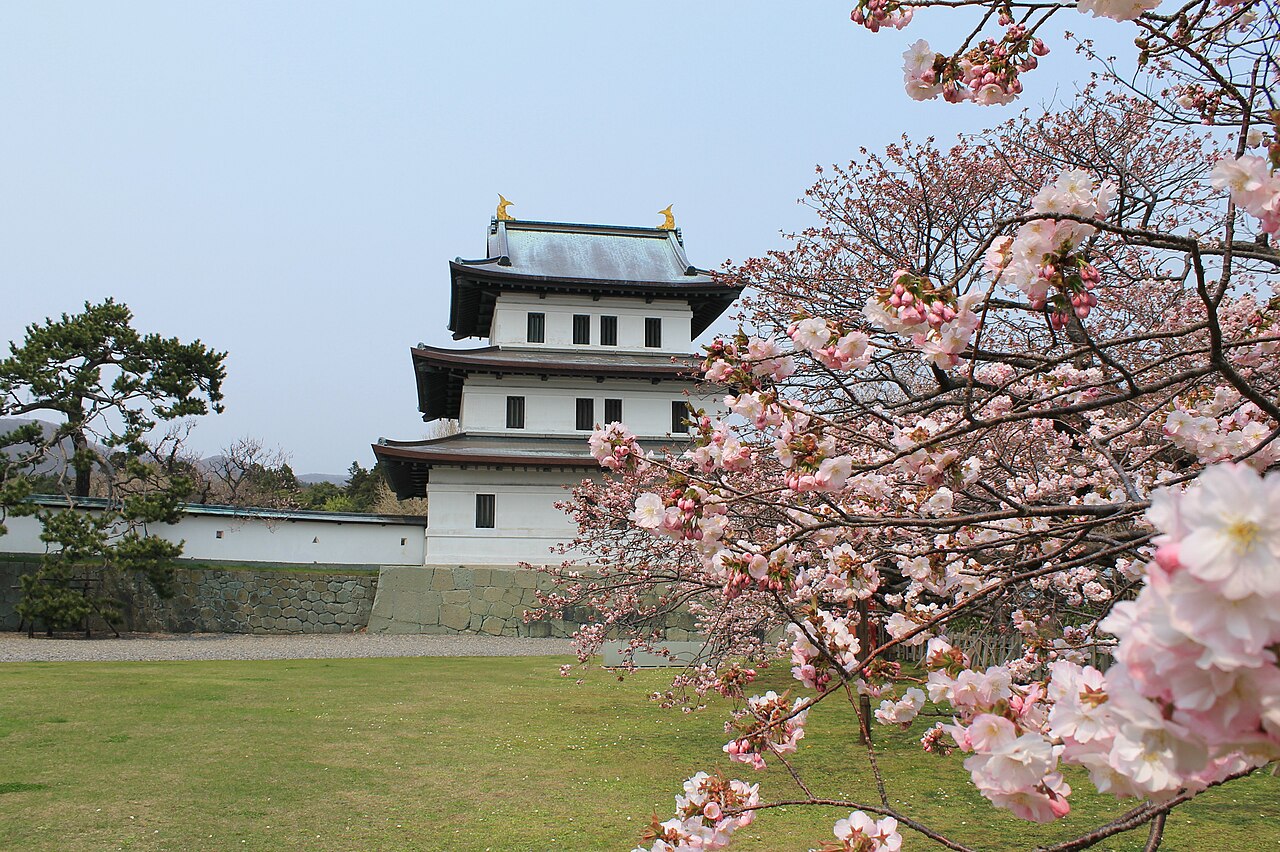
Matsumae Park has around 250 cherry varieties that flower in succession. Take the bus from Kikonai to Matsushiro, then visit Matsumae Castle Museum, Kozenji, Ryuunin and Matsumae Hanyashiki, with fares, steps, walking routes and location photographs.
Take route 521 from Kikonai to Matsushiro, or drive along the coast from Hakodate
Without a car, use Kikonai Station as your interchange. Hakodate Bus route 521 runs between Kikonai-ekimae and Matsumae Shucchosho. The official route list gives stop 1 outside Kikonai Station and includes Matsushiro en route. Get off at Matsushiro for the castle and park. Plan the train and bus as separate stages: choose your arrival train at Kikonai, then allow for the wait and bus journey. Your blossom-viewing time begins after you reach the park.
The tourism association's public transport itinerary allows about an hour and a half from Kikonai to Matsushiro. Use this to gauge the day's travel: the return bus journeys alone take about three hours, plus trains to Kikonai and waiting time. If staying in Hakodate and spending the morning and evening there, make Matsumae your only distant destination that day. If leaving Hokkaido by Shinkansen the same day, fit the return bus into your train plan and allow time to reach the platform.
The official route 521 fare table, checked in October 2026, lists an adult single fare of ¥2,000 from Kikonai-ekimae to Matsushiro. Matsushiro and the terminus, Matsumae Shucchosho, are in different fare zones. Find your actual boarding and alighting stops. Budget for each adult's return bus fare, then trains, lunch and admission. For a group, compare that total with car hire and parking to choose how to travel.
Open the official Matsushiro stop timetable for the return journey. Choose the applicable operating period and the direction towards Kikonai-ekimae. The stop page lists both Matsumae Shucchosho and Kikonai directions; services towards Kikonai also have different routes. Check the destination first, then the departure and operating days. When you arrive at Matsushiro, locate the return stop so you can go straight there in the afternoon.
For drivers, Matsumae's official access information gives about an hour from Kikonai. From Hakodate, follow the coast on National Route 228. Driving lets you adjust your park visit and have lunch or a seaside break after the castle. Once parked nearby, connect the castle, temples and blossom on foot. Repeated short drives between temples break up the walk. Parking is charged during the cherry blossom festival, so include it in your budget.
Walk from Matsushiro to the castle, then the temple district
Hakodate tourism information gives about seven minutes on foot from Matsushiro stop to Matsumae Park. Walk towards the castle and use the white keep, stone walls and moat to orient yourself. For a short visit, photograph the castle and blossom first, then decide whether to enter the museum. If you want to go inside, do so in the first half of your route, then visit the temple trees. Alternating indoor displays with outdoor flowers also gives your companions a break.
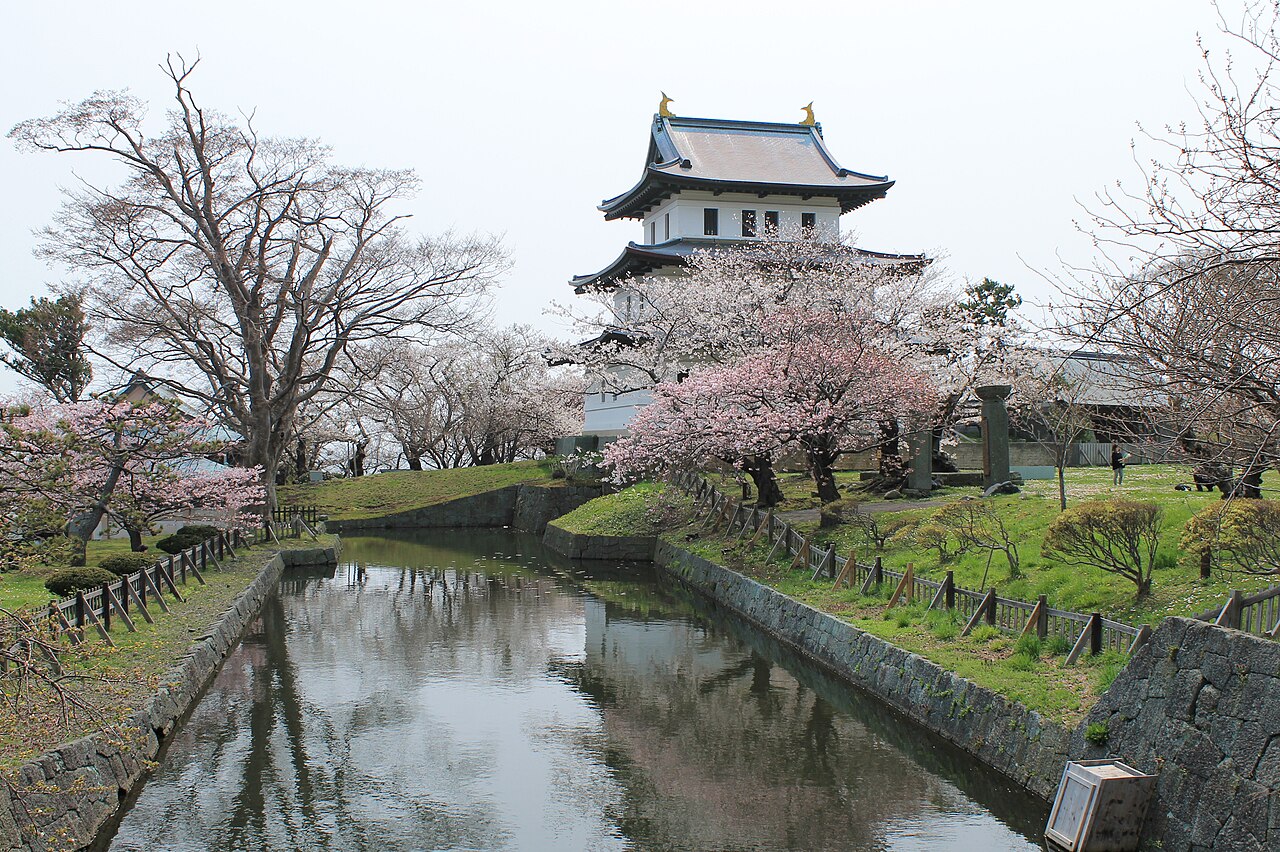
Around the castle you can compare the distance between the buildings and flowering branches. Beside the moat, water, stone walls and the keep form layers; nearer the castle, you can see branches against the white walls. Find firm footing out of the way of other walkers. Take a wide view, then a few flower close-ups. Allowing time for each angle makes photography easier than repeatedly stopping in the middle of the path and helps keep the walk flowing.
The temple district lies north of Matsumae Castle and follows naturally after it. The tourism association lists Ryuunin, Kozenji, Hodoji, Hogenji and Aunji, as well as the Matsumae family graves. First-time visitors can choose Kozenji and Ryuunin for notable cherry trees and temples. For more castle-town history, add other temples or the graves. Reading every sign takes longer than the walking time on a map, so focus on two or three places that interest you in the afternoon.
Aerial views of the castle, blossom and coast introduce the scenery around Matsumae Park.
See the keep and the surviving Honmaru Gate
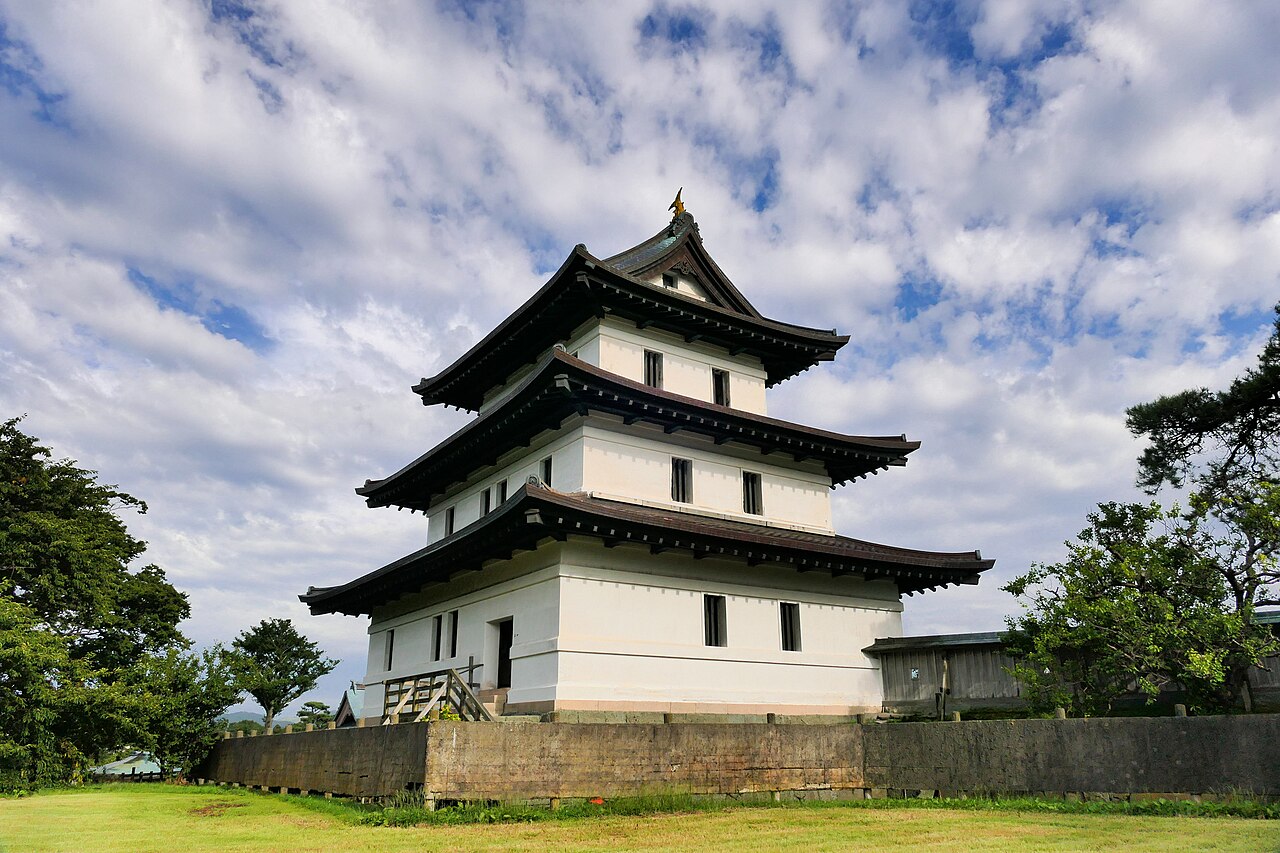
Matsumae Castle, also called Fukuyama Castle, was completed in 1854 for northern defence in the late shogunate period. The keep and Honmaru Gate have different histories. The original wooden keep burnt down in 1949. Its concrete reconstruction was completed in 1960, with associated facilities finished the following year, when Matsumae Castle Museum opened. The Honmaru Gate survives from the late Edo period and is a nationally designated Important Cultural Property. Distinguishing them gives a short castle walk a clear historical sequence.
Start in the museum with displays about the castle town and its relationship with the port, then go upstairs. The museum's reproduction Matsumae folding screen shows an autumn scene in the castle town during the Horeki era. Looking at its streets and people before returning outdoors helps connect the castle with the coastal town. With children, pick one or two details in the picture rather than explaining the whole domain history at once. Calligraphy enthusiasts can also look for the Matsumae Castle inscription by local calligrapher Kaneko Otei.
The museum normally opens from 10 April to 10 December, 09:00–17:00, with last admission at 16:30. It closes for winter from 11 December to 9 April. Individual admission is ¥360 for adults and ¥240 for primary and junior high school pupils; younger children enter free. For an afternoon visit, reach the ticket office before 16:30 and allow time inside. Arriving at the admission deadline just to go upstairs turns a relaxed blossom day into a rush.
The museum has four levels: one basement and three above ground, linked by stairs. If someone needs fewer steps, make the castle exterior, Honmaru Gate and outdoor blossom your shared route, with separate time for those entering the museum. The whole family could also skip the upper floors and spend longer in the temple district and over lunch. Allocate energy here to keep a comfortable pace later. If visiting Matsumae Hanyashiki too, consider the combined ticket before choosing which to visit first.
Connect castle and port through Matsumae's Kitamaebune history
The castle's coastal position is easier to understand through the port's history. From the Edo to Meiji periods, Kitamaebune trading ships sailed from Osaka through the Seto Inland Sea and Sea of Japan to Matsumae, carrying goods and regional produce. Matsumae port was one terminus and a shipping point for products from Ezo. View the castle, temples and coast as parts of one town: the castle served government and defence, while the port brought goods, people and culture. This gives Matsumae more context than a photograph of blossom beside a white keep.
The late-shogunate castle was built for northern coastal defence. In 1849, the shogunate ordered the Matsumae domain to strengthen its defences; Fukuyama Castle was completed in 1854 in that context. After seeing the coast, return to the Honmaru Gate and stone walls to connect the castle's position, the Tsugaru Strait and the buildings' dates. History enthusiasts can study the museum displays before comparing the outdoor spaces. For a shorter introduction, keep port trade and late-shogunate coastal defence in mind as you walk.
In 2004, Matsumae Castle and the temple district to its north were selected as Hokkaido Heritage under the name Fukuyama Castle (Matsumae Castle) and Temple District. Follow that combined area on foot: see the gate, walk through the temples and stop beside flowering trees. In 2017, Matsumae, Hakodate and other Kitamaebune ports received Japan Heritage recognition together through the ships' story. The former designation helps frame a walk through buildings and streets; the latter provides a theme for southern Hokkaido travel that you can continue exploring in Hakodate.
Place this history in the middle of your day: visit the castle, stop for lunch, then walk through the temples. Understanding the streets gives the blossom a setting. Back on the coast, you can picture how the castle town connected with other places.
Visit the notable trees at Kozenji and Ryuunin
Matsumae's three celebrated cherry trees are the Meoto, Kechimyaku and Ezo-kasumi cherries. The tourism association places them about two, five and four minutes' walk from Matsumae Castle respectively, making them a short extension behind the castle. Locate each on a map, then read its name on arrival to distinguish them. In bloom, study the flowers; later, look at the tree shapes, branches and relationship with the temple buildings. Each has its own setting.
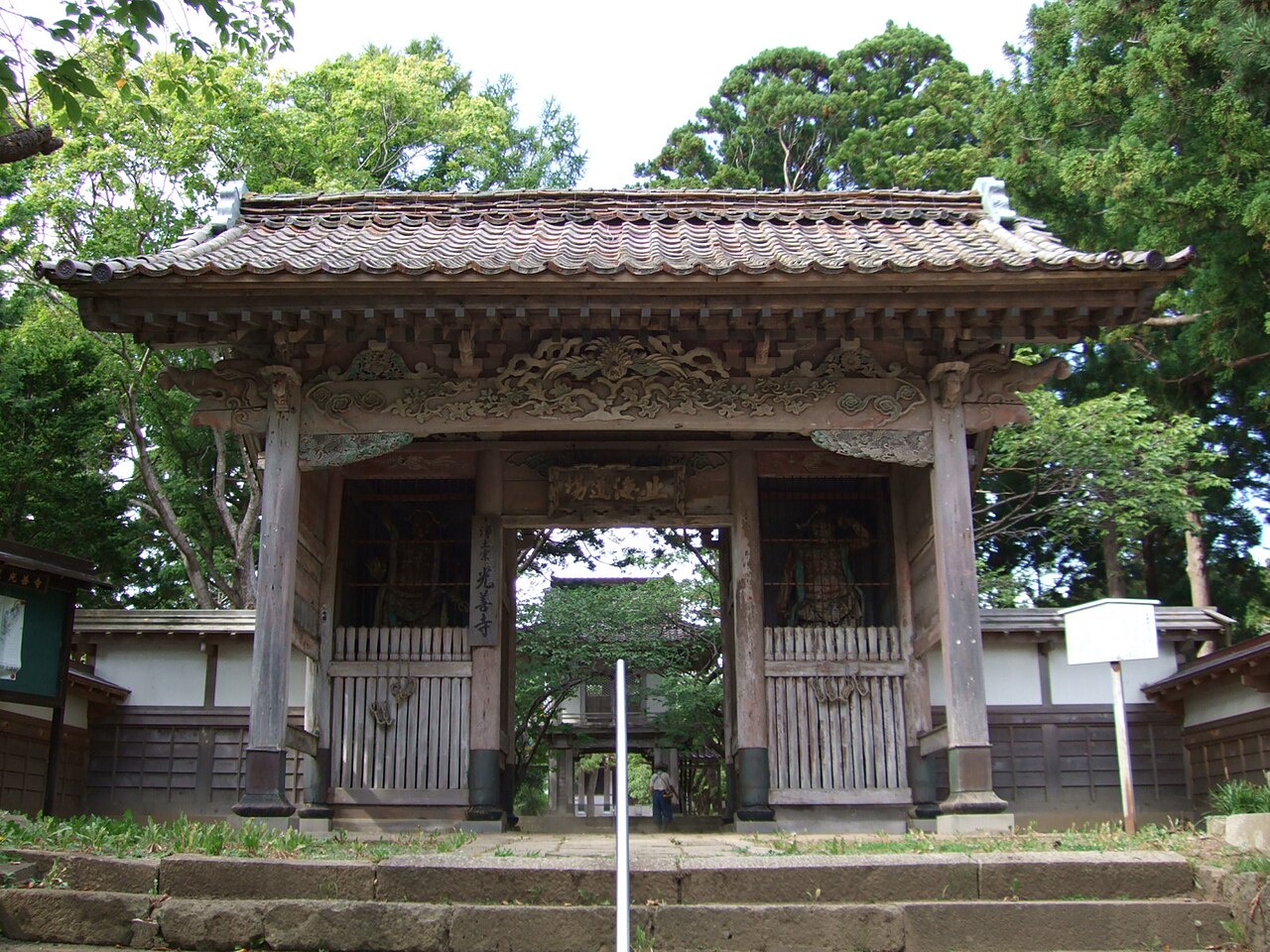
The Kechimyaku cherry, pronounced kechimyaku-zakura, at Kozenji is a key blossom stop in the temple district. Ryuunin has the Ezo-kasumi cherry. Visit one first and see how long your group wants to stay before setting the pace for the other. Temple roofs, trunks and low branches convey the setting better than concentrating only on people-free blossom. Leave the worship route clear while waiting for photographs.
The Matsumae family graves are also in the temple district. If interested in the domain, learn about its lords and town at the museum before visiting the graves for a coherent sequence. For a blossom-focused day, the two temples and notable trees already make a full visit; continue with food or Hanyashiki. Distances are short, but looking at flowers, worshipping and reading signs takes time. A few places you want to examine closely are often more rewarding than a longer list of brief stops.
From the Meoto cherry to the New Cherry Collection Garden
The Meoto cherry stands by Tenjinzaka Gate near Matsumae Castle. Somei-yoshino and Naden grow together on one trunk, giving the tree its name, meaning married couple. Find where the trunk divides, then compare the branches on each side. Reading its name before taking a photograph offers more interest than simply seeking a background full of blossom. Make it a short stop between castle and temples. It also connects the interests of plant lovers and history enthusiasts in the same group.
Kozenji's Kechimyaku cherry is the parent tree of Naden, a common Matsumae variety, and has a local legend about a cherry spirit taking the form of a girl. Ryuunin's Ezo-kasumi cherry has pale pink flowers. After these named trees, a walk through a mixed planting turns the idea of many varieties into visible differences: some flowers look light, others have dense petals, and branches and leaf colours vary. Remembering the name of one striking tree can leave a stronger impression than the total number of varieties.
For more identification, add the New Cherry Collection Garden, listed by the tourism association as about ten minutes' walk from the castle. Read labels and find colours you like without photographing every tree. Give children a simple task: find flowers of two different colours, or compare single flowers with one that has more petals. Leave branches on the trees and take observations home in photographs and notes.
The Second Park has steep slopes; keep shorter walks around castle and temples
Divide your walk by energy: start with the castle, temples and nearby notable trees, then extend uphill if time and stamina allow. The tourism association lists the Second Park about 20 minutes' walk from the castle and notes steep slopes. It suits people who want more park scenery and are happy climbing. With older relatives or children, rest in the temple district before lunch or returning to the castle so everyone can complete a comfortable route.
Allow for stops and the downhill return as well as the extra 20-minute walk. Check the time near the castle before deciding to go up. After several museum flights of stairs, you may prefer flatter streets for the rest of the day. If splitting up, agree on a precise meeting place and time, such as a temple entrance or restaurant, rather than simply saying the park. Staying together on a short route is easiest when caring for children or helping older relatives.
Visit Matsumae Hanyashiki in the afternoon and consider the combined ticket
Matsumae Hanyashiki recreates samurai homes, merchant buildings and port-town life in Edo-period Matsumae. After the keep and gate, it shifts the focus from castle architecture to streets and homes. Look at frontages, eaves and the arrangement of buildings. With children, compare houses, shops and workplaces to make the late-shogunate town easier to understand.
Hanyashiki's website lists 09:00–17:00, last admission 16:30, and adult admission of ¥360. Individual combined admission to the castle museum and Hanyashiki costs ¥620 for adults and ¥420 for primary and junior high school pupils. Separate adult tickets total ¥720, so the combined ticket saves ¥100. If only one site interests you, buy its single-site ticket. Choose the visits first, then the ticket, so using a combined ticket does not cut short your blossom walk.
The tourism association's model itinerary allows 20–45 minutes at Hanyashiki. A walk through its buildings and streets fits after lunch. Armour dressing, making Matsumae-zuke or a guided tour needs additional activity time. These experiences require reservations and separate payment. Once chosen, use the booked slot as the afternoon's fixed point and arrange flowers and lunch around it. General admission offers more flexibility for an independent walk.
Hanyashiki also has seasonal attractions such as floating hydrangeas in summer. Set the focus around the season: prioritise park blossom in spring, or plan another visit around the Hanyashiki waterways for summer flowers. Write the booked activity name and time into your itinerary so everyone knows the afternoon destination and can distinguish free exploration from an activity meeting time.
Choose seafood or rock nori for lunch, and Matsumae-zuke to take home
Choose between seafood, rock nori and Matsumae-zuke when planning food. Town tourism information lists bluefin tuna, rock nori and local seafood dishes. Decide whether you want a seafood main course or a simpler rice dish before finding a restaurant. If your bus arrives near midday, eat first, then visit the temples and devote the afternoon to blossom. If you have already spent a long morning in the park, find lunch near your current position and choose your final visit afterwards.
Nori dandan layers hot rice with rock nori and adds soy sauce. Knowing the name helps identify this dish; look for other rock-nori dishes too. Seafood lovers can choose a meal featuring bluefin tuna or other seafood without scheduling several restaurants to eat every speciality in one day. Lunch is also a rest during a long return trip. A meal you can sit down and finish comfortably makes afternoon walking easier.
Matsumae-zuke combines finely cut dried squid, kombu and a soy-based sauce, with ingredients and seasoning varying between makers. Start with small packs and check storage and carrying times. If you have a long journey before reaching your accommodation, buy refrigerated foods near the end. For room-temperature sweets, look for local confections shaped like castles, blossom or seafood. Town tourism information also names Oshiro Monaka and Hana no Matsumae, helping you find them in shops.
Outside the castle town, Kitamaebune Matsumae roadside station is listed about ten minutes' walk from the castle. Add it after the castle area for shopping or a seaside break. Without a car, allow time to walk back to Matsushiro before deciding how much to buy. Drivers can leave heavier purchases until departure. This avoids carrying shopping bags throughout the park.
Calculate transport and admission before setting your budget
At the standard adult fare, Kikonai–Matsushiro return buses cost ¥4,000. Add ¥360 for the castle museum alone for a transport-and-admission subtotal of ¥4,360. With the ¥620 combined ticket for both sites, the subtotal is ¥4,620. Add trains to Kikonai, lunch and shopping separately. These components are more useful than applying one Matsumae day-trip budget to every departure city.
For two adults on the same route, buses and single-site admission total ¥8,720, or ¥9,240 with combined tickets. Compare this two-person subtotal with car hire, fuel and parking for the same day. Also consider who will drive and whether you want other coastal stops. Public transport suits travellers who want someone else to handle the journey; a larger group with dispersed stops has different flexibility with a car.
For children, budget ¥240 for primary and junior high school museum admission, or ¥420 for the combined ticket. Younger children enter the museum free. Calculate bus fares separately using Hakodate Bus child rules and each child's actual age. If interests differ, some family members can enter while others enjoy blossom nearby, buying only the tickets they need. Agree who is visiting what before reaching the ticket office.
A bus-day sequence with time in town before your return
From Kikonai, get off at Matsushiro and walk to the castle for exterior photographs. Depending on arrival time, enter the museum or have lunch first. After lunch, visit Kozenji, Ryuunin and the notable trees, adding the New Cherry Collection Garden or Hanyashiki if time allows. This route keeps castle, temples and food on the main line, adding extra walking last. It suits a first visit with a fixed return bus. Put your priorities early so afternoon choices are easier.
With only two or three hours, choose a short castle-and-temple route: see the castle and moat, select one temple or notable tree, sit down for a meal, then return to Matsushiro. If entering the museum, make it the main visit and shorten other stops. A half-day plan covering the museum, all temples, Second Park and Hanyashiki leaves little beyond hurried photographs. Fewer stops give you time to read a display and examine a tree.
With most of the day available, visit the castle and museum in the morning, the temples after lunch, then more park paths according to flowering conditions. Finish with shopping or Hanyashiki. Keep your final stop somewhere with an easy return to Matsushiro. Buy a snack, sort photographs or rest until your planned departure for the stop. Sitting down is more comfortable than continuing towards distant slopes just before the bus.
Include Matsumae as a day out within a Hakodate and southern Hokkaido itinerary. Give arrival in Hokkaido, Hakodate sightseeing and Matsumae their own space over several days. Shinkansen travellers can connect through Kikonai. Choose accommodation around where you start and finish the day, leaving luggage at a suitable base. Walking through blossom is much easier without a suitcase.
Drive on to the coast after a continuous castle-area walk
Drivers can arrive early, walk around the castle and temples, then head to the coast in the afternoon. Kikonai is about an hour away by car; National Route 228 from Hakodate passes through southern Hokkaido's coastal towns. Put sea-view breaks in the driving stages and leave the park for gates, temples and trees reached on foot. Giving each mode its own stretch avoids repeated short drives and backtracking.
For Cape Shirakami, the tourism association gives about 14 minutes by car from the castle towards Hakodate. Hokkaido's southernmost point fits a coastal route after Matsumae, with views over the Tsugaru Strait. Finish the park walk before continuing to the cape and your next accommodation, rather than driving out midway and returning to the castle.
If some passengers want the museum and others only blossom, split briefly within the castle area and agree when to return to the car together. Give the driver a full visit too, rather than making every stop a drop-off and collection. Eat and rest together before the long return drive. Leave souvenirs in the car and carry water and immediate essentials for the temple walk.
Photograph castle, moat and blossom, and bring a windproof layer
For a first Matsumae visit, take a castle-and-reflection photograph by the moat, then move closer for flowers against white walls. In the temple district, include trunks, roofs and paths as well as flower close-ups. If sharing a travel account, record place and variety names with the photographs so readers can identify places to visit. Flowering varies by variety and visit date, so record the month and year too.
Beside the Tsugaru Strait, a removable windproof outer layer is useful for park walks and coastal stops. Choose shoes with secure footing on slopes and carry water and the day's essentials. If photographing for a long time, plan breaks and meals before you become tired. When children tire, return to the short castle-and-town route instead of continuing uphill. Leave room to pause so the castle, trees and sea each make an impression.
A few useful answers
When is the cherry blossom season in Matsumae Park?
The town tourism association lists around 10,000 trees of 250 varieties. Early, mid-season and late varieties flower in succession from mid-April to late May. Choose the castle grounds, temple trees or New Cherry Collection Garden according to current flowering.
How do I reach Matsumae Castle without a hire car?
Take Hakodate Bus from Kikonai-ekimae towards Matsumae, get off at Matsushiro and walk about seven minutes to the park. The official route 521 list gives stop 1 outside Kikonai Station. For the return, select the Kikonai-ekimae direction on the Matsushiro stop page.
How much is the bus from Kikonai to Matsushiro?
The route 521 fare table checked in October 2026 lists ¥2,000 one way for adults, or ¥4,000 return. Matsushiro and the Matsumae Shucchosho terminus are in different fare zones, so use your actual boarding and alighting stops.
What are the castle museum's admission prices and opening hours?
It normally opens 10 April–10 December, 09:00–17:00, with last admission at 16:30, and closes in winter. Individual admission is ¥360 for adults, ¥240 for primary and junior high school pupils, and free for younger children. Combined tickets with Hanyashiki cost ¥620 for adults and ¥420 for schoolchildren.
Does the museum have a lift?
The museum lists four levels, one basement and three above ground, with stairs only. For fewer steps, focus on the keep exterior, Honmaru Gate and outdoor blossom.
Where are Matsumae's three celebrated cherry trees?
The Meoto cherry is at Tenjinzaka Gate near the castle, the Kechimyaku cherry at Kozenji and the Ezo-kasumi cherry at Ryuunin. Include them in one walk from the castle into the temple district.
Is parking at Matsumae Park charged?
Hakodate tourism information lists parking at the park, with charges during the cherry blossom festival. Park once and walk between castle, temples and trees, then continue along the coast when leaving.
Official information and references
Sources used in this guide.
- Matsumae Tourism Association: cherry varieties, flowering season and seasonal scenery
- Matsumae Tourism Association: history, temple district and Kitamaebune
- Matsumae Castle Museum: floors, keep history and Honmaru Gate
- Matsumae Castle Museum: opening dates, individual and combined admission
- Matsumae Tourism Association: Matsumae Castle
- Matsumae Tourism Association: driving access from Kikonai and southern Hokkaido
- Matsumae Tourism Association: public transport day itinerary
- Hakodate tourism information: Matsumae Park, walk from Matsushiro and parking
- Hakodate Bus: current routes and operating areas
- Hakodate Bus: directional timetables for Matsushiro
- Hakodate Bus: route 521 fare table
- Matsumae Tourism Association: temples in the temple district
- Matsumae Tourism Association: Meoto cherry and New Cherry Collection Garden
- Matsumae Tourism Association: Kechimyaku cherry
- Matsumae Tourism Association: Ezo-kasumi cherry and Second Park
- Matsumae Tourism Association: Matsumae Hanyashiki and bookable experiences
- Matsumae Tourism Association: Matsumae-zuke, rock nori and local sweets
- TBS NEWS DIG: aerial cherry blossom views of Matsumae Park