Around 250 cherry varieties bloom in succession at Matsumae Park. Take the bus from Kikonai to Matsushiro and plan the castle museum, Kozenji, Ryuunin and Matsumae Hanyashiki, with fares, steps, walking routes and location photos.
- Region & Focus
- Matsumae
- Reading Scope
- 28 min read · 14 chapters · 7 Q&As
- Official Verification
- 18 official sources checkedUpdated October 31, 2026
- Key Topics
- ItinerariesSeasonsHokkaido
Chapter Route Map (tap any stop)
- Find different varieties from mid-April to late May
- Take route 521 from Kikonai to Matsushiro, or drive along the coast from Hakodate
- Walk from Matsushiro to the castle, then continue into the temple district
- See the reconstructed keep and the surviving Honmaru Gate
- Read the castle and port together through Matsumae’s Kitamaebune history
- Visit Kozenji and Ryuunin for the famous temple trees
- From the Meoto tree to the new cherry specimen garden
- The Second Park has steep slopes; keep a shorter route around the castle and temples
- Add Matsumae Hanyashiki and choose a combined ticket for both sites
- Choose seafood or rock nori for lunch, and Matsumae-zuke for gifts
- Calculate transport and admission before setting the day’s budget
- A bus day trip, with time in the castle town before your return
- Drive onward along the coast after one continuous castle walk
- Photograph the castle, moat and flowers, and bring a windproof layer for the coast
- Quick Q&A
Set aside a full day for the cherry trees and castle town of Matsumae. The park has about 10,000 trees of 250 varieties, with early, mid-season and late bloomers flowering in turn. After the castle, walk into the temple district to see old trees, then visit Matsumae Hanyashiki or eat in town. Without a car, take a Hakodate Bus service from Kikonai to Matsushiro. Choose a usable return bus before deciding how long to spend in the park. Drivers can explore the castle and temples on one walk, then continue along the coast.
Find different varieties from mid-April to late May
Matsumae Park is one of Japan’s 100 selected cherry blossom spots. The town tourism association lists about 10,000 cherry trees of 250 varieties, flowering in stages from mid-April to late May. Choose your date with your interests in mind: broad sweeps of blossom, flowers against the white keep, or a closer look at individual varieties. For wide views, combine the castle grounds and park paths. For flower shapes, add the cherry specimen garden and old temple trees. On the same walk, trees with fresh leaves, open flowers and unopened buds each offer something to see.
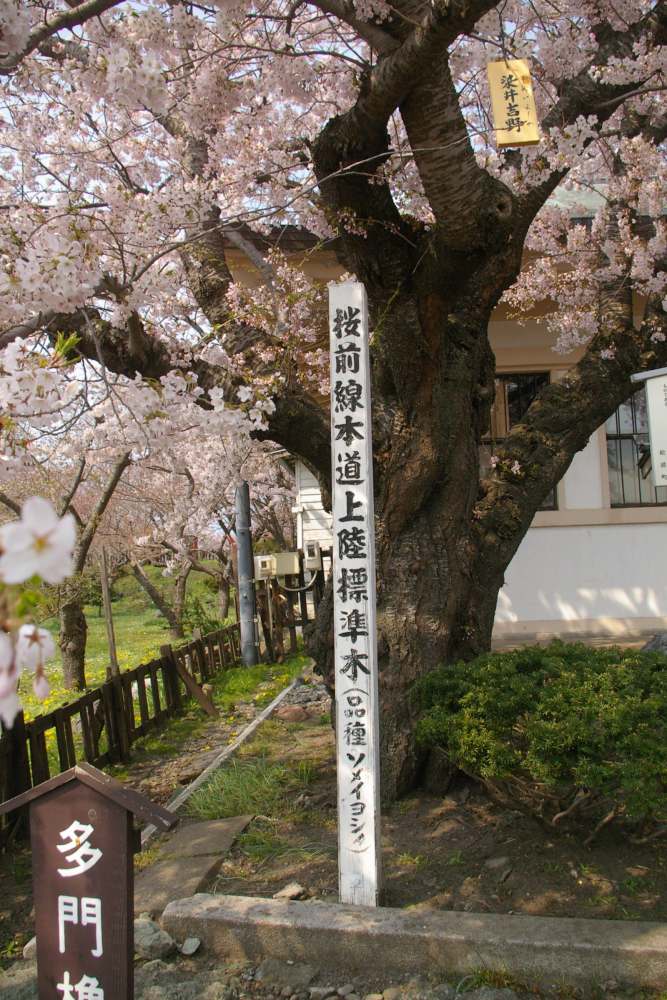
Naden is the most widely planted cherry variety in the park. Read the wooden variety label beside a tree, then compare the layers of petals, flower color and whether flowers or leaves appear first. Take one phone photo of the label and another of the branch. You can then keep the variety name with your pictures. A single photo of a mass of pink blossom can make it harder to remember where you stopped. If others in your group are less interested in identifying flowers, agree to meet near the castle and leave this slower stretch to those who enjoy it.
The reference tree in flowering reports is used to observe the progress of a particular cherry variety. Other varieties in the park follow their own schedules. Start your morning in areas shown in bloom in official flower updates, then use the remaining time for the castle or museum. Later in the season, focus on late-flowering varieties and the specimen garden, comparing colors and leaves as you go. The range of varieties is part of Matsumae’s appeal. Follow the flowers you find that day instead of aiming only for one fixed photo spot.
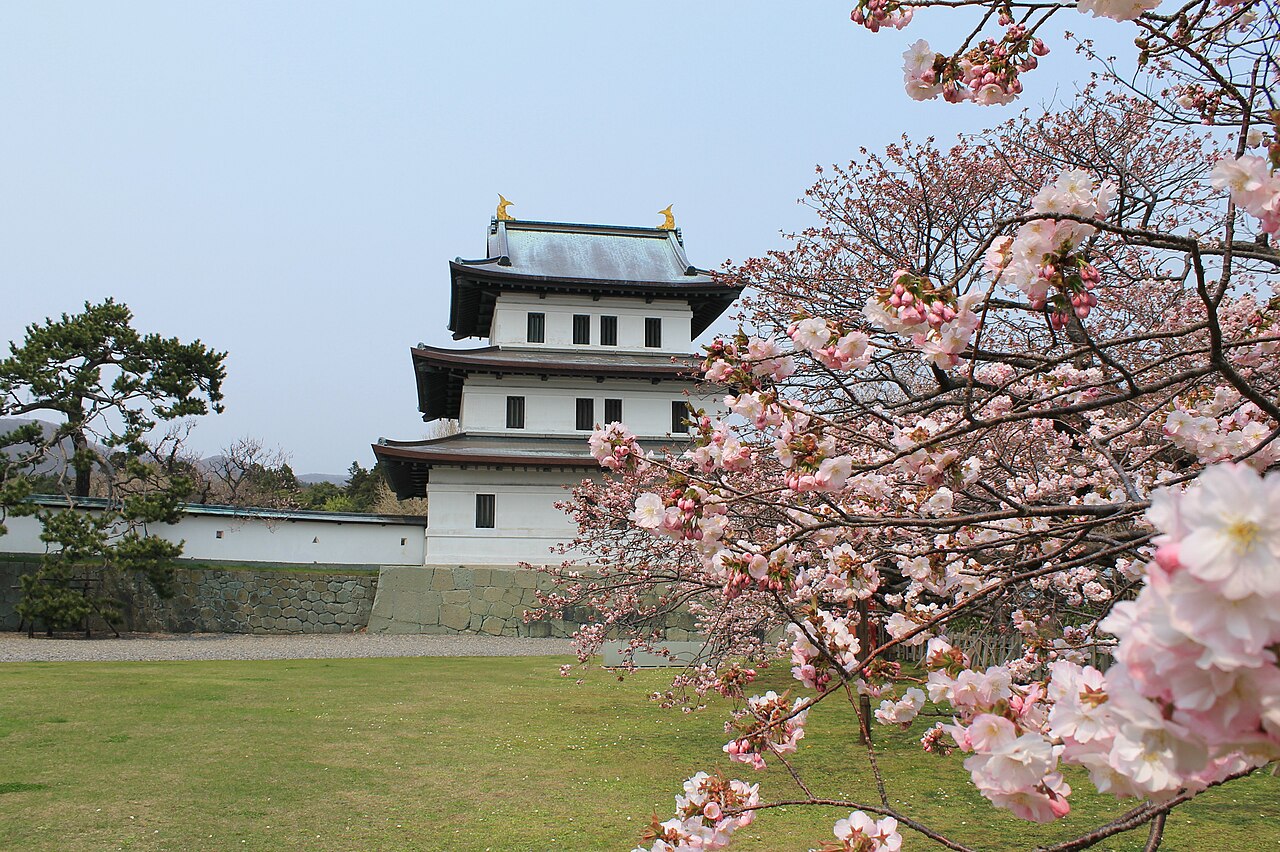
Around 250 cherry varieties bloom in succession at Matsumae Park. Take the bus from Kikonai to Matsushiro and plan the castle museum, Kozenji, Ryuunin and Matsumae Hanyashiki, with fares, steps, walking routes and location photos.
Take route 521 from Kikonai to Matsushiro, or drive along the coast from Hakodate
Without a car, use Kikonai Station as your transfer point. Hakodate Bus route 521 currently runs between Kikonai Station and the Matsumae office. The official route list gives stop 1 outside Kikonai Station as the boarding point and includes Matsushiro along the way. Get off at Matsushiro for Matsumae Castle and the park. Plan the train and long-distance bus as separate legs: choose a train to Kikonai, then add the wait and bus ride into Matsumae. Your time for blossom viewing begins after you reach the park.
The tourism association’s sample public transport itinerary allows about an hour and a half from Kikonai to Matsushiro. Use this to judge the travel involved: the round-trip bus journey alone needs about three hours, plus your trains to and from Kikonai and waiting time. If you are staying in Hakodate and want mornings and evenings in the city, make Matsumae your only distant destination that day. If you will leave Hokkaido by Shinkansen the same day, fit the bus back from Matsushiro to Kikonai into your rail plan, including time to reach the platform.
The official route 521 fare table, checked in October 2026, lists an adult one-way fare of ¥2,000 between Kikonai Station and Matsushiro. Matsushiro and the terminal at the Matsumae office are in different fare zones, so find your actual boarding and alighting stops. Start your budget with each adult’s return fare, then add trains, lunch and admission. For a group, compare this total with car rental, parking and related costs to choose how to travel.
For the return journey, open the official Matsushiro stop timetable and select the applicable effective date and the direction toward Kikonai Station. The stop page lists both the Matsumae office and Kikonai directions. Services toward Kikonai also take different routes. Check the destination first, then the departure and operating days, and choose your bus. When you arrive at Matsushiro, identify the return boarding point so you can walk straight there from the park in the afternoon.
The town’s official access information gives about one hour by car from Kikonai to Matsumae. From Hakodate, Route 228 follows the coast. A car lets you adjust your park visit and stop for lunch or a seaside break after leaving the castle. Once parked near the castle, explore the castle, temples and flowers on foot. Repeatedly getting in and out of the car for brief temple stops breaks up the walk. Parking in the park is paid during the cherry blossom festival, so include it in your budget.
Walk from Matsushiro to the castle, then continue into the temple district
Hakodate tourism information gives a walk of about seven minutes from Matsushiro bus stop to Matsumae Park. Head toward the castle and identify the white keep, stone walls and moat. These will help you find your way through the grounds. On a short visit, photograph the castle and blossoms first, then decide whether to enter the museum. If you want to go inside, visit in the first half of your route and see the temple trees afterward. Alternating indoor exhibits and outdoor flowers also gives your group a chance to rest.
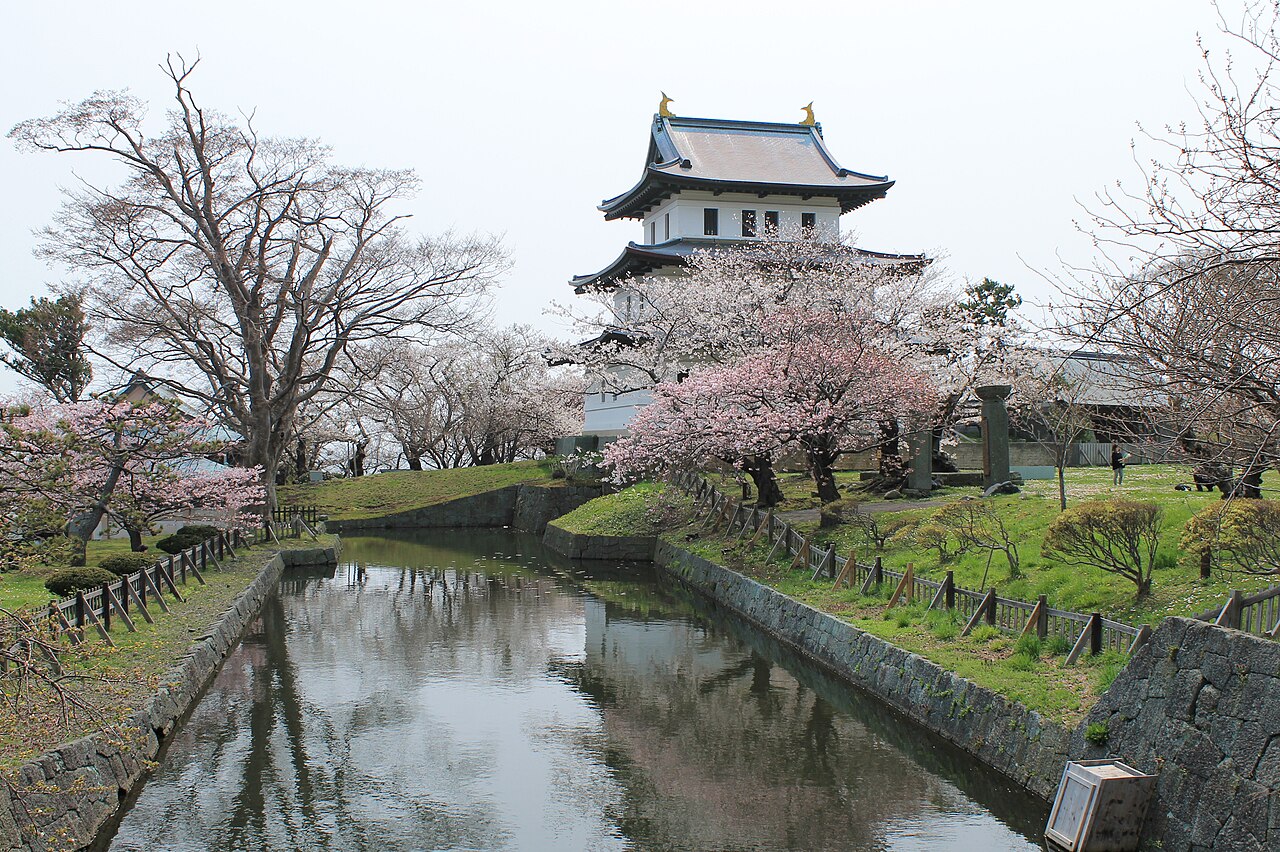
A walk around the castle lets you see how the buildings sit among the flowering branches. Beside the moat, the water, stone walls and keep form layers; closer to the castle, the branches stand out against the white walls. Find a stable place to stand that leaves the path clear. Take a wide view, then a few flower close-ups. Allowing time for both angles makes photography easier than stopping in the middle of the path as you walk, and keeps the walk moving.
The temple district lies north of Matsumae Castle and fits naturally after the castle grounds. The tourism association lists Ryuunin, Kozenji, Hodoji, Hogenji and Aunji, as well as the Matsumae family graves. On a first visit, choose Kozenji and Ryuunin to see both the temples and famous cherry trees. For more castle-town history, continue to other temples or the graves. Reading the signs at each stop takes longer than the walking time on a map, so focus the afternoon on two or three places that interest you.
Aerial views of the castle, cherry blossoms and coast introduce the landscape around Matsumae Park.
See the reconstructed keep and the surviving Honmaru Gate
Matsumae Castle, also called Fukuyama Castle, was completed in 1854 for northern defense in the final years of the shogunate. The keep and Honmaru Gate have different histories. The original wooden keep burned down in 1949. Its concrete reconstruction was completed in 1960, followed by ancillary facilities the next year, when it opened as Matsumae Castle Museum. Honmaru Gate survives from the late Edo period and is a nationally designated Important Cultural Property. Treating them separately gives a short castle walk a clear sense of the different periods.
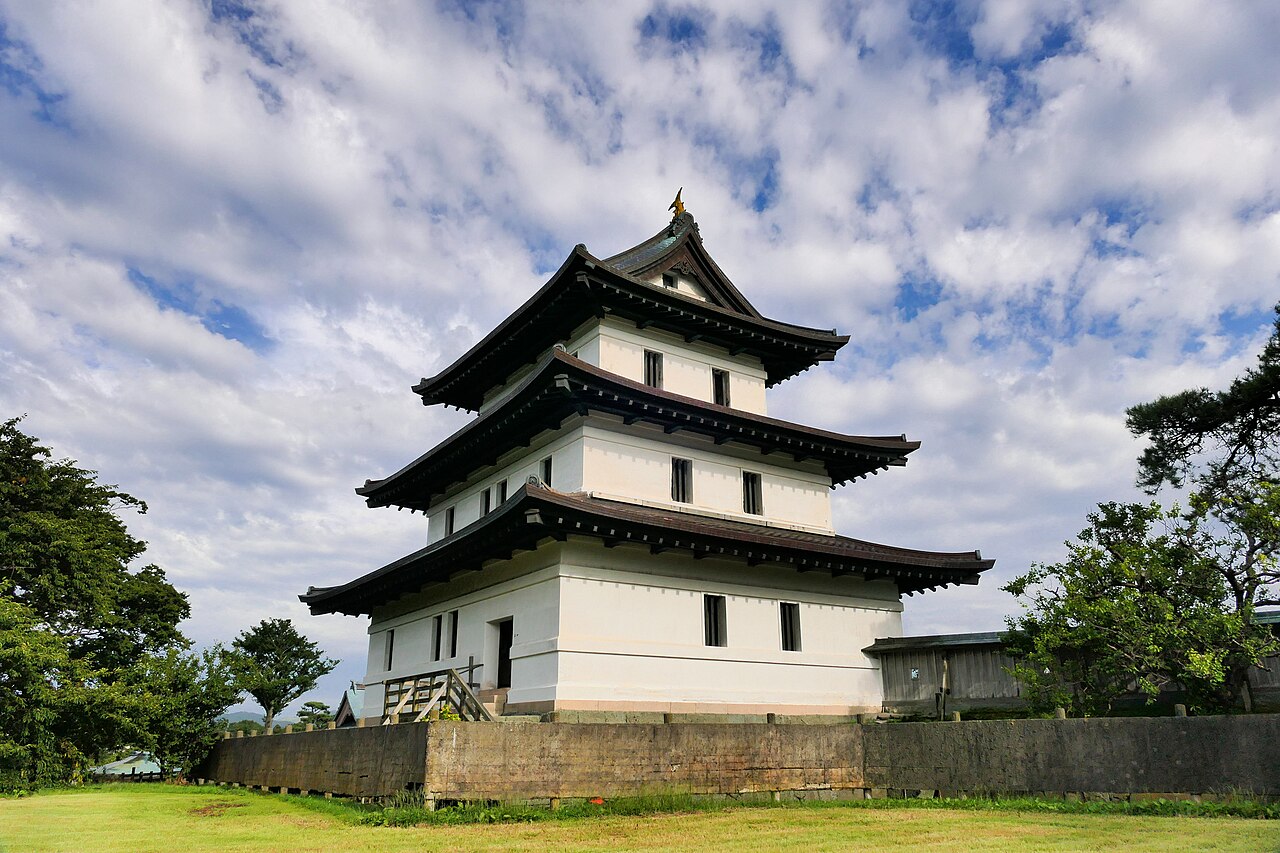
Inside the museum, start with the exhibits about the castle town to understand the relationship between the castle and port before going upstairs. The museum’s reproduction of the Matsumae folding screen shows an autumn scene in the castle town during the Horeki era. Look at its streets and people, then return outside to connect the castle with the coastal town. With children, find one or two details together rather than explaining the entire history of domain rule at once. Calligraphy enthusiasts can also look for the “Matsumae Castle” inscription by Matsumae-born calligrapher Otei Kaneko.
The museum normally opens April 10–December 10, from 9:00 to 17:00, with last admission at 16:30. It closes for winter from December 11 to April 9. Individual admission is ¥360 for adults and ¥240 for elementary and junior high school students; younger children enter free. For an afternoon visit, reach the ticket desk before 16:30 and leave time for the exhibits. Arriving at the last minute just to go upstairs can turn a relaxed blossom-viewing day into a rush.
The museum has four levels: one basement and three above ground, connected by stairs. For anyone who needs fewer steps, make the castle exterior, Honmaru Gate and outdoor blossoms your shared route, while others allow separate time inside. The whole family could also skip the upper floors and spend that time in the temple district or at lunch. Plan how much walking and climbing everyone wants here so the group can keep a similar pace later. If you also plan to visit Matsumae Hanyashiki, consider the combined ticket before choosing which to visit first.
Read the castle and port together through Matsumae’s Kitamaebune history
The castle’s seaside setting makes more sense alongside the history of the port. From the Edo to Meiji periods, Kitamaebune merchant ships traveled from Osaka through the Seto Inland Sea and Sea of Japan to Matsumae, carrying goods and regional products. Matsumae port was one terminus of the route and a shipping point for products from Ezo. View the castle, temples and shore as parts of one castle town: the castle served political and defensive roles, while the port kept goods, people and culture moving. This gives Matsumae more depth than a single photo of blossoms against a white keep.
Late-shogunate castle construction was tied to northern coastal defense. In 1849, the shogunate ordered the Matsumae domain to strengthen its defenses; Fukuyama Castle, completed in 1854, was built in that context. After seeing the coast, return to Honmaru Gate and the stone walls to connect the castle’s location, the Tsugaru Strait and the age of its buildings. History enthusiasts can see the exhibits first, then compare them with the actual spaces outside. For a simpler introduction, remember the two themes of port trade and coastal defense at the end of the shogunate.
In 2004, Matsumae Castle and the temple district to its north were selected as Hokkaido Heritage under the name “Fukuyama Castle (Matsumae Castle) and the Temple District.” Follow that same area on foot: see the gate, walk through part of the temple district and stop beside the flowering trees. In 2017, Matsumae, Hakodate and other Kitamaebune ports jointly received Japan Heritage recognition for the ships’ story. The first designation suits a walk through buildings and streets; the second offers another theme for southern Hokkaido travel, with background you can follow up while walking in Hakodate.
Place this history in the middle of your day: see the castle, rest over lunch, then walk the temple district in the afternoon. Once you understand the streets, the blossoms have a setting. Back at the coast, you can also picture how the castle town connected with places farther away.
Visit Kozenji and Ryuunin for the famous temple trees
Matsumae’s three famous cherry trees are the Meoto, Kechimyaku and Ezo-kasumi trees. The town tourism association gives walks of about two, five and four minutes respectively from Matsumae Castle, so they fit into a short walk behind the castle. Locate each tree on the map, then read its name on arrival to distinguish these famous trees. In bloom, look at the flowers; later, look at their shape, branches and relationship to the temple buildings. Each has its own setting.
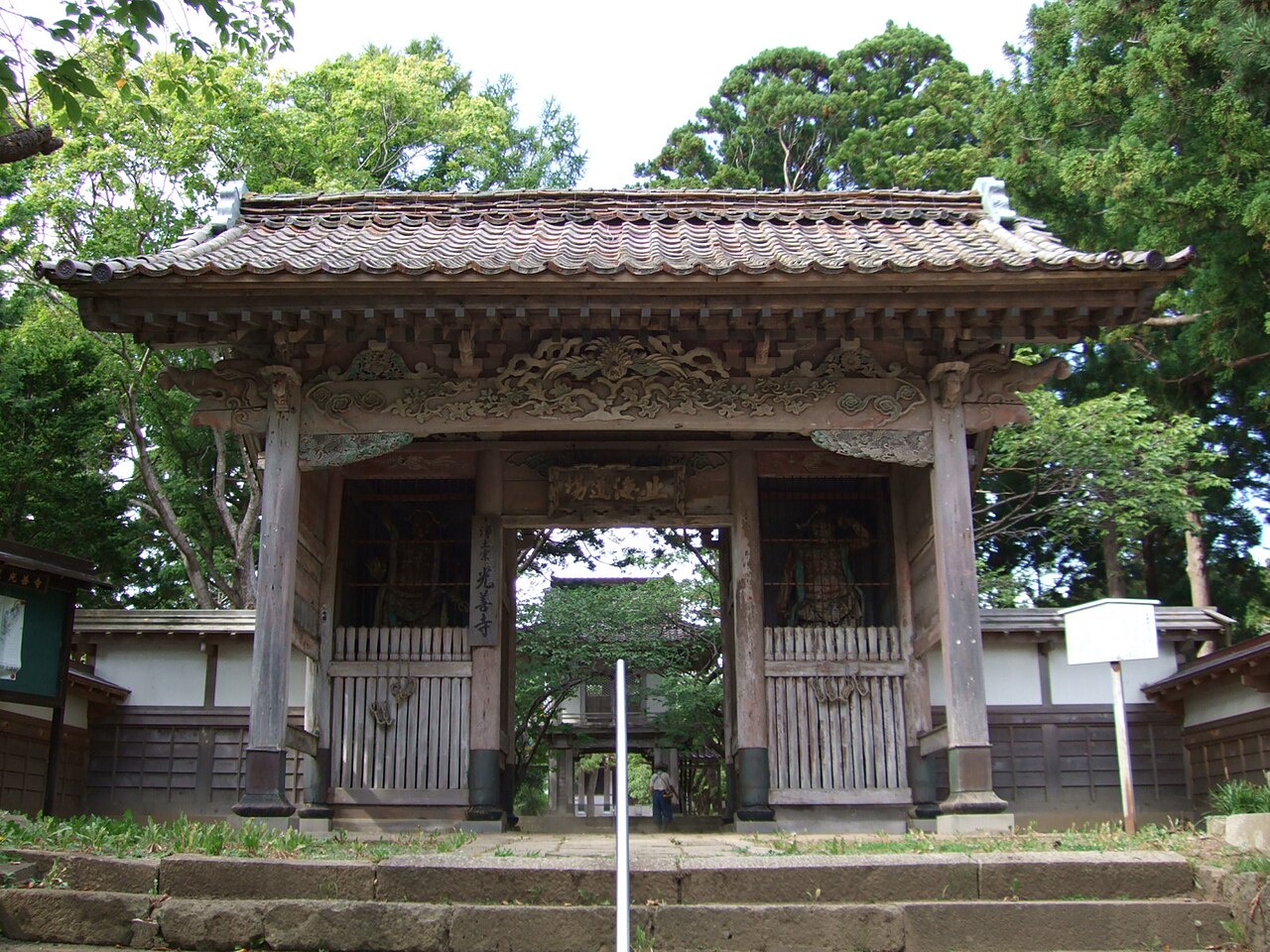
The Kechimyaku cherry tree at Kozenji is an important blossom-viewing stop in the temple district. Ryuunin has the Ezo-kasumi cherry tree. Start with one and see how long your group wants to stay before setting the pace for the next. For photographers, temple roofs, trunks and drooping branches convey more of the place than simply trying to keep every person out of the frame. Leave the worship route clear while waiting for photos so others can continue toward the hall.
For the history of the Matsumae domain, the Matsumae family graves are also in the temple district. Learn about the lords and castle town in the museum first, then visit the graves for a more connected sequence. If flowers are your main interest, the two temples and famous trees already make a full walk; follow with a meal or Hanyashiki. The distances are short, but looking at flowers, worshipping and reading signs take time. Choose a few places to examine closely rather than adding more names to a checklist.
From the Meoto tree to the new cherry specimen garden
The Meoto, or “married couple,” cherry tree stands at Tenjinzaka Gate near Matsumae Castle. Somei-yoshino and Naden grow together on one trunk, giving the tree its name. Find where the trunk divides, then compare the flowering branches on each side. Read its name before taking a photo for more interest than a background of blossoms alone. Place it between the castle and temples as a brief stop on the main route. It also connects the interests of plant lovers and history enthusiasts in the same group.
Kozenji’s Kechimyaku cherry is the parent tree of Naden, a common Matsumae variety, and has a local legend about a cherry spirit appearing as a young woman. Ryuunin’s Ezo-kasumi tree is known for pale pink flowers. After seeing these named trees, walk among the other varieties to turn the idea of “many varieties” into visible differences. Some flowers look light and delicate, others have dense petals; branch shapes and leaf colors differ too. Note the name of a tree you remember best to take home something more distinct than a number.
To identify more varieties, add the new cherry specimen garden. The tourism association’s nearby-place information gives about ten minutes on foot from the castle. Use this stretch to look closely, read labels and find colors you like, without photographing every tree. Give children a simple task: find two flowers of different colors, or compare a single-petaled blossom with one that has more petals. Leave the branches on the trees and take your observations home in photos and notes. That gives the rest of the walk something to discuss.
The Second Park has steep slopes; keep a shorter route around the castle and temples
Divide the park walk according to your stamina. Start with the castle, temple district and nearby famous trees, then extend uphill if you have time and energy. The tourism association gives about 20 minutes on foot from Matsumae Castle to the Second Park and notes steep slopes. This stretch suits visitors who want more park scenery and are happy to climb. With older relatives or children, rest in the temple district, then have lunch or return to the castle so everyone can finish a comfortable route.
Allow not just the extra 20 minutes, but stops on the way and the descent. Check the time near the castle before deciding to go up. If you have already climbed several museum floors, spend the second half of the visit in gentler streets instead. If your group separates, agree on a specific meeting place and time, such as a temple entrance or outside a lunch restaurant. That is easier than saying “meet in the park.” Staying together on a short route is simplest when caring for children or helping older relatives.
Add Matsumae Hanyashiki and choose a combined ticket for both sites
Matsumae Hanyashiki recreates spaces from the Edo-period castle town, including samurai homes, merchants’ premises and port-town life. After the keep and gates, shift your attention here from fortifications to streets and homes. For architectural details, look at facades, eaves and the arrangement of different buildings. With children, compare homes, shops and workplaces as you walk to make the late-shogunate town easier to understand.
The Hanyashiki website lists opening hours of 9:00–17:00, last admission at 16:30 and adult admission of ¥360. If you want both sites, an individual combined ticket for Matsumae Castle Museum and Hanyashiki costs ¥620 for adults or ¥420 for elementary and junior high school students. Separate adult tickets total ¥720, so the combined ticket saves ¥100. For only one site, buy its individual ticket. Choose what you want to see first, then the ticket; there is no need to shorten a slow blossom walk just to use both parts of a ticket.
The tourism association’s sample itinerary allows 20–45 minutes for Hanyashiki. A walk through the recreated streets fits after lunch. Armor dressing, Matsumae-zuke making or a guided tour needs additional time for the activity itself. These experiences cost extra and require reservations. Once you choose one, use its reserved time as a fixed afternoon point and arrange morning flowers and lunch around it. For an independent walk, ordinary admission keeps your schedule more flexible.
Hanyashiki also has seasonal features such as floating hydrangeas in summer, with a different focus from spring blossoms. Choose your visit’s focus by the season: put park flowers first in spring, or plan another trip around the Hanyashiki waterways for summer flowers. Write the actual activity name and reserved time in your itinerary so everyone knows where to go, and does not confuse independent visiting time with an activity meeting time.
Choose seafood or rock nori for lunch, and Matsumae-zuke for gifts
Treat seafood, rock nori and Matsumae-zuke as separate choices. Town tourism information lists bluefin tuna, rock nori and local seafood dishes. Decide whether you want a seafood main or a simpler rice meal, then look for a suitable restaurant. If your bus arrives near noon, eat before walking the temple district and leave the afternoon for flowers. If you have spent a long morning in the park, find lunch near your current location, then choose your last visit afterward.
Nori dandan is hot rice layered with rock nori and seasoned with soy sauce. If you want to try rock nori, this name helps you recognize the dish; look for other dishes using it too. Seafood lovers can choose a meal from menus featuring bluefin tuna and other fish. You do not need several restaurants just to eat every specialty in one day. Lunch is also a break in a long return trip. A meal you can sit down and finish comfortably usually makes the afternoon walk more relaxed.
Matsumae-zuke combines finely cut dried squid, kelp and a soy-based sauce, with ingredients and seasoning varying by maker. Start with small packs when comparing gifts, and check storage requirements against your travel time. If you have a long journey before reaching your accommodation, buy refrigerated foods at the end of your shopping. For shelf-stable sweets, look for local cakes shaped like castles, blossoms or seafood. The town tourism site also introduces names such as Oshiro Monaka and Hana no Matsumae, making them easier to find in shops.
Kitamaebune Matsumae roadside station lies outside the castle-town streets, about ten minutes on foot from the castle according to the tourism association. Add it after the castle for a seaside break or shopping. Without a car, leave enough time to return to Matsushiro before deciding how much to buy. Drivers can leave heavier gifts until just before departure. You will then avoid carrying shopping bags throughout the park walk.
Calculate transport and admission before setting the day’s budget
At the standard adult fare, a return bus journey between Kikonai and Matsushiro costs ¥4,000. Add ¥360 for Matsumae Castle Museum alone for a transport-and-admission subtotal of ¥4,360. Visit both sites with the ¥620 combined ticket for a subtotal of ¥4,620. Put this in your budget, then add trains to Kikonai, lunch and shopping separately. Breaking down the costs is more useful than applying one “Matsumae day-trip budget” to every departure city.
For two adults following the same route, bus fares and a single-museum ticket total ¥8,720, or ¥9,240 with combined tickets. Compare this two-person subtotal with rental, fuel and parking costs for the same day. Also consider who will drive and whether you want other coastal stops. Keep the bus option if you prefer public transport to handle the journey. A larger group wanting more dispersed stops may value the flexibility of a car.
For children, put the museum’s ¥240 elementary/junior high school admission, or the ¥420 combined ticket, directly into the sightseeing budget. Younger children enter the castle museum free. Calculate bus fares separately under Hakodate Bus child-fare rules and the children’s actual ages. If family members have different interests, some can visit exhibits while others rest among the blossoms nearby. Choose the tickets each person needs in advance rather than rearranging the day at the ticket desk.
A bus day trip, with time in the castle town before your return
After the bus from Kikonai reaches Matsushiro, walk to the castle and see the exterior. Depending on your arrival time, enter the museum or eat lunch first. After lunch, visit Kozenji, Ryuunin and the famous trees, adding the new specimen garden or Hanyashiki if time remains. This route keeps the castle, temples and food on the main route and leaves extra walking until last. It suits a first visit with a fixed return bus. Put your priorities early so afternoon choices are easier.
With only two or three hours, choose a short route around the castle and temples: see the castle and moat, pick one temple or famous tree, sit down for a meal, then return to Matsushiro. If the museum is your priority, make it the main visit and shorten other stops. Trying to fit the museum, every temple, the Second Park and Hanyashiki into half a day can reduce every stop to a hurried photo. Fewer places leave time to read an exhibit or look closely at a tree.
With a fuller day, visit the castle and museum in the morning, eat lunch, then walk the temple district and add park paths according to the flowers. Finish with shopping or Hanyashiki. Spend the last stretch somewhere with an easy route back to Matsushiro. Buy a snack, sort photos or rest until your planned meeting time, then walk to the stop. Sitting somewhere for a while is more comfortable than heading farther uphill just before your bus.
Add Matsumae as one day out in a Hakodate and southern Hokkaido itinerary. Leave room for arrival in Hokkaido, Hakodate sightseeing and Matsumae on their own days. Shinkansen travelers can connect through Kikonai. When choosing accommodation, work from where you will start and finish that day and leave your luggage at a suitable base. Walking the park with a light bag is much easier than bringing a suitcase.
Drive onward along the coast after one continuous castle walk
Drivers can arrive early, explore the castle and temple district, then head to the coast in the afternoon. The drive from Kikonai takes about an hour; Route 228 from the Hakodate area passes through coastal towns in southern Hokkaido. If you enjoy the sea, take breaks on the driving leg. Leave time in the park for gates, temples and flowering trees that need to be seen on foot. Giving each mode its own part of the day avoids repeated backtracking between brief parking stops.
To extend the trip to Cape Shirakami, the tourism association gives about 14 minutes by car from Matsumae Castle in the Hakodate direction. Hokkaido’s southernmost point suits a coastal stop after leaving Matsumae, with views over the Tsugaru Strait. Finish your park walk first, then continue to the cape and your next accommodation. That avoids driving out during blossom viewing and returning to the castle afterward.
If some passengers want the museum and others only flowers, separate briefly within the castle area and agree to return to the parking place together. Give the driver a full visit too, rather than making every stop a drop-off and pickup. Eat and rest together before the long return drive. Leave gifts in the car and carry water and the things you need for the walk through the temple district.
Photograph the castle, moat and flowers, and bring a windproof layer for the coast
For your first Matsumae photos, start beside the moat with the castle and its reflection, then move closer to the branches for flowers against the white walls. To capture the temple district, include trunks, roofs and surrounding paths rather than taking only flower close-ups. Keep place and variety names beside photos for a travel report so readers can identify where they want to go. Flowers vary with the variety and visit date, so record the month and year too.
Matsumae faces the Tsugaru Strait. Bring a windproof outer layer that is easy to put on and remove for outdoor walks and coastal stops. Wear shoes that give you a stable footing on paths and slopes, and carry water and the day’s essentials. For a longer photography visit, plan food and rest before you tire. If children become tired, return to the shorter castle and town route instead of continuing higher. Leave time to stop and look so the castle, trees and sea each make an impression.
A few useful answers
When can I see cherry blossoms in Matsumae Park?
The town tourism association lists about 10,000 trees of 250 varieties. Early, mid-season and late varieties flower in succession from mid-April to late May. Choose the castle grounds, famous temple trees or new specimen garden according to the flowers at the time.
How do I reach Matsumae Castle without a rental car?
Take Hakodate Bus from Kikonai Station toward Matsumae, get off at Matsushiro and walk about seven minutes to the park. The official route 521 list gives stop 1 outside Kikonai Station. For the return, select the Kikonai Station direction on the Matsushiro stop page.
How much is the bus from Kikonai to Matsushiro?
The route 521 fare table checked in October 2026 lists ¥2,000 one way for adults, or ¥4,000 return. Matsushiro and the Matsumae office terminus are in different fare zones; use your actual boarding and alighting stops.
What are the castle museum’s admission prices and hours?
It normally opens April 10–December 10, 9:00–17:00, with last admission at 16:30, and closes in winter. Individual admission is ¥360 for adults, ¥240 for elementary and junior high school students, and free for younger children. The combined ticket with Matsumae Hanyashiki is ¥620 for adults or ¥420 for schoolchildren.
Does the museum have an elevator?
The museum lists four levels, one basement and three above ground, with stairs as the only way between them. For fewer steps, focus on the keep exterior, Honmaru Gate and outdoor blossoms.
Where are Matsumae’s three famous cherry trees?
The Meoto tree is at Tenjinzaka Gate near Matsumae Castle, the Kechimyaku tree is at Kozenji, and the Ezo-kasumi tree is at Ryuunin. Include them in one walk from the castle into the temple district.
Is parking at Matsumae Park paid?
Hakodate tourism information lists park parking, with charges during the cherry blossom festival. Park once and connect the castle, temples and flowering trees on foot, then continue along the coast when you leave.
Official information and references
Sources used in this guide.
- Matsumae Tourism Association: cherry varieties, flowering season and seasonal scenery
- Matsumae Tourism Association: history, temple district and Kitamaebune
- Matsumae Castle Museum: floors, keep history and Honmaru Gate
- Matsumae Castle Museum: opening dates, individual and combined tickets
- Matsumae Tourism Association: Matsumae Castle
- Matsumae Tourism Association: driving access from Kikonai and southern Hokkaido
- Matsumae Tourism Association: sample public transport day trip
- Hakodate tourism information: Matsumae Park, walk from Matsushiro and parking
- Hakodate Bus: current routes and service areas
- Hakodate Bus: Matsushiro timetables by direction
- Hakodate Bus: route 521 fare table
- Matsumae Tourism Association: temples in the temple district
- Matsumae Tourism Association: Meoto cherry tree and new specimen garden
- Matsumae Tourism Association: Kechimyaku cherry tree
- Matsumae Tourism Association: Ezo-kasumi cherry tree and Second Park
- Matsumae Tourism Association: Matsumae Hanyashiki and reserved activities
- Matsumae Tourism Association: Matsumae-zuke, rock nori and local sweets
- TBS NEWS DIG: aerial views of Matsumae Park cherry blossoms