Choosing dates for Hokkaido cherry blossoms? Covering Hakodate Goryokaku, Matsumae Park and Sapporo Maruyama with 2026 bloom dates, 2027 Goryokaku Tower fares, Golden Week bookings and Kikonai transfers.
- Region & Focus
- Hokkaido
- Reading Scope
- 17 min read · 10 chapters · 6 Q&As
- Official Verification
- 31 official sources checkedUpdated 22 November 2026
- Key Topics
- SeasonsItinerariesRail travel
Chapter Route Map (tap any stop)
- Timing Your Hokkaido Cherry Blossom Trip
- Goryokaku: Moatside Walk or Tower First
- Petal Rafts, Rowing Boats and Picnics
- Getting to Goryokaku from Central Hakodate
- Picking Areas in Matsumae & Mapping the Return
- Where to Stay in Hakodate for Three Days
- Booking Hotels & Trains for Golden Week 2027
- Adding Sapporo on a Five-Day Trip
- What to Do in Rain or with Half a Day
- A Half-Day Alternative Away from Goryokaku
- Quick Q&A
If you only have three days for cherry blossoms in Hokkaido, set aside two nights for Hakodate so you have one full day each for Goryokaku and Matsumae that you can swap around. At Goryokaku, Somei-Yoshino trees burst into bloom all at once along the star-shaped moat, whereas Matsumae Castle is surrounded by early-, mid- and late-blooming varieties in succession. To catch both sights on a single trip, keeping your days flexible within the same hotel stay is far more practical than gambling on a single full-bloom date during Golden Week. If you are flying in and out of New Chitose on a shorter break, make Sapporo's Maruyama Park your main stop to save half a day on train travel.
Timing Your Hokkaido Cherry Blossom Trip
When planning your trip, put Hakodate's Goryokaku in the mid-to-late April through early May window, while Matsumae's varied cultivars span from mid-April right through to late May on paper. In 2026, the Hakodate Local Meteorological Observatory recorded first bloom on Goryokaku's sample Somei-Yoshino tree on 18 April and full bloom on 20 April; by 30 April, Hakodate's city tourism site reported noticeable green leaves. By the second half of that year's Golden Week, peak blossom at Goryokaku had already passed. Travellers arriving in late April should protect their daytime hours in Hakodate first, then slot in a Matsumae day from the same hotel base.
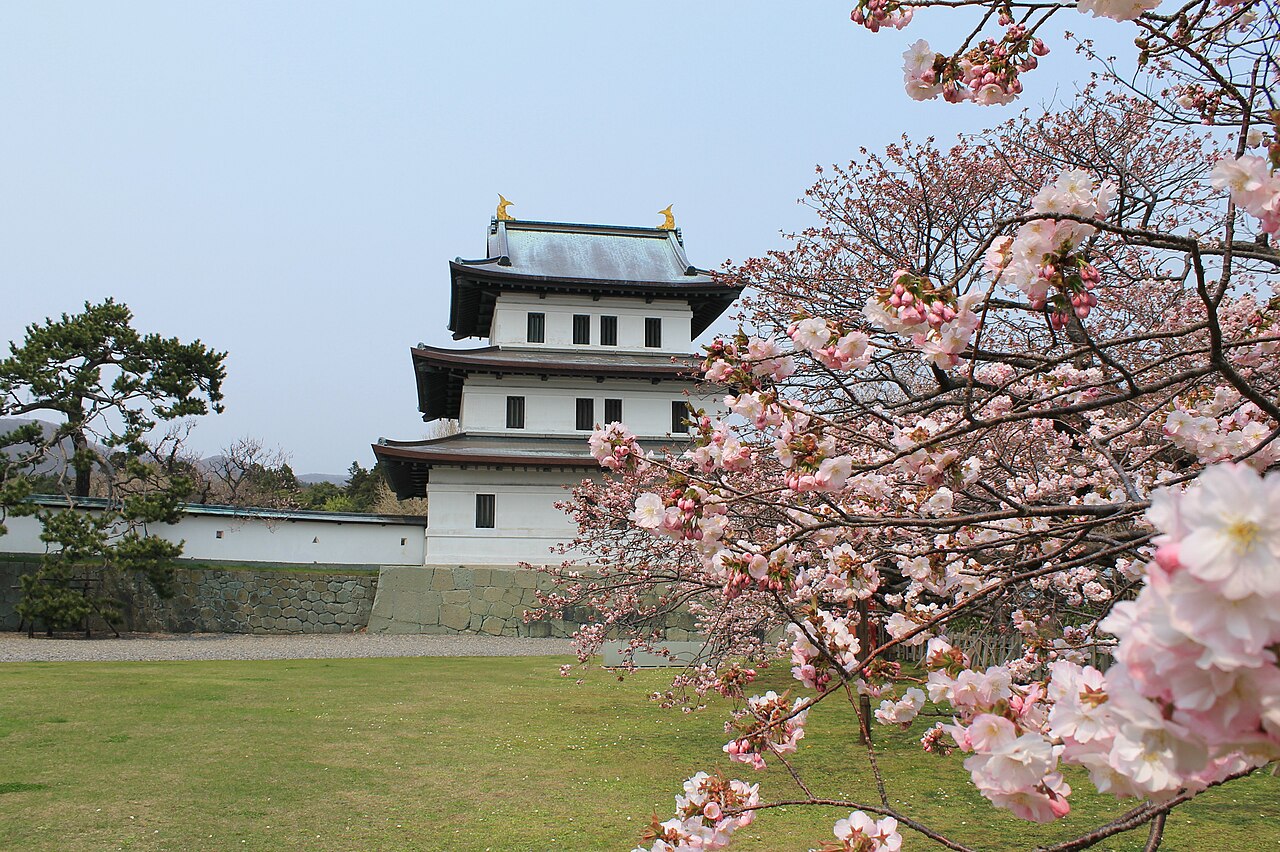
Matsumae follows a different rhythm. On 10 April 2026, the town forecast peak bloom for early Somei-Yoshino around mid-to-late April, while late-blooming Kanzan and Fugenzo varieties were projected to stretch into early May. Park photos taken on 25 April and published by the town on 26 April still showed Naden, Beni-yutaka and Amayadori in good form. When checking Matsumae bloom reports, note the photo date, location and cultivar together. Town figures put the park at roughly 10,000 trees across around 250 varieties, so whichever cultivar looks best on the day dictates where to walk first—there is no need to follow a fixed loop.
The local meteorological observatory tracks a designated sample tree, declaring first bloom once five or six flowers open and full bloom at 80 per cent coverage. Hakodate's 1991–2020 average for full bloom is 2 May, making 2026 twelve days ahead of the baseline. Use historical averages to pick your accommodation dates, and current observations to decide each day's route. If recent local photos show only a few close-up branches, make that stop a brief visit the next morning; if consecutive shots along a bank show full canopies, keep the afternoon free for reflections from the bridges. Once fallen petals carpet the ground, check which corner of the moat catches the wind, or shift your time to another park if you want full trees.
If you can only travel during Golden Week, book consecutive nights at one hotel and sketch out one Hakodate city day and one Matsumae day. Having flexible car-hire dates lets you move Matsumae to whichever day brings clearer skies. Multi-city flight itineraries work the same way: lock in your direction of travel first, then decide which base anchors the front half of the trip. Eliminating an extra check-out day gives you more margin to wait out passing rain.
| Arrival Window | Best Places to Prioritise | How to Plan |
|---|---|---|
| Mid-to-late April | Hakodate Goryokaku, early-blooming cultivars in Matsumae | Check updates on Goryokaku's sample tree and cultivar-by-cultivar photos from Matsumae |
| Late April to early May | Sapporo Maruyama, mid- and late-blooming cultivars in Matsumae | If Goryokaku is past peak, swap your city day to moatside walks or later-blooming trees |
| Mid-May | Late-blooming Matsumae cultivars, Ishizaki in Hakodate, Nemuro in eastern Hokkaido | Choose one direction from your booked base and cross-check that week's local reports |
Choosing dates for Hokkaido cherry blossoms? Covering Hakodate Goryokaku, Matsumae Park and Sapporo Maruyama with 2026 bloom dates, 2027 Goryokaku Tower fares, Golden Week bookings and Kikonai transfers.
Goryokaku: Moatside Walk or Tower First
On a first visit to Goryokaku, walk from the front plaza beside the tower to the bridge to see the cherry trees lining the water. Hakodate's city tourism site highlights the stretch behind Rokkatei's Goryokaku shop and the earthen embankment just to the right after crossing Ichinohashi Bridge—both are good spots to check sun-warmed branches early in the season. Park management notes around 1,500 cherry trees across the grounds. The outer perimeter is open around the clock, while the inner fort behind the bridge opens from 05:00 to 19:00 from April to October (05:00 to 18:00 from November to March). If you have a pushchair or older relatives, sticking to the front plaza, bridgehead and Magistrate's Office area gives you both eye-level blossoms and views inside the ramparts; add a stretch along the outer moat only if time allows, keeping bridges and narrow paths clear for foot traffic.
If you arrive early, the park opens before the tower, so photograph the blossoms up close before heading up. Clear skies offer the sharpest view of the full five-pointed star, so time your ascent for the brightest spell of the day. If low cloud or rain streaks the observation windows, start along the moat to the bridge or step inside the Former Hakodate Magistrate's Office and wait for the light to lift. Walking the full outer moat easily takes longer than expected; if you have an afternoon train or flight, turn back at the bridgehead.
Goryokaku Tower normally opens from 09:00 to 18:00, with observation-deck ticket sales closing at 17:50. From 1 April 2027, standard admission rises to ¥1,500 for adults, ¥1,130 for junior and senior high school students, and ¥750 for primary school pupils, with pre-school children admitted free when accompanied by a guardian (up from ¥1,200, ¥900 and ¥600 before the increase). Each ticket grants a single entry. If you are here for the star-shaped panorama, save your trip up for the clearest weather—returning later the same day requires a second ticket.
With only an hour to spare, pair a short stroll along the outer edge with the tower deck, saving your wide-angle shots for the star and cityscape while keeping ground-level time focused near the main entrance. If you visit the tower before sunset and return for night illuminations along the outer moat, treat them as two separate outings. In 2026, Hakodate lit selected trees on the southern outer edge of the fort from 19:00 to 21:00 between 21 April and 6 May, after the inner fort closed at 19:00; stick to the outer paths beside the tower after dark, and check Hakodate's annual event notice for 2027 illumination dates.
Inside the fort across the bridge stands the Former Hakodate Magistrate's Office. Completed alongside Goryokaku in 1864 and later caught up in the Battle of Hakodate, the current building was reconstructed in 2010. Exhibits inside cover the fort's purpose, its administrative role and the restoration work; stepping back out among the canals, earthen walls and bridges turns the tower's geometric outline into real ground-level space. Regular hours from April to October are 09:00 to 18:00 (last entry 17:45), with individual admission at ¥500 for adults, ¥250 for students and children, and free entry for pre-schoolers. If afternoon rain picks up, ducking in here saves a wet trek down to the waterfront.
Petal Rafts, Rowing Boats and Picnics
Once petals begin dropping into the moat, the wind herds them into corners along the banks. Look from the bridge first to spot pink ribbons on the water, then follow safe paths towards the leeward shore, switching sides if glare washes out the surface. If the previous day's photos already show thick petal rafts, spend the morning along the outer moat and capture the water before deciding whether to go up the tower. Fallen petals, water reflections and the aerial star offer three distinct perspectives—giving one stop enough time beats dashing between sights.
If you fancy rowing, keep Noda Boat Rental near Ninohashi Bridge in mind as a stop along the route. Hakodate's tourism site lists the water circuit at roughly 1.5 km, and even experienced rowers should budget extra time for boarding and disembarking. Plan your walk and lunch first, then hop on if the boathouse is open and boats are free. In windy or rainy weather, or if anyone in your group finds getting in and out of a boat awkward, stick to the outer path and bridges—you can still spot dense petal drifts without waiting out gusts by the water. With young children, locate the toilets near the front plaza before heading towards the bridge.
To eat under the trees, pick up bento boxes around Hakodate Station or near the park and take all rubbish with you before boarding afternoon transport. Hakodate sets specific dates, zones and rules for open flames; in 2026, cooking was limited to designated areas with separate time windows inside and outside the fort, and official blossom stalls were set up only at Hakodate Park. If you want a hot meal out of the chill wind off the moat, dine in the Honcho neighbourhood around Goryokaku-Koen-Mae tram stop and stroll back into the park towards dusk.
When some people in your group want an hour beneath the trees while others are ready to rest after a few photos, agree to meet back at the front plaza or beneath the tower. Because the tower sits on the outer perimeter, nobody needs to cross the inner bridges twice to regroup. Take a break with a hot drink along the outer moat and warm your hands before shooting again. When paths are slick after rain, take the slightly longer paved route back to the main street rather than scrambling up wet grassy slopes.
Getting to Goryokaku from Central Hakodate
Take the Hakodate tram from Hakodate-Ekimae towards Yunokawa and alight at Goryokaku-Koen-Mae. From the tram stop it is roughly a 10-minute walk to the tower, and a little further across the bridge to the Magistrate's Office. Typing 'Goryokaku' into a route planner will pull up the separate JR Goryokaku Station instead, so when departing from Hakodate Station, search directly for Goryokaku Tower or the park entrance. In heavy rain, board Hakodate Bus Route 19 from Bay 1 outside Hakodate Station to Goryokaku-Koen-Iriguchi; the operator lists a journey time of around 17 minutes at ¥280 for adults, leaving a 5-minute walk to the tower.
Hakodate tram fares are distance-based, currently ¥250 to ¥300 per single adult ride (¥130 to ¥150 for children). A one-day tram pass costs ¥800 for adults and ¥400 for children. For a simple return trip between Hakodate Station and Goryokaku, paying per ride with an IC card works out cheaper; once you add Motomachi or Hakodate Park for four or more rides in a day, the day pass pays for itself. For three rides, add up the individual legs—from Jujigai to Goryokaku-Koen-Mae, for instance, is ¥290. If you prefer buses to cut down on walking, price out single fares first; there is also a combined one-day tram and designated-zone Hakodate Bus pass at ¥1,600 for adults if you expect to make multiple eligible bus journeys.
The trade-off with driving comes down to the final stretch. A hire car makes it easy to link the coastal road and castle town of Matsumae in one day, whereas parking queues around Goryokaku in blossom season can eat into your sightseeing window. In 2026, Hakodate introduced daytime traffic restrictions near the park entrance and urged visitors on peak weekends to use public transport. If you already have a car and are staying near Hakodate Station, leave it parked until your Matsumae day. For anyone with limited mobility, staying nearby or taking the bus right to the park entrance is far more practical than alighting at a more distant tram stop just to dodge crowds.
Picking Areas in Matsumae & Mapping the Return
Matsumae Park stretches from Matsumae Castle across the Teramachi temple district to the Matsumae Clan Residence. On a first visit with less than half a day in town, focus on the castle grounds and Kozenji Temple; Naden is the signature local cultivar here, including Kozenji's famous Kechimyaku-zakura. To track down later-blooming trees, open the 'Matsumae no Arukikata Sakusaku Map' linked by Matsumae Town and match recent cultivar updates to either a direct loop around the castle or a walk uphill through Teramachi. Several viewpoints in the castle town sit on slopes, so if anyone in your group wants to save their legs, pick the single section blooming best.
The castle keep standing today is a reconstruction; Matsumae Castle Museum opens annually from 10 April to 10 December, 09:00 to 17:00 (last entry 16:30), with admission at ¥360 for high school students and adults, and ¥240 for primary and junior high pupils. When cherry blossoms are your priority, lock in your return bus first and keep the museum as a fallback for weak bloom or drizzle. The Matsumae Clan Residence is mostly an open-air streetscape of samurai homes and town buildings best saved for fairer weather; a combined ticket with the castle museum costs ¥620 for high schoolers and adults (¥420 for younger pupils). If you only have time for the castle and one Teramachi lane, note your return bus stop as soon as you step off. For a full route linking the castle to the residence, see our Matsumae Castle and Matsumae Park day guide to pick the easiest downhill exit.
Travelling from Hakodate without a car means changing at Kikonai. Take the South Hokkaido Railway from Hakodate to Kikonai, then connect to Hakodate Bus Route 521 bound for Matsumae and alight at Matsushiro—Hokkaido Prefecture's park guide puts the bus leg at around 1 hour 30 minutes, followed by a 7-minute walk. Travellers arriving from Honshu on the Hokkaido Shinkansen can also catch a train that stops at Kikonai and head straight on from there. For a day trip, line up the Matsushiro-to-Kikonai return bus with your onward train back to Hakodate before choosing an outbound departure; connection gaps shape your time in the park more than raw transit time.
Just outside Kikonai Station sits Michi-no-Eki Misogi no Sato Kikonai, handy for meals and supplies. However, if your return transfer window is tight, do not gamble on eating between connections. Have a proper meal in Hakodate beforehand or after you get back, and adjust your stay in Matsumae around whichever cultivars are peaking. If you are carrying large suitcases to connect straight onto a Shinkansen the same day, factor in locker retrieval and platform walks; if you can leave luggage at your Hakodate hotel, keeping a single base avoids hauling bags mid-trip.
Drivers can follow National Route 228 all the way from Hakodate or pick up a hire car at Kikonai, which Matsumae's tourism site puts at roughly an hour's drive from town. Check the festival traffic map for car park locations before deciding whether to walk up from below the castle or park near the outer Matsumae Clan Residence. During the 2026 Matsumae Sakura Festival (18 April to 10 May), the town enforced vehicle restrictions in the park and centre alongside temporary car parks. Build the walk from the car park to your meeting point into your schedule, and if you have an evening car-return deadline, tour the park in daylight and save a brief coastal drive for after lunch.
Driving between Hakodate and Matsumae also passes Hokuto, which offers two contrasting blossom stops: Hokiji Temple for a single dramatic weeping cherry tree, and the Matsumae Clan Hekireki Encampment Site for a long tree-lined avenue leading to the historic grounds. If you want one quick stop on the day you arrive in southern Hokkaido, pair either spot with passing through Shin-Hakodate-Hokuto Station. On your main Matsumae day—especially with Teramachi, the museum and a fixed car-return time on the clock—save Hokuto for another day, as Matsumae's official site puts the drive between Hokuto and Matsumae alone at about 1 hour 30 minutes.
Evening illuminations in Matsumae suit overnight guests or drivers with no timetable to beat. Arriving by bus after midday often leaves time for just one loop around the castle walls. Decide early whether you want daytime blossoms or lit trees after dark; when daylight bloom is strong, viewing the keep across the moat is well worth the trip on its own. Plan night visits around Matsumae Town's seasonal schedule, and if your group wants a relaxed sit-down dinner together, anchor dinner back in Hakodate so you can head home whenever the best-blooming zone feels complete.
Where to Stay in Hakodate for Three Days
Staying near Hakodate Station makes the most sense if you arrive and depart by rail and have an early transfer to Kikonai the next morning. Drop your bags at the hotel, and even a late arrival leaves time for dinner around the morning market fringes or along the bay. With both long-distance departures leaving from Hakodate Station, an early start is nothing more than the walk from your room to the concourse. If your priority is catching both dawn light and night illuminations at Goryokaku, staying around the park itself is handier and lets you nip back whenever the sky clears; around Honcho, compare the walking distance to both Goryokaku-Koen-Mae tram stop and the tower, as they sit several blocks apart.
Choose Yunokawa if hot-spring bathing is part of the plan. Hakodate Teisan Bus runs from Hakodate Airport to Yunokawa Onsen for ¥300 for adults, compared with ¥700 into Hakodate Station. Bear in mind that catching the first morning connection to Kikonai from Yunokawa adds an extra cross-town leg, so put station-front nights ahead of early trains. For older travellers focused on onsen, Goryokaku and Hakodate Park, hotels along the tram line make it easy to split mornings into short walks and afternoon rests. For a closer breakdown of neighbourhoods, see our Hakodate hotel areas, room types and onsen guide before locking in your mornings and evenings.
On a two-night stay, an afternoon arrival leaves enough time for Hakodate Park, Motomachi or the bay area while keeping the next full day clear for the Matsumae bus. If you arrive early on day one to full bloom, head straight to Goryokaku, take Matsumae on day two, and save central Hakodate for after check-out on day three. Because returning from Matsumae involves two connections, avoid booking a flight or Shinkansen straight behind it. If you arrive late and leave early, dedicate the single full middle day to whichever spot matters most to you.
Coming up from Honshu on the Shinkansen, change at Shin-Hakodate-Hokuto onto the Hakodate Liner for JR Hakodate Station—JR Hokkaido lists the ride at 15 to 22 minutes, though you should allow extra time to walk from the Shinkansen platforms and check your ticket's destination. From Hakodate Airport, airport buses run outside the terminal towards Hakodate Station, the Bay Area or Yunokawa (whereas the tram's Yunokawa terminus sits inside the urban district). Spending your arrival night near Hakodate Station and saving Matsumae for the following day is far smoother than dragging luggage across southern Hokkaido connections.
Booking Hotels & Trains for Golden Week 2027
Japan's Cabinet Office lists 29 April and 3 to 5 May among the national holidays for 2027, which bridge with the weekend of 1–2 May. If your dates cross this stretch, identify which long-distance leg is hardest to move first. Staying two or three nights in a single Hakodate hotel lets blossom reports dictate which weekday you visit Matsumae. If you arrive on 29 April and leave before 2 May, place Goryokaku on a morning without long train rides so departure day remains stress-free for luggage. If late-blooming double-petalled cherries are your main target, push Matsumae into a later May stop and watch which cultivar and park zone opens that week.
Split your budget between fixed transport and on-the-day admissions. Two adults and one primary school child ascending Goryokaku Tower under the 2027 rates will pay ¥3,750 combined; if you are mainly going up for the view, explore the ground-level park first and buy tower tickets only if the sky holds. Should anyone prefer to sit out with a coffee below, set a meeting time by the tower entrance so everyone stays part of the day. For simple returns between Hakodate Station and Goryokaku, tapping an IC card on the tram beats a day pass unless you cross three or four zones; Matsumae requires separate South Hokkaido Railway and suburban bus fares, while drivers should tally car hire, fuel and parking rather than benchmarking against city tram passes.
When eyeing lower hotel rates online, note free-cancellation cut-offs alongside the date long-distance train seats open. A family of four unsure of their outbound train should reserve an adjustable room—or two rooms—near Hakodate Station first, then firm up check-in timing once seats are secured. Guests staying around Goryokaku should factor the tram ride back to Hakodate Station into their Matsumae morning and pick up food in advance. Once your hotel neighbourhood and long-distance hub are anchored, swapping days requires zero hotel changes.
Adding Sapporo on a Five-Day Trip
If your flights are locked into Sapporo and New Chitose, keep half a day for Maruyama Park and Hokkaido Shrine. Ride the Sapporo Subway Tozai Line to Maruyama-Koen Station and walk about 5 minutes from Exit 3. Park management lists typical peak bloom from late April to early May; in 2026, food and drink were permitted in the park while open flames were banned. Pick up snacks before entering, stroll through the park towards Hokkaido Shrine, and ride the subway back into central Sapporo for a hot meal. Pair both stops using our Hokkaido Shrine and Maruyama Park half-day walk.
Heading south between cities, JR Hokkaido's spring transport map puts the Limited Express Hokuto from Sapporo to Hakodate at around 3 hours 50 minutes. Factor in hotel check-out, getting to the station and storing bags on arrival, and the transfer eats half a day. Split four nights evenly—two in Sapporo, two in Hakodate—and keep any stop on the travel day optional so it can be dropped without hassle. If you plan to break the journey at Onuma, check which Hokuto departures stop at Onuma-Koen Station and sort out left luggage before leaving your final morning in Hakodate clear for whichever blossoms look best.
JR Hokkaido's limited express trains operate with all-reserved seating, and tickets typically go on sale one month prior to departure at 10:00 JST. If you plan to ride the Hokuto during Golden Week 2027, lock in those long-distance seats in April and keep your flexibility in half-day Sapporo walks and your Matsumae excursion. Groups wanting seats together should pick departures by seat availability and shift low-stakes lunch plans accordingly. Because a return Hokuto trip costs almost two half-days of travel, only add intermediate cities if you have enough leave.
Staying purely in central Hokkaido lets you pair a half-day in Maruyama with a waterfront stroll in Otaru, keeping whichever morning brings the cleanest blossom in Sapporo. Only tackle Shizunai Nijukken Road in Shinhidaka if you have a hire car and are heading towards Hidaka; Hokkaido's official tourism site lists its typical peak from early to mid-May. Unlike city parks, the cherry trees here run straight along a long avenue—pick the best-blooming stretch from the car parks, budget extra time for festival traffic, and still make it back to Sapporo for dinner.
Arriving later in May with plans already in eastern Hokkaido opens up the Chishima cherry trees at Seiryuji Temple in Nemuro. Nemuro City notes a traditional window of mid-to-late May, though Nemuro Tourism Association declared first bloom on 6 May in 2026—a reminder that even late spots can run early. Nemuro pairs best with an existing eastern Hokkaido itinerary; if your whole trip is anchored in the south, stick to Matsumae's late-blooming cultivars or focus on castle-town walks.
What to Do in Rain or with Half a Day
When steady rain settles over Hakodate, cluster your indoor stops within a single block around Goryokaku. Start with fort history at the Former Hakodate Magistrate's Office under low clouds, or head to the Hokkaido Hakodate Museum of Art, open 09:30 to 17:00 (last admission 16:30). The museum usually closes on Mondays with adjustments around public holidays, so check its calendar before relying on it as a wet-weather backup. It is about a 7-minute walk from Goryokaku-Koen-Mae tram stop or 3 minutes from Goryokaku-Koen-Iriguchi bus stop; if the drizzle eases, walk over to the moatside near the tower without wasting another cross-town fare.
If blossoms across Hakodate are holding steady on the same day, families with young children can split Goryokaku and Hakodate Park across different days—the latter sits a 3-minute walk from Aoyagicho tram stop. Visitors heading to Motomachi and the waterfront can tack Hakodate Park onto a western-district loop, putting lunch back down by the tram line once the uphill stretch is done. If the flowers finish early, Goryokaku still works well for its tower views and fort history, while an evening saved for night illuminations easily shifts to browsing Kanemori Red Brick Warehouse or dining out—either leaving photo walks for another trip or strolling back from Motomachi to the tram without rushing.
On brisk, breezy mornings, layer a wind- and shower-proof shell over long sleeves so you can peel it off as you warm up along the moat; building bench breaks into the route helps far more than overpacking gear. If some adults want to go up the tower while others would rather eat first, agree to meet back at the base rather than hunting for each other in queues. For petal-raft photos in wet weather, shoot from the bridges instead of sliding down muddy banks. In Matsumae, if coastal gales hit, keep to the castle museum and a brief town walk, take wet stone steps slowly, and head down to the bus stop early enough to grab a bite before boarding.
When energy is limited to half a day, pick one park and stop there. Guests staying beside Goryokaku can cross the bridge to the Magistrate's Office first and return to the tower plaza for lunch. Starting from Hakodate Station, take the tram out and back to a single stop and leave northern or western neighbourhoods for another visit. If you only have a short gap around the station before your next train, stay close by for food and luggage rather than squeezing in Goryokaku—once you add the tram, walking, ticket queues and tower lifts, a short transfer eats the window fast. Choosing a hotel close to the walk you care about most saves more time than adding another park.
A Half-Day Alternative Away from Goryokaku
To add another cherry-lined street near Goryokaku, look to Sakuragaoka-dori along the border of Kashiwagicho and Matsukagecho, a residential avenue backed by neighbourhood houses. Hakodate's tourism site describes an 800-metre stretch flanked by roughly 100 cherry trees, reached via the Kashiwagicho tram or bus stop. Walk just the fullest section and turn back, keeping clear of school-run and commuter traffic while sticking to the roadside for photos. Because its Somei-Yoshino trees bloom on a similar schedule to Goryokaku, check recent local updates before setting out; if you want blossom frames free of towers and visitor buildings, slot it in between Yunokawa and downtown.
If you are still in Hakodate in mid-May, the double-petalled yaezakura at Ishizaki Jinushiumi Shrine bloom well after the city's Somei-Yoshino. Hakodate's tourism site notes that the trees lining the approach came from Matsumae and climb uphill to the torii gate, typically peaking around mid-May. Drivers heading past Yunokawa and the airport along National Route 278 towards Toi and Esan should watch for the hillside turn-off; by bus, alight at Ishizaki and walk roughly 25 minutes. With an uphill approach, allow enough stamina for nearly an hour of walking round-trip. Compared with Matsumae, it delivers late double blossoms without the long southwest haul—especially handy for travellers already based in Yunokawa with a spare half-day.
Starting from Motomachi also opens up spring blossoms paired with a port-town stroll; Hakodate's sakura guide includes the Motomachi Water Supply Reservoir, where mature Somei-Yoshino frame the hillside streets. When pavements stay slick after rain, approach your indoor stops along main roads first and stick to easy-to-reverse corners near the trees. If you want to fit in Hakodate Park the same day, alight at Aoyagicho so the tram bridges the gap between the two areas—saving your legs for the park and Motomachi slopes, and keeping the walk manageable with children.
A few useful answers
When is the best month for cherry blossoms in Hokkaido?
Target mid-to-late April for Hakodate's Goryokaku and early-blooming cultivars in Matsumae, late April to early May for Sapporo's Maruyama Park, and mid-May for late-blooming Matsumae cultivars, Ishizaki near Hakodate, or Nemuro in eastern Hokkaido. Let that week's park updates guide your exact dates.
How much are Goryokaku Tower tickets in 2027?
From 1 April 2027, admission is ¥1,500 for adults, ¥1,130 for junior and senior high school students, and ¥750 for primary school pupils, with pre-school children free when accompanied by a guardian. Normal opening hours are 09:00 to 18:00, with ticket sales closing at 17:50.
Which Hakodate tram stop serves Goryokaku?
Alight at Goryokaku-Koen-Mae and walk around 10 minutes to Goryokaku Tower. From Bay 1 outside Hakodate Station, you can also take Hakodate Bus Route 19 to Goryokaku-Koen-Iriguchi, a 5-minute walk from the tower.
Can I visit Matsumae Park without a hire car?
Yes. Take the South Hokkaido Railway from Hakodate to Kikonai, then switch outside the station to Hakodate Bus Route 521 towards Matsumae and get off at Matsushiro. The bus takes roughly 1 hour 30 minutes, followed by a 7-minute walk to the park; lock in your return bus before picking your outbound train.
Do I need to hire a rowing boat to see Goryokaku's petal rafts?
No. You can look down on petals gathering along the banks from both the bridges and the outer moat footpath. After wind or rain, check from the bridges first to spot where the drifts settle—with a pushchair, a short stroll near the bridgehead is plenty.
Where in Hakodate can I see blossoms after Goryokaku's Somei-Yoshino fade?
Head to Ishizaki Jinushiumi Shrine on the outskirts of Hakodate, where double-petalled yaezakura along the shrine approach typically peak around mid-May, or ride out to Matsumae for later-blooming cultivars.
Official information and references
Sources used in this guide.
- Visit Hakodate | Historical Hakodate Cherry Blossom Records and Updates
- Hakodate Local Meteorological Observatory | 2026 Full Bloom Observation and 30-Year Baseline
- Goryokaku Park Management | Inner Fort Hours, Facilities and Cherry Trees
- Goryokaku Tower | Standard Observation Deck Hours and Fares
- Goryokaku Tower | Revised Observation Deck Fares from 1 April 2027
- City of Hakodate | 2026 Night Illuminations, Traffic Controls and Hanami Fire Rules
- Former Hakodate Magistrate's Office | Visitor Guide and History (Traditional Chinese PDF)
- Visit Hakodate | Moat Rowing Boats
- City of Hakodate | Distance-Based Tram Fares
- City of Hakodate | One-Day Tram Pass and Combined Tram-Bus Pass
- Hakodate Bus | JR Hakodate Station Routes, Bays and Fares
- Hakodate Bus | Suburban Route Map and Operating Zones
- Matsumae Tourism | Matsumae Park Cherry Blossom Cultivars and Viewing Windows
- Matsumae Tourism | 10 April 2026 Cultivar Bloom Forecast
- Matsumae Tourism | 25 April 2026 Park Blossom Photos
- Matsumae Tourism | 2026 Sakura Festival Dates, Access and Bloom Map
- Matsumae Tourism | Kikonai to Matsumae Access and Southern Hokkaido Stops
- Town of Matsumae | Matsumae Castle Museum Hours and Admission
- Hokkaido Government | Matsumae Park Bus Stop and Walking Time
- South Hokkaido Railway | Hakodate and Kikonai Train Timetables
- Hakodate Teisan Bus | Hakodate Airport Shuttle Bus
- JR Hokkaido | Hokkaido Shinkansen and Hakodate Liner Connections
- JR Hokkaido | 2026 Southern and Central Hokkaido Access Map
- JR Hokkaido | All-Reserved Seating and Ticket Release Times
- Maruyama Park | Cherry Blossom Season and Park Rules
- Visit Hokkaido | Shizunai Nijukken Road Cherry Blossoms
- Nemuro City Tourism Association | 2026 Chishima Sakura Bloom Observation
- Hokkaido Hakodate Museum of Art | Opening Hours and Closed Days
- Visit Hakodate | Suburban Sakura Spots, Aoyagicho and Motomachi Water Reservoir
- Cabinet Office of Japan | 2027 National Public Holidays
- Visit Hakodate | Ishizaki Jinushiumi Shrine Double-Petalled Sakura and Access