Base yourself in Utoro for your first trip to Shiretoko. Compare the Five Lakes elevated boardwalk and ground trails, brown bear season bookings, three cruise routes, plus Rausu and 2027 winter planning when Shiretoko Pass closes.
- Region & Focus
- Eastern Hokkaido
- Reading Scope
- 23 min read · 10 chapters · 5 Q&As
- Official Verification
- 25 official sources checkedUpdated 22 November 2026
- Key Topics
- ItinerariesFirst tripSeasons
Chapter Route Map (tap any stop)
- Start in Utoro on Your First Visit to Shiretoko
- Walk the Free Elevated Boardwalk to First Lake
- Ground Trails by Season: Small Loop vs Large Loop
- How to Route the Eight Views of Shiretoko
- Sightseeing Cruises from Utoro: Cliffs, Rusha Bay & Cape Shiretoko
- Is Rausu Worth Another Half-Day?
- Getting Around Without a Car: Three Key Legs
- Shiretoko Five Lakes & Drift Ice in Winter 2027
- One-Night, Two-Night & Weather-Backup Plans
- What to Do If You Encounter Brown Bears or Wildlife
- Quick Q&A
For a first visit to Shiretoko, make Utoro your base. If you want views of First Lake and the mountain range, walk the free elevated boardwalk, which takes around 40 minutes return. To enter the forest and see all five lakes on the ground trail's Large Loop, you must join a registered guide from 10 May to 31 July. If you also want to see Cape Shiretoko from the sea, stay two nights and split the boat cruise and the Five Lakes walk across separate half-days. In winter, the Five Lakes park and Shiretoko Pass close: switch Utoro to snowshoeing or drift ice walking, or add Rausu as a second stop for winter birdwatching cruises.
Start in Utoro on Your First Visit to Shiretoko
The Shiretoko Peninsula juts into the sea like a mountain spine. On the western side, Utoro faces the Sea of Okhotsk and puts you near Shiretoko Five Lakes, cliffside waterfalls, and the Utoro Port sightseeing boats heading for Cape Shiretoko. On the eastern side, Rausu looks out over the Nemuro Strait, where boats depart for whale watching, orcas, and winter sea eagles. Only National Route 334 crosses between the two coasts via Shiretoko Pass; when it closes for winter, two ports that look close on a map require a detour around the southern end of the peninsula. Check the departure port before booking any activity—a confirmation that simply says 'Shiretoko' is not enough to pick your accommodation.
With only one full day, start at Shiretoko Five Lakes from Utoro and pair it with one stretch of the same coast. If you are travelling with children and want mountain views, walk the elevated boardwalk first, then stop by the Shiretoko Nature Centre or the harbour on your way back. If a boat cruise is your main priority, pick a sailing with a convenient duration and check-in time, and leave the remaining hours for a short trail. Combining the sea and the lakes in a single day requires generous buffer time between them: even though the drive from town is only around a dozen kilometres, the Five Lakes end can involve parking queues, entry procedures, and walking at a group's pace.
Stay two nights if you want to tackle both the Large Loop and the long Cape Shiretoko cruise without rushing. Spending the first night in Utoro saves you an early-morning drive from Abashiri to catch the first departure, while the second night gives you a spare morning in case a weather-sensitive activity needs rescheduling. If some of your group want the Large Loop while older relatives prefer the boardwalk, you can start at the same park and meet afterwards at the entrance building. Those who finish early can head back to the harbour, provided anyone splitting cars arranges the return pick-up in advance—the Five Lakes entrance and Utoro town are two separate locations.
Shiretoko was inscribed as a UNESCO World Natural Heritage site in 2005. When sea ice melts in spring, ice algae carried by the drift ice feed the marine plankton food web; juvenile salmon feed on that plankton, grow at sea, and swim back upstream, sustaining brown bears and sea eagles. What you see from the Five Lakes woodland to the coastline are connected parts of a single ecosystem. Visiting the Shiretoko World Heritage Centre at Utoro Port to see the wildlife and track exhibits before walking the forest makes it much easier to understand why trails are separated and visitor numbers are capped, as well as how coastal wildlife links back to the river mouths.
Base yourself in Utoro for your first trip to Shiretoko. Compare the Five Lakes elevated boardwalk and ground trails, brown bear season bookings, three cruise routes, plus Rausu and 2027 winter planning when Shiretoko Pass closes.
Walk the Free Elevated Boardwalk to First Lake
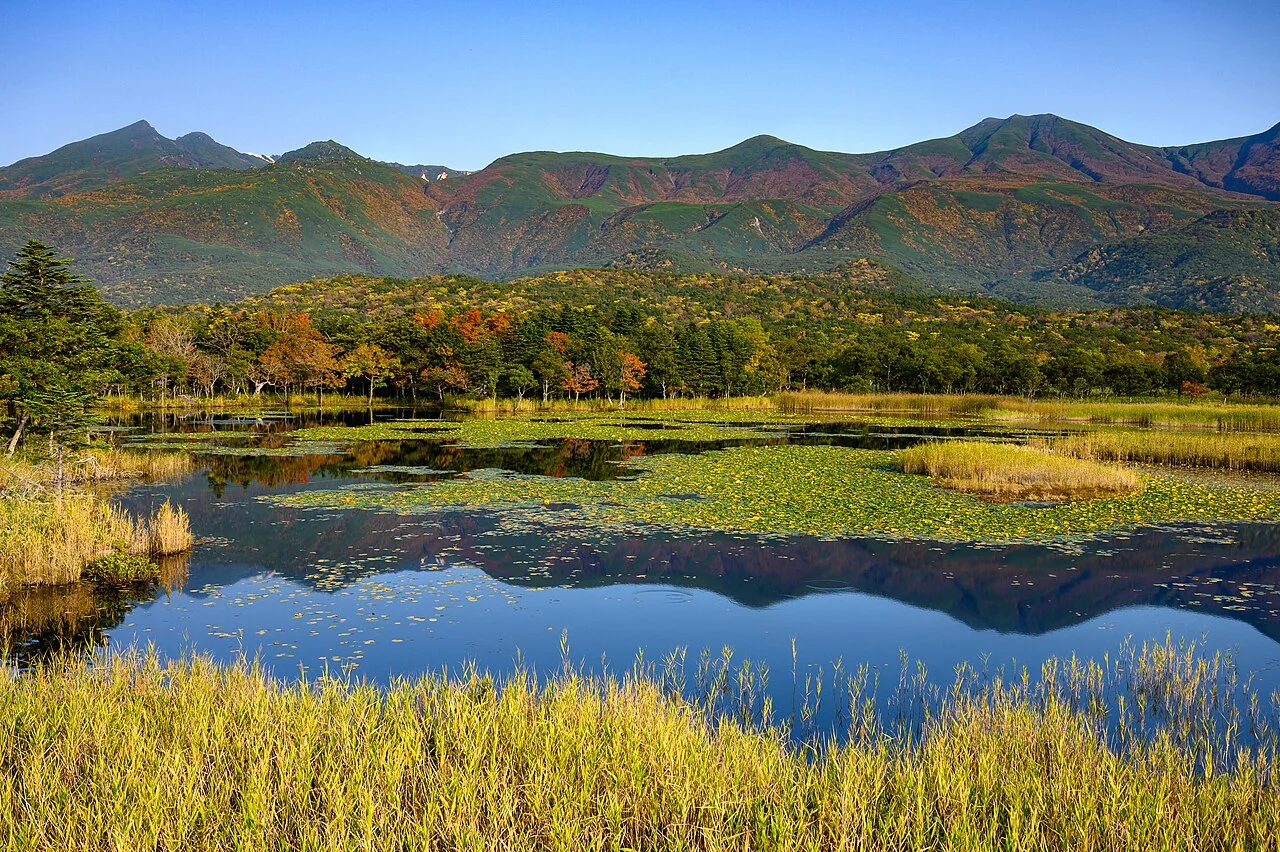
Starting from the Shiretoko Five Lakes park entrance, the elevated boardwalk runs roughly 800 metres to the Lakeside Observatory, making a 1.6-kilometre round trip that the park estimates at around 40 minutes. The boardwalk is free during the open season and requires no ground-trail registration or orientation lecture. Raised above the marshland with a step-free surface and gentle gradients, it is protected along its length by an electric fence, and free wheelchair rentals are available at the Shiretoko Five Lakes Field House. If you arrive by car, park parking fees are charged separately. Views from the boardwalk are wide open, so treat 40 minutes as pure walking time and add extra margin for photo stops and bus connections.
Three observation decks let you pick your turnaround point. Walking to the Mountain Range Observatory takes about 15 minutes return—ideal if the wind picks up, someone in your group has limited stamina, or you have a bus to catch. The Okhotsk Observatory is roughly 30 minutes return and focuses on the marshland and the sea. Continuing all the way to the innermost Lakeside Observatory brings you right up to the edge of First Lake for views of the water and peaks. On the decks, leave room for other visitors to pass and turn around; rather than hunting for photo angles while walking on the narrow sections, wait until you reach a platform.
The exit of the boardwalk is back at the entrance where you started. While the Lakeside Observatory connects to the ground trail, traffic at that junction is strictly one-way from the ground trail onto the boardwalk, so boardwalk walkers must return the way they came. This matters for families splitting up: if part of your group is taking the ground trail and another is on the boardwalk, arrange to meet at the park entrance beside the car park rather than at the first lake past the ground-trail gate. If you reach First Lake with time to spare and decide you want to add the ground trail, head back to the Field House first to complete the required entry procedures.
If you have come for mountain scenery or reflections, allow a few minutes at the lakeside for the wind to drop. Even when low cloud hides the peaks, the reeds in the foreground and the water's surface remain crisp. Because the boardwalk is fully exposed, it catches the wind; in spring and autumn, you may well need to zip up your jacket once you reach the decks even if the car park felt mild. When you only have a short window before an afternoon shuttle, turn back at the first platform—for car-free travellers, the gap until the next bus is the single most important time constraint here.
Ground Trails by Season: Small Loop vs Large Loop
To walk close to the lakes inside the forest, enter the ground trails via the Shiretoko Five Lakes Field House. The Small Loop covers about 1.6 kilometres and takes in Second Lake and First Lake, while the Large Loop runs roughly 3 kilometres, leading past Fifth Lake down to First Lake before joining the elevated boardwalk back to the entrance. Both routes are one-way only, so once you choose the Large Loop you must follow the park signage to the end. There are no toilets or shops along the trail—use the facilities and finish registration before entering, and eat lunch either in the designated dining area at the visitor centre or back in Utoro.
From the spring opening until 9 May, and again from 1 August until the autumn closure, the park operates under the Vegetation Protection Period. Groups of fewer than 15 people register on site at the Field House with a representative's name, address, and headcount, buy tickets at the machine, hand them to the counter, and attend a roughly 10-minute lecture. Entry costs ¥450 for ages 12 and over and ¥200 for ages 0 to 11; groups of 15 or more must contact the park in advance. Official walking times are about 90 minutes for the Large Loop and 40 minutes for the Small Loop. Entry is staggered by lecture slot, so expect a short wait during busy arrival periods. If you plan to take a boat cruise the same afternoon, factor in parking queues, form-filling, the briefing, walking time, and returning your car or checking in at the port. The 'Access & Facilities' page on the official website lists both park opening hours and the final lecture time—always work backwards from the last lecture slot rather than the gate closing time.
From 10 May to 31 July is the Brown Bear Activity Period, when independent visitors must also join a tour led by a registered Shiretoko Five Lakes guide. Large Loop tours take roughly 3 hours and start from ¥6,000 per adult with advance booking; Small Loop tours take around 1 hour 45 minutes and start from ¥4,000 per adult. Groups are capped at 10 people, and the park schedule lists only three Small Loop departures per day. If you want to fit the walk into a half-day, book a Small Loop slot early. If only Large Loop slots remain, weigh up the three hours of walking, commentary stops, and waiting for the group to regroup before deciding whether to switch to the elevated boardwalk or move your boat sailing.
After submitting the form on the official website, wait for the tour operator's reply to confirm your booking; same-day registration opens at 08:00 and closes once full. If you are travelling with young children or anyone who is pregnant, check participation rules with your chosen operator beforehand. Although the Small Loop covers the same distance as the elevated boardwalk, walking on forest soil, stopping together for guide commentary, and following bear-season controls add more than an hour to the trip. Both routes reach First Lake, so agree with your companions on the experience you want—a quick stroll, lake views, or learning to spot wildlife signs with a guide—as each demands different time and stamina.
Rainwater, mud, tree roots, and lingering snow slow your pace far more on the forest floor than on the boardwalk. In early spring or after rain, ask about trail conditions at the entrance; good-grip footwear is far more useful than packing an extra outfit for photos. If anyone in your family is prone to slipping on muddy paths, you can still walk the elevated boardwalk to First Lake together, while those keen on the forest book the Large Loop separately. If ground trails close during the Vegetation Protection Period due to bear sightings while the boardwalk remains open, switch straight to the boardwalk, then check the day's notices at the Shiretoko Nature Centre for an open short trail. Visitors must turn back whenever entrance barriers are up, as the park assesses and controls ground-trail access.
How to Route the Eight Views of Shiretoko
Driving towards Utoro from Shari along National Route 334, the first major stop is Oshinkoshin Falls. The cascade splits into two streams near the bottom, and the local tourist association marks a free parking area right beside it. If you arrive late in the day, stop at the falls and head straight into Utoro for dinner rather than hunting for viewpoints in the dark; if you are arriving by bus during the day and hop off here, check the onward timetable to Utoro first. Walking to the port along the main road with wheeled luggage is awkward, so save this stop for a day when you have a car if the bus connection does not line up.
Near Utoro Port, Oronko Rock requires climbing over 200 steep stone steps. If you are mainly after sunset views, head instead to Yuhidai (Sunset Platform) beside the National Shiretoko Campsite, which slots easily into the gap after dropping off luggage or before dinner. For panoramic views across the bay, the uphill road from Utoro towards the Shiretoko Nature Centre passes Cape Puyuni, looking back over the port and rugged coastline. Only pull over where there is a proper parking space—keep driving if there is nowhere legal to stop, rather than slowing down on a blind bend with oncoming traffic. Guests staying at the higher-elevation hot spring hotels should check the slope and street lighting back from town and take a taxi or shuttle from the port if needed.
Just beyond the Shiretoko Nature Centre lies Furepe Falls. The trail from the centre is about 1 kilometre each way, taking around 40 minutes return from spring to autumn and roughly 60 minutes on snow in winter. Groundwater seeps directly out of the sheer cliff face into the Sea of Okhotsk: the cliffside observatory lets you see both cliff and sea together, whereas boarding a cruise from Utoro Port shows you the waterfall from the water. Because the Nature Centre also sits at the junction for the Five Lakes and Shiretoko Pass, you can easily tack this walk onto your return from the Five Lakes without backtracking to the port. If bear activity or weather closes the trail, the indoor exhibits and the World Heritage Centre down at the harbour make easy substitutes.
Further into the peninsula, Kamuiwakka Hot Falls works differently depending on how you visit. Sightseeing cruises view where the warm water meets the sea from offshore, driving the branch road brings you to a bridge viewpoint on land, and wading up the thermal stream requires an advance booking with mandatory gear and check-in rules. For the 2026 season, the road to the bridge opened from 09:00 on 1 June to 11:00 on 1 October, while booked stream-climbing ran only from 1 July to 30 September—two separate calendars. When planning for 2027, check the official website separately for road access, traffic restrictions, and stream-climbing ticket release dates; if you simply want to see the waterfall plunging into the ocean, a short sightseeing cruise covers it.
Save Shiretoko Pass for a day when you are definitely crossing the mountains to Rausu. The 738-metre-high pass offers close-up views of Mount Rausu and, on clear days, vistas across the Nemuro Strait towards Kunashiri Island. If low cloud hangs over the ridge and you do not need to cross to the other coast, drop the pass from your itinerary and spend the time on the west side instead. For the 2026–27 winter, the roughly 23.8-kilometre stretch between the Iwaobetsu prefectural road junction and Rausu Yunozawa closed round the clock from 16:00 on 4 November 2026, with closure scheduled until late April 2027. Note that the Shari-side access road to the Five Lakes and the Kamuiwakka Hot Falls branch road each keep their own opening schedules—never assume the national highway reopening date applies to those park roads.
Sightseeing Cruises from Utoro: Cliffs, Rusha Bay & Cape Shiretoko
Cruises departing Utoro follow the Sea of Okhotsk coastline. Taking operator Aurora's published fares and routes as an example, the Kamuiwakka Falls course takes around 1 hour 30 minutes at ¥5,000 per adult; the Rusha Bay course uses a smaller boat, lasts around 2 hours 15 minutes, and costs ¥8,000 per adult; and the Cape Shiretoko course runs about 4 hours on a large vessel at ¥10,000 per adult. Primary-school child fares for these three routes are ¥2,500, ¥4,000, and ¥5,000 respectively, with adult rates applying from junior high school upwards. Once 2027 warm-season bookings open, you can pick your preferred date and vessel directly on each operator's reservation page.
For a first boat trip—or if you also have land activities scheduled the same day—the short route showcases the cliffs and waterfalls while leaving room for young children's meals and naps. The Rusha Bay cruise sails past stretches of coast frequented by brown bears, where binoculars work far better than relying on a phone's digital zoom. If reaching Cape Shiretoko at the tip of the peninsula is a primary goal, treat the roughly four-hour round trip as a major half-day activity. Boats view the cape from the sea and return to Utoro, as public roads near the Five Lakes do not reach the peninsula tip. Leave your luggage at your hotel and pack only warm layers and water for the sailing.
Check the operator's sailing status on the morning of your trip. Aurora typically decides around one hour before departure whether conditions permit sailing; strong winds or dense fog can force last-minute cancellations, and passengers with bookings are expected to check announcements themselves. If a sailing is cancelled due to weather, credit-card prepayments made via the official site are voided or refunded in full, whereas cancelling voluntarily in advance may incur a fee shown on the booking page. If a long cruise is a must-do, schedule it for your first morning after checking in so the next day acts as a weather backup—if the sea is too rough, swap in the Five Lakes or Furepe Falls trail instead.
Aurora requires passengers to collect or buy tickets at least 20 minutes before departure, and it takes around 5 minutes on foot from the ticket office to the pier. Drivers can park at the municipal car park just past the Oronko Rock tunnel for ¥400 per entry for standard cars. Large boats have an onboard kiosk and indoor seating, while on smaller vessels it is best to bring your own drinking water from shore. Open decks are exposed to wind and spray, so pack a windproof jacket. Wheelchair users should telephone the operator in advance: boarding and moving around inside the large boat involves steps, and small boats cannot accommodate wheelchairs for boarding or onboard movement—in that case, make the step-free Five Lakes boardwalk your centrepiece.
Is Rausu Worth Another Half-Day?
If whale watching or photographing winter sea eagles appeals to you, a half-day at Rausu Port has a clear focus. The Rausu Tourism Association highlights whales, orcas, and seabirds on warm-season cruises, and drift ice, Steller's sea eagles, and white-tailed eagles in winter—all out on the Nemuro Strait. If your first visit is purely for the Five Lakes and the peninsula's cliffs, Utoro's boardwalk, sightseeing boats, and Nature Centre already fill a day and a half comfortably. Wildlife enthusiasts, however, can make Rausu Port the main event of the next day by changing hotels or stopping overnight after crossing the pass.
Crossing Shiretoko Pass is the leg most easily underestimated on a map. Even after spring snow-clearing reopens the road, timed daytime restrictions often apply at first: when the winter closure lifted on 28 April 2026, for example, the initial opening window was only 09:30 to 16:00. That window governs both your outward and return journeys. Staying in Utoro while booking an early-morning sailing in Rausu will not work if the pass opens too late. Instead, stay overnight in Rausu before an early departure so you can walk straight to the ticket desk, then decide afterwards whether to drive back to Utoro or continue towards Shibetsu and Nakashibetsu.
In winter, the official detour between the two coasts runs from Rausu down National Route 335, then along National Route 244 over Konpoku Pass to Shari, before joining National Route 334. Even though it starts along the coast, part of that detour still climbs through the mountains. Trying to fit a morning activity at one port and an evening one at the other on a snowy day leaves you at the mercy of short daylight and road conditions. Without winter driving experience, arrive via Memanbetsu and focus on Utoro and Abashiri, or approach Rausu from Kushiro and Nakashibetsu using east-coast transport. To cover both coasts, dedicate a transfer day to the journey and stay near each departure port.
Getting Around Without a Car: Three Key Legs
The first leg is reaching eastern Hokkaido from Memanbetsu Airport. The Shiretoko Airport Liner runs directly between Memanbetsu Airport, Abashiri, Shari, and Utoro, with its 2027 winter service operating from 16 January to 7 March. Departing Stop 4 at the airport at 09:35 and 13:30, it reaches Utoro Onsen Bus Terminal at 11:48 and 15:46 respectively for ¥4,000 one way. Tickets can be bought online or on the day. Buses depart strictly on schedule and will not wait for delayed flights; if baggage claim makes you miss the 13:30 coach, head towards Abashiri instead or overnight there. From Abashiri, you can take the JR Senmo Main Line to Shiretoko-Shari Station and transfer to the Shari Bus Shiretoko Line for Utoro—look up 'Shiretoko-Shari' for train times and 'Shari Bus Terminal' for bus schedules.
The second leg covers local buses between Shari, Utoro, and the park sights. Under Shari Bus's 1 November 2026 to 27 April 2027 winter timetable, the single fare between Shari and Utoro Onsen is ¥1,650. The extension from Utoro to the Shiretoko Nature Centre runs only from 16 January to 22 March at ¥500 one way: it leaves Utoro Terminal at 10:30, arrives at the Nature Centre at 10:40, and after walking Furepe Falls you can catch the 13:10 bus back to Utoro or the 14:20 service continuing to Shari. For summer trips to the Five Lakes, pick your return bus first and then decide between the boardwalk and a ground loop. Because buses stop at the Shiretoko Nature Centre—still a drive away from the Five Lakes entrance—winter visitors heading to the lakes should pick a tour offering hotel pick-up or a clear on-site meeting arrangement.
The third leg is the final stretch around town in Utoro. Utoro Onsen Bus Terminal, Michi-no-Eki Utoro Shirietoku, and the harbour ticket offices are separate locations, and several hot spring hotels sit up on the hillside. When choosing accommodation, check the gradient for three regular walks: arriving with bags, heading down for early cruise check-in, and returning uphill after dinner. On the 2027 winter timetable towards the airport, coaches leave Utoro Terminal at 09:30 and 12:20, reaching Memanbetsu Airport at 12:00 and 14:34. Only the 09:30 service picks up at designated hotels including Shiretoko Daiichi Hotel, KIKI Shiretoko, and Kitakobushi; the airport liner does not carry short-hop passengers between local hotels, the terminal, and the roadside station. Before booking an early tour, check with your hotel about breakfast hours or morning shuttle options.
If you are driving, save two separate pins in your satnav: the Shiretoko Nature Centre for the Furepe Falls trail and road junction, and the Shiretoko Five Lakes Field House for lake entry and trails. Official estimates put the roughly 14-kilometre drive from Utoro to the Five Lakes at about 20 minutes, using MAPCODE 757 730 727 for the lakes. On weekends and peak autumn dates, that short drive excludes waiting for a parking bay; if only 20 minutes remain before a lecture or guide meet-up, grab breakfast from town to eat at a designated spot instead of sitting down at the port. Before driving further on to Kamuiwakka Hot Falls in summer, verify that year's road regulations and private-car restrictions.
Shiretoko Five Lakes & Drift Ice in Winter 2027
In winter from Utoro, decide first whether to spend your half-day in the forest or out on the ice. The Shiretoko Shari Tourist Association's Severe Winter Shiretoko Five Lakes Ecotour runs from 22 January to 22 March 2027, exclusively with certified guides on snowshoes or cross-country touring skis. Groups are capped at 10 people for a roughly 3-hour walk inside the park, starting from ¥6,500 per adult (including the ¥1,500 conservation fee). Listed meeting times are 08:00 in the morning and 12:30 in the afternoon, shifting to 13:00 from 29 January onwards. Follow your booked operator's instructions for the exact meeting point, and confirm in advance whether you are using their Utoro hotel pick-up or arriving independently.
Winter Five Lakes tours add extra time for moving through snow and fitting gear. Every participant needs to sustain around three hours of walking with outdoor stops for commentary. If someone in your group only wants a short stroll in the snow, switch to Furepe Falls near the Shiretoko Nature Centre or choose a half-day snowshoe programme based around the Nature Centre. Guides may cancel or reroute tours if weather alerts, conditions, or ice thickness make walking unsafe, and only they judge whether it is safe to step onto frozen lake surfaces during the park closure. Dress in thermal base layers, a windproof outer shell, waterproof gloves, and snow-ready boots, and select a package that includes snowshoe or boot hire if you need equipment.
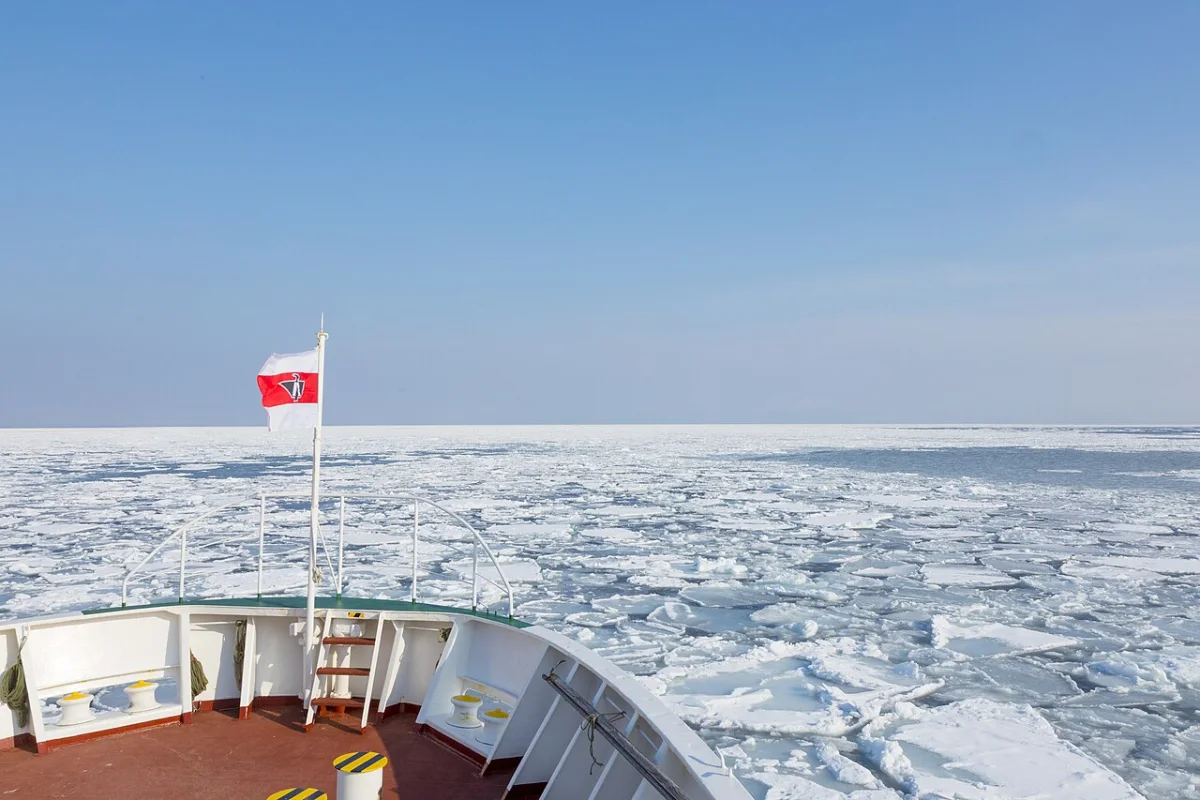
To walk directly on the sea ice, join a guided Utoro drift ice walk in a drysuit. Operator SHINRA, for instance, runs tours from 1 February to 31 March lasting about 90 minutes for ages 7 and up, priced at ¥8,000 from 1 February to 10 March and ¥7,500 from 11 March onwards. Meet-on-site and hotel-pick-up slots have separate quotas, and both adults and children must meet height, suit-size, and participation limits. Because the drysuit keeps freezing water out rather than providing warmth on its own, wear the inner layers specified by your operator. Keep your hands free for balance and photos by stowing your phone or camera securely instead of fumbling with accessories in thick gloves out on the ice.
Whether sea ice reaches the shore depends on seasonal winds and drift-ice movement. Scheduling your drift ice walk for your first full day gives you the next day as a fallback for trails or rescheduled sessions if conditions fail to cooperate. Solo visitors looking at ice from land should stick to open roads and viewpoints—floes pushed against the shore can still shift or drift back out, making it dangerous to step onto them unguided. For sea-eagle spotting by boat among the ice, winter cruises depart Rausu into the Nemuro Strait, while Abashiri offers another port option. If you only want one sea-ice experience, compare boat-based sightseeing, Utoro's guided nearshore walks, and the access logistics for both towns in our Abashiri drift ice guide.
If you are visiting over the 2026–27 New Year period, note the staggered holiday closures at Utoro's two indoor centres. At the port, the Shiretoko World Heritage Centre opens 09:00–16:30 in winter and closes on Tuesdays plus 29 December to 3 January. At the road junction, the Shiretoko Nature Centre opens 09:00–16:00 in winter and closes from 28 December 2026 to 3 January 2027, as well as on 2, 9, 16, and 23 December. Because the New Year week falls before the winter Five Lakes ecotour season begins, plan indoor stops, meals, and hotel check-in ahead of time for gale or blizzard days rather than driving up to a locked visitor centre first.
One-Night, Two-Night & Weather-Backup Plans
With just one night from spring to autumn, stop at Oshinkoshin Falls along the coast on the way in from Memanbetsu or Abashiri, then spend the afternoon around Utoro Port and the World Heritage Centre. Make Shiretoko Five Lakes the anchor for the next morning: drivers should arrive shortly after opening to walk the boardwalk before continuing to other sights, while anyone with a ground-trail tour should prioritise check-in. Only add a short afternoon cruise if you do not have to leave town early. If you are catching an afternoon Shari Bus and JR train, have lunch, collect your bags, and reach the bus terminal first—boat return times carry enough variance that squeezing them in right before a rail connection is risky.
With two nights, take a morning cruise on one day and leave the afternoon for the Nature Centre and Furepe Falls, keeping the other morning for the Five Lakes. If you only secure confirmation for one day during the Brown Bear Activity Period, lock that Five Lakes slot in first and place the boat cruise on a remaining half-day. When adults take the ground trail while children and older travellers walk the boardwalk, set a harbour restaurant as the next meeting point—that gives everyone somewhere comfortable to sit and wait if ground-trail entry runs late. On bright but windy days, coastal viewpoints and the exposed boardwalk bear the brunt, so swap to an open woodland trail or indoor centre; if forest trails are also shut, move lunch and shopping into Utoro and save your top-priority activity for day two.
With one winter night, you usually have time for only one activity the next morning. Note the gap between 8 and 22 March 2027: the Severe Winter Five Lakes tours are still running, but the Shiretoko Airport Liner winter coach has already ended, so car-free travellers should plan around Shari Bus transfers and Utoro hotel shuttles. To combine forest snowshoeing with drift ice walking, stay two nights during the February–March overlap, lock in both guided tour operators first, and only then book your return transport. During cold snaps, keep a flexible morning before departure in case buses are suspended or tours are shifted.
Shiretoko also pairs smoothly with the rest of eastern Hokkaido. Heading along the north coast, combine Abashiri's harbour or museum with Utoro; coming from the south, fit Kushiro Marsh and Lake Akan around a Rausu visit or the outer Shari loop. On a day trip from Abashiri, pick either the Five Lakes or the harbour area as your main stop and stay on the west side for the drive back rather than crossing Shiretoko Pass and doubling back. If you are still shaping your broader route, check our Eastern Hokkaido lakes and wildlife itinerary; once you are set on staying on the west coast and want to weigh harbourfront hotels against hillside resorts, read our guide to Utoro accommodation areas.
What to Do If You Encounter Brown Bears or Wildlife
Wildlife in Shiretoko moves freely between the shoreline, roadsides, and forest. If you spot a brown bear while driving, stay inside the vehicle and move on as traffic allows—never stop in an active lane for prolonged filming. On foot along a trail, follow Shiretoko Nature Centre guidance: stay calm, do not scream or run, and back away slowly, or follow your guide's instructions if you are in a group. Respect all park closures and detours.
Keep all snacks sealed and take every scrap of rubbish back out with you. Once bears learn to associate people or cars with food, they begin approaching populated areas—leaving future hikers, and ultimately the bear itself, to bear the consequences. Treat Ezo sika deer, foxes, and seabirds the same way: watch through binoculars or photograph from where you stand without feeding or chasing them. Before starting the ground trail with children, pack snacks deep inside your bag and turn the walk from the car park to the lakes into a game of spotting fallen logs, woodpecker holes, and animal tracks.
A few useful answers
Can you visit Shiretoko Five Lakes without a reservation?
Yes, the elevated boardwalk is free and requires no booking during the open season. During the Vegetation Protection Period, groups of fewer than 15 can register on site at the Field House and attend a short lecture for the ground trails. From 10 May to 31 July, you must join a registered guide tour—book ahead if you want a specific time slot.
Can you see all five lakes from the elevated boardwalk?
No, the boardwalk only goes as far as First Lake and takes around 40 minutes return. To see all five lakes, enter via the ground trail and walk the Large Loop; at the far junction, foot traffic is one-way from the ground trail onto the boardwalk.
How do you visit Shiretoko Five Lakes in winter 2027?
Book the Severe Winter Shiretoko Five Lakes Ecotour, which runs from 22 January to 22 March 2027 with certified guides, and follow your operator's instructions to the meeting point.
Can you drive directly from Utoro to Rausu in winter?
No. National Route 334 over Shiretoko Pass closes 24 hours a day from 16:00 on 4 November 2026 until late April 2027. Drivers must detour via Shari, Konpoku Pass, and Shibetsu.
Which sightseeing cruise from Utoro is best for a first visit?
If you are also walking the Five Lakes boardwalk the same day, take the roughly 1 hour 30 minute Kamuiwakka Falls route. To see the tip of the peninsula from the sea, choose the roughly 4-hour Cape Shiretoko cruise and allow extra time for check-in and weather backup.
Official information and references
Sources used in this guide.
- Ministry of the Environment – Nature & World Heritage Listing Criteria for Shiretoko National Park
- Shiretoko Five Lakes – Elevated Boardwalk, Wheelchair Hire & One-Way Flow
- Shiretoko Five Lakes – FAQs & Walking Times for the Three Observatories
- Shiretoko Five Lakes – Ground Trails, Brown Bear Season, Bookings & Fees
- Shiretoko Five Lakes – Access, Facilities, Opening Hours & Restrictions
- Shiretoko World Heritage Centre – Winter Opening Hours Notice
- Shiretoko Shari Tourist Association – Eight Views of Shiretoko
- Shiretoko Nature Centre – Trail Distances, Seasons & Snow Walking Information
- Shiretoko Nature Centre – Winter & New Year Closure Notices
- Shiretoko Nature Centre – Rules for Brown Bear & Wildlife Encounters
- Kamuiwakka Hot Falls – Official FAQ on Road Access & Booked Stream Climbing
- Hokkaido Development Bureau – National Route 334 2026–27 Winter Closure & Detour Notice
- Hokkaido Development Bureau – National Route 334 Spring 2026 Timed Traffic Data
- Shiretoko Sightseeing Cruise Aurora – Routes, Vessels, Durations & Fares
- Shiretoko Sightseeing Cruise Aurora – Check-In, Cancellations & Facilities FAQ
- Shiretoko Rausu Tourism Association – Wildlife & Whale Watching Information
- Shiretoko Rausu Tourism Association – Winter Cruises & Seasonal Information
- Shari Bus – Shiretoko Airport Liner 2027 Winter & Ticket Information
- Shari Bus – Shiretoko Line Seasonal Timetables & Stops
- Shiretoko Shari Tourist Association – 2027 Severe Winter Shiretoko Five Lakes Ecotour
- SHINRA – Winter Nature Tour Packages, Times & Prices
- Ministry of the Environment – Shiretoko World Heritage Centre Exhibits & Listing Date
- Shari Bus – 2026–27 Shiretoko Line Winter Timetable & Fares
- Shari Bus – 2027 Memanbetsu Airport Direct Coach Schedule, Stops & Fares
- Shiretoko Shari Tourist Association – Oronko Rock Access & Walking Information