Abashiri drift icebreaker sailings run 20 January to 31 March 2027. Compare the large Aurora and small Aurora 3, check fares, boarding lists, car-free day routes, and cancellation backups.
- Region & Focus
- Abashiri
- Reading Scope
- 21 min read · 12 chapters · 6 Q&As
- Official Verification
- 27 official sources checkedUpdated 22 November 2026
Chapter Route Map (tap any stop)
- Which Month to Choose for Drift Ice
- 2027 Sailings & Fares: Large Aurora vs Small Aurora 3
- Reservations, Boarding List & Pier Check-In
- Checking Sailing Status & Cancellations on the Day
- Connecting the Harbour and Mount Tento Without a Car
- Morning Cruise, Afternoon at the Ryu-hyo Museum & Abashiri Prison
- Okhotsk Ryu-hyo Museum: From the Sub-Zero Ice Room Back to the Sea
- Abashiri Prison Museum: Start at the Five-Wing Cellblock and Leave Time for Frontier History
- Two Ways to Plan Without Boarding a Boat
- How to Watch the Ice on Deck & Stay Warm
- Why Drift Ice Still Reaches the Sea of Okhotsk at 44°N
- One Night or Two in Abashiri, and Linking to Shiretoko or Monbetsu
- Quick Q&A
Abashiri's large sightseeing icebreaker, the MS Aurora, is scheduled to operate from 20 January to 31 March 2027, departing from Michi-no-Eki Ryuhyo Kaido Abashiri on roughly one-hour cruises. First-time visitors should prioritise a morning sailing on the large vessel, then spend the afternoon at the Okhotsk Ryu-hyo Museum on Mount Tento and the Abashiri Prison Museum at the foot of the hill. You can complete the entire route by bus, though once you disembark you will need to follow the posted stop timetables. If seeing sea ice is the main reason for your trip, allow two mornings in Abashiri so that once your cruise succeeds, you can use the second morning for the coastal railway or your next stop.
Which Month to Choose for Drift Ice
If your dates are flexible, look first for accommodation and cruise seats from mid-February to early March. That is the window cited in the operator's FAQ as historically more reliable for seeing drift ice. The position and arrival timing of the ice belt shift each year: ice that has already reached the coast can be pushed back out to sea overnight by wind and currents. Keeping two consecutive mornings in the same port gives you far more room to adjust than dashing across Hokkaido on arrival day for a single sailing.
Before booking an opening-week cruise in late January, decide whether you are happy to sail if only the Cape Notoro coastline is visible. In 2025, the Abashiri Meteorological Office did not record its first visual sighting of drift ice until 15 February, with shore arrival logged on 17 February. In 2026, when the Okhotsk Ryu-hyo Museum and Abashiri City took over visual observations from the Mount Tento observatory, drift ice was sighted on 22 January and reached shore on 1 February. A gap of several weeks between two consecutive winters shows why the exact same travel date can bring completely different sea conditions. See the 2026 sea ice report by Abashiri City and the Okhotsk Ryu-hyo Museum.
In Japanese forecasts, Ryuhyo Shonichi marks the first day drift ice is sighted from the observation post, while Ryuhyo Sekigan Shonichi records the first day floes reach the shore or join landfast coastal ice, halting coastal shipping lanes. For passengers, the more practical question is how far the ice belt lies from the harbour. A round trip on the large Aurora lasts about an hour, and the operator lists a one-way range of roughly 10 km, meaning drift ice can appear in that day's official observation log while still sitting beyond the ship's reach.
March trips can take advantage of both the large and small vessels, provided you keep sailing times and land transfers separate. From 15 March onwards, the large Aurora drops to three regular sailings a day, with the final departure at 13:30. If you plan to visit a museum in the morning before boarding, that 13:30 cruise is your only option. When sea ice is the sole focus of your journey, avoid pinning the entire trip on the final operating day just to chase lower late-month hotel rates.
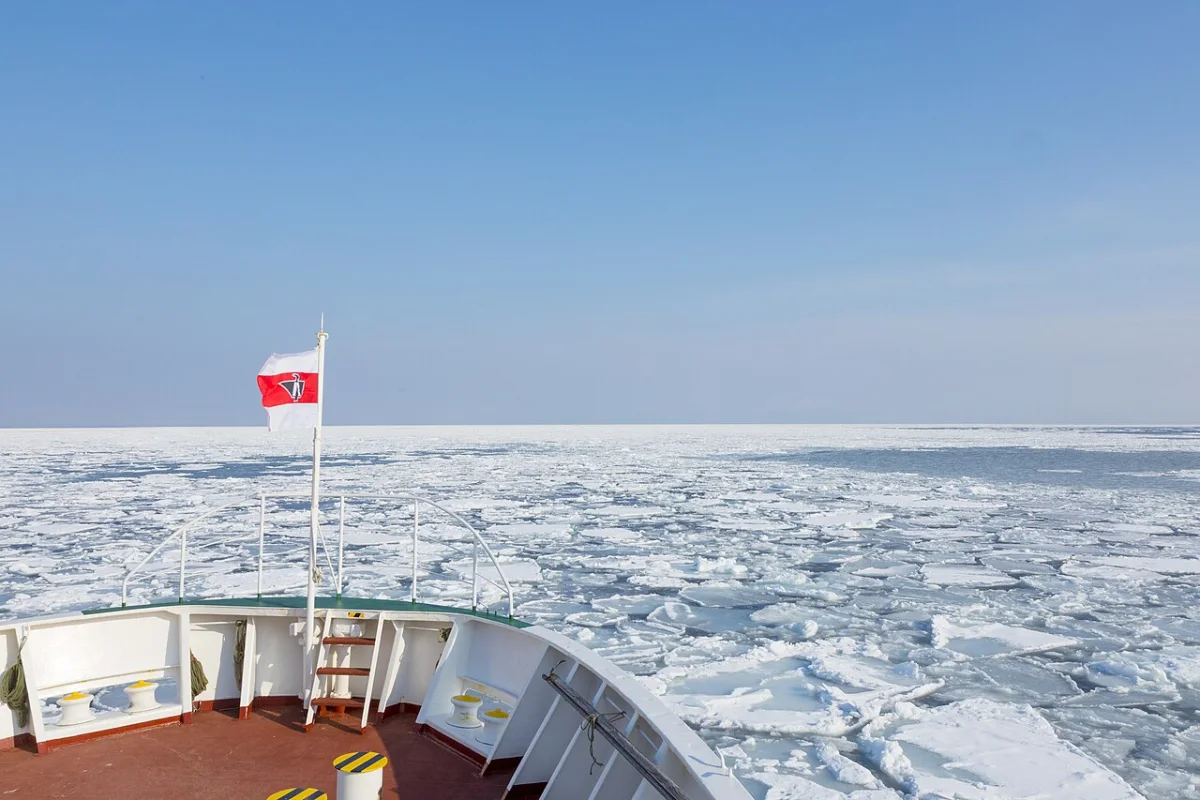
Abashiri drift icebreaker sailings run 20 January to 31 March 2027. Compare the large Aurora and small Aurora 3, check fares, boarding lists, car-free day routes, and cancellation backups.
2027 Sailings & Fares: Large Aurora vs Small Aurora 3
The large Aurora is the natural choice for families and first-time visitors. Standard fares are ¥7,000 for junior high school students and adults, ¥3,500 for primary school children, and free for preschoolers. Inside, heated cabins let you step out onto the deck and duck back indoors to warm up. General seating boards in queue order at the gate. If you want a guaranteed seat at the front of the second deck, head to the Special Seat section after boarding: there are 50 seats in total at ¥500 each, collected by crew after departure on a first-come, first-served basis.
The smaller Aurora 3 runs an offshore ice route of roughly two hours, making it better suited to travellers willing to spend extra time chasing floes and watching the ice from closer to the waterline. Official fares are ¥9,800 for junior high school students and adults and ¥4,900 for primary school children. In March, the operator lists 9:00 and 13:00 departures for the smaller vessel as provisional sailings, which open for booking only once confirmed to run. If you have an afternoon intercity connection, stick with the one-hour large ship to leave breathing room if return times vary with sea conditions.
The large vessel's regular timetable is split across four date bands. In February, the 8:00 and 16:45 departures are provisional sailings that open for booking only when confirmed by the operator. Check both the date and departure time carefully on the booking screen, especially from 15 March onwards when the second sailing moves from 11:00 to 11:30.
For two adults and one primary school child taking the large Aurora alongside standard admission to both the Okhotsk Ryu-hyo Museum and the Abashiri Prison Museum, combined tickets come to ¥24,000, of which ¥6,500 covers the two museums. Because the prison museum involves outdoor walking between buildings, families with young children or anyone wanting to stay warm indoors can pair the cruise with just the Ryu-hyo Museum, saving ¥3,750 on prison entry and skipping an extra bus wait. If you want to see both museums without rushing, save the prison for the following morning and head back into town for lunch.
| Dates | Departure Times |
|---|---|
| 20–31 January | 9:00, 11:00, 13:00, 15:00 |
| 1 February – 14 March | 9:30, 11:00, 12:30, 14:00, 15:30 |
| 15–31 March | 9:30, 11:30, 13:30 |
Reservations, Boarding List & Pier Check-In
The operator provides an English reservation calendar where you pick your vessel, date, and sailing time before selecting ticket types by passenger count. Symbols indicate availability: a circle means open seats, a triangle means limited space, a diamond means waitlist, and a cross means sold out. Walk-up tickets are also sold at the terminal when seats remain. The enquiry line is 0152-43-6000; prior to the winter season opening on 20 January 2027, phone support operates on weekdays only from 9:00 to 17:00 JST, closed at weekends and on Japanese public holidays. See the Aurora official reservation calendar.
If you are considering waitlisting another time slot on the same day, double-check the vessel type and sailing time on your existing reservation—switching between the small and large vessels changes both cruise duration and fare. Online bookings can be reopened through the reservation lookup page. Where members of the same group paid separately, gather everyone's confirmation emails in one place and check names against your boarding list before arriving at the counter.
Every passenger—whether booked online or by phone, including accompanying preschoolers—must be entered on a boarding list. The English version includes fields for full name, nationality, and passport number alongside the sailing date, departure time, and companion details. If you do not have access to a printer, the terminal accepts a handwritten paper sheet copied cleanly with the exact same fields. Download the English boarding list.
Check-in takes place at Michi-no-Eki Ryuhyo Kaido Abashiri (Minami 3-jo Higashi 4-chome 5-1, Abashiri, Hokkaido), where the bus stop is signed Michi-no-Eki Ryuhyo-Saihyosen Noriba. For a 9:30 departure, aim to finish check-in by 9:10. Build in time for parking, luggage lockers, and the toilets, and keep your booking email and boarding list in an inner coat pocket until you are inside. Coin lockers are on the ground floor of the roadside station, and drivers have free parking on site.
Under official procedures, check-in should be completed 20 minutes before sailing, and the counter closes 5 minutes before departure. Never time your bus to that 5-minute cutoff: storing bags, snowy traffic delays, or a queue at the desk can easily cost you the boat. To sit together on board, join the boarding gate queue together right after checking in rather than having members board in separate waves.
Checking Sailing Status & Cancellations on the Day
Check the operator's Service Status page before leaving your hotel, reading the updates for the large and small vessels separately. Go/no-go calls are usually made around one hour before departure, and the operator does not contact booked passengers individually when a cruise is cancelled. Pair this with the Japan Meteorological Agency's Hokkaido Coastal Sea Ice Information, updated daily around 8:00 JST to show ice within roughly 20 nautical miles of shore plus the next-day outlook. Check Aurora sailing status and JMA coastal sea ice information.
When there is no drift ice within range, the large Aurora runs a Cape Notoro Sightseeing Cruise instead, while the small Aurora 3 is cancelled. Even when sea ice is present, strong winds or heavy swell can still force the large ship to cancel. If you have a full day in hand, head down to the harbour for your scheduled slot; if the route switches to the cape cruise and you only want ice, your next move hinges on the cancellation cutoff and the next day's seat availability.
Voluntary cancellations are free of charge until 23:59 JST on the evening before your sailing, rising to a 100% fee from 0:00 JST on the day of departure. On the day itself, cancel by phone or at the ticket counter. When the operator cancels a sailing, paid fares are refunded in full, with online card refunds processed by the operator. If a vessel sails on a rerouted or shortened course, the operator determines whether a partial refund applies. Missed sailings receive no refund. Read the operator cancellation and refund policy.
Heavy snowstorms require rethinking land plans too. The hop from a town hotel to the roadside station is brief, whereas the road from the harbour up to Mount Tento climbs steadily. If buses suspend service or roads close, stay close to your accommodation. The Mount Tento observatory depends entirely on visibility: in thick fog or blowing snow, spend your time inside the museum galleries instead and take the next bus back down the hill.
Connecting the Harbour and Mount Tento Without a Car
Abashiri Station is the JR railway hub, Abashiri Bus Terminal is the town-centre bus depot, and Michi-no-Eki Ryuhyo-Saihyosen Noriba is the harbour stop for the icebreaker. If you are staying near JR Abashiri Station, board the Sightseeing Facilities Loop Bus at Stand 1 for the pier, or Stand 2 for the Ryu-hyo Museum and Prison Museum. From the town-centre bus terminal, Stand 4 serves the harbour and Stand 3 heads up towards Mount Tento, saving central guests a detour back to the JR station.
Abashiri Bus has published a draft winter timetable for the Sightseeing Facilities Loop Bus covering 20 January to 31 March 2027, with no advance booking required. Travelling uphill from the harbour, the route calls at Abashiri Bus Terminal, Abashiri Station, Keimusho-mae, Abashiri Prison Museum, Mount Tento (Ryu-hyo Museum), and the Hokkaido Museum of Northern Peoples. Save Keimusho-mae and Abashiri Prison Museum separately on your phone: the former sits beside the active modern prison, while the relocated historic buildings are at the latter stop.
Arriving from Memanbetsu Airport, check the Abashiri Bus Memanbetsu Airport Line. Selected winter coaches extend beyond town to the icebreaker pier, so only stay on board to the terminus if the timetable's final row shows an arrival time at Michi-no-Eki Ryuhyo-Saihyosen Noriba. To reach Mount Tento or the Prison Museum from the airport, change at Abashiri Station. Trying to fly straight into a boat departure leaves little cushion for flight delays, baggage reclaim, the bus transfer, and pier check-in; staying the night before in Abashiri makes for a far calmer morning. Check the Memanbetsu Airport Line timetable.
Winter bus notices state that selected QR-code mobile payments can be scanned on board, whereas IC transit cards such as Suica cannot be tapped directly. Carry some cash or purchase route tickets beforehand through the bus company's website. Travellers riding both the airport line and town buses across two or three days can compare point-to-point fares against the seasonal Abashiri Free Pass (¥2,200 for two days or ¥3,300 for three days). If you continue on the Shiretoko Airport Liner to Utoro the next day, that coach requires a separate ticket.
Morning Cruise, Afternoon at the Ryu-hyo Museum & Abashiri Prison
Taking the 9:30 large Aurora in February as an example, the 8:42 bus from Stand 1 at JR Abashiri Station reaches the pier at 8:50 under the winter draft timetable. That gives you 20 minutes to check in by 9:10, returning to the dock around 10:30. Walk back to the bus stop by 10:45 to ride straight up to Mount Tento; if the ship docks late, warm up indoors, add a layer, or grab an early bite at the terminal and take the next 11:35 departure, arriving at Mount Tento at 11:55.
If you board the 11:00 sailing instead, you will return around noon, making the 12:25 or 13:05 buses up to Mount Tento your natural launch points. To maximise hilltop time, eat something quick by the harbour and leave a sit-down dinner for when you return to the station area. Travelling downhill from the Ryu-hyo Museum to the prison, the winter draft lists a 14:03 bus arriving at the Abashiri Prison Museum at 14:08. The prison closes at 17:00 with last admission and ticket sales at 16:00, so calculate your visit around the final bus back to town rather than working backwards from closing time.
Visitors with a strong interest in history can reverse the order of the two museums. After disembarking, take the Mount Tento bus and get off first at the Prison Museum so you have better daylight for its outdoor grounds, then catch an afternoon uphill bus to the Ryu-hyo Museum. Winter last entry there is also 16:00: prioritise the sub-zero ice room and marine exhibits, treating the rooftop lookout as a bonus if the sky is clear. If you return to the pier and discover you have missed a bus, avoid cramming both museums in—linger at the prison instead, or head straight up to the Ryu-hyo Museum and observatory.
The winter draft timetable uses ticked columns by month for January, February, and March. Check both date and direction before boarding to confirm that column serves your intended stop; the final evening service up towards Mount Tento terminates at Abashiri Station. Leave ample margin when connecting off the hill to an airport coach or limited express train, and consider a taxi from the pier or your hotel in snowy weather if you have large suitcases. View the winter sightseeing bus PDF.
If driving yourself, still start the morning at the roadside station. The Hokkaido Tourism Organization estimates roughly 30 minutes by car from Memanbetsu Airport and 8 minutes from Abashiri Station, though winter driving calls for extra margin for parking, slow intersections, and icy speeds. After the cruise, walk the outdoor Prison Museum grounds first before driving up to Mount Tento; the prison sits on the Lake Abashiri side while the Ryu-hyo Museum is at the summit, so enter each car park separately in your satnav. Should weather deteriorate, finish the hilltop visit early before heading down for a meal.
| Activity | Bus Stop | Time Allowance |
|---|---|---|
| Ride the Aurora icebreaker | Michi-no-Eki Ryuhyo-Saihyosen Noriba | Roughly 1-hour sailing, plus check-in and disembarkation time |
| See drift ice & the Sea of Okhotsk | Tentozan (Ryuhyokan) | Around 1 hour for galleries and tanks, plus extra if visibility is clear at the observatory |
| Explore relocated cellblocks & penal history | Hakubutsukan Abashiri Kangoku (Abashiri Prison Museum) | Allow 1.5 to 2 hours to walk the historic buildings and history hall unhurriedly |
Okhotsk Ryu-hyo Museum: From the Sub-Zero Ice Room Back to the Sea
Located at 244-3 Tentozan, the museum normally opens 9:00–16:30 from November to April (last entry 16:00), switching to 10:00–15:00 from 29 December to 5 January (last entry 14:30). Standard admission is ¥990 for adults, ¥880 for high school students, and ¥770 for primary and junior high school pupils, with a reduced ¥790 senior rate for visitors aged 75 and over with proof of age. Access to the Mount Tento observatory alone is free.
Head downstairs first to the -15°C Drift Ice Experience Room, where you can touch real sea ice harvested from the Sea of Okhotsk and spin a wet towel until it freezes stiff in mid-air—an exhibit kept running even through summer. Family members who dislike the cold can wait comfortably in the main exhibition hall; if accompanying children into the chamber, fasten zips and put gloves on outside the doors. Swap out damp gloves in a warm area after returning from the boat before handling the ice.
The star of the tanks is the Clione, or sea angel, a tiny planktonic marine mollusc. Look first for its translucent outline drifting in the water, then watch its pair of wing-like flaps beating gently. Adjacent displays showcase other Sea of Okhotsk marine life alongside under-ice footage, offering a striking underwater counterpoint to the surface floes viewed from the ship.
From the Mount Tento observatory, one side looks out over the Sea of Okhotsk and the Shiretoko mountain range, while the opposite side overlooks Lake Abashiri. On clear days, orient yourself by locating the harbour and the morning's sailing direction before scanning for the outer white band of drift ice. Under overcast skies with flat, shadowless light, subtle colour shifts across the sea surface are often easier to read than picking out a single white patch. When your bus time nears, return to the ground floor first and decide whether to save the rooftop view for the following day.
Abashiri Prison Museum: Start at the Five-Wing Cellblock and Leave Time for Frontier History
Set at 1-1 Yobito, Abashiri, the museum preserves original wooden structures relocated from the old Abashiri Prison across a spacious open-air site. Admission is ¥1,500 for adults, ¥1,000 for high school students (student ID required), and ¥750 for primary and junior high school pupils. Standard hours are 9:00–17:00 with last admission at 16:00; the museum closes on 31 December and 1 January.
Pick up a site map at the gate, and if short on time, head straight for the Five-Wing Cellblock and Central Guardhouse, where five timber wings radiate outward so guards at the centre could monitor every corridor at once. Follow the path onward to the Prison History Hall, which traces how the Meiji government deployed convict labour to carve Hokkaido's Central Road and examines the human cost of the harsh frontier conditions. For cellblock layouts, the lecture hall, and the Futamigaoka Farm story, read our guide to Abashiri Prison Museum's architecture and penal history.
The museum's FAQ lists the Prison Cafeteria operating from 11:00 to 15:00 with last orders at 14:30. It works neatly for lunch if you take the 9:30 boat and reach the prison around midday; if you visit the Ryu-hyo Museum first and linger, eat back in town instead. Photography is permitted across most of the grounds except in specific signed areas and exhibits, while video recording and live streaming intended for upload to video-sharing sites are prohibited.
In blowing snow, concentrate on the Prison History Hall and the key historic buildings you most want to see inside, stepping carefully indoors with snow on your boots. Outdoor paths connect the scattered buildings, so check ground conditions at the entrance if visiting with older relatives or pushchairs, and allow extra walking time back to the exit when catching a bus.
Two Ways to Plan Without Boarding a Boat
If you want natural history without standing outside in freezing wind, ride straight up Mount Tento. Spend the morning at the Okhotsk Ryu-hyo Museum, break for lunch or a hot drink, then continue on the same bus line to the Hokkaido Museum of Northern Peoples to see how northern coastal communities crafted clothing and boats alongside archaeological finds from the Okhotsk culture. Winter hours are 9:30–16:30; there is no regular Monday closure in February, while in January and March the museum opens on Monday public holidays and closes the next weekday, in addition to year-end/New Year holidays.
When rough seas ground the boats yet coastal visibility stays sharp, check from Mount Tento whether ice sits along the shore before deciding to head out to Masuura or Kitahama. The Abashiri City Tourism Association highlights the Masuura-to-Kitahama stretch for close-up views when drift ice reaches the beach—stick to public viewpoints around the stations and never climb over guardrails onto beach ice. Before stepping off at Kitahama, note the return train times towards Abashiri or Shiretoko-Shari, as all-stop local services on the Senmo Main Line are sparse and missing one means a cold wait.
On 30–31 January and 1–28 February 2027, JR Hokkaido schedules the all-reserved Ryuhyo Story Train between Abashiri and Shiretoko-Shari, calling at Kitahama and Hamakoshimizu. Departures from Abashiri are 9:50 and 13:04, with return trips from Shiretoko-Shari at 11:40 and 14:10. If breaking your journey at Kitahama, combine those departures with regular local trains rather than relying only on end-to-end timings. The station sits roughly 20 metres from the shoreline with an observation deck right beside the platform; in heavy snow, wait inside open station areas. See Kitahama Station sightseeing information.
On 6–7 February 2027, you can see snow sculptures at the 62nd Abashiri Okhotsk Drift Ice Festival at Abashiri Commercial Port Wharf, scheduled for 10:00–20:00 on Saturday and 10:00–16:00 on Sunday. When combining both harbour events, save the commercial wharf and the icebreaker pier as separate pins on your map—the city tourism division puts the walk from the Michi-no-Eki Saihyosen Noriba bus stop at around 10 minutes. You can pair the cruise with the sculptures, grab lunch by the port beforehand, or leave the festival for your second morning if fitting in both museums on day one.
How to Watch the Ice on Deck & Stay Warm
Watch the harbour departure from inside the cabin, then step out onto the deck once the vessel clears the breakwater. The upper observation deck gives a forward view of the bow climbing onto ice floes and cracking them under the ship's weight and thrust, while the lower side decks off the ground-floor cabin let you watch broken slabs slide past at a closer angle. For less wind exposure, watch ahead from the ground-floor windows first, then step onto the side deck to hear the ice scraping along the hull.
Dress for the deck with a windproof outer shell, a moisture-wicking base layer, and a fleece or down mid-layer, topped with a beanie covering your ears and gloves with enough grip to hold the railing. The operator quotes typical sailing temperatures of around -10°C to 0°C, and sea wind makes it feel sharply colder. Tuck children's scarves or neck warmers inside their coats so nothing flaps loose, and step back inside as soon as your fingers begin to stiffen rather than trying to tough out the full loop.
Pick one side of the boat for photography rather than darting back and forth. Leaving a sliver of dark seawater in the frame and shooting short bursts from the side deck captures ice slabs flipping over far better than firing repeatedly from one cabin window. Including a corner of the railing or bow adds scale to wide shots. Because white ice easily renders flat grey, check your screen for surface texture and dial exposure down slightly if highlights wash out. If sea eagles or seals appear, stay in a safe spot with a telephoto lens and keep walkways clear.
Avoid shuttling cameras, spare batteries, and phones repeatedly between the freezing deck and the heated cabin. Keep spare batteries in an inside pocket, and slip your camera into a zip bag or padded camera case before coming indoors so condensation warms off gradually without fogging the lens. When shooting through cabin glass, hold your phone steady near the pane without letting the hull's vibration knock it against the window. Fold away selfie sticks and tripods when the deck is busy, and zip your phone safely into a pocket once done.
For older travellers with reduced mobility, the large Aurora is the better choice: crew can assist wheelchair users when boarding and disembarking, though interior stairs connect the decks once on board. Agree on a set indoor meeting spot so family members can take turns stepping out onto the deck. Parents with infants or toddlers can plan an afternoon stop at the nursing room on the ground floor of the Ryu-hyo Museum to warm up and change nappies before catching the bus back to town.
If you are prone to seasickness, begin in an indoor seat facing the horizon and only venture onto the deck once you feel settled. Motion sickness medication is not sold on board, so ask a pharmacist for advice before the trip if needed. Travellers sensitive to swell who still want to see sea ice can start with the one-hour large boat and leave Mount Tento or Kitahama for another day.
Why Drift Ice Still Reaches the Sea of Okhotsk at 44°N
Abashiri sits near 44°N, right along the southern limit of seasonal sea ice in the Sea of Okhotsk. Freshwater flowing from the Amur River to the north lowers coastal surface salinity, allowing seawater to freeze more readily as winter sets in. Ice crystals cluster into rounded pancake floes under wave action and are carried south towards Hokkaido by seasonal winds and ocean currents hugging the eastern coast of Sakhalin—the same shifting forces that can push coastal ice miles offshore overnight.
Out at sea, floes collide, pile up, and fracture along dark channels of open water, transporting nutrients southward as they travel. In culture experiments at Hokkaido University, researchers examining iron released by melting drift ice found that phytoplankton can use the particulate iron to grow, triggering a spring bloom beneath the surface as the ice melts. Comparing the surface floes seen from deck with the under-ice video and live tanks at the museum brings both halves of that seasonal cycle together.
Both land and sea perspectives repay the time you give them. Families can pick out the harbour and shoreline from the summit of Mount Tento, then match marine species inside the tanks; out on the water, watch the shifting colour of turning floes and the wake channel behind the stern, comparing them with thicker museum specimens. Even on a cape-only sightseeing cruise, you can link the headland, open sea, and sheltered harbour into a clear picture of the coastline.
One Night or Two in Abashiri, and Linking to Shiretoko or Monbetsu
A single night works neatly if you arrive by late afternoon or early evening and board an early cruise the next morning; if flying out later, pick one museum after lunch and collect your bags in town before heading to the airport. Two nights make it far easier to visit both museums, keep a spare morning for a rescheduled sailing, or split plans between adults and children. Car-free visitors can pick where to stay in Abashiri depending on whether the next morning starts from JR Abashiri Station, the town bus terminal, or the roadside station, while drivers keen on hot springs often base themselves around Lake Abashiri.
Continuing east to Utoro on the Shiretoko Peninsula, Abashiri Bus runs the winter Shiretoko Airport Liner from 16 January to 7 March 2027, connecting Memanbetsu Airport, Abashiri Station, the roadside station, and Shiretoko-Shari to Utoro. If cruising and catching the coach on the same day, leave enough gap between docking and coach departure for lunch or retrieving luggage. After 7 March, take a JR train to Shiretoko-Shari and transfer to a Shari Bus service. For early-morning Utoro activities, stay the preceding night in the Utoro hot-spring area rather than travelling cross-region at dawn.
Shiretoko's drift-ice walking tours equip participants in drysuits to step onto coastal floes with local guides. Using SHINRA's published plan as a guide, tours run from 1 February to 31 March for roughly 1.5 hours, open to ages 7–74, heights 130–190 cm, and weights up to 99 kg, provided participants can put on and remove a drysuit and walk across uneven ice unaided. If someone in your party does not meet those criteria, choose shared museums or coastal viewpoints on that day rather than locking everyone into a single booking.
Further west in Monbetsu, the Garinko-go uses giant bow-mounted Archimedes screws to carve through drift ice—stand on a deck overlooking the bow to watch the drills at work. Monbetsu's published 2027 winter season runs 15 January to 31 March, overlapping heavily with Abashiri. Abashiri pairs more smoothly with Memanbetsu Airport, Shiretoko, or the Senmo Main Line, whereas Monbetsu suits mid-Okhotsk coast itineraries or its local marine centres. Before switching ports on a day Abashiri cancels, verify the other port's sailing status, remaining seats, and bus connections first.
Travellers coming from central Hokkaido can add a stop before or after Abashiri at Sounkyo, where the 2027 Ice Waterfall Festival runs from 23 January to 7 March. Weekday hours skew towards the evening, making an overnight stay in Sounkyo practical; when leaving Abashiri by day, set off early rather than tackling mountain passes after dark. Linking onward to Lake Akan forms another leg entirely—keep frozen-lake activities for the day you stay at Akanko Onsen, following whichever areas of the lake ice are open on arrival.
A few useful answers
What icebreaker sailings run in late January 2027?
The large Aurora starts on 20 January, with regular January departures at 9:00, 11:00, 13:00, and 15:00. From February, the first regular sailing moves to 9:30.
Can I buy Abashiri icebreaker tickets on the day without a reservation?
Yes, walk-up tickets are sold if seats remain. For groups, weekends, or during the Drift Ice Festival, book your preferred time slot in advance via the official reservation calendar.
Can I get a refund if there is no drift ice?
If the operator cancels a sailing, paid tickets are refunded in full. When a vessel still sails on a rerouted or shortened course, the operator decides whether a partial refund applies. Voluntary cancellations are free until 23:59 JST the evening before sailing.
Can you walk between Abashiri Prison Museum and the Okhotsk Ryu-hyo Museum?
Take the Sightseeing Facilities Loop Bus instead: the two museums are at different stops, and the Ryu-hyo Museum sits atop Mount Tento. Walking uphill from the prison in winter means a long climb along snowy roads.
Are there toilets on board the icebreakers?
Yes. The large Aurora has separate men's and women's toilets on the first and second decks, while the small Aurora 3 has one shared toilet on the first deck.
Does a companion who only wants the sea view from Mount Tento need a Ryu-hyo Museum ticket?
No, the Mount Tento observatory is free. You only need a museum ticket to enter the -15°C ice room, under-ice theatre, and marine life exhibits.
Official information and references
Sources used in this guide.
- Abashiri Drift Ice Sightseeing Icebreaker Aurora | 2027 Sailings, Fares, Vessels & No-Ice Policy
- Abashiri Drift Ice Sightseeing Icebreaker Aurora | 19 November 2026 Phone Hours & Winter Opening Notice
- Hokkaido Tourism Organization | Abashiri Aurora 2027 Operating Season
- Abashiri Drift Ice Sightseeing Icebreaker Aurora | Check-In, Walk-Up Tickets, Seating, Wheelchairs & Status FAQ
- Abashiri Drift Ice Sightseeing Icebreaker Aurora | Sailing Status, Boarding List & Pier Information
- Abashiri Drift Ice Sightseeing Icebreaker Aurora | Cancellation & Weather-Cancellation Refund Policy
- Abashiri Drift Ice Sightseeing Icebreaker Aurora | Onboard Facilities, Side Decks & Icebreaking Mechanism
- Abashiri Bus | 2027 Winter Sightseeing Facilities Loop Bus Draft Timetable
- Abashiri Bus | 2027 Winter Shiretoko Airport Liner, Mount Tento & Pier Routes
- Abashiri Bus | Memanbetsu Airport Line
- Okhotsk Ryu-hyo Museum | Admission, Observatory, Winter & Year-End/New Year Hours
- Okhotsk Ryu-hyo Museum | Drift Ice Experience Room, Marine Life & Observatory Guide
- Okhotsk Ryu-hyo Museum & Abashiri City Tourism Division | 2026 Sea Ice Report No. 2
- Abashiri City Official Tourism Site | Drift Ice Formation & Coastal Viewing Spots
- Japan Meteorological Agency | Hokkaido Coastal Sea Ice Distribution & Outlook
- Hokkaido University Institute of Low Temperature Science | Culture Experiments on Sea-Ice Iron & Phytoplankton
- Abashiri Prison Museum | Admission, Closures, Access & Photography Rules
- Abashiri Prison Museum | Cellblocks and Central Guardhouse
- Abashiri Prison Museum | Visitor & Prison Cafeteria FAQ
- Abashiri Prison Museum | Prison History Hall & Central Road Construction Exhibition
- Hokkaido Tourism Organization | Hokkaido Museum of Northern Peoples
- JR Hokkaido | 2026–27 Winter Seasonal Trains & Ryuhyo Story Train Timetable
- Abashiri City Official Tourism Site | Kitahama Station, Observation Deck & Bus Routes
- Abashiri City Official Tourism Site | 2027 Abashiri Okhotsk Drift Ice Festival
- SHINRA | Shiretoko Drift Ice Walk & Participation Requirements
- Monbetsu Okhotsk Garinko Tower | 2027 Winter Sailings & Vessels
- Sounkyo Tourist Association | 52nd Sounkyo Onsen Ice Waterfall Festival