2027 Abashiri drift ice sightseeing cruises run January 20 to March 31. Compare the large Aurora and small Aurora 3 ships, check fares, boarding lists, car-free day routes, and backup plans if sailings cancel.
- Region & Focus
- Abashiri
- Reading Scope
- 21 min read · 12 chapters · 6 Q&As
- Official Verification
- 27 official sources checkedUpdated November 22, 2026
Chapter Route Map (tap any stop)
- When to Go for Drift Ice
- 2027 Schedules and Fares: Large vs. Small Ship
- Booking, Boarding Lists, and Terminal Check-In
- Checking Sailing Status and Cancellations on Departure Day
- Connecting the Port and Mt. Tentozan Without a Car
- Morning Cruise, Afternoon at Ryuhyokan and Abashiri Prison
- Okhotsk Ryu-hyo Museum: From the Ice Room Back to the Sea
- Abashiri Prison Museum: Start at the Five-Wing Cellblock
- Two Ways to Spend the Day Without Boarding a Ship
- Watching the Ice on Deck and Staying Warm
- Why Drift Ice Reaches the Sea of Okhotsk at 44° North
- One Night or Two in Abashiri, and Continuing to Shiretoko or Monbetsu
- Quick Q&A
For 2027, Abashiri's large Aurora sightseeing icebreaker is scheduled to run from January 20 through March 31, departing from Michi-no-Eki Ryuhyo Kaido Abashiri on roughly one-hour cruises. On a first visit, book a morning sailing on the large ship and save the afternoon for the Okhotsk Ryu-hyo Museum atop Mt. Tentozan and the Abashiri Prison Museum at its base. You can cover the entire route by bus, though once you step off the boat, your pace follows the bus timetable. If seeing sea ice is the whole point of your trip, build two mornings in Abashiri into your itinerary—once you succeed on day one, give the second morning to the coastal railway or your next stop.
When to Go for Drift Ice
If your dates are flexible, start by looking for hotel rooms and boat seats between mid-February and early March—the window the ship operator's FAQ flags as historically most reliable for seeing drift ice. The pack shifts constantly; ice that hugs the shore one day can be blown back out to sea overnight by winds and currents. Giving yourself two consecutive mornings at the same port makes it far easier to adjust than dashing across Hokkaido on arrival day for a single shot at one sailing.
Planning an opening-week trip in late January? Ask yourself whether you still want to board if you only see the Cape Notoro coastline. In 2025, the Abashiri Local Meteorological Observatory did not spot drift ice from its observation point until February 15, and shorefast contact was not logged until February 17. In 2026, after the Okhotsk Ryu-hyo Museum and the City of Abashiri took over visual observations from the Mt. Tentozan observatory, first ice appeared on January 22 and reached shore on February 1. That multi-week gap shows why identical travel dates can deliver completely different ocean views. See the 2026 Sea Ice Report from Abashiri City and the Ryu-hyo Museum.
In Japanese, "ryuhyo shonichi" marks the first day drift ice is sighted from an observation station, while "ryuhyo setsugan shonichi" logs the first day ice reaches the coast or locks onto shorefast ice, halting coastal shipping. For boat passengers, the practical question is how far offshore the ice belt sits. The large Aurora's round-trip runs about an hour, with an operator-listed one-way range of roughly 10 kilometers. Drift ice can show up in the day's coastal report and still sit beyond the ship's turnaround point.
March trips let you weigh both the large and small ships, provided you plan sailings and land transit separately. Starting March 15, the large ship drops to three regular daily departures, with the final boat at 13:30—your only afternoon choice if you tour a museum first. If drift ice is your main reason for coming, do not gamble the entire trip on the final operating day just to catch lower late-March room rates.
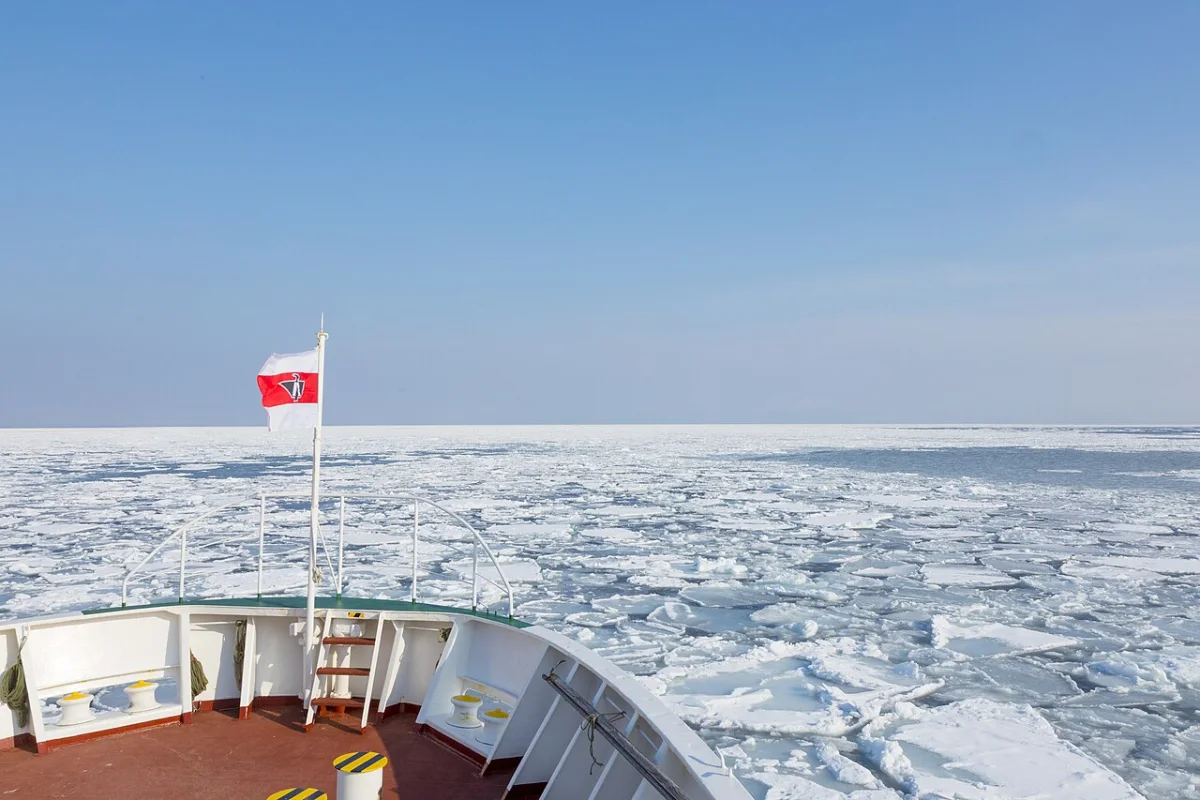
2027 Abashiri drift ice sightseeing cruises run January 20 to March 31. Compare the large Aurora and small Aurora 3 ships, check fares, boarding lists, car-free day routes, and backup plans if sailings cancel.
2027 Schedules and Fares: Large vs. Small Ship
The large Aurora is the better pick for first-timers and families. Standard fares are ¥7,000 for junior high students and adults, ¥3,500 for elementary students, and free for preschoolers. Heated cabins let you rotate between the open deck and warm indoor seating. General seats are first-come, first-served based on your place in the boarding line. If you want a front-facing seat on the second deck, head to the special seating area after boarding: 50 seats are available at ¥500 each, collected by crew after departure on a first-come basis.
The smaller Aurora 3 runs an offshore ice-seeking route of roughly two hours, tailored to travelers willing to spend extra time chasing floes and watching the ice closer to the waterline. Official fares are ¥9,800 for junior high students and adults and ¥4,900 for elementary students. In March, the operator lists 9:00 and 13:00 sailings as provisional runs that only open for booking once confirmed. If you have an afternoon intercity transfer, stick with the one-hour large ship so sea-condition delays do not squeeze your connection.
The large ship's regular timetable splits across four date blocks. In February, the 8:00 and 16:45 sailings are provisional departures opened only after the operator confirms they will run. Check both date and sailing time carefully on the booking screen—especially from March 15 onward, when the second departure moves from 11:00 to 11:30.
To budget the full day: two adults and one elementary student riding the large ship plus standard tickets for both the Okhotsk Ryu-hyo Museum and Abashiri Prison Museum comes to ¥24,000, with the two museums accounting for ¥6,500. Because the prison museum requires walking outdoors, families with toddlers or anyone needing a warm indoor break can pair the cruise with just the Ryu-hyo Museum, saving ¥3,750 on prison admission and skipping an extra bus wait. Want to see both museums? Save the prison for the next morning before grabbing lunch downtown.
| Dates | Departures |
|---|---|
| January 20–31 | 9:00, 11:00, 13:00, 15:00 |
| February 1–March 14 | 9:30, 11:00, 12:30, 14:00, 15:30 |
| March 15–31 | 9:30, 11:30, 13:30 |
Booking, Boarding Lists, and Terminal Check-In
The operator provides an English booking calendar: select your vessel, date, and departure time, then enter passenger counts by fare category. On the calendar, ○ means seats are available, △ means limited seats, ◇ means waitlist, and × means sold out. Same-day walk-up tickets are also sold when seats remain. The booking phone line is 0152-43-6000; before the January 20, 2027 winter launch, phone inquiries are answered weekdays only from 9:00 to 17:00 JST, closed weekends and Japanese national holidays. Aurora Official Booking Calendar
If you waitlist another time slot on the same day, double-check both vessel type and sailing time on your reservation—especially when switching between the small and large ships, where cruise length and fares differ. Online reservations can be reopened on the booking lookup page; if companions paid separately, pull everyone's confirmation emails into one place and check the group against your boarding list before walking up to the counter.
Every passenger must submit a completed boarding list, whether booked online or by phone, including accompanying young children. The English form asks for each person's name, nationality, and passport number alongside the sailing date, departure time, and companion details. No printer handy? The terminal accepts a handwritten sheet copying the required fields. English Boarding List
Check-in takes place at Michi-no-Eki Ryuhyo Kaido Abashiri (5-1 Minami 3-jo Higashi 4-chome, Abashiri, Hokkaido); the bus stop sign reads "Michi-no-Eki Ryuhyo Saihyosen Noriba." For a 9:30 sailing, aim to finish check-in by 9:10. Build parking, locker drop-off, and restroom stops into your arrival time, and tuck your booking email and boarding sheet in an inside jacket pocket until you get indoors. Coin lockers sit on the first floor, and drivers get free parking.
Official policy requires completing check-in 20 minutes before departure and closes the counter 5 minutes prior. Treating that 5-minute mark as your bus target leaves zero margin if you hit snow traffic, luggage storage, or a counter queue. To sit together on board, line up together at the boarding gate right after check-in rather than letting half your group board ahead of the rest.
Checking Sailing Status and Cancellations on Departure Day
Before leaving your hotel, check the operator's Service Status page and read the updates for the large and small ships separately. Go/no-go decisions are typically posted about an hour before sailing, and the operator does not contact booked passengers individually if a boat is cancelled. Pair that check with the Japan Meteorological Agency's Hokkaido coastal sea ice report, updated daily around 8:00 JST for roughly 20 nautical miles offshore plus a next-day outlook. Operator Sailing Status | JMA Coastal Sea Ice Information
When no drift ice is in range, the large Aurora switches to a scenic Cape Notoro cruise while the small Aurora 3 cancels. Even when ice is present, high winds and swells can force the large ship to cancel. If you have a full day in reserve, head to the port for your scheduled sailing anyway; if it converts to a cape cruise and you only came for sea ice, weigh your cancellation cutoff against seat availability for the next morning.
Self-cancellations are free until 23:59 JST the night before sailing; from 0:00 JST on the day of departure, a 100% fee applies. Same-day cancellations must be made by phone or at the terminal counter. When the operator cancels a sailing, paid fares are refunded in full, with online card refunds processed by the operator. If a ship sails on an altered or shortened route, the operator decides whether partial refunds apply based on the change. Missed departures receive no refund. Operator Cancellation Policy
Heavy snow reshapes land plans, too. Getting from a hotel to the Michi-no-Eki is a short flat hop, whereas reaching Mt. Tentozan requires climbing steep grades. If buses suspend service or roads close, stay near your hotel. The Tentozan summit deck depends entirely on visibility—in fog or blowing snow, shift your time indoors to the museum exhibits and ride the next bus back down.
Connecting the Port and Mt. Tentozan Without a Car
Know the three hub names: Abashiri Station is the JR rail station, Abashiri Bus Terminal is the downtown bus hub, and Michi-no-Eki Ryuhyo Saihyosen Noriba is the port stop. Staying near JR Abashiri Station? Catch the City Sightseeing Facilities Loop bus ("Shinai Kanko Shisetsu Meguri") at Stop 1 for the pier, or Stop 2 for the Ryu-hyo Museum and Prison Museum. From the downtown bus terminal, use Stop 4 for the port and Stop 3 for Mt. Tentozan—boarding downtown saves backtracking to the JR station.
Abashiri Bus's draft winter timetable for the City Sightseeing Facilities Loop covers January 20 to March 31, 2027, with no reservations required. Climbing uphill from the port, it stops at Abashiri Bus Terminal, Abashiri Station, Keimusho-mae (In Front of the Prison), Hakubutsukan Abashiri Kangoku (Abashiri Prison Museum), Tentozan (Ryuhyokan), and ends at the Hokkaido Museum of Northern Peoples. Save Keimusho-mae and Abashiri Prison Museum as two distinct pins—the first sits by the active correctional facility, whereas the relocated historic museum buildings are at the second stop.
Arriving via Memanbetsu Airport? Check the Abashiri Bus Memanbetsu Airport Line. Select winter buses extend to the icebreaker pier—only stay on to the end if the timetable's final column lists an arrival time at Michi-no-Eki Ryuhyo Saihyosen Noriba. To go from the airport to Tentozan or the prison museum, transfer at Abashiri Station onto the city sightseeing loop. Trying to race straight off a plane onto a boat means stacking flight delays, baggage claim, bus transit, and check-in; sleeping in Abashiri the night before is far smoother. Memanbetsu Airport Line Timetable
Winter bus notices state you can scan an onboard QR code for select mobile payment apps, while transit IC cards like Suica cannot be tapped directly. Carry some cash, or buy route tickets in advance through the bus company's website. Riding both the airport line and city buses over multiple days? Compare point-to-point fares against the seasonal Abashiri Free Pass (2-day ¥2,200 or 3-day ¥3,300). If you take the Shiretoko Airport Liner to Utoro the next day, buy that ticket separately.
Morning Cruise, Afternoon at Ryuhyokan and Abashiri Prison
Take a 9:30 February large-ship sailing as a baseline: board the 8:42 bus from JR Abashiri Station Stop 1 to reach the pier at 8:50 per the winter draft schedule. That gives you 20 minutes to finish check-in by 9:10, returning to port around 10:30. Reach the bus stop by 10:45 to ride straight up Mt. Tentozan; if the boat docks late, add a layer, grab a bite at the terminal, and take the 11:35 bus, reaching Tentozan at 11:55.
On the 11:00 sailing, you dock around noon—making the 12:25 or 13:05 uphill buses your two launch windows. To preserve time on the mountain, eat a fast lunch near the port and save a sit-down dinner for back near the station. Ride downhill from the summit to the prison: the winter draft lists a 14:03 departure from Ryuhyokan reaching the prison museum at 14:08. Abashiri Prison Museum closes at 17:00 with last admission at 16:00, though if you depend on the last bus back to town, base your exit on the final bus time rather than museum closing.
History fans can flip the afternoon order. After disembarking, ride the Tentozan-bound bus and get off at the Prison Museum first to walk its outdoor grounds in stronger afternoon daylight, then catch a later uphill bus to the Ryu-hyo Museum. Ryuhyokan also cuts off winter entry at 16:00—hit the ice room and marine exhibits first, and step onto the rooftop deck if the sky cooperates. If you return to port and discover you missed a bus, skip trying to cram both museums in; linger at the prison or ride straight up to Ryuhyokan and the summit deck.
The draft timetable splits operating days into separate check columns for January, February, and March. Before boarding, verify both the date column and route direction to confirm that specific run serves your stop—the last evening bus toward Tentozan terminates at Abashiri Station. Leave a buffer if connecting off the mountain straight to an airport bus or limited express train, and call a taxi from the port or your hotel if hauling heavy luggage in snow. Winter Sightseeing Bus PDF
Driving yourself? Still start the morning at the Michi-no-Eki. Hokkaido's official tourism organization lists drive times of about 30 minutes from Memanbetsu Airport and 8 minutes from Abashiri Station—pad those estimates in winter for icy intersections, parking, and slow traffic. After the cruise, walk the Prison Museum's outdoor grounds first before driving up Mt. Tentozan. Because the prison sits on the Lake Abashiri side while Ryuhyokan sits on the summit, set their two parking lots as separate GPS destinations. Wrap up the summit before weather worsens, then head down for dinner.
| Activity | Bus Stop Name | Suggested Time |
|---|---|---|
| Board the Aurora icebreaker | Michi-no-Eki Ryuhyo Saihyosen Noriba | About 1 hr cruise, plus check-in and disembarkation |
| Drift ice exhibits & Sea of Okhotsk | Tentozan (Ryuhyokan) | Around 1 hr for exhibits and aquariums, plus summit deck if clear |
| Historic cellblocks & penal history | Hakubutsukan Abashiri Kangoku (Abashiri Prison Museum) | 1.5–2 hrs to tour buildings and the Prison History Hall |
Okhotsk Ryu-hyo Museum: From the Ice Room Back to the Sea
Located at 244-3 Tentozan, the museum keeps regular hours of 9:00–16:30 (last entry 16:00) from November through April, shifting to 10:00–15:00 (last entry 14:30) from December 29 to January 5. Standard admission is ¥990 for adults, ¥880 for high schoolers, and ¥770 for elementary and junior high students; seniors 75 and older pay ¥790 with ID. Going straight up to the Mt. Tentozan observatory deck alone is free.
Start downstairs in the -15°C Drift Ice Experience Room. You touch real drift ice collected from the Sea of Okhotsk and spin a damp towel until it freezes stiff—an exhibit kept running even in summer. Family members sensitive to cold can wait in the main gallery while adults heading in with kids zip up coats and pull on gloves outside the door. If your gloves got wet on the boat, swap into dry pairs in a warm area before touching the ice blocks.
Clione ("sea angels") are tiny planktonic marine mollusks. Look for their translucent outlines drifting in the tank, then focus on the pair of wing-like flaps beating to keep them afloat. Nearby tanks showcase Sea of Okhotsk marine life alongside under-ice video footage: the icebreaker puts you above the floes, while these exhibits show what lives beneath them.
The Tentozan observatory overlooks the Sea of Okhotsk and the Shiretoko mountain range on one side, and Lake Abashiri on the other. In clear weather, locate the port and your morning cruise path first, then scan toward the horizon for the outer white band of pack ice. Under overcast flat light with few shadows, subtle color shifts across the water stand out better than any single bright patch. If your bus is approaching, head back down to the ground floor before deciding whether to save the deck for tomorrow.
Abashiri Prison Museum: Start at the Five-Wing Cellblock
The Abashiri Prison Museum sits at 1-1 Yobito, Abashiri, preserving historic wooden structures relocated from the original Abashiri Prison across an open-air park. Admission is ¥1,500 for adults, ¥1,000 for high schoolers (student ID required), and ¥750 for elementary and junior high students. Regular hours are 9:00–17:00 with last admission at 16:00, closed December 31 and January 1.
Pick up a park map at the gate and head straight to the Cellblocks and Central Guardhouse if short on time: from the central post, five wooden cell wings radiate outward so guards could monitor every corridor at a glance. Follow the path into the Prison History Hall to learn how Meiji-era officials used prison labor to carve Hokkaido's central roads, including the harsh conditions and human cost. For floor plans, the lecture hall, and the Futamigaoka Farm buildings, read our Abashiri Prison Museum Architecture and Penal History Guide.
According to the museum's FAQ, the Prison Cafeteria serves 11:00–15:00 with last order at 14:30. To eat lunch there, pair it with the 9:30 cruise and arrive at the prison around noon; if you spent longer at Ryuhyokan first, plan to eat back downtown. Photography is allowed in most areas except where signs prohibit specific artifacts or zones, while filming and livestreaming intended for video-sharing platforms is prohibited.
Visiting in blowing snow? Concentrate on the History Hall and your top-priority historic buildings, and step carefully indoors with snow-packed soles. Outdoor paths link the buildings across the grounds, so groups with seniors or strollers should check surface conditions at the entrance. If you are catching a scheduled bus with slower walkers, start heading back toward the gate early rather than rushing from the far end of the park.
Two Ways to Spend the Day Without Boarding a Ship
If you want natural history and culture without standing outside in the wind, ride straight up Mt. Tentozan. Tour the Okhotsk Ryu-hyo Museum in the morning, break for lunch or a hot drink, then ride the same bus line onward to the Hokkaido Museum of Northern Peoples for exhibits on traditional coastal clothing, watercraft, and Okhotsk culture archaeology. Winter hours are 9:30–16:30; in February it stays open on regular Mondays, while in January and March it opens on holiday Mondays and closes the following weekday (plus year-end/New Year closures).
When swells cancel boats under clear skies, check from Tentozan whether ice sits along the coast before heading to Masuura or Kitahama. Abashiri's tourism association highlights the Masuura-to-Kitahama shoreline for close-up views once ice reaches land—stick to public viewpoints near the stations and never climb over guardrails onto beach ice. Before stepping off at Kitahama, note return trains toward Abashiri or Shiretoko-Shari: local Senmo Main Line trains that stop at every station are sparse, and missing one leaves you waiting in the cold.
On January 30–31 and February 1–28, 2027, JR Hokkaido schedules the all-reserved Ryuhyo Monogatari sightseeing train between Abashiri and Shiretoko-Shari, stopping at Kitahama and Hamakoshimizu. Trains leave Abashiri at 9:50 and 13:04, returning from Shiretoko-Shari at 11:40 and 14:10. If you hop off at Kitahama, pair those times with regular local trains in both directions rather than assuming end-to-end schedules. Kitahama Station sits roughly 20 meters from the sea with a viewing platform right beside the tracks; wait inside open station areas during heavy snow. Kitahama Station Visitor Information
In Abashiri on February 6–7, 2027? Stop by the 62nd Abashiri Okhotsk Drift Ice Festival at Abashiri Commercial Port Pier, running 10:00–20:00 Saturday and 10:00–16:00 Sunday. Save the commercial pier and the icebreaker terminal as separate map pins if pairing both. Combine a cruise with the snow sculptures, or eat lunch near the harbor and walk about 10 minutes from the Michi-no-Eki Saihyosen Noriba bus stop per city tourism guidance. If you also want both museums in one day, save the festival for the next morning.
Watching the Ice on Deck and Staying Warm
Watch the harbor departure from inside the cabin, then step out onto the deck once the boat clears the breakwater. The upper observation deck gives you a forward view of the bow climbing the ice, while Deck 1's side walkways put you closer to the water. The large Aurora rides its bow onto ice sheets and fractures them with weight and forward thrust, sending broken slabs sliding along both sides of the hull—split your time between the bow and the side rail. To avoid wind early on, watch ahead from Deck 1 indoors, then step onto the side deck to hear ice scraping against the hull.
Dress in layers: a windproof shell over a moisture-wicking base layer and a fleece or down mid-layer, topped with a beanie covering your ears and gloves that grip railings cleanly. The operator cites typical sailing temperatures of around -10°C to 0°C, and ocean wind makes it feel colder. Tuck children's scarves or neck warmers inside their coats to prevent loose ends. Go back indoors once you have your shots, and warm up as soon as your fingers stiffen rather than waiting until the end of the cruise.
Pick one camera angle per trip outside. Leave a strip of open water along the hull and fire short bursts to catch floes flipping over, or frame part of the bow or railing to give wide shots scale. Bright white ice often pushes cameras toward dull gray—check your screen for ice texture and dial down exposure slightly if highlights wash out. If you spot sea eagles or seals, use a telephoto lens from a safe spot without blocking narrow walkways.
Avoid shuttling lenses, batteries, and phones repeatedly between freezing air and warm cabins. Keep spare batteries in an inside pocket, and seal cameras in a zip-top bag or camera bag before stepping indoors so condensation forms on the bag rather than inside your lens as gear warms up. Shooting through cabin glass? Hold your phone steady right near the pane so hull vibration does not tap it against the window. Put selfie sticks and tripods away on crowded decks, and zip phones back into pockets once done.
Travelers with limited mobility should choose the large ship: crew can assist wheelchairs during boarding and disembarkation, though moving between decks onboard requires stairs. Agree on a set indoor meeting spot so family members can take turns stepping out on deck. Traveling with infants or toddlers? Plan an afternoon stop at the first-floor nursing room inside the Okhotsk Ryu-hyo Museum to warm up and change diapers before catching the bus back downtown.
Prone to seasickness? Sit indoors facing the horizon and wait until you feel steady before heading out on deck. The boats do not sell motion sickness medication, so consult a pharmacist before your trip if needed. Companions who get queasy easily but still want to see sea ice should start with the one-hour large ship and save Mt. Tentozan or Kitahama for another day.
Why Drift Ice Reaches the Sea of Okhotsk at 44° North
Sitting near 44° north latitude, Abashiri marks the southern limit of seasonal sea ice in the Sea of Okhotsk. Freshwater pouring into the northern sea from the Amur River lowers surface salinity along the coast, helping water freeze more easily each winter. Ice crystals gather and collide in waves to form rounded pancake floes, which monsoon winds and southward currents along Sakhalin's east coast push down to Hokkaido—explaining why ice pressed against the shore one day can drift far offshore the next.
Floes grind, stack, and fracture around dark channels of open water, ferrying nutrients south for marine life. Culture experiments by Hokkaido University researchers showed that phytoplankton can use particulate iron released from melting drift ice to fuel growth, triggering spring blooms beneath the retreating ice. Spotting floes and open leads from deck connects directly to the museum's under-ice footage and live marine specimens.
Make time for both land and sea views. With kids, pick out the harbor and shoreline from Mt. Tentozan, then match a marine species inside the museum. Even if your sailing finds only scattered brash ice, watch the color beneath turning chunks and the wake behind the stern to compare with the thicker blocks displayed indoors; even on a coastal cape cruise, you can read the headland, open water, and harbor basin as one connected coastline.
One Night or Two in Abashiri, and Continuing to Shiretoko or Monbetsu
One night works if you arrive by late afternoon or evening and catch a morning cruise the next day; if you have an afternoon flight out, pick one museum after lunch, collect your bags downtown, and head to the airport. Two nights gives you space to visit both museums, keep a backup morning for the icebreaker, or split up if adults and kids want different pacing. Car-free travelers can pick where to stay in Abashiri depending on whether day two starts from JR Abashiri Station, the downtown bus terminal, or the Michi-no-Eki; drivers wanting an evening onsen soak can base along Lake Abashiri.
Continuing to Shiretoko Utoro? Abashiri Bus runs the winter Shiretoko Airport Liner from January 16 to March 7, 2027, linking Memanbetsu Airport, Abashiri Station, the Michi-no-Eki, and Shiretoko-Shari through to Utoro. Check your docking time against long-distance bus departures if combining both on the same day, leaving enough gap for lunch or retrieving bags. After March 7, ride JR to Shiretoko-Shari and transfer to a Shari Bus. If you booked an early-morning Utoro excursion, stay the night before in the Utoro onsen area rather than commuting from Abashiri at dawn.
Shiretoko's drift ice walk puts you in a dry suit with a local guide to step directly onto shorefast ice. SHINRA's program is scheduled February 1 to March 31 for roughly 1.5 hours, open to participants aged 7 to 74, 130 to 190 cm tall, and up to 99 kg who can put on and remove a dry suit unassisted and walk over uneven ice. If anyone in your group falls outside those limits, pick museums everyone can enjoy together that day instead of forcing everyone onto one activity booking.
Monbetsu's Garinko-go uses massive bow-mounted Archimedes screws to slice through drift ice; aim for a deck spot with a clear sightline to the bow drills. Monbetsu's operator lists its 2027 winter season from January 15 to March 31, overlapping heavily with Abashiri. Itineraries built around Memanbetsu Airport, Shiretoko, or the Senmo Main Line flow more cleanly through Abashiri, while routes along the central Okhotsk coast or Monbetsu's marine facilities fit better with Monbetsu as a base. If Abashiri cancels and you consider switching ports the same day, verify Monbetsu's sailing status, seat counts, and transit links before setting out.
Coming east from central Hokkaido? Add a night in Sounkyo before or after Abashiri—the 2027 Ice Waterfall Festival runs January 23 to March 7, with weekday hours centered on evening illuminations that suit an overnight stay. Leaving Abashiri during the day, start early enough to avoid mountain driving after dark. Continuing to Lake Akan is a separate leg best paired with a stay at Akanko Onsen, timing winter lake activities to whichever ice zones are open when you arrive.
A few useful answers
What icebreaker departures run in late January 2027?
The large Aurora starts January 20 with regular January departures at 9:00, 11:00, 13:00, and 15:00. From February, the first sailing shifts to 9:30.
Can I buy Abashiri icebreaker tickets on-site without a reservation?
Walk-up tickets are sold when seats remain. For groups, weekends, or the Drift Ice Festival period, reserve a specific sailing on the official booking calendar in advance.
Can I get a refund if there is no drift ice?
Paid tickets are refunded in full if the operator cancels the sailing. If the boat still departs on an altered or shortened route, partial refunds are decided by the operator. Free self-cancellation closes at 23:59 JST the night before departure.
Can you walk between Abashiri Prison Museum and the Ryu-hyo Museum?
Take the city sightseeing bus instead. The two are separate stops, and the Ryu-hyo Museum sits atop Mt. Tentozan, making an uphill winter walk steep and snowy.
Are there restrooms on the icebreakers?
Yes. The large Aurora has separate men's and women's restrooms on Decks 1 and 2, while the small Aurora 3 has one shared restroom on Deck 1.
Do companions who only want the Mt. Tentozan ocean view need a museum ticket?
The Mt. Tentozan observatory deck is free. Buy a museum ticket only if you want to enter the -15°C ice room, under-ice theater, and aquarium exhibits.
Official information and references
Sources used in this guide.
- Abashiri Drift Ice Sightseeing Icebreaker Aurora | 2027 Schedules, Fares, Ship Comparison, and No-Ice Cruises
- Abashiri Drift Ice Sightseeing Icebreaker Aurora | Nov 19, 2026 Phone Hours Notice and Winter Launch Date
- Visit Hokkaido | Abashiri Aurora 2027 Season
- Abashiri Drift Ice Sightseeing Icebreaker Aurora | Check-In, Walk-Up Tickets, Seating, Wheelchairs, and Status FAQ
- Abashiri Drift Ice Sightseeing Icebreaker Aurora | Sailing Status, Boarding List, and Terminal Info
- Abashiri Drift Ice Sightseeing Icebreaker Aurora | Cancellation and Weather Refund Policy
- Abashiri Drift Ice Sightseeing Icebreaker Aurora | Onboard Facilities, Side Decks, and Icebreaking Mechanism
- Abashiri Bus | 2027 Winter City Sightseeing Facilities Loop Draft Timetable
- Abashiri Bus | 2027 Winter Shiretoko Airport Liner, Mt. Tentozan, and Port Routes
- Abashiri Bus | Memanbetsu Airport Line
- Okhotsk Ryu-hyo Museum | Admission, Observatory, Winter and Year-End Hours
- Okhotsk Ryu-hyo Museum | Drift Ice Experience Room, Marine Life, and Observatory Exhibits
- Okhotsk Ryu-hyo Museum & Abashiri Tourism Division | 2026 Sea Ice Report No. 2
- Abashiri City Official Tourism | Drift Ice Formation and Coastal Viewpoints
- Japan Meteorological Agency | Hokkaido Coastal Sea Ice Distribution and Outlook
- Hokkaido University Institute of Low Temperature Science | Culture Experiments on Melting-Ice Iron and Phytoplankton
- Abashiri Prison Museum | Tickets, Closures, Access, and Photography Rules
- Abashiri Prison Museum | Cellblocks and Central Guardhouse
- Abashiri Prison Museum | Visitor & Prison Cafeteria FAQ
- Abashiri Prison Museum | Prison History Hall and Central Road Construction Exhibits
- Visit Hokkaido | Hokkaido Museum of Northern Peoples
- JR Hokkaido | 2026–27 Winter Seasonal Trains and Ryuhyo Monogatari Timetable
- Abashiri City Official Tourism | Kitahama Station, Observatory, and Bus Routes
- Abashiri City Official Tourism | 2027 Abashiri Okhotsk Drift Ice Festival
- SHINRA | Shiretoko Drift Ice Walk and Participation Requirements
- Monbetsu Okhotsk Garinko Tower | 2027 Winter Season and Vessel Overview
- Sounkyo Tourism Association | 52nd Sounkyo Onsen Ice Waterfall Festival