Planning a late-March to early-April sakura trip in Fukuoka? Underground exits, night-viewing ticket prices, half-day routes and wet-weather backups for Maizuru, Nishi and Ohori parks.
- Region & Focus
- Fukuoka
- Reading Scope
- 22 min read · 12 chapters · 6 Q&As
- Official Verification
- 32 official sources checkedUpdated 22 November 2026
- Key Topics
- SeasonsItinerariesRail travel
Chapter Route Map (tap any stop)
- When to Go: Check Bloom Dates Before Festival Schedules
- Which Exit to Take: Getting to All Three Parks
- Daytime in Maizuru Park: From the Moat into the Castle
- Buying Tickets for the Fukuoka Castle Night Illuminations
- Nishi Park: Uphill Approach, Sakuradani and Bay Views
- Ohori Park: Slowing Down Along the Pond
- Half-Day, Full-Day and Arrival-Day Itineraries
- Picnic at the Castle or Eat South of Ohori Pond?
- Wet-Weather Backups: Check the Day of the Week First
- Weather, Hills and Standing in Queues
- Where to Stay: Hakata, Tenjin or Ohori?
- Fitting Cherry Blossoms into a Three-Day Kyushu Itinerary
- Quick Q&A
If you only have half a day for cherry blossoms in Fukuoka, choose Maizuru Park. Follow the stone ramparts from the moat into the Fukuoka Castle ruins, and cross into Ohori Park if you want to keep walking. With a full day, head out of Ohori-koen Station Exit 1 in the morning for the uphill paths of Nishi Park, loop back to Maizuru in the afternoon, and save the evening around dinner for the night illuminations. Aim for late March to early April for peak bloom—your transport, hotel and wet-weather backup plans can all follow the same underground line.
When to Go: Check Bloom Dates Before Festival Schedules
If your travel dates are flexible, aim for late March to early April and keep city blossom viewing across two interchangeable days. According to the Fukuoka Regional Meteorological Observatory, the average first-bloom date for Somei-Yoshino cherry trees is 22 March, with full bloom on 31 March. In 2026, first bloom fell on 24 March and full bloom on 3 April—ten days apart. That year's Fukuoka Castle Sakura Festival began on 25 March, and Fukuoka City extended the closing date from 5 April to 8 April due to delayed blooming. When booking flights for a future spring, target this window when blossoms are most reliable, then check the organisers' official announcements closer to departure for exact festival dates.
An official first-bloom announcement only means a few blossoms have opened on the observatory's reference tree. If your flight lands on first-bloom day, start with sightseeing near your hotel and save the castle grounds for later in your trip. Because Fukuoka Castle and Nishi Park hold different cherry varieties, you will often see some trees in full bloom while neighbouring buds remain tightly shut. Serious blossom watchers should read Maizuru Park's bloom updates and Nishi Park management's zone-by-zone reports alongside the meteorological forecast. In spring 2026, Nishi Park's operators issued staged updates by area—far more practical for pinpointing Sakuradani or the shrine approach than relying on a single city-wide date.
Heavy wind and rain after peak bloom can thin out the canopy, though fallen petals often collect along the moat surface and banks. Keep your schedule adaptable. If you have fixed bookings such as ferry tickets, day trips or restaurant reservations, place cherry-blossom walks on another half-day with nothing prepaid. Staying two consecutive nights lets you do a short moat walk on arrival day, then decide the next afternoon whether to climb the castle ramparts or head up Nishi Park based on live bloom conditions. If you have just one night in Fukuoka before catching the Shinkansen, prioritise Maizuru Park: both ends connect directly to underground stations, and half a day is plenty.
Planning a late-March to early-April sakura trip in Fukuoka? Underground exits, night-viewing ticket prices, half-day routes and wet-weather backups for Maizuru, Nishi and Ohori parks.
Which Exit to Take: Getting to All Three Parks
From either Hakata or Tenjin stations, ride the Fukuoka City Subway Airport Line towards Ohori-koen. Heading west from Tenjin, the train stops at Akasaka first, then Ohori-koen; from Hakata, there is no need to change trains. Standard adult single fares are distance-based: ¥210 up to 3 km, ¥260 over 3 km to 7 km, and ¥300 over 7 km to 11 km. If you are staying in Tenjin and only making a return trip to Ohori-koen, two single tickets cost ¥420. Add trips to Ropponmatsu or elsewhere in central Fukuoka and compare the total against the ¥640 one-day underground pass—three short ¥210 rides already add up to ¥630.
Leave Ohori-koen Station via Exit 1 for Nishi Park, walking north along the street to the Terumo Shrine approach; park management estimates a 15-minute walk from the station, plus extra time for the uphill climb to the blossom groves. Use Exit 3 for the northern edge of Ohori Park's pond, ideal for a lakeside stroll or a bench break. Exit 5 leads straight to the Fukuoka Castle ruins, Maizuru Park and Heiwadai Athletic Stadium. Because all these exits share the same station name, agree on a specific exit number or landmark if your group splits up, so half of you do not end up by the moat while the others are waiting by the pond.
If you prefer starting on the eastern side of the castle near Fukuoka Castle Mukashi Tanbokan and Korokan, Akasaka Station Exit 2 is smoother—the historic site's official guide estimates a 10-minute walk from there. Afterwards, continue west and catch the underground back from Ohori-koen Station to avoid retracing your steps. Travellers using wheelchairs, rolling luggage or pushchairs should follow the lift signs inside the station rather than relying on exit numbers alone. Once at street level by Ohori Park, the lakeside paths are flat and easy, though climbing from the pond up to the Honmaru inner citadel still involves slopes and stone steps.
International arrivals land at a separate terminal from Fukuoka Airport's underground station, which sits at the domestic terminal. To reach the Airport Line, take the free terminal shuttle bus from the ground floor of the international terminal; daytime buses run roughly every 5–7 minutes, and all vehicles have wheelchair ramps. Allow time between touching down and heading to the parks for immigration, baggage claim, the shuttle transfer and storing large suitcases. If an early flight puts you in the city centre before noon, start with Maizuru's moat; if you arrive in the evening, have dinner first and decide afterwards whether to head out, especially with an early intercity train the next morning.
When splitting up at the ticket gates, each adult should tap their own IC travel card or use the same contactless bank card to tap in and out. If you plan to rely on contactless payment all day, stick to the exact same physical card or mobile device from your first ride—physical cards and phone wallets do not share the ¥640 daily cap. Travelling with primary school children? On weekends, public holidays and designated Fukuoka municipal primary-school spring break dates, Fukuoka City Subway sells a ¥100 child one-day pass. Adults making just a Tenjin–Ohori return trip can buy single tickets separately while children use the day pass.
| Station & Exit | Direct Access To | Best Route Plan |
|---|---|---|
| Ohori-koen Exit 1 | Nishi Park, Terumo Shrine approach | Tackle the Nishi Park hillside in the morning |
| Ohori-koen Exit 3 | Ohori Park pondside | Family stroll or north-to-south walk to the art museum |
| Ohori-koen Exit 5 | West side of Maizuru Park, Fukuoka Castle ruins | See Shimonohashi-gomon Gate and the moat |
| Akasaka Exit 2 | East side of Maizuru Park, Korokan area | Walk west from the eastern castle grounds to Ohori Park |
| Ropponmatsu Exit 3 | Fukuoka City Science Museum, south side of Ohori Park | Pair the Science Museum with a south-pond walk on rainy days |
Daytime in Maizuru Park: From the Moat into the Castle
Maizuru Park occupies the grounds of Fukuoka Castle, where Fukuoka City lists roughly 1,000 cherry trees across 19 varieties. Head east from Ohori-koen Station Exit 5, orient yourself by Shimonohashi-gomon Gate and the Shiomi Yagura turret, and follow the water until the stone ramparts and overhanging blossoms line up together. This opening stretch gives you maximum flexibility: low-hanging branches reach right over the moat, so there is plenty to see without climbing. If anyone in your group walks slowly or is pushing a buggy, lingering around the outer perimeter is far gentler than heading straight up to the Honmaru.
If you have time, step inside the grounds to take in the castle's terraced layout. The ruins layer the blossoms at different elevations—angled stone walls rise from below before the canopy closes overhead near the Honmaru. Sakura-en is the main viewing lawn around the Honmaru and also serves as a named gate on the festival's night-illumination map. When searching directions inside the park, enter Sakura-en and Tenshudai separately on your map. Stop along the Honmaru paths if you want framed shots of branches against masonry; only push up to the Tenshudai keep base if you want the elevated view across the grounds.
According to park management, the Tenshudai keep base is scheduled to close for archaeological excavations from 26 May 2026 until the end of December, while work around the Kanamono Yagura stone wall and temporary stone storage on part of the plaza in front of the athletic stadium are projected to continue until March 2027. Even with those closures, the Meiji-dori moat, Shimonohashi-gomon Gate and Sannomaru area make a satisfying short castle walk. Stick to open paths inside the park and follow the outer perimeter road wherever fencing appears, rather than detouring uphill for a single viewpoint.
Because both the castle ruins and Korokan sit inside Maizuru Park, first-time visitors easily blur their histories when reading exhibition signs. Korokan was an ancient state guesthouse for foreign envoys, whereas Fukuoka Castle was built in the early Edo period by Kuroda Nagamasa. If you only want outdoor scenery, keep your walk to the stone walls and castle gates, then pop into Sannomaru Square near the end to browse the maps. Entering from Akasaka? Stop at Fukuoka Castle Mukashi Tanbokan first to see the castle reconstruction diagrams, making it much easier to picture the gates and full footprint as you walk along the ramparts.
Buying Tickets for the Fukuoka Castle Night Illuminations
The organisers' official site has already confirmed that the festival will return in 2027; for planning purposes, 2026 zones and fares provide a reliable guide. In 2026, lit sections along the moat could be enjoyed free from public paths, while dedicated light-up zones at Sakura-en, Otakayashiki-ato and Tamon Yagura required separate ticket checks. Paid zones opened 18:00–22:00 (last entry 21:45), with adult tickets at ¥600 for a single zone or ¥1,500 for a three-zone pass, and free entry for high-school students and younger. Buy a single-zone ticket if you only want one area; two separate zones cost ¥1,200, so the three-zone pass only saves ¥300 per paying adult if you are sure you will visit all three. Expect to walk between venues along paths that partly overlap your daytime route.
If you only have one evening or already have dinner booked, pick the single zone that appeals most: Sakura-en pairs blossom canopies with the castle grounds, Tamon Yagura showcases a long stretch of white plaster wall framed by sakura, and Otakayashiki-ato offers a more intimate garden scale. Walk along the Meiji-dori moat first and enter your chosen paid zone after dark. If queues run into children's mealtimes, eat first and browse afterwards, or stick to the free illuminated walkways. Groups entering from different station exits should meet at a clear junction outside the ticketed gates rather than trying to find each other against the queue.
Under the organisers' 2026 subway promotion, presenting a qualifying one-day underground pass at the night-viewing ticket booth took ¥100 off the three-zone pass. Although contactless bank cards also cap daily subway fares at ¥640, this discount required showing the specific paper or eligible pass listed in the campaign—reaching the contactless cap did not qualify. Do the maths on the rides you will actually take: two standard Hakata–Ohori rides plus a single paid illumination zone offer no combo discount. Only build the pass into your schedule if you already hold an eligible day ticket and intend to cover all three zones.
If you visited by day, come back via the opposite entrance in the evening. Eating outside the grounds before dusk and crossing the moat afterwards is far more relaxed than juggling takeaway boxes across three ticketed zones—especially as holding picnic spots for banquets in paid areas was banned from 18:00 onwards in 2026, so keep picnics to daytime. When weekend queues form at the gates, loop around the free outdoor sections first. To frame stone walls and blossoms together, pause briefly at the edge of the path, keeping entrances and narrow stone steps clear for passers-by.
Nishi Park: Uphill Approach, Sakuradani and Bay Views
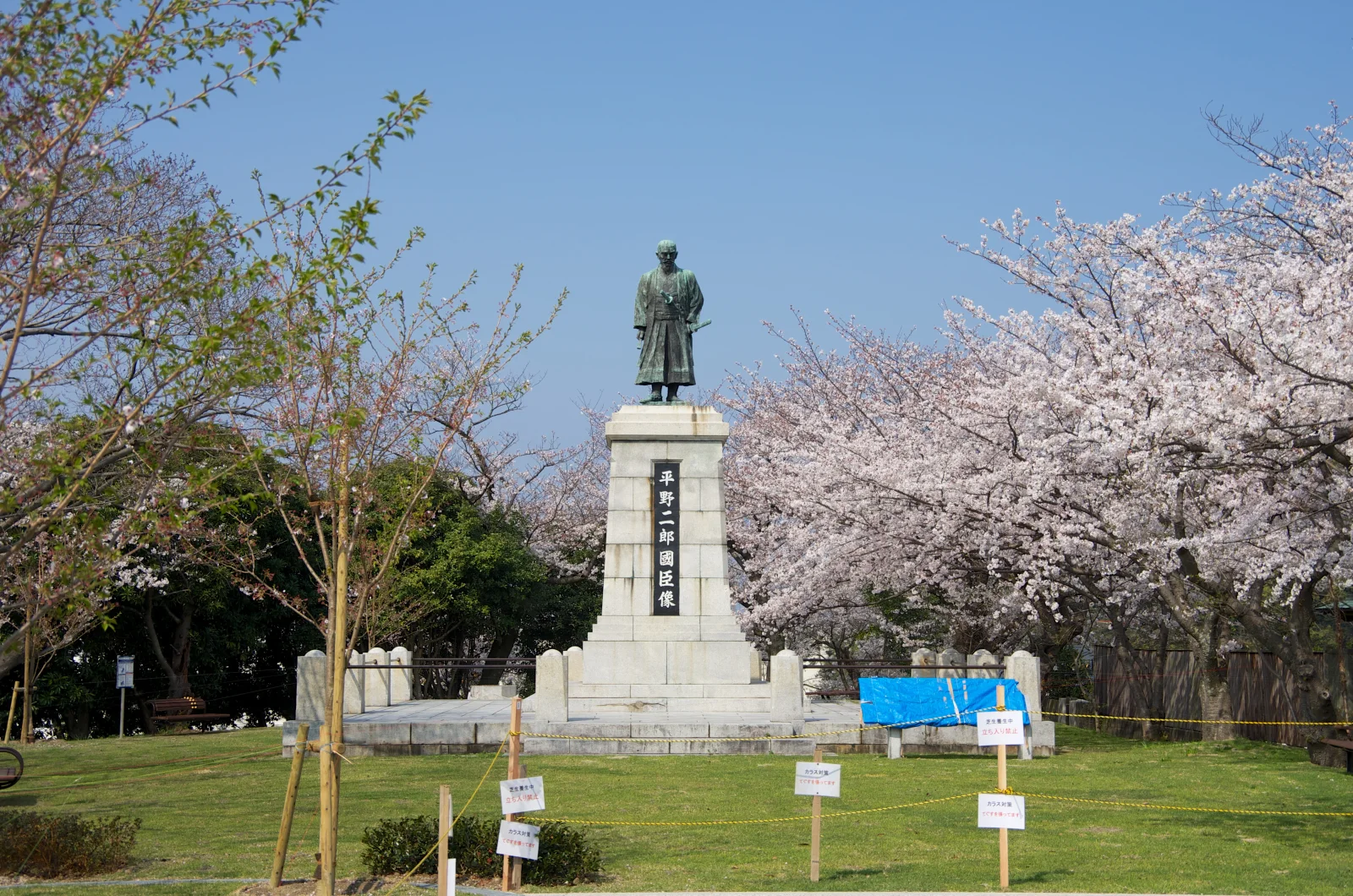
Set on Mount Aratsu just north of Ohori Park, Nishi Park is reached from Ohori-koen Station Exit 1, climbing the Terumo Shrine approach from the foot of the hill. Valleys, slopes and shrine steps naturally spread visitors across different levels. Management lists roughly 1,300 cherry trees—including Somei-Yoshino and wild yamazakura—and it is the only site in Fukuoka Prefecture selected among Japan's Top 100 Cherry Blossom Spots. For dense blossom canopies, follow the park map to Sakuradani; for photos with fewer street backdrops, walk near the Hirano Kuniomi statue, where cherry trees border open grass and offer clean foregrounds and backgrounds.
Terumo Shrine enshrines Kuroda Josui and Kuroda Nagamasa, linking the hillside directly to Fukuoka Castle's history. Walking the cherry-lined approach and pausing by the torii gate already makes a complete short walk. From there, pick whichever branch suits the day: climb the shrine steps, dip down into Sakuradani or head out towards a viewpoint. If older travellers need handrails or take descents slowly, allow more time going downhill than climbing up—points that look close on a map still involve steep climbs when crossing from one side of the ridge to the other.
The central lookout area in Nishi Park overlooks Hakata Bay, with views towards Shikanoshima on clear days. Fukuoka Prefecture has announced that construction on a new public-private park facility began in March 2026, with opening scheduled for May 2027. For a spring visit, make Terumo Shrine and Sakuradani your core stops and treat the bay lookout as an optional extension. Families with children can also detour to the newly opened Mori no Asobi Hiroba play area, whose terrain and play equipment suit energetic kids far better than the shrine approach; it sits towards the west side, so factor that detour into your walking time if pairing it with the bay views.
Nishi Park's 2026 Sakura Festival originally scheduled 18:00–22:00 illuminations from 27 March to 10 April, though on-site vehicle restrictions were lifted early on 9 April. Because festival dates, parking and traffic controls shift each year, plan on using Ohori-koen Station as your primary access point in spring 2027. Leave any hire car at your hotel or a city car park so you are not queuing for hillside spaces. Damp weather or steep slopes after dark can be tiring, so save Nishi Park for daytime blooms and return to the flatter, wider moat paths at night.
Ohori Park: Slowing Down Along the Pond
Ohori Park's central pond was once Fukuoka Castle's outer moat, with a flat loop path of roughly 2 km. It works equally well as an unhurried first stop or a breather after Maizuru Park. Enter from the northern shore and follow either bank south towards the Japanese Garden, Fukuoka Art Museum or Ropponmatsu. To shorten the walk, cross the bridges through Nakanoshima island and head back north, or simply sit on the north bank and take in the water. Calm, low-wind hours are best for reflections, though how many blossoms appear in frame depends on the shoreline angle and tree placement—if you are chasing thick blossom tunnels, visit Maizuru or Nishi Park first.
Because joggers, strollers and families with pushchairs share the lakeside paths, check the painted lane markings before setting off, and step aside from the flow whenever you pause for photos or maps. With children, use Kujira Park on the east side near the art museum or Donguri Park on the west side as natural milestones rather than forcing everyone to complete the full 2 km circuit. If only one or two people in your party want to visit the Fukuoka Art Museum, arrange to meet outside the museum entrance or the Japanese Garden's Kabukimon Gate instead of splitting up along the loop.
If children want to go boating, aim for the boathouse at the north end during the warmest, calmest part of the day. Thirty-minute rentals cost ¥800 for a rowing boat and ¥1,200 for a small swan boat; standard capacity for small boats is two adults plus one primary-school child, or two adults plus two children aged five or under. A family of two adults and two primary-school-aged children will need to check larger boat capacities. The boathouse opens at 11:00 on weekdays and 10:00 on weekends and public holidays; in March, last rentals are generally around an hour before sunset, while April usually runs until 18:00 with last hire at 17:30. Wind or rain can cut hours short, and if you also plan to enter the art museum that afternoon, work backwards from its last-entry time before queuing for a boat.
To add the Ohori Park Japanese Garden, enter through Kabukimon Gate on the museum side or the West Gate near Ohori Terrace. In March and April it opens 9:00–17:00 (last entry 16:45). Admission is ¥250 for adults, ¥120 for children under 15, free for under-6s, and free for visitors aged 65 or over with valid ID showing proof of age. It closes on Mondays, or the following day if Monday is a public holiday. Anyone who just wants to sit and rest can wait outside and meet at a set time; as the garden paths are mostly outdoors, heavy rain is a cue to head straight into the art museum instead.
Half-Day, Full-Day and Arrival-Day Itineraries
For a half-day route, start at Ohori-koen Station Exit 5. Walk along the moat past Shimonohashi-gomon Gate, step inside one stretch of the castle walls, then head west to the north shore of Ohori Park. Finishing there before noon leaves plenty of options for a nearby lunch before hopping back on the underground. If you have booked lunch in Ropponmatsu, cut from the castle grounds to the southern shore of the pond, use the art museum as your landmark, and walk down to Ropponmatsu Station on the Nanakuma Line—you can ride it straight back to Hakata without doubling back to Ohori-koen on the Airport Line.
With a full day, climb the Terumo Shrine approach in Nishi Park in the morning, drop back to Ohori Park for lunch and a lakeside stroll, then spend the afternoon among Maizuru Park's stone walls and cherry trees. To add night illuminations, sit down for an early dinner near Akasaka or Otemon and re-enter via your ticketed gate. Because this route puts the uphill climb first and the castle grounds second, it works best when Nishi Park is near peak bloom. If blossom conditions differ noticeably between the two parks, visit whichever is looking best first, follow lunch with the pond or a museum, and save the third park for the next morning.
Travelling with older relatives or toddlers? Take Exit 3 in the morning straight to the north shore benches at Ohori Park, keeping the day centred on the pond and Maizuru's flat outer moat. Energetic walkers can take a short detour up into the castle while everyone else waits near Shimonohashi. If little ones need a nap or older family members feel chilly after walking, head back to the hotel for the afternoon and return only for one illuminated zone after dark. If your group only wants one outing a day, a sunny morning blossom walk followed by lunch is usually far easier to manage than waiting around until evening.
If you are flying in and catching a JR train onward the same day, the smoothest plan is to drop large bags at Hakata Station or your hotel first, then ride the Airport Line to Akasaka or Ohori-koen. Walk one stretch of the moat and return along the same line. On a tight transfer day with only an hour or two to spare, the moat and castle gates sit close enough to the stations to keep your return timing predictable. Staying two nights or more lets you put the night illuminations on a separate evening and dedicate the best daylight window to outdoor blossoms.
Picnic at the Castle or Eat South of Ohori Pond?
If you want to bring lunch into Maizuru Park, pick up onigiri, sandwiches or bakery items near the station exit and find an open paved terrace or seating area. Compared with spreading out a picnic sheet to claim a spot, handheld food keeps you mobile if you decide to move to another lawn or follow a better row of trees. If food trucks are operating, lunchtime queues often clash with newly arriving crowds—view the blossoms first and eat at the entrance a little later. After rain, when grass stays damp, swap the picnic for a café or restaurant along Meiji-dori or in Akasaka; a sunhat and a waterproof sitting mat prove far handier than hauling full picnic gear.
Ohori Park suits grabbing a bench mid-walk to watch the pond, while Nishi Park's slopes are best tackled after you have eaten. Open flames, barbecues and cooking fires are strictly prohibited in both Nishi Park and Ohori Park. Pack away food boxes, napkins and plastic bags whenever you leave a bench, and bring a zip-up or tie-top bag on windy days so wrappers do not blow away. On a pond-focused day, walking down to Ropponmatsu for a meal connects neatly to the Nanakuma Line back to Hakata, whereas staying near Otemon or Tojinmachi keeps you close to the Airport Line. Eat on whichever side of the park you reach when hunger strikes rather than walking half a loop back for a bookmarked restaurant.
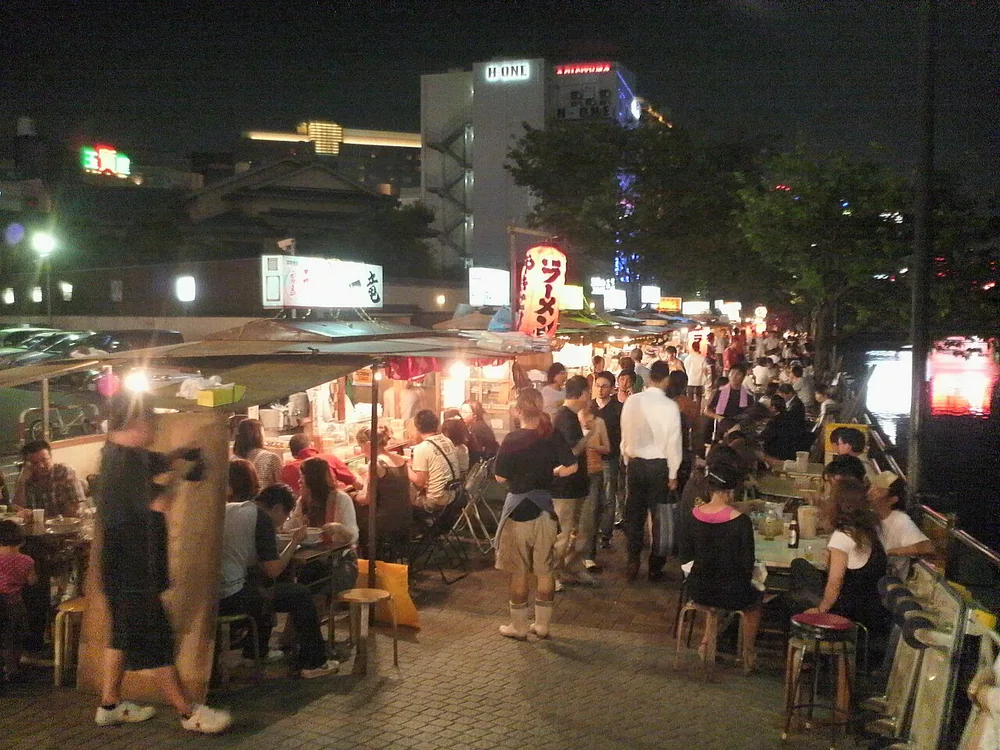
For an unhurried evening around the night illuminations, eat a proper sit-down dinner before entering the paid zone, or head back to Tenjin afterwards. If you dine first, factor in ticket-queue times, walking inside the castle grounds and the return trip. If only part of your group has bought a single-zone ticket, those visiting the lights can linger while others take the underground ahead to meet in Tenjin. Want to extend the evening? Check Fukuoka's dining districts and yatai stalls and pick Tenjin or Nakasu along your route back to the hotel rather than walking around the quiet castle perimeter late at night.
Wet-Weather Backups: Check the Day of the Week First
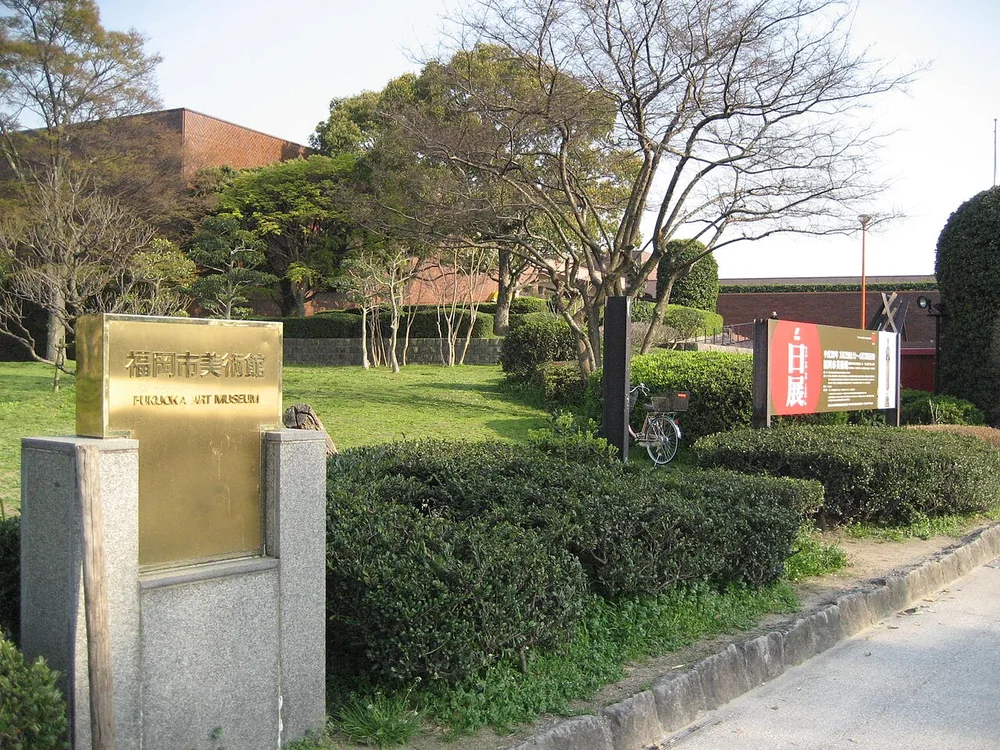
Fukuoka Art Museum sits on the south-eastern corner of Ohori Pond. Spring hours are generally 9:30–17:30, with last entry at 17:00. Collection and regular exhibitions cost ¥200 for adults, ¥150 for high-school and university students, and are free for junior-high students and younger (special exhibitions are priced separately). It closes on Mondays, or on the next weekday if Monday is a public holiday or observed holiday. As you walk from Maizuru's stone walls towards the museum, decide at the doors: in light drizzle, add a short stretch along the south bank; in heavy rain, duck inside and save the pond for tomorrow. To pick galleries ahead of time, see our half-day guide to the Fukuoka Art Museum collections.
The Korokan Ruins Museum closed for renovation on 1 October 2026 and is scheduled to remain shut until late March 2027. If your trip falls right at the start of spring, visit Fukuoka Castle Mukashi Tanbokan inside the grounds or Sannomaru Square near Ohori-koen Station Exit 5 instead. Sannomaru Square is free, open 9:00–17:00 (last entry 16:30), and displays illustrated panels on both Fukuoka Castle and Korokan. Either hall pairs neatly with a short moat walk, while families needing shelter for a whole rainy afternoon should continue down to the Science Museum in Ropponmatsu.
Fukuoka City Science Museum stands right beside Ropponmatsu Station Exit 3 on the Nanakuma Line. The 5th-floor permanent exhibition hall opens 9:30–18:00 (last entry 17:30) at ¥510 for adults, ¥310 for high-school students, ¥200 for primary and junior-high pupils, and free for pre-schoolers accompanied by a guardian; planetarium screenings require separate timed tickets, so choose a show before going in. The museum usually closes on Tuesdays (or the next day after a holiday), though it stays open consecutively during spring school holidays. On Mondays when the art museum is shut, families can easily link the south pond path straight into the Science Museum—and if children run out of steam, Ropponmatsu Station is right at the door.
Weather, Hills and Standing in Queues
For quiet early-morning photos, start along the Maizuru Park moat, where empty paths make it easy to line up branches dipping over the water. At peak bloom, if crowds gather at one spot, simply walk further along the stone wall for a fresh angle rather than waiting for a tree to clear. After a shower, wet masonry, petals and reflections give you plenty of close-up detail without climbing up to the Tenshudai. Use night mode on your phone for lit sections, then pocket it and step clear of corners, stone-step landings and entry gates.
The chilliest moment of a blossom day is almost always standing still waiting for the illuminations, which feels far colder than walking by day. Spring breezes quickly drop temperatures atop Nishi Park's bay-facing ridge and along Ohori Pond, so pack a windproof layer that stows in a daypack. In cold drizzle, save Nishi Park's climb for another day and stick to a short loop between the moat and the art museum. Large umbrellas eat up space on narrow steps and paths; compact raincoats keep your hands free, especially when minding children. Where pedestrian detours exist beside rain-slick stone steps, take the gentler path down to the exit.
If anyone in your group finds long periods of standing difficult, keep daytime viewing to a stretch of Ohori Pond, head back to the hotel to rest, and return by underground for a single night-viewing zone. Pushchairs entering Nishi Park have to climb the sloped stretch to reach the shrine approach—turn back before the stairs at the torii gate and keep the rest of the walk on level ground. Alternatively, have part of the group wait at a seated café outside the castle and rejoin when it is time to view the moatside blossoms. When walking tolerances differ, plan two short legs that each end cleanly at an underground station instead of forcing everyone round the same loop.
Where to Stay: Hakata, Tenjin or Ohori?
If you have an early JR train, Shinkansen or flight the next morning, staying near Hakata Station makes luggage storage and departures straightforward. Ride the Airport Line out for cherry blossoms, return on the same line at night, or take the Nanakuma Line straight back from Ropponmatsu. When booking, check the walking distance from the underground concourse to your hotel: with heavy suitcases, a short walk from the station exit matters far more than straight-line distance to the castle on a map. If you have an early train right after breakfast, pick either daytime blossoms or night illuminations on arrival day rather than cramming in both.
To combine shopping with night illuminations, Tenjin near the Airport Line's Tenjin Station is hard to beat. After dinner, Akasaka is only one stop away—or an easy walk along main streets if you still have the energy. Guests staying around Tenjin-minami, Watanabedori or Yakuin can ride the Nanakuma Line straight to Ropponmatsu by day and enter Ohori Park from the south. Keep in mind that Tenjin and Tenjin-minami are separate stations; treat the walk from your hotel to the actual platform you need as part of the journey, as walking above ground to the Airport Line is sometimes quicker than transferring underground.
If cherry blossoms are your trip's main event and you want different light across two mornings, look for hotels near Ohori-koen Station, Otemon or Tojinmachi. With nothing scheduled before breakfast, you can step straight out to the pond or moat to check the day's blooms, walk home from Maizuru's night illuminations, and still hop onto the Airport Line into central Fukuoka later on. Conversely, if both evenings involve dinners in Hakata and checkout means wheeling two large cases, prioritise the rail hub first. Still undecided? Our Hakata vs Tenjin hotel comparison breaks down the trade-offs by daily schedule.
Even hotels billed as 'steps from the station' sit at very different exits. JR Kyushu Hotel Blossom Hakata Chuo is roughly a 2-minute walk from Hakata Station's Hakata Exit, while its sister property Blossom Fukuoka sits on the Chikushi Exit side, also listed at around 2 minutes. Both give easy underground access from Hakata, though from opposite sides of the concourse if you are heading towards Tenjin. If your main focus is the castle ruins, Heiwadai Hotel Otemon sits between Akasaka and Ohori-koen, roughly a 6-minute walk from Ohori-koen Exit 5, while Heiwadai Hotel Arato is around 3 minutes from Ohori-koen Station and better placed for heading north to Nishi Park in the morning. Pin your evening return routes on a map to see which actually cuts down backtracking.
Fitting Cherry Blossoms into a Three-Day Kyushu Itinerary
If you are based in Fukuoka for all three days, keep your city blossom day swappable with a Dazaifu day trip. Landing before noon on day one leaves time for Ohori Pond and the castle moat straight away. On the clearest day, tackle whichever of Maizuru or Nishi Park looks best for a longer walk, saving Maizuru's night illuminations for your final evening. If you plan to visit Dazaifu Tenmangu Shrine by day and return to the city for lit blossoms at night, keep the Dazaifu half compact and take a hotel break between outings so your legs hold out—or swap in Ohori's art museum and central shopping arcades if it rains.
Thinking of adding Kumamoto or Kitakyushu for blossoms? Check the Japan Meteorological Agency's local observations for each city separately. Every city tracks its own reference tree for full bloom, so travelling in the same week can still catch very different stages. Before locking in a JR intercity day trip, choose stops that are worth visiting even if the blossoms are past or not yet out. Simply staying in Fukuoka to split your time across two parks is plenty: Nishi Park's shrine approach and Sakuradani feel completely different from Maizuru's stone ramparts, without the hassle of packing and unpacking every day.
If petals are already falling on your last blossom day, trim the outdoor stop to one short stretch along the moat and spend the extra time in a neighbourhood you wanted to explore. From Akasaka or Ohori-koen, the Airport Line takes you straight back to Hakata for intercity trains, while the Nanakuma Line runs direct from Ropponmatsu. If only one person wants extra morning photos, everyone else can stay at the hotel for breakfast or pack up—meeting up afterwards at the station spares anyone with large bags from navigating castle steps or hunting for temporary luggage lockers.
A few useful answers
When is the best time to see cherry blossoms in Fukuoka?
Aim for late March to early April. According to the Fukuoka Regional Meteorological Observatory, average Somei-Yoshino first bloom falls on 22 March and full bloom on 31 March; in 2026, first bloom was recorded on 24 March and full bloom on 3 April.
Have the 2027 Fukuoka Castle Sakura Festival dates been announced?
The organisers' official website has confirmed the festival will return in 2027, though exact dates are not yet released. In 2026, it began on 25 March and was extended until 8 April to match late-blooming trees.
Do you need a ticket for Maizuru Park's night illuminations?
Based on 2026 arrangements, public walkways such as the moatside paths are free to stroll after dark. Special lit zones at Sakura-en, Otakayashiki-ato and Tamon Yagura charge admission: ¥600 per single zone or ¥1,500 for all three, with free entry for high-school students and younger.
Are all three cherry blossom parks near Ohori-koen Station?
Yes. Use Ohori-koen Station Exit 1 for Nishi Park, Exit 3 for Ohori Park's pondside, and Exit 5 for the west side of Maizuru Park. To enter from Maizuru's eastern castle side, Akasaka Station Exit 2 is closer.
What can you do if it rains during cherry blossom season?
Fukuoka Art Museum sits on the south-eastern edge of Ohori Pond, while Fukuoka City Science Museum is right beside Ropponmatsu Station. The art museum usually closes on Mondays and the science museum on Tuesdays, though the science museum opens continuously during spring school holidays.
Which routes are best with a pushchair or older travellers?
Stick to the northern shore of Ohori Pond and the flat moatside paths around Shimonohashi-gomon Gate in Maizuru Park. Save Nishi Park's uphill approach and the slopes and stone steps around Maizuru's Honmaru for those keen on extra climbing.
Official information and references
Sources used in this guide.
- Fukuoka Regional Meteorological Observatory | Somei-Yoshino Averages and 2026 Observations
- Fukuoka Castle Sakura Festival Organisers | 2027 Renewal and Night-Viewing Venues
- Fukuoka City | 2026 Fukuoka Castle Sakura Festival Extension Notice
- Fukuoka Castle Sakura Festival Organisers | Access and 2026 Subway Ticket Discount
- Maizuru Park Management | Tenshudai, Kanamono Yagura and Korokan Closure Notices
- Fukuoka Castle & Korokan | Sannomaru Square Information Hall and Historic Site Access
- Fukuoka Castle & Korokan | Fukuoka Castle Mukashi Tanbokan
- Fukuoka City Subway | Ohori-koen Station Exits
- Fukuoka City Subway | Standard Fares
- Fukuoka City Subway | One-Day Passes and Special Tickets
- Fukuoka Airport | Free Shuttle Bus Between International and Domestic Terminals
- Nishi Park | Park Map, Sakuradani and Lookout Plaza
- Nishi Park | Blossom Bloom Logs and Daytime Viewing Notices
- Nishi Park | Walking Access and Parking Information
- Nishi Park | 2026 Sakura Festival Illuminations and Vehicle Restrictions
- Nishi Park | Early Lifting of 2026 Vehicle Restrictions
- Fukuoka Prefecture | New Nishi Park Facility Construction and Opening Schedule
- Nishi Park Management | Opening of Mori no Asobi Hiroba
- Nishi Park | Open-Fire Ban and Park Rules
- Ohori Park | Park Map
- Ohori Park | Open-Fire Ban and Park Rules
- Ohori Park Japanese Garden | Opening Hours and Admission
- Fukuoka Art Museum | Opening Days and Admission Fees
- Fukuoka City Science Museum | Exhibition Hours, Closures and Admission
- Fukuoka City Science Museum | Traditional Chinese Visitor and Access Leaflet
- Fukuoka City Bulletin | 2026 Maizuru Park Cherry Varieties and Night-Viewing Rules
- Fukuoka City Subway | Contactless Payment Daily Cap and Device Rules
- Ohori Park | Outer Moat, Loop Path and Pondside Facilities
- Ohori Park Boathouse | Rental Hours, Boat Types and Fares
- JR Kyushu Hotels | Comparison of Hakata Exit and Chikushi Exit Properties
- Heiwadai Hotel | Otemon and Arato Locations and Subway Access
- Nishi Park | History on Mount Aratsu and Japan's Top 100 Cherry Blossom Spots