Choose first-floor pre-modern art or second-floor modern collections with a ¥200 ticket, compare the 2026 Indian chintz exhibition, and plan around Dalí’s loan, late opening, station exits, family breaks and wheelchair routes beside Ohori Park.
- Region & Focus
- Fukuoka
- Reading Scope
- 38 min read · 13 chapters · 4 Q&As
- Official Verification
- 13 official sources checkedUpdated 22 November 2026
- Key Topics
- ItinerariesTravel budgetKyushu
Chapter Route Map (tap any stop)
- Choose the exhibition ticket before setting the length of your half-day
- Indian chintz: allow a full stretch of time for textiles and patterns
- Pre-modern art on floor 1: begin with Buddhist sculpture, vessels or tea
- Take time over Matsunaga’s tea objects, or compare them with chintz
- Modern art on floor 2: read Kyushu and international works together
- For a visit centred on Dalí, put the loan dates in your calendar first
- Leave time outside the galleries for Kunio Maekawa’s building
- From Hakata or Tenjin, compare Ohori-koen and Ropponmatsu
- Opening, last admission and late opening are three separate times
- Children can rest on floor 2; adults need to share the viewing time
- For wheelchairs and less walking, locate entrances and the lift first
- Store bags before the galleries; food and photography have their own rules
- Two half-day plans: focus on one floor, or make the special exhibition central
- Quick Q&A
Fukuoka Art Museum lets you turn part of an Ohori Park walk into a half-day visit inside the galleries. On a first visit without a particular special exhibition in mind, start with the ¥200 general ticket for collection and thematic exhibitions. Focus on pre-modern art on floor 1 or modern and contemporary art on floor 2, treating the other floor as optional. If visiting for the Indian chintz exhibition from 17 October to 20 December 2026, give most of your time to the special exhibition gallery on floor 2. General adult admission is ¥1,700, and its on-site counter accepts cash only. Both routes connect with the lakeside. The choice is whether to spend this half-day with Buddhist sculpture, ceramics and tea, modern works, or textiles travelling between regions.
Choose the exhibition ticket before setting the length of your half-day
The ordinary collection ticket has a clear scope. The museum collection page lists ¥200 general admission, ¥150 for senior-high-school and university students, and free entry for junior-high-school pupils and younger. This ticket covers pre-modern art, modern and contemporary art, and thematic exhibitions. Buy it even if you have time for just one floor; there is no need to rush through every room to use it fully. For visitors interested in art but unfamiliar with the collection, it is an easy starting point. Choose a subject worth pausing to read about, leaving time for the park afterwards.
Two adults viewing only the collection pay ¥400 in total. One adult with one senior-high-school pupil pays ¥350. Two adults with one primary-school child still pay ¥400. These are admission totals by category; fares, meals and special exhibitions are separate. Distinguish school stages: junior-high-school pupils enter free, while senior-high-school pupils use the ¥150 student ticket. Calculate individually for companions of different ages rather than using an average family ticket price.
Special exhibitions have separate prices. Before choosing, ask whether you would still want to enter if the special exhibition’s name were hidden. If so, the ¥200 collection ticket is usually a useful start. If Indian chintz is the clear attraction, place that exhibition in the part of the day when you are most alert. Visitors who like tea utensils and chintz can connect first-floor tea objects with the second-floor special exhibition, allocating time to both before sorting their separate tickets.
Collection tickets can be bought with the credit cards, electronic money and QR payments listed by the museum. If deciding on arrival, bring cash as well as your usual payment method. The special-exhibition counter has different conditions, described below. Knowing which fee you are paying helps avoid queuing at the wrong counter on a different floor.
The collection’s free senior admission has residency conditions. Residents of Fukuoka, Kitakyushu, Kumamoto or Kagoshima aged 65 or over enter free with proof showing address and date of birth. Ordinary overseas visitors buy the category applicable to them. The museum also lists free admission for holders of specified disability documentation and one accompanying person, with proof shown at the gallery entrance. Keep that documentation with ticket details before leaving.
Choose first-floor pre-modern art or second-floor modern collections with a ¥200 ticket, compare the 2026 Indian chintz exhibition, and plan around Dalí’s loan, late opening, station exits, family breaks and wheelchair routes beside Ohori Park.
Indian chintz: allow a full stretch of time for textiles and patterns
The autumn and winter 2026 exhibition Chintz: A Global Story — The Karun Thakar Collection runs in the second-floor special exhibition gallery from 17 October to 20 December. General adult admission is ¥1,700, senior-high-school and university students pay ¥1,100, and junior-high-school pupils and younger enter free. Two adults pay ¥3,400; one adult and one senior-high-school pupil pay ¥2,800. With primary-school children, calculate the paying adults and free children separately.
One way into the exhibition is to ask how the same kind of cloth was used in different places. The official introduction describes Indian chintz used in Japan for tea-utensil pouches, wrapping cloths, tobacco pouches and hanging-scroll mounting, alongside textiles that travelled to other regions. On a visit, identify a cloth’s purpose before studying how patterns, figures and plants are arranged. This is an easier starting point than memorising every date. Visitors interested in dress, furnishing textiles or craft can put this ahead of the collection.
The exhibition lists ceremonial cloths, hangings, upper garments and bedding among its forms. Compare two uses: the overall composition of a hanging raises different questions from patterns arranged for clothing. Look at the whole outline first, then move closer for details. If your companion is absorbed in the patterns, let this part slow down and shorten the planned Tenjin shopping. There is no need to complete an all-museum masterpiece list in the same afternoon.
Same-day tickets are sold through ARTNE online and the second-floor special-exhibition counter; advance-discount sales have ended. The on-site counter takes cash only, so two adults buying just this exhibition should prepare ¥3,400. Budget collection tickets separately if adding them. For online tickets, follow the official exhibition page to ARTNE, retain your ticket screen and order details, and follow the ticket’s entry instructions on arrival.
Pre-modern art on floor 1: begin with Buddhist sculpture, vessels or tea
If you prefer a smaller area and close attention to objects, start on floor 1. Its pre-modern-art spaces include the Tokoin Buddhist Art Gallery, the pre-modern-art thematic gallery and the Matsunaga Memorial Tea Ceremony Collection gallery. Their subjects and changeover dates differ, so visiting the floor need not mean seeing everything. For a first encounter with Japanese pre-modern art, use a familiar way of looking: figures for Buddhist sculpture, vessels for Hizen ceramics, or painting, calligraphy and tea culture for Sengai and the Matsunaga collection.
The collection schedule as of 28 October 2026 lists Buddhist Statues from Tokoin from 1 April 2026 to 31 March 2027 in the first-floor Tokoin Buddhist Art Gallery. Focus first on posture, drapery and facial expression. Choose one work to study, then read its name, date and purpose. You can start from visible forms without Buddhist knowledge. If one companion enjoys history, let them read longer while the others meet them at the gallery exit afterwards.
Hizen Ceramics: Focusing on the Tanakamaru Collection and the latter display of the Sengai Exhibition both run from 30 September to 29 November 2026 in the pre-modern-art thematic gallery. With ceramics, compare shape, surface decoration and use. Sengai suits a slower look at brushwork, writing and blank space. If one person likes vessels and another painting and calligraphy, this floor offers a direct way to split up, without taking the less interested person all the way to floor 2.
For ceramics, begin with outlines of objects of the same type, then return to individual decoration. For painting and calligraphy, stand back for the whole image before moving closer to inscriptions. These are suggested viewing methods, not rules for every work. Spend a few more minutes with something you particularly like and cut another room; that often offers more than keeping to ten minutes in every gallery.
By December, these scheduled Hizen and Sengai exhibitions have ended, so use that month’s exhibition list. When planning, note the type of art you like, such as ceramics or Zen painting, then check the pre-modern-art programme for your day. Matching date and interest before choosing a room is more useful than saving an all-year must-see ranking.
A one-minute collection introduction released by Fukuoka Art Museum in 2021, focusing on Buddhist statues from Tokoin.
Take time over Matsunaga’s tea objects, or compare them with chintz
Matsunaga Jian: Winter Tea Gathering runs from 22 October 2026 to 11 January 2027 in the Matsunaga Memorial gallery on floor 1. Tea-utensil enthusiasts can make it their main room, with shorter stops for Buddhist sculpture or ceramics. If tea gatherings are unfamiliar, read how the exhibition places objects within its winter theme, then choose an object’s shape and material to study. Thinking about how it was held, set down and used helps explain why a small object deserves a pause.
The museum’s collection policy identifies tea utensils formerly owned by Matsunaga Yasuzaemon as an important source for pre-modern art, alongside Tokoin Buddhist material and pre-modern works connected with western Japan. This gives floor 1 a thread of local history. Rather than seeing isolated attractive antiques, ask who collected them, how they were used and why they came to a public art museum in Fukuoka.
If also choosing Indian chintz that day, make first-floor tea a shorter opening section, then see how chintz became tea-utensil pouches and other objects in Japan upstairs. This suits visitors interested in objects and everyday craft. If painting is your main interest, go directly to the second-floor modern galleries. These approaches have different depth, and the half-day plan should reflect that. The tea gallery need not be compulsory simply because it is downstairs.
Modern art on floor 2: read Kyushu and international works together
If painting, sculpture and modern art are more familiar, start on floor 2. The modern collection systematically gathers artists born in or closely connected with western Japan, including Kyushu, Okinawa and Yamaguchi, alongside modern and contemporary works from Japan and abroad. For a first Fukuoka visit, this gives two directions: start with familiar international artists, then explore local makers, rather than circling only a few famous names.
The collection policy names Kyushu-born Kuroda Seiki, Yoshida Hiroshi, Aoki Shigeru and Sakamoto Hanjiro, and includes works by Fukuoka’s post-war Shubosha and Kyushu-ha groups. Use these names as clues when reading labels, pausing at relevant works to explore the artist’s regional ties. If you know international modern art better, compare local works with those impressions, noticing differences in materials, figures and image-making.
The current Collection Highlights runs from 30 June 2026 to 31 March 2027, with Modern and Contemporary Art Gallery A from 30 June and Gallery C from 4 July. The exhibition marking the 150th anniversary of Yoshida Hiroshi’s birth, A Traveller in Poetry and Painting, runs from 1 September to 20 December 2026 in Gallery A. Yamauchi Terue: Shio no Ki runs from 8 September to 20 December in Gallery B, a thematic exhibition covered by the ¥200 ticket.
With just an hour on this floor, choose one current subject first, then nearby collection works. Give Yoshida’s exhibition most of the time if he interests you; allow longer in B if you prefer contemporary practice. The letters help locate rooms. Match them with the day’s signs before choosing your main subject, rather than rushing through in alphabetical order.
Fukuoka Art Museum, Fukuoka Asian Art Museum and Fukuoka City Museum are three separate institutions. When Fukuoka Asian Art Museum opened in 1999, it took over the relevant collection and collecting work for modern and contemporary Asian art. If that is your trip’s main theme, list it separately in your itinerary. Fukuoka Art Museum’s strength is comparing pre-modern art, regional modern works and international art within one visit.
If your real interest is Kuroda family history, distinguish the institutions too. The collection account records that when Fukuoka City Museum opened in 1990, historically important Kuroda materials, including the National Treasure Gold Seal, moved there. The art museum’s pre-modern-art focus then developed towards Kyushu ceramics, Sengai and Ryukyuan art. Make a separate plan for the city museum if the Gold Seal is your priority; choose the afternoon art-museum ticket according to your interest in art.
For a visit centred on Dalí, put the loan dates in your calendar first
Dalí’s The Madonna of Port Lligat is a collection highlight, but this season first read the loan notice. From 25 September 2026 to mid-January 2027 it is on loan, with Matsuo Fujiyo’s TOTAL LOSS ROOM displayed during that period. If Dalí’s work is your main reason to visit, move that visit until after its return and choose a date using the museum’s display announcements. For autumn or winter 2026 arrivals, focus instead on current collection exhibitions or Indian chintz.
The notice gives mid-January 2027 as the end of the loan period. Mark that as a return range when planning. Compare the work’s return and actual viewing dates with a new display announcement. If your travel month is undecided, Dalí can remain a clear aim for another trip. With autumn or winter travel already booked, choose a subject with confirmed exhibition dates and keep the Ohori half-day.
This can change how you read the modern galleries too. Visitors familiar with Dalí often arrive expecting a particular image. This time, look at another artist’s handling of space and imagery, then read the label for context. If a work does not engage you, move to a room that does. Collection pages, highlight introductions and current exhibition schedules serve different purposes. Use the schedule to choose rooms and the loan notice for the individual work you most want to see.
Leave time outside the galleries for Kunio Maekawa’s building
The reddish-brown exterior of Fukuoka Art Museum deserves another look before or after entry. The museum’s architecture guide explains that its porcelain tiles were fired in Tokoname kilns. Study their colour differences close up, then step back to see the whole wall, picking up detail beyond the distant impression of a brick-red building. Architecture enthusiasts can include the walls, plaza and lobby in the half-day, choosing one fewer gallery.
Architect Kunio Maekawa placed a broad esplanade and lobby at the centre of circulation. The northern approach passes shallow steps and the plaza towards the second-floor entrance, while the first-floor entrance connects with pre-modern art and other spaces. This lets visitors cross public space before reaching the works. Notice when you move from park to plaza and from bright lobby to gallery, rather than leaving after a single facade photograph.
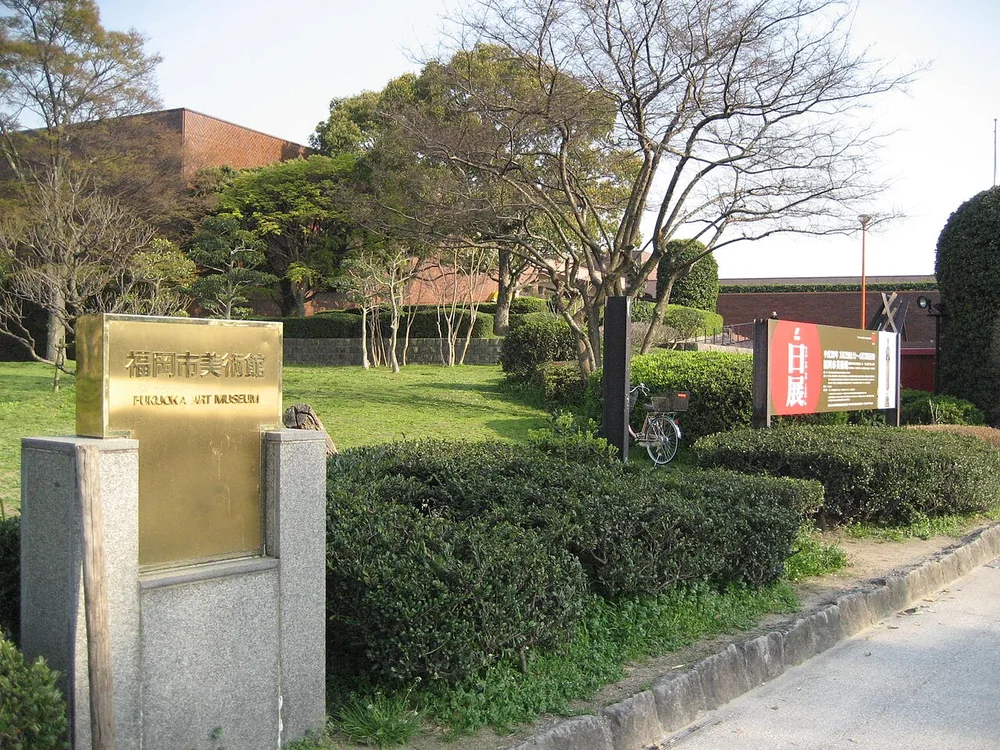
The museum reopened after renewal on 21 March 2019, retaining Maekawa’s design and adding an approach from Ohori Park on the west. From the lakeside, follow current signs to the Ohori Park entrance; to start with pre-modern art, you can begin on floor 1. The main photograph dates from 4 April 2008 and shows the name sign, reddish-brown building and planting at that time. Use the current museum floor plan and on-site signs to find your entrance today.
If one companion likes architecture and another exhibitions, explore the lobby together before splitting up briefly. The area around first-floor general information makes a clear meeting point; agree the floor and time, then go to the dining spaces together. You need not walk every entrance to finish an architectural visit. One continuous route in and another out make the building’s relationship with the park easier to remember.
From Hakata or Tenjin, compare Ohori-koen and Ropponmatsu
The museum access page lists two final subway approaches. On the Airport Line, get off at Ohori-koen K06 and walk about ten minutes from exit 3 or 6. Listed train times to Ohori-koen are about ten minutes from Hakata and five from Tenjin. Compare this side first if you want a lakeside approach or are returning to Airport Line Tenjin. Set the walking destination to Fukuoka Art Museum after leaving the station.
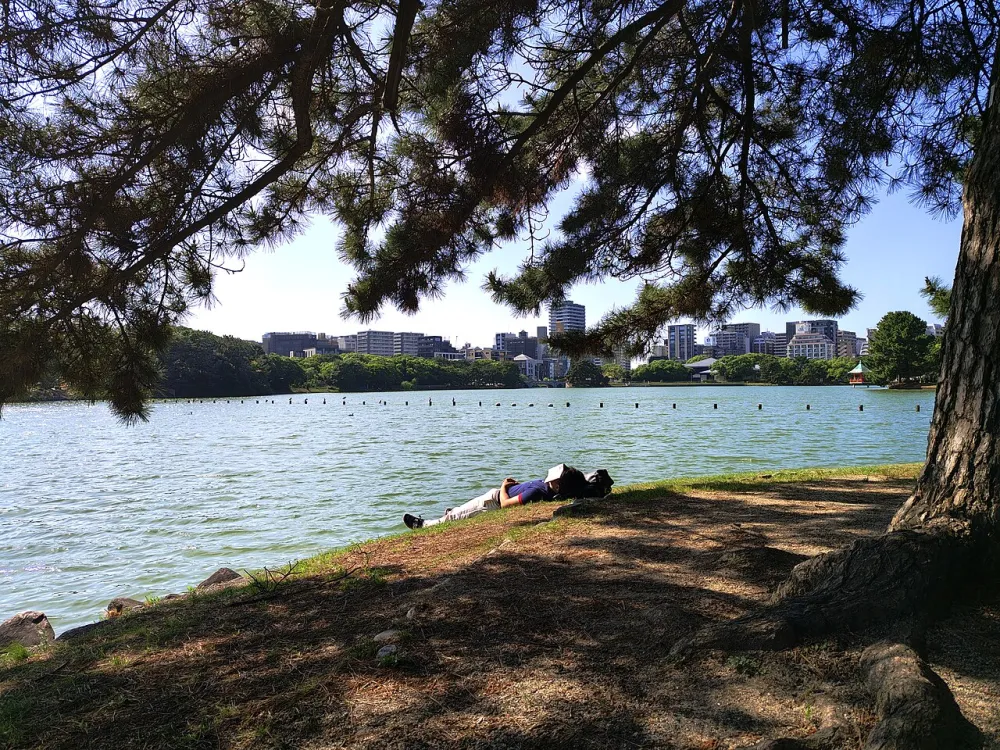
On the Nanakuma Line, get off at Ropponmatsu N11 and walk about ten minutes from exit 2. The museum lists about 13 minutes by train from Hakata and eight from Tenjin-minami. If your accommodation and breakfast are near the Nanakuma Line, use it directly rather than switching to the Airport Line because others approach through Ohori Park. Tenjin and Tenjin-minami are on different lines. Compare from your actual starting point to save transfers and station walking.
The ten-minute walks are museum route estimates. Allow extra for platform-to-exit travel, waiting, crossings and reaching the gallery. From Hakata, do not add ten minutes on the train to ten walking and promise gallery entry in 20 minutes. Getting from breakfast to the station, buying tickets, storing bags and companions’ pace affect when viewing really starts. Reserving a whole morning avoids rushing from the entrance.
To shorten the walk after alighting, compare Nishitetsu bus 13 from stand 2 at Hakata Bus Terminal. Get off at Fukuoka-shi Bijutsukan Higashiguchi, listed as three minutes on foot. Other routes stop at Akasaka-sanchome, around five minutes away. Rapid buses do not stop at either. Check the route number, stops and that day’s service rather than boarding merely because the bus heads towards the museum area. Plan boarding and alighting for wheelchair or pushchair needs too.
If driving, separate parking from finding the entrance. The museum car park has 26 ordinary-car spaces for museum users, at ¥200 per hour, accessible 09:00–21:00 on opening days. Entry and exit are unavailable on closed days and outside those hours. For an urban gallery day, either subway route usually saves searching for parking. If a companion drives you to the door, use the south entrance and general information to arrange drop-off and assistance.
Opening, last admission and late opening are three separate times
Normal hours are 09:30–17:30, with entry ending at 17:00. Fridays and Saturdays from July to October extend to 20:00, with entry ending at 19:30. For an evening visit in late October 2026, compare Friday 30 and Saturday 31 October. In November, plan around 17:30 closing again. To view slowly for two hours, work backwards from your planned departure; last admission only tells you whether you can still enter.
The museum normally closes on Mondays. When Monday is a Japanese national or substitute holiday, closure moves to the next weekday. The New Year closure is 28 December–4 January. The Indian chintz exhibition separately lists opening on 19 October 2026, closure on 20 and 21 October, opening on 23 November and closure on 24 November. For the November holiday period, mark the 23rd and 24th separately before allocating park and city activities, avoiding a change of plan at the door.
Late opening suits an exhibition visit placed on its own in the evening. After a day with much walking, finish one exhibition, then head towards your accommodation for dinner. If you want the lake too, walk a short park section before entering. Gallery, entrance and children’s rest-space closing routines serve different purposes. Start an evening visit with young children early; arriving at 19:30 does not mean another half-hour of play.
Children can rest on floor 2; adults need to share the viewing time
Mori no Tane on floor 2 is a rest space for children and guardians, with picture books on tatami and removable wall objects based on collection works. With young children, see one shorter gallery together first, then let one adult stay with the child while the other reads the exhibition they most want. Meet to swap if needed. A child’s rest period is not viewing time for both adults at once.
Remove shoes on the tatami. Guardians must remain throughout, and eating and drinking are prohibited. The removable pieces use magnets; watch children take and put them away. Tidying starts 30 minutes before closing, normally 17:00 or 19:30 on late-opening days. If your child needs a break then, leave early for somewhere suitable to eat rather than making a space being cleared away the final activity.
Beside Mori no Tane are women-only and all-gender nursing rooms; male carers can use the latter. The accessibility page also lists changing facilities in every toilet area and cubicles with baby seats in both men’s and women’s toilets. Locate these on the floor plan first, so a carer leaving a gallery with a child can go directly rather than stopping the whole family to search.
Free pushchairs and wheelchairs can be borrowed at first-floor general information. If your child prefers their own pushchair, use the on-site accessible routes. Store large belongings first, making it easier to turn, reach for clothes and look at works with the child. One exhibition adults find engaging, plus time for a child’s rest, gives this half-day a clear family version.
For wheelchairs and less walking, locate entrances and the lift first
The accessibility information says all entrances have ramps. For help, call staff using intercoms at the first-floor south or Ohori Park entrances. There is one lift, beside general information on floor 1 and beside the restaurant on floor 2. Its cabin is 1.6 metres wide and 1.5 metres deep. With a large wheelchair or other aid, discuss dimensions and transfer needs with the museum, using the actual equipment to choose your route.
Multifunction toilets are behind general information on floor 1 and behind the ticket counter on floor 2. Floor 1 has ostomy washing equipment and a folding multipurpose bed. On floor 2, the front toilet has a baby-changing table and the rear one a folding multipurpose bed. Include needed facilities when selecting the main floor: pre-modern art is on floor 1, modern art and special exhibitions on floor 2. Link them by lift, then decide whether to add another room.
A shorter-walking visit can enter through a suitable door, go to general information, choose one main exhibition, rest and leave in the familiar direction. If a companion wants the other floor, agree to meet in the lobby. If assistance is needed for movement, adjust gallery numbers together. Reducing the park walk to a short stretch near the entrance saves energy for the exhibition and makes it easier to judge whether to continue to the subway afterwards.
Store bags before the galleries; food and photography have their own rules
Refundable coin lockers are beside the first-floor shop, in the second-floor lobby and in front of the second-floor restaurant. Leave umbrellas and parasols in entrance stands. Before entering galleries, store spare coats and bags, keeping valuables, tickets and essentials. Finish lunch or drinks in designated eating spaces first. Eating and drinking are prohibited elsewhere, including chewing gum, sweets and bottled drinks; permitted areas include the café and restaurant.
Only pencils may be used for gallery notes. Silence phones and take calls outside. To remember a work, note the artist, title and date, then a few details you see. A few keywords make it easier to find information later without searching on a phone in front of the case. Step away from main routes when talking with companions, leaving room for others to come closer.
Some collection-gallery areas allow photographs; follow no-photography signs. Special exhibitions and ordinary galleries set their own exhibition rules. Video recording, flash, tripods, monopods and selfie sticks are prohibited inside. Do not place cameras on display plinths or touch glass. Photographs must not be reproduced or distributed commercially. Keep a favourite image if permitted, then put the camera away and look longer from a position that does not obstruct others.
Two half-day plans: focus on one floor, or make the special exhibition central
These times are planning estimates. For a light collection visit, allow about 90 minutes inside: 15 minutes for the entrance, lockers and tickets; 45–50 minutes for one pre-modern-art or modern-art subject; then a short second room or the building’s public spaces. Add 30–45 minutes for a short lakeside walk. With the final subway leg and waiting, allow about 2–3 hours for the outing. If you like reading works slowly, extend the museum time and shorten the lake walk.
For the special-exhibition version, start with about 2–3 hours inside, centred on Indian chintz and including storage, tickets and rest. Add only one pre-selected collection subject if wanted: a short first-floor Matsunaga tea visit for tea-utensil enthusiasts, or a modern-art room on floor 2. If you find yourself reading more slowly in the special exhibition, drop the collection stop and eat afterwards. Adequate time for a subject is better than buying two tickets and chasing the clock.
In fine weather, approach the lake from Ohori-koen Station, visit the museum and return by a short park section you choose. If staying on the Nanakuma Line, use Ropponmatsu both ways and make the lakeside an out-and-back walk from the museum. In rain, shorten the walk near the entrance, finish the main exhibition and rest indoors, then choose a return station before leaving. Both station routes involve outdoor walking; prepare rainwear and children’s shoes and socks even with an indoor destination.
If you still want Tenjin in the afternoon, choose one museum floor, then one main shopping stop after lunch. If slowly viewing both floors or the full special exhibition, let Tenjin provide just a meal. For dining and yatai areas, use the Fukuoka food and yatai neighbourhood guide. For trip length and nearby alternatives, return to the three-day Fukuoka itinerary. Collect stored belongings before leaving and use your chosen exit towards lunch or the return station.
A few useful answers
What does a ticket to Fukuoka Art Museum’s collections cost, and what’s included?
Admission costs ¥200 for adults and ¥150 for upper secondary and university students. It’s free for pupils in lower secondary school or younger. The ticket covers historic, modern and contemporary art and exhibitions in the regular programme, with separate tickets for special exhibitions.
Which underground line should I take to Fukuoka Art Museum from Hakata or Tenjin?
From Hakata or Tenjin, take the Airport Line to Ohori Park and leave by exit 3 or 6. From Hakata or Tenjin-minami, take the Nanakuma Line to Ropponmatsu and leave by exit 2. Allow about 10 minutes to walk to the museum from either station.
What time does Fukuoka Art Museum close, and which days have late opening?
The usual hours are 9.30 am to 5.30 pm, with last admission at 5 pm. On Fridays and Saturdays from July to October, it stays open until 8 pm, with last admission at 7.30 pm. It closes on Mondays, or on the next weekday if Monday is a Japanese public holiday or a substitute holiday.
When can I see Dalí’s The Madonna of Port Lligat at Fukuoka Art Museum?
Dalí’s The Madonna of Port Lligat is on loan from 25 September 2026 until mid-January 2027. If you’re going specifically to see it, check the museum’s exhibition programme for a date after the painting returns.
Official information and references
Sources used in this guide.
- Fukuoka Art Museum: exhibitions and notices
- Fukuoka Art Museum: visitor information, tickets and photography
- Fukuoka Art Museum: current collection and thematic exhibitions
- Fukuoka Art Museum: access
- Fukuoka Art Museum: floor plan
- Fukuoka Art Museum: Mori no Tane children’s space
- Fukuoka Art Museum: accessibility
- Fukuoka Art Museum: Kunio Maekawa’s architecture and renewal
- Fukuoka Art Museum: collection policy
- Fukuoka Art Museum: 2026 summer late opening
- Fukuoka Art Museum: Dalí work on loan
- Fukuoka Art Museum: Indian chintz exhibition
- Fukuoka Art Museum: collection highlights