Compare daytime display floats, the afternoon rehearsal, Shudan Yamamise and the early-morning Oiyama. The completed 2026 programme and special trains illustrate walking from Gion, arriving from Hakata or Tenjin, viewing and returning for luggage.
- Region & Focus
- Fukuoka
- Reading Scope
- 31 min read · 14 chapters · 4 Q&As
- Official Verification
- 11 official sources checkedUpdated 22 November 2026
- Key Topics
- ItinerariesRail travelWhere to stay
Chapter Route Map (tap any stop)
- Choose one viewing plan without staying out from displays until dawn
- Understand display and carried floats before choosing a scene
- Choose dates from the programme: displays first, carrying later
- The afternoon rehearsal: stay in one place for successive teams
- From Tenjin, consider the afternoon Shudan Yamamise
- Dawn Oiyama: Kushida-iri and the full course offer different views
- One night for Oiyama: choose a Gion stay within walking distance
- From Hakata or Tenjin: calculate the 2026 special trains
- Read restriction-map times and colours, as well as road closures
- Use the previous night for rest and carry only viewing essentials
- Return to the room first, then breakfast and check-out
- For children or anyone needing a seat, change the viewing time first
- Photography and rain: keep passage clear before seeking a low angle
- A short display-only Kawabata walk returns you to the original Fukuoka plan
- Quick Q&A
For a first Hakata Gion Yamakasa visit, decide whether you will reserve the previous night and following morning for the dawn event. For figures and decoration, daytime kazariyama displays are enough. To see teams running with floats while keeping normal sleep, choose the afternoon Oiyama rehearsal. For Oiyama itself, arrange accommodation, the pre-dawn departure and the return to your room together. The 2026 festival has ended. This guide uses its official programme, routes and special trains to demonstrate three choices. As of 29 October 2026, the association website still listed 2026 information, with no usable 2027 ticketing or special-train announcements.
Choose one viewing plan without staying out from displays until dawn
Daytime kazariyama viewing focuses on decoration, figures and stories that you can examine while the floats stand still. Add about an hour for one or two to an existing Hakata or Kawabata walk. It fits around lunch and needs no change to the previous night’s sleep. Choose it for an interest in figure-making, companions unable to stand long, or a brief Fukuoka stop during travel through Kyushu.
To see movement, compare the afternoon Oiyama rehearsal first. The official 2026 programme lists a 15:59 start on 12 July. The carried floats enter Kushida Shrine in order, then run about four kilometres to the Narayamachi finish. You can watch carrying, turning and teamwork while sleeping normally the night before. If your dates fit, it balances movement with a normal routine. Reserve the afternoon for it and move the planned Dazaifu or coastal day elsewhere.
The dawn Oiyama requires an actual overnight plan. At 4:59 on 15 July 2026, the first float begins Kushida-iri, followed by the other nagare teams, running about five kilometres to the Susakimachi finish. Treat arriving before dawn, waiting, watching a section and returning to the room as the day’s main activity, with breakfast and extra sleep afterwards. For a long-distance train later, favour a later departure so packing does not coincide with dispersal.
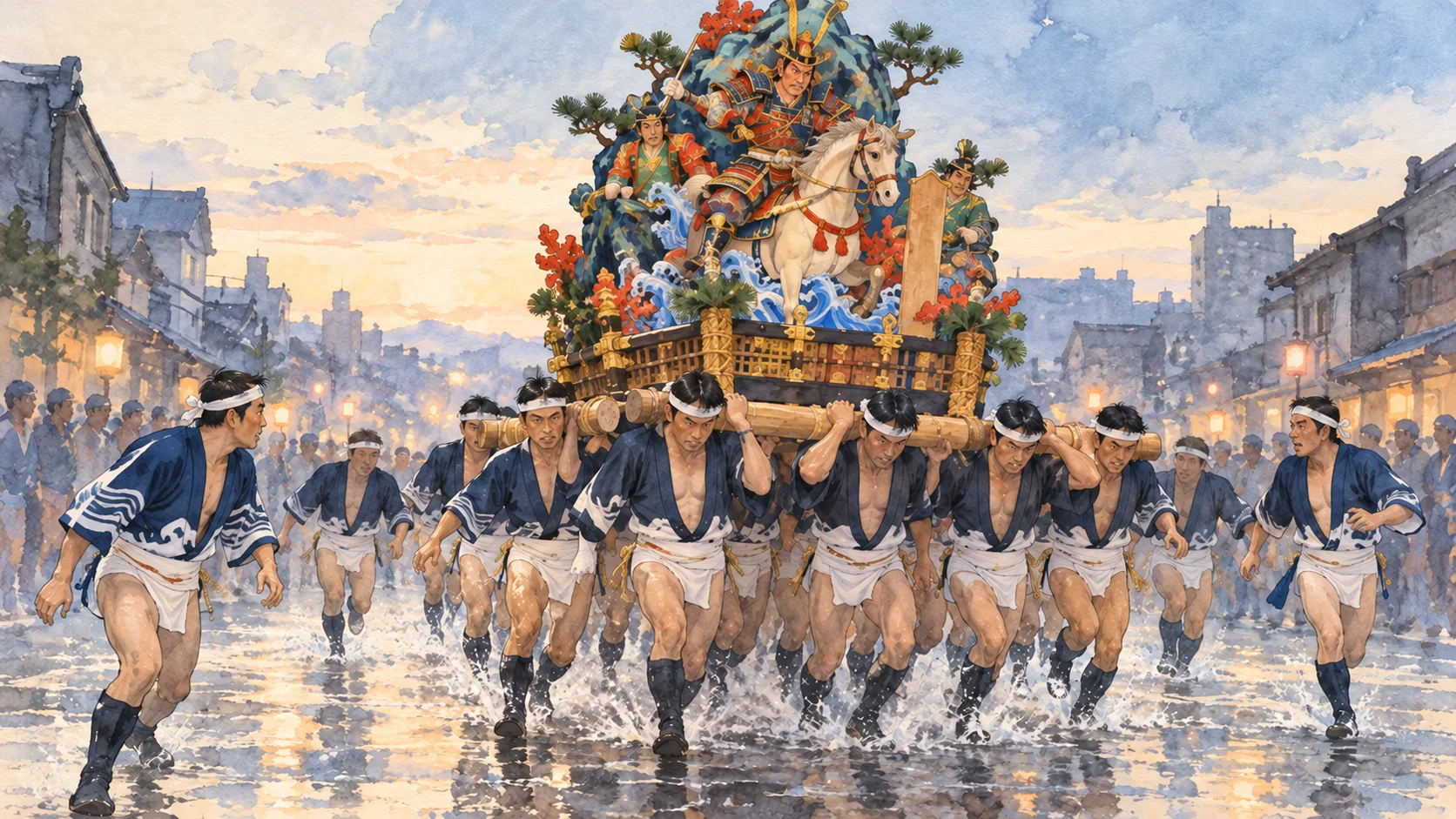
Compare daytime display floats, the afternoon rehearsal, Shudan Yamamise and the early-morning Oiyama. The completed 2026 programme and special trains illustrate walking from Gion, arriving from Hakata or Tenjin, viewing and returning for luggage.
Understand display and carried floats before choosing a scene
“Kaku” means carrying the float’s poles on the shoulder; the carriers are kakite. Watching kakiyama therefore involves more than figures: lifting the whole float, coordinating front and rear, and regaining speed after turns are all part of the run. Choose a programme with carried floats for these movements. A float parked at its shelter shows its form but not the running.
Kazariyama are mainly for display. Stand back for the whole composition, then approach to read the title. The official glossary explains that each float has a title expressing its subject. If Japanese stories are unfamiliar, identify figures, weapons or the setting before reading the theme, rather than memorising every name. The front, rear and subject explanations of Kushida Shrine’s permanent display are covered in the old Hakata section of the Fukuoka three-day itinerary.
Kamikawabata-dori is the exception to remember. Fukuoka Prefecture’s tourism association calls it a “running display float”. It appears after the seven carried floats in the rehearsal and Oiyama. This lets you see a tall display float move and may be a reason to keep waiting along the route. Leave by a usable pedestrian route rather than stepping into the running line for another float.
Choose dates from the programme: displays first, carrying later
The official 2026 programme starts on 1 July with rituals including Shimeoroshi, Goshin-ire and Tobancho Oshioitori. Display floats open successively after Goshin-ire; all-team Oshioitori is on 9 July. These rituals have distinct purposes and are not all performance sessions for visitors. In the first half of the festival, focus on display floats and neighbourhood walks instead of expecting afternoon runs on display days.
Nagaregaki on 10 July runs within each team’s district, with different start times. On 11 July, Asayama includes arrangements honouring long-serving contributors and allowing children of the duty neighbourhood onto the float, while Tanagaregaki takes teams outside their own areas. These rituals are closely tied to local organisation. With only one afternoon and a need for clear arrival and departure times, favour the rehearsal or Shudan Yamamise, whose combined programme is clearer.
Another Nagaregaki takes place on 14 July, before Oiyama the following dawn. The official 2026 route page includes maps for 10, 11 and 14 July and points to viewing near each team’s float shelter. If visiting on those dates, find a team near your hotel on that year’s map rather than crossing unfamiliar lanes to see more. Return to your existing hotel and dinner plan afterwards; finish early if attending at dawn.
The afternoon rehearsal: stay in one place for successive teams
On 12 July 2026, the rehearsal leaves Kushida Shrine, follows Kyu-Higashimachi-suji, Taihaku-dori and Kyu-Nishimachi-suji, and finishes in Narayamachi. It shares sections with the 15 July Oiyama but has a different finish and total length. Identify the blue rehearsal line on the official 2026 route map before choosing a spot. Waiting at Oiyama’s Susaki finish would confuse the two routes.
This guide places afternoon viewing around Taihaku-dori: enter near Gion Station, stay on pavement where staff permit stopping, and leave towards Gion afterwards. The station and main road make orientation easier, and you can choose accommodation on the same side. Step away from the running route when leaving; you need not follow it to the finish. Aim for the Taihaku-dori pavement north of Gionmachi junction, opposite Tochoji. The actual permitted section depends on that edition’s barriers and security instructions.
Keep an afternoon free: return to the room after lunch to leave luggage, head to the selected roadside area, then rest nearby and have dinner afterwards. As a planning suggestion, reach the station area an hour before the start for exiting, finding a permitted spot and waiting. Watch the teams you intended from there. Another person’s closer photograph is no reason to move suddenly to the inside of a corner.
The rehearsal also times Kushida-iri and the full course. The first float may stop during Kushida-iri to sing Hakata Iwai-uta. These features make it a worthwhile main event in its own right. If speed and teamwork are your goals, the afternoon version meets them. Dawn has its own early waking and night travel costs; choose the scene that matters most.
From Tenjin, consider the afternoon Shudan Yamamise
At 15:30 on 13 July 2026, Shudan Yamamise travels from Gofukumachi junction along Meiji-dori to Fukuoka City Hall, about 1.3 kilometres outward, with a return route too. This is when carried floats cross the Naka River into Fukuoka and Tenjin. Compare it if you want moving teams during a Tenjin shopping day. From Hakata, choose a section of Meiji-dori according to transport rather than walking to City Hall and doubling back.
The second viewing option here is Meiji-dori near Hakataza. Exit Nakasu-Kawabata Station and find a permitted roadside place on the same side. Afterwards, return to that side’s station entrance or local accommodation. This is a broad-street run, different from Taihaku-dori’s Oiyama section or Kushida-iri inside the shrine. The two viewing options belong to different dates. Choose one place for the day to reduce crowd crossings.
The 2026 restriction map separately marks the Shudan Yamamise gathering area, route and return waiting area, with turning restrictions along the way. Closed traffic lanes remain event space. To reach the Hakataza side from across the road, use a lawful crossing before restrictions or follow the open route directed onsite. Once running begins, stay on your side until leaving. Meet companions at a named point on that same side.
For a Tenjin plan, eat lunch there and limit afternoon shopping to one category. Take bags back to the room before walking or riding to your selected viewing area. For Kawabata or Nakasu dinner afterwards, use the Fukuoka neighbourhood dining guide, or return directly to Tenjin. Without a dawn plan, eat on a normal schedule rather than filling the whole night because it is a festival day.
Dawn Oiyama: Kushida-iri and the full course offer different views
The official definition of Kushida-iri is the roughly 112-metre section where a carried float enters the shrine’s Seido area, circles the Seido flag and leaves the grounds, with its own timing. It concentrates on the start, flag turn and speed after the exit, unlike a long street run. If the turn and first team’s Iwai Medeta song matter most, arrange the shrine’s viewing conditions. Reaching the shrine neighbourhood alone does not secure that view.
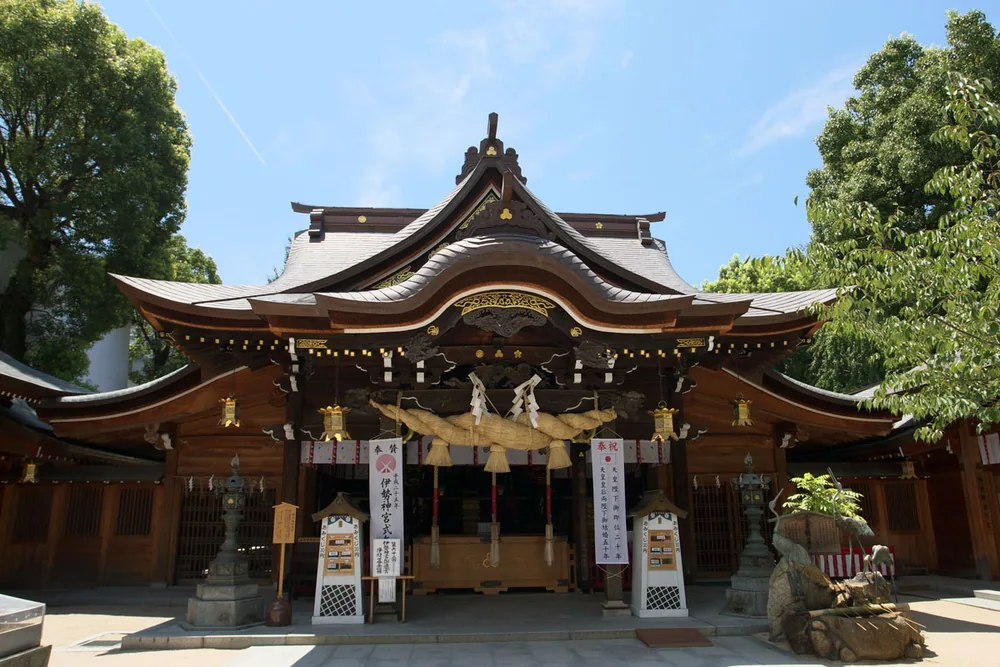
Tiered seating surrounds the shrine area. The association homepage directs ticket and viewing enquiries to Kushida Shrine on 092-291-2951. For a fixed seat, obtain that edition’s sale and admission conditions there first. The main roadside plan assumes standing: carry only items you can stow and keep shop doors, junctions and pedestrian passages clear. If a companion must sit, obtain a suitable seat before choosing dawn, or use the daytime displays.
The full Oiyama is about five kilometres, ending in Susakimachi. Carriers change over during the long run, a feature the official glossary uses to distinguish it from short Kushida-iri. Watch the sides of the carrying poles and how the team sustains forward movement, then compare the next team’s clothing. Staying in one place makes rhythms easier to distinguish; repeatedly racing ahead of the same float makes a complete pass harder to see.
In 2026 Nakasu Nagare was first, followed by Nishi, Chiyo, Ebisu, Doi, Daikoku and Higashi. The order rotates. Identify that edition’s names rather than treating last year’s first team as permanently first. For a simple record, note each team you see and one action: its formation on approach, passing speed or clothing difference. Compare titles after returning to the room.
The glossary also identifies three Seido flags, at Kushida Shrine, Tochoji and Jotenji. Before Taihaku-dori viewing, locate the latter two temples on the map to understand turns into and back out to the main road. Stay in a permitted roadside place; the flag surrounds are working space for float turns. Knowing the route distinguishes a turn from the whole Kushida-iri sequence, so a flag turn at a temple is not mistaken for the shrine grounds.
A 2022 Hakata Gion Yamakasa record introducing display floats, carried floats and dawn Oiyama, produced by the Hakata Gion Yamakasa project committee and published by KBC Kyushu Asahi Broadcasting.
One night for Oiyama: choose a Gion stay within walking distance
The main dawn plan starts with a previous-night stay near Gion Station and keeps viewing on Taihaku-dori, without entering the shrine for Kushida-iri or following to Susaki. Mark which side of Taihaku-dori the hotel entrance occupies, then choose a reachable section on that side. Compare the walks from room to viewing spot and back. “Hakata”, “Gion” or “shrine” in a hotel name provides only a location clue.
Take a short daylight walk the day before to identify turns, crossings and the return entrance. The main route follows normally open pavements from the hotel towards Gion Station, then the same side of Taihaku-dori to a permitted viewing section. If the hotel is across the road, cross at a normal junction while it is open. If that crossing is already closed on arrival, stay on your current side and adapt the viewing spot to the usable route.
A suggested schedule for 15 July 2026 is to wake at 3:30, get ready and eat a little prepared food in the room, leave at 4:00, and allow about half an hour for walking and orientation. Wait in a permitted place around 4:30. The 4:59 start is for the first float at Kushida Shrine; Taihaku-dori spectators wait for it to arrive, so the first team appears later along the streets.
These waking, departure and half-hour walking allowances are itinerary choices; leave earlier from a more distant room. After the selected teams, wait for permission to leave or withdraw along an open pavement on your side, then follow the daylight route back. This keeps luggage at the hotel and makes the return independent of temporary buses or taxis. If restrictions require a diversion, use the security-directed exit and reconnect with the hotel direction after reaching a main road.
From Hakata or Tenjin: calculate the 2026 special trains
Fukuoka City Subway’s announcement of 18 June 2026 added trains on all lines during the 3:00–5:00 period on Oiyama day, 15 July. This was a dated special operation, separate from the normal station map. From Tenjin or Hakata, check the applicable date, your direction and alighting station, then add hotel-to-platform and station-to-roadside time.
The 2026 Nanakuma Line special timetable gives a clear Tenjin-minami example towards Hakata: 3:50 departure, passing Kushida Shrine at 3:52; the next pair is 4:00 and 4:02. From accommodation near Tenjin-minami, take the earlier pair and allow for exiting and walking to Taihaku-dori. Tenjin on the Airport Line is a different station on another line. Search specifically for Tenjin-minami.
From Hakata, read the Hashimoto-bound direction on the same table: departure 3:58, Kushida Shrine 3:59, then 4:08 and 4:09. It is one stop, but leaving still includes going downstairs, entering the station, finding the Nanakuma Line and exiting. From the Hakata Exit, willing walkers can compare the full walk the previous day. From the Chikushi Exit, crossing the station area adds distance. One minute onboard is not the total room-to-viewing time.
Both examples deliver you to Kushida Shrine Station. Follow pavements towards Gionmachi and Taihaku-dori, avoiding the shrine gathering area and float-running space. Use that edition’s exits, barriers and guidance to reach a permitted roadside place. For one section of running, arrive early and remain on one side. To see inside the grounds before the first team starts, you need separately completed seating and admission arrangements.
Read restriction-map times and colours, as well as road closures
The official 2026 restriction map separates 12, 13 and 15 July into columns. On the 15th, the gathering area lists 1:00–7:00, with Oiyama route and related surrounding sections marked 4:30–7:00 and 4:00–7:00. Each applies to the area represented by its line style. A road apparently open earlier may therefore be unusable under ordinary driving navigation during the event.
Distinguish vehicle prohibitions from places where pedestrians may stand. The gathering area is designated a pedestrian road but still serves team assembly and movement. Red routes and hatched areas are not automatically public viewing squares. Stay on pavements, leave passage strips clear and cross only under staff direction. Choosing entry and exit on the same side reduces rerouting when barriers appear.
For the 12 July rehearsal, gathering-area restrictions are 13:20–17:30 and route-related restrictions 15:30–18:00. Shudan Yamamise on the 13th has its own 13:30–16:00 and 15:00–18:00 markings. These are the 2026 map’s periods. When booking an afternoon-plan dinner, leave time to exit the roadside, clear the restricted area and return to the room. A departure or performance start is not a dispersal time.
Nishitetsu buses also diverted for restrictions on 12, 13 and 15 July that year. Fukuoka Prefecture’s tourism transport section links the notices. You can walk back from dawn viewing and use the special subway outbound. A normal bus stop along the route does not establish festival-day boarding there. If buses are essential, check that edition’s diverted stop names and directions before choosing accommodation and viewing.
Use the previous night for rest and carry only viewing essentials
For dawn Oiyama on 15 July 2026, the previous night is 14 July. Complete check-in and clarify the room key, night entrance and early return before dinner. Carry the key if automatic doors lock overnight. Contact the hotel under your booking for late check-in. Complete these arrangements before the pre-dawn departure so you can rest directly on return.
Eat near the accommodation, then prepare water, simple food to eat in the room, a towel and phone storage. Shorten the previous evening’s yatai, bars and night views according to energy. Reserve sleep the night before an overnight waking. If two people have different schedules, the dawn visitor can prepare clothes and bag in advance and simply pick them up and leave, letting the other sleep.
Carry only what this viewing needs. Leave large luggage, shopping bags and unused lenses in the room for easier movement at junctions and roadsides. Bring a small towel and a bag for wet items, then change and wash on return. Keep phone equipment simple too. Watch the team enter view before deciding to film. Companions with little interest in photography can watch only the teams they want rather than waiting for every shot on a list.
The Fukuoka accommodation comparison covers room types, breakfast and night entry around Hakata Exit, Chikushi Exit, Tenjin, Nakasu and Watanabe-dori. Add two questions to those candidates: can you walk to the selected roadside without dawn transport, and will you still have a room to return to? A family-suitable room with rest time is more useful than unsuitable beds chosen for one window view.
Return to the room first, then breakfast and check-out
For the Taihaku-dori walking plan, withdraw from the roadside, return to Gion accommodation, then shower, change and eat breakfast. Include time to finish watching your chosen teams, wait for permission to leave and walk back before reaching the room. For morning sleep, compare normal check-out with your intended departure when booking. Arrange late check-out through a plan the hotel actually accepts.
Breakfast has two roles: a little food before leaving and a seated meal on return. Prepare the first the night before; schedule the second against the hotel’s opening and last admission. If sleeping later after viewing, check the breakfast deadline when choosing meals. Do not give up necessary rest merely because breakfast is included. For an early Fukuoka departure, work backwards from luggage collection and travel before fitting breakfast.
The 2026 subway special table mostly covers the early period around Oiyama. Do not use the outbound train interval to predict equal later return frequency. After viewing, use the day’s normal timetable and live running information. Within walking range, follow the route learned the previous evening. Tenjin visitors using the Nanakuma Line should identify Tenjin-minami again for the return before walking from the station to their hotel.
For a Shinkansen or flight that day, put each stage into the timetable: leaving the roadside, sorting things in the room, collecting luggage and reaching station or terminal. Reaching Hakata Station’s exterior still leaves entry and platform finding. Fukuoka Airport international flights require terminal transfer arrangements, covered in the Fukuoka three-day itinerary’s airport transport section. With a very early onward journey, the afternoon rehearsal makes sleep and packing easier to preserve.
For children or anyone needing a seat, change the viewing time first
Children’s suitability for dawn depends on waking at night, waiting and standing, not just map distance. With small children, choose daytime displays or a few teams at the afternoon rehearsal, with toilets and a meal beforehand and a direct hotel return. If an adult especially wants Oiyama, one can go while the other stays with the children and reunites at breakfast. The whole family need not follow the same dawn schedule.
Pushchairs and wheelchairs need passage space. Crowds, shop entrances and corners affect where you can stop. A level road does not itself provide a suitable viewing position. For reserved seating, ask Kushida Shrine about that edition’s wheelchair, companion and entry routes before arranging transport. Without a suitable viewing place, choose daytime displays that you can shorten freely. Reaching the site and watching comfortably are separate needs.
Those wanting longer can stay while the adult with children returns, but separate at a named point outside the route on the same side. Do not cross during a passing team to collect children. An agreed exit direction makes reunion easier than calling through a crowd.
Photography and rain: keep passage clear before seeking a low angle
The association’s photography notice of 9 July 2026 says that, at Fukuoka Prefectural Police’s request, ladders and stools are prohibited for photography during the festival. Designated armband holders are exempt; no new armbands are issued or lent. Ordinary visitors should use handheld cameras or phones where stopping is permitted. Leave folding steps at the accommodation before departure rather than adding luggage and onsite complications.
Choose an angle that requires no reach into the road, keeping body and lens within the viewing area. Do not hold a phone in front of someone’s face for long or reach after a moving float. Save figure details for parked daytime displays and record a complete dawn pass. Each image has a suitable time; not every close-up needs to be taken while the teams run.
In rain, address footing and visibility first. Wear shoes that grip wet roads and rainwear that packs away without dripping onto others or projecting rigid frames. Follow onsite instructions in crowded viewing areas. If waiting becomes uncomfortable, withdraw towards the room. If abandoning dawn viewing, rest at the accommodation, then visit permanent displays on a normal daytime walk, giving the day a clear destination.
If weather or site conditions change the event, read the organiser’s and transport operators’ same-day notices before dealing with paid rooms, travel or seats. Handle each booking through its original purchase channel; its terms determine the refund scope. Independent roadside spectators have no seat-ticket procedure. Use the morning to organise things at the hotel, then leave when normal transport and businesses open.
A short display-only Kawabata walk returns you to the original Fukuoka plan
If you do not want to change sleep, choose a daytime Kawabata walk. Fukuoka Prefecture’s 2026 introduction places Kamikawabata-dori and Kawabata Chuo-gai in the north and south parts of the same arcade, with display positions moving within it during the period. Find that day’s float shelters, view one completely, then decide whether to reach the other. Avoid crossing the city by subway simply to complete a display count.
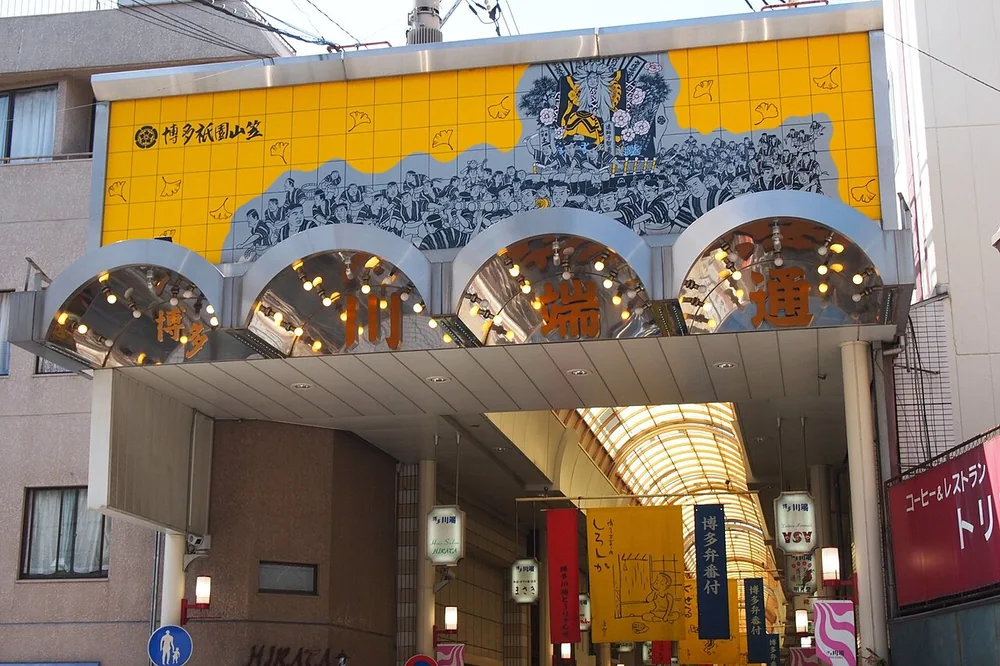
A specific 2026 arrangement placed Doi and Daikoku teams’ carried floats in the Kawabata arcade alongside two display floats, producing four displays together because of the duty-neighbourhood rotation. Use that edition’s arrangement to distinguish types in old photographs. For a future trip, find shelters on the new year’s map rather than transferring last year’s four-float grouping directly into a new itinerary.
When reading old display maps, account for announced longer-term changes. The prefecture’s 2026 feature says Shintencho arcade’s display is suspended from 2027 after the 2026 edition because of redevelopment. A Tenjin stay planned around Shintencho cannot simply follow the old map next time. Choose a location still listed in the new year, or keep the short walk in Kawabata. This announced suspension is separate from unannounced future float subjects.
After the festival, Kushida Shrine’s permanent display can join an old-town walk, except during the June float changeover. Kamikawabata-dori also has a post-festival permanent display arrangement. See the one you want, finish with a Kawabata meal, then head towards Nakasu-Kawabata or Kushida Shrine Station. This short version focuses on the works and returns you to your original itinerary afterwards.
A few useful answers
When did the dawn Oiyama at Hakata Gion Yamakasa start in 2026?
The first team began its run through Kushida Shrine at 4.59 am on 15 July 2026. The floats came through Taihaku-dori a little later, so leave time to walk there, find a place to stand and wait.
What can I see at Hakata Gion Yamakasa during the day?
Visit Kawabata Shopping Arcade in the daytime to see the figures and decorations on the display floats. If you'd like to see the teams run with the floats on their shoulders, go to the afternoon Oiyama rehearsal. In 2026 it began at 3.59 pm on 12 July.
Where should I stay if I want to walk to and from the dawn Oiyama?
Stay near Gion Station and pick a hotel on the same side of Taihaku-dori as a pavement open to spectators. Try the walk in daylight the day before, then use the same pavement on your way back to rest or collect your luggage.
Did early underground trains run from Tenjin-minami and Hakata for the 2026 Oiyama?
On 15 July 2026, a special Nanakuma Line train left Tenjin-minami at 3.50 am and reached Kushida-jinja-mae at 3.52 am. Another left Hakata at 3.58 am and arrived at 3.59 am.
Official information and references
Sources used in this guide.
- Hakata Gion Yamakasa Promotion Association: news and seating enquiries
- Fukuoka Prefecture tourism association: 2026 Yamakasa feature and display locations
- Promotion Association: 2026 festival programme
- Promotion Association: 2026 route map links
- Promotion Association: 2026 traffic restriction links
- Promotion Association: 2026 photography notice
- Fukuoka City Subway: 2026 Oiyama extra train announcement
- Fukuoka City Subway: 2026 Nanakuma Line special timetable (prefectural tourism copy)
- Promotion Association: official 2026 route map (prefectural tourism copy)
- Promotion Association and police: 2026 traffic restriction map (prefectural tourism copy)
- Promotion Association: Yamakasa glossary