Compare daytime display floats, the afternoon rehearsal, Shudan Yamamise and the dawn Oiyama. The completed 2026 program and special trains illustrate walking from Gion, arriving from Hakata or Tenjin, watching and returning for luggage.
- Region & Focus
- Fukuoka
- Reading Scope
- 31 min read · 14 chapters · 4 Q&As
- Official Verification
- 11 official sources checkedUpdated November 22, 2026
- Key Topics
- ItinerariesRail travelWhere to stay
Chapter Route Map (tap any stop)
- Choose one viewing plan without following every float until dawn
- Understand display and carried floats before choosing what to wait for
- Choose dates by the program: displays first, carried floats later
- The afternoon rehearsal: stay in one place as the groups pass
- From Tenjin, consider the afternoon Shudan Yamamise
- Dawn Oiyama: Kushida-iri and the full course offer different views
- For a dawn overnight, choose Gion accommodation within walking distance
- From Hakata or Tenjin: reading the 2026 special trains
- Read restriction-map colors and times, as well as closed roads
- Use the previous night’s room for rest and take only viewing essentials
- Return to the room before breakfast and checkout
- With children or a need for seats, choose the viewing time first
- Photography and rain: keep the sidewalk clear
- A short display-float visit through Kawabata fits an ordinary Fukuoka day
- Quick Q&A
For a first Hakata Gion Yamakasa visit, decide whether one dawn event is worth reserving the previous night and following morning. To admire figures and decoration, view display floats by day. To see teams run with floats while keeping normal sleep hours, choose the afternoon Oiyama rehearsal. For Oiyama itself, plan accommodation, the pre-dawn departure and the return to your room together. The 2026 festival has ended; this guide uses its official program, routes and special trains to illustrate the choices. As of October 29, 2026, the promotion association’s website still listed 2026 information, with no usable 2027 ticketing or special-train announcement.
Choose one viewing plan without following every float until dawn
Daytime display-float viewing lets you study decorations, figures and stories while the floats stand still. Add it to an existing Hakata or Kawabata walk, allowing about one hour for one or two floats. This keeps the previous night’s routine intact and connects easily with lunch. Choose it if you enjoy figure craftsmanship, have companions who cannot stand for long, or are making a short Fukuoka stop during a Kyushu journey.
For moving floats, first compare the afternoon Oiyama rehearsal. The official 2026 schedule gives July 12 at 15:59. Floats enter Kushida Shrine in sequence, then run about four kilometers to the finish in Narayamachi. You can see carrying, turns and teamwork while sleeping normally the night before. If the date fits, it balances action and rest. Reserve the afternoon for it and move a planned Dazaifu or coast day elsewhere.
Dawn Oiyama needs a real overnight plan. At 4:59 on July 15, 2026, the first float began its Kushida-iri, followed by the other nagare groups, running about five kilometers to the finish in Susakimachi. Make arrival before dawn, waiting, watching a section and returning to your room the day’s main activity. Put breakfast and extra sleep afterward. For a long-distance train later that day, favor a later departure so packing does not coincide with dispersal.
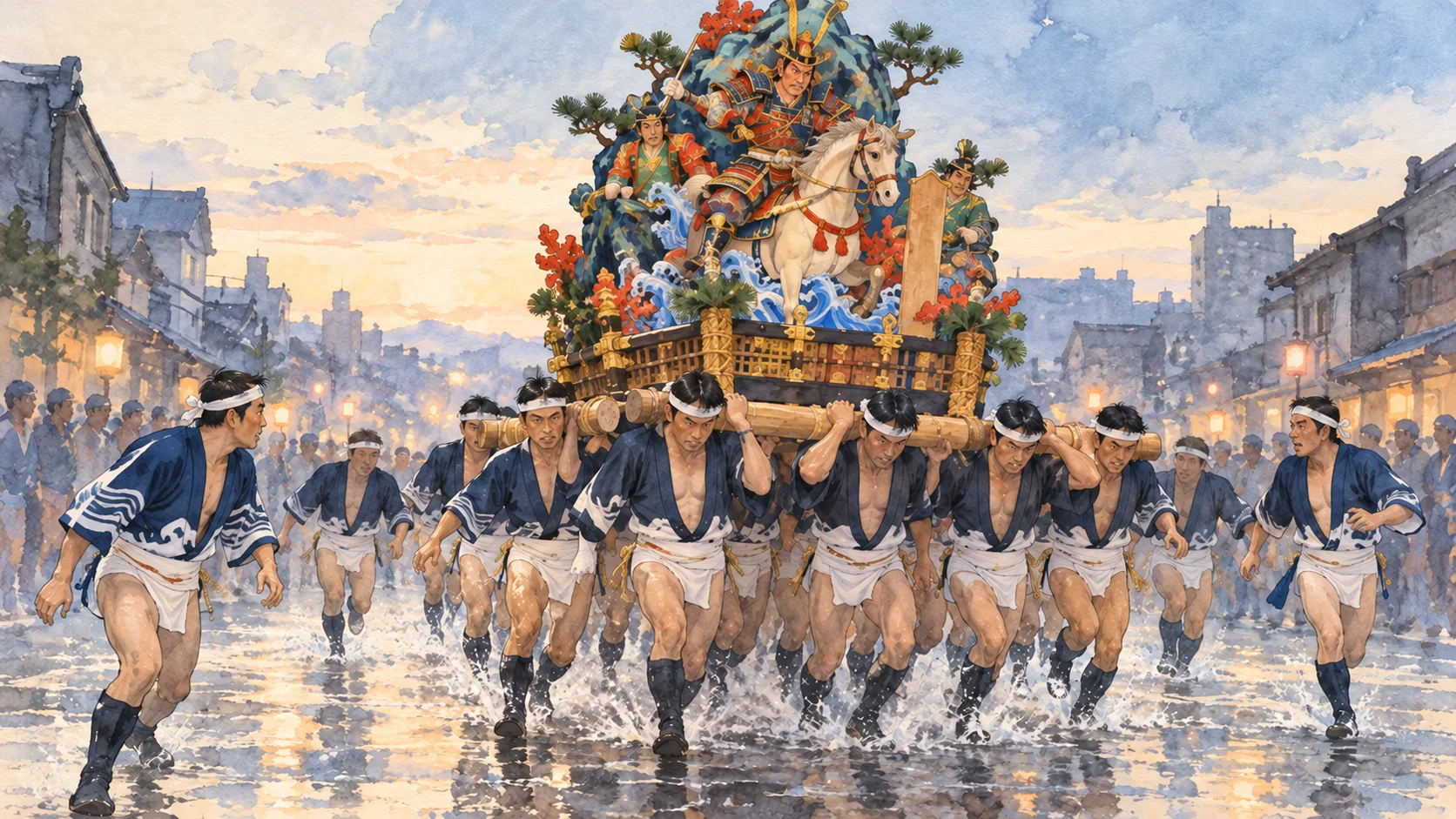
Compare daytime display floats, the afternoon rehearsal, Shudan Yamamise and the dawn Oiyama. The completed 2026 program and special trains illustrate walking from Gion, arriving from Hakata or Tenjin, watching and returning for luggage.
Understand display and carried floats before choosing what to wait for
Kaku means to move a float with its poles on the carriers’ shoulders; the carriers are kakite. Watching a carried float involves more than its figures: how it is lifted, how people front and rear coordinate, and how speed returns after a turn. Choose a program with carried-float movement for these actions. A stationary float outside its shed reveals its form but not the running.
Display floats are mainly for exhibition. Step back for the whole composition, then approach to read the title. The official glossary explains that each float has a title expressing its theme. If Japanese stories are unfamiliar, identify figures, weapons and scene arrangements before reading the theme. The front, reverse and subject explanations for Kushida Shrine’s permanent display float are covered in the old Hakata section of the Fukuoka three-day itinerary.
Kamikawabata-dori is an exception worth remembering. The prefectural tourism association calls it the running display float. It appears in the rehearsal and Oiyama after the seven nagare carried floats, showing how a tall display float moves. If watching from the route, use it as a reason to decide whether to wait longer. Leave by a permitted pedestrian route rather than stepping into the running course to see the next float.
Choose dates by the program: displays first, carried floats later
The official 2026 program starts on July 1 with rites including Shime-oroshi, Goshin-ire and Toban-machi Oshioi-tori. Display floats open progressively after Goshin-ire. All nagare take part in Oshioi-tori on July 9. These rites have specific purposes; travelers need not treat each as a performance session. In the first half of the festival, focus on displays and neighborhood walks rather than waiting for an afternoon run.
On July 10, Nagaregaki takes place within each nagare’s area at different starting times. July 11 includes Asayama, which honors longstanding contributors and lets children of the duty neighborhood ride, and Tanagaregaki, which goes outside the group’s own district. These rites are closely tied to local organizations. With only one afternoon and a need for clear arrival and exit times, prioritize the rehearsal or Shudan Yamamise with their clearer collective schedules.
July 14 has another Nagaregaki before Oiyama the following dawn. The official 2026 route page also provides maps for July 10, 11 and 14 and notes viewing near each float shed on those dates. If your stay falls then, find a group near your accommodation on that edition’s map. There is no need to cross unfamiliar lanes to see more groups. Return to your hotel and dinner afterward, finishing early if you plan to attend at dawn.
The afternoon rehearsal: stay in one place as the groups pass
The July 12, 2026 rehearsal leaves Kushida Shrine via the old Higashimachi-suji, Taihaku-dori and old Nishimachi-suji to the Narayamachi finish. It shares sections with July 15 Oiyama but has a different finish and total length. Identify the blue rehearsal route on the official 2026 overall map before choosing a spot. Waiting at the Oiyama finish in Susaki would confuse the two routes.
This plan uses Taihaku-dori for afternoon viewing: enter near Gion Station, stay on a sidewalk where marshals permit, then leave toward Gion. The station and main road make orientation easier, and you can choose accommodation on the same side. To leave, step away from the running line without following it to the finish. Aim for the Taihaku-dori sidewalk north of the Gionmachi intersection, across from Tochoji. The edition’s barriers and security instructions determine the actual permitted section.
Keep an afternoon free. After lunch, leave luggage in your room, go to the chosen route section, then return locally for rest and dinner. A suggested target is to reach the station area one hour before the start, using that hour to exit, find a permitted place and wait. Watch the groups you wanted, then finish. A closer photograph taken elsewhere is no reason to move suddenly to the inside of a corner.
The rehearsal also times Kushida-iri and the full course, and the first float may stop during Kushida-iri for the Hakata celebration song. These make it a worthwhile travel focus in its own right. If speed and team coordination are your main interests, the afternoon version meets that aim. Choose the scene that matters to you, accounting for the dawn event’s additional early start and nighttime travel.
From Tenjin, consider the afternoon Shudan Yamamise
The July 13, 2026 Shudan Yamamise starts at 15:30, traveling from the Gofukumachi intersection along Meiji-dori to Fukuoka City Hall. The outward route is about 1.3 kilometers, with a return route as well. This is when carried floats cross the Naka River into Fukuoka and Tenjin. Compare it if you want moving floats after a Tenjin shopping day. From Hakata, choose a convenient section of Meiji-dori without first walking to City Hall and back.
The second viewing option here is Meiji-dori around Hakataza. Leave Nakasu-Kawabata Station and find a permitted place on the same side of the road, then return to a station entrance on that side or to local accommodation. This broad-street view differs from Taihaku-dori’s Oiyama route and Kushida-iri inside the shrine. The two proposed spots serve different dates; one place per day reduces crowd crossings.
The 2026 restriction map separately marks Shudan Yamamise’s assembly area, route and return waiting area, with turn restrictions along the way. A closed road remains an operating space. To reach the Hakataza side, cross legally before restrictions begin or follow the open on-site route. Once running starts, remain on your side and leave afterward. Meet companions at a named place on that same side.
For a Tenjin version, have lunch there, complete one type of shopping, return bags to your room, then travel or walk to the chosen viewing section. For dinner in Kawabata or Nakasu afterward, use the Fukuoka neighborhood food guide; otherwise return to Tenjin. Without a dawn Oiyama plan, eat on your usual schedule rather than filling the night simply because it is festival day.
Dawn Oiyama: Kushida-iri and the full course offer different views
The official definition of Kushida-iri is the roughly 112-meter section in which a carried float enters the shrine’s seido area, circles the flag and leaves the grounds. It is timed separately. The concentrated start, flag turn and exit speed differ from long-distance street movement. To see the turn and the first float’s Iwai Medeta song, arrange the shrine’s viewing conditions; merely reaching the neighborhood does not secure that view.
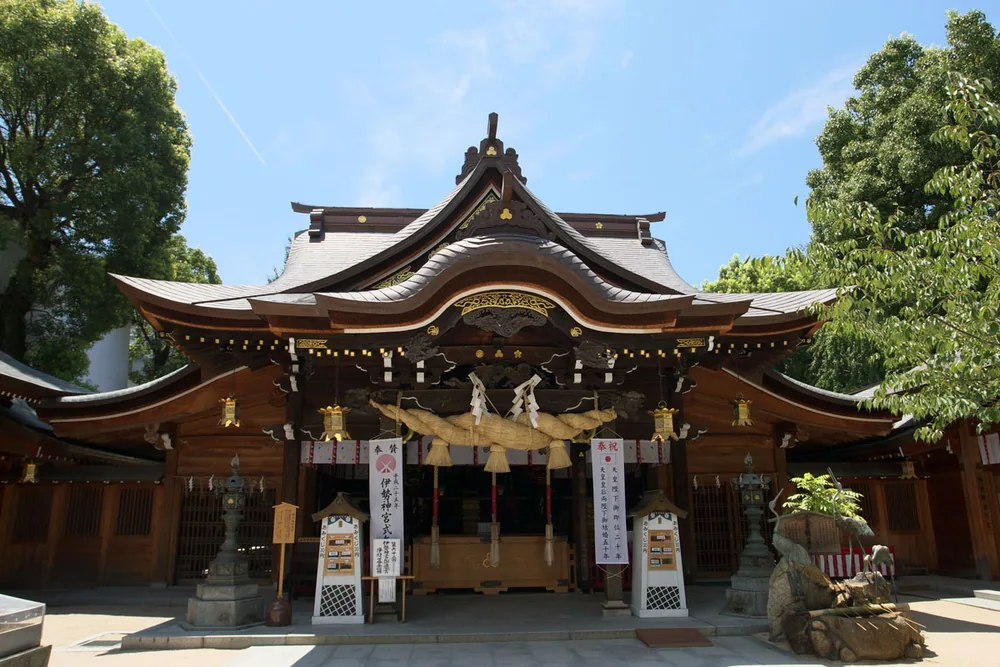
Tiered seats surround the shrine area. The association homepage directs seat-ticket and viewing inquiries to Kushida Shrine on 092-291-2951. Obtain sales and entry conditions for your chosen edition there if you need a fixed seat. The main sidewalk plan assumes standing, with belongings small enough to carry and shop entrances, intersections and pedestrian passages kept clear. If a companion must sit, secure a suitable seat before choosing dawn, or view daytime display floats.
The full Oiyama course is about five kilometers, finishing in Susakimachi. Carriers replace one another over that distance, a feature the glossary uses to distinguish it from short Kushida-iri. Look beyond the figures to both sides of the carrying poles and how the team continues forward, then compare the next group’s clothing. A fixed position makes each team’s rhythm easier to distinguish than hurrying to stay ahead of the same float.
The first float in 2026 was Nakasu, followed by Nishi, Chiyo, Ebisu, Doi, Daikoku and Higashi. The order rotates, so recognize the current edition’s group names rather than treating last year’s first group as permanent. For a simple record, note each group you saw and one action: its formation on arrival, passing speed or clothing difference. Compare the titles after returning to your room.
The glossary also identifies three seido flags along the Oiyama route: at Kushida Shrine, Tochoji and Jotenji. Locate the two temples on the map before going to Taihaku-dori to understand why the course turns in and returns to the main road. Watch from permitted roadside areas; the flags’ surroundings are working space for float turns. Knowing the route helps distinguish a temple turn from the complete Kushida-iri inside the shrine.
A 2022 Hakata Gion Yamakasa record introducing display floats, carried floats and dawn Oiyama, produced by the Hakata Gion Yamakasa Project Committee and published by KBC Kyushu Asahi Broadcasting.
For a dawn overnight, choose Gion accommodation within walking distance
The main dawn plan starts with a previous-night stay near Gion Station and uses Taihaku-dori for viewing, without entering the shrine for Kushida-iri or following the course to Susaki. Mark which side of Taihaku-dori contains the hotel entrance, then select an accessible viewing section on that side. Compare the walk from room to route and back. Hakata, Gion or shrine wording in a hotel name is only a location clue.
Take a short daytime walk beforehand to identify turns, crossings and the hotel’s return entrance. The main route only needs ordinary open sidewalks toward Gion Station, then the same-side Taihaku-dori sidewalk to a permitted viewing point. If the hotel is across the road, use a normal crossing when open. If it is already blocked on arrival, remain on your current side and fit viewing to the available route.
For July 15, 2026, a suggested schedule is to wake at 3:30, get ready and eat some previously bought food in the room, leave at 4:00, and allow about half an hour for walking and orientation. Wait at a permitted place around 4:30. The 4:59 time is the first float’s start at Kushida Shrine; Taihaku-dori spectators wait for it to arrive later.
These waking, departure and half-hour walking times are itinerary allocations. Leave earlier from a more distant room. After your chosen groups, wait for release or withdraw along an open same-side sidewalk and retrace the daytime route. Walking back avoids reliance on temporary buses or taxis and leaves luggage at the hotel. If restrictions require a detour, use the security-directed exit and rejoin the hotel direction after reaching the main road.
From Hakata or Tenjin: reading the 2026 special trains
Fukuoka City Subway’s June 18, 2026 announcement added trains on all lines between 3:00 and 5:00 on July 15 for Oiyama. This dated special operation is separate from the normal station map. If staying in Tenjin or Hakata, check the notice’s applicable date, direction and destination, then add hotel-to-platform and exit-to-viewing walks.
The 2026 Nanakuma Line special timetable offers a clear Tenjin-minami example: a Hakata-bound train leaves at 3:50 and passes Kushida Shrine Station at 3:52; the next pairing is 4:00 and 4:02. From accommodation near Tenjin-minami, use the earlier pair and allow time to exit and walk to Taihaku-dori. Tenjin Station on the Airport Line is a different station, so search for Tenjin-minami.
From Hakata, read the Hashimoto-bound direction: 3:58 departure and 3:59 at Kushida Shrine Station, followed by 4:08 and 4:09. Though only one stop, the trip also involves leaving the room, entering the station, finding the Nanakuma Line and exiting. From the Hakata side of the station, compare walking the full route the day before. From the Chikushi side, include crossing the station area; the one-minute train ride is not the total door-to-venue journey.
Both examples deliver you to Kushida Shrine Station. Continue on sidewalks toward Gionmachi and Taihaku-dori, avoiding the shrine assembly area and float movement space. Use that edition’s exits, barriers and guidance to reach permitted viewing. If you only want a section of the run, arrive early and stay on the same side. Viewing inside before the first group departs requires separate completed seating and entry arrangements.
Read restriction-map colors and times, as well as closed roads
The official 2026 restriction map separates July 12, 13 and 15. On July 15, the assembly area is restricted 1:00–7:00; other route and surrounding sections show 4:30–7:00 and 4:00–7:00. Each time applies to its corresponding map marking. A road that appears open before departure may therefore be unavailable to an ordinary driving route during the event.
Distinguish vehicle closures from permitted spectator positions. The assembly area is marked as a pedestrian road but still serves gathering and float operations. Red lines and hatched areas are not automatically public viewing plazas. Stand on sidewalks, leave required passage strips clear and cross only under staff direction. Choosing same-side access reduces the need to find new routes at barriers.
For the July 12 rehearsal, assembly restrictions are 13:20–17:30 and route restrictions 15:30–18:00. July 13 Shudan Yamamise has another set, marked 13:30–16:00 and 15:00–18:00. These are 2026 map times. When booking afternoon-version dinner, leave room to exit the route, walk out of restrictions and return to your room. A departure or performance start is not a dispersal time.
Nishitetsu buses also diverted on July 12, 13 and 15 that year; the prefectural tourism association’s transport section links the notice. Use walking for the dawn return and the special subway examples outward. A normal roadside bus stop does not establish festival-time boarding there. If you need a bus, check that edition’s diverted stop and direction before choosing accommodation and viewing.
Use the previous night’s room for rest and take only viewing essentials
For dawn Oiyama on July 15, 2026, the previous night is July 14. Complete check-in and clarify the room key, night entrance and early-morning return before dinner. Carry the key if automatic doors lock overnight. Contact the hotel according to the booking for late arrival. Complete these steps before leaving at dawn so you can rest immediately afterward.
Eat near the hotel and prepare water, simple room food, a towel and phone storage. Shorten yatai, bars and night views according to energy, reserving sleep in advance for the nighttime wake-up. If two people keep different schedules, the dawn viewer can lay out clothes and bag beforehand and simply pick them up when leaving, allowing the other person to sleep.
Keep only what you need in the viewing bag. Leave large luggage, shopping bags and unused lenses in the room for easier movement along sidewalks and intersections. Bring a small towel and a bag for wet items, then change on return. Keep phone equipment simple: watch the group enter view before deciding whether to record. A companion less interested in photography can watch only the groups they want without waiting for every planned shot.
The Fukuoka accommodation comparison covers room types, breakfast and night-entry conditions around Hakata’s two exits, Tenjin, Nakasu and Watanabe-dori. Add two questions to those candidates: can you walk to the chosen route without dawn transport, and will you still have a room to return to afterward? Suitable family beds and rest are more practical than an unsuitable room chosen for a window view.
Return to the room before breakfast and checkout
For the Taihaku-dori walking plan, leave the viewing area, return to Gion accommodation, then shower, change and eat breakfast. Include the time to finish watching, wait for release and walk. If you want morning sleep, compare normal checkout with your expected room departure when booking. Arrange late checkout through a plan the hotel actually accepts if needed.
Breakfast serves two purposes: a small snack before leaving and a seated meal on return. Prepare the former the night before; fit the latter to the hotel’s breakfast start and last-entry times. If sleeping later after viewing, consider the final serving time rather than sacrificing needed rest to an included meal. For an early departure from Fukuoka, work backward from luggage pickup and transport first.
The 2026 special subway table mainly covers early periods around Oiyama. Do not extrapolate the outward train interval to a later return. For a ride after viewing, use the day’s normal timetable and current service information. Within walking distance, follow the route learned the previous evening. Tenjin travelers using the Nanakuma Line should identify Tenjin-minami again before walking from the station to the hotel.
For a same-day Shinkansen or flight, put each stage into the timetable: leave the route, organize belongings in the room, collect luggage, and reach the station or terminal. Reaching Hakata Station’s exterior still leaves entry and platform finding. Fukuoka Airport international flights also need terminal transfer planning, covered in the Fukuoka three-day itinerary’s airport transport section. If onward travel is very early, the afternoon rehearsal more easily preserves sleep and packing time.
With children or a need for seats, choose the viewing time first
For children, dawn suitability depends on waking at night, waiting and standing, not just map distance. With toddlers, choose daytime display floats or a few groups at the afternoon rehearsal. Use toilets and eat before watching, then return directly to accommodation. If one adult especially wants Oiyama, that person can go at dawn while another stays with the children, meeting again at breakfast.
Strollers and wheelchairs need passage space. Crowds, shop entrances and corners affect where you can stop; a level road alone does not provide a suitable viewing place. For reserved seating, ask Kushida Shrine about that edition’s wheelchair, companion and entry arrangements before transport planning. Without a suitable position, choose a daytime display visit you can shorten independently. Reaching the venue and watching comfortably are separate needs.
One adult can stay longer while another returns with children, but separate at an agreed named location outside the route on the same side. Do not cross during passing floats to collect a child. A planned exit direction makes meeting easier than calling through a crowd.
Photography and rain: keep the sidewalk clear
The association’s July 9, 2026 photography notice states that using ladders or stools for photography is banned during the festival at Fukuoka Prefectural Police’s request. Designated armband holders are exempt, but no new armbands are issued or lent. Ordinary visitors should use handheld cameras or phones from permitted places. Leave folding stools or ladders at the hotel rather than adding luggage and on-site complications.
Choose an angle that keeps both body and camera within the viewing area without reaching into the road. Do not hold a phone in front of someone’s eyes for long or reach after a moving float. Save figure close-ups for daytime displays, and record a whole passing group at dawn. Each view has a suitable time; every close-up need not happen during the run.
In rain, consider footing and sightlines first. Wear shoes that grip wet streets and choose stowable rain gear that avoids dripping on others or extending rigid frames beside them. Follow on-site requirements in crowded viewing areas. If waiting becomes uncomfortable, withdraw toward your hotel. If you give up dawn viewing, rest and see permanent displays on a normal daytime walk instead.
If weather or conditions change the event, read that day’s organizer and operator notices before dealing with paid rooms, travel or seats. Handle each booking through its original seller, with refunds governed by that booking’s terms. Independent sidewalk viewers have no seat-ticket process; use the morning to organize belongings at the hotel and go out once normal transport and businesses operate.
A short display-float visit through Kawabata fits an ordinary Fukuoka day
For normal sleep hours, choose a daytime Kawabata walk. The prefectural 2026 guide places Kamikawabata-dori and Kawabata Chuo-gai along the north and south sections of the same shopping street, with display locations moving within it during the period. Find that day’s float shed, examine one float fully, then decide whether to visit another. Avoid distant subway trips simply to complete the citywide count.
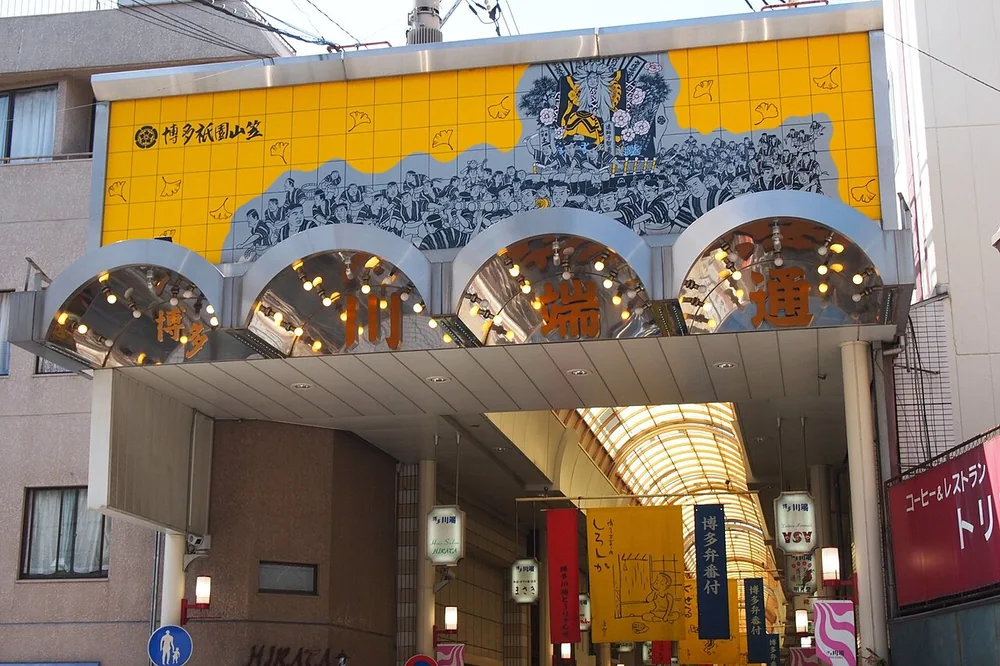
In a specific 2026 arrangement, the duty-neighborhood rotation also brought Doi and Daikoku carried floats into the shopping street with two display floats, concentrating four there. This belongs to that edition. Use photographs to distinguish carried and display floats, but use the new year’s map for a future visit rather than copying last year’s four-float arrangement.
Older display maps also need to be read alongside announced long-term changes. The prefectural 2026 feature states that Shintencho Shopping Street’s display float pauses from 2027 because of redevelopment, after the 2026 display. If staying in Tenjin with plans to see it there, choose a location still shown on the new year’s map or keep the short visit in Kawabata. Separate this announced pause from new-year float themes that have not been published.
After the festival, Kushida Shrine’s permanent display float can join an old-town walk except during the June replacement period. Kamikawabata-dori also has post-festival permanent display arrangements. See the place you want, finish with a Kawabata meal and leave toward Nakasu-Kawabata or Kushida Shrine Station. This shorter plan focuses on the works and then returns to your original itinerary.
A few useful answers
What time did the 2026 Hakata Gion Yamakasa Oiyama start?
The first team began its run through Kushida Shrine at 4:59 a.m. on July 15, 2026. The floats reached Taihaku-dori later, so allow time to walk there, find a viewing spot, and wait.
What can I see at Hakata Gion Yamakasa during the day?
Walk through the Kawabata Shopping Arcade during the day to see the figures and decorations on the display floats. To see teams run with the floats on their shoulders, catch the afternoon Oiyama rehearsal. In 2026, it began at 3:59 p.m. on July 12.
Where should I stay to walk to and from the dawn Oiyama?
Look for a hotel near Gion Station on the same side of Taihaku-dori as a sidewalk open to spectators. Walk the route in daylight the day before so you can follow the same sidewalk back to your hotel to rest or pick up your luggage.
Were there early subway trains from Tenjin-minami and Hakata for the 2026 Oiyama?
On July 15, 2026, a special Nanakuma Line train left Tenjin-minami at 3:50 a.m. and reached Kushida-jinja-mae at 3:52 a.m. Another left Hakata at 3:58 a.m. and arrived at 3:59 a.m.
Official information and references
Sources used in this guide.
- Hakata Gion Yamakasa Promotion Association: news and seat-ticket inquiries
- Fukuoka prefectural tourism association: 2026 Yamakasa feature and display sites
- Promotion association: 2026 festival program
- Promotion association: 2026 route-map page
- Promotion association: 2026 traffic-restriction page
- Promotion association: 2026 photography notice
- Fukuoka City Subway: 2026 Oiyama special-train notice
- Fukuoka City Subway: 2026 Nanakuma Line special timetable, prefectural tourism association copy
- Promotion association: 2026 overall route map, prefectural tourism association copy
- Promotion association and police: 2026 traffic-restriction map, prefectural tourism association copy
- Promotion association: Yamakasa glossary