Plan ramen, udon, hot pot, and yatai meals by neighborhood. Find routes through Hakata Station, Kawabata, Tenjin, and Nakasu, with ordering tips, prices, budgets, rainy-day options, and choices for solo travelers and families.
- Region & Focus
- Fukuoka
- Reading Scope
- 36 min read · 19 chapters · 4 Q&As
- Official Verification
- 23 official sources checkedUpdated October 26, 2026
- Key Topics
- FoodNeighborhoodsTravel budget
Chapter Route Map (tap any stop)
- Choose your dining area on the map
- Count your meals before choosing noodles and hot pot
- Finding food at Hakata Station: check the floor first
- Four station-area menu examples: portions and minimum orders
- A meal in Kawabata: follow the shopping arcade
- Shopping in Tenjin: start with things you need to try on
- Give Daimyo time for its side streets
- Nakasu, Tenjin, or Nagahama: choose the area before the menu
- When yatai open, and whether to eat first
- Seating and ordering: give your group size, then check prices
- Add up the menu prices for your yatai budget
- Choose cooked food at yatai and save raw fish for another meal
- Set aside an evening for hot pot and fish
- Ask about broths and sauces for dietary needs
- Rainy-day eating and shopping: shorten the outdoor stretches
- One afternoon: Kawabata to Nakasu with a light meal
- Shopping first: a half-day from Tenjin to Daimyo
- Dining choices for solo travelers, groups, and families
- Transport passes and the final meal: count your actual journeys
- Quick Q&A
With one afternoon and two dinners in Fukuoka, decide where you want to spend your time first. Choose Hakata Station for less travel and an easy walk back to your room, Kawabata for old streets and a stroll, or Tenjin and Daimyo for clothes shopping, shoe fittings, and coffee. Then pick either the Nakasu waterfront or Tenjin for yatai food stalls, after your last walk of the day. Your ramen, udon, or hot pot restaurant will be in the neighborhood you are already exploring, without repeated trips across town for another famous restaurant photo. Use one dinner for a leisurely restaurant meal and the other for a yatai visit with little to carry. If anyone needs spacious seating, have both dinners indoors and walk by the river afterward to see the lights.
Choose your dining area on the map
Hakata and Tenjin both serve the foods Fukuoka is known for. What matters more is what you want to do before and after eating. Hakata Station works well for storing luggage, onward travel, and finding a restaurant for a group with different tastes. Kawabata combines small shops, shrines, temples, and a short walk in one half-day. Tenjin has concentrated shopping, while Daimyo suits a slow wander through side streets with a few shop names in mind. If food is the main reason for your trip, pin your restaurants on a map first and look for things to do nearby. This works better than filling the day with sights and crossing town for dinner.
Nakasu’s waterfront lights and yatai can make the whole area seem like an evening destination. You can walk from Kawabata Shopping Arcade to the river during the day and look for suitable seats around dusk. If you want to finish the day shopping, eating at a Tenjin yatai saves walking. With two nights near Hakata Station, you could spend just one afternoon west in Tenjin and have a sit-down dinner near Hakata on the other night, instead of repeating the same subway trip every day.
Fukuoka City’s official area guide covers Hakata Station, Hakata Old Town, the Nakasu waterfront, and Tenjin separately. Keep those differences in your plan: you can walk through a shopping arcade, but a department store takes time floor by floor. A river photo takes a moment; a hot pot meal needs a full dinner slot. Choose one kind of outing for the afternoon instead of filling four itinerary boxes with four area names.
| Area | Best for | Dinner afterward |
|---|---|---|
| Hakata Station | Before or after a train trip, mixed tastes in a group, or finding food in the rain | Eat near the station, then collect your bags or return to your room |
| Kawabata and Hakata Old Town | Shopping arcades, shrines, temples, and short walks | Continue to the Nakasu waterfront or return to Hakata for a sit-down meal |
| Tenjin | Department stores, underground shops, and concentrated shopping | Eat in Tenjin or choose a nearby yatai |
| Daimyo | Clothes, independent stores, coffee, and side streets | Decide where to rejoin Tenjin before heading to dinner |
Plan ramen, udon, hot pot, and yatai meals by neighborhood. Find routes through Hakata Station, Kawabata, Tenjin, and Nakasu, with ordering tips, prices, budgets, rainy-day options, and choices for solo travelers and families.
Count your meals before choosing noodles and hot pot
Plan one main dinner each night. If you want motsunabe, an offal hot pot, for dinner, have udon for lunch and save yatai for the other evening. If yatai will be dinner, do not book a large hot pot meal in the early evening first. With a small appetite, you can eat two meals’ worth at the first stop and spend the rest of the night ordering just to finish a list. Ask each person to name the two dishes they most want to eat. Schedule shared choices first, then use the remaining meals for something new.
Tonkotsu pork-bone ramen works well as a main meal. Skip extra noodles if you want room for another stop. Udon offers a different noodle texture and broth, but with tempura, rice, or a set meal it can still be a full lunch. Hot pot suits an evening spent in one restaurant; add noodles or rice as needed once you see the portions. Eating ramen and udon on different days usually gives you a better sense of each than eating two bowls in one evening.
Before choosing hot pot, ask whether everyone eats offal, then decide between motsunabe and mizutaki. Motsunabe is an offal dish; mizutaki is a chicken hot pot. If you do not eat offal, choose another dish rather than ordering it and picking out ingredients. Mentaiko, seasoned roe, can be a rice topping or a small side dish and does not need its own meal. If you want seafood, plan fish dishes for the restaurant dinner and freshly cooked food for yatai. This gives each dinner a different purpose.
You can plan two lunches and two dinners in a small table: udon for the first lunch, fish or hot pot for the first dinner, ramen for the second lunch, and yatai for the second dinner. Start with the least flexible meal, such as a hot pot restaurant where you have reserved a table, then fit the others into the gaps. If ramen matters most to your companion, move it to a lunch when energy and appetite are good instead of saving it for late at night. When there are too few meals, drop a less interesting dish rather than splitting every meal between two restaurants.
Finding food at Hakata Station: check the floor first
When meeting for a meal at Hakata Station, specify the building, floor, and restaurant entrance. Dining areas inside and outside the station lie in different directions. Sending only “Hakata restaurant street” can leave two groups waiting on opposite sides. Use the JR Hakata City dining guide to filter for Japanese food, ramen, breakfast, private rooms, or other needs, then open the floor map. If you want a table where children can eat at their own pace, first rule out places with only counter seats or unsuitable seating for your group, then compare menus.
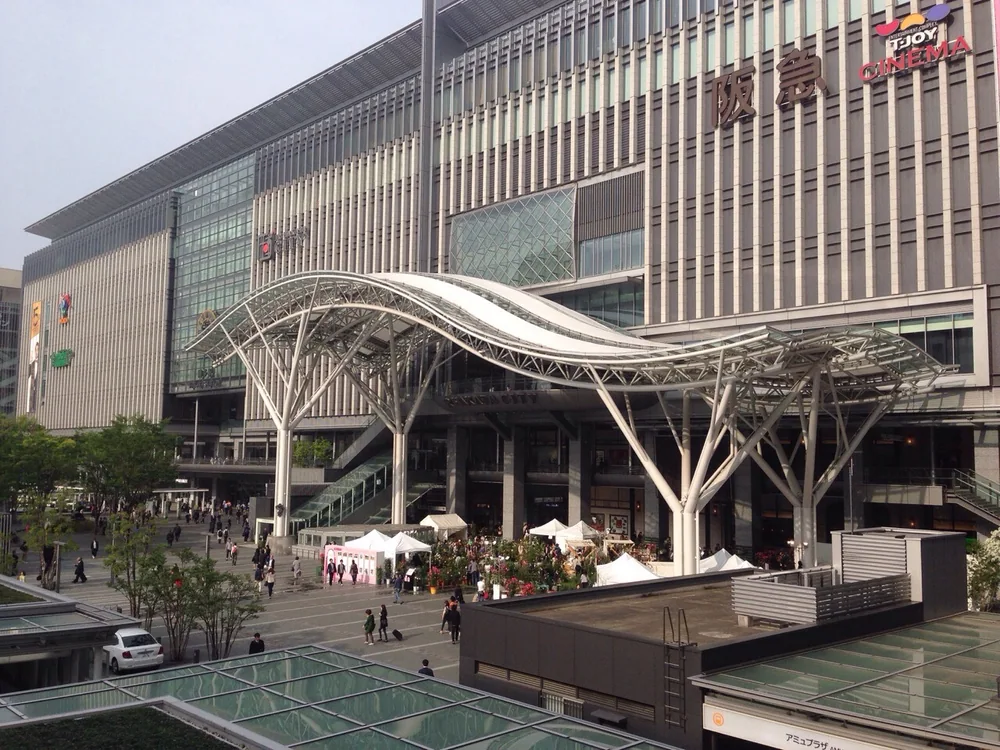
Hakata DEITOS and City Dining Kooten are two dining areas with separate maps. Different DEITOS floors serve different purposes; for Kooten, you can look directly at the ninth-floor restaurant layout. Once you are at the station, comparing two restaurants on one floor is easier than trying your luck back and forth between the basement and upper floors. Having a meal with a familiar portion size when you first arrive also helps you judge how many snacks you can fit into the next two days.
If you have a train to catch, arrange your tickets and find the platform entrance before eating. Treat the restaurant’s last order time and your train departure as two separate deadlines. If there is no margin left before the food even arrives, choose something you can get promptly. On a day without onward travel, choose the restaurant you want and explore the station area afterward. The estimate “it is in the station, so it will be quick” does not fit both situations. For luggage, check the official station locker locations and note the floor and a nearby landmark so you can return directly.
Four station-area menu examples: portions and minimum orders
If you want soft noodles, consider Inaba Udon on basement level 1 of Hakata DEITOS. JR Hakata City’s local food guide explains Hakata udon’s soft texture and lists combinations such as niku goboten udon, with meat and burdock tempura. If you prefer chewy noodles, take that difference into account. If you want local flavors, try it as a contrast to tonkotsu ramen without traveling farther for a similar texture.
Hakata Ichibangai’s official local food page lists several combinations you can compare. As of October 26, 2026, Daifuku Udon’s Marufuku Set is listed at ¥970 including tax, with maruten fish-cake udon, inari sushi, and other sides. It is available from 9:00 until the inari sushi sells out. Hakata no Kaisen Ryori Kisuimaru lists Hakata goma saba at ¥1,190 including tax. The first is a complete meal; the second is mackerel with sesame sauce, so check whether you want rice or other dishes when budgeting. Comparing just the number next to a dish name misses that difference.
The same page lists motsunabe at Oraga Soba for ¥1,280 per serving including tax, with a minimum order of two servings, available from 17:00 to 22:00. It fits dinner. Two people ordering just the hot pot pay ¥2,560 before drinks or extras. Solo travelers should choose another restaurant that serves a single portion rather than discovering the minimum order after sitting down. Open your chosen restaurant’s menu for the day before leaving, choose the main dish first, then decide whether you need sides.
Note the branch as well as the brand. The Inaba Udon discussed here is on basement level 1 of DEITOS; Daifuku Udon and Kisuimaru are in Hakata Ichibangai. Include the full facility name in navigation to reach the right entrance. Save your candidates in four columns: building, floor, restaurant, and main dish. Head to that floor when you arrive, and switch to the second choice nearby if the first queue is too long. If all you want for lunch is udon, there is no need to cross the station because your backup is on the other side. A suitable meal that day meets the goal.
A meal in Kawabata: follow the shopping arcade
Kawabata Shopping Arcade extends south from the Nakasu-Kawabata Station area; the official area guide gives its length as about 400 meters. Enter from the station end and walk toward Kushida Shrine, then decide after lunch whether to continue to Canal City Hakata or the river. This route is easy to follow and gives anyone who steps away to shop a shared place to meet again. Put the shrine visit either before or after lunch, so no one has to get up just after sitting down to retrace the route for another photo. This area works well for a sit-down lunch with a little shopping. If you need a longer rest, a restroom, or time to reorganize your bag, finish the meal before continuing. If you are holding food, stop somewhere eating is allowed instead of walking and blocking shop entrances. The arcade roof shelters much of the street, but junctions leading to other buildings still have outdoor stretches. In heavy rain, keep the walk to the arcade itself.
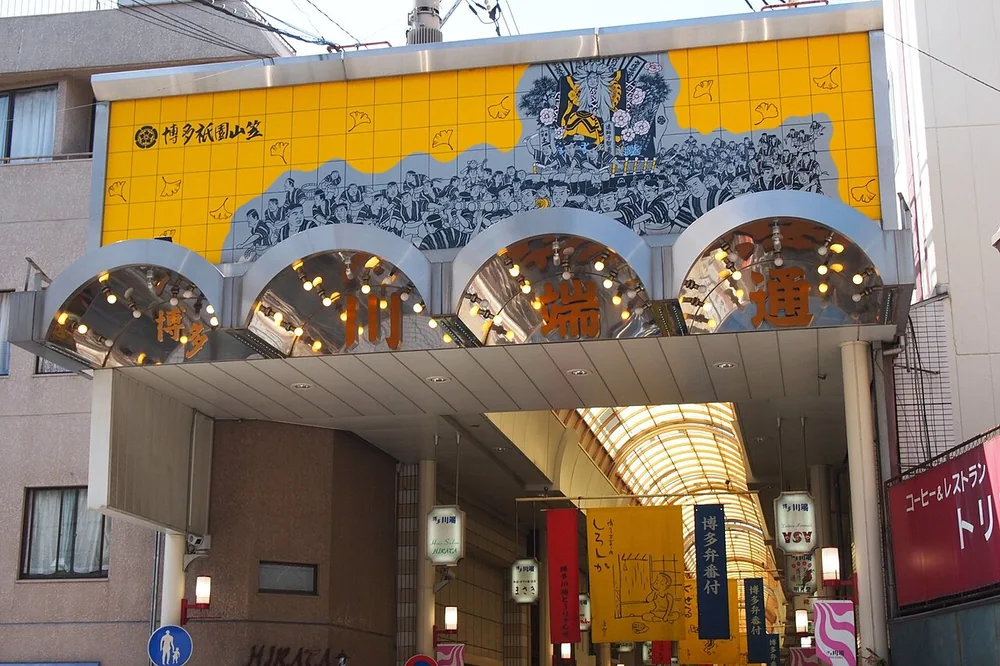
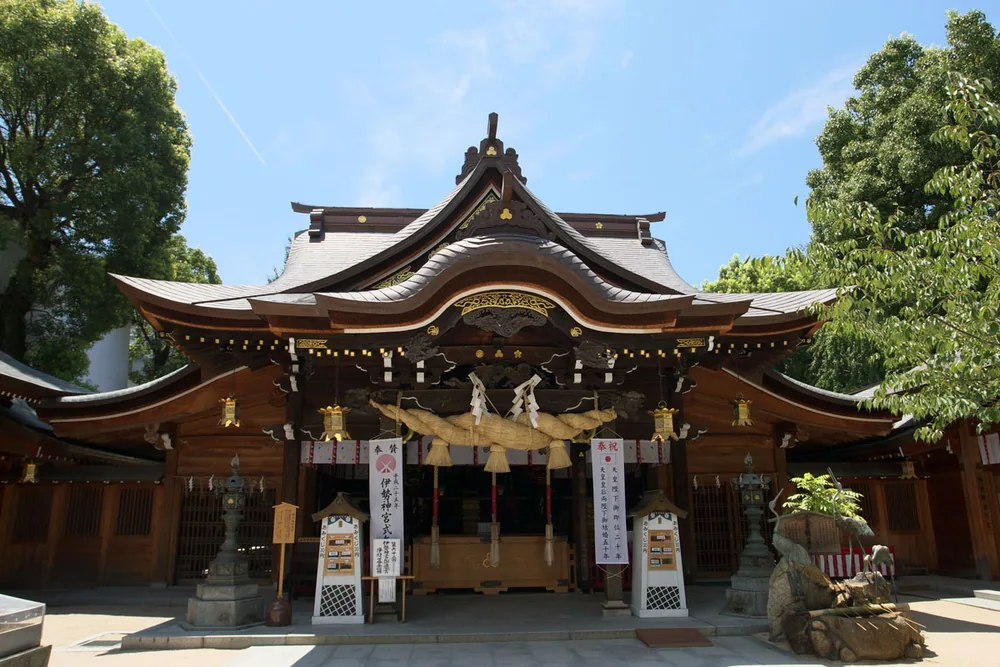
Kawabata is next to Nakasu, which suits anyone who wants a longer walk before dinner. If you are only passing through at lunchtime, returning to the station afterward is also straightforward. Treating “Kawabata by day, then back for yatai at night” as two separate outings makes the extra journey clear. If you are staying far away and already have a restaurant booking that evening, see the river during your daytime visit and use the saved trip for rest or shopping.
Shopping in Tenjin: start with things you need to try on
Order your Tenjin shopping list by how much time each item needs. Start with clothes, shoes, and products whose specifications you need to compare; leave souvenirs you can simply pick up until later. Before entering the first building, choose two main shopping categories and a dinner location. Once you find something suitable, mark that item done instead of repeatedly checking the shop next door.
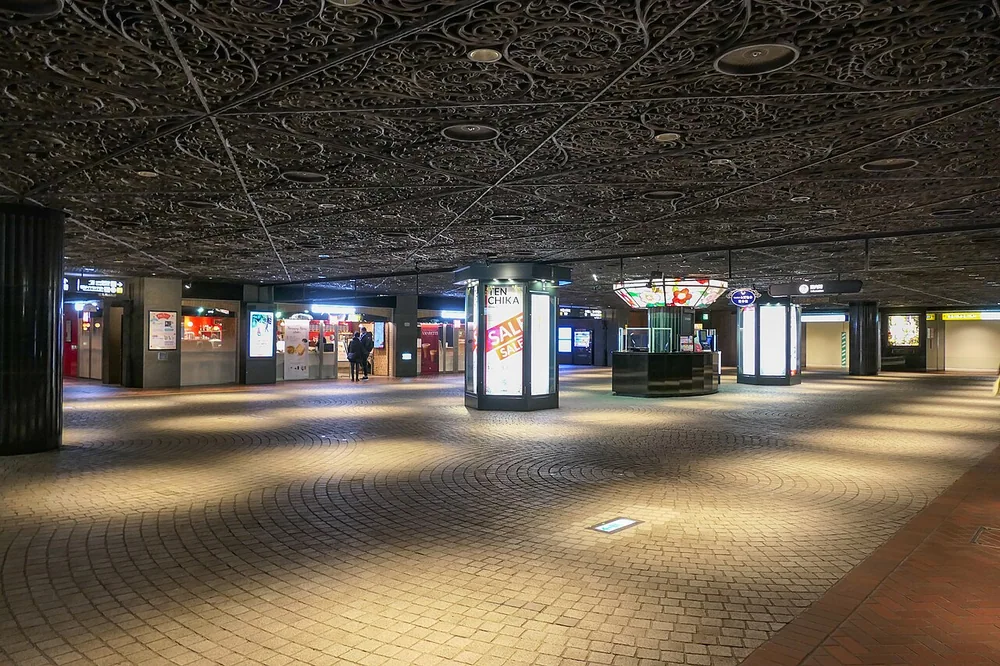
The Tenjin Underground Shopping Mall facilities page lists general shop hours as 10:00 to 20:00 and restaurant hours until 21:00, with some shops keeping different hours. Passage access and store hours are separate. Set aside the afternoon for shopping: being able to walk through the mall at night does not mean there is still time to try on clothes. For a 19:00 dinner reservation, finish the last shop early enough to change buildings, collect purchases, and walk to the restaurant.
Tenjin Station and Tenjin-minami Station are on different lines. Coming from Hakata, the end of the underground mall closest to your destination affects which station saves walking above ground. Using the same station in both directions may not be the best choice. Check the mall’s official access map and put your shops and return entrance on the same map. For a meeting point, name the east or west side, numbered block, and shop. That is clearer than “the middle of the underground mall” and saves the whole group stopping to find the way again.
Give Daimyo time for its side streets
Daimyo is west of Tenjin, so you can walk there after your main shopping. If clothes and independent stores are the main purpose, start near Akasaka Station on the Airport Line and finish toward Tenjin. The Fukuoka City Subway’s neighborhood walk guide describes Daimyo’s mix of used-book shops, clothing stores, and places to eat, and names streets such as Daimyo Konyamachi-dori. Saving a shop’s address and storefront is more useful than saving only product photos. Choose a small group of blocks and stop at shops that interest you. These stores do not fit a “see everything in one hour” estimate: trying on clothes and finding the shops can take most of an afternoon. If your group has different levels of interest in shopping, use a cafe with confirmed seating as a place to split up. Some can keep shopping while others rest, then everyone can meet to choose dinner, instead of waiting outside every shop.
Daimyo and Tenjin work on the same day if you adjust the time you spend in each. For serious clothes shopping, shorten the department store visit. If you have bought what you need and just want a stroll, pick a few Daimyo side streets. In the rain, you do not need to complete a loop through every lane; visit one destination shop and return to Tenjin the same way. Sunset, coffee, and dinner on separate corners can make the walking more fragmented than it looks on a map. Choose a final direction before wrapping up.
Nakasu, Tenjin, or Nagahama: choose the area before the menu
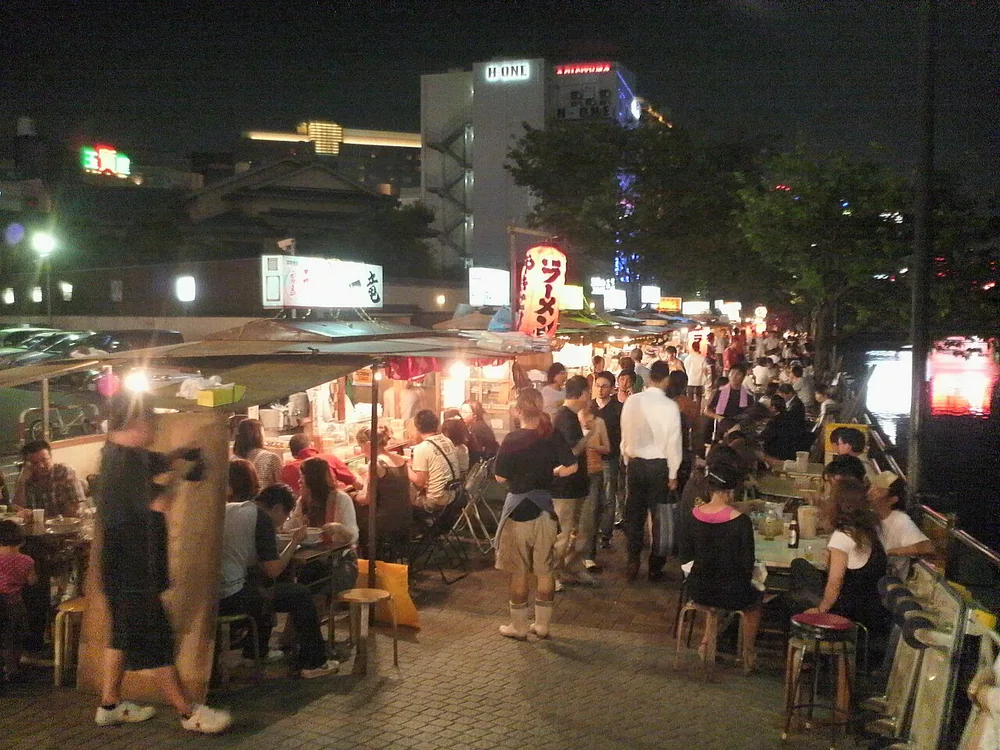
Choose the Nakasu waterfront for yatai lights reflected in the river. If you have spent the afternoon shopping in Tenjin and are staying nearby, look for a stall there first. Open the map or list through Fukuoka City’s official yatai page, check the food, location, and stall details, and save two choices in the same area. Choosing the area first lets you adjust nearby if there is a queue. Crossing to another district whenever a stall is full turns a light dinner into a march between stalls.
The waterfront offers a walk before or after dinner and appeals to anyone who wants night photos. Tenjin is easy to combine with shopping. Whether you will like a yatai depends on its menu; its location determines how easily the evening fits together. Choose a stall with food you want and clear ordering information before considering its queue. Sitting down at the first sign you see can mean missing ingredients or ordering rules that someone in the group cannot accept.
Keep a regular restaurant nearby as a backup for a full dinner, close enough to walk to directly. If the yatai does not open that night, change where you eat and still take the riverside walk. If you already have a dinner booking that cannot be delayed, save yatai for another night, so you are not waiting at the roadside while calculating how long the restaurant will hold your table.
Nagahama suits an evening focused on yatai food. All three candidates are at 3-14 Nagahama, Chuo Ward; the official stall pages give access as about a 10-minute walk from Akasaka Station on the Airport Line. Go to Nagahama, choose one stall in the area, then return to the station after eating. For vegetable-and-meat rolls, try Nagahama no Hiroshi. For mentaiko dishes, choose Mentai Chudoku; for a bowl of tonkotsu ramen, consider Yatai no Tamachan Bekkan. Compared with Nakasu’s river views and Tenjin’s shopping, the deciding factor here is what you want to eat.
Mentai Chudoku’s official page lists mentai tororo nabe, a hot pot with mentaiko and grated yam, at ¥1,000; mentaiko spring rolls at ¥700; and pork-belly lettuce rolls with mentaiko at ¥850. The prices are dated April 2026. For a meal centered on mentaiko, choose the grated-yam hot pot. For a few small dishes, pick either the spring rolls or the pork-belly lettuce rolls; drinks cost extra. The page lists hours of 18:00 to 1:00 the next day, irregular closing days, credit card acceptance, and reservations through the stall’s Instagram. Choose the dishes before deciding whether to book. Two people can also eat at one stall without traveling to a different area for every dish.
For Nagahama ramen with a smaller appetite, consider Yatai no Tamachan Bekkan, featured in Fukuoka City’s July 2026 report. A regular bowl of tonkotsu ramen is ¥750 and a half portion is ¥600. The half portion costs ¥150 less; choose it mainly if you want less food. The stall’s page also lists oden and skewers from ¥200 each, dated May 2026. Hours are 18:00 to 24:00, closing days are irregular, and credit cards are not accepted. If noodles are your whole dinner, choose a regular bowl. After side dishes, a half portion can be your final dish.
A short film about Hakata yatai, released in 2025 and featured on Fukuoka City’s official tourism website.
When yatai open, and whether to eat first
The official first-time yatai guide gives most opening times as around 18:30 to 19:00, with some starting around 18:00 and many closing around midnight. If equipment is still being set up at dusk, allow preparation time. An early-evening street photo does not tell you when food service starts. Children or older travelers who need dinner around 18:00 can eat at a restaurant first, while others visit yatai in smaller groups later.
If yatai will be your main meal, keep afternoon snacks small. Choose a stall that serves the main dish you want and save other snacks for another afternoon. With a smaller appetite, leave more time between afternoon tea and dinner. In strong winds or heavy rain, many stalls close at short notice, according to the official guide. Switch directly to an indoor restaurant.
Seating and ordering: give your group size, then check prices
Tell the owner how many people are in your group and let them arrange seats. Join the back of any queue. An empty stool may be for a group that has not sat down yet. Asking first is easier than sitting down uninvited.
Fukuoka City’s yatai rules Q&A requires prices to be displayed where customers can see them. Even items with prices that vary with ingredient costs must show that day’s price. Before sitting down, check the main dishes, drinks, any otoshi appetizer or seating charge, and minimum order rules. If you cannot read the menu, point and ask for the total. With a tight budget, start with items whose prices you understand and check again when adding anything. Do not use the next customer’s plate to guess whether a dish is a set meal or an individual order.
A common starting point is one drink and one dish per person, with nonalcoholic drinks also available as a choice. Order something for each person first, then ask whether larger dishes can be shared. Two people lingering over a single bowl of noodles take up space other customers need. Eat when the food arrives. Photograph your own place setting; ask before photographing the owner or other customers. Pay and leave when you finish, and move somewhere suitable if you want to keep talking.
On a Japanese menu, look for 一人前, 二人前より, and セット. 一人前 means one serving as the pricing unit; 二人前より means a minimum of two servings; for セット, check what the set includes. A photo’s size cannot tell you which applies. Point to the menu and indicate the quantity. When the owner repeats the order, point to the same dish again and confirm drinks, food, and extras separately. If you ask for a recommendation, explain ingredients you do not eat and roughly how hungry you are, so the recommended dish is something your group wants.
Add up the menu prices for your yatai budget
Decide how much you are willing to spend that evening, then use the menu at the stall to work out what you can order. Start with a drink and main dish per person, then add shared sides. Include any seating charge or fixed appetizer charge first. If two of you want to try a second stall, order only what you can finish at the first. Check the full ordering rules again at the second stall; changing stalls is not a free change of seats.
Have cash ready and ask about other payment methods before sitting down. Having one person pay the shared bill is simpler than recalculating everyone’s share each time a dish arrives. If you want separate bills, say so before ordering. If you have only large bills, break one through a normal purchase beforehand rather than asking a busy stall owner for a lot of change. If you have a question about the bill, use the menu to check each item and clarify quantities and extras on the spot.
Choose cooked food at yatai and save raw fish for another meal
Fukuoka City’s yatai operating conditions prohibit raw food, require food to be heated thoroughly before serving, and prohibit takeout and delivery. For goma saba, sashimi, or other raw fish dishes, choose an indoor restaurant that serves them. At yatai, look for ramen, skewers, oden, and dishes cooked or stir-fried on site. Choosing the right setting saves you sitting down to look for food that will not be on the menu.
If two people are sharing cooked dishes, order the one you most want first and add more after seeing the portion. Stalls differ: some suit a bowl of noodles and a quick departure; others suit small dishes with drinks. Check the specialties on the official stall page, then decide whether to use it for dinner or a lighter meal. Before copying the variety ordered at the next table, count how many people are eating it. You do not need to order an entire group’s quantity.
Yatai seating is narrow. Keep your bag tucked beside your feet, and return trash and dishes to the stall. Ask the owner for restroom directions rather than looking for an entrance in nearby homes or businesses. The official yatai etiquette article also asks customers to give each other space and respect conversational boundaries. If someone wants to eat quietly, let them finish without questions about where they live, their work, or personal relationships.
Set aside an evening for hot pot and fish
Use the sit-down dinner for food your group enjoys together. For motsunabe, check the minimum number of servings and broth choices. For mizutaki, check whether it comes as a set course, the serving order, and what can be ordered separately. If the menu prices meals per person, enter the actual group size when booking. If only one family member wants offal, a restaurant with a broader menu lets others choose different main dishes instead of sharing a hot pot at a specialist restaurant.
The Fukuoka Prefecture tourism guide’s hot pot comparison explains that motsu means offal, including beef or pork offal, commonly cooked with vegetables in a miso- or soy-sauce-based broth. Mizutaki uses chicken bones and bone-in chicken to make the broth, with seasonings such as ponzu depending on how it is served. If you want garlic and the texture of offal, look at motsunabe first. If you prefer chicken, start with mizutaki. Let the staff explain how to eat it. Taste the plain broth before adding seasoning, instead of pouring all the sauce into the shared pot at the start.
Fish dishes such as goma saba can be ordered individually or as a set meal. For a taste, order one dish alongside cooked food. For a main meal, check for rice, soup, and sides and budget for the whole meal. If this meal already has sashimi and other fish dishes, choose noodles or hot pot next time for more variety. Agree with your companions beforehand about ingredients they will eat; discussing it only after arriving slows the whole table’s order.
Once dinner is booked, limit your afternoon’s farthest stop to somewhere you can return from on time. Use the original booking channel to cancel or change the group size and keep the reply. Give the reservation name on arrival instead of creating a second booking. For a longer meal with a night view, choose the restaurant by its seating, dining time, and menu. Take photos before or after dinner so you do not need to leave the table every few minutes.
Ask about broths and sauces for dietary needs
If you do not eat pork, check ramen broth and chashu as well as meat toppings in udon. Vegetarians should ask about stock, sauces, and shared cooking equipment. Removing meat slices does not address the ingredients in the rest of the dish. Write short statements listing what you can and cannot eat and send them to your chosen restaurant first. Decide on the meal after the restaurant explains what it can serve. This is quicker than eliminating dishes one by one after sitting down. For allergies and other dietary needs, name the exact ingredients and cooking contact you need to avoid, and choose a restaurant that can give a clear answer. A cramped, busy yatai is poorly suited to a long ingredient-by-ingredient discussion. Others in the group can visit the stalls while you eat at a restaurant where arrangements are already agreed, then meet afterward. Set this up before leaving so no one has to sit waiting while the others eat.
Mention alcohol preferences before ordering too. If you want the yatai atmosphere without alcohol, choose a stall with nonalcoholic drinks and ordering rules that suit you. For a long evening of drinks and conversation, choose a comfortable restaurant rather than making a small stall that needs seats for new customers your only destination. With an early train the next day, eat on the side of town that makes it easy to return to your accommodation, then go back and pack.
Rainy-day eating and shopping: shorten the outdoor stretches
In steady rain, the easiest options are a meal and shopping within Hakata Station, or the Tenjin underground mall followed by your main destination store. Cut back on the waterfront and Daimyo side streets and eat dinner indoors. You do not need to buy the same things again in the afternoon just to stay out of the rain. When you need a break, order a proper meal or drink, warm up, and sort out wet shoes and socks before deciding whether to continue. Near Kawabata, you can head from the arcade to Canal City Hakata, but check the route at street level. The Canal City access page shows entrances and ways to reach them; open the dining guide separately to choose a restaurant. If rain makes walking difficult, stay in one building for your meal instead of traveling back and forth to fit in two shopping areas.
Finish rainy-day shopping according to store hours. If you need to find dinner seating elsewhere, leave the final shop and head to the dining floor you have already chosen. Do not leave trying on clothes, finding a restaurant, and the last order deadline to the same moment. If your preferred restaurant has no seats that night, choose another suitable main meal in the area and save the outdoor streets for another day.
One afternoon: Kawabata to Nakasu with a light meal
For neighborhoods and evening scenery, go to Nakasu-Kawabata Station after lunch, walk Kawabata Shopping Arcade, and visit the Kushida Shrine area before finishing by the Naka River around dusk. If lunch was late or you do not want a shrine visit, go directly from the arcade to the river. Choose just one snack or drink stop along the way so you have an appetite for yatai.
The yatai area is already in the direction of this evening walk. Decide whether to sit down based on the menu and available seats. To spend more time on the night view, walk a short stretch by the river and return to Nakasu-Kawabata Station. If shrines and streets matter more, give Kawabata more time in daylight and keep the night view brief. Both routes stay in the same area, without adding another shopping trip at dusk.
Use the actual entrance to your accommodation as the endpoint for the return journey. For a stay near Hakata Station, return to Nakasu-Kawabata Station for the Airport Line, or compare access to the Nanakuma Line from where you are. For Tenjin, see whether walking is simpler. Enter the exact building in navigation to see the bridges, intersections, and final walk. Finish this area that evening and leave Tenjin shopping for another afternoon.
Shopping first: a half-day from Tenjin to Daimyo
Start the afternoon with your main purchases at the Tenjin underground mall or a chosen department store, continue to small shops in Daimyo, and finish with dinner near Tenjin. This route works well if shopping comes first. Put coffee between the two rounds of shopping, with seats for discussing what you tried on. If you find a shop you love in Daimyo, shorten the later return visit to the underground mall. For items still on the list, decide whether you need them today. Dinner can be at an indoor restaurant whose menu you have read, or a lighter meal at a Tenjin yatai. If you buy refrigerated food that evening, make it the last stop and return it to your accommodation as directed on the packaging. Do not buy it before an entire afternoon of clothes fittings and coffee.
This route also works for two people with different interests who want to split up briefly. Agree on the shop entrance and time for meeting, and both keep the address. One can shop while the other rests, without pulling each other into every brand. Meet before dinner and choose food you both want, then spend the rest of the evening together. If your must-eat lists are completely different, have separate main meals and meet by the river or at a cafe.
Dining choices for solo travelers, groups, and families
For solo dining, start with single-serving main dishes and counter seats. Ramen, udon, and set meals make portions easy to judge. For hot pot, look for a restaurant that explicitly serves one person. Traveling alone does not mean giving up hot pot or ordering a two-person minimum. At a yatai, ask for one seat, eat a main dish or a few small plates, and decide after finishing whether to visit another stall.
For four or more people who want to sit together, a restaurant usually makes a better shared dinner. Anyone interested in yatai can make a short visit separately. Shared trip funds can cover just the sit-down dinner, with yatai paid for by those who go. This is fairer to companions who do not drink or prefer an early night, and avoids anyone feeling obliged to join because they have already paid.
For children and travelers with limited mobility, choose by seating, restrooms, and entrances first. If you want to show children the yatai, take a short walk after they have eaten and judge their energy when you reach the stalls. To eat there, ask about seating and where a stroller can go before sitting down. Large groups, anyone unable to sit on high stools, and travelers who need a specific passage width can have local dishes at a restaurant and shorten the evening walk to suit their energy.
Transport passes and the final meal: count your actual journeys
A neighborhood food day often needs just one subway trip out and one back, with walking in between. The Fukuoka City Subway one-day pass currently costs ¥640 for adults and ¥320 for children. Tickets bought from a machine are valid only on the purchase date, and cover the municipal subway. Add the individual fares for your actual journeys before buying a pass. A short ride between two shopping areas is no reason to add detours just to get value from it. For your last meal before leaving Fukuoka, choose a restaurant near Hakata Station whose menu you have already read, keeping luggage collection and onward travel in the same area. Eat the main dish you wanted first and buy only the souvenirs you have chosen. Select refrigerated products according to package storage instructions and your journey length. For something new to taste, buy a small portion where you are already shopping. Do not stake your luggage collection and train departure on an unconfirmed restaurant queue in the final hour.
Keep three things on your phone before leaving: a map of today’s neighborhood, the main restaurant or yatai menu, and the entrance for your accommodation or return station. When everyone knows when to eat and where to meet, you can stop at an interesting shop along the way. For trip length, accommodation, and nearby excursions, see the three-day Fukuoka guide with alternative excursion days. Fit the afternoon of eating and shopping into a gap you have already kept free, and choose the next meal from the neighborhood around you.
A few useful answers
Should I choose Nakasu or Tenjin for my first yatai visit?
Choose Nakasu to combine river lights and a walk. If you are shopping in Tenjin that afternoon and staying nearby, start there. Save two stalls in the same area with suitable menus on the official map, plus a nearby indoor restaurant as a dinner backup.
Do I have to drink alcohol at yatai?
You can choose nonalcoholic drinks. Check minimum order rules before sitting down. A common starting point is one drink and one dish per person. For specific dietary needs, discuss the dishes the stall can provide in advance.
Can I eat hot pot alone in Fukuoka?
Choose a restaurant that explicitly serves single portions. Even when a menu gives a per-person price, check the minimum number of servings. The named Hakata Ichibangai example in this guide has a two-serving minimum, so solo travelers should choose another restaurant or main dish.
Do I need a subway one-day pass for a food and shopping day in Fukuoka?
Add the fares for your actual journeys and compare. If you only ride out and back and walk within one neighborhood in between, check individual fares first. The municipal subway one-day pass costs ¥640 for adults and does not cover Nishitetsu or JR.
Official information and references
Sources used in this guide.
- Fukuoka City official area guide
- Fukuoka City official yatai map and guide
- Fukuoka City official first-time yatai guide
- Fukuoka City yatai rules Q&A
- Fukuoka City recruitment of yatai operators and operating conditions
- Fukuoka City official yatai etiquette
- JR Hakata City dining guide
- JR Hakata City local food guide
- JR Hakata City DEITOS floor map
- JR Hakata City Kooten ninth-floor map
- Hakata Ichibangai local food and menus
- JR Hakata City coin locker locations
- Tenjin Underground Shopping Mall facilities and hours
- Tenjin Underground Shopping Mall access
- Fukuoka City Subway neighborhood walk: Daimyo
- Canal City Hakata access
- Fukuoka City Subway route map
- Fukuoka City Subway one-day pass
- Fukuoka Prefecture official tourism guide: motsunabe and mizutaki
- Fukuoka City official guide: Nagahama no Hiroshi menu and location
- Fukuoka City official guide: Mentai Chudoku menu and reservations
- Fukuoka City official guide: Yatai no Tamachan Bekkan menu and payment
- Fukuoka City official guide: Nagahama yatai report, July 2026