Choose first-floor historic art or second-floor modern works with a ¥200 collection ticket. Compare the 2026 Indian chintz exhibition, Dalí loan dates, evening hours, subway exits, family breaks and wheelchair routes.
- Region & Focus
- Fukuoka
- Reading Scope
- 38 min read · 13 chapters · 4 Q&As
- Official Verification
- 13 official sources checkedUpdated November 22, 2026
- Key Topics
- ItinerariesTravel budgetKyushu
Chapter Route Map (tap any stop)
- Choose your exhibition ticket before deciding how long to stay
- Indian chintz: leave a full block of time for textiles and patterns
- First-floor historic art: start with Buddhist sculpture, vessels or tea
- Take time with Matsunaga’s tea display, or connect it with chintz
- Second-floor modern art: read Kyushu and international works together
- Coming for Dalí? Put the loan dates in your calendar first
- Kunio Maekawa’s building: leave time outside the galleries
- From Hakata or Tenjin, choose Ohori-koen or Ropponmatsu
- Separate opening hours, last admission and evening opening
- Children rest on the second floor; adults need to share gallery time
- For wheelchairs or less walking, identify entrances and the elevator first
- Store bags before entering; eating and photography have separate rules
- Two half-day plans: one floor in depth, or a special exhibition first
- Quick Q&A
Fukuoka Art Museum turns part of an Ohori Park walk into a half-day visit inside the galleries. On a first visit without a particular special exhibition in mind, start with the ¥200 general collection and thematic exhibition ticket. Choose either first-floor historic art or second-floor modern and contemporary art for a closer look, and add the other floor if time allows. If you are coming for the Indian chintz exhibition from October 17 to December 20, 2026, give most of your time to the second-floor special exhibition gallery. General adult admission is ¥1,700, and the on-site counter accepts cash only. Either plan can include the lakeside. The choice is whether to spend the half day with Buddhist sculpture, ceramics and tea, modern works, or textiles that traveled between regions.
Choose your exhibition ticket before deciding how long to stay
The standard collection ticket has a clear scope. The museum’s collection exhibition page lists ¥200 for general admission, ¥150 for high school and university students, and free admission for junior high school children and younger. The same ticket category covers historic art, modern and contemporary art, and thematic exhibitions. You can buy it even if you only have time for one floor. There is no need to rush through every room to use the ticket fully. For visitors interested in art but unfamiliar with the collection, it is an easy starting point. Choose a subject you want to stop and read about, and keep some time for the park afterward.
Two adults visiting the collection pay ¥400 in total. One adult and one high school student pay ¥350. Two adults and an elementary school child still pay ¥400. These are admission totals by ticket category; list transport, food and special exhibitions separately. Distinguish high school and university students from younger pupils: junior high school children enter free, while high school students need the ¥150 student ticket. Calculate each person’s category rather than estimating an average family ticket price.
Special exhibition prices are set separately. Before deciding, ask whether you would still want to enter if the special exhibition title were hidden. If so, the ¥200 collection is usually a useful start. If Indian chintz is the clear attraction, visit that exhibition when you have the most energy. Visitors who like tea utensils and chintz can connect first-floor tea displays with the second-floor exhibition, but allocate time to each before handling the separate tickets.
Collection tickets can be bought using the credit cards, electronic payments and QR payments listed by the museum. If you plan to choose an exhibition on arrival, bring cash as well as your usual payment method. The special exhibition counter has the separate conditions described in the next section. Knowing which fee you are paying helps avoid the wrong ticket queue on another floor.
Free collection admission for older visitors has a residence condition. Residents of Fukuoka, Kitakyushu, Kumamoto and Kagoshima cities aged 65 and over can enter free with proof showing address and date of birth. Overseas visitors generally buy the ticket category that applies to them. The museum also lists free admission for holders of specified disability documents and one companion. Show the documents at the gallery entrance, and pack them with your ticket information before leaving.
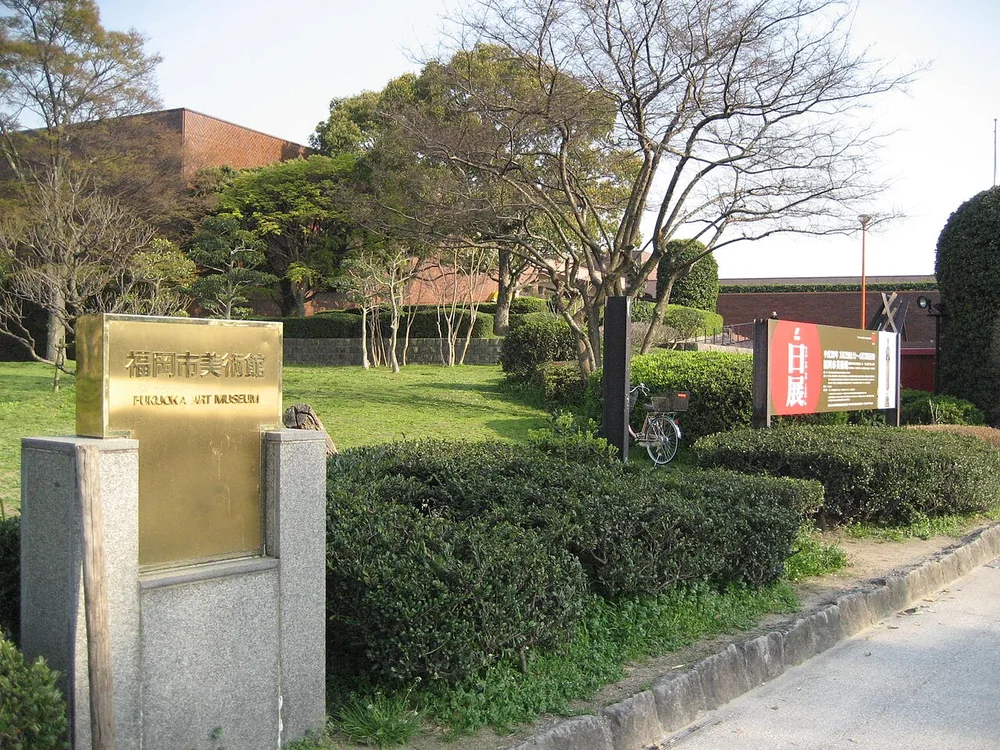
Choose first-floor historic art or second-floor modern works with a ¥200 collection ticket. Compare the 2026 Indian chintz exhibition, Dalí loan dates, evening hours, subway exits, family breaks and wheelchair routes.
Indian chintz: leave a full block of time for textiles and patterns
The autumn and winter 2026 exhibition Chintz: A Global Story — The Karun Thakar Collection runs in the second-floor special exhibition gallery from October 17 to December 20. General adult admission is ¥1,700, high school and university students pay ¥1,100, and junior high school children and younger enter free. Two adults pay ¥3,400; one adult and one high school student pay ¥2,800. With an elementary school child, calculate paying adults and free children separately too.
One way to read the exhibition is to ask how the same kind of cloth was used in different places. The official introduction describes Indian chintz used in Japan for tea-utensil pouches, wrapping cloths, tobacco pouches and hanging-scroll mounts, alongside textiles that traveled to other regions. Start with the cloth’s purpose, then look at the arrangement of patterns, people or plants. This is easier to enter into than trying to memorize every date at once. Visitors interested in clothing, furnishings or crafts can put it before the collection.
The exhibition lists forms including ceremonial cloths, hangings, jackets and bedding. Compare two uses: the whole composition of a hanging and the placement of patterns on a garment raise different questions. Look at the full outline before moving closer for details. If your companions are absorbed in the patterns, slow down here and shorten the planned Tenjin shopping. There is no need to complete a whole-museum list of famous works in the same afternoon.
Same-day tickets are sold through ARTNE online tickets and the second-floor special exhibition counter. Advance sales have ended. The second-floor counter accepts cash only, so two adults seeing this exhibition should prepare ¥3,400. Budget collection admission separately if adding it. Online buyers can enter ARTNE from the official exhibition page, retain their ticket display and order information, and follow the ticket’s entry instructions on arrival.
First-floor historic art: start with Buddhist sculpture, vessels or tea
Start on the first floor if you prefer a smaller area and close attention to objects. Historic art includes the Tōkō-in Buddhist Art Gallery, historic art thematic gallery and Matsunaga Memorial Tea Ceremony Gallery. Their subjects and changeover dates differ. Being on the same floor does not mean you must see them all. On a first encounter with Japanese historic art, choose a familiar way of looking: Buddhist sculpture for human forms, Hizen ceramics for vessels, or Sengai and the Matsunaga collection for calligraphy, painting and tea culture.
The collection schedule as of October 28, 2026 lists Buddhist Art from Tōkō-in from April 1, 2026 to March 31, 2027 in the first-floor Tōkō-in gallery. Focus on poses, folds of clothing and facial expressions. Choose one sculpture to examine, then read its name, date and purpose. You can begin with the form in front of you without Buddhist knowledge. A companion who likes history can spend longer with the text while others meet them at the room exit.
Hizen Ceramics, Centered on the Tanakamaru Collection and Sengai Exhibition: Second Rotation both run from September 30 to November 29, 2026 in the historic art thematic gallery. With ceramics, look at the relationship between shape, decoration and use. Sengai suits visitors willing to slow down for brushstrokes, text and empty space. If one of two visitors likes vessels and the other painting and calligraphy, this floor gives each a direct choice without taking the less interested person upstairs.
For ceramics, compare the outlines of similar objects first, then return to an individual decoration. For painting and calligraphy, stand back for the whole work before moving closer to read inscriptions. These are suggested methods, not rules for every object. Give a favorite work a few extra minutes and reduce the remaining rooms. That is often more rewarding than keeping a fixed ten minutes per room.
By December, the listed Hizen and Sengai exhibitions have ended, so use that month’s schedule. Note the type of art you like, such as ceramics or Zen painting, then check the historic art rooms for your date. Match date and interest before choosing a first room. This is more useful than saving a year-round ranking of must-see works.
A one-minute collection introduction published by Fukuoka Art Museum in 2021, featuring Buddhist sculptures from Tōkō-in.
Take time with Matsunaga’s tea display, or connect it with chintz
Matsunaga Jian: Winter Tea Gathering runs from October 22, 2026 to January 11, 2027 in the first-floor Matsunaga Memorial Tea Ceremony Gallery. Tea-utensil enthusiasts can make it their main room, with a shorter look at sculpture or ceramics. If tea gatherings are unfamiliar, first read how the exhibition places objects within its winter theme, then choose one vessel for shape and material. How people held, placed and used an object helps explain why a small item deserves a stop of its own.
The museum’s collection policy names tea utensils formerly owned by Matsunaga Yasuzaemon as an important source of historic art. It places Tōkō-in Buddhist materials and premodern works associated with western Japan in the same collecting context. These give the first floor local historical threads. Rather than treating each vessel as an isolated beautiful antique, ask who collected it, how it was used and why it came to a public museum in Fukuoka.
If you choose the Indian chintz exhibition the same day, make the first-floor tea display a shorter opening stop, then see upstairs how chintz became tea-utensil bags and other objects in Japan. This suits interests in objects and everyday crafts. If painting is your main interest, give the time directly to second-floor modern art. The depth of these approaches differs, so weight the half day accordingly rather than making tea an obligatory stop simply because it is downstairs.
Second-floor modern art: read Kyushu and international works together
If you usually look at painting, sculpture and modern art, start upstairs. The modern and contemporary collection systematically covers artists born in, or closely connected with, western Japan, including Kyushu, Okinawa and Yamaguchi, alongside Japanese and international works. This two-way context suits a first visit to Fukuoka. A familiar international artist can be a starting point before local creators, rather than a circuit built only around famous names.
The collection policy names Kyushu-born artists Kuroda Seiki, Yoshida Hiroshi, Aoki Shigeru and Sakamoto Hanjirō, and includes works by Fukuoka’s postwar Shubōsha and Kyushu-ha groups. Use those names as label-reading clues if you want local art history. When a related work appears, read more about the artist and region. Visitors familiar with international modern art can compare local works with what they know, looking at materials, figures and treatment of the image.
The current Collection Highlights is listed from June 30, 2026 to March 31, 2027, with modern art gallery A from June 30 and C from July 4. Yoshida Hiroshi at 150: A Traveler in Poetry and Painting runs September 1–December 20, 2026 in second-floor gallery A. Yamauchi Terue: Shio no Ki runs September 8–December 20 in gallery B and is a thematic exhibition covered by the ¥200 ticket.
With only an hour on this floor, choose one current subject first, then look at nearby collection works. Make Yoshida’s exhibition the main stop if he interests you, or allow longer in B for contemporary work. The three letters help you find rooms. Check the day’s signs and choose a subject before entering rather than rushing through in alphabetical order.
Fukuoka Art Museum, Fukuoka Asian Art Museum and Fukuoka City Museum are three separate institutions. When Fukuoka Asian Art Museum opened in 1999, it took over the relevant Asian modern and contemporary collection and collecting work. Plan that museum separately if Asian modern art is your main subject. Fukuoka Art Museum offers comparison between historic art, local modern art and international works in one visit.
If you want Kuroda-family historical materials, distinguish the institutions too. The collection history says the National Treasure Gold Seal and other historically valuable Kuroda materials moved to Fukuoka City Museum when it opened in 1990. Historic art collecting here then focused on Kyushu ceramics, Sengai and Ryukyuan art, among other areas. Make a separate City Museum visit for the Gold Seal and decide on this art museum according to your interest in art.
Coming for Dalí? Put the loan dates in your calendar first
Dalí’s The Madonna of Port Lligat is a representative collection work, but check the loan notice this season. It is on loan from September 25, 2026 to mid-January 2027, with Matsuo Fujiyo’s TOTAL LOSS ROOM displayed during that period. If this Dalí is your main goal, move that visit until after its return and choose a date using the museum’s display announcements. Autumn and winter 2026 visitors can focus instead on the current collection or chintz exhibition.
The notice gives mid-January 2027 as the end range. Mark that as a return window. Match the work’s return with a new display announcement to choose a viewing date. If your travel month is still open, keep Dalí as a specific goal for a future trip. With autumn or winter travel already booked, choose a subject with confirmed exhibition dates and retain your Ohori half day.
This can also change how you read the modern galleries. Visitors familiar with Dalí may arrive with a particular image in mind. This time, look at another artist’s use of space and imagery and read the background on the label. Move to a more interesting room if a work does not engage you. The collection page, representative-work introductions and current schedule serve different purposes. Use the schedule to choose a room and the loan notice for the particular work you want.
Kunio Maekawa’s building: leave time outside the galleries
Fukuoka Art Museum’s reddish-brown walls deserve a look before or after entering. The architecture introduction identifies the finish as porcelain tiles fired in Tokoname kilns. Look closely at variations in color, then step back for the whole wall. This reveals details beyond the distant impression of a brick-red building. Architecture enthusiasts can include walls, plaza and lobby in the half day and choose one fewer gallery.
Kunio Maekawa placed the broad esplanade and lobby at the center of circulation. The northern approach leads up shallow steps and across the plaza to the second-floor entrance. The first-floor entrance connects with historic art and other spaces. Visitors pass through public space before reaching the works. Notice when you move from park to plaza and from the bright lobby to a gallery, rather than leaving after a facade photograph.
The museum reopened on March 21, 2019 after renovation that retained Maekawa’s design and added a western approach from Ohori Park. Follow current signs to the Ohori Park entrance from the lakeside, or start on the first floor for historic art. The main photograph was taken April 4, 2008 and shows the name sign, reddish-brown building and planting at that time. Use the current floor plan and signs to find today’s entrance.
If one companion likes architecture and another exhibitions, walk through the lobby together first, then allow each a short separate period. The first-floor general information area is a clear meeting point. Agree on floor and time, and move to food facilities together afterward. You do not need to use every entrance. One continuous arrival route and another departure route make the relationship between building and park easier to remember.
From Hakata or Tenjin, choose Ohori-koen or Ropponmatsu
The museum access page lists two subway approaches. On the Airport Line, get off at Ohori-koen K06 and walk about ten minutes from exit 3 or 6. The listed train ride is about ten minutes from Hakata or five from Tenjin. Compare this side first if you want a lakeside approach or will return toward Airport Line Tenjin. Set your walking destination to Fukuoka Art Museum after leaving the station.
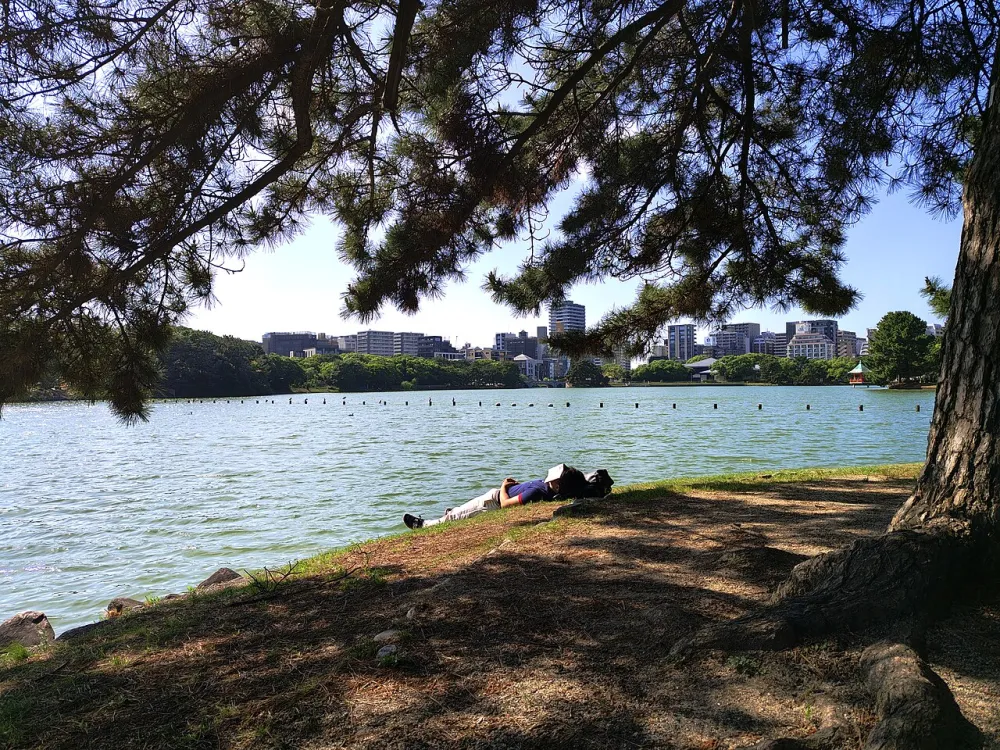
On the Nanakuma Line, use Ropponmatsu N11 and walk about ten minutes from exit 2. The listed ride is about 13 minutes from Hakata or eight from Tenjin-minami. If your accommodation and breakfast are near the Nanakuma Line, use it directly rather than changing because others approach through Ohori Park. Tenjin and Tenjin-minami are on different lines. Compare from your actual starting point to save transfers and station walking.
The ten-minute walks are route estimates from the museum. Allow extra time from underground platform to exit, waiting, crossings and reaching the gallery. From Hakata, ten minutes on the train plus ten walking does not mean you can promise to be inside a gallery twenty minutes later. Breakfast-to-station travel, ticket buying, bags and your companions’ pace affect the real start. Allow a full morning so you do not need to hurry everyone at the entrance.
To shorten the walk after alighting, compare Nishitetsu bus 13 from boarding point 2 at Hakata Bus Terminal. Get off at Fukuoka-shi Bijutsukan Higashiguchi, listed as a three-minute walk. Routes to Akasaka Sanchome leave about five minutes on foot. Rapid buses do not stop at these two stops. Check route number, stops and the day’s service rather than boarding simply because a bus heads near the museum. Include boarding arrangements for wheelchairs or strollers.
If driving, plan parking separately from the entrance. The museum car park has 26 standard-car spaces for museum users, at ¥200 per hour, available 9:00–21:00 on opening days. Entry and exit are unavailable on closed days or outside those hours. For a city exhibition day, both subway lines reach the museum and usually avoid searching for parking. For a companion dropping you at the entrance, use the south entrance and general information to arrange unloading and assistance.
Separate opening hours, last admission and evening opening
Normal hours are 9:30–17:30, with last admission at 17:00. Fridays and Saturdays from July through October extend to 20:00, with last admission at 19:30. For an evening visit in late October 2026, compare Friday October 30 and Saturday October 31. In November, plan around 17:30 closing. To spend two unhurried hours inside, work backward from your departure time. Last admission only tells you whether you can enter.
The museum normally closes Mondays. If Monday is a Japanese national or substitute holiday, it closes on the next weekday instead. New Year closure is December 28–January 4. The chintz exhibition also lists October 19, 2026 as open, October 20–21 closed, November 23 open and November 24 closed. Mark the November 23 and 24 difference before assigning park time and other city activities around the holiday.
Evening opening suits visitors making an exhibition their main late-day activity. After much walking, complete one exhibition and return toward your accommodation for dinner. For lakeside time, walk a short park section before entering. Gallery closing, entrance reception and children’s rest-area cleanup have separate purposes. Start a toddler evening visit early, rather than treating arrival at 19:30 as half an hour of play time.
Children rest on the second floor; adults need to share gallery time
Second-floor Mori no Tane is a rest space for children and guardians, with picture books on tatami and removable wall objects based on collection works. With a toddler, finish one short gallery together, then have one adult rest with the child while the other reads the exhibition they most want. Meet to swap if needed. A child’s rest does not give both adults simultaneous gallery time.
Remove shoes on the tatami. Guardians must remain throughout, and food and drink are prohibited. Removable objects use magnets, so watch children taking and returning them. Cleanup begins 30 minutes before closing, normally 17:00 or 19:30 on evening-opening days. If your child needs rest then, leave early for somewhere suitable to eat rather than making a closing space the last activity.
Beside Mori no Tane are women-only and all-gender nursing rooms. Male caregivers can use the latter. The accessibility page also lists diaper changing in every toilet area and baby-chair cubicles in both men’s and women’s toilets. Find these on the floor plan so a caregiver leaving a gallery can go directly there without the whole group stopping to search.
Strollers and wheelchairs can be borrowed free at first-floor general information. If your child uses their own stroller, follow the on-site accessible circulation route. Store large belongings first to make turning, reaching clothing and sharing art easier. One exhibition an adult wants and a proper child’s break make a clear family half-day plan.
For wheelchairs or less walking, identify entrances and the elevator first
The accessibility information lists ramps at every entrance. For help, call staff on the intercom at the first-floor south or Ohori Park entrance. There is one elevator, beside general information downstairs and the restaurant upstairs, with a car 1.6 meters wide and 1.5 meters deep. Visitors with larger wheelchairs or other aids can discuss those dimensions and transfer needs with the museum to choose a route.
Multifunction toilets are behind first-floor general information and behind the second-floor ticket counter. The first floor has ostomy washing equipment and a folding multipurpose bed. On the second floor, the front facility has a diaper-changing table and the rear has a folding multipurpose bed. Include needed equipment when choosing your main floor. Historic art is downstairs; modern art and special exhibitions are upstairs. Connect them by elevator before deciding on another room.
A shorter route can enter through a suitable entrance, visit general information, choose one main area, rest and leave along the familiar route. If a companion wants another floor, agree to meet in the lobby. If assistance is needed for movement, adjust the room count together. Keep the park walk near the entrance to save energy for the exhibition and make it easier to judge whether to continue to the subway.
Store bags before entering; eating and photography have separate rules
Coin-return lockers are beside the first-floor shop, in the second-floor lobby and in front of the second-floor restaurant. Leave umbrellas and parasols in entrance stands. Store unused coats and bags before entering, keeping valuables, tickets and essentials. Deal with lunch or drinks in a designated area first. Food and drink are prohibited elsewhere except places such as the cafe and restaurant; this includes gum, candy and bottled drinks.
Use only pencils for gallery notes. Silence phones and take calls outside. To remember a work, note artist, title and date, then a detail you saw. A few keywords help you find information later without searching on a phone in front of the display. Discuss works away from main aisles to leave room for others.
Collection galleries have photography-permitted areas; follow the no-photography signs. Special exhibitions and general galleries have their own exhibition rules. Video recording, flash, tripods, monopods and selfie sticks are prohibited. Do not place cameras on display platforms or touch glass. Photographs must not be reproduced or distributed for profit. Keep a favorite image, then put the camera away to look closely from a place that does not block others.
Two half-day plans: one floor in depth, or a special exhibition first
These times are planning estimates. For a light collection visit, allow about 90 minutes inside: 15 minutes to find the entrance, store bags and buy tickets; 45–50 minutes on one historic or modern art subject; then another short room or the public architecture spaces. Add 30–45 minutes for a short lakeside walk. Including the final subway leg and waiting, allow about 2–3 hours away. If you read slowly, extend museum time and shorten the lake walk.
For the special exhibition, allow about 2–3 hours inside with Indian chintz as the main subject, including storage, tickets and breaks. Add only one chosen collection subject if you still want more. Tea enthusiasts can start briefly with Matsunaga downstairs; modern-art visitors can add an upstairs room. If you want to read the special exhibition more slowly, drop the later collection and eat after leaving. Adequate time for each subject is better than buying two tickets and chasing the clock.
In fine weather, walk from Ohori-koen toward the lake and museum, then choose a short section back to the station. If your accommodation uses the Nanakuma Line, arrive and leave through Ropponmatsu with an out-and-back lakeside walk. In rain, shorten walking near the entrance, complete your main exhibition and rest inside, then decide which station to use. Both stations involve outdoor walking. Bring rain gear and suitable children’s shoes and socks even though the destination is indoors.
If you still want Tenjin shopping in the afternoon, choose one museum floor and one main shopping stop after lunch. With two slow floors or a full special exhibition, let Tenjin provide only a meal. Use the Fukuoka food and yatai neighborhood guide for dining, and the three-day Fukuoka itinerary for overall trip length and nearby alternatives. Collect stored belongings before leaving and use your chosen exit toward lunch or the return station.
A few useful answers
How much is admission to Fukuoka Art Museum’s collection galleries, and what can I see?
Adults pay ¥200, high school and college students pay ¥150, and middle school students and younger children get in free. The ticket covers historic, modern, and contemporary art and exhibitions in the regular program. Special exhibitions require a separate ticket.
How do I get to Fukuoka Art Museum by subway from Hakata or Tenjin?
Take the Airport Line from Hakata or Tenjin to Ohori Park Station and use Exit 3 or 6. From Hakata or Tenjin-minami, take the Nanakuma Line to Ropponmatsu Station and use Exit 2. It’s about a 10-minute walk from either station.
When does Fukuoka Art Museum close, and when is it open late?
Regular hours are 9:30 a.m. to 5:30 p.m., with last entry at 5 p.m. On Fridays and Saturdays from July through October, it closes at 8 p.m., with last entry at 7:30 p.m. The museum closes on Mondays, or on the next weekday if Monday is a Japanese public holiday or observed holiday.
When can I see Dalí’s The Madonna of Port Lligat at Fukuoka Art Museum?
The Madonna of Port Lligat is on loan from September 25, 2026, to mid-January 2027. If you’re making a trip to see it, use the museum’s exhibition listings to pick a date after the painting returns.
Official information and references
Sources used in this guide.
- Fukuoka Art Museum: Exhibitions and news
- Fukuoka Art Museum: Visitor information, tickets and photography
- Fukuoka Art Museum: Current collection and thematic exhibitions
- Fukuoka Art Museum: Access
- Fukuoka Art Museum: Floor plan
- Fukuoka Art Museum: Mori no Tane children’s space
- Fukuoka Art Museum: Accessibility
- Fukuoka Art Museum: Kunio Maekawa architecture and renovation
- Fukuoka Art Museum: Collection policy
- Fukuoka Art Museum: Summer 2026 evening opening
- Fukuoka Art Museum: Dalí work on loan
- Fukuoka Art Museum: Indian chintz exhibition
- Fukuoka Art Museum: Collection highlights