Ride the Mahoroba bus from Dazaifu Station to Uchiyama and visit the worship hall, the water mirror and the grant office of Kamado Shrine, with 2026 timetables, the 100-yen fare, amulet services, shrine grounds and a season catalog.
- Region & Focus
- Fukuoka
- Reading Scope
- 25 min read · 12 chapters · 4 Q&As
- Official Verification
- 16 official sources checkedUpdated November 22, 2026
- Key Topics
- ItinerariesSeasonsKyushu
Chapter Route Map (tap any stop)
- Pick the lower shrine at the mountain foot first, and leave the 100 minutes to worship and grounds
- Out of Dazaifu Station, find the Uchiyama bus in front of the Fukuoka Bank
- 100 yen per leg, the same fare for elementary school, and one IC tap boarding and one alighting
- Read the timetable in four tables; the afternoon difference sits in a few minutes
- Chōzu, water mirror, worship hall: walk slowly in the shrine’s order
- Tamayorihime’s matchmaking also covers family, friends and work
- The 2012 grant office: look at the round table first, then look up for the cherry crest
- Omamori, goshuin and prayers: arrange them by two service clocks
- Sit a while behind the grant office, and pick the side shrines by interest
- Cherry, fresh green and autumn maple: the local faith seen through trees
- Kamado alone, or chained from the Tenmangu’s Miyamae stop
- Tired, rainy, or waiting for the dusk view: decide first how you return to the station
- Quick Q&A
If you only want to add a shrine walk onto Dazaifu, pick the lower shrine of Homangu Kamado: get off at Uchiyama, worship at the hall, look at the water mirror and the grant office, then sit a while on the viewing stage behind. On the current timetable, arriving at 09:30 and leaving at 11:10 leaves 100 minutes between the two buses for a stay in the grounds without climbing. Choose the return bus first and then distribute the visit: the counter services and the formal prayer each run on their own clocks.
Pick the lower shrine at the mountain foot first, and leave the 100 minutes to worship and grounds
If all you want is to chain a shrine walk onto Dazaifu, the lower shrine of the Homangu Kamado is enough: take the Mahoroba bus from Dazaifu Station to “Uchiyama,” worship at the hall, look at the water mirror and the grant office, then sit a while on the viewing stage behind. On the current timetable, arriving at 09:30 and leaving at 11:10, the two buses are 100 minutes apart — enough for a stay in the grounds with no climbing. These 100 minutes include walking in from the stop, worship, rest and walking back; travel from Fukuoka to Dazaifu must be budgeted separately.
First separate the two positions on a map. The mountain foot is the lower shrine; the summit of Mount Hōman at 829 meters is the upper shrine. Whenever you see “Homangu” or “Kamado,” check the marked position too. The worship hall, the amulet grant office and the city view of the lower shrine can be the whole body of a visit. The summit upper shrine, the historic sites in the mountains and the old middle shrine belong to another mountain stretch; once the half day is set to the lower shrine, walk by the grounds map and return to Uchiyama for the bus.
If the reason for coming is architecture, the lower shrine has two viewing points from different eras: the worship hall built in 1927 and repaired in 2013, and the grant office completed in 2012 to a design by Masamichi Katayama. To understand the matchmaking faith, start from the principal deity Tamayorihime, the reunion tree and the meaning of the omamori, rather than turning every corner of the grounds into a checklist. In spring watch how cherry blossoms relate to the shrine crest; in autumn, how the maples tie into the residents’ custom of offering trees. Even without flowers or leaves at their best, this content still rewards the stop.
Ride the Mahoroba bus from Dazaifu Station to Uchiyama and visit the worship hall, the water mirror and the grant office of Kamado Shrine, with 2026 timetables, the 100-yen fare, amulet services, shrine grounds and a season catalog.
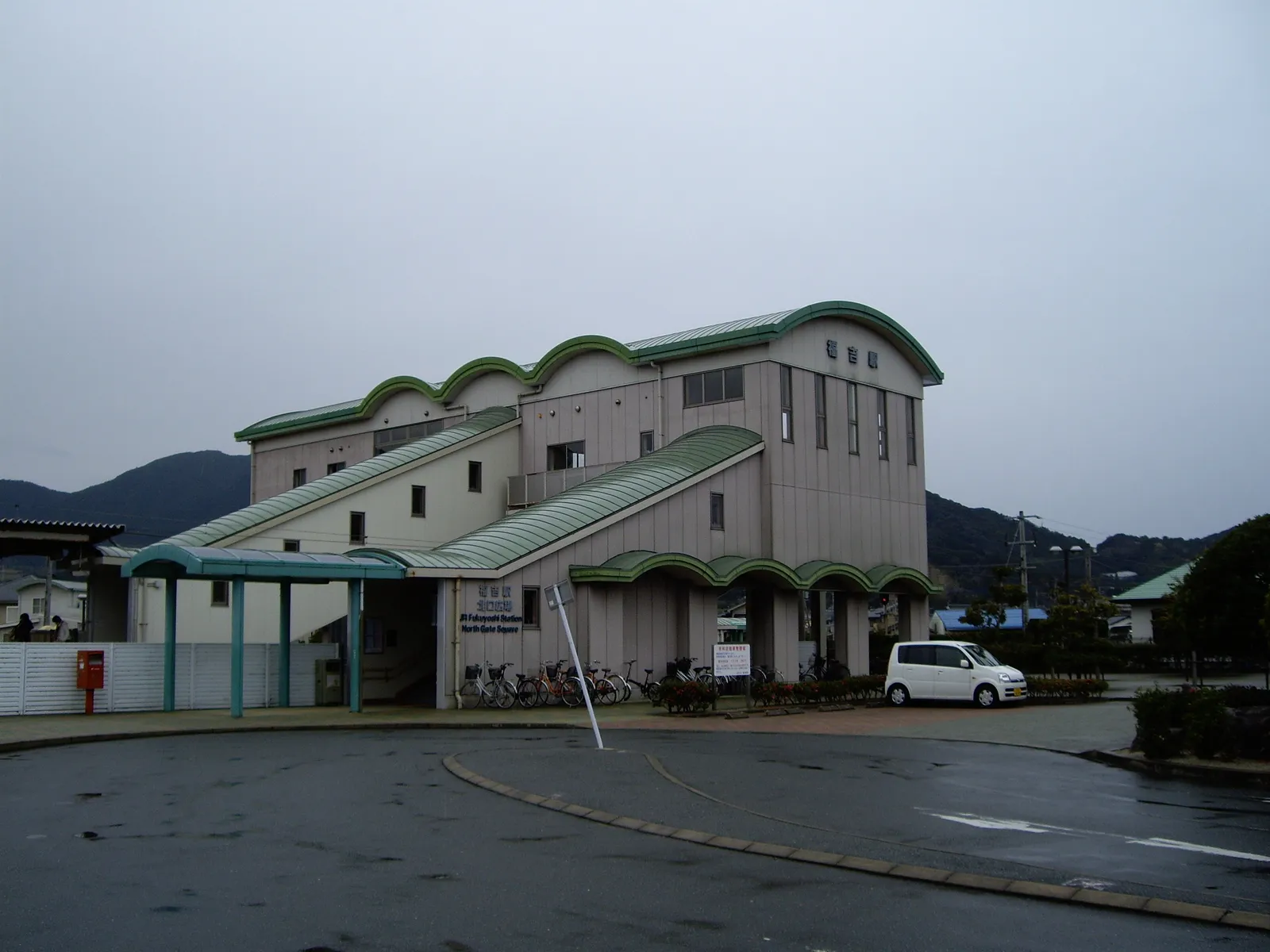
Out of Dazaifu Station, find the Uchiyama bus in front of the Fukuoka Bank
Out of Nishitetsu Dazaifu Station, head for the Mahoroba bus stop in front of the Fukuoka Bank Dazaifu branch and board toward “Uchiyama.” The transport note of the Dazaifu tourism association dated 1 October 2026 uses the white building and the pale-blue sign as the way to recognize the bank; get off at the terminal “Uchiyama” and the shrine lies ahead. When checking the timetable, match the column “西鉄太宰府駅” and the destination “内山(竈門神社前)”: that connects the station-front wording on websites with the official stop names in the table.
Anyone already around Dazaifu Tenmangu can walk to the “Miyamae” stop and board the Uchiyama bus there; the shrine’s transport page positions it in front of the 7-Eleven in Sanjō. Count separately where the Tenmangu worship ends, the walk to Miyamae, and the wait at the stop. Miyamae is an intermediate stop and the bus keeps moving on, so do not treat the Dazaifu Station departure time as the Miyamae time. The morning example is Dazaifu 09:22, Miyamae 09:24, Uchiyama 09:30; boarding at Miyamae means being at the stop before 09:24.
The shrine lists about 40 minutes on foot from Dazaifu Station and about 30 from the Tenmangu; the tourism association measures roughly 2 kilometers from station to shrine. If you like walking and have no other long visit that day, walking up and riding back keeps the transport cost at one leg. If your companions have finished Omotesando and the Tenmangu, chaining the bus preserves more energy for the grounds. Bicycles also face the slope: the association’s staff rode an e-assist bike in about 15 minutes and notes continuous climbing and narrow, busy lanes around the Tenmangu. The 15 minutes help you gauge the e-bike scale; for a regular bicycle, judge by your own riding.
100 yen per leg, the same fare for elementary school, and one IC tap boarding and one alighting
Per the usage guide of Dazaifu City updated 1 April 2026, the Mahoroba bus charges 100 yen per leg to everyone of elementary-school age and above, paid on alighting. An adult and an elementary-school child on the same leg each pay 100 yen; one adult round trip to Uchiyama is 200 yen, two adults 400 yen, and two adults with an elementary-school child 600 yen. This count covers the community bus only: the Nishitetsu train, the bus from Hakata and meals go in separate lines, and then the real transport cost of adding Kamado shows.
Preschool children ride free when accompanied by a guardian, up to two children per guardian. If the family exceeds that combination, ask the operator first, per the city guide. Payment takes cash or transport IC cards such as nimoca; with IC, tap once when boarding and once when alighting. With child cards that auto-apply the discounted fare, or cards tied to disability certificates, the city asks you to tell the driver when you get off. Those with an elementary-school child should remember the line charges 100 yen and state the child card being used when paying.
SUNQ Pass and Grand Pass do not work on the Mahoroba, and the city’s current guide also notes the general Nishitetsu bus discounts do not apply. Even with a travel pass in hand, having 100 yen or a usable IC card covers this leg. With only the two legs between Dazaifu Station and Uchiyama, budgeting 200 yen is clearest; with further city legs, go through the free-transfer and day-pass entries on the city page. A round trip back to the same station after the shrine walk is arranged as two singles.
Read the timetable in four tables; the afternoon difference sits in a few minutes
The current route entry of Dazaifu City marks a “revision of 1 April Reiwa 8”: the Uchiyama line splits into outbound to Uchiyama and departures from Uchiyama, each again into weekdays and Saturdays-Sundays-holidays. When checking, pick the date type first and then the direction. Read the outbound table from Dazaifu down to Uchiyama and the return table from Uchiyama back up; saving the two tables you will use beats screenshotting only the outbound. The morning pair Dazaifu 09:22 → Uchiyama 09:30 with return Uchiyama 11:10 → Dazaifu 11:19 exists on both weekday and weekend-holiday tables.
The afternoon minutes do not carry across calendars. On weekdays, depart Dazaifu 13:22, arrive Uchiyama 13:30, take the 15:10 return and reach Dazaifu 15:19 — 100 minutes on site. The weekend-holiday counterpart is 13:23 → 13:31 with return 15:05 → 15:14, 94 minutes on site. Both suit lunching first in Dazaifu and coming on to worship and the grant office; if the formal prayer or a counter wait eats more time, trim the side-shrine stops or choose a later return before setting out.
The last departure from Uchiyama is 18:30 on both weekday and weekend-holiday tables, reaching Nishitetsu Dazaifu Station at 18:38; yet the last outbound is Dazaifu 18:48 and Uchiyama 18:55. When buses still run toward the shrine, the direction back to Dazaifu is already over: at dusk, do not check only whether the outbound survives. On the return, getting off at Dazaifu Station connects to the train; to continue to other city stops, read down the same service — never assume every bus runs through to Tofurō-mae, and the 18:30 weekday run ends at Nishitetsu Sanjō at 18:45.
Running days also carry exceptions. The city sets that during the Bon period, in principle 13–15 August, and at year-end 29–31 December, the weekend-holiday timetable applies; 1–3 January, the whole line is suspended. Anyone aiming at New Year’s first worship must arrange the other legs first. On normal days, scan the QR code at the stop for approach information, and leave the walk back to the stop ahead of the return leg.
Chōzu, water mirror, worship hall: walk slowly in the shrine’s order
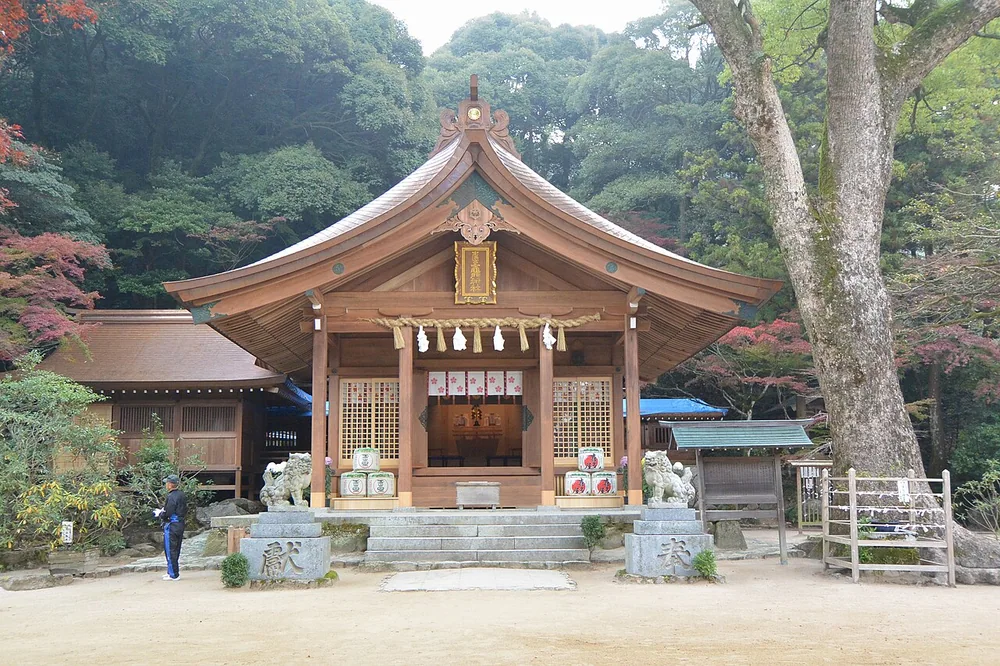
Off the bus and into the grounds, use the official grounds map to find the chōzu and the water mirror before going toward the deity’s presence. The chōzu order the shrine teaches is wash both hands, cup water in both hands to rinse the mouth, then wash the hands once more. The water mirror follows the chōzu, and the shrine explains that seeing your own face is putting the inner self in order and praying with a purely honest heart. Keep here a stretch of worship without photos: finish, then move on, and companions complete at their own pace.
At the worship hall, the shrine’s published manner is a light bow, the offering coin, two bows and two claps, palms joined to convey thanks and wishes, one more bow, and a final light bow. First-time visitors can memorize “two bows, two claps, one bow” beforehand and concentrate on worship at the front; the camera, repacking the bag and waiting for family come after stepping back. If you are only worshipping before the deity’s presence, completing this sequence is enough; a formal prayer led by priests is received at the grant office, with the arrangement covered in the service times below.
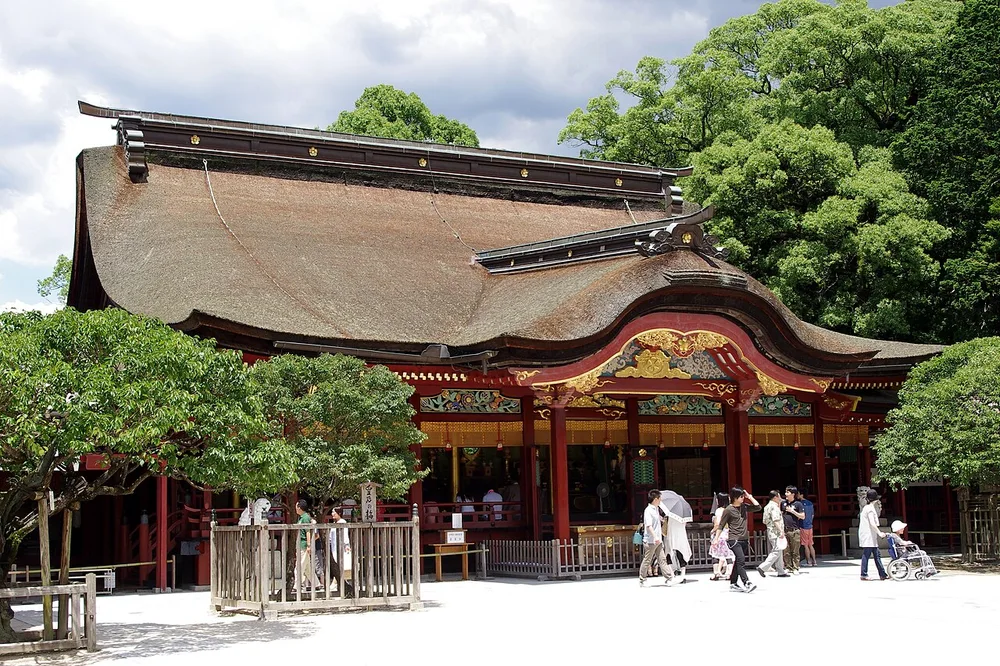
Architecture reads better after worship: roof and timber details surface then. The shrine dates the current hall to 1927, hinoki of the nagare style with a copper-sheet roof, re-roofed and repaired in 2013. Those comparing buildings can look first at the eave line, the relation of wooden pillars to roof, and then walk to the grant office in white and pink stone. A grounds walk separates the two, but the architectural language differs sharply: one side carries the traditional form continued by the modern hall, the other brings contemporary interior design into the granting space.
The oracle slips in after worship. The grounds guide treats the oracle text as teaching for daily life: read it and understand it, then tie it at the designated deposit point. Against only glancing at luck, spending a few minutes reading your own slip is closer to the official manner. If companions need translation, read it together where the path stays clear and complete the offering after; that time also counts inside the lower-shrine stay, and from there you decide between the grant office or the stage.
Tamayorihime’s matchmaking also covers family, friends and work
The principal deity of Kamado Shrine is Tamayorihime. The shrine ties the “tama” of the name to spirit and the “yori” to mutual attraction and joining when explaining its matchmaking faith; the good ties named officially cover man-and-woman relationships and reach family, friends, work and nature. Those traveling with family, or preparing a job change, can read the worship from this wider sense. When choosing an omamori, think of your own wish first and the name and meaning second: being single or a couple is only one of the reasons to come.
“Katayoke” and “yakuyoke” tie to the position and history of Dazaifu and Mount Hōman. The shrine places Mount Hōman in the demon-gate direction of the Dazaifu government hall and recounts that people before crossing the sea climbed it for safe voyages and success in enterprise; Saichō, Kūkai and envoys bound for the continent appear in that faith history. Today’s formal prayer lines include moving house, changing jobs and new ventures: the mountain-city, far-travel-and-daily-life relation continues into these life turns.
Read the founding story as the shrine’s own tradition. The official page records that in 673 the monk Shinren was practicing in the mountains when the spirit of Tamayorihime appeared, and that afterward, by court order, the upper shrine was built; the same page separately notes ritual finds under the summit boulder — Wadōkaichin coins, court-minted coins and Nara sancai — that inform early worship. The divine appearance belongs to tradition; the finds are the material clue to early worship, and each holds its place when reading. Mount Hōman was designated a national historic site in October 2013 for its historical and cultural value, and knowing that background from the lower shrine explains why the official grounds introduction runs all the way to the summit upper shrine.
The reunion tree sits in this same line. Tradition says Empress Jingū planted a tree on the summit of Mount Hōman praying to meet loved ones again; the tree named “reunion” and the love amulet in today’s grounds carry that prayer. Seeing the tree, the fruit shape and the amulet description, the one story chains together.
The 2012 grant office: look at the round table first, then look up for the cherry crest
The grant office was designed by Masamichi Katayama of Wonderwall, completed in 2012, and the official page introduces its concept as “the standard of 100 years from now.” Here, look first at the central round table: its form takes the kamado stove, bringing the image of the shrine’s name indoors. White and pink stone set the palette, and the wall is laid with pink marble slips of varied length and position that the shrine reads as the individual wishes of visitors. Reading the design from concrete material and layout adds a layer beyond taking the space for a pretty amulet counter.
Looking up finds the ceiling treatment of the shrine’s cherry crest. The official page also describes how the green of fresh leaf and the autumn colors enter the interior: view the pink stone, the cherry overhead and the trees outside together. Beyond spring the cherry motif remains visible: the crest keeps the seasonal plant inside the everyday space. Design lovers should linger here and shorten the side-shrine walk that follows; if you only want your omamori, finish and move to the viewing stage behind, where another designer’s work waits.
The shrine’s architecture is not all one hand. The official page attributes the grant-office interior to Masamichi Katayama, the office building as a whole to shrine-architecture specialist Tsuyoshi Tanemura, and the bench and double seat on the viewing stage to Jasper Morrison. Having come this far, you can set the copper roof of the worship hall against them, then the stone surfaces, round table and cherry décor of the office, and finally the Aji-stone seating outdoors: in a short stretch, design work at several scales.
The grant office handles ofuda, omamori, ema, goshuin and prayer requests together. Worship first, then the pickups and questions: that separates seeing the space from doing errands. If someone is at the counter, view the architecture where the path stays clear; traveling as a family, agree to meet at the stage afterward so those not choosing an omamori keep their rest time.
Beyond the grant office, the office building and the assembly hall in the grounds are also 2012 builds. The shrine presents the assembly hall as traditional technique joined with modern technology, a purely Japanese space where parishioners, devotees and wedding parties wait their turn before the deity. In viewing the architecture, understand each building’s role from the outside: the assembly hall is a ceremony waiting space, and this trip’s rest belongs at the officially introduced viewing stage — route and purpose stay clear.
Omamori, goshuin and prayers: arrange them by two service clocks
The grant office opens 08:30–18:00; the formal prayer reception runs 10:00–16:00, at the same ofuda-and-omamori grant office. Those only collecting an omamori or a goshuin arrange by the office hours; those making a formal prayer put arrival and application inside 10:00–16:00. Arriving at Uchiyama at 09:30, finish the ordinary worship first and go to the counter after 10:00; on an afternoon plan, take the prayer first and see the office and the stage after, so the walk does not run past the reception close.
The hatsuhōryō of formal prayer listed by the official site are 5,000, 8,000 and 10,000 yen and above, and 10,000 yen and above for companies and groups. Prayer lines include good ties fulfilled, katayoke for moving or job change, yakuyoke, household safety, safe childbirth and shichi-go-san. That sum is the hatsuhōryō of the prayer rite; the omamori is separate, by the granted item. Sorting out before departure whether you will worship at the hall, take one omamori, or request the prayer rite makes budget and stay easy.
The reunion fruit on the “Koimori Musubi no Ito” imitates the pods of the reunion tree; the shrine says that on returning it, you bring it to the “Koimori Musubi-dokoro” beside the tree in the grounds. Giving it to someone important, note this origin and its return point with the object. The work-tie omamori explains work and trade prayers from the “musubi” of generation and joining; the Teru Teru Hare-mori entrusts a calm, bright everyday; the Ichigo-mori takes the sense of ichi-go ichi-e; and the Hōman-sama renders the principal deity Tamayorihime in Hakata dolls. Choose the type by your purpose first, then see the real item at the counter.
The ema can follow the worship: there is one with stove and cherry motifs, and the paired zodiac ema are designed by Fukuoka ceramist Mutsumi Kagoshima, two companion animals echoing the ties. If you want to write your wish, keep a quiet writing moment; you do not need to buy every pattern. Goshuin, omamori and ema are handled in the same place — one visit finishes them before you leave.
To ask about a prayer or an accessible route in advance, call the shrine at 092-922-4106; the official phone service runs 09:00–17:00. When noting, give each service its own line: phone 09:00–17:00, grant office 08:30–18:00, prayer reception 10:00–16:00. Questions go in phone hours, pickups in office hours, formal prayer in reception hours; late-day visitors should check first which service they need.
Sit a while behind the grant office, and pick the side shrines by interest
The viewing stage sits behind the omamori grant office, and the official introduction notes it looks over the Dazaifu townscape. A bench and a double seat by Jasper Morrison in Aji stone wait there — good for stopping after worship and turning the gaze from architecture to the city. If companions want more time with the omamori, agree to meet at the stage afterward; those keener on architecture can compare the interior stonework with the outdoor stone seating. The rest itself can occupy part of the stay — no need to count the next checkpoint the moment you sit.
For the side branches, choose first the reunion tree or the spirit-summoning tree. The former continues the reunion prayer and the love-amulet story; the latter reads Ogatama in Japanese, and the shrine explains the name as calling spirits, tying it to the myth of Ame-no-Uzume dancing with a branch and Amaterasu stepping out of the heavenly rock cave. The official page lists white flowers in early April each year and fruit in autumn: view the tree’s shape, flower or fruit by season. Plant, myth and omamori answer one another inside the same grounds; looking slowly at one or two spots fits this half day better than racing the numbered map.
Those interested in martial arts can find the Musō Ken-no-suke shrine on the map. The shrine tells that in the early Edo period Musō Ken-no-suke trained on Mount Hōman and founded the Shintō Musō-ryū staff art, and that practitioners still carry the faith with practice before the deity today. The Five Grains shrine turns on harvest, sprouting and human resolve to advance; the Shibu Inari shrine connects the deity Uka-no-Mitama to rice ears and daily livelihood. Anyone wanting to understand lived faith can start from any of them and read the on-site board.
The affection rock, the happiness tree and the musubi koyori each carry their own love-prayer manner; the Susanoo shrine ties the myth of Susanoo and Kushinada to good ties and family fullness. Coming together, each chooses their own point. Put two spots of similar interest in one stretch of walking, and leave remaining time for the stage or the bus wait: the trip will not shrink to chasing numbers.
The paper-twist prayer has a further local origin. The shrine recounts that in the Edo period there was a “sixteen visit,” in which boys and girls reaching the age of adulthood then climbed Mount Hōman with their parents and tied wishes written on twisted paper to trees near the summit — men praying for standing and livelihood, women for good ties and happiness. The musubi koyori seen today at the happiness tree links to that life-milestone prayer. The official page adds that priests purify and pray over the paper twists every morning. Those writing one at the lower shrine can read this origin first, then write their wish.
Cherry, fresh green and autumn maple: the local faith seen through trees
The cherry is Kamado Shrine’s crest, recurring between the grant-office ceiling, the ema and the grounds’ plants. The shrine recounts that Mount Hōman has been famous for its cherry blossoms since antiquity, with trees offered in the grounds for marriages and life milestones. Spring visitors can worship first and keep extra time for the relation between cherry trees and buildings; if companions came mainly for the omamori, meet outside when done. Beyond the cherry, the spring festival account mentions azaleas: the seasonal scenery and the tie-festival faith connect here.
In the fresh-green season, set the focus on the grant office and the viewing stage. The office presentation writes that the green outside enters the interior: from the round table and cherry décor looking outward, it is another manner of viewing than autumn. The festivals page also lists acts like the May ascent and the great rite of lights of the gomā, showing the Shugendō faith of Mount Hōman alive today. If this visit is lower-shrine only, complete the half day with the grounds worship and rest; the summit ascent and summit rites have their own place and arrangements.
In autumn the color arrives each year in mid-to-late November, and the official page lists about 300 deciduous ginkgo and maple trees in the grounds. Worth the extra look is the relation of these trees to “momiji-age”: the local custom that each spring, residents in their unlucky year receive purification and offer maple plantings to the grounds. The autumn color chains to the springtime offering and the life milestones of the residents. Looking at trees along the worship path, you can also set the momiji against the facades of the worship hall and grant office, instead of hunting the reddest single tree.
With autumn color as the aim, arrange the daytime worship and return first and leave the leaf time to the gap between the two buses. The Uchiyama return ends at 18:30, so the momiji stay is a daytime matter. Those wanting to look slowly at the maples pick a morning visit and return to Dazaifu to eat by midday: it keeps the full grounds time more easily than arriving at dusk for the last outbound buses.
Kamado alone, or chained from the Tenmangu’s Miyamae stop
The morning Kamado-only version can take Dazaifu 09:22 → Uchiyama 09:30 and Uchiyama 11:10 → Dazaifu 11:19 as one set. Off at 09:30, walk into the grounds with the chōzu and water mirror, then the hall; after worship see the grant office, pick one or two side branches, and end resting at the viewing stage. It is an editorial suggestion built from the official timetable, and the 100 minutes divide by each person’s pace and counter waits. Planning to board at 11:10, be back at the stop beforehand: 11:10 is not the time to rise from the stage.
With a formal prayer, arrived at 09:30 worship first and apply after reception opens at 10:00; done, choose office or stage by the remaining time and skip the side branches. With a counter queue or a wish to stay longer, check the return table and change the bus first. What changes is the return and the stay content, adjusting other afternoon bookings too. Lunch can follow the 11:19 arrival back at Dazaifu: close this bus round trip first, then decide how long to stay on Omotesando.
Those going to the Tenmangu first, after worship and rest, walk to the Miyamae stop and board the Uchiyama bus. The afternoon examples are, weekdays, Miyamae 13:24 → Uchiyama 13:30 and, weekends-holidays, Miyamae 13:25 → Uchiyama 13:31; returns run 15:10 → Dazaifu 15:19 and 15:05 → 15:14. The walk from Tenmangu to Miyamae, the wait at the stop and the entry to the shrine after Uchiyama all sit inside transfer time. If after returning you want Omotesando, get off at Dazaifu Station and re-lay your walking direction there.
Choosing Tenmangu and Kamado the same day, leave the deep museum visit of the Kyushu National Museum for another slot; if the special exhibition is the main purpose, keep the museum and move Kamado to another day. Both interests deserve their full stay. For the Nishitetsu and Hakata bus choices from Fukuoka, the Tenmangu worship and the museum route, continue with the half-day and full-day plans for Dazaifu Tenmangu and the Kyushu National Museum, and hook onto this Uchiyama line after the day’s theme is set.
The Kyūshū Juku channel presents Dazaifu Tenmangu, Kamado Shrine, umegae mochi and old-house cafés, matching an itinerary that visits both shrines in one day.
Tired, rainy, or waiting for the dusk view: decide first how you return to the station
Tired, drop the side shrines first and keep the hall, the grant office and the return; with your errands done, go wait at the Uchiyama stop. The 40-minute walk from Dazaifu Station can be a chosen outbound for those who like walking, but after rain, fatigue or a missed bus it need not become the whole group’s return plan. If a taxi is needed, follow the Dazaifu taxi or Futsukaichi transport contacts on the shrine’s transport page: ask first whether a car can come, where it picks up and how long the wait, then decide how to leave.
The Mahoroba carries a ramp for wheelchair boarding, and the city lists a capacity of 34 passengers. Wheelchair users and stroller families can use that for the bus leg; movement inside the grounds is assessed separately against the hall, grant office and viewing points actually intended. Those with step and slope needs should tell the shrine before departure what they want to complete and with what aids, and ask for walkable routes. Companions can also split across the side branches and meet back at the main stay, each keeping a visit that suits them.
In light rain, shorten the under-tree walk and leave more time for the grant office; with wet stone or fallen leaves, widen the time for walking back to the stop. With snow, typhoon or service anomalies, check the city’s natural disaster page first and its link to Nishitetsu service status and approach information; with the line suspended, Kamado moves to another day. Those waiting for the dusk view, set the boundary first at the 18:30 last Uchiyama return and decide afterward how long to stay on the stage: gather things, walk back to the stop, take the 18:30 bus and reach Dazaifu Station at 18:38, with dinner and the transport back to Fukuoka still to follow.
A few useful answers
Where do I catch the bus to Kamado Shrine, and how much is the fare?
Catch the Uchiyama-bound Mahoroba bus outside the Fukuoka Bank branch near Nishitetsu Dazaifu Station, or at Miyamae if you’re near Dazaifu Tenmangu. Get off at the last stop, Uchiyama. The fare is ¥100 each way for riders in elementary school or older.
Which buses should I take for a morning visit to Kamado Shrine’s lower shrine?
In the 2026 weekday, weekend, and holiday schedules, the 9:22 a.m. bus from Dazaifu Station reaches Uchiyama at 9:30 a.m. The 11:10 a.m. bus back gives you 100 minutes at the shrine and reaches the station at 11:19 a.m. The last bus back leaves Uchiyama at 6:30 p.m., and the line doesn’t run January 1–3.
When can I get an amulet or goshuin or request a formal prayer at Kamado Shrine?
The counter for amulets and goshuin stamps is open from 8:30 a.m. to 6 p.m. It takes requests for formal prayer ceremonies from 10 a.m. to 4 p.m., with offerings for individuals starting at ¥5,000.
When can I see fall colors at Kamado Shrine?
Fall colors usually appear in mid-to-late November at Kamado Shrine, which has about 300 deciduous trees, including maples and ginkgos. Go in the morning to walk the shrine paths at your own pace before taking the bus back to Dazaifu for lunch.
Official information and references
Sources used in this guide.
- Kamado Shrine: grounds map and worship manner
- Kamado Shrine: transport guide
- Dazaifu Tourism Association: Dazaifu Station to Kamado Shrine (1 October 2026)
- Kamado Shrine: history and faith
- Kamado Shrine: Mount Hōman, upper and lower shrines
- Kamado Shrine: prayer reception and hatsuhōryō
- Kamado Shrine: granted items and the 2012 grant office
- Kamado Shrine: seasonal festivals introduction
- Dazaifu City: timetables by route (revision of 1 April 2026)
- Dazaifu City: Mahoroba bus usage guide (updated 1 April 2026)
- Dazaifu City: natural-disaster suspension and service inquiry
- Uchiyama line to Kamado Shrine: weekday timetable
- Uchiyama line to Kamado Shrine: weekend-holiday timetable
- Uchiyama line from Kamado Shrine: weekday timetable
- Uchiyama line from Kamado Shrine: weekend-holiday timetable
- Kyūshū Juku channel: Dazaifu and Kamado Shrine day-trip video