Plan your 2026 Dazaifu visit: Nishitetsu trains from Tenjin, Tabito buses from Hakata, Omotesando, the main sanctuary, digital tickets, museum exhibitions, combined admission, family facilities and step-free routes.
- Region & Focus
- Dazaifu and Yanagawa
- Reading Scope
- 32 min read · 13 chapters · 4 Q&As
- Official Verification
- 26 official sources checkedUpdated November 22, 2026
- Key Topics
- ItinerariesRail travelFood
Chapter Route Map (tap any stop)
- Half a day or a full day: allow time for worship and exhibitions
- Nishitetsu from Tenjin or a bus from Hakata: choose your starting and return points
- 2026 transport costs: when to use the digital strolling ticket or single fares
- From Dazaifu Station to Shinji Pond: walk Omotesando before entering the shrine
- The main sanctuary, Tobiume and Taiko bridges: details to notice during your visit
- Goshuin, amulets and photography: leave these until after worship
- From Tenmangu to the museum: turn right for the passage, and use the inclined elevator with a stroller
- Three ways to visit: the Cultural Exchange Exhibition, special exhibitions and free activities
- When the combined ticket saves money: check all three museums’ closed days first
- Umegae mochi on Omotesando: sit down for tea or take one with you
- With young children or older visitors: nursing facilities, step-free routes and quiet breaks
- Two adaptable itineraries: morning worship or an afternoon at the museum
- Plum blossoms, autumn and closed days: choose the order around what is open
- Quick Q&A
Allow half a day for Dazaifu Tenmangu and Omotesando. For an exhibition at Kyushu National Museum, stay for lunch and the afternoon too. Worship in front of the main sanctuary resumed on September 19, 2026. Take Nishitetsu from Tenjin or the Tabito bus from Hakata. Choose your museum first, then your transport and admission tickets, so you can give each stop enough time.
Half a day or a full day: allow time for worship and exhibitions
Choose between two Dazaifu itineraries before you leave. For the shrine, an umegae mochi rice cake and Omotesando, allow about 3–4 hours after arrival. For an exhibition at Kyushu National Museum, allow about 6–7 hours and have lunch in Dazaifu. These suggested durations include walking and breaks; travel to and from Fukuoka is extra. A half-day visit is much easier if you leave Fukuoka that afternoon or have a fixed dinner reservation.
On a first visit, start with Dazaifu Tenmangu and Omotesando. Add the museum if it interests you and you have time. The shrine centers on Sugawara no Michizane and Tenjin worship; the museum explores exchanges between Japan and Asia. If architecture, worship and the old shopping street are your interests, you can enjoy them without buying a museum ticket just because it is nearby. If a special exhibition is the reason for your trip, reserve enough time for it first and fit the shops around it.
As of October 26, 2026, a shrine announcement confirms that worship in front of the main sanctuary resumed on September 19. The grounds map marks Sou Fujimoto’s temporary sanctuary as being dismantled. The main route now leads to the front of the main sanctuary. The temporary sanctuary with its planted green roof served during the major restoration. If someone in your group saved an older photo of it, update your meeting point before leaving and follow the designated worship routes and construction barriers on site.
The gates open at 6:00 from the spring equinox and at 6:30 from the autumn equinox. Closing time is 19:00 in April–May and September–November, 19:30 in June–August, and 18:30 in December–March. General access to the grounds and worship at the main sanctuary are free. Museum ticket desks, nursing rooms and rest areas close earlier than the gates. If you arrive for a quiet early walk, fit breakfast and that first walk before the facilities open instead of waiting outside shops.
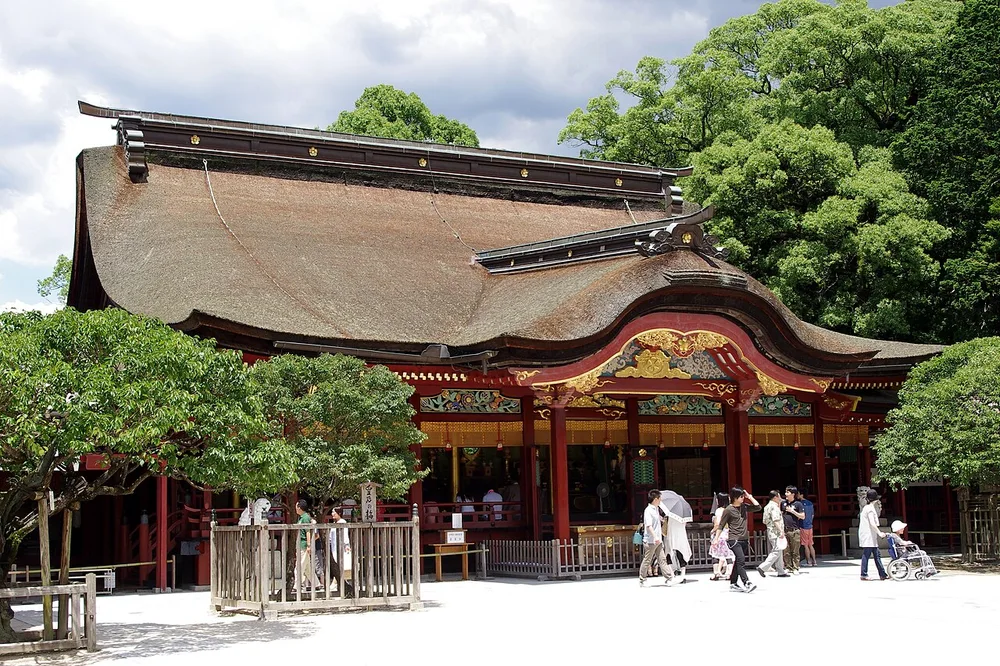
Plan your 2026 Dazaifu visit: Nishitetsu trains from Tenjin, Tabito buses from Hakata, Omotesando, the main sanctuary, digital tickets, museum exhibitions, combined admission, family facilities and step-free routes.
Nishitetsu from Tenjin or a bus from Hakata: choose your starting and return points
If you are staying in Tenjin, take the Tenjin Omuta Line from Nishitetsu Fukuoka (Tenjin) Station and change at Nishitetsu Futsukaichi Station for the Dazaifu Line to its terminus. The shrine lists about 6 minutes from Futsukaichi to Dazaifu; the tourism association lists about 30 minutes from Tenjin. Add time to walk to the station, wait and change platforms. Some services run through to Dazaifu. Check the destination on the train or platform display; change at Futsukaichi if your train goes elsewhere.
There is both a Tabito train and a Tabito bus. The Dazaifu sightseeing train Tabito operates as an ordinary train: no reservation or sightseeing surcharge is required. Check that day’s operating information if you want that particular train. If the shrine is your main goal, take whichever regular service suits your schedule and keep more time for the approach. Nishitetsu Futsukaichi and JR Futsukaichi belong to separate railway systems. Enter the full station name in your navigation app so you do not end up looking for the Dazaifu Line at the JR station.
If you stay in Hakata and prefer fewer changes, take the Dazaifu Liner Bus Tabito from Hakata Bus Terminal. It runs via Fukuoka Airport’s international terminal to the front of Dazaifu Station. Nishitetsu’s current route page gives standard travel times of about 40 minutes from Hakata and 25 minutes from the international terminal. Reservations are not taken; if a bus is full, wait for the next one. If weekend or holiday queues are long, the Nishitetsu train from Tenjin is an alternative.
The bus suits a day that starts and ends in Hakata. The train suits a return followed by dinner in Tenjin. You can also leave Hakata by bus and return by Nishitetsu; single tickets keep that arrangement straightforward. Leave large bags at your Fukuoka accommodation so you can walk straight from Dazaifu Station. If you travel directly from the airport, check your terminal first. Getting from the domestic to the international terminal requires a shuttle ride, so the 25-minute bus journey does not cover the entire trip after a domestic arrival.
2026 transport costs: when to use the digital strolling ticket or single fares
After Nishitetsu’s April 1, 2026 fare revision, the adult fare from Fukuoka (Tenjin) to Dazaifu is ¥480 one way, or ¥960 return. Use ¥960 as your comparison if you make one return trip that day without other intercity travel. Nishitetsu’s fare revision page links to the new fare tables and station-to-station fare chart. Select a travel date after April 1 when searching so the old ¥420 fare does not enter your budget.
The Dazaifu digital strolling ticket listed by Kyushu MaaS costs ¥1,000 for adults and ¥580 for children from April 1, 2026. It includes a Nishitetsu return ticket between Fukuoka (Tenjin) and Dazaifu, a voucher for one umegae mochi, and offers at designated businesses. Buy it through the my route app; it is valid for two days after use begins. The adult ticket costs ¥40 more than a standard return, so it is useful if you already want a rice cake at a participating shop. Choose a single fare if you take the train only one way and return to Hakata by bus.
The Treasure Hall offer gives the group admission rate, rather than free entry. If you plan to buy the shrine-and-museum combined ticket separately, do not count that same Treasure Hall saving twice. Find the correct ticket screen in the app before using it: show the transport portion at the station and the voucher portion at the shop. That saves you searching for tickets during your meal or museum time.
Bus fares are separate. The usual adult Hakata–Dazaifu fare is ¥800; the official April 2026 leaflet lists ¥780 when paying on board with a transport IC card or an eligible contactless credit card. From the airport’s international terminal, the usual fare is ¥700, or ¥680 with the eligible cashless discount. A return bus trip from Hakata is normally ¥1,600, or ¥1,560 with the discount. It starts from a different location than the Nishitetsu return from Tenjin. Choose a convenient route first, then compare the whole journey’s cost, rather than adding a station detour for a small fare difference.
Fukuoka City Subway day passes, JR passes and the Nishitetsu Dazaifu Line have separate coverage. If you take the subway from Hakata to Tenjin before boarding Nishitetsu, add that city fare. If you shop in Tenjin on the way back, also include the trip from there to your hotel. Calculate adult and child costs separately. Select the correct ticket category in the app instead of assuming the child package costs half the adult price.
From Dazaifu Station to Shinji Pond: walk Omotesando before entering the shrine
The museum’s illustrated access guide breaks this walk into clear steps. Outside Dazaifu Station’s gates is the bus turnaround. Head diagonally right into Omotesando, then follow the roughly 300-meter approach toward the shrine. You pass successive torii gates; the shrine information office is beside the third. Farther ahead is a sacred ox statue, with Shinji Pond and the Taiko bridges to the left. These landmarks help first-time visitors find the route without repeatedly zooming in on a map at junctions.
The shops line this stretch between the station and shrine. Note places you want to visit on the way in, then buy souvenirs on the way out. If you arrive early mainly to worship, cross Omotesando first and stop for a rice cake on your return. If a child needs water or a toilet after the journey, take that break before entering the shrine. The 300 meters measures the road, not the time spent queuing, choosing shops or taking photos. Allow more than the few walking minutes shown by a navigation app.
The entrance ox statue can attract the first queue, but there are 11 ox statues around the grounds, connected to the stories of Sugawara no Michizane. Join the queue if you want a photo of this one. If someone is already tired, see the pond and bridges first, then continue to the sanctuary. Children can notice the different poses along the way without turning every statue into a collection task. The shrine regards the center of the approach as the path of the deity, so keep toward the sides when walking or taking photos.
The official map marks the shrine’s step-free route in blue. If you have a stroller, use a wheelchair or find arched bridges difficult, check that route at the information office before heading to the main sanctuary. You can see the Taiko bridges from the pondside. Keep passages clear as queues move, and take group photos away from the flow of visitors. Meet before the bridge or beside the information office, at an easy-to-recognize point, rather than searching for one another in the Romon gate entrance.
The main sanctuary, Tobiume and Taiko bridges: details to notice during your visit
The three bridges over Shinji Pond symbolize the past, present and future. The standard worship route crosses them, then reaches the purification basin, Romon gate and main sanctuary. The bridge surfaces rise and fall. Let people behind you pass before stopping for photos. In rain, soles and stone surfaces can be wet; a slow walk beside the pond also gives a view of the bridge curves. Keep the bridge crest clear instead of having someone block it for an empty-looking photo.
The official worship guide describes the current running-water purification method: clean your hands, rinse your mouth, then clean your hands again. This is ritual purification before worship; do not drink directly from the running water. Where ladles are provided, pour water into your hand to rinse your mouth and keep your mouth off the ladle. Adults can demonstrate for children. Help smaller children from a safe position without standing them on the basin’s edge.
At the main sanctuary, follow the shrine’s sequence of two bows, two claps and one bow. Remove your hat and compose yourself, bow twice, clap twice with your hands in front of your chest and pray, then bow once more. Complete your worship when you reach the front, then step aside to arrange bags, take out a camera or wait for family. Formal prayer ceremonies require a separate application at the prayer reception desk. Ordinary worship in front of the sanctuary needs no reservation. Keeping these two forms separate helps you plan the time required.
The main sanctuary stands over Michizane’s grave and is central to Tenmangu worship. Facing it, you will see Tobiume, the sacred plum tree associated with him, on the right. The shrine introduces it through the legend that it flew from Kyoto to Dazaifu. Notice its shape, position and relationship to the building; it is worth seeing even outside blossom season. The present Romon gate dates from 1914. Its details reward a pause on both the way in and the way out.
Save the great camphor tree, stone features and bronze statues for after the main worship. The kirin and uso bird statues beside the purification basin were donated by Hakata merchants in 1852. The shrine describes the great camphor as a natural monument more than 1,500 years old. If your group enjoys architecture and art, move back into a wider space after visiting the sanctuary, then look at the gate, old trees and animal statues. This is easier than taking photos while moving in the worship queue.
Goshuin, amulets and photography: leave these until after worship
Collect goshuin shrine seals and amulets after worship. The shrine describes its academic amulet as a prayer for learning and exams, kokoro mamori for peace of mind, and the Yume Mamori “Kanai-ito” for your own or a loved one’s dreams. Work and job-seeking amulets are separate designs. If buying a gift, note the Japanese name and the purpose of the prayer before choosing at the amulet counter. Check the displayed offering amount and available designs there, and set aside this money separately from transport and meals.
Follow the on-site signs to the goshuin counter; extra locations may be used on major festival days. Tenmangu can also handle goshuin for Tenkai Inari Shrine. Visit the corresponding shrine first, then return to the counter. If your day covers only the main shrine and museum, choose a seal for the place you actually visited. Tenkai Inari involves an uphill walk and stone steps, so save some energy for the climb. The October 26–30 woodland closure also affects the connection; do not simply continue uphill when you see its torii.
Personal souvenir photographs are generally allowed, but the shrine’s photography rules prohibit photography inside the main sanctuary, prolonged shooting from one position with equipment such as tripods, drones, livestreaming or similar video, and commercial photography. Leave room for worshippers when taking photos inside the Romon gate. Professional photography for first shrine visits and Shichi-Go-San is restricted to members of the Dazaifu Tenmangu photographers’ association. Other travel photo shoots, promotional shoots and model shoots are not accepted.
If you join a formal prayer ceremony or festival, take photos outside the ritual and where paths are wider. If there is a queue at the amulet counter, one adult can take the children for a break and meet the others at an agreed time.
From Tenmangu to the museum: turn right for the passage, and use the inclined elevator with a stroller
You can reach Kyushu National Museum through the connecting passage in the shrine grounds. In the museum’s official photo guide, turn right after the third Taiko bridge, before the torii ahead. The Treasure Hall is on your left, and the passage entrance is farther ahead. If you visit the main sanctuary first, follow signs back in this direction afterward; there is no need to return to Dazaifu Station.
The connection has stairs, escalators and a moving walkway, followed by the Rainbow Tunnel. A separate inclined elevator serves wheelchairs and strollers. This route climbs to the museum’s elevation, a change that a flat map can hide. The official estimate of about 10 minutes from Dazaifu Station to the museum assumes a direct walk. If you have already visited the shrine or an exhibition, or need to wait for an elevator, calculate from your actual location and allow that extra time instead of rushing to match 10 minutes.
If a child has fallen asleep in the stroller, use the inclined elevator at the entrance. Secure your belongings on crowded moving walkways. Older visitors who prefer to avoid the Taiko bridges can follow the shrine’s step-free route toward the passage, then take the elevator. The museum accessibility page also lists inclined lifting equipment on the western Kokuhaku-dori side. When coming from the shrine, follow signs for the Tenmangu Access Tunnel; this is easier than detouring to a different entrance.
The museum’s first floor is a useful meeting point if your group splits up. Special exhibitions are on the third floor, and the Cultural Exchange Exhibition is on the fourth. Anyone visiting only the shop or the children’s activity area on the first floor can remain in the public space. Allow time to walk back and take the elevator when setting a meeting time. Meet on the first floor, which everyone can access, rather than inside a ticketed gallery.
Watch the official access video to recognize the route from Dazaifu Station through the shrine approach to the museum passage.
Three ways to visit: the Cultural Exchange Exhibition, special exhibitions and free activities
The fourth-floor Cultural Exchange Exhibition explores Japan’s exchanges with Asia and Europe. Compared with the shrine’s focus on Michizane, it offers a longer view of objects, trade, religion and people’s movements. On a first visit, read the gallery layout at the entrance, then spend more time on the periods that interest you. Displays rotate. Even if you have seen exhibition photos, look for the day’s new combinations rather than trying to match every object to an old image.
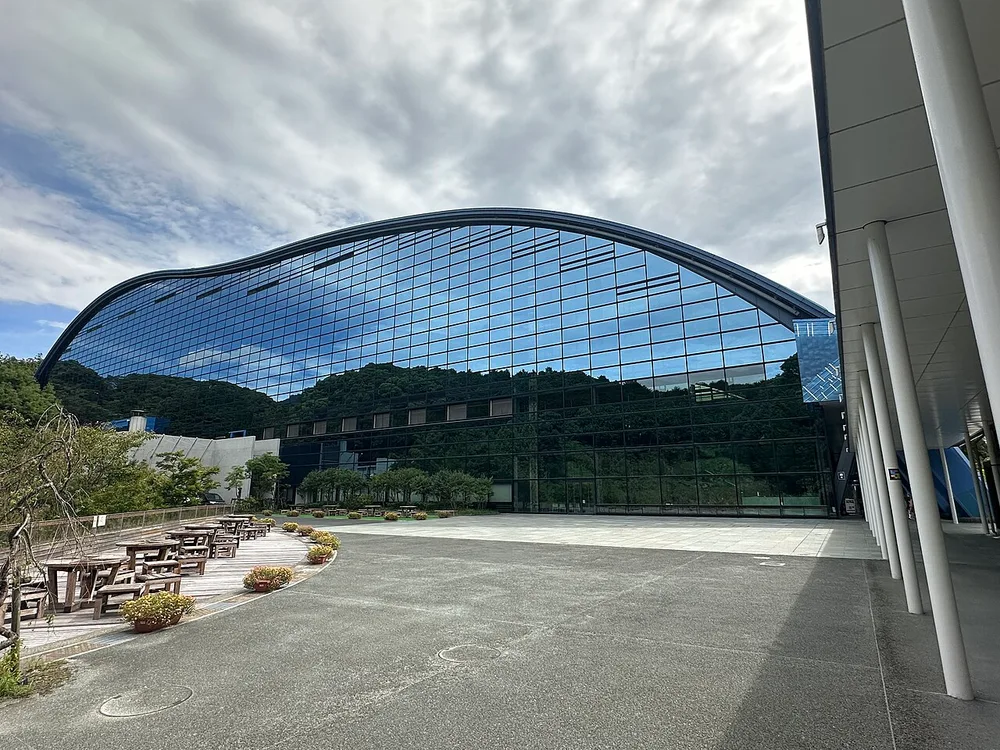
The current Cultural Exchange Exhibition admission is ¥700 for adults and ¥350 for university students. High school students and younger visitors, people under 18, and those aged 70 or over enter free with documents showing eligibility and date of birth. University students show student ID at the ticket desk. School students and visitors using age-based free entry show the relevant proof at the gallery entrance. Budget by each family member’s category: adults buy tickets, while eligible children enter with proof.
Third-floor special exhibitions have their own dates and prices. “Himiko’s Mirrors,” running October 31, 2026–January 11, 2027, has same-day admission of ¥2,000 for adults and ¥1,200 for university students. High school students and younger visitors, or those under 18, enter free. The special exhibition ticket also includes the fourth-floor Cultural Exchange Exhibition. A limited-quantity pair of adult tickets costs ¥3,600; two people can share the pair, or one person can use them on two visits. These tickets are sold only on site during the exhibition, with no advance sales, refunds or resale. If mirrors and ancient kingship interest you, give this exhibition the main time slot of your day.
During “Himiko’s Mirrors,” hours are 9:30–17:00 on Sundays and Tuesday–Friday, with last admission at 16:30. Saturdays extend to 19:00, with last admission at 18:30. Mondays are normally closed. The museum opens on November 23 and January 11, and closes on November 24 and December 24–31. These are the arrangements for this 2026–2027 exhibition. For other dates, use the visitor information and annual calendar. Choose a Saturday during the exhibition if you want longer gallery time, but the first-floor children’s activities still end at 17:00.
The first-floor Ajippa is a free hands-on gallery introducing cultural exchange through instruments, toys and crafts. It lets children engage through touch and sound. The official hours notice lists 9:30–17:00, including on late-opening days, with the same closed days as the museum. Reservations are not accepted; come back later if it is full. Families whose children are most interested in this space can come here after the shrine, then have adults take turns visiting the upstairs galleries.
When the combined ticket saves money: check all three museums’ closed days first
Adults planning the Treasure Hall, Kanko Historical Museum and Cultural Exchange Exhibition can buy the ¥1,000 combined ticket. Separate admission totals ¥500 + ¥200 + ¥700 = ¥1,400, so it saves ¥400. Even for just the Treasure Hall and Cultural Exchange Exhibition, separate admission is ¥1,200, so the saving is ¥200. Buy it at either shrine museum or on the national museum’s first floor, wherever you arrive first, rather than making an extra trip for tickets.
For university students, children and visitors aged 70 or over, calculate individual eligibility first. The combined ticket is sold only in the general-admission category. The Cultural Exchange Exhibition already admits high school students and younger visitors, people under 18, and those aged 70 or over free; university admission is ¥350. For example, two adults visiting all three museums with one elementary school child can each buy a combined ticket. The child pays ¥100 at each shrine museum and enters the national museum free, for total admission of ¥2,200. This example excludes transport, special exhibitions and other spending.
The Treasure Hall displays collections related to Tenmangu and Michizane, historical documents and current art projects. Individual admission is ¥500 for adults, ¥200 for university and high school students, and ¥100 for elementary and junior high school students. Hours are 9:00–16:30, with last admission at 16:00. It closes Mondays, opens on national and substitute holidays, and has extra closures for exhibition changes. Prioritize it if the collections are your main interest; it is close to the main sanctuary route.
The Kanko Historical Museum presents Michizane’s life through scenes with dressed Hakata dolls, along with festival photographs and ritual objects. Hours are also 9:00–16:30, with last admission at 16:00, but its regular closed days are Tuesday and Wednesday. Individual admission is ¥200 for adults, ¥150 for university and high school students, and ¥100 for elementary and junior high school students. If you arrive on Tuesday intending to see all three, remove this stop before comparing the remaining ticket options.
If you want a special exhibition such as “Himiko’s Mirrors,” buy that ticket for the national museum first, since it includes the Cultural Exchange Exhibition. Buy separate admission to the shrine museums according to your interests. The ¥1,000 combined ticket covers the Cultural Exchange Exhibition, not the third-floor special exhibition. With only half a day, there is no need to rush through all three for a saving of a few hundred yen. Morning worship, one museum and lunch on Omotesando before returning to Tenjin often make a more comfortable day than squeezing two museum entrances in before 16:00.
Umegae mochi on Omotesando: sit down for tea or take one with you
Umegae mochi are baked rice cakes with red bean filling and a plum-blossom imprint. Shops cluster along Omotesando, so choose one for a seated break rather than queuing at every shop. If you use the strolling ticket, find a designated redemption shop and check the eligible item before deciding on drinks or seating. Handle the voucher separately from any tearoom order.
Sabou Kikuchi is at 2-7-28 Saifu, with a recognizable red lantern outside. The first floor sells umegae mochi, and the second-floor tearoom pairs them with drinks. Its website lists weekday hours of 9:00–17:00 and weekend/holiday hours of 9:00–17:30, closed Thursdays. If the 25th falls on a Thursday, it closes on the preceding Wednesday instead. For children or older visitors who need to sit, make this a break midway through the visit instead of waiting until everyone has finished eating on their feet.
The shop lists ancient-rice umegae mochi on the 17th of each month and mugwort umegae mochi on the 25th. Choose a date around them if those flavors already interest you; the regular version is available on other days, so there is no need to rearrange an entire Fukuoka trip for a limited flavor. The shop’s own video shows filling and baking. Watching a short section with children before leaving helps them recognize the molds, red bean paste and browning in person. Buy cakes for your hotel just before leaving so you do not carry food around exhibitions all day.
Plan snacks and lunch separately. If you want the afternoon for a special exhibition, eat a full meal on Omotesando before entering the museum. If you only want a rice cake and tea, sit down after worship, then return to Tenjin for lunch. The museum FAQ generally prohibits eating and drinking indoors. Outdoor rest and seating areas allow food; take your trash with you. Families bringing food should use designated areas and leave the galleries for viewing exhibits.
If you planned an umegae mochi workshop in October–December 2026, note the Dazaifu City announcement: the baking experience at Dazaifukan is suspended from early October to late December for air-conditioning renovations. During this period, watch a shop’s production and enjoy a freshly baked cake instead of treating the municipal workshop as an available family booking. Buying from shops and joining the city-run workshop are separate activities.
The shop demonstrates filling and baking umegae mochi, a useful preview for a snack stop on Omotesando.
With young children or older visitors: nursing facilities, step-free routes and quiet breaks
Tenmangu lists both its nursing room and rest area as open 9:00–16:30. The entrance area of the nursing room has a diaper-changing bed and hot water for preparing formula, usable by all genders. Private women-only breastfeeding spaces are farther inside. If adults split duties, one can rest here with a child while the other visits the amulet counter or Treasure Hall. Use 16:30 as the latest meeting time for this stop; the shrine gates stay open later than these facilities.
The rest area has air-conditioning, vending machines and a ramp at the entrance, useful for a break from heat or cold. All five toilet locations in the grounds are wheelchair accessible; leave space for an accompanying person. The toilets beside the Treasure Hall allow an attendant of another gender. Free wheelchairs can be requested at the shrine office or information office. Follow the official blue step-free route and let other family members cross the bridges for photos; the whole group need not take the same steps.
The museum’s first floor also has a nursing room. Women’s and multipurpose toilets have diaper-changing tables. Ask staff about borrowing a stroller or wheelchair. Strollers are generally allowed on the third and fourth floors, but access can be restricted if crowded galleries create a safety concern for children. Families visiting a special exhibition can bring a carrier to accommodate both sleeping children and adult gallery visits. If you rely on a museum loan stroller, you still need to arrange the walk from the station to the shrine.
For visitors sensitive to light, sound, smells or crowds, the museum provides an Anshin Map showing sensory stimuli and rest points, a photographic preparation guide, and an Anshin Room for settling down. Read these resources on the accessibility page before you go, rather than searching for a quiet corner after arrival. If splitting the family, meet on the public first floor and start with short gallery visits, extending them according to everyone’s needs. Shrine worship, free activities and adult ticketed exhibitions can all fit into the same day.
Two adaptable itineraries: morning worship or an afternoon at the museum
For a half-day visit, arrive at Dazaifu Station around 09:00, follow the approach to Shinji Pond, and worship at the main sanctuary around 09:30. Then see Tobiume, the Romon gate and great camphor tree. Around 10:30, choose either the Treasure Hall or Kanko Historical Museum, or skip both and sit down for tea on Omotesando. Have lunch and buy souvenirs between 11:30 and 12:30, then return to Tenjin. Complete worship and the first walk early, then trim museum stops according to your interests.
For a full exhibition day, also arrive in the morning. After worship, see one main area of the Treasure Hall, have lunch around 11:30, then take the connecting passage to the national museum. Reserve 13:00–15:00 for the Cultural Exchange Exhibition or current special exhibition. With children, fit in first-floor Ajippa before or after the galleries. Return to Omotesando around 15:30 for cakes or tea, and walk to the station between 16:00 and 16:30. Plan dinner near your Fukuoka hotel. If the special exhibition is extensive, shorten the morning’s shrine museum visit to keep the afternoon free.
To visit both shrine museums and the national museum on one day, start with the shrine museums, whose last admission is 16:00, then spend the afternoon at the national museum. During a special exhibition with late Saturday hours, you can leave it until later. The first-floor activities and shrine nursing/rest facilities still have separate closing times. Adults may stay late in galleries, while young children’s feeding, diaper changes and return journey follow their own routine. One adult can take the children back to Fukuoka earlier if necessary.
For a bus return, check the queue and departure times when you reach the station forecourt. If the wait is longer than expected, take Nishitetsu to Tenjin and connect to city transport. If you bought the digital return ticket for the outward trip, keep using its Nishitetsu return portion. If you plan to shop in Tenjin that evening, make Nishitetsu Fukuoka Station the start of your dinner plans instead of returning to Hakata and traveling back to Tenjin again.
Plum blossoms, autumn and closed days: choose the order around what is open
For plum blossoms, check Tenmangu’s current flowering reports first. Tobiume stands to the right of the main sanctuary, while other plum trees vary in species and location and can be at different stages on the same day. Plant enthusiasts can continue after worship toward open gardens and teahouses. If seeing Tobiume is enough, stay with the main route. During blossom season, put the museum in the afternoon and use good morning weather for the grounds and pond.
Check the exact closed areas before planning autumn woodland walks. From October 26–30, 2026, the Tenjin Forest conservation notice closes the areas around Susan Philipsz’s “The Trees Listen” and Simon Fujiwara’s “The Problem of Faith,” as well as the walking path connecting to Tenkai Inari Shrine. The artworks in that area cannot be viewed during the closure. The original October 27 start was corrected on October 18 to October 26. On those dates, replace the art walk with the main shrine and museums, and do not cross the closure to reach Inari Shrine.
On Mondays, the national museum and Treasure Hall are normally closed. Keep the shrine and Omotesando, then check that day’s opening arrangements for Kanko Historical Museum. On Tuesdays and Wednesdays, Kanko Historical Museum has its regular closure, while the national museum and Treasure Hall are usually exhibition options. For holiday periods, use each museum’s official calendar. Substitute closed days such as November 24 mean that a Tuesday does not automatically guarantee entry to the national museum.
If it is raining but walking remains practical, shorten the shrine visit to the main sanctuary and part of the pondside, then follow the passage to the museum and eat on Omotesando. If the museum is also closed, make a half day of the shrine and one open shrine museum, then return to Fukuoka earlier. There is no need to replace the museum’s two hours entirely with shopping. In strong wind, heavy rain or transport disruption, swap your Dazaifu day with a Fukuoka city day so the trip still has enough time for worship and exhibitions.
A few useful answers
How do I get to Dazaifu Tenmangu from Fukuoka?
The Nishitetsu train from Tenjin takes about 30 minutes. Change to the Dazaifu Line at Nishitetsu Futsukaichi unless your train runs direct. From Hakata Bus Terminal, the Tabito bus takes about 40 minutes to Dazaifu Station and requires no reservation.
Should I spend a half day or a full day in Dazaifu?
Allow 3 to 4 hours after you arrive for Dazaifu Tenmangu, Omotesando and an umegae mochi stop. Set aside 6 to 7 hours, including lunch in Dazaifu, if you plan to visit the Kyushu National Museum exhibitions. Add travel time to and from Fukuoka separately.
Can I pray in front of the main sanctuary at Dazaifu Tenmangu again?
Dazaifu Tenmangu reopened the area in front of its main sanctuary for worship on September 19, 2026. You can pray there for free without a reservation. For a formal prayer service, go to the shrine’s prayer reception desk.
When is Dazaifu’s combined museum ticket worth buying?
The ¥1,000 adult ticket saves ¥400 if you visit the Treasure Hall, Kanko History Museum and the Kyushu National Museum’s Cultural Exchange Exhibition. You save ¥200 if you visit just the Treasure Hall and Cultural Exchange Exhibition. A special exhibition ticket also includes the Cultural Exchange Exhibition.
Official information and references
Sources used in this guide.
- Dazaifu Tenmangu: worship hours
- Dazaifu Tenmangu: worship in front of the main sanctuary resumes September 19, 2026
- Dazaifu Tenmangu: grounds map and buildings
- Dazaifu Tenmangu: access
- Nishitetsu: April 2026 fare revision
- Kyushu MaaS: Dazaifu digital strolling ticket
- Nishitetsu: Dazaifu Liner Bus Tabito
- Nishitetsu: April 2026 bus payment discounts
- Kyushu National Museum: photo walking guide from Dazaifu Station
- Dazaifu Tenmangu: worship and goshuin
- Dazaifu Tenmangu: amulets
- Dazaifu Tenmangu: FAQ and photography rules
- Kyushu National Museum: visitor information, Cultural Exchange Exhibition admission and combined ticket
- Kyushu National Museum: Himiko’s Mirrors
- Kyushu National Museum: Ajippa
- Kyushu National Museum: Ajippa 17:00 closing notice
- Dazaifu Tenmangu: Treasure Hall
- Dazaifu Tenmangu: Kanko Historical Museum
- Sabou Kikuchi: shop and tearoom
- Sabou Kikuchi: umegae mochi and limited flavors
- Kyushu National Museum: FAQ
- Dazaifu City: suspension of the umegae mochi workshop
- Dazaifu Tenmangu: nursing room and rest area
- Dazaifu Tenmangu: wheelchairs and step-free routes
- Kyushu National Museum: accessibility and family facilities
- Dazaifu Tenmangu: October 26–30 path closure