Compare a half-day harbor walk, a family railway day and a full Kanmon Strait loop. Find free and paid areas, the observation room, waterfront food, the pedestrian tunnel and 2026 transport tickets.
- Region & Focus
- Kitakyushu and Mojiko
- Reading Scope
- 35 min read · 16 chapters · 4 Q&As
- Official Verification
- 29 official sources checkedUpdated November 22, 2026
- Key Topics
- NeighborhoodsRail travelFood
Chapter Route Map (tap any stop)
- Half a day for Mojiko’s harbor; a full day to cross the Kanmon Strait
- Hakata to Mojiko: change at Kokura and stay on past Moji
- Buildings by the station: passenger travel and hospitality
- Former Moji Customs and Dalian Friendship Memorial Hall: worthwhile free stops
- Blue Wing bridge’s 20-minute openings: allow time to watch or walk around
- The 103-meter observation room: read the geography by day or stay for dusk
- Strait museum or railway museum: choose the sea or the trains
- A free extension west: the Former Dalian Route Terminal
- Waterfront lunch: sit down for a meal or take a snack to the harbor
- Shiokaze-go to Mekari: a 10-minute train ride, then another 500 meters
- The 780-meter undersea walkway: choose a one-way crossing or a return walk
- The 2026 Clover Ticket: one ride on each of three services
- Mimosusogawa to Karato and a ferry back: see the district from the water
- Three routes to choose from: harbor buildings, family railways or the strait loop
- Attraction passes and children’s ages: total the admissions you will actually use
- Dusk and seasonal lights: plan the return before the final photo
- Quick Q&A
Allow half a day for the historic buildings and harbor outside Mojiko Station. For Mekari, the undersea pedestrian tunnel and a ferry back from Karato, reserve a full day. Choose a main theme—architecture, family railway activities or the cross-strait loop—before planning. A 10-minute sightseeing train, a 15-minute tunnel walk and a 5-minute ferry ride do not add up to a 30-minute visit to both shores.
Half a day for Mojiko’s harbor; a full day to cross the Kanmon Strait
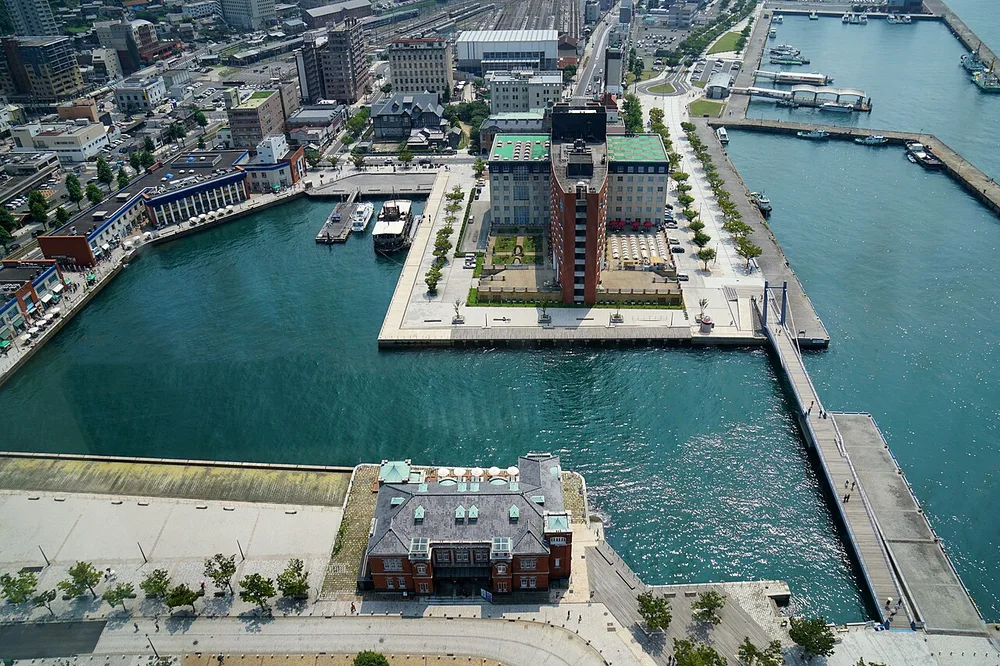
A stretch of coast separates Mojiko’s harbor district from the Kanmon pedestrian tunnel entrance, requiring another ride or walk. The Western-style buildings near the station, Blue Wing bridge, Former Moji Customs and observation room fit into one walking circuit. The pedestrian entrance at Mekari lies to the northeast; reach it by sightseeing train, bus or on foot. If you want to walk under the sea and return by ferry from Shimonoseki, make the cross-strait loop the day’s main activity and keep just one or two favorite harbor buildings.
With half a day, start and finish at Mojiko Station. See the Former Moji Mitsui Club and Former Osaka Shosen building, then follow the water around the First Boat Basin toward Blue Wing bridge and Former Moji Customs. Finish with a restaurant or the observation room. Comparing the buildings and boats is part of the appeal; you need not buy admission to every gallery. If you arrive in the afternoon, visit places that close at 17:00 first and save the later-opening observation room for afterward.
With a full day and an interest in walking, do a short harbor route in the morning. After lunch, head to Mekari, walk through the tunnel to Mimosusogawa in Shimonoseki, take a bus to Karato, and return to Mojiko on the Kanmon ferry. Families interested in railways can instead spend the morning at Kyushu Railway History Museum and take a Shiokaze-go return ride in the afternoon, leaving out the crossing. Crossing the strait, visiting all five paid attractions, eating at two popular restaurants and waiting for night views calls for two days. Each activity needs time on site; shaving a few minutes off transport will not combine them comfortably.
The fares and opening information below were checked through October 26, 2026. If you are still deciding how long to stay in Fukuoka, read three days in Fukuoka and alternative day trips, then give Mojiko a full daytime slot.
Compare a half-day harbor walk, a family railway day and a full Kanmon Strait loop. Find free and paid areas, the observation room, waterfront food, the pedestrian tunnel and 2026 transport tickets.
Hakata to Mojiko: change at Kokura and stay on past Moji
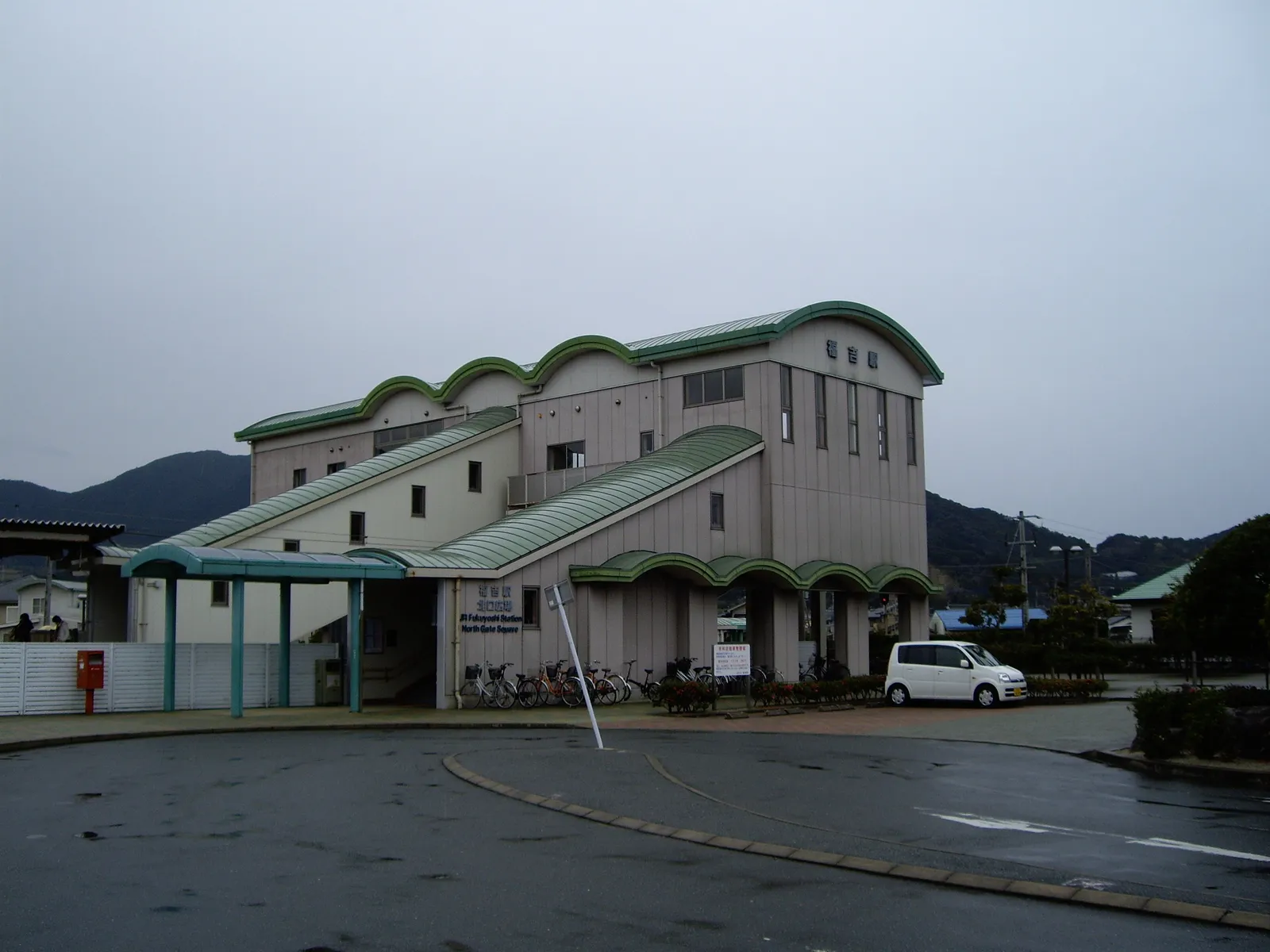
From Hakata, take the Sanyo Shinkansen to Kokura, then change to the JR Kagoshima Main Line for Mojiko. Alternatively, take a conventional-line limited express from Hakata to Kokura and connect to a local train. On the JR Kyushu route map, Kokura, Moji and Mojiko are three distinct stations. For the harbor walk, your destination is the terminus, Mojiko Station. Moji Station is in another district; getting off there adds an unplanned walk to the historic area.
If using a JR Kyushu Rail Pass, check the railway operator first. The Hakata–Kokura Sanyo Shinkansen belongs to JR West and is outside JR Kyushu Rail Pass coverage. For eligible conventional trains, follow the rules for your pass version, travel date and seat type. The official JR Kyushu Pass coverage chart is more useful than assuming all trains geographically within Kyushu are covered. If staying in Tenjin, also allow for the subway trip and transfer to Hakata.
Treat the two return train legs separately too. First take a conventional train from Mojiko toward Kokura, then connect to your chosen Shinkansen or limited express. With a reserved seat, leave time to find the platform and change trains at Kokura. If you have a dinner reservation in Hakata, choose your departure from Mojiko first and work backward to the last activity. The observation room’s 22:00 closing time does not leave unlimited time for another dinner in Fukuoka.
Buildings by the station: passenger travel and hospitality
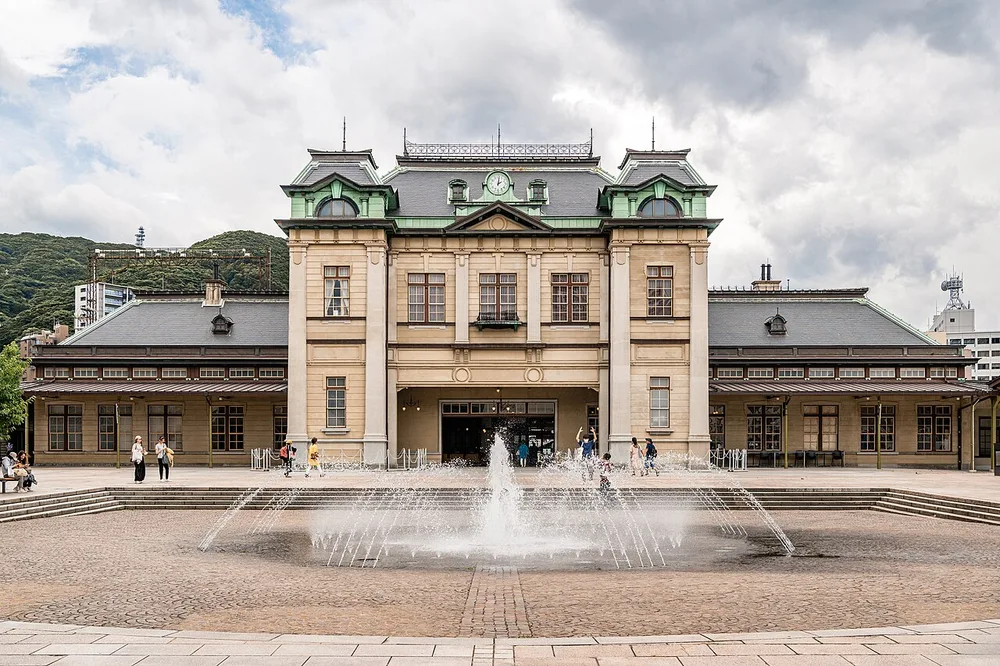
Kitakyushu’s cultural property records date the current Mojiko Station, its second station building, to 1914. The Western-style timber-and-stucco structure, two-story central section and former VIP room reflect its role as a port transport hub. After arriving, view the whole facade from the station plaza, then identify the central entrance and wings. This explains why the station is itself an attraction better than rushing straight from the gates to another little train. It remains a working station, so keep ticket gates, entrances and luggage routes clear while taking photos.
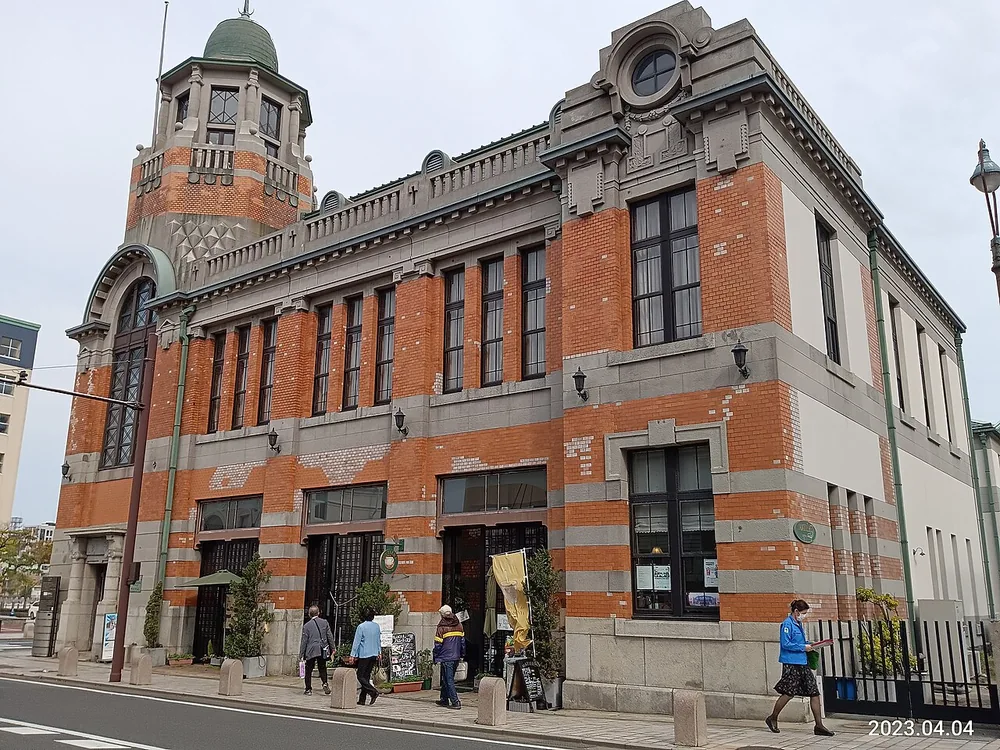
Recognize the Former Osaka Shosen building by its orange walls and octagonal tower. Built in 1917 as the company’s Moji branch, it served overseas routes as a passenger waiting area and shipping office. Notice the contrasts between the white stone, walls, roof windows and tower. For graphic artwork, visit the first-floor Seizo Watase Gallery. Current visitor information lists 9:00–17:00. General building areas are free; gallery admission is ¥150 for adults and ¥70 for elementary and junior high school students. The gallery closes for two additional exhibition-change days each year.
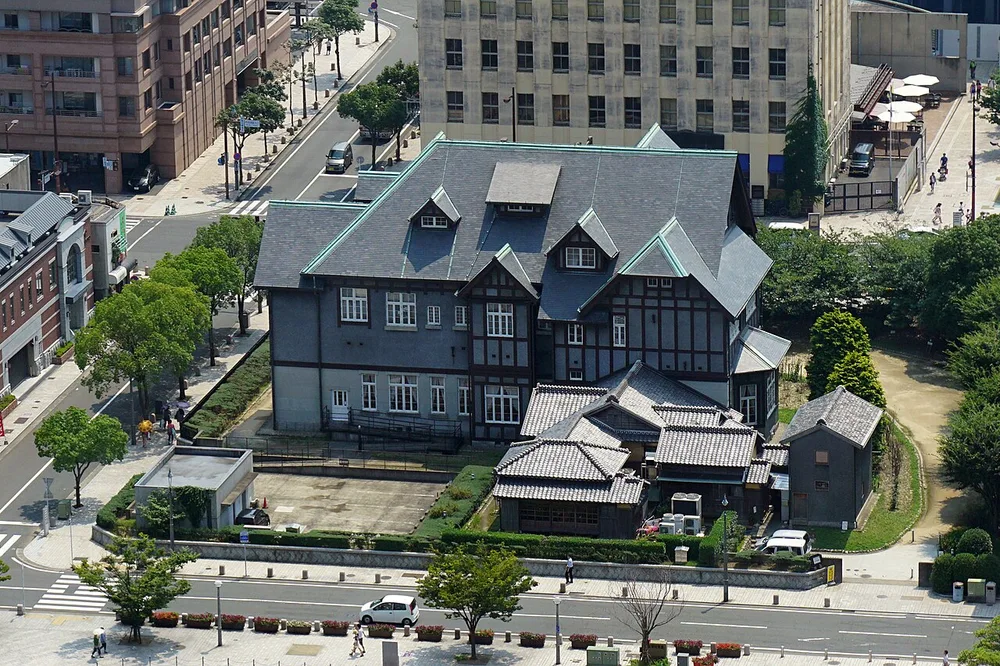
On the other side, the Former Moji Mitsui Club was built in 1921 as a social and reception facility for Mitsui & Co. and later relocated to its present station-front site. Its dark timber framing, window frames and stained glass offer a different focus from Osaka Shosen’s harbor-facing office. The second floor contains the Einstein and Fumiko Hayashi memorial rooms. The opening information lists 9:00–17:00, with charges only for the second floor: ¥150 for adults and ¥70 for elementary and junior high school students. If you want just the exterior and first floor, save paid viewing time for another attraction that interests you more.
Plan food separately from the building visit. The Former Moji Mitsui Club’s previous restaurant tenant ceased trading on August 31, 2026. The closure announcement says details of a new restaurant will follow. For now, visit for the architecture and second-floor rooms, then choose a nearby lunch spot with current operating information instead of relying on old travel accounts of the club restaurant’s set meals.
Former Moji Customs and Dalian Friendship Memorial Hall: worthwhile free stops
Walk from the station toward the water and follow the harbor to Former Moji Customs. Completed in 1912, this red-brick building once handled the busy port’s trade and now contains customs information displays, rest space and a cafe. The official building guide lists 9:00–17:00 and free admission. Look at the brickwork, stone and surviving interior decoration, then watch boats and the bridge from the windows. It makes an easy stop during a walk without needing a major museum booking.
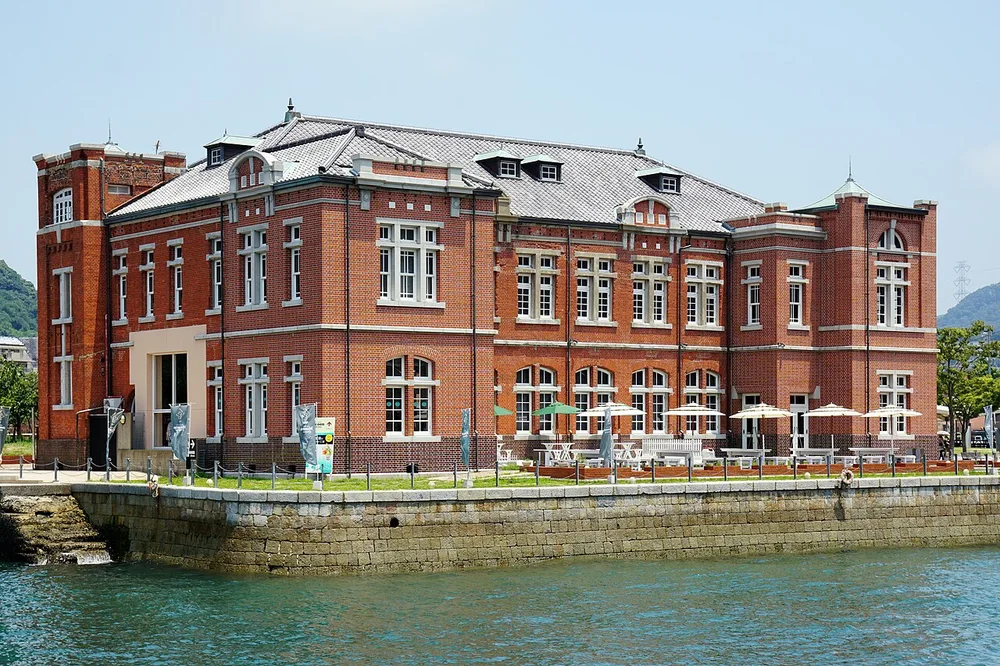
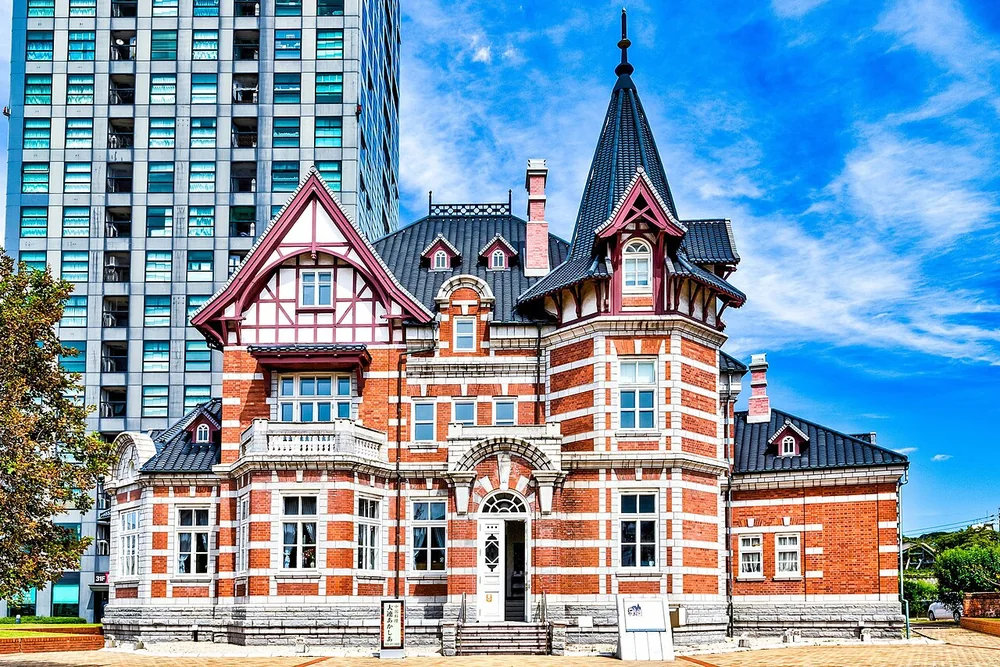
If port history interests you, compare the customs building with Former Osaka Shosen: one handled goods, taxes and port administration, while the other connected passengers and shipping routes. Read the explanations of their functions, then look at doors, windows, seaward orientation and the spaces that once accommodated travelers. This gives the district more continuity than simply photographing each building’s name. With limited time, enter one and enjoy the other from outside.
The nearby Dalian Friendship Memorial Hall was built in 1994 for friendly exchanges between Kitakyushu and Dalian. Its exterior was modeled on the Chinese Eastern Railway Steamship Company office in Dalian. Unlike the preserved customs building, it is a later commemorative facility. The official introduction describes a second-floor exchange lounge and Dalian information area, with the third floor used for community activities. General hours are 9:00–17:00, with free admission. “International Friendship Memorial Library” is its former name, useful to recognize on maps.
Combine this area with the observation room on the same side of the harbor to reduce backtracking via the station. If you ate near the station, pause at customs and the memorial hall before deciding whether to go upstairs for the strait view or continue along the coast to Mekari. The cross-strait route takes you away from the central harbor, so finish your chosen interiors first. By an early-evening return, many buildings can only be viewed from outside.
Blue Wing bridge’s 20-minute openings: allow time to watch or walk around
Blue Wing Moji crosses the First Boat Basin and is a 108-meter pedestrian drawbridge. You can walk across when it is lowered; when raised, it lets boats through. It is both a viewpoint and a connection between the harbor’s shores. If your restaurant, meeting point or boarding place is across it, crossing time is part of the route. Do not rush past barriers as the bridge starts opening to save a detour.
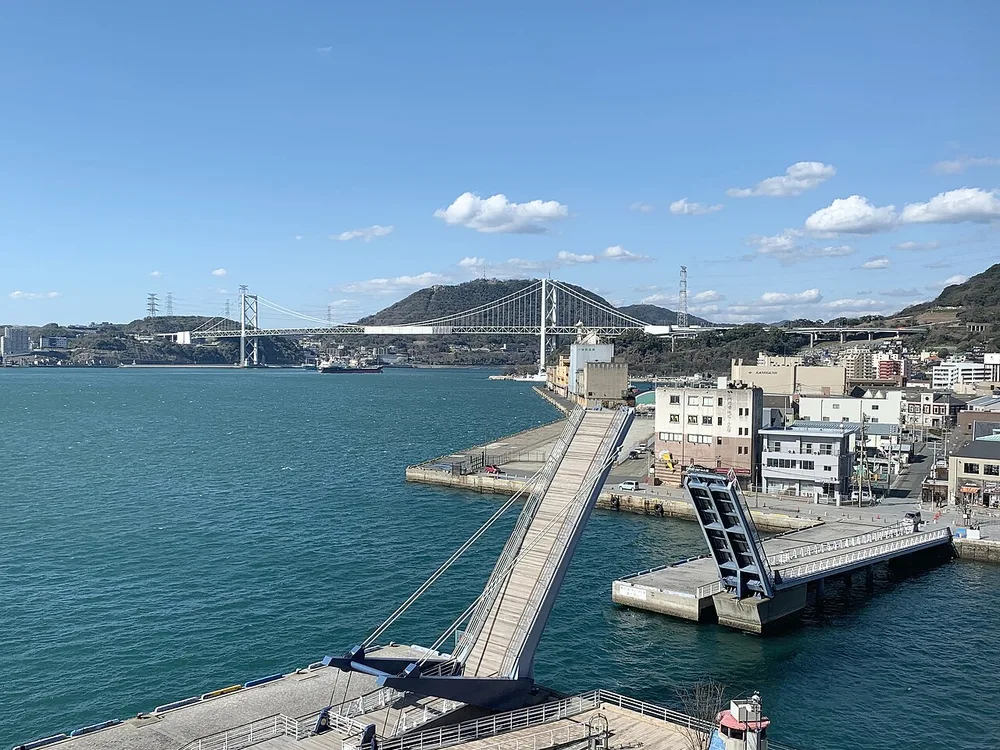
Fukuoka’s official tourism information lists daily opening times of 10:00, 11:00, 13:00, 14:00, 15:00 and 16:00, and the bridge lowers again at 10:20, 11:20, 13:20, 14:20, 15:20 and 16:20. Stand by the water before one of these times if you want to watch it rise. There is no equivalent 12:00 opening. To walk straight from one shore to the other, avoid these intervals.
Stay on the bank to photograph the bridge slowly rising, then compare its scale with the customs building and water. For street views, wait for it to lower and let the crossing crowd pass. Treat the wait as a break instead of racing to another building on both sides of the opening. If some people do not want to wait, agree on a recognizable meeting point on the same bank. Once the bridge rises, “beside the bridge” becomes two different locations.
The 103-meter observation room: read the geography by day or stay for dusk
To understand the cross-strait loop’s direction, the Mojiko Retro Observation Room is more useful than adding another ground-level photo stop. It occupies the 31st floor of a tower designed by Kisho Kurokawa, at a height of 103 meters. Through the windows, identify Mojiko, Kanmon Bridge and Shimonoseki across the water. Find the harbor you just walked around, then follow the coast toward Mekari to distinguish the small station-area circuit from the wider strait.
The official hours and fares list 10:00–22:00, last admission 21:30, with ¥600 admission for adults and ¥300 for elementary and junior high school students. Adult Kitakyushu residents pay ¥400 with the required proof; ordinary visitors should budget ¥600. Fiscal 2026 also has maintenance closures, with the next listed date January 19, 2027. For a trip across the year-end, check it separately from the other attractions’ closure calendars.
The cafe area currently opens 10:30–21:30, with last orders at 21:00. Rest upstairs if you want a drink and a seat. For a larger meal, eat in the district before coming up. At night, indoor reflections can appear in the glass; check angles and space by the window, and avoid bright lighting that disturbs other viewers. Distant boats and streetlights also reward putting your phone away for a while.
Choose daylight or night according to your route. On a cross-strait day, going up early helps with directions but uses time needed for buildings and transfers. For an architecture walk, put the observation room around sunset and finish the 17:00-closing buildings first. Staying once to watch the sky and harbor lights change means less backtracking than returning after dinner for a second visit. Afterward, go straight to dinner or the station instead of chasing exhibitions that have closed.
Strait museum or railway museum: choose the sea or the trains
On the harbor’s west side, Kanmon Strait Museum explores the strait’s nature, history and culture, useful background before walking to the undersea tunnel. The museum guide says the observation deck, Kaikyo Retro Street, cafe area and some public spaces are free. Paid exhibition admission is ¥500 for adults and ¥200 for elementary and junior high school students. General hours are 9:00–17:00, with last admission at 16:30. The next listed regular closures are November 10, 2026 and January 12, 2027.
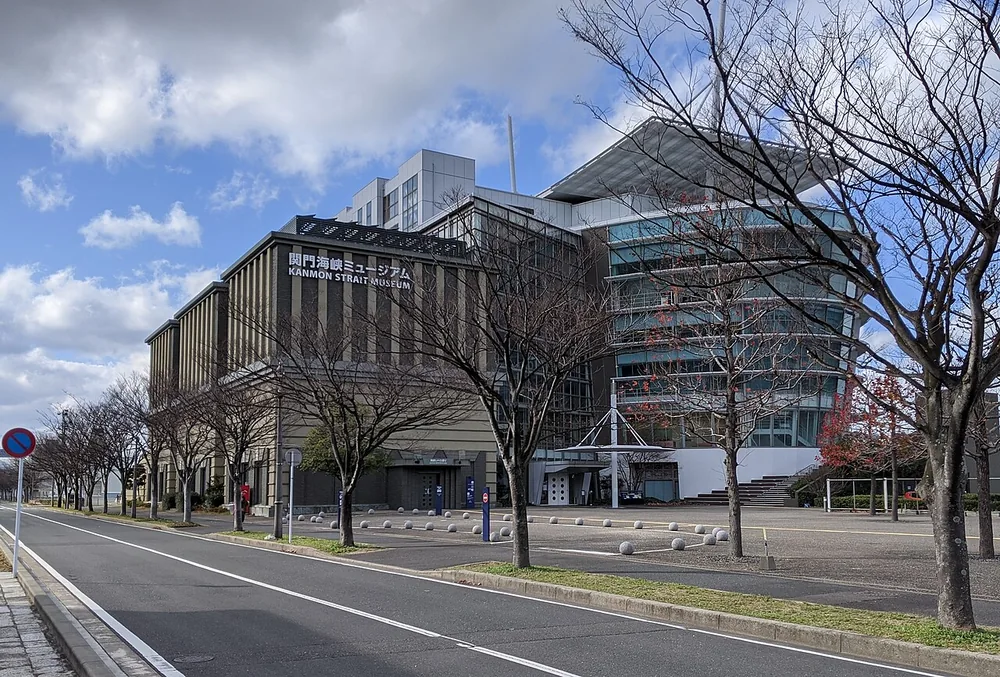
With children, check the Kaikyo Children’s Plaza rules first. Admission costs ¥100 from age one, and use is limited to children through sixth grade. The play equipment is for ages three and up. On weekends, holidays and extended holiday periods, sessions are limited to 40 minutes. Sneakers are required, including for adults accompanying preschool children. The museum has a nursing room, multipurpose toilets and a rest room. Plan indoor play here rather than looking for a place to recover only after the whole strait loop.
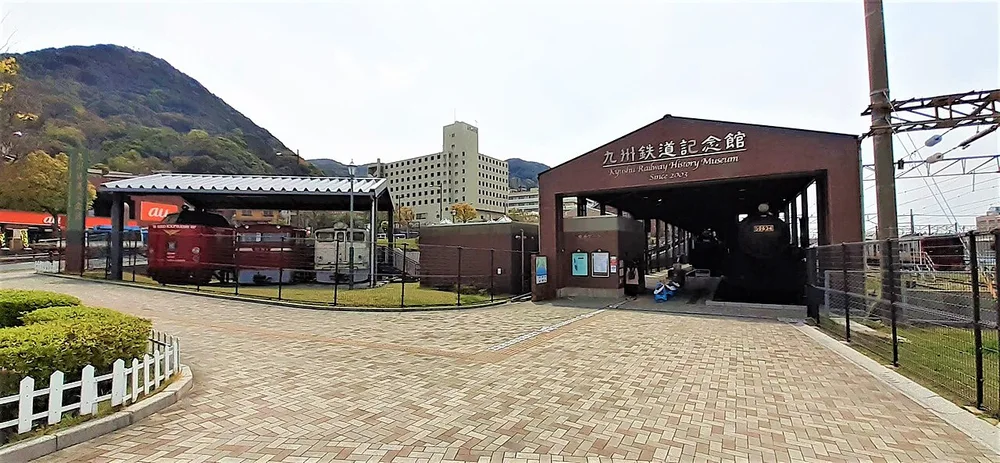
For real rolling stock and driving activities, choose Kyushu Railway History Museum. The fares and visitor information effective April 2026 list ¥500 for adults, ¥250 for ages four through junior high school, and free entry under four. Hours are 9:00–17:00, last admission 16:30, with 10 irregular closure days each year. The museum’s basic suggested visit starts at 60 minutes, or 30 minutes for a quick route. Families needing time to queue for activities, photograph trains and rest should add to those minimums.
The museum’s miniature railway costs ¥300 per vehicle per ride, for up to three people. It is separate from the Shiokaze-go train to Mekari. Two adults and an elementary school child pay ¥1,250 general museum admission, or ¥1,550 including one miniature train. General paid exhibition admission at the strait museum totals ¥1,200 for the same group, with the Children’s Plaza extra. Choose by your child’s interests to see which cost is useful. If crossing the strait that afternoon, limit the morning to one museum and leave time for lunch and travel to the tunnel entrance.
A free extension west: the Former Dalian Route Terminal
Opposite the strait museum, the Former Dalian Route Terminal is a passenger terminal completed in 1929. Compared with the friendship memorial on the harbor’s east side, it shows the practical functions of passenger travel: baggage inspection, waiting and luggage handling within one building. Surviving floor and baggage-inspection lettering near the entrance, geometric decoration and the use of natural light relate to its former use.
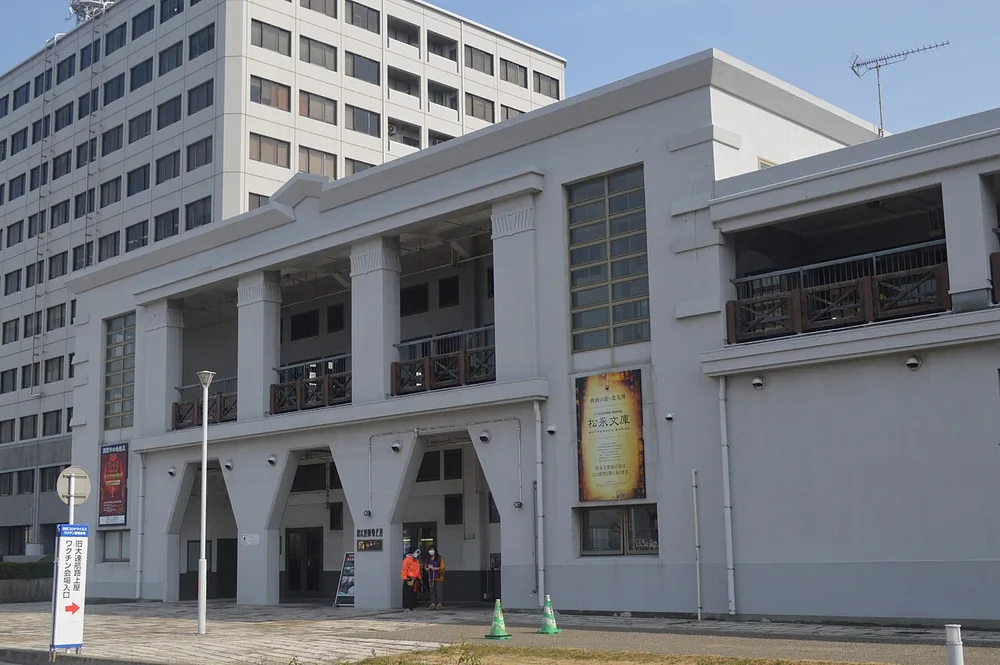
Official visitor information gives general hours of 9:00–17:00, last admission 16:30, with free entry. The 22:00 closing time for rented spaces applies to a different use. The next listed whole-building regular closures are November 17, 2026 and February 8, 2027. Inside, Matsunaga Bunko displays film and performing-arts materials. It closes Mondays, or the following day after a Monday holiday, so check that room separately even if the building opens on Monday.
Place this stop before or after the strait museum as an architectural extension on the same side. Going from the station to the railway museum, then to the east-side customs building after lunch, then back west to this terminal adds another crossing of the central harbor. Choose either the west-side museum and terminal or the east-side customs building and observation room before leaving, and add the other side only if time remains on your return. For photos, a short exterior stop may suffice. Reserve a fuller interior visit if old films or passenger transport history interest you.
Waterfront lunch: sit down for a meal or take a snack to the harbor
Mojiko baked curry makes a full meal; it need not become part of a checklist with every dessert shop. BEAR FRUITS Mojiko Main Store, on the station-front west waterfront, specializes in baked curry with fruit and spice flavors. The operator’s website lists the main and sister stores, whose food and spaces differ. Choose the main store if baked curry is your goal. With young children and a longer seated break in mind, compare MILK HALL MOJIKO, run by the same company. Keep the branch name in your plans so navigation does not lead to a different door.
MILK HALL MOJIKO is on the first floor of the Nissan Senpaku Building, serving Western-style Japanese meals and Mojiko pudding. The operator also lists a children’s space, changing table and baby food. The Fukuoka tourism page gives general hours of 10:00–20:00, last orders 19:30, extending on Fridays, Saturdays and the day before a holiday to 21:00, last orders 20:30. Families can combine a diaper change, meal and rest here, then choose a shorter afternoon walk.
The waterfront Kaikyo Plaza suits anyone who wants to compare food and souvenirs in one place. On the west building’s second floor, Kawara Soba Takase Mojiko Retro serves tile-cooked soba from 11:00–20:00. It closes Wednesdays, with adjustments when Wednesday is a holiday, and offers a different lunch option. On the west building’s first floor, Bana1 sells banana sweets and drinks from 10:00–20:00. It makes a small dessert stop without adding a full afternoon tea.
Kaikyo Plaza has a sea-facing terrace for takeaway food and a harbor break. In wind or rain, choose an indoor restaurant. For the strait loop, lunch before setting out for Mekari is easiest to schedule. If saving the main meal for Karato, eat a modest snack before leaving Mojiko so you are not finding buses while dealing with hungry children across the water. Restaurant queues and serving speed affect the time left for buildings. Switch meals if a popular restaurant’s queue is too long.
The official Kitakyushu video below introduces the link between bananas and Mojiko. The city’s description says the Moji Ward Office produced it about banana auction culture and the port town. Learning that history before choosing pudding, a banana drink or a waterfront dessert gives you more to remember about the port than simply following souvenir lists.
Produced by the Moji Ward Office, this video introduces Mojiko through its banana auction culture. Published on Kitakyushu City’s official YouTube channel.
Shiokaze-go to Mekari: a 10-minute train ride, then another 500 meters
For the Kanmon pedestrian tunnel, set your destination to the Moji-side pedestrian tunnel entrance. Searching only for Kanmon Tunnel can lead to the road tunnel. If Shiokaze-go is running, board at Kyushu Railway History Museum Station beside JR Mojiko Station and ride to the terminus, Kanmon Kaikyo Mekari Station. The operator’s route guide marks another roughly 500 meters, or 10 minutes on foot, to the tunnel entrance. This remains above ground; the train does not deliver you directly to the undersea elevator.
The full Shiokaze-go journey takes 10 minutes. Its fiscal 2026 operating calendar mainly covers weekends, holidays and selected weekdays, with additional continuous periods during Golden Week and summer vacation. If no train is scheduled on an ordinary weekday, plan a bus or walk instead. A return sightseeing-train ride suits a trip ending at Mekari before returning to the harbor; for the strait loop, ride one way and continue to Shimonoseki. The twilight trolley has separate dates and times. Treat it as an extra service rather than your only ordinary afternoon return option.
The standard one-way fare is ¥500 for adults and ¥250 for elementary school children. Each adult may bring two preschool children free. Individual reservations are not accepted for groups of 11 or fewer. Buy an unreserved ticket, then queue; group reservations start at 12 people. Even with a day ticket, you must get off at the terminus and queue again for the return. A ticket does not reserve a seat on a particular departure.
Follow the official map’s ground-level route to the tunnel. Hilltop viewpoints are not required parts of the connection. For a close view of Kanmon Bridge, pause in a permitted coastal walking area while watching for vehicles and bicycles. If children are tired after leaving the train, rest on the Moji side and return to the harbor by train. After crossing, you still need to get from Mimosusogawa to Karato, so a “15-minute tunnel” is not a measure of all the energy still required.
The 780-meter undersea walkway: choose a one-way crossing or a return walk
Kanmon Strait Navi’s access information lists the pedestrian tunnel as 780 meters long, about 15 minutes each way, open 6:00–22:00 and free for pedestrians. Elevators at Moji and Shimonoseki descend about 60 and 55 meters respectively. The marked Fukuoka–Yamaguchi prefectural boundary inside is the familiar photo spot. The road tunnel, pedestrian tunnel and Shinkansen tunnel are separate passages; walkers need the pedestrian entrance.
Even going only to the prefectural boundary and back involves a substantial underground walk. Walking all the way across and back totals about 1.56 kilometers inside the tunnel, before surface walks and elevator waits. If underground spaces make you uncomfortable, walking stamina is limited or a child no longer wants to walk, switch to a short coastal stroll before entering the elevator. For a single Kyushu-to-Honshu crossing, walk one way to Shimonoseki and return by ferry from Karato instead of repeating the tunnel to reach your station.
Bicycles and mopeds of 50cc or less cost ¥20 and must be pushed through the walkway. NEXCO West’s traffic FAQ lists mopeds of 50cc or less among vehicles using the pedestrian tunnel. The boundary is a popular photo spot; let other users pass, then take turns. There is no sea view underground. Save strait and ship views for the surface areas around the entrances and decide your next leg after leaving the elevator.
Both elevator halls have commemorative stamps, each supplying half of a complete design. Kanmon Strait Navi explains that you can obtain a Kanmon TOPPA certificate by following the locations and procedure on the stamp sheet. Pick up the sheet and stamp the first half before entering, then add the second on the other shore. Certificate reception hours differ from the tunnel’s 22:00 closing time, so complete the activity during the day for an easier visit. If you only want the walk, simply cross.
The 2026 Clover Ticket: one ride on each of three services
For the full loop, compare the Kanmon Strait Clover Ticket sold from January 10, 2026. It costs ¥1,000 for adults and ¥500 for children, including one ride each on Shiokaze-go between Kyushu Railway History Museum and Kanmon Kaikyo Mekari stations, the Sanden bus between Mimosusogawa and Karato, and the Kanmon Kisen ferry between Karato and Mojiko. You can reverse the direction. The pedestrian tunnel is already free; the ticket’s value is in connecting these three transport legs. It includes no museum or observation-room admission. Seats cannot be reserved, and no group discount applies.
This ticket suits a sightseeing-train outward ride, an undersea walk, a bus to Karato and a ferry back to Mojiko. If you want a Shiokaze-go return ride and Karato on another day, recalculate singles and day tickets. One ride on each service does not mean unlimited travel on one route. It also excludes the Nishitetsu bus between Mojiko Station and Mekari. On a weekday without Shiokaze-go, you cannot substitute that bus using the ticket. Choose this combination when you need these exact three legs.
The official page currently gives a validity end date of June 30, 2027. Sales points include Kyushu Railway History Museum Station, Kanmon Kaikyo Mekari Station, Kanmon Kisen ticket offices at Mojiko and Karato, and Mojiko Station’s tourist information office. Read the expiry date alongside each service’s operating days. A ticket may still be valid on a day with no regular Shiokaze-go service. The old digital version ended in March 2026; look for the current version’s name and contents.
If you are already in Karato and decide only to take the ferry to Mojiko, buying a single ferry ticket is simplest. If still near the station, compare the full-loop ticket with individual fares first. Confirm that day’s train and ferry operations before buying for your actual route. Ticket holders still queue normally, so leave a waiting interval for transfers.
Mimosusogawa to Karato and a ferry back: see the district from the water
The Shimonoseki end of the tunnel emerges at Mimosusogawa, not at Karato pier. The loop’s bus leg runs from the Mimosusogawa bus stop near the tunnel to Karato, so you need not walk the entire connection. Check direction and stops before boarding, then head to the Kanmon Kisen pier after arriving. Counting this connection within the tunnel’s 15-minute walk commonly leads to underestimating the whole loop.
The Kanmon ferry connects Karato pier and Marine Gate Moji in about 5 minutes. One-way fares are ¥400 for adults and ¥200 for elementary school children. Shimonoseki’s official tourism information lists roughly 20-minute daytime intervals. The sightseeing-train operator’s current package page further lists daytime Karato departures at :00, :20 and :40, and Mojiko departures at :10, :30 and :50. Early, late and first holiday departures differ; check Kanmon Kisen’s information for your day if returning at night.
Karato can be a meal and rest stop before the ferry back. If only part of the afternoon remains, keep time for your ferry and Fukuoka-bound train rather than adding every Shimonoseki attraction. The tunnel takes you below the strait; the return ferry reveals shipping traffic and the distance between shores. This is the clearest comparison in the loop. Boarding, disembarking and waiting at piers require more attention to children, strollers and belongings than the five minutes aboard. Follow crew directions.
If ferries are suspended, arrange onward transport from the shore you are on. From Shimonoseki, take a bus to Shimonoseki Station and use conventional JR trains through Moji, changing for Mojiko or Kokura as needed. If your luggage is in Mojiko, return to that storage point. Once rough seas or disruption break the loop, do not retrace the tunnel and rush every reservation merely to use the whole ticket. Establish a working way out, remove the remaining sightseeing and return to your accommodation base.
Three routes to choose from: harbor buildings, family railways or the strait loop
For a half-day harbor walk, arrive at Mojiko Station in the morning or around noon. See the station building, choose one paid area at Former Osaka Shosen or Mitsui Club, then have lunch. In the afternoon, follow the harbor past Blue Wing bridge and Former Moji Customs, finishing at the observation room or a cafe. If the 11:00 bridge opening fits, stop to watch; if you miss it, keep going in your planned direction. This route skips the tunnel and suits other plans in Kokura or Hakata afterward.
For a family railway day, spend the morning at Kyushu Railway History Museum, eat near the station, then take a Shiokaze-go return ride to Mekari. Leave the afternoon for queues, getting off at the terminus, a short walk and rejoining the return queue. Leave out the strait loop. If children prefer active play to trains, choose the strait museum and Children’s Plaza, then Blue Wing bridge after lunch. Choose one of these family days so you can get back on the train while children still have energy.
For a full strait day, see a short harbor stretch and one museum in the morning, eat lunch early, then take an afternoon Shiokaze-go to Mekari. Walk to the tunnel, cross to Mimosusogawa, take the Sanden bus to Karato and the ferry back to Mojiko. This puts the service with more limited operating days first, followed by bus and ferry. Do not start with the sightseeing train’s last departure. Starting the whole loop in the morning instead gives you more flexibility to decide on museums after returning.
With different interests, split up briefly within Mojiko harbor and meet at a specific restaurant or station point. For the cross-strait loop, do not casually send some people through the tunnel and others by boat without agreeing on a meeting point across the water. Plan the whole route around the slowest walker, especially with children or older visitors. With a fixed return train, keep optional stops such as a second building or extra dessert in the latter half. Complete timed transport and luggage collection first.
Attraction passes and children’s ages: total the admissions you will actually use
The Mojiko Retro Free Pass is valid for one day and costs ¥1,700 for adults and ¥720 for elementary and junior high school students. It covers Kanmon Strait Museum, Kyushu Railway History Museum, the observation room, the second floor of Former Mitsui Club and the Seizo Watase Gallery at Former Osaka Shosen. Ordinary adult admission to all five totals ¥1,900, saving ¥200 if you visit them all. The railway museum and observation room alone total ¥1,100 for an adult, below the pass price. Choose the places first, then the ticket, so a ¥200 saving does not displace lunch.
Ordinary elementary/junior-high admission to all five totals ¥890, so the pass saves ¥170. Preschool and elementary-age children need different calculations. The railway museum charges ¥250 from age four; other facilities’ elementary/junior-high rates do not automatically apply to all younger children. For ages four to six, calculate each facility’s actual single admission first instead of treating the school-age pass as a universal preschool ticket. The Children’s Plaza, miniature train, food and transport are extra.
For two adults and one elementary school child, the five-attraction passes cost ¥1,370 more than admission to just the railway museum and observation room, adding access to the other three. Whether to pay that difference depends on whether you want those places that day and whether the child can manage consecutive museums. For a mainly cross-strait visit, calculate transport and attraction tickets separately.
Rain also does not require filling all five pass stops. The strait museum and Former Dalian Route Terminal make a mostly indoor half day on one side. Another option combines the station-front buildings, lunch, customs and observation room. Outdoor walks still connect buildings, so choose a nearby group first and remove the long coastal walk and strait crossing. Maintenance and exhibition changes can close places on ordinary opening days. Avoid the listed closures, then decide between single admission and a pass.
| Visit | Total with singles or passes | What it covers |
|---|---|---|
| Railway museum + observation room | ¥2,750 | Separate admission to two attractions |
| Five-attraction Free Pass | ¥4,120 | Also includes the strait museum, Mitsui second floor and Osaka Shosen gallery |
| Difference | ¥1,370 | Decide whether you will visit the other three |
Dusk and seasonal lights: plan the return before the final photo
Daylight suits building details and understanding the strait’s geography. At dusk, stay by the harbor or in the observation room to watch water, windows and streetlights change. After 17:00, most buildings end general visits, naturally shifting the day toward food, walks and night views. Standing by the winter sea gets cold. Break the wait for darkness with a meal or indoor rest instead of staying at the waterfront all afternoon until the lights come on.
Kaikyo Plaza has announced 2026 Mojiko Retro Roman Tosai illuminations for November 14, 2026–May 23, 2027, with a lighting ceremony from 18:30 on November 14. The same page lists Kanmon Strait Candle Night on November 14 and 15, 17:30–21:00. The ceremony, two candle evenings and full seasonal illumination period are separate events. Choose the date for the one you want.
For night views, skip the afternoon crossing and instead arrive after noon for historic buildings and customs, dinner, then a short harbor walk or the observation room. If you have already completed the strait loop, confirm luggage collection and the JR return before deciding how much longer to stay.
A few useful answers
Is half a day enough for Mojiko, or should I spend the whole day?
Half a day is enough for a harbor walk past Mojiko Station, the Blue Wing bridge, and the Old Moji Customs House. Allow a full day to walk through the Kanmon pedestrian tunnel to Shimonoseki and take the ferry back to Mojiko from Karato.
What time does the Blue Wing bridge in Mojiko go up?
The Blue Wing bridge goes up daily to let boats through at 10 and 11 a.m. and at 1, 2, 3, and 4 p.m. It comes down 20 minutes later each time, so pedestrians can cross again.
How long does it take to walk through the Kanmon pedestrian tunnel?
The 780-meter Kanmon pedestrian tunnel takes about 15 minutes to walk one way. It’s free for pedestrians from 6 a.m. to 10 p.m., with elevators at both the Moji and Shimonoseki entrances.
How much is the Kanmon Strait Clover Ticket, and what does it cover?
The Clover Ticket costs ¥1,000 for adults and ¥500 for children. It covers one ride each on the Shiokaze train to Mekari, the Sanden bus from Mimosusogawa to Karato, and the ferry from Karato to Mojiko. The ticket is valid through June 30, 2027.
Official information and references
Sources used in this guide.
- JR Kyushu: railway route map
- JR Kyushu: Rail Pass types and coverage
- Kitakyushu City: Mojiko Station cultural property records
- Mojiko Retro official: Former Osaka Shosen
- Mojiko Retro official: Former Moji Mitsui Club
- Mojiko Retro official: Mitsui Club restaurant closes August 31, 2026
- Mojiko Retro official: Former Moji Customs
- Mojiko Retro official: Dalian Friendship Memorial Hall
- Fukuoka Tourism Association: Blue Wing Moji schedule
- Mojiko Retro official: observation room hours and fares
- Mojiko Retro official: Kanmon Strait Museum and Children’s Plaza
- Kyushu Railway History Museum: admission and visitor information from April 2026
- Mojiko Retro official: Former Dalian Route Terminal and Matsunaga Bunko
- BEAR FRUITS operator: Mojiko stores and family facilities
- Fukuoka Tourism Association: MILK HALL MOJIKO
- Kaikyo Plaza official: Kawara Soba Takase Mojiko
- Kaikyo Plaza official: Bana1 banana sweets
- Shiokaze-go: stations and the final 500 meters to the tunnel
- Shiokaze-go: fiscal 2026 operating days and timetable
- Shiokaze-go: one-way fares and visitor information
- Kanmon Strait Navi: pedestrian tunnel and cross-strait transport
- Shiokaze-go: 2026 Kanmon Strait Clover Ticket
- Shimonoseki official tourism: Kanmon ferry
- Mojiko Retro official: five-attraction Free Pass and combined tickets
- Kaikyo Plaza official: 2026 illuminations and Candle Night
- Shiokaze-go: children, unreserved seating and reservations FAQ
- Kitakyushu City: official Mojiko banana story video introduction
- NEXCO West: Kanmon Tunnel vehicle categories and pedestrian-tunnel pushing rules
- Kaikyo Plaza official: sea-facing terrace and shop layout