Compare a half-day harbour walk, a family railway day and a full Kanmon crossing, with free and paid areas, the observation room, waterfront food, the pedestrian tunnel and revised 2026 tickets.
- Region & Focus
- Kitakyushu and Mojiko
- Reading Scope
- 35 min read · 16 chapters · 4 Q&As
- Official Verification
- 29 official sources checkedUpdated 22 November 2026
- Key Topics
- NeighbourhoodsRail travelFood
Chapter Route Map (tap any stop)
- Half a day for Mojiko harbour; a full day for the Kanmon crossing
- Hakata to Mojiko: change at Kokura and stay on beyond Moji
- Two Western-style buildings by the station: passenger travel and hospitality
- Former Moji Customs and the Dalian Friendship Memorial Hall: worthwhile free stops
- Blue Wing Moji's twenty-minute openings: watch the lift and allow for a detour
- The observation room at 103 metres: read the landscape by day or watch dusk from one place
- Strait or railway museum: choose the subject that interests you
- A free extension west: the Former Dalian Route Terminal's waiting spaces
- Waterfront lunch: a seated meal or a snack with a sea view
- Shiokaze-go to Mekari: another 500 metres after the ten-minute ride
- The 780-metre pedestrian tunnel: one way or a return walk
- The revised 2026 Clover Ticket: one ride on each of three services
- Mimosusogawa to Karato and back by boat: see the harbour from the water
- Three routes to choose from: harbour, family railway day or strait crossing
- Museum passes and children's ages: add only admissions you will use
- Dusk and seasonal lights: arrange your return before the last photograph
- Quick Q&A
Allow half a day for the Western-style buildings and harbour near Mojiko Station. To add Mekari, walk through the undersea pedestrian tunnel and return by boat from Karato, allow a full day. Choose between architecture, family railway activities and a cross-strait circuit first. Adding a ten-minute sightseeing train, a fifteen-minute tunnel walk and a five-minute ferry does not mean you can visit both shores in half an hour.
Half a day for Mojiko harbour; a full day for the Kanmon crossing
A stretch of coast separates Mojiko's harbour district from the Kanmon pedestrian tunnel entrance, requiring another journey or a walk. The Western-style buildings by the station, Blue Wing Moji, Former Moji Customs and the observation room form one walking circuit. The tunnel entrance at Mekari lies to the north-east; choose a sightseeing train, bus or walk to reach it. If you want to walk under the sea and return by boat from Shimonoseki, make that circuit the day's main activity and keep just one or two favourite harbour buildings.
With half a day, start and finish at Mojiko Station. See the Former Moji Mitsui Club and Former Osaka Shosen Building, then follow the waterfront of the First Harbour Basin towards Blue Wing Moji and Former Moji Customs. Finish with a restaurant or the observation room. Comparing buildings and watching boats is the attraction; you need not buy admission to every gallery. If arriving in the afternoon, prioritise buildings that close at 17:00 and leave the later-opening observation room until afterwards.
With a full day and an interest in walking, complete a short harbour route in the morning, then after lunch go to Mekari, take the tunnel to Mimosusogawa in Shimonoseki, catch a bus to Karato and return by Kanmon ferry. Families interested in trains can instead visit Kyushu Railway History Museum in the morning and take a return Shiokaze-go ride in the afternoon, leaving out the crossing. Crossing the strait, visiting all five paid attractions, eating at two popular restaurants and staying for night views needs two days. Each activity takes time on site; saving a few minutes in transit will not combine them comfortably.
The fares and opening information below were checked up to 26 October 2026. If you are still deciding how long to stay in Fukuoka, see three days in Fukuoka and alternative day trips, then reserve a full day for Mojiko.
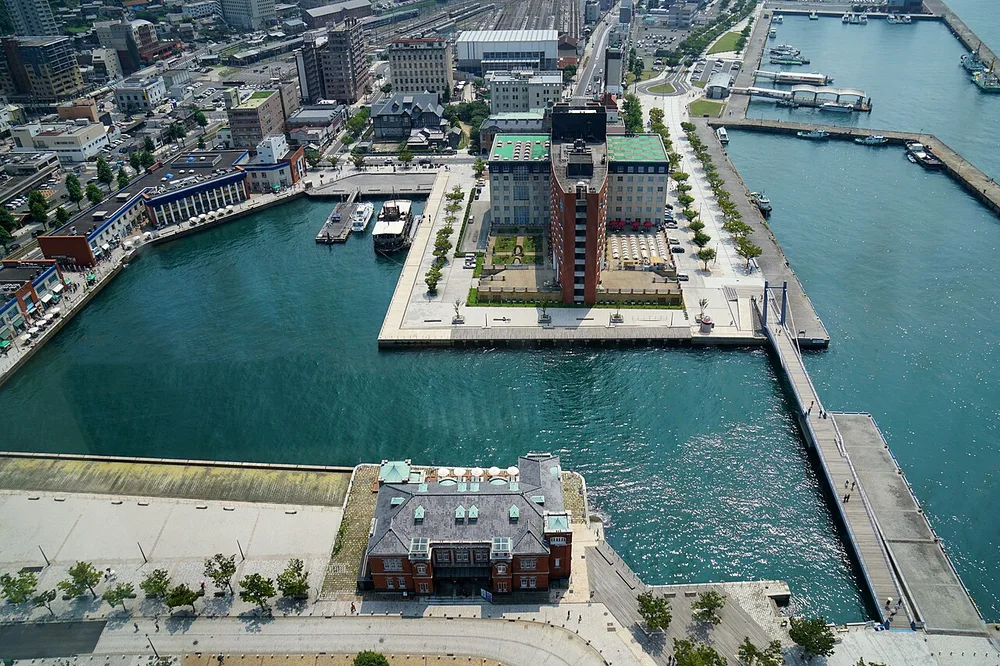
Compare a half-day harbour walk, a family railway day and a full Kanmon crossing, with free and paid areas, the observation room, waterfront food, the pedestrian tunnel and revised 2026 tickets.
Hakata to Mojiko: change at Kokura and stay on beyond Moji
From Hakata, take the Sanyo Shinkansen to Kokura, then change to the JR Kagoshima Main Line for Mojiko. Alternatively, take a conventional limited express from Hakata to Kokura and connect to a local train. On the JR Kyushu route map, Kokura, Moji and Mojiko are three separate stations. For the harbour walk, travel to the terminus, Mojiko Station. Moji Station serves a different district; getting off there adds an unplanned journey to the historic harbour.
If using a JR Kyushu Rail Pass, identify the operator first. The Sanyo Shinkansen between Hakata and Kokura belongs to JR West and is excluded from the JR Kyushu Rail Pass. For eligible conventional lines, follow the coverage, travel dates and seating rules of your particular pass. The official JR Kyushu pass coverage table is more useful than judging by whether a train is geographically in Kyushu. If staying in Tenjin, also allow for the subway and transfer to Hakata.
Treat the return as two train journeys too. Take a conventional train from Mojiko towards Kokura, then join your chosen Shinkansen or limited express. With reserved seats, leave enough time to find the platform and change at Kokura. If you have a dinner reservation in Hakata, choose your departure from Mojiko first and work backwards to the final activity. An observation room open until 22:00 does not leave unlimited time for another dinner in Fukuoka that evening.
Two Western-style buildings by the station: passenger travel and hospitality
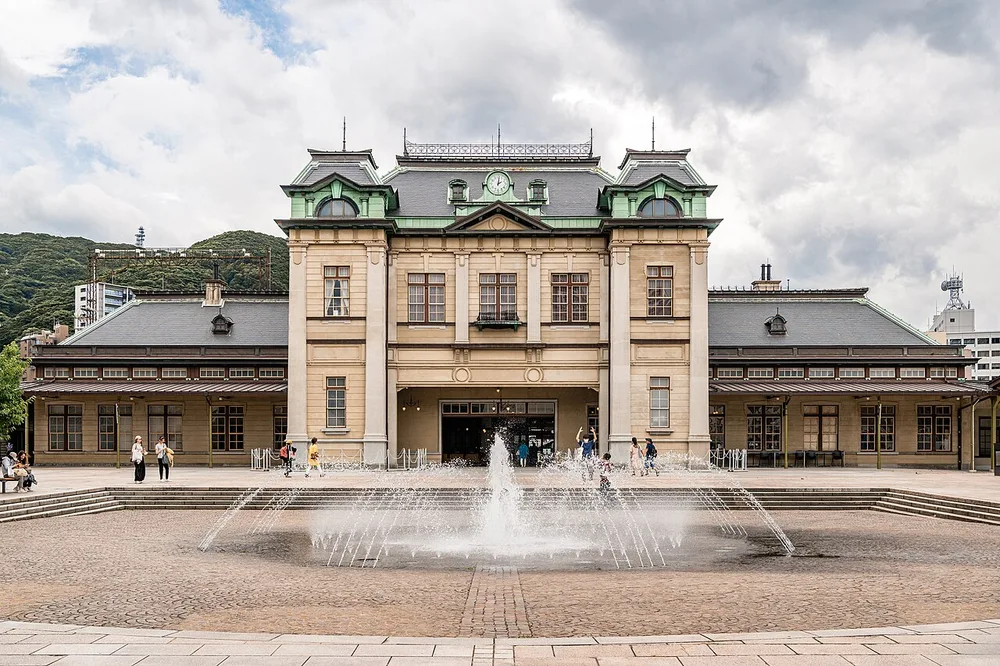
Kitakyushu City's cultural property record dates the current Mojiko Station, its second station building, to 1914. This Western-style timber building with stucco walls retains the central two-storey section and former VIP room of a port transport hub. Start in the station square to see the full façade, then identify the central entrance and wings. This explains why the station is an attraction better than rushing straight from the ticket gates to the next sightseeing train. It remains a working station, so keep gates, entrances and luggage routes clear when photographing it.
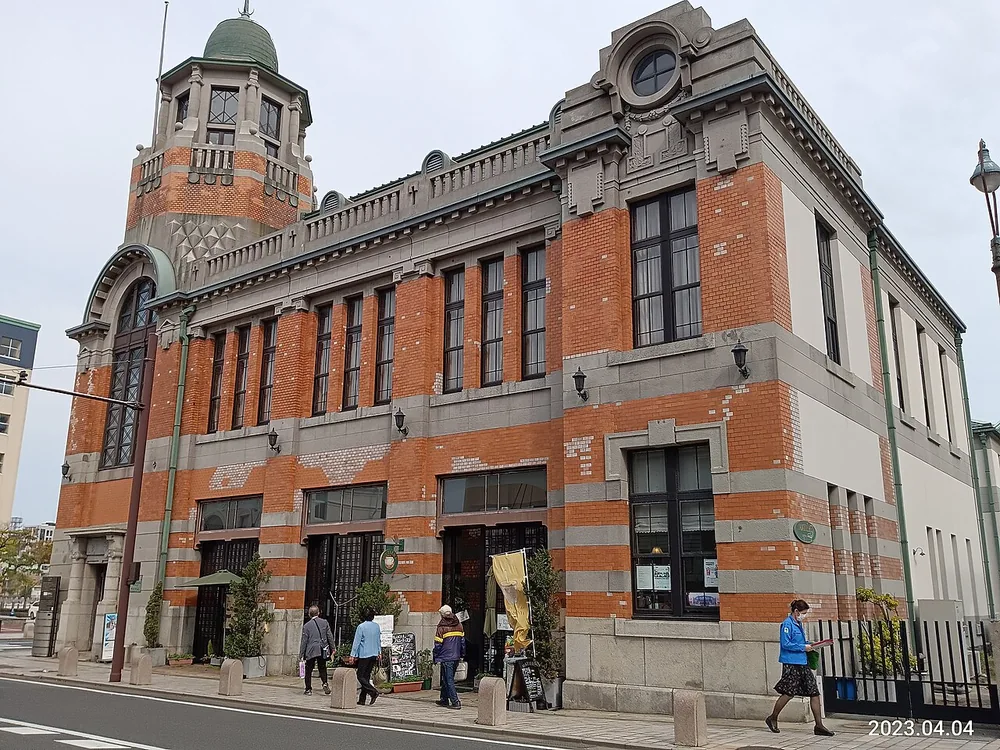
Recognise the Former Osaka Shosen Building by its orange walls and octagonal tower. Built in 1917 as Osaka Shosen's Moji branch, it served overseas shipping routes as a waiting and office facility. Look at the contrasts between white stone, walls, roof windows and tower; for illustrated works, enter the first-floor Seizo Watase Gallery. Current visitor information lists 09:00–17:00. General building areas are free; the gallery costs ¥150 for adults and ¥70 for primary and junior secondary pupils. It also closes for two exhibition-change days each year.
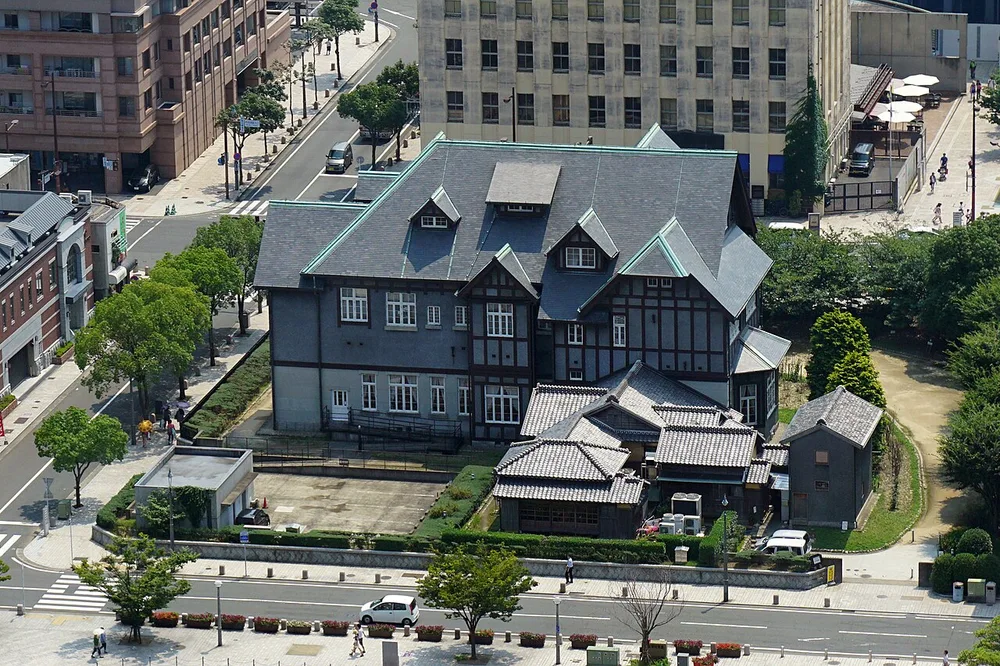
On the other side, the Former Moji Mitsui Club was built in 1921 as a Mitsui & Co. social and reception facility, then relocated to its current station-front site. Its dark timber frame, window frames and stained glass offer a different focus from Osaka Shosen's harbour-facing offices. The second floor contains the Einstein Memorial Room and Fumiko Hayashi Memorial Room. The opening information lists 09:00–17:00, with admission charged only upstairs: ¥150 for adults and ¥70 for primary and junior secondary pupils. If you only want the exterior and first floor, save paid visiting time for a gallery that interests you more.
Plan food separately from the building visit. The Former Moji Mitsui Club's previous restaurant tenant closed on 31 August 2026. The closure notice says details of a new business will be announced later. For now, use this stop for architecture and the second-floor displays. Choose lunch nearby from a restaurant with current opening information, rather than relying on club restaurant set meals in older travel accounts.
Former Moji Customs and the Dalian Friendship Memorial Hall: worthwhile free stops
From the station, head to the waterfront and follow the harbour to Former Moji Customs. Completed in 1912, this red-brick building handled trade in the busy port. It now contains customs information displays, rest space and a café. The official building guide lists free entry from 09:00–17:00. Look at the brickwork, stone and surviving interior decoration, then watch the boats and bridge from the windows. It makes a useful stop during a walk without booking a major museum ticket.
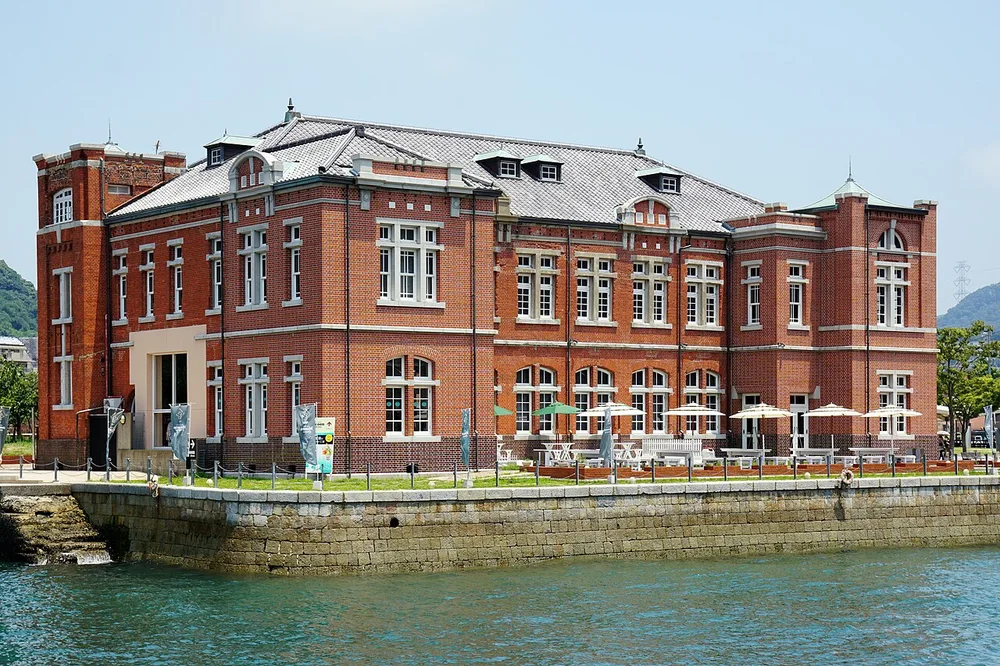
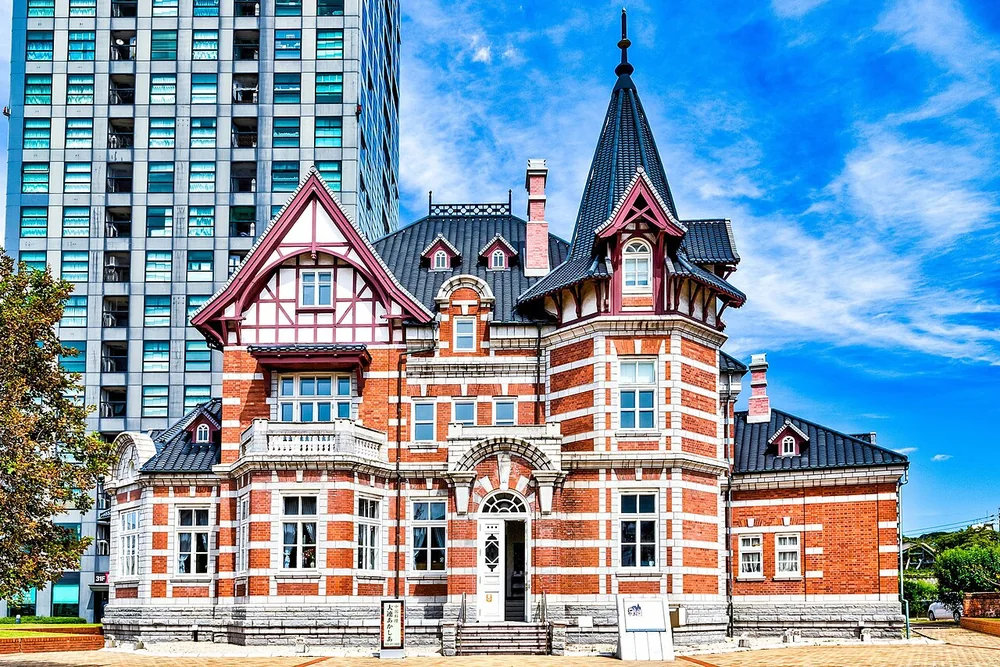
To understand the port's development, compare the customs house with the Former Osaka Shosen Building. The former dealt with goods, duties and port administration; the latter connected passengers with shipping routes. Read the explanations of their uses, then examine doors, windows, the seaward orientation and spaces built to accommodate people. This connects the district more clearly than photographing each building's name. If time is short, enter one and see the other from outside.
The nearby Dalian Friendship Memorial Hall was built in 1994 to celebrate friendship between Kitakyushu and Dalian. Its exterior is modelled on Dalian's Chinese Eastern Railway Steamship Company office. Unlike the preserved customs house, it is a later commemorative building. The official guide describes a second-floor exchange and rest space with Dalian displays, and third-floor community activity space. Normal opening is 09:00–17:00, free of charge. Its former name, International Friendship Memorial Library, may also help you recognise it on maps.
Group these stops with the observation room on the same side of the harbour to avoid returning to the station and circling out again. If you ate near the station, pause at the customs house and friendship hall, then decide whether to go upstairs for a strait-wide view or continue along the coast to Mekari. The cross-strait route takes you away from the central harbour. Complete any indoor buildings you particularly want first; by early evening, many will be exterior-only stops.
Blue Wing Moji's twenty-minute openings: watch the lift and allow for a detour
Blue Wing Moji is a 108-metre pedestrian lifting bridge across the First Harbour Basin. Walk across when the deck is lowered; when raised, it lets boats pass. It is both a viewpoint and a changing link between the harbour's two sides. If your restaurant, meeting point or boat terminal is across the water, bridge timing affects your route. Do not rush past barriers to save a detour when the bridge is about to lift.
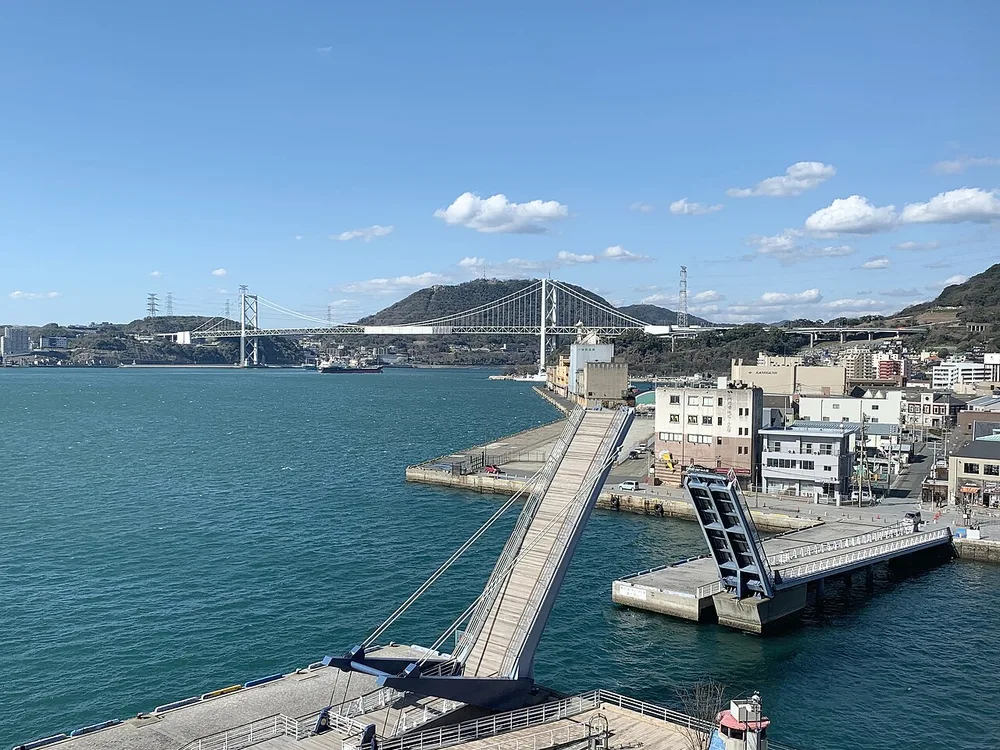
Fukuoka Prefecture's official tourism information lists daily lifting times of 10:00, 11:00, 13:00, 14:00, 15:00 and 16:00, with lowering at 10:20, 11:20, 13:20, 14:20, 15:20 and 16:20. To watch, reach the bank before one of these times. There is no equivalent opening at 12:00. To cross directly, avoid the lifting periods.
Stay on the bank to photograph the deck rising, then compare its scale with the customs house and water. For street views, wait for the bridge to lower and let the first pedestrians pass. Use the wait as a break instead of chasing another building immediately before and after it. If companions prefer not to wait, agree on a clear meeting point on the same bank. Once the bridge rises, 'beside the bridge' becomes two separate places.
The observation room at 103 metres: read the landscape by day or watch dusk from one place
To understand the cross-strait circuit, the Mojiko Retro Observation Room is more useful than adding more ground-level photo stops. It occupies the 31st floor of a tower designed by Kisho Kurokawa, 103 metres up. Through its windows, identify the Mojiko district, Kanmon Bridge and Shimonoseki opposite. Start with the harbour you have just walked around, then follow the coast towards Mekari to distinguish the compact station-area circuit from the wider strait.
The official opening and price information lists 10:00–22:00, last admission 21:30, at ¥600 for adults and ¥300 for primary and junior secondary pupils. Kitakyushu residents pay ¥400 as adults with the required proof; ordinary visitors should budget ¥600. Equipment maintenance also causes closures during the 2026 financial year, with the next listed date being 19 January 2027. For trips crossing into the new year, check this separately from other buildings' calendars.
The observation room's café currently opens 10:30–21:30, with last orders at 21:00. Take your seated drink break upstairs, or eat a full meal in the district before going up. At night, indoor reflections can appear in the glass. Check your angle and the space by the window, and avoid broad lighting that disturbs other viewers. Distant boats and streetlights also reward putting your phone away for a while.
Choose day or night according to your route. Before crossing the strait, a daytime visit helps with orientation but uses museum and transfer time. For an architecture walk, visit around sunset after completing buildings that close at 17:00. Staying in one place as the sky and harbour lights change avoids going up once by day and returning after dinner. Afterwards, head straight to dinner or the station, leaving closed exhibitions for another visit.
Strait or railway museum: choose the subject that interests you
On the western waterfront, the Kanmon Strait Museum explores the strait's nature, history and culture. It suits visitors wanting context before walking under the water. The museum guide explains that the observation deck, retro strait street, café area and some public spaces are free. Paid exhibitions cost ¥500 for adults and ¥200 for primary and junior secondary pupils. Normal opening is 09:00–17:00, last admission 16:30. The next listed regular closures are 10 November 2026 and 12 January 2027.
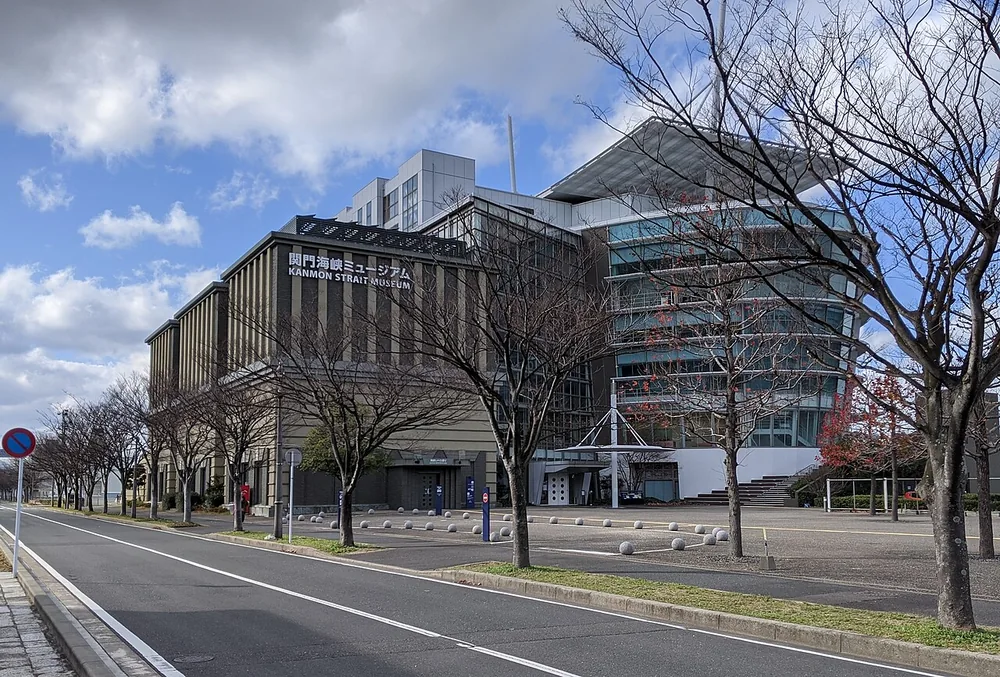
With children, check the Strait Children's Square conditions first. Entry costs ¥100 from age one, with use allowed through the sixth year of primary school; the play equipment is intended for ages three and over. Sessions are limited to 40 minutes on weekends, public holidays and long school holidays. Trainers are required, including for adults accompanying preschool children. The museum has a nursing room, accessible toilets and a rest room, making it a useful place for indoor play before children are exhausted by a full cross-strait circuit.
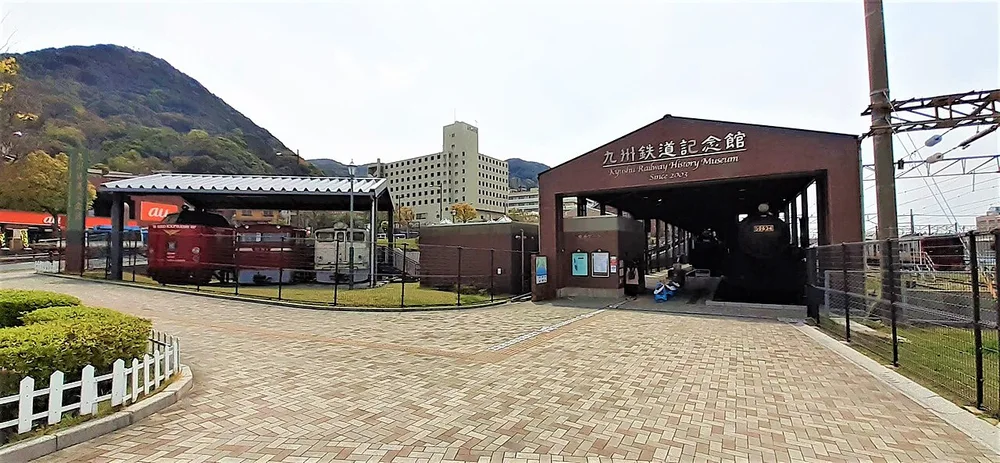
For real rolling stock and driving experiences, choose Kyushu Railway History Museum. Admission and visitor information from April 2026 lists ¥500 for adults, ¥250 from age four through junior secondary school, and free entry under four. Opening is 09:00–17:00, last admission 16:30, with ten irregular closure days a year. The museum's standard route starts at 60 minutes and its quick route at 30 minutes. Families needing queues for activities, train photographs and breaks should add time to those baselines.
The miniature railway costs ¥300 per vehicle per ride for up to three people. It is separate from the Shiokaze-go train to Mekari. Two adults and one primary-school child pay ¥1,250 for ordinary railway museum entry, or ¥1,550 with one miniature train ride. The Strait Museum's ordinary paid exhibitions total ¥1,200 for the same family, with the children's square extra. Choose by the child's interests to see which expense is useful. If crossing the strait that afternoon, limit the morning to one museum and leave time for lunch and travel to the tunnel entrance.
A free extension west: the Former Dalian Route Terminal's waiting spaces
Opposite the Strait Museum, the Former Dalian Route Terminal is a passenger terminal completed in 1929. Compared with the friendship memorial on the eastern harbour, it reveals actual passenger operations: how baggage inspection, waiting rooms and luggage spaces shared one building. Surviving floor and baggage-inspection lettering near the entrance, geometric decoration and daylight arrangements relate to those original needs.
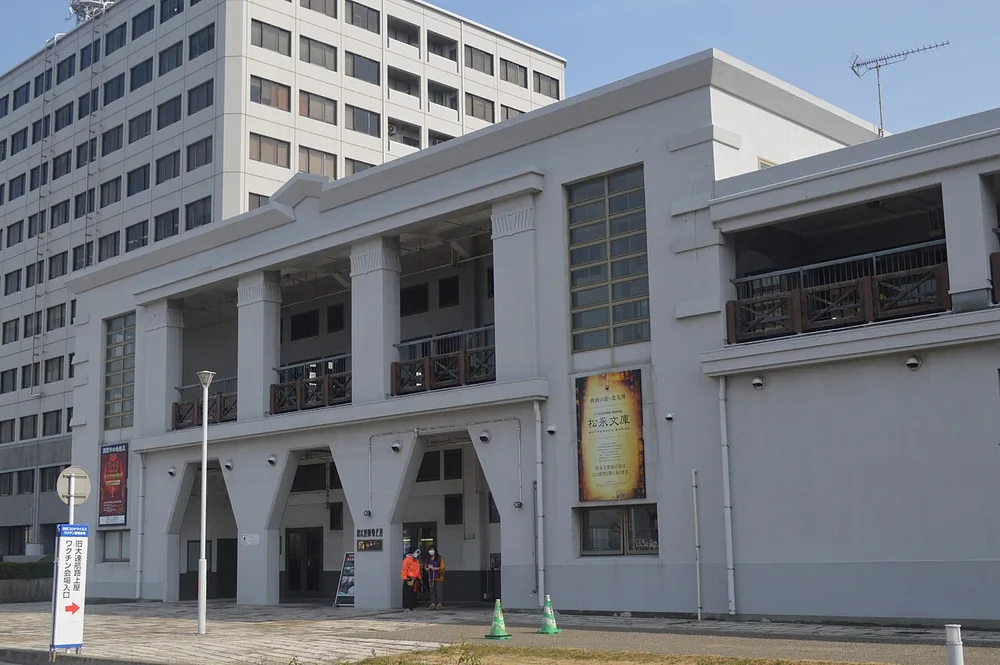
Official visitor information lists normal free opening of 09:00–17:00, last admission 16:30. The 22:00 closing time applies to hired spaces. The next listed whole-building regular closures are 17 November 2026 and 8 February 2027. Inside, Matsunaga Bunko displays film and performing-arts material. It closes on Mondays, or the next day after a holiday Monday, so check that gallery separately even if the building is open on a Monday.
Visit before or after the Strait Museum as an architectural extension on the same side. Going first from the station to the railway museum, then east to customs after lunch, then west to the terminal adds another walk across the central harbour. Before leaving, choose either the western museum and terminal or the eastern customs house and observation room. Add the other side only if time remains. For photographs, a brief exterior stop may suffice; make the interior a main visit if old films or passenger travel history interest you.
Waterfront lunch: a seated meal or a snack with a sea view
Mojiko baked curry works as a full meal, without turning every dessert shop into another compulsory stop. On the west waterfront near the station, BEAR FRUITS Mojiko main branch specialises in baked curry with fruit and spice flavours. The operator's website lists the main branch and sister shops, which have different menus and spaces. Choose the main branch specifically for baked curry. With young children who need a longer seated break, compare the same company's Milk Hall Mojiko first. Note the branch as well as the restaurant name to avoid navigating to another entrance.
MILK HALL MOJIKO occupies the first floor of the Nissan Shipping Building, serving Japanese Western-style dishes and Mojiko pudding. The operator also lists a children's space, changing table and baby food. Fukuoka Prefecture's tourism page lists normal hours of 10:00–20:00, last orders 19:30, extending on Fridays, Saturdays and days before holidays to 21:00, last orders 20:30. Families with young children can combine changing, a meal and a rest here, then choose a shorter afternoon walk.
Waterfront Kaikyo Plaza suits visitors who want food and souvenirs in one place. On the west building's second floor, Kawara Soba Takase Mojiko Retro branch serves soba on a roof tile, opening 11:00–20:00 and closing Wednesdays, with adjustments when Wednesday is a holiday. Choose it for a change of flavour. First-floor Bana1 sells banana sweets and drinks from 10:00–20:00, useful for a small dessert rather than another full afternoon tea.
Kaikyo Plaza's sea-facing terrace provides a place for takeaway food and a harbour break. In stronger wind or rain, choose an indoor restaurant. If crossing the strait, eat lunch before leaving for Mekari to keep timing manageable. If saving lunch for Karato, eat a modest snack before leaving Mojiko so that you do not reach the other side searching for a bus with hungry children. Restaurant queues and serving speed affect museum time; switch to another meal if a popular shop's queue is too long.
Start exploring Mojiko's connection with bananas through the official Kitakyushu City video below. The city's introduction says Moji Ward Office produced it about banana-auction culture and the port town. Knowing that history before choosing pudding, a banana drink or a waterfront sweet makes the port more memorable than simply following a souvenir shopping list.
Produced by Moji Ward Office, this introduction to Mojiko's banana-auction culture was published on Kitakyushu City's official YouTube channel.
Shiokaze-go to Mekari: another 500 metres after the ten-minute ride
For the tunnel walk, set your destination to the Moji-side Kanmon pedestrian tunnel entrance. Searching only for Kanmon Tunnel can direct you to the road tunnel. On Shiokaze-go operating days, board at Kyushu Railway History Museum Station beside JR Mojiko Station and ride to Kanmon Kaikyo Mekari Station. The operator's route guide shows about 500 metres, or ten minutes on foot, from the terminus to the pedestrian entrance. This is still above ground; the train does not connect directly to the undersea lift.
Shiokaze-go takes ten minutes end to end. The 2026 operating calendar mainly covers weekends, holidays and selected weekdays, with additional consecutive operating periods for Golden Week and the summer holidays. On ordinary weekdays without trains, plan a bus or walking alternative. A return sightseeing ride suits visitors who will turn back at Mekari; the cross-strait circuit needs only a single ride before continuing to Shimonoseki. Evening trolley services have separate dates and times. Treat them as extras rather than your only ordinary afternoon return option.
Normal single fares are ¥500 for adults and ¥250 for primary-school children. Each adult may take two preschool children free. Individual reservations are not accepted for groups of 11 or fewer: buy unreserved tickets, then queue. Group reservations start at 12 people. Even with a day ticket, you must get off at the terminus and join the return queue again. A ticket does not reserve a seat on a particular departure.
Walk to the tunnel along the above-ground route on the official map. Hilltop viewpoints are optional, rather than necessary parts of reaching the tunnel. To see Kanmon Bridge close up, pause in legal coastal pedestrian areas and remain alert to vehicles and bicycles. If children are already tired at the train terminus, rest on the Moji side and ride back to the harbour. Crossing to the opposite shore still leaves the journey from Mimosusogawa to Karato. The fifteen-minute tunnel walk alone does not measure the energy needed.
The 780-metre pedestrian tunnel: one way or a return walk
Kanmon Strait Navi's transport information lists the pedestrian tunnel as 780 metres long, about fifteen minutes each way, open 06:00–22:00 and free for pedestrians. Lifts provide access on both sides, descending about 60 metres at Moji and 55 metres at Shimonoseki. The marked boundary between Fukuoka and Yamaguchi prefectures is the familiar cross-prefecture photo spot. The road tunnel, pedestrian tunnel and Shinkansen tunnel are separate passages; use the pedestrian entrance for your walk.
Walking to the prefectural boundary and back still involves a substantial underground walk. Going all the way across and returning by the same tunnel totals about 1.56 kilometres underground, before surface walks and lift waits. If underground spaces are uncomfortable, walking stamina is limited or children no longer want to walk, switch to a short coastal stroll before entering the lift. For one complete Kyushu-to-Honshu crossing, walk one way to Shimonoseki and return by boat from Karato, avoiding a second tunnel walk just to reach the station.
Bicycles and mopeds of 50 cc or less cost ¥20 and must be pushed inside. NEXCO West's transport FAQ lists mopeds of 50 cc or less among vehicles using the pedestrian tunnel. The prefectural boundary is popular for photographs; let other users pass and take turns. You cannot see the sea surface underground. Save views of the strait and ships for the areas around the entrances, and decide your next journey after leaving the lift.
The lift halls at both ends have souvenir stamps, each supplying half of a complete design. Kanmon Strait Navi also describes how to exchange these for a Kanmon TOPPA commemorative certificate at the locations and under the procedure printed on the stamp sheet. If collecting it, pick up a sheet and add the first stamp before entering, then add the second across the strait. Certificate counters have separate opening hours from the tunnel's 22:00 closure, so do this by day. If you only want a walk, simply cross.
The revised 2026 Clover Ticket: one ride on each of three services
For the complete circuit, compare the Kanmon Strait Clover Ticket sold from 10 January 2026. It costs ¥1,000 for adults and ¥500 for children, covering one Shiokaze-go ride between Kyushu Railway History Museum and Kanmon Kaikyo Mekari stations, one Sanden bus ride between Mimosusogawa and Karato, and one Kanmon Kisen ferry between Karato and Mojiko. You may travel in the reverse direction. The pedestrian tunnel is free anyway; the ticket connects three transport stages and includes no museum or observation room admission. Seats cannot be reserved and there is no group discount.
This ticket suits a sightseeing train out, a walk under the sea, a bus to Karato and a ferry back to Mojiko. If you want a return Shiokaze-go ride and Karato on a different day, compare separate fares and day tickets again. One ride on each service does not provide unlimited travel on one route. It also excludes the Nishitetsu bus from Mojiko Station to Mekari. If Shiokaze-go does not run on a weekday, you cannot substitute that bus using this ticket. Choose the package when you need precisely those three stages.
The official information currently gives an expiry date of 30 June 2027. Sales points include Kyushu Railway History Museum Station, Kanmon Kaikyo Mekari Station, Kanmon Kisen ticket offices at Mojiko and Karato, and the tourist information office at Mojiko Station. Check this date alongside each service's operating days: the ticket may be valid while Shiokaze-go has no regular service that day. The old digital version ended in March 2026, so look for the current ticket's name and contents.
If you reach Karato and decide only to take the ferry back, a single ferry ticket is simplest. While still near Mojiko Station, compare the circuit ticket with individual fares. Check that day's Shiokaze-go and ferry operations before buying for your actual route. Ticket holders still queue normally, so allow some waiting time between connections.
Mimosusogawa to Karato and back by boat: see the harbour from the water
The Shimonoseki tunnel exit is at Mimosusogawa; Karato pier is elsewhere. The bus stage of the circuit connects the Mimosusogawa stop near the tunnel entrance with Karato, saving you the whole walk. Check direction and stops when boarding, then head to the Kanmon Kisen pier after arriving in Karato. Counting this stage within the fifteen-minute tunnel walk commonly underestimates the full circuit.
The Kanmon ferry links Karato pier and Marine Gate Moji. The normal crossing takes about five minutes and costs ¥400 one way for adults or ¥200 for primary-school children. Shimonoseki's official tourism information gives roughly twenty-minute daytime intervals. The sightseeing train operator's current package page specifies daytime Karato departures at 00, 20 and 40 minutes past the hour, and Mojiko departures at 10, 30 and 50. Early and late services and the first holiday departure differ; check Kanmon Kisen's information for the day if returning at night.
Karato can provide a meal and rest before the ferry back. With only the rest of the afternoon available, protect your boat connection and Fukuoka-bound train instead of adding every Shimonoseki sight. The tunnel crosses beneath the strait; the return ferry reveals shipping traffic and the distance between the shores. This is the circuit's clearest comparison. Boarding, disembarking and waiting at the pier require more attention to children, pushchairs and belongings than the five-minute sailing itself. Follow crew instructions.
If ferries stop, arrange onward transport on the shore where you are. From Shimonoseki, take a bus to Shimonoseki Station and conventional JR trains via Moji, then connect to Mojiko or Kokura. If luggage is stored in Mojiko, your route must still return to that location. Once wind, waves or disruption break the circuit, do not rush back through the tunnel to use every ticket segment and keep every reservation. Establish a way out, remove the remaining sightseeing and return to your accommodation base.
Three routes to choose from: harbour, family railway day or strait crossing
For a harbour half-day, arrive at Mojiko Station in the morning or around noon. See the station, choose a paid area in either the Former Osaka Shosen Building or Mitsui Club, then have lunch. In the afternoon, follow the harbour past Blue Wing Moji and Former Moji Customs, ending at the observation room or a café. Stop for the 11:00 bridge lift if it fits your route; otherwise continue in your original direction. This route skips the tunnel and suits onward plans in Kokura or Hakata.
For a full family railway day, spend the morning at Kyushu Railway History Museum, have lunch by the station, then take Shiokaze-go to Mekari and back. Leave the afternoon for queuing, getting off at the terminus, a short walk and rejoining the return queue. Do not add the strait circuit. If children prefer active play to trains, choose the Strait Museum and children's square, then Blue Wing Moji after lunch. Choose one of these family days so that children still have energy when you board the return train.
For a full crossing day, choose a short harbour walk and one museum in the morning, eat early, then take an afternoon Shiokaze-go to Mekari. Walk to the tunnel, cross to Mimosusogawa, take a Sanden bus to Karato and sail back to Mojiko. This completes the train, with its more restricted operating days, before the bus and ferry. Do not start with the last sightseeing train. Starting the circuit in the morning gives more flexibility: decide on museum visits after returning to Mojiko.
Groups with different interests can split for short walks within the harbour and meet at a named restaurant or station. On the strait circuit, do not casually split between tunnel walkers and boat passengers without agreeing a meeting point on the other shore. Set the whole route's timing by the slowest walker, including older relatives. If your return train is fixed, leave optional items for later, such as a second museum or extra dessert. Complete fixed-time journeys and luggage collection first.
Museum passes and children's ages: add only admissions you will use
The Mojiko Retro Free Pass is valid on the day, costing ¥1,700 for adults and ¥720 for primary and junior secondary pupils. It covers the Kanmon Strait Museum, Kyushu Railway History Museum, observation room, Mitsui Club's second floor and the Seizo Watase Gallery at the Former Osaka Shosen Building. Ordinary adult admission to all five totals ¥1,900, saving ¥200 if you visit everything. The railway museum and observation room alone cost ¥1,100, less than the pass. Choose your attractions first, rather than sacrificing lunch to recover ¥200.
The five ordinary primary and junior secondary admissions total ¥890, so the pass saves ¥170. Preschool and primary-school children need different calculations. The railway museum charges ¥250 from age four, while primary and junior secondary categories at other facilities do not automatically apply to all younger children. For ages four to six, calculate individual admissions under each facility's age rules. Do not treat the school-pupil pass as a universal preschool ticket. The children's square, miniature railway, meals and transport are separate.
For two adults and one primary-school child, the five-attraction pass costs ¥1,370 more than separate admission to just the railway museum and observation room, adding access to three other places. Whether that expense is useful depends on your interest in those places and the child's ability to keep visiting museums. If crossing the strait is the main goal, calculate transport and museum tickets separately.
Even in rain, you need not fill the day with all five pass attractions. The Strait Museum and Former Dalian Route Terminal form an indoor half-day on one side. Another option combines the station-front buildings, lunch, customs house and observation room. You still walk outdoors between buildings. Choose a nearby cluster and remove the long coastal walk and crossing. Maintenance and exhibition changes can close facilities on otherwise normal days. Avoid the listed closures before choosing separate admission or a pass.
| Places visited | Total with separate tickets or pass | What it covers |
|---|---|---|
| Railway museum + observation room | ¥2,750 | Separate admission to two attractions |
| Five-attraction Free Pass | ¥4,120 | Also includes the Strait Museum, Mitsui Club's second floor and Osaka Shosen gallery |
| Difference | ¥1,370 | Decide whether you will actually visit the other three attractions |
Dusk and seasonal lights: arrange your return before the last photograph
By day, Mojiko is ideal for architectural details and understanding the strait. At dusk, stay by the harbour or in the observation room to watch changing water, window light and streetlights. Most buildings close to general visitors at 17:00, shifting the evening towards food, walks and night views. Standing by the sea in winter becomes cold. Break the wait for darkness with a meal or indoor rest instead of staying on the waterfront from afternoon until the lights come on.
Kaikyo Plaza has announced the 2026 Mojiko Retro Romantic Illumination from 14 November 2026 to 23 May 2027, with the opening lighting ceremony from 18:30 on 14 November. The same page lists Kanmon Strait Candle Night on 14 and 15 November, 17:30–21:00. The opening ceremony, two candlelit evenings and full seasonal illumination have separate dates. Choose the event you actually want before choosing your day.
For night views, omit the afternoon crossing and arrive later for Western-style buildings, customs, dinner and a short harbour walk or observation room visit. If you have completed the strait circuit, confirm luggage collection and your JR return before deciding how much longer to stay.
A few useful answers
Is half a day enough for Mojiko, or should I set aside the whole day?
Half a day is enough for a harbour walk past Mojiko Station, the Blue Wing bridge and the Old Moji Customs House. Set aside a full day if you plan to walk through the Kanmon pedestrian tunnel to Shimonoseki and catch the ferry back to Mojiko from Karato.
When does the Blue Wing bridge in Mojiko lift?
The Blue Wing bridge lifts to let boats through every day at 10:00, 11:00, 13:00, 14:00, 15:00 and 16:00. Each time it comes down 20 minutes later, so pedestrians can cross again.
How long does it take to walk through the Kanmon pedestrian tunnel?
The 780-metre Kanmon pedestrian tunnel takes about 15 minutes to walk one way. It’s free for pedestrians from 06:00 to 22:00, and there are lifts at both the Moji and Shimonoseki entrances.
How much is the Kanmon Strait Clover Ticket, and which journeys does it cover?
The Clover Ticket costs ¥1,000 for adults and ¥500 for children. It covers one journey each on the Shiokaze train to Mekari, the Sanden bus from Mimosusogawa to Karato and the ferry from Karato to Mojiko. The ticket is valid until 30 June 2027.
Official information and references
Sources used in this guide.
- JR Kyushu: railway route map
- JR Kyushu: Rail Pass types and coverage
- Kitakyushu City: Mojiko Station cultural property record
- Mojiko Retro official guide: Former Osaka Shosen Building
- Mojiko Retro official guide: Former Moji Mitsui Club
- Mojiko Retro official notice: Mitsui Club restaurant closes on 31 August 2026
- Mojiko Retro official guide: Former Moji Customs
- Mojiko Retro official guide: Dalian Friendship Memorial Hall
- Fukuoka Tourism Association: Blue Wing Moji lifting times
- Mojiko Retro official guide: observation room hours and fees
- Mojiko Retro official guide: Kanmon Strait Museum and children's square
- Kyushu Railway History Museum: admission and visitor information from April 2026
- Mojiko Retro official guide: Former Dalian Route Terminal and Matsunaga Bunko
- BEAR FRUITS operator: Mojiko branches and family facilities
- Fukuoka Tourism Association: MILK HALL MOJIKO
- Kaikyo Plaza official guide: Kawara Soba Takase Mojiko branch
- Kaikyo Plaza official guide: Bana1 banana sweets
- Shiokaze-go: stations and the final 500 metres to the pedestrian tunnel
- Shiokaze-go: 2026 operating dates and timetable
- Shiokaze-go: single fares and visitor information
- Kanmon Strait Navi: pedestrian tunnel and cross-strait transport
- Shiokaze-go: revised 2026 Kanmon Strait Clover Ticket
- Shimonoseki official tourism: Kanmon ferry
- Mojiko Retro official guide: five-attraction Free Pass and combined tickets
- Kaikyo Plaza official guide: 2026 Romantic Illumination and Candle Night
- Shiokaze-go: children, unreserved seats and reservation FAQs
- Kitakyushu City: introduction to the official Mojiko banana story video
- NEXCO West: Kanmon Tunnel vehicle categories and rules for pushing vehicles through the pedestrian tunnel
- Kaikyo Plaza official guide: sea-facing terrace and shop layout