Plan a 2026 Dazaifu visit with Nishitetsu trains from Tenjin, the Tabito bus from Hakata, Omotesando, the main sanctuary, transport packages, museum exhibitions, combined admission and step-free family routes.
- Region & Focus
- Dazaifu and Yanagawa
- Reading Scope
- 32 min read · 13 chapters · 4 Q&As
- Official Verification
- 26 official sources checkedUpdated 22 November 2026
- Key Topics
- ItinerariesRail travelFood
Chapter Route Map (tap any stop)
- Half a day or a full day: allow extra time for exhibitions
- Nishitetsu from Tenjin or a bus from Hakata: choose both ends of your journey
- 2026 transport costs: digital walking tickets and single fares
- Walk from Dazaifu Station to Shinji Pond via Omotesando
- The main sanctuary, Tobiume and the Taiko bridges: details to see during your visit
- Goshuin, amulets and photography: leave these until after worship
- From Tenmangu to the museum: turn right for the passage and use the inclined lift with pushchairs
- Three ways to visit the museum: cultural exchange, special exhibitions and free activities
- When the combined ticket saves money: check all three closure calendars
- Umegae mochi on Omotesando: sit down for tea or take some away
- With young children and older relatives: nursing rooms, step-free routes and quiet breaks
- Two adaptable itineraries: morning worship or an afternoon at the museum
- Plum season, autumn and closure days: choose your order around what is open
- Quick Q&A
Allow half a day for Dazaifu Tenmangu and Omotesando. If you want time to explore Kyushu National Museum's exhibitions, stay for lunch and the afternoon. Worship at the front of the main sanctuary resumed on 19 September 2026. Take Nishitetsu from Tenjin or the Tabito bus from Hakata. Decide which museums you want to visit before choosing transport and admission tickets; this makes the day easier to plan than trying to fit every attraction together after arrival.
Half a day or a full day: allow extra time for exhibitions
Choose between two approaches before you leave. For the shrine, an umegae mochi rice cake and Omotesando, allow about 3–4 hours after arrival. For a proper visit to Kyushu National Museum's exhibitions, allow about 6–7 hours and have lunch in Dazaifu. These suggested timings include walking and breaks, with travel to and from Fukuoka counted separately. A half-day visit is much easier if you leave Fukuoka that afternoon or have a fixed restaurant booking in the evening.
On a first visit, start with Dazaifu Tenmangu and Omotesando. Add Kyushu National Museum if it interests you and you have time. The shrine centres on Sugawara no Michizane and the Tenjin faith; the museum explores exchanges between Japan and Asia. If you prefer architecture, worship and traditional shopping streets, you need not buy museum admission simply because a national museum is nearby. If a special exhibition is your main reason for coming, reserve enough time for it first and fit the shopping street around it.
As of 26 October 2026, the shrine's announcement confirms that worship at the front of the main sanctuary resumed on 19 September. The grounds map marks Sou Fujimoto's temporary sanctuary as being dismantled. The main route now leads to the front of the main sanctuary; the temporary sanctuary with its planted green roof served during the major restoration. If someone in your group has saved older photographs of it, update your meeting point before leaving and follow the designated worship routes and construction barriers on site.
Opening time changes at the equinoxes: 06:00 from the spring equinox and 06:30 from the autumn equinox. The gates close at 19:00 in April–May and September–November, 19:30 in June–August, and 18:30 in December–March. Walking around the grounds and worshipping at the main sanctuary are free. Museum ticket desks, the nursing room and the rest area close before the gates. To enjoy the grounds early and visit museums later, use the interval for breakfast and a first walk instead of arriving and waiting for shops to open.
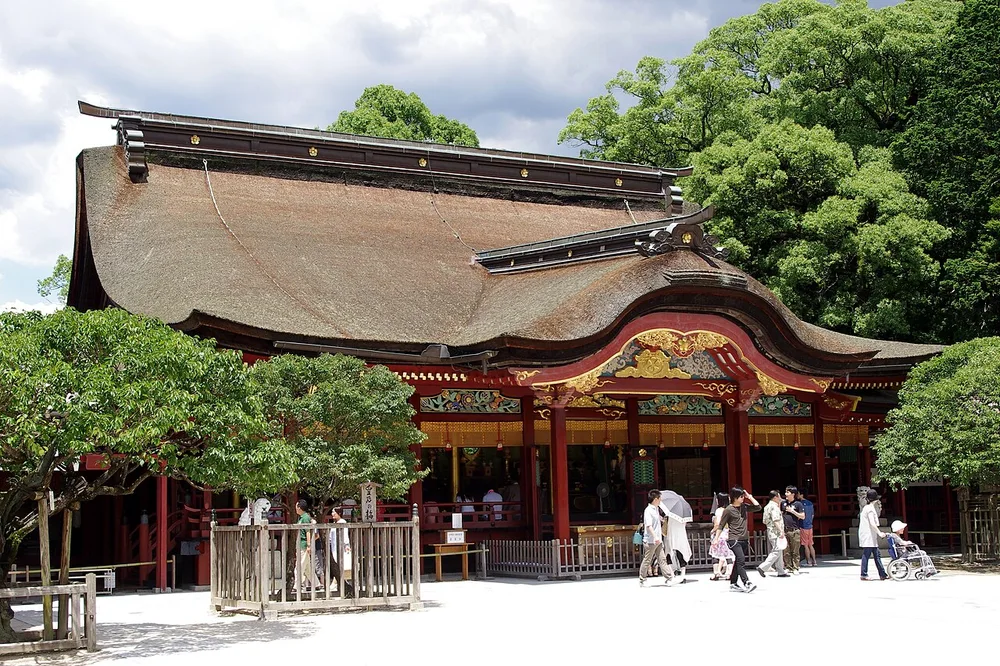
Plan a 2026 Dazaifu visit with Nishitetsu trains from Tenjin, the Tabito bus from Hakata, Omotesando, the main sanctuary, transport packages, museum exhibitions, combined admission and step-free family routes.
Nishitetsu from Tenjin or a bus from Hakata: choose both ends of your journey
If you are staying in Tenjin, take the Tenjin Omuta Line from Nishitetsu Fukuoka (Tenjin) Station and change at Nishitetsu Futsukaichi Station for the Dazaifu Line to its terminus. The shrine lists about six minutes from Futsukaichi to Dazaifu; the tourist association lists about 30 minutes from Tenjin. Add time to walk to the station, wait and change platforms. Some trains run through to Dazaifu. Check the destination on the train or platform display; change at Futsukaichi if your train has a different destination.
There are both Tabito trains and Tabito buses. The Dazaifu sightseeing train Tabito runs as an ordinary service, with no reservation or sightseeing supplement. Check that day's operating information if you specifically want to ride it. If worship is your main purpose, an ordinary train at a convenient time leaves more time for the shrine approach. Nishitetsu Futsukaichi and JR Futsukaichi belong to different networks. Enter the full station name in your navigation app to avoid reaching the JR station and then looking for the Dazaifu Line.
If you are staying in Hakata and want fewer changes, take the Dazaifu Liner Bus Tabito from Hakata Bus Terminal, via Fukuoka Airport's international terminal, to the stop outside Dazaifu Station. Nishitetsu's current route page gives a standard journey of about 40 minutes from Hakata or 25 minutes from the international terminal. Reservations are not required; take the next service if the bus is full. If queues are long at weekends or on festival days, use the Nishitetsu railway via Tenjin instead.
The bus suits a day that starts and ends in Hakata; the train suits an evening meal in Tenjin. You can also travel out by bus and back by Nishitetsu while staying in Hakata, in which case single tickets are simpler. Leave large luggage at your accommodation in Fukuoka so that you can walk from Dazaifu Station. If travelling straight from the airport, identify your terminal first. The domestic terminal requires a shuttle transfer to the international terminal, so the quoted 25-minute bus journey does not cover the full transfer after a domestic arrival.
2026 transport costs: digital walking tickets and single fares
Following Nishitetsu's fare revision on 1 April 2026, an adult single from Fukuoka (Tenjin) to Dazaifu costs ¥480, or ¥960 return. Use ¥960 as your comparison if you are making one return trip without other intercity journeys. Nishitetsu's fare revision page links to the new fare tables and station-to-station chart. Select a date after 1 April when searching, so that you do not budget using the old ¥420 fare.
From 1 April 2026, the Dazaifu digital walking ticket listed by Kyushu MaaS costs ¥1,000 for adults and ¥580 for children. It includes return Nishitetsu travel between Fukuoka (Tenjin) and Dazaifu, a voucher for one umegae mochi and offers at participating shops. Buy it through the my route app; it is valid for two days after activation. The adult ticket is ¥40 more than an ordinary return, so it is useful if you already want a rice cake from a participating redemption shop. Choose a single train ticket if you will return to Hakata by bus.
The Treasure Hall offer gives admission at the group rate, rather than free entry. If you plan to buy the combined shrine and national museum ticket separately, do not count the Treasure Hall discount twice. Open the relevant ticket screen in the app before using it: show the transport section at the station and the voucher section at the shop. This avoids spending your meal or exhibition time searching for the right screen.
Bus fares are separate. The normal adult fare from Hakata to Dazaifu is ¥800; the official April 2026 leaflet lists ¥780 when paying on board with a transport IC card or an eligible contactless credit card. From the international terminal, the normal fare is ¥700, or ¥680 with the qualifying cashless discount. An adult return by bus from Hakata therefore normally costs ¥1,600, or ¥1,560 with the discount. This starts from a different place from the Nishitetsu return from Tenjin. Choose a convenient route, then compare the total fare, rather than adding an extra station transfer for a small saving.
Fukuoka City Subway day passes, JR passes and the Nishitetsu Dazaifu Line cover different networks. If you take the subway from Hakata to Tenjin before joining Nishitetsu, add the city journey separately. If you shop in Tenjin on the way back, include the later journey to your hotel as well. Calculate adult and child fares separately. Select the correct category when buying a digital ticket instead of assuming a child's package costs half the adult price.
Walk from Dazaifu Station to Shinji Pond via Omotesando
The museum's photographic access guide breaks down this walk clearly. Leave Dazaifu Station's ticket gates to reach the bus turning area, then head diagonally right into Omotesando. Follow the roughly 300-metre approach towards the shrine. You pass successive torii gates; the shrine information office is beside the third. Continue to the sacred ox statue, with Shinji Pond and the Taiko bridges to the left. These landmarks let first-time visitors follow the route without repeatedly enlarging a map at junctions.
Omotesando's shops line this approach to and from the shrine. Note shops that interest you on the way in and buy souvenirs on the way back. If you arrive early mainly to worship, walk through to the grounds first and sit down for a rice cake afterwards. If children need the toilet or water after the journey, take a break before entering. The 300 metres describes the road length; queues, choosing shops and photographs all add time. A half-day plan needs more than the few walking minutes shown by navigation apps.
The sacred ox near the entrance often creates the first queue, but there are 11 ox statues around the grounds, linked to the stories of Sugawara no Michizane. Join the queue if you want a photograph of this one. If someone is tired, see the bridges and pond first and continue to worship afterwards. Children can look for the different poses along the way without trying to tick off every statue. The shrine regards the centre of the approach as the passage of the deities, so keep towards the sides when walking or taking photographs.
The official map marks the step-free route in blue. If you have a pushchair, use a wheelchair or find arched bridges difficult, check that route at the information office before continuing to the main sanctuary. You can see the Taiko bridges from the pond bank. Keep passageways clear when queues move and take group photographs away from the main flow. Agree to meet at an obvious point before the bridges or beside the information office, rather than searching for each other in the Romon gate entrance.
The main sanctuary, Tobiume and the Taiko bridges: details to see during your visit
The three bridges across Shinji Pond symbolise the past, present and future. The standard worship route crosses them, passes the purification basin and continues to the Romon gate and main sanctuary. The bridges rise and fall, so let people behind you pass before stopping for photographs. In rain, shoes and stone surfaces become wet; a slow walk beside the pond also gives a view of the curves. Do not have companions block the top of a bridge to create an empty photograph.
The official worship guidance describes the current running-water purification method: clean your hands, rinse your mouth, then clean your hands again. The water is for purification before worship, not for drinking directly. If ladles are provided, pour water into your hand to rinse your mouth and keep your mouth off the ladle. Adults can demonstrate for children and help shorter children from a safe position, without standing them on the basin edge.
At the main sanctuary, follow the shrine's sequence of two bows, two claps and one bow. Remove your hat, stand properly, bow twice, clap twice with your hands in front of your chest, pray, then bow once more. Finish worship when you reach the front of the queue, then step aside to arrange your bag, take out your camera or wait for family. Formal prayer services require a separate application at the prayer reception desk; ordinary worship in front of the sanctuary needs no reservation. Distinguishing the two helps you allow the right amount of time.
The main sanctuary stands over Michizane's grave and forms the centre of Tenmangu worship. Facing the sanctuary, the sacred Tobiume plum tree stands on the right. The shrine tells the legend that it flew from Kyoto to Dazaifu. Its shape, position and relationship to the building are worth seeing even outside blossom season. The present Romon gate dates from 1914; pause to see its details from both sides as you enter and leave.
Save the great camphor tree and the stone and bronze statues until after your main worship visit. The kirin and bullfinch statues beside the purification basin were donated by Hakata merchants in 1852. The shrine describes the great camphor as a natural monument more than 1,500 years old. If your group likes architecture and art, step into a wider area after visiting the sanctuary, then examine the gate, old trees and animal statues. This is easier than trying to photograph everything while moving with the worship queue.
Goshuin, amulets and photography: leave these until after worship
Collect goshuin shrine seals and amulets after worship. The shrine describes its study amulet as supporting learning and examinations, its heart amulet as expressing peace of mind, and its dream amulet, labelled 叶糸, as carrying wishes for your own dreams or those of someone important to you. Work amulets and job-seeking amulets are separate designs. For gifts, note the Japanese name and purpose before choosing at the amulet office. Check the window for donation amounts and available designs, and budget for them separately from transport and meals.
Follow on-site signs to the goshuin office; extra locations may operate on major festival days. Tenmangu also handles goshuin for Tenkai Inari Shrine. Worship at the relevant shrine first, then return to collect its seal. If your day covers only the main shrine and museum, choose a seal for the place you actually visited. Tenkai Inari requires extra energy for the uphill stone steps. Woodland closures from 26–30 October also affect connecting routes, so do not simply continue uphill when you see a torii.
Ordinary personal souvenir photographs are allowed, but the shrine's photography rules prohibit photography inside the main sanctuary, prolonged photography from one position using equipment such as tripods, drones, livestreams or similar video, and commercial shoots. Leave room for worshippers when photographing inside the Romon gate. Professional photography for a baby's first shrine visit or Shichi-Go-San is restricted to members of the Dazaifu Tenmangu photographers' association. Other travel, promotional and model shoots are not accepted.
If you attend a formal prayer service or festival, take photographs outside the ceremony and in wider passageways. When the amulet office has a queue, one adult can take children for a rest and meet the others at an agreed time.
From Tenmangu to the museum: turn right for the passage and use the inclined lift with pushchairs
Reach Kyushu National Museum through the connecting passage in the shrine grounds. The museum's photographic guide says to turn right after crossing the third Taiko bridge, before the torii ahead. The Treasure Hall is on the left, and the passage entrance comes into view as you continue. If you visit the main sanctuary first, follow the signs back in this direction rather than returning to Dazaifu Station to start again.
The passage includes stairs, escalators and moving walkways, followed by the Rainbow Tunnel. An inclined lift serves wheelchairs and pushchairs. This route climbs to the museum, a height difference that a flat map can hide. The official estimate of about ten minutes from Dazaifu Station assumes a direct walk. If you have already been worshipping, viewing exhibits or waiting for a lift, allow travel time from your actual position instead of hurrying to meet that estimate.
If a child is asleep in a pushchair, use the inclined lift at the entrance. Secure your belongings on busy moving walkways. Older visitors who prefer to avoid the Taiko bridges can follow the shrine's step-free route towards the passage and then take the lift. The museum accessibility page also lists an inclined lifting facility on the western 国博通 (Kokuhaku-dori) side. Coming from the shrine, follow signs for the Tenmangu Access Tunnel (天満宮アクセストンネル); these are easier to recognise than making an improvised detour to the other entrance.
The museum's first floor, at entrance level, is a useful meeting point for groups. Special exhibitions are on the third floor and the Cultural Exchange Exhibition is on the fourth. Those browsing the shop or taking children to the first-floor hands-on area can remain in the public spaces. Include the walk back to the entrance and lift time when arranging to meet. Choose the first floor, which everyone can reach, rather than a gallery requiring a ticket.
Watch the official access video to identify the route from Dazaifu Station through the shrine approach to the museum passage.
Three ways to visit the museum: cultural exchange, special exhibitions and free activities
The fourth-floor Cultural Exchange Exhibition explores exchanges between Japan, Asia and Europe. Alongside the shrine's focus on Michizane, it offers a wider timescale for objects, trade, religion and the movement of people. On your first visit, check the exhibition sections at the entrance and choose the periods that interest you most. Displays rotate, so even if you have seen exhibition photographs before, look for the current combinations rather than matching every item to an old image.
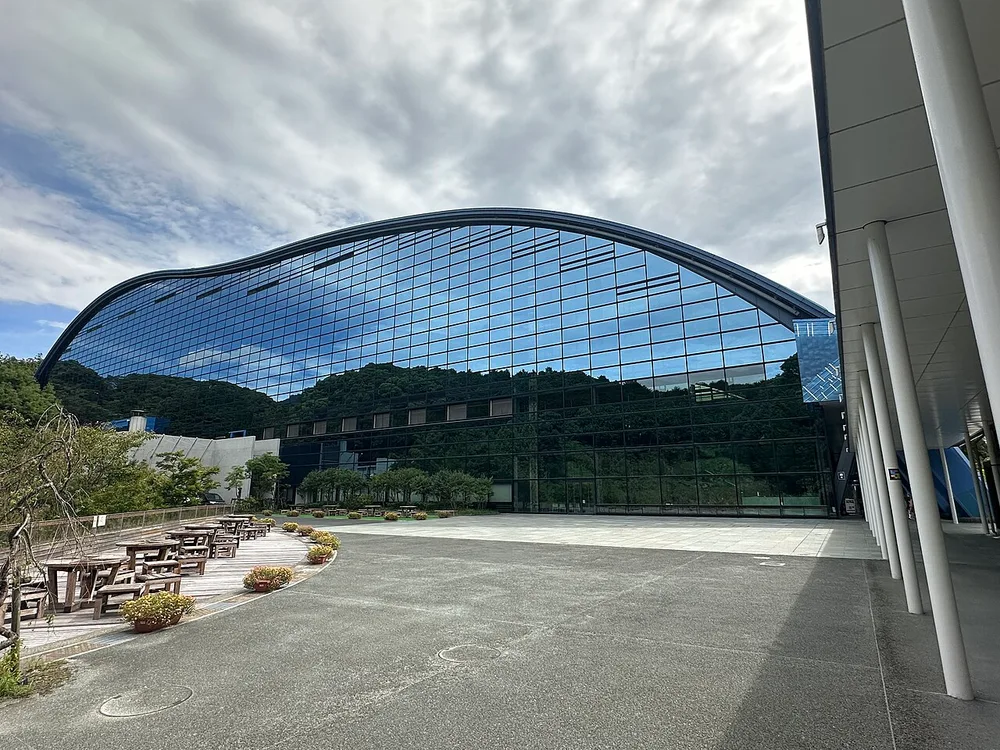
Current Cultural Exchange Exhibition admission is ¥700 for general visitors and ¥350 for university students. Entry is free for senior secondary pupils and younger, anyone under 18, and those aged 70 or over, with documents showing eligibility and date of birth. University students show student ID at the ticket desk; school pupils and visitors qualifying by age show the relevant proof at the gallery entrance. Calculate each family member's admission separately: adults buy tickets and children enter with proof.
Third-floor special exhibitions have their own dates and prices. For Mirrors of Himiko, running from 31 October 2026 to 11 January 2027, same-day admission is ¥2,000 for general visitors and ¥1,200 for university students; senior secondary pupils and younger, or anyone under 18, enter free. The special exhibition ticket also includes the fourth-floor Cultural Exchange Exhibition. A limited ¥3,600 pair of general admission tickets is also available, for two people or two visits by one person. Tickets are sold only on site during the exhibition, with no advance sale, refunds or resale. If mirrors and ancient kingship interest you, make this the main part of your day.
During Mirrors of Himiko, opening hours are 09:30–17:00 on Sundays and Tuesday–Friday, with last admission at 16:30. Saturdays extend to 19:00, with last admission at 18:30. The museum is normally closed on Mondays, but opens on 23 November and 11 January; it closes on 24 November and 24–31 December. These are the arrangements for this 2026–27 exhibition. For other dates, use the visitor information and annual calendar. Choose a Saturday during the exhibition for longer viewing, but children's first-floor activities still finish at 17:00.
First-floor Ajippa is a free hands-on gallery that introduces cultural exchange through musical instruments, toys and crafts. It lets children explore the subject by touch and sound. The official opening notice lists 09:30–17:00, including on late-opening days, with the same closure days as the museum. Reservations are not accepted; return later if the room is full. If this is your children's main interest, go there after the shrine and let adults take turns visiting the exhibitions upstairs.
When the combined ticket saves money: check all three closure calendars
General adult visitors planning the Treasure Hall, Kanko Historical Museum and Cultural Exchange Exhibition can buy the ¥1,000 combined ticket. Separate admission totals ¥500 + ¥200 + ¥700 = ¥1,400, so it saves ¥400. Even if you visit only the Treasure Hall and Cultural Exchange Exhibition, separate tickets cost ¥1,200, making the saving ¥200. Buy at either shrine museum or on the national museum's first floor, whichever you reach first, without an extra trip solely to buy tickets.
Calculate university students, children and visitors aged 70 or over individually. The combined ticket is sold only in the general category, while the national museum's Cultural Exchange Exhibition is already free for senior secondary pupils and younger, anyone under 18, and those aged 70 or over. University admission is ¥350. For two adults visiting all three museums with one primary-school child, buy each adult a combined ticket and pay ¥100 for the child at each shrine museum, with free national museum entry. That totals ¥2,200, excluding transport, special exhibitions and other purchases.
The Treasure Hall displays collections and historical documents related to Tenmangu and Michizane, plus current art projects. Individual admission is ¥500 general, ¥200 for university and senior secondary students, and ¥100 for primary and junior secondary pupils. It opens 09:00–16:30, with last admission at 16:00. It closes on Mondays, except national and substitute holidays, with additional temporary closures for exhibition changes. Choose it first if the collections are your main interest; it is close to the main sanctuary route.
The Kanko Historical Museum tells the story of Michizane's life through scenes featuring costumed Hakata dolls, alongside festival photographs and ritual objects. It suits visitors who want to understand his story first. It also opens 09:00–16:30, with last admission at 16:00, but closes every Tuesday and Wednesday. Individual admission is ¥200 general, ¥150 for university and senior secondary students, and ¥100 for primary and junior secondary pupils. If you planned all three museums on a Tuesday, remove this one before comparing the remaining tickets.
For special exhibitions such as Mirrors of Himiko, use the special exhibition ticket at the national museum first, since it already includes the Cultural Exchange Exhibition. Then buy separate shrine museum tickets according to your interests. The national museum element of the ¥1,000 combined ticket covers the Cultural Exchange Exhibition, excluding third-floor special exhibitions. With only half a day, there is little benefit in rushing through all three to save a few hundred yen. Morning worship and one museum, followed by lunch on the approach and a return to Tenjin, is often more comfortable than squeezing in two admissions before 16:00.
Umegae mochi on Omotesando: sit down for tea or take some away
Umegae mochi are baked rice cakes filled with sweet red bean paste and stamped with a plum blossom pattern. Shops cluster along Omotesando; choose one for a seated break rather than queuing at each. If using a walking ticket, find a listed redemption shop, identify the eligible item, then decide whether to add drinks or eat in. Treat voucher redemption and café orders as separate transactions.
Sabou Kikuchi, at 2-7-28 Saifu, is easy to recognise by its red lantern. It sells umegae mochi on the first floor and has a café serving drinks on the second. Its website lists 09:00–17:00 on weekdays and 09:00–17:30 on weekends and public holidays, closed Thursdays. If the 25th falls on a Thursday, it closes on the preceding Wednesday instead. For older relatives or children who need a seat, plan it as a mid-visit break rather than eating on your feet all day and looking for chairs at the end.
The shop's website lists ancient-rice umegae mochi only on the 17th of each month and mugwort versions only on the 25th. Choose those dates if the flavours already interest you, but the regular version is available on ordinary days, so there is no need to rearrange your whole Fukuoka trip. The shop's own video shows filling and baking. Watch a short section with children before leaving so that they can recognise the moulds, bean paste and baked colour on arrival. Buy cakes to take back to your hotel just before leaving, rather than carrying food around exhibitions all day.
Plan snacks and lunch separately. If you want the museum's special exhibition in the afternoon, eat a full meal on the approach first. If you only want a cake and tea, sit down after worship and return to Tenjin for lunch. The museum FAQ generally prohibits eating and drinking indoors. Outdoor rest and seating areas allow food, with rubbish to be taken away. Families bringing their own food should eat in designated areas and leave the galleries for viewing exhibits.
For rice-cake making between October and December 2026, note Dazaifu City's announcement: Dazaifukan's baking experience is suspended from early October to late December for air-conditioning work. Watch shop staff making cakes and try freshly baked ones instead; do not schedule the municipal experience as an activity currently open for family bookings. Buying cakes in shops and joining the municipal workshop are separate activities.
The shop shows how the rice cakes are filled and baked, to accompany a snack stop on Omotesando.
With young children and older relatives: nursing rooms, step-free routes and quiet breaks
Tenmangu's nursing room and rest area both list 09:00–16:30. The entrance area of the nursing room has a changing bed and hot water for formula, available to all genders. Private nursing spaces for women are further inside. If adults split up, one can rest here with children while another visits the amulet office or Treasure Hall. Finish this arrangement by 16:30: the shrine grounds stay open later, but these facilities close.
The rest area has air conditioning, vending machines and a ramp at the entrance, useful for a break from heat or cold. All five toilets in the grounds accommodate wheelchair users and leave room for a companion. The toilet beside the Treasure Hall allows an opposite-sex carer to accompany the user. Ask at the shrine office or information office for a free loan wheelchair. Follow the official blue step-free route and let other relatives cross the bridges for photographs; the whole group need not take the same stepped route.
The museum also has a nursing room on the first floor, with changing tables in women's and accessible toilets. Ask staff about loan pushchairs and wheelchairs. Pushchairs are normally allowed on the third and fourth floors, but may be restricted when galleries are crowded or children's safety is a concern. Families attending special exhibitions can bring a baby carrier to balance children's sleep with adults' viewing time. If relying on a museum loan pushchair, you still need a plan for the walk from the station to the shrine.
For companions sensitive to light, sound, smells or crowds, the museum offers an Anshin Map showing sensory stimuli and rest points, a photographic preparation guide and an Anshin Room for calming down. Review these resources on the accessibility page before leaving rather than searching for a quiet corner after arrival. If the family splits up, meet on the public first floor and start with short gallery visits, extending them according to everyone's needs. Shrine worship, free activities and adults' paid exhibitions can all fit the same day.
Two adaptable itineraries: morning worship or an afternoon at the museum
For a half-day visit, reach Dazaifu Station at about 09:00, follow the approach to Shinji Pond and worship at the main sanctuary around 09:30. Then see Tobiume, the Romon gate and the great camphor. Around 10:30, choose either the Treasure Hall or Kanko Historical Museum, or skip museums and sit down for tea on Omotesando. Have lunch and buy souvenirs from 11:30–12:30, then return to Tenjin. Complete worship and the initial walk; reduce later museum stops according to your interests.
For a full exhibition day, also arrive in the morning. After worship, see one highlight in the Treasure Hall, eat lunch around 11:30 and take the passage up to the national museum. Reserve 13:00–15:00 for the Cultural Exchange Exhibition or current special exhibition. With children, fit first-floor Ajippa before or after the galleries. Return to the approach around 15:30 for cakes or tea and walk to the station between 16:00 and 16:30. Have dinner near your hotel after returning to Fukuoka. For a substantial special exhibition, shorten the morning shrine museum visit and keep the afternoon at the national museum.
If you want all three paid museums in one day, visit the shrine museums in the morning because their last admission is 16:00, then reserve the afternoon for the national museum. On Saturdays with late special-exhibition opening, move that museum later. First-floor activities and the shrine's nursing and rest facilities still have their own closing times. Adults may stay late in the galleries, while feeding, changing and the return journey follow young children's routines. If needed, one adult can take them back to Fukuoka first.
For the return bus, check the queue and timetable when you reach the station forecourt. If the wait exceeds your expectations, take Nishitetsu to Tenjin and connect to city transport. If you bought a return digital train ticket, keep its return Nishitetsu journey in your plan. For evening shopping in Tenjin, use your arrival at Nishitetsu Fukuoka Station as the start of dinner plans, instead of going back to Hakata and then out to Tenjin again.
Plum season, autumn and closure days: choose your order around what is open
For plum blossoms, start with Tenmangu's current flowering reports. Tobiume stands to the right of the main sanctuary. Other plum trees differ in variety and location, so flowering can vary across the grounds on the same day. Plant lovers can continue towards open gardens and teahouses after worship; visitors content to see Tobiume can keep to the main route. During blossom season, put the museum in the afternoon and save fine morning weather for the grounds and pond.
For autumn woodland walks, identify the exact closed area. From 26–30 October 2026, the Tenjin woodland conservation notice closes the paths around Susan Philipsz's The Trees Listen and Simon Fujiwara's The Problem of Faith, connecting towards Tenkai Inari Shrine. The artworks in that area cannot be viewed during the closure. The start date was corrected on 18 October from the 27th to the 26th. On those days, replace the art walk with the main shrine and museums, without crossing closed paths to reach Inari Shrine.
On Mondays, the national museum and Treasure Hall are normally closed. Keep the shrine and Omotesando, then check that day's opening at Kanko Historical Museum. On Tuesdays and Wednesdays, Kanko Historical Museum has its regular closure, while the national museum and Treasure Hall are usually options. For holiday periods, use each museum's official calendar, especially substitute closure dates such as 24 November. A Tuesday alone does not establish that the national museum is open.
If it is raining but walking remains suitable, shorten the shrine visit to the main sanctuary and part of the pond bank, then take the passage to the museum and eat on the approach. If the national museum is also closed, make a half-day visit to the shrine and one open shrine museum, then return to Fukuoka earlier. There is no need to fill the two hours reserved for exhibitions entirely with shops. In strong winds, heavy rain or transport disruption, swap your Dazaifu and Fukuoka city days so that you still have enough time for worship and exhibitions.
A few useful answers
How do I get to Dazaifu Tenmangu from Fukuoka?
From Tenjin, allow about 30 minutes by Nishitetsu train. Change to the Dazaifu Line at Nishitetsu Futsukaichi unless you catch a direct service. From Hakata Bus Terminal, the Tabito bus takes about 40 minutes to Dazaifu Station and there is no need to book.
Is half a day enough for Dazaifu, or should I allow a full day?
Allow 3 to 4 hours once you arrive for Dazaifu Tenmangu, a stroll along Omotesando and a stop for umegae mochi. Plan on 6 to 7 hours if you’re adding the Kyushu National Museum exhibitions and having lunch in Dazaifu. Allow extra time for the journey to and from Fukuoka.
Can visitors pray in front of the main sanctuary at Dazaifu Tenmangu again?
Worship in front of Dazaifu Tenmangu’s main sanctuary resumed on 19 September 2026. You can pray there free of charge without booking. For a formal prayer service, go to the shrine’s prayer reception desk.
When is Dazaifu’s combined museum ticket worth buying?
The ¥1,000 adult ticket saves ¥400 across the Treasure Hall, Kanko History Museum and Kyushu National Museum’s Cultural Exchange Exhibition. It still saves ¥200 for the Treasure Hall and Cultural Exchange Exhibition alone. Special exhibition tickets include the Cultural Exchange Exhibition.
Official information and references
Sources used in this guide.
- Dazaifu Tenmangu: visiting hours
- Dazaifu Tenmangu: worship at the front of the main sanctuary resumes on 19 September 2026
- Dazaifu Tenmangu: grounds map and buildings
- Dazaifu Tenmangu: access
- Nishitetsu: April 2026 fare revision
- Kyushu MaaS: Dazaifu digital walking ticket
- Nishitetsu: Dazaifu Liner Bus Tabito
- Nishitetsu: April 2026 bus payment discounts
- Kyushu National Museum: photographic walking route from Dazaifu Station
- Dazaifu Tenmangu: worship and goshuin shrine seals
- Dazaifu Tenmangu: amulets
- Dazaifu Tenmangu: FAQs and photography rules
- Kyushu National Museum: visitor information, Cultural Exchange Exhibition fees and combined ticket
- Kyushu National Museum: Mirrors of Himiko exhibition
- Kyushu National Museum: Ajippa
- Kyushu National Museum: notice of Ajippa closing at 17:00
- Dazaifu Tenmangu: Treasure Hall
- Dazaifu Tenmangu: Kanko Historical Museum
- Sabou Kikuchi: shop and café
- Sabou Kikuchi: umegae mochi and limited flavours
- Kyushu National Museum: FAQs
- Dazaifu City: suspension of the umegae mochi making experience
- Dazaifu Tenmangu: nursing room and rest area
- Dazaifu Tenmangu: wheelchairs and step-free routes
- Kyushu National Museum: accessibility and family facilities
- Dazaifu Tenmangu: path closure notice for 26–30 October