Plan Fukuoka meals around ramen, udon, hotpots and yatai stalls. Find your way around Hakata Station restaurants, Kawabata, Tenjin and Nakasu, with ordering advice, prices, budgets, rainy-day options and choices for solo travellers and families.
- Region & Focus
- Fukuoka
- Reading Scope
- 36 min read · 19 chapters · 4 Q&As
- Official Verification
- 23 official sources checkedUpdated 26 October 2026
- Key Topics
- FoodNeighbourhoodsTravel budget
Chapter Route Map (tap any stop)
- Choose a dining area from the map
- Allocate your meals before choosing ramen, udon and hotpots
- At Hakata Station, find the floor before the restaurant
- Four station-area menu examples: portions and minimum orders
- A meal in Kawabata, with the arcade as your walking route
- Shopping in Tenjin: start with what you need to try on
- Explore Daimyo’s side streets at their own pace
- Choose Nakasu, Tenjin or Nagahama, then compare menus
- Eat first or wait for the stalls: plan around opening times
- Seating and ordering: give your group size, then read the prices
- Build your yatai budget from the menu
- Choose cooked food at yatai, and eat raw fish elsewhere
- A leisurely evening meal of hotpot or raw fish
- Ask about broth and sauces when discussing dietary requirements
- Rainy days: keep food and shopping close together
- One afternoon: a light food route from Kawabata to Nakasu
- Shopping first: a half-day from Tenjin to Daimyo
- Solo travellers, groups and families need different dining arrangements
- Choose transport tickets and your final meal around the journeys you need
- Quick Q&A
With one afternoon and two dinners left in Fukuoka, decide where to spend your time first. Choose Hakata Station for short journeys and an easy return to your room, Kawabata for older streets and small shops, or Tenjin and Daimyo for clothes, shoes and coffee. Then pick either the Nakasu riverside or Tenjin for yatai street-food stalls, after the day’s final walk. Your ramen, udon or hotpot restaurant will be in the area you are already exploring, without repeated trips across town for another photograph of a famous restaurant. Make one dinner a leisurely restaurant meal and the other a simpler yatai outing. If anyone needs more spacious seating, eat both dinners indoors and walk by the river afterwards.
Choose a dining area from the map
Hakata and Tenjin both offer Fukuoka’s familiar dishes. The deciding factor is what you want to do before and after eating. Hakata Station works well for luggage storage, onward travel and groups with different tastes. Kawabata combines small shops, temples, shrines and a short walk in one half-day. Tenjin brings the main shops together, while Daimyo suits a slower walk through side streets with a few shop names in mind. If food is the main purpose of your trip, pin your chosen restaurants on the map first, then find things to do nearby. That works better than filling the day with sights and crossing town for dinner.
Nakasu’s riverside lights and yatai can make the whole area seem like an evening destination. You can walk from Kawabata Shopping Arcade to the river in daylight, then see whether a suitable stall has seats at dusk. If you want to finish with shopping, eating at a Tenjin yatai saves walking. With both nights based in Hakata, you could spend just one afternoon further west in Tenjin and have a full restaurant dinner near Hakata Station on the other evening. There is no need to repeat the same underground journey every day.
Fukuoka City’s official area guide covers Hakata Station, Hakata Old Town, the Nakasu riverside and Tenjin separately. Allow for their different demands when planning: you can walk through a shopping arcade, but a department store takes time floor by floor. A riverside photograph takes a moment; allow a full mealtime for hotpot in a restaurant. Giving an afternoon to one of these activities is easier to manage than filling four slots with four district names.
| Area | Best suited to | Dinner afterwards |
|---|---|---|
| Hakata Station | Before or after travel, groups with different tastes, finding a restaurant in rain | Eat in the station area, then collect luggage or return to your room |
| Kawabata and Hakata Old Town | A shopping arcade, temples, shrines and a short walk | Continue to the Nakasu riverside, or return to Hakata for a seated meal |
| Tenjin | Department stores, the underground mall and concentrated shopping | Eat in Tenjin or choose a nearby yatai |
| Daimyo | Clothes, independent shops, coffee and side streets | Choose your route back towards Tenjin, then have dinner |
Plan Fukuoka meals around ramen, udon, hotpots and yatai stalls. Find your way around Hakata Station restaurants, Kawabata, Tenjin and Nakasu, with ordering advice, prices, budgets, rainy-day options and choices for solo travellers and families.
Allocate your meals before choosing ramen, udon and hotpots
Allow one main meal each evening. If dinner is motsunabe, an offal hotpot, have udon for lunch and leave yatai for the other night. If yatai are your dinner plan, avoid booking a large hotpot set earlier that evening. With a small appetite, it is easy to eat enough for two meals at the first restaurant and spend the rest of the evening ordering simply to complete a list. Ask everyone to name two dishes they really want. Schedule the shared choices first, then use the remaining meals to try something new.
Tonkotsu ramen makes a complete main meal; skip the extra noodles if you want to eat elsewhere afterwards. Udon offers a different noodle texture and broth, though tempura, rice or a set meal can turn it into a substantial lunch too. A hotpot is better suited to an evening at one restaurant, adding rice or noodles as your appetite allows. Eating ramen and udon on different days usually gives you more chance to appreciate their differences than eating two bowls in the same evening.
Before choosing a hotpot, ask whether everyone eats offal, then choose between motsunabe and mizutaki. Motsunabe is an offal dish; mizutaki is a chicken hotpot. Anyone who does not eat offal should choose another dish rather than order it and pick out ingredients. Mentaiko can be a side with rice or a small dish of its own, without needing another full meal. If you want seafood, put fish dishes on your indoor restaurant evening and choose cooked dishes at the yatai. Each dinner then has a clear purpose.
A simple plan for two lunches and two dinners might be udon at the first lunch, fish or hotpot that evening, ramen at the second lunch and yatai on the second night. Start with the least flexible meal, such as a hotpot restaurant where you have booked a table, then fit the others around it. If ramen is someone’s main priority, move it to a lunch when they are fresh and hungry rather than saving it for a late-night finish. When there are too few meals available, drop the dishes you want less rather than splitting every meal between two restaurants.
At Hakata Station, find the floor before the restaurant
For a meal at Hakata Station, specify the building, floor and restaurant entrance as your meeting point. Dining areas lie in different directions inside and outside the station; a message saying only “Hakata food street” can leave two groups waiting on opposite sides. Use JR Hakata City’s official restaurant guide to filter for Japanese food, ramen, breakfast, private rooms and other needs, then open the floor plan. If you want table seating so children can eat at their own pace, first rule out restaurants with only counter seats or space unsuitable for your group, then compare menus.
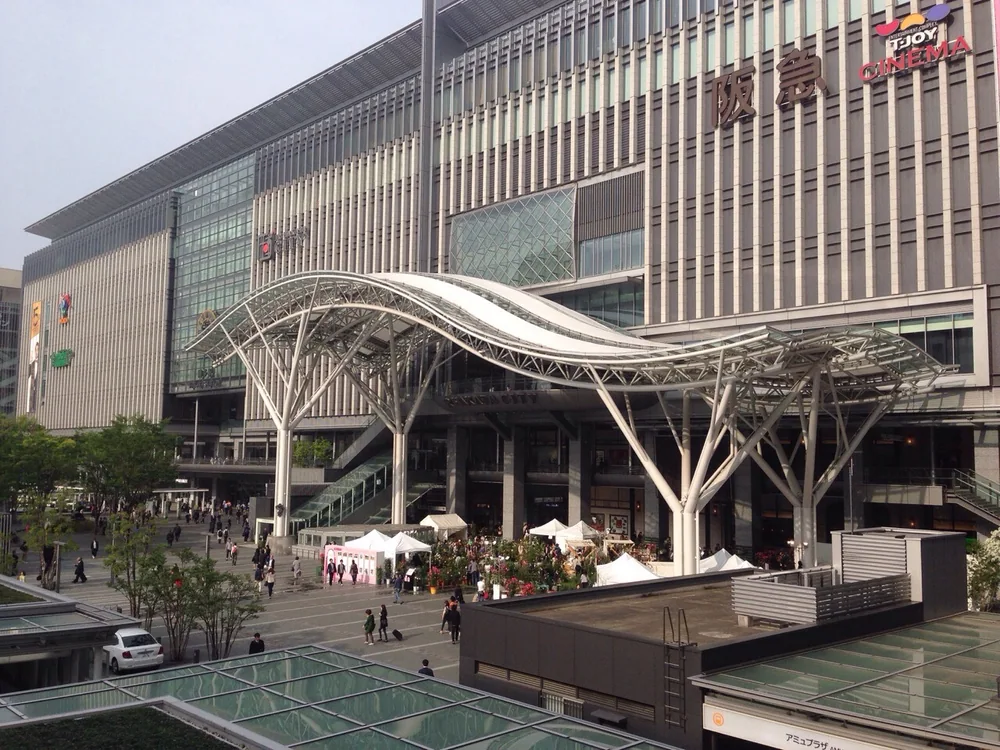
Hakata DEITOS and City Dining Kooten (シティダイニングくうてん) have separate dining-area maps. Each DEITOS floor serves a different purpose, while Kooten’s ninth-floor plan shows its restaurants directly. Once you are at the station, choosing a floor and comparing two restaurants there saves effort over trying your luck between basement and upper floors. Starting your visit with a meal of a familiar size also helps you judge how many snacks you can fit into the next two days.
If you have a train to catch, sort out tickets and find the platform entrance before eating. Note the restaurant’s last-order time and your train’s departure time separately. If there is already little time left and your food has not arrived, choose a meal that can be served promptly instead. On a day without onward travel, choose the restaurant you want and browse the station at leisure. These two situations need different time allowances, even within the station. For luggage, check the official locker locations first and note the floor and a nearby landmark, so you can return directly.
Four station-area menu examples: portions and minimum orders
For soft noodles, consider Inaba Udon (因幡うどん) on basement level 1 of Hakata DEITOS. JR Hakata City’s local food guide explains Hakata udon’s soft texture and lists combinations such as niku goboten udon (肉ごぼう天うどん), with meat and burdock tempura. If you usually prefer chewy noodles, this difference matters. If you want local flavours, compare a meal here with tonkotsu ramen rather than travelling elsewhere for more noodles of the same texture.
Hakata Ichibangai’s official local food page has several combinations you can compare directly. As of 26 October 2026, Daifuku Udon’s Marufuku Set (まるふくセット) is listed at ¥970 including tax, with maruten fishcake udon, inari sushi and other accompaniments. It is served from 9:00 until the inari sushi sells out. Hakata no Kaisen Ryori Kisuimaru (博多の海鮮料理 喜水丸) lists Hakata goma saba at ¥1,190 including tax. The first can be a full meal; the second is a mackerel dish with sesame sauce. Check whether you will add rice or other dishes when budgeting, rather than comparing only the price beside a dish name.
On the same page, Oraga Soba (おらが蕎麦) lists motsunabe at ¥1,280 per person including tax, with a minimum order of two portions, served from 17:00 to 22:00. It fits an evening meal. For two people, the hotpot alone costs ¥2,560, with drinks and extras charged separately. Solo travellers should choose another restaurant offering a single portion rather than discover the minimum order after sitting down. Open your chosen restaurant’s menu for that day before setting out, decide on the main dish and then consider any sides.
Note the branch as well as the brand. The Inaba Udon discussed here is on basement level 1 of DEITOS; Daifuku Udon and Kisuimaru are the Hakata Ichibangai branches. Enter the full facility name in your navigation app to reach the right entrance. Save four details for each option: building, floor, restaurant and main dish. Head to that floor on arrival, and switch to the second option in the same area if the first queue is too long. If all you want is udon for lunch, a nearby suitable meal meets that need without crossing the station again to reach a fallback on the other side.
A meal in Kawabata, with the arcade as your walking route
Kawabata Shopping Arcade runs south from the Nakasu-Kawabata Station area; the official area guide gives its length as about 400 metres. Enter from the station end and walk towards Kushida Shrine, then decide after lunch whether to continue to Canal City Hakata or the river. This main route is easy to follow, so everyone can meet back along it if you briefly split up to shop. Put a shrine visit either before or after the meal, so nobody has to get up just after sitting down to go back for another photograph. The area suits a seated lunch with a little shopping along the way. If you need a longer rest, a toilet or time to sort your bag, finish the meal before moving on. Eat anything you are carrying in a place where eating is allowed, keeping shop entrances clear. The arcade roof shelters much of the walk, but junctions on the way to other buildings still include outdoor stretches. In heavy rain, keep to the arcade itself.
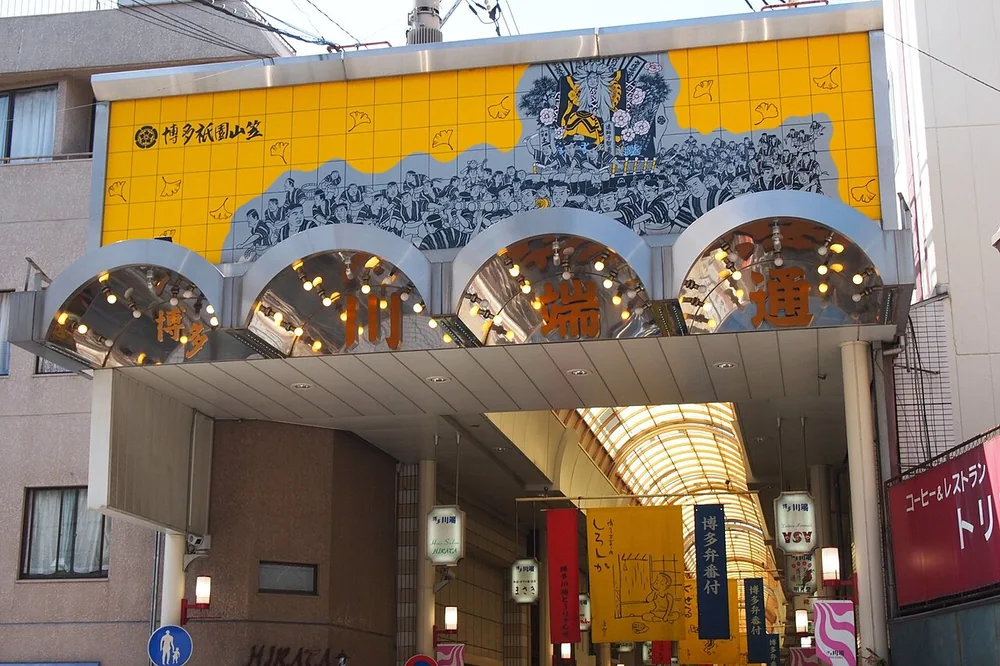
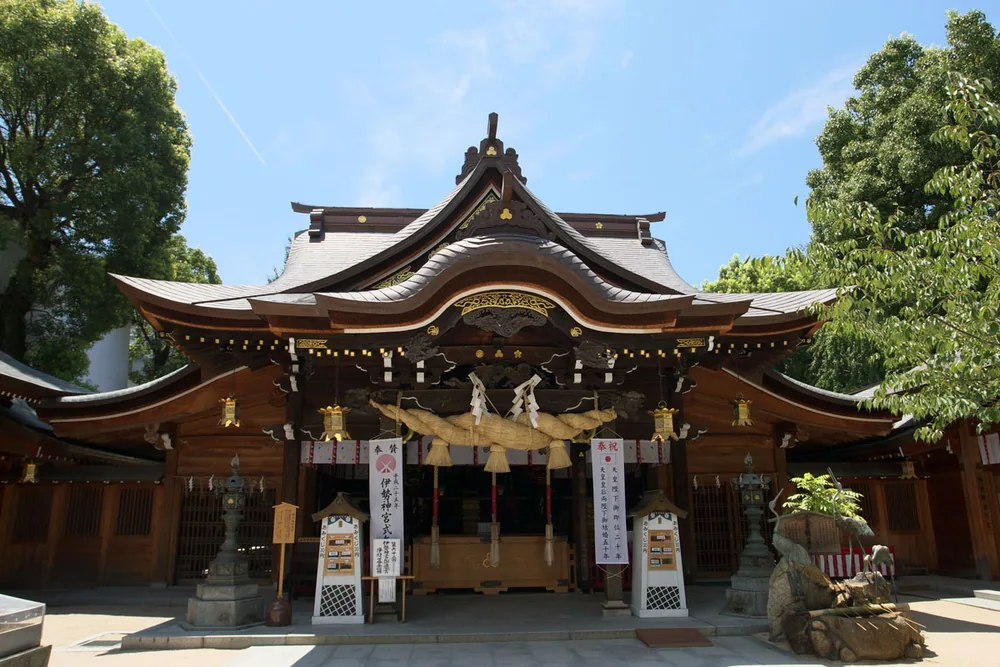
Kawabata adjoins Nakasu and suits anyone who wants a longer walk before dinner. If you are only passing through at lunchtime, it is also easy to return to the station afterwards. Treat “Kawabata by day, back for yatai at night” as two separate outings and the extra journey becomes clear. If you are staying some distance away and have a restaurant booked that evening, see the riverside during the daytime visit too. Use the time saved from a second journey for rest or shopping.
Shopping in Tenjin: start with what you need to try on
Order your Tenjin shopping list by the time each purchase needs. Start with clothes, shoes and items whose specifications need comparing; leave souvenirs you can simply pick up until later. Before entering the first building, choose two main shopping categories and a dinner location. Once you find a suitable item, consider that part done rather than repeatedly revisiting it because the next shop sells it too.
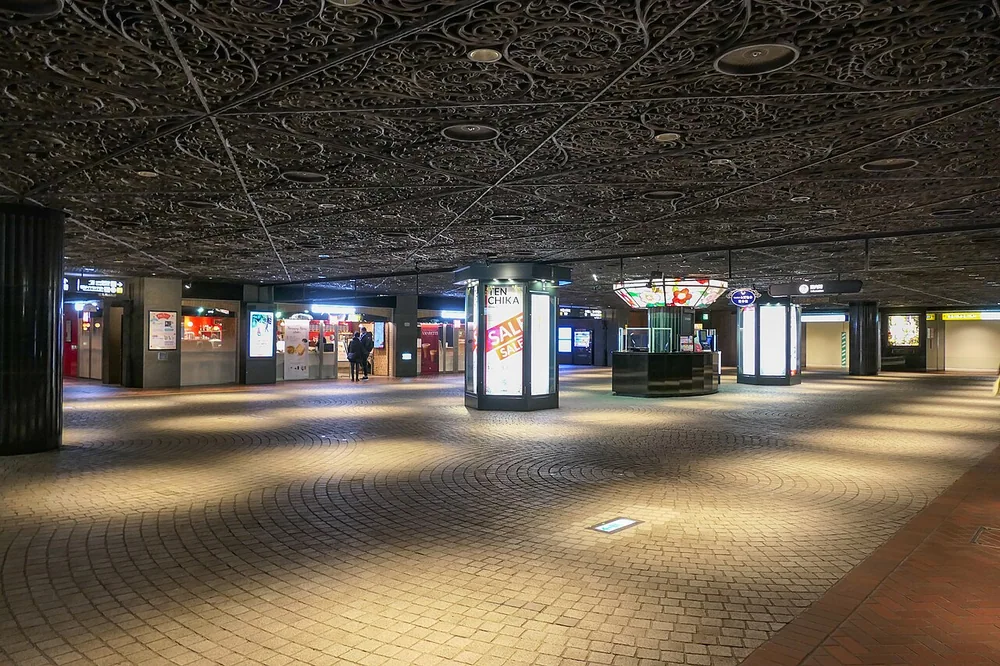
The Tenjin Underground Shopping Mall facilities page lists general shop hours as 10:00–20:00 and dining outlets until 21:00, with some shops keeping different hours. Passage opening times are separate from shop hours. Keep the afternoon for shopping; being able to walk through the mall in the evening does not mean there is still time to try on clothes. For a 19:00 dinner booking, finish the last shop early enough to change buildings, collect belongings and walk to the restaurant.
Tenjin and Tenjin-Minami stations are on different lines. From Hakata, the end of the underground mall you are heading for affects which station saves walking at street level. The same station may not be best for both journeys. Check the mall’s official access map and mark your shops and return entrance on it. For a meeting point, give the east or west side, the numbered section and the shop name. That is clearer than “the middle of the underground mall” and saves the whole group stopping to find its way again.
Explore Daimyo’s side streets at their own pace
Daimyo is west of Tenjin. Walk there after your main Tenjin purchases, or, if clothes and independent shops are the main aim, start around Akasaka Station on the Airport Line and finish towards Tenjin. Fukuoka City Subway’s neighbourhood walk guide describes a mixture of second-hand bookshops, clothing shops and places to eat, with street names including Daimyo Konya-machi-dori. Save shop addresses and photographs of their fronts before setting out; these are more useful than product photographs alone. Choose a small cluster of streets and stop wherever interests you. Small shops here do not fit a “see everything in an hour” estimate. Finding shops and trying things on can take much of the afternoon. If your group has different levels of interest in shopping, pick a café where you know you can sit: some can keep shopping while others rest, then meet again to choose dinner. This avoids making uninterested companions wait outside every shop.
Daimyo and Tenjin work on the same day, provided you adjust the time given to each. Shorten the department-store visit if you want to try clothes on properly. If your purchases are done and you only want a walk, choose one stretch of Daimyo’s side streets. In rain, visit one chosen shop and retrace your steps to Tenjin rather than covering every lane to complete a circuit. If sunset, coffee and dinner are all on different corners, the walk becomes more fragmented than the map suggests. Choose a direction for the final part of the day.
Choose Nakasu, Tenjin or Nagahama, then compare menus
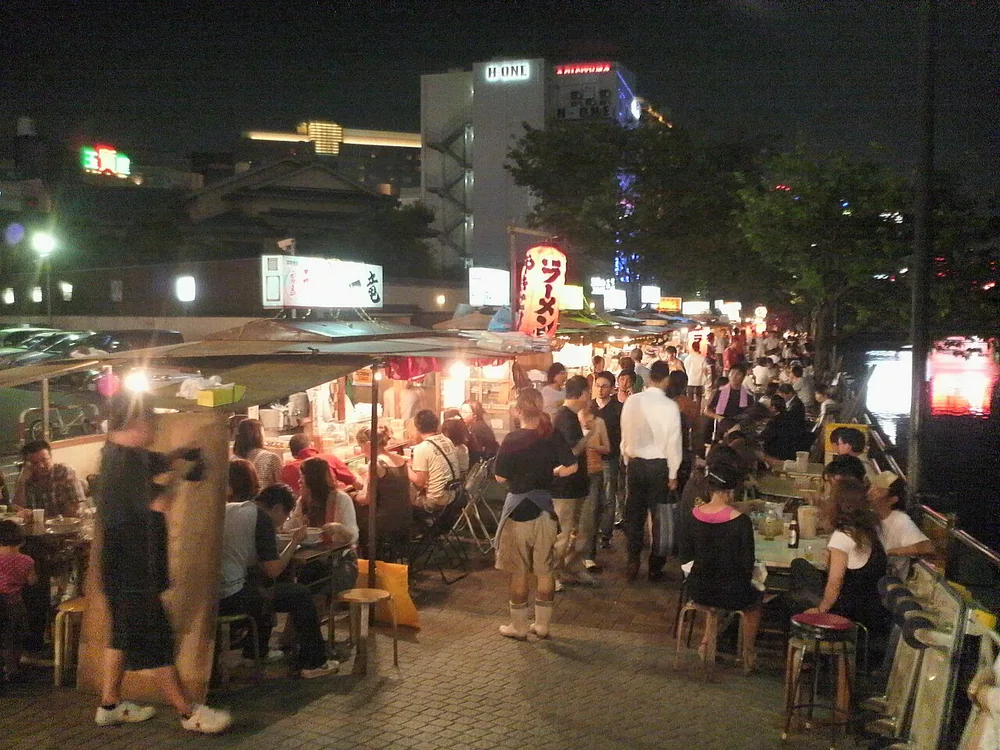
Choose the Nakasu riverside for yatai lights and river views. If you have spent the afternoon shopping in Tenjin and are staying nearby, look at Tenjin stalls first. Use Fukuoka City’s official yatai page to open the map or list, check dishes, locations and individual stall pages, then save two options in the same area. Choosing an area first keeps any change of plan local. Crossing to another district when the first stall is full can turn a light evening meal into a long search.
The riverside offers a walk before or after dinner and appeals to anyone wanting night photographs. Tenjin fits easily after shopping. The menu determines whether a yatai suits your tastes; its location determines how conveniently the evening fits together. Choose a stall with dishes you want and clear ordering information before considering its queue. Sitting down as soon as you spot a sign may mean missing ingredients or ordering conditions that do not suit someone in your group.
Keep a regular restaurant as a fallback for a full dinner, close enough on the map to walk straight there. If the yatai do not open that night, eat indoors and still enjoy the riverside walk. If you have a dinner booking that cannot be delayed, put yatai on another night. This avoids waiting at the roadside while calculating how long the restaurant will hold your table.
Nagahama suits anyone making yatai food the focus of the evening. All three options below are at Nagahama 3-chome 14 in Chuo Ward. Their official pages give access as about a 10-minute walk from Akasaka Station on the Airport Line. Go to Nagahama, choose a stall in the area and return to the station after eating. For meat-wrapped vegetables, consider Nagahama no Hiroshi (長浜のひろし). For mentaiko dishes, try Mentai Chudoku (明太中毒); for a bowl of tonkotsu ramen, look at Tamachan Bekkan (たまちゃん別館). Unlike choosing Nakasu for its river views or Tenjin for shopping, here your preferred dish decides the evening.
Mentai Chudoku’s official page lists mentai tororo nabe (明太とろろ鍋), a mentaiko and grated yam hotpot, at ¥1,000, mentai spring rolls (明太春巻き) at ¥700, and mentaiko, pork belly and lettuce rolls (明太豚バラレタス巻き) at ¥850. The prices are dated April 2026. Choose the grated yam hotpot if you want mentaiko as the centre of the meal, or one of the rolls for a smaller dish; drinks cost extra. The page lists hours of 18:00–1:00 the following day, irregular closing days, credit-card payment and bookings through the stall’s Instagram account. Choose the food first, then decide whether to book. Two people can eat at one stall without travelling to a different area for each dish.
For a smaller appetite and a taste of Nagahama ramen, Fukuoka City’s July 2026 feature introduces Yatai no Tamachan Bekkan (屋台のたまちゃん別館). A regular tonkotsu ramen is ¥750 and a half portion ¥600, a difference of ¥150. Choose the half portion mainly for its smaller size. The stall’s page also lists oden and skewers from ¥200 each, with those prices dated May 2026. Hours are 18:00–24:00, closing days vary, and credit cards are not accepted. Choose a regular bowl as your main meal if noodles are all you want. After a few small dishes, a half portion can finish the meal.
A 2025 short film introducing Hakata yatai, featured on Fukuoka City’s official tourism website.
Eat first or wait for the stalls: plan around opening times
The official first-time yatai guide puts most opening times around 18:30–19:00, with some starting around 18:00 and many closing around midnight. If equipment is still being assembled at dusk, allow time for preparation. An early-evening street photograph does not give a fixed serving time. Children or older companions who need their usual dinner around 18:00 can eat at a restaurant first, with others visiting yatai in smaller groups later.
If yatai are the main meal, keep afternoon snacks small. First choose a stall serving the main dish you want, and leave other snacks for another afternoon. Anyone with a small appetite especially needs a gap between afternoon tea and dinner. If strong winds and heavy rain are forecast that evening, switch directly to an indoor restaurant: the official guide says many stalls close at short notice in such weather.
Seating and ordering: give your group size, then read the prices
Tell the owner how many people are in your party and let them arrange seats. Join the back of any queue. An empty stool may be reserved for a group that has not sat down yet; asking first is easier than sitting without checking.
Fukuoka City’s yatai rules Q&A requires prices to be displayed where customers can see them. Even dishes whose prices change with ingredient costs must show the day’s price. Before sitting down, check main dishes, drinks, any otoshi appetiser or seat charge, and minimum ordering requirements. If you cannot read the menu, point to it and ask for the total. On a tight budget, start with items whose prices you understand and check again when adding dishes, rather than guessing from a neighbouring customer’s plate whether something is a set or a separate order.
One drink and one dish per person is generally a useful starting order, and non-alcoholic drinks are an option. Make sure everyone has an order of their own, then ask whether larger dishes can be shared. Two people lingering over a single bowl of noodles occupy space other diners need. Eat when the food arrives. Keep photographs to your own table; ask before photographing the owner or other customers. Pay and leave when you finish eating, and move somewhere suitable if you want to keep chatting.
On a Japanese menu, start by recognising 一人前, 二人前より and セット. 一人前 gives the price for one portion; 二人前より means a minimum order of two portions; セット means a set, whose contents you need to read. The size of the dish in a photograph cannot tell you which applies. Point at the menu and indicate the quantity. When the owner repeats the order, point to the same dish again, confirming drinks, food and additions separately. If asking for a recommendation, first explain any ingredients you avoid and roughly how much you want to eat. That helps avoid a table full of recommended dishes nobody wants.
Build your yatai budget from the menu
Before going out, choose an amount you are happy to spend that evening, then use the menu to work out what it will cover. Start with a drink and main dish per person, then add shared small dishes. Include any seat charge or fixed appetiser. If two of you want to try a second stall, order only what each can finish at the first. Read the full ordering conditions again at the second stall; moving on brings a new order, not simply another seat.
Have cash ready and ask before sitting down whether other payment methods are accepted. Having one person pay the shared bill is smoother than recalculating a split every time a dish arrives. If you want to pay separately, say so before ordering. If you only have large notes, break one during an ordinary purchase earlier rather than ask a busy stallholder for a large amount of change. If the bill raises a question, use the menu to check it item by item and settle quantities and extras there.
Choose cooked food at yatai, and eat raw fish elsewhere
Fukuoka City’s yatai operating conditions prohibit raw food, require food to be thoroughly heated before serving, and prohibit takeaway and delivery. For goma saba, sashimi or other raw fish dishes, choose an indoor restaurant that serves them. At yatai, look for ramen, skewers, oden and dishes cooked on site. Choosing the right setting saves looking for a dish the stall cannot serve after taking a seat.
When sharing several hot dishes, order the one you most want first and add more once you see the portion size. Stalls specialise in different food: some suit a single main dish and a quick visit, others small dishes with drinks. Check the official stall page for its main offerings, then decide whether it belongs in your plan as a full or lighter meal. If the next table has ordered many dishes, count how many people are sharing before copying the whole order.
Yatai seating is narrow. Keep bags neatly by your own feet, and return rubbish and tableware to the stall. Ask the owner where to find a toilet rather than wandering towards nearby homes or shops looking for an entrance. The official yatai etiquette article also asks customers to give one another space and respect conversational boundaries. Let someone who wants a quiet meal finish it without questions about their accommodation, work or personal relationships.
A leisurely evening meal of hotpot or raw fish
Save a full restaurant dinner for a dish your group enjoys together. For motsunabe, check the minimum portions and broth first. For mizutaki, check whether it comes as a set, the serving sequence and whether separate dishes are available. If the price is per person, enter the actual group size when booking. If only one family member wants offal, a restaurant with a wider menu gives the others different main dishes and makes dinner easier than asking everyone to share a pot at a specialist restaurant.
The Fukuoka Prefecture tourism guide’s hotpot comparison explains that motsu means offal from cattle, pigs and other animals, often cooked with vegetables in a miso- or soy-sauce-based broth. Mizutaki uses chicken bones and bone-in chicken to make the broth, with seasonings such as ponzu added according to how it is eaten. Look at motsunabe if you like garlic and the texture of offal, or mizutaki if you prefer chicken. Let the staff explain the method. Taste the plain broth first, then decide how much seasoning to add, rather than pouring all the sauce into the shared pot at the start.
Fish dishes such as goma saba can be ordered individually or as a set meal. For a taste, order one portion alongside cooked dishes. For a main meal, check whether rice, soup and side dishes are included, and budget for the whole meal. If this dinner already includes sashimi and another fish dish, noodles or hotpot at the next meal will offer more variety than more similar dishes. Agree beforehand which ingredients everyone eats; discussing them for the first time at the restaurant slows the whole table’s order.
Once dinner is booked, set the afternoon’s furthest stop at a distance that lets you return on time. Cancel or change the group size through the original booking channel and keep the reply. Give the booking name on arrival without creating a second reservation. If you want to linger somewhere with a good night view, choose by the restaurant’s seating, dining time and menu. Take photographs before or after the meal, so you can stay at the table while eating.
Ask about broth and sauces when discussing dietary requirements
If you do not eat pork, check both ramen broth and chashu, and the meat toppings on udon. Vegetarians need to ask about stock, sauces and shared cooking equipment. Removing meat slices does not change the ingredients of the whole dish. Write short sentences explaining what you can and cannot eat, send them to your chosen restaurant, and decide on the meal after learning which dishes it can provide. This is quicker than removing ingredients one by one after sitting down. For allergies or other dietary requirements, name the exact ingredients and any contact with them during cooking that you need to avoid. Choose a restaurant that can give a clear reply. A cramped, busy yatai is not suited to a lengthy ingredient-by-ingredient discussion. You can leave the yatai to other companions, eat at the restaurant you have already agreed arrangements with, then meet again. Decide this before going out, so nobody ends up waiting while everyone else eats.
You can also say before ordering that you do not drink alcohol. To enjoy the yatai atmosphere without drinking, look for a stall with non-alcoholic drinks and suitable ordering arrangements. For a long evening of drinks and conversation, choose a place with comfortable seating rather than making a small stall that needs to turn tables your only destination. If you have an early train or bus the next morning, eat on the side of town with an easy journey back to your accommodation, then return to pack.
Rainy days: keep food and shopping close together
In steady rain, the easiest options are a meal and shopping inside Hakata Station, or Tenjin Underground Shopping Mall with a visit to your main chosen shop. Spend less time by the river and in Daimyo’s outdoor lanes, and keep dinner indoors. There is no need to repeat the morning’s completed purchases simply to shelter from the rain. When you need a rest, order a meal or drink, warm up, sort out wet shoes and socks, then decide whether to continue. Near Kawabata, you can head from the arcade towards Canal City Hakata, though you still need to check the route at street level. The official Canal City access page shows entrances and ways to reach the complex; use its restaurant guide separately when choosing where to eat. If rain makes walking difficult, eat in the same building rather than travelling back and forth to fit in two shopping districts.
Finish rainy-day shopping within shop hours too. If you still need to find a seat for dinner, leave the last shop first and then go to the dining floor you have chosen. Allow time to try on clothes and find a restaurant before last orders. If the restaurant you want has no seats that evening, choose another suitable main meal in the area and leave the outdoor streets for the following day.
One afternoon: a light food route from Kawabata to Nakasu
For an afternoon focused on streets and the evening riverside, go to Nakasu-Kawabata Station after lunch, walk through Kawabata Shopping Arcade, visit the Kushida Shrine area and finish by the Naka River at dusk. If lunch was late or you do not want a shrine visit, go straight from the arcade to the river. Make just one snack or drink stop on the way, leaving an appetite for yatai that evening.
The yatai area lies along this evening route. Decide whether to sit down from the menu and available seats. If you would rather save time for the night view, take a short riverside walk and return to Nakasu-Kawabata Station. If temples, shrines and streets matter more, spend longer in Kawabata by day and keep the night view brief. Both versions stay in one area without adding another shopping trip at dusk.
Plan the return journey to the actual entrance of your accommodation. For somewhere near Hakata Station, return to Nakasu-Kawabata for the Airport Line, or compare Nanakuma Line entrances from where you are. For Tenjin, see whether walking directly is easier. Enter the specific building in your navigation app to see bridges, junctions and the final walk. Finish this area that evening and leave Tenjin shopping for another afternoon.
Shopping first: a half-day from Tenjin to Daimyo
Start the afternoon in Tenjin Underground Shopping Mall or a chosen department store for your main purchases, continue to Daimyo’s small shops, then return towards Tenjin for dinner. This suits anyone whose priority is shopping. A coffee stop between the two rounds gives you somewhere to sit and discuss what you tried on. If you find a shop you love in Daimyo, shorten the later return to the underground mall. For anything still on the list, decide whether you need it today. Dinner can be at an indoor restaurant whose menu you have already read, or a lighter meal at a Tenjin yatai. If buying chilled food that evening, make it the final stop and take it back to your accommodation under the storage conditions on the packaging. Leave refrigerated purchases until after an afternoon of trying on clothes and drinking coffee.
This route also allows two people with different interests to split up briefly. Agree on the exact shop entrance and meeting time, and both save the address. One can shop while the other rests, without dragging each other into every brand. Meet before dinner and choose something you both want to eat, then spend the rest of the evening together. If your food priorities are completely different, eat your main meals separately and meet at the river or a café afterwards.
Solo travellers, groups and families need different dining arrangements
When eating alone, start with single-portion main dishes and counter seating. Ramen, udon and set meals make portions easy to judge. For hotpot, find a restaurant that explicitly offers hotpot in single portions. Travelling alone need not mean giving up hotpot or having to order at least two portions. At yatai, ask whether there is room for one, have a main dish or a few small plates, then decide after eating whether you want a second stall.
For four or more people who want to sit together, a restaurant is usually the better shared dinner option. Those interested can make a separate, short yatai visit. A shared travel budget can cover only the full restaurant dinner, with yatai paid for by those who go. This is fairer to companions who do not drink or prefer an early night, and avoids people feeling obliged to join simply because they have already paid.
Families and travellers with limited mobility should choose by seating, toilets and entrances first. To show children the yatai, take a short walk after they have eaten and see how much energy they still have on arrival. If you want to eat there, ask about seating and where a pushchair can go, then sit down once suitable arrangements are agreed. Large groups, travellers unable to use high stools and anyone needing a particular access width can enjoy local dishes in a restaurant and shorten the evening walk to suit their energy.
Choose transport tickets and your final meal around the journeys you need
A day of food and neighbourhood walks often needs just one underground journey out and one back, with walking in between. The Fukuoka City Subway one-day pass currently costs ¥640 for adults and ¥320 for children. Tickets bought from a machine are valid only on the day of purchase, on the municipal underground network. Add up the single fares for your actual journeys before deciding. One ride between two shopping areas is no reason to add a detour just to get value from a pass. For your final meal before leaving Fukuoka, choose a restaurant near Hakata Station whose menu you have already read, keeping luggage collection and onward transport in the same area. Eat the main dish you want first, then buy only the souvenirs you have chosen. Select chilled products according to their storage instructions and the length of your journey home. To try something new, pick a small portion from the shop you are already in. Avoid staking luggage collection and your departure on an uncertain restaurant queue in the final hour.
Save three things on your phone before going out: a map of today’s neighbourhoods, the main restaurant or yatai menus, and the entrance for your accommodation or station. When everyone knows when to eat and where to meet, you can stop at an interesting small shop along the way. For trip length, accommodation and side trips, see the Fukuoka three-day guide and alternative day trips. Fit your food-and-shopping afternoon into an open part of that plan, then choose the next meal from the neighbourhood around you.
A few useful answers
Should I choose Nakasu or Tenjin for my first yatai visit in Fukuoka?
Choose Nakasu for river lights and a walk. If you are shopping in Tenjin that afternoon and staying nearby, start with Tenjin. Use the official map to save two stalls in the same area with suitable menus, plus a nearby indoor restaurant as a dinner fallback.
Do I have to drink alcohol at a yatai?
Non-alcoholic drinks are an option. Check minimum ordering requirements before sitting down. One drink and one dish per person is generally a useful starting point. If you need particular ingredients accommodated, ask the stall in advance which dishes it can provide.
Can I eat hotpot alone in Fukuoka?
Choose a restaurant that explicitly accepts single-portion orders. Even when a menu gives a per-person price, check the minimum number of portions. One named Hakata Ichibangai example in this guide requires two hotpot portions; solo diners should choose another restaurant or main dish.
Do I need an underground day pass for a Fukuoka food-and-shopping day?
Add up the fares for your actual journeys, then compare. If you only travel out and back and walk within one neighbourhood, check single fares first. The municipal underground one-day pass costs ¥640 for adults and does not cover Nishitetsu or JR.
Official information and references
Sources used in this guide.
- Fukuoka City official area guide
- Fukuoka City official yatai map and guide
- Fukuoka City official first-time yatai guide
- Fukuoka City yatai rules Q&A
- Fukuoka City yatai operator applications and operating conditions
- Fukuoka City official yatai etiquette guide
- JR Hakata City restaurant guide
- JR Hakata City local food guide
- JR Hakata City DEITOS floor plan
- JR Hakata City Kooten ninth-floor plan
- Hakata Ichibangai local food and menus
- JR Hakata City coin locker locations
- Tenjin Underground Shopping Mall facilities and opening hours
- Tenjin Underground Shopping Mall access
- Fukuoka City Subway neighbourhood walks: Daimyo
- Canal City Hakata access
- Fukuoka City Subway route map
- Fukuoka City Subway one-day pass
- Fukuoka Prefecture official tourism guide: motsunabe and mizutaki compared
- Fukuoka City official guide: Nagahama no Hiroshi menu and location
- Fukuoka City official guide: Mentai Chudoku menu and bookings
- Fukuoka City official guide: Yatai no Tamachan Bekkan menu and payment
- Fukuoka City official guide: Nagahama yatai feature, July 2026