How to pick rental locations in Kyushu, what driving permits you need, Fukuoka Airport shuttle details, KEP toll pass pricing through March 2027, and routes through Beppu, Kurokawa, Aso, and Kagoshima.
- Region & Focus
- KyushuTransportation and passes
- Reading Scope
- 19 min read · 12 chapters · 7 Q&As
- Official Verification
- 29 official sources checkedUpdated November 22, 2026
- Key Topics
- First tripBookingItineraries
Chapter Route Map (tap any stop)
- Map Out Your First and Last Rental Days Before Booking
- Taiwanese License Translation and Pickup Documents
- Check In on International Terminal 1F, Navigate Back to the Branch
- KEP Runs Through March 2027—Check Your Interchanges First
- Check Vehicle Size and Insurance Columns Beyond the Base Rate
- Three Days Across Kuju: From Yufuin to Kurokawa
- Five-Day Northern Loop: Put Yabakei Before Beppu
- One-Way to Kagoshima: Decide on the Sakurajima Ferry That Morning
- Aso Crater Closures: Check Exactly Which Section Is Closed
- Rerouting Around Ice, Typhoons, and Heavy Rain
- Right-Hand Drive Basics, Refueling, and Return Checklist
- Taking the Shinkansen After Dropping Off in Kumamoto—Calculating Rail Passes by Actual Riding Days
- Quick Q&A
For a first road trip in Kyushu, save the rental car for the mountain roads between Beppu, Kurokawa Onsen, and Mount Aso. Explore Fukuoka by subway first and pick up the car the day you leave the city. If you are only visiting Kumamoto City and Kagoshima City, the Kyushu Shinkansen saves hours behind the wheel. Travelers using a Taiwanese driver's license must bring the original valid license, an official Japanese translation, and their passport at pickup. The current Kyushu Expressway Pass (KEP) runs through March 31, 2027; if you only plan to drive a few highway stretches, check point-to-point tolls before adding the pass.
Map Out Your First and Last Rental Days Before Booking
Lock in your drop-off branch on the itinerary first. If you are flying back out of Fukuoka after driving the mountains, a round-trip rental from the same Fukuoka branch makes an easy loop. If you are continuing to Kagoshima and want a night in Aso, set a branch near Kumamoto Station as your road-trip endpoint and switch to the Shinkansen from there. For southern Kyushu routes into Kirishima and Ibusuki, keep the car longer and book a one-way drop-off in downtown Kagoshima or at Kagoshima Airport—the downtown drop-off connects to the Shinkansen, while the airport branch connects to flights.
The Oita Expressway heads east from the Tosu Junction toward Hiji, the Kyushu Expressway runs down the western spine to Kagoshima, and the Higashi-Kyushu Expressway follows the Oita and Miyazaki coast. Use expressways on long-haul transit days so you have daylight left for highlands and hot-spring towns the next day. Looping all the way from Fukuoka down to Kagoshima and back up the Miyazaki coast requires at least a full day each for the southbound leg and the eastern northbound return. Travelers flying in and out of Fukuoka often end up burning that buffer on a rushed final return.
Two travelers might only need a car for three days: take a train or bus to Yufuin for one night, pick up a pre-booked car to cross Kuju to Kurokawa, then drive into Aso and on to Kumamoto the next day. A four- to five-day northern Kyushu loop works well if you want an overnight soak in Beppu and autumn foliage in Yabakei. A five-day one-way trip to Kagoshima needs a dedicated transit day between Kumamoto and Kirishima. Add Ibusuki or Miyazaki only from day six onward, and budget a night at each if you plan to stop at sights along both.
Set your GPS start and end points to hotel entrances, public parking lots, or expressway interchanges rather than city names alone. Typing just "Aso" could route you to Aso Station, Kusasenri up on the volcano, or Daikanbo on the northern caldera rim. Beyond driving time, factor in pickup paperwork, parking queues, and shuttles. Working backward from your ryokan's dinner check-in deadline makes it much easier to see which stop needs to be cut than penciling in neat hourly slots next to place names.
| Where You Want to Go | Pickup & Drop-Off Setup | Sample Rental Duration |
|---|---|---|
| Beppu, Yufuin, Kurokawa, Aso | Round-trip from Fukuoka, or pick up around Oita and drop off in Kumamoto before boarding a train | 3–5 days |
| Autumn foliage in Yabakei plus northern hot springs | Round-trip from Fukuoka, starting the northern loop via Nakatsu | 4–5 days |
| Arrive in Fukuoka, drive Aso and Kirishima, depart from Kagoshima | Pick up in Fukuoka, one-way drop-off in Kagoshima | 5+ days |
| Fukuoka City, Kumamoto City, Kagoshima City | Travel by rail and rent a car only for Aso day trips or mountain crossings | 0–2 days |
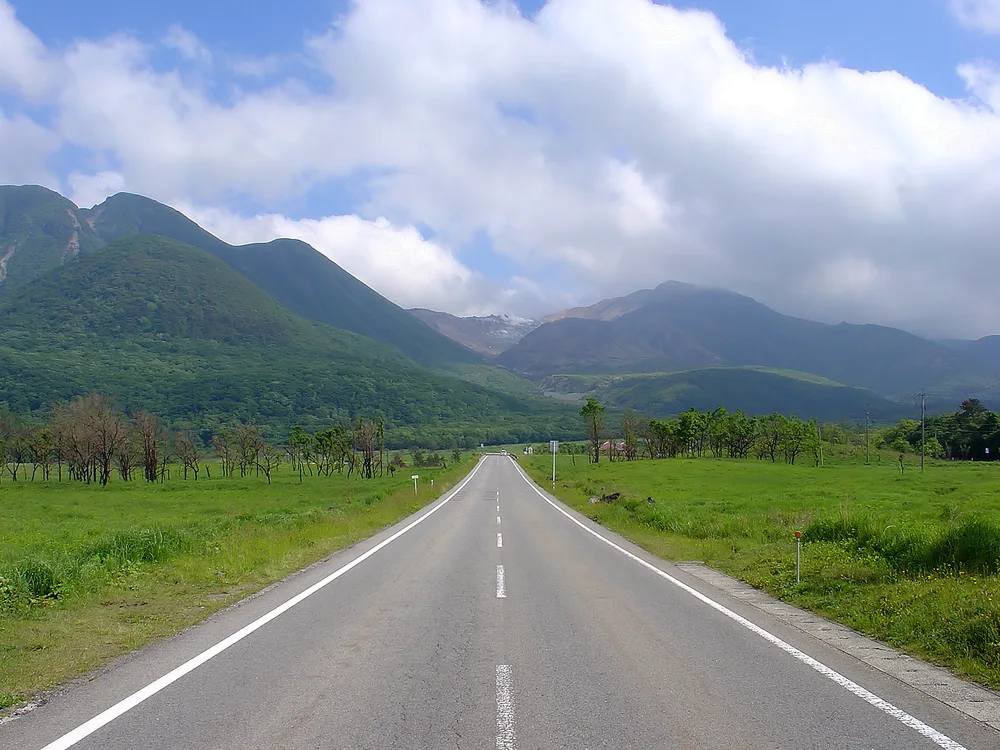
How to pick rental locations in Kyushu, what driving permits you need, Fukuoka Airport shuttle details, KEP toll pass pricing through March 2027, and routes through Beppu, Kurokawa, Aso, and Kagoshima.
Taiwanese License Translation and Pickup Documents
If you are driving on a Taiwanese license, apply for the Japanese translation at a Motor Vehicles Office in Taiwan before departure. In-person applications through the Directorate General of Highways require your original driver's license and national ID card, can be processed across jurisdictions for a NT$100 fee per copy, or submitted online through the agency's portal. Check every name and address field on the translation against your license once you receive it. For short-term visitors to Japan, driving validity lasts for one year from your date of entry or until your Taiwanese license expires, whichever comes first. International Driving Permits issued in Taiwan are not valid under this reciprocal agreement.
Pack your original Taiwanese driver's license, the valid Japanese translation, and your passport in your carry-on before boarding. If two people plan to share driving duties, complete the registration together at the counter with both drivers' documents listed on the rental agreement. Have the second driver practice around the branch neighborhood to get used to right-hand drive before taking over on mountain roads. If the second driver arrives a day later, ask the rental company in advance which branches allow adding a driver and what procedure is required before they get behind the wheel.
Staff also check your passport to verify your date of entry. The Japan National Tourism Organization (JNTO) notes that travelers using automated immigration gates at airports can step over to a staffed counter to get an entry stamp for smooth verification at rental desks. If you arrive in Japan without the translation, applications through the Taiwan representative offices listed by the Highway Bureau require cross-agency verification and cannot be issued on the spot. Switching to trains and buses from Hakata preserves your pre-booked Fukuoka hotels without leaving travel companions waiting at the airport for paperwork.
Check In on International Terminal 1F, Navigate Back to the Branch
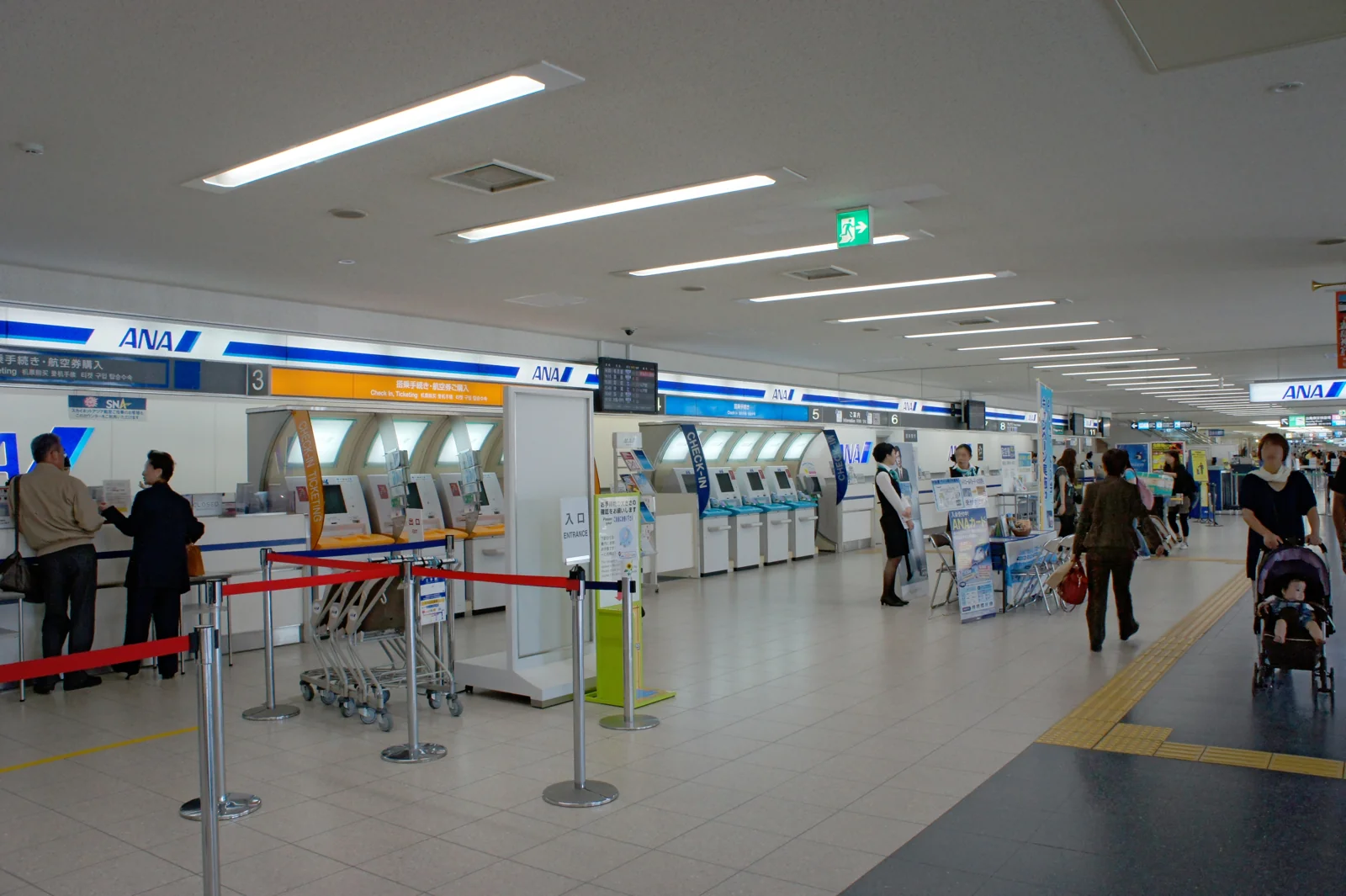
Car rental counters at Fukuoka Airport are located on the first floor of the International Terminal; there are no rental counters inside the Domestic Terminal. If you are arriving on an international flight, follow the post-customs desk signs rather than trying to find a branch lot on a map. With Nippon Rent-A-Car, for example, international arrivals check in at the counter to the left of the arrivals exit and take the shuttle from the 1F rental car pick-up zone to the branch. On return, you drop the car off at the branch itself, finish checkout, and ride the shuttle back to International Departures.
Travelers arriving at the Domestic Terminal or by subway take a different route. At the same company's Domestic Terminal branch, you exit Gate A on 1F and cross the Kuko-Kita intersection—a three-minute walk according to its website—which also sits near Subway Exits 4 and 5. When your reservation says "Fukuoka Airport," double-check whether it specifies Domestic Terminal, International Terminal, and the exact branch name. If you head to the wrong terminal, a free inter-terminal shuttle bus connects them, though you will need to pad your return-day schedule for the extra transfer.
If your first night is in Hakata or Tenjin and you only plan to explore the city and grab dinner, take a bus into town or ride the subway from the Domestic Terminal and pick up your car in Hakata the next morning. You save a night of parking fees and keep pickup flexible if an evening flight is delayed. If you stay near the airport before driving to Beppu, schedule a morning pickup and pick a lunch spot with a spacious parking lot for your first drive. Leaving the International Terminal area, you can enter the Fukuoka Urban Expressway via the Handobashi Ramp and merge onto the Kyushu Expressway at the Dazaifu IC—list the urban expressway toll separately when budgeting.
For an early-morning flight out, weigh returning the car the night before against a same-morning drop-off. Write out the sequence in order—branch opening hours, refueling, vehicle inspection and ETC settlement, shuttle transfer, and flight check-in—before deciding where to depart from. Even when picking up in Hakata and returning at the airport within the same city, select the exact two-branch combination to pull an accurate quote. Save the Fukuoka Airport International branch's street address in your phone ahead of time so you navigate directly to the lot on departure day before transferring passengers and luggage to the terminal.
KEP Runs Through March 2027—Check Your Interchanges First
NEXCO West Japan's current Kyushu Expressway Pass (KEP) is valid through March 31, 2027. Application cutoffs phase out starting March 22 depending on the consecutive number of days selected. If you are traveling over spring break or across the turn of the month, budget point-to-point tolls for any driving from April 1 onward. A two-day pass starting March 30 finishes within the window, whereas a five-day pass starting March 28 extends past the program end date.
To use KEP, you must book an eligible standard-size car equipped with ETC and a designated ETC card through a participating rental branch. Check NEXCO's official list of participating rental companies and branches first, then include your pickup branch, drop-off branch, and pass duration on the same reservation. Some listed brands mark certain outlets as temporarily suspended, so open the specific company's branch list before booking. A standard rental ETC card simply pays tolls electronically, whereas KEP is an add-on flat-rate pass. If you already booked a car, contact the branch with your confirmation number to ask whether KEP can be added, then run the math.
Plug your planned entry and exit interchanges, travel dates, and vehicle class into NEXCO West Japan's Express Toll and Route Search tool, and use the ETC toll rates as your point-to-point baseline. Suppose eligible KEP segments across a five-day rental total ¥9,000 while the five-day pass costs ¥12,800: paying per segment saves ¥3,800 before factoring in any card rental fee. If all your long highway drives fall on two consecutive days, compare just those two days against a two-day pass, then add back non-covered tolls and card fees to compare totals.
Toll roads outside the pass, such as the Fukuoka Urban Expressway, are billed separately. Any trip where both entry and exit interchanges lie outside the KEP coverage zone is charged in full even if you pass through the covered area in between. If only one end is outside the zone, extra tolls are calculated from the boundary interchange. Drivers crossing between different expressway operators should match their interchange names against the official coverage map. If you spend several days solely on prefectural and national highways between Yufuin, Kurokawa, and Aso, a long-duration pass rarely pays off.
Before entering an ETC lane, verify that the onboard unit reads your card properly and follow signs to approach the gate at 20 km/h or slower. Any exit labeled "Smart IC" on navigation requires an active ETC card. Cash-only drivers should set their route to standard interchanges beforehand and double-check that exits near their hotel are not ETC-only. When using KEP, the toll gate display or onboard voice prompt may still announce standard single-trip fares; eligible segments are reconciled by the rental branch at return.
If you only have one or two highway stretches, rent a standard ETC card instead. At Toyota Rent a Car, for example, participating branches charge a ¥550 per-rental card fee and settle actual tolls when you return the car. At staffed or ticketed cash lanes, hold onto the entry ticket until exiting. If you accidentally enter an ETC-only gate or your card fails to read, pull smoothly into the "Support" or "ETC/Support" lane, stop safely, and use the intercom for staff instructions—never reverse.
| Consecutive Days | Pass Price | Final Application Date (2027) |
|---|---|---|
| 2 days | ¥6,200 | March 30 |
| 3 days | ¥8,400 | March 29 |
| 4 days | ¥10,600 | March 28 |
| 5 days | ¥12,800 | March 27 |
| 7 days | ¥17,200 | March 25 |
| 10 days | ¥23,800 | March 22 |
Check Vehicle Size and Insurance Columns Beyond the Base Rate
Pull two comparable quotes before booking, matching vehicle class, pickup and drop-off times, and insurance coverage. True road-trip costs include base rental, collision damage waiver (CDW) and non-operation charge (NOC) coverage, child seats, ETC fees, fuel, tolls, and parking—plus a one-way drop-off fee if applicable. Hotel parking is usually charged per night, while sightseeing lots charge per entry or by the hour; a car parked unused in the city for two nights still racks up overnight fees. If a round-trip return adds an extra half-day highway backtrack, add that time and toll to your comparison sheet.
Choose your car class backward from your luggage. Two travelers with carry-on bags fit easily in a narrow compact car, which parks more smoothly in hot-spring towns and makes road edges easier to judge around tight old-town corners. Four adults each bringing a large suitcase should check trunk dimensions with the rear seats upright. In a full seven-seater, confirm how many bags actually fit behind the third row—especially if you also have a stroller—as renting two smaller cars is sometimes easier. Before booking a larger vehicle, verify the length, width, and height limits of your hotels' parking lots.
In Japan, children under six years old are generally required to ride in a child safety seat. Enter each child's height, weight, and age when reserving so you get the right infant seat, toddler seat, or booster cushion. Leave extra time at pickup to check the installation manual, confirm the seat is anchored properly, and test luggage fit. When traveling with older relatives, prioritize cars with a low step-in height and pick rest stops with flat loading areas so everyone can get out and stretch easily.
Rental "Collision Damage Waiver" (CDW, or *menseki hosho*) waives your deductible in an accident, while the Non-Operation Charge (NOC) covers the rental agency's lost business if the vehicle cannot be rented out due to an accident or interior damage. Toyota Rent a Car, for instance, offers tiers covering CDW alone or bundling NOC protection together. When comparing plans, read how tires, wheels, and towing are handled. Save the branch number and roadside assistance line in your phone before heading into the mountains, and photograph all four corners and wheels at pickup so every existing scratch is logged on the inspection sheet.
Three Days Across Kuju: From Yufuin to Kurokawa
On day one, drive from Fukuoka to Yufuin, ask your ryokan whether you can park before check-in, and walk to Lake Kinrin and Yunotsubo Street. Having lunch within walking distance saves you from driving into narrow lanes and hunting for parking a second time in the afternoon. If Beppu is your higher priority, stay the first night in Beppu and make a morning stop in Yufuin the next day. If your Kurokawa ryokan includes dinner, limit yourself to one main scenic stop while crossing Kuju.
On day two, take the Yamanami Highway from Yufuin toward Kuju. Chojabaru opens onto views of the Kuju mountain range, and Makinoto Pass marks the highway's highest point at 1,330 meters, complete with parking and restrooms. Descending toward the Senomoto Plateau, the vista shifts to Mount Aso's Five Peaks and the caldera rim grasslands. The Ministry of the Environment's sample Chojabaru-to-Senomoto route covers about 14 km and allocates roughly 50 minutes including stops—remember that excludes the approaches from Yufuin and onward to Kurokawa. Pull over only at designated viewpoints and keep the long straightaways clear for moving traffic.
If you are staying in central Kurokawa Onsen, switch your navigation near Route 442 to the specific parking lot name provided by your ryokan, and ask for entry directions in advance if you are driving a wide vehicle. Open-air bath hopping is a walking tour; the local ryokan association map marks the Kazenoya information center and highway-side parking lots. Overnight guests leave their car at the inn and walk, while day-trippers use the public lots. If you are using a wooden bath-hopping pass (*nyuto tegata*), compare each inn's hours and last-entry cutoff together before setting out so you do not trek down narrow alleys only to find baths closed for the day—and save your final soak for an inn on the walk back if you have a set dinner time.
On day three, drive toward Mount Aso; in clear weather, pick either Daikanbo on the northern caldera rim or Kusasenri up on the volcano slopes. If you have a Shinkansen connection after dropping the car off at Kumamoto Station, picking one viewpoint in the morning leaves breathing room to refuel and navigate into the city. Treat the Nakadake Crater as a standalone bonus stop only if advisories and road access allow. To fit in both viewpoints comfortably, shift one night to Aso and drive into Kumamoto the next morning—a tweak that especially helps families sharing one car who are all tied to a single drop-off deadline.
Five-Day Northern Loop: Put Yabakei Before Beppu
For an autumn foliage loop through Yabakei, place it between Fukuoka and Beppu before crossing Kuju to Kurokawa and Aso. A five-day loop assumes a morning pickup on day one; if you land in the afternoon, sleep in Fukuoka and start from a Hakata branch the next morning. On day one, drive from Fukuoka toward Nakatsu to see Hon-Yabakei, add Shin-Yabakei if time permits, and overnight in Beppu. Solo drivers wanting a slower pace through the gorge can stay night one in Nakatsu, visit a cluster of Beppu Hells the next morning, and sleep in Yufuin.
Ao no Domon and Hitome Hakkei are your two main parking stops. According to a September 2026 notice from Nakatsu City, the Ao no Domon section of Municipal Road Hida-Nakajima remains closed to vehicles due to new rockfalls. Approach from the national highway side via the posted detour, park in a public lot, and walk the open pedestrian path to see the hand-carved tunnel. For Hitome Hakkei, park at the Shin-Yabakei public lot—free according to the local tourism association—about a five-minute walk from the observatory. On peak autumn weekends, if traffic backs up at one lot, take whichever end has open parking first to avoid making a U-turn.
Save day two for Beppu. To cut down on moving the car, base around Kannawa—where Umi Jigoku is located—and walk between neighboring hells. Chinoike Jigoku and Tatsumaki Jigoku sit over in Kamegawa, so group them as a separate drive. If you are sleeping in Yufuin that night, stick to one main cluster and head out after lunch. Our Yufuin vs. Beppu stay comparison helps decide where to put each night. Cross the Yamanami Highway to Kurokawa on day three, explore Aso on day four, and either overnight in Kumamoto or head back to Fukuoka.
Wait until the morning of day five to return the car in Kumamoto and board your train, or drive out, so you have flexibility if clouds or fog sock in Aso on day four. If you have an early flight out of Fukuoka on day five, return directly to Fukuoka on evening four and skip Kumamoto city sightseeing. You do not have to sleep in every single hot-spring town on this route: if Kurokawa and Aso are your true priorities, heading south from Fukuoka through the mountains and returning the car in Kumamoto for the Shinkansen fits your focus better than detouring to Beppu first.
One-Way to Kagoshima: Decide on the Sakurajima Ferry That Morning
On a five-day one-way route flying into Fukuoka and out of Kagoshima, drive south from Fukuoka to Aso or Kumamoto on day one and dedicate day two to Aso. On day three, take the Kyushu Expressway south to stay in Kirishima Onsen or Kagoshima City. Save day four for either Sakurajima or Ibusuki, then drop off the car on day five. If you are leaving by train from Kagoshima-Chuo Station, choose a station-area branch so rolling luggage to the platform is easy; if you are flying out, book the airport branch instead. Guests sleeping in Kirishima the night before a morning flight should work backward through drive time, refueling, branch opening hours, and the airport shuttle.
The Sakurajima Ferry connects Kagoshima Port and Sakurajima Port in about 15 minutes and carries vehicles. According to the Kagoshima City Ship Bureau, service runs from 4:00 to 23:30, with both vehicle and passenger fares paid at Sakurajima Port. If you plan to drive up to multiple viewpoints around the island, verify first that your rental contract allows ferry boarding and check fares by vehicle length. If you only want to stroll the waterfront and lava trails, park in Kagoshima City and board as a foot passenger to save the vehicle fare and loading queue, then ride the city tram to Tenmonkan or Kagoshima-Chuo Station afterward.
If Ibusuki is also on your list, add an extra night rather than trying to cover two peninsulas in one day. Ibusuki sits south down the Satsuma Peninsula from Kagoshima City, while Sakurajima faces the Osumi Peninsula, leaving a substantial return drive to town before sunset from either side. If Miyazaki or Nichinan comes next, give the Kagoshima-to-Miyazaki leg its own full day with a tailored one-way rental. Weigh the extra one-way fee against the saved backtracking mileage—especially if only one person in your group is driving.
Aso Crater Closures: Check Exactly Which Section Is Closed
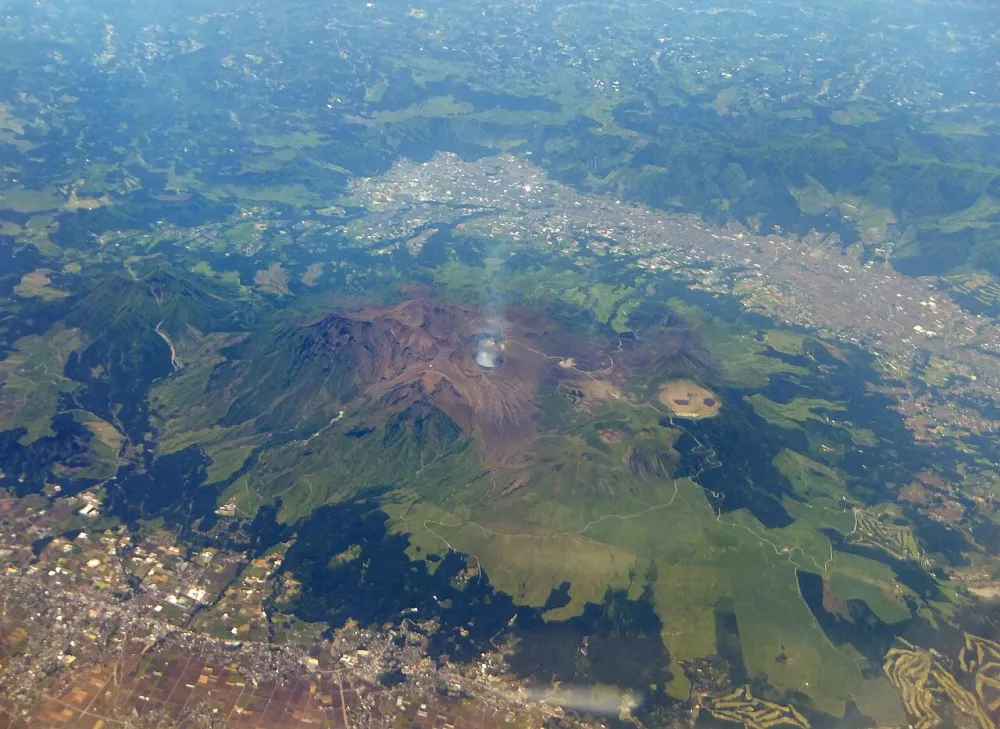
Daikanbo on the northern caldera rim, Kusasenri, the Sanjo Plaza area, and the Nakadake Crater sit in different zones on Mount Aso. Check the Aso Volcano Disaster Prevention Council's restriction map first, then verify prefectural and mountain road updates. If the crater is closed while the mountain access roads remain open, adjust your route to Kusasenri if conditions allow. If the mountain access roads are closed too, stay down in the valley or wait for clearing skies at Daikanbo on the northern rim. Getting between Kusasenri and Daikanbo requires descending into the valley and climbing back up, so leave buffer time and pick whichever side has clear views that day.
On November 20, 2026, the Fukuoka Regional Meteorological Observatory maintained Volcanic Alert Level 2 for Mount Aso, and Aso City announced the closure of the Aso Mountain Park Road, keeping the Nakadake Crater closed to visitors. When that restriction is active, drop the crater from your driving plan. Once access reopens, the council's standard winter operating hours from December 1 to March 19 are 9:00 to 17:00, with the vehicle gate closing at 16:30. Shifting volcanic gases or weather can also narrow the open viewing area on any given day.
Parking at Kusasenri costs ¥500 for a standard passenger car, and the same-day receipt covers one entry each at Kusasenri and the Natural Parks Foundation's Sanjo (mountaintop) parking lot. Keep your ticket if you plan to continue up to Sanjo Plaza for the museum, restrooms, or shuttle bus transfers. If you only have time for one lot, check the Kusasenri Observatory live camera first and commit to the meadow when visibility is clear. When mountain roads close due to fog, pull into Michi-no-Eki Aso next to Aso Station to regroup—sitting right near the junction of National Routes 57 and 212, it connects toward either Kumamoto or Kurokawa while everyone takes a break, or gives you access to the Monzen-machi stroll near Aso Shrine.
In thick mountain fog, tailing the car ahead to borrow its taillights eats away your braking margin. Keep generous following distance, slow down per posted signs, and wait at a roadside station or open parking area if visibility drops too low. Check our Mount Aso sights guide to reshape lunch and lodging around whichever zone is definitively open that day. If you are sleeping in Kumamoto that night, skip adding one more summit climb right before dusk since you still have to drive into the city and park; staying near Aso Station lets you push the mountain drive to the following morning instead.
When GPS tries to route you onto a closed road as a shortcut, follow physical roadside signs and detours instead. Single-lane mountain side roads often leave no room to pass on steep grades. Pre-save main two-lane routes and established parking lots; if you miss a turn, keep driving until you find a safe turnout to loop back. Let your front-seat passenger handle navigation while the driver focuses on crosswalks and roadside drainage ditches.
Rerouting Around Ice, Typhoons, and Heavy Rain
In winter, even if forecasts for both Kurokawa Onsen and Yufuin show only rain, check conditions on Makinoto Pass between them. Shaded bends, bridge decks, and high passes freeze first in the early morning, so inspect live road cameras and restrictions before setting out. Request winter tires in your reservation ahead of time, and carry or fit snow chains where signs require them. If an appropriately equipped car is unavailable, base yourself at one end in Beppu, Yufuin, or Kumamoto City using trains and buses, and save the Yamanami Highway for better weather.
Use the Ministry of Land, Infrastructure, Transport and Tourism's "Kumamoto Winter Roads" portal for national highway cameras and prefectural road alerts, and check iHighway for expressway closures, accidents, and roadwork. If the highland pass closes, confirm both your replacement lodging and whether lower-elevation trunk roads are open before starting the car. City-to-Aso roads out of Kumamoto have their own separate closures, so check mountain access even when the Kyushu Expressway is clear. If this is your first time driving in snow and you have a fixed dinner check-in, swap out the mountain pass route and stick to lower elevations in daylight.
When a typhoon approaches, decide first whether you should stay put at your current lodging. As soon as expressways or national highways issue closure warnings, pull up your cancellation deadlines and rental branch phone numbers to adjust cross-prefecture stays before penalties kick in. If ferries suspend service, stay in Kagoshima City rather than taking the Sakurajima route for a quick out-and-back; if you planned to continue onto the Osumi Peninsula, check overland road status before estimating the full day's drive. Light rain works fine for castle towns and indoor museums, while heavy rain alerts or transit shutdowns call for staying put under local disaster advisories.
Autumn foliage traffic and overcast fog are the easiest ways to run behind schedule. Setting a firm departure time from each parking lot is more practical than setting arrival times, since that is the final buffer you control before reaching your ryokan. Schedule regular rest stops on long drives, note which expressway service areas have gas stations before departing, and keep a backup restroom stop in mind when traveling with kids or seniors. During sustained heavy rain, avoid riverside backroads and wait for trunk routes to clear.
Right-Hand Drive Basics, Refueling, and Return Checklist
Japan drives on the left. If this is your first time in a right-hand-drive car, adjust your seat and mirrors at pickup and test the turn signals and wipers while parked. When pulling out of a parking lot or rest area, spot the center line first so you turn naturally into the left lane. On right turns, yield to oncoming straight traffic and left-turning vehicles, and stop whenever pedestrians are crossing a zebra stripe. Come to a complete stop before the white line at octagonal red "Tomare" (Stop) signs. Use navigation arrows to anticipate turns, then verify actual lane markings on the pavement—if you miss an exit, continue to the next one instead of cutting across two lanes at the last second.
Check your rental agreement for the required fuel type before pumping. Self-serve stations typically label regular unleaded as *Regyura* (red nozzle), premium unleaded as *Haioku* (yellow nozzle), and diesel as *Keiyu* (green nozzle)—do not confuse the term *keiyu* with *kei* compact cars; always match the label inside your fuel door. Leaving Kumamoto, Beppu, or Hita for the mountains, check your tank gauge and station closing hours first. If you are crossing a pass around dusk, top up at an urban station rather than gambling on the first tiny rural pump on your GPS.
For your final fill-up, pick a gas station near the drop-off branch and keep the receipt to show at checkout. Under full-to-full contracts, branches settle any missing fuel under their own per-kilometer or refueling rate schedule. Approaching a station in the right direction of travel matters more than raw distance—especially on busy multi-lane roads near Fukuoka Airport, where a station across the median may require driving up to a legal U-turn intersection. Hand back your ETC card at return and scan the itemized receipt to confirm how non-pass tolls like urban expressways were billed.
In any collision, check on people first. Japan's National Police Agency requires calling the police at 110 even for minor accidents with no injuries. If anyone is hurt, administer aid and call 119 for an ambulance alongside notifying the police. Next, call your rental branch or roadside assistance per your contract and record the other driver's details and scene photos—even minor scrapes require full reporting once safely parked. If you need to extend your rental, call the branch first to confirm nobody else has booked the vehicle after you before changing hotels or onward train tickets.
Once all bags are unloaded, check beside child seats, inside door pockets, and for personal charging cables. If you paired your phone to the car via Bluetooth for navigation, delete the pairing before handing over the keys. Before boarding the airport shuttle, tuck your passport and same-day flight details into one accessible pouch instead of leaving your pickup document folder buried inside checked luggage.
Taking the Shinkansen After Dropping Off in Kumamoto—Calculating Rail Passes by Actual Riding Days
Keep the rental car for the mountain stretches between Kurokawa and Aso, then drop it off near Kumamoto Station and switch to the Shinkansen. If you spend a night in Kurokawa, catch the views around Aso, return the car in Kumamoto, and ride down to Kagoshima-Chuo, check the cost of a single point-to-point ticket first if that is your only rail leg before flying out from a different airport. Add Ibusuki round trips or consecutive intercity hops in the south, and compare the actual trains you will ride—plus Kagoshima city trams and ferries—against the Southern Kyushu Rail Pass.
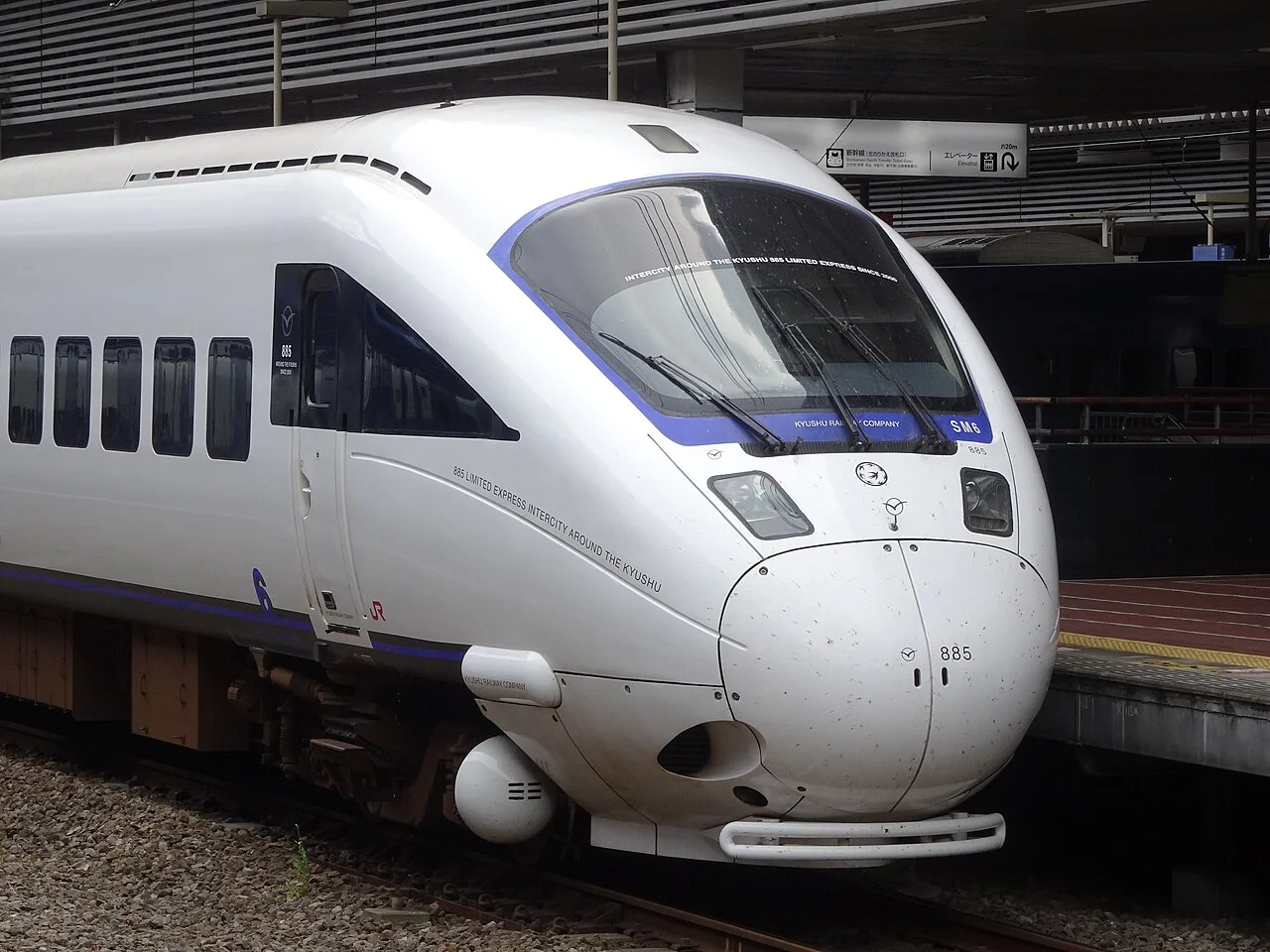
Per JR Kyushu, the All Kyushu Rail Pass covers the Kyushu Shinkansen from Hakata to Kagoshima-Chuo, the Northern Kyushu pass reaches as far south as Kumamoto, and the Southern Kyushu pass covers the Shinkansen between Kumamoto and Kagoshima-Chuo—meaning the Southern pass cannot be used between Hakata and Kumamoto. The Sanyo Shinkansen between Fukuoka (Hakata) and Kokura is also excluded from JR Kyushu passes, though JR conventional lines cover northern Kyushu. Fukuoka City Subway lines and private highway buses are billed separately and do not cover mountain bus routes.
Compare driving versus rail by totaling the entire group's costs for the same leg. Because rental costs are per vehicle, several adults visiting scattered mountain sights usually come out ahead by splitting one car. Conversely, if you stay next to Hakata, Kumamoto, and Kagoshima-Chuo stations and pay daily parking for an idle car, you are only saving a few station transfers. Cluster your rail pass days onto consecutive intercity transit days, and schedule slow ryokan nights—where you just walk and soak—before or after the pass window.
A few useful answers
Can I rent a car in Kyushu with a Taiwanese driver's license?
Yes. Bring your original valid Taiwanese driver's license, an official Japanese translation, and your passport. Taiwanese International Driving Permits are not valid under this reciprocal agreement; obtain the translation from a Motor Vehicles Office in Taiwan before you leave.
How long is the Kyushu Expressway Pass (KEP) valid?
The current pass runs through March 31, 2027. Application deadlines phase out by duration: March 22 for the 10-day pass, March 27 for the 5-day pass, and March 30 for the 2-day pass. All consecutive pass days must finish within the validity window.
Are the Fukuoka Airport rental counters and return lots in the same place?
Upon arrival, follow your rental company's instructions to check in at the counter on 1F of the International Terminal and take the shuttle. On return, navigate to the specific branch address on your contract, drop off the car, and ride the shuttle back to the terminal.
Can I pick up a car in Fukuoka and drop it off in Kumamoto?
In most cases, yes, depending on vehicle class and branch pairing—use the rental agency's one-way search tool to get a quote. If you are switching to the Shinkansen afterward, pick a drop-off branch within walking distance of Kumamoto Station.
Can I still visit Kusasenri or Daikanbo if the Mount Aso crater is closed?
It depends on the day's restriction zone and road closures. When only the crater is closed and mountain access roads remain open, Kusasenri is often still accessible. Daikanbo sits on the northern caldera rim, so check the separate roads leading up to its viewpoint.
How many days do you need for a Kyushu car rental?
Three days works well for a Yufuin-to-Kurokawa and Aso stretch. Allow four to five days for a Fukuoka round-trip loop adding Beppu or Yabakei, and at least five days for a one-way drive down to Kagoshima.
If my rental car has an ETC unit, can I automatically use KEP?
No—you must book the KEP pass separately, and it only works with eligible vehicles and a designated ETC card issued by a participating branch. A standard rental ETC card simply bills you per segment.
Official information and references
Sources used in this guide.
- NEXCO West Japan | Kyushu Expressway Pass (KEP) Rates & Participating Branches
- NEXCO West Japan | KEP Terms of Use Articles 4 and 6–9
- NEXCO West Japan | Express Toll and Route Search
- NEXCO West Japan | ETC-Only Toll Gates and Support Lanes
- iHighway | Expressway Traffic and Road Closures
- Directorate General of Highways (Taiwan) | Taiwan–Japan Driver's License Reciprocity & Japanese Translations
- National Police Agency (Japan) | Driver's License Validity, Intersections & Accident Reporting
- Japan National Tourism Organization (JNTO) | Car Rentals, Entry Stamps & Driving Guide
- Fukuoka Airport | Rental Car Counters and Expressway Interchanges
- Nippon Rent-A-Car | Fukuoka Airport Branches and Shuttle Service
- Toyota Rent a Car | ETC Cards, Child Seats & Add-On Options
- Toyota Rent a Car | Collision Damage Waiver (CDW), NOC & Roadside Assistance
- Toyota Rent a Car | Reservations, Pickup & Return Guide
- Toyota Rent a Car | One-Way Drop-Off Fee Calculator
- Toyota Rent a Car | Gas Stations and Fuel Types
- Consumer Affairs Agency (Japan) | Child Safety Seat Rules & Selection
- Ministry of the Environment (Japan) | Aso-Kuju National Park Yamanami Highway Route
- Kurokawa Onsen Ryokan Association | Town, Open-Air Baths & Parking Map
- Nakatsu City | Ao no Domon Vehicle Closure and Detour Notice
- Nakatsu Yabakei Tourism Association | Hitome Hakkei Parking Lot
- Oita Prefectural Tourism | Beppu Hells Tour
- Kagoshima City Ship Bureau | Sakurajima Ferry Duration, Hours & Vehicle Boarding
- Aso Volcano Disaster Prevention Council | Crater Restrictions and Operating Hours
- Japan Meteorological Agency | Mount Aso Volcanic Activity and Alert Levels
- Aso City | Crater Viewing and Aso Mountain Park Road
- Natural Parks Foundation | Kusasenri and Aso Sanjo Parking Fees
- Ministry of Land, Infrastructure, Transport and Tourism (Japan) | Michi-no-Eki Aso Location and Area Info
- Ministry of Land, Infrastructure, Transport and Tourism (Japan) | Kumamoto Winter Roads and Live Cameras
- JR Kyushu | JR Kyushu Rail Pass Coverage Area