Compare All Kyushu, Northern Kyushu, and Southern Kyushu JR Rail Pass prices, Shinkansen exclusions to Kokura, Nagasaki transfers, pickup stations, and the 6-seat reservation rule—with 3-, 4-, and 5-day itineraries.
- Region & Focus
- KyushuTransportation and passes
- Reading Scope
- 20 min read · 8 chapters · 6 Q&As
- Official Verification
- 21 official sources checkedUpdated November 22, 2026
- Key Topics
- Rail travelItinerariesTravel budget
Chapter Route Map (tap any stop)
- All Kyushu, Northern, and Southern Pass Prices & Validity
- Check Your Stations—and Which Shinkansen Line You're Riding
- Run the Fare Math Before You Buy
- How to Buy and Pick Up Your Pass
- Using Your 6 Free Reservations—and When to Pay Online Early
- Book Sightseeing Trains First in Your Itinerary
- 4-Day Northern, 5-Day All-Kyushu, and 3-Day Southern Itineraries
- What to Do for Missed Trains, Track Work, and Refunds
- Quick Q&A
Start with the Northern Kyushu Rail Pass if you are basing in Hakata to visit Yufuin, Beppu, Kumamoto, or Nagasaki. Compare the All Kyushu Pass if you plan to ride the Shinkansen all the way from Fukuoka down to Kagoshima. If your trip stays in southern Kyushu out of Kumamoto or Kagoshima, the 3-day Southern Kyushu Pass has a much lower break-even threshold. On JR Kyushu's official booking site, adult 3-day passes cost ¥14,000 for Northern, ¥21,000 for All Kyushu, and ¥11,000 for Southern. Once you pick a zone, group your priciest train rides into consecutive days, then decide which sightseeing trains are worth paying extra to reserve ahead of time.
All Kyushu, Northern, and Southern Pass Prices & Validity
The JR Kyushu Rail Pass comes in three coverage zones. All Kyushu is sold in 3-, 5-, and 7-day versions; Northern Kyushu comes in 3- and 5-day versions; and Southern Kyushu is only offered as a 3-day pass. The table below compares JR Kyushu's official online booking rates against regular pricing at overseas travel agencies and JR Kyushu stations. Booking direct on the official site saves ¥1,000 per adult pass, and children aged 6–11 pay half the adult rate on whichever channel you choose. If you buy through an overseas travel agency, convert your final checkout total into Japanese yen to account for exchange rates and agency fees before comparing.
All passes run on consecutive calendar days. Activate a 3-day pass on Friday, and Sunday is your last day—Saturday still counts even if you spend the entire day at a hot spring without stepping into a station. An activation day also counts as a full day even if your first ride is in the late afternoon. If you land in Fukuoka on an evening flight and aren't heading out of the city until the next morning, exchange your pass that night and set the start date for the following day. A 4-day trip can still work with a 3-day pass, just as a 5-day itinerary might only need a pass for the middle three days. Upgrading from 3 to 5 days (Northern or All Kyushu) or from 5 to 7 days (All Kyushu) costs ¥2,000 more for adults—only pay the difference if the extra rides on those added days exceed ¥2,000.
Child eligibility depends on where you buy. For exchange orders bought through overseas travel agencies, eligibility is based on the child's age on the purchase date. When buying via JR Kyushu's official site or in person at a station in Kyushu, it is based on the child's age on the pass activation date. Double-check both dates if your child turns 6 or 12 during the trip. Children under 6 ride free without a seat, but require a child ticket or child rail pass if they occupy their own reserved seat. Under JR rules, each adult or child passenger can bring up to two infants/toddlers free of charge; a third toddler or more requires a child fare. If your family only plans one sightseeing train ride where your under-6 child needs a seat, compare the price of a single child ticket for that leg against buying a full child pass.
| Pass Type | Official Site (Adult / Child) | Agency or Station (Adult / Child) | Free Station Reservations |
|---|---|---|---|
| Northern Kyushu 3-Day | ¥14,000 / ¥7,000 | ¥15,000 / ¥7,500 | 6 trips |
| Northern Kyushu 5-Day | ¥16,000 / ¥8,000 | ¥17,000 / ¥8,500 | 6 trips |
| Southern Kyushu 3-Day | ¥11,000 / ¥5,500 | ¥12,000 / ¥6,000 | 6 trips |
| All Kyushu 3-Day | ¥21,000 / ¥10,500 | ¥22,000 / ¥11,000 | Unlimited |
| All Kyushu 5-Day | ¥23,000 / ¥11,500 | ¥24,000 / ¥12,000 | Unlimited |
| All Kyushu 7-Day | ¥25,000 / ¥12,500 | ¥26,000 / ¥13,000 | Unlimited |
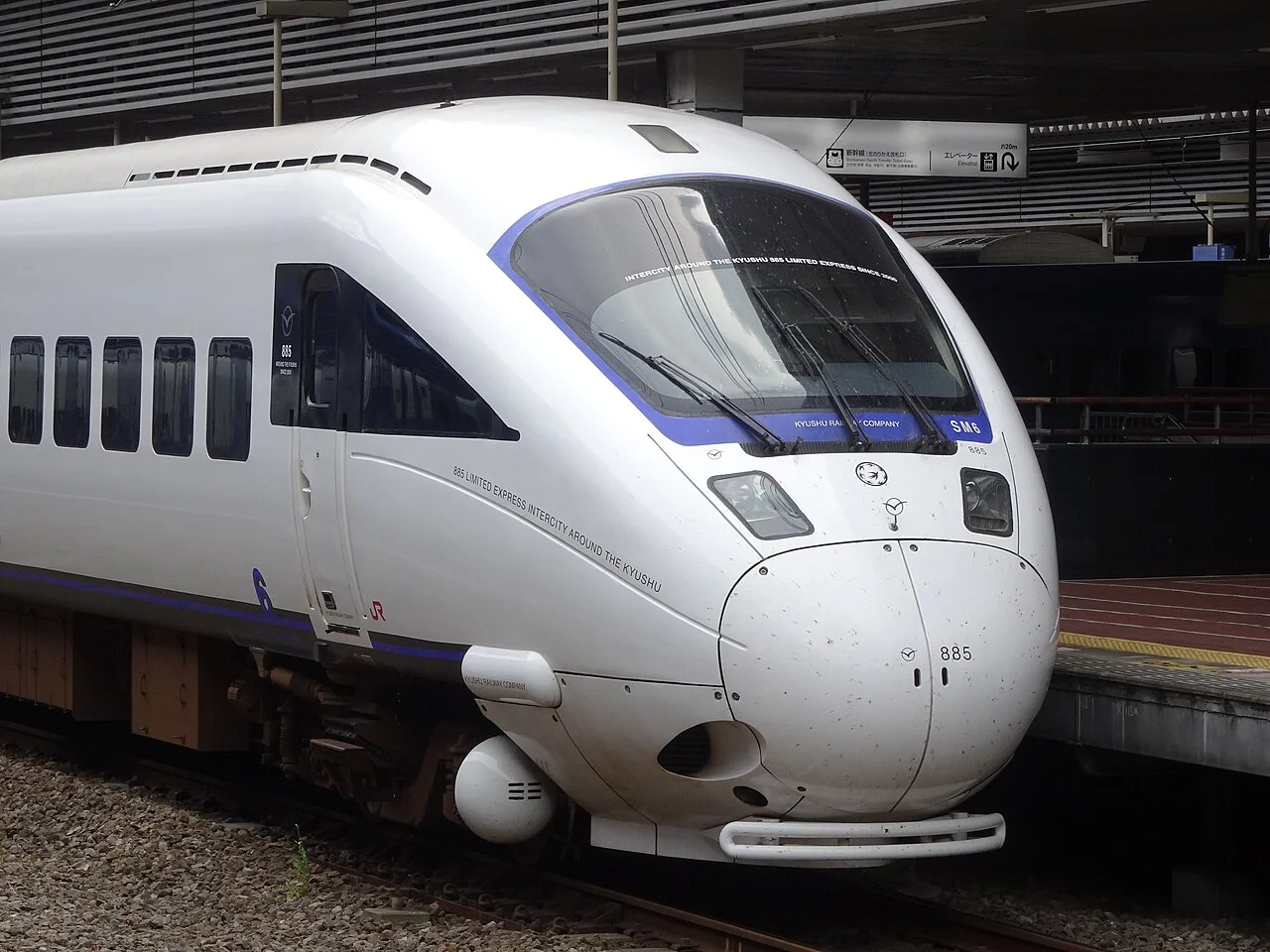
Compare All Kyushu, Northern Kyushu, and Southern Kyushu JR Rail Pass prices, Shinkansen exclusions to Kokura, Nagasaki transfers, pickup stations, and the 6-seat reservation rule—with 3-, 4-, and 5-day itineraries.
Check Your Stations—and Which Shinkansen Line You're Riding
The Northern Kyushu pass covers the Kyushu Shinkansen between Hakata and Kumamoto, the Nishi-Kyushu Shinkansen between Takeo-Onsen and Nagasaki, plus JR Kyushu local, rapid, and limited express trains within the designated northern zone. If you fly in and out of Fukuoka and focus on Nagasaki, Sasebo, Yufuin, Beppu, Oita, Kumamoto, and Misumi, start your math here. Note that Kumamoto is the southern Shinkansen boundary for the Northern pass: riding further south to Shin-Yatsushiro, Shin-Minamata, or Kagoshima-Chuo requires paying the fare beyond Kumamoto. The same station-boundary check applies heading east—Beppu and Oita are covered, whereas extending to Miyazaki pushes you into a different pass calculation.
The Southern Kyushu pass covers the Kyushu Shinkansen from Kumamoto to Kagoshima-Chuo, along with JR Kyushu conventional lines in the designated southern area, including routes from Kagoshima-Chuo to Ibusuki, Kirishima-Jingu, and Miyazaki. Both Kumamoto and Oita sit on the boundary between the Northern and Southern zones, and the Southern pass also covers the eligible Hohi Main Line segment to Aso. If you are starting in Hakata and only want a Southern pass, you can buy a separate ticket from Hakata to Kumamoto and pick up your Southern pass at Kumamoto Station. Just remember to add both the outbound and return Hakata–Kumamoto fares if you are looping back the same way—that's the most common hidden cost when starting a Southern pass in Kumamoto.
If you want one pass for both ends of the island, go with All Kyushu. Within each pass's valid zone, you can ride ordinary reserved and non-reserved seats on the Mizuho, Sakura, Tsubame, and Kamome Shinkansen—even Mizuho trains are eligible as long as you stay inside your pass boundaries. Keep in mind that Hakata to Kagoshima-Chuo runs on the Kyushu Shinkansen, while Hakata to Kokura runs on JR West's Sanyo Shinkansen. All three JR Kyushu passes exclude the Shinkansen between Hakata and Kokura. To reach Kokura or Mojiko, filter your search to conventional lines: take the Sonic Limited Express or a JR Kyushu local/rapid train from Hakata to Kokura, then transfer to a local train for Mojiko. If you ride the Sonic all the way to Beppu, the train reverses direction at Kokura—stay onboard the same train.
Getting from Hakata to Nagasaki comes with its own transfer wrinkle. You start at Hakata on the Relay Kamome Limited Express, then walk straight across the platform at Takeo-Onsen Station to board the Nishi-Kyushu Shinkansen Kamome. When riding straight through to Nagasaki, ask the ticket agent to reserve the connecting pair from Hakata to Nagasaki as a single itinerary. As long as you transfer across the platform without exiting the ticket gates, both legs count as just one of your free seat reservations. If you plan to stop in Takeo-Onsen to visit the historic bathhouse, book Takeo-Onsen to Nagasaki as a separate reservation for your actual departure time. Heading to Ureshino-Onsen works the same way: check which Kamome departures stop there, then arrange ground transport from the station into town.
Short distances on a map do not guarantee JR Kyushu coverage. The Fukuoka City Subway, Nishitetsu trains to Dazaifu, streetcars in Nagasaki, Kumamoto, and Kagoshima, and the Sakurajima Ferry all cost extra. Even on direct through-trains linking the Fukuoka Subway and the JR Chikuhi Line—for example, boarding in Tenjin toward Karatsu—you still pay separately for the subway portion. JR Kyushu Buses and the B&S Miyazaki highway bus are also excluded. Likewise, when planning for "Aso," separate Aso Station, Kusasenri, and Kurokawa Onsen in your notes: JR trains reach Aso Station, while the latter two require buses or a rental car. For hotels far from a train station, check last-bus times and ryokan dinner cutoffs alongside ticket prices.
| Pass Type | Kyushu Shinkansen | Nishi-Kyushu Shinkansen |
|---|---|---|
| All Kyushu | Hakata to Kagoshima-Chuo | Takeo-Onsen to Nagasaki |
| Northern Kyushu | Hakata to Kumamoto | Takeo-Onsen to Nagasaki |
| Southern Kyushu | Kumamoto to Kagoshima-Chuo | Not covered |
Run the Fare Math Before You Buy
Check point-to-point fares using the exact travel date, train class, and seat type you plan to ride. For a quick baseline, compare against JR Kyushu's regular-season ordinary reserved-seat adult fares: Hakata to Kumamoto is ¥5,840, Hakata to Nagasaki via Takeo-Onsen is ¥6,490, Hakata to Kagoshima-Chuo is ¥11,950, and Hakata to Kokura on a conventional limited express is ¥2,640. Actual single-ticket prices can shift depending on travel dates, non-reserved seats, or advance-discount fares. Always compare like-for-like seating so you can see how much paid seat reservations eat into any savings.
Suppose you stay in Hakata and only make one round-trip to Kumamoto: regular-season reserved seats total ¥11,680, which is ¥2,320 less than a 3-day Northern Kyushu pass bought online. Even adding a limited express round-trip? No—adding just a single one-way limited express from Hakata to Kokura brings the total to ¥14,320, barely ¥320 above the pass price, and choosing rapid trains or discounted Kyushu Shinkansen tickets flips the math right back. On the flip side, fitting both a Kumamoto round-trip and a Nagasaki round-trip into three days totals ¥24,660 at baseline fares—saving ¥10,660 over the ¥14,000 Northern pass while using only 4 of your 6 free reservations (assuming cross-platform transfers at Takeo-Onsen).
A single one-way trip from Hakata to Kagoshima-Chuo costs ¥11,950, nowhere near the ¥21,000 All Kyushu 3-day pass. Make it a round-trip within three days and the baseline total hits ¥23,900, leaving a ¥2,900 margin over the 3-day pass. Return to Hakata on day four instead, and you must compare against the ¥23,000 All Kyushu 5-day pass—narrowing the gap to ¥900. From there, adding an Ibusuki or Kumamoto side trip pulls the pass ahead, while paying ¥1,000 per segment for two online pre-reservations pulls it back. If you fly out of Kagoshima Airport without returning to Fukuoka, recalculate using one-way and local branch fares rather than round-trip math.
Buying both a 3-day Northern pass and a 3-day Southern pass online costs ¥25,000 total for an adult. If your Fukuoka–Kumamoto–Kagoshima trip fits its main long-distance legs into five days, a single ¥23,000 All Kyushu 5-day pass covers the whole stretch without splitting your reservation quota across two passes. On the other hand, if you spend three days in northern Kyushu, linger five days in Kumamoto, and then head south, staggering two 3-day passes covers more days—provided your travel in each half justifies the pass cost on its own. If you need to catch an early-morning train on the day you switch passes, factor in the time required to exchange your second pass.
Build a two-column comparison before committing. Put your actual point-to-point JR fares in the first column, and put the pass price, paid online reservation fees, out-of-zone JR tickets, and any seat upgrades in the second. Shared expenses you pay either way—like airport subways, hotel shuttles, or city streetcars—cancel out in the break-even comparison, though they still belong in your overall transit budget. For larger groups, rail passes scale per person while a rental car splits across the group. If your route centers on rail-remote stops like Kurokawa Onsen or Takachiho, price out car rental, expressway tolls, gas, and parking separately.
If you are only taking JR trains near Fukuoka, also check the JR KYUSHU MOBILE PASS (Fukuoka Wide Area). It costs ¥3,500 for adults and ¥1,750 for children for two consecutive days, lives on your phone with no paper exchange, and covers non-reserved seats on local and limited express trains within the zone—including the Sonic between Hakata and Kokura or Yukuhashi, plus trains to Mojiko. It does not cover the Kyushu Shinkansen to Kumamoto or reserved seats on the Yufuin no Mori. It usually takes two solid JR travel days—such as a Kitakyushu day trip on day one and lunch in Kurume on day two—to beat point-to-point fares. If day two is just Tenjin and Ohori Park, pay city transit separately and buy single JR tickets for day one.
How to Buy and Pick Up Your Pass
To qualify for a JR Kyushu Rail Pass, you must hold a non-Japanese passport, reside outside Japan, and enter Japan as a tourist under "Temporary Visitor" status. If you use automated immigration gates on arrival, ask an airport officer right away to stamp or place a Temporary Visitor sticker in your passport. Every traveler must bring their physical passport to the ticket counter—photos or photocopies will not be accepted—and carry it while riding trains. If anyone in your group holds Japanese residency, separate them out and price regular point-to-point tickets for them first.
On the official site, regional passes are sold through the "JR KYUSHU RAIL PASS Online Booking" portal, which is separate from the "JR-KYUSHU Train Reservation" portal used for individual tickets. Official online pass sales open one month before your chosen start date at 10:00 AM JST. After selecting your zone, duration, passengers, and start date, pay with a physical credit card that works at in-person terminals. Even with a confirmation email on your phone, you must pick up the physical pass at a station counter—and bring the same physical credit card used to pay, especially when one person booked seats for a group.
Overseas travel agencies issue exchange orders, which JR Kyushu lists as valid for exchange within three months of issue. If you plan to reserve sightseeing trains online before arriving in Japan, verify that your agency and exchange order format appear on JR Kyushu's eligible list first. You can also wait and buy the pass directly in Japan: bring everyone's physical passports to a designated JR Kyushu ticket office and state your pass type and start date. Before stepping up to the counter, write down every train leg you want to reserve—travel date, train name/number, departure and arrival stations, and adult/child headcount—on a single page so the agent can process your paper passes and seat tickets in one stop.
At Fukuoka Airport, the exchange counter in the 1F Access Hall of the International Terminal operates daily from 09:00 to 17:00 for exchanging All Kyushu and Northern Kyushu passes and picking up pre-booked seats. New in-person pass purchases, reservation changes, and refunds must be handled at a train station counter. If your flight lands at 16:30 with checked bags, plan to take care of your pass at Hakata Station instead. Hakata's designated JR Kyushu counter is open daily from 07:00 to 22:00 and handles purchases and exchanges for All Kyushu and Northern Kyushu passes. Southern Kyushu passes can only be picked up or bought at southern stations such as Kumamoto, Oita, Kagoshima-Chuo, Miyazaki, or Miyazaki Airport—neither Fukuoka Airport nor Hakata Station handles Southern passes. To reach the subway from the International Terminal, take the free terminal shuttle bus to the Domestic Terminal first; see our guide on getting from Fukuoka Airport to downtown for terminal-by-terminal steps.
Hakata Station houses entrances for conventional JR lines, the Shinkansen, and the Fukuoka Subway under one roof. On your first exchange, follow JR Kyushu ticket office signs, and verify the start date printed on your paper pass before heading through the gates. Insert the rail pass itself into automatic ticket gates—and remember to grab it on the other side. Keep your paper seat-reservation slips handy to find your car and seat number and show conductors. When transferring from the subway to JR lines, exit and settle your subway fare first before entering JR gates with your pass so your IC card doesn't get stuck with an open trip. On days with an early long-distance departure, pick up your seat tickets and oversized baggage spaces the afternoon before to skip morning lines.
The official online portal handles a maximum of 7 passengers per booking. Groups of 8 or more must split into multiple orders, so decide upfront who goes on which order and who carries which payment card. Even when split orders book the same train, double-check each group's car and seat numbers. For a family of three booking an all-reserved train, include any toddler who needs their own seat in the booking from the start—otherwise the adults end up with two adjacent seats while the child's seat has to be hunted down separately later. If you prepay before your trip, keep every confirmation email and booking reference on one master itinerary so you can verify dates, routes, and passenger counts quickly at the counter—even in the rain or during a tight connection.
Using Your 6 Free Reservations—and When to Pay Online Early
Free seat reservations are made after you pick up your pass, either at a JR Kyushu Ticket Office (Midori-no-madoguchi) or at reserved-seat ticket machines. The All Kyushu pass includes unlimited ordinary-car seat reservations, while Northern and Southern Kyushu passes cap free reservations at 6 trips—including the 5-day Northern pass. Non-reserved seats on local, rapid, limited express, and Shinkansen trains within your pass area do not count against that 6-trip allowance. Once you hit your seventh reserved trip, you must pay the limited express/reserved supplement separately or ride in non-reserved cars. If an all-reserved train has no seats left, you will need a different departure or an alternate route.
JR Kyushu's pass portal lets you pay extra to reserve seats online before picking up your pass, drawing from a separate quota from station counters. Most eligible Shinkansen, limited express, and rapid trains cost ¥1,000 per adult per segment, while Design & Story (D&S) sightseeing trains cost ¥1,500 per segment (half price for children). Online paid reservations do not count toward your 6 free station reservations. The 36+3 sightseeing train runs different routes by day of the week and uses Green Cars throughout, so match your travel day against your pass zone and check the applicable surcharge. Seven Stars in Kyushu, ARU RESSHA, and KANPACHI / ICHIROKU are explicitly excluded from all rail passes.
Standard reserved seats open one month before the travel date at 10:00 AM JST. If a specific Yufuin no Mori departure determines whether you make your ryokan's dinner cutoff, paying online to lock in that outbound leg is worth it—especially if you can return on a regular limited express booked after you arrive in Kyushu. Keep in mind that Aso Boy!'s Panorama and White Kuro-chan family seats, as well as Two Stars 4047's lounge/counter seats, cannot be selected through the pass's paid online booking tool. If your group wants to sit together in specialty seating, check seat availability well ahead, ask at the station counter upon arrival, and keep a backup train ready that fits everyone.
The Nishi-Kyushu Shinkansen Kamome and Relay Kamome are special exceptions: both are covered by the pass, but neither can be pre-booked via the pass portal's paid reservation system. Instead, reserve seats at a station counter after arrival or ride in non-reserved cars. If you plan to stop overnight in Ureshino-Onsen on the way to Nagasaki, book Hakata to Ureshino-Onsen on day one, then book Ureshino-Onsen to Nagasaki on day two—saving the single cross-platform Takeo-Onsen connection for your direct return to Hakata. Separating those scenarios keeps the two reservation rules clear: a same-day cross-platform transfer counts as one reservation, whereas breaking the journey overnight requires a new reservation the next day.
On the Shinkansen, measure your suitcase's total dimensions—length plus width plus height, including wheels and handles. If the total exceeds 160 cm and stays within 250 cm, you must book a Seat with an Oversized Baggage Area. You cannot reserve those seats through the pass's online portal, so arrange them at a JR Kyushu station counter after arrival. Bringing unreserved oversized bags onboard incurs a ¥1,000 fee and crew-assigned placement. While the Yufuin no Mori offers onboard luggage racks, trains like Aso Boy! and Ibusuki no Tamatebako have no dedicated luggage storage. If a travel day involves two or three transfers, leave large suitcases at your base hotel or forward them ahead, carrying only an overnight bag onto branch lines.
Book Sightseeing Trains First in Your Itinerary
The Yufuin no Mori is an all-reserved train. Several daily departures run between Hakata and Yufuin, with only a subset continuing onward to Oita and Beppu. When searching routes from Yufuin to Beppu, enter both station names and your exact date—do not mistake a train that terminates in Yufuin for a through-service. JR Kyushu's operating calendar also distinguishes between full-schedule days and partial-service days; on days when a Yufuin no Mori doesn't run, check Limited Express Yufu alternatives. For a weekend plan that pairs a Yufuin soak with dinner in Beppu, lock in the second leg's connection first—if no through Yufuin no Mori lines up, transfer via Oita or buy a separate highway bus ticket between Yufuin and Beppu.
For an overnight stay in Yufuin, most travelers book the Yufuin no Mori outbound from Hakata and return to Hakata—or continue to Beppu—the next day. If your ryokan sets a dinner check-in cutoff, work backward from the walk or shuttle time from Yufuin Station. Some travelers book sightseeing trains both ways and accidentally squeeze Lake Kinrin, street snacks, and hot springs into a rushed afternoon window. A better pace is reserving Yufuin no Mori for the trip in, then using a standard limited express or one-transfer JR route after checkout so your morning in Yufuin stays unhurried. If you are deciding between towns for the night, check our Yufuin vs. Beppu stay and transit comparison.
The Aso Boy! currently runs along the Hohi Main Line between Kumamoto and Miyaji, stopping at Aso Station. It works best for a day trip out of Kumamoto—riding the Aso Boy! one way and taking the Kyushu Odan Tokkyu (Limited Express) or a local train in the other direction. If you are heading straight from Beppu or Oita to Kumamoto, look up Kyushu Odan Tokkyu schedules and JR connections instead; ignore outdated timetables that still show Aso Boy! running to Beppu and check JR Kyushu's Kumamoto–Miyaji timetable page. On days visiting Kusasenri and Mount Aso Nakadake Crater, verify the afternoon return bus schedule before boarding your morning train to Aso Station. If crater access closes due to volcanic gas or buses are disrupted, keep plans around Aso Station and Miyaji flexible or head back to Kumamoto early. Without a rental car, avoid combining an Aso sightseeing day with an inter-prefecture hotel move.
The Ibusuki no Tamatebako between Kagoshima-Chuo and Ibusuki is also all-reserved and covered by both the All Kyushu and Southern Kyushu passes. To fit in a famous sand bath, reserve the Ibusuki no Tamatebako in the direction that matches your bath slot best, and take a local train on the Ibusuki Makurazaki Line for the other leg—leaving enough buffer to walk back from the sand bath facility to the station. If you are catching an evening flight, work backward from the airport bus departure at Kagoshima-Chuo Station to make sure your return train leaves plenty of margin. With only one day for Ibusuki, basing near Kagoshima-Chuo lets you leave bags at one hotel; staying overnight in Ibusuki lets you schedule the sand bath right before or after checkout without rushing a day trip.
4-Day Northern, 5-Day All-Kyushu, and 3-Day Southern Itineraries
For a 4-day Northern Kyushu loop, stay in Fukuoka on day one and set your 3-day pass to activate on day two. On day two, ride the Yufuin no Mori from Hakata to Yufuin for the night—or take the Sonic straight to Beppu if you prefer seaside walks and public bathhouses, saving Yufuin for a day with matching trains. On day three, move from the Oita/Beppu side to Kumamoto via the Kyushu Odan Tokkyu (connecting at Oita if leaving from Yufuin), or loop back via Hakata to ride the Kyushu Shinkansen for an easier transfer without rushing Mount Aso. On day four, take the Shinkansen from Kumamoto back to Hakata and head to the airport—leaving time for a stroll in Kumamoto City if you have an evening flight. Concentrating all intercity trains into days two through four fits neatly inside a 3-day Northern pass.
Spending your first night in Nagasaki changes the math. If you return to Hakata on day two, stay in Yufuin on day three, and ride JR back to Fukuoka on day four, your long-distance rail rides span four calendar days. Compare starting from the ¥16,000 5-day Northern pass online rate, or paying separately for the final short leg so the remaining rides fit inside a ¥14,000 3-day pass. Budget Nagasaki streetcars separately if you stay overnight there. Alternatively, staying at one Hakata hotel for back-to-back day trips to Nagasaki and Kumamoto saves moving luggage—book both round-trips together at the counter on day one, then check whether day three has enough JR travel to need the pass.
For a 5-day north-to-south trip returning to Fukuoka, try: day one Hakata to Kumamoto; day two Kumamoto to Kagoshima-Chuo; day three Kagoshima base with Sakurajima; day four Ibusuki; and day five Kagoshima-Chuo back to Hakata. If your total trip is six days and day one only uses the Fukuoka subway, you can still pack all long-distance rail into days two through six. Note that Sakurajima day still counts against your pass even if you don't ride a Shinkansen. If you fly out of Kagoshima Airport instead, drop day five's northbound train and compare a 3-day All Kyushu pass, a single Hakata–Kumamoto ticket plus a 3-day Southern pass, or pure point-to-point fares. Want to add Nagasaki? Put Nagasaki before heading south, and only upgrade to a 7-day pass if extra long-distance legs fall outside the 5-day window—don't pay the upgrade just to pad an extra day in Fukuoka.
A 3-day Southern Kyushu pass works best starting from Kumamoto, Kagoshima-Chuo, or Miyazaki. From Kumamoto, ride to Kagoshima-Chuo on day one, do an Ibusuki round-trip on day two, and choose between Miyazaki, Kirishima, or returning to Kumamoto on day three. If you base all three days in Kagoshima, add up your Ibusuki and Kirishima/Miyazaki point-to-point fares to see if they beat the ¥11,000 pass. When visiting Kirishima-Jingu, search "Kirishima-Jingu Station" and "Kirishima-Jingu Shrine" separately—trains stop at the station, not the shrine. In Miyazaki, if you continue down to Nichinan, verify which segments are covered by JR rail versus walking or local buses. Trying to squeeze an Ibusuki sand bath in the morning, Miyazaki in the afternoon, and a return to Kumamoto the same night means spending most of the day on trains—splitting into two bases makes connections far easier.
To make station pickup fast and error-free, organize your group's entire itinerary into a simple four-column table: Day, Departure Station, Arrival Station, and Reserved Seat Needed. Mark all-reserved trains like the Yufuin no Mori as required. For a flexible leg like Kumamoto back to Hakata before noon, note that non-reserved seats work fine so you can linger over breakfast or hop on an earlier train. If you are staying in Beppu but departing from Oita Station, list the actual boarding station rather than your hotel's city. Handing that sheet to the ticket agent—along with notes on sitting together or oversized luggage—lets them issue everything cleanly in one go.
Basing near Hakata Station makes the most sense if you plan round-trip day excursions to Nagasaki and Kumamoto, letting you drop bags at your hotel and step straight back onto a platform. If you stay in Tenjin instead, factor in the extra subway ride and transfer time to and from Hakata morning and night. On the other hand, if you only need the Shinkansen once when leaving Fukuoka, there is no need to anchor your whole stay around Hakata Station—weigh both neighborhoods in our Hakata vs. Tenjin hotel comparison. If you stay in Yufuin mid-trip before returning to the same Fukuoka hotel, ask in advance if the hotel can hold your main suitcase in between so you don't haul heavy bags onto limited express trains and station elevators.
What to Do for Missed Trains, Track Work, and Refunds
If you book reserved seats early and later change your hotel or departure date, check both your pass start date and every individual seat ticket. Train reservations are tied to a specific date and segment—changing a hotel booking doesn't shift your train tickets. When switching to a different Shinkansen date, verify it still falls inside your pass validity window. If you no longer need seats you reserved at a station, bring the tickets back to a JR Kyushu ticket office before departure so staff can cancel them and release the seats. If you miss a Shinkansen or limited express that offers non-reserved seating, you can simply board a non-reserved car on a later eligible train within your pass validity and zone. For all-reserved sightseeing trains, you will need to book another train with open seats.
Passes bought on the official site that have not yet been picked up as paper passes can be refunded online before 23:00 on the activation date for a 10% handling fee; exchange orders from travel agencies must be refunded through the issuing agency. Once you have picked up a paper pass at a JR Kyushu counter, refunds are only processed at the issuing counter on or before the day prior to the validity start date, also with a 10% fee. Under JR Kyushu's rules, once a paper pass's validity period begins, it cannot be refunded even if trains are suspended. Paid KRP Option Tickets bought online are separate transactions: self-canceling an uncollected option ticket before the train departs typically incurs a ¥340 fee. If a train is suspended and you haven't picked up the option ticket yet, submit the official online inquiry form; if you already have the paper ticket, bring it to station staff.
During heavy rain or snow, check JR Kyushu's regional service updates to see whether disruptions affect the Kyudai Main Line, the Hohi Main Line, or the Shinkansen itself. When heading from Hakata to Beppu and the western route via Yufuin is blocked, the Sonic Limited Express via Kokura on the eastern coast offers an alternate rail path depending on service status. If you are already in Kumamoto when the Aso branch line suspends service, spend the day at Kumamoto Castle instead and take the Shinkansen down to Kagoshima the next day rather than backtracking out of your way. And if you have a flight to catch at the end of your trip, schedule weather-sensitive mountain lines earlier in the itinerary and keep high-frequency main lines and urban transit for departure day.
Planned track maintenance will affect several lines in early 2027. On February 16, 2027, work on the Nippo Main Line between Saiki and Nobeoka (along the Oita–Miyazaki corridor) will suspend partial service from roughly 09:00 to 15:00 with no replacement buses. Some trains from Miyazaki will terminate at Nobeoka, while trains from Oita may turn back at Saiki. If you need to travel the full route that day, depart earlier, shift your inter-prefecture move by a day, or take the longer detour via Kumamoto and Kagoshima-Chuo—do not assume a temporary service ending in Nobeoka connects onward to Oita.
Separate construction schedules also hit the Nichinan and Ibusuki Makurazaki lines in early 2027. On the Nichinan Line between Aburatsu and Shibushi, partial daytime trains are suspended without replacement buses on January 18–22, February 1–5, and February 8–12, 2027; if you are only traveling as far as Aburatsu, check trains north of Aburatsu rather than assuming all Nichinan Line service from Miyazaki is halted. Further south past Ibusuki toward Nishi-Oyama and Makurazaki, partial daytime Ibusuki Makurazaki Line trains are suspended on January 12–15 and February 17, 2027. If you want to combine an Ibusuki sand bath with Nishi-Oyama on the same day, lock in your return local train before booking your outbound sightseeing train—while trips ending at Ibusuki itself can still use regular Kagoshima-Chuo round-trip trains.
A few useful answers
Can I ride the Shinkansen from Hakata to Kumamoto with the Northern Kyushu Rail Pass?
Yes. The Northern Kyushu pass covers the Kyushu Shinkansen between Hakata and Kumamoto. If the same train continues south toward Kagoshima-Chuo, you must pay separately for the segment south of Kumamoto.
Does the JR Kyushu Rail Pass cover the Shinkansen between Hakata and Kokura?
No. That segment is part of JR West's Sanyo Shinkansen and is excluded from all three JR Kyushu passes. With a Northern Kyushu or All Kyushu pass, you can take JR Kyushu's Sonic Limited Express or local/rapid conventional trains to Kokura instead.
Can I use a 3-day pass on non-consecutive days?
No. Passes run on consecutive calendar days starting from the activation date. If you activate a 3-day pass on Friday, Sunday is your final day even if you do not ride a single train on Saturday.
If I pay to reserve seats online with a Northern or Southern pass, does that count toward the 6 free reservations?
No. Paid KRP Option Tickets booked online are counted separately. Free seat reservations are handled at JR Kyushu ticket offices or reserved-seat ticket machines—up to 6 trips for Northern or Southern Kyushu passes, and unlimited trips for the All Kyushu pass.
If the Yufuin no Mori is sold out, can I still get to Yufuin with the pass?
The Yufuin no Mori is all-reserved. You can look for seats on another Yufuin no Mori departure or take the Limited Express Yufu or conventional trains to reach the same station. Applicable coverage depends on your pass type and exact route.
Can I pick up a Southern Kyushu Rail Pass at Fukuoka Airport?
The counter on the first floor of the International Terminal only exchanges All Kyushu and Northern Kyushu passes. Southern Kyushu passes must be picked up at designated stations in the south, such as Kumamoto, Oita, Kagoshima-Chuo, Miyazaki, or Miyazaki Airport.
Official information and references
Sources used in this guide.
- JR Kyushu Rail Pass | Coverage Area, Station Reservations & Refunds
- JR Kyushu Rail Pass | Official Online vs. Station Prices
- JR Kyushu Rail Pass | How to Purchase & Exchange
- JR Kyushu Rail Pass | Pickup Stations & Business Hours
- JR Kyushu | Fukuoka Airport International Terminal Exchange Counter
- JR Kyushu | Rail Pass Online Booking & Seat Reservation FAQ
- JR Kyushu | Regular-Season Ordinary Reserved-Seat Fare Table
- JR Kyushu | JR KYUSHU MOBILE PASS (Fukuoka Wide Area)
- JR Kyushu | General Boarding, Child & Baggage FAQ
- JR Kyushu | Shinkansen Oversized Baggage Rules
- JR Kyushu | Sonic Limited Express & Direction Reversal at Kokura
- JR Kyushu | Nishi-Kyushu Shinkansen Kamome & Takeo-Onsen Transfer
- JR Kyushu | Yufuin no Mori Operating Calendar
- JR Kyushu | Aso Boy! Operating Calendar
- JR Kyushu | Kyushu Odan Tokkyu Stops
- JR Kyushu | Ibusuki no Tamatebako
- JR Kyushu | Train Operation Info & Track Work Cancellations
- JR Kyushu | Nippo Main Line (Saiki–Nobeoka) Maintenance Dates & Trains
- JR Kyushu | Nichinan Line (Aburatsu–Shibushi) Maintenance Dates & Trains
- JR Kyushu | Ibusuki Makurazaki Line Maintenance Dates & Trains
- Fukuoka Airport | Subway Access & Domestic Terminal Transfer