A 2026-27 planning guide to Zao Onsen Ski Resort based on official data from the Zao Ropeway Association and Zao Onsen Tourism Association: opening dates, full-mountain lift pass pricing, snow monster ropeway logistics, night illumination, pH 1.9 sulfur hot springs, and access from Yamagata Station.
- Region & Focus
- Yamagata, Zao, and Ginzan
- Reading Scope
- 18 min read · 6 chapters · 7 Q&As
- Official Verification
- 7 official sources checkedUpdated November 20, 2026
- Key Topics
- WinterHot springsTohoku
Chapter Route Map (tap any stop)
- Opening Schedule and Pricing Tiers: Rates Follow the Snow
- Full-Mountain Lift Pass Prices: 1-Day to Multi-Day Breakdown
- How to See the Snow Monsters: Two Ropeway Legs, Best Months, and Weather Risks
- Staying in Zao Onsen Village: How to Soak in Acidic Sulfur Springs and Pick a Ryokan
- Transit and Timing Math: Yamagata Station, Airport Shuttles, and Winter Driving
- Fitting Zao Into a Winter Itinerary: Practical Combinations
- Quick Q&A
Few ski resorts in Japan pack alpine runs, towering rime-ice formations, and a 1,900-year-old hot spring town into a single day as seamlessly as Zao Onsen Ski Resort. At the base sits a steaming village fed by strongly acidic sulfur springs; two ropeway rides up to 1,661 meters bring you straight into fields of frozen "snow monsters" (juhyo). Drawing on official 2026-27 season data from the Zao Ropeway Association and the Zao Onsen Tourism Association, this guide breaks down four key planning decisions: when the slopes open, how full-mountain lift pass prices shift across the season, which month and time window give you the best shot at seeing the snow monsters, and how to link lodging, soaking, and Yamagata transit without wasted detours. With Yamagata Prefecture named to National Geographic's 2026 Best of the World list—and Zao right at the center of that spotlight—here is how to time a trip from the December 12 opening through spring skiing.
Opening Schedule and Pricing Tiers: Rates Follow the Snow
The official 2026-27 opening ceremony is set for December 12, 2026, though actual open runs and terrain depend on snowpack depth. If early December snowfall arrives ahead of schedule, selected trails may open early; conversely, holding the opening ceremony does not mean the entire mountain unlocks at once, so check the official Course & Slope Status page before heading up. Operations can run as late as May 5, 2027 (a Japanese national holiday), with the Final Season spring period beginning April 1—an unusually long tail for a Japanese resort that lets spring skiers plan well into April or even just before Golden Week.
Full-mountain lift ticket pricing is tied directly to snow conditions and splits the winter into four tiers. From opening day through December 18 is Open Season, when an adult full-mountain 1-day pass costs just ¥4,800—the lowest rate all winter. Regular Season starts December 19, while two high-demand windows—December 26 to January 3 and January 30 to February 28—fall under Peak Season pricing. Rates step down for Spring Season from March 15 to 31, then return to the ¥4,800 special rate from April 1 onward. That puts a ¥4,200 gap—nearly double the base fare—between Open Season and Peak Season for the exact same adult 1-day pass. If your dates are flexible, aiming for mid-December or mid-to-late March saves substantially on lift tickets alone.
This pricing calendar creates an unavoidable tradeoff: peak snow monster season overlaps almost completely with the highest lift pass rates. Official juhyo forecasts classify January as the growth phase and February as peak maturity, yet all of February sits in the ¥9,000 Peak Season bracket. For the best balance of dramatic ice formations and value, target late January through early February—when the snow monsters have already built their sculpted silhouettes and Regular Season ¥8,000 passes still apply through January 31—or opt for the first half of March at the ¥7,000 Spring Season rate to catch the late-stage formations before they thaw. By mid-March, most snow monsters have collapsed or melted, making the mountain purely a spring-skiing play.
On the trail map, Zao breaks into distinct zones with very different personalities. Directly accessible from the hot spring village, the Chuo and Utopia slopes serve as the main playground for beginners and intermediates. Paradise Slope opens out into mid-mountain runs toward Shobunuma, while the high-altitude Juhyo Plateau and Zange-zaka Juhyo Trail link into a long-distance descent from the summit all the way back to the base. Lower and outer sectors include Omori, Hyakunin, Kurohime (with its Super Giant and Connection variations), Diamond Valley, and Takatori. Because the official Course & Slope Status page updates frequently during winter, check it both the night before and first thing in the morning—high winds or whiteouts can shut down the upper connecting trails with little warning, forcing a long detour if you get caught on the wrong side.
The classic first-timer mistake at Zao is trying to ski the entire mountain in a single day. A smarter game plan works in reverse: treat the base village as your anchor, handle gear rentals, ski lessons, and warm-up laps on the lower beginner runs, and save the Juhyo Plateau and summit sightseeing for the calmer morning hours. If afternoon wind and fog roll in, drop back down to mid-mountain immediately. Note also that the lower descent along the Zange-zaka Juhyo Trail demands solid intermediate skills due to pitch and variable snow; ropeway stations and trailheads clearly separate sightseeing foot passengers from skiers and riders descending with gear, so follow the posted lanes to keep both flows moving smoothly.
A 2026-27 planning guide to Zao Onsen Ski Resort based on official data from the Zao Ropeway Association and Zao Onsen Tourism Association: opening dates, full-mountain lift pass pricing, snow monster ropeway logistics, night illumination, pH 1.9 sulfur hot springs, and access from Yamagata Station.
Full-Mountain Lift Pass Prices: 1-Day to Multi-Day Breakdown
Zao Onsen Ski Resort uses a unified full-mountain pass system—one ticket covers all ropeways and chairlifts across the interconnected areas. The table below lists the official tax-included fares for the 2026-27 season. For ticket categories, Adult applies to high school students (age 16 and up) and adults, while Child covers junior high school students (age 15 and under). Seniors (age 60 and up) and high school students qualify for the same discounted rate; bring a valid photo ID or student ID when buying or picking up tickets at the window.
If you are skiing multiple days, run the math by season before locking in a multi-day pass. During Peak Season, a 3-day adult pass at ¥26,800 saves just ¥200 compared with three separate 1-day tickets (¥27,000). During Regular Season, however, the 3-day pass drops to ¥23,800—a meaningful ¥3,200 savings over three single-day passes. For shorter, flexible sessions, Zao also sells a Season 10-Hour Ticket for ¥17,000 (deducted in 1-hour increments and valid for night skiing) and the ZAO Exciting 10-Day Ticket for ¥55,000, good for any 10 non-consecutive days across the season—ideal if you plan multiple Tohoku ski trips. Yamagata Prefecture residents receive separate local discounts (¥7,000 / ¥8,000 / ¥6,000 for 1-day passes) with proof of residency, which do not apply to out-of-prefecture visitors.
Waiting in line at the ticket window is no longer required. Resort operators encourage booking online in advance via Web Reservation and scanning your confirmation QR code at automated ticket kiosks at the base counters. Online sales run through two platforms: WAmazing (on sale November 1, 2026 through March 31, 2027) and Asoview (launching November 18, including the Monster Pass bundling ropeway access with perks). Both portals run periodic early-bird promos, so compare prices before checking out. Note that the 2026-27 early-bird season pass already sold out during its November 1–17 window; if you want next year's lowest season rate, set a reminder for early November.
Beyond standard day passes, a few niche tickets can stretch your budget further. Non-skiers or anyone planning just a couple of test runs can buy Point Tickets (¥600 per single point for adults, ¥300 for children, or ¥4,800 for a 10-point booklet), deducting points per lift ride for far less than a full-day pass. Night skiing operates separately on the Uwanodai Slope from 17:00 to 21:00; standalone night tickets cost ¥3,000 for adults and ¥1,500 for children, though anyone holding a valid same-day 1-day through season pass can continue skiing on scheduled night-ski evenings at no extra charge. Official rate sheets also list discounted 3-day/2-night (¥9,000) and 4-day/3-night (¥11,600) passes exclusively for school excursion groups of 50 or more.
Equipment rentals and ski/snowboard lessons have dedicated directories on the official resort site: the Rental Shop List details gear and outerwear inventories across village and slope-side outfitters, while the School List covers group and private ski and snowboard instruction with rates set by each school. Beginners can avoid sticker shock by budgeting rentals, lessons, and lift passes as three separate line items. Most ski schools meet near the Sanroku (Base) Station, making it easy to finish a morning lesson and ride the ropeway up to see the snow monsters in the afternoon. Because children's boot sizes and minimum lesson ages vary widely by shop and school, call or check online ahead of time rather than trudging through the snow door to door.
| Ticket Type | Regular Season | Peak Season | Spring Season | Open / Late Spring Special |
|---|---|---|---|---|
| Adult 1-Day Pass | ¥8,000 | ¥9,000 | ¥7,000 | ¥4,800 |
| Child 1-Day Pass | ¥4,000 | ¥4,500 | ¥3,500 | ¥2,400 |
| Senior / High School 1-Day Pass | ¥7,200 | ¥8,100 | ¥6,300 | — |
| Adult 2-Day Pass | ¥15,900 | ¥17,900 | ¥13,900 | — |
| Adult 3-Day Pass | ¥23,800 | ¥26,800 | ¥20,800 | — |
How to See the Snow Monsters: Two Ropeway Legs, Best Months, and Weather Risks
The main artery into snow monster territory is the Zao Ropeway. From Zao Sanroku Station right off the hot spring street, ride the Sanroku Line up to Juhyo Kogen Station at 1,331 meters, then transfer to the Funitel twin-cable cabins on the Sancho Line to reach Jizo Sancho Station at 1,661 meters. The Sanroku Line runs 8:30 to 17:00 and the Sancho Line runs 8:45 to 16:45, with the final uphill departure from Sanroku Station toward the summit at 16:00—leave plenty of buffer for descending after late-afternoon sightseeing. Standalone ropeway tickets to Jizo Sancho Station cost ¥4,400 round-trip for adults (¥2,200 one-way), or ¥2,200 round-trip if you stop at Juhyo Kogen Station; because nearly all the snow monsters cluster near the top, buy the full round-trip to Jizo Sancho. Skiers and snowboarders may bring one set of skis or a snowboard aboard free of charge, which is how riders access the top of the Zange-zaka Juhyo Trail.
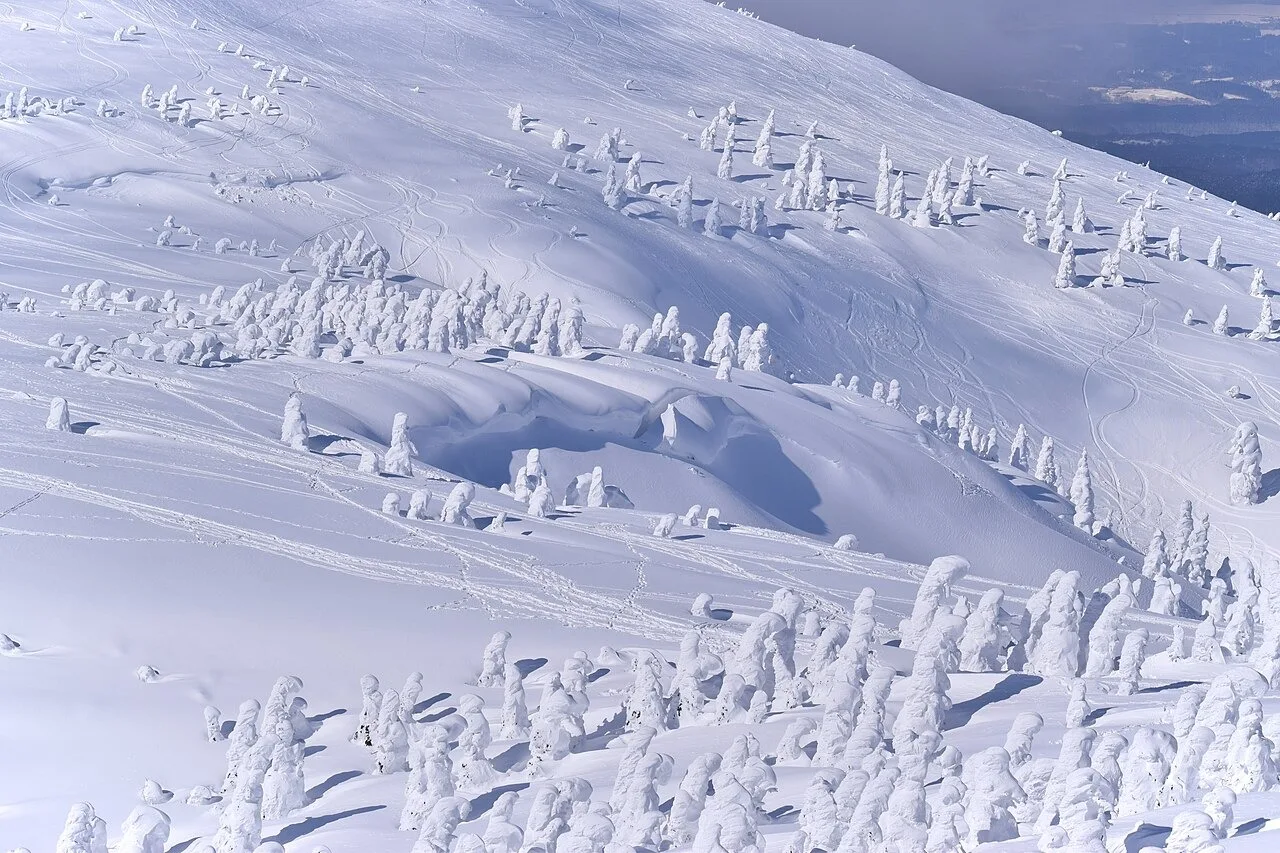
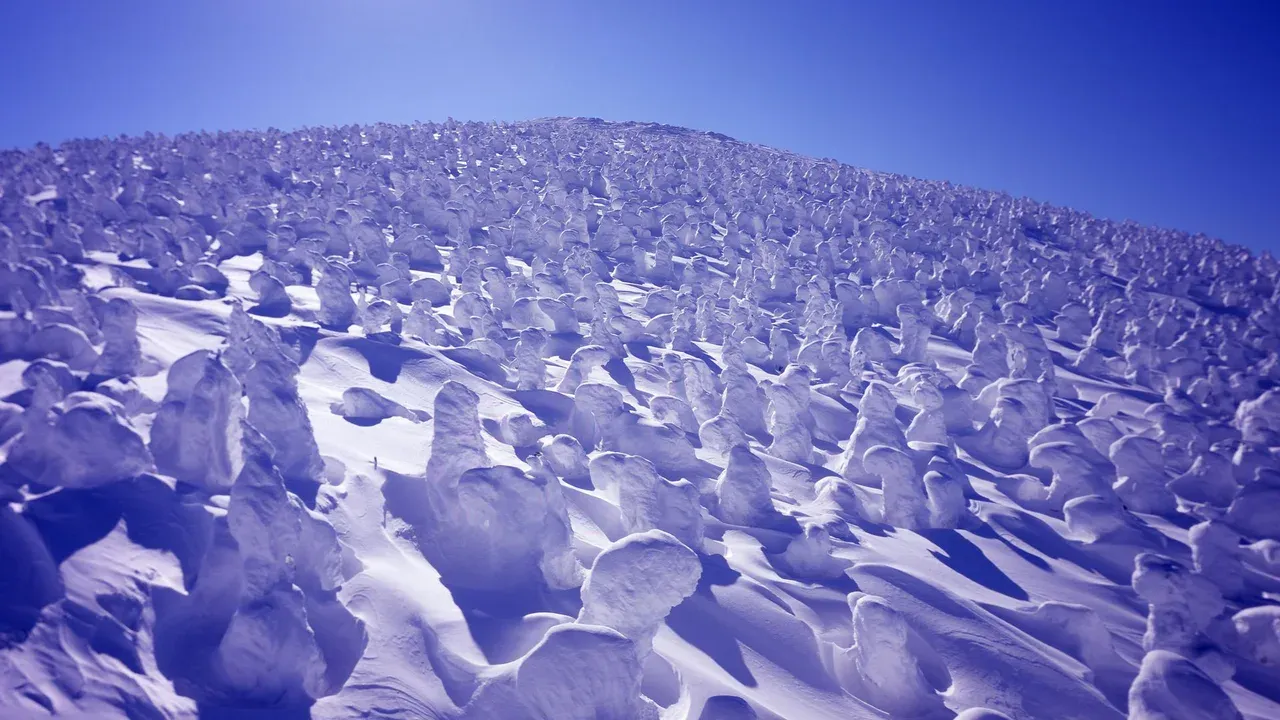
Building thick snow monsters takes brutal winter weather. Every February, steady west-northwest seasonal winds average 10 to 15 meters per second at temperatures between -10°C and -15°C, slamming supercooled cloud droplets onto Aomori fir trees. The droplets freeze into windward ice crystals known as "shrimp tails" (ebino shippo), which trap windblown snow and sinter over weeks into massive snow monsters. That weather brings two practical realities: first, crisp blue skies make for the best photos, yet the formations actually grow fastest during howling snowstorms; second, if summit winds or fog exceed safety limits, the ropeway suspends operations immediately. Never schedule your snow monster ascent for your final day in Yamagata—slot it into the middle of your trip so you have a weather backup day.
Across the winter calendar, November and December mark early formation, January brings rapid "shrimp tail" growth, and February delivers the thickest, most dramatic peak. Once March temperatures climb, the ice begins sagging and shedding, and a single warm spring rain can collapse an entire ridge of formations overnight. On select winter evenings, Zao also hosts Snow Monster Night Illumination, bathing the summit silhouettes in colored floodlights visible from the Zao Terrace beside the summit station—or up close aboard the heated Night Cruiser snowcat (separate ticket required). Two strict rules apply at night: dress for sub-zero temperatures below -10°C, and leave all skis and snowboards behind, as riding or carrying winter gear is prohibited on night illumination ropeway cars.
If you want your visit to overlap with peak winter festivities, aim for the Zao Juhyo Festival held every January and February. The 61st edition in 2026 ran from December 27 through February 23, anchored by its signature Torchlight Ski Descent (Taimatsu Kasso) on the evening of February 7 at Uwanodai Slope (check-in at 17:00, descent at 20:00, followed by a five-minute winter fireworks finale). Exact 2027 dates are announced seasonally by the Yamagata City Tourism Association. Torchlight skiing is open by advance registration with modest entry requirements, and staying right in Zao Onsen makes walking over for the evening show effortless.
Once you step off at Jizo Sancho Station, the summit experience unfolds in two layers. Right outside the station, marked snow trails let you walk among the snow monsters and inspect the windward "shrimp tail" ice plumes all angled toward the west-northwest. Just beside the station, the wooden Zao Terrace viewing deck offers panoramic views across the juhyo plateau and the Zao mountain range on clear days, and it is intentionally separated from ski-binding and gear-prep zones so photographers and skiers stay out of each other's way. If a whiteout rolls in unexpectedly, the heated indoor lounge inside the summit station serves as a comfortable shelter while waiting for the next cabin down.
Build flexibility into your mountain schedule. The official ropeway status page updates the Sanroku Line and Sancho Line separately in real time—refresh it before leaving your hotel and again before walking to the base station. Place your snow monster day in the middle of your stay, and aim for a morning ascent when winds and fog are typically lighter than in the afternoon. If the ropeway does shut down for weather, the hot spring village at the base is your built-in Plan B: soak in the acidic sulfur baths, browse local shops, and sit down to Yamagata beef or soba noodles so a stormy day never feels wasted.
Staying in Zao Onsen Village: How to Soak in Acidic Sulfur Springs and Pick a Ryokan
Zao Onsen's strongly acidic sulfur water ranks among the most potent hot springs in Japan, with an official source temperature of 50.8°C, a flow rate of roughly 735 liters per minute, and a pH of 1.9. Its high acidity has earned it twin nicknames: "the beauty-making bath" and "the soapless hot spring," because the natural sulfur and acidity exfoliate skin and kill bacteria without needing heavy soap. That potency comes with clear rules. The top two points in the official Seven Rules for Zao-Style Acidic Bathing are simple: rinse thoroughly with warm water (kakeyu) before stepping into the tub so your skin adjusts to the heat and acidity, and never scrub your skin vigorously while soaking. Guests with sensitive skin, a history of photosensitivity, acute inflammatory conditions, or those in early or late pregnancy are advised by local authorities to avoid soaking or consult a doctor first.
The official lodging directory divides village accommodations into ryokan and hotels, pensions, minshuku guesthouses, and slope-side lodges, complete with a "Winter-Only" filter for properties that open exclusively for ski season right beside the trails. A few registered examples illustrate the range: Zao Astoria Hotel offers direct ski-in/ski-out access behind the building, Boku no Uchi highlights free-flowing natural spring baths, and Ebiya Ryokan is a smaller inn running 100% uncirculated source water. Narrowing down your stay comes down to three questions: how far you are willing to walk to the ropeway station, whether you want half-board (breakfast and dinner included), and whether you prefer dining in-house or out in town. Checking the Yamagata City Tourism Association and Zao Onsen directories also turns up small family-run guesthouses that never appear on major international booking portals.
For day-trippers, the famous riverside Zao Onsen Dai-Rotemburo (Great Open-Air Bath) is usually first on the list. Built from natural boulders along a mountain stream, it features separate men's and women's baths plus a mixed-bathing section where guests wear rented yukata robes. However, it operates primarily during the green season—opening April 25 in 2026 from 9:30 to 17:00 on weekdays (last entry 16:30) and until 18:00 on weekends and holidays (last entry 17:30)—and deep-winter openings depend entirely on snow conditions and official seasonal notices, so do not assume it will be open mid-winter. When the outdoor bath is closed for snow, head to the village's three public bathhouses (kyodo yokujo) or day-use hotel baths, which tap the exact same authentic acidic sulfur spring.
Keep a few practical precautions in mind before undressing. Sulfur gas and acidic water tarnish metal almost instantly—remove silver jewelry, necklaces, rings, and watches and lock them safely away in the changing room before entering the bath. Take out contact lenses as well, since even a tiny splash of pH 1.9 water stings sharply. For timing, late afternoon brings the post-ski rush to both public bathhouses and ryokan tubs; for a quiet soak with falling snow, aim for early morning right before breakfast. Expect a pronounced sulfur aroma throughout the village and bathhouses—just like Japan's other famous acidic springs in Tamagawa (Akita) and Kusatsu (Gunma), it is the hallmark of pure volcanic mineral water.
Room rates and availability track the ski calendar tightly. Early December opening weeks and mid-January weekdays offer wide selection and modest nightly rates, whereas the Juhyo Festival and February weekends routinely sell out properties near Sanroku Station weeks in advance. When browsing the official directory, do not be confused by listings marked closed for winter, as Zao has lodges that operate only in summer and others that open only for winter. Plan meals when you book: independent restaurants in the village are limited and focus on Yamagata beef, imoni taro stew, and soba, so if you plan to catch the first 8:30 ropeway up the mountain, booking a plan with breakfast included saves valuable morning time.
Transit and Timing Math: Yamagata Station, Airport Shuttles, and Winter Driving
For most travelers coming from Tokyo or arriving by air, JR Yamagata Station is the clearest transfer hub. Yamako Bus runs direct services from the bus terminal outside the station straight to Zao Onsen in about 40 minutes, climbing steadily once you clear the city grid. On winter weekends, buses fill up quickly, so verify the last return bus time before planning your descent. Note that some timetable pages on the Yamako Bus website can be finicky to load from overseas networks; confirm current schedules at the Yamagata Station tourist information desk upon arrival. Luggage space on route buses is also limited, so if you are traveling with bulky ski bags plus extra suitcases, store non-ski luggage in Yamagata Station lockers and travel light up the mountain.
If you fly directly into Yamagata Airport, an even smoother official link is available. The airport operates the Yamagata Airport Liner, a reservation-only shared taxi straight to Zao Onsen—saving you the two-step hassle of hauling ski bags into central Yamagata and transferring to a bus whenever your flight schedule aligns. Drivers, meanwhile, face paid winter parking lots that fill rapidly on weekends, so check the resort's live parking status page before driving up. Because plowed village streets are narrow and prone to black ice, park at your lodging once you arrive and get around on foot or by shuttle. Free resort Wi-Fi is available (SSID: ZAOONSENSKI, with the password posted on the official site), though summit reception drops easily in bad weather—save offline bus timetables and trail maps beforehand.
If ropeways suspend service, roads close, or festival schedules shift mid-trip, calling the right local office beats scrolling social media for rumors. Contact the Zao Onsen Tourism Association Information Center (023-694-9328) for village and general travel inquiries, the Zao Ropeway Association (023-694-9617) for resort-wide lifts and ski operations, Zao Ropeway (023-694-9518) specifically for the two-stage snow monster ropeway, and the Yamagata City Tourism Information Center (023-647-2266) for the Juhyo Festival and city events. The official access page also lists emergency ski patrol numbers—save them in your phone contacts before clicking into your bindings.
Choosing between rail-plus-bus and a rental car comes down to your comfort on icy mountain grades. Taking the JR Yamagata Shinkansen from Tokyo to Yamagata Station and hopping on the Yamako Bus is the least stressful route for families with kids or older travelers. Driving across the mountains from Sendai can be faster on dry roads, but Prefectural Route 12 (Zao Koen Line) and the steep, narrow lanes inside Zao Onsen demand proper snow tires and tire chains in winter conditions. On busy weekends when main lots reach capacity, staff direct drivers to overflow parking. Many winter driving veterans split the difference: base the car at a reasonably priced hotel in central Yamagata City and take the first morning bus up to Zao without gear clutter or parking stress.
Finally, watch the winter clock. December daylight fades early in Yamagata, and the crispest side-lit photos of the snow monsters happen right before sunset—yet the final uphill cable car from Sanroku Station departs at 16:00. Arrive at the base station after 15:00 and you will reach the summit just as twilight and the downhill crowd hit. Conversely, if you want to beat queues and shoot morning backlight on the snow monsters, check the official operating-hours page that morning to see if early departures have been added during peak-crowd periods.
Fitting Zao Into a Winter Itinerary: Practical Combinations
With only two days and one night, keep the sequence tight. Arrive at Yamagata Station before noon on Day 1, take the bus up, drop your bags, and spend the afternoon warming up on open base and mid-mountain trails (remember that early December openings rarely include the whole mountain). Head back to the village by dusk for an acidic sulfur soak and a kaiseki dinner at your ryokan. On Day 2, catch the first 8:30 Sanroku Line ropeway straight up to the Juhyo Plateau and Zao Terrace while morning light and visibility are at their best, check out by midday, take the bus back down, and spend the afternoon visiting winter Yamadera or grabbing a local meal in Yamagata City before boarding the Shinkansen.
Families with three days and two nights can save substantially by targeting Ski Children's Day dates. Across the 2027 portion of the season, child 1-day passes drop to a flat ¥1,000 (including night skiing) on January 16, 17, 23, and 24; February 11 and 23; and March 6, 7, 13, 14, 20, 21, 27, and 28 (with March 22 observed as a substitute holiday). Building hotel dates around that calendar slashes family lift costs. With Uwanodai Slope running night skiing daily from December 25 through February 28 from 17:00 to 21:00 (¥3,000 for adults), families can even pair an early evening of night skiing with snow monster illumination on the same night. If school-age kids will log more than a week on snow, compare the 10-day ticket and group options on the official site.
Zao also slots cleanly into broader Tohoku or multi-region winter trips. Fly into Sendai, overnight in Yamagata, and continue north to Akita's Nyuto Onsen, the Yokote Kamakura Snow Festival, or Aomori's Hakkoda snow monsters—or reverse the route by flying from Sapporo into Yamagata Airport to finish your trip. For cross-prefecture routing and lodging splits, check our Sendai and Yamagata onsen itinerary and Akita winter trip guide. To compare snow quality and juhyo formations across Tohoku resorts, see our guides to Hakkoda Ski Resort and Bandai Nekoma Mountain; if you want city lights before heading into the mountains, start with the seven venues of the Sapporo White Illumination.
Viewed side by side, the season calendar makes it easy to pick your ideal window. First-time visitors get great value in mid-December's Open Season or April's Spring Season at ¥4,800 per day, paired with classic village hot spring stays. Repeat visitors split naturally into two camps: dedicated skiers aiming for Peak Season's full trail network and night skiing, and sightseers targeting late January through February for towering snow monsters—paying higher pass and room rates for Zao at full winter strength. Regulars making three or more trips a season can trim per-day costs with the 10-day or 10-hour pass, and as long as you check the official lift and trail status every morning, this storied Tohoku resort runs smoothly.
- Opening Schedule: 2026/12/12 opening ceremony (open terrain depends on snowpack); Open Season ¥4,800 adult 1-day pass through Dec 18
- Pricing Tiers: Peak Season (Dec 26–Jan 3, Jan 30–Feb 28) ¥9,000 adult 1-day; Regular Season ¥8,000; Spring Season ¥7,000
- Snow Monsters & Ropeway: Growth in Jan, peak in Feb; Sanroku Line starts 8:30, Sancho Line starts 8:45, last uphill departure 16:00
- Night Skiing: Uwanodai Slope open daily Dec 25–Feb 28 plus Mar 6–7, 17:00–21:00 (¥3,000 adult)
- Hot Spring Specs: pH 1.9 strongly acidic sulfur spring at 50.8°C source temp; rinse thoroughly before entering and avoid scrubbing skin
- Transit & Connectivity: Yamako Bus from JR Yamagata Station; reservation-only Yamagata Airport Liner shared taxi; free resort Wi-Fi SSID ZAOONSENSKI
A few useful answers
When does the 2026-27 ski season open, and when are lift tickets cheapest?
The official opening ceremony is scheduled for December 12, 2026, with actual open trails dependent on snowpack. The lowest adult full-mountain 1-day rate is ¥4,800 during Open Season (opening day through December 18) and again during Late Spring from April 1 onward. Peak Season—December 26 to January 3 and January 30 to February 28—carries the highest rate at ¥9,000.
What is the best month to see the snow monsters, and which ropeway ticket do I need?
January is the main growth phase and February is peak maturity. Ride the Zao Ropeway from Sanroku Station up the Sanroku Line and transfer to the Sancho Line to reach Jizo Sancho Station (¥4,400 adult round-trip). Because high winds or dense fog can suspend ropeway service, schedule your visit mid-trip rather than on your final day.
How much is a 1-day lift pass, and are multi-day passes worth it?
An adult full-mountain 1-day pass costs ¥8,000 in Regular Season, ¥9,000 in Peak Season, and ¥7,000 in Spring Season. Multi-day savings are sharpest in Regular Season (a 3-day pass is ¥23,800, saving ¥3,200), whereas a Peak Season 3-day pass saves only ¥200. For short, flexible sessions across multiple days, consider the ¥17,000 Season 10-Hour Ticket (deducted hourly and valid for night skiing).
Is night skiing open every night?
Night skiing runs at Uwanodai Slope from 17:00 to 21:00 daily from December 25, 2026 through February 28, 2027, plus March 6 and 7. Standalone night passes cost ¥3,000 for adults and ¥1,500 for children, while holders of valid same-day 1-day through season passes can ski night sessions at no extra charge.
Is Zao worth visiting if I don't ski?
Yes. Sightseeing via the ropeway and soaking in the hot spring village easily fill a two-day, one-night trip: ride round-trip to Jizo Sancho Station for the snow monsters, take in views from Zao Terrace, join scheduled Snow Monster Night Illumination evenings, and soak in the three public bathhouses or ryokan baths. Note that the Zao Onsen Dai-Rotemburo outdoor bath operates mainly in the green season, so check current official notices before counting on a winter visit.
How do I get to Zao Onsen from Tokyo or Sendai?
From Tokyo, take the JR Yamagata Shinkansen to Yamagata Station and transfer to a Yamako Bus right outside the station for a 40-minute ride to Zao Onsen. If you fly into Yamagata Airport, book the reservation-only Yamagata Airport Liner shared taxi directly to the hot spring village to avoid transferring with ski luggage. Driving from Sendai is also possible via Prefectural Route 12 with proper winter tires and chains.
What should I know before soaking in Zao's strongly acidic hot springs?
Zao's water is a pH 1.9 strongly acidic sulfur spring at a 50.8°C source temperature, prized for natural exfoliation and antibacterial qualities (earning its 'soapless hot spring' nickname). Rinse thoroughly with warm water before entering, do not scrub your skin, keep soaks short, and remove all metal jewelry and contact lenses beforehand. Soaking is not recommended for sensitive skin, photosensitivity, acute inflammatory conditions, or early and late pregnancy.
Official information and references
Sources used in this guide.
- Zao Onsen Ski Resort Full-Mountain Lift Pass Fare Table (Zao Ropeway Association / Zao Onsen Tourism Association)
- Zao Ropeway Fares and Operating Guide (Official Zao Ropeway)
- Zao Snow Monsters: Formation Mechanism and Seasonal Timeline (Official Zao Ropeway)
- Zao Juhyo Festival (Yamagata City Tourism Association ZAO Information)
- Zao Onsen Dai-Rotemburo Open-Air Bath (Official Zao Onsen Tourism Co.)
- Yamagata Airport to Zao Onsen Shared Taxi (Official Yamagata Airport)
- Zao Onsen Ski Resort Course and Slope Status Updates